The history, craftsmanship and legacy of Japanese samurai armour
Japanese samurai armour, known collectively as yoroi (鎧) or gusoku (具足), represents one of the most sophisticated military traditions in world history. Combining protection, mobility, symbolism and extraordinary craftsmanship, samurai armour evolved over centuries to meet the changing demands of warfare while also reflecting the status, identity and wealth of its owner.
Today, authentic samurai armour is admired not only as military equipment but also as an exceptional form of Japanese art. Complete suits of armour are highly sought after by collectors, museums and historians worldwide.
The origins of samurai armour
The earliest forms of Japanese armour appeared more than a thousand years ago, influenced by Chinese and Korean military equipment. Over time, Japanese craftsmen developed unique armour styles specifically adapted to mounted archery and the needs of the emerging warrior class.
During the Heian Period (794–1185), the iconic ō-yoroi emerged. Designed for mounted samurai, these large and elaborate armours provided extensive protection while allowing warriors to fight effectively with the bow.
As warfare evolved, armour designs became lighter, more flexible and better suited to close combat.
The evolution of japanese armour
Throughout Japanese history, armour changed significantly in response to new military tactics and technologies.
Ō-Yoroi
The great armour of the early samurai. Large, ornate and primarily designed for mounted archers during the Heian and Kamakura periods.
Dō-Maru
A lighter armour that wrapped around the body and offered improved mobility. Originally used by lower-ranking warriors before becoming popular among all classes.
Haramaki
Similar to the dō-maru but opening at the rear. Favoured for its flexibility and comfort during prolonged campaigns.
Tosei Gusoku
The “modern armour” of the Sengoku and Edo periods. Designed to withstand firearms and large-scale warfare while maintaining the elegance associated with samurai culture.
What is a Gusoku?
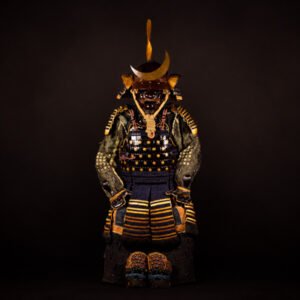
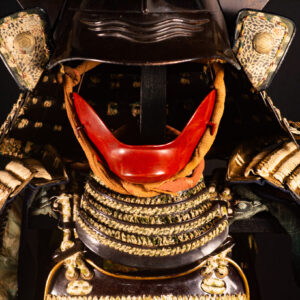
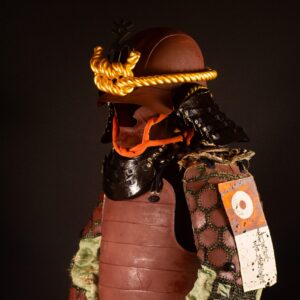
The term gusoku literally means “complete suit” and refers to the fully equipped armour worn by samurai from the sixteenth century onward.
A complete gusoku typically includes:
- Kabuto (helmet)
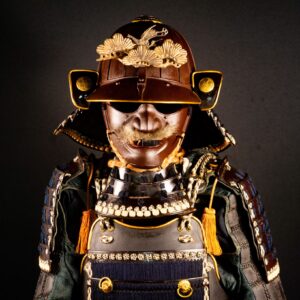
- Menpō (face mask)
- Dō (cuirass)
- Sode (shoulder guards)
- Kote (armoured sleeves)
- Haidate (thigh protection)
- Suneate (shin guards)
Together, these components created a highly effective system of protection while maintaining flexibility and mobility.
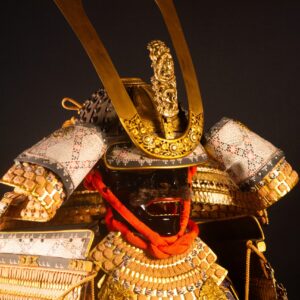
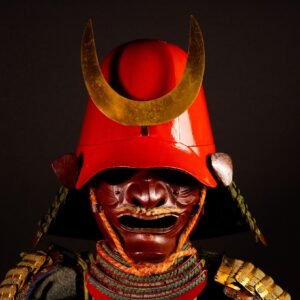
The Kabuto: The soul of the armour
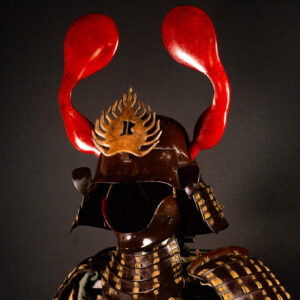
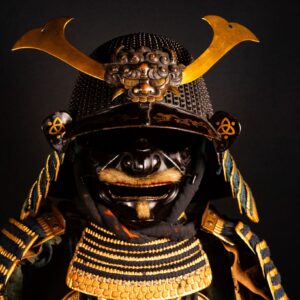
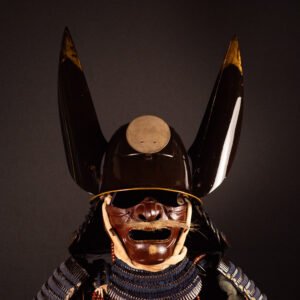
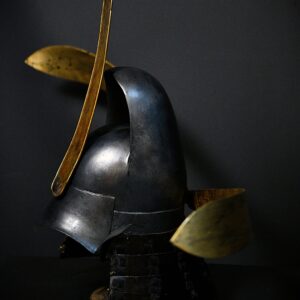
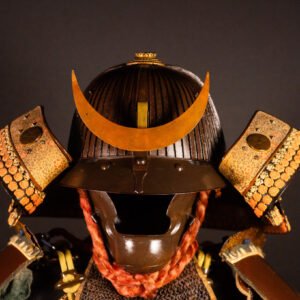
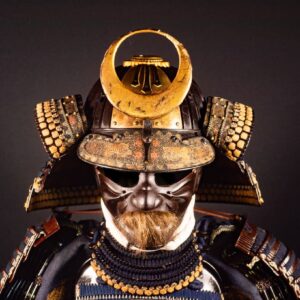
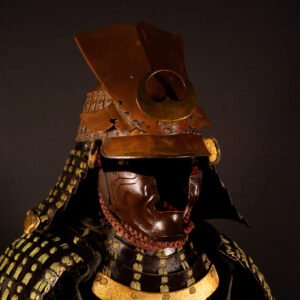
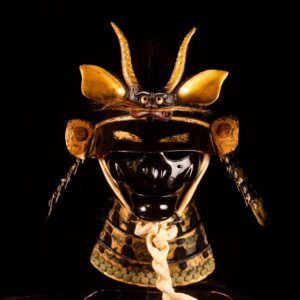
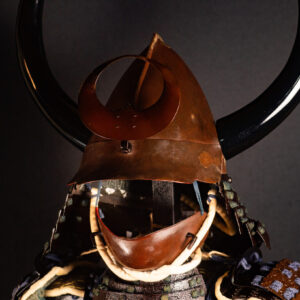
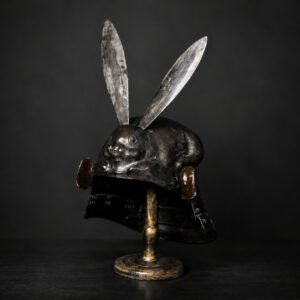
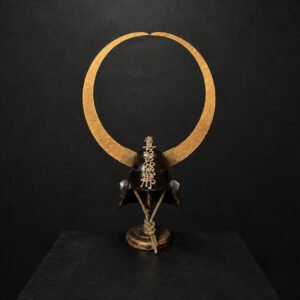
The most iconic element of samurai armour is undoubtedly the kabuto, or helmet.
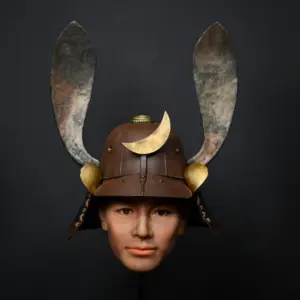
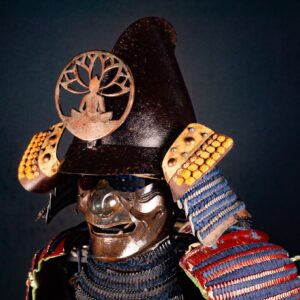
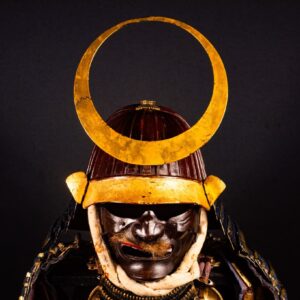
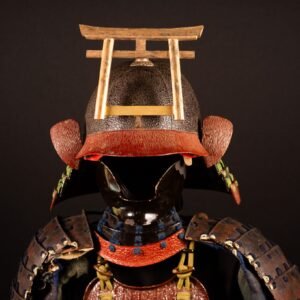
Japanese helmets were masterpieces of metalworking, often constructed from multiple iron plates riveted together with extraordinary precision. Many helmets featured elaborate crests known as maedate, which identified the wearer and projected power on the battlefield.
Common symbols included:
- Crescent moons
- Horns
- Dragons
- Buddhist symbols
- Clan emblems
For many collectors today, the kabuto remains the most visually striking component of a samurai armour.
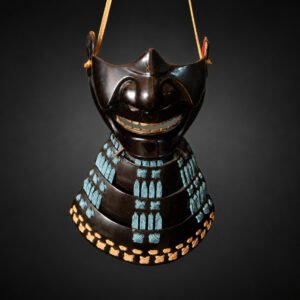
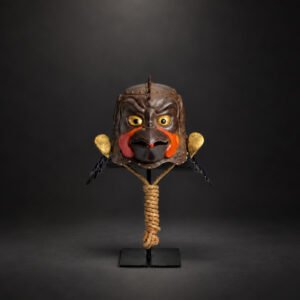
Menpō: The samurai face mask
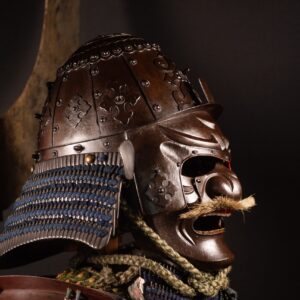
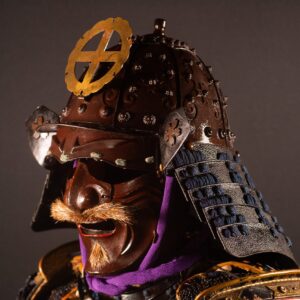
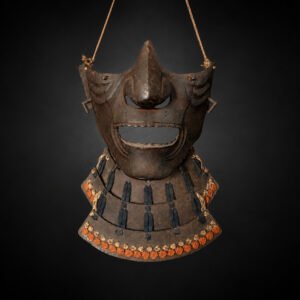
The menpō provided protection for the face and neck while creating an intimidating appearance.
These masks were often crafted with fierce expressions, exaggerated wrinkles, prominent noses and realistic moustaches made from horsehair or human hair.
Far more than simple protection, the menpō became an artistic expression of the warrior spirit.
Kozane and lacing
One of the defining features of traditional Japanese armour is its construction using small scales known as kozane.
These scales were lacquered to prevent corrosion and connected using silk or leather cords in a process known as odoshi.
The resulting armour offered several advantages:
- Flexibility
- Strength
- Reduced weight
- Decorative possibilities
The colours and patterns of the lacing often reflected the identity and status of the wearer.
Materials and craftsmanship
Creating a complete suit of samurai armour required the collaboration of numerous specialised craftsmen.
Materials commonly included:
- Iron
- Leather
- Silk
- Lacquer
- Copper alloys
- Gold leaf
- Gilt bronze fittings
The armour maker (katchūshi) assembled these elements into a cohesive work that balanced protection, comfort and aesthetics.
Many high-ranking samurai commissioned armour decorated with family crests (mon), dragons, tigers, Buddhist motifs and other symbolic imagery.
Samurai armour during the edo period
The Edo Period (1603–1868) brought peace to Japan after centuries of warfare.
As large battles became increasingly rare, armour gradually evolved into a symbol of rank, prestige and tradition. Armour continued to be produced with extraordinary quality, often displaying more elaborate decoration than earlier battlefield examples.
Many of the finest surviving suits available today date from the Edo Period and showcase the highest levels of craftsmanship achieved by Japanese armour makers.
Samurai armour as art
Although originally designed for warfare, samurai armour is now recognised as one of the great artistic achievements of Japanese culture.
Collectors appreciate armour for:
- Historical importance
- Artistic quality
- Clan associations
- Rarity
- Display presence
- Investment potential
A complete armour represents the work of multiple master craftsmen and often preserves centuries of history within a single object.
Collecting samurai armour
Authentic Japanese armour remains one of the most desirable fields within Japanese antiques.
Collectors typically focus on:
- Complete gusoku
- Kabuto helmets
- Menpō masks
- Clan armour
- Edo-period examples
- Armour with documented provenance
Condition, completeness, originality and historical significance all play important roles in determining value.
Because complete armours are increasingly scarce, high-quality examples continue to attract strong interest from collectors and institutions worldwide.
Preserving a samurai legacy
The samurai disappeared as a military class more than a century ago, yet their armour remains a powerful symbol of Japanese history and culture.
Every suit tells a story of craftsmanship, warfare, status and identity. Whether displayed in a museum, private collection or traditional Japanese interior, samurai armour continues to embody the discipline, artistry and spirit of Japan’s warrior tradition.
More than military equipment, samurai armour is a masterpiece of functional art — a remarkable fusion of protection, symbolism and craftsmanship that has fascinated collectors for generations.