








1 in stock
1 in stock
Add to Compare
Add to Wishlist
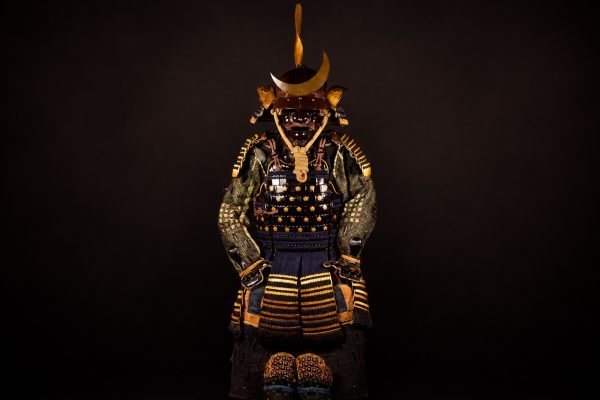
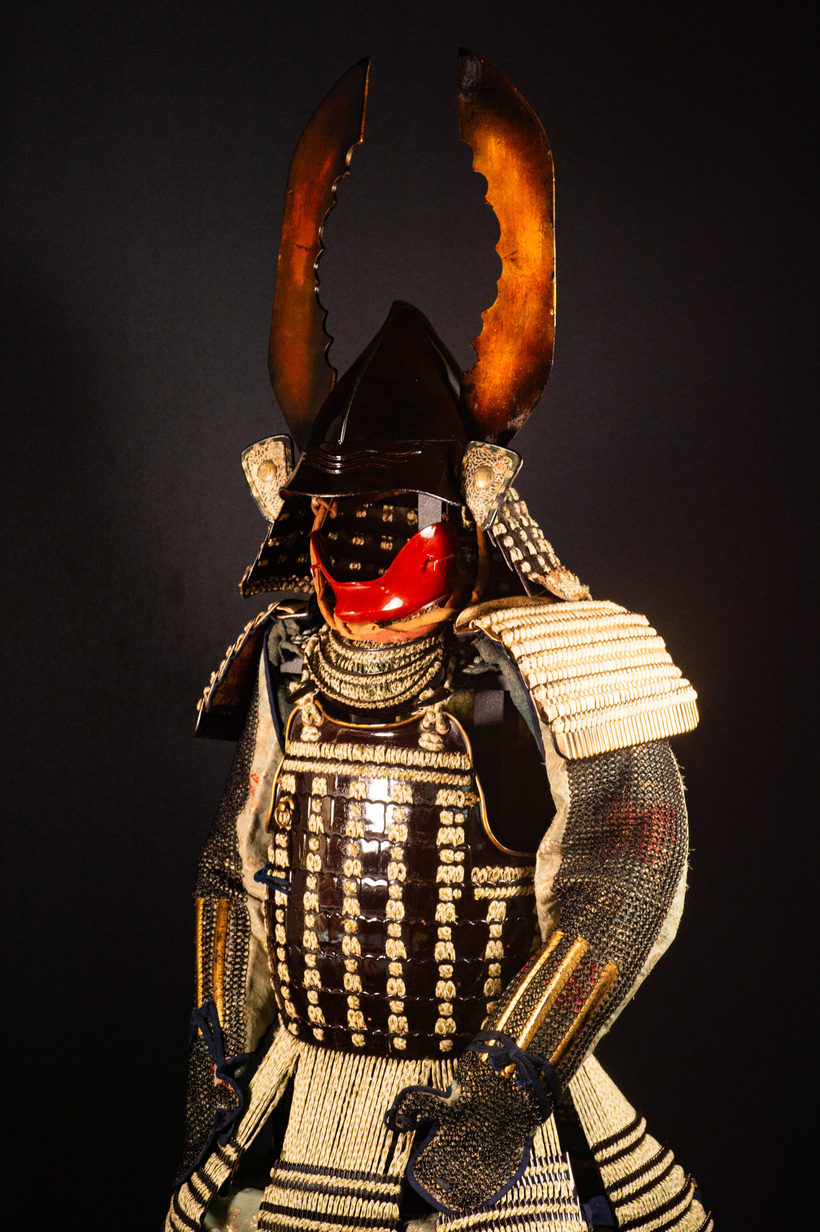
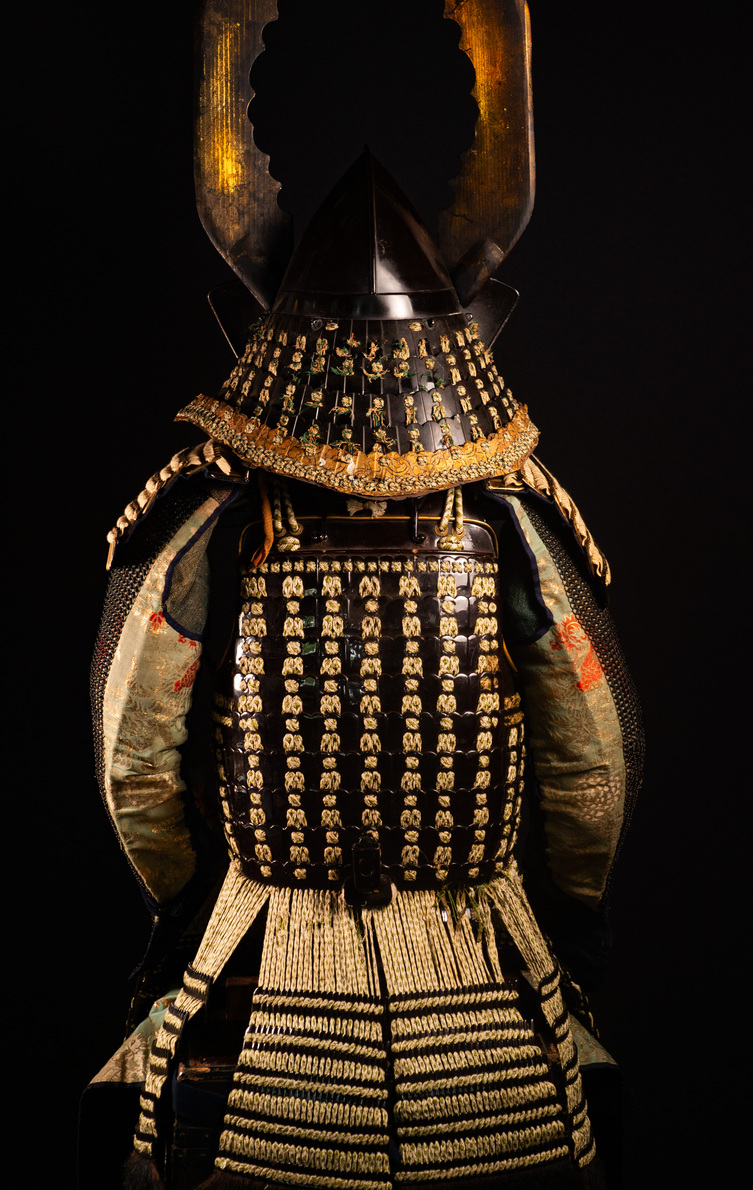
A complete Japanese gusoku dating to the early Edo period, 17th century, distinguished by a monumental pair of gilt ōkuwagata crests and a striking vermilion-lacquered iron hanpō. The armour is officially certified Tokubetsu Kichō Shiryō by the Nihon Katchū Bugu Kenkyū Hozon Kai (NKBKHK), Certificate No. 2361, issued in 2025.
The ensemble combines black lacquered iron, gilt elements, contrasting silk lacing and richly decorated textile components within a complete display configuration.
Its early Edo dating, surviving components and Japanese certification make it a significant example of seventeenth-century samurai armour.
The armour is centred around a two-piece nimai-dō constructed from black-lacquered iron in kiritsuke-iyozane.
This construction uses solid plates shaped to imitate the visual rhythm of individual lamellar scales while forming a more continuous protective structure.
The cuirass is laced in sugake odoshi using distinctive takuboku silk cords combining cream, green and blue tones.
Across the upper breastplate, a band of granulated vermilion lacquer creates a strong contrast with the dark lacquered surface and surrounding lacing.
This armour is certified Tokubetsu Kichō Shiryō by the Nihon Katchū Bugu Kenkyū Hozon Kai (NKBKHK), Certificate No. 2361, issued in 2025.
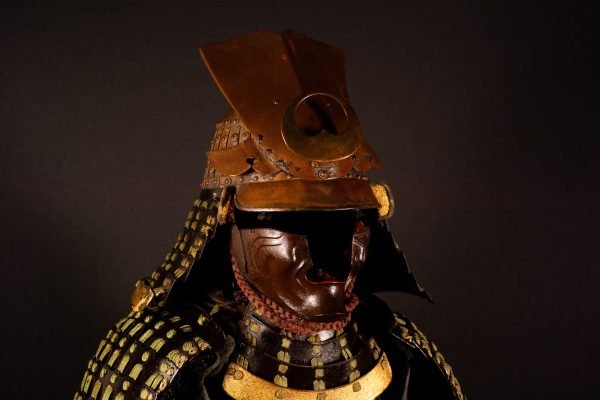
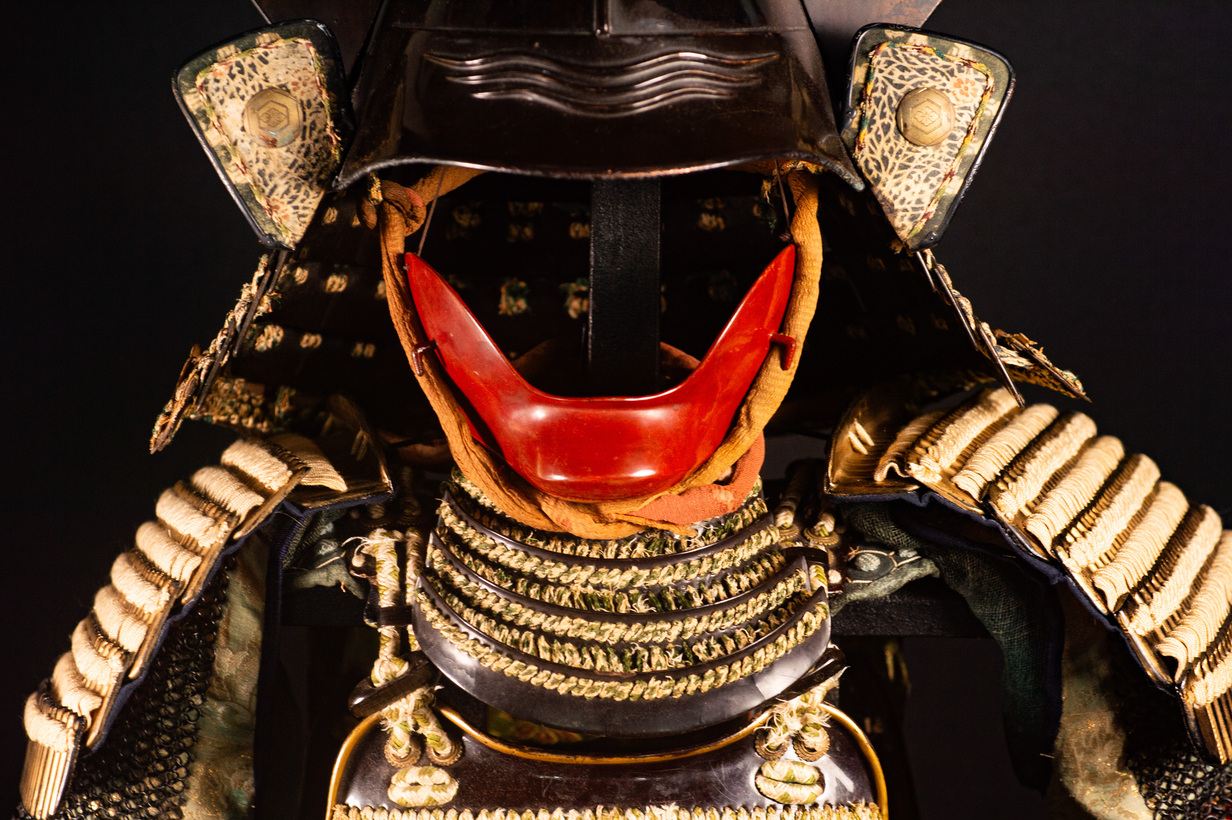
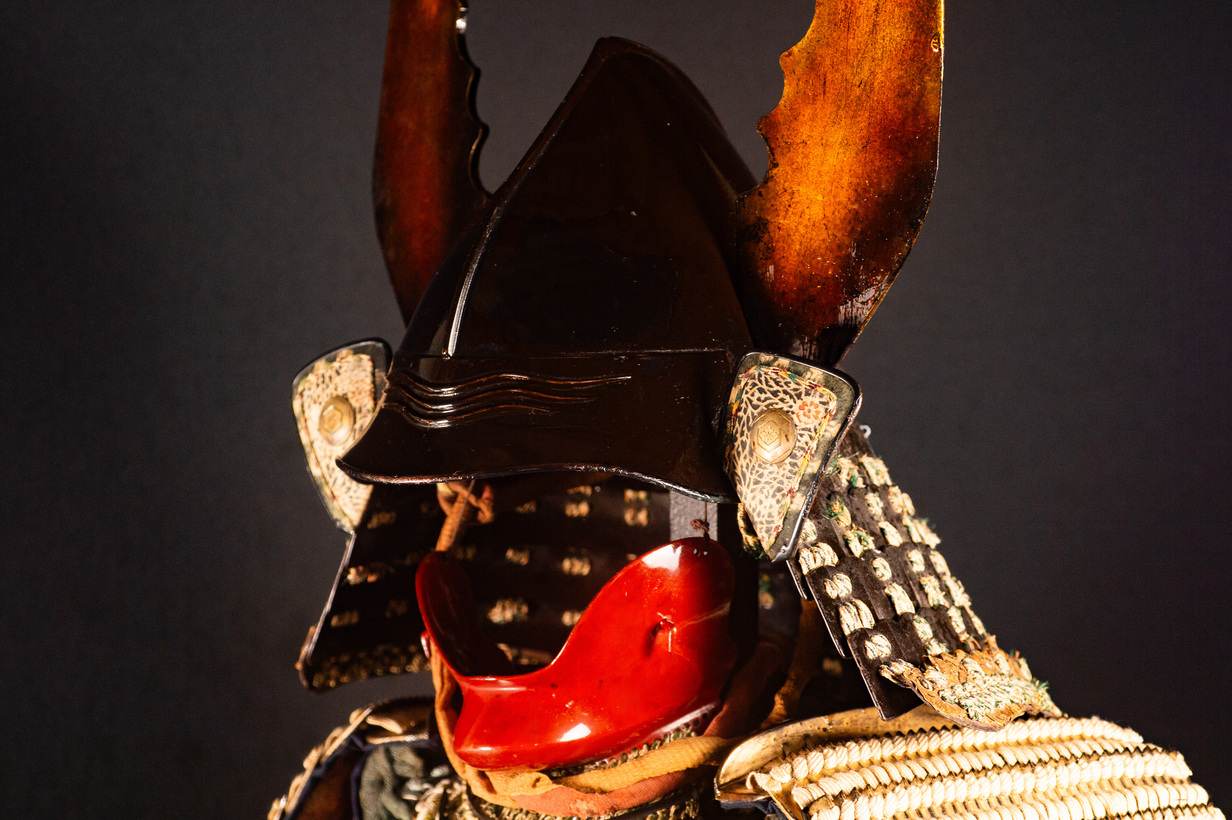
The armour is accompanied by an imposing black-lacquered kabuto with a sharply pointed bowl and a raised wave-form feature across the brow.
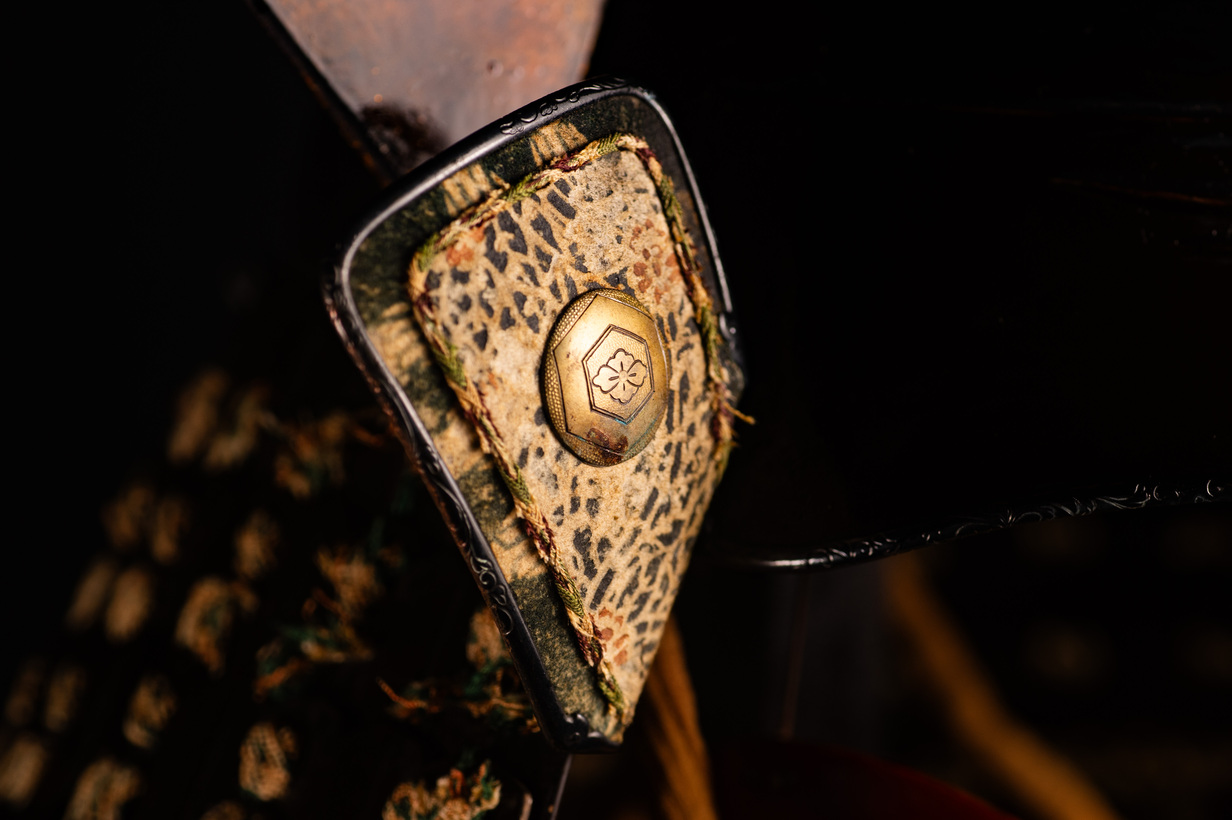
The fukigaeshi are covered with finely patterned leather and decorated with gilt family crests (mon).
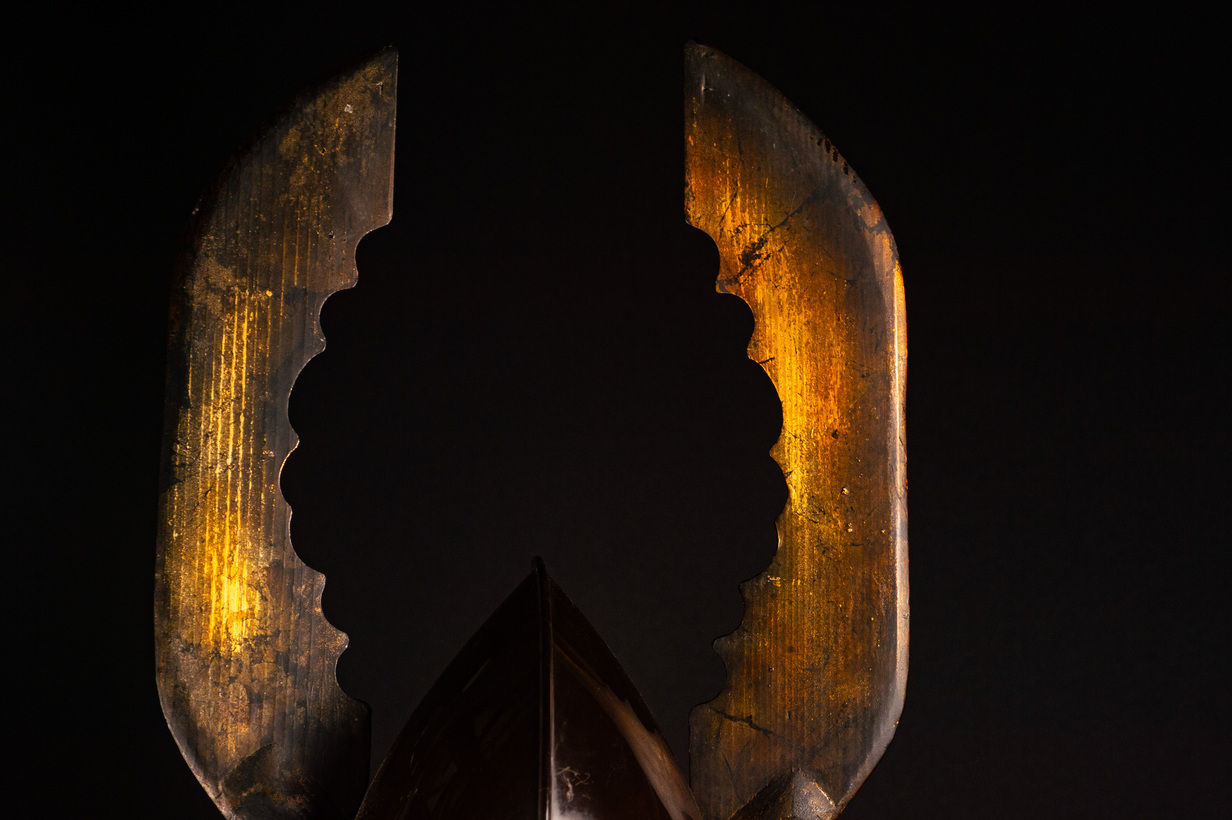
The most visually dominant feature of the helmet is the large pair of gilt ōkuwagata, rising prominently from the front of the kabuto and defining the silhouette of the complete display.
Their scale and metallic finish create a strong visual counterpoint to the predominantly black lacquer of the armour.
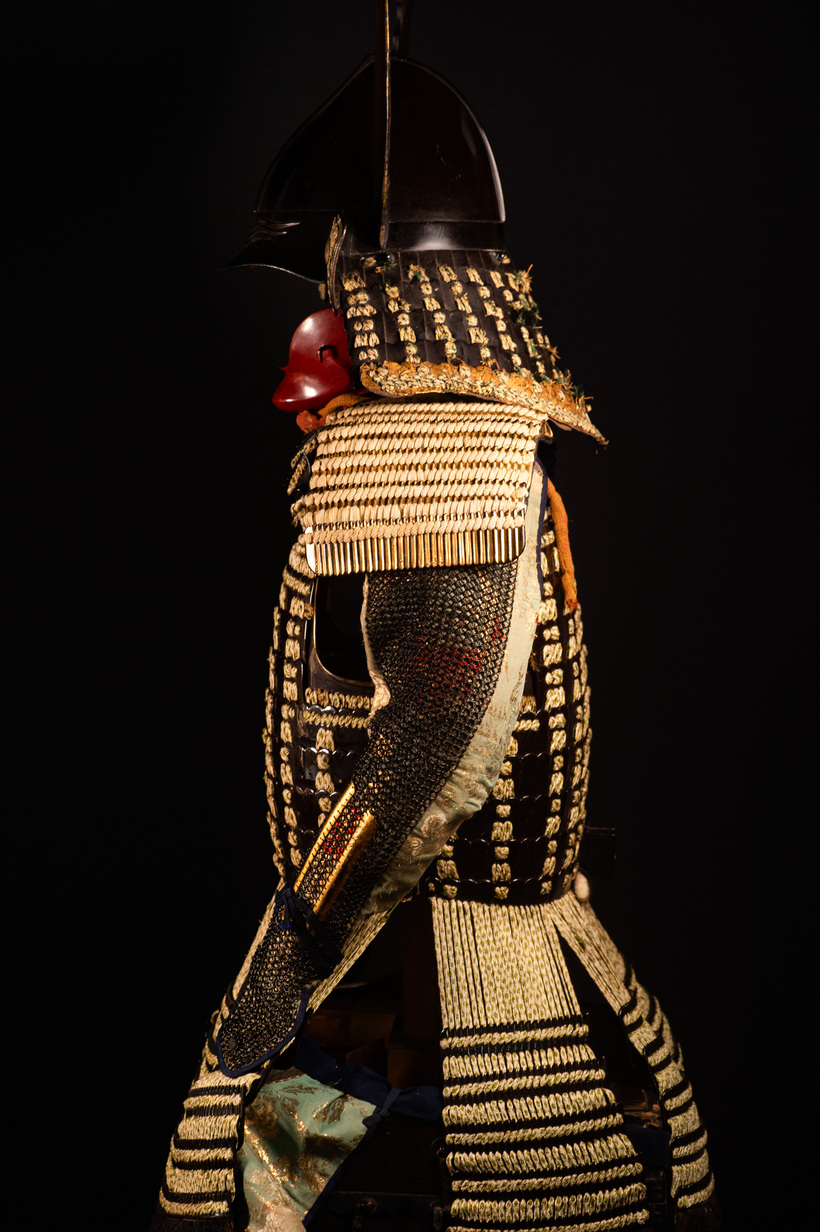
Beneath the helmet is a striking vermilion-lacquered iron hanpō, protecting the lower part of the face while leaving the nose exposed.
It is accompanied by a matching yodarekake throat guard with traditional silk lacing.
The vivid vermilion lacquer forms one of the strongest colour contrasts in the entire ensemble, standing out against the black lacquer of the armour and the gilt elements of the helmet.
The hanpō forms part of the armour’s facial and throat protection while also contributing significantly to the visual character of the complete gusoku.
Large sode protect the shoulders and are constructed from multiple laced lames.
Their cream-toned lacing continues the colour vocabulary found elsewhere throughout the armour and visually connects the upper body protection with the cuirass and lower components.
The arms are protected by traditional kote combining chain mail and iron plates mounted over brocaded textile.
Gilt protective elements introduce additional metallic detail while remaining visually consistent with the gilt features of the kabuto.
The lower section of the ensemble includes matching kusazuri, haidate and lacquered suneate.
The haidate incorporates patterned leather and textile elements, while the suneate provide protection to the lower legs.
Celadon-green silk and richly woven floral brocade in gold and red add further contrast to the darker lacquered components of the armour.
The visual identity of the armour is built around a strong combination of black, vermilion, gilt metal and contrasting textile colours.
Deep black lacquer forms the foundation of the ensemble. Against it stand the monumental gilt ōkuwagata and the vivid vermilion hanpō.
Cream, green and blue silk lacing introduces additional colour, while the brocaded textile elements contribute gold and red accents.
Together, these materials create a complex but coherent visual composition across the complete armour.
The armour is dated to the early Edo period, 17th century.
This period followed the establishment of the Tokugawa shogunate and the transition from the prolonged warfare of the Sengoku period toward greater political stability.
Japanese armour continued to reflect established military construction while also developing increasingly elaborate decorative treatments.
This gusoku combines protective iron construction, lacquer, silk lacing, gilt fittings and textile components within a complete ensemble representative of that continuing armour-making tradition.
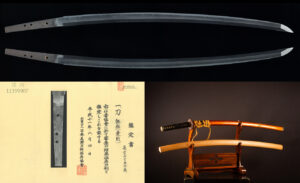
The armour is accompanied by a Tokubetsu Kichō Shiryō certificate issued by the Nihon Katchū Bugu Kenkyū Hozon Kai (NKBKHK).
The certificate is numbered 2361 and was issued in 2025.
This certification forms an important part of the documentation accompanying the armour and should be considered separately from certification systems used for Japanese swords or other categories of Japanese art.
The ensemble includes the principal components associated with a complete Japanese gusoku:
Several aspects make this armour particularly notable within a collection of Japanese arms and armour.
The ensemble is dated to the 17th-century early Edo period, retains a complete range of principal armour components and is accompanied by Japanese certification from the NKBKHK.
Its visual character is defined by the combination of the monumental gilt ōkuwagata, black lacquered iron construction, vermilion hanpō, contrasting silk lacing and richly patterned textile elements.
The complete configuration allows the different elements of Japanese armour construction to be appreciated together rather than as isolated components.
A complete and visually distinctive early Edo period Japanese gusoku, dating to the 17th century and certified Tokubetsu Kichō Shiryō by the NKBKHK, Certificate No. 2361 (2025). The ensemble combines a black-lacquered nimai-dō, monumental gilt ōkuwagata, vermilion-lacquered iron hanpō, contrasting silk lacing and the principal components of a complete samurai armour.

Order above 1.000,00 € gets free shipping.

Secure and hassle-free payment process.

Certificate of authenticity included.

Have questions? Contact us via WhatsApp.
Contact