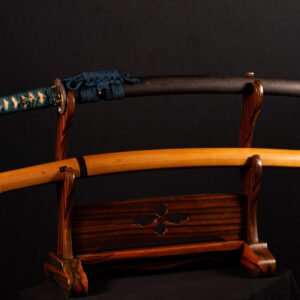
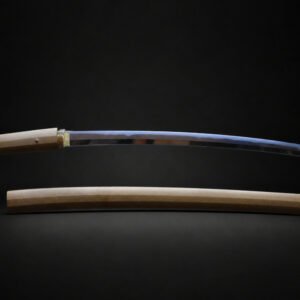
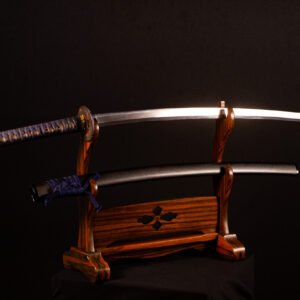
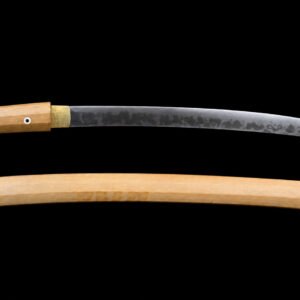
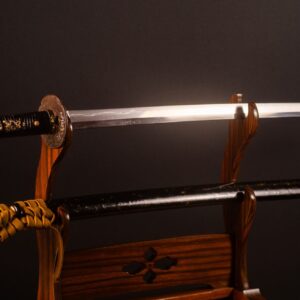
The history, craftsmanship and cultural significance of the authentic japanese sword
The term nihonto (日本刀) literally means “Japanese sword.” However, among collectors, historians and martial artists, the word refers specifically to traditionally forged Japanese blades created according to centuries-old techniques that have been preserved and refined through generations of master swordsmiths.
Far more than a weapon, the nihonto is considered one of the highest achievements of Japanese craftsmanship. Combining metallurgy, artistry, spirituality and martial culture, these swords have become symbols of Japan itself and are today collected worldwide as historical works of art.
The origins of the japanese sword
The history of the Japanese sword stretches back more than a thousand years. Early straight blades influenced by Chinese and Korean designs gradually evolved into uniquely Japanese forms adapted to mounted combat and the changing needs of the warrior class.
During the Heian Period (794–1185), swordsmiths began producing the elegant curved tachi, a weapon designed primarily for mounted samurai. These early blades established the foundation for the development of the Japanese sword tradition.
By the Kamakura Period (1185–1333), Japanese swordsmithing had entered what many consider its golden age. Legendary schools such as Bizen, Yamashiro, Soshu, Yamato and Mino produced blades that remain among the most admired swords ever created.
The golden age of swordsmithing
The Kamakura and Nanbokucho periods are widely regarded as the pinnacle of Japanese sword production. Master smiths such as Masamune, Nagamitsu and Rai Kunitoshi developed techniques that combined beauty, durability and exceptional cutting performance.
The forging process evolved into a sophisticated craft involving repeated folding of steel, differential hardening and precise control of carbon content. These methods produced blades with extraordinary resilience and the distinctive visual characteristics admired by collectors today.
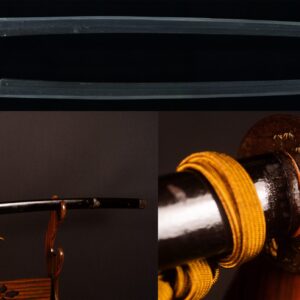
The visible grain of the steel (hada) and the hardened edge pattern (hamon) became artistic signatures that distinguished individual schools and master swordsmiths.
How a Nihonto is made
Traditional Japanese swords are forged using steel known as tamahagane, produced in a clay furnace called a tatara. The steel is repeatedly folded, welded and refined to remove impurities while maintaining the ideal carbon distribution.
Once forged, the blade undergoes differential hardening through the application of a special clay mixture. During quenching, the cutting edge cools more rapidly than the spine, creating both the characteristic curvature of the sword and the visible hamon.
After forging, a team of specialised craftsmen complete the sword. Polishers, habaki makers, lacquer artists and fitting specialists all contribute to the finished work.
A traditional nihonto is not the work of a single craftsman, but the result of multiple generations of specialised Japanese artistry.
The different types of Nihonto
Tachi
The tachi was the primary weapon of mounted warriors during the medieval period. It is characterised by its pronounced curvature and edge-down suspension from the armour.
Katana
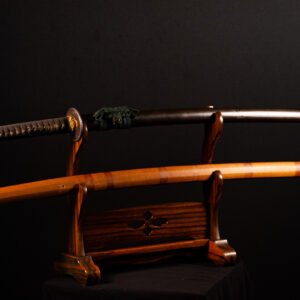
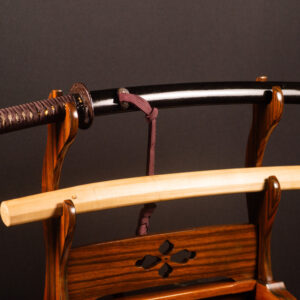
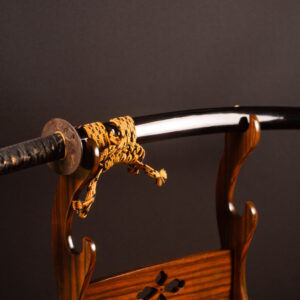
The katana emerged during the Muromachi Period and became the iconic weapon of the samurai. Worn edge-up through the sash, it allowed faster drawing techniques and greater versatility in combat.
Wakizashi
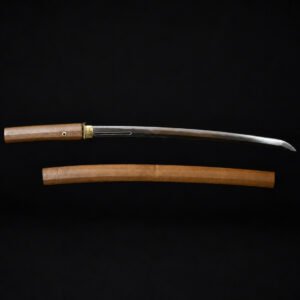
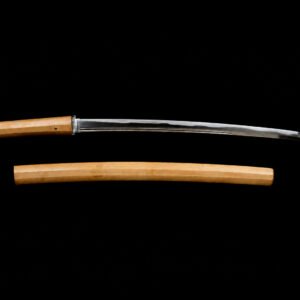
The wakizashi served as the companion sword to the katana, forming the famous daisho pair worn by samurai during the Edo Period.
Tanto
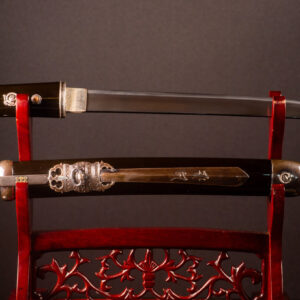
The tanto is a traditional Japanese dagger used both as a weapon and as an object of artistic and ceremonial significance.
Japanese sword schools
Over the centuries, regional traditions developed distinct forging styles known as schools. The five great traditions of Japanese swordsmithing are:
- Bizen Tradition
- Yamashiro Tradition
- Soshu Tradition
- Yamato Tradition
- Mino Tradition
Each tradition developed unique characteristics in blade geometry, steel texture, hamon patterns and artistic style.
Understanding these schools is one of the most important aspects of appreciating and collecting authentic Japanese swords.
Nihonto as Art
Following the end of the samurai era in the nineteenth century, Japanese swords gradually transitioned from battlefield weapons to recognised works of art.
Today, many important blades are protected by the Japanese government as Important Cultural Properties or National Treasures.
Collectors value nihonto not only for their historical significance but also for their artistic beauty, rarity and long-term investment potential.
The subtle patterns within the steel, the elegance of the blade shape and the craftsmanship of the fittings combine to create objects unlike any other weapon tradition in the world.
Authentication and certification
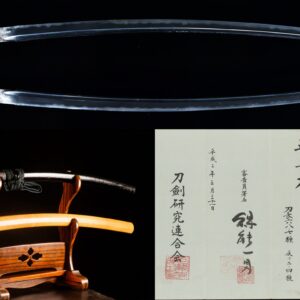
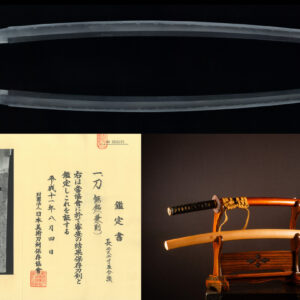
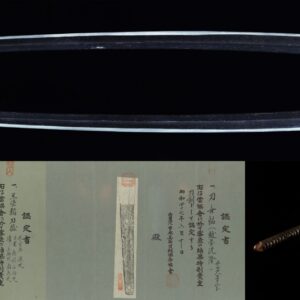
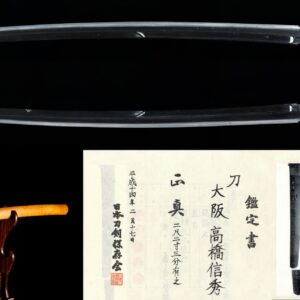
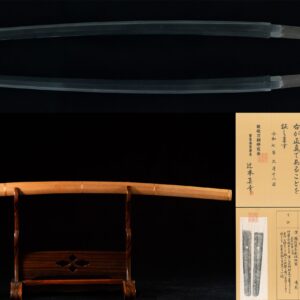
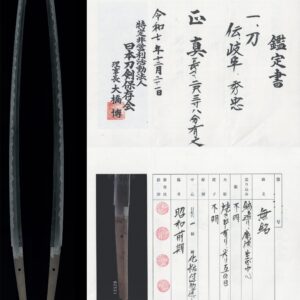
Authentic Japanese swords are often accompanied by certificates issued by organisations such as the NBTHK (Nihon Bijutsu Token Hozon Kyokai) and the NTHK.
These organisations evaluate swords according to age, authenticity, condition, workmanship and historical importance, providing collectors with additional confidence and documentation.
For serious collectors, certification plays an important role in establishing provenance and preserving long-term value.
Collecting Nihonto today
The market for authentic Japanese swords continues to attract collectors, museums, historians and martial arts enthusiasts from around the world.
Whether collecting a Kamakura masterpiece, an Edo-period katana or a modern blade forged by a licensed swordsmith, every nihonto represents a direct connection to centuries of Japanese history and craftsmanship.
Understanding terminology, schools, periods and certification is essential for anyone beginning their journey into the world of Japanese swords.