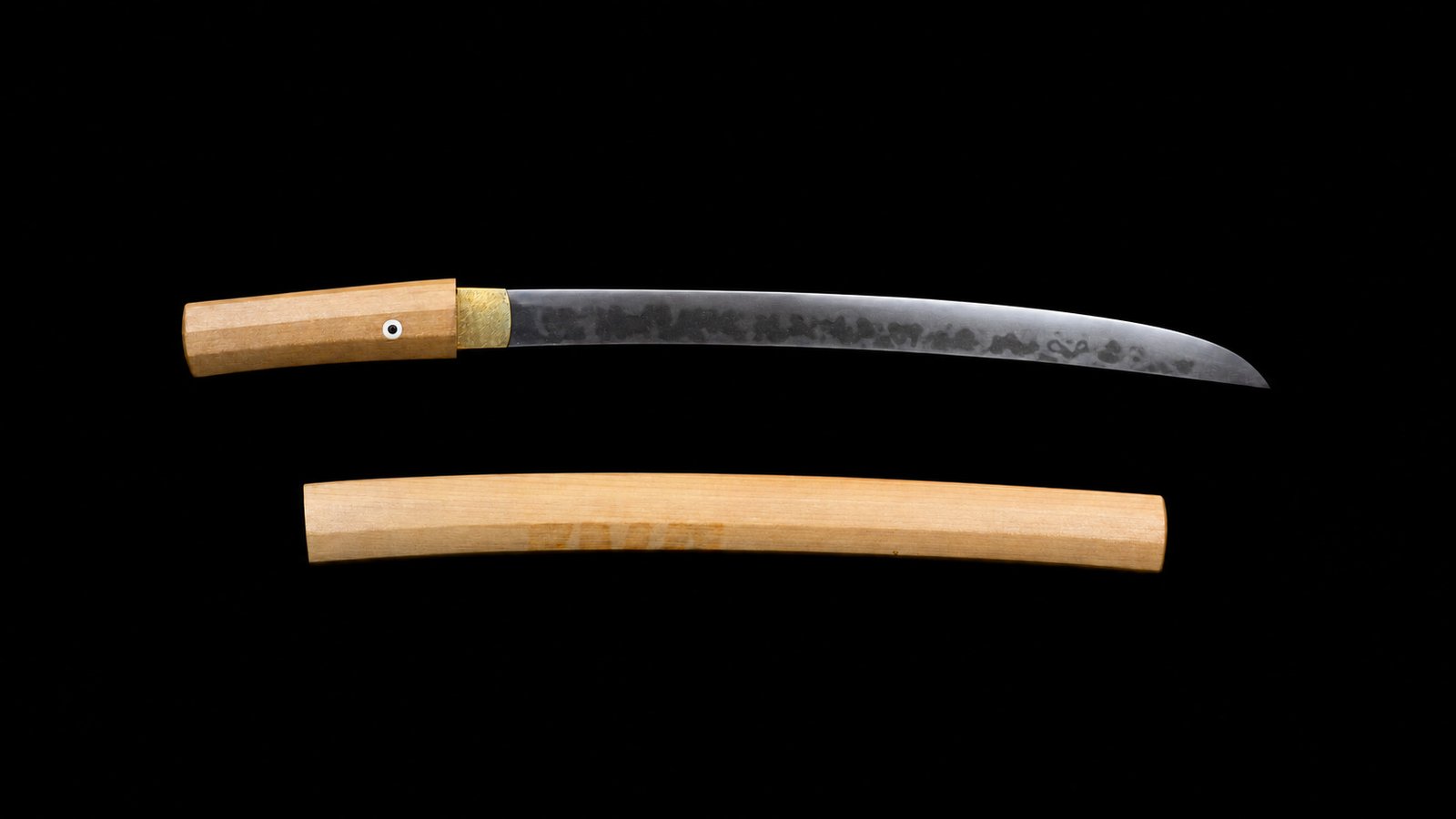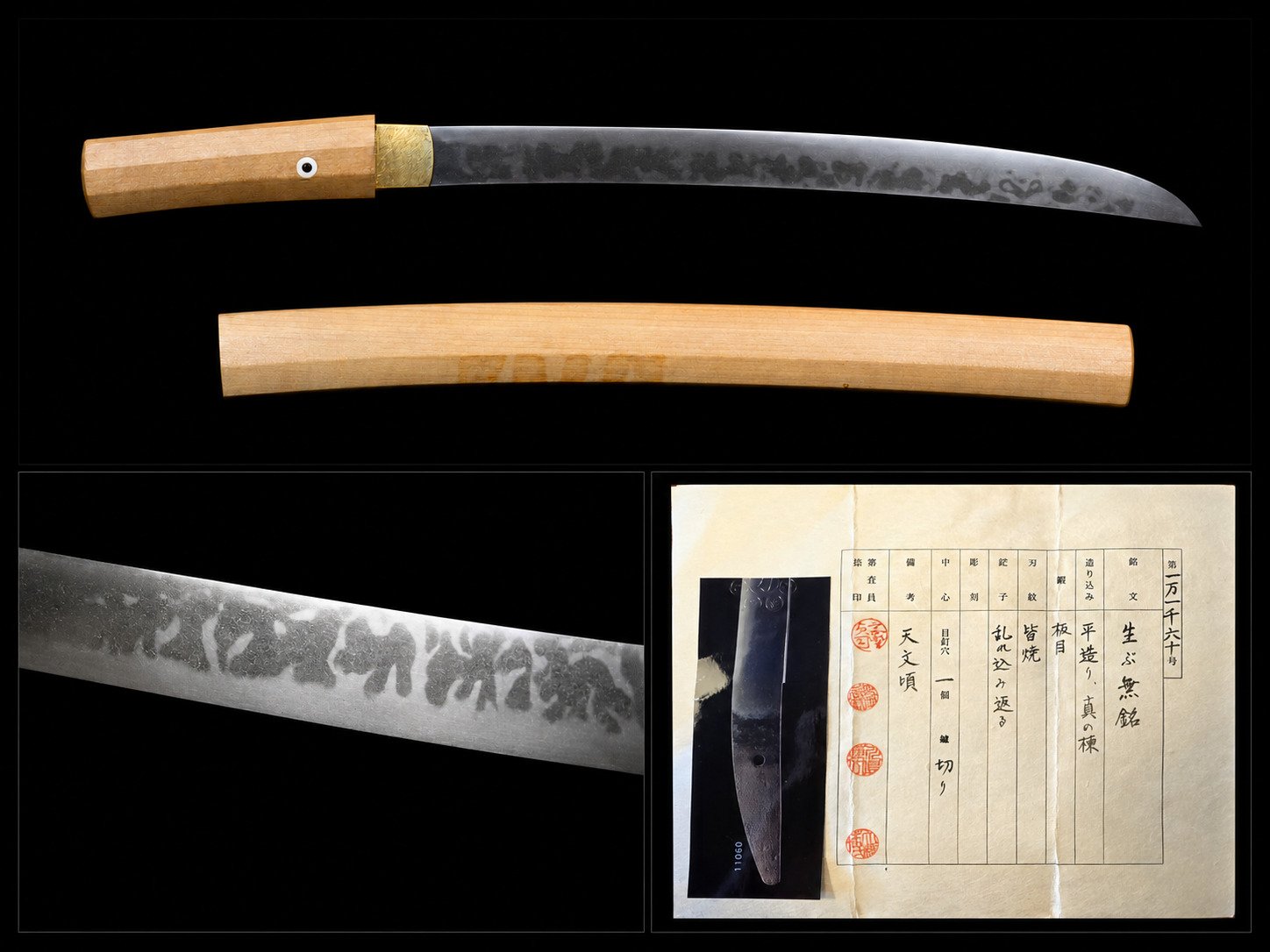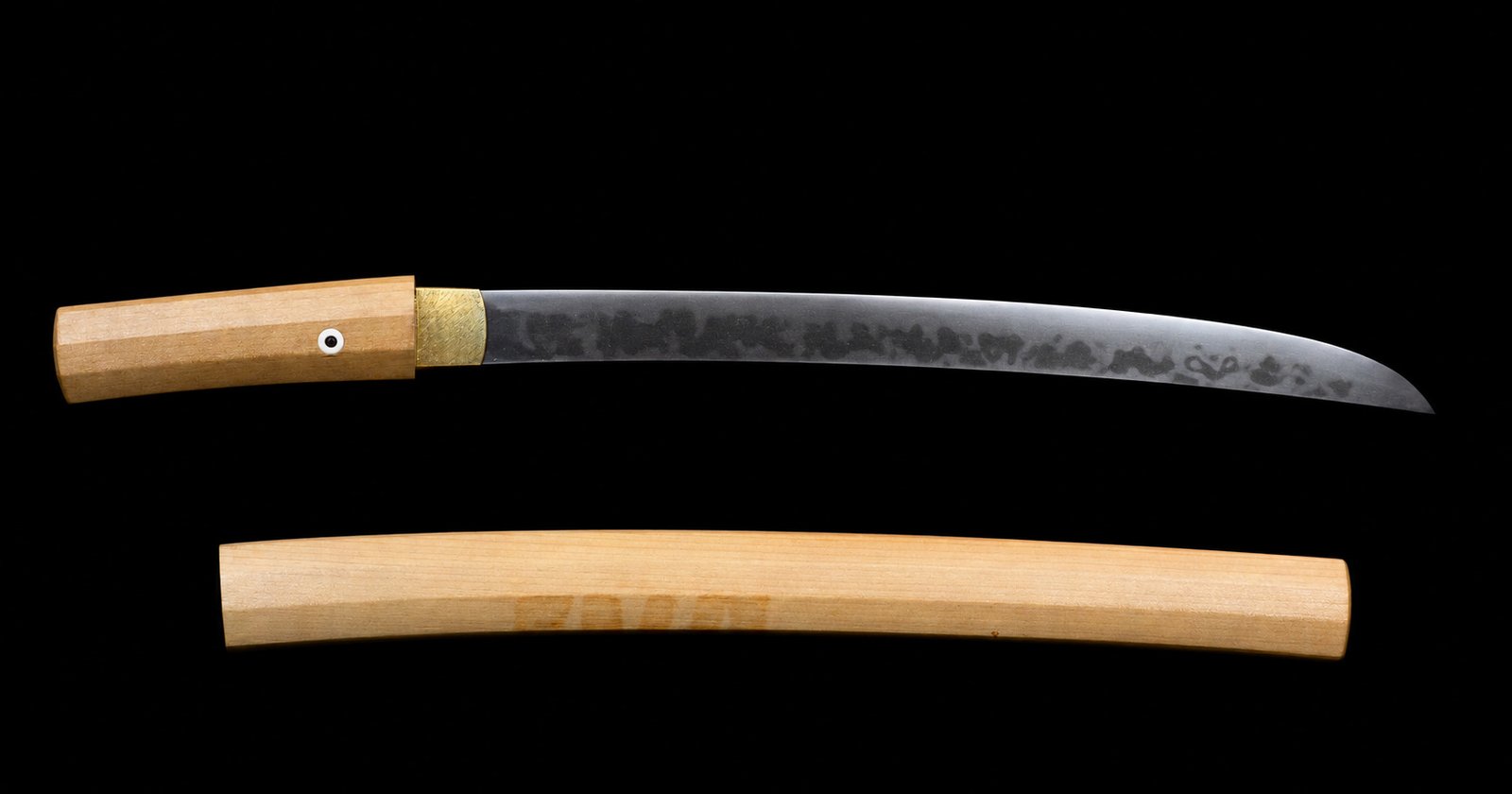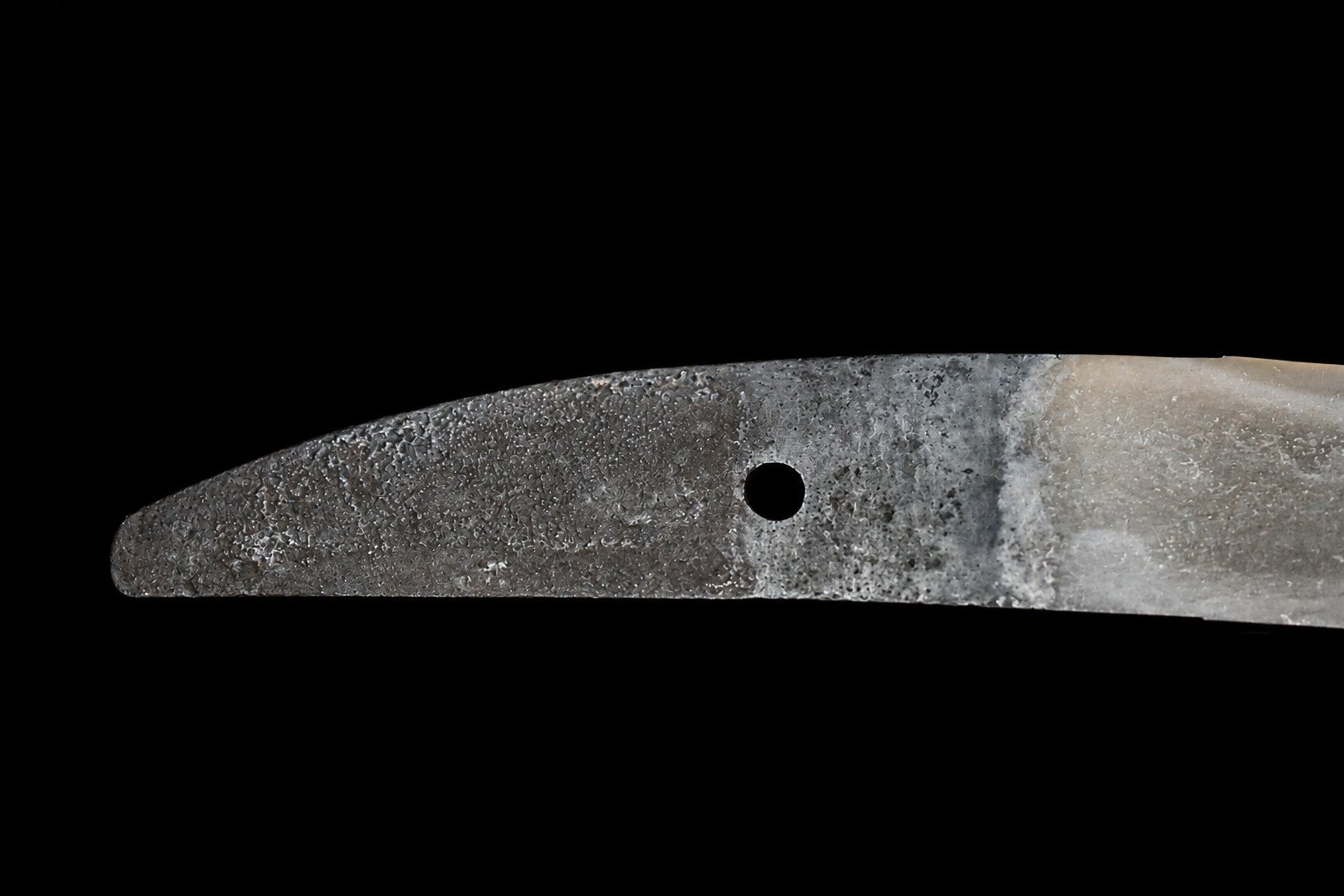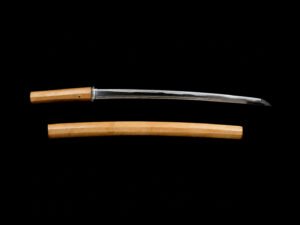
A distinctive late-Muromachi wakizashi combining an extensively tempered hitatsura hamon with a documented attribution to the Shimobara school of Musashi Province.
The blade is mumei, but a formal NTHK-NPO kanteisho attributes it to den Bushū Shimobara Chikashige and dates the work to the Tenbun era, approximately 1532–1555.
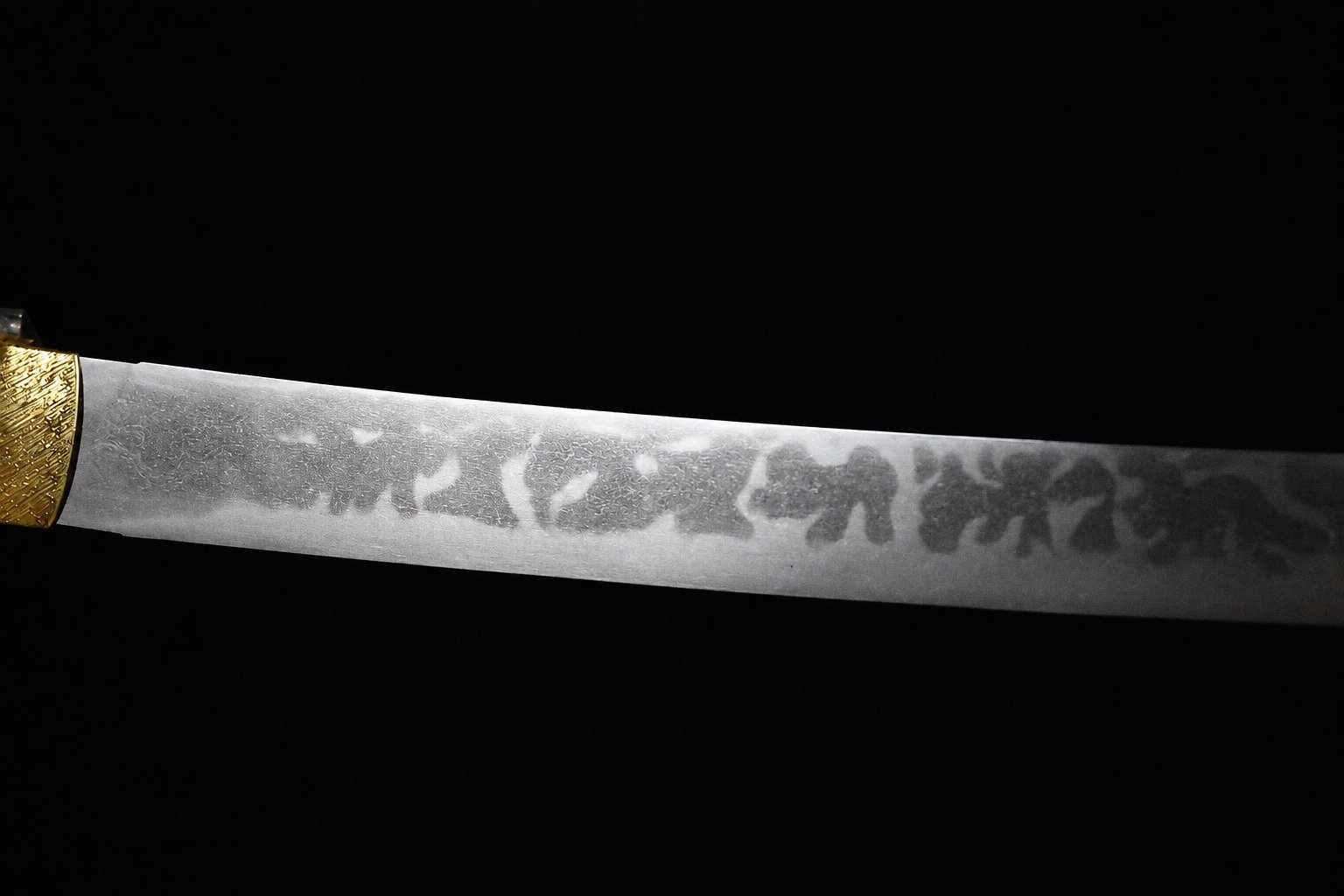
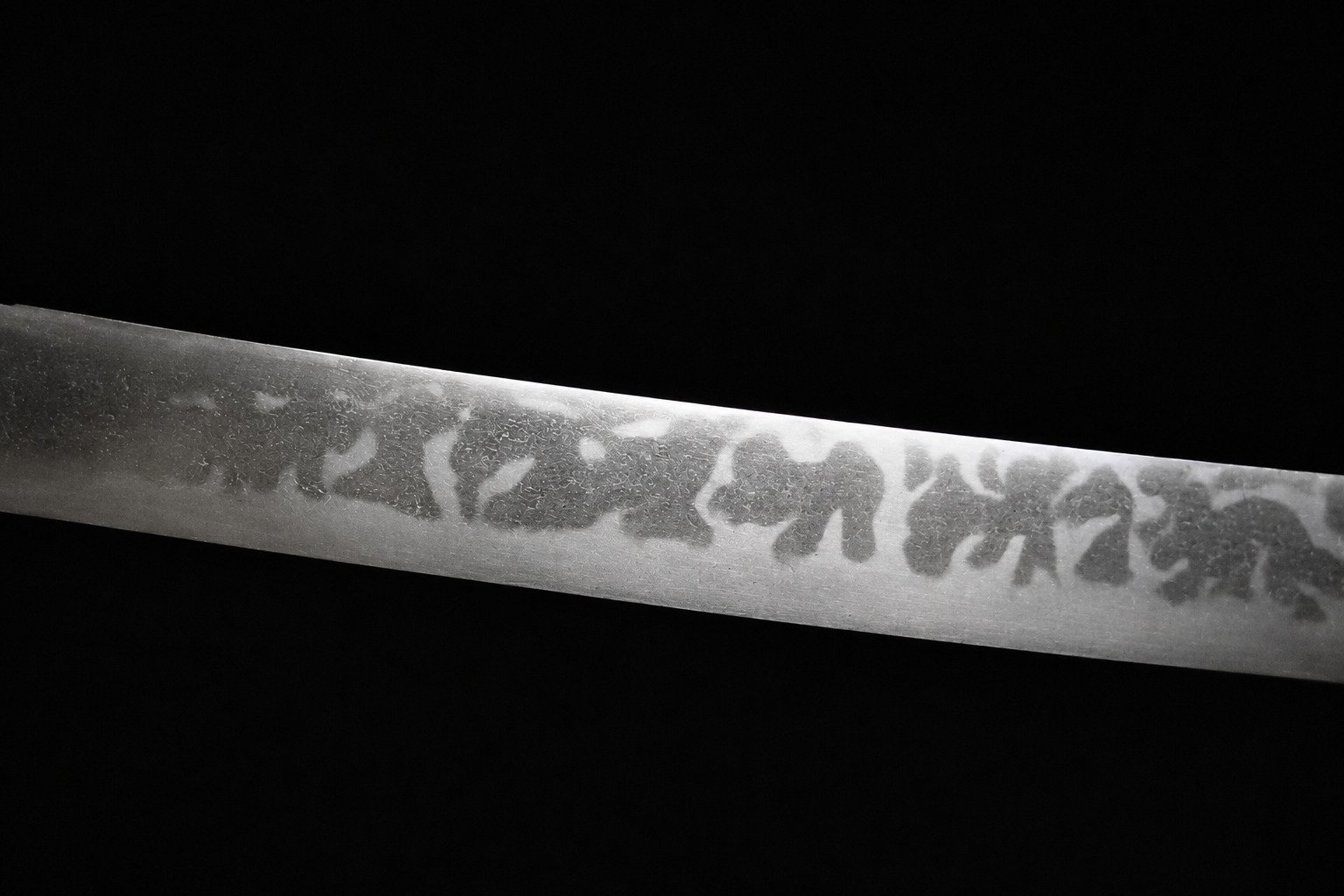
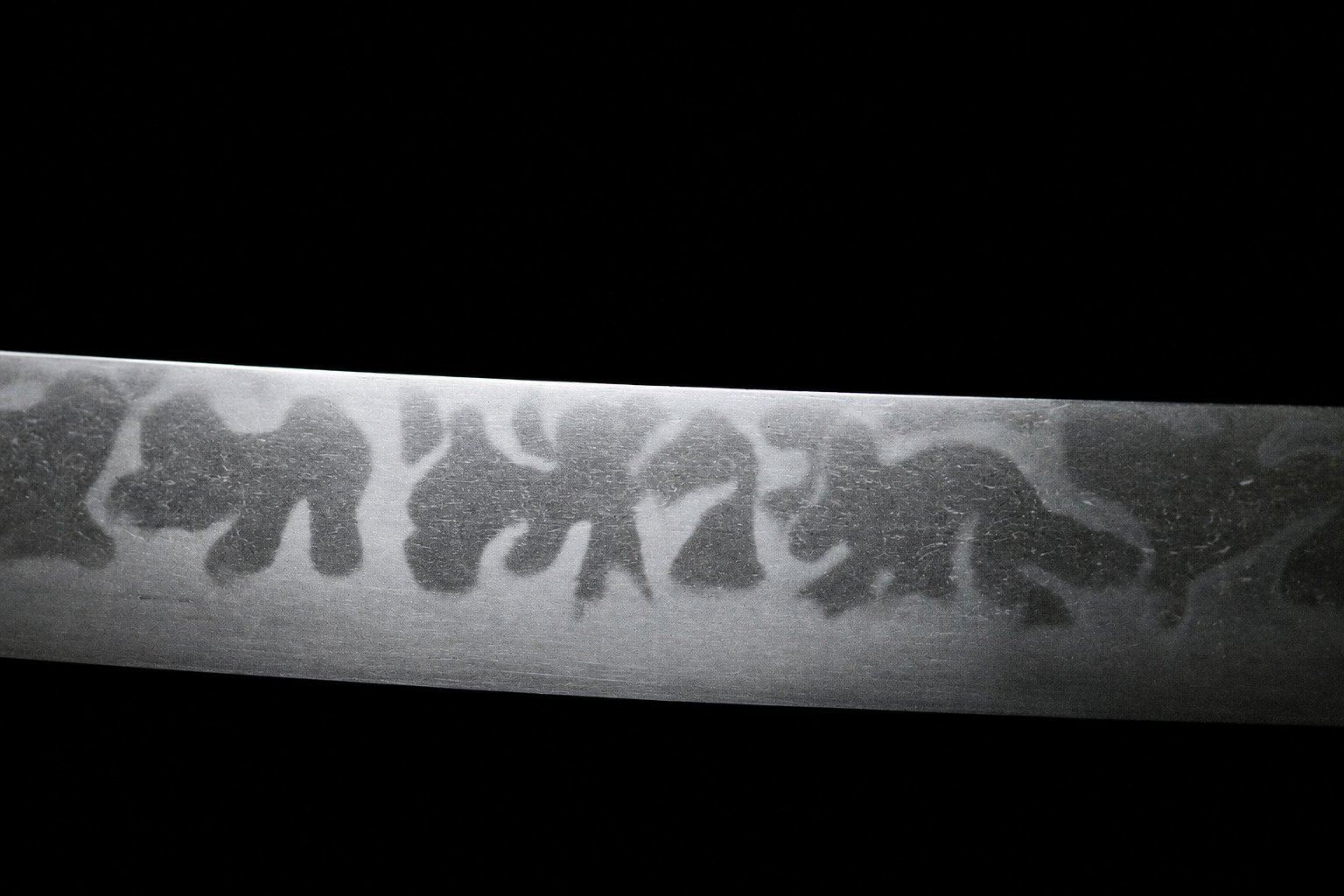
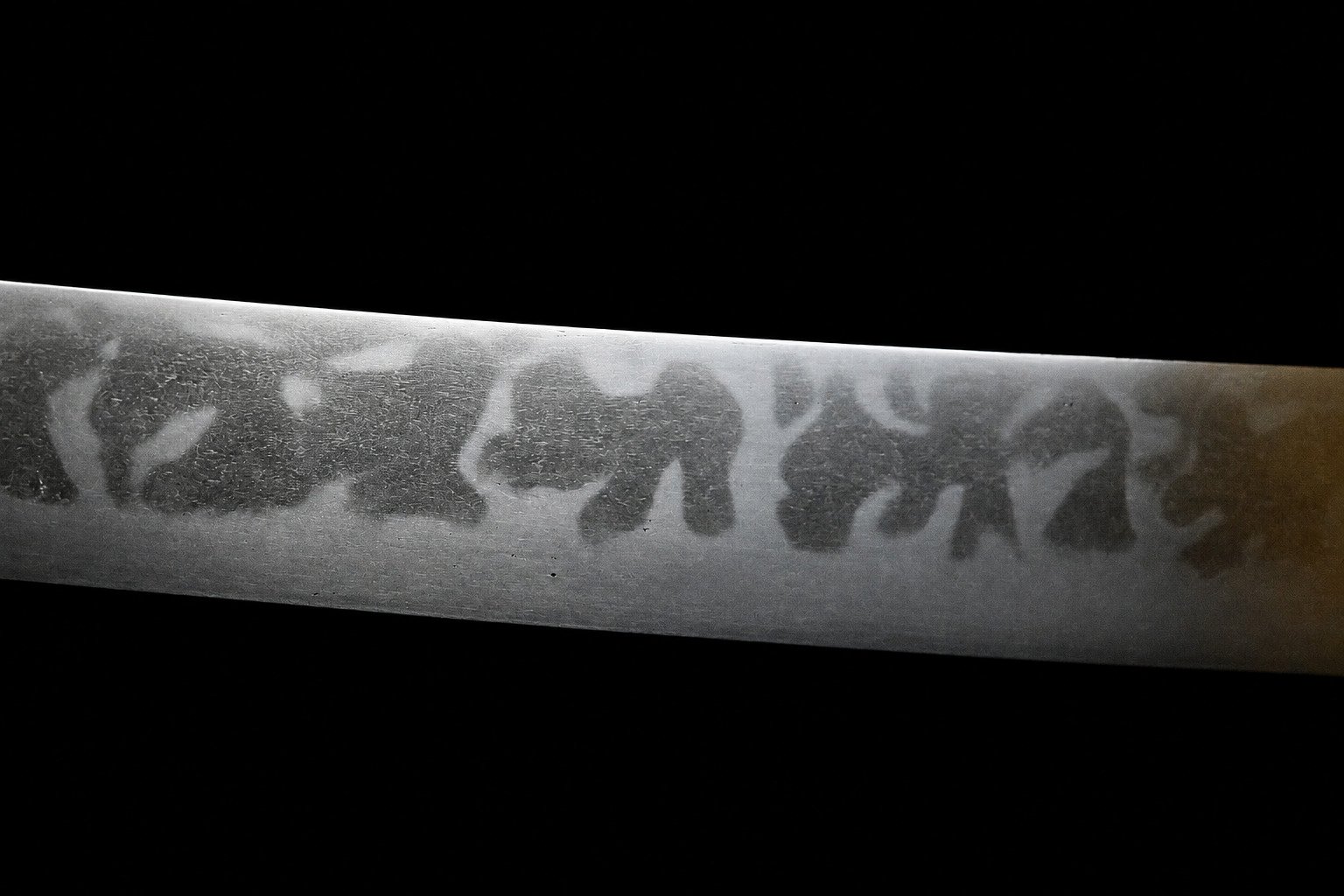
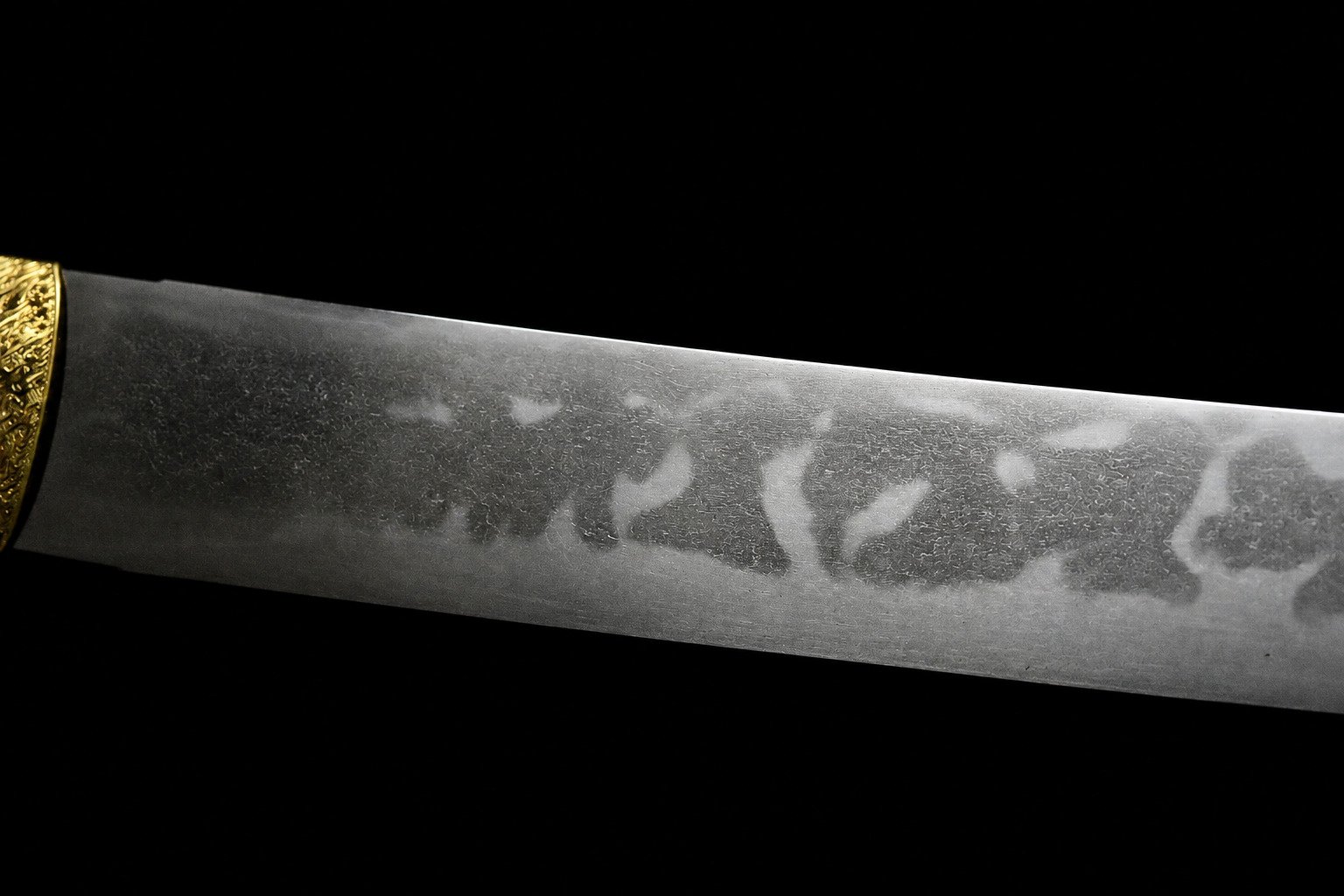
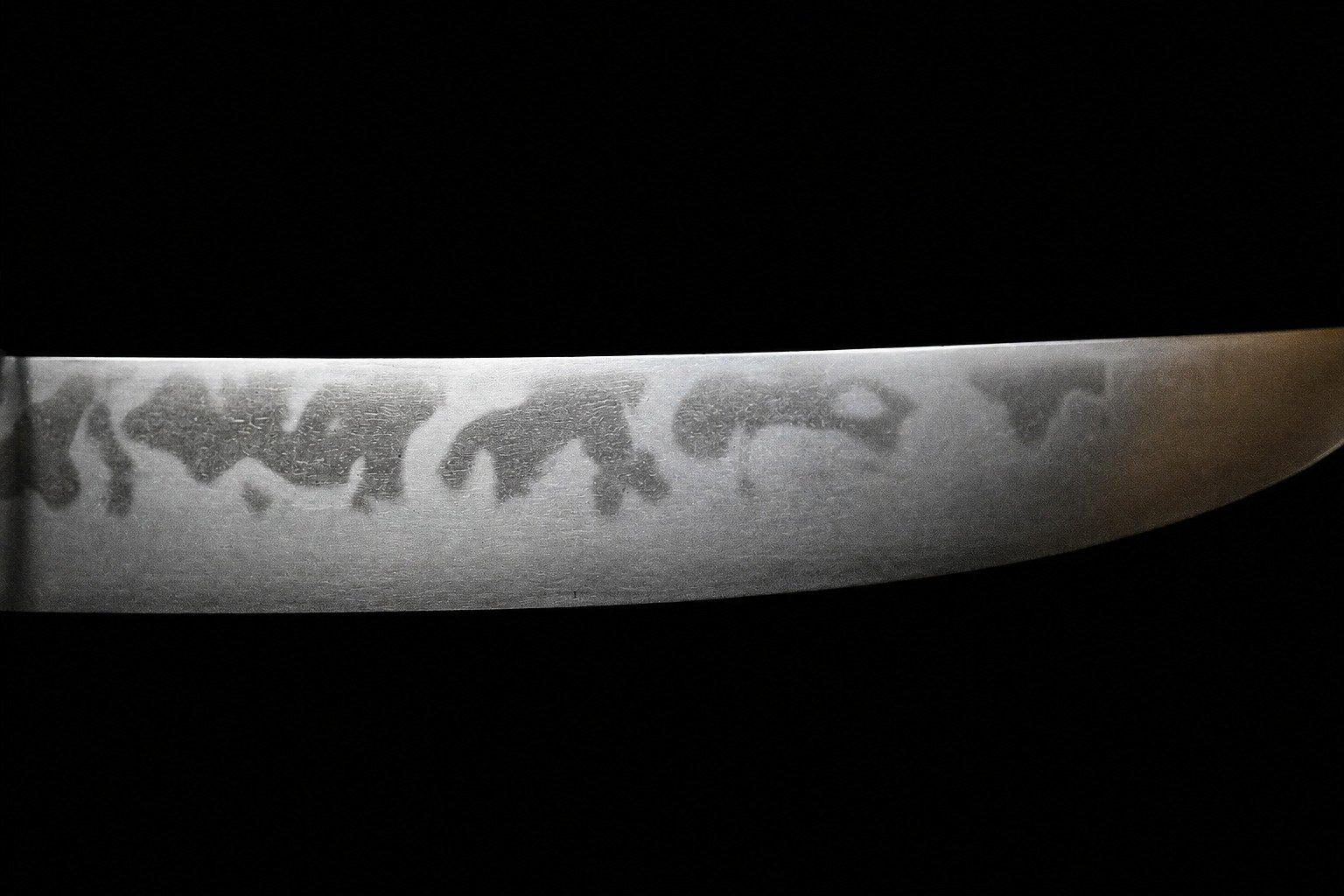
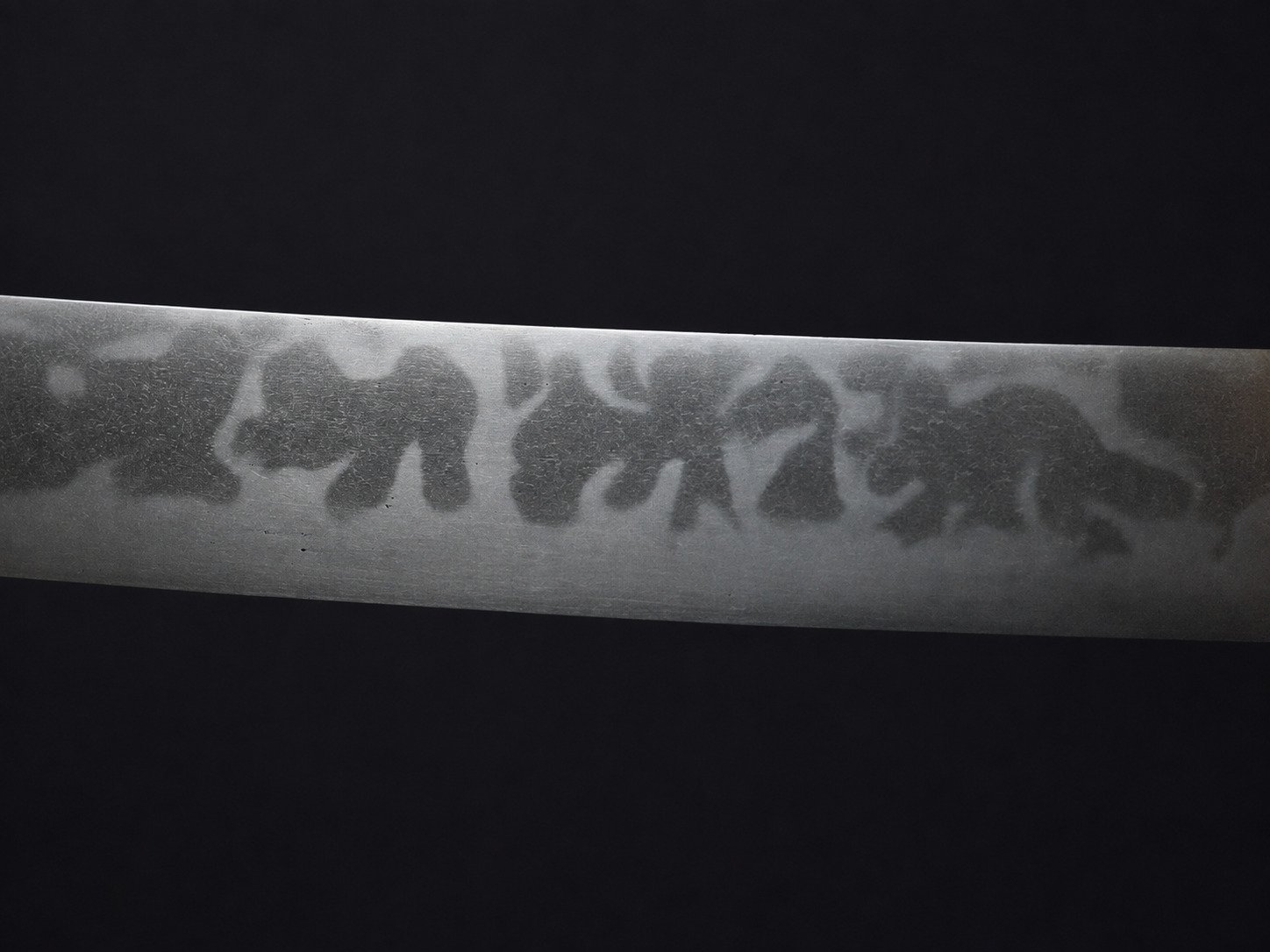
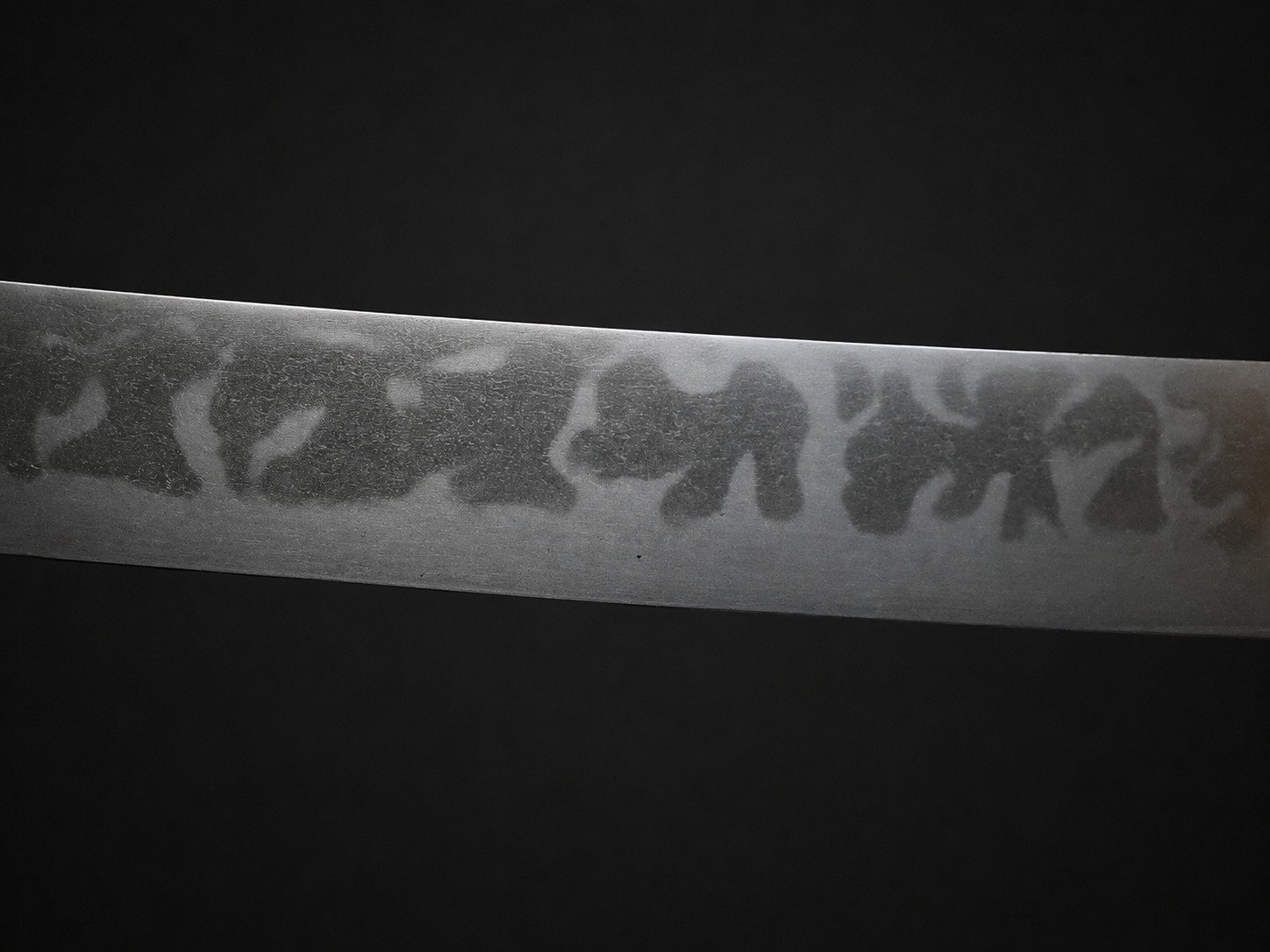
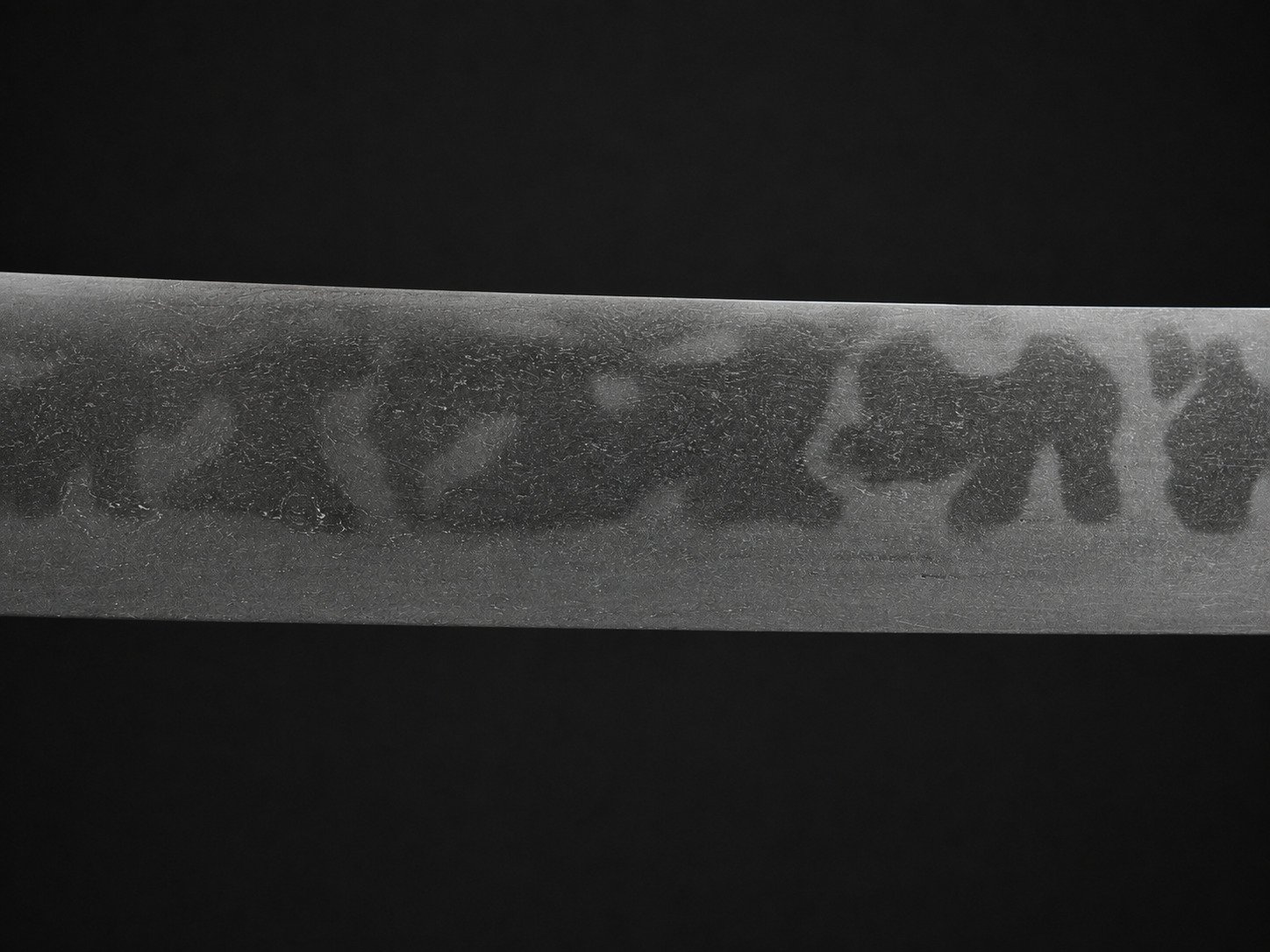
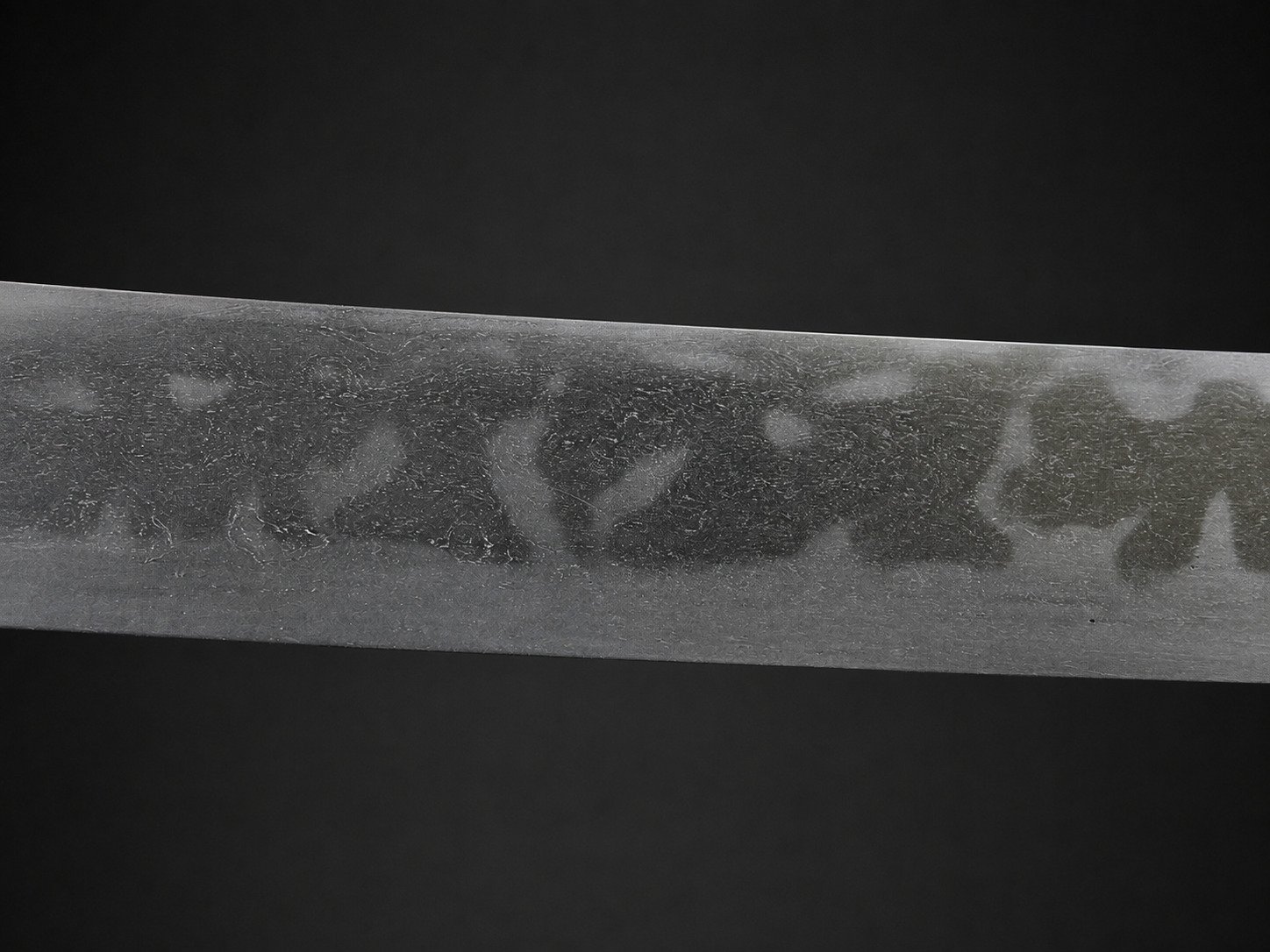
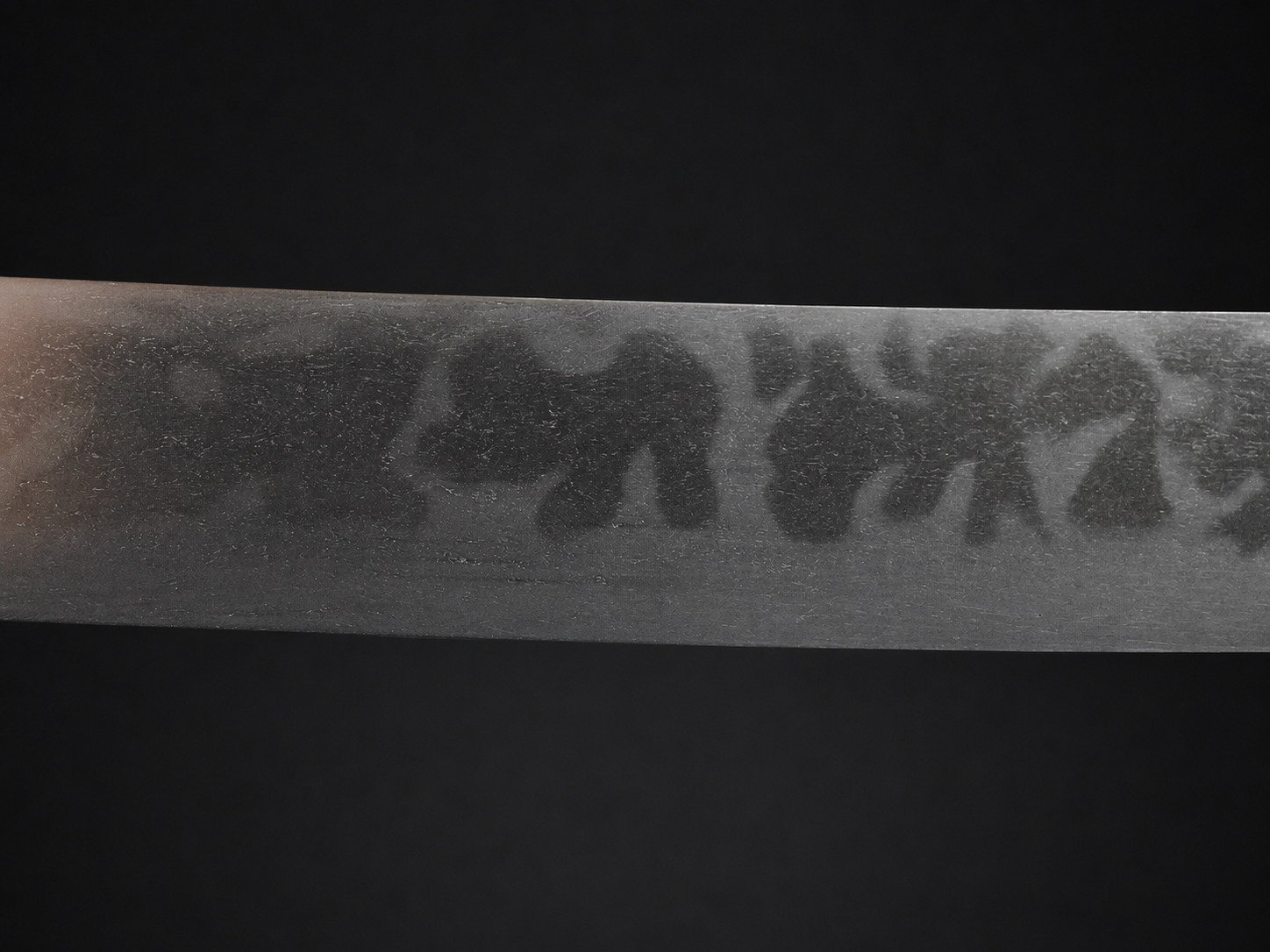
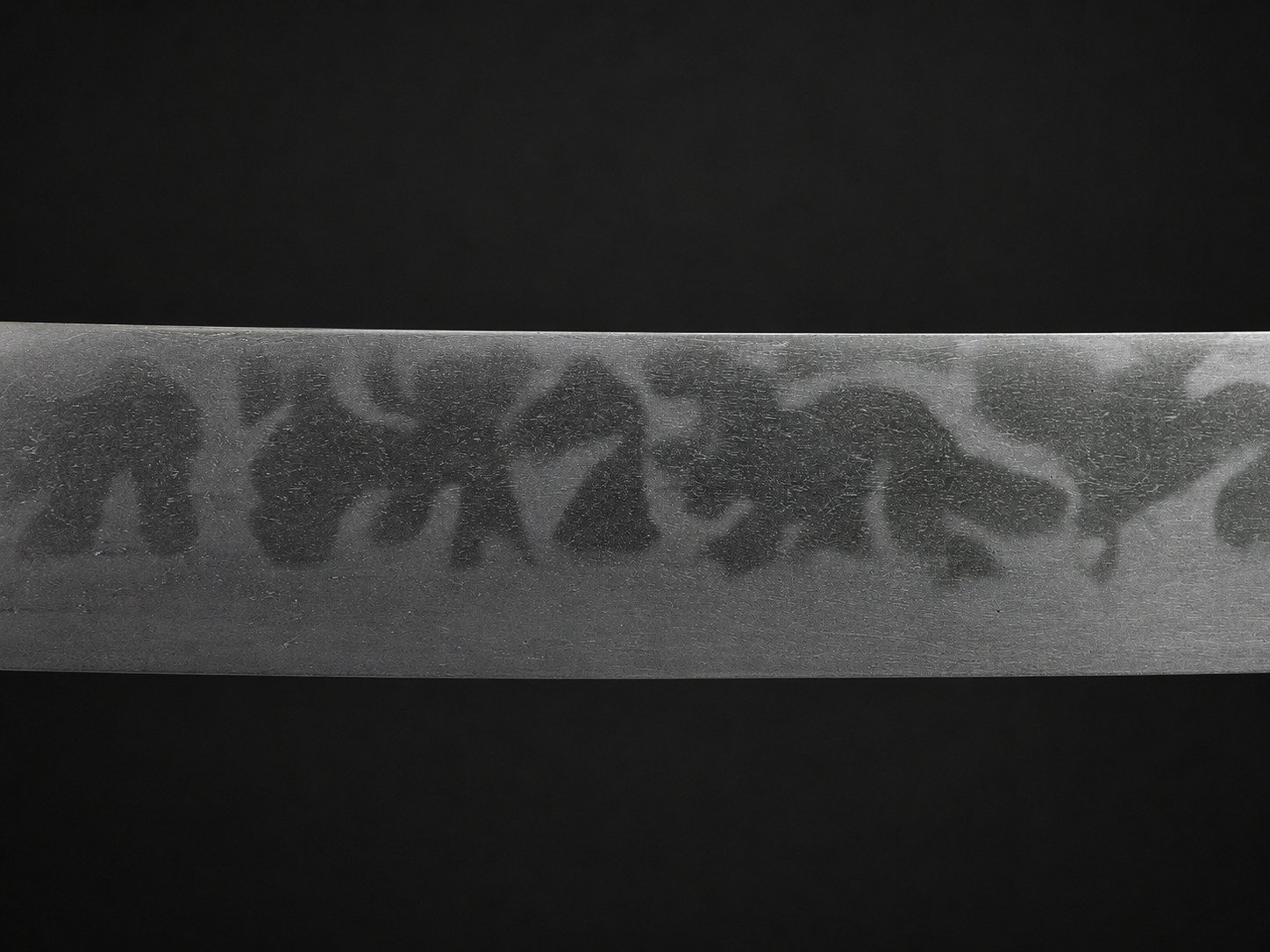
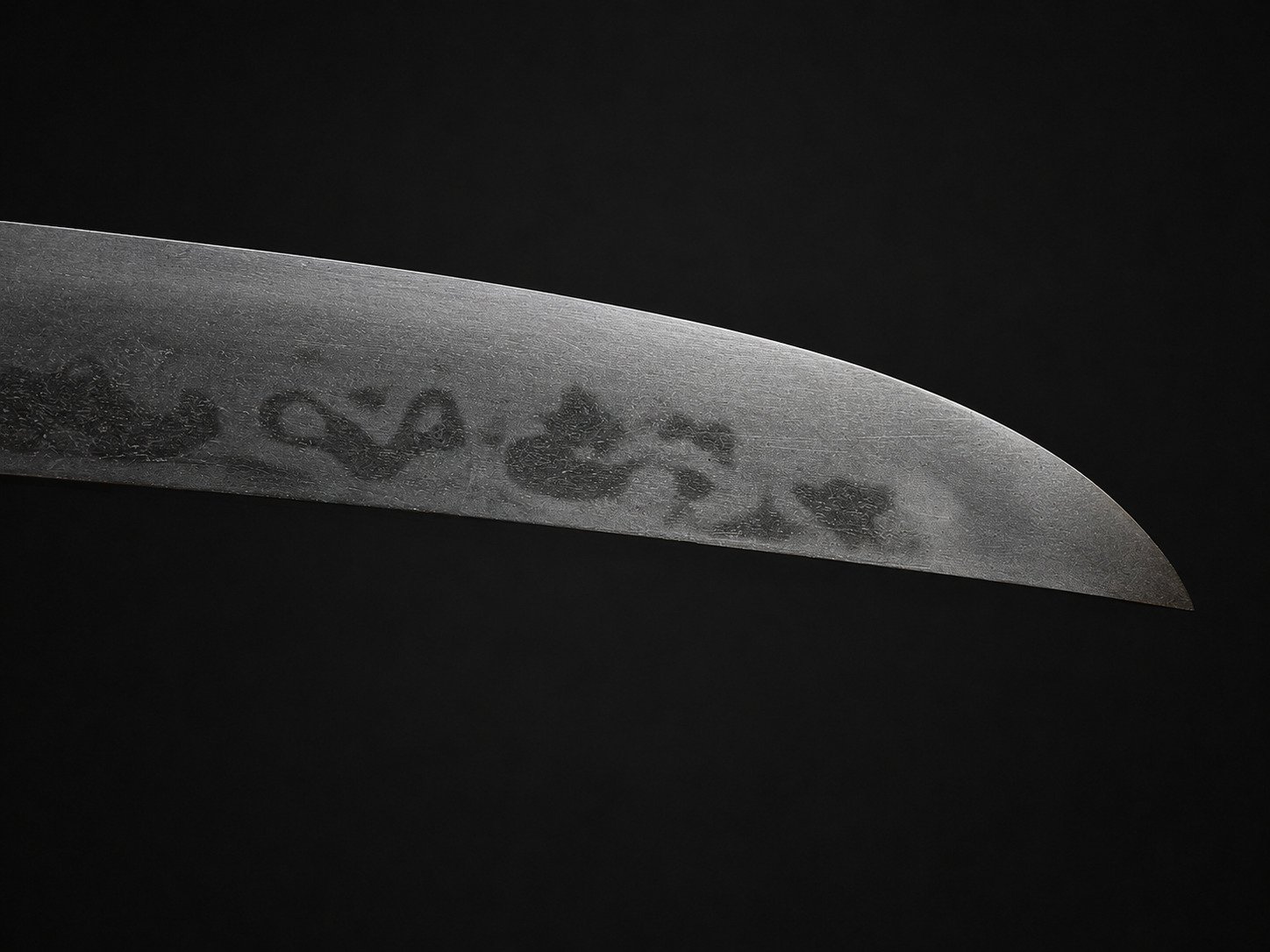
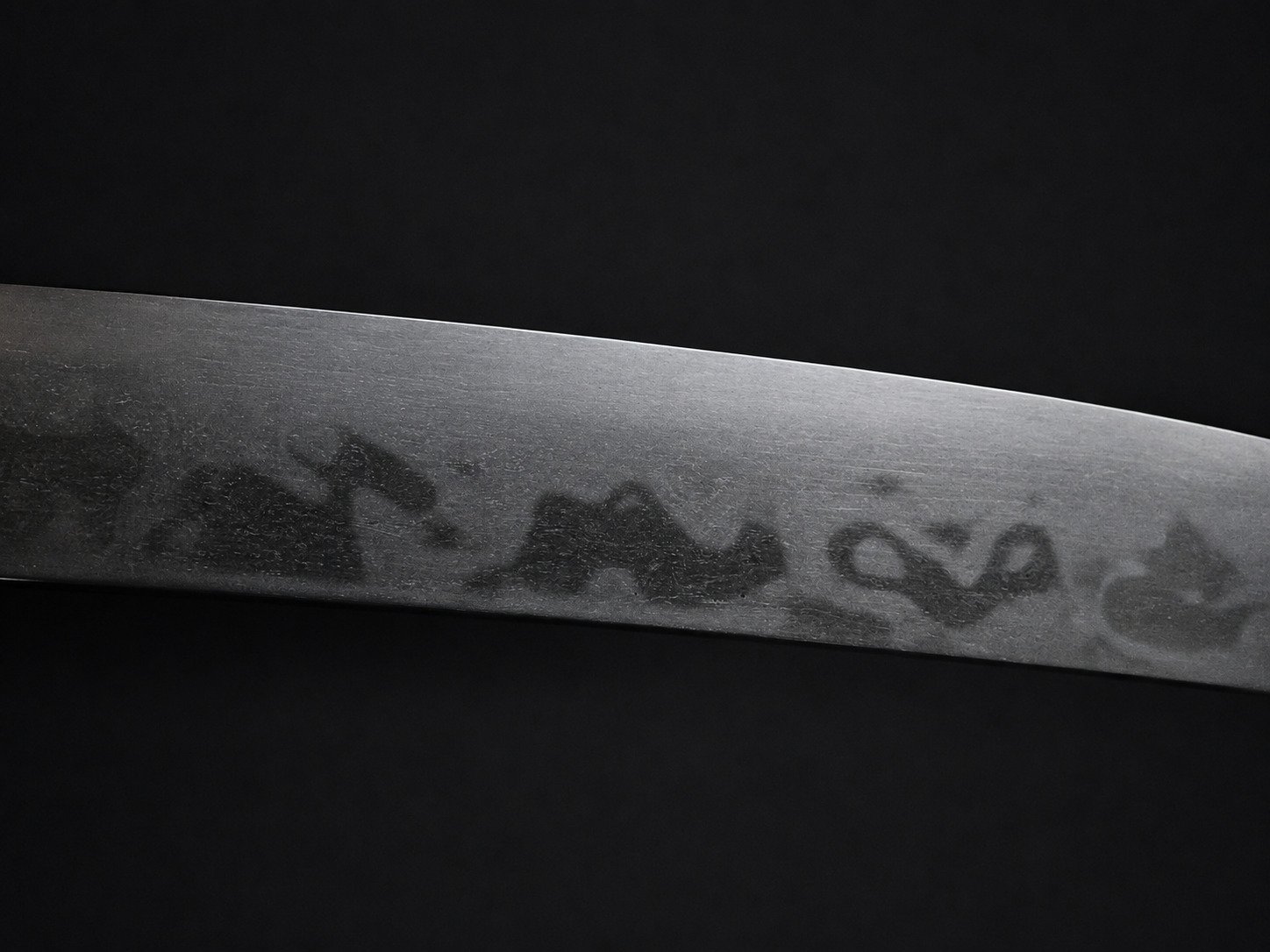
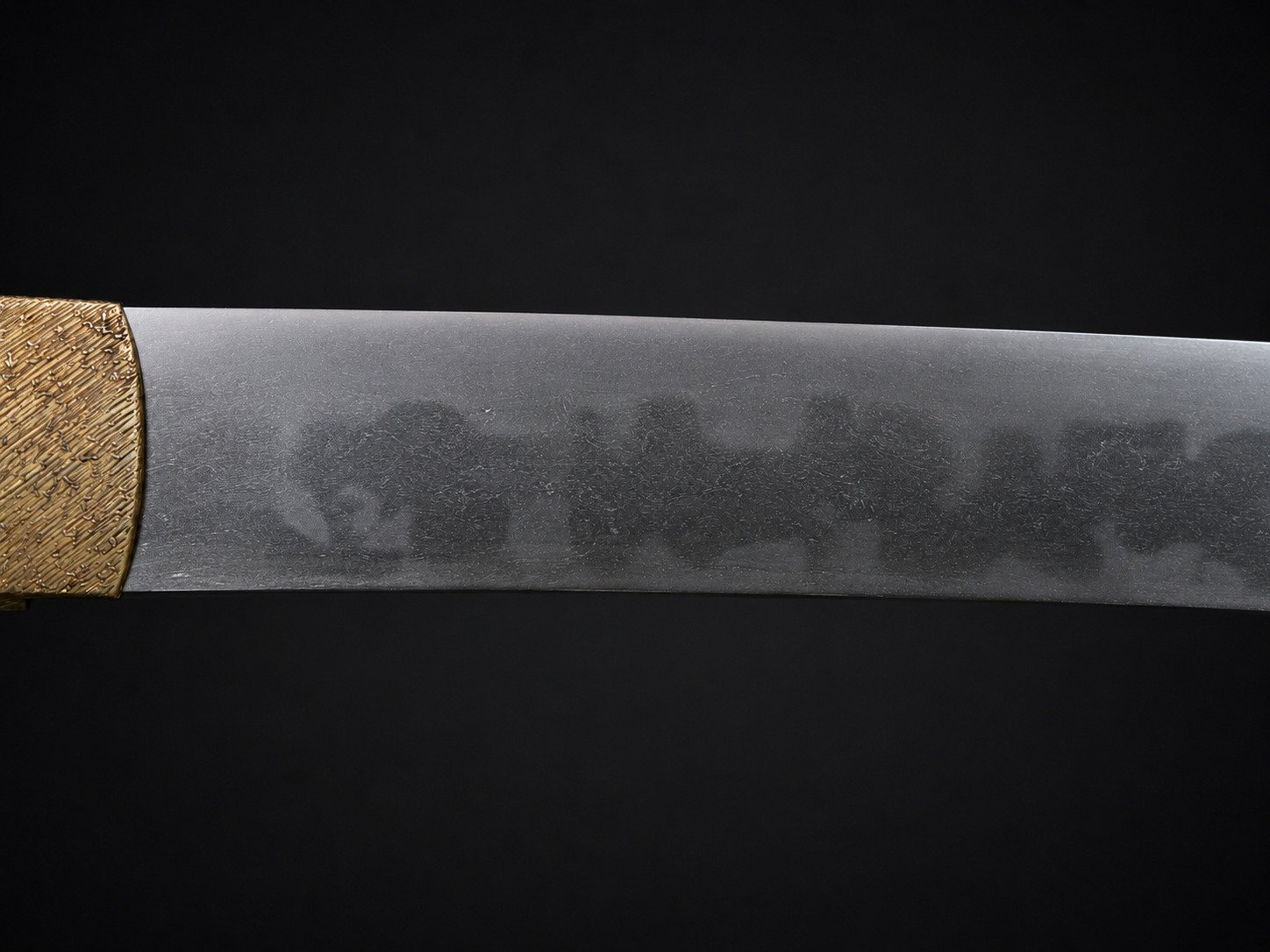
Its most striking feature is the hitatsura temper pattern: the hardened activity is not confined to the cutting edge but extends irregularly into the ji in isolated areas of tobiyaki, creating a highly animated surface across the blade.
Hitatsura describes a fully active tempering style in which hardened areas spread beyond the main hamon and appear across the surface of the blade as detached patches or cloud-like formations.
These isolated areas are known as tobiyaki and can extend through the ji and, in some examples, toward the mune. The result is considerably more visually complex than a conventional hamon confined closely to the cutting edge.
On this wakizashi, the scattered tempering activity creates a dynamic relationship between the yakiba and the surrounding steel, giving the blade a strongly expressive character.
Hitatsura is historically associated with the broader influence of Sōshū-den and with later smiths who adopted more active and dramatic tempering styles during the Nanbokuchō and Muromachi periods.
The temper activity breaks away from the main hardened edge in multiple areas, forming the characteristic tobiyaki associated with hitatsura.
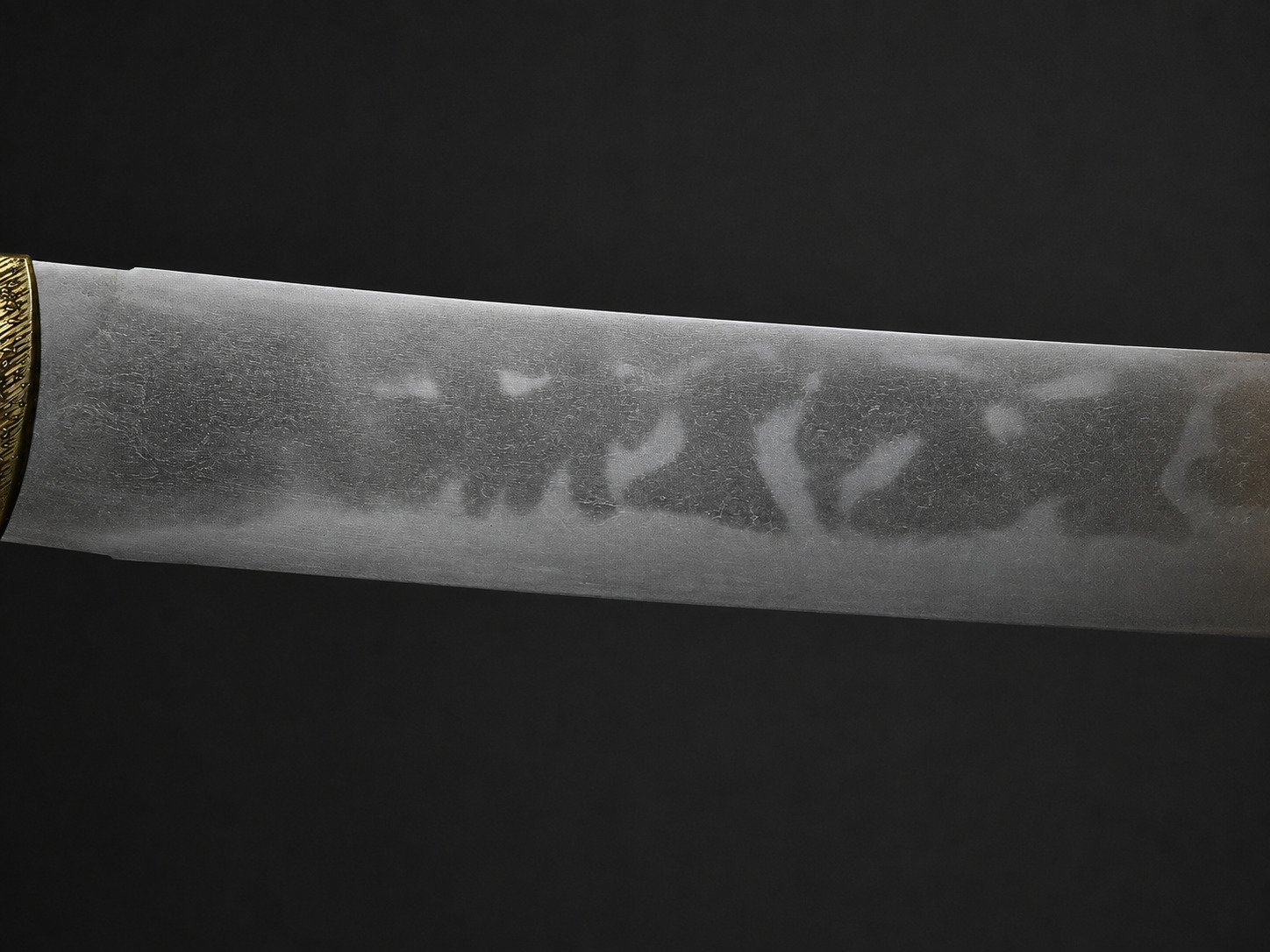
Rather than following a single continuous visual boundary, the hardened zones appear across the ji in irregular patches, producing a layered and painterly effect under appropriate lighting.
This activity should be studied from different angles, as the relationship between the hamon, ji and scattered hardened areas becomes more apparent under raking light.
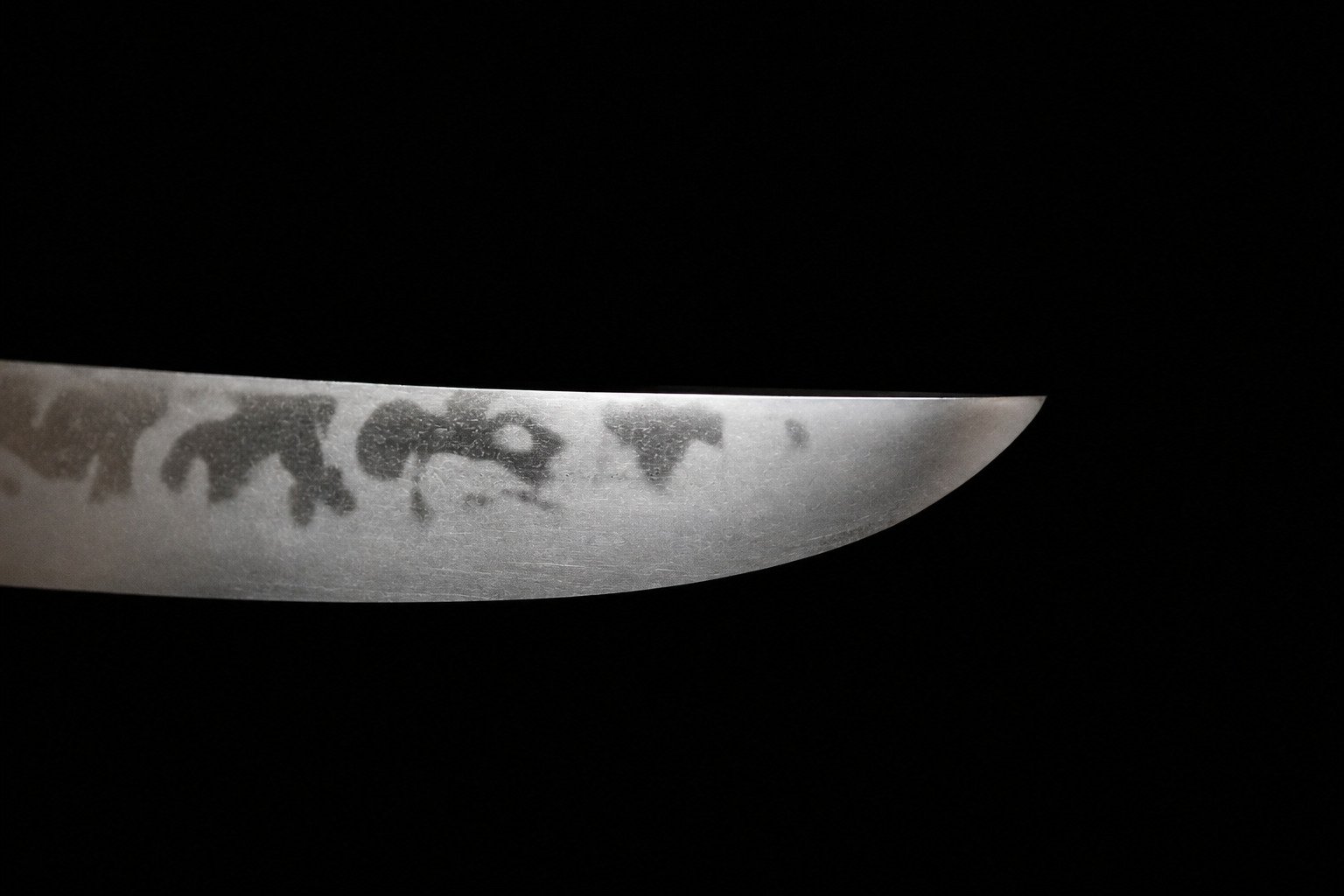
The activity continues into the kissaki as a midare-komi bōshi, with the irregular temper pattern entering the point and returning in a pronounced kaeri.
The continuation of the temper into the kissaki gives the tip a visual character consistent with the active treatment seen throughout the rest of the blade.
The deep returning kaeri provides an additional point of study for collectors interested in the relationship between the main hamon and the tempering of the kissaki.
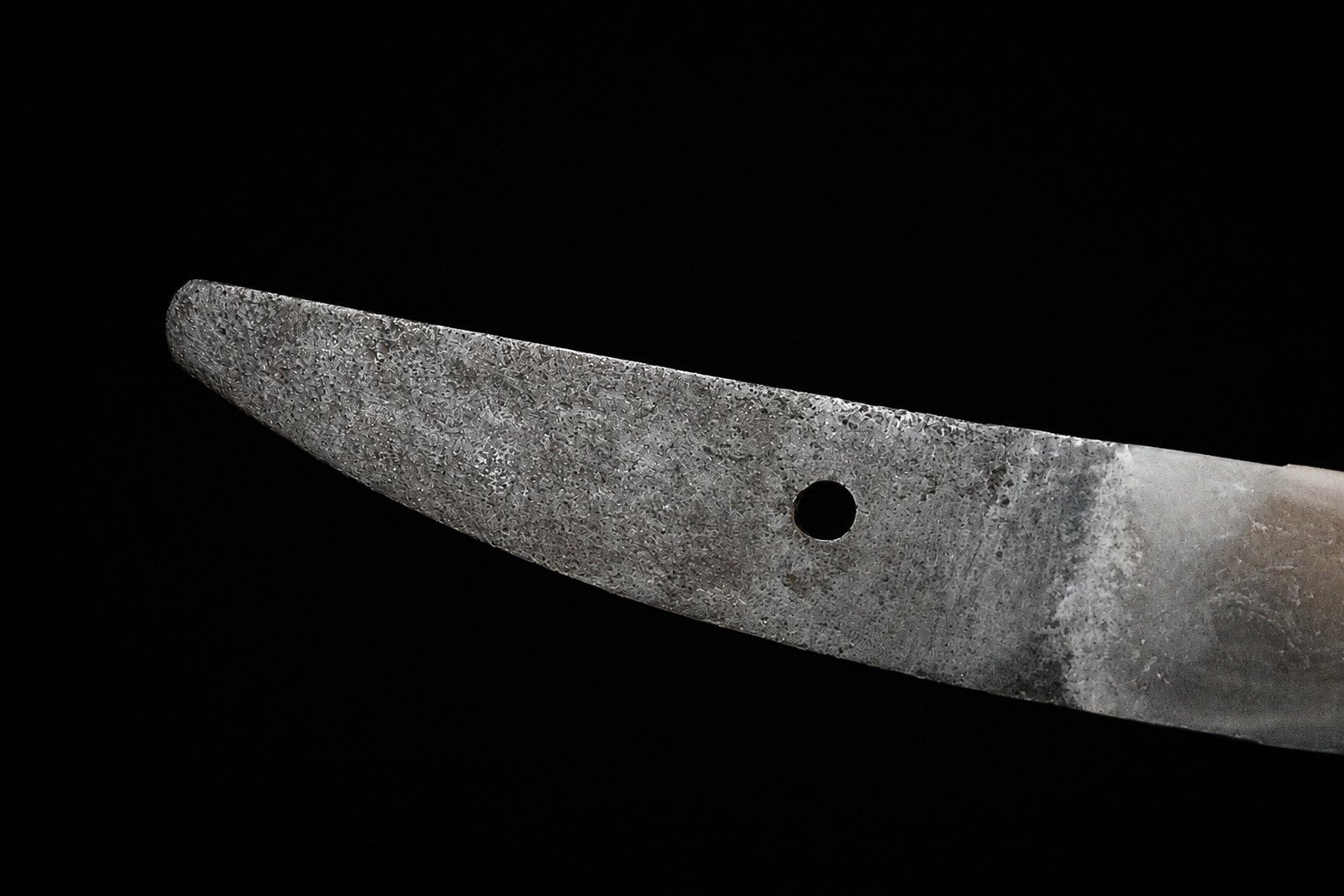
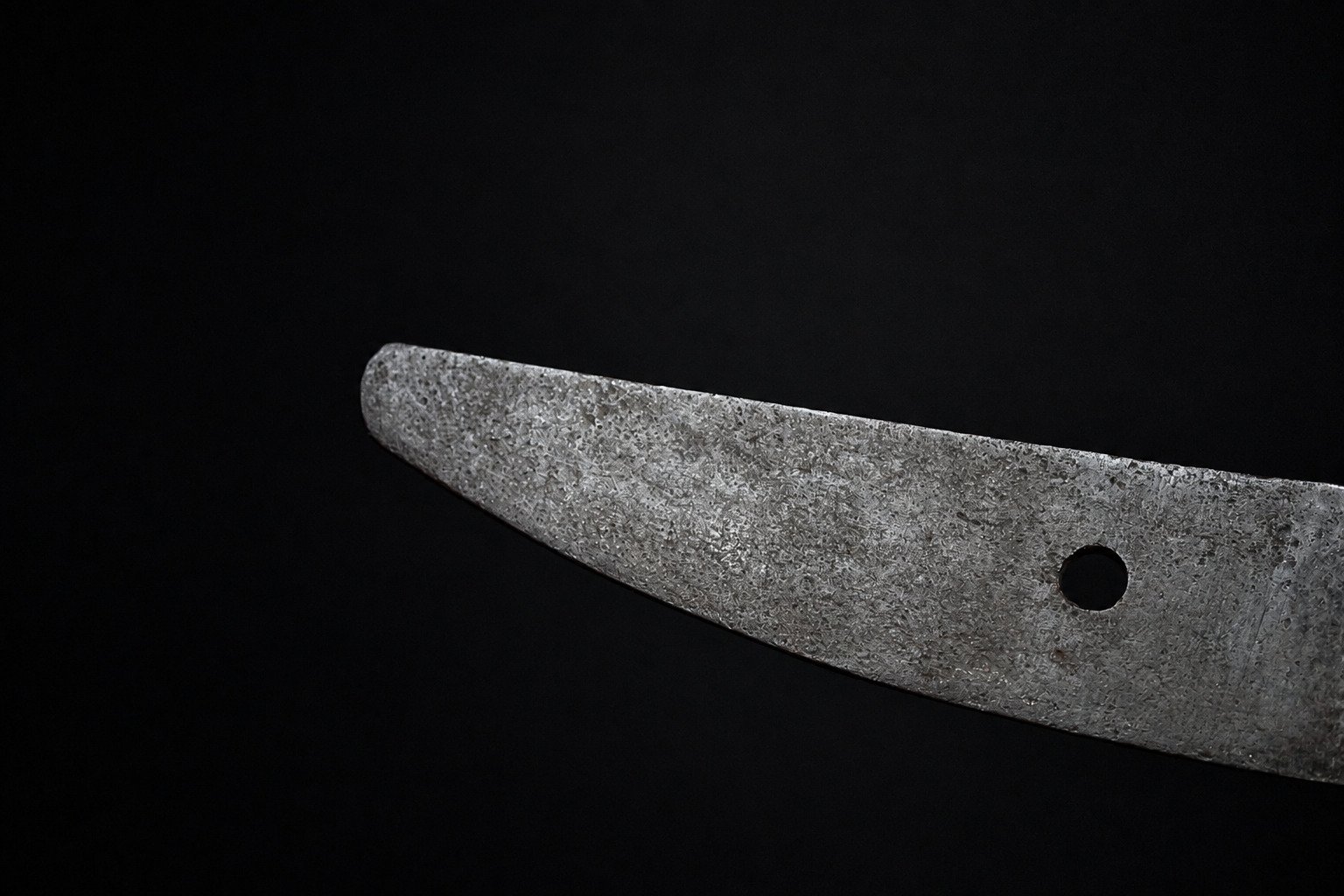
Beneath the active tempering, the blade shows a tight itame jihada.
The grain provides a controlled and comparatively compact foundation for the more dramatic hitatsura activity above it. Under suitable lighting, the forged surface becomes visible as fine wood-grain-like movement in the steel.
This contrast between a relatively tight jihada and an expansive temper pattern is one of the most visually interesting aspects of the blade.
The NTHK-NPO attributes the blade to den Bushū Shimobara Chikashige.
The term den indicates an attribution to the tradition or workmanship associated with that smith rather than the presence of a surviving signature identifying the maker directly.
Bushū refers to Musashi Province, while the Shimobara school was active in the area corresponding broadly to present-day western Tokyo, particularly around Hachiōji.
Shimobara smiths are generally associated with practical sword production for regional warriors during the late Muromachi period and continued working into the Edo period.
The Shimobara tradition developed in Musashi Province and is historically associated with the political and military environment surrounding the Later Hōjō clan.
Traditional accounts connect the school’s early development with smiths working under Hōjō patronage in the late Muromachi period. After the fall of the Hōjō in 1590, the tradition continued into the Tokugawa era.
Several generations of Shimobara smiths used names containing the character 重 (shige), including Chikashige.
Much surviving Shimobara work is valued for its straightforward construction and practical character. Against that background, the extensive hitatsura activity of this blade gives it a particularly distinctive presence within the tradition.
The NTHK-NPO kanteisho dates the blade to the Tenbun era, corresponding approximately to 1532–1555, within the late Muromachi period.
This was a period of sustained military conflict in Japan, when regional schools produced swords for active samurai clientele and the demand for functional blades remained high.
The combination of practical wakizashi proportions with an unusually active temper pattern makes this piece particularly interesting within that historical context.
The blade is accompanied by a formal kanteisho issued by the NPO Nihon Tōken Hozon Kai (NTHK-NPO).
The certificate provides a formal attribution and period assessment by the NTHK-NPO and forms an important part of the documented history of the blade.
The wakizashi is also accompanied by its original Saitama Prefecture Tōroku-shō.
The registration certificate records the blade as unsigned, consistent with the later attribution being based on workmanship rather than a surviving mei.
The blade is accompanied by both its Japanese registration certificate and its NTHK-NPO attribution papers, allowing its documented history and scholarly attribution to remain together with the sword.
The extensive hitatsura activity, midare-komi bōshi and tight itame jihada are the principal features of interest for study.
As with all antique Japanese swords, minor variations in polish, surface condition and signs of age should be understood within the context of the blade’s historical life rather than as modern manufacturing imperfections.
A distinctive late-Muromachi hitatsura wakizashi attributed by the NTHK-NPO to den Bushū Shimobara Chikashige and dated to the Tenbun era. Its expansive tobiyaki, active midare-komi bōshi, tight itame jihada and documented Musashi attribution make it a particularly compelling blade for collectors interested in technically expressive tempering and regional swordmaking traditions.
| Época | Edo |
|---|

Order above 1.000,00 € gets free shipping.

Secure and hassle-free payment process.

Certificate of authenticity included.

Have questions? Contact us via WhatsApp.
Contact