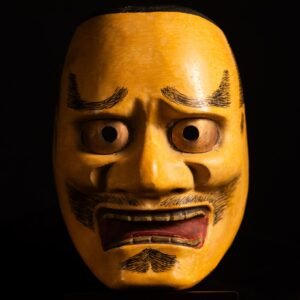
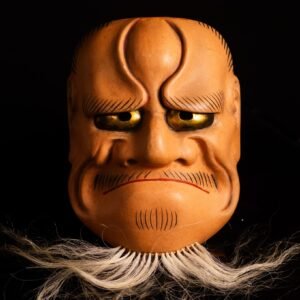
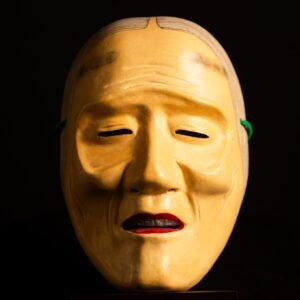
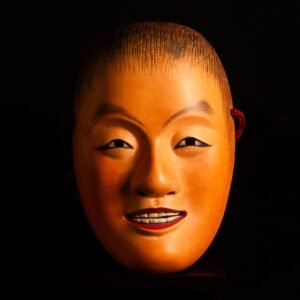
Few objects embody the elegance and mystery of Japanese culture as completely as the Noh mask (Noh-men, 能面). For more than six centuries, these remarkable works of art have been used in Noh theatre, Japan’s oldest surviving theatrical tradition.
Far more than simple stage props, Noh masks are masterpieces of sculpture designed to convey complex emotions through subtle changes of light, shadow and movement. Their serene expressions, refined craftsmanship and deep symbolism have fascinated collectors, performers and art historians around the world.
Today, antique Noh masks are highly sought after as important examples of Japanese cultural heritage and traditional craftsmanship.
A Noh mask is a carved wooden mask used in traditional Japanese Noh theatre.
Unlike many theatrical masks from other cultures, Noh masks are intentionally subtle. Rather than displaying exaggerated expressions, they are carefully designed to appear different depending on the angle from which they are viewed.
A slight tilt of the actor’s head can transform a face from joyful to sorrowful, from youthful to aged, or from peaceful to haunting.
This unique characteristic is one of the reasons Noh masks are considered among the most sophisticated theatrical objects ever created.
Noh theatre emerged during the fourteenth century and was largely developed by the legendary playwrights and performers Kan’ami and Zeami.
Combining music, dance, poetry and dramatic storytelling, Noh became the preferred theatrical art of the samurai class and eventually received the patronage of shoguns and noble families.
Its themes often explored:
Within this highly stylised form of theatre, masks became essential tools for bringing characters to life.
Traditional Noh masks are carved from blocks of Japanese cypress (hinoki), a wood prized for its fine grain, stability and durability.
The carving process requires extraordinary skill and precision.
After the mask is shaped, the artist applies layers of natural pigments, lacquer and finishing materials to achieve the desired appearance.
The goal is not realism but idealisation.
Each mask represents an archetype rather than an individual person, allowing performers to portray universal emotions and timeless characters.
One of the most remarkable aspects of a Noh mask is its ability to appear alive.
Through carefully calculated proportions and subtle carving, a single mask can convey multiple emotions depending on lighting and movement.
Two important concepts illustrate this phenomenon:
When the actor slightly raises the mask, the face appears brighter, happier and more optimistic.
When the actor lowers the mask, shadows create a more sombre, melancholic or mysterious expression.
This dynamic interaction between actor and mask lies at the heart of Noh performance.
Over the centuries, hundreds of mask designs have been created. Most fall into several broad categories.
Representing young women, noble ladies and female spirits.
Examples include:
These masks are admired for their elegance and delicate beauty.
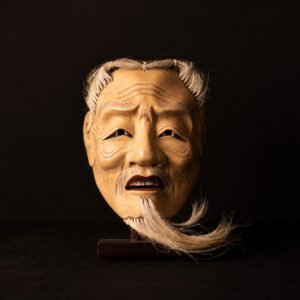
Representing elderly men, priests, sages and deities.
Often associated with wisdom, longevity and spiritual authority.
Used to portray historical samurai, military leaders and heroic figures.
These masks frequently display determination and dignity.
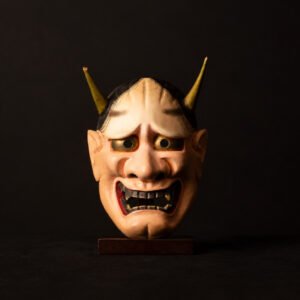
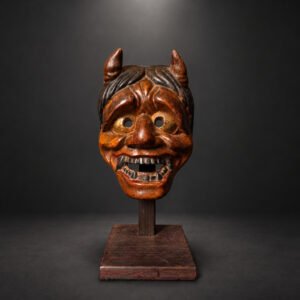
Representing supernatural beings, spirits and legendary creatures.
Some of the most dramatic examples in Noh theatre.
Used for tragic spirits and restless souls returning from the past.
These masks often convey profound sorrow and longing.
Every feature of a Noh mask carries meaning.
Artists carefully considered:
The resulting masks are highly symbolic and often represent concepts rather than individuals.
Themes frequently explored include:
These ideas reflect the strong influence of Buddhist philosophy within Noh theatre.
The Edo Period (1603–1868) was one of the most important eras for Noh theatre.
Under Tokugawa rule, Noh became the official ceremonial theatre of the shogunate and enjoyed significant patronage from the samurai elite.
As a result, many highly skilled mask makers flourished during this period, producing masks of exceptional quality.
Many of the finest antique Noh masks available to collectors today date from the Edo Period.
Over the centuries, several schools and master carvers became renowned for their work.
Among the most respected are:
Their masks are admired for their elegance, technical precision and expressive power.
Today, examples by important makers are preserved in museums and prestigious private collections worldwide.
Although originally created for theatrical performance, Noh masks are now widely appreciated as independent works of art.
Collectors value them for:
A well-carved Noh mask possesses a remarkable ability to transform under changing light conditions, making it a captivating object for display.
When evaluating antique Noh masks, collectors typically consider:
Masks from the Edo and Meiji periods are particularly desirable due to their historical significance and craftsmanship.
As with many areas of Japanese art, originality and condition play an important role in determining value.
Today, Noh masks are appreciated far beyond the world of theatre.
They can be found in:
Their timeless beauty and spiritual presence allow them to transcend their original function and become powerful works of sculpture.
For more than six hundred years, Noh masks have remained one of Japan’s most profound artistic achievements.
Combining sculpture, theatre, spirituality and symbolism, they capture the essence of Japanese aesthetics in a form that is both simple and endlessly complex.
Whether viewed as theatrical objects, historical artefacts or works of art, Noh masks continue to inspire admiration throughout the world.
Their quiet expressions remind us that true emotion is often found not in what is shown, but in what is suggested.
Contact