1 in stock
1 in stock
Add to Compare
Add to Wishlist
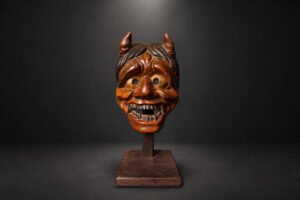
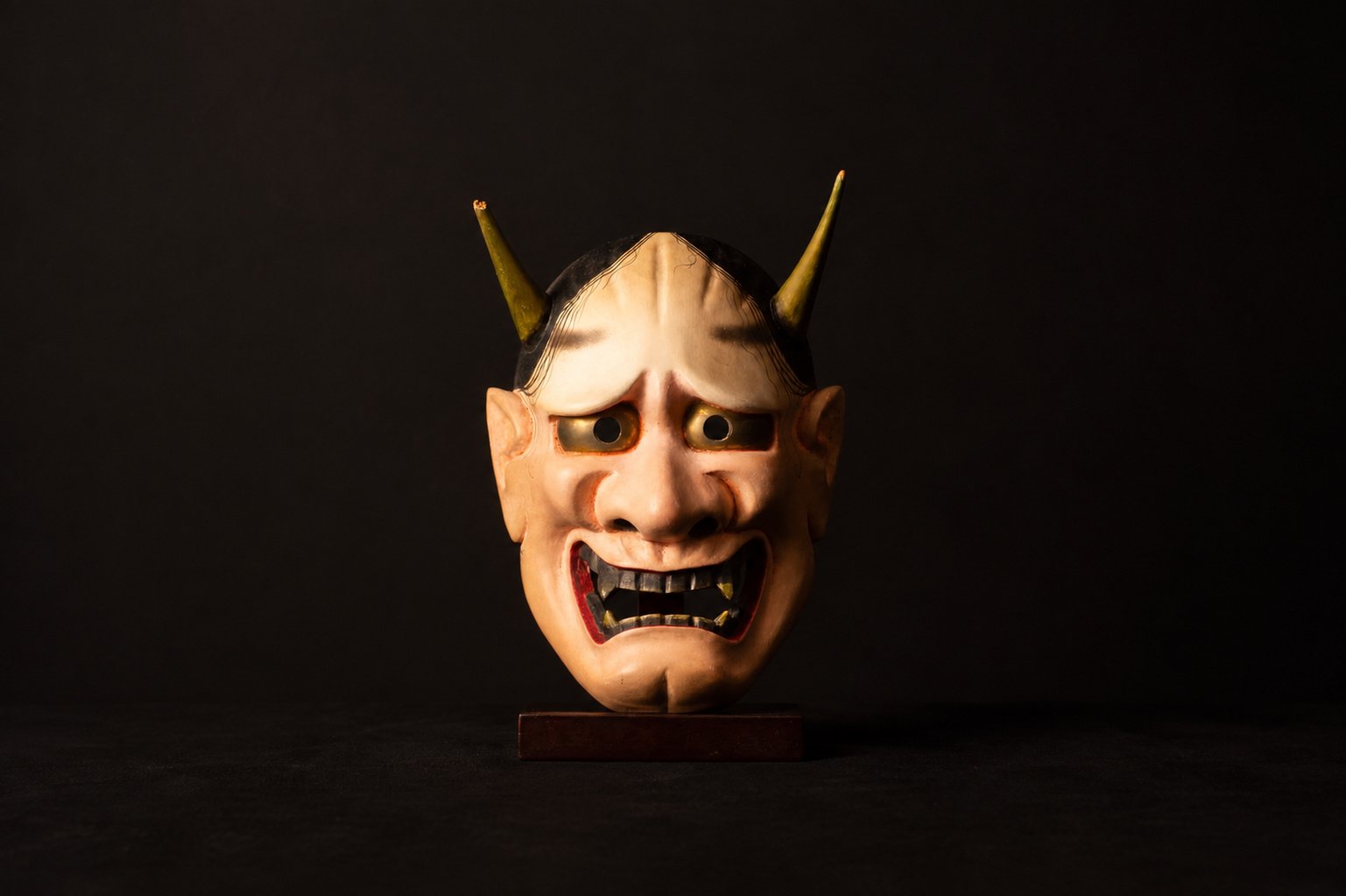
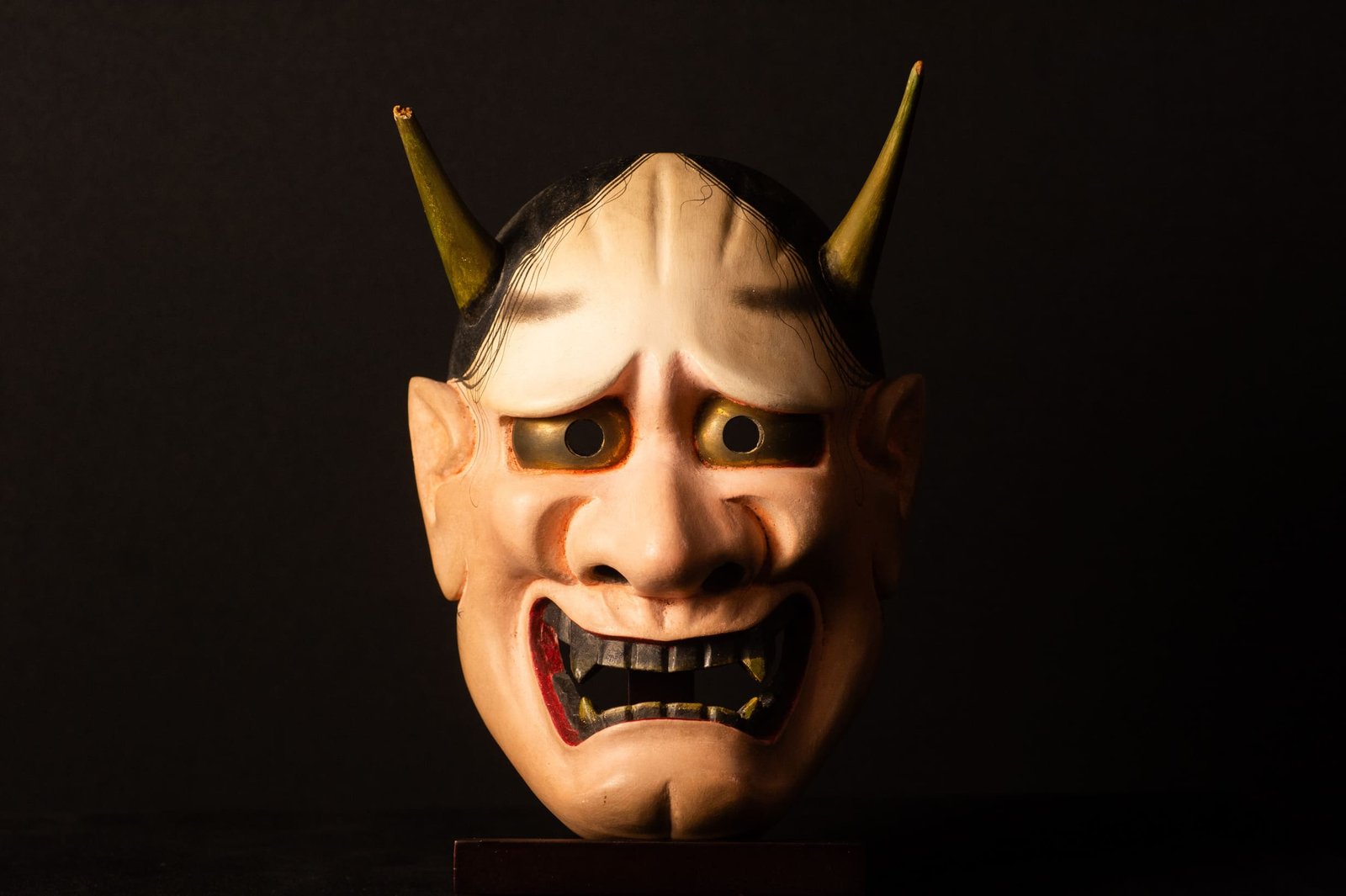
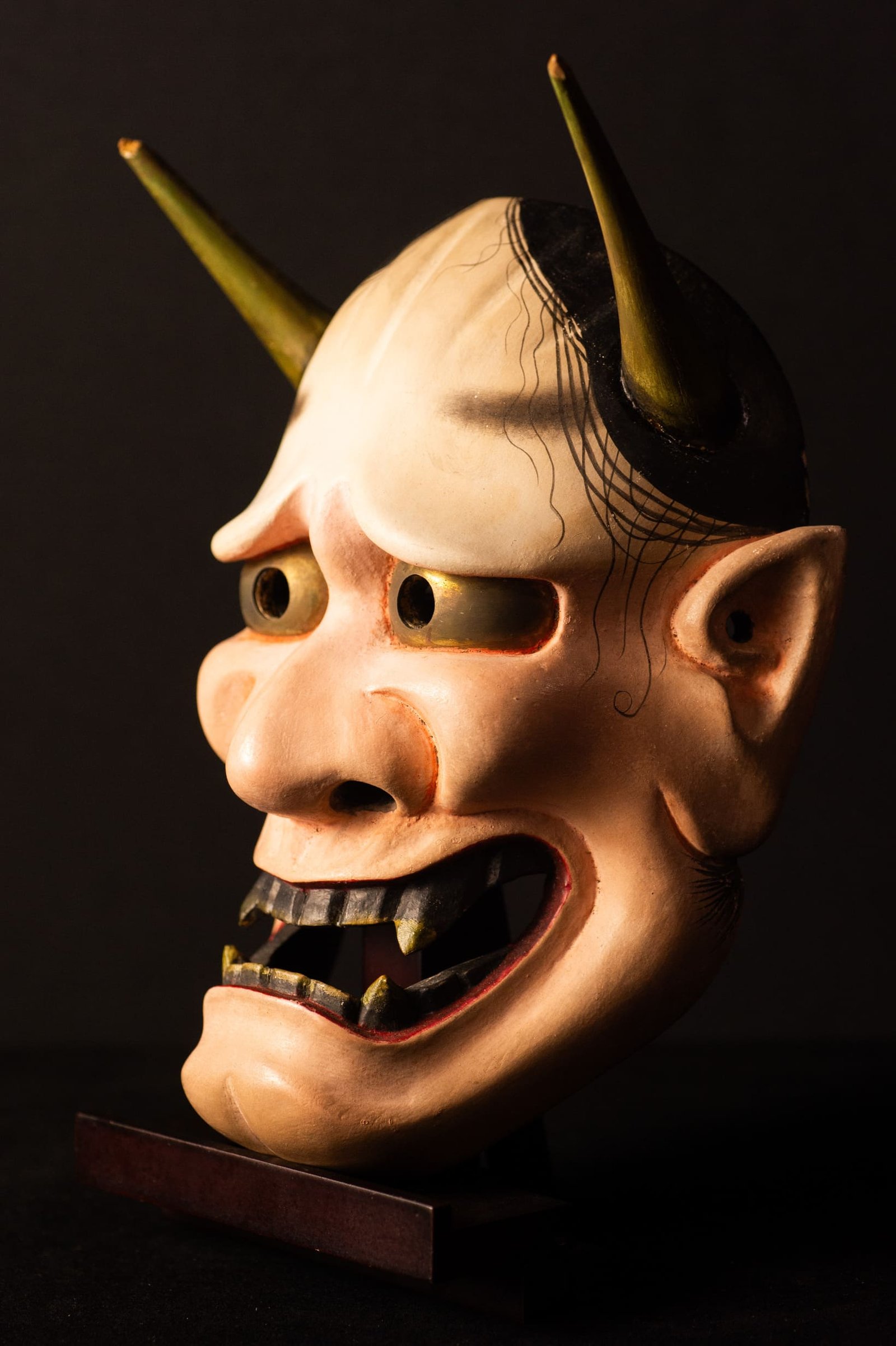
A powerful and finely executed Japanese Hannya Noh mask (能面 般若), carved from a single block of hinoki cypress and finished with a traditional gofun ground, polychrome pigments, ink detailing and striking gilt eyes.
Among the approximately two hundred mask types associated with the Noh repertoire, few are as immediately recognizable as the Hannya. Its horned face represents a woman transformed by jealousy, grief and emotional torment — a supernatural figure whose terrifying appearance still preserves unmistakably human emotion.
This full-size example follows the established Hannya canon with considerable attention to its theatrical function: an asymmetrical expression, deeply modelled brows, gold eyes with pierced pupils, individually drawn hair, prominent horns and four exposed fangs. The result is a mask capable of shifting dramatically in expression according to its angle and the direction of the light.
The Hannya (般若) is among the most iconic masks in Japanese Noh theatre.
Although often described simply as a demon mask, its meaning is considerably more complex. Hannya represents a woman whose jealousy, sorrow and resentment have transformed her into a terrifying supernatural being.
The horns and fangs reveal the transformation, yet the brows, mouth and modelling of the face retain traces of human suffering. This tension between rage and grief is fundamental to the mask’s extraordinary expressive power.
The mask is carved from a single block of Japanese cypress (hinoki), the traditional material associated with Japanese mask carving.
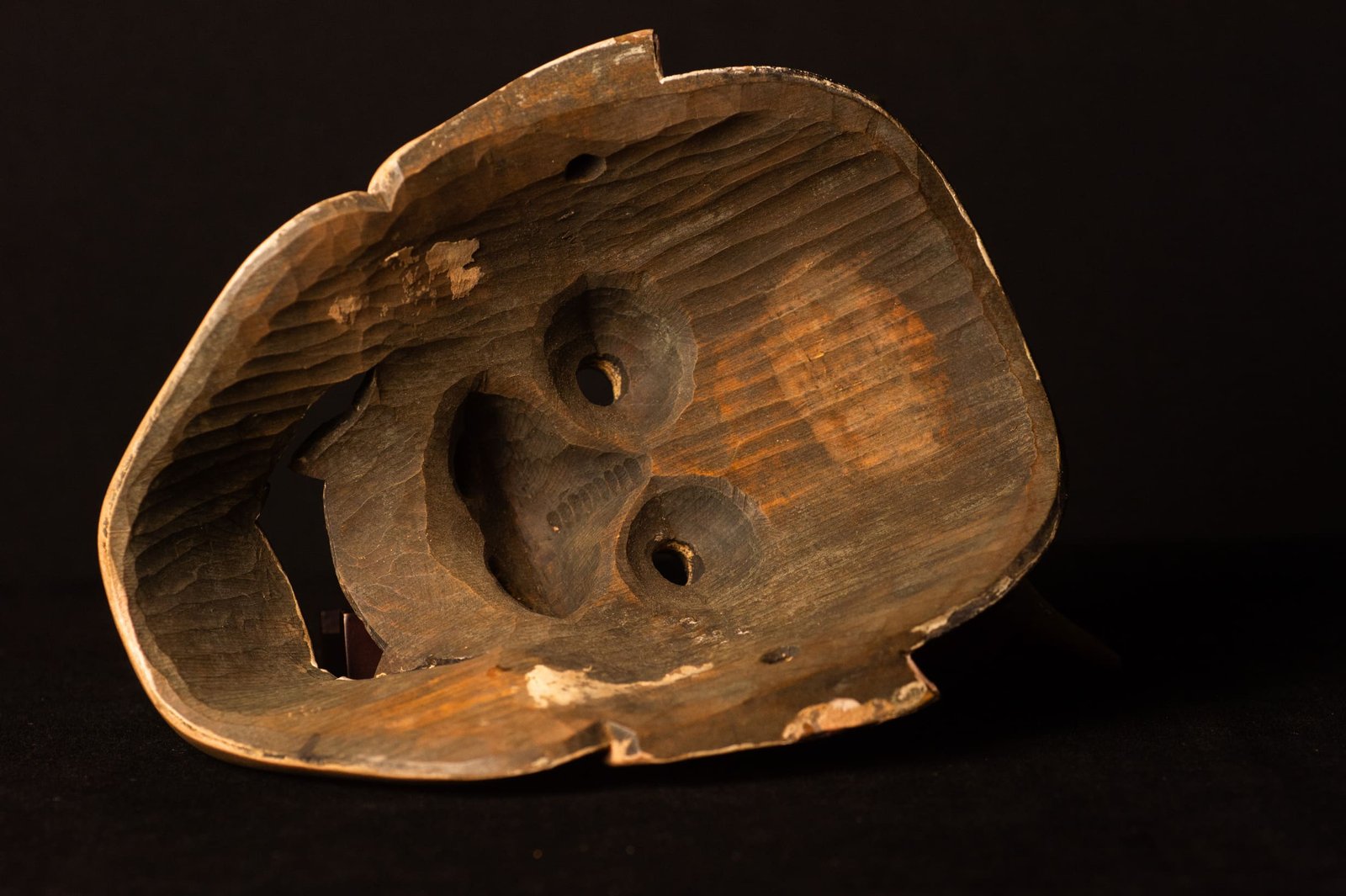
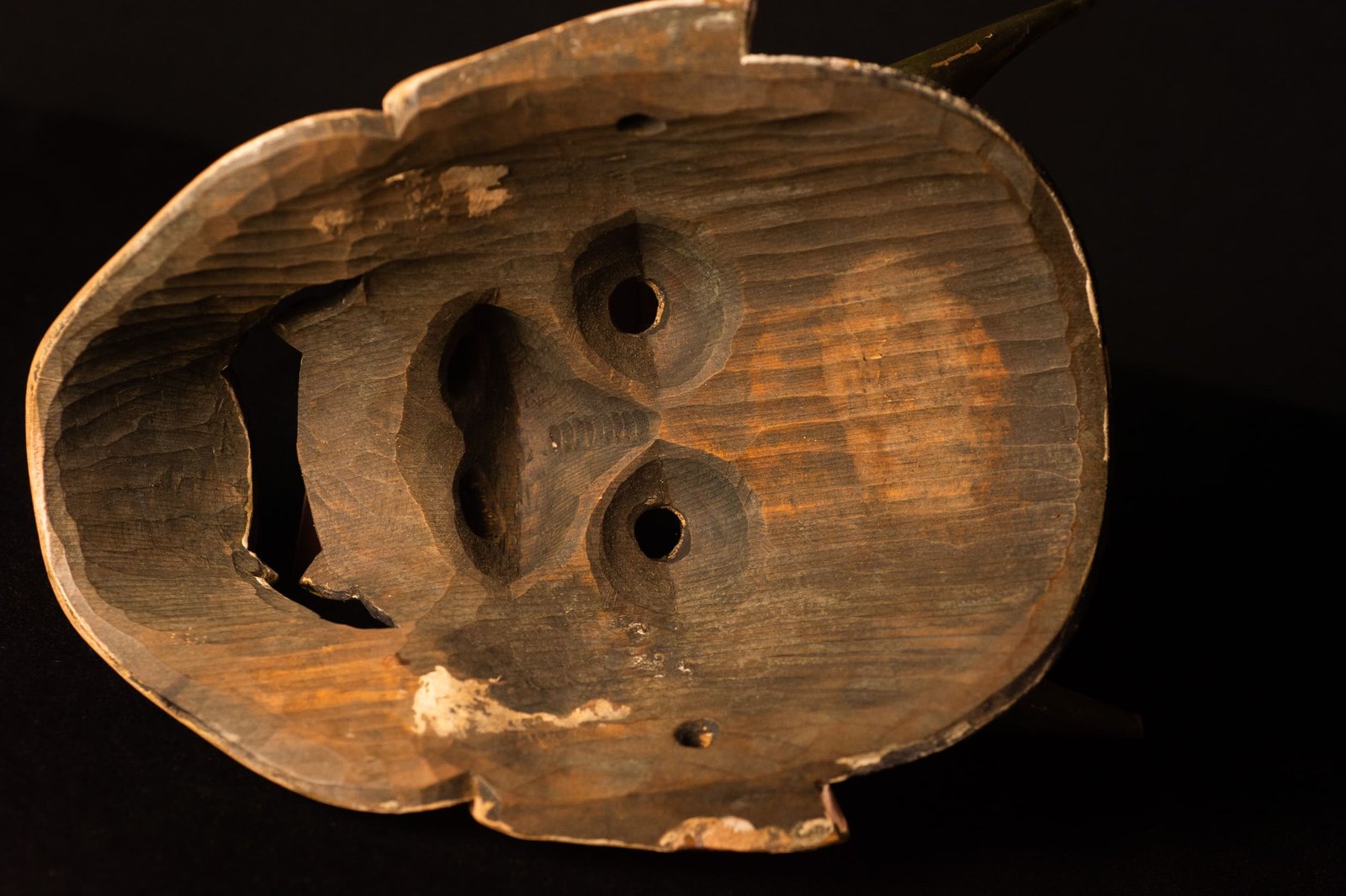
The face has been carefully modelled from the front and hollowed from the reverse, reducing weight while allowing the mask to sit correctly in relation to the performer’s face.
On the interior, the parallel marks left by the rounded carving gouge remain clearly visible, preserving direct evidence of the carving process.
The carved wood is covered with a traditional gofun ground, creating the pale surface over which the facial coloration has been developed.
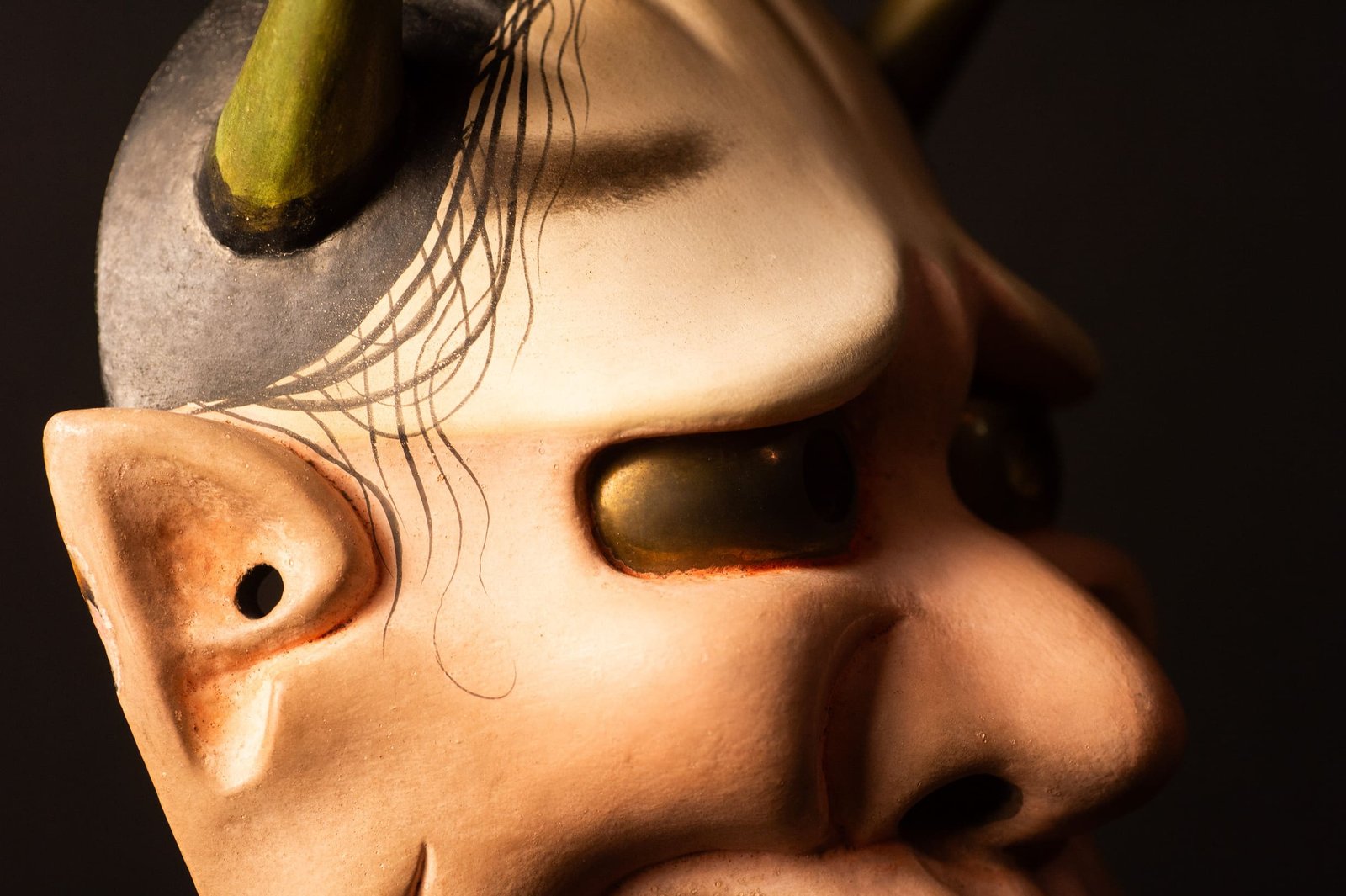
The forehead rises in a broad, smooth dome finished in a pale bone-white tone, while the cheeks and jaw gradually transition toward a warmer flesh colour.
Restrained red accents appear around the nostrils, inner eye rims and corners of the mouth, introducing warmth without overwhelming the intentionally pale complexion.
Colour is significant within the traditional visual language of Hannya masks.
Paler faces are generally associated with women of higher social status, while increasingly red or dark masks can suggest lower rank or a more advanced and violent stage of transformation.
The pale, softly flushed complexion of this example therefore places its visual character within the upper register of the Hannya tradition: the image of a noblewoman consumed and transformed by overwhelming emotion.
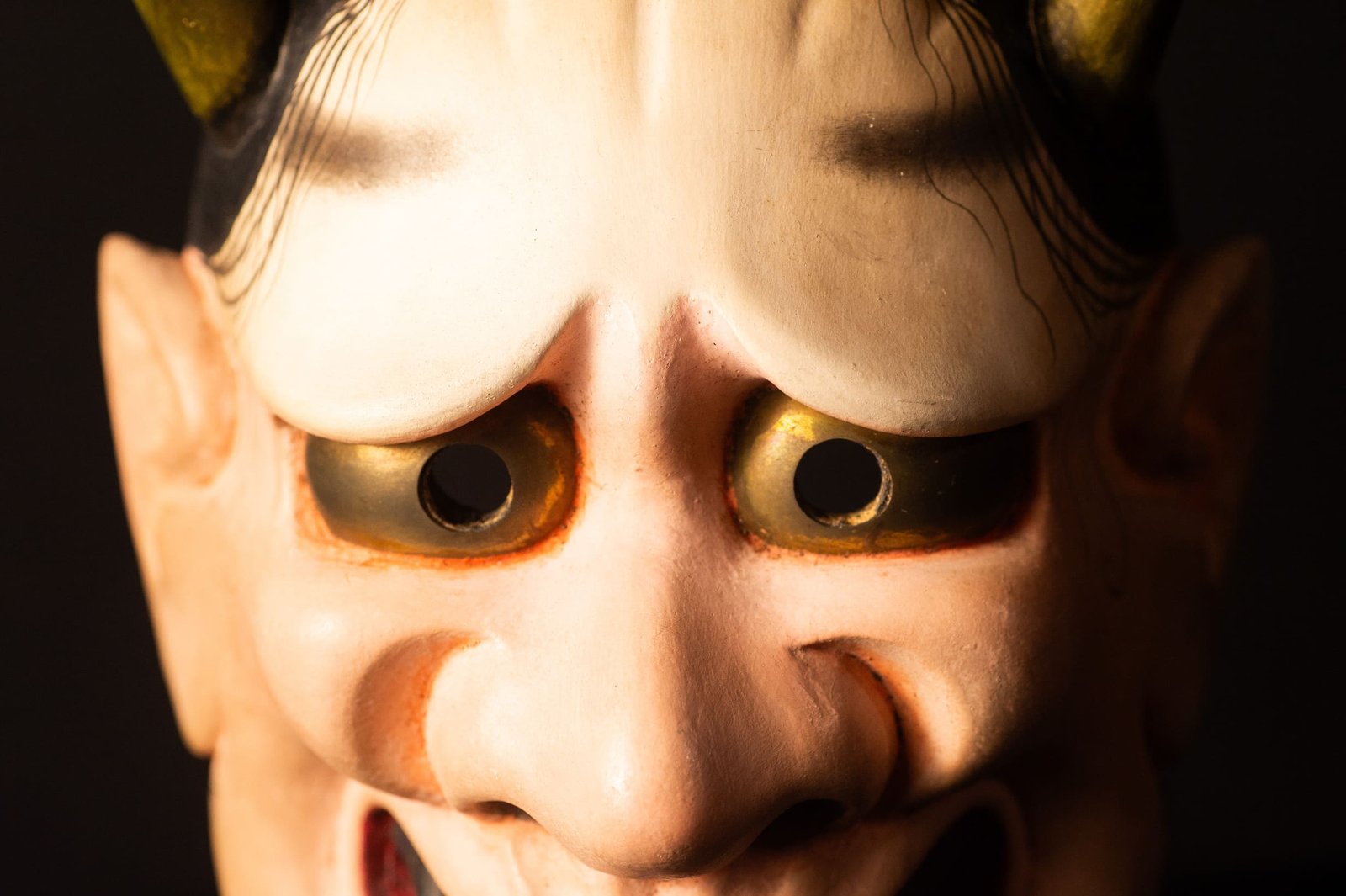
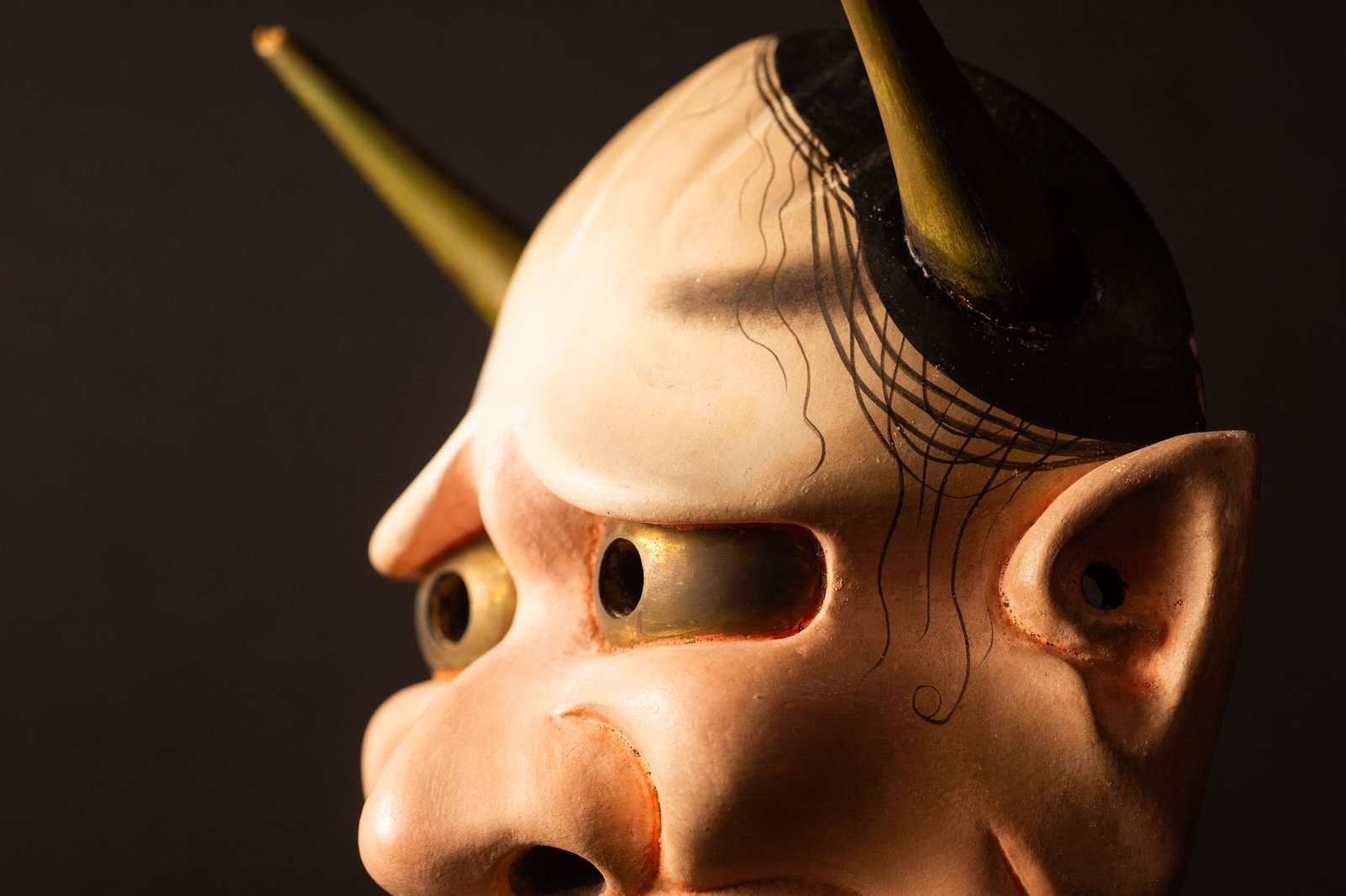
The brows are among the most important elements of the carving.
They rise in heavy furrowed masses above the eyes, but are deliberately asymmetrical: one side sits subtly higher and appears slightly more relaxed than the other.
This is not an imperfection. It is fundamental to the theatrical effectiveness of the mask.
When the performer tilts the face downward, shadows gather around the eyes and the mask can appear sorrowful or even as though it were weeping. When raised toward the light, the eyes, horns and fangs become more prominent and the same face can suddenly read as furious and threatening.
The eyes are finished in gold, creating an intense supernatural contrast against the pale face.
Small drilled pupils pierce the centre of the eyes, serving both the visual design of the mask and the practical sightline required when worn.
The gilt surfaces show light rubbing around the rims consistent with handling, while retaining their powerful visual effect.
Under directional lighting, the gold catches the light dramatically and contributes significantly to the changing expression of the mask.
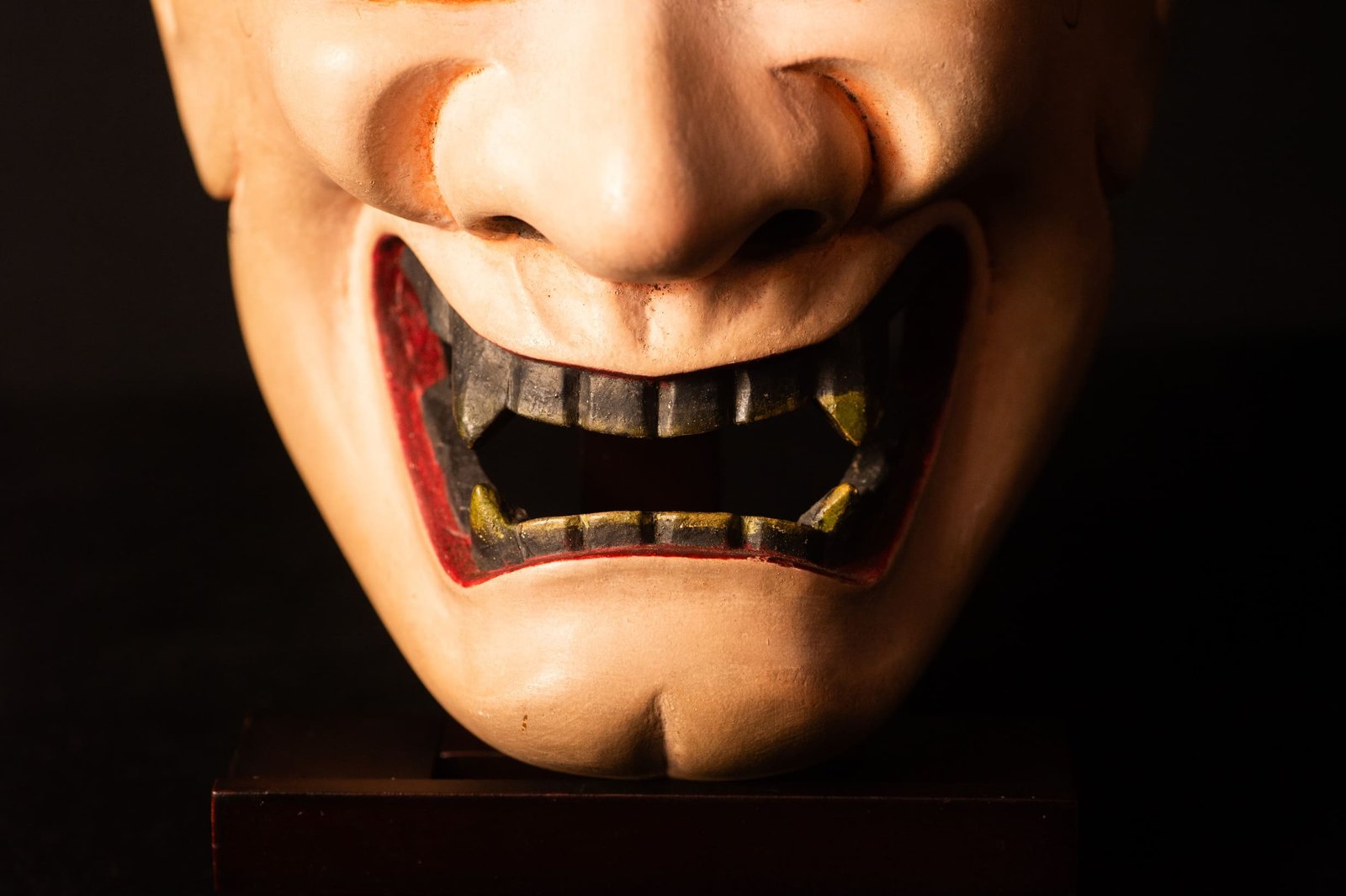
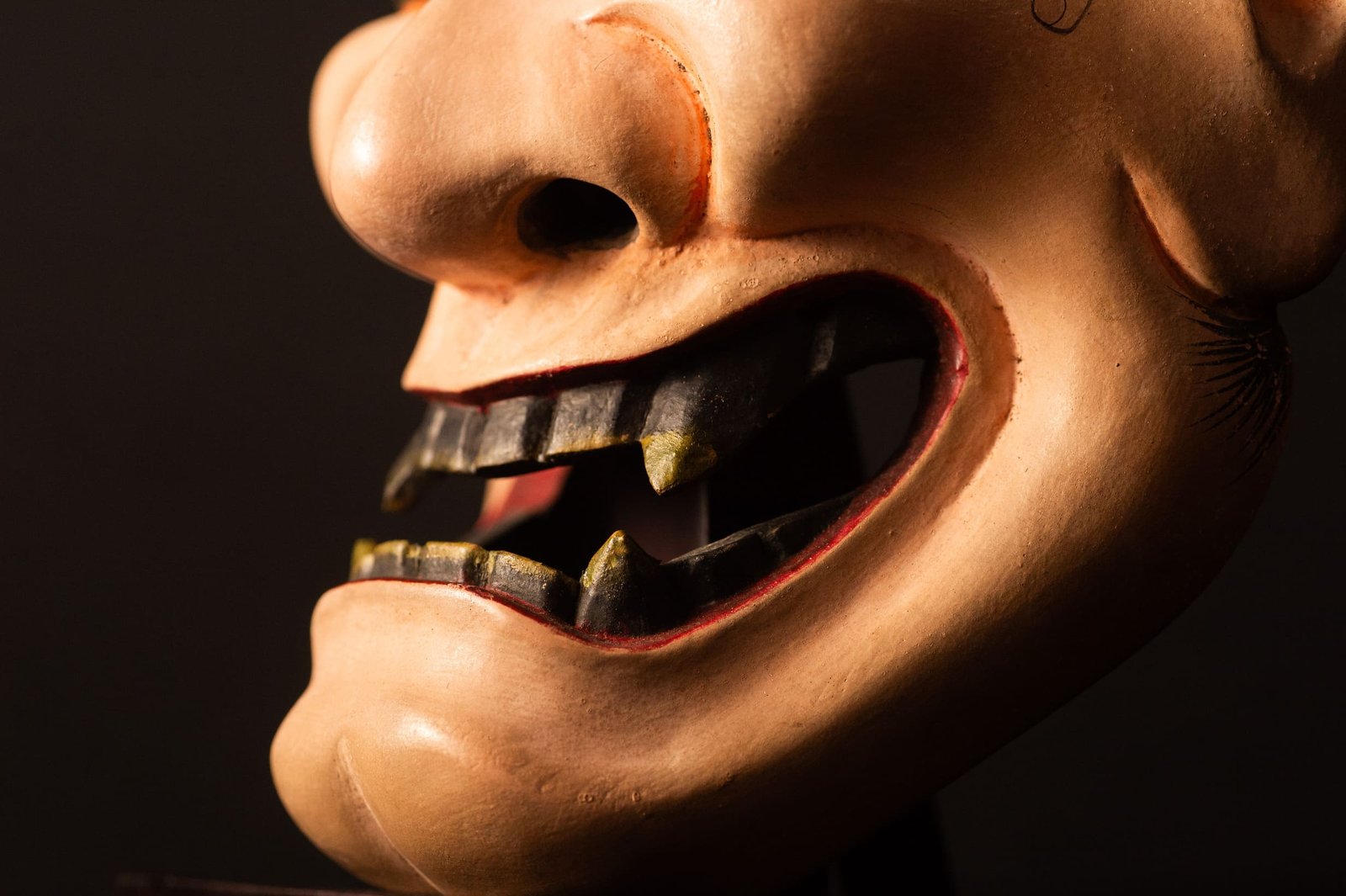
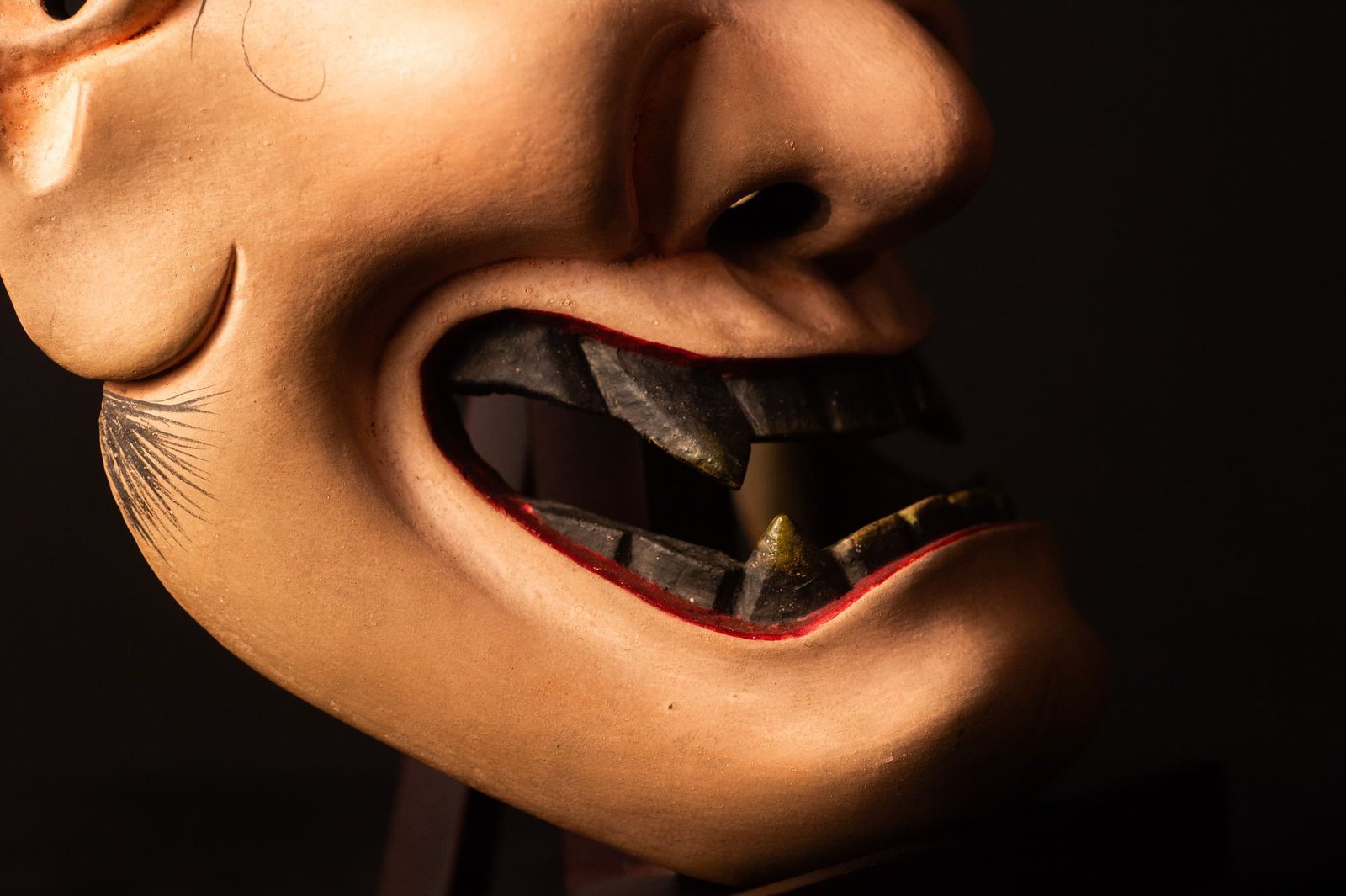
The mouth opens broadly across the lower face and is outlined with red pigment around the lips.
Inside are two rows of dark teeth together with four prominent fangs (kiba), picked out in a pale yellow-green tone against the deep red interior of the mouth.
The fangs establish the supernatural transformation, while the swollen lower lip and heavy, drooping chin preserve the distinctly human suffering characteristic of the Hannya type.
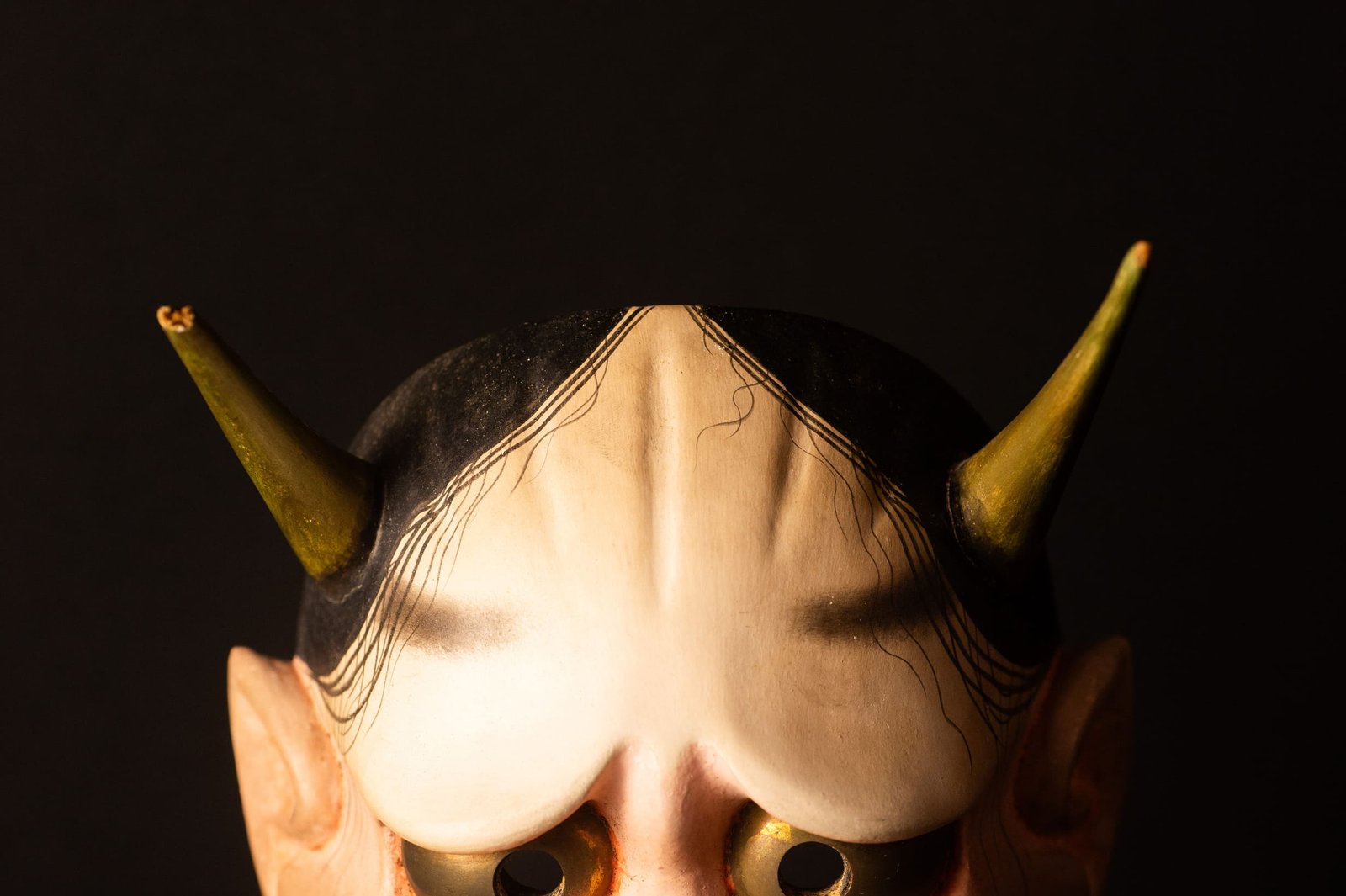
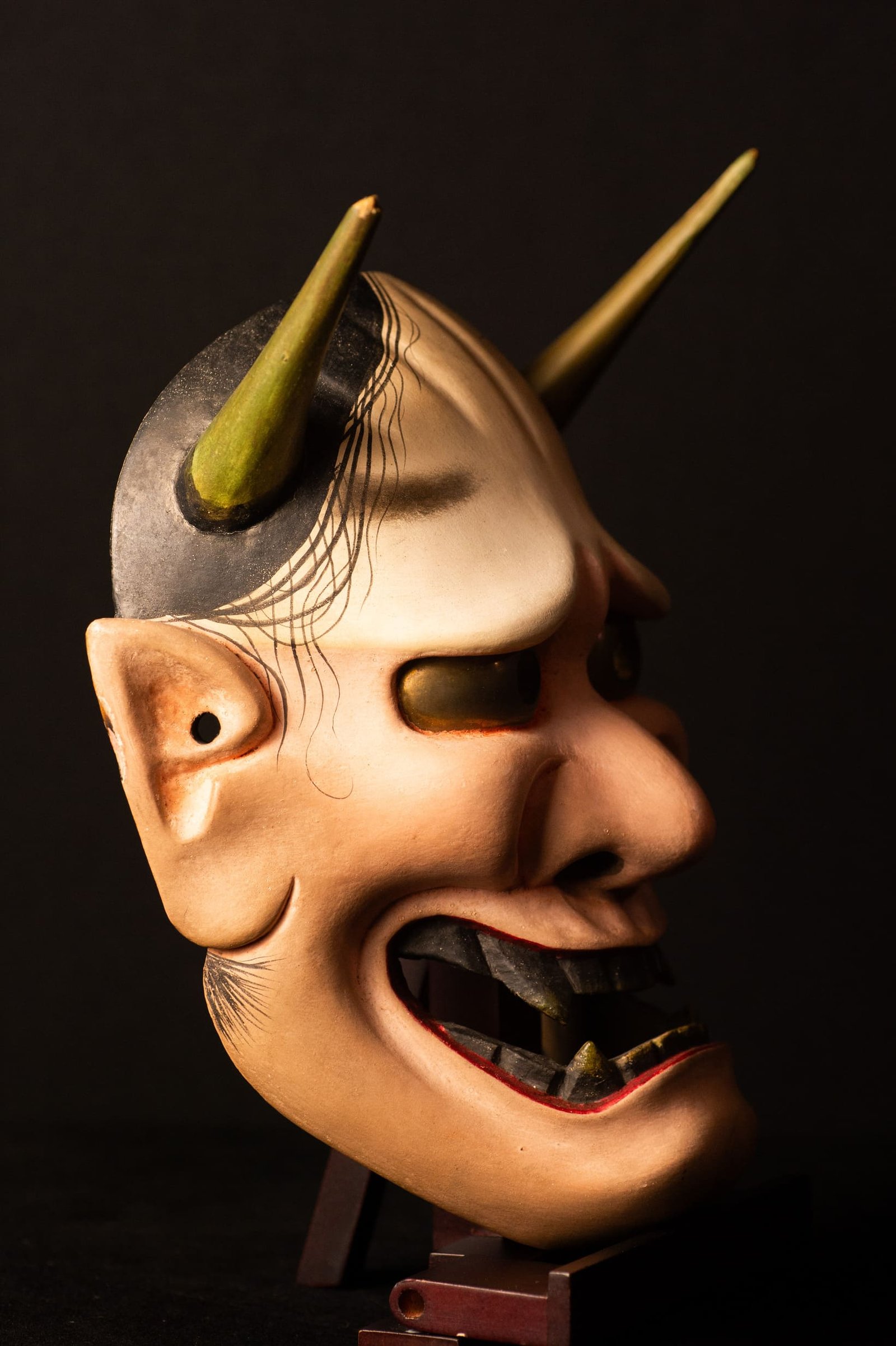
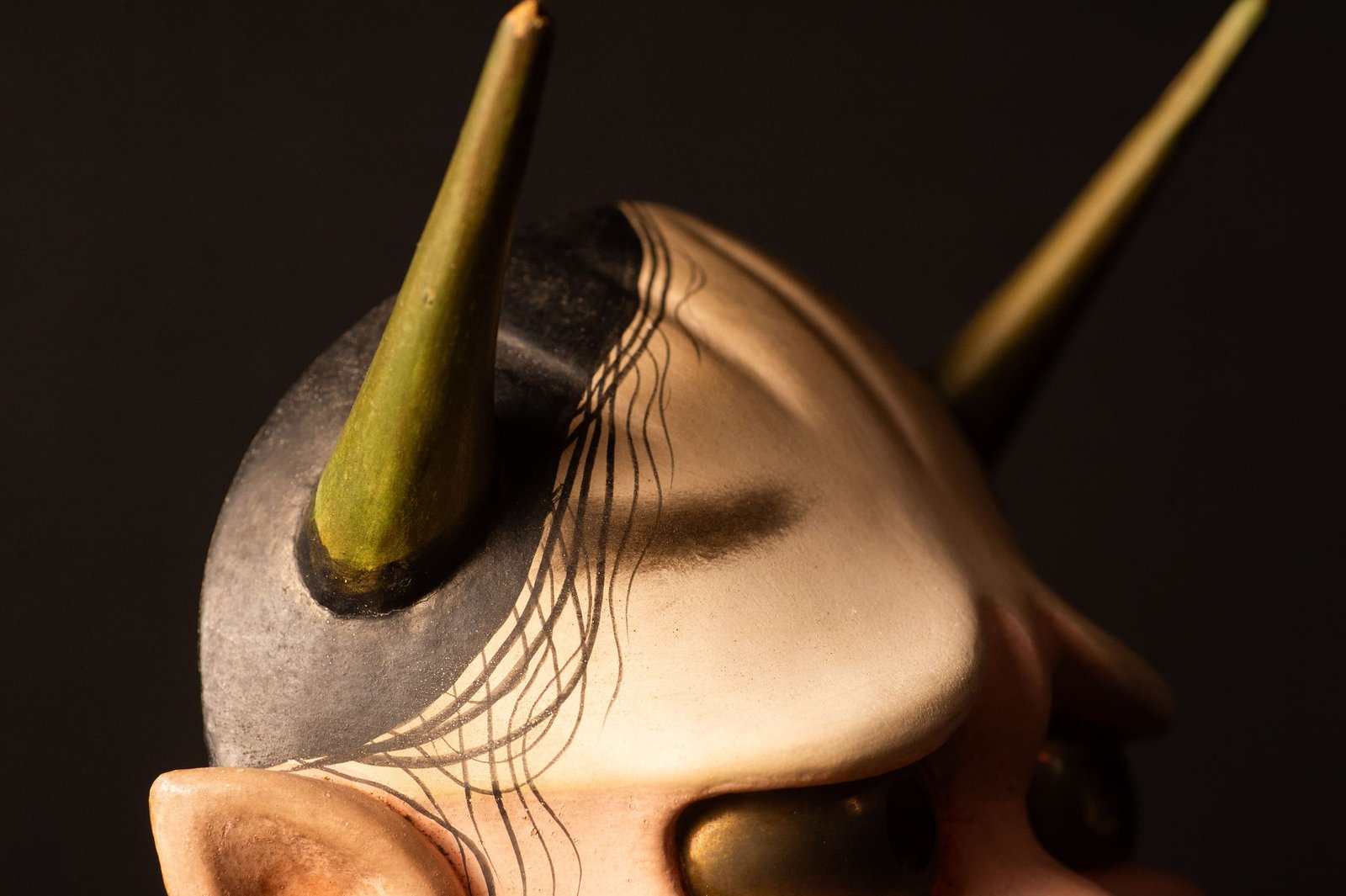
Two pale yellow-green horns emerge from oval areas of black hair at the temples.
From these dark patches, individual strands of hair are drawn across the forehead in fine ink lines using a kebiki-style treatment, with each strand articulated separately before breaking into loose curls toward the ears.
The contrast between the pale face, dark hair and projecting horns creates the unmistakable silhouette of the Hannya.
The hair decoration demonstrates considerable attention to detail.
Rather than being treated as a single black mass, the strands have been individually delineated in ink, creating movement and texture across the forehead and temples.
The surviving linework remains crisp and contributes an important graphic element to the otherwise strongly sculptural face.
The ears are carved free from the sides of the head and pierced in accordance with the established construction of Noh masks.
Together with the hollowed reverse and temple cord holes, these details demonstrate that the object follows the structural conventions of a wearable nōmen rather than functioning merely as a flat decorative representation of a Hannya face.
The Hannya mask appears in some of the great dramatic works of the Noh repertoire, particularly plays concerned with jealousy, betrayal, obsession and supernatural transformation.
It is associated with figures such as the vengeful spirit of Rokujō no Miyasudokoro in Aoi no Ue, Kiyohime in Dōjōji, the demon-woman of Kurozuka, and the transformed shite of Momijigari.
Within these performances, the mask allows the actor to embody something more complex than a conventional demon: a human consciousness overtaken by emotions powerful enough to alter its physical form.
One of the defining characteristics of accomplished Noh masks is their ability to appear emotionally different according to movement and illumination.
The asymmetry of the brows, projecting cheekbones, deep eye sockets, gilt eyes and modelling around the mouth all interact with light as the mask is tilted.
This transformation is central to the visual language of Noh: a slight downward movement can communicate grief, while raising the face can reveal anger and supernatural intensity.
The reverse retains the worked surface of the carving process rather than being completely smoothed.
Broad gouge facets remain visible across the crown, together with the modelled reverse of the nose and mouth aperture.
The hinoki has aged to a warm mid-brown tone with an even, settled patina, while its straight grain remains clearly visible.
These interior surfaces provide an important view of the construction of the mask and the hand-carved nature of the object.
Two cleanly drilled holes at the temples accommodate the himo cords used to secure a Noh mask.
The placement of these holes, together with the hollowed interior and pierced eyes, follows the functional construction expected of a full-size Noh mask.
No maker’s signature is visible on the surfaces examined.
As with many Japanese masks, the absence of a visible signature does not diminish the importance of evaluating the piece through its carving, materials, construction, surface treatment and adherence to established mask conventions.
No attribution to a particular mask maker is therefore proposed for this example.
This mask dates to the Shōwa period of the 20th century.
Its construction continues the established techniques and visual vocabulary of traditional Noh mask carving: hinoki construction, hollowed reverse, gofun ground, polychrome and ink decoration, gilt eyes and carefully controlled asymmetry.
It therefore represents the continuation of a theatrical and sculptural tradition whose canonical forms were transmitted across generations of Japanese mask makers.
The mask is structurally sound, with no cracks, splits or evident restoration observed.
There is minor rubbing to the pigment at the natural high points, particularly around the tips of the horns, the eye rims and the edge of the lower lip.
Small and discreet losses to the white ground are visible along portions of the outer rim, corresponding to areas where a mask would naturally be handled when lifted or tied.
The polychrome surface is otherwise even and well preserved, while the fine ink hairwork remains crisp and substantially complete.
Overall, the mask is preserved in excellent condition for its age, with limited wear consistent with its antiquity.
As a full-size Hannya mask, the piece has considerable presence when displayed independently.
The projecting horns, gold eyes and strongly modelled features respond particularly well to controlled directional lighting, which can reproduce some of the dramatic changes of expression for which Noh masks are celebrated.
The display stand visible in the photographs is used for presentation and photography.
This Hannya combines many of the defining characteristics sought in a traditional Japanese Noh mask: carved hinoki construction, gofun ground, carefully controlled polychromy, gilt eyes, fine ink hairwork, functional himo holes and an expressive asymmetrical carving.
Its pale complexion, strongly modelled features and preservation of the hand-worked reverse make it particularly interesting both as a sculptural object and as an example of the continuing Japanese Noh mask tradition.
For collectors of Japanese masks, Noh theatre, Japanese sculpture or traditional performing arts, it offers one of the most immediately recognizable and emotionally powerful subjects within the entire Noh repertoire.
A powerful full-size Japanese Hannya Noh mask from the Shōwa period, carved from a single block of hinoki cypress and finished with traditional gofun, polychrome pigments, fine ink hairwork and striking gilt eyes. Its deliberately asymmetrical brows, pierced golden eyes, projecting horns and four prominent fangs allow the expression to shift between grief and rage as the angle of the mask changes. The hand-worked reverse retains visible gouge marks, a warm natural patina and functional himo holes, while the painted surface remains notably well preserved. An expressive example of one of the most iconic and emotionally complex mask types in the Japanese Noh tradition.
| Época | Showa |
|---|

Order above 1.000,00 € gets free shipping.

Secure and hassle-free payment process.

Certificate of authenticity included.

Have questions? Contact us via WhatsApp.
Contact