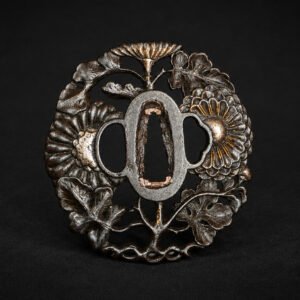
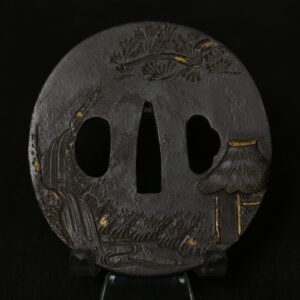
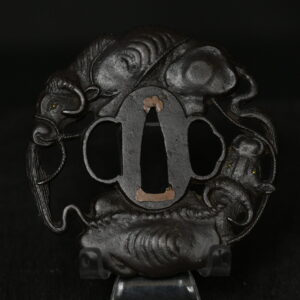
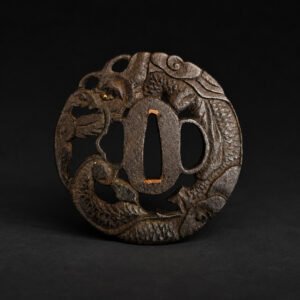
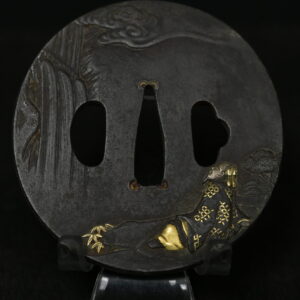
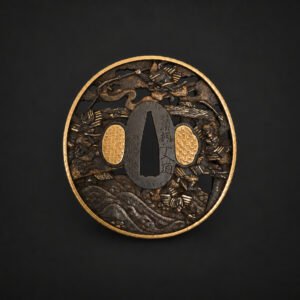
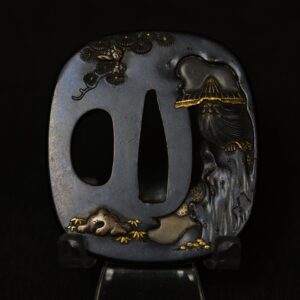
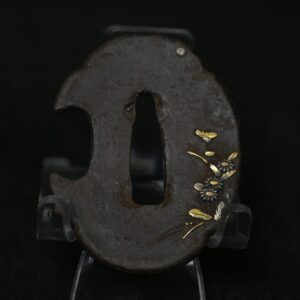
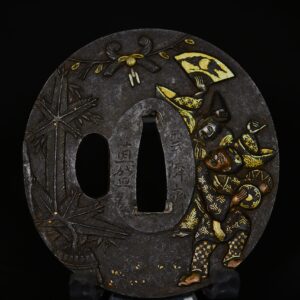
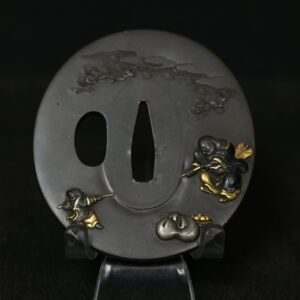
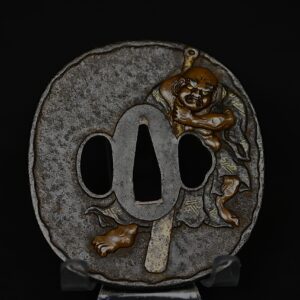
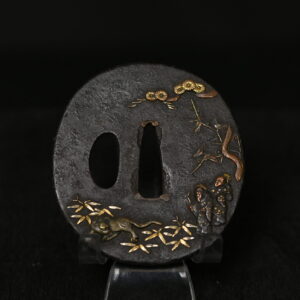
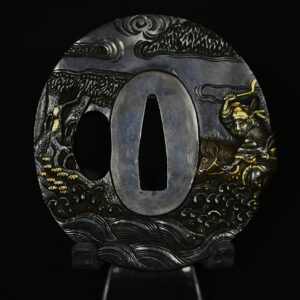
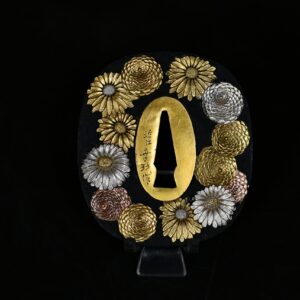
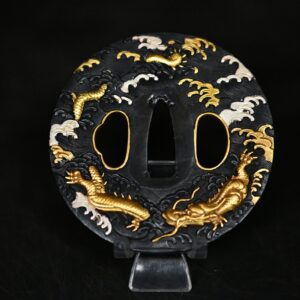
The tsuba (鍔) is the guard mounted between the blade and handle of a Japanese sword. While originally designed to protect the hand and improve balance, the tsuba evolved into one of the most celebrated forms of Japanese decorative art.
For centuries, master metalworkers transformed these functional components into miniature masterpieces featuring landscapes, warriors, dragons, flowers, legends and scenes from everyday life. Today, antique tsuba are collected worldwide as works of art in their own right, often independent of the swords they once adorned.
The earliest Japanese sword guards appeared more than a thousand years ago alongside the development of the first curved Japanese swords.
These early examples were simple and utilitarian, usually consisting of plain iron discs designed to prevent the hand from slipping onto the blade during combat.
As Japanese swordsmithing evolved and the samurai class gained prominence, the tsuba gradually became both a functional and decorative element of the sword.
By the Muromachi Period (1336–1573), specialised craftsmen had begun producing sword guards that displayed remarkable artistic refinement.
Although highly decorative, the tsuba was first and foremost a practical component of the sword.
Its primary functions included:
Unlike many Western sword guards, Japanese tsuba were generally compact and carefully proportioned, reflecting the emphasis on balance and precision found throughout Japanese sword design.
During Japan’s long periods of warfare, sword fittings were valued primarily for durability and effectiveness.
However, with the establishment of peace during the Edo Period (1603–1868), the role of the sword changed dramatically.
The samurai continued to wear swords as symbols of status and authority, but opportunities for battlefield use became increasingly rare.
As a result, sword fittings became an important means of personal expression.
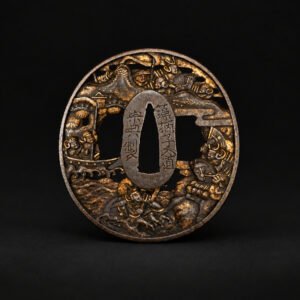
The tsuba emerged as a canvas for some of Japan’s finest metal artists, who created increasingly sophisticated designs that reflected literature, religion, nature and history.
One of the most fascinating aspects of tsuba collecting is the wide variety of materials employed by Japanese craftsmen.
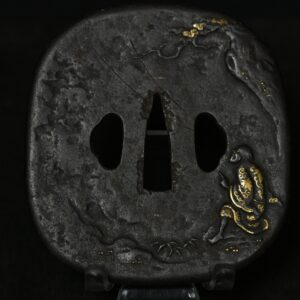
The most traditional material for sword guards.
Iron tsuba are admired for their strength, patina and subtle beauty. Many of the most respected schools specialised in iron work.
A copper alloy containing small amounts of gold.
When patinated, shakudo develops a deep blue-black surface that became highly prized among collectors.
An alloy of copper and silver known for its soft grey tones and elegant appearance.
Used extensively throughout Japanese sword fittings and often combined with gold or silver decoration.
High-ranking samurai frequently commissioned fittings decorated with precious metals to demonstrate wealth and status.
Although countless variations exist, several shapes became particularly popular throughout Japanese history.
A simple circular design and the most common form of tsuba.
A shape inspired by the cross-section of a quince fruit, featuring soft lobed contours.
A rounded rectangular shape often seen on both katana and wakizashi.
Inspired by the hollyhock leaf, famously associated with the Tokugawa clan.
These forms provided artists with a framework upon which to create elaborate decorative compositions.
Tsuba artists drew inspiration from virtually every aspect of Japanese culture.
Popular subjects included:
Many designs contained hidden meanings or conveyed wishes for prosperity, longevity, courage or protection.
For samurai, these motifs often reflected personal beliefs and aspirations.
Over time, numerous regional traditions and artistic schools emerged.
Some of the most important include:
Renowned for luxurious fittings featuring gold and refined carving.
Celebrated for highly detailed pictorial scenes and realistic relief carving.
Known for elegant iron guards displaying restraint and sophistication.
Famous for bold openwork (sukashi) designs and strong iron construction.
Produced powerful iron tsuba admired for their simplicity and martial character.
One of the largest and most influential groups of metalworkers, producing a vast range of styles.
Today, identifying the school of a tsuba is one of the most rewarding aspects of collecting.
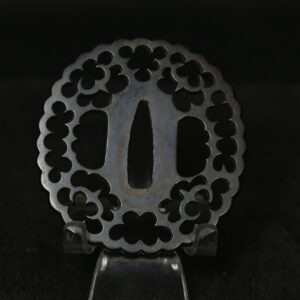
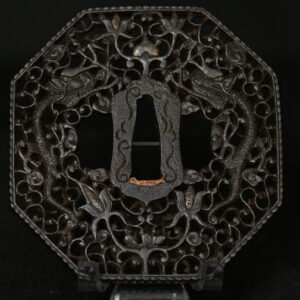
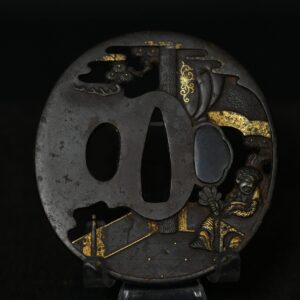
One of the most distinctive features of many tsuba is sukashi, the decorative piercing of the metal.
Master craftsmen created intricate openwork designs depicting:
These cut-out designs reduced weight while creating striking visual effects.
Some of the finest sukashi tsuba are regarded as masterpieces of Japanese metalworking.
The Edo Period witnessed the greatest flowering of tsuba artistry.
As peace spread throughout Japan, craftsmen focused increasingly on aesthetics rather than military necessity.
Sword guards became more elaborate, incorporating:
Many of the most desirable tsuba found on today’s market originate from this period.
Tsuba are among the most accessible and rewarding areas of Japanese art collecting.
Collectors are drawn to them because they combine:
When evaluating a tsuba, collectors typically consider:
Exceptional examples can be found in major museums and private collections around the world.
Although originally created for the practical purpose of protecting the hand, the tsuba eventually became one of Japan’s most refined artistic expressions.
Within a space often measuring less than ten centimetres, craftsmen captured entire landscapes, historical events and philosophical ideas.
Few objects better demonstrate the Japanese ability to transform everyday functional items into works of extraordinary beauty.
Today, antique tsuba continue to be admired as miniature sculptures that embody centuries of Japanese craftsmanship, culture and artistic achievement.
Contact