Samurai Armor (Gusoku) with Crescent-Moon Maedate and Paulownia Mon – Edo Period
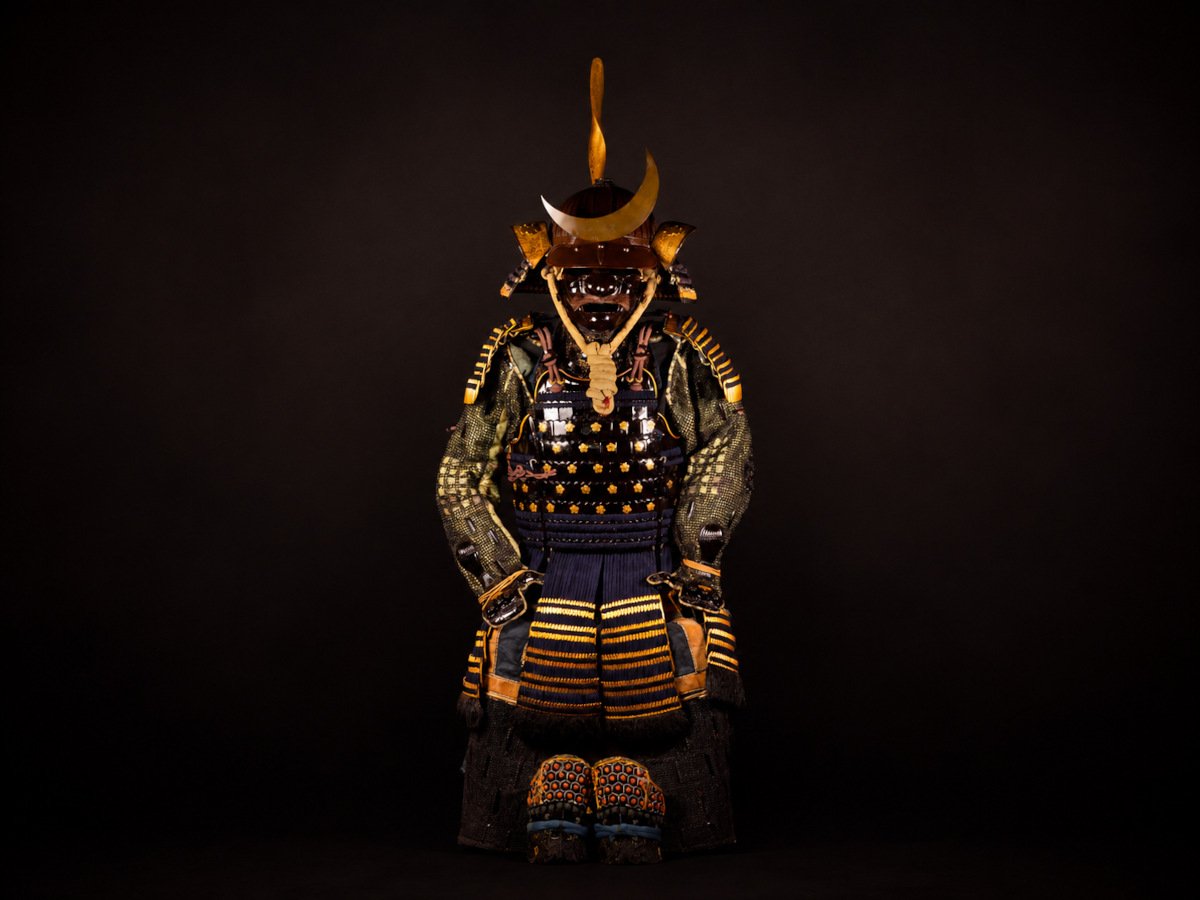
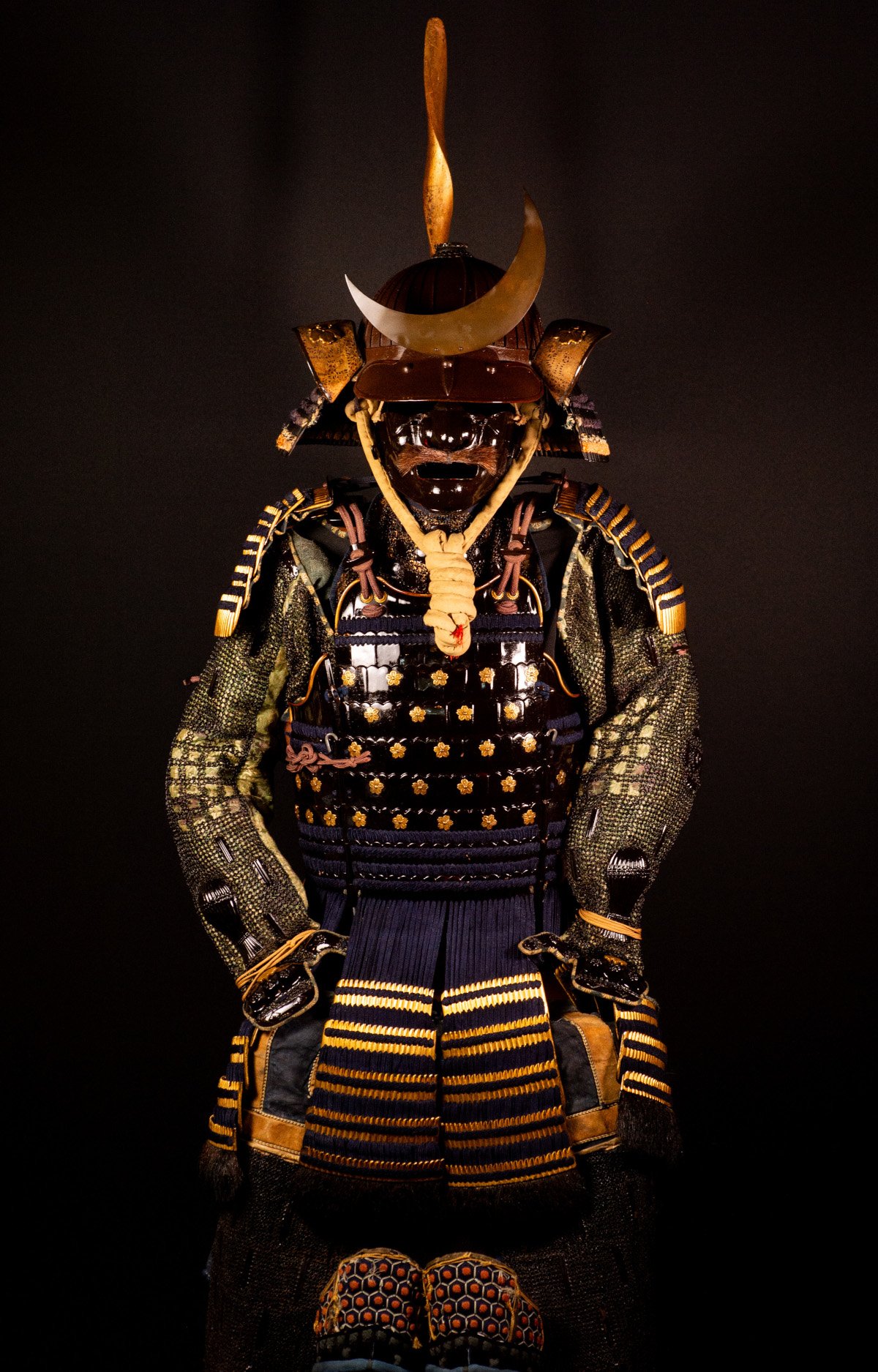
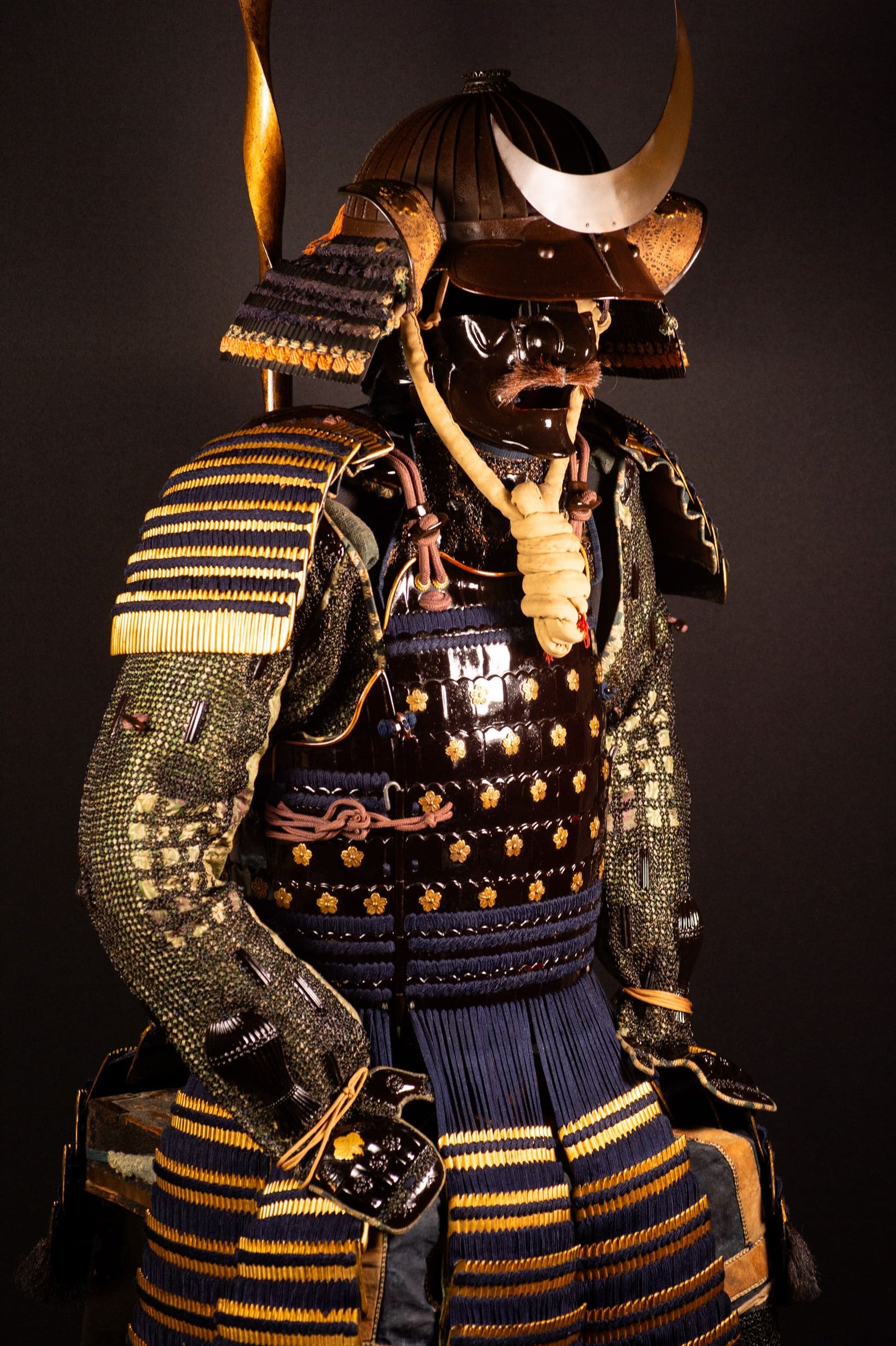
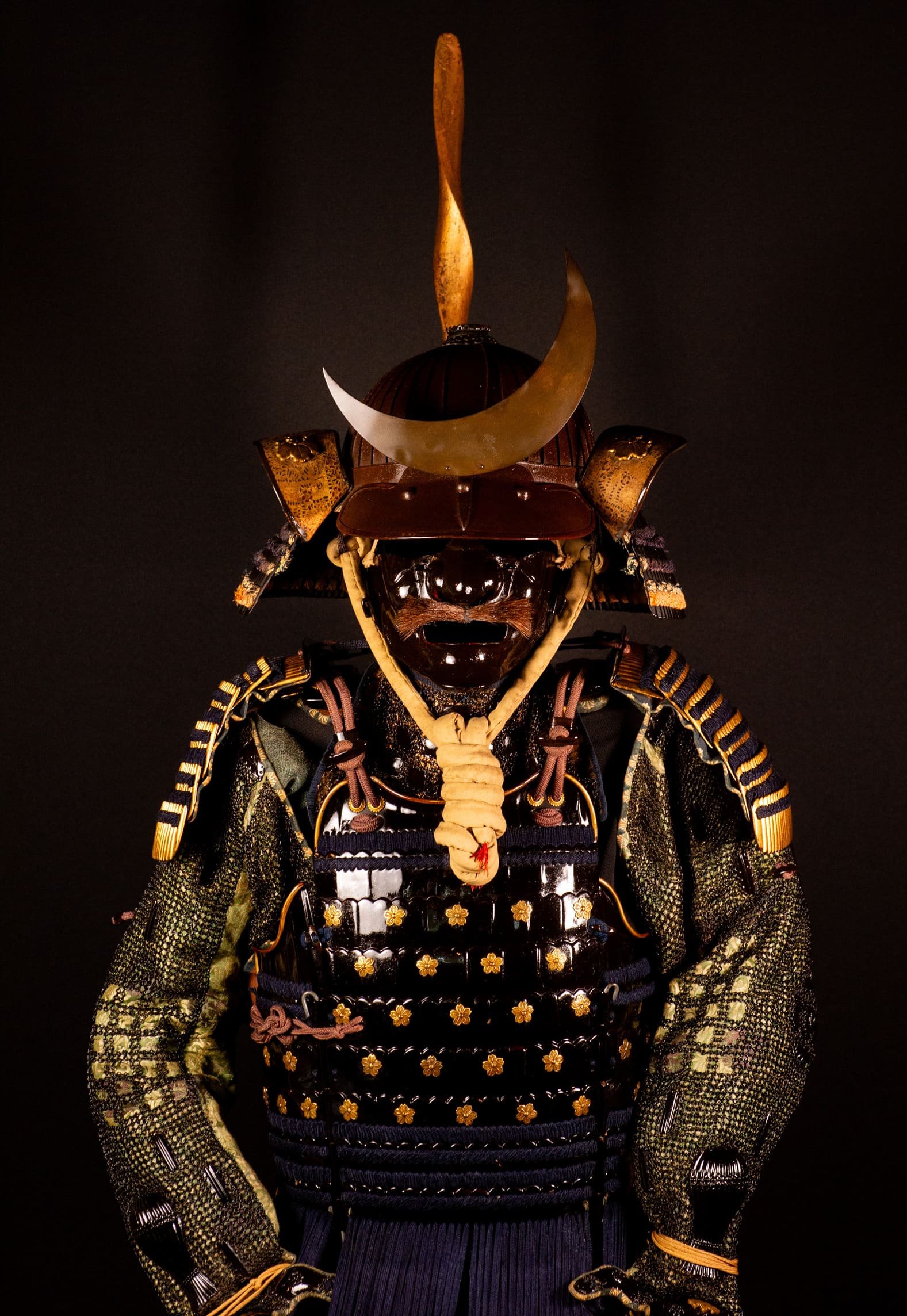
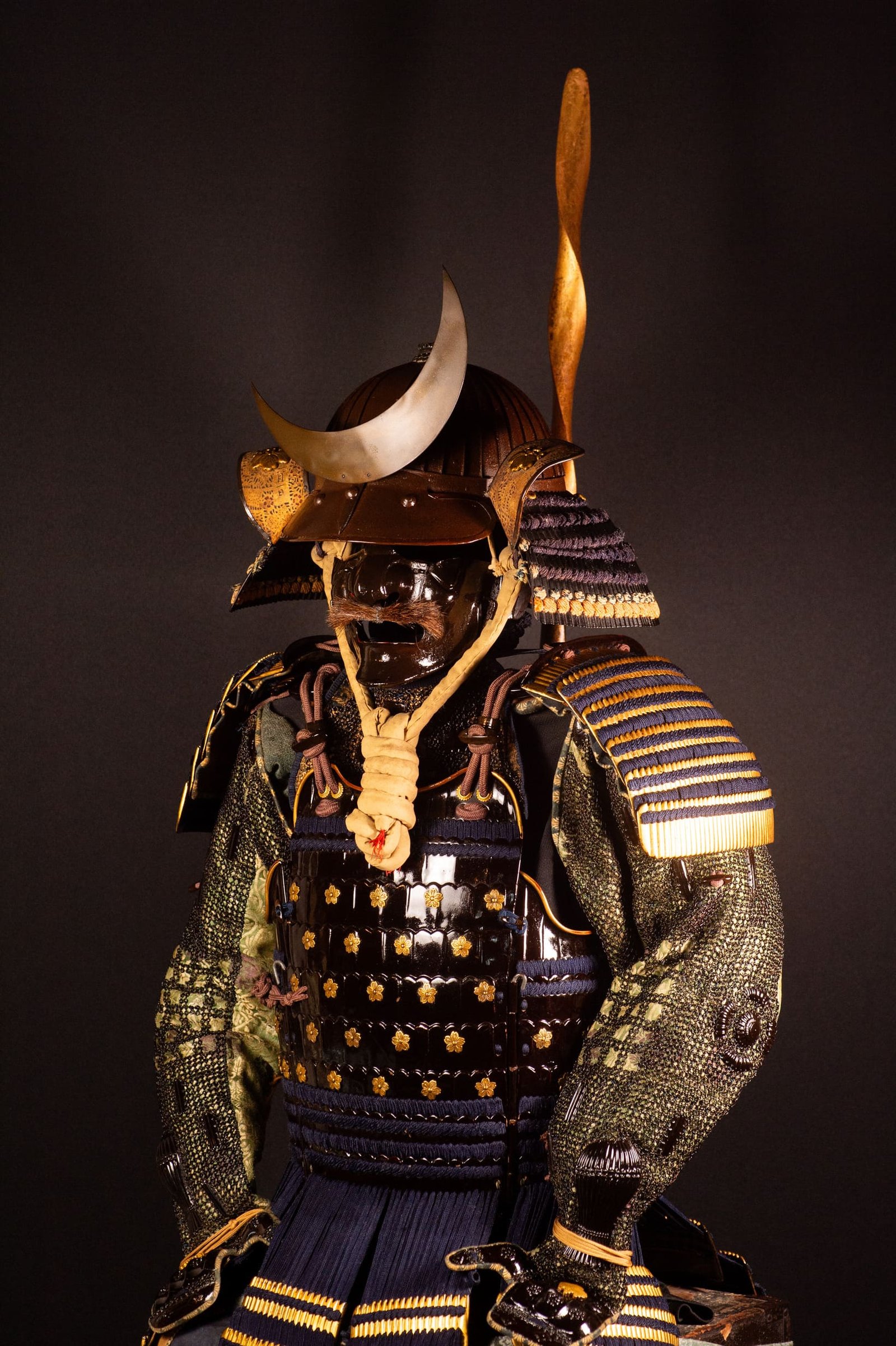
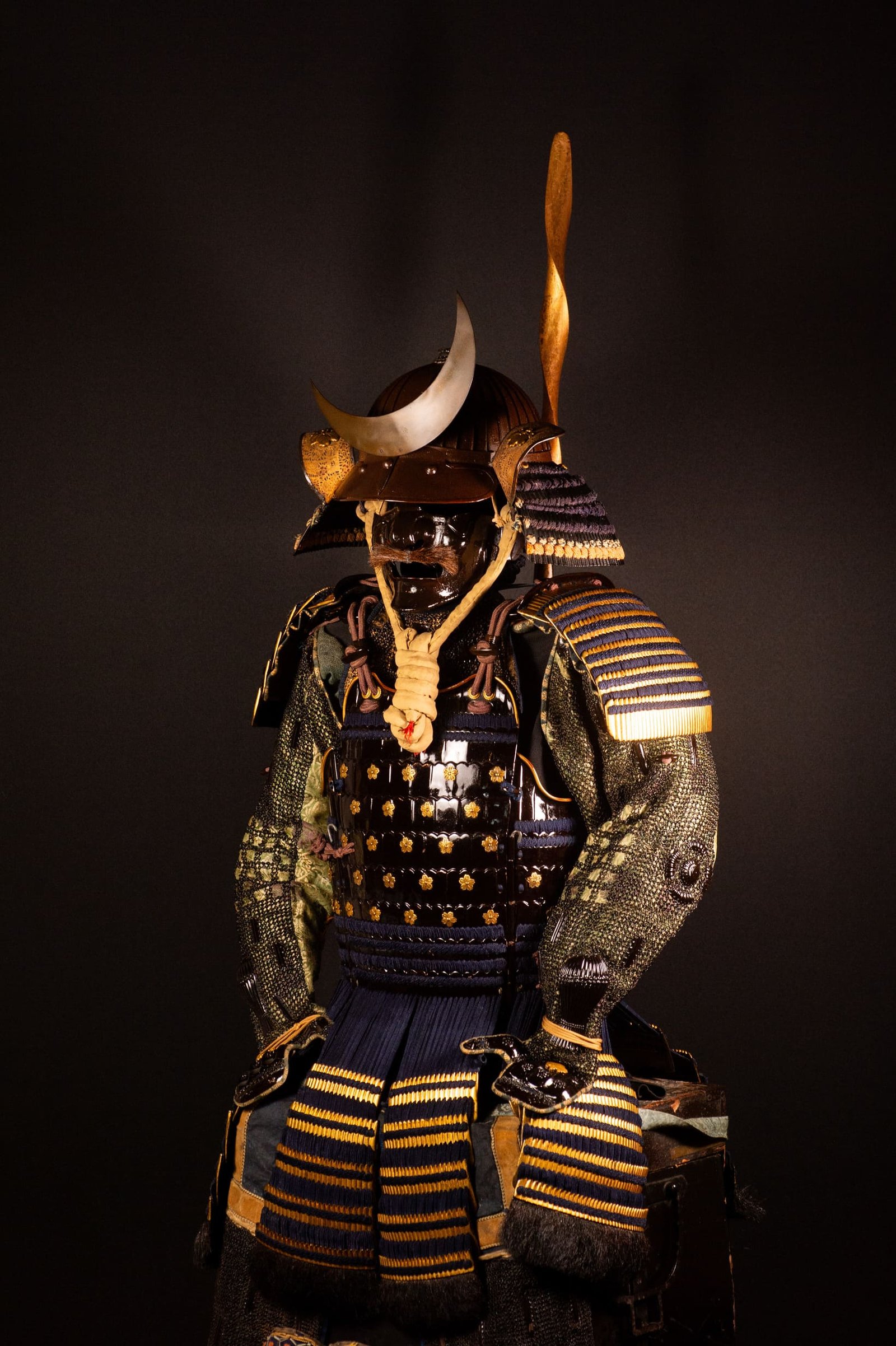
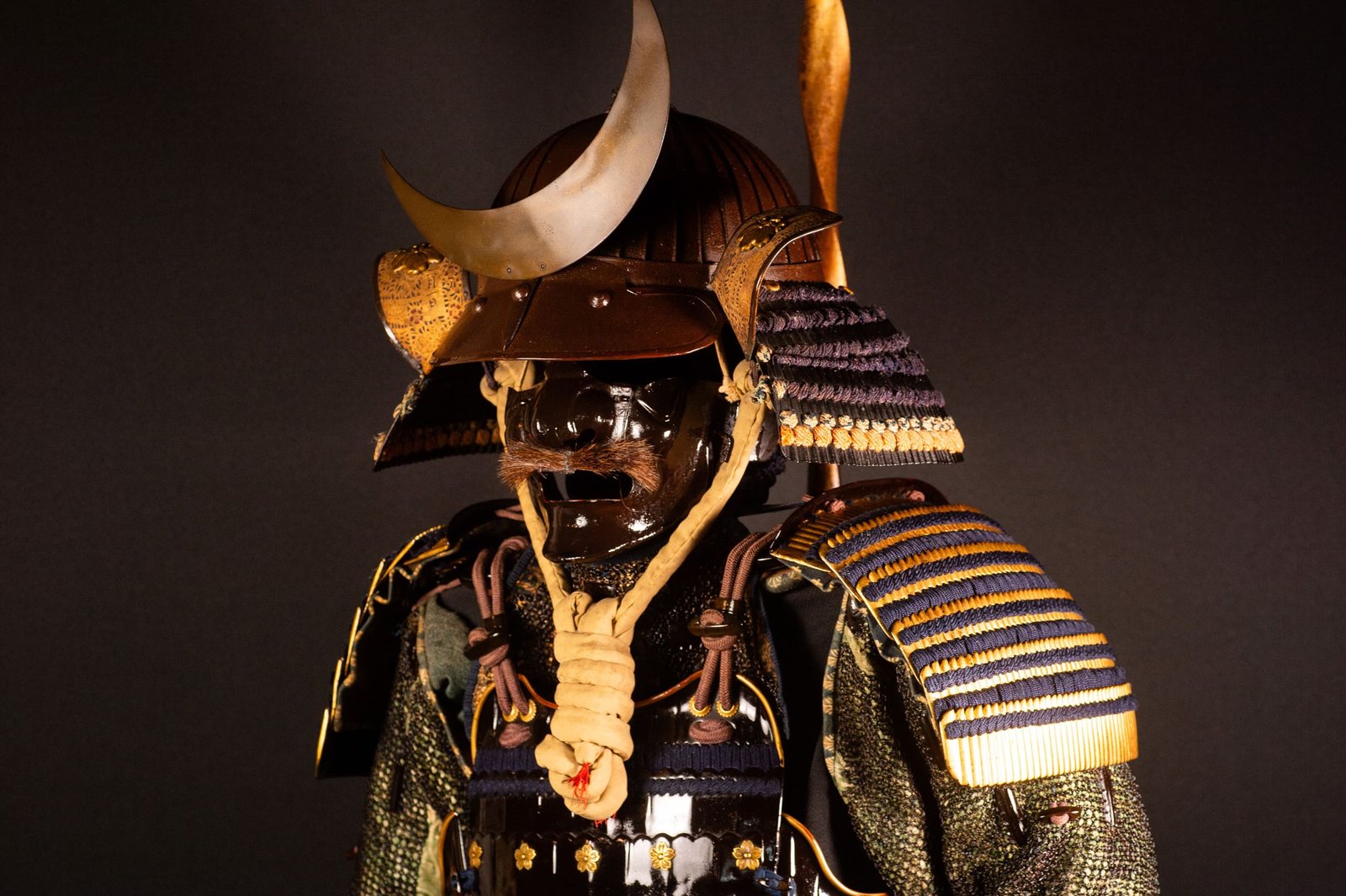
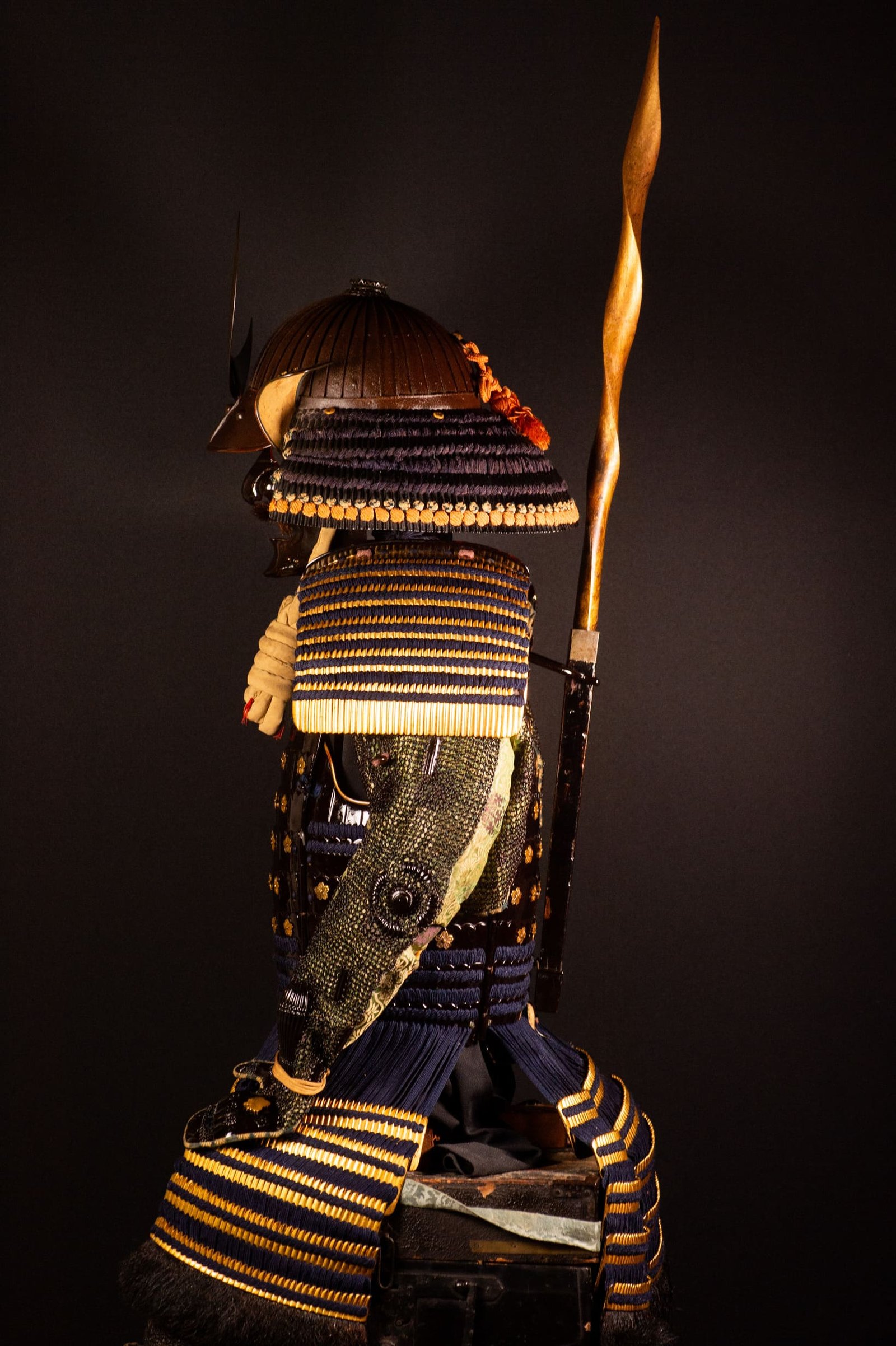
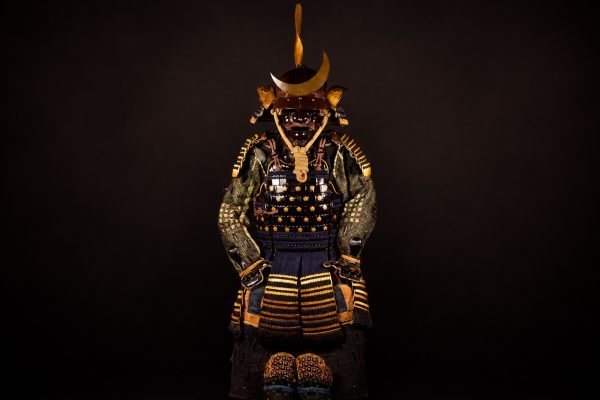
A striking and complete Japanese samurai armor (gusoku) from the Edo period (1603–1868), distinguished by its elegant crescent-moon maedate, rich indigo lacing, and repeated go-san no kiri paulownia crests. With its deep lacquer, gilt ornament, and beautifully balanced construction, this armor combines a commanding presence with the refined ceremonial character associated with fine Edo-period work.
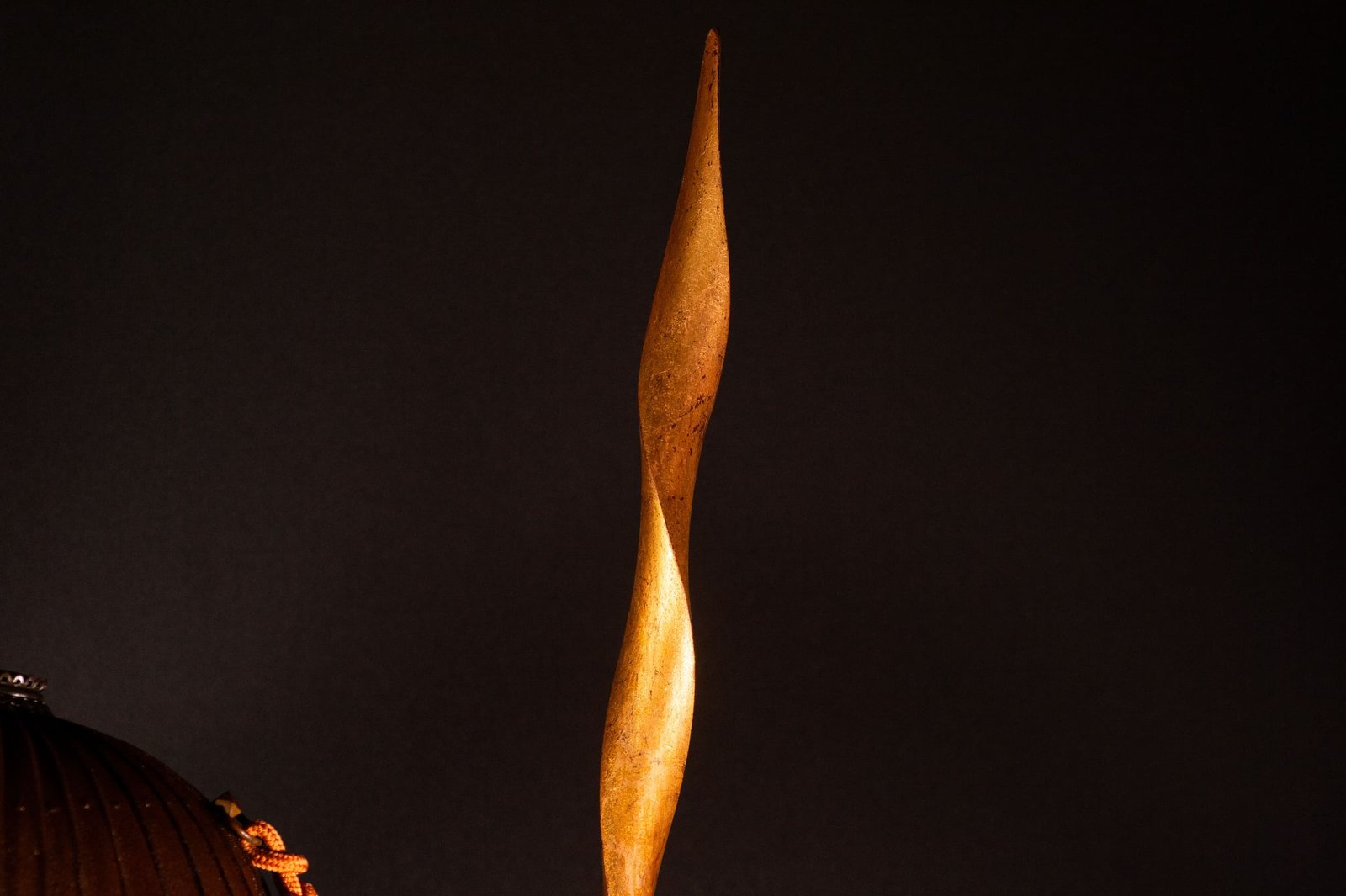
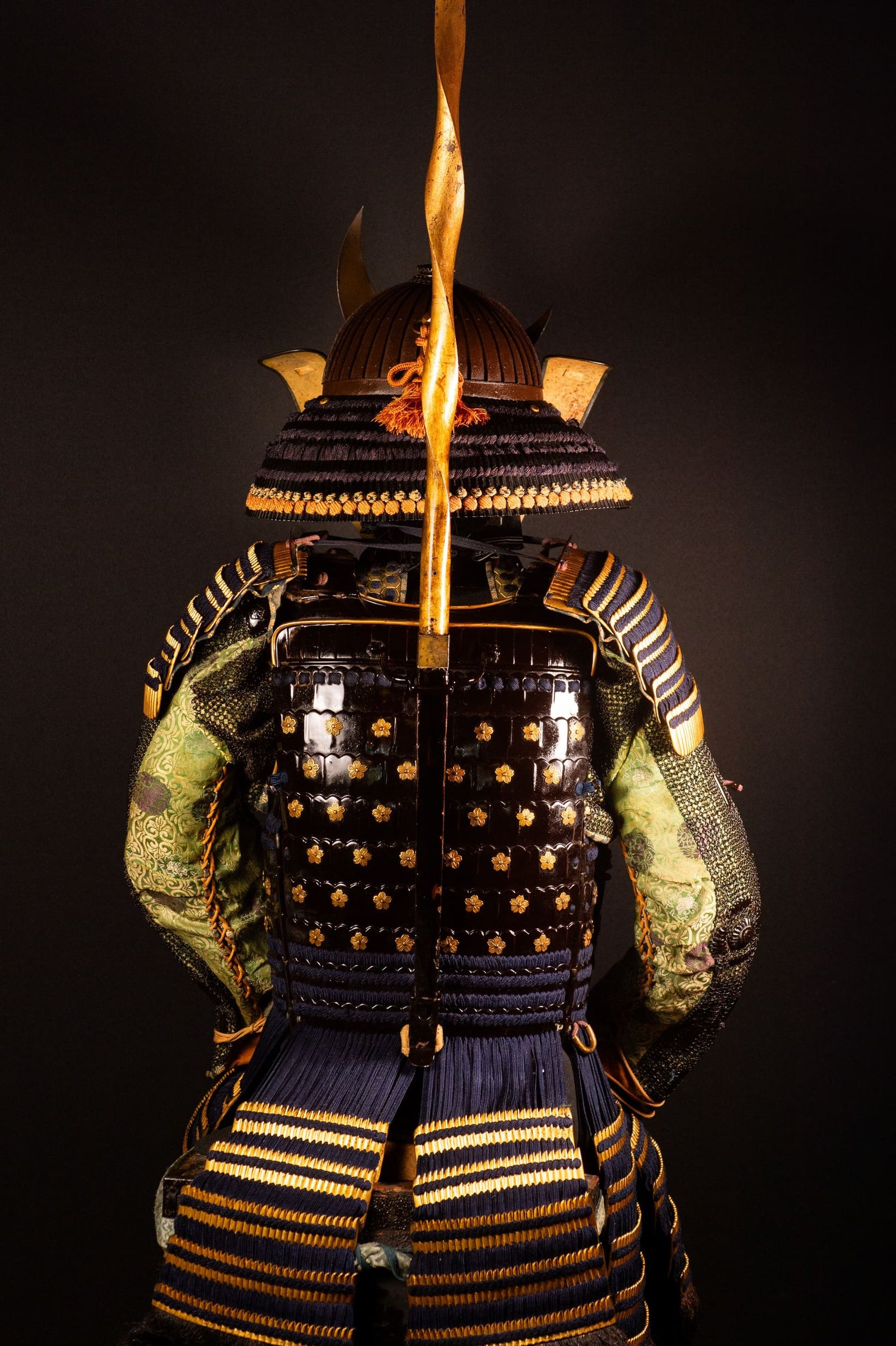
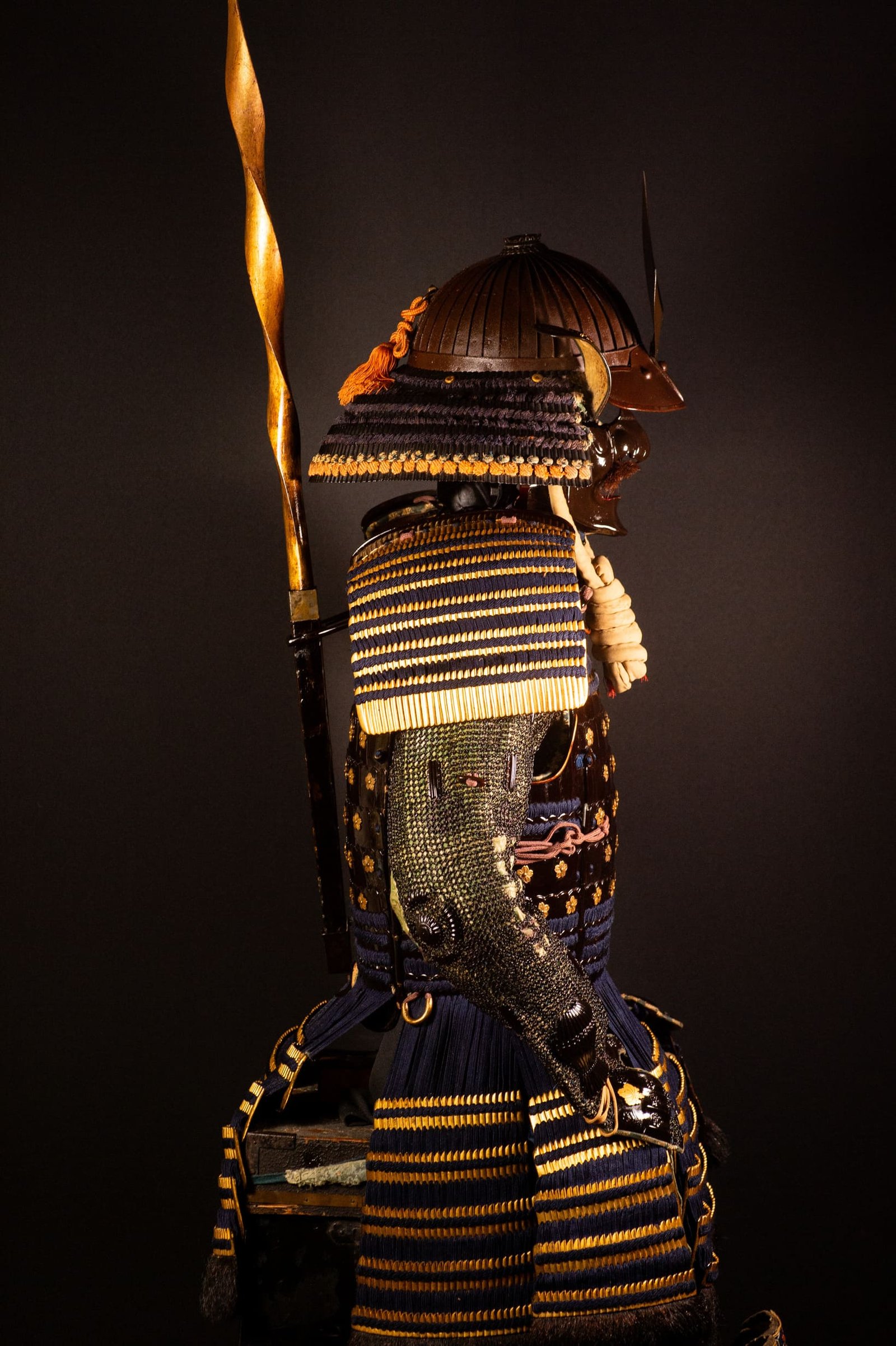
The overall appearance is especially distinctive: warm brown lacquer, bold blue lacing, gold floral details, and the prominent crescent crest give the armor a strong visual identity. A tall gilded spiral sashimono completes its silhouette. The armor is accompanied by its wooden storage chest (yoroi-bitsu).
The Helmet
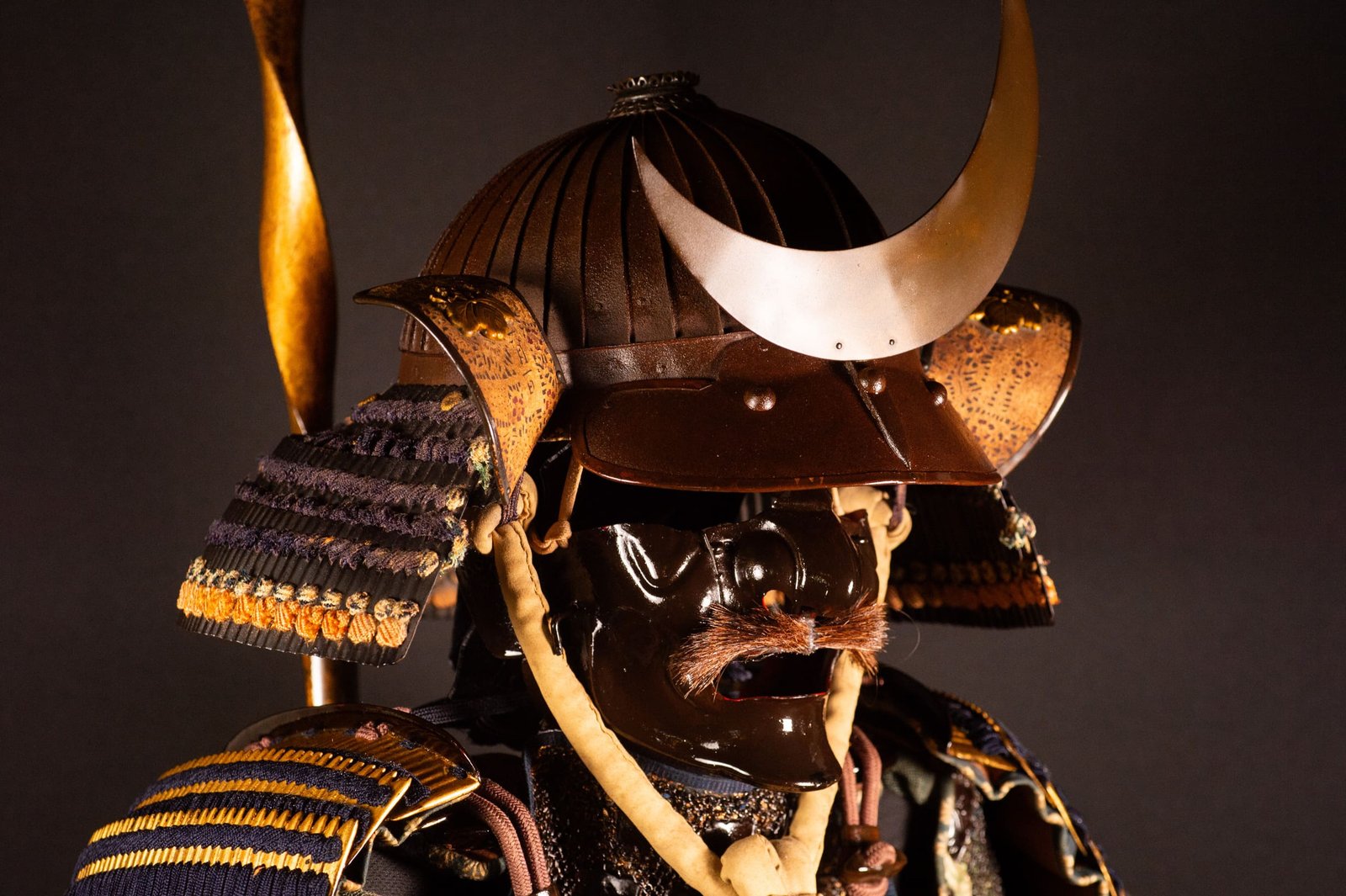
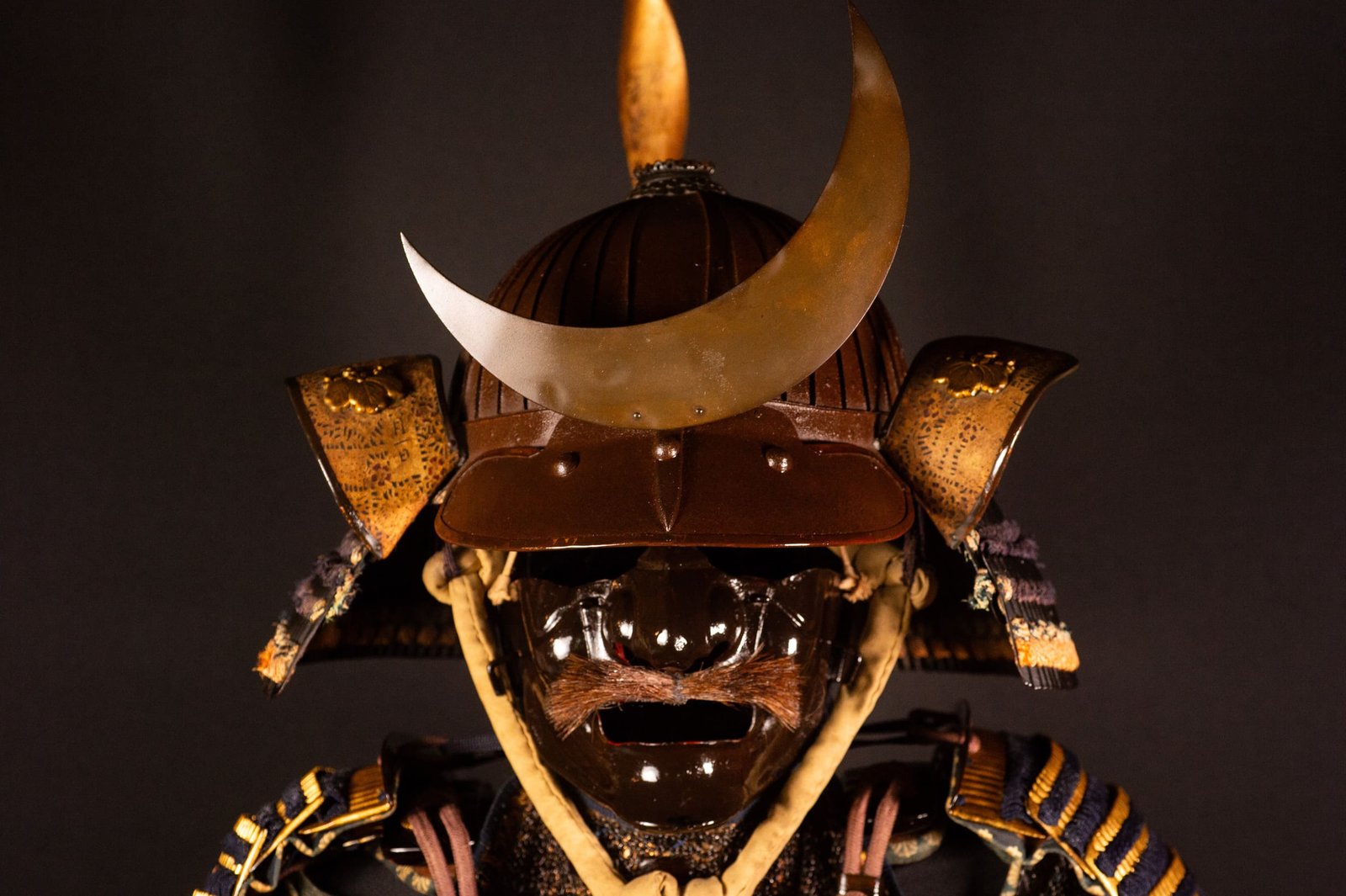
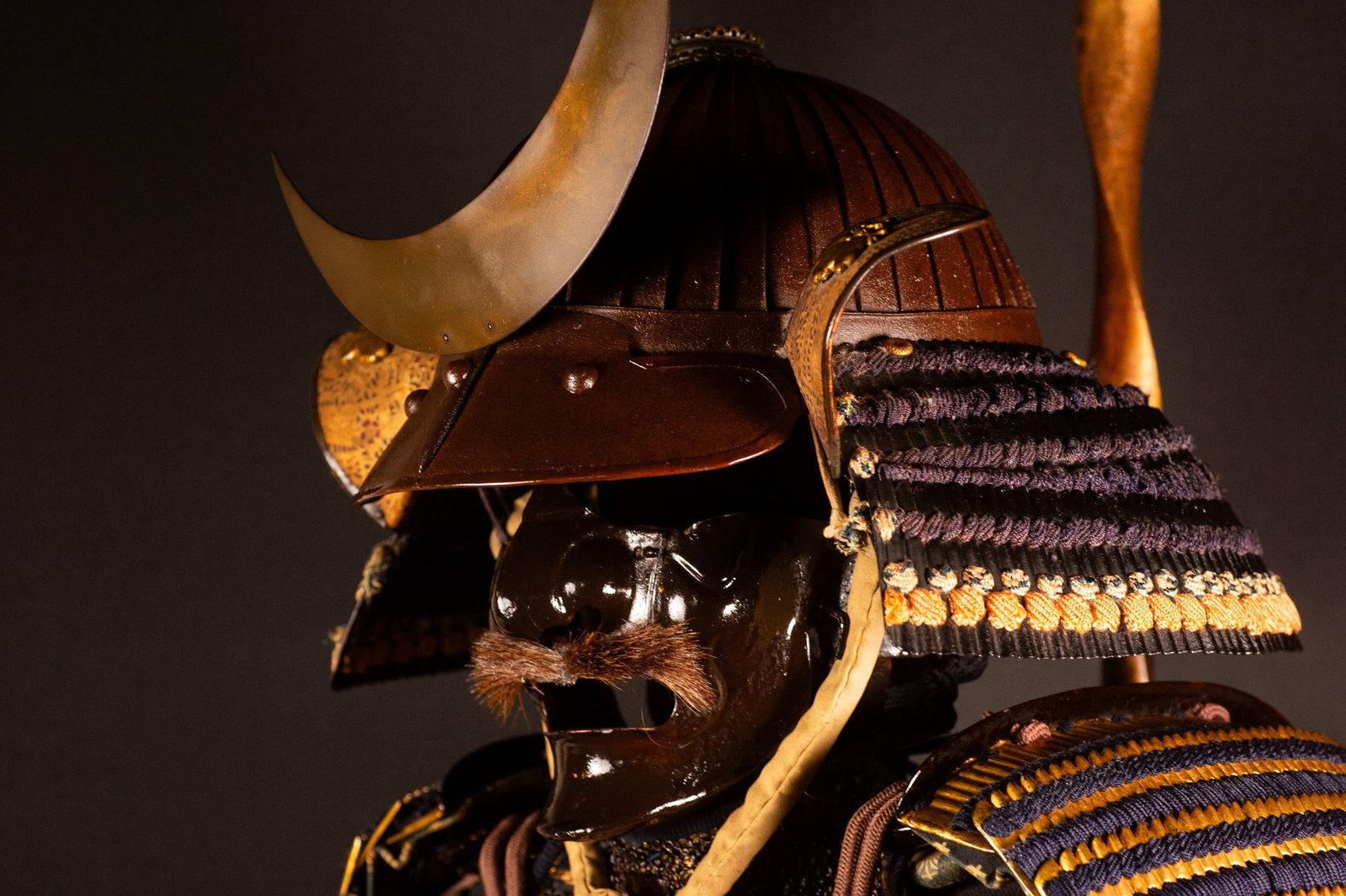
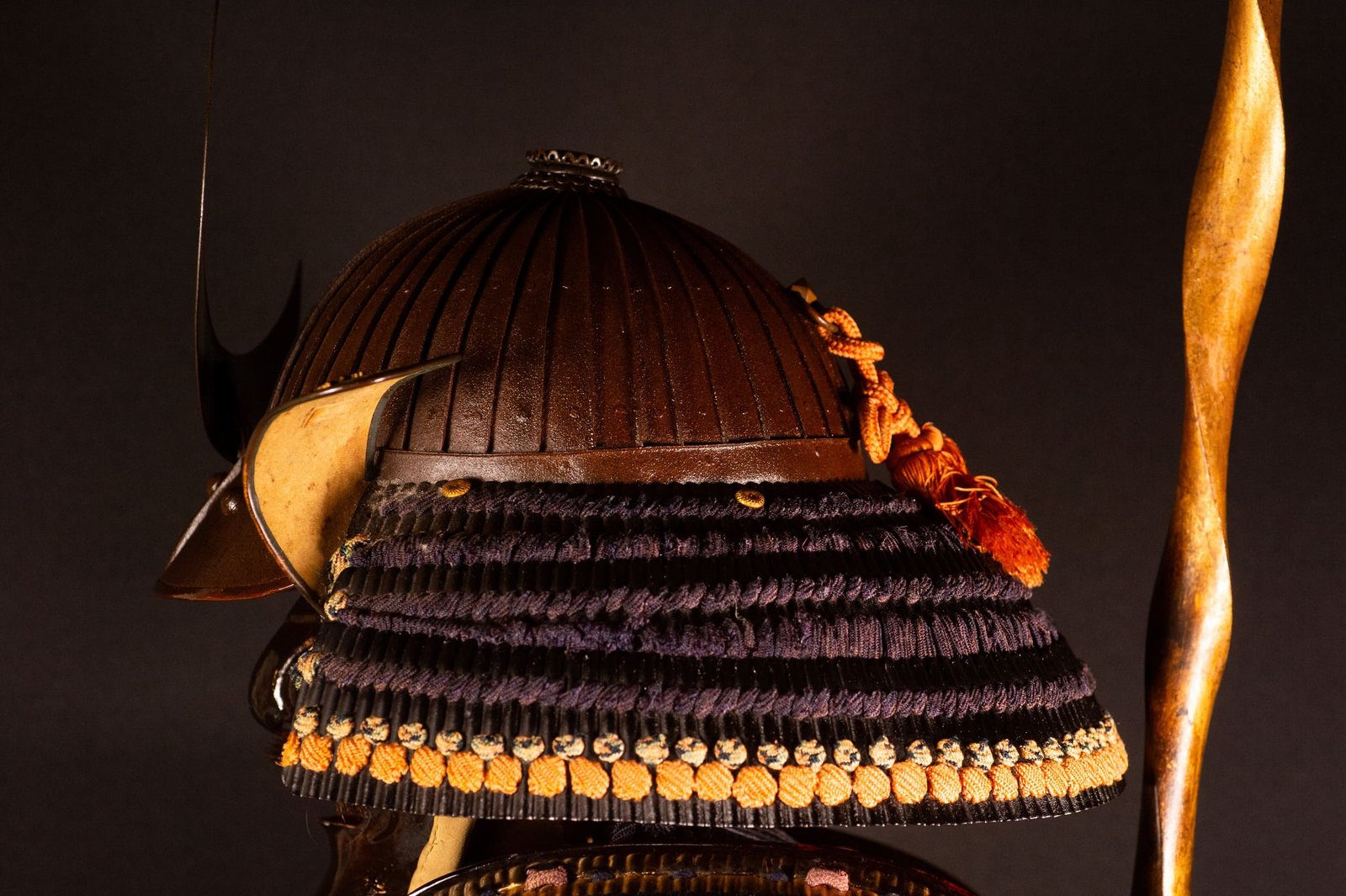
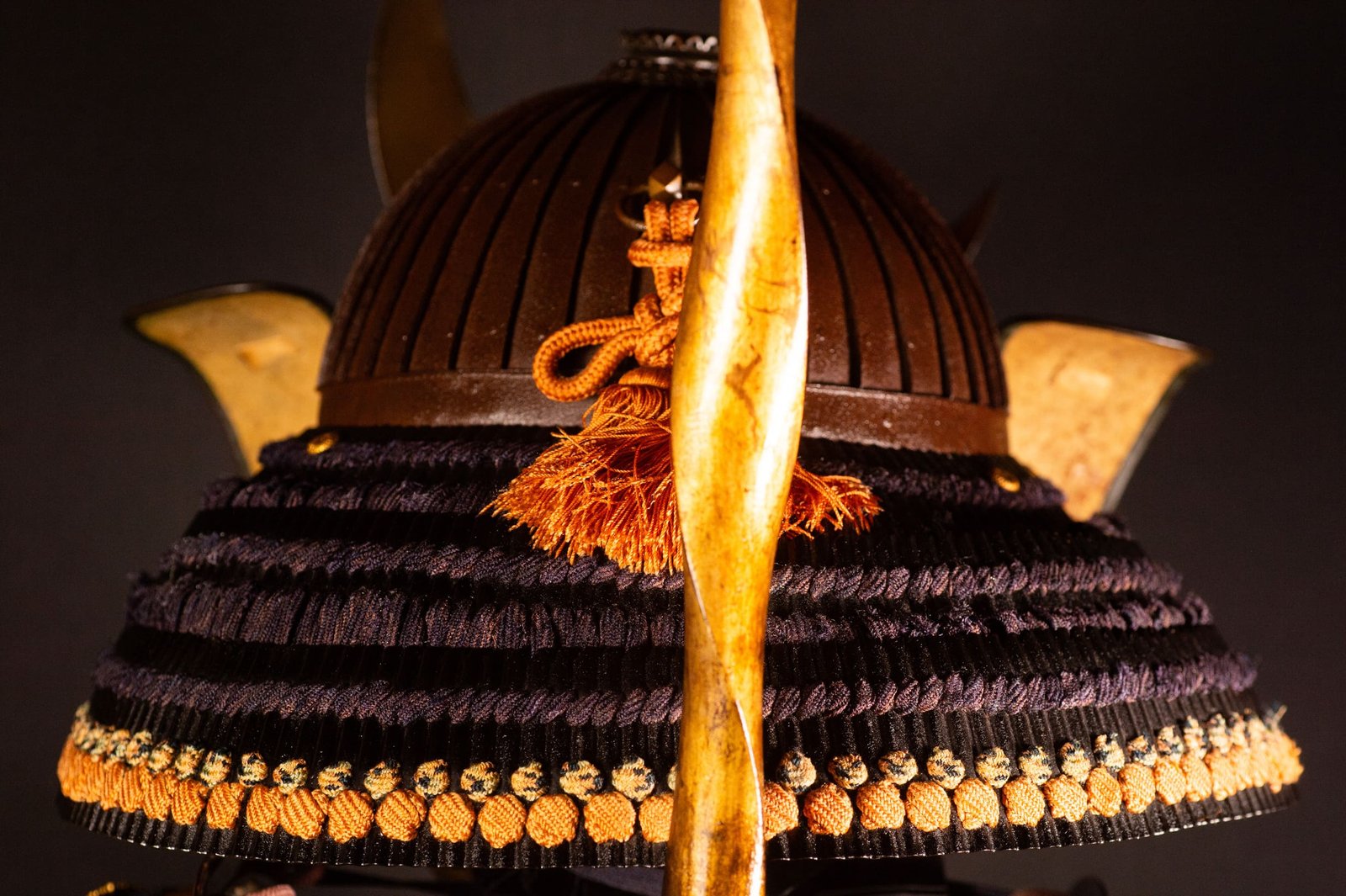
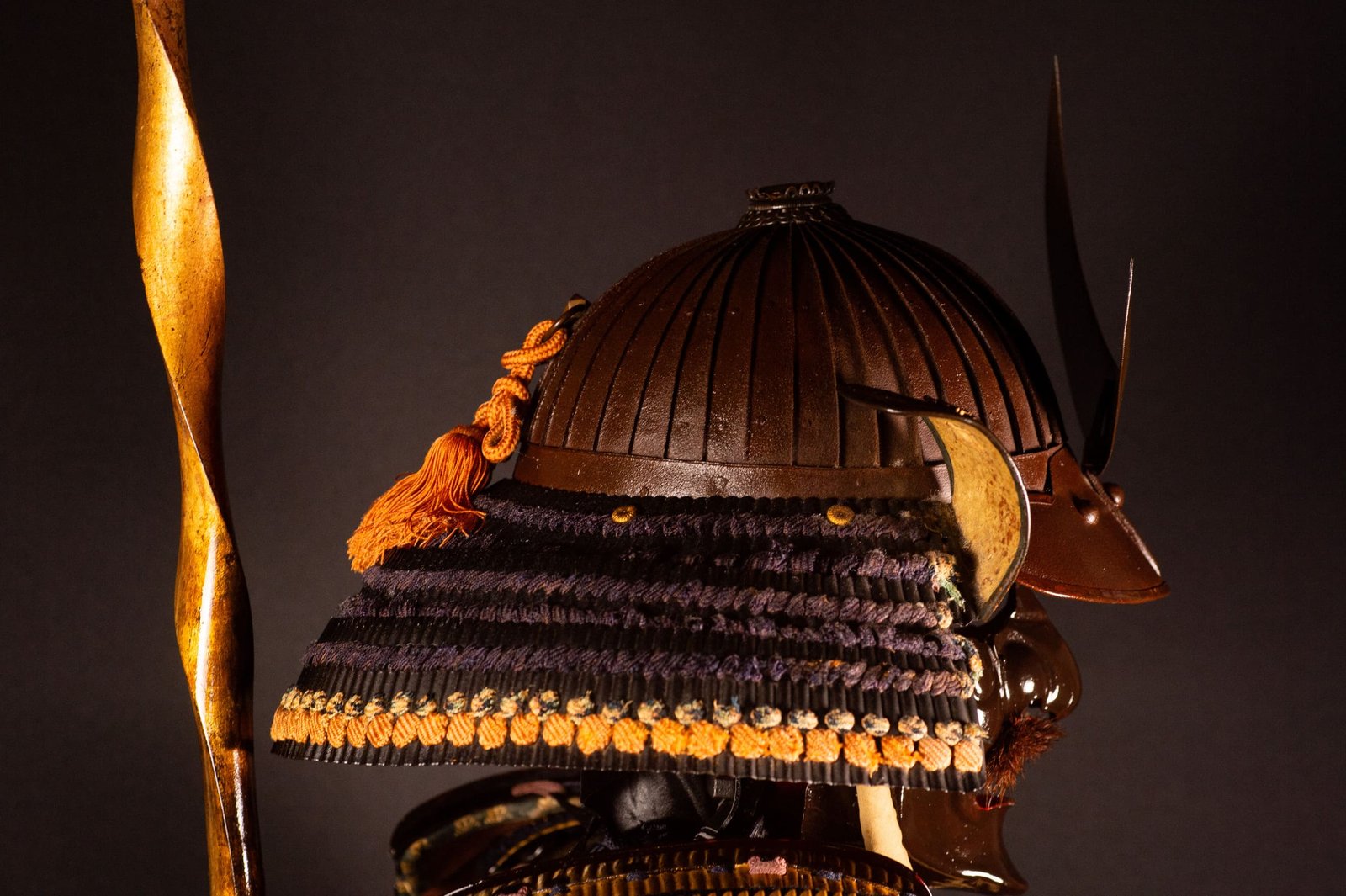
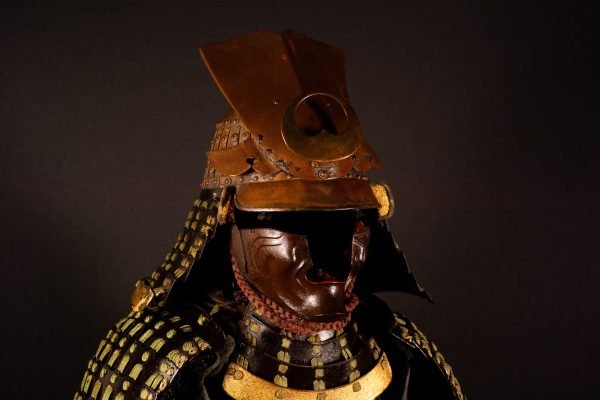
The kabuto is constructed in a ribbed suji-bachi form from many riveted plates and finished in deep russet-brown lacquer. At the crown is a finely pierced tehen kanamono, while a large crescent-moon maedate (mikazuki) in burnished metal dominates the front. Its warm patina of bronze and gold tones catches the light in a single sweeping curve.
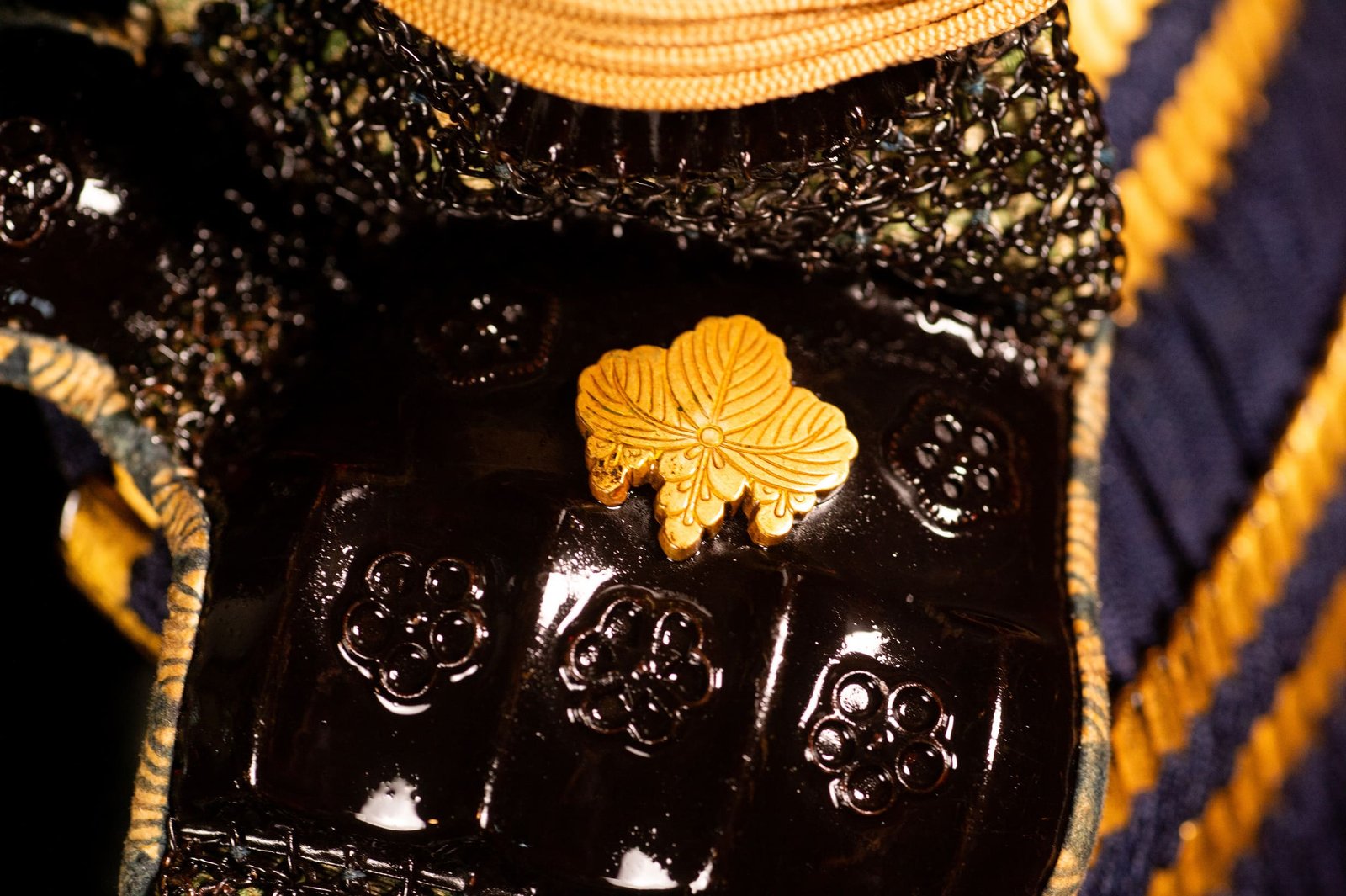
The fukigaeshi are finished in gold lacquer over a speckled ground, and each is mounted with a gilt go-san no kiri, the paulownia crest composed of three leaves and three blossom stems. Behind them, the flared shikoro descends in rows of dark indigo lacing, finished along its lower edge with orange and white cross-knots (hishinui).
The Paulownia Crest
The paulownia crest (kiri mon) was once an imperial emblem. The court granted its use to Toyotomi Hideyoshi, who rose from common origins to unify Japan, and he in turn bestowed it on generals and allies who served him. Through these associations, it became one of the prestigious emblems of the warrior class.
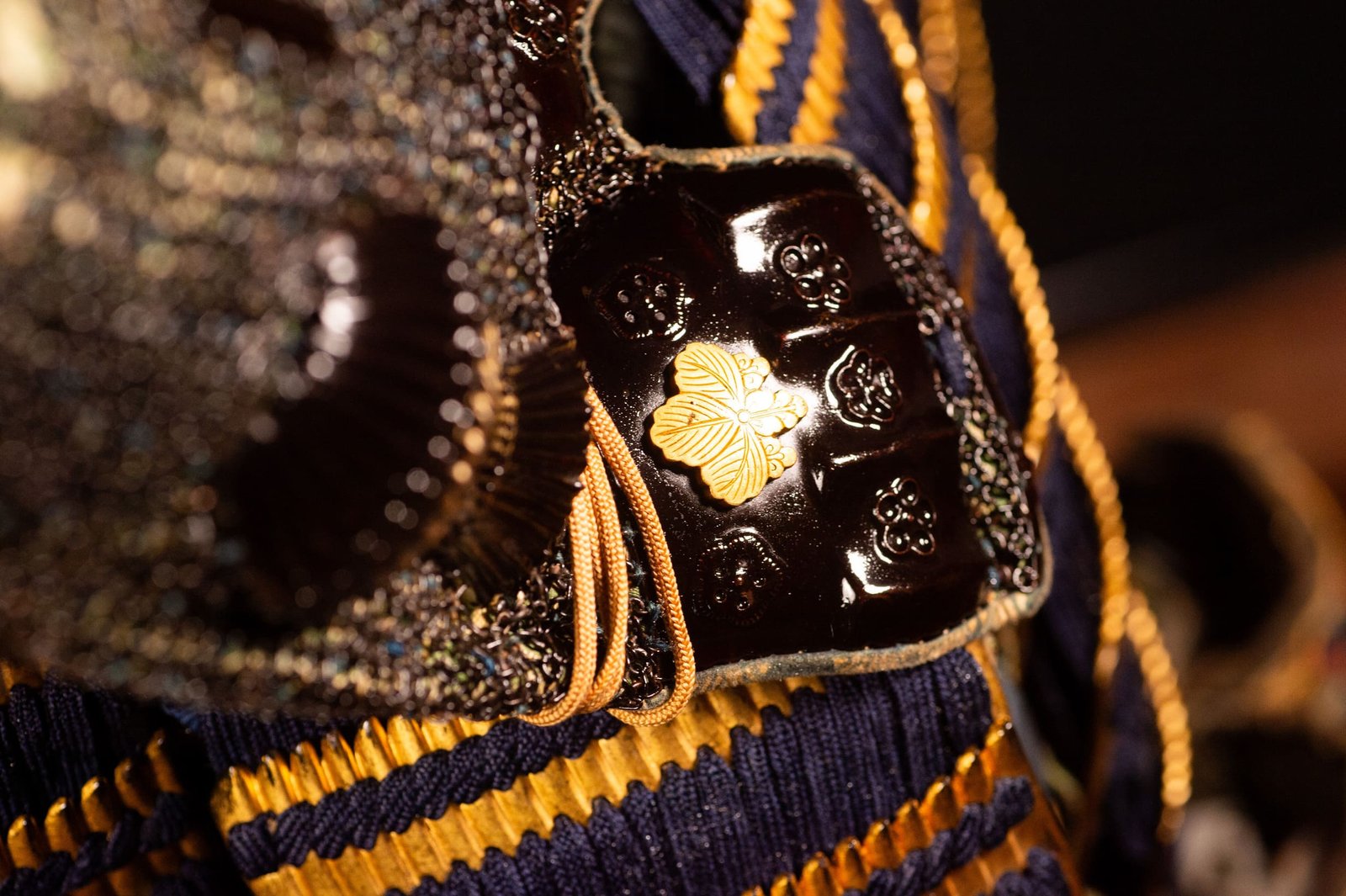
On this armor, the gilt go-san no kiri appears on the fukigaeshi and the tekkō, creating a recurring heraldic detail across the ensemble.
The Mask
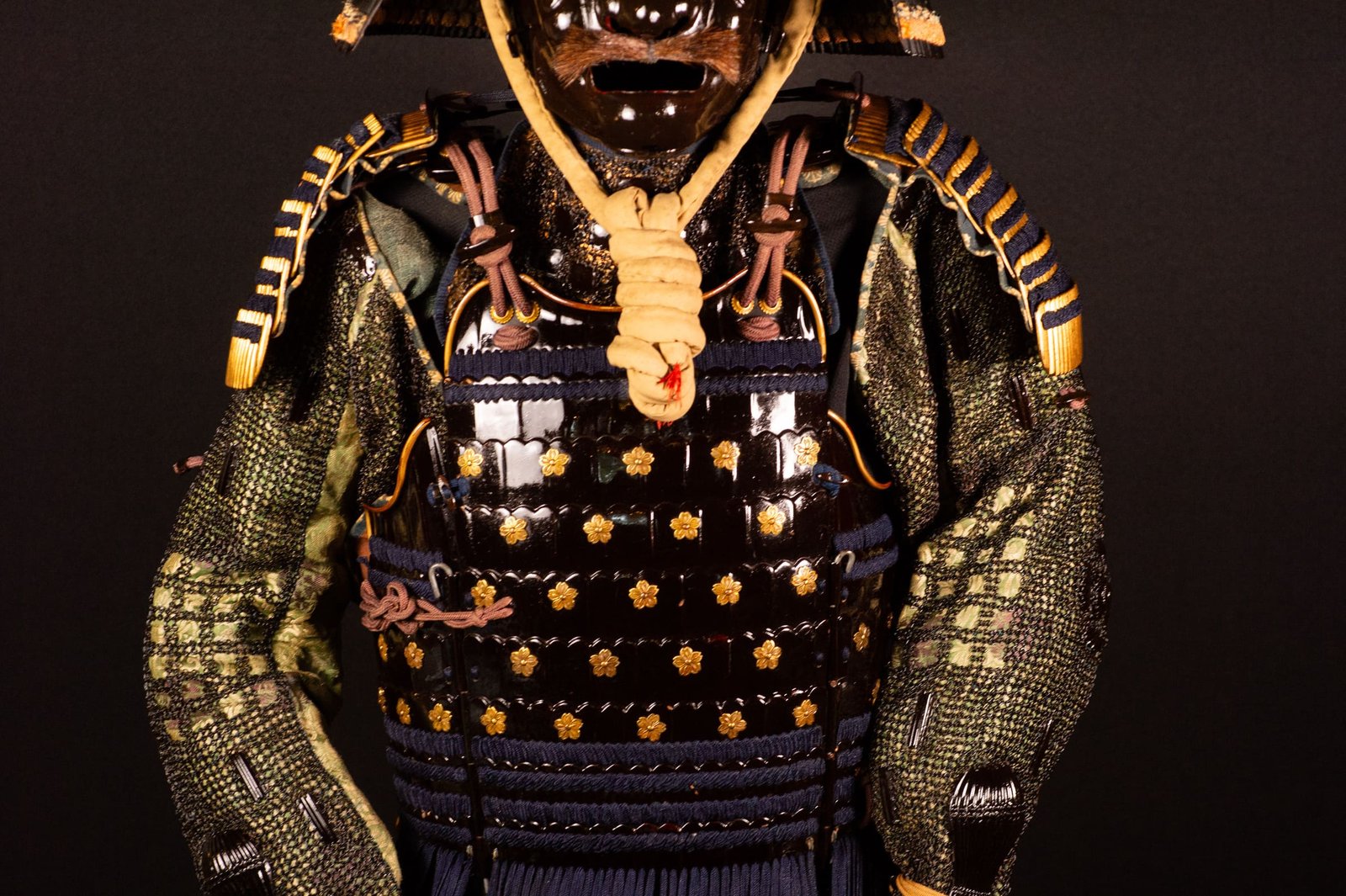
The menpō is finished in glossy brown lacquer and modeled with a strong nose, an open mouth, and a thick horsehair mustache. It is secured by a padded cloth chin cord tied at the throat. The sculpted features and contrasting textures give the mask a forceful expression.
The Cuirass
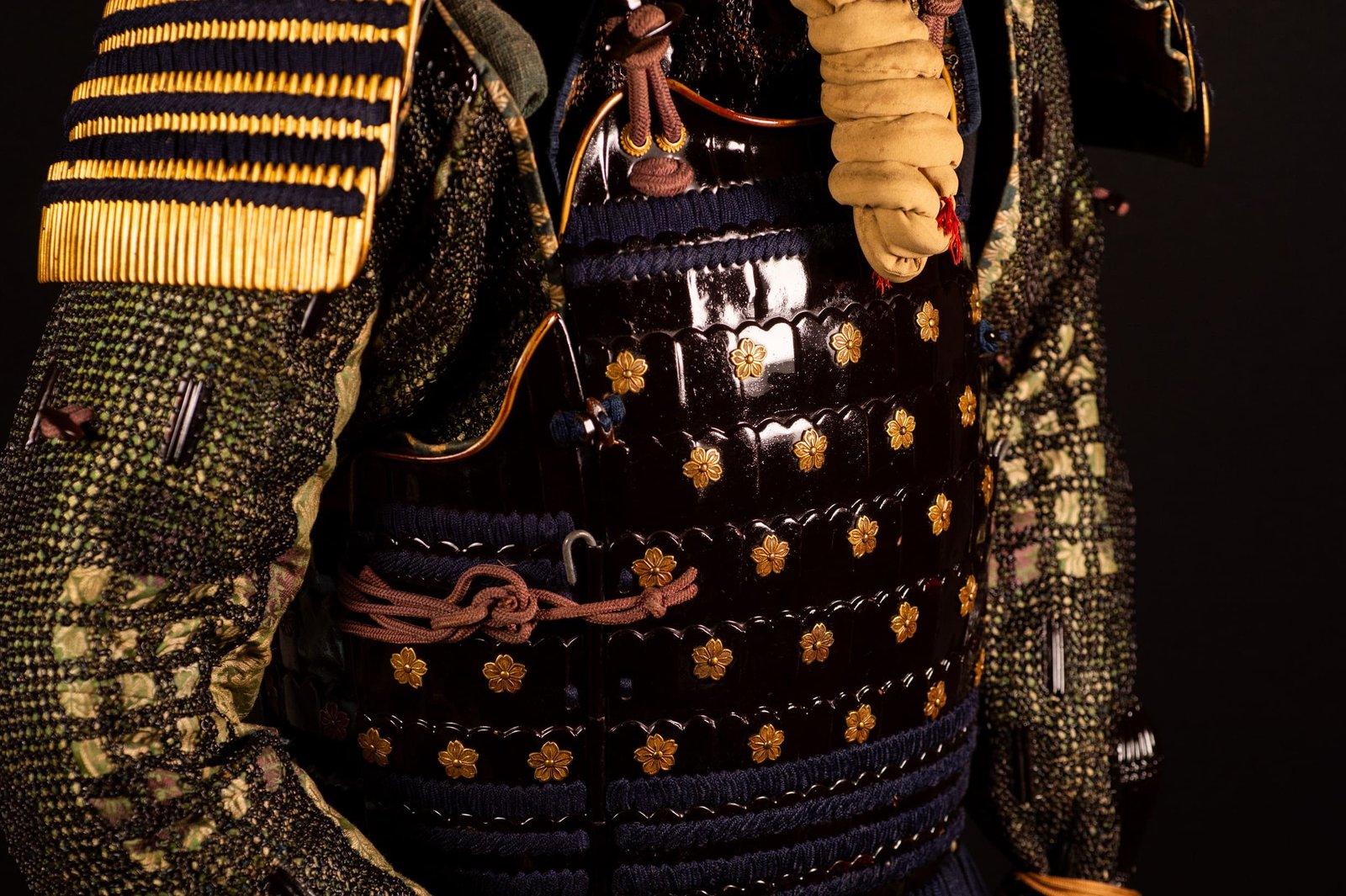
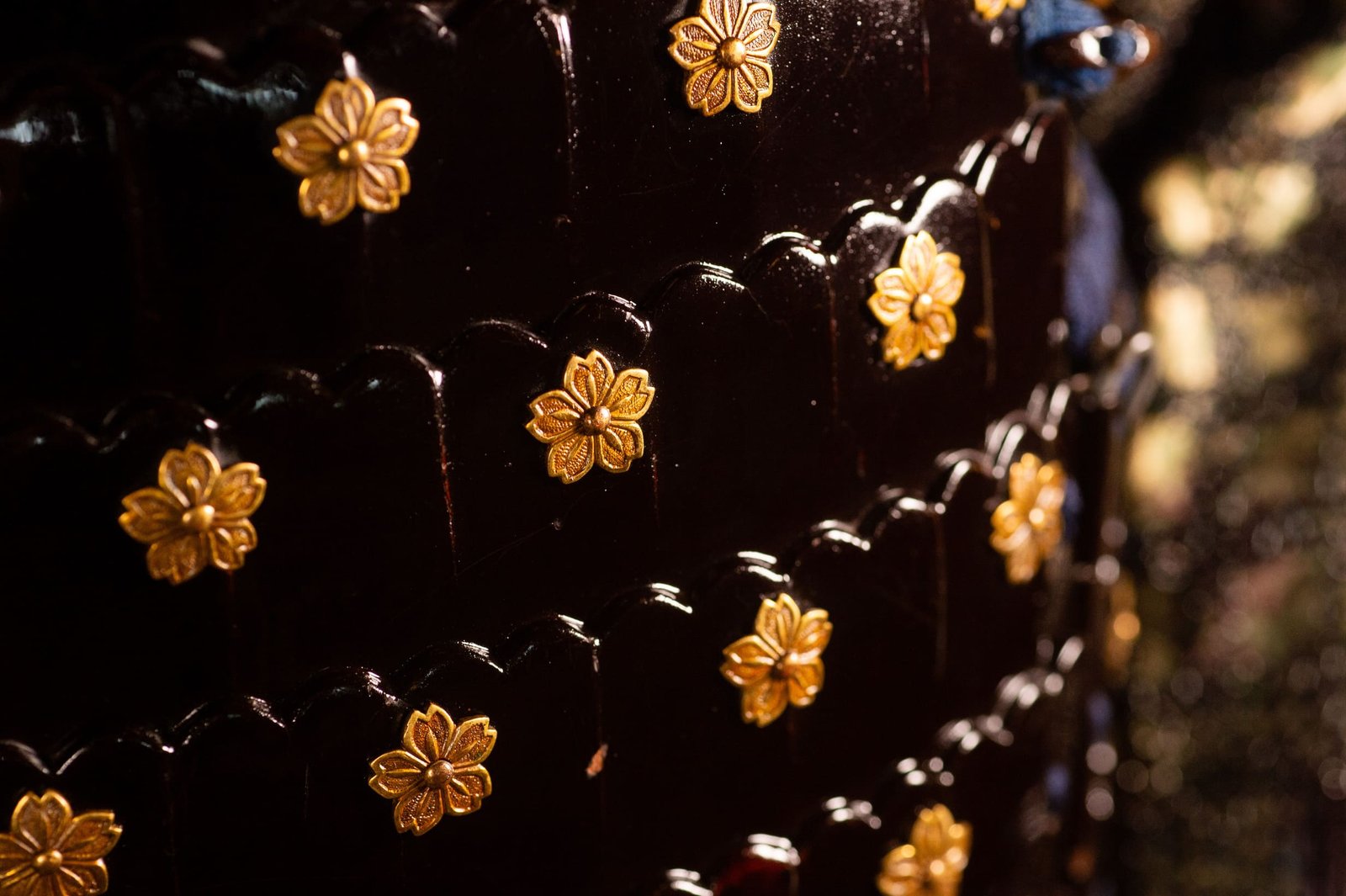
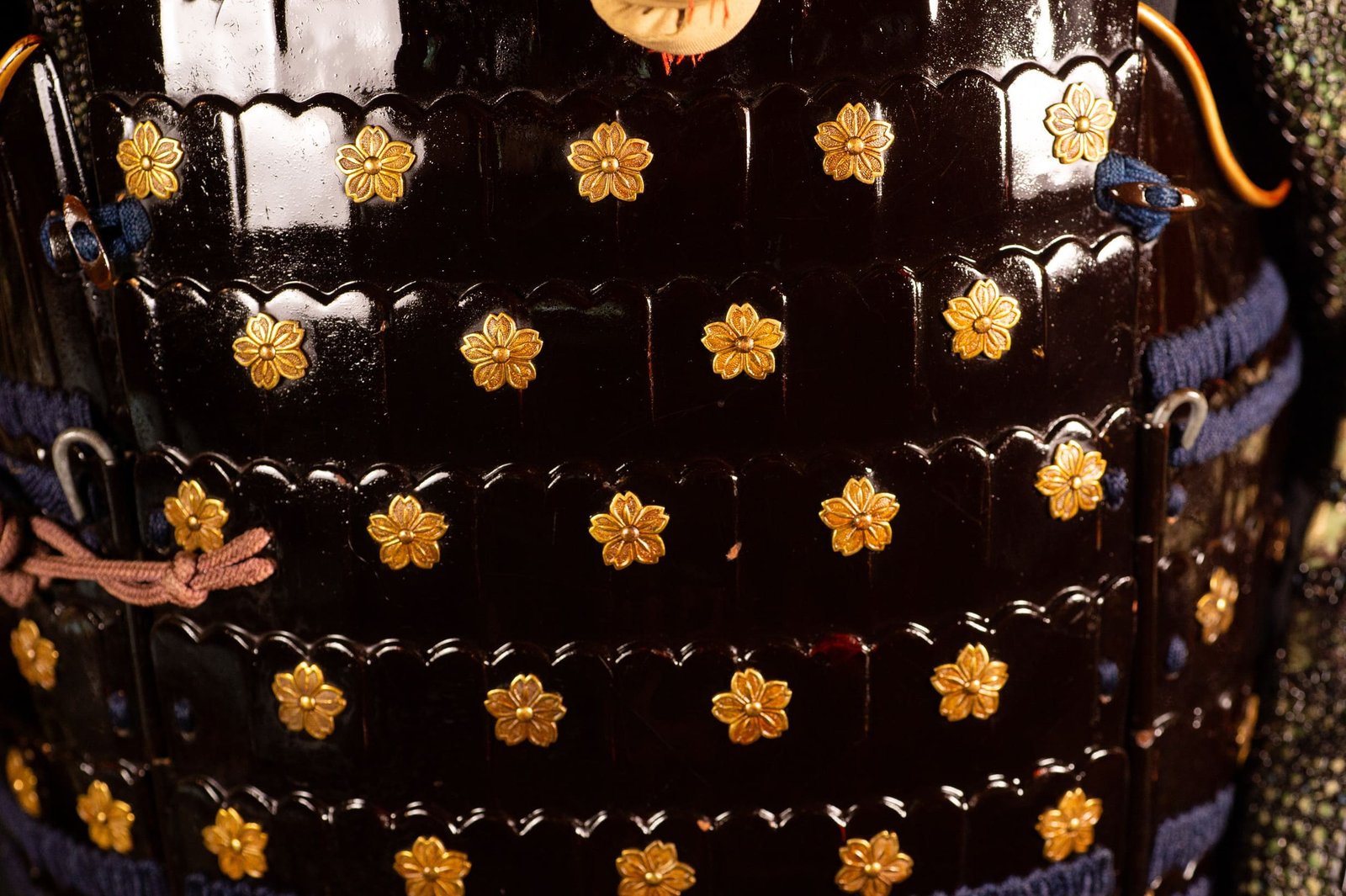
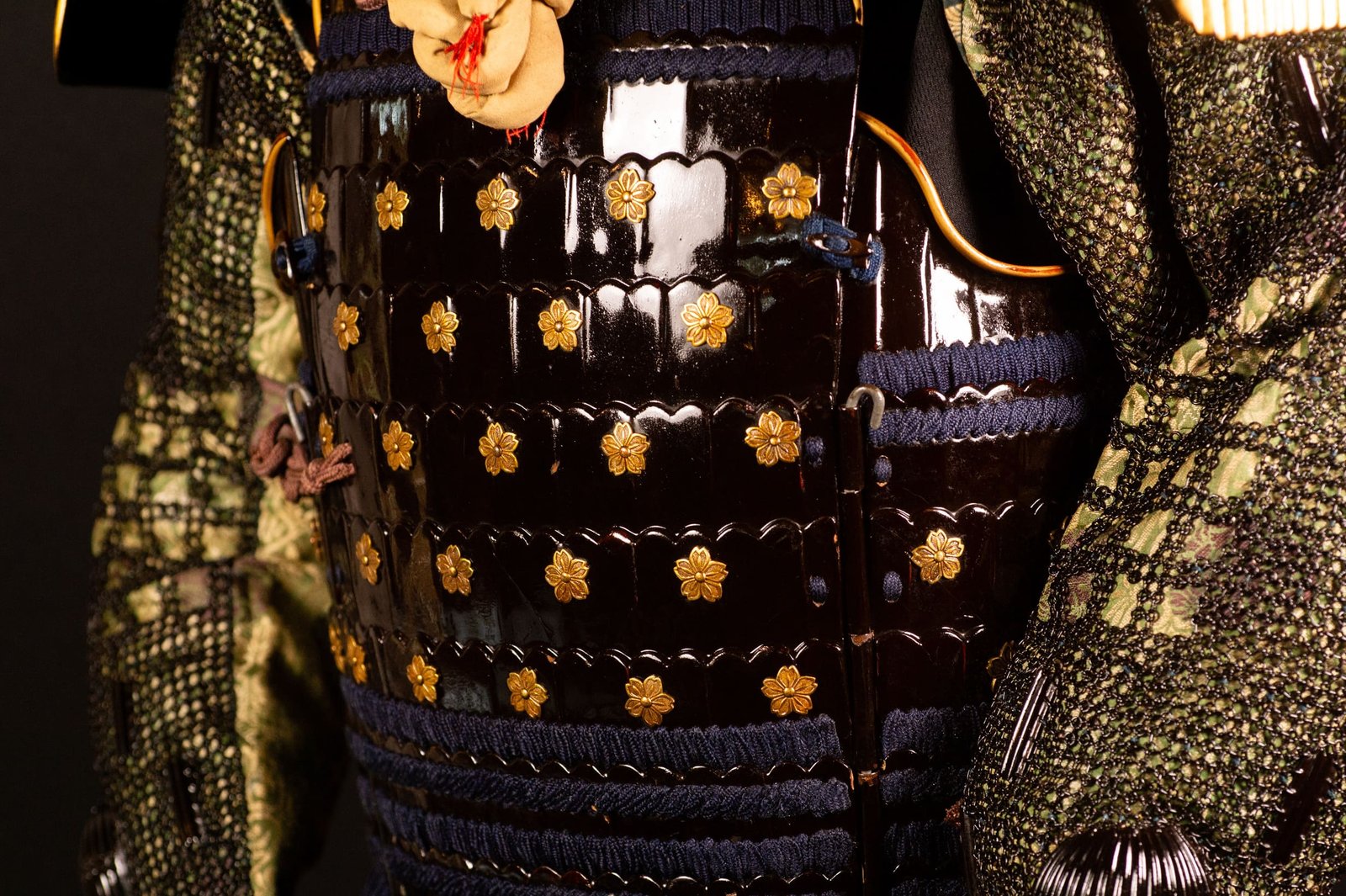
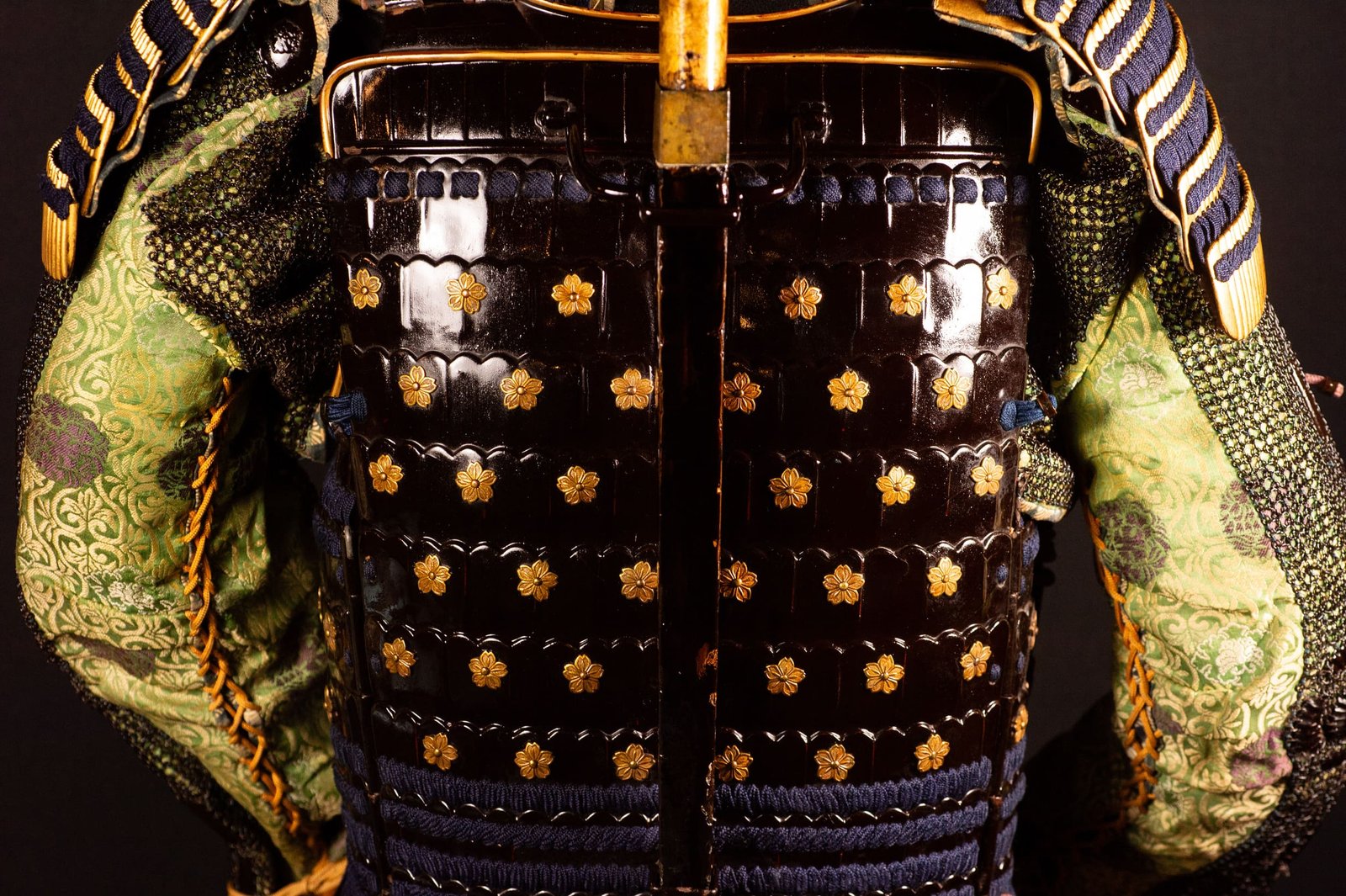
The dō is one of the armor’s most distinctive features. Its kiritsuke kozane construction has scalloped upper edges that imitate the rows of individual scales found in earlier armor. The surface is lacquered in a deep, mirror-like brown-black finish.
Gilt cherry-blossom fittings (sakura kanamono) are set across every plate, front and back. Their finely worked surfaces give the impression of petals scattered over dark water. The upper plates are edged with gilt rims (fukurin), while the lower rows are bound in dark indigo lacing.
At the back, the gattari and uketsubo hold the sashimono, a tall spiral of carved and gilded wood that rises above the helmet and completes the armor’s striking silhouette.
Shoulders and Skirt
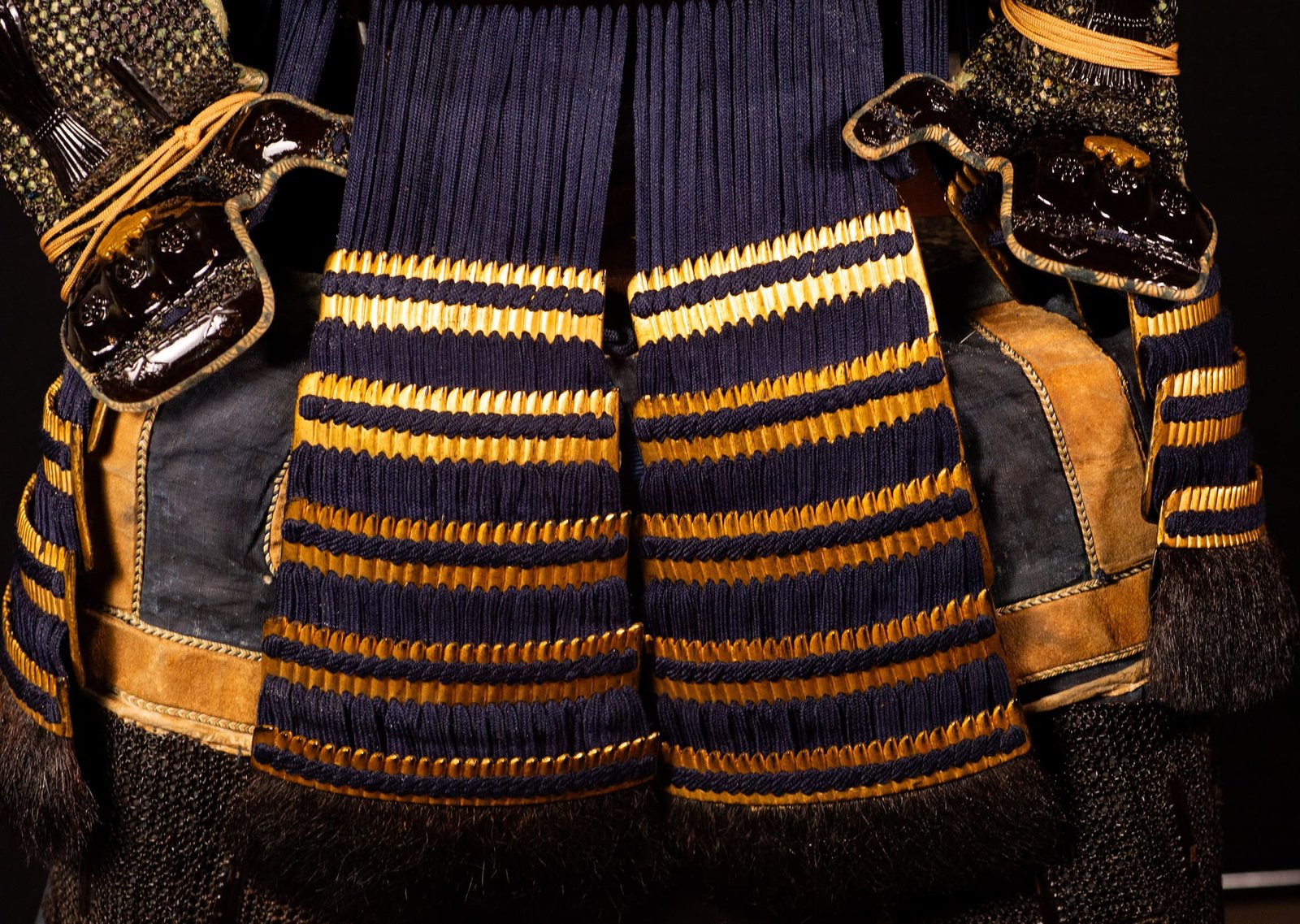
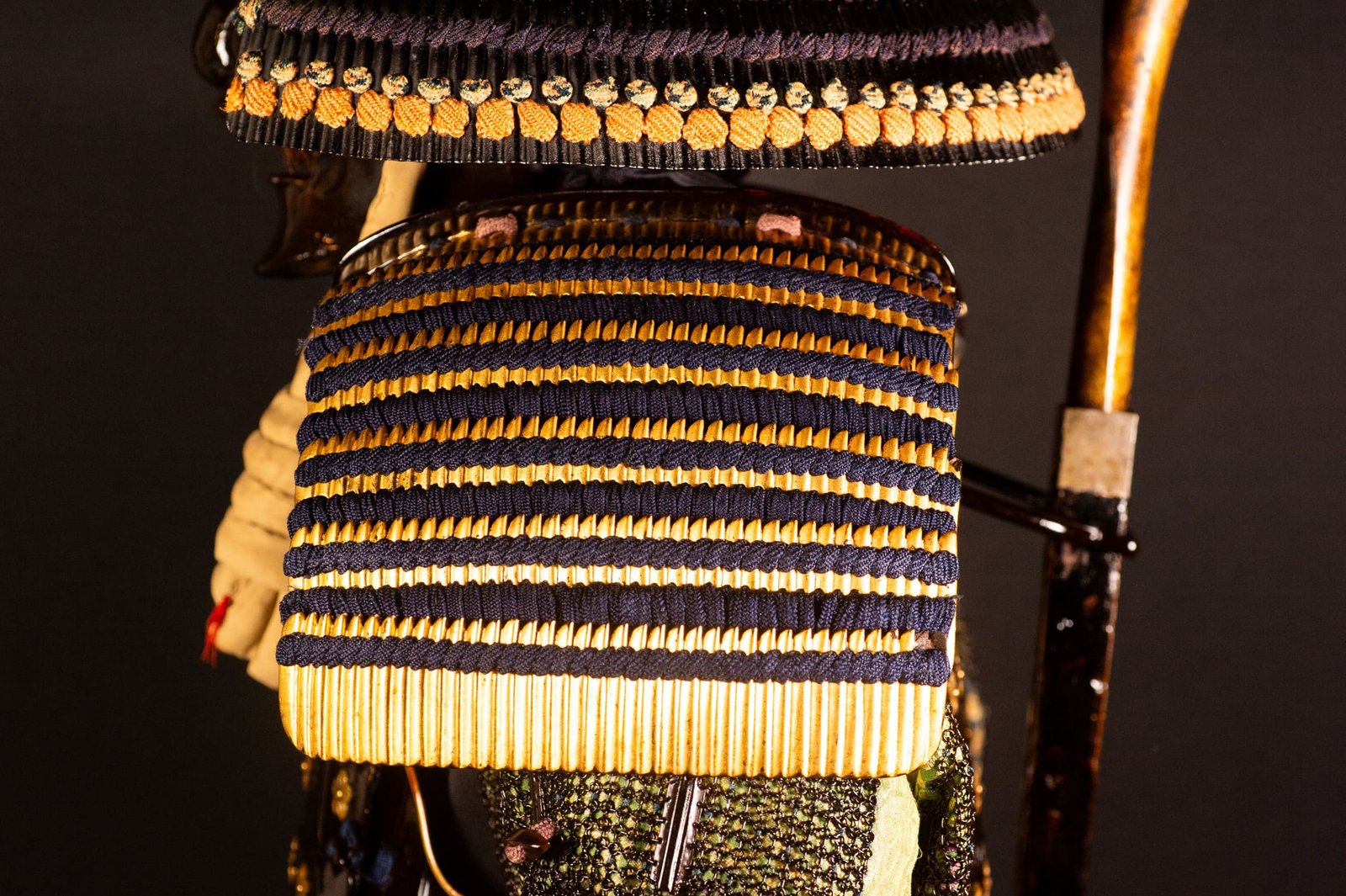
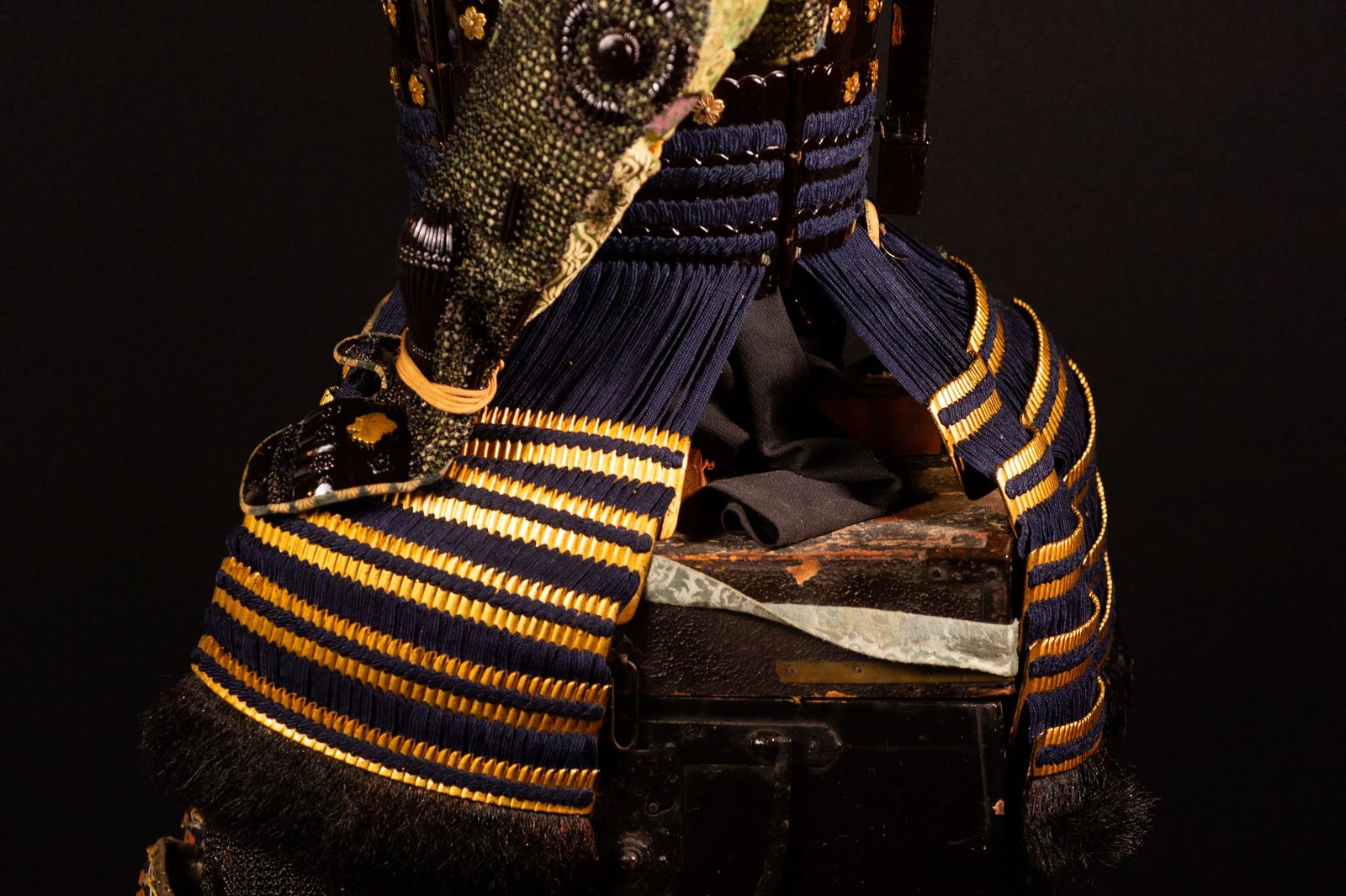
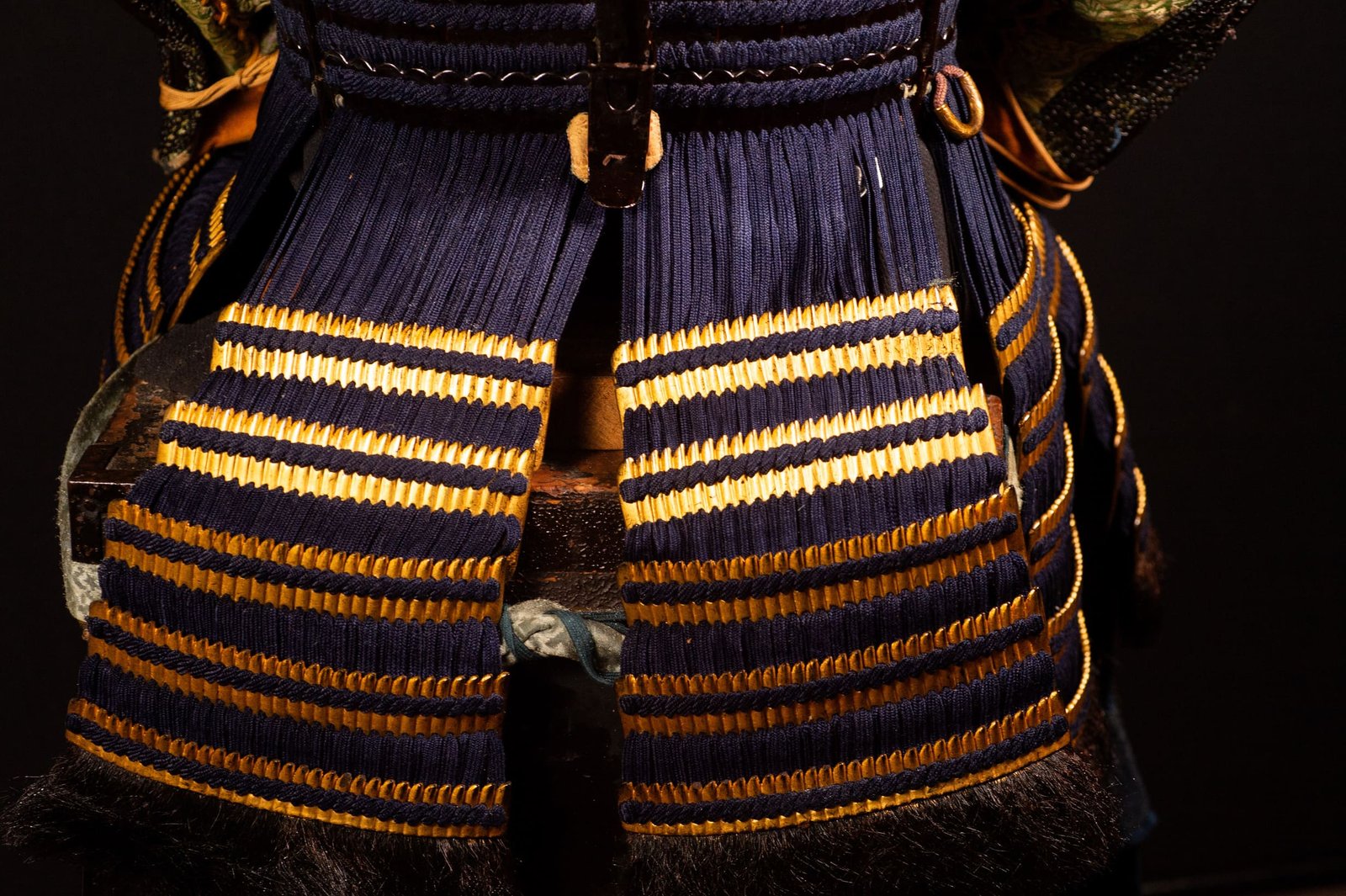
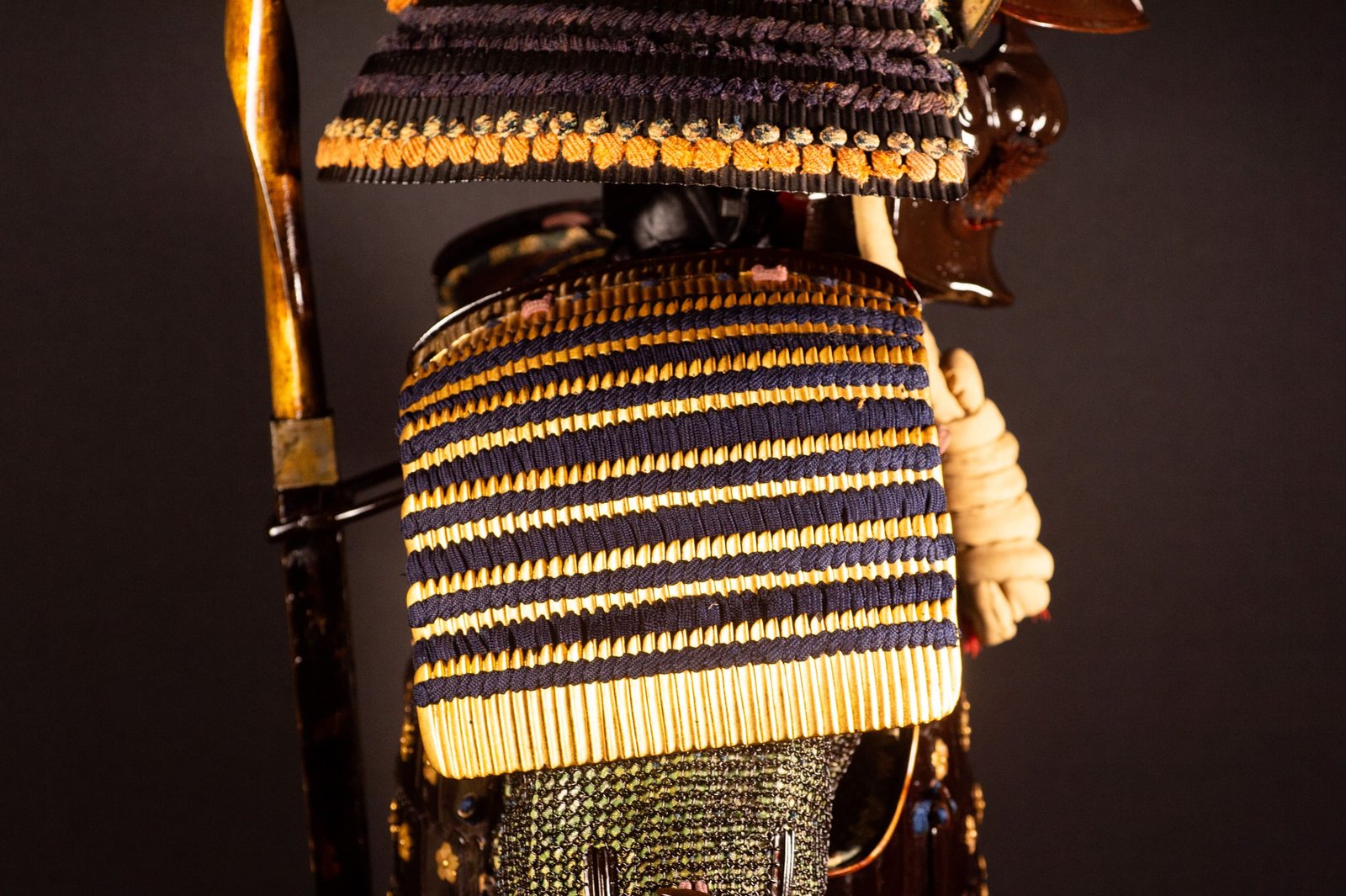
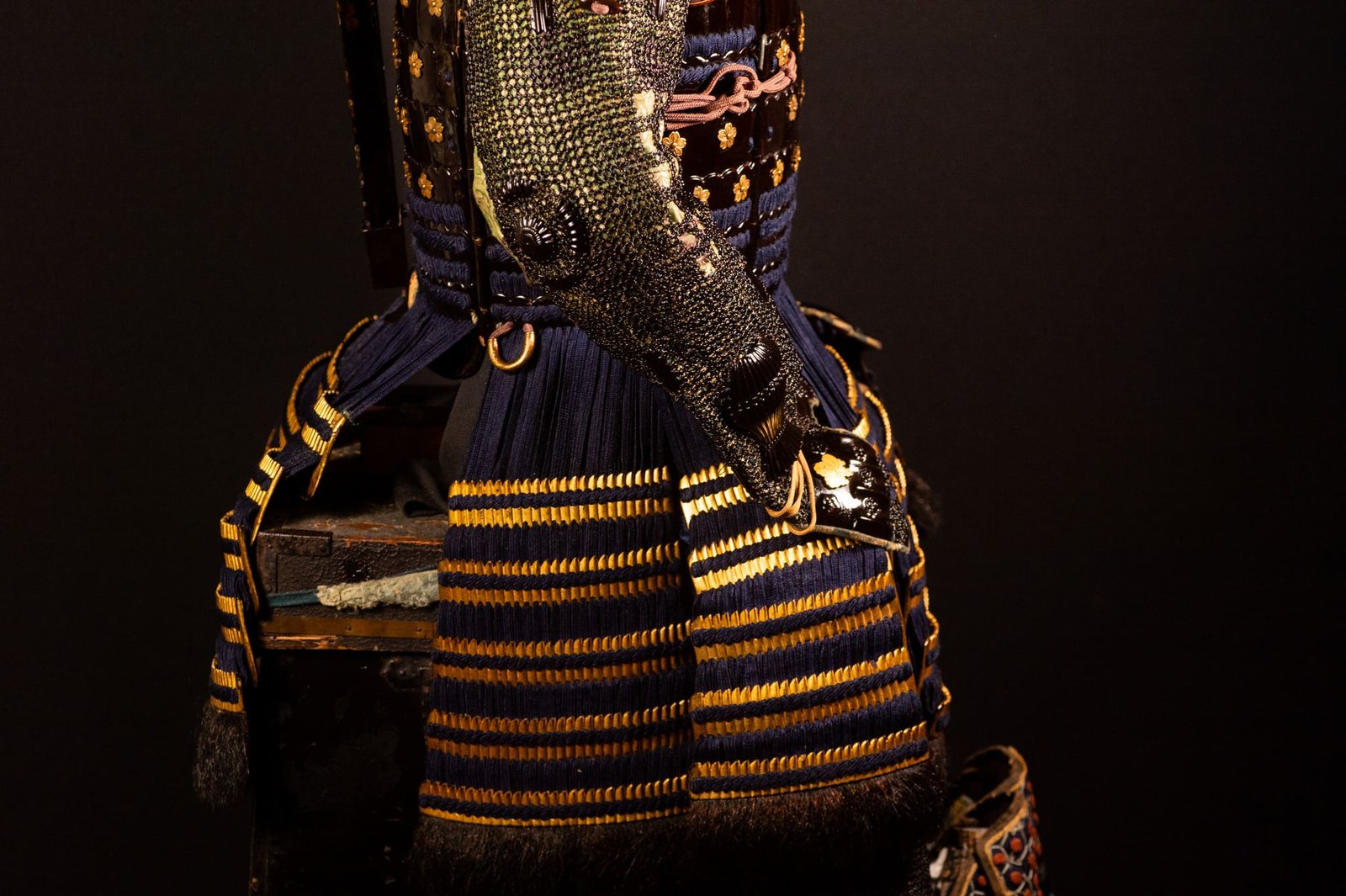
The large sode and the kusazuri are laced in dark indigo kebiki odoshi, alternating with bands of gold-lacquered scales. This creates a bold visual rhythm of blue and gold that complements the lacquered cuirass. The lower edges of the kusazuri are trimmed with bear fur, adding texture to the overall presentation.
Arms, Thighs, and Legs
The kote combine fine chain mail (kusari) with lacquered splints and gourd-shaped plates, mounted over pale green silk brocade woven with a floral pattern. Gold-colored cord runs along the inner arm.
The tekkō feature plum blossoms (ume) rendered in raised lacquer, and each carries a gilt paulownia crest at its center. Together with the cherry blossoms of the dō, these details bring together three celebrated floral motifs in Japanese decoration: paulownia, plum, and cherry blossom.
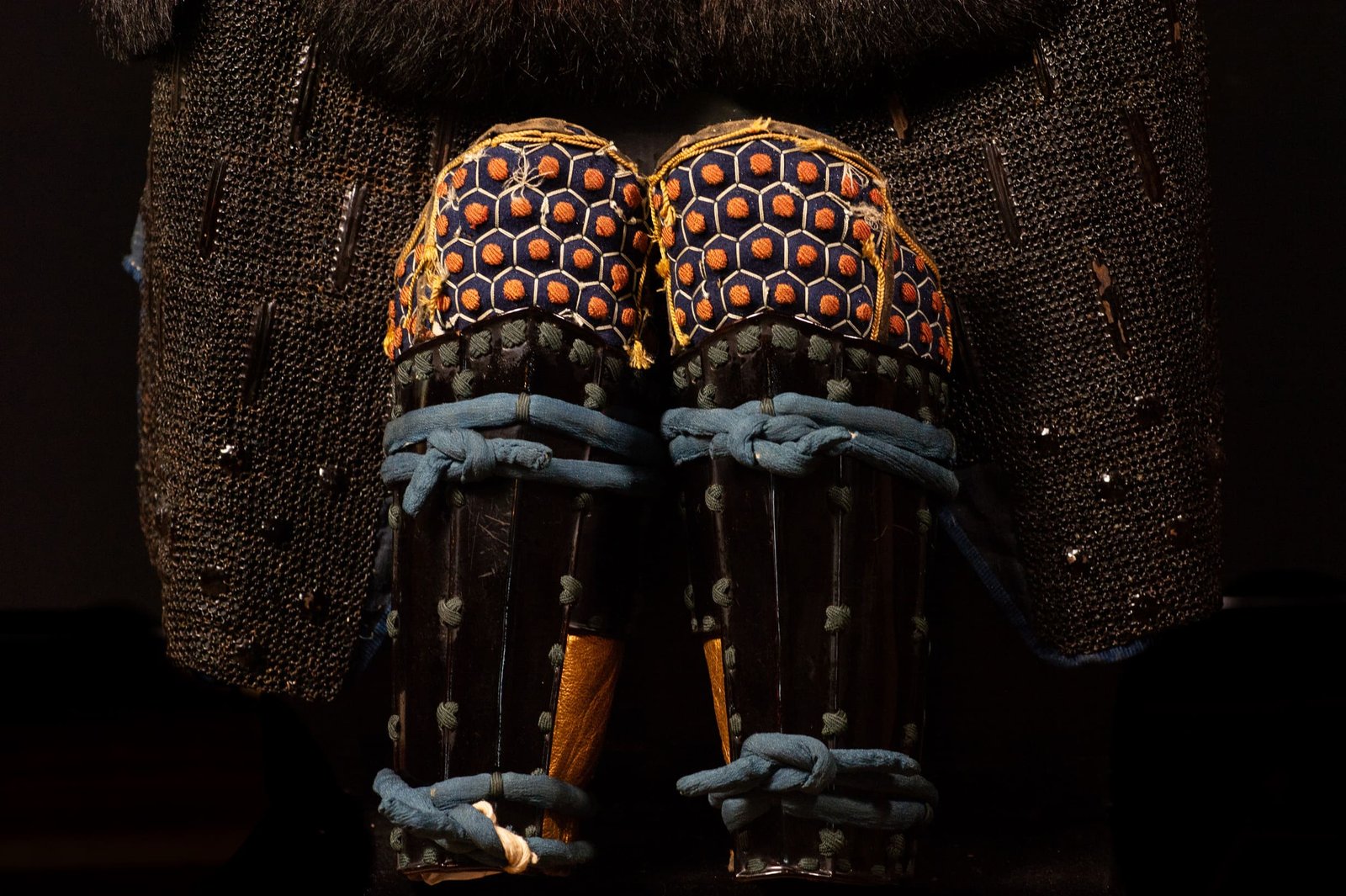
The haidate are made of chain mail fitted with small lacquered plates. The shino-suneate consist of lacquered splints joined by knotted cords, lined with gilt leather at the inner calf and tied with blue cotton cords.
The padded knee guards are covered in indigo cloth quilted in a hexagonal tortoiseshell pattern (kikkō), with orange centers and gold braid.
Storage Chest
The armor comes with its wooden yoroi-bitsu, the chest traditionally used to store and carry Japanese armor.
Period
Edo period (1603–1868).
Condition
The armor remains in excellent condition for its age, with only minor wear consistent with its antiquity. The lacquer retains a deep, even luster, the lacing preserves its rich indigo tone, and the textiles and brocade retain strong color and pattern.
Gentle wear is visible on the helmet lacing, the edges of the lower plates, and the fabric of the knee guards. These signs of age form part of the armor’s present character without diminishing the visual coherence of the ensemble.
Key Features
- Type: Complete Japanese samurai armor (gusoku)
- Period: Edo period (1603–1868)
- Helmet: Russet-brown lacquered suji-bachi kabuto made from many riveted plates
- Maedate: Large crescent moon (mikazuki) in burnished metal
- Mon: Gilt go-san no kiri paulownia crests on the fukigaeshi and tekkō
- Menpō: Glossy brown lacquer with a horsehair mustache and padded cloth chin cord
- Dō: Kiritsuke kozane construction with gilt sakura kanamono and gilt fukurin
- Sashimono: Tall carved and gilded wooden spiral, supported by gattari and uketsubo
- Lacing: Dark indigo kebiki odoshi
- Sode and kusazuri: Alternating blue lacing and gold-lacquered scales; bear-fur trim on the kusazuri
- Kote: Chain mail, lacquered splints, gourd-shaped plates, and pale green floral silk brocade
- Tekkō: Raised lacquer plum-blossom decoration and gilt paulownia crests
- Haidate: Chain mail with small lacquered plates
- Suneate: Lacquered splints with gilt leather lining and blue cotton ties
- Knee guards: Indigo kikkō-pattern quilting with orange centers and gold braid
- Condition: Excellent for its age, with minor wear consistent with antiquity
- Includes: Wooden storage chest (yoroi-bitsu)
An impressive Edo-period samurai armor with a crescent-moon maedate, gilt paulownia crests, and richly lacquered and laced components. Its cherry-blossom fittings, plum-blossom decoration, and gilded spiral sashimono give the ensemble a distinctive combination of floral detail, color, and sculptural presence.