Samurai Armor Helmet (Kabuto)
Early to Mid Edo Period, Late 17th–Early 18th Century
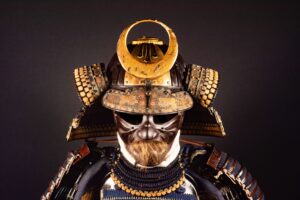
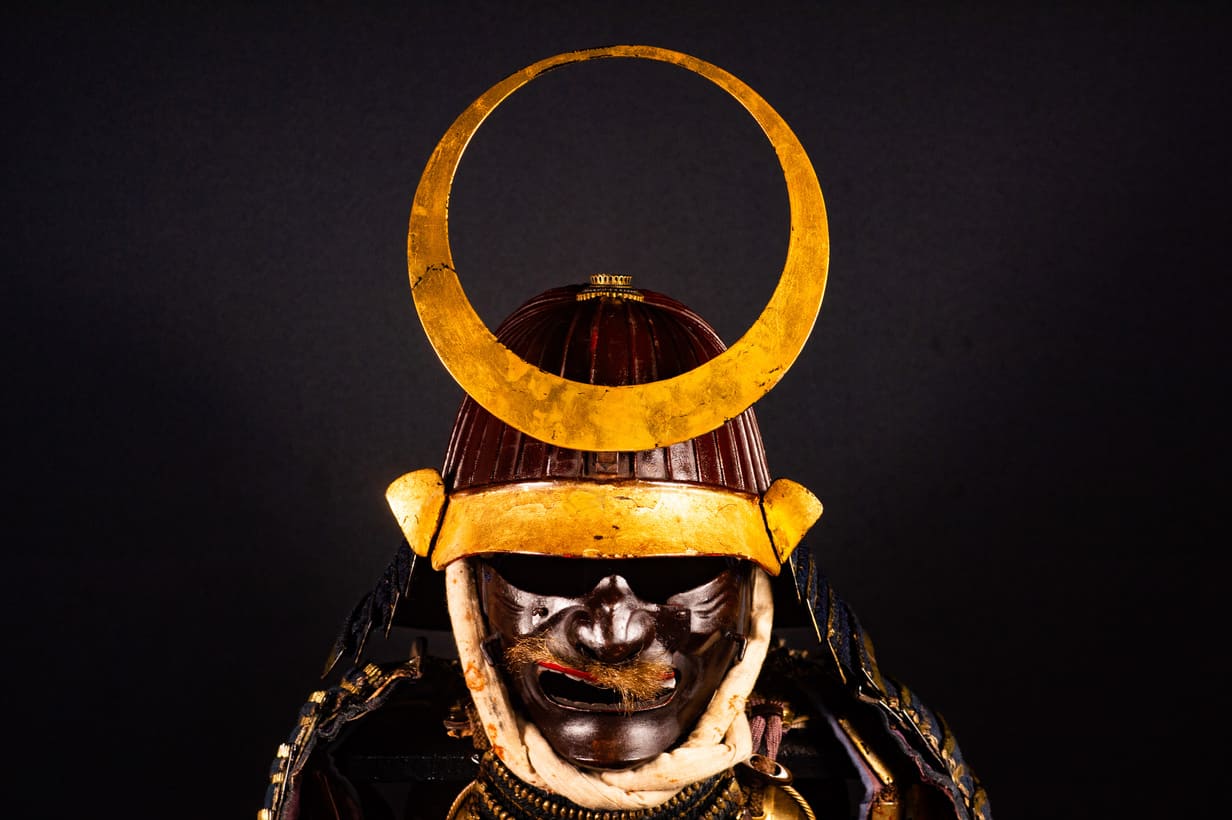
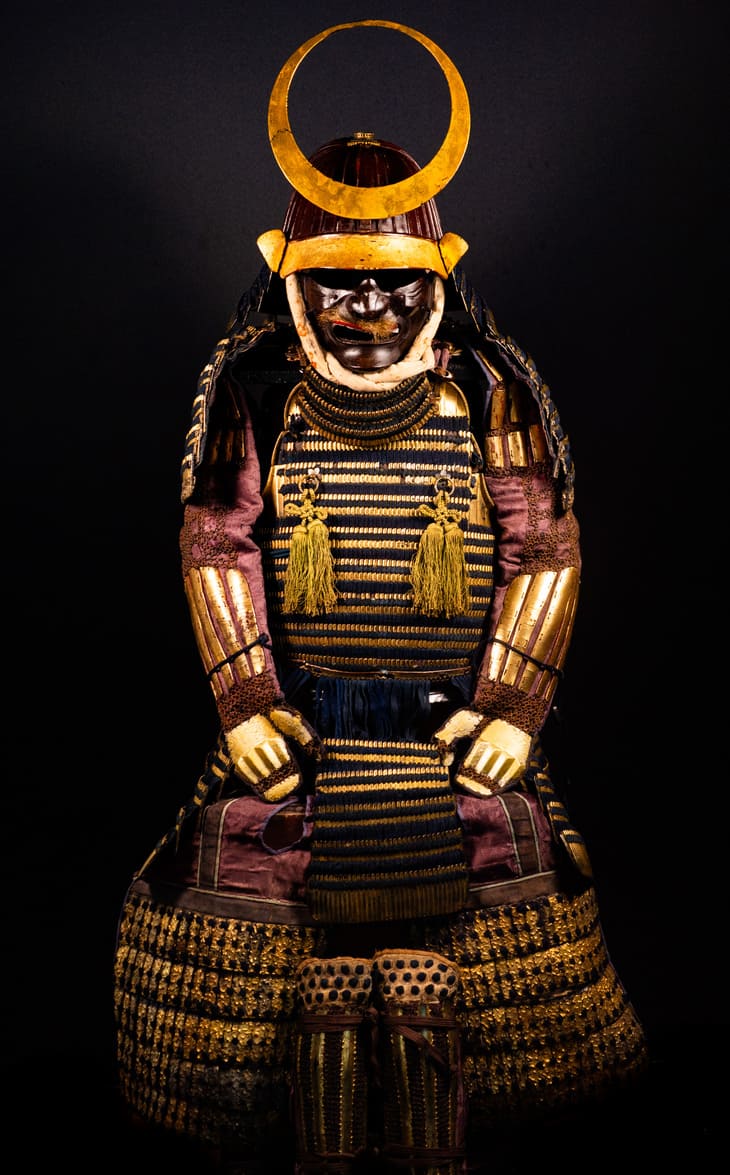
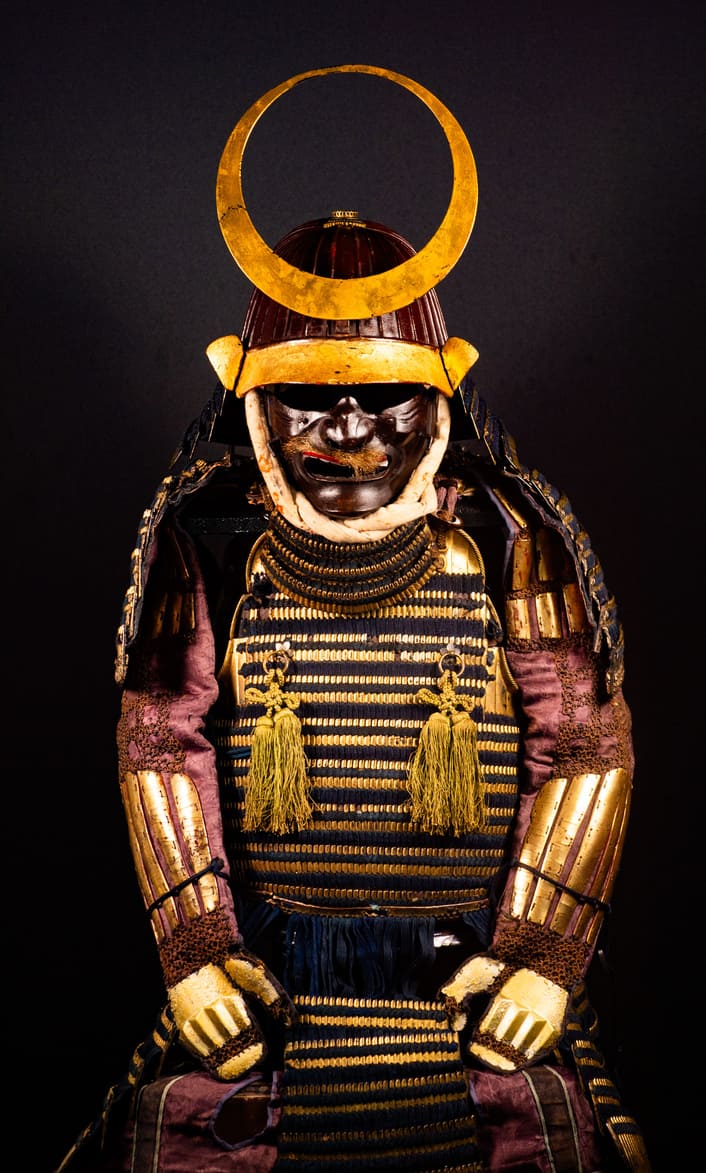
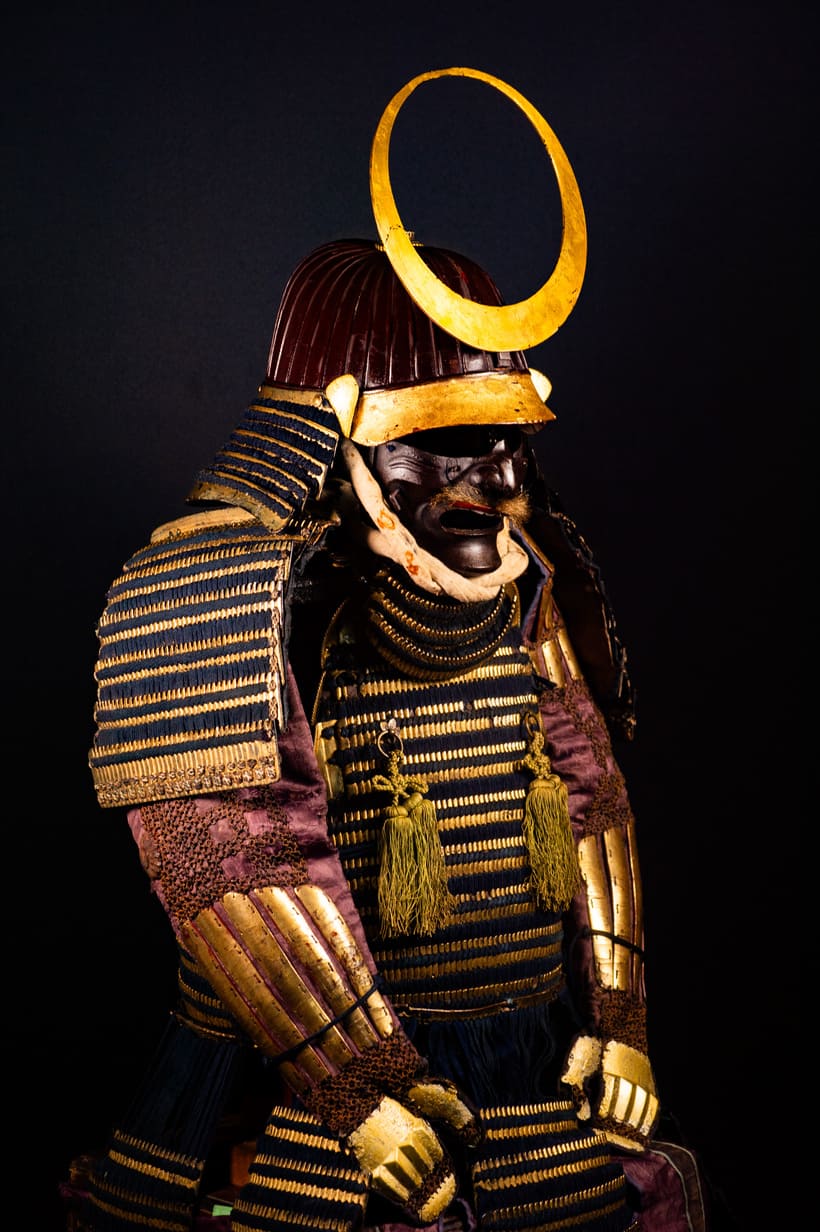
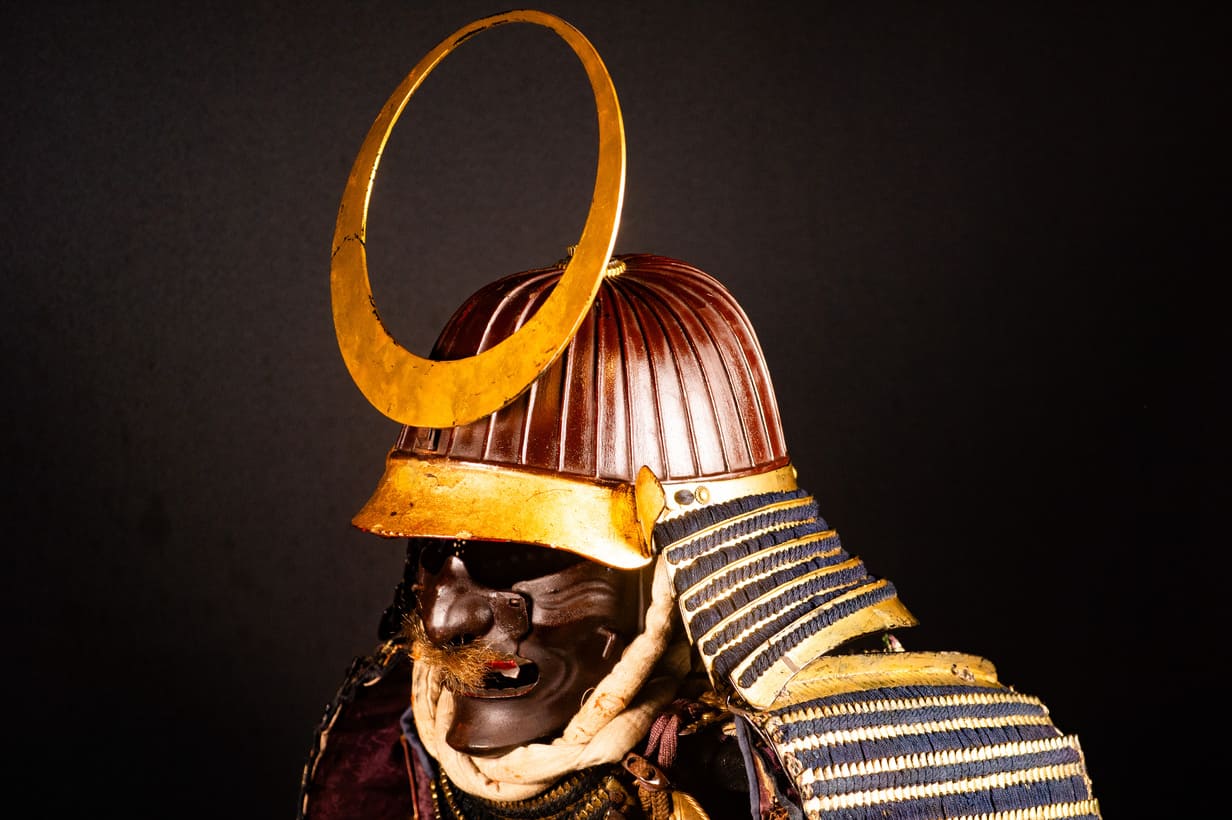
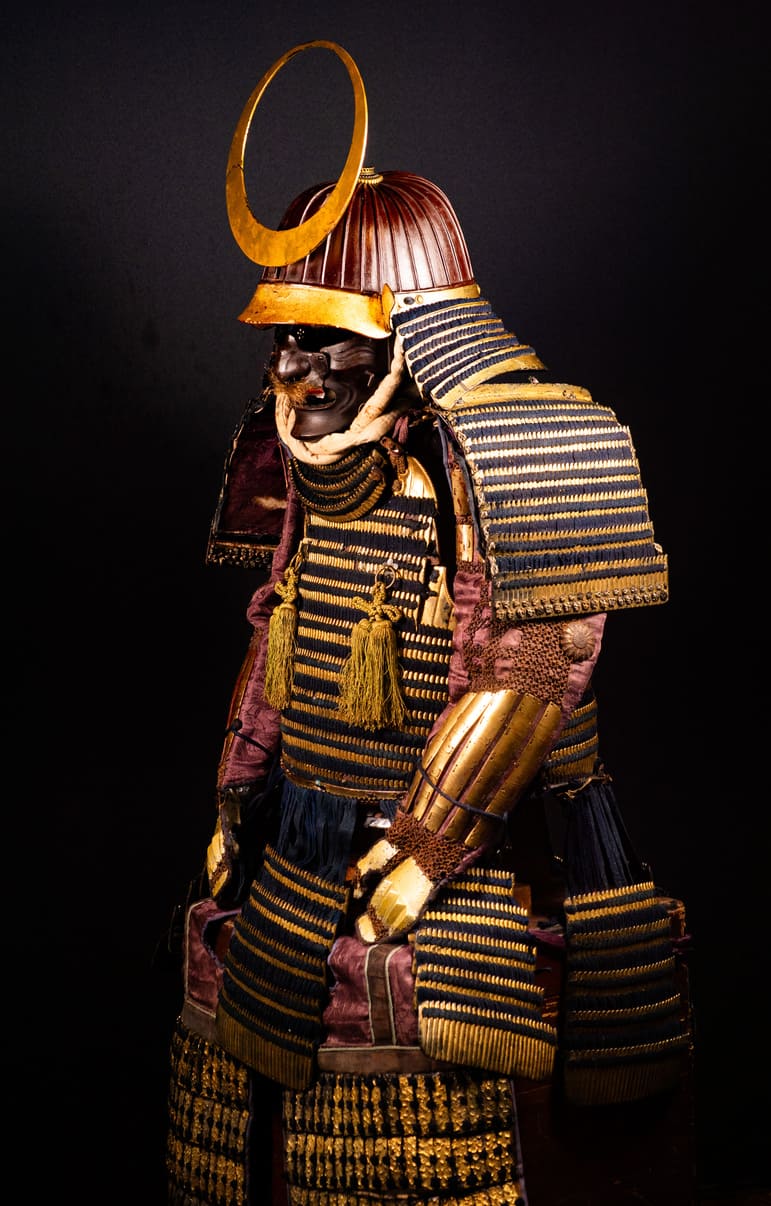
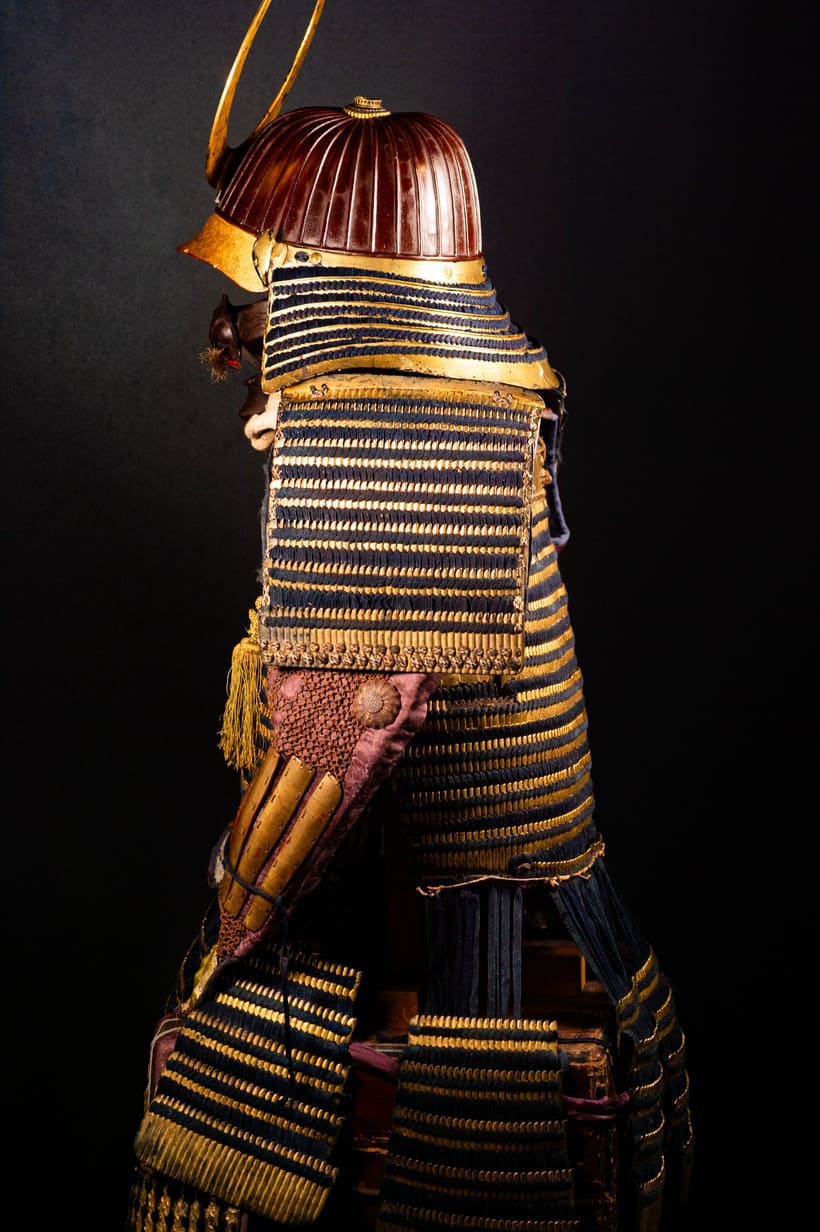
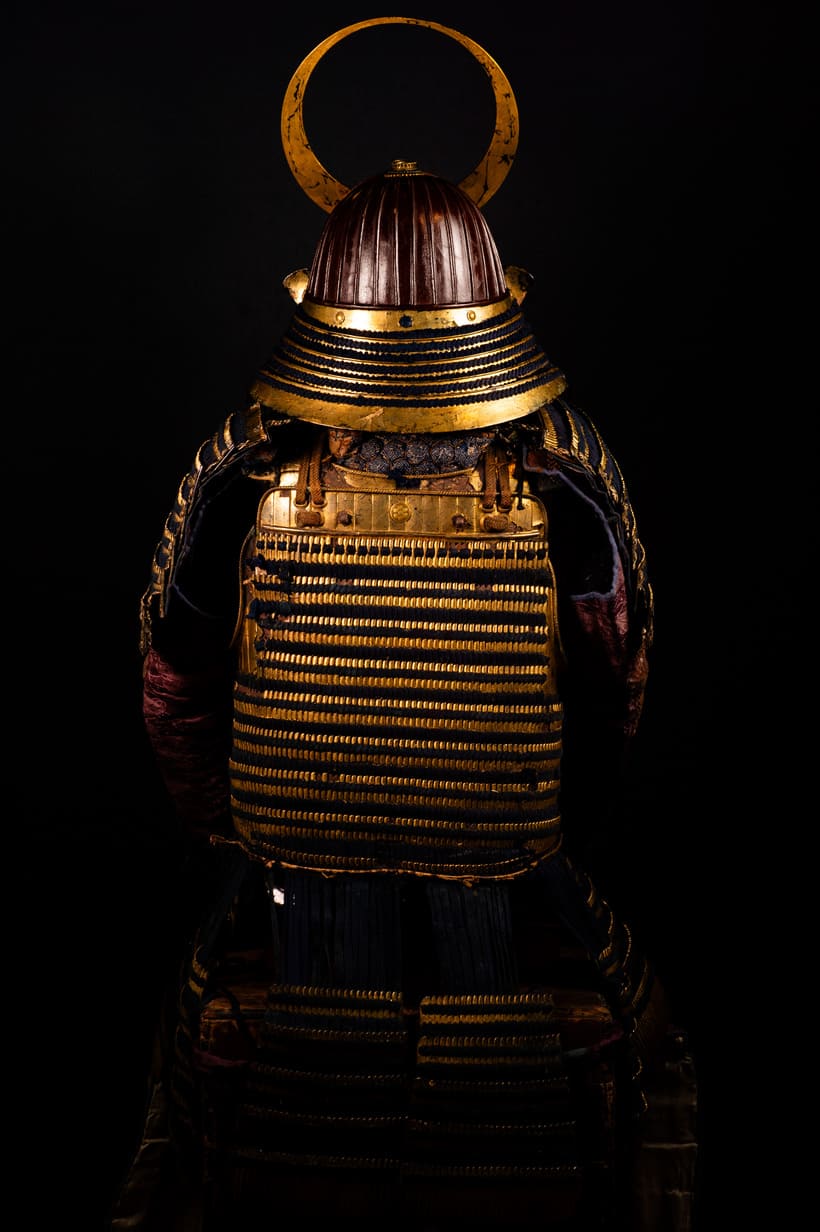
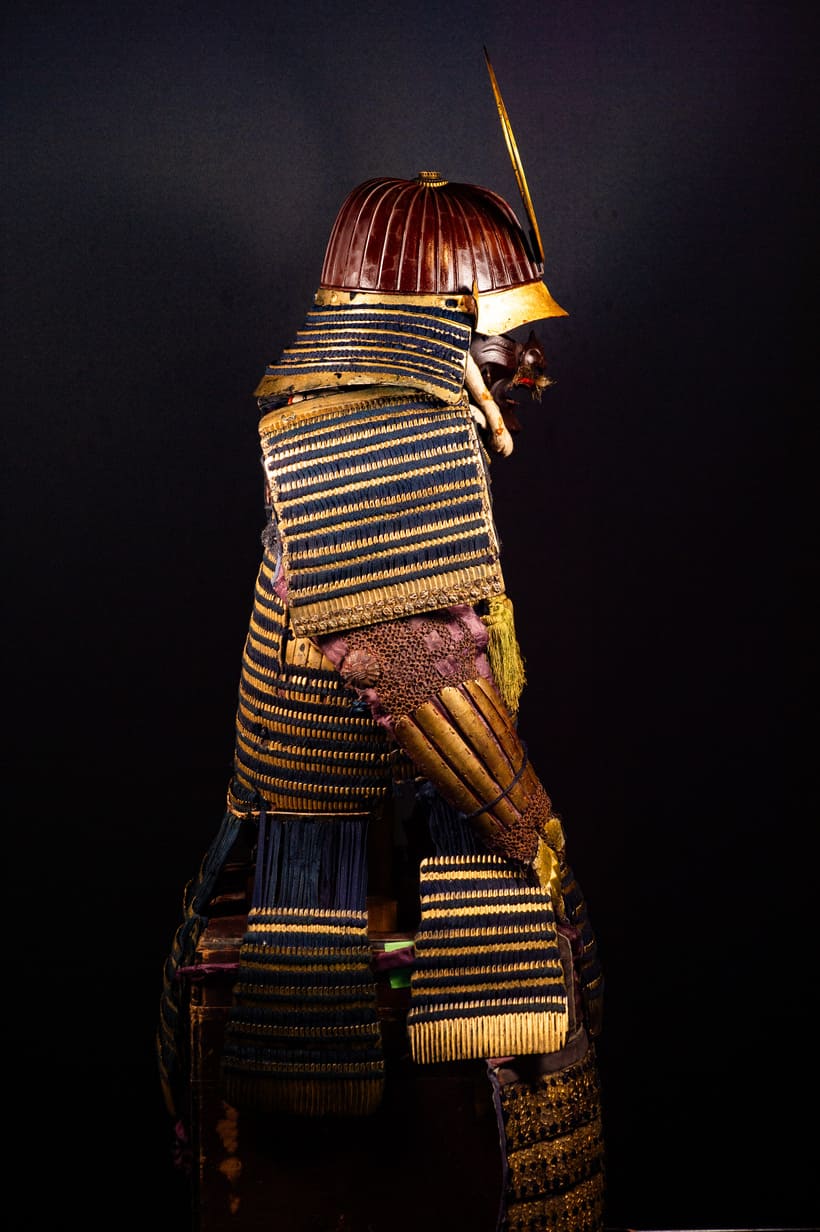
An impressive samurai helmet distinguished by its magnificent gilt crescent moon crest, deep maroon lacquered bowl, and richly preserved navy-and-gold lacing. Combining martial authority with refined craftsmanship, this kabuto embodies the prestige, symbolism, and artistic sophistication associated with the warrior elite of the Edo period.
Created during an era when armour had evolved beyond the battlefield into a visible expression of rank and lineage, this remarkable helmet preserves many of the qualities most admired by collectors of Japanese arms and armour. Its dramatic silhouette, powerful facial mask, and luxurious decorative elements create a striking display piece while preserving the spirit of Japan’s samurai tradition.
The Crescent Moon Crest (Mikazuki Maedate)
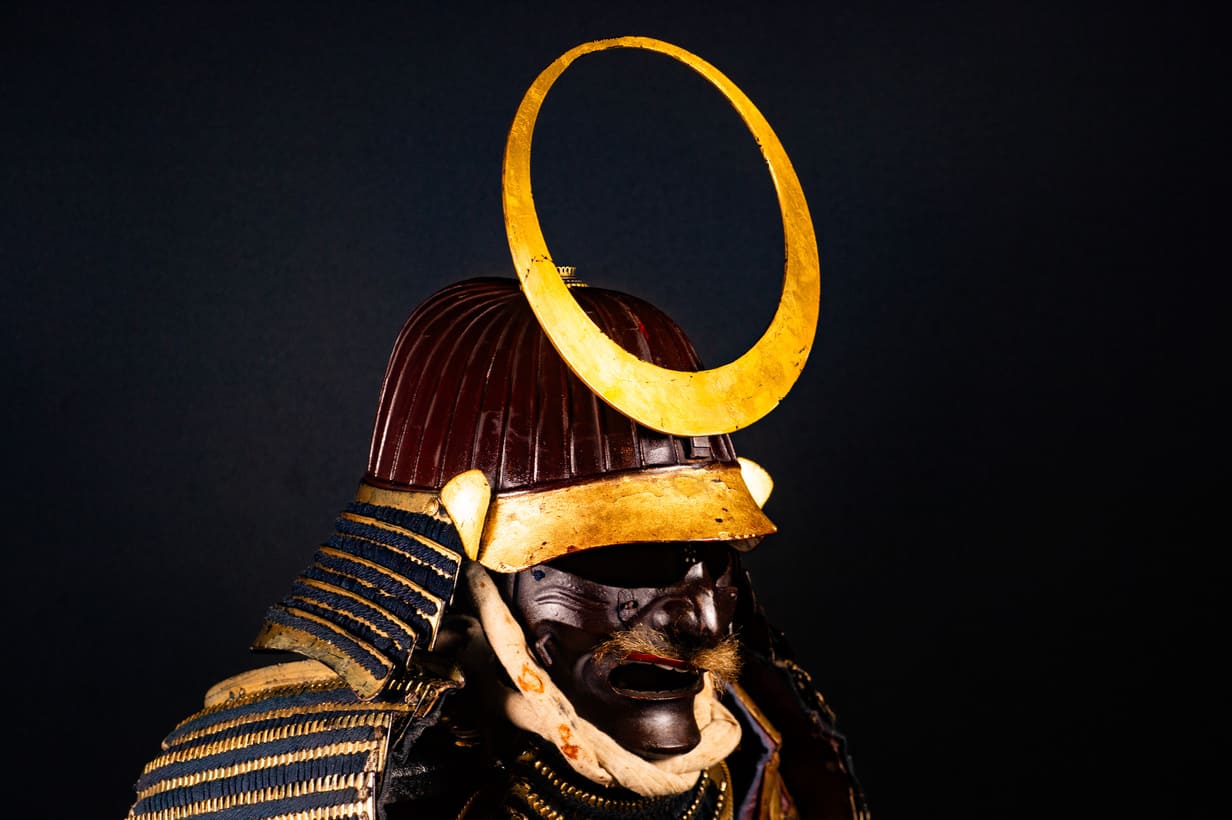
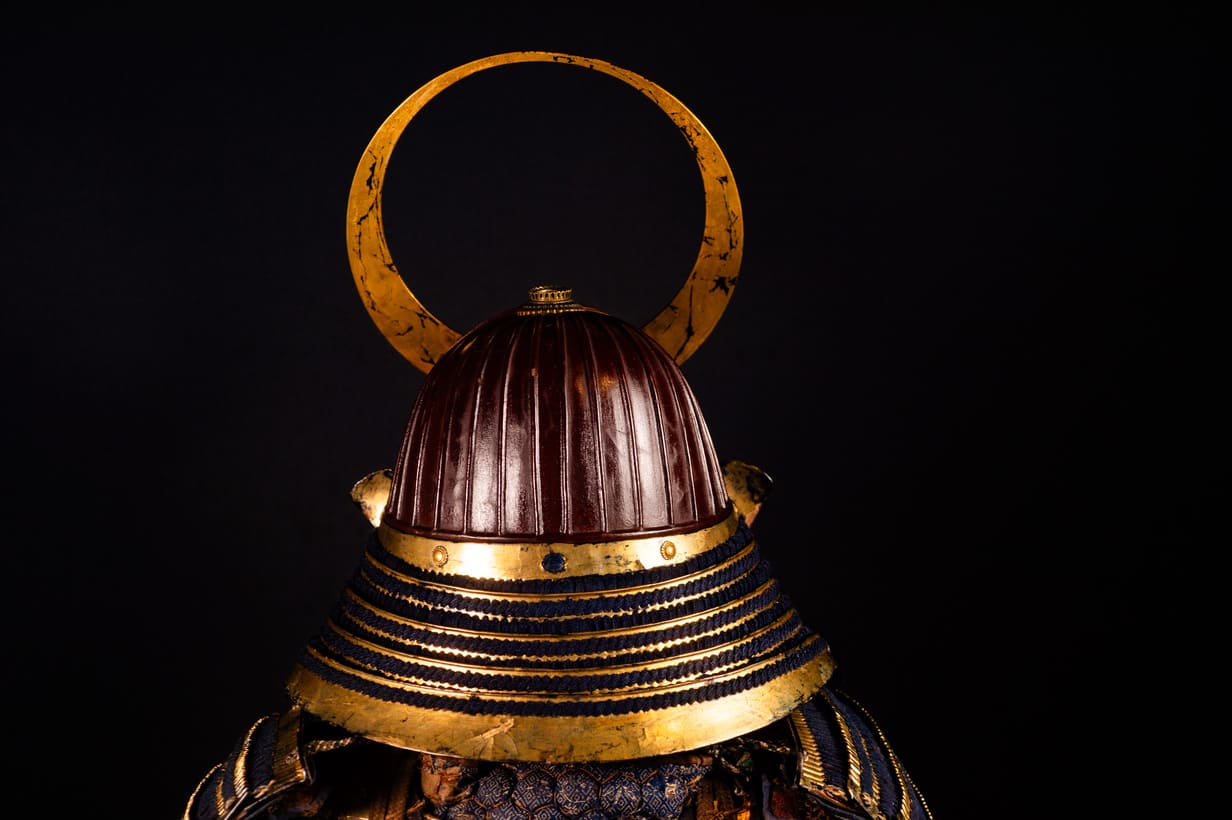
The most commanding feature of the helmet is its large gilt crescent moon crest (mikazuki maedate), mounted prominently at the front. Throughout Japanese warrior culture, the crescent moon symbolised protection, guidance, perseverance, and celestial authority.
Closely associated with famous warrior lineages and revered as a powerful martial emblem, the crescent moon represented steadfastness in adversity and divine protection in battle. Its bold form immediately dominates the composition, providing the helmet with extraordinary visual presence and unmistakable character.
The Helmet (Kabuto)
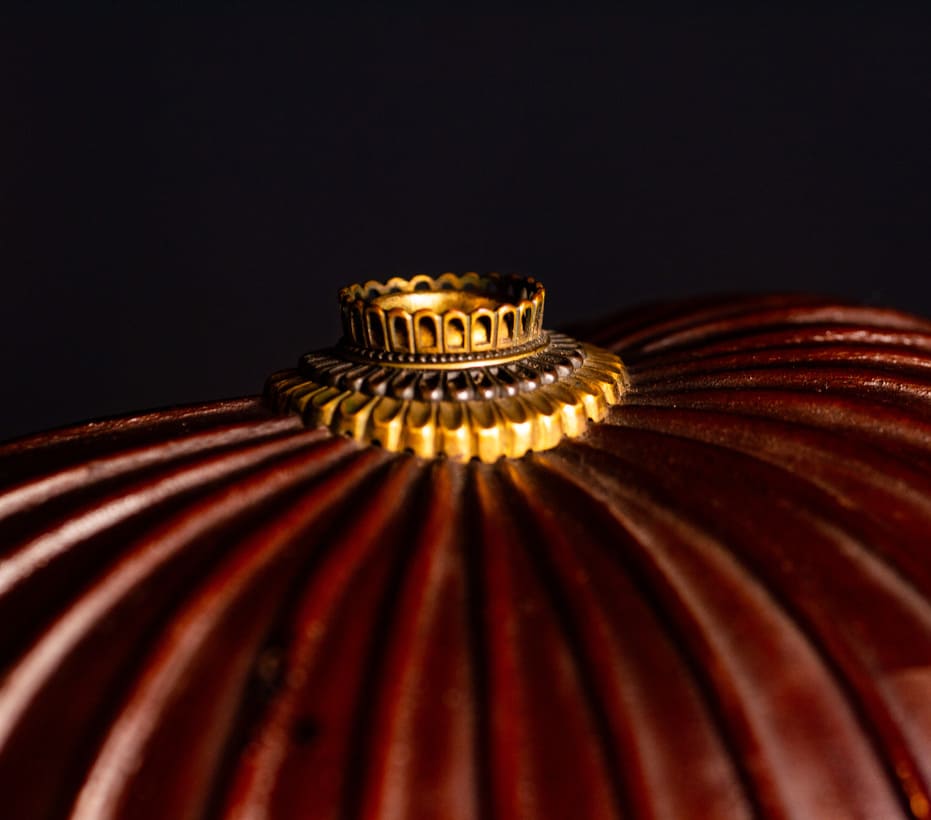
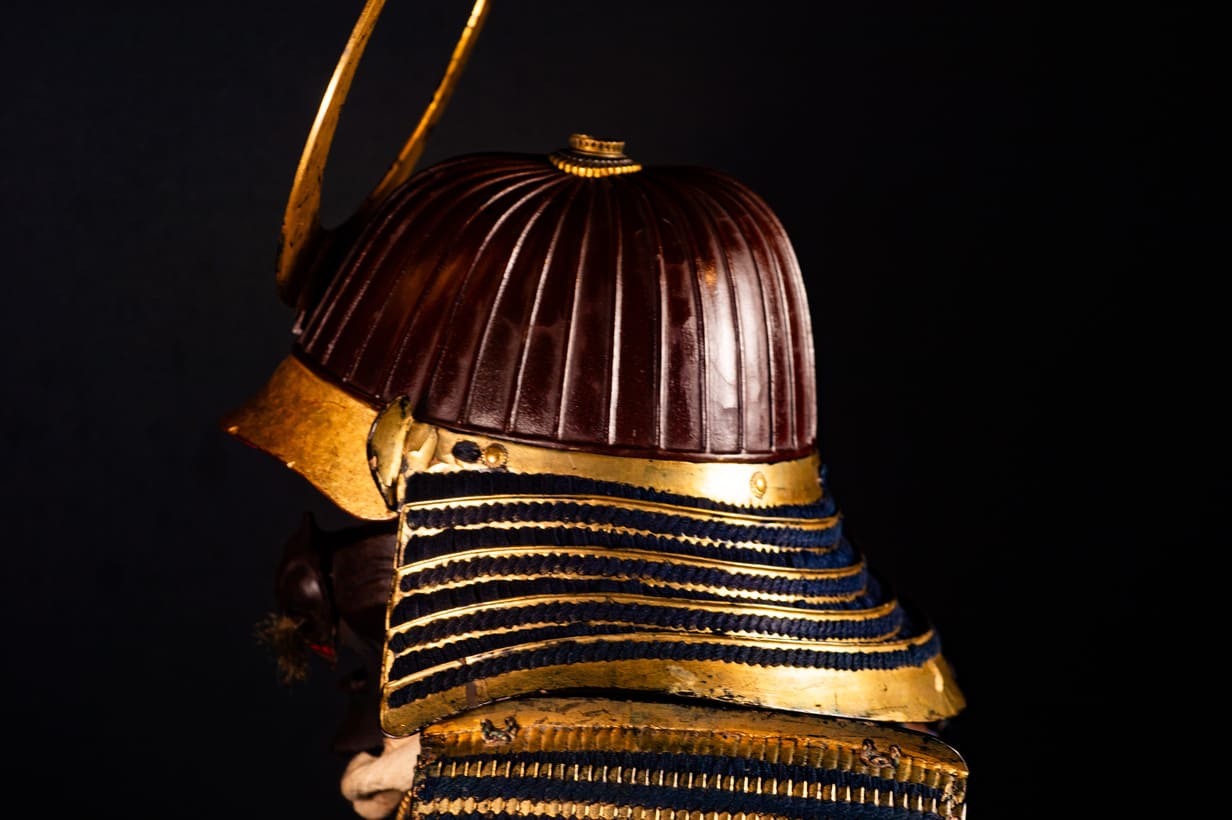
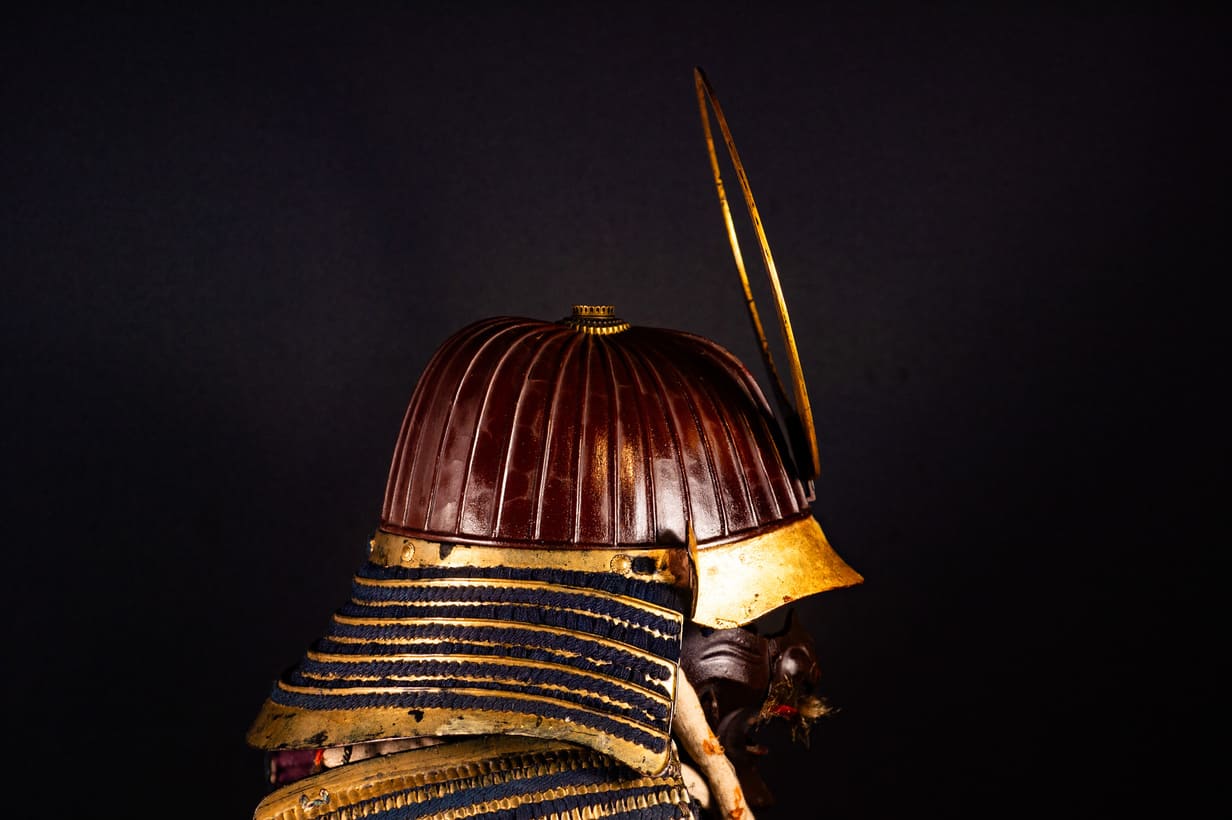
The helmet bowl (hachi) is finished in a deep maroon-red lacquer and constructed with pronounced vertical ridges (suji), creating the elegant ribbed appearance characteristic of fine suji-bachi kabuto.
At the apex sits a finely crafted gilt tehen-kanamono, providing an elegant focal point at the crown while demonstrating the high level of decorative refinement invested in the piece.
The projecting visor (mabizashi) is finished in beaten gold leaf, creating a striking contrast against the darker lacquered surfaces and further enhancing the helmet’s luxurious appearance.
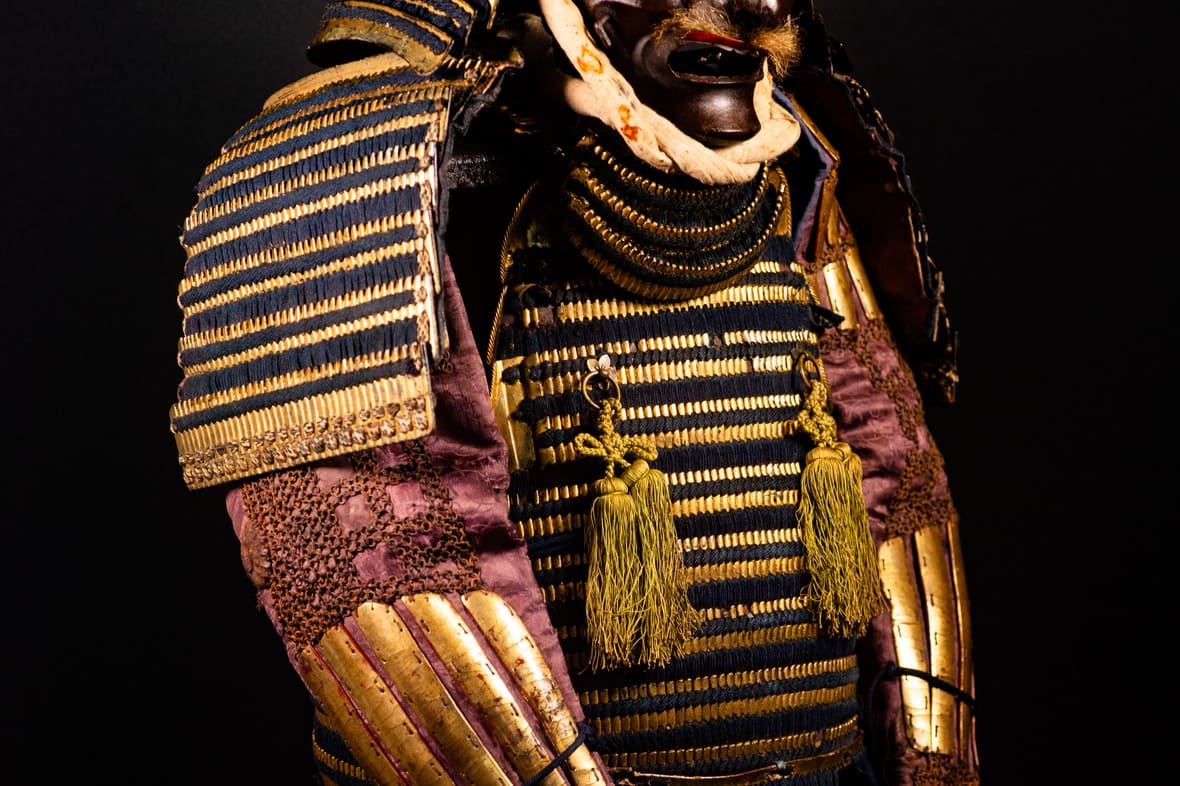
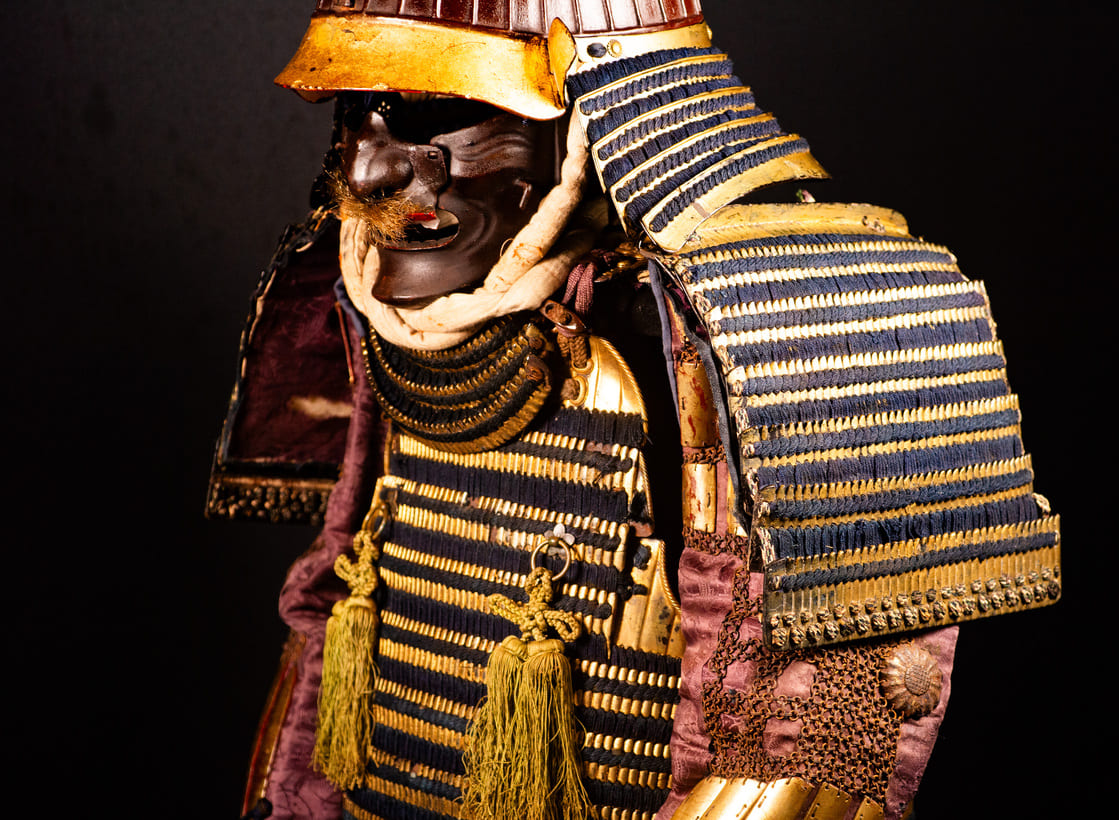
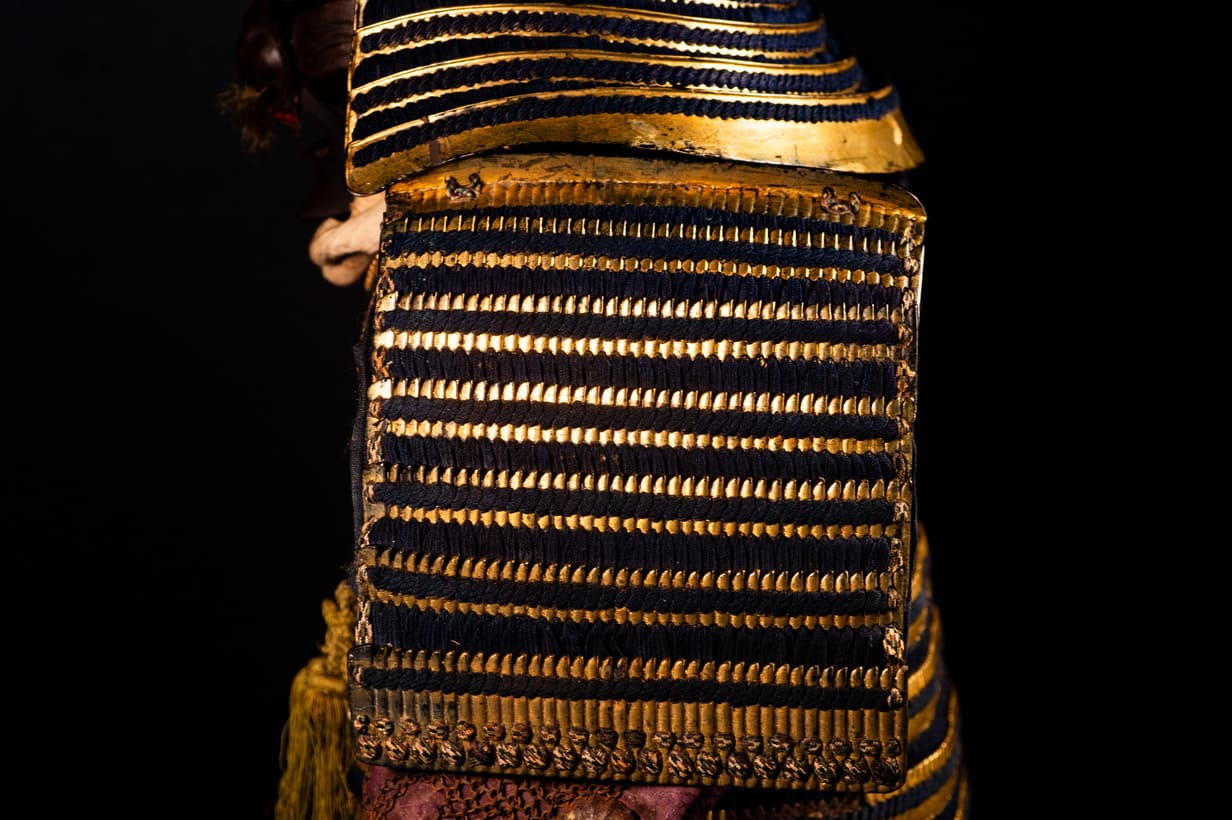
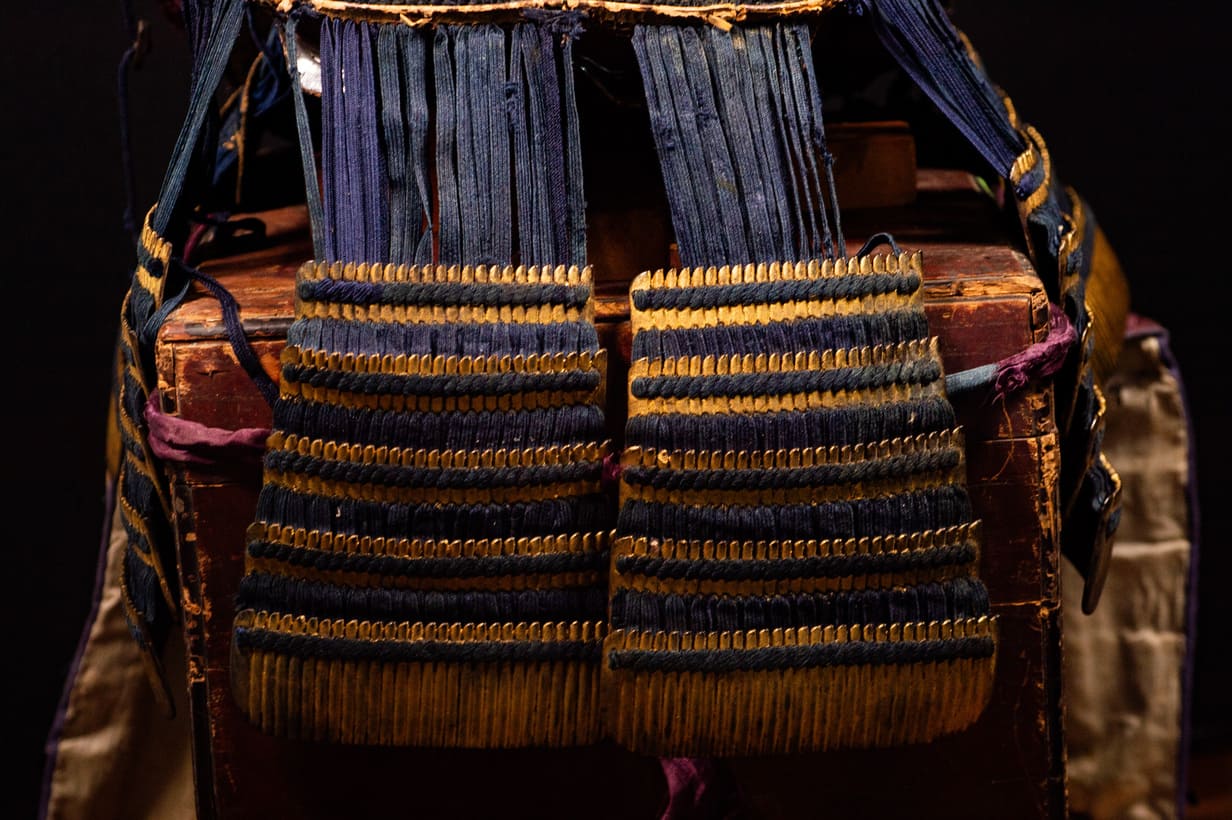
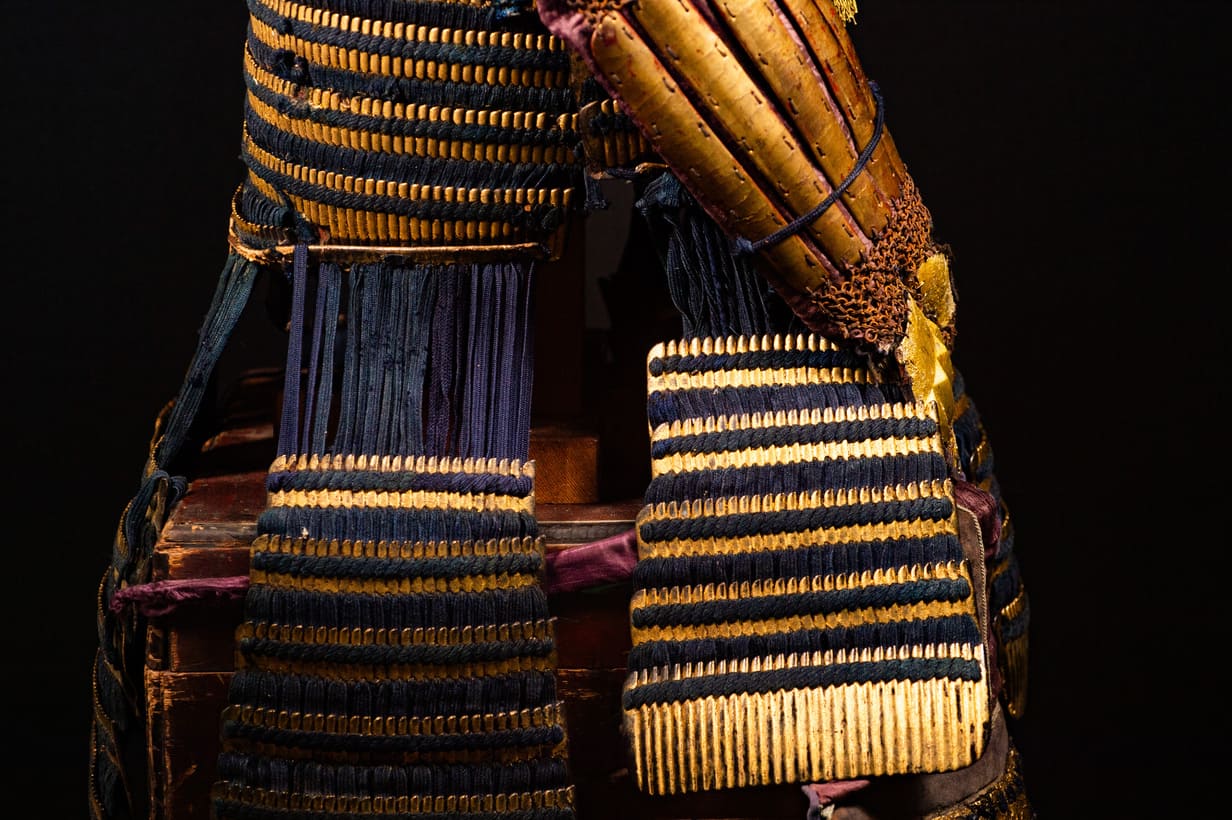
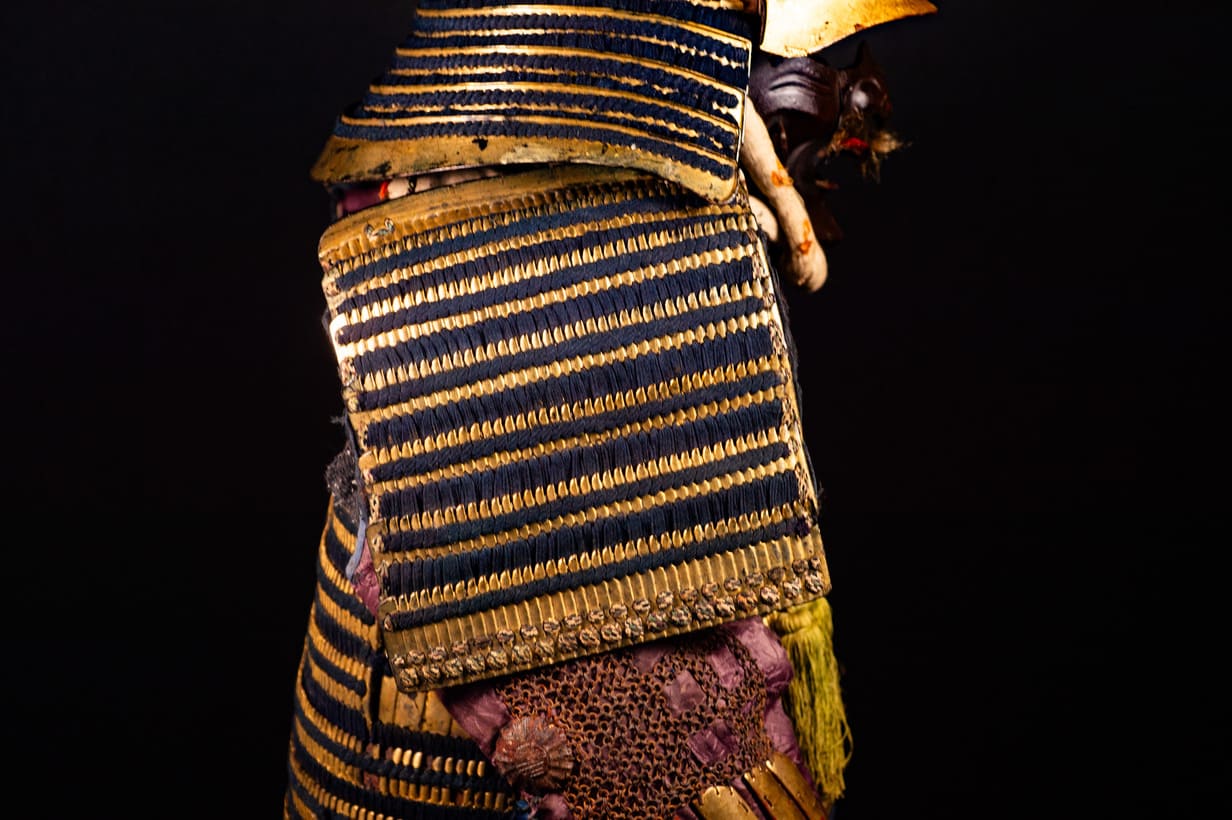
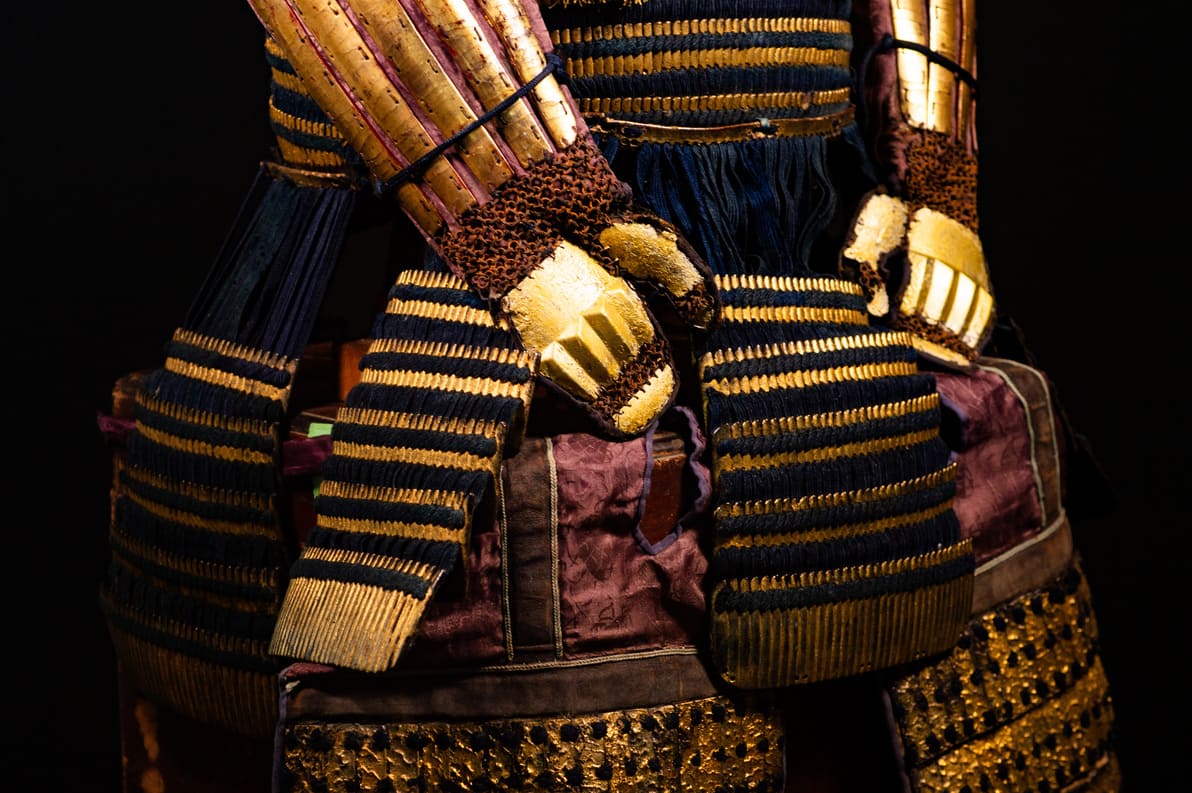
Attached to the rear is a broad multi-section neck guard (shikoro), composed of horizontal lames connected through dense navy-blue silk lacing. The alternating gold and dark tones create a harmonious visual rhythm that complements the overall colour palette of the armour.
The crescent moon crest was one of the most recognisable and powerful symbols used by samurai warriors, embodying protection, authority, and martial prestige.
The Face Defence (Mengu / Sōmen)
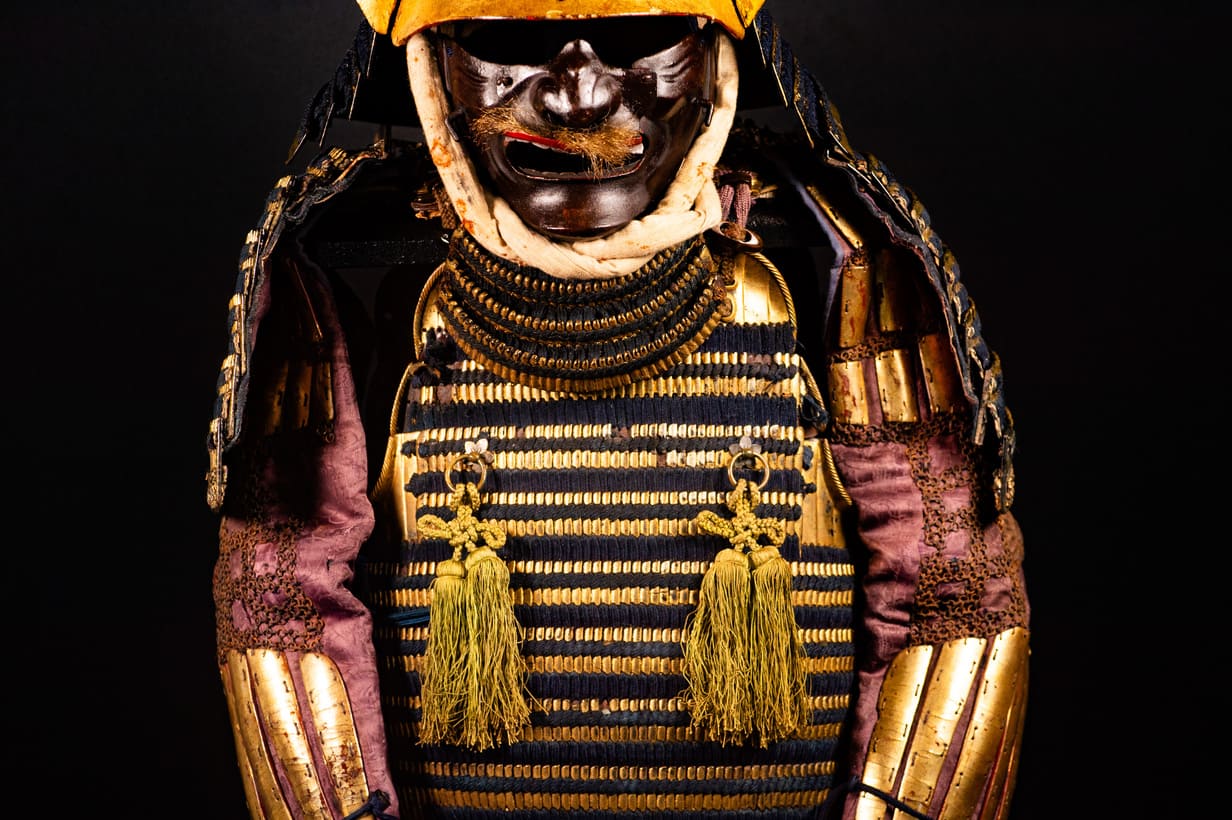
Accompanying the helmet is a darkly lacquered iron facial mask displaying a powerful ressei expression. Strongly modelled features, deep facial contours, and an intense gaze create the fearsome appearance favoured by samurai warriors.
Particularly noteworthy are the carefully rendered moustache details incorporating natural hair, together with red-painted lips and visible teeth that lend remarkable realism and character to the mask.
A padded white chin guard (oshitsuke no ita) remains attached to the lower section, providing comfort and additional protection while enhancing the imposing overall appearance.
Beyond its practical defensive purpose, the mask was intended to intimidate opponents and project authority on the battlefield, reinforcing the warrior’s presence both physically and psychologically.
The Family Crest (Mon)
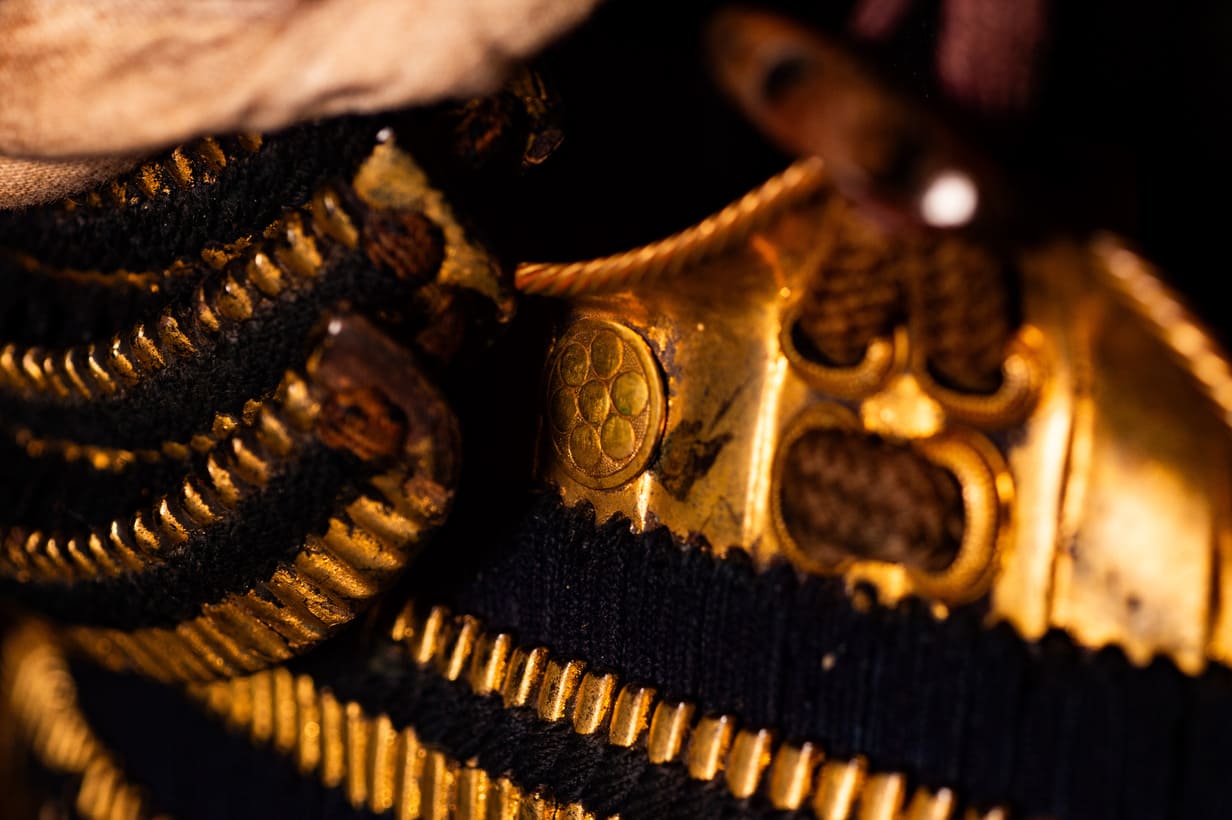
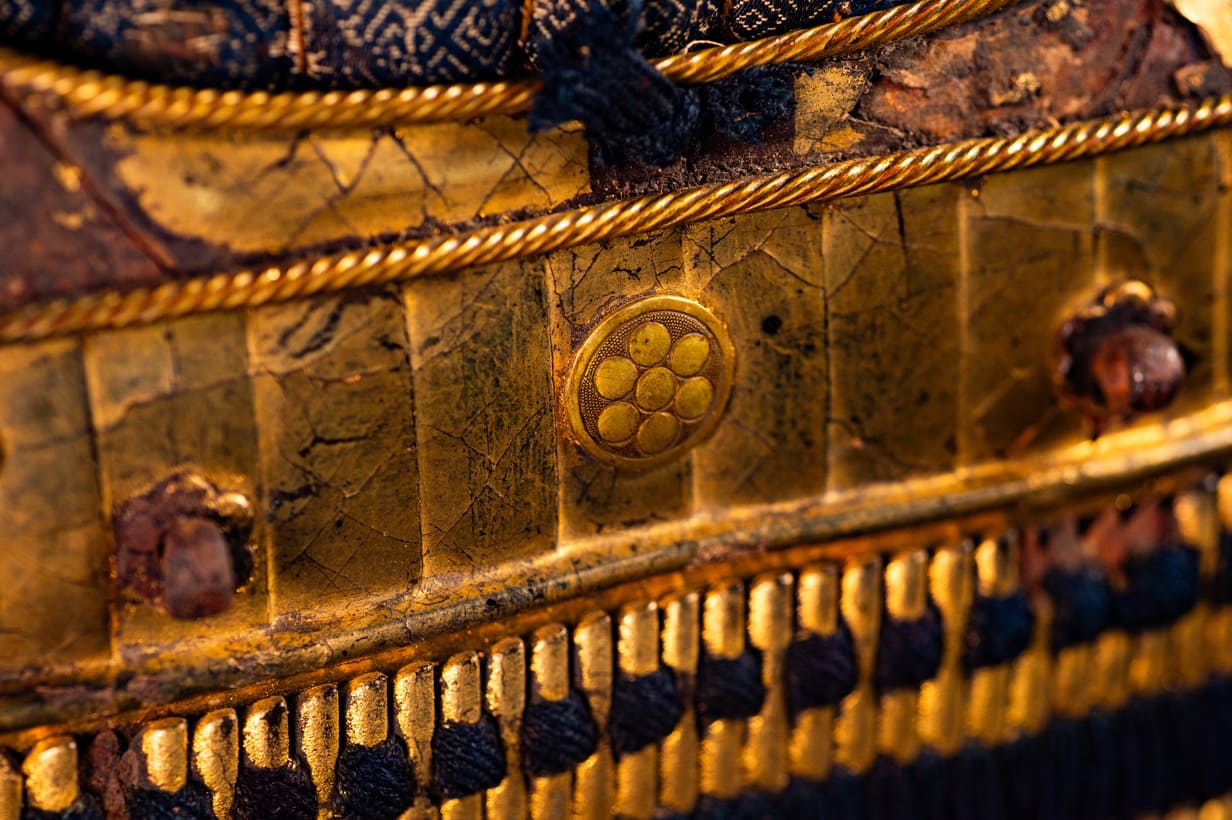
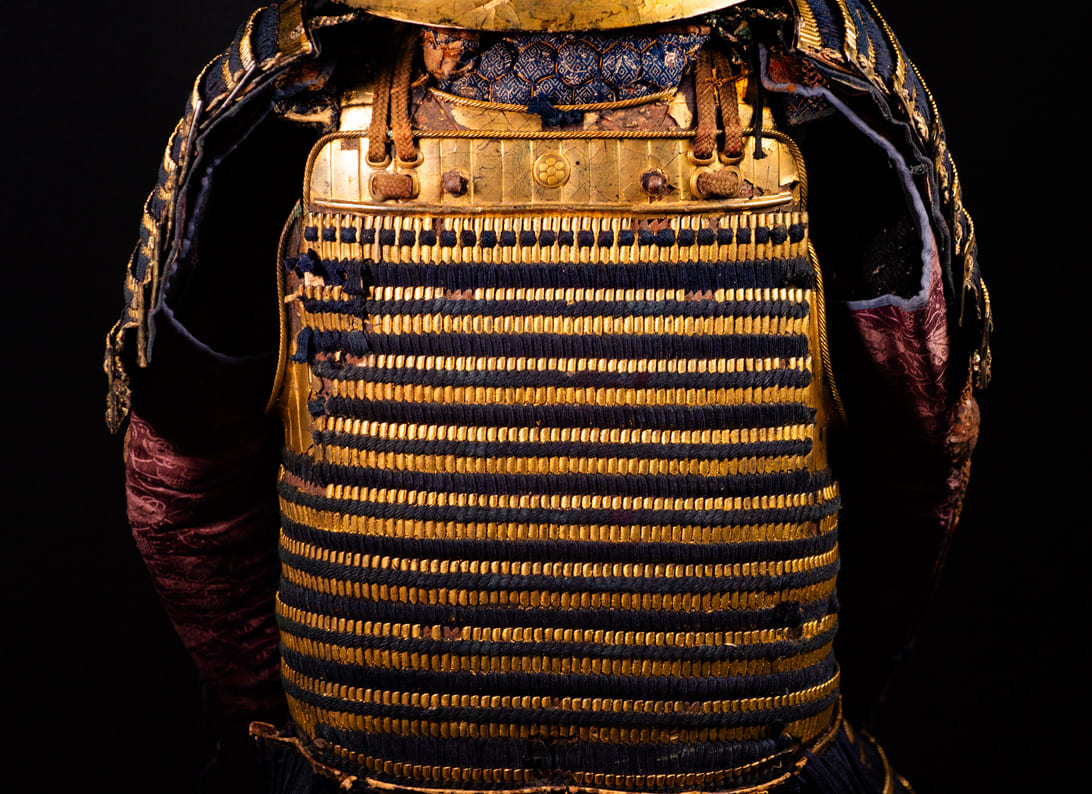
Visible on the structural fittings is a gilt family crest (mon), formed by seven circular elements arranged in a floral composition. The design bears similarities to the Ume no Hana (plum blossom) motif and related clan emblems used throughout the Edo period.
Such crests served as symbols of lineage, identity, and hereditary status, transforming armour into a visible statement of family heritage as well as military authority.
Colour and Surface
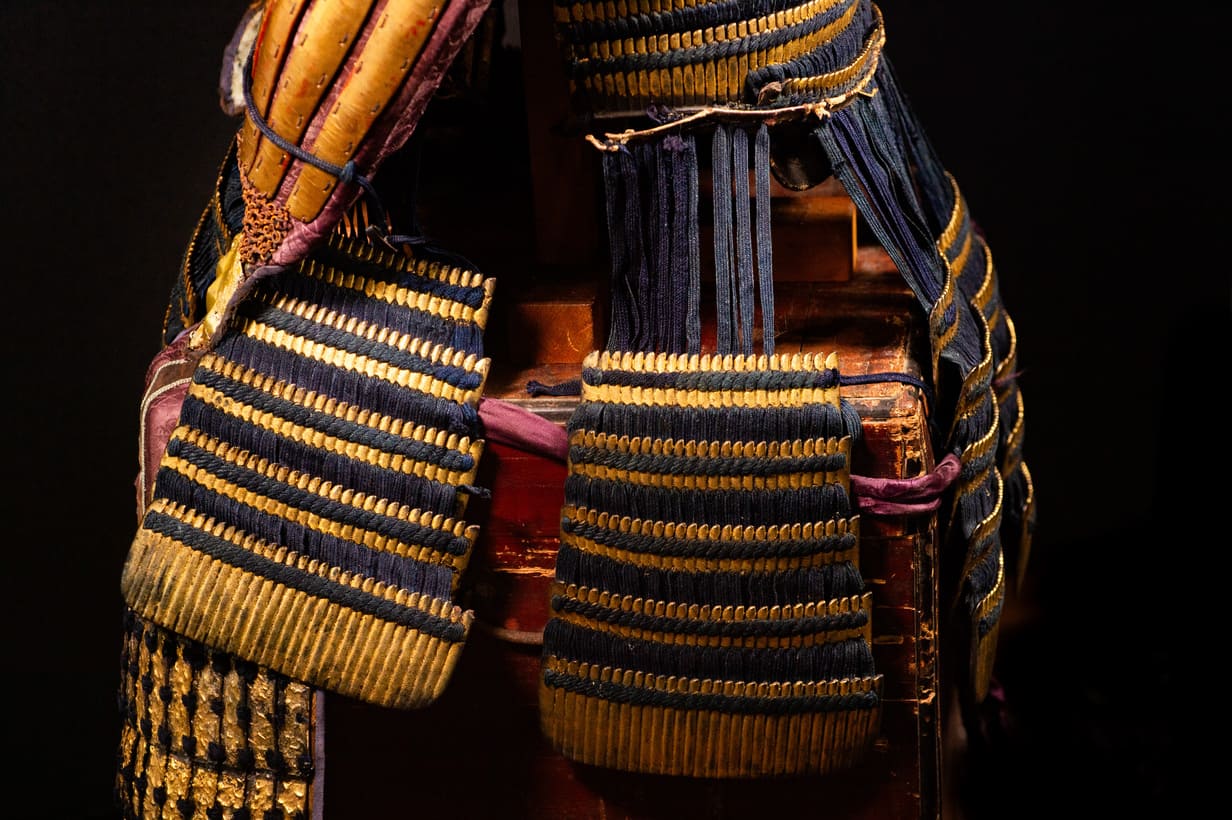
The palette is bold, elegant, and exceptionally harmonious. Deep maroon lacquer dominates the helmet bowl, while navy-blue silk lacing provides visual depth and contrast.
Gold accents appear throughout the piece, most notably in the magnificent crescent moon crest, the gilt fittings, the tehen-kanamono, and the gold-finished visor.
Together these elements create a luxurious appearance without sacrificing the martial dignity expected of a samurai helmet.
The lacquered iron surfaces preserve an attractive historical character, while the silk lacing continues to display the refinement associated with high-quality Edo-period armour.
Age and Style
The overall design is consistent with armour produced during the early to mid Edo period, approximately the late seventeenth to early eighteenth century.
The combination of the crescent moon crest, dense silk lacing, expressive facial mask, and refined construction reflects the sophisticated armour-making traditions that flourished during one of the most culturally significant periods of samurai history.
By this time, armour had become not only a functional necessity but also an important symbol of social status, personal identity, and artistic achievement.
Collector Appeal
This is a samurai helmet of exceptional display presence, remarkable for the quality of its construction, the dramatic power of its crescent moon crest, and the expressive realism of its facial mask.
The combination of deep lacquer, rich silk lacing, gilt ornamentation, and symbolic significance creates an object that is both historically important and visually captivating.
Combining martial symbolism, artistic refinement, and outstanding decorative impact, this Edo-period kabuto represents a distinguished example of Japanese armour craftsmanship and a highly desirable acquisition for collectors and museums alike.