1 in stock
1 in stock
Add to Compare
Add to Wishlist
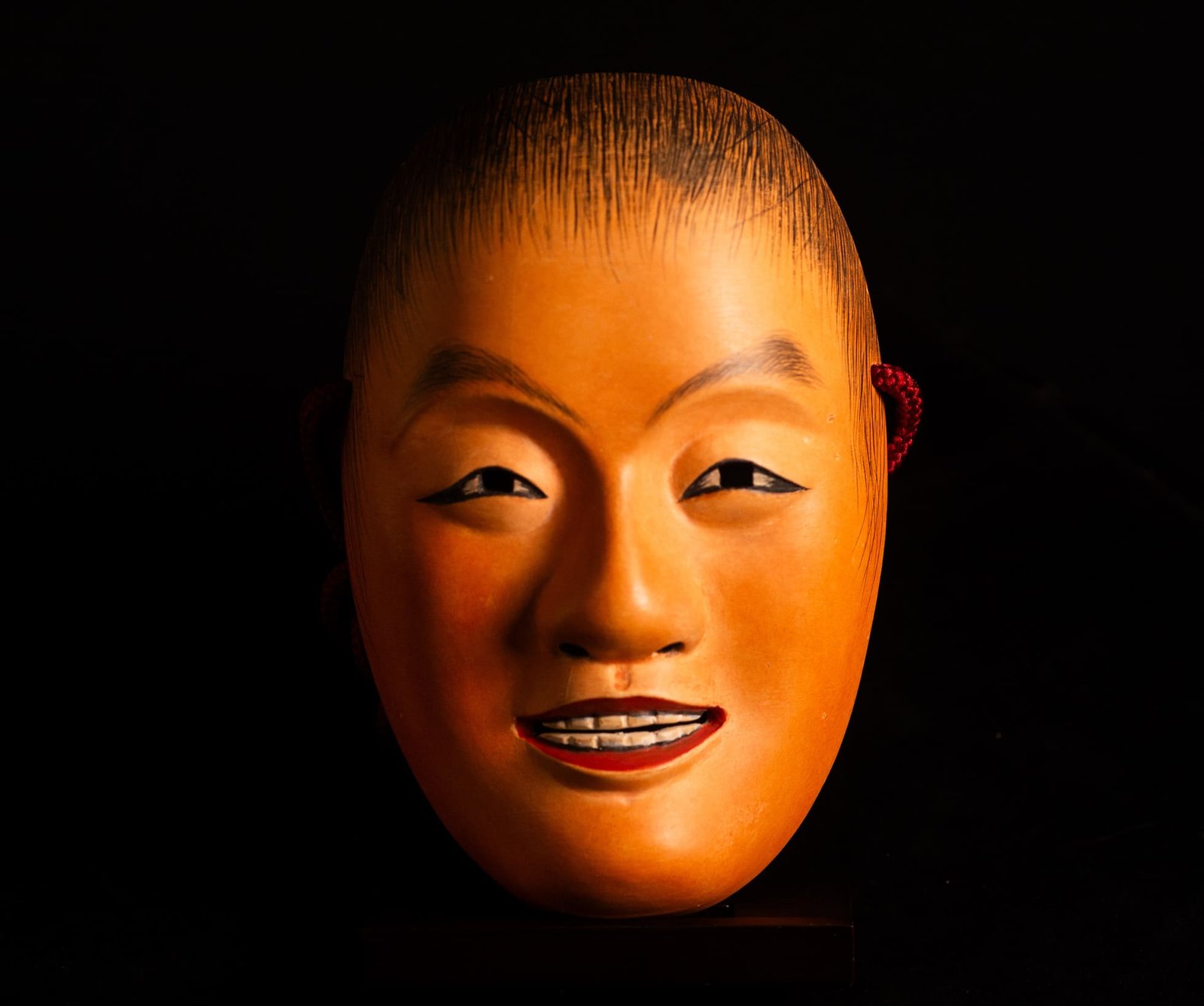
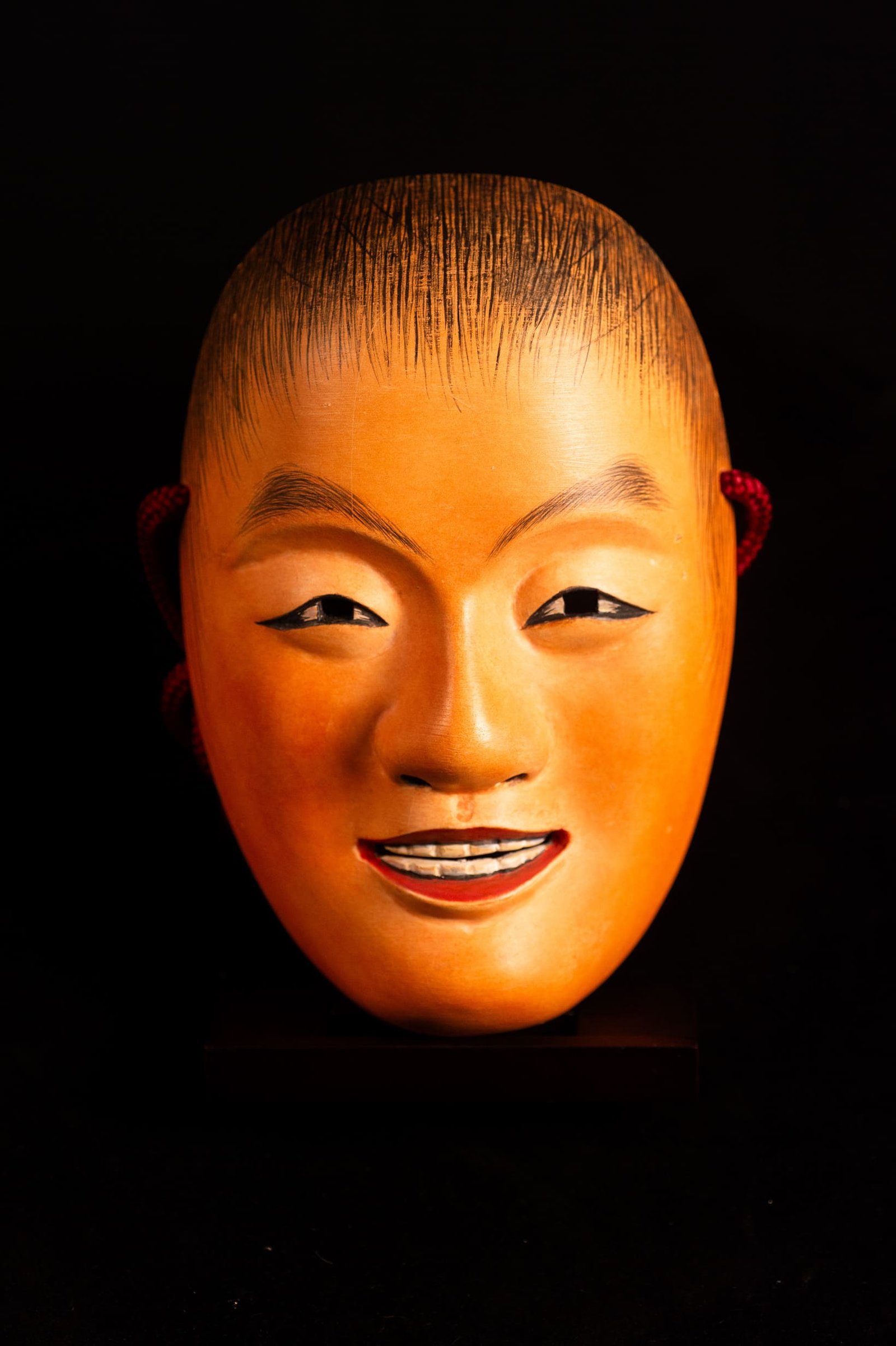
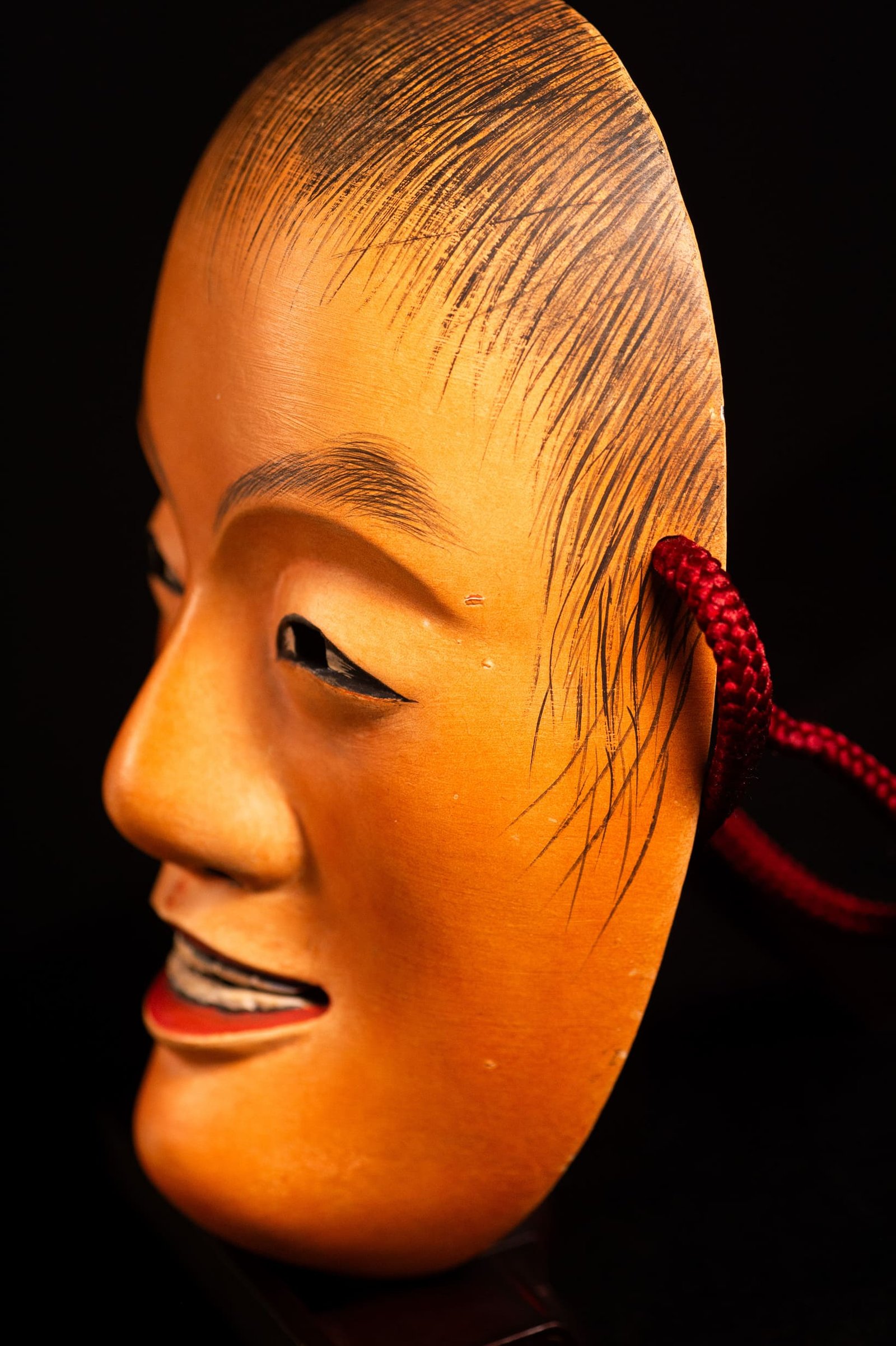
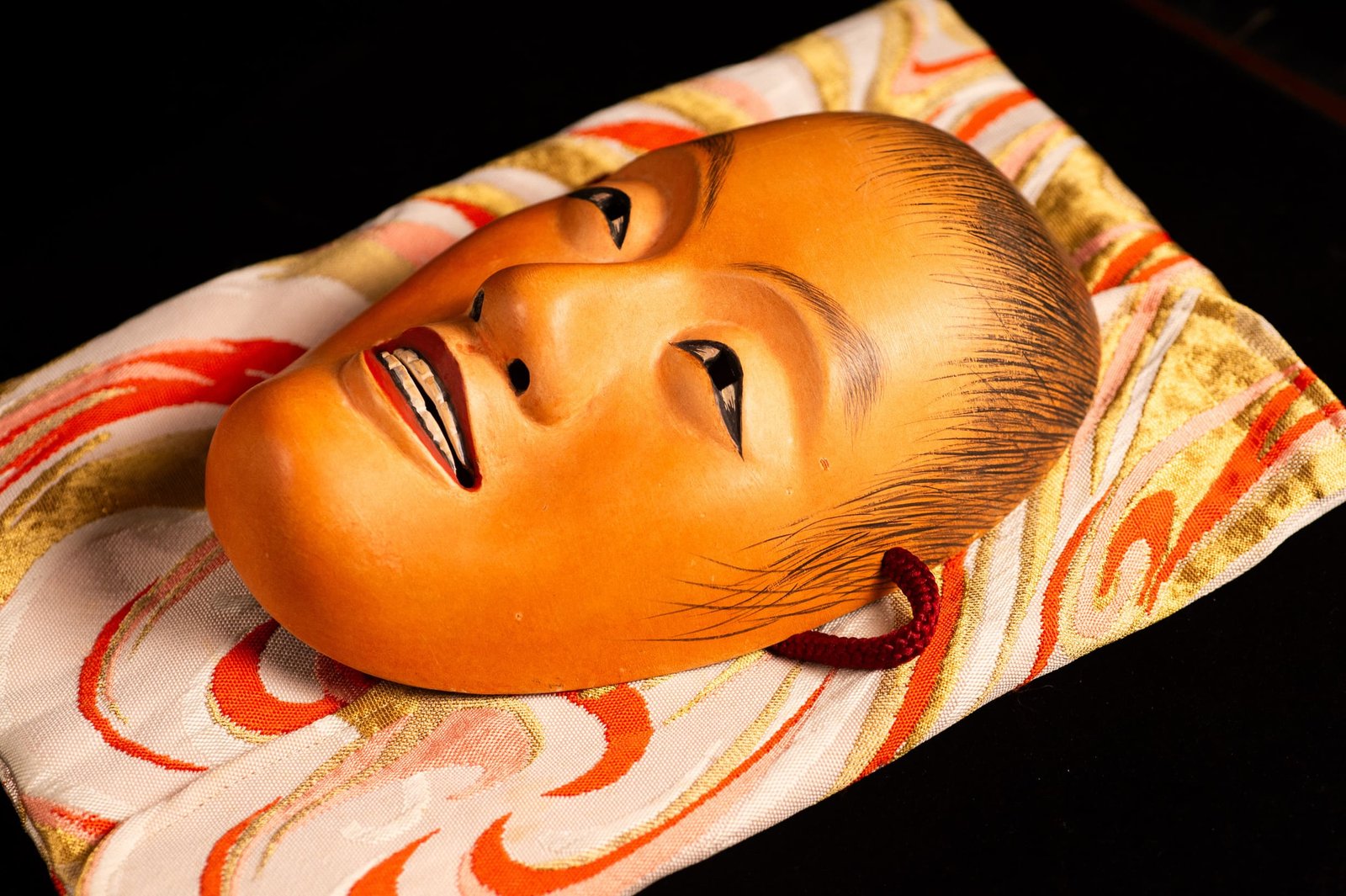
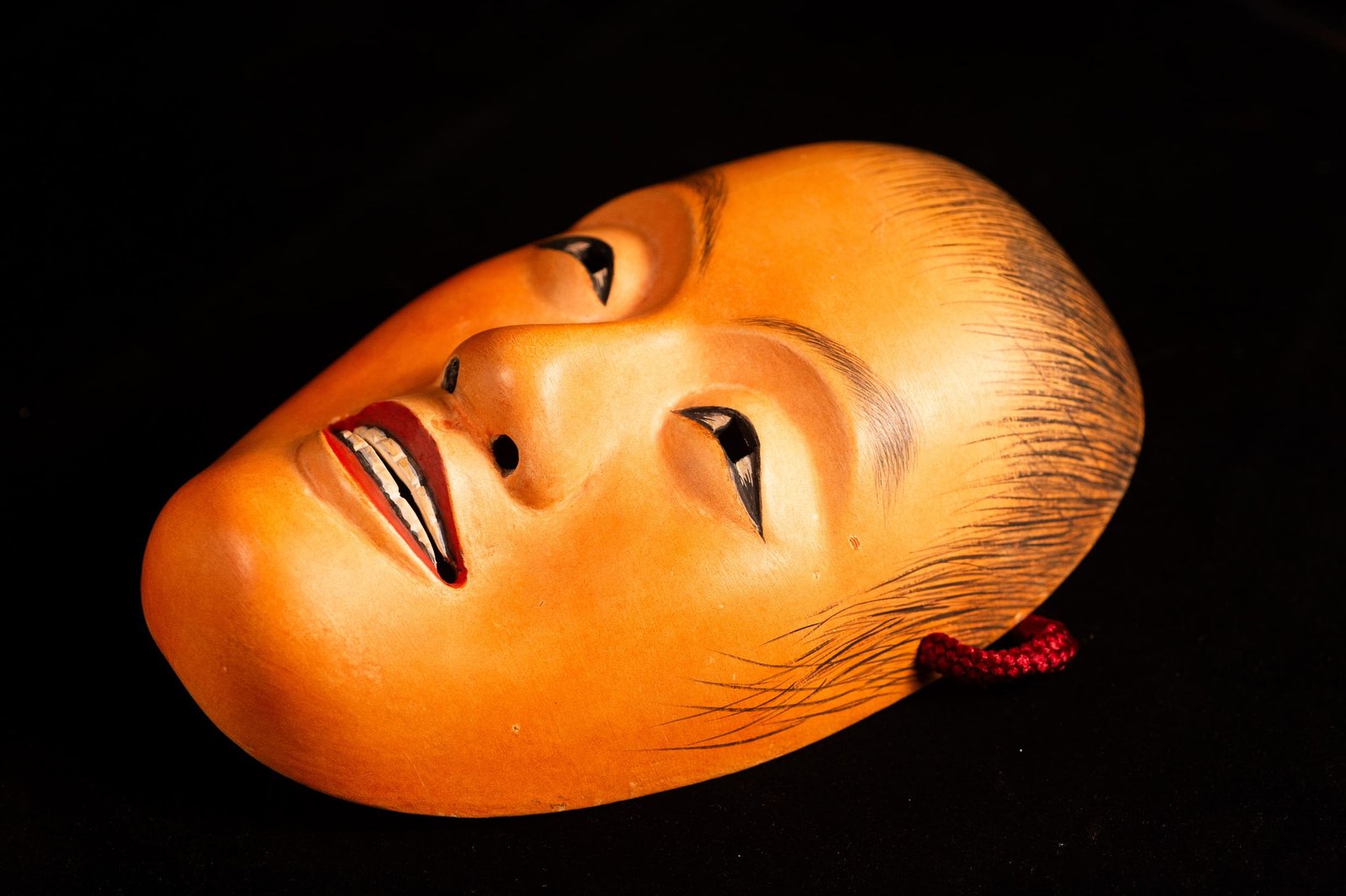
An expressive antique Japanese wooden mask representing Dōji, a youthful attendant or child-like figure appearing in several works of the Noh repertoire. Depending on the dramatic context, the Dōji character may be presented as an ordinary young attendant, a mysterious youth or the youthful manifestation of a supernatural or sacred presence. Carved at approximately life size, the mask combines a warm tan complexion, finely painted black hair, gently arched eyebrows, narrow eyes and an open, welcoming smile.
The softly rounded facial structure conveys youth, while the delicately painted details give the figure a refined and animated presence.
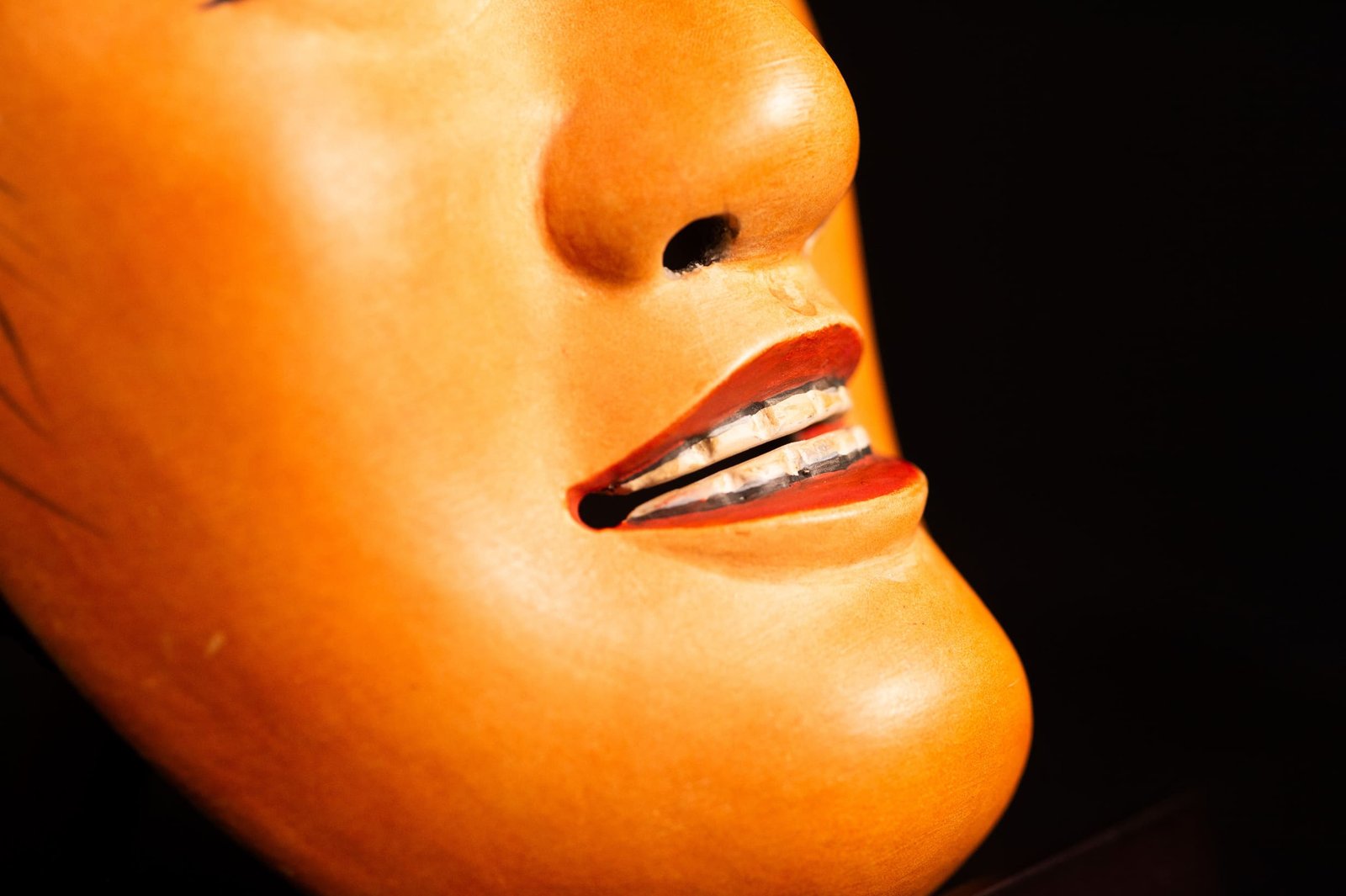
The mouth is slightly open and displays carefully rendered teeth framed by red-painted lips, creating one of the most immediately engaging expressions among the masks in this group.
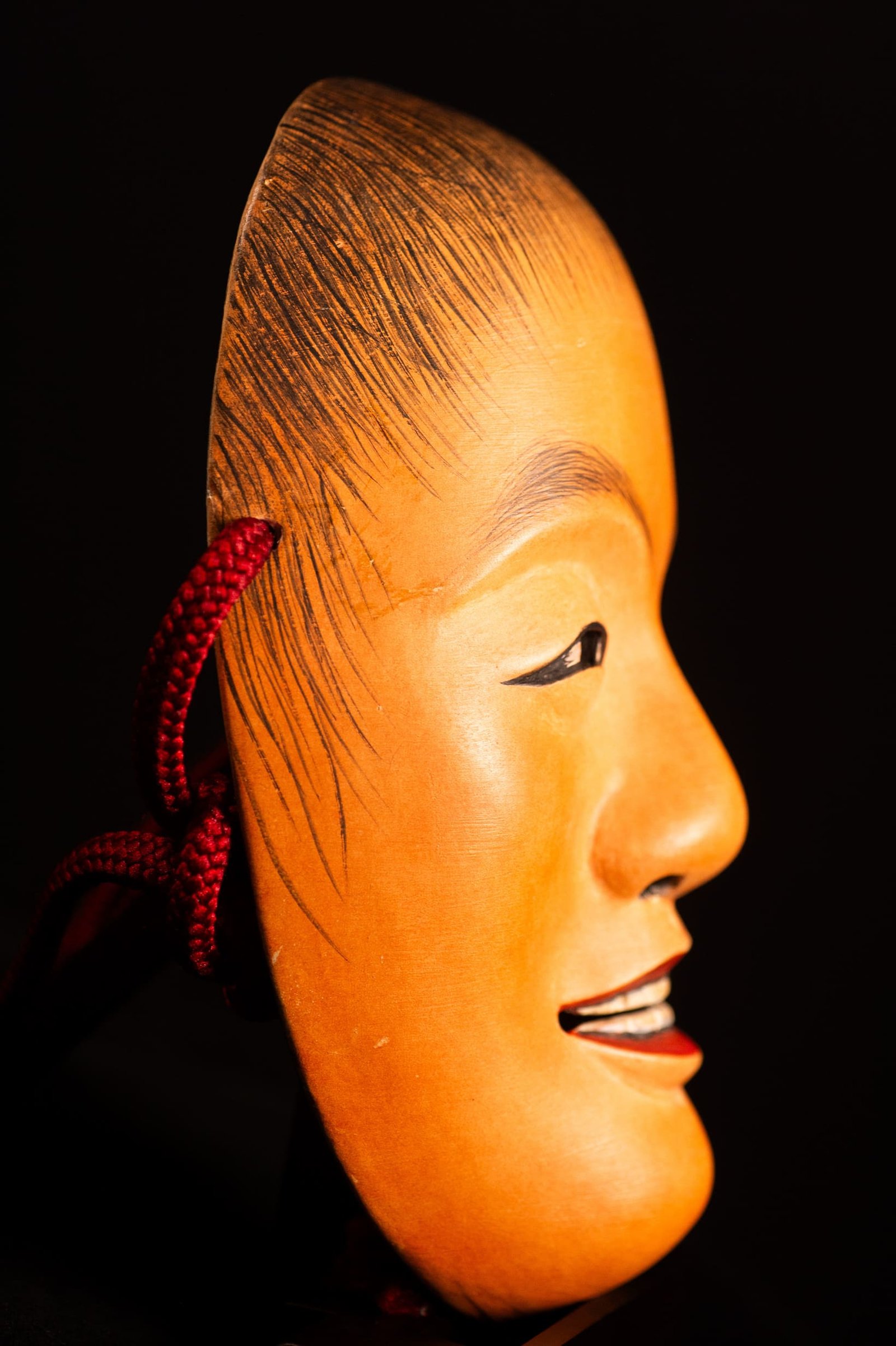
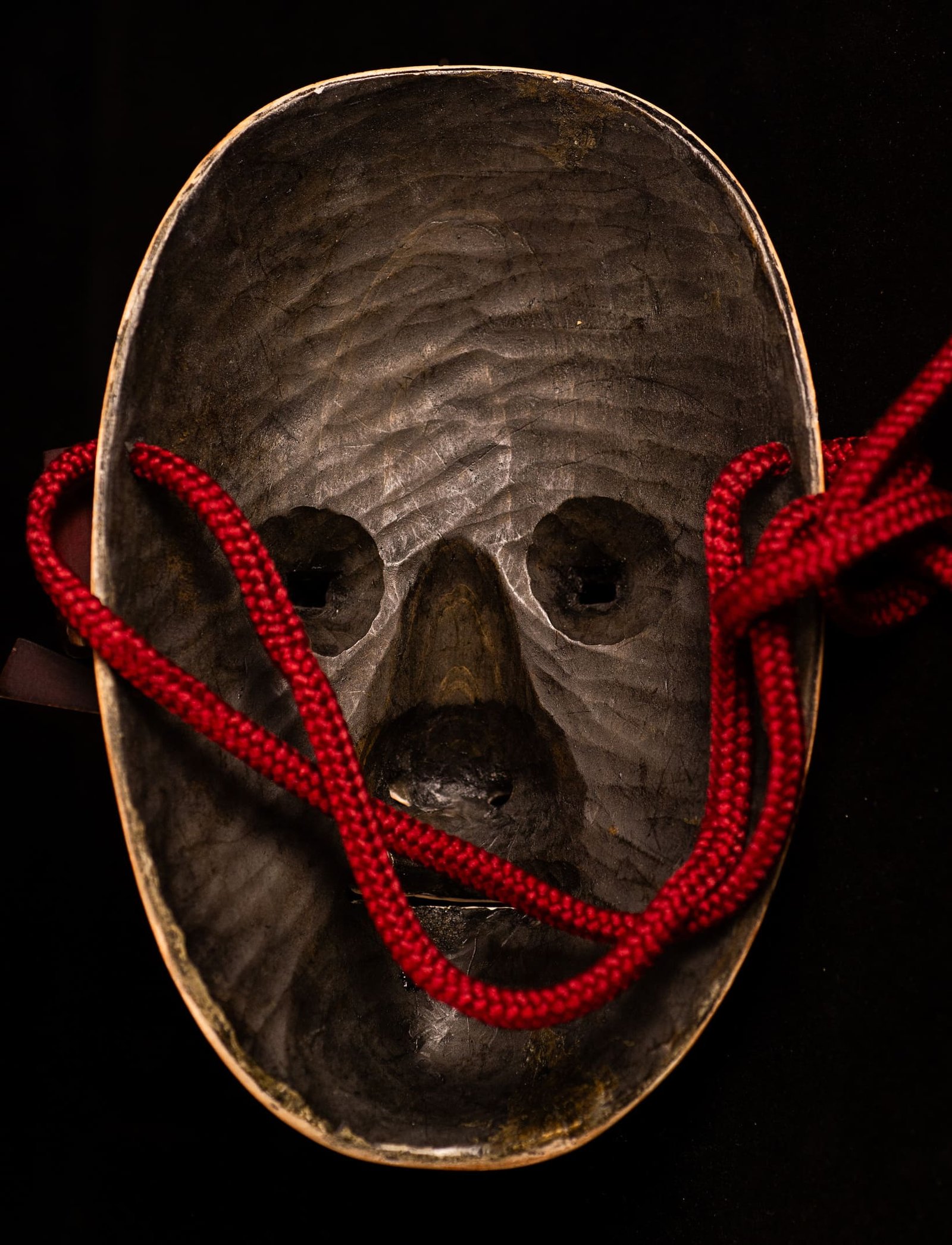
A dark maroon cord is fitted through the lateral attachment holes and remains visible at either side of the face.
The overall effect is youthful, approachable and subtly enigmatic, balancing human warmth with the possibility of a supernatural identity.
The Japanese term Dōji refers to a youth, child or young attendant.
Within Noh theatre, this character type can appear in several dramatic contexts.
The figure may serve as a youthful companion or attendant, but in some narratives the apparently ordinary child may conceal a divine, spiritual or otherwise supernatural identity.
This ambiguity is central to the expressive power of the Dōji type.
The face is youthful and smiling, yet its theatrical stillness can also produce an impression of mystery.
The character stands at the boundary between everyday humanity and the sacred or supernatural world that frequently enters Noh drama.
No particular play, named character or documented performance has been supplied for this mask.
It should therefore be described as a Dōji character type rather than assigned to a specific dramatic role.
The expression is one of the mask’s most distinctive qualities.
The mouth is open in a gentle smile, revealing two rows of painted teeth.
Unlike the restrained mouth of many female Noh masks or the solemn expression of elderly characters, the Dōji face appears lively and immediately engaging.
The upward movement of the lips is balanced by the narrow, slightly angled eyes.
This prevents the expression from becoming exaggerated or comic.
Instead, the face conveys a controlled combination of happiness, innocence, attentiveness and quiet self-possession.
Viewed frontally, the mask appears welcoming and animated.
When tilted downward, the eyes may seem more secretive or introspective.
When raised toward the light, the open mouth and illuminated cheeks can produce a more radiant and youthful expression.
The mask is finished with a warm tan or orange-brown painted complexion.
This colour immediately distinguishes it from the pale grounds commonly associated with many young female Noh masks.
The warm surface enhances the vitality of the character and creates a strong contrast with the black-painted hair, eyebrows and eye details.
Under directional lighting, the forehead, cheeks, nose and chin reflect light with different intensities.
This variation gives the fixed wooden face a sense of movement and depth.
The supplied photographs show natural tonal variation and minor surface irregularities consistent with the antique description of the object.
The warm complexion remains visually coherent and contributes greatly to the mask’s distinctive theatrical presence.
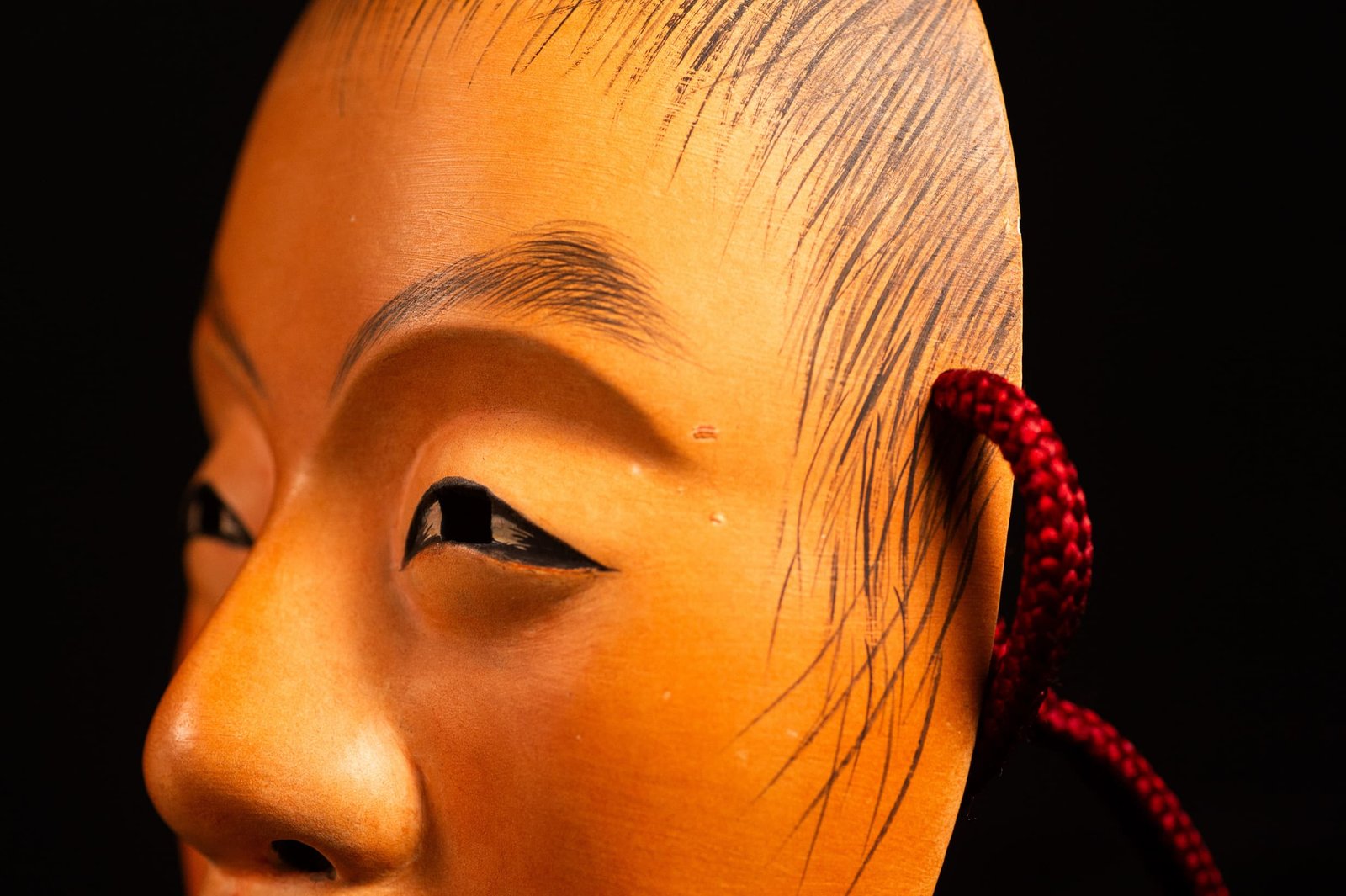
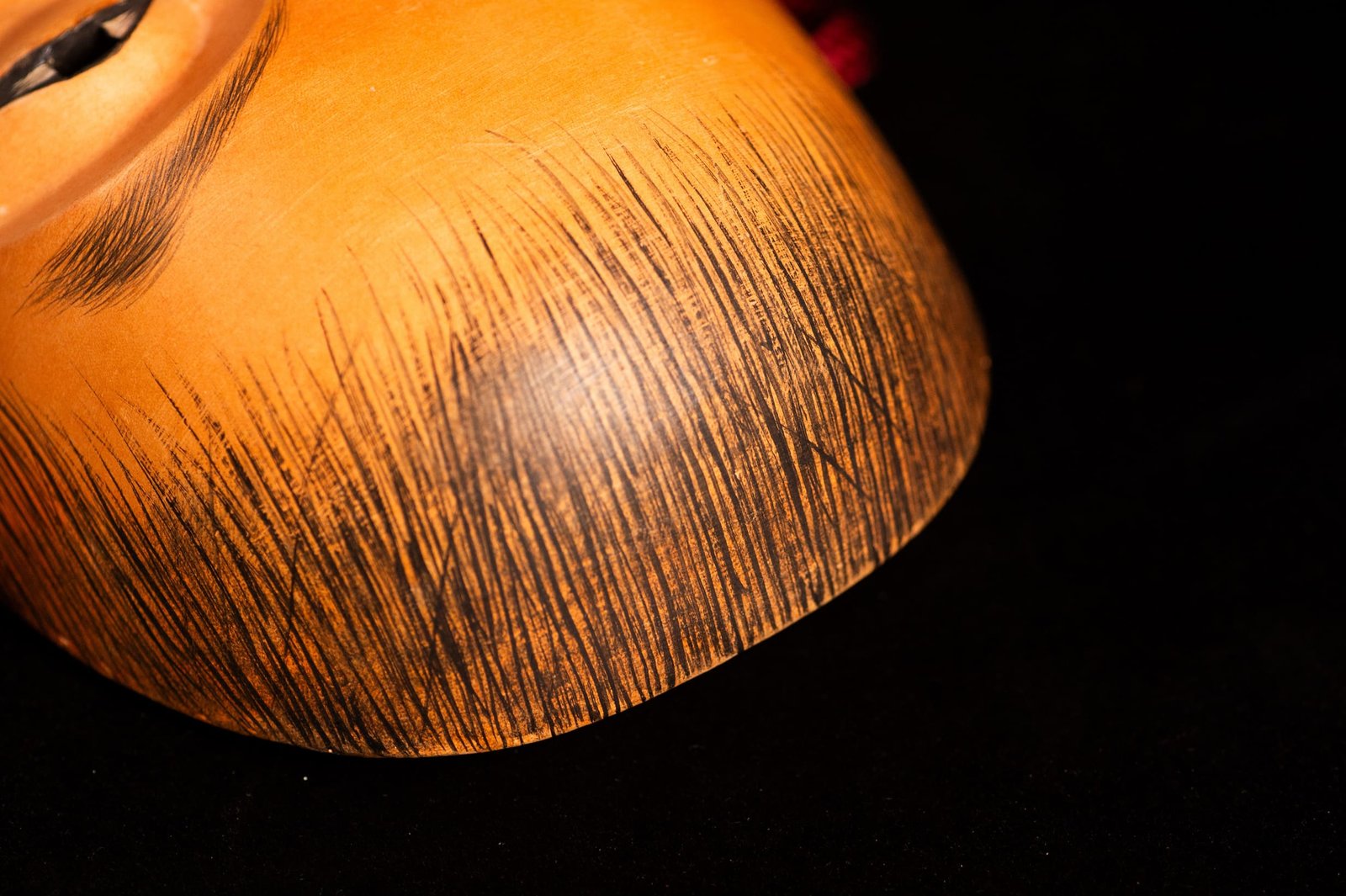
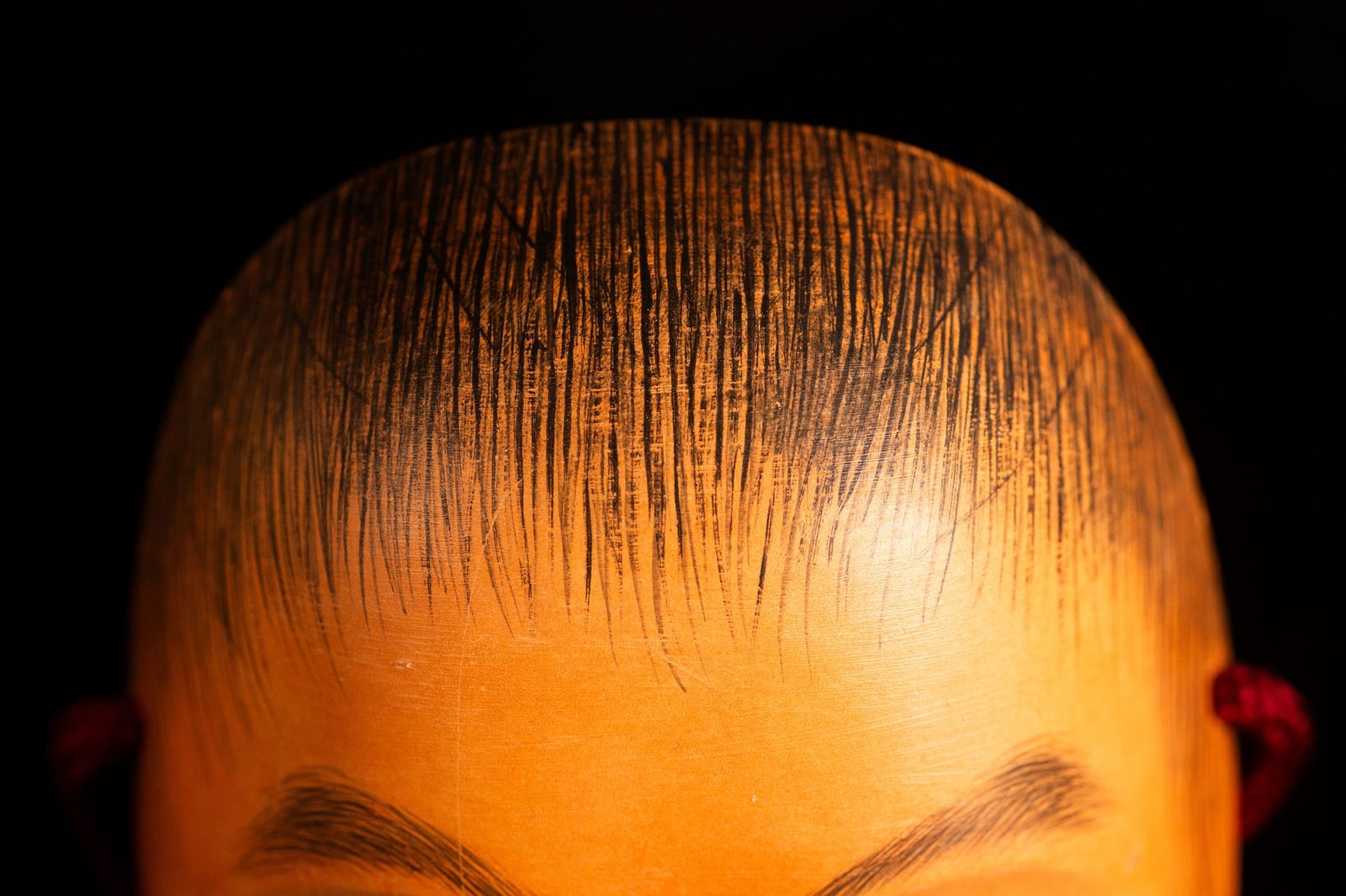
The hair is represented through numerous fine black strokes painted across the upper portion of the head.
Rather than forming a single solid band, the individual lines create the impression of short, closely arranged hair.
The strokes vary subtly in density and direction, particularly around the forehead and temples.
This gives the painted hair a lively, hand-rendered character.
The hairline descends gently toward the sides of the face and visually reinforces the youthful form of the rounded head.
The delicacy of the brushwork contrasts with the broader warm facial surface, drawing attention to the upper part of the mask without overwhelming the expression.
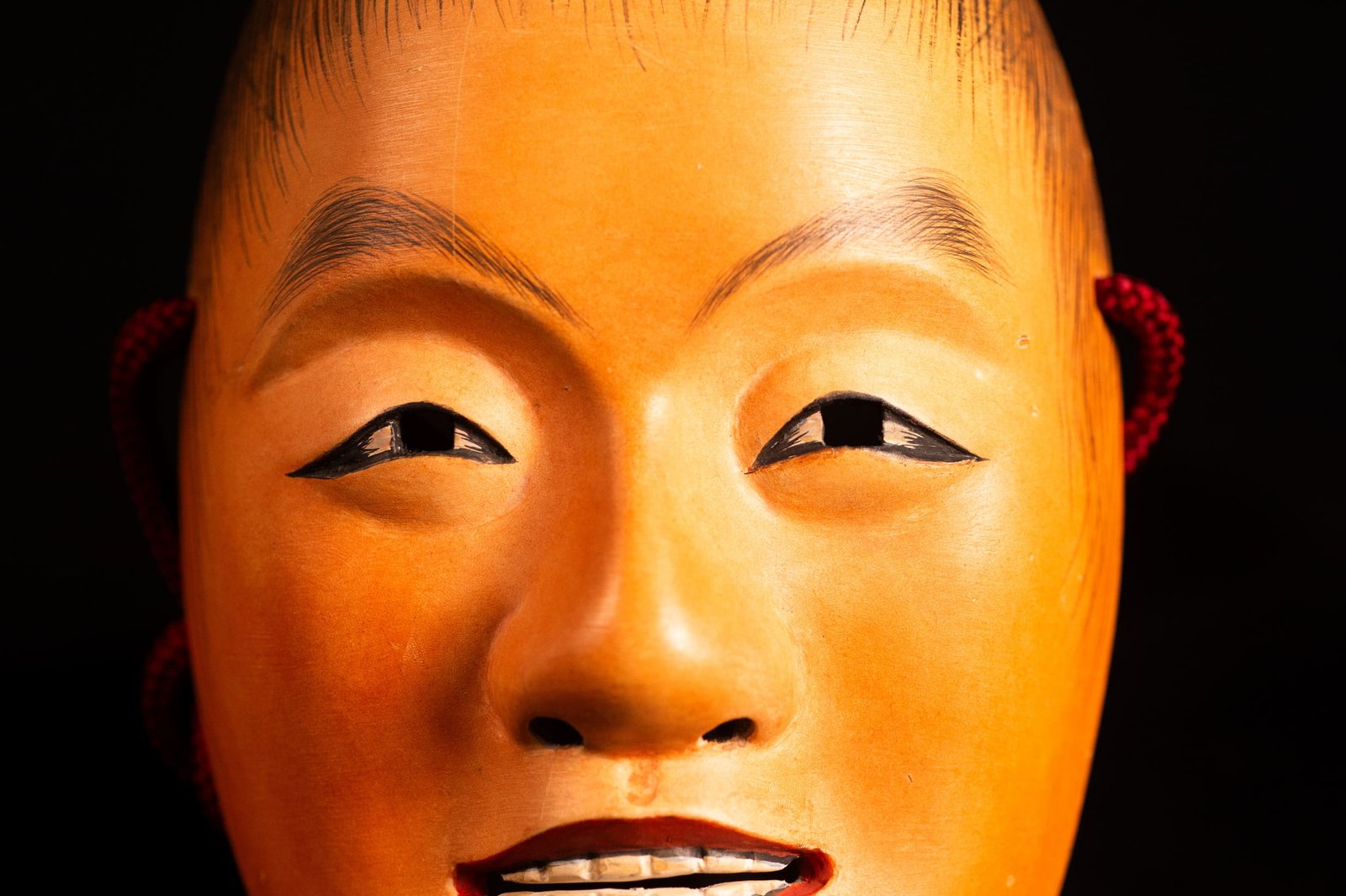
The eyebrows are painted as fine, upward-arching forms above the eyes.
Their shape contributes significantly to the mask’s open and alert expression.
The hairs are individually suggested through delicate dark strokes rather than rendered as solid blocks of colour.
This treatment gives the brows a natural softness while preserving the stylised elegance required for theatrical visibility.
The arches rise toward the centre and taper toward the outer edges.
Together with the eyes and smile, they create an expression of youthful curiosity and warmth.
The brows also provide visual continuity between the dense black hairline above and the dark eye contours below.
The eyes are carved as relatively narrow openings and outlined with black paint.
Painted details around the openings suggest eyelids and intensify the direction of the gaze.
Although the mouth is openly smiling, the eyes remain restrained.
This contrast produces the mask’s emotional complexity.
The figure may appear cheerful, attentive, knowing or quietly mysterious depending on the angle of presentation.
Because the eye openings are small, slight changes in the inclination of the mask can alter the perceived gaze considerably.
Under frontal light, the face appears open and engaging.
Under stronger shadow, the same eyes can seem more distant and enigmatic, supporting the possible interpretation of the character as more than an ordinary child.
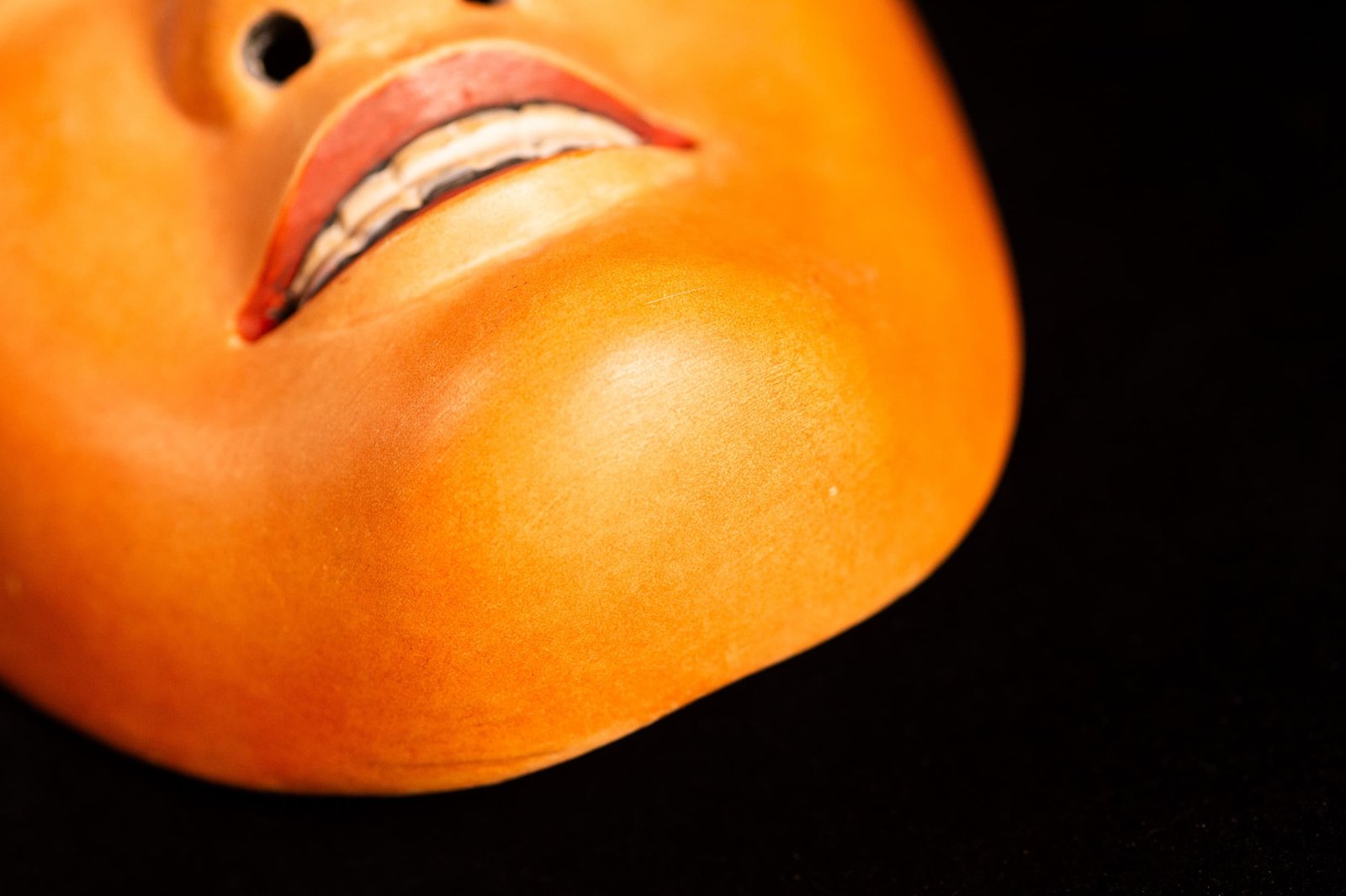
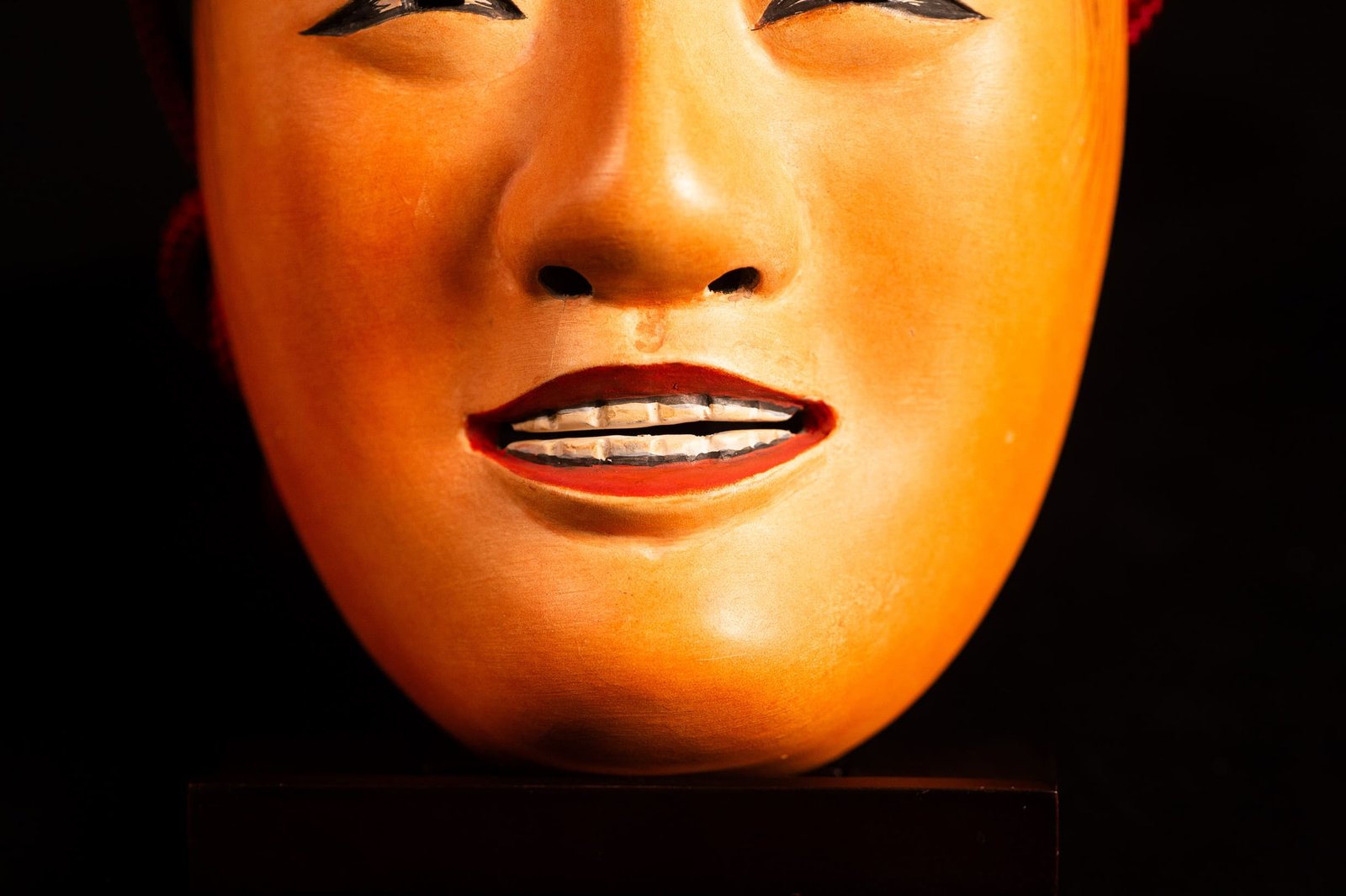
The open mouth is the central feature of the lower face.
Its gently curved shape creates a clear but controlled smile.
The lips are outlined and painted in a red tone, which remains slightly darker than the surrounding warm complexion.
Inside the mouth, individually defined teeth are visible in both the upper and lower rows.
The teeth are rendered in a pale colour with dark separation lines, producing a detailed and highly legible theatrical effect.
This dental treatment gives the face an unusual sense of animation.
The expression remains refined, however, and avoids the broad exaggeration associated with comic masks.
The smile conveys youthfulness, friendliness and vitality while leaving room for more ambiguous interpretations during performance.
The facial structure is smooth and softly rounded.
The forehead is broad, the cheeks are full and the chin is gently curved.
There are no deep wrinkles or sharply hollowed areas of the kind found in masks representing elderly characters.
The nose is compact and softly modelled, harmonising with the youthful proportions of the face.
From the front, the features appear balanced and almost symmetrical.
From an oblique angle, the depth of the nose, cheeks, mouth and chin becomes more apparent.
The sculptural form was designed to remain expressive from different positions on the stage, where the audience would not always see the mask directly from the front.
The mask is carved from wood as a functional three-dimensional theatrical object.
Its eye openings provide visibility for the performer, while holes at the lateral edges serve as attachment points.
A dark maroon cord is fitted through these openings and can be seen at both sides of the mask.
The supplied information does not establish the date or originality of the cord, so it should be described simply as the cord currently accompanying the object.
The carved structure is relatively deep, particularly around the nose, mouth and chin.
This depth enables changing shadows to animate the otherwise fixed expression during performance or display.
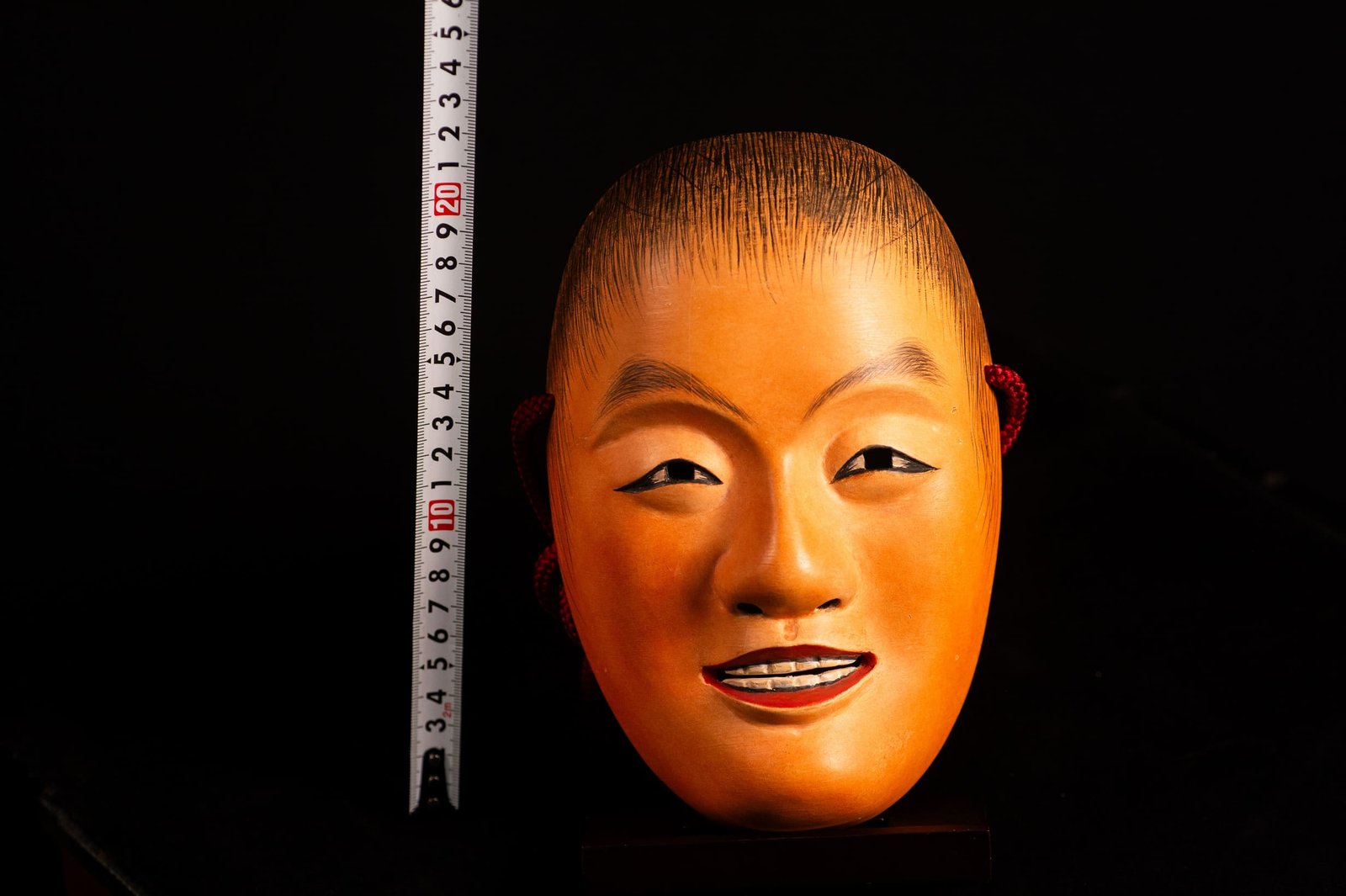
The mask’s life-size proportions correspond to those of a wearable Noh theatre mask.
A dark maroon braided cord is attached through the holes at the sides of the mask.
Its deep red colour complements the painted lips while contrasting with the warm tan face and black hair.
In practical terms, cords associated with Noh masks are used to secure the mask to the performer.
When displayed, the visible cord also reinforces the object’s identity as a functional theatrical form rather than a purely decorative carving.
No evidence has been supplied to determine whether this particular cord is original to the mask, an older replacement or a later addition.
It should therefore be documented as an existing component without a more specific attribution.
The Dōji figure derives much of its dramatic power from ambiguity.
The face appears unmistakably youthful, with smooth cheeks, delicate brows and an open smile.
At the same time, Noh narratives frequently use youthful appearances to conceal or reveal a spiritual identity.
An apparently ordinary attendant may later be understood as a divine child, supernatural messenger or transformed presence.
The mask’s controlled expression supports both possibilities.
It can appear warm and human in one moment, then distant or mysterious when the angle and lighting change.
This capacity to move between innocence and otherworldliness makes the Dōji type especially effective within the symbolic language of Noh.
Noh masks do not communicate through mechanical movement or changing facial features.
Their emotional range emerges from the interaction of carving, paint, lighting, costume and the performer’s physical discipline.
A slight upward or downward movement can transform how shadows fall around the eyes, nose and mouth.
The smiling expression of this Dōji mask can therefore appear joyful, calm, knowing or even uncanny depending on its position.
The actor does not merely hide behind the mask.
Through posture, movement, chant and costume, the performer assumes the represented identity.
This transformative function has contributed to the ritual and symbolic importance of masks within Japanese theatre and festival traditions.
Masks have long formed part of Japanese theatrical, ritual and festival culture.
They may represent human characters, historical figures, supernatural beings or spiritual presences.
Japanese indigenous religious traditions include sacred presences commonly referred to as kami.
In some performances and ritual contexts, the act of wearing a mask could symbolise embodiment or temporary transformation into the represented figure.
However, not every Dōji role represents a named kami or deity.
The supplied description identifies this piece broadly as a young attendant or child-deity figure appearing across several plays.
Without information linking it to a particular drama or named spiritual being, the mask should not be assigned a more specific divine identity.
The supplied photographs show a generally coherent painted surface with visible age-related character.
Small marks, light rubbing and minor tonal variations can be seen across the warm complexion.
The painted hairline remains highly detailed, although individual strokes show natural variation and wear.
The eyebrows, eye outlines, lips and teeth remain clearly legible and retain strong contrast.
A small area of surface variation is visible between the nose and upper lip, together with minor marks elsewhere on the face.
These observations are based solely on the supplied photographs.
No professional conservation report, restoration history or structural assessment has been provided.
The mask is carved at a 1:1 or life-size scale, corresponding to the proportions of a functional Noh theatre mask.
It is particularly effective when displayed frontally, where the symmetrical hairline, arched brows, eyes and open smile can be appreciated together.
A three-quarter view reveals the projection of the nose, mouth and rounded chin.
Soft directional lighting is recommended because it allows the expression to shift subtly without creating excessive glare on the painted surface.
The mask should be supported without placing pressure on the nose, lips, teeth, chin, edges or attachment cord.
Direct sunlight, excessive humidity, very dry conditions and sudden environmental changes should be avoided.
Cleaning or restoration should be entrusted to a conservator experienced in historic painted wood.
The mask is described as antique.
The photographs show visible age-related tonal variation, light surface rubbing, small marks and minor irregularities in the painted finish.
The painted hair, eyebrows, eye details, lips and teeth remain readily visible.
A dark maroon cord is fitted through the lateral attachment holes.
No precise date, named mask carver, workshop attribution, inscription, documented performance history, restoration record or provenance has been supplied.
The description is based on the provided identification as a Dōji mask and the visible characteristics shown in the photographs.
Prospective buyers should examine all available images carefully when assessing its condition.
This antique Dōji mask is distinguished by its unusually warm and approachable expression.
The gentle open smile, clearly painted teeth, arched eyebrows and delicate hairline create a vivid image of youth that differs markedly from the solemnity of elderly masks and the restraint of many female character types.
Its appeal also lies in the ambiguity of the Dōji role.
The figure may be understood as a young attendant, an idealised child or the youthful manifestation of a sacred or supernatural being.
The mask can therefore communicate both human warmth and spiritual mystery.
The finely painted hair and facial details remain visually strong, while the visible surface variation gives the piece the character of an antique theatrical object.
The dark maroon cord adds a further functional and visual element.
For collectors of Noh theatre, Japanese masks, carved wooden sculpture or traditional performance material, the piece offers a compelling combination of youthful vitality, theatrical craftsmanship and symbolic depth.
An expressive antique Japanese Noh mask representing Dōji, a youthful attendant or child-deity figure appearing across several plays. Carved from wood at life size, the mask has a warm tan complexion, finely painted black hair and arched eyebrows, narrow expressive eyes and a gentle open smile revealing carefully painted upper and lower teeth. A dark maroon cord is fitted through the lateral attachment holes. Combining youthful warmth with the possibility of a supernatural identity, this refined theatrical mask is a distinctive work for a collection of Noh masks, Japanese art or traditional performance objects.
| Época | Edo |
|---|

Order above 1.000,00 € gets free shipping.

Secure and hassle-free payment process.

Certificate of authenticity included.

Have questions? Contact us via WhatsApp.
Contact