







1 in stock
1 in stock
Add to Compare
Add to Wishlist
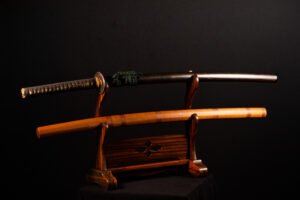
An elegant Japanese katana (nihontō) signed Munetoshi 宗俊 and attributed to the early Edo period. The sword combines a well-proportioned 72.2 cm blade with a restrained suguha hamon and a complete koshirae distinguished by its polished black lacquer saya, iron tsuba and refined fittings decorated with nautical and natural motifs.
The overall character of the sword is sober, martial and exceptionally balanced. Rather than relying upon elaborate ornamentation, the mounting achieves its elegance through the contrast between polished black lacquer, dark metal fittings, subtle gold and silver details, white samegawa and black silk wrapping.
Of particular interest is the decorative theme of the koshirae. Traditional boats or vessels appear on the fuchi-kashira, complemented by vegetal motifs in the menuki. Together they create a coherent visual narrative associated with travel, water and the natural world.
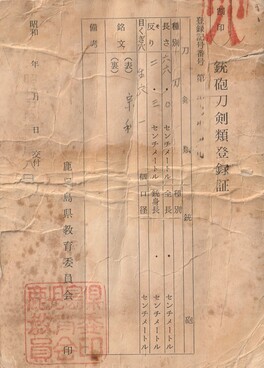
The sword retains its Japanese torokusho, registered in Nagano Prefecture under the signature Munetoshi 宗俊, providing important documentation of its registration within the Japanese system governing traditionally made swords.
The sword is supplied with a kimono or cotton storage bag, a Supein Nihonto certificate and a copy of its Japanese torokusho.
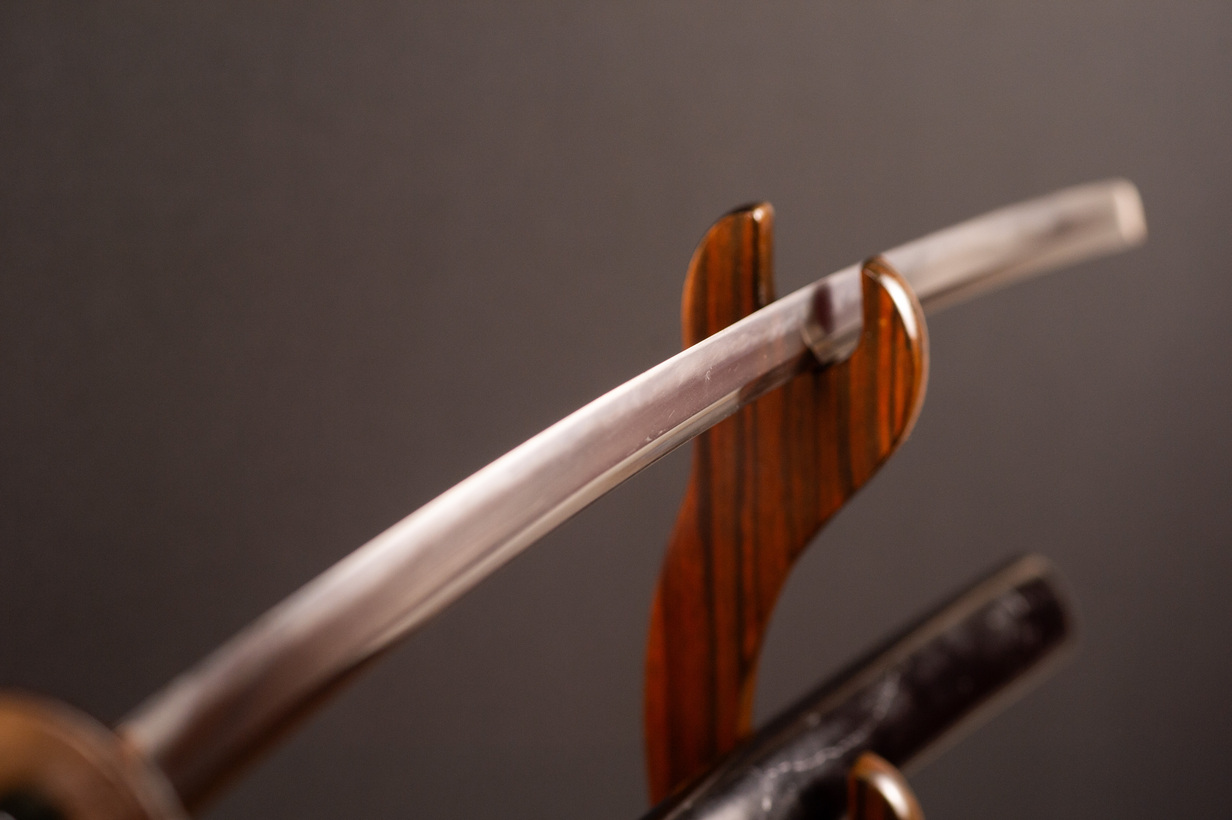
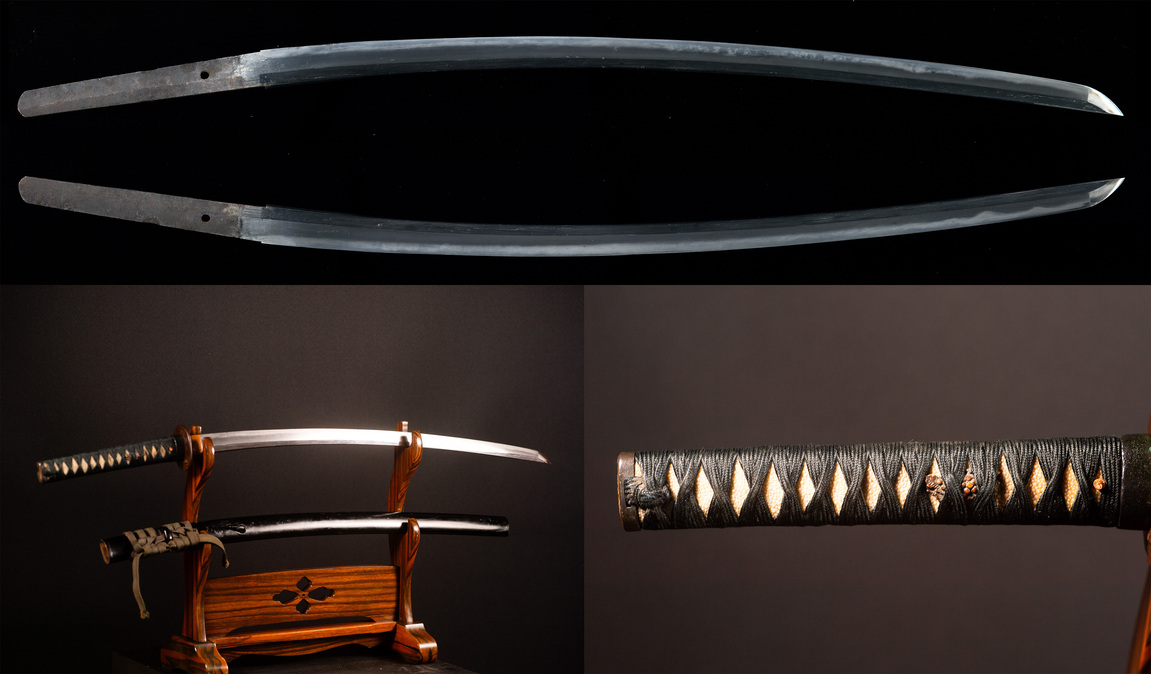
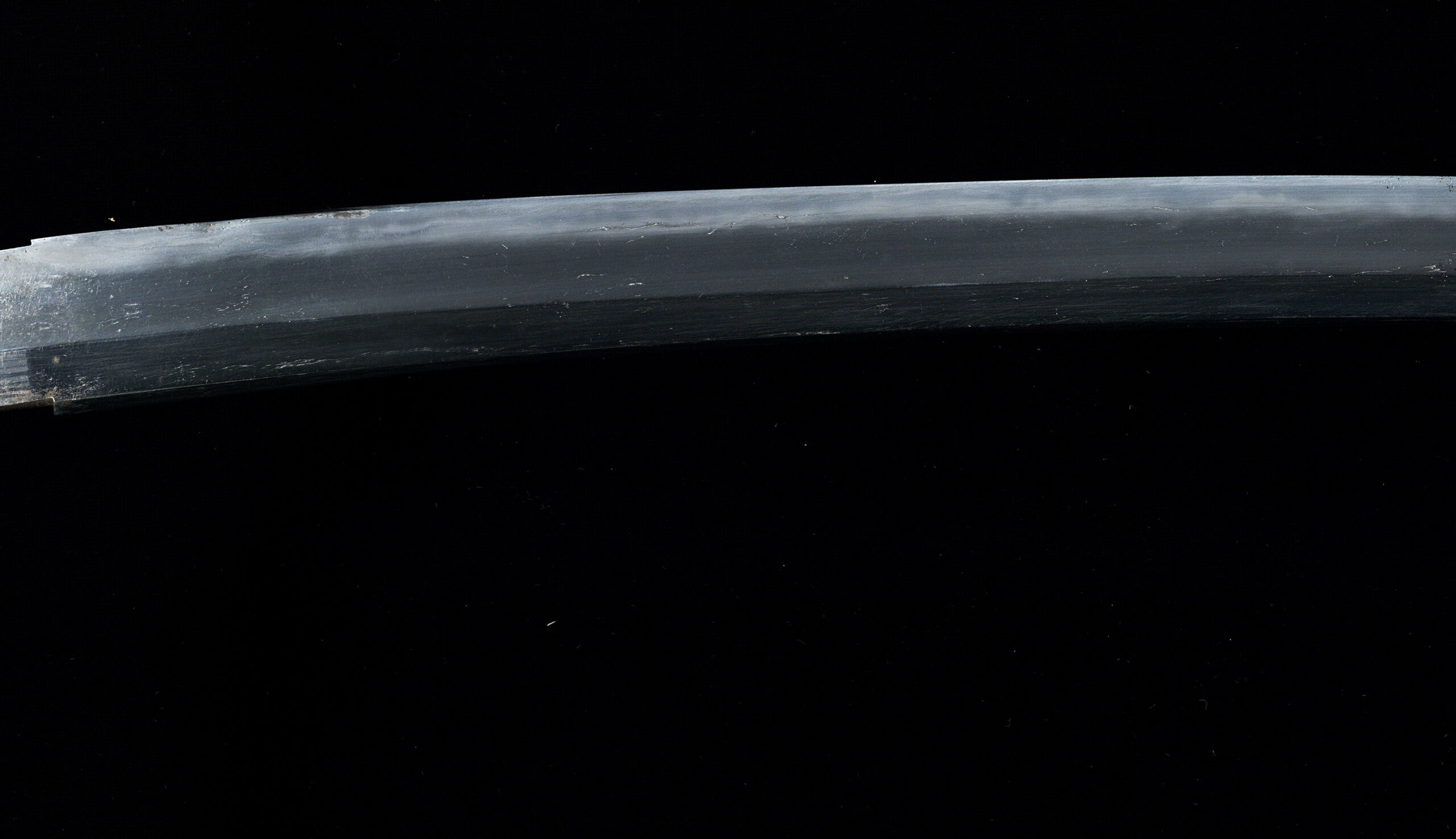
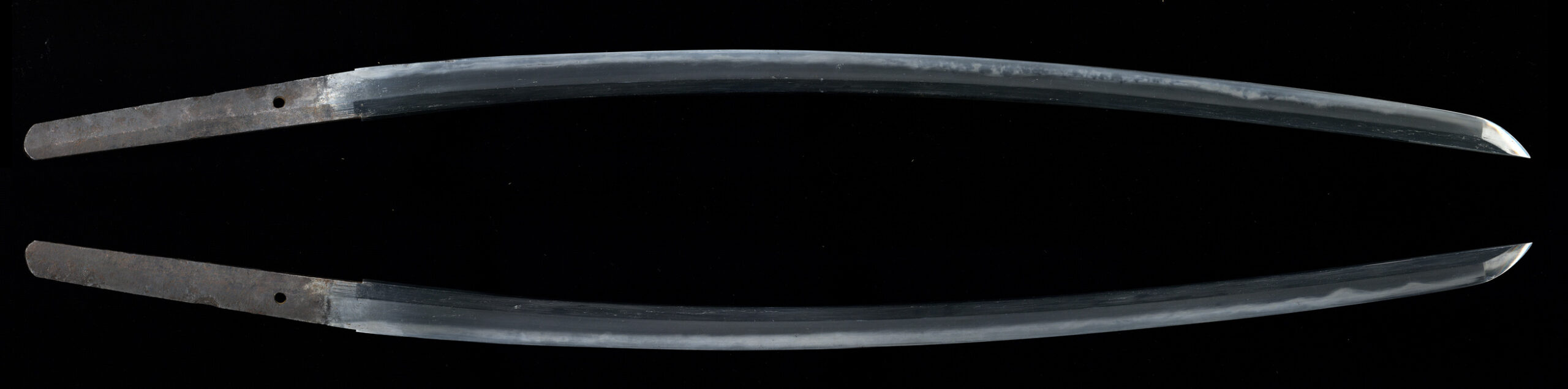
The blade forms the historical and artistic centre of the piece. With a nagasa of 72.2 cm, it possesses the proportions expected of a full-length Japanese katana, while its curvature of 1.6 cm creates an elegant and controlled silhouette.
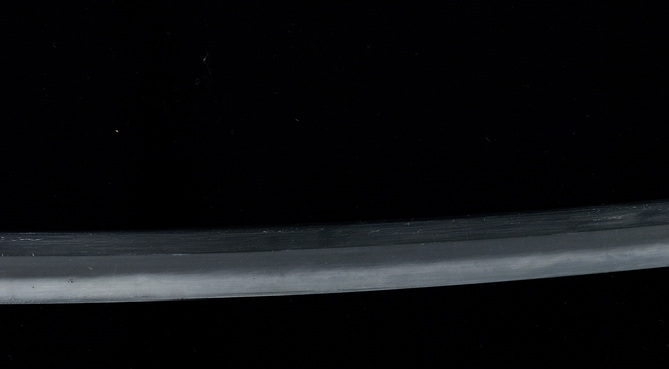
The overall geometry is harmonious, with the curvature flowing naturally from the base toward the point. Viewed in profile, the blade presents the restrained visual balance characteristic of a sword intended to combine practical functionality with refined workmanship.
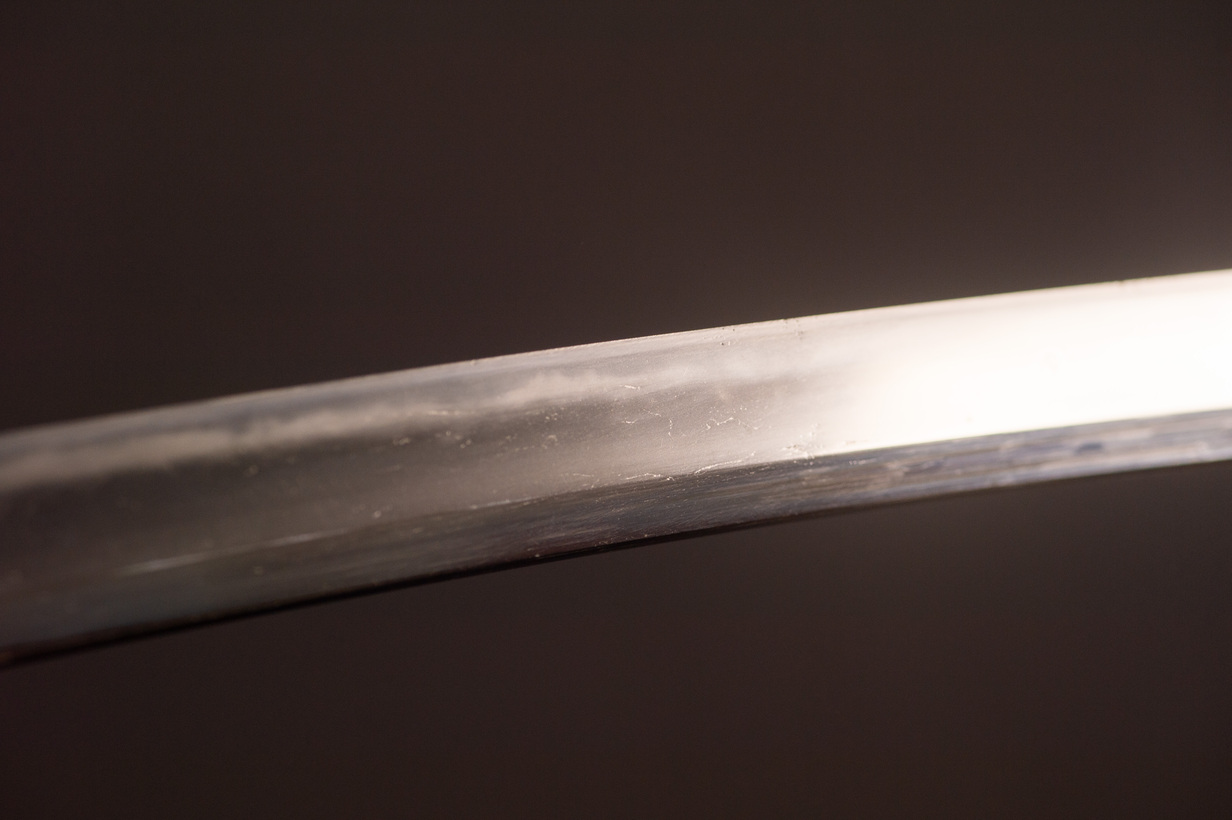
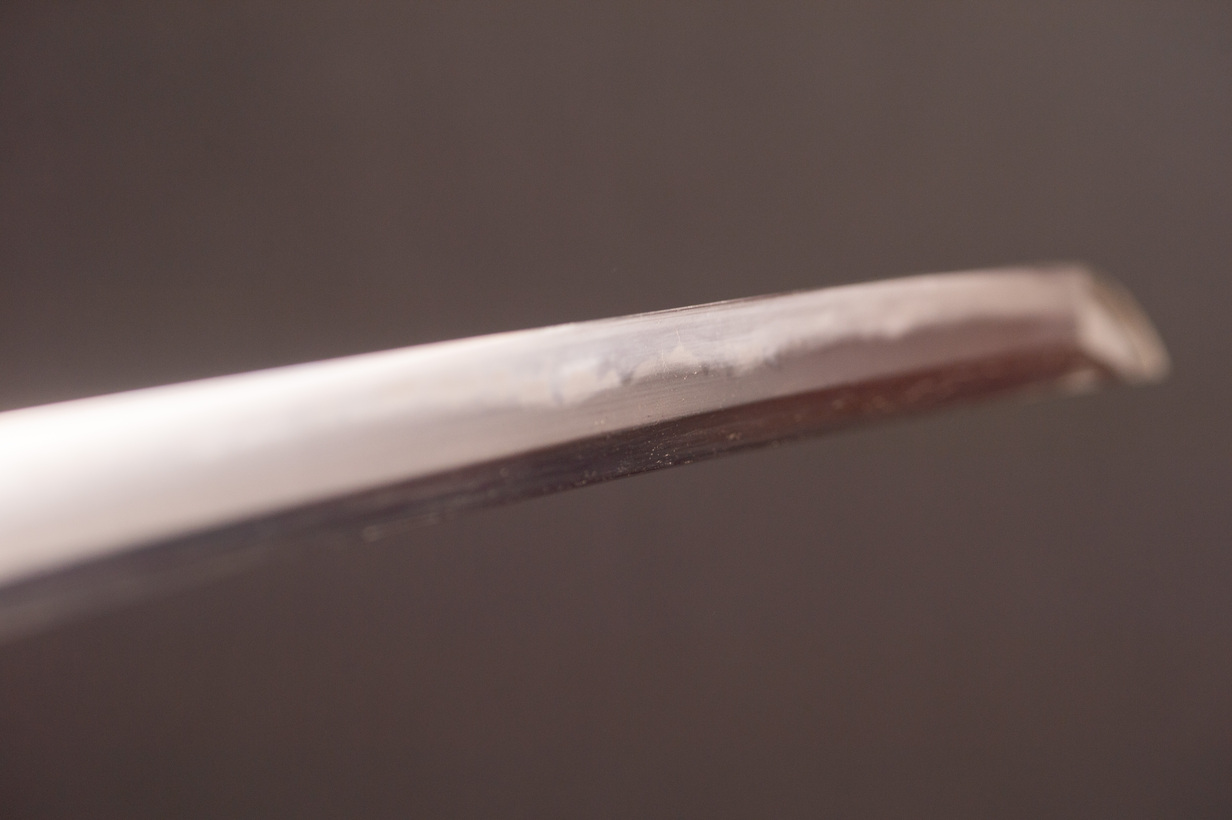
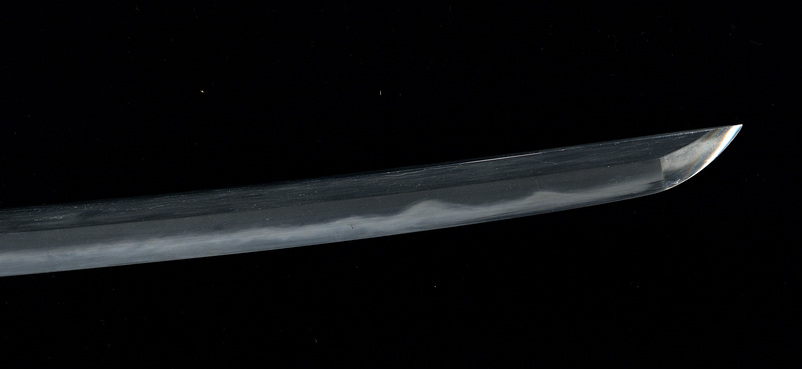
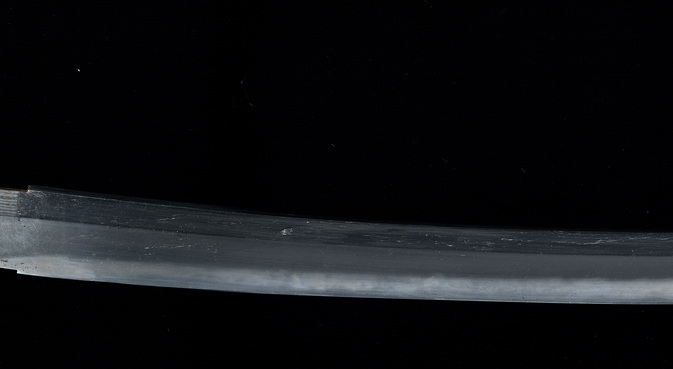
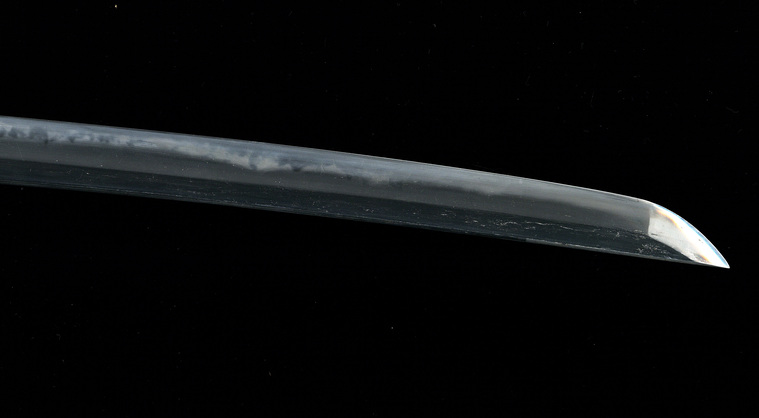
The blade remains in a polish that allows its principal metallurgical characteristics, including the temper line and general structure of the steel, to be properly appreciated.
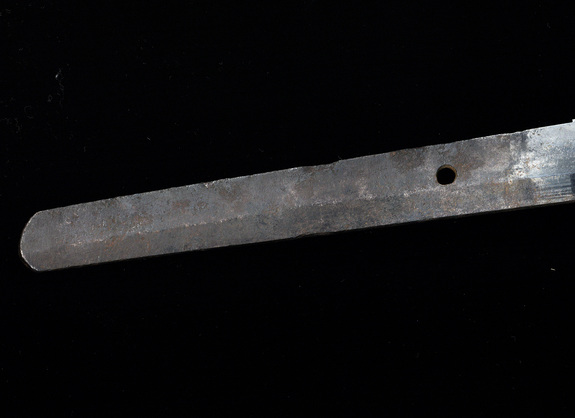
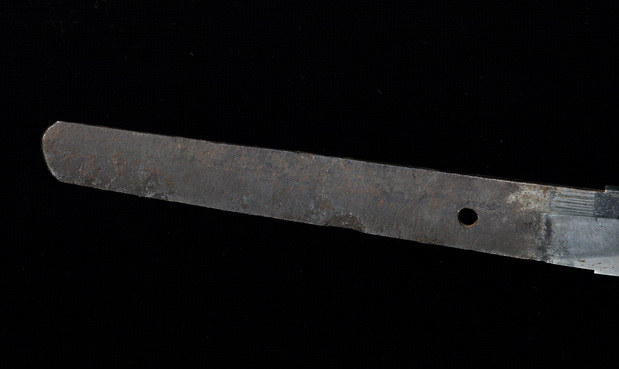
The nakago bears the signature Munetoshi 宗俊.
The sword is attributed to the early Edo period, placing it within one of the most important transitional periods in the history of the Japanese sword.
Following the great conflicts of the Sengoku period and the establishment of the Tokugawa Shogunate at the beginning of the seventeenth century, Japanese sword production entered what is traditionally described as the shintō era. Although large-scale warfare diminished, the sword remained the defining weapon and symbol of the samurai class.
The blade preserves a single mekugi-ana, giving the nakago a particularly clean configuration.
The blade displays a classical suguha hamon, characterised by a relatively straight and controlled temper line running along the cutting edge.
Although visually restrained when compared with highly active patterns such as gunome or chōji, a well-executed suguha demands considerable technical discipline from the swordsmith. Its apparent simplicity leaves little room for irregularities and places emphasis on consistency, control and balance.
The restrained character of the suguha complements the overall aesthetic of this katana particularly well, harmonising with the sober black koshirae and its understated decorative details.
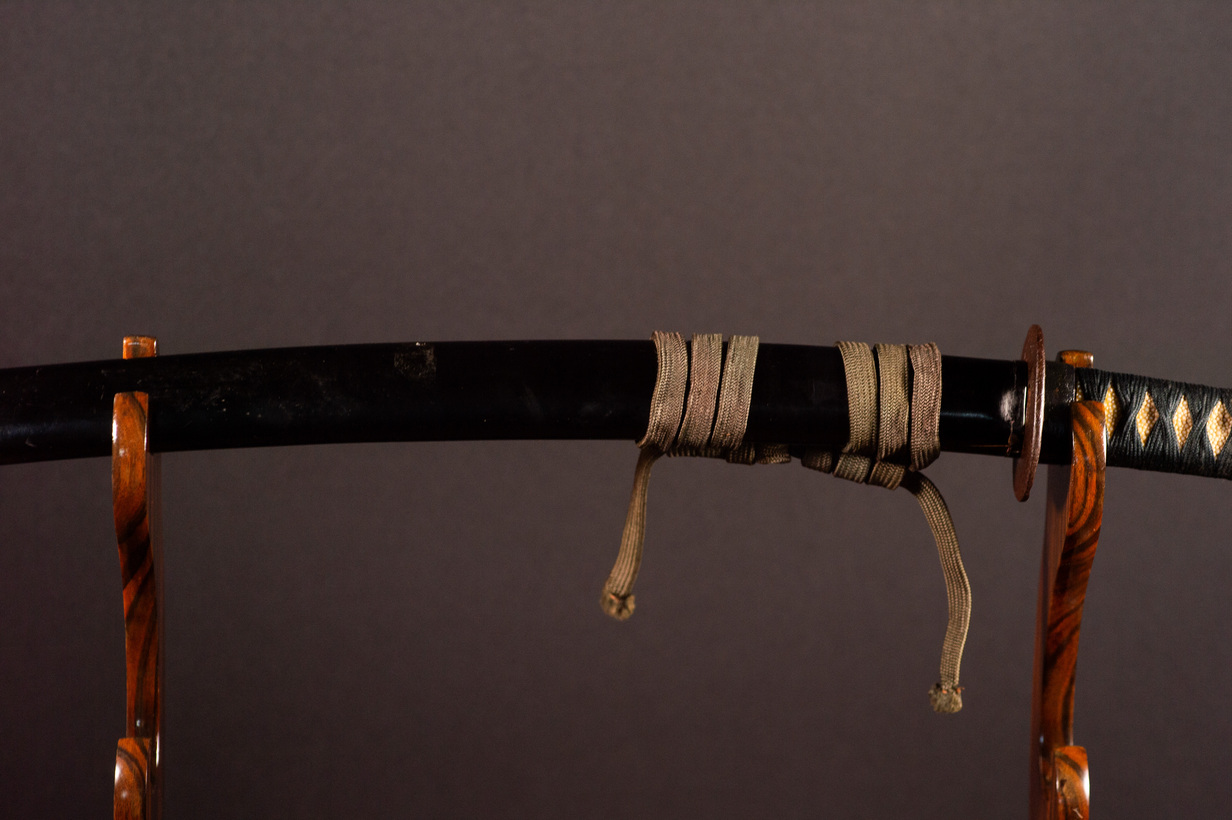
The sword is preserved with a complete koshirae conceived around a sophisticated combination of nautical and natural motifs.
The mounting is dominated by deep black tones, creating an understated background against which the metallic details of the fittings become particularly effective. Rather than presenting an excessively ornate appearance, the individual components have been coordinated to create a refined and distinctly classical ensemble.
The relationship between the polished black saya, dark iron tsuba, black silk tsuka-ito and subtle gold and silver ornamentation gives the mounting a strong visual unity.
Its decorative program can be interpreted around the idea of a journey: boats and vessels appear upon the fittings, while vegetal motifs introduce an additional connection with the natural world.
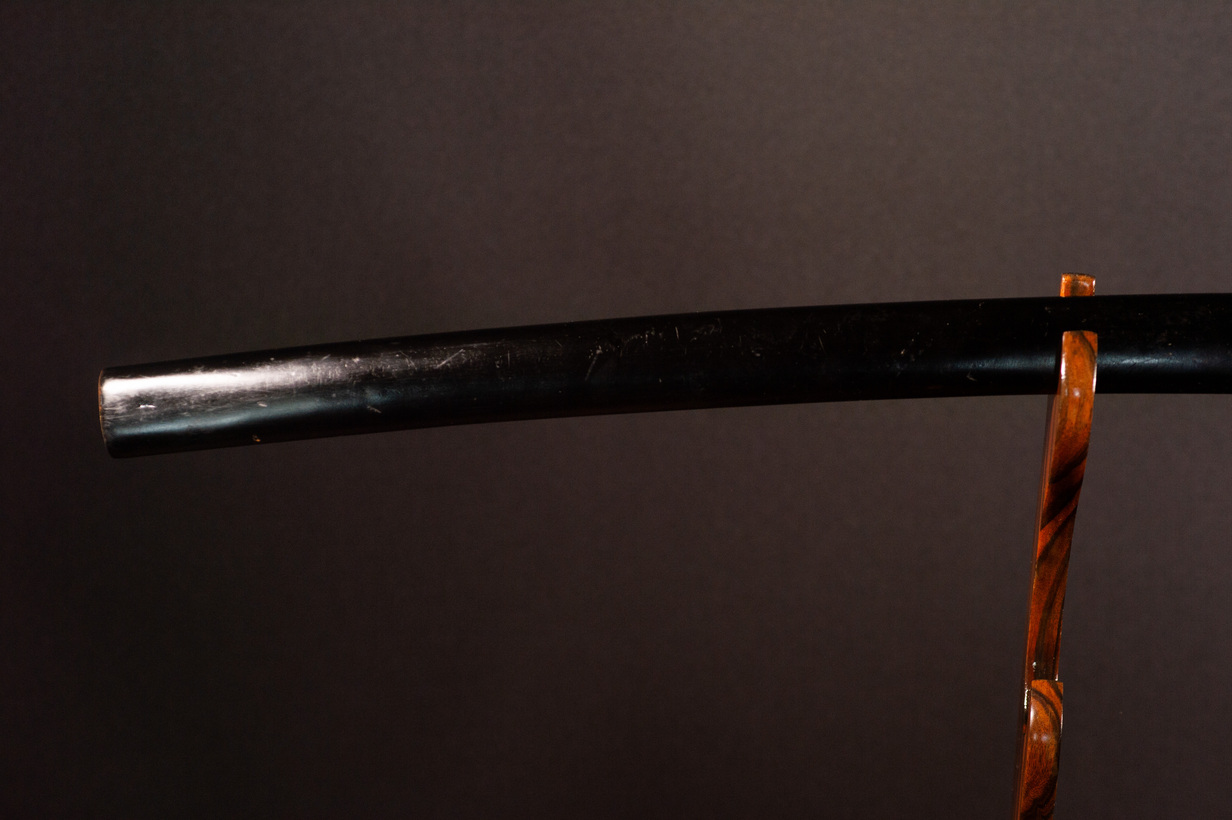
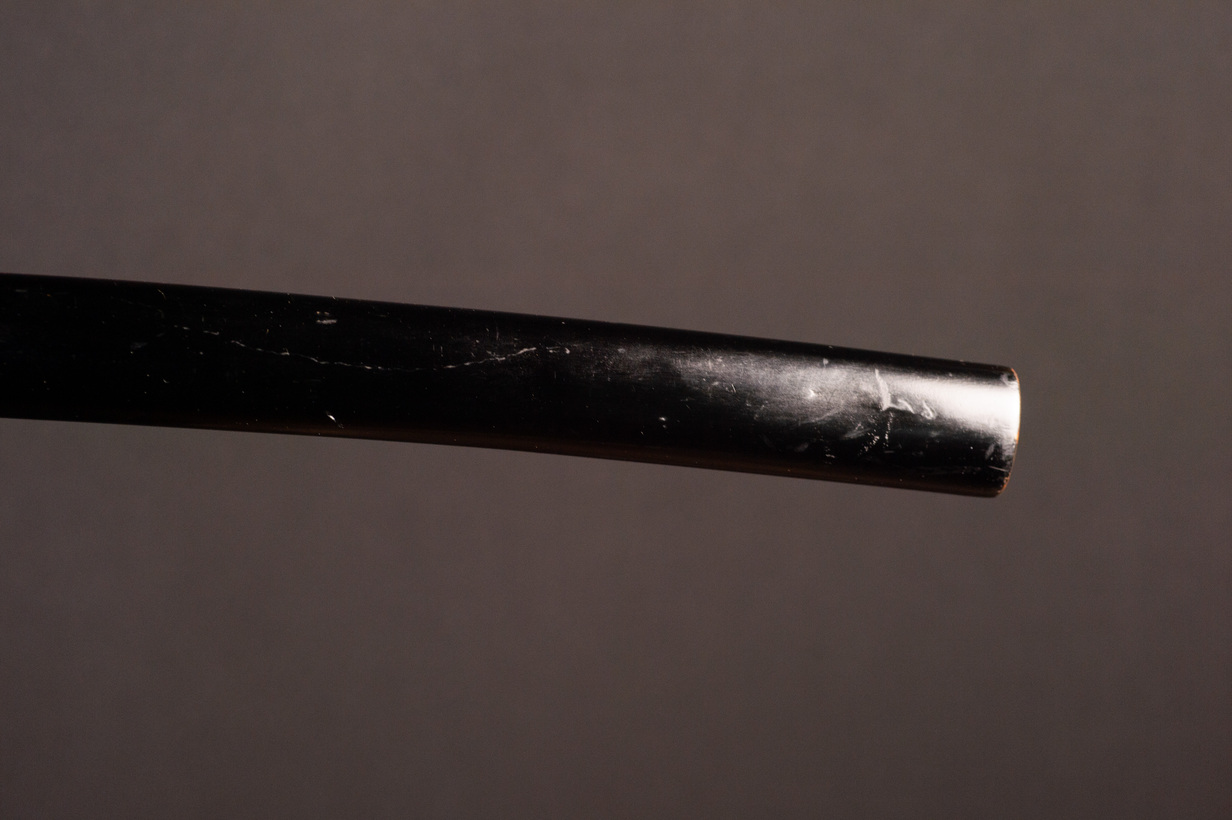
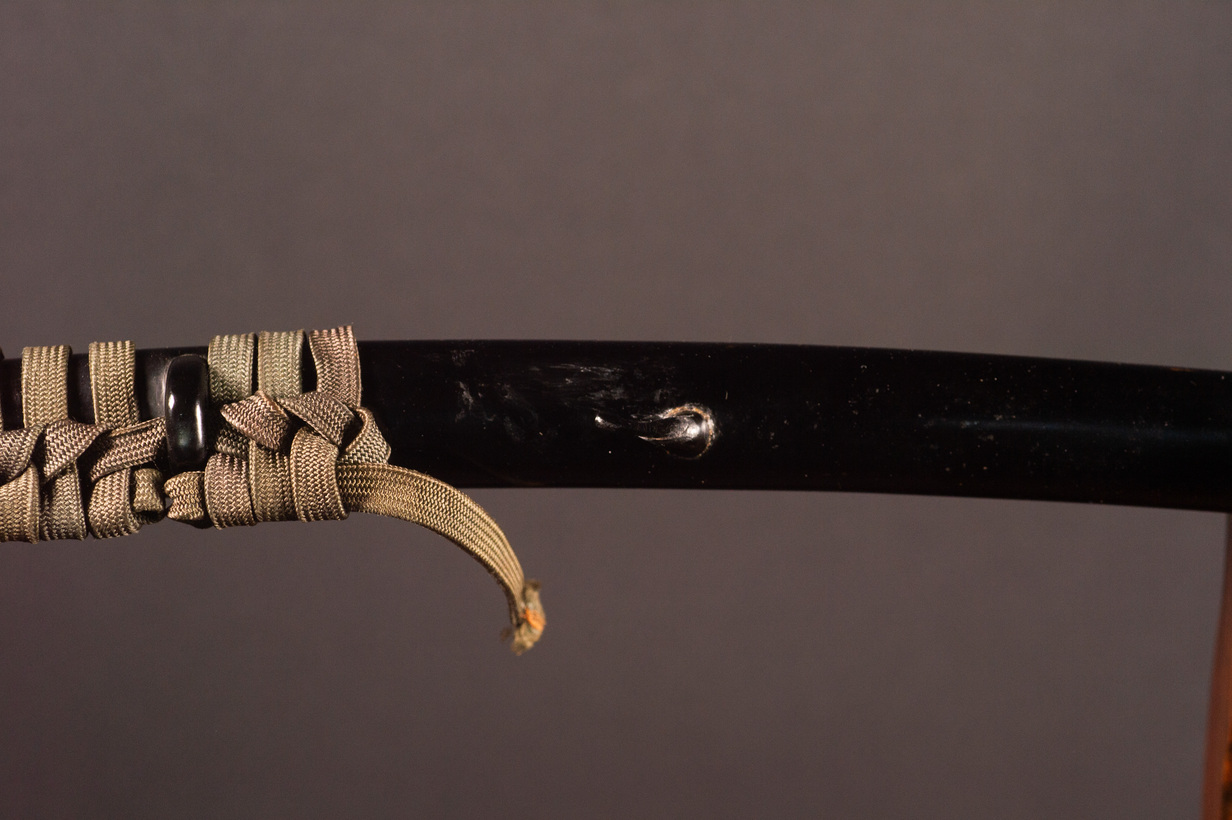
The saya is finished in polished black lacquer, traditionally known as kuroro, one of the most classical and enduring finishes found on Japanese sword mountings.
Its deep glossy surface provides an elegant contrast with the texture of the black silk wrapping of the handle and the aged surface of the iron fittings.
Black lacquer was particularly suited to formal samurai mountings because of its restrained appearance and ability to complement virtually any style of metalwork. In this example, the simplicity of the saya allows the decorative fittings to remain the principal visual accents of the koshirae.
The result is a mounting of considerable elegance whose visual impact derives from proportion, material and contrast rather than excessive ornamentation.
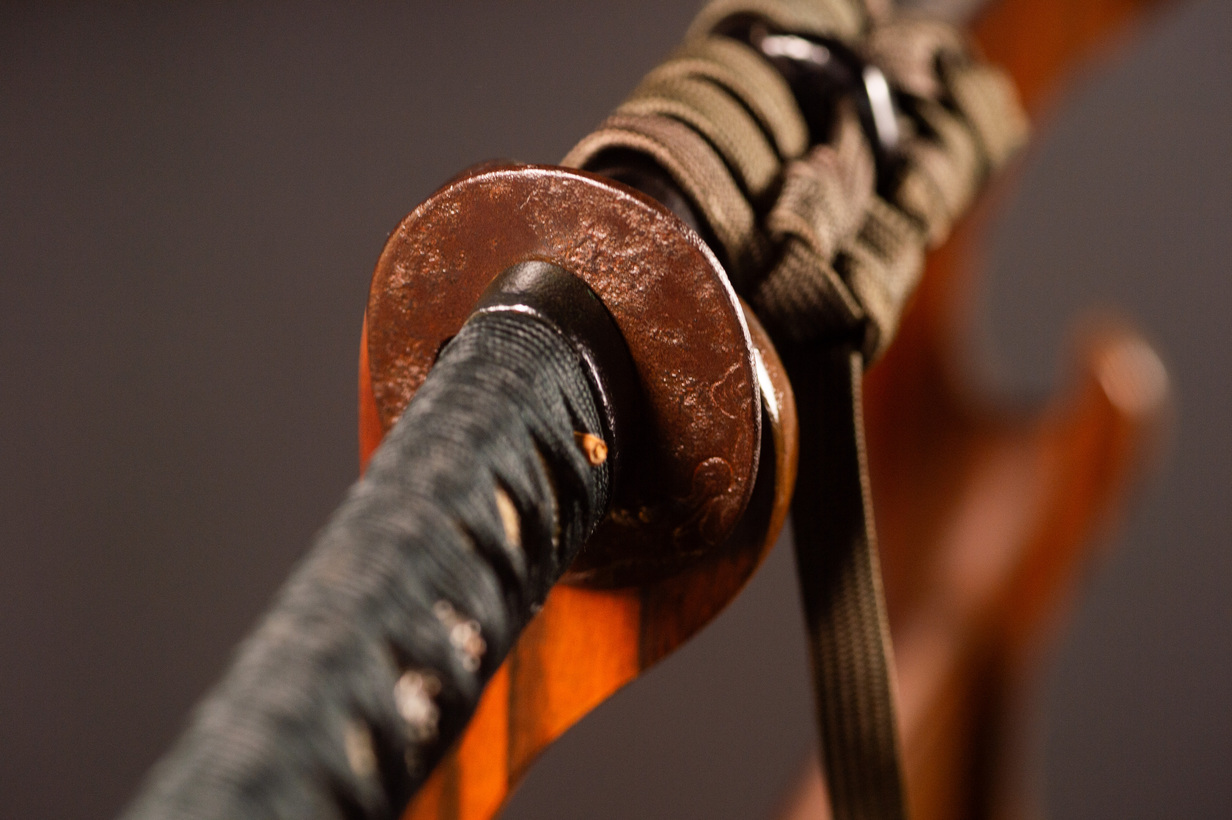
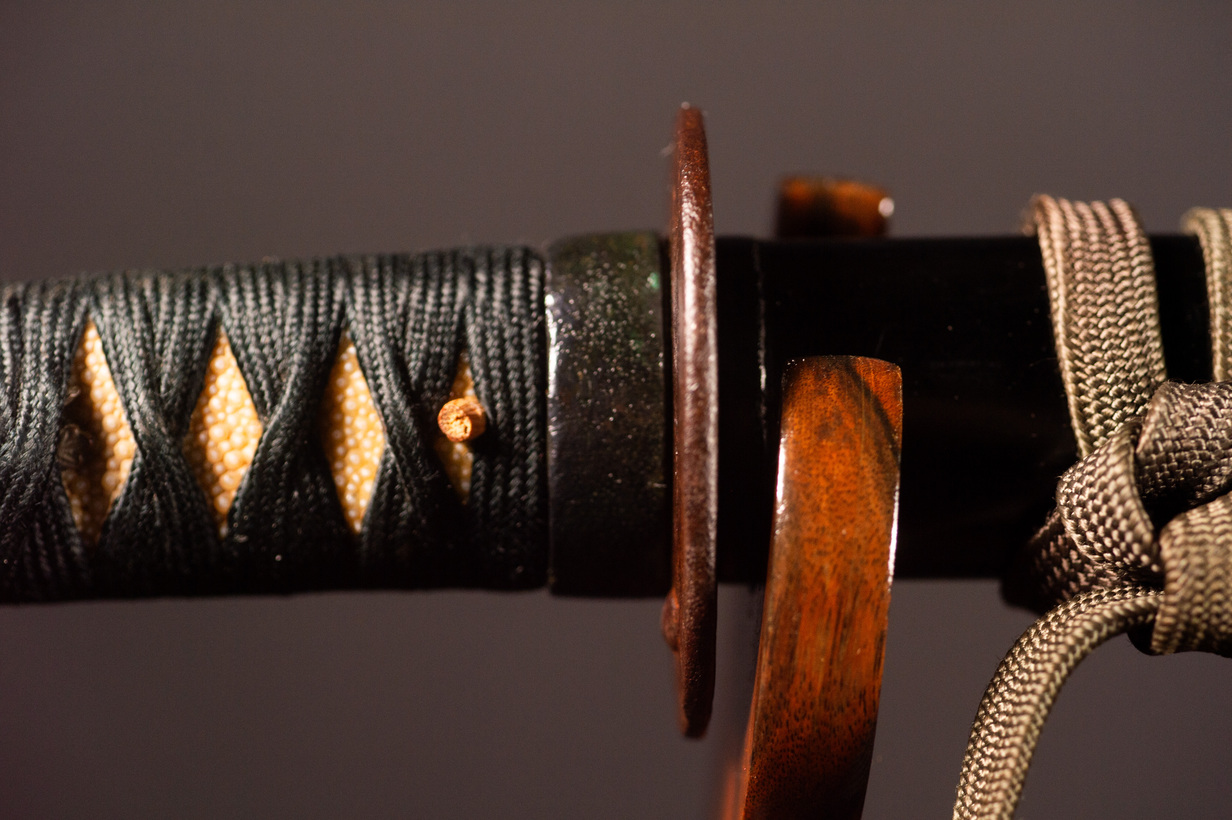
The sword is fitted with a robust circular iron tsuba displaying a restrained design with sukashi openwork and subtle decorative details.
Its dark, naturally aged iron surface harmonises particularly well with the black lacquer of the saya and the black wrapping of the tsuka.
The design remains deliberately understated, preserving the martial character of the sword while providing sufficient decorative interest to integrate naturally with the more elaborate metalwork of the fuchi-kashira.
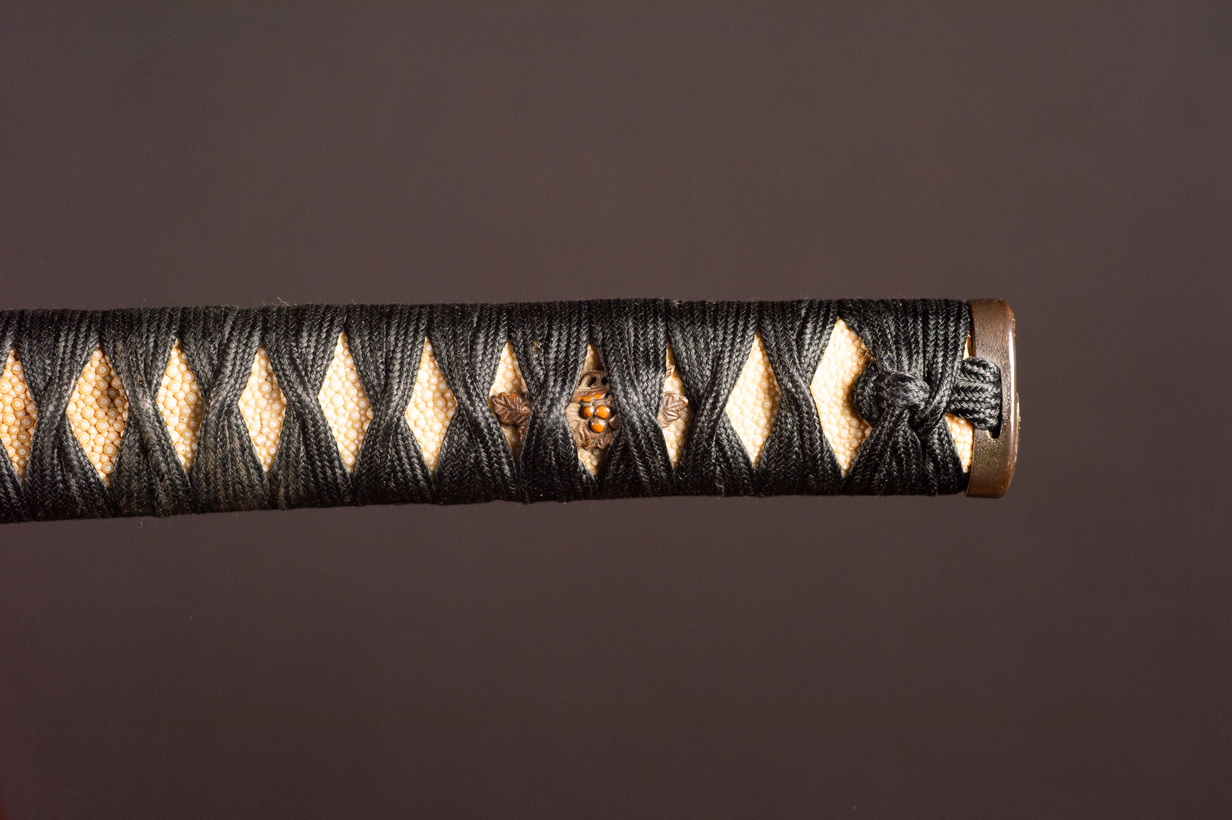
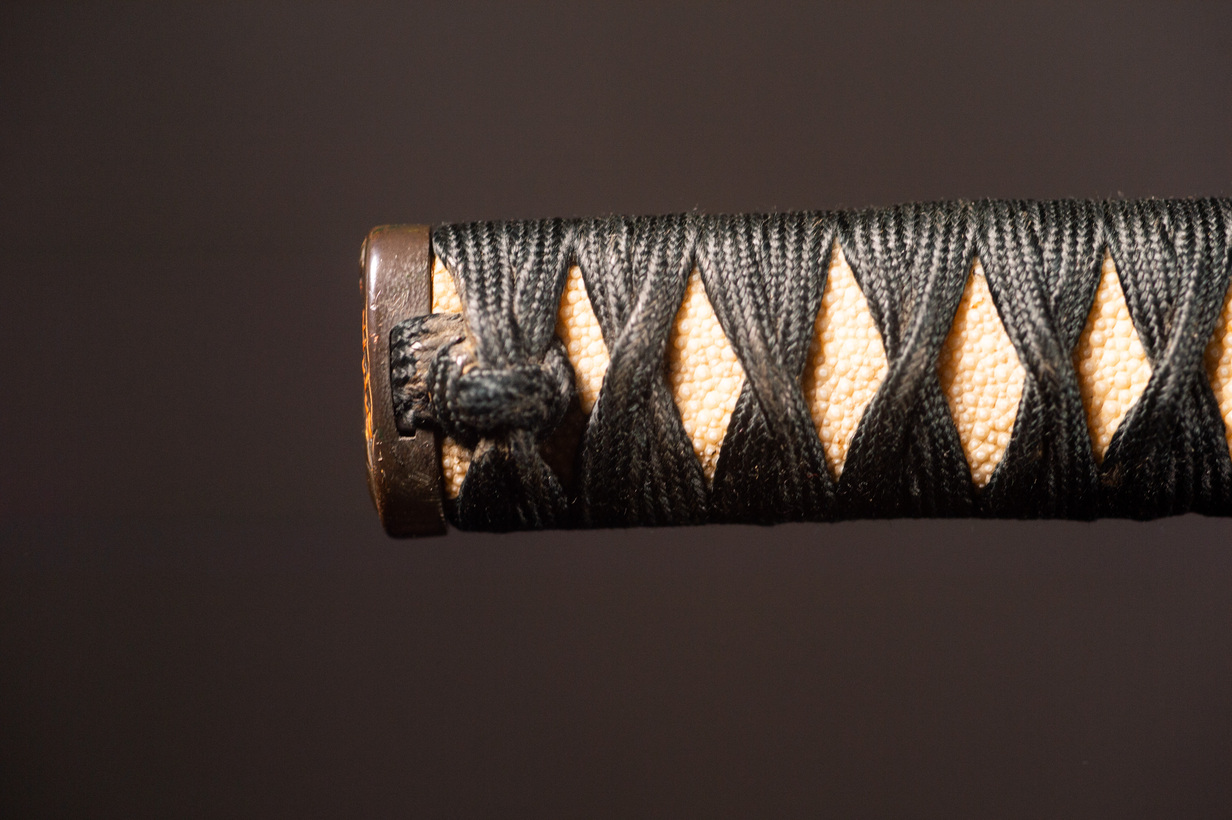
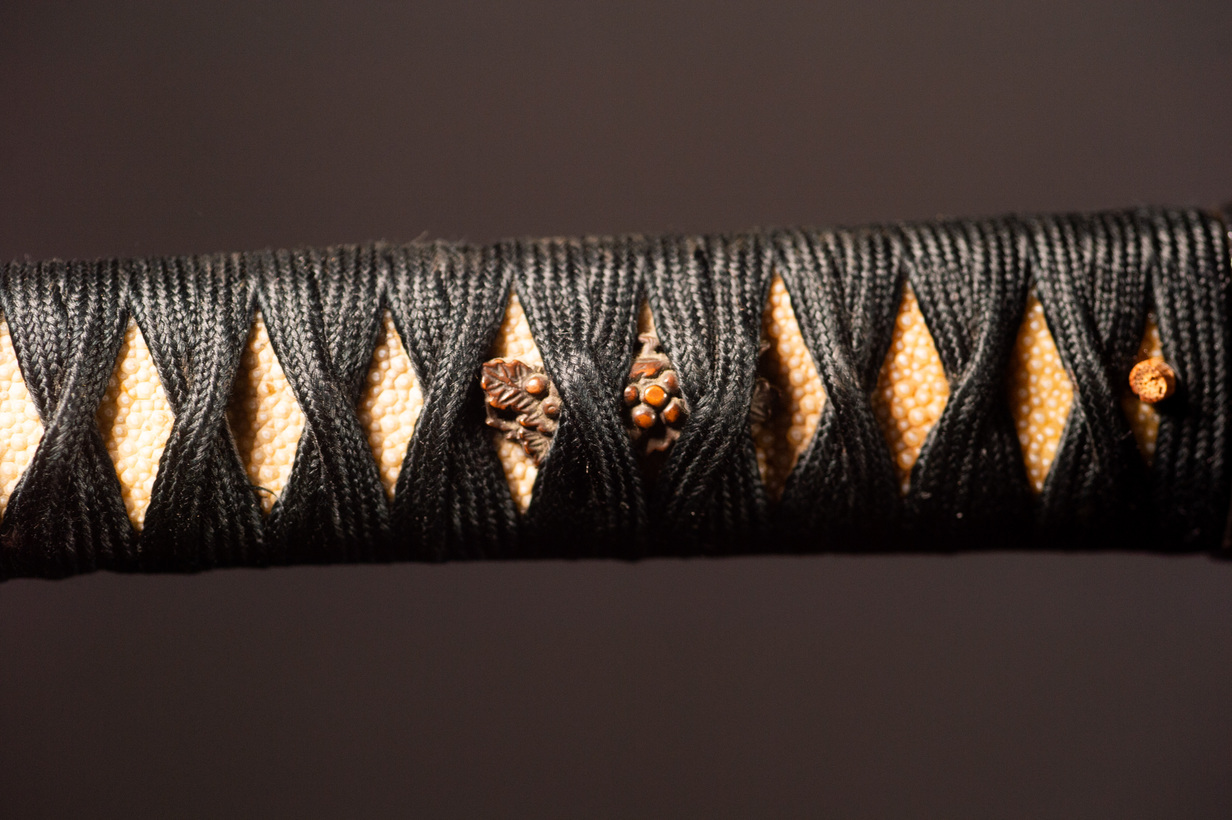
The tsuka follows a traditional construction, combining pale samegawa ray skin with tightly applied black tsuka-ito.
The alternating diamond-shaped openings of the wrapping reveal the lighter ray skin beneath, creating the characteristic contrast associated with classical Japanese sword mountings.
This combination of black silk and white samegawa works particularly well with the monochromatic character of the polished black saya, maintaining the restrained aesthetic that defines the entire mounting.
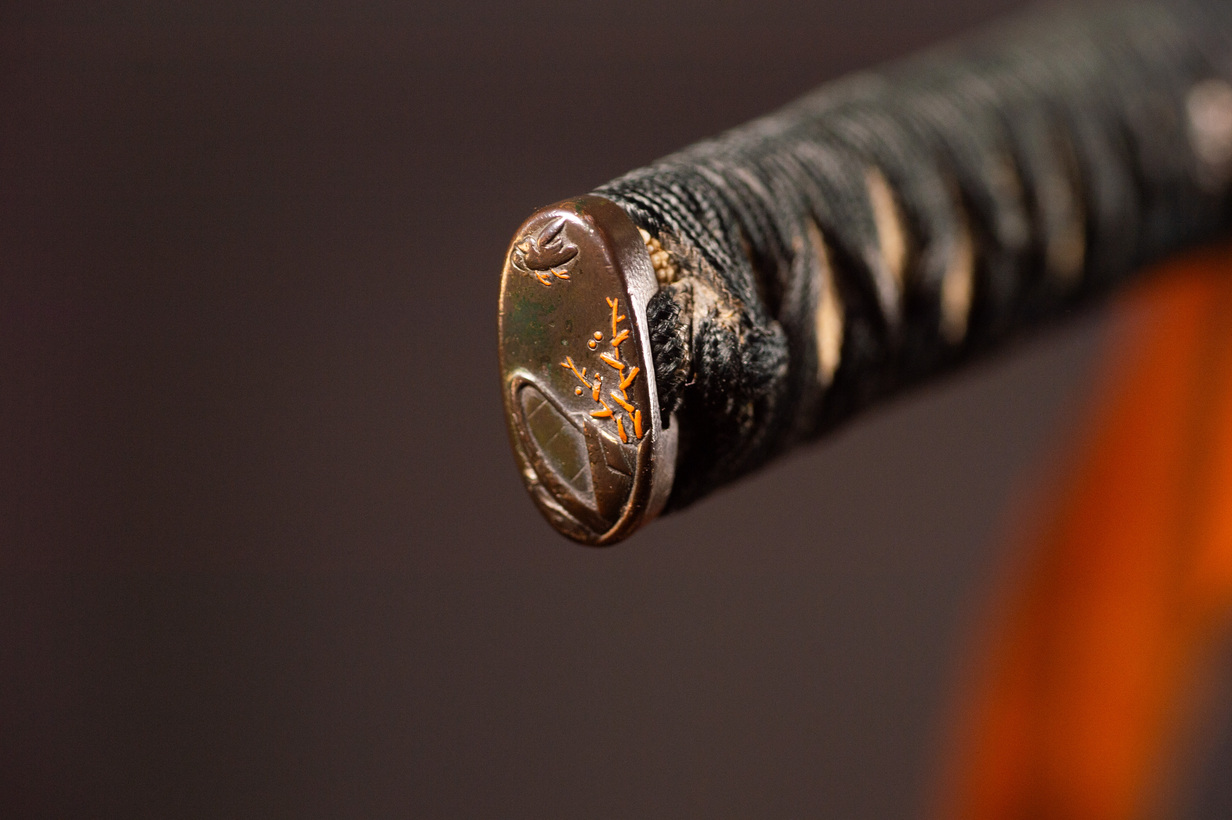
Among the most distinctive features of the koshirae are its dark metal fuchi-kashira, decorated with refined gold and silver inlay.
The imagery depicts traditional Japanese boats or small vessels travelling across the water. Nautical subjects have a long tradition within Japanese decorative arts and can evoke travel, transition, perseverance and man’s relationship with the natural environment.
The restrained application of precious-metal details against the dark surface of the fittings gives the decoration considerable sophistication without disturbing the martial character of the mounting.
Beneath the black silk wrapping are decorative menuki featuring vegetal and floral motifs.
Their warm metallic tones emerge subtly through the openings of the tsuka-ito, introducing small areas of visual contrast while remaining integrated into the overall composition.
Together with the boat imagery of the fuchi-kashira, these naturalistic motifs reinforce the coherent decorative language of the complete koshirae.
The sword is accompanied by its Japanese torokusho, the official registration document used in Japan for traditionally manufactured swords.
The document records the sword as a katana registered in Nagano Prefecture and records the signature as Munetoshi 宗俊.
The torokusho forms an important part of the modern documentary history of a Japanese sword. It confirms that the blade was legally registered within Japan under the national system established for the preservation and regulation of traditionally manufactured nihontō.
A copy of the Japanese registration accompanies the sword.
The blade remains in a state of polish that allows the hamon and the principal characteristics of the steel to be appreciated.
The koshirae presents the natural signs of age expected from historical Japanese sword furniture, while maintaining a coherent and attractive overall appearance.
The polished black lacquer of the saya, the iron tsuba, the metal fittings and the traditional handle construction together preserve the restrained character intended by the original mounting.
Natural age and historical wear should be understood as part of the object’s history rather than detracting from its character as an authentic Japanese sword.
This katana presents an attractive combination of a signed historical blade, classical suguha temper line, complete traditional mounting and surviving Japanese registration documentation.
The signature Munetoshi 宗俊 provides the blade with an identifiable authorship, while its attribution to the early Edo period places it within an important chapter in the development of the Japanese sword. Its generous 72.2 cm nagasa and balanced 2.2 cm curvature give the blade an elegant and convincing profile.
Equally important is the quality and coherence of the koshirae. The polished black kuroro saya, iron tsuba, black silk over white samegawa, boat-themed fuchi-kashira and vegetal menuki form a sophisticated ensemble whose restrained character allows the sword itself to remain the principal focus.
The presence of its Nagano torokusho adds an important documentary component, while the Supein Nihonto certificate and accompanying storage bag complete the presentation of the sword for the collector.
Elegant, restrained and historically compelling, this signed Munetoshi 宗俊 katana combines the classical qualities sought in an authentic Japanese sword: a well-proportioned early Edo-period blade, refined suguha hamon, complete and coherent koshirae, traditional black lacquerwork and surviving Japanese registration documentation. A highly attractive nihontō for collectors seeking historical character, understated elegance and authentic Japanese craftsmanship.
| Época | Edo |
|---|

Order above 1.000,00 € gets free shipping.

Secure and hassle-free payment process.

Certificate of authenticity included.

Have questions? Contact us via WhatsApp.
Contact