

1 in stock
1 in stock
Add to Compare
Add to Wishlist
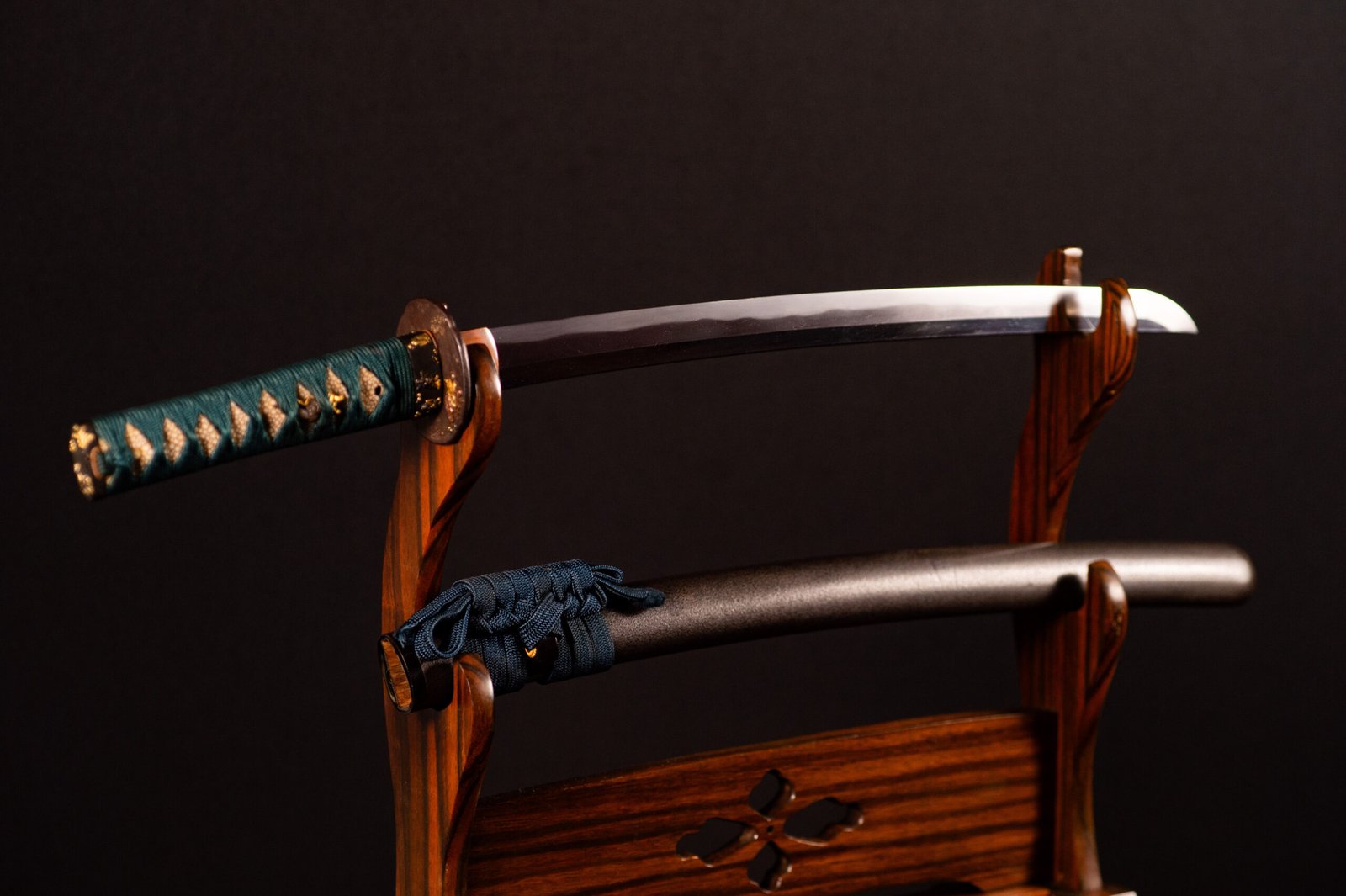
A fine and highly representative Japanese wakizashi signed by Hōki no Kami Taira Ason Masayuki, one of the principal swordsmiths associated with the Satsuma tradition during the late Edo period. Masayuki served the powerful Shimazu domain as a retained swordsmith and became one of the defining masters of Satsuma shinshintō, renowned for blades displaying vigorous nie-based activity and strong influences from the Sōshū and Shizu traditions.
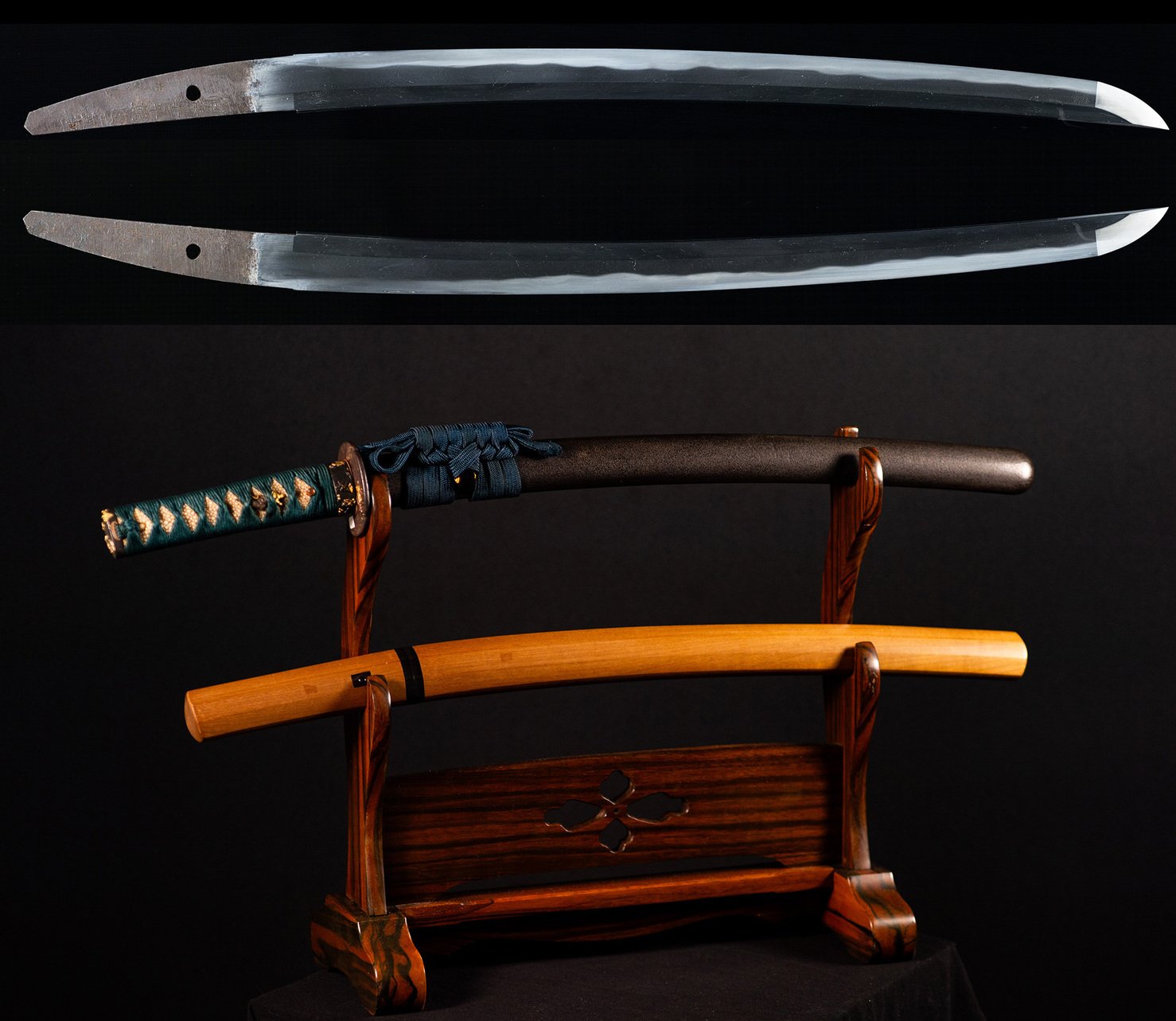
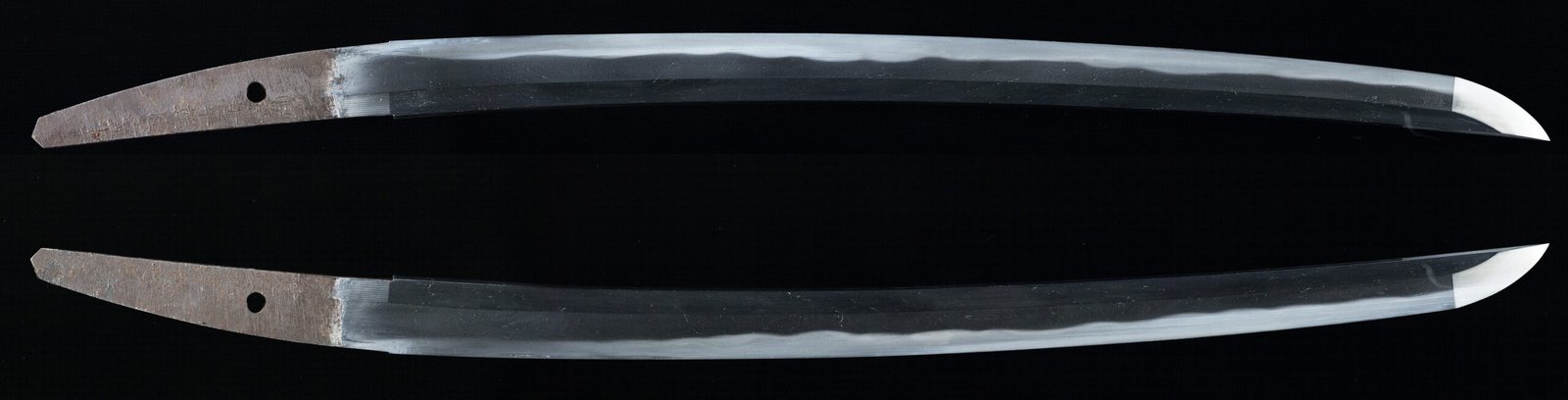
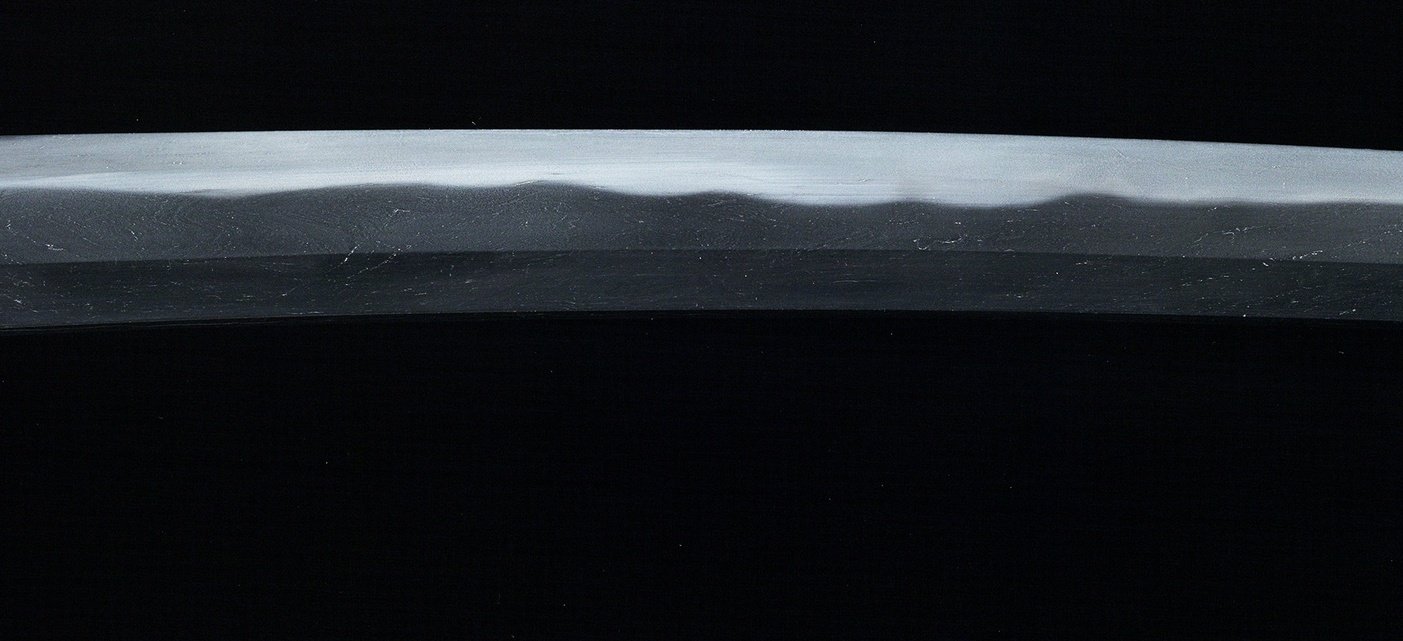
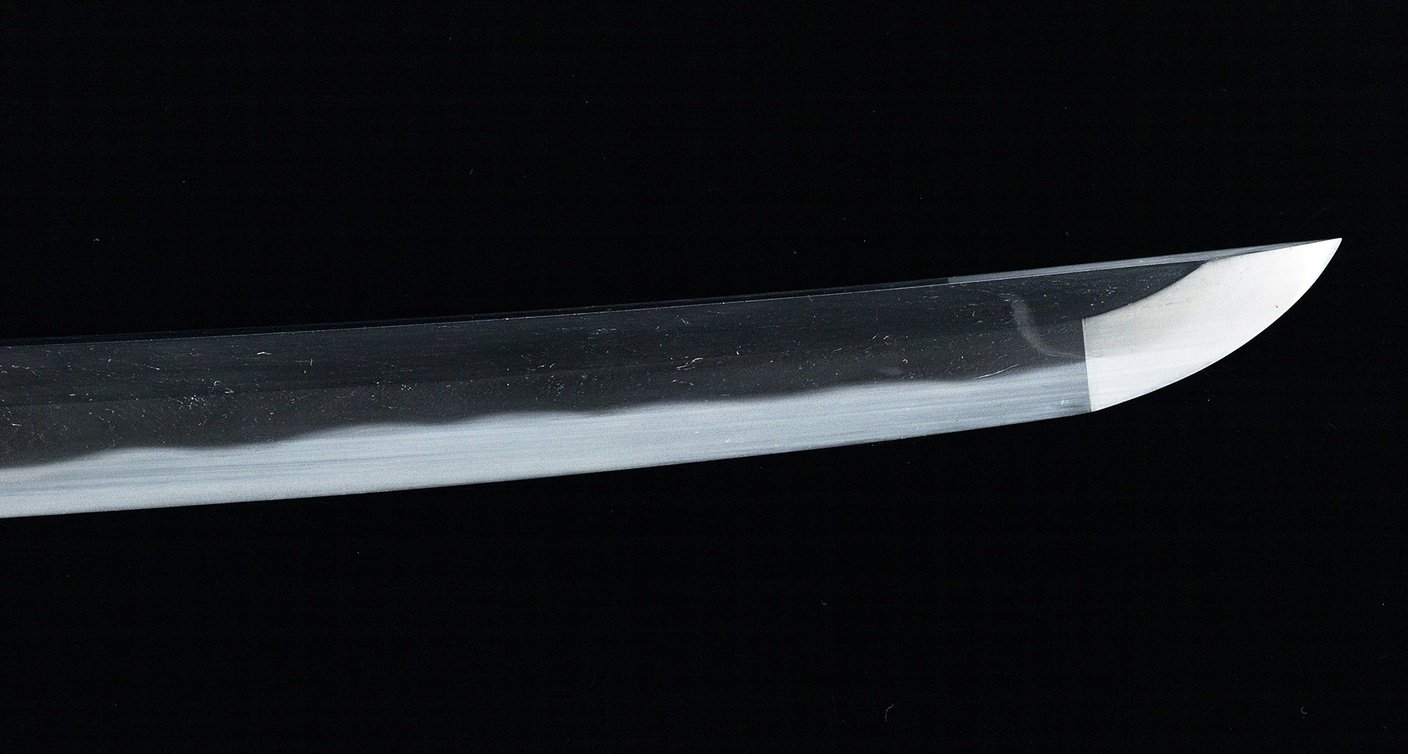
This example has a nagasa of 43.7 cm and a restrained sori of 0.9 cm, giving the blade an elegant yet powerful profile. Its tempering displays a flowing notare-based hamon interspersed with gunome, accompanied by a deep nioiguchi and the dynamic activity characteristic of accomplished Satsuma work.
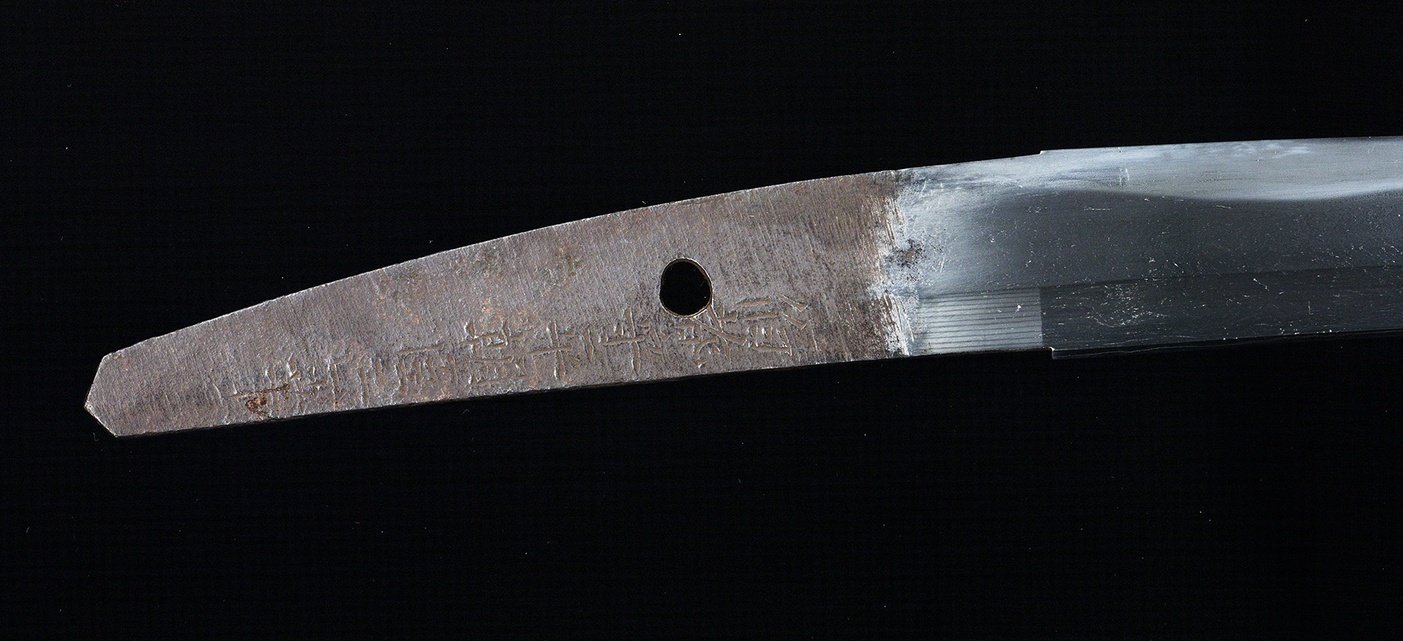
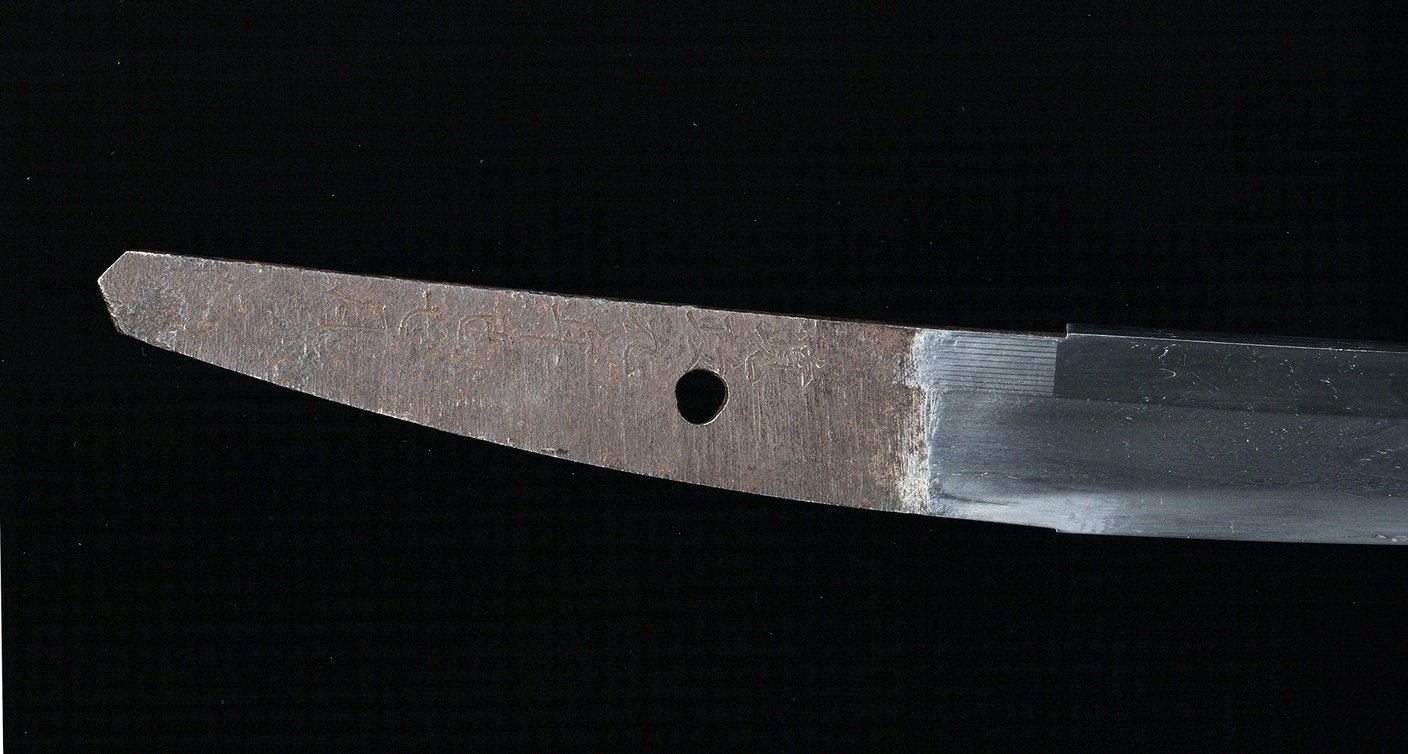
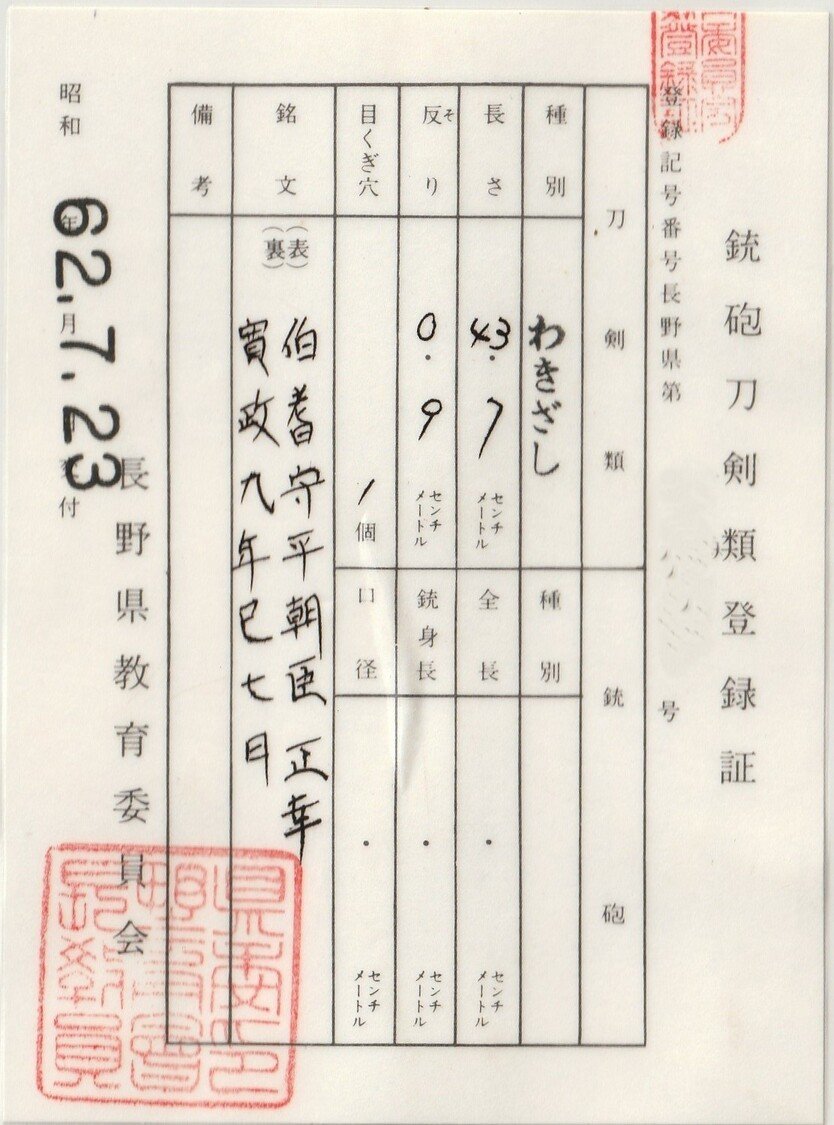
The nakago preserves the long signature of Masayuki, while the blade is accompanied by its historical Japanese torokusho, issued by the Nagano Prefecture Board of Education on 23 July 1987.
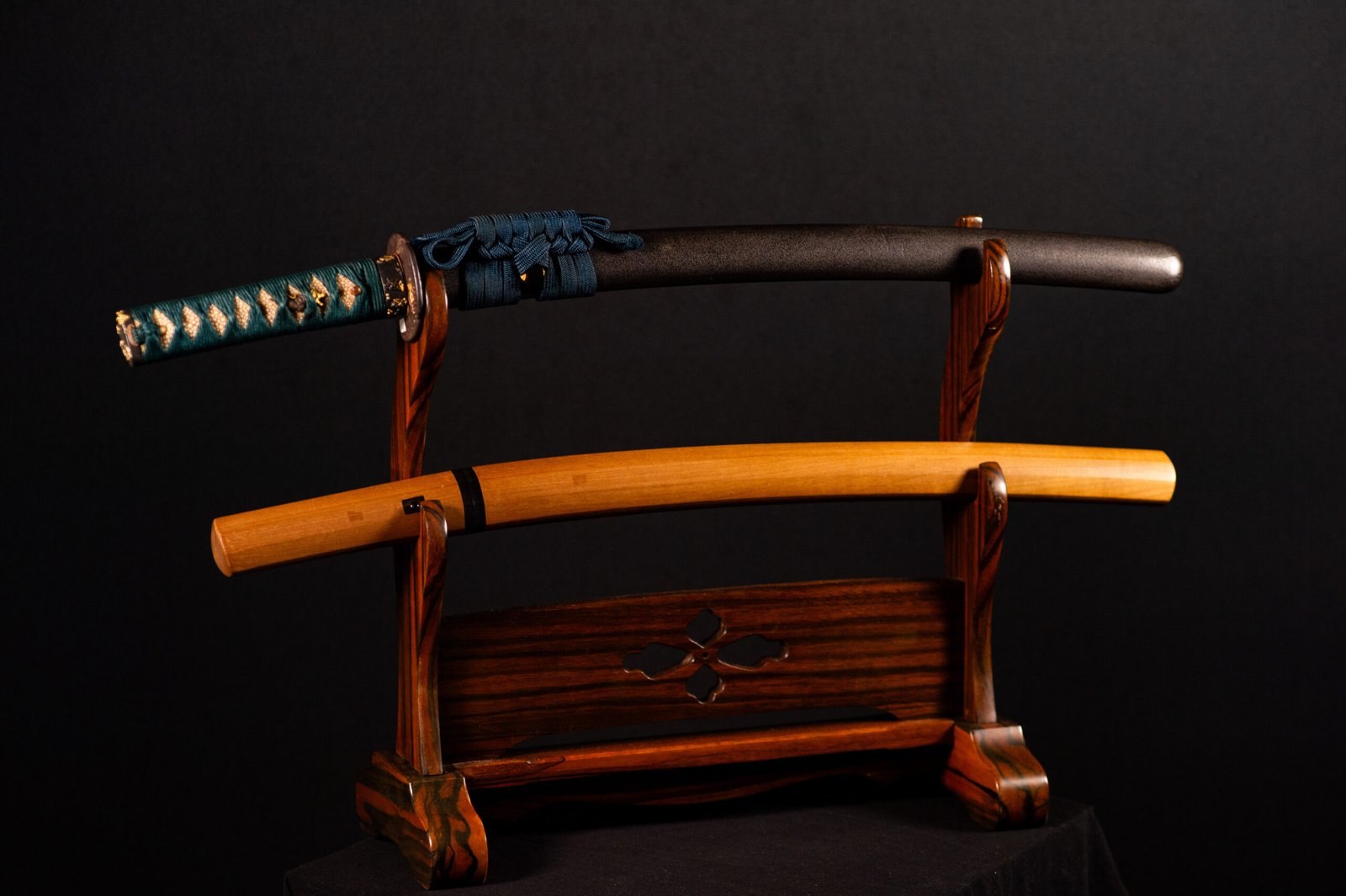
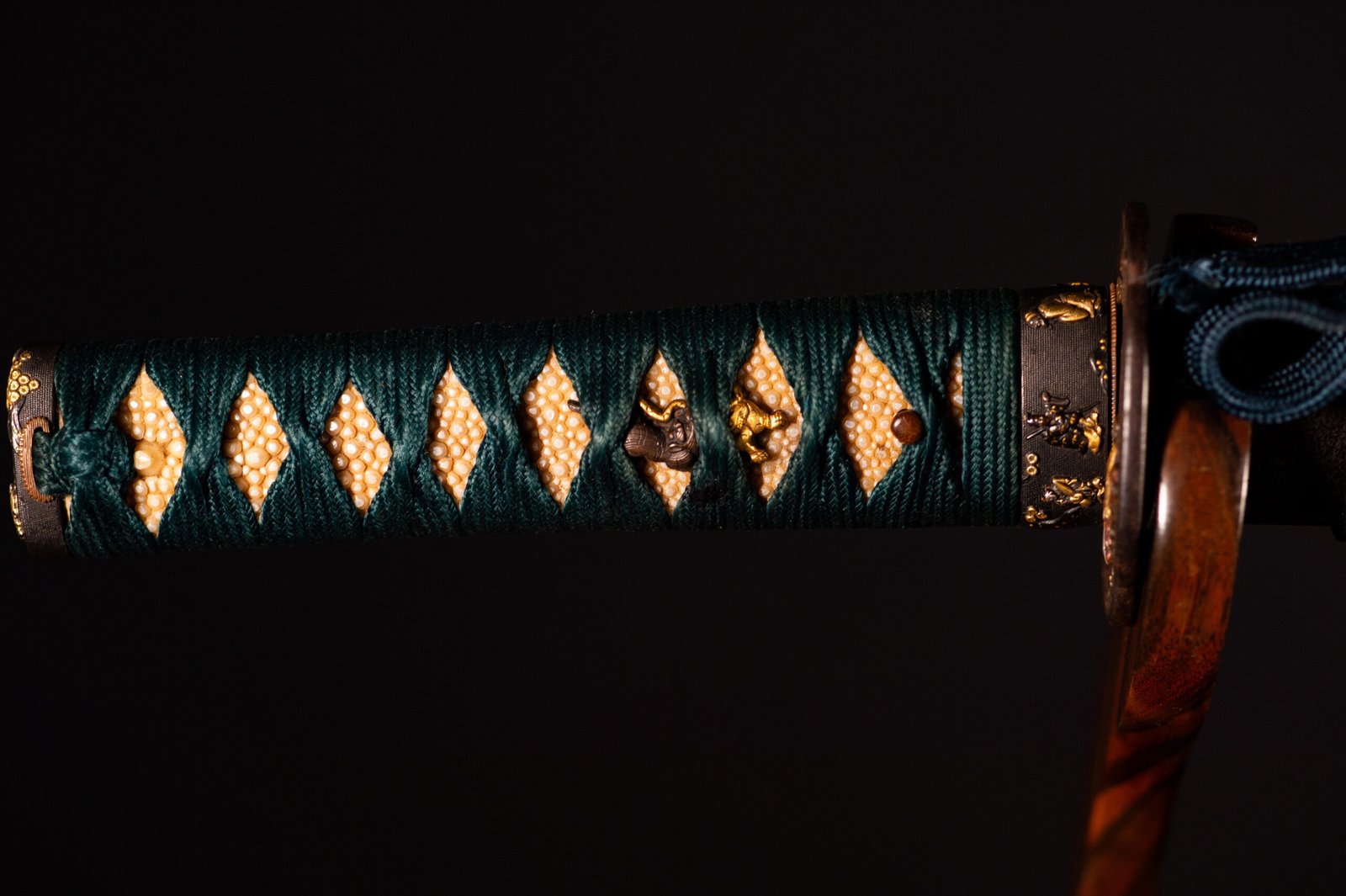
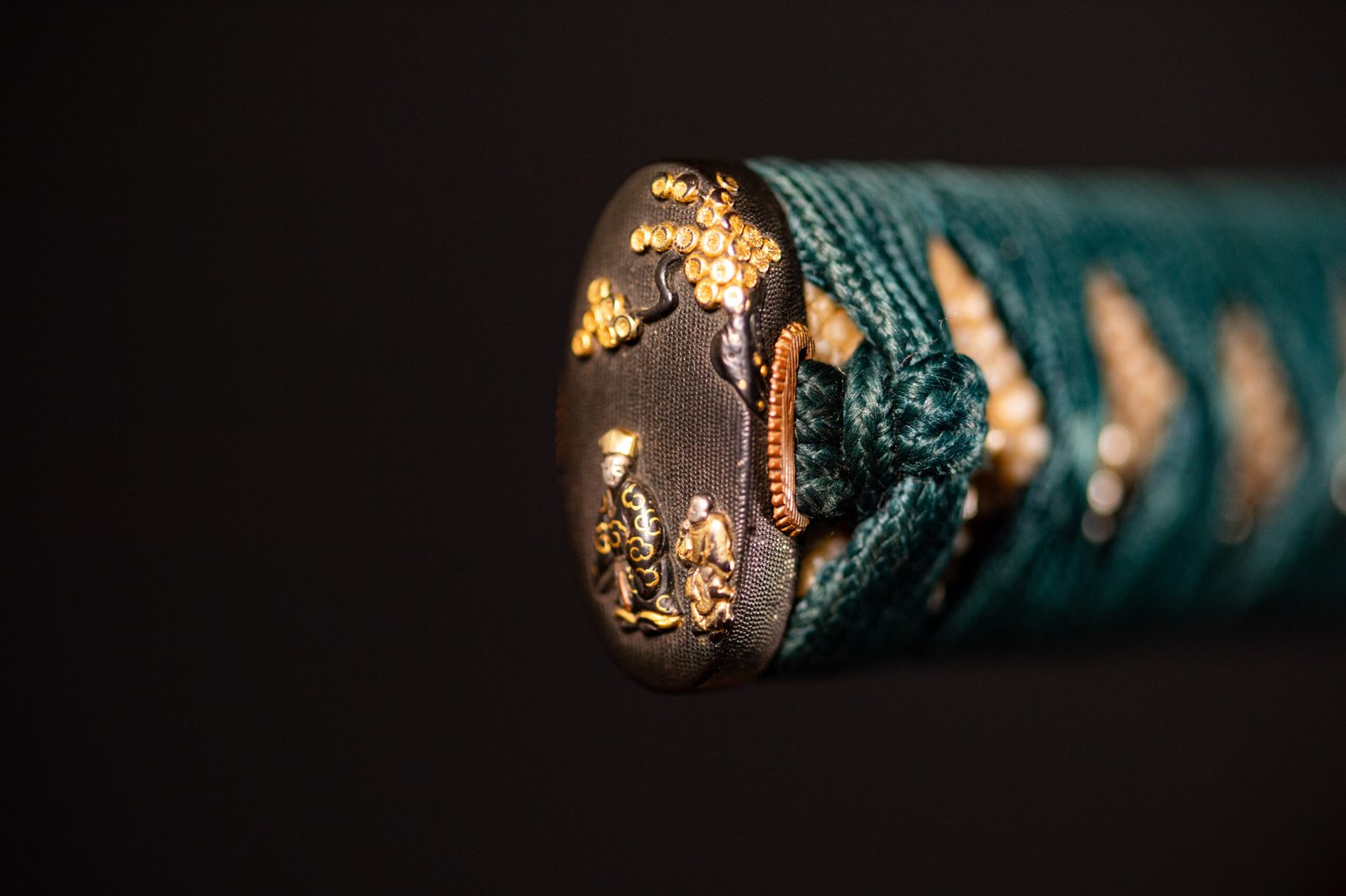
Beyond the blade itself, the sword is presented in an attractive formal koshirae. Deep teal tsuka-ito, pale samegawa, dark patinated fittings enriched with gold decoration, figurative menuki and a black lacquered saya create an elegant mounting worthy of the historical importance of the blade.
Hōki no Kami Taira Ason Masayuki was an important swordsmith of the Satsuma tradition and one of the notable masters working under the patronage of the Shimazu domain.
Born in 1733, he originally worked under the name Masayoshi before adopting the name Masayuki. He served as a retained domain swordsmith, or han-kakae kōji, for the Shimazu family of Satsuma.
His position placed him within one of the most distinctive regional swordmaking traditions of the late Edo period.
Masayuki is particularly associated with Ōkimoto Yamato no Kami, another major Satsuma smith. Both received their respective provincial honorary titles from the Shimazu house in Kansei 1 (1789), reflecting the status achieved by these two masters within the domain.
Masayuki enjoyed an exceptionally long working career and continued producing swords into advanced age.
His mature blades are particularly admired for their vigorous interpretation of the Sōshū tradition, frequently incorporating characteristics associated with Shizu, including conspicuous nie, kinsuji, sunagashi and strongly undulating temper patterns.
The nakago bears the signature of:
Hōki no Kami Taira Ason Masayuki
The inscription is cut longitudinally along the nakago and remains visible beneath its naturally aged surface.
The signature is executed in formal characters and identifies the smith through both his honorary provincial title and his personal smith name.
The survival of the signature is particularly important for a blade of this period, providing a direct historical connection between the sword and the Satsuma smith responsible for its manufacture.
The accompanying Japanese registration documentation records the blade and its signature, providing additional provenance within Japan’s post-war sword registration system.
The blade measures 43.7 cm in nagasa, placing it firmly within the traditional wakizashi classification.
Its curvature is relatively restrained, with a sori of approximately 0.9 cm.
The resulting sugata is elegant and controlled, combining a substantial cutting profile with the compact proportions traditionally associated with the companion sword of the samurai.
The blade retains a powerful visual presence despite its comparatively modest curvature.
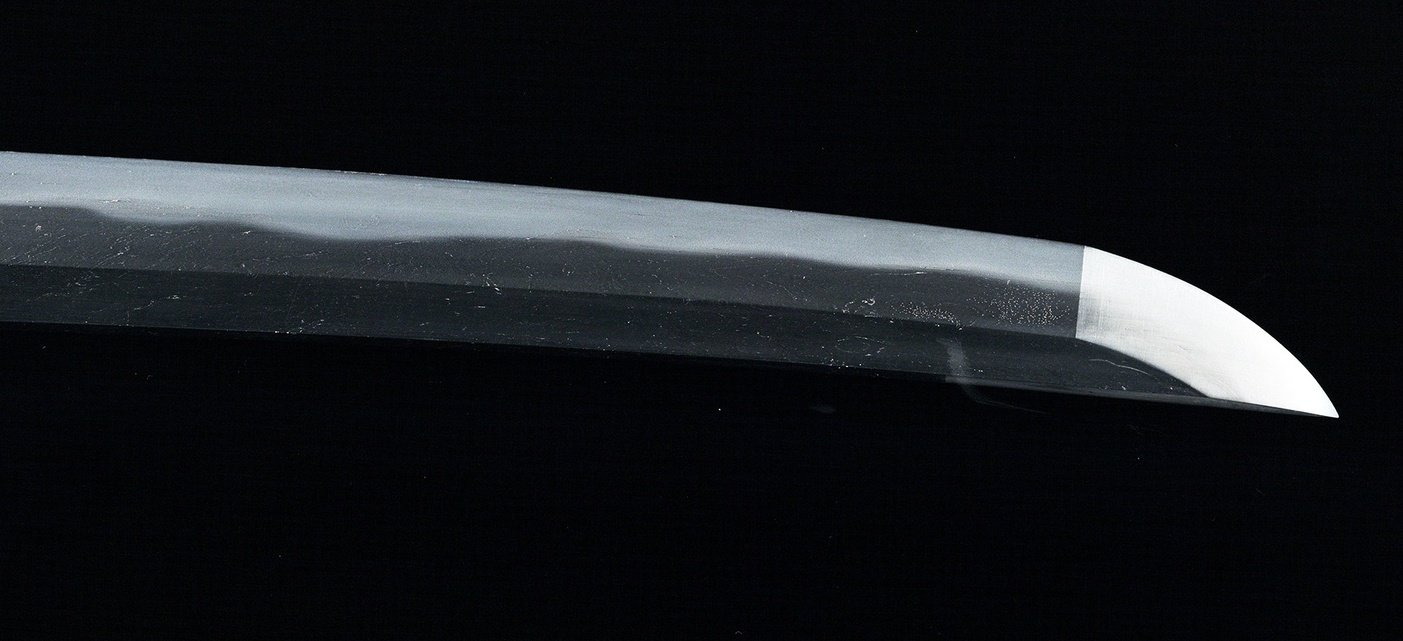
Its geometry transitions cleanly toward the kissaki, while the polished surface allows the tempering activity to remain clearly appreciable.
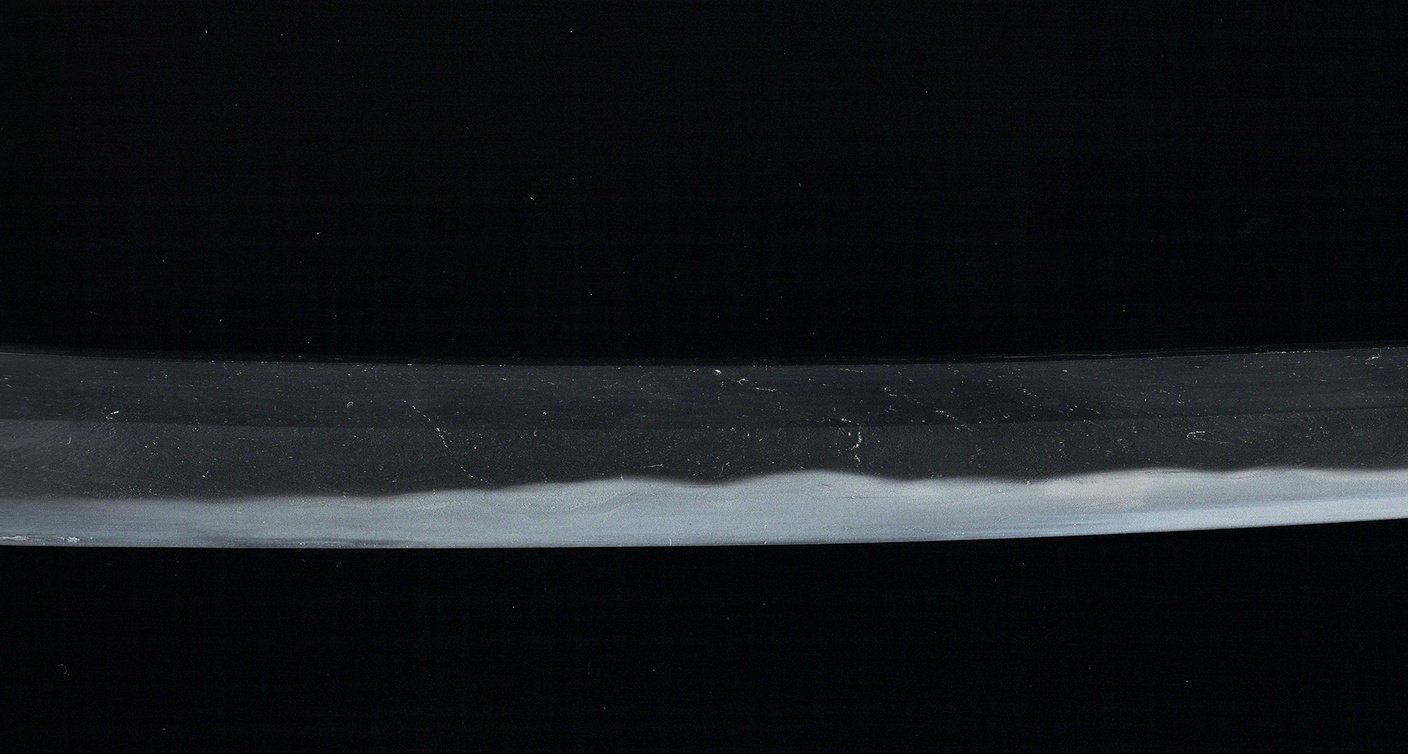
One of the most attractive characteristics of the blade is its active hamon.
The temper pattern is principally based on notare, creating broad, gently undulating waves along the cutting edge.
Within this structure appear areas of gunome, introducing more pronounced peaks and variations into the otherwise flowing composition.
The nioiguchi is relatively deep and gives the hardened edge a strong visual presence.
This combination of flowing notare and more vigorous irregular elements is particularly appropriate to the Satsuma tradition, whose smiths frequently explored interpretations derived from Sōshū workmanship.
Under appropriate lighting, the changing rhythm of the tempering becomes especially evident, providing considerable visual movement along the blade.
The mature work of Masayuki is closely associated with an active treatment of the hardened edge.
Satsuma smiths were not generally seeking the restrained uniformity seen in certain other Edo-period traditions. Their finest blades often possess a deliberately vigorous appearance, with metallurgical activity contributing strongly to the visual character of the sword.
Masayuki’s work is particularly associated with Sōshū and Shizu influence, traditions celebrated for prominent nie and complex activity within and around the hamon.
Features such as kinsuji and sunagashi are characteristic of this broader aesthetic and are among the qualities for which accomplished works by Masayuki are appreciated.
This blade reflects that dynamic Satsuma approach through the irregular movement of its temper pattern and the depth of its hardened edge.
The blade terminates in a well-proportioned kissaki, maintaining the controlled geometry of the overall sugata.
The hardened edge continues naturally into the point to form the boshi, which turns back softly toward the spine.
The transition from the main body of the blade into the kissaki remains visually harmonious and contributes to the balanced appearance of the sword.
The nakago retains its naturally aged surface and bears a single mekugi-ana.
Its patina contrasts clearly with the polished portion of the blade, preserving the historical appearance expected of an antique Japanese sword.
Most importantly, the nakago carries the signature of Hōki no Kami Taira Ason Masayuki.
The inscription remains visible across the surface and represents one of the principal identifying characteristics of the sword.
The precise assessment of the original condition and any historical alteration of the nakago should ultimately be made through direct specialist examination of the blade rather than solely from photographs.
The sword is accompanied by an elegant formal koshirae combining dark, restrained colours with finely executed figurative metalwork.
The overall composition is dominated by deep teal, black and dark patinated metal, contrasted with carefully placed gold details.
Rather than overwhelming the blade with excessive ornamentation, the mounting uses small areas of precious-looking decoration to create points of visual interest.
The result is sophisticated and distinctly Japanese, complementing the historical character of the Masayuki blade.
The tsuka is wrapped in a distinctive deep teal tsuka-ito arranged in traditional hineri-maki.
Beneath the wrapping appears pale samegawa, producing a strong contrast with the darker silk.
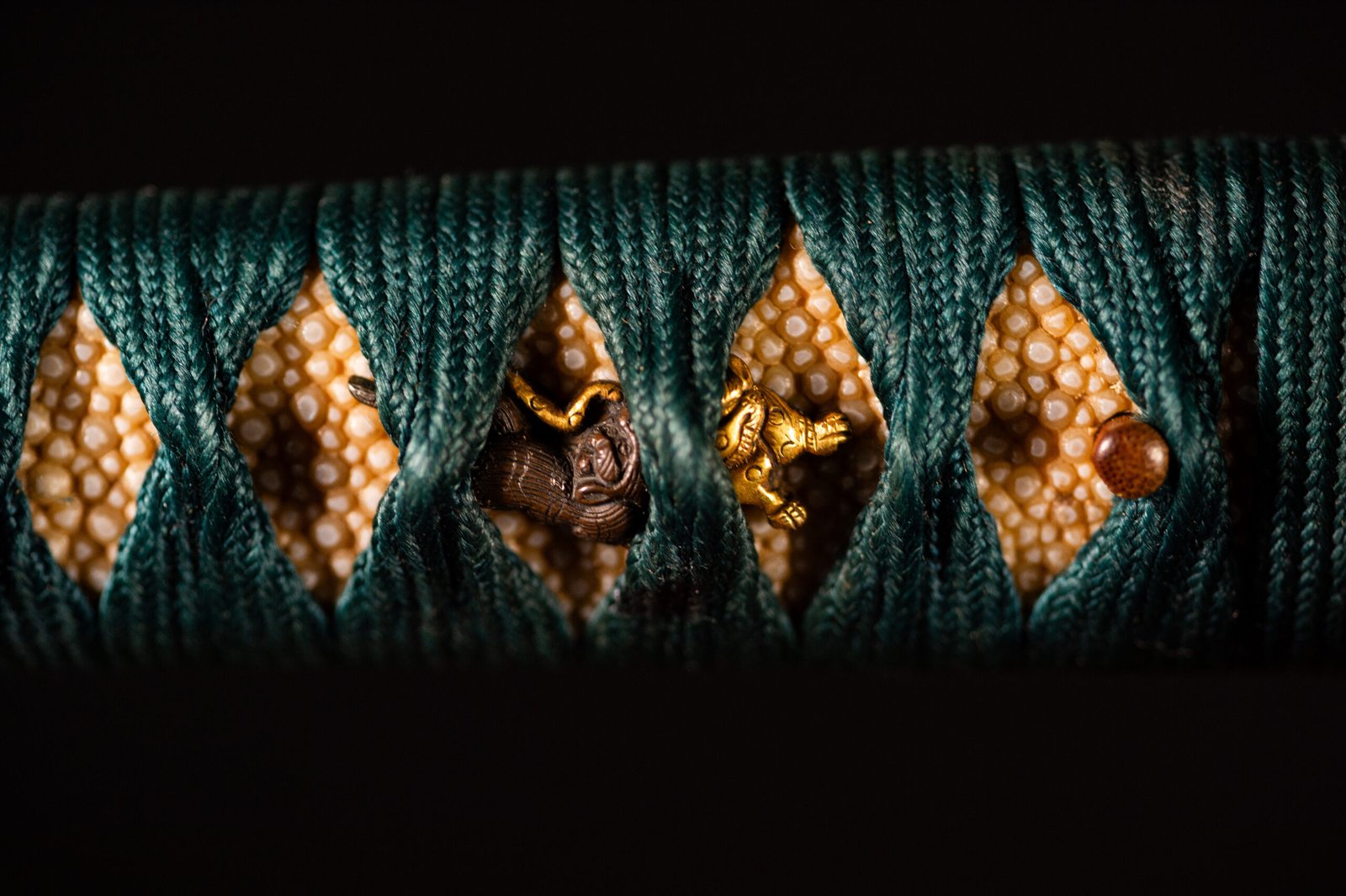
The regular diamond-shaped openings reveal both the ray skin and the decorative menuki positioned beneath the wrapping.
This restrained colour combination gives the handle a refined appearance while preserving the traditional visual structure of Japanese sword mounting.
The menuki depict finely worked figurative scenes incorporating mounted figures.
Executed in dark metal with gilt highlights, they provide a rich decorative counterpoint to the deep teal wrapping of the tsuka.
Their relatively small scale encourages close examination, revealing the attention given to the ornamental details of the mounting.
The use of figurative imagery also connects the koshirae with the broader tradition of Edo-period narrative and genre decoration in Japanese metalwork.
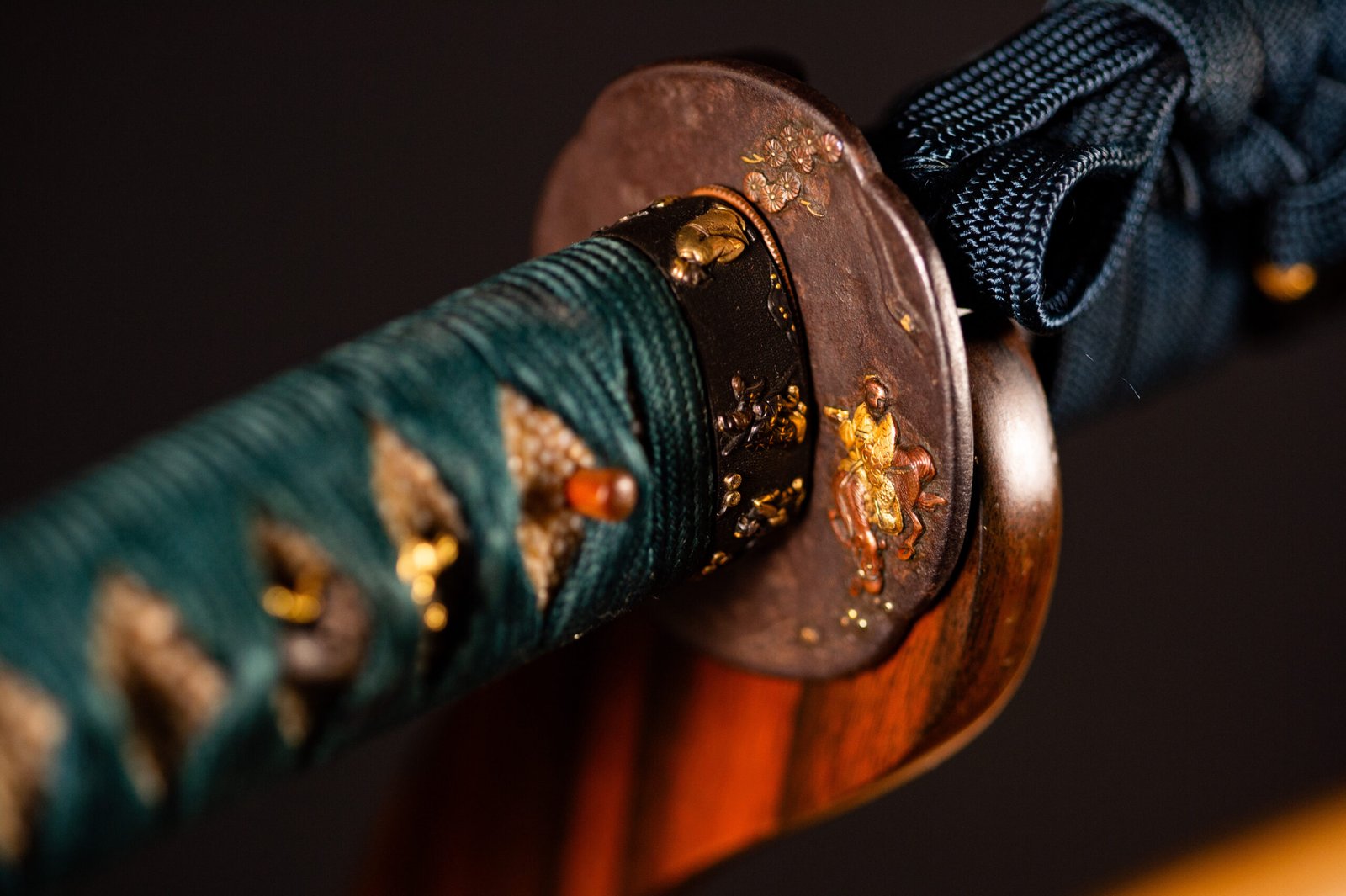
The fuchi-kashira continue the sophisticated decorative language of the mounting.
Worked in dark patinated metal, the fittings incorporate gold and shakudō details using relief and inlay techniques.
The decoration includes ume, or plum blossom motifs, together with figurative compositions.
The kashira incorporates seated figures within the decorative scene, while the fuchi presents a mounted rider composition.
The combination of dark metal, gold highlights and finely worked figures creates an elegant contrast that rewards close inspection.
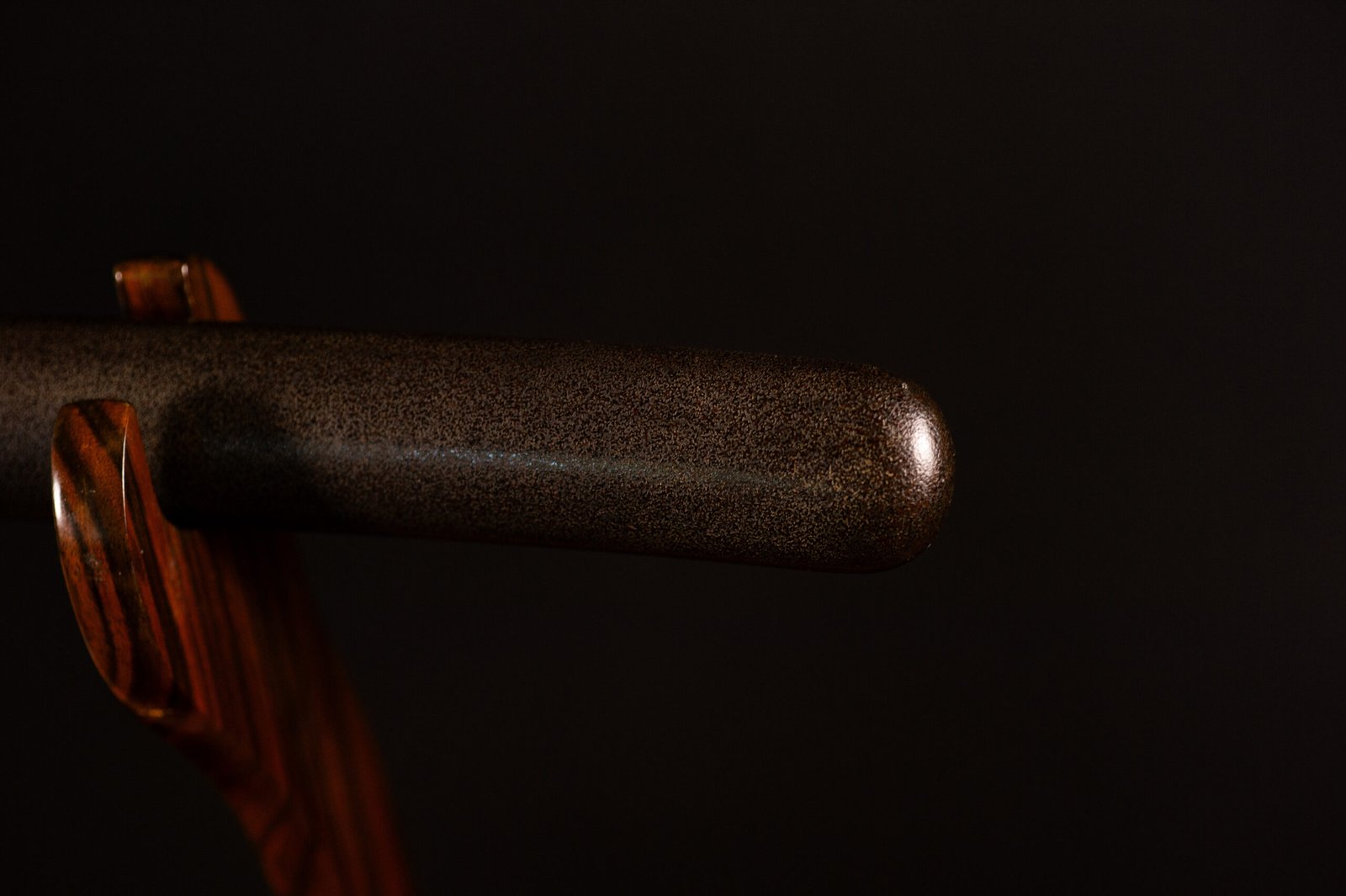
The saya is finished in traditional black lacquer, providing a restrained and formal exterior for the sword.
Its dark surface creates visual continuity with the patinated metal fittings while allowing the gold details of the mounting to stand out.
Gilt fittings introduce subtle highlights without disturbing the overall sobriety of the composition.
The mounting is completed by a navy blue sageo, harmonising with the deep teal tones of the tsuka-ito.
Together, these elements create a balanced and sophisticated presentation.
The blade is accompanied by its Japanese sword registration certificate, or torokusho.
The document was issued by the Nagano Prefecture Board of Education on 23 July 1987 (Shōwa 62).
The recorded measurements correspond to the blade, including its approximately 43.7 cm cutting length and 0.9 cm curvature.
Japanese torokusho documents form part of the national post-war system for registering traditionally manufactured Japanese swords.
The preservation of this historical document provides useful provenance and confirms that the sword was formally registered in Japan.
The blade remains in a state that allows its principal metallurgical characteristics to be appreciated, including the flowing notare-based hamon, areas of gunome and the activity associated with the Satsuma tradition.
The nakago preserves its historical patina and clearly displays the smith’s signature.
The koshirae retains an attractive overall presentation, with its deep teal wrapping, pale samegawa, dark metal fittings, gold decoration and black lacquered saya maintaining a coherent visual character.
Natural signs of age and historical use should be expected in an antique Japanese sword and its associated mounting and form part of the object’s history.
This wakizashi combines several qualities of particular interest to collectors of Japanese swords: an important signed Satsuma smith, a distinctive regional tradition, attractive metallurgical activity, historical Japanese documentation and an elegant complete mounting.
Hōki no Kami Taira Ason Masayuki occupies an important position within the Satsuma school. His service under the Shimazu domain and his long career connect his work directly with one of the most powerful feudal houses of southern Japan.
His mature workmanship is appreciated for its vigorous interpretation of the Sōshū tradition, particularly the use of active nie and complex tempering influenced by Shizu. The flowing notare, mixed gunome and deep nioiguchi visible on this blade are consistent with the dynamic aesthetic associated with Satsuma swordmaking.
The signed nakago adds substantial historical interest, while the surviving Japanese torokusho establishes documented provenance within Japan extending back at least to 1987.
Equally important from a display perspective is the accompanying koshirae. Its unusual deep teal wrapping, pale samegawa, gold-highlighted figurative fittings, plum blossom decoration and black lacquered saya create an elegant ensemble that complements the character of the blade without overpowering it.
A refined signed Satsuma wakizashi by Hōki no Kami Taira Ason Masayuki, combining vigorous late-Edo swordmaking with an elegant traditional koshirae and documented Japanese provenance. With its flowing notare and gunome temper, historically important smith, signed nakago and Nagano Prefecture registration, this sword represents an attractive opportunity for collectors seeking an authentic and visually compelling example of the Satsuma shinshintō tradition.
| Época | Edo |
|---|

Order above 1.000,00 € gets free shipping.

Secure and hassle-free payment process.

Certificate of authenticity included.

Have questions? Contact us via WhatsApp.
Contact