




1 in stock
1 in stock
Add to Compare
Add to Wishlist
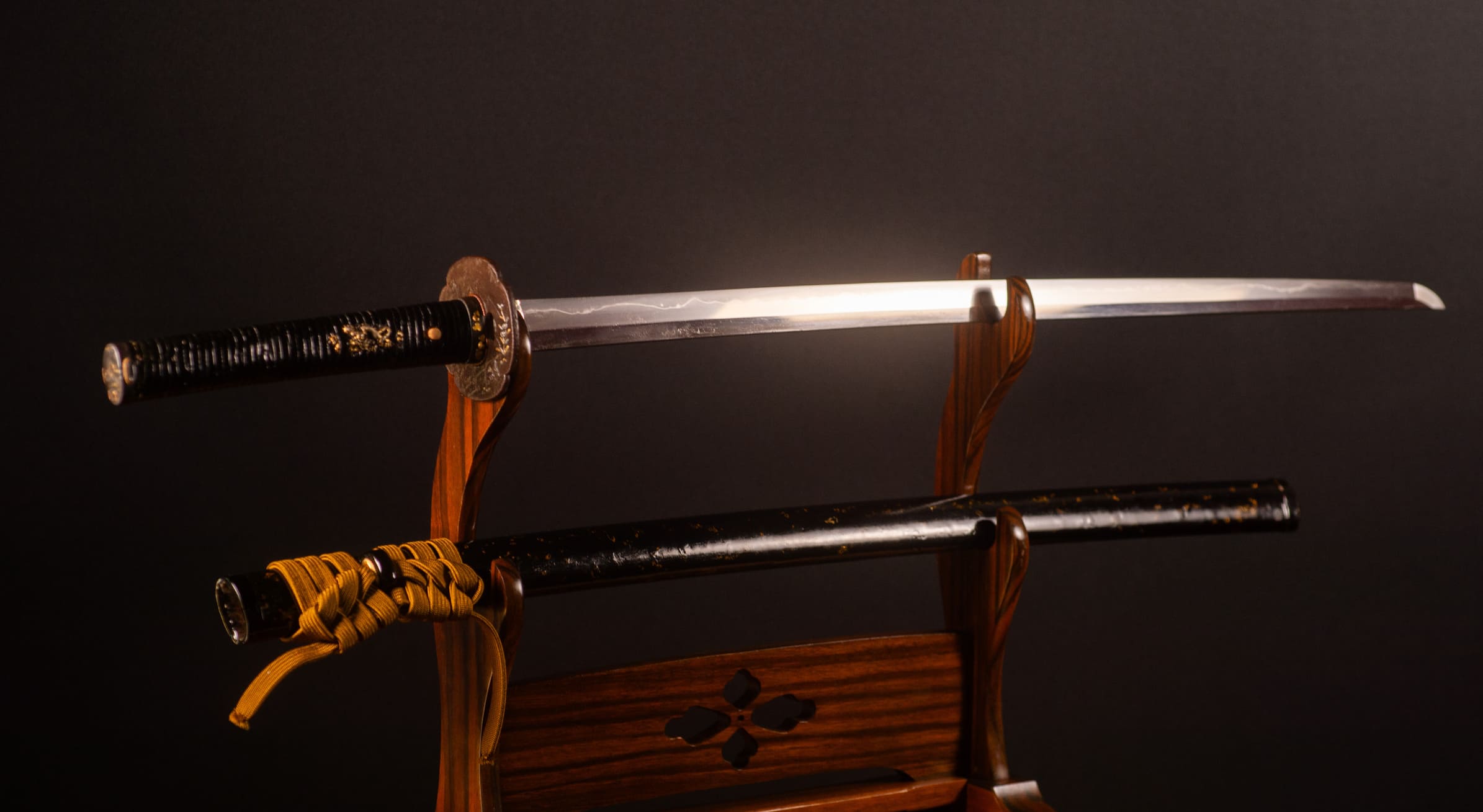
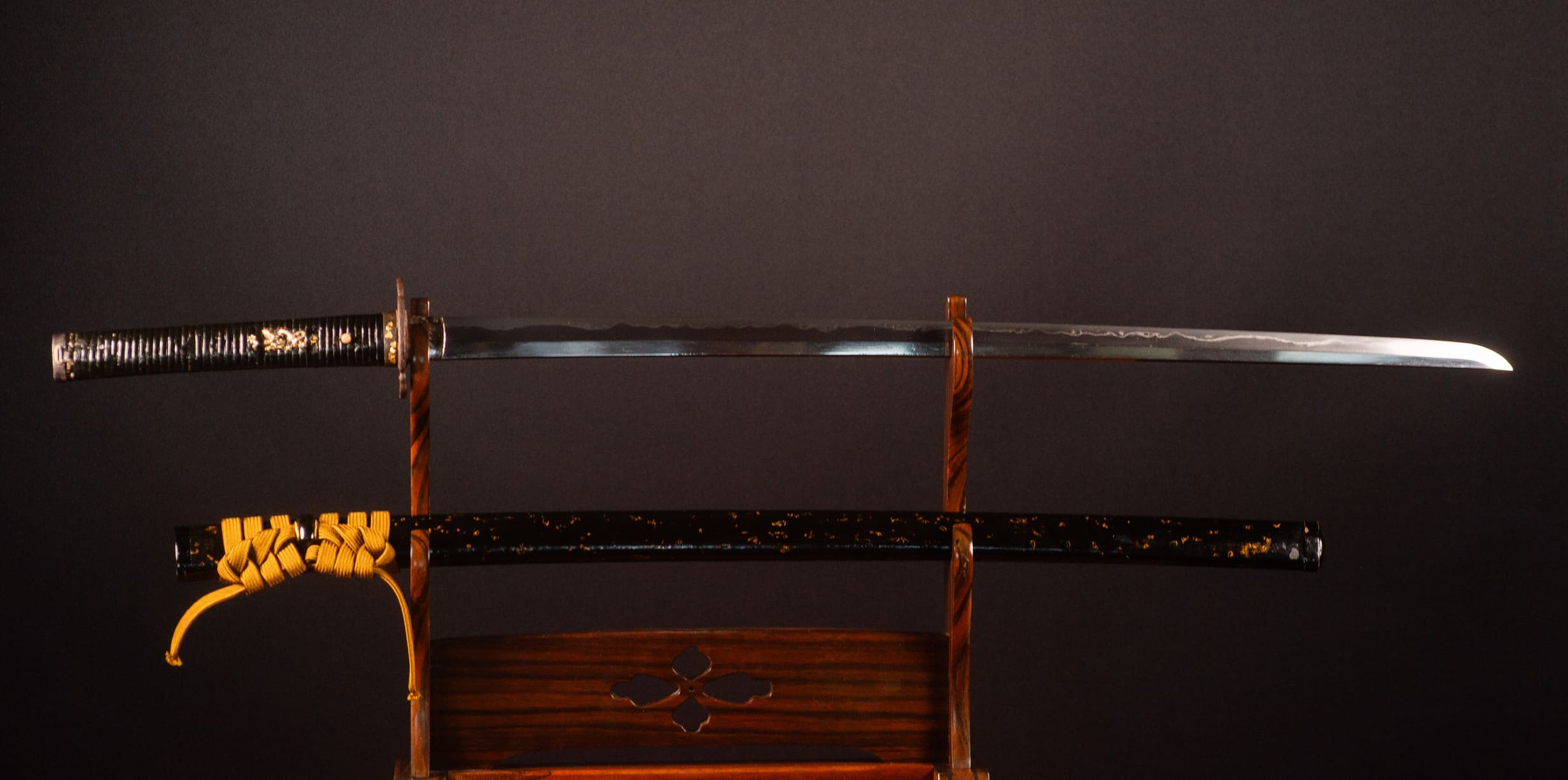
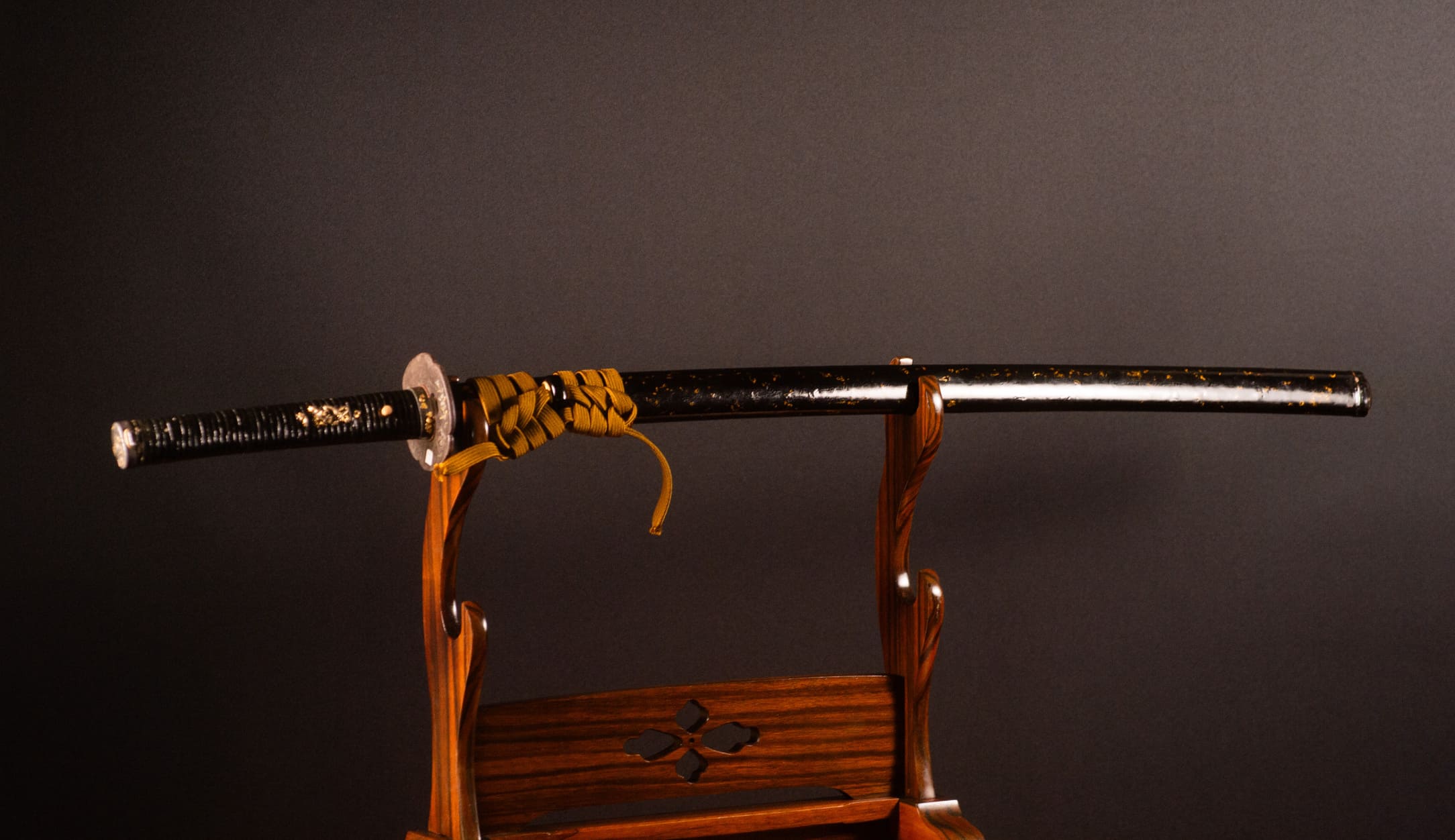
A distinguished Japanese katana presented in a complete and harmonious high-grade Edo-period koshirae. The ensemble combines a substantial 75.8 cm Shintō-era blade with refined fittings, black lacquer, gold powder decoration and an elegant mustard-gold silk sageo.
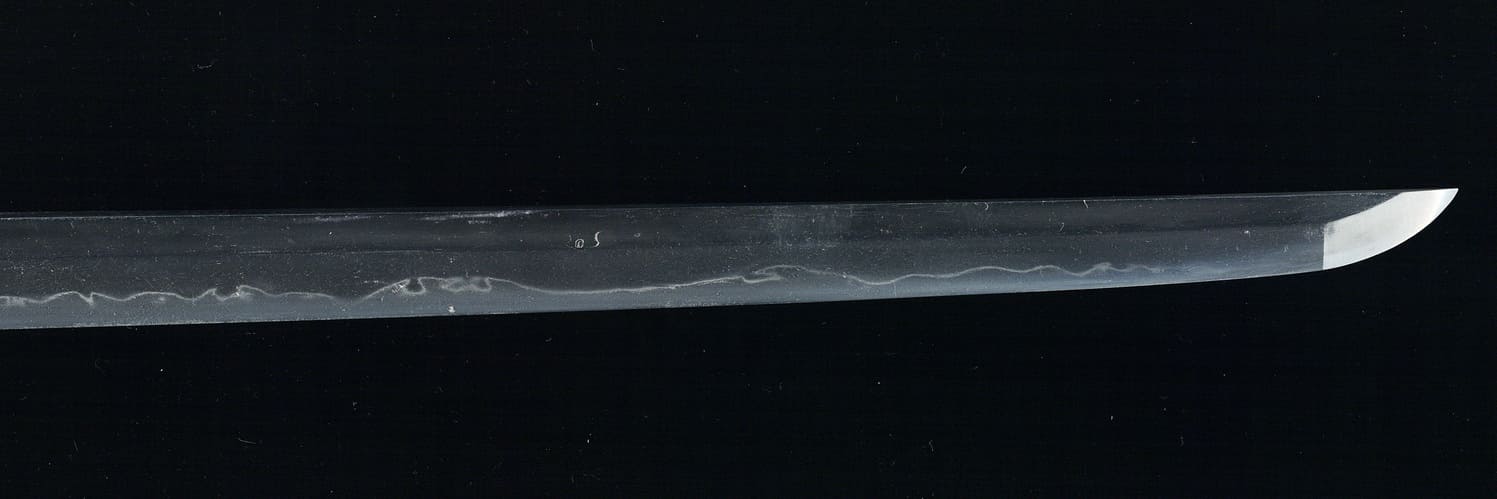
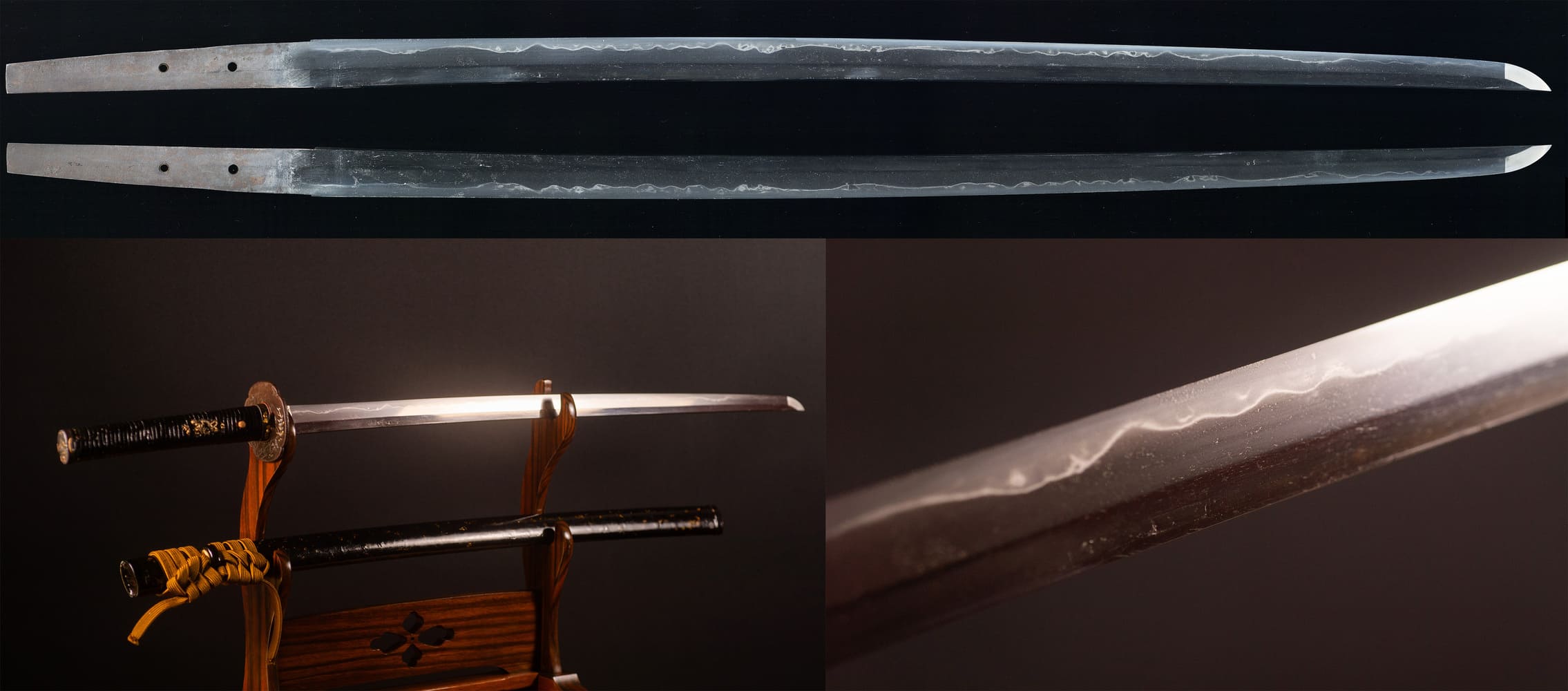
The blade displays classical shinogi-zukuri construction, a finely worked ko-itame grain with mokume tendency and a vigorous gunome-midare hamon rich in internal activity. Its generous length, shallow curvature and clearly visible steel give the sword a commanding and refined presence.
The accompanying koshirae is daimyō-like in character, executed with the disciplined craftsmanship and sophisticated materials associated with high-status Edo-period sword mountings. Its deep black lacquered saya, sparkling gold kinpun, inlaid iron tsuba and dark ribbed tsuka create a balanced and aristocratic presentation.
The blade is constructed in classical shinogi-zukuri form with an iori-mune, or ridged spine.
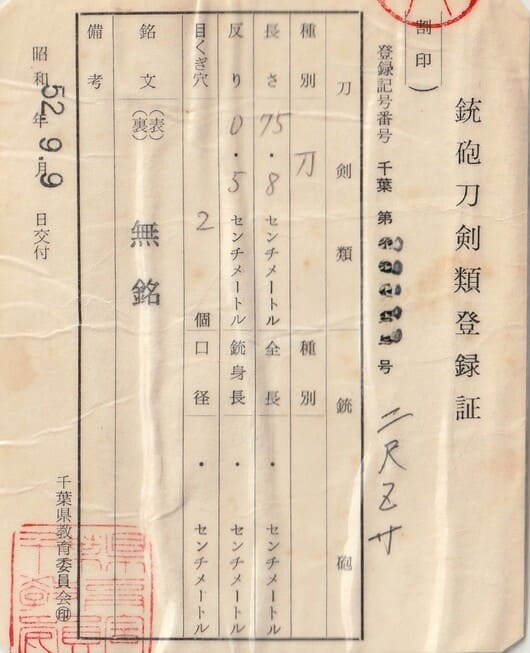
Its nagasa measures 75.8 cm, giving it substantial proportions among katana of the Shintō era. The blade has a notably shallow sori of 0.5 cm, producing an almost straight profile.
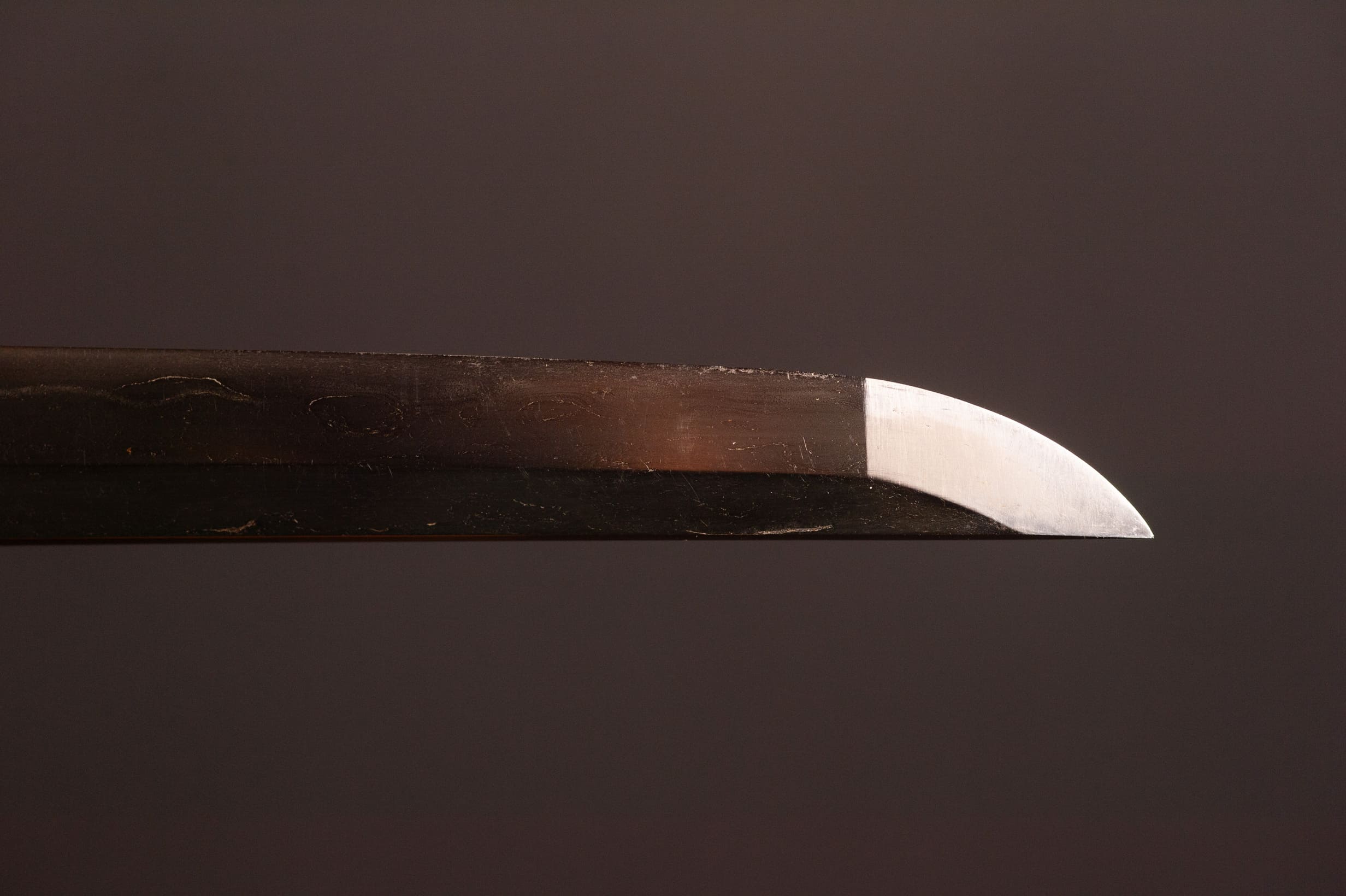
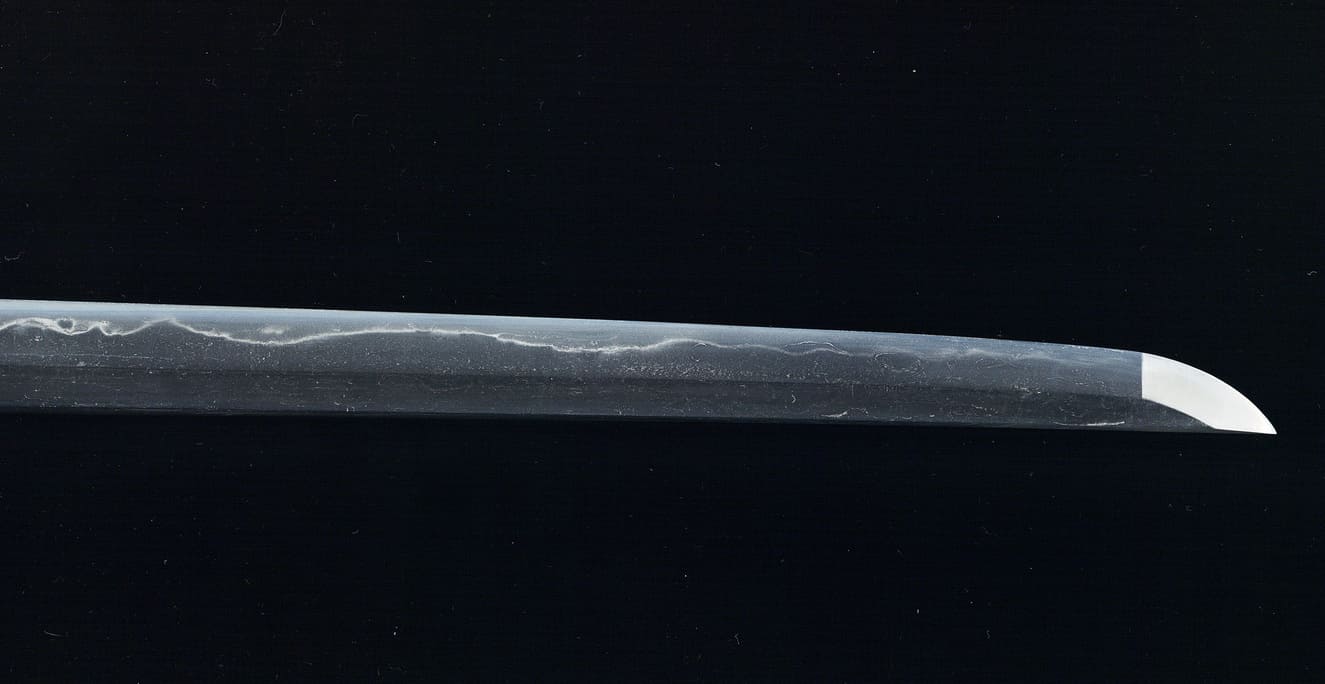
The point is formed as a well-preserved chū-kissaki. The bōshi remains clean and returns clearly within the point.
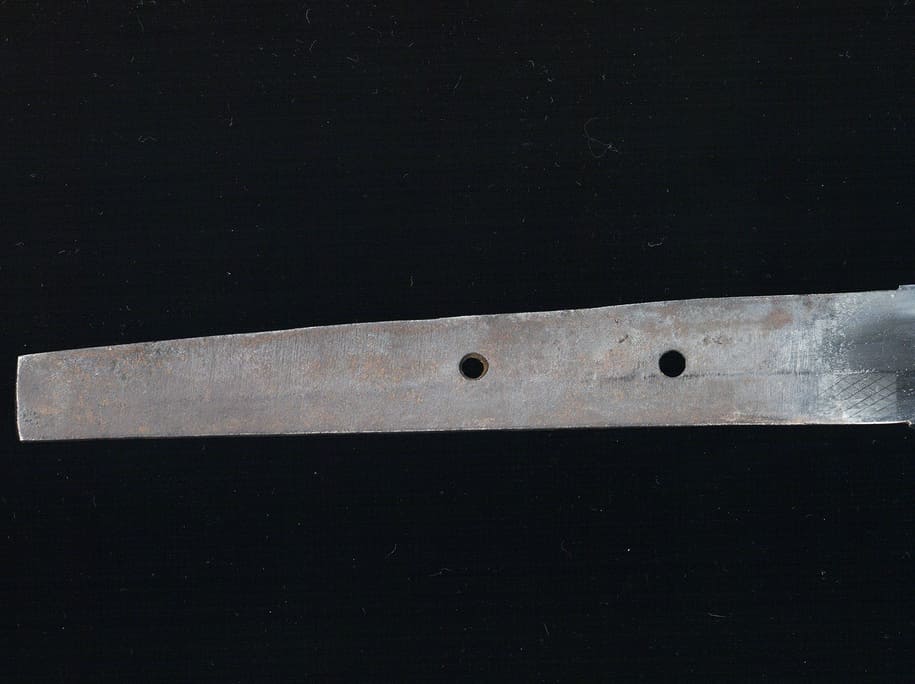
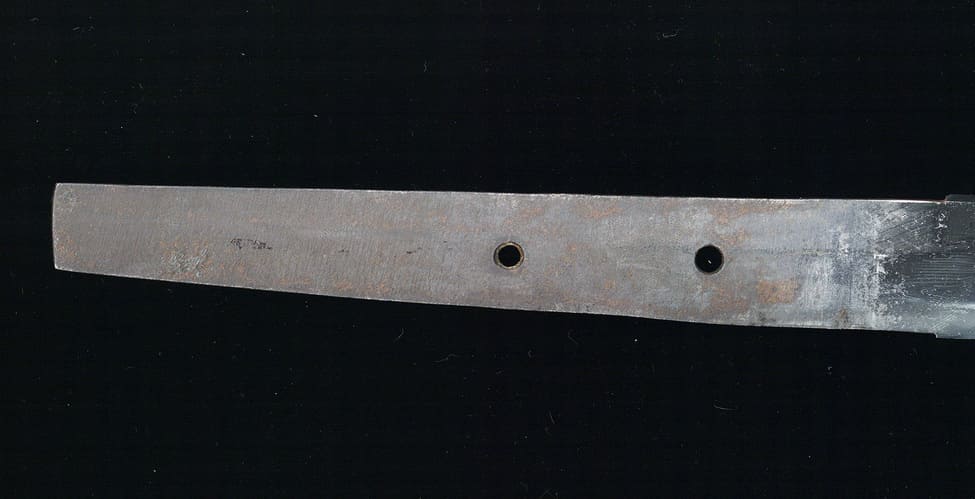
Two mekugi-ana are present in the tang, indicating that the blade has been mounted more than once during its history.
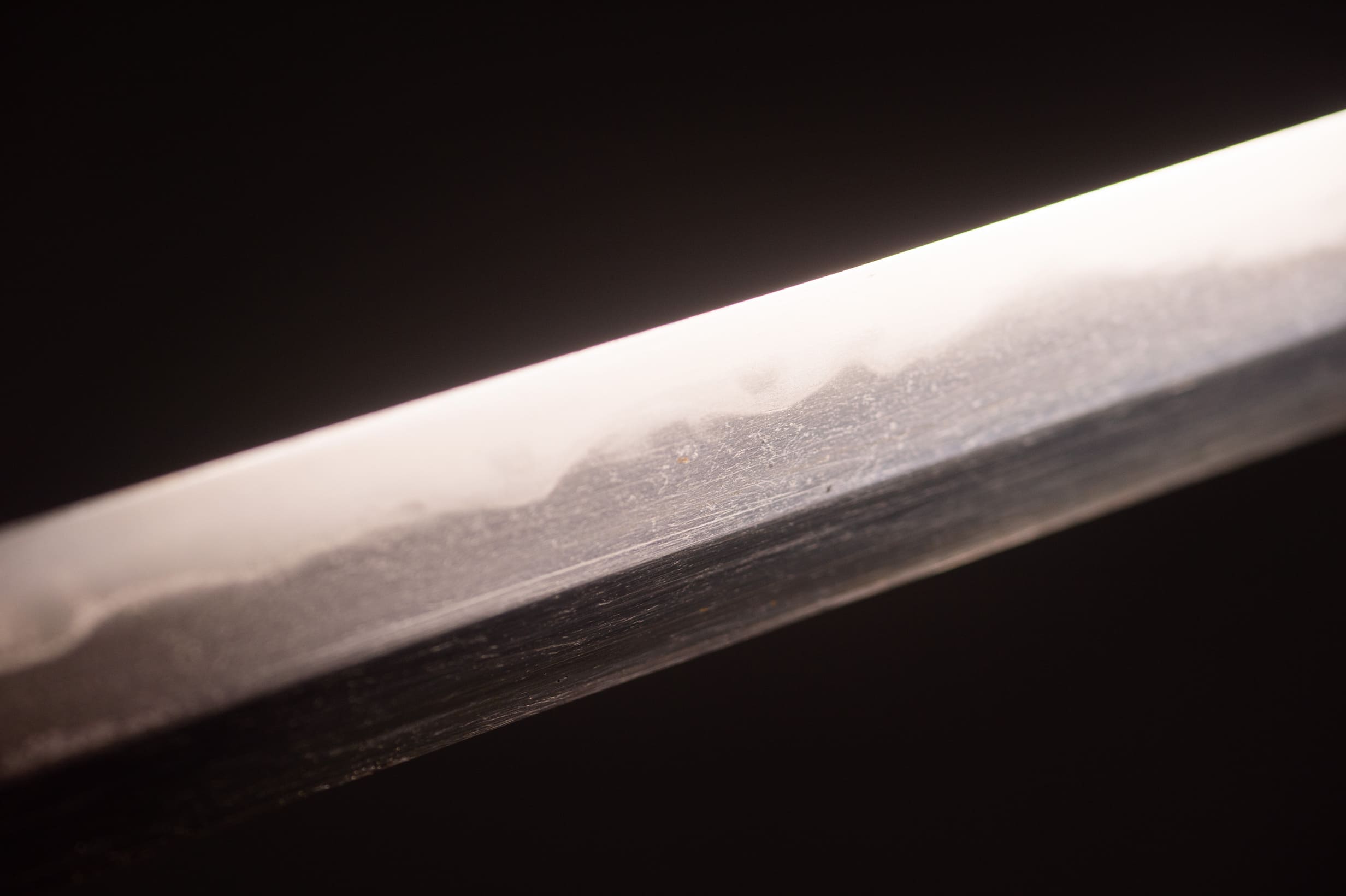
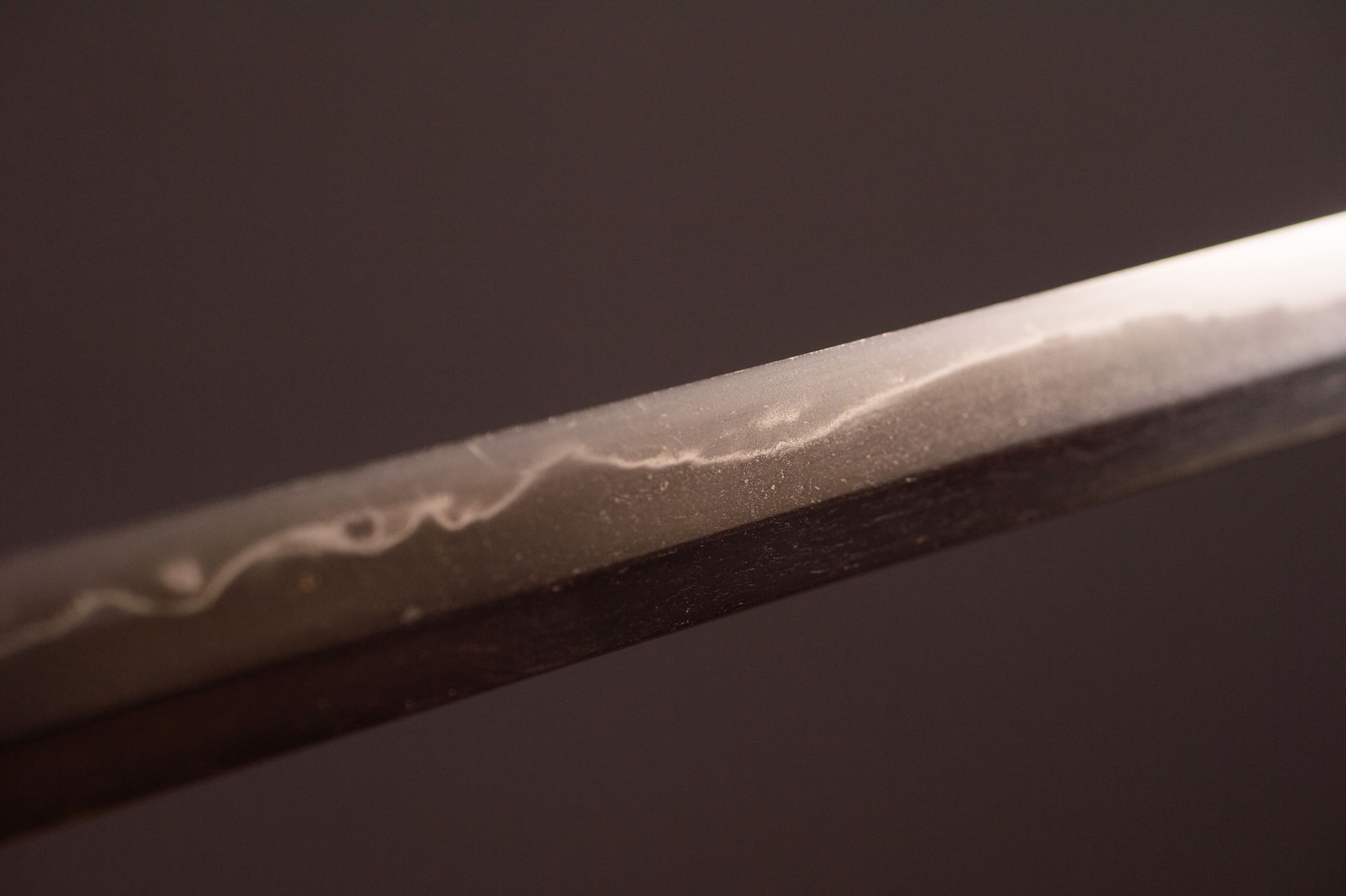
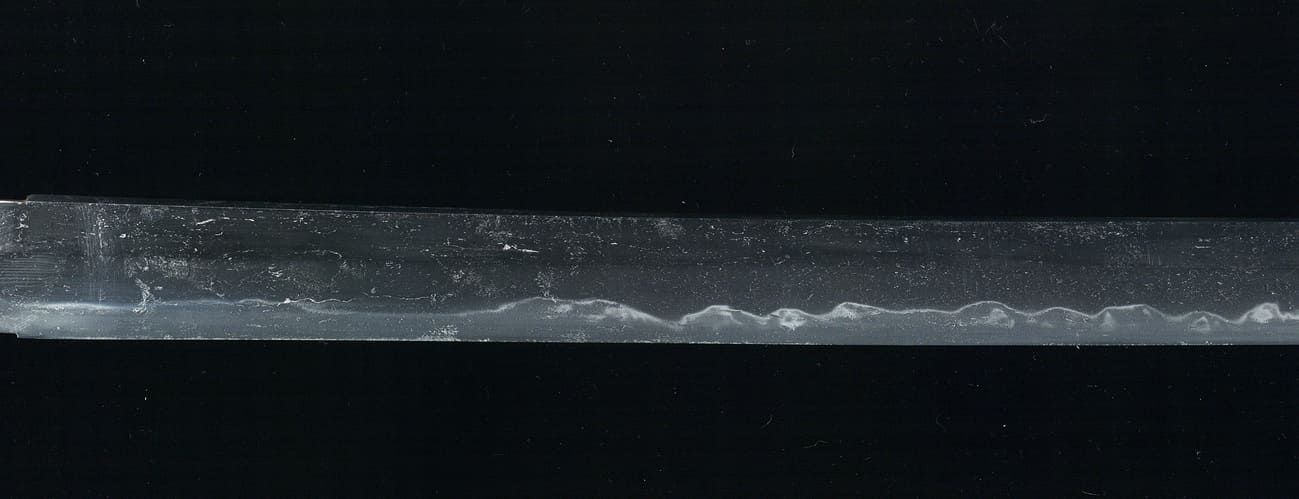
The jihada presents as a finely worked ko-itame with a tendency toward mokume.
The surface reveals a controlled and densely laminated structure, with subtle ji-nie visible throughout the body of the blade.
The sword remains in good polish, allowing the character of the steel and its surface activity to be examined clearly under appropriate light.
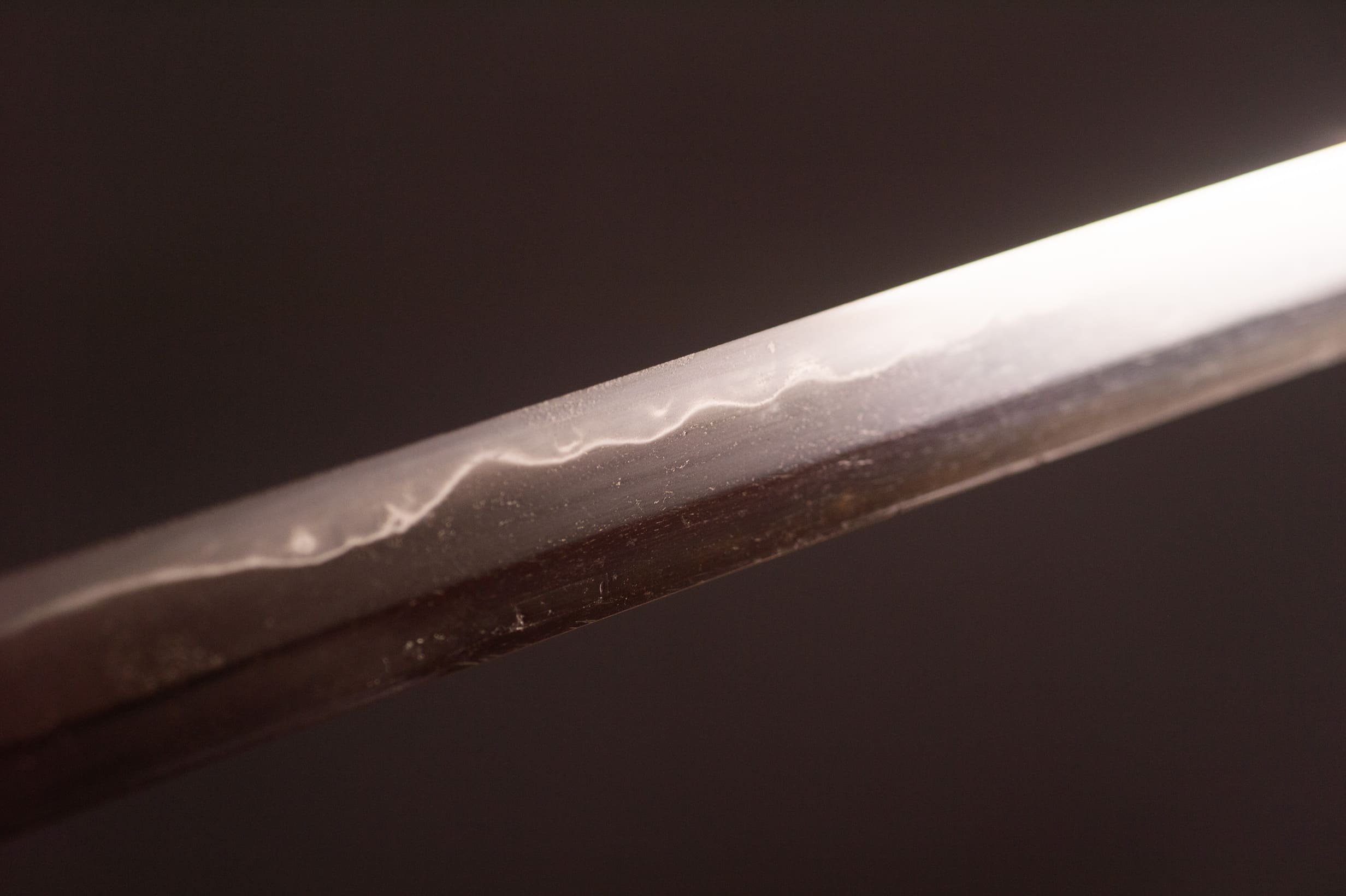
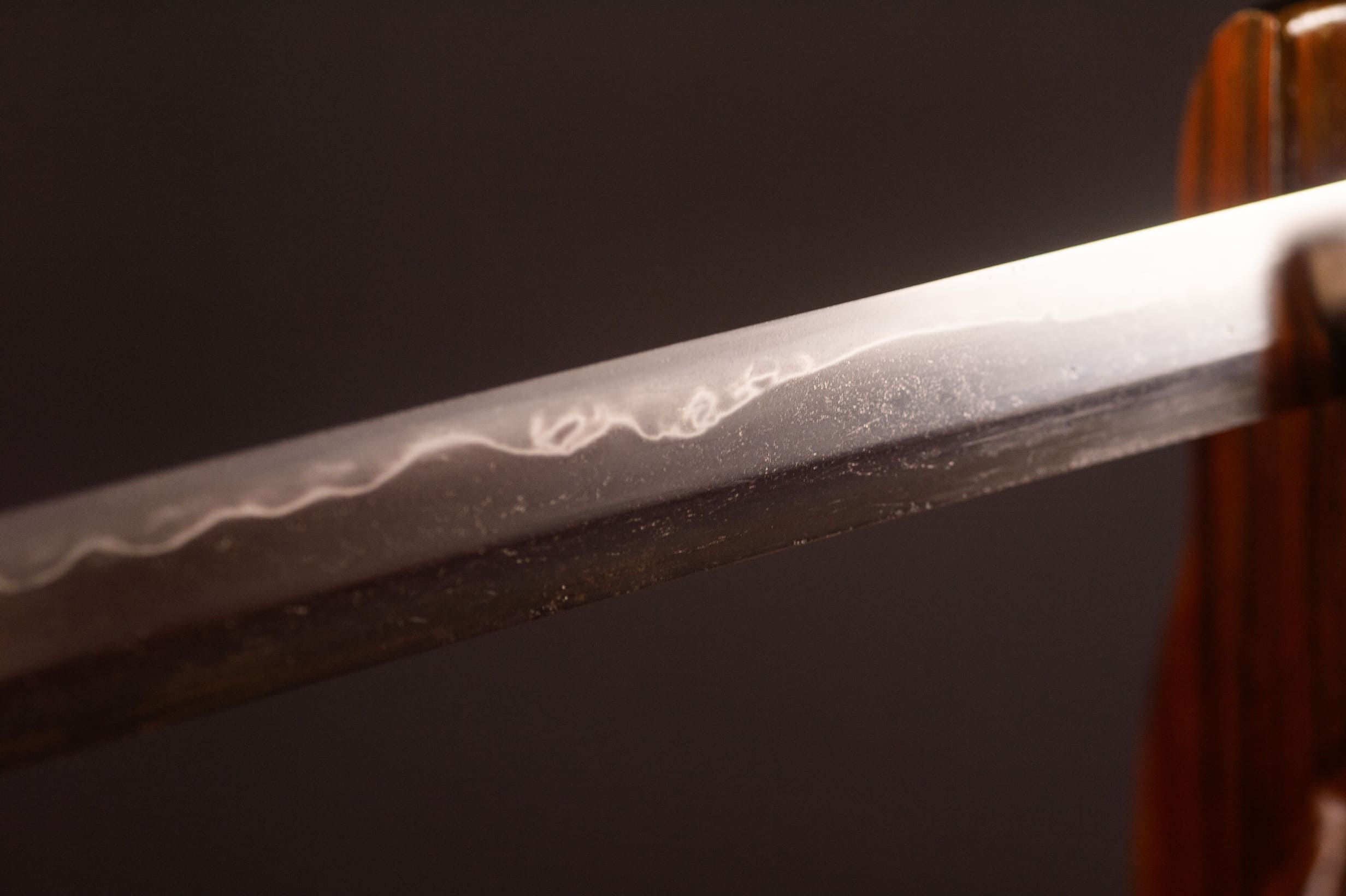
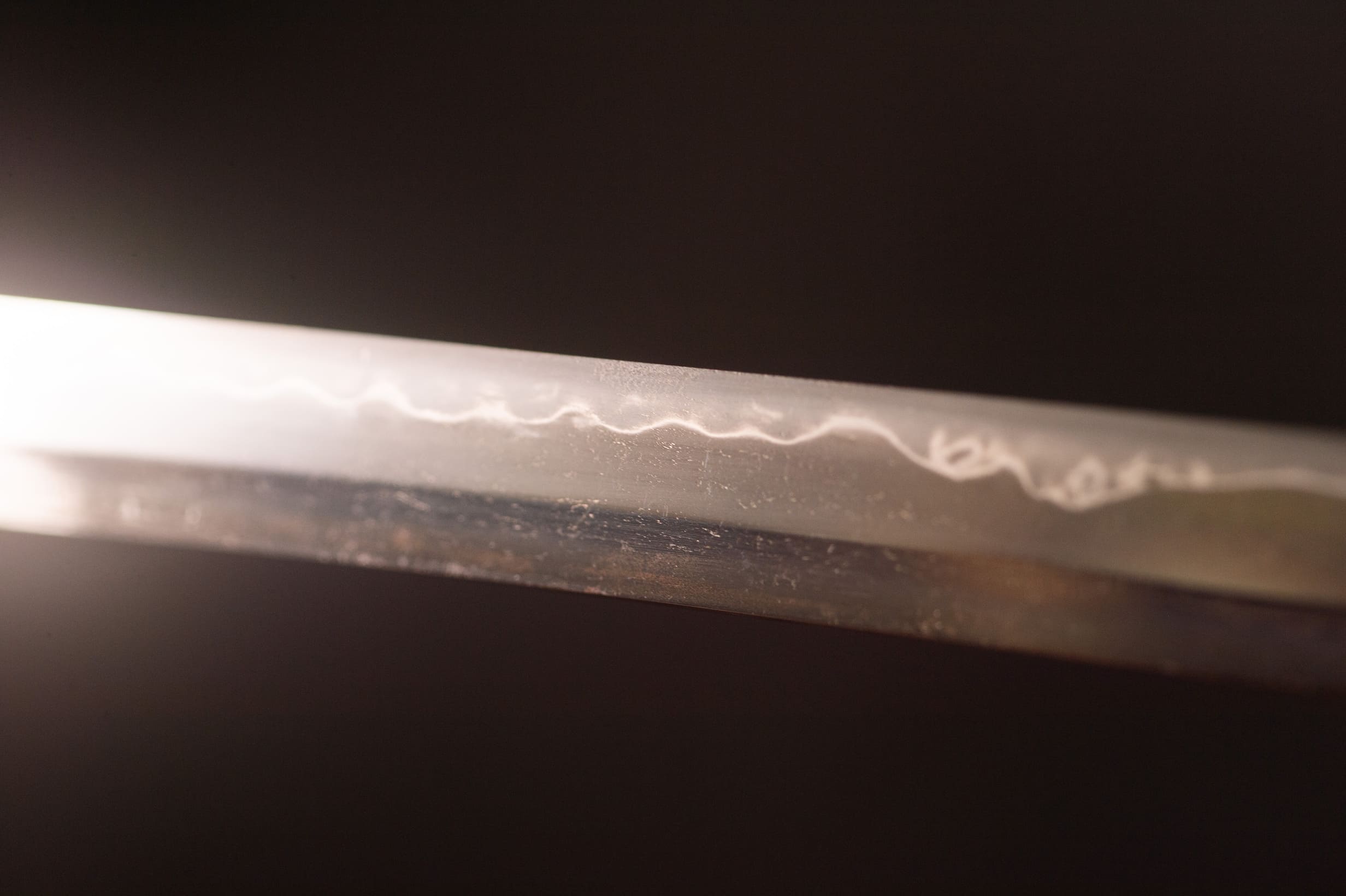
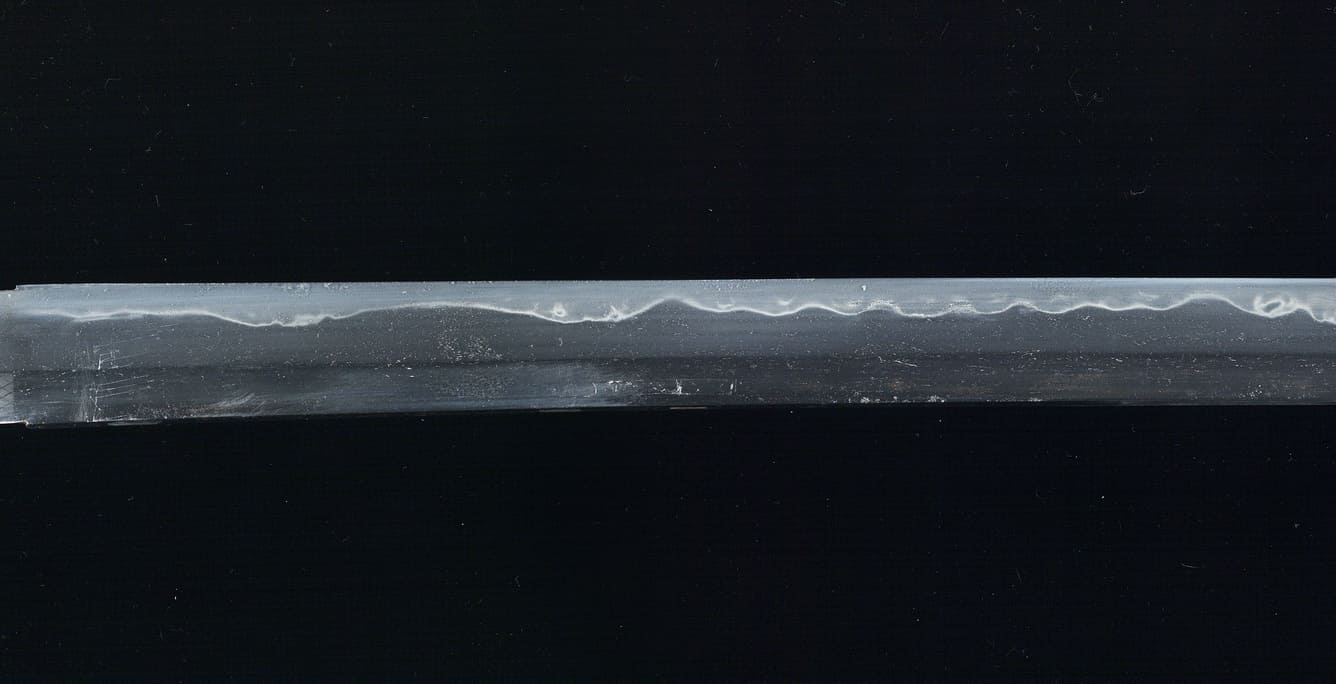
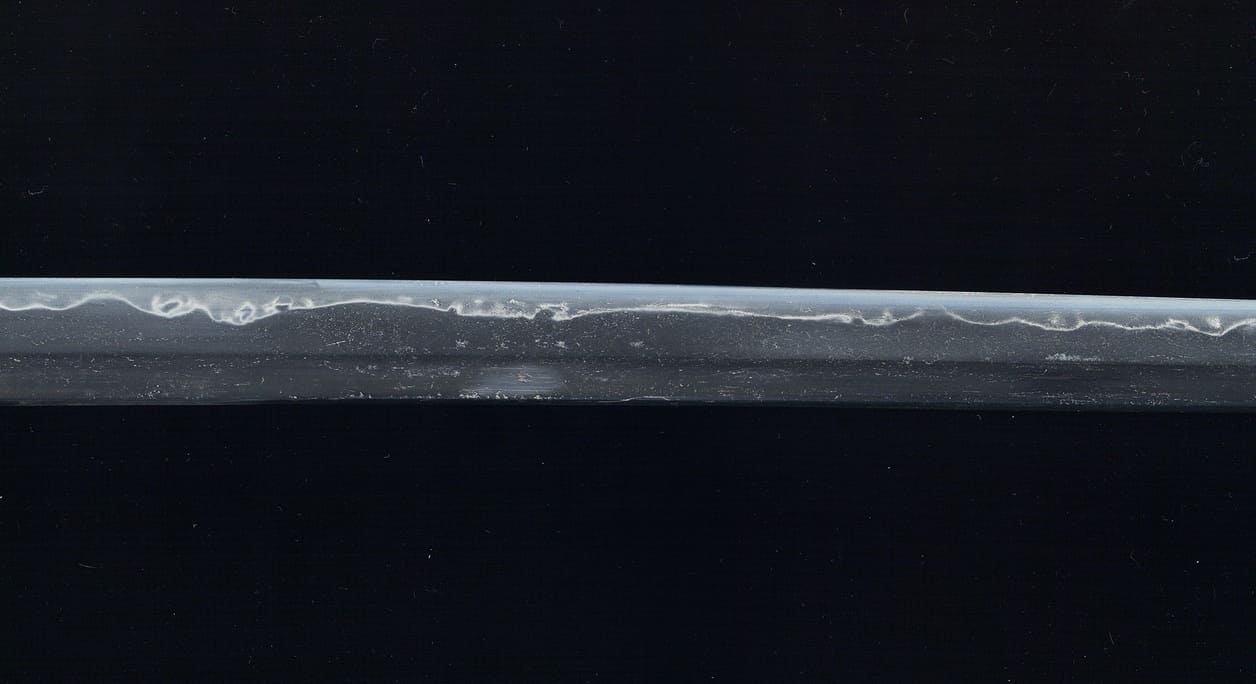
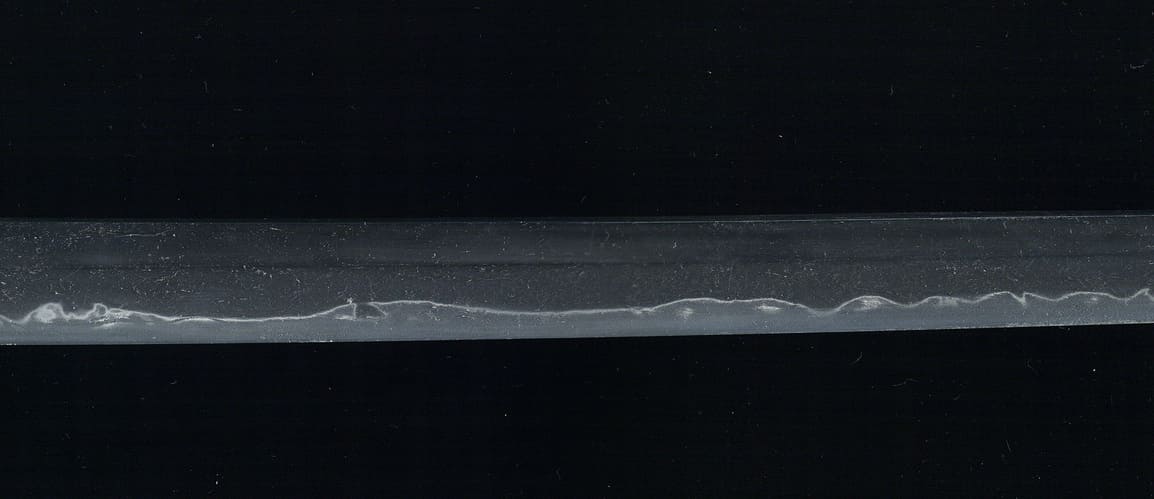
The hamon is one of the most visually significant features of the blade.
It runs in a vigorous gunome-midare pattern, combining irregular rounded formations with rolling wave-like elements. The temper line is rich in internal activity and remains luminous and clearly defined.
Visible features include:
The complexity and richness of the tempering reflect the refined workmanship associated with high-quality Shintō blades.
The sword is presented in a complete high-grade Edo-period koshirae of daimyō-like character.
The ensemble combines refined materials, disciplined workmanship and a restrained colour palette centred on black lacquer, gold decoration and mustard-gold silk.
Its overall presentation is consistent with the formal and carefully coordinated sword mountings associated with senior samurai and high-ranking households during the Edo period.
The saya is finished in deep black kuro-roiro-nuri lacquer of fine quality.
Across its full length, the lacquer is dusted with sparkling kinpun, or gold powder. The decoration creates a softly illuminated, star-like appearance as the surface catches the light.
This combination of polished black lacquer and gold powder gives the scabbard a formal and highly refined character.
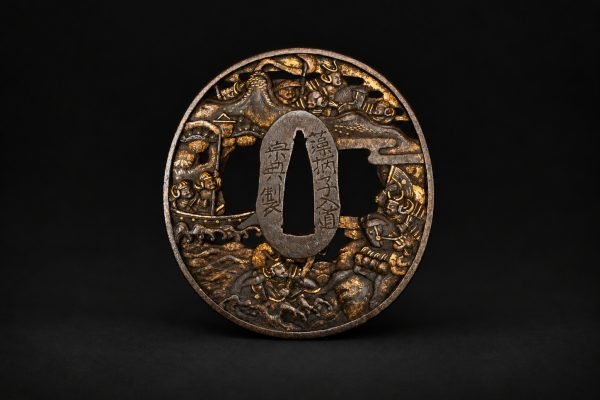
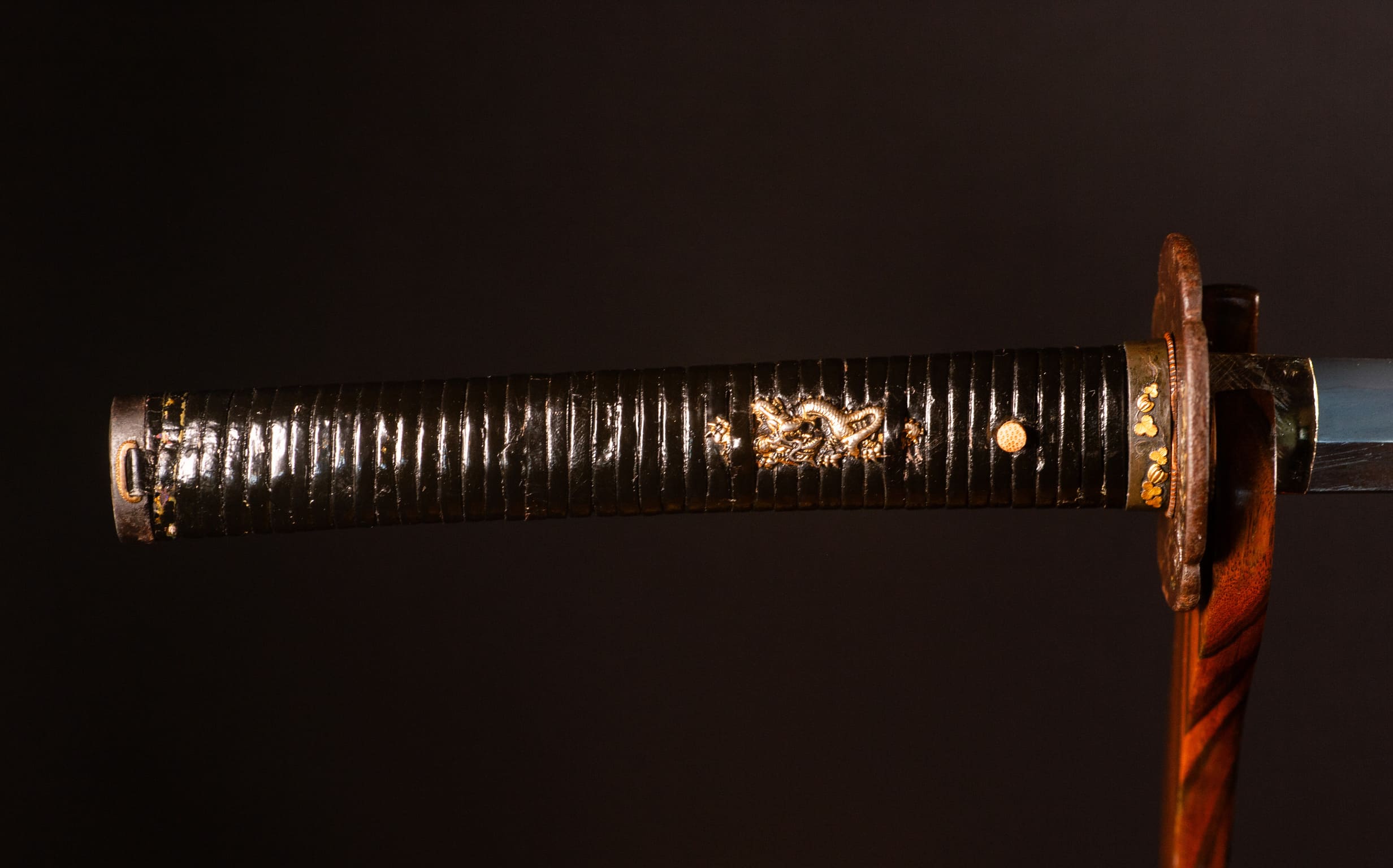
The tsuba is a substantial iron plate with an oval mokkō-gata profile.
It is decorated with nunome-zōgan, using gold and silver inlay, together with raised relief work depicting aki-no-nanakusa, the Seven Autumn Grasses.
Delicate floral elements in gold and a silver-toned alloy are arranged among scrolling foliage around the seppa-dai. The lower section also includes a small hyōtan, or gourd, motif executed in low relief.
The workmanship and decorative vocabulary are consistent with refined Edo-period metalwork and display characteristics associated with the Higo or Mito traditions.
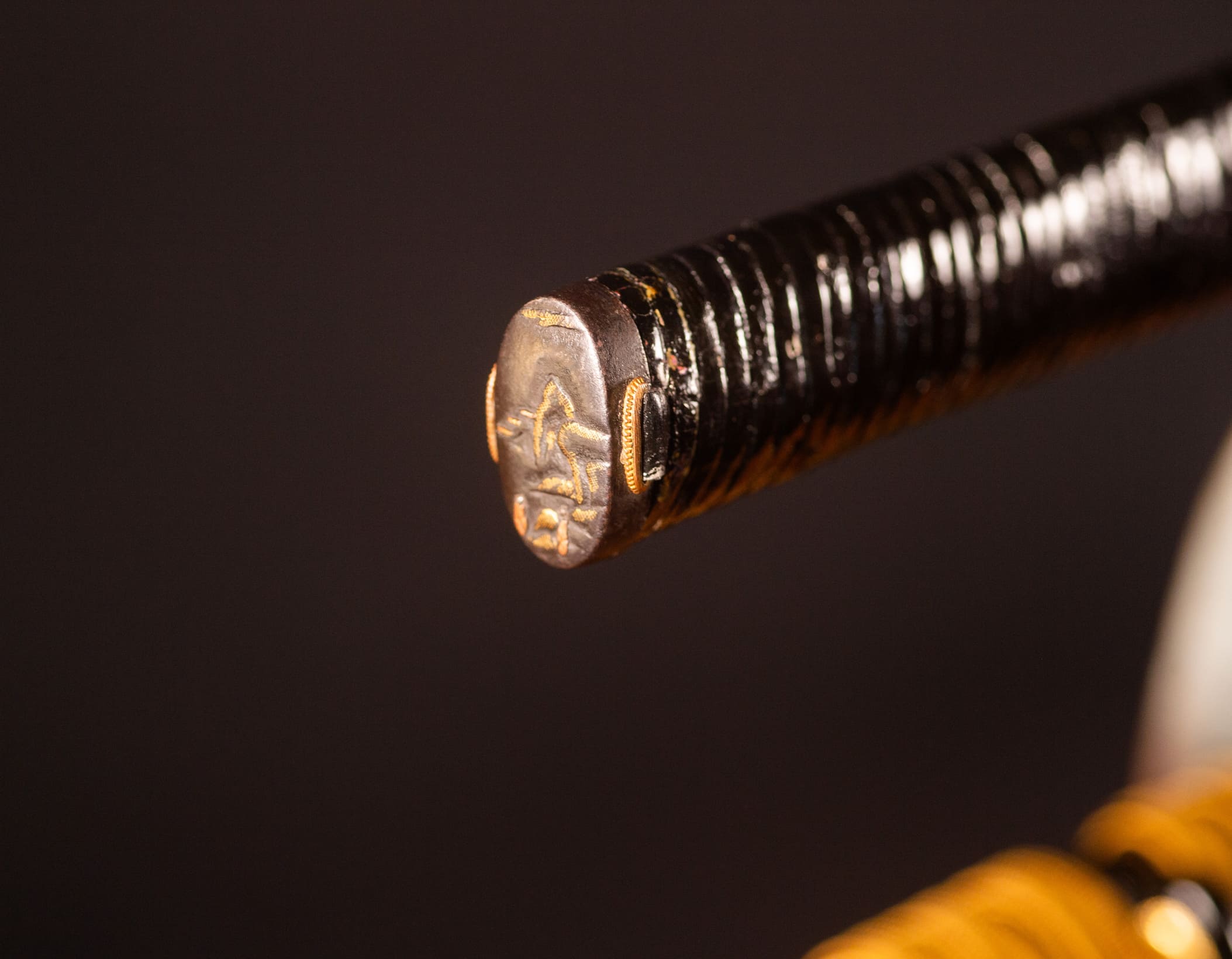
The tsuka is bound in dark kuro-ito, described as a black lacquered cord or possibly leather, over the same.
The binding is executed in a tight, ridged tsumami-maki-style arrangement, creating a distinctive ribbed surface.
A small gold kiri, or paulownia crest, decorates the lower fuchi area.
The menuki are partially visible beneath the handle wrapping.
They are formed as boldly modelled small figures in copper and gold and represent dragons, auspicious mythological subjects that complement the refined decorative programme of the mounting.
The sageo is made from substantial braided silk in a mustard-gold colour known as karashi-iro.
It is tied in a formal presentation knot. Its warm golden tone complements the black lacquer and gold powder of the saya, completing the carefully coordinated appearance of the ensemble.
The blade remains in good polish, with the jihada, hamon and internal tempering activity clearly visible under examination light.
The chū-kissaki and bōshi are well preserved. The complete koshirae retains its harmonious combination of lacquer, metal fittings, handle wrapping and silk cord.
As an antique Japanese sword and mounting, the piece may display signs of age consistent with its historical character.
This katana combines a substantial Shintō-era blade with an unusually refined and visually coherent Edo-period koshirae.
The 75.8 cm blade is distinguished by its fine ko-itame grain, shallow curvature and highly active gunome-midare hamon. The clearly visible sunagashi, ashi, abundant nie and dense nioi give the blade considerable visual and technical interest.
The mounting further enhances the sword through its black and gold lacquered saya, refined iron tsuba, dragon menuki, ribbed black handle wrapping and formal mustard-gold silk sageo.
Together, these elements form a complete and harmonious ensemble with strong display value and clear appeal for collectors of Japanese swords, Edo-period metalwork and formal samurai mountings.
Substantial, refined and exceptionally well presented, this Japanese katana brings together an active 75.8 cm Shintō blade and a complete high-grade Edo-period koshirae. Its luminous gunome-midare hamon, black lacquered saya with gold kinpun, inlaid iron tsuba and carefully coordinated fittings make it a distinguished collector’s piece of considerable visual presence.
| Época | Edo |
|---|

Order above 1.000,00 € gets free shipping.

Secure and hassle-free payment process.

Certificate of authenticity included.

Have questions? Contact us via WhatsApp.
Contact