Japanese Katana by Bizen Kiyotsugu
Muromachi Period Kotō Blade · Bizen-den Tradition · Raden Mother-of-Pearl Koshirae
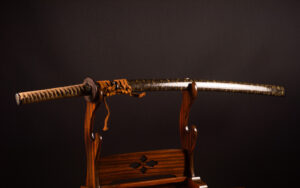
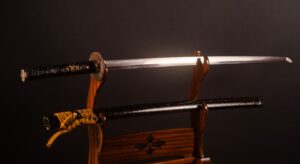
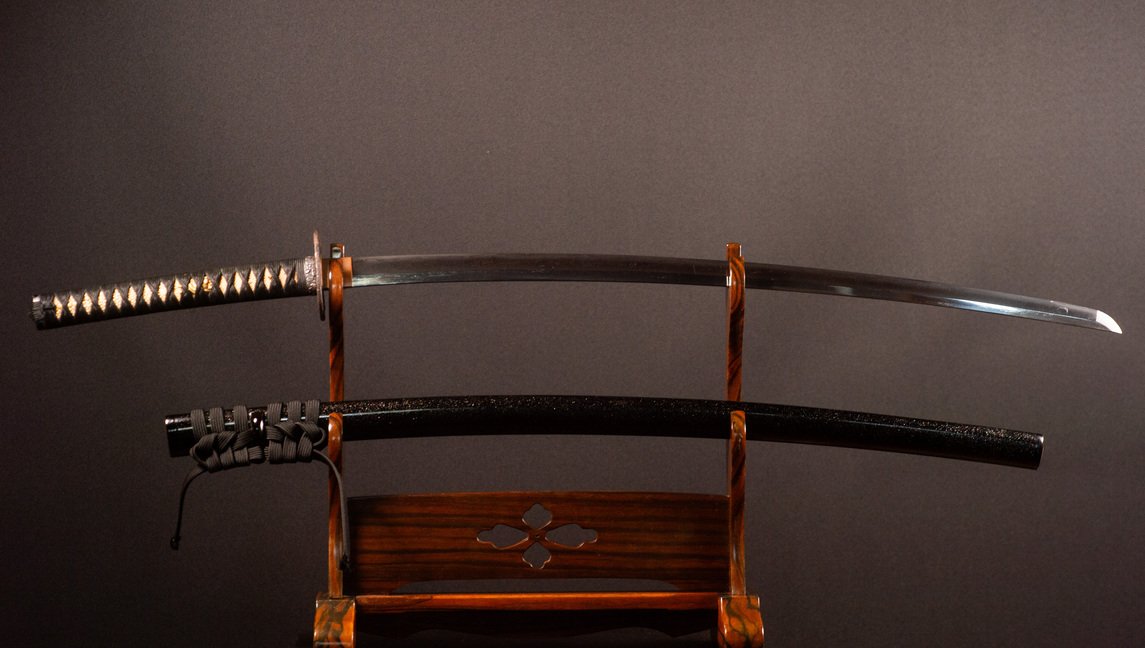
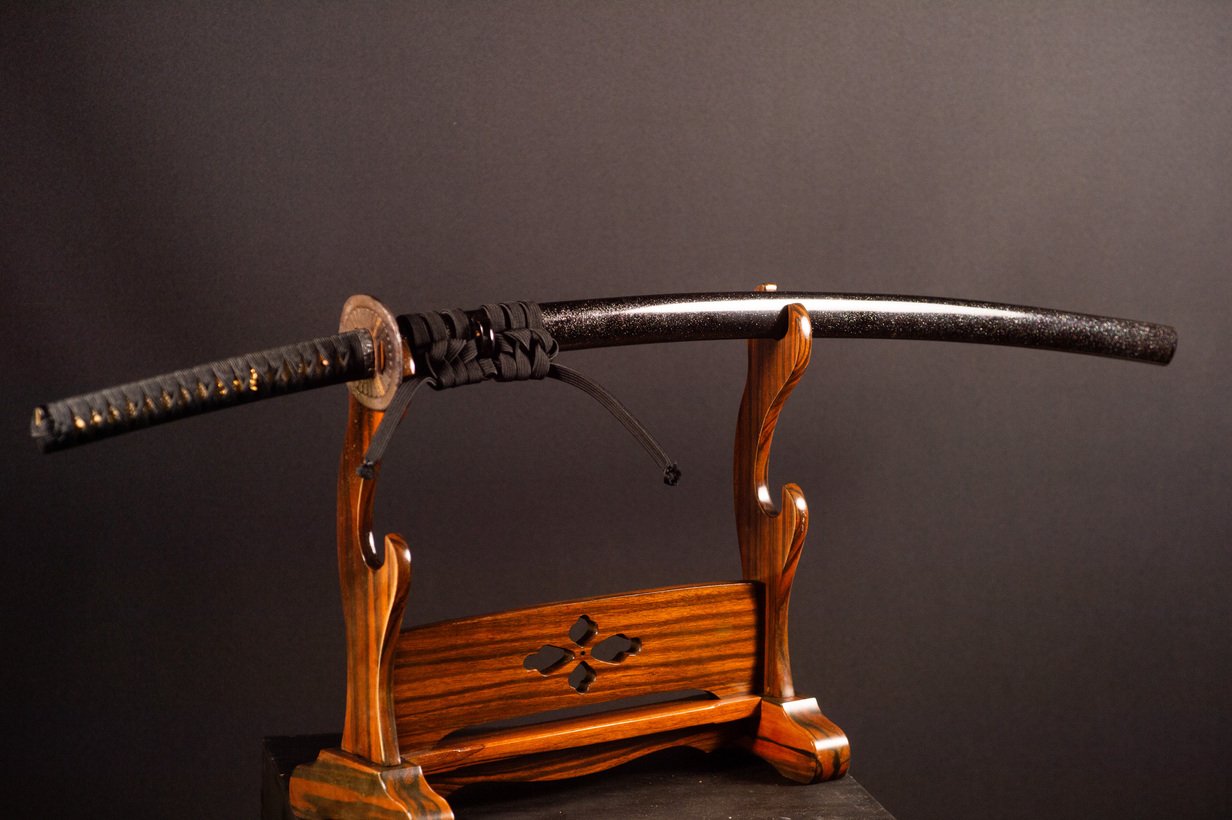
An authentic Japanese katana signed by Bizen Kiyotsugu, forged during the Muromachi period, between the 15th and 16th centuries. This kotō blade belongs to the celebrated Bizen-den tradition and is preserved in an elegant lacquered koshirae distinguished by refined raden mother-of-pearl decoration. The sword is accompanied by its original Japanese torokusho from Mie Prefecture, the Supein Nihonto Certificate of Authenticity, a copy of the registration document and a protective kimono or cotton storage bag.
This katana offers a particularly attractive combination of historical value and artistic presentation: an old signed Bizen blade from the age of the Muromachi samurai, paired with a visually striking mounting decorated with natural mother-of-pearl inlays.
The Smith (Bizen Kiyotsugu)
This blade is signed by Bizen Kiyotsugu, a swordsmith associated with the Bizen-den tradition, one of the most important and influential schools in the history of Japanese swordmaking.
The Bizen tradition produced many of the most admired blades of the kotō period, prized for their practical strength, elegant shapes and refined forging. During the Muromachi period, Bizen swords were widely appreciated by the warrior class, combining reliable cutting performance with a distinctive aesthetic identity.
A signed blade by Bizen Kiyotsugu therefore carries both historical and collecting interest, connecting the sword directly with one of the great classical traditions of Japanese sword manufacture.
Historical Context
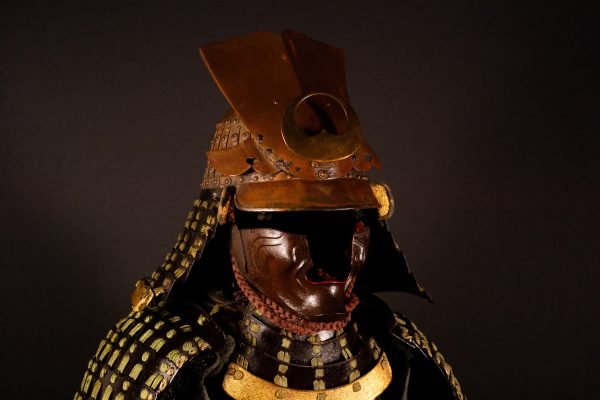
The Muromachi period was an age of transition, political instability and constant military conflict. Samurai warfare placed high demands on swords, requiring blades that were practical, durable and reliable while still preserving the artistic qualities expected from respected swordsmiths.
This katana belongs to that world. Its compact yet strong proportions, moderate curvature and sober workmanship reflect the needs of late medieval Japan, when the sword remained both a weapon of war and a symbol of status, lineage and personal identity.
As a kotō blade from the Bizen tradition, it represents one of the most historically important phases in the development of the Japanese sword.
The Blade (Tōshin)
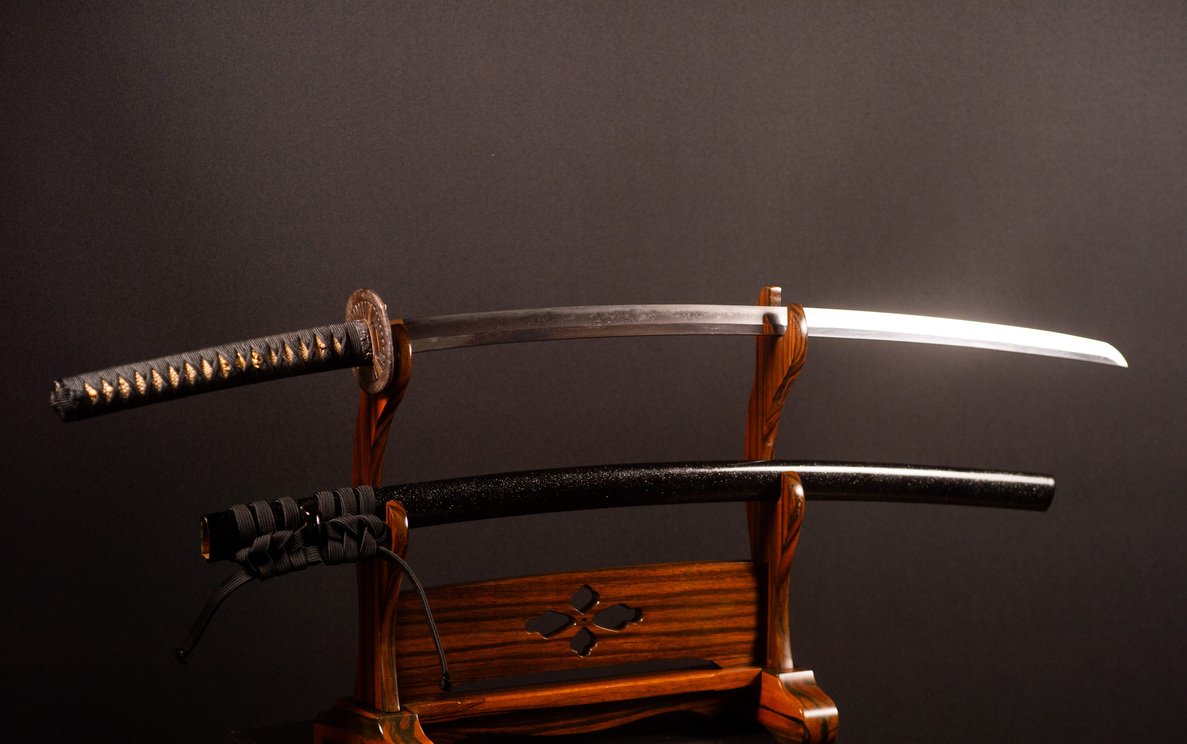
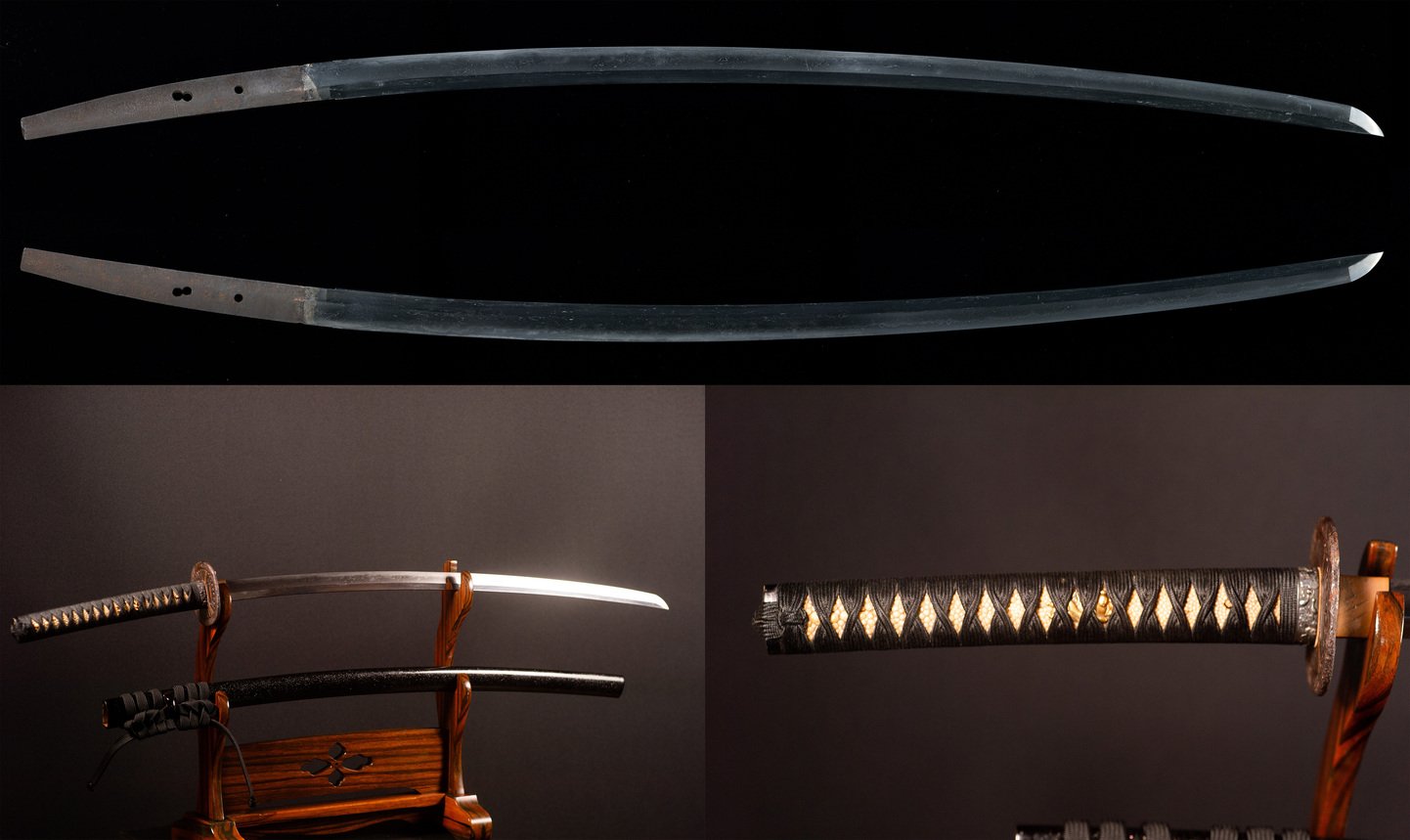
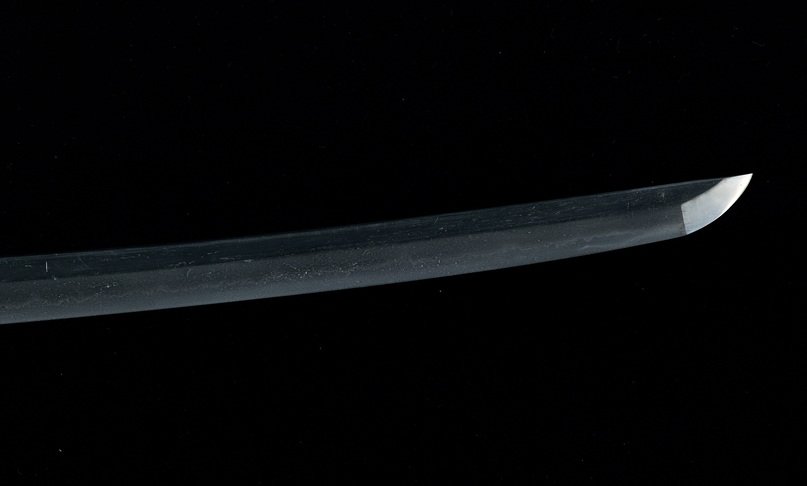
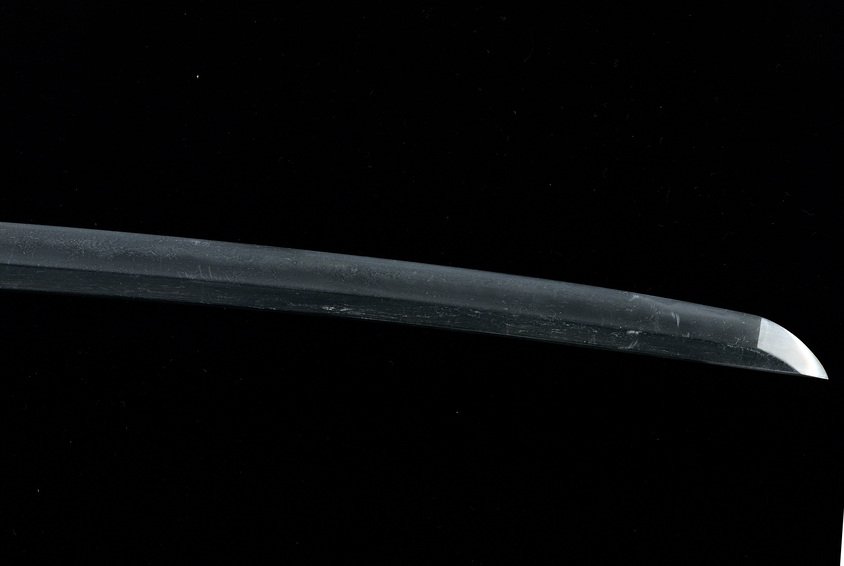
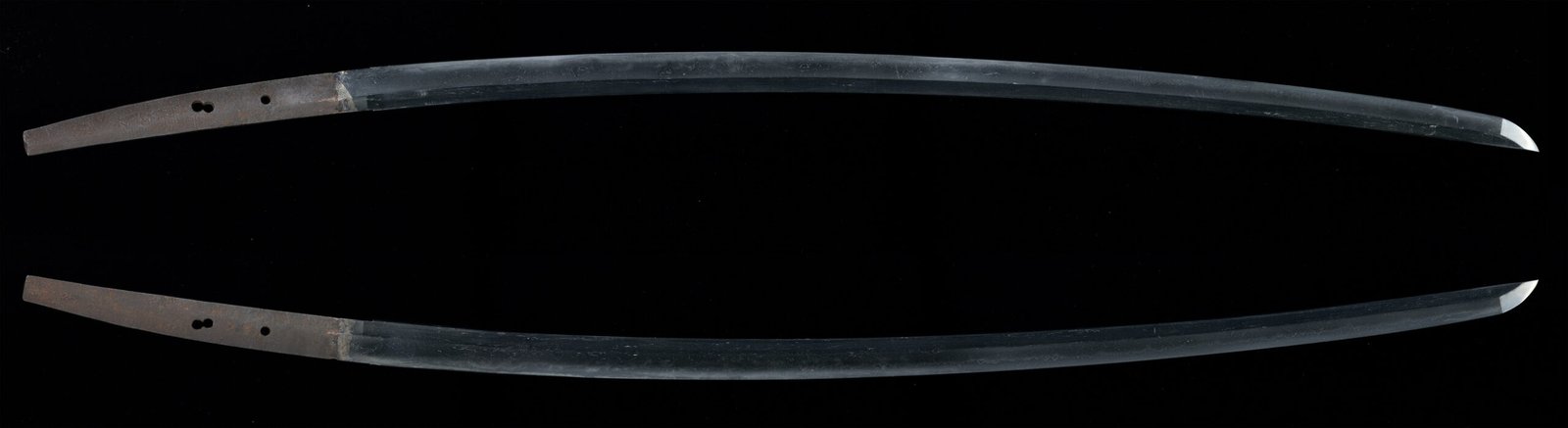
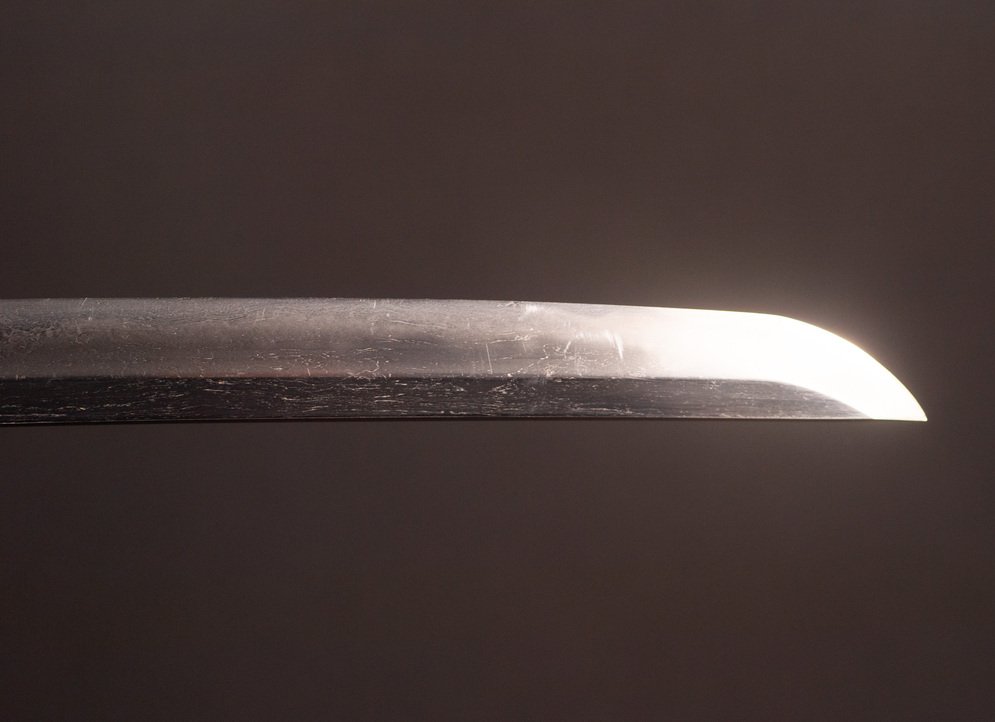
The blade has a nagasa of 66 cm and a sori of 2.3 cm, giving it an elegant and controlled curvature. Its proportions reflect the robust yet refined character of Muromachi-period swords made for the warrior elite of late medieval Japan.
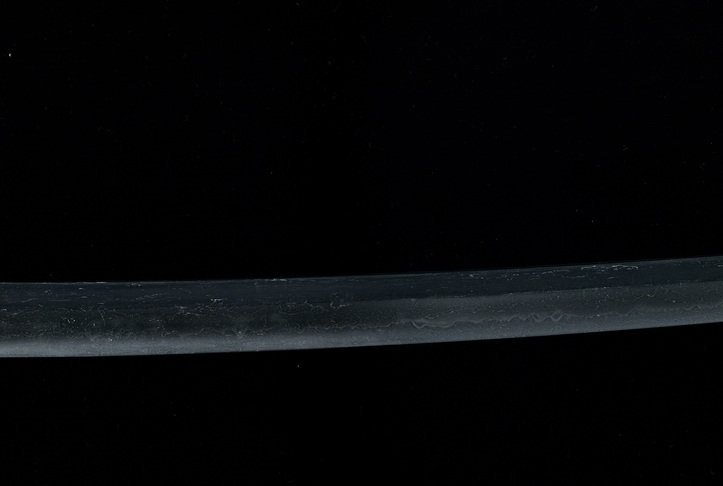
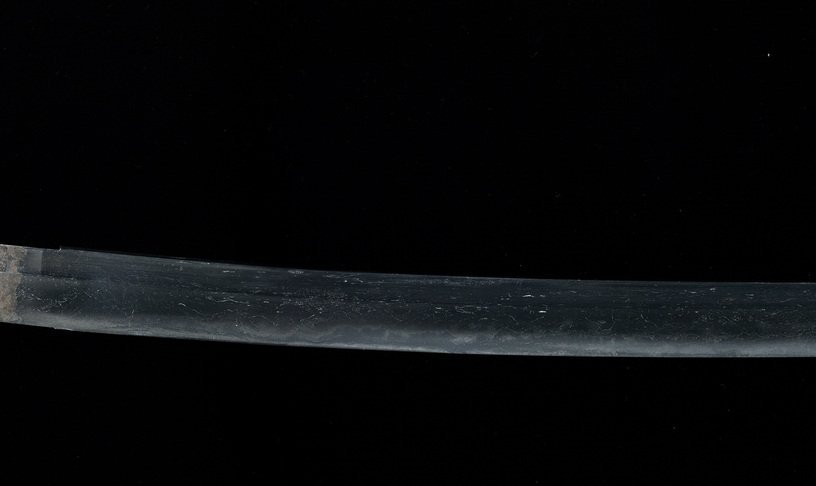
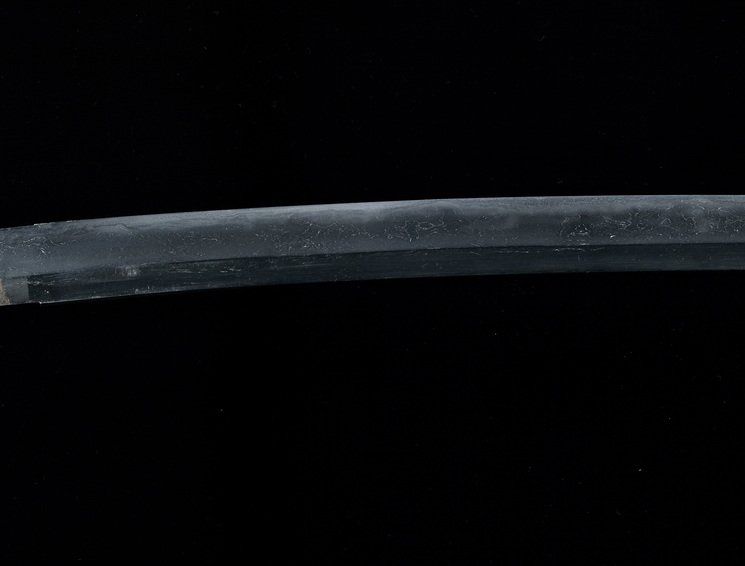
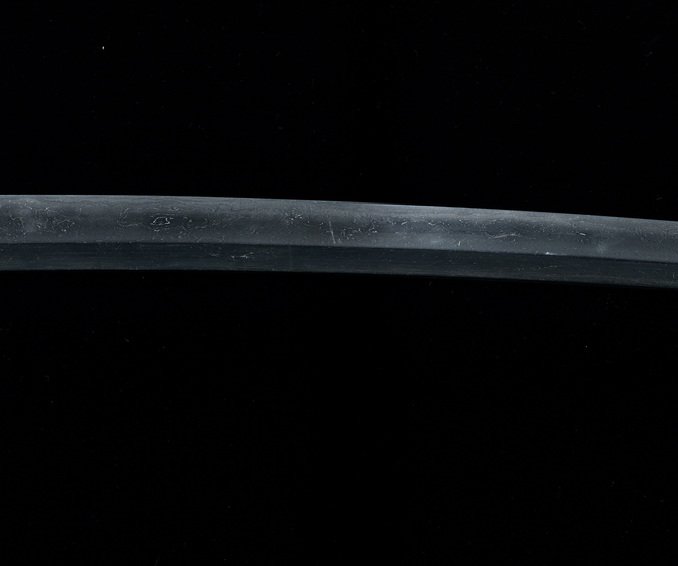
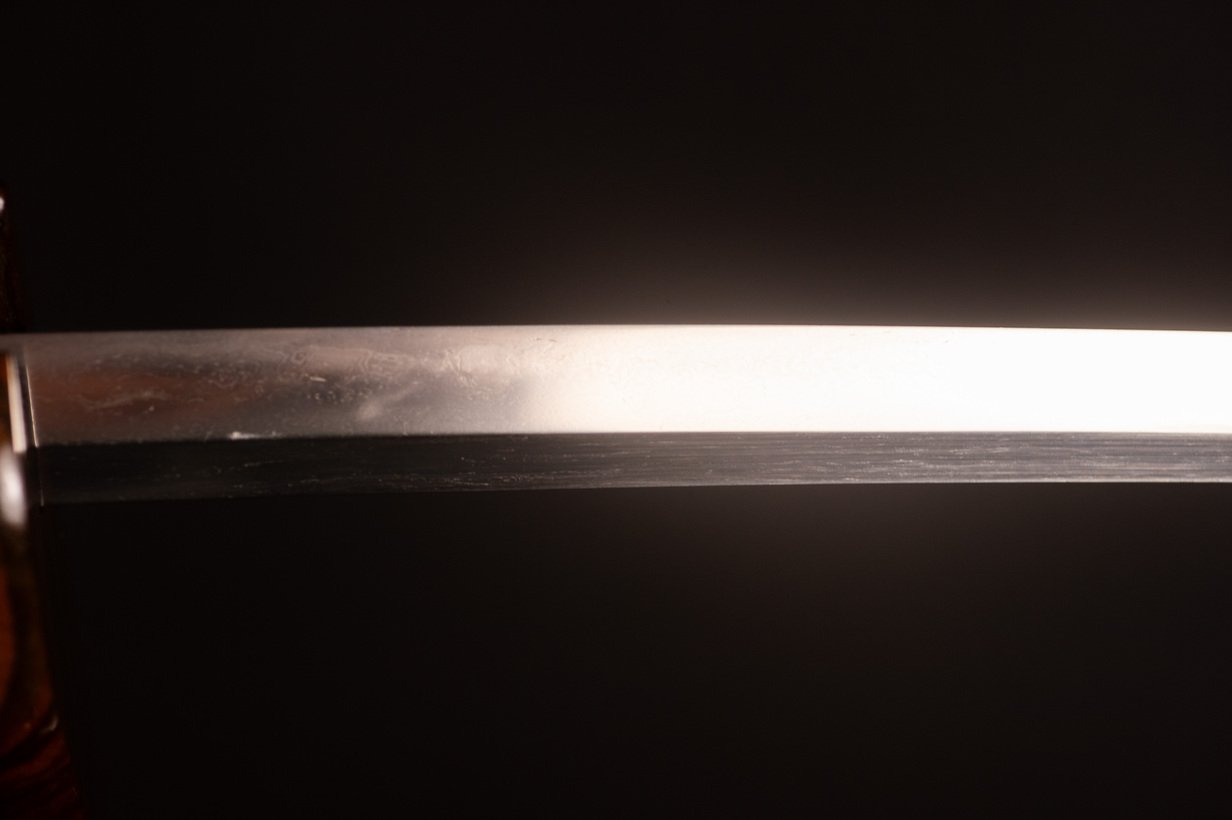
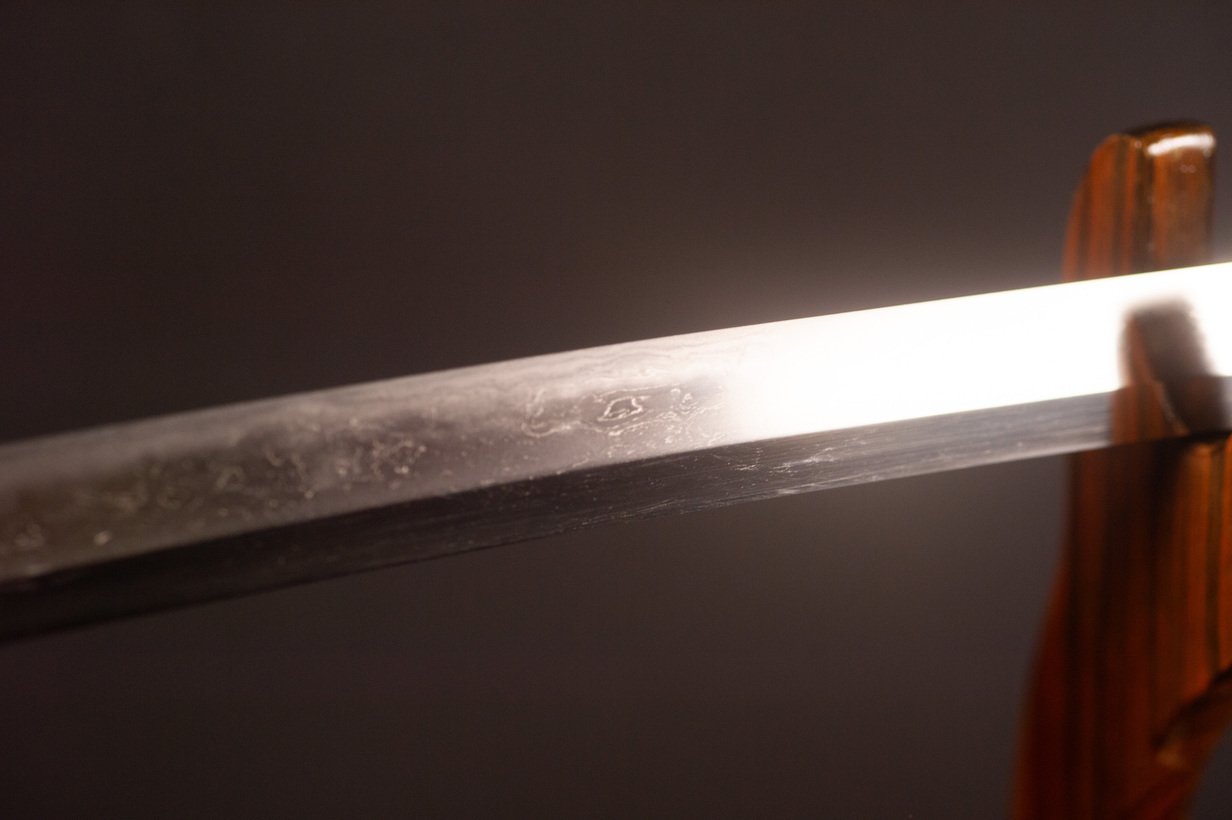
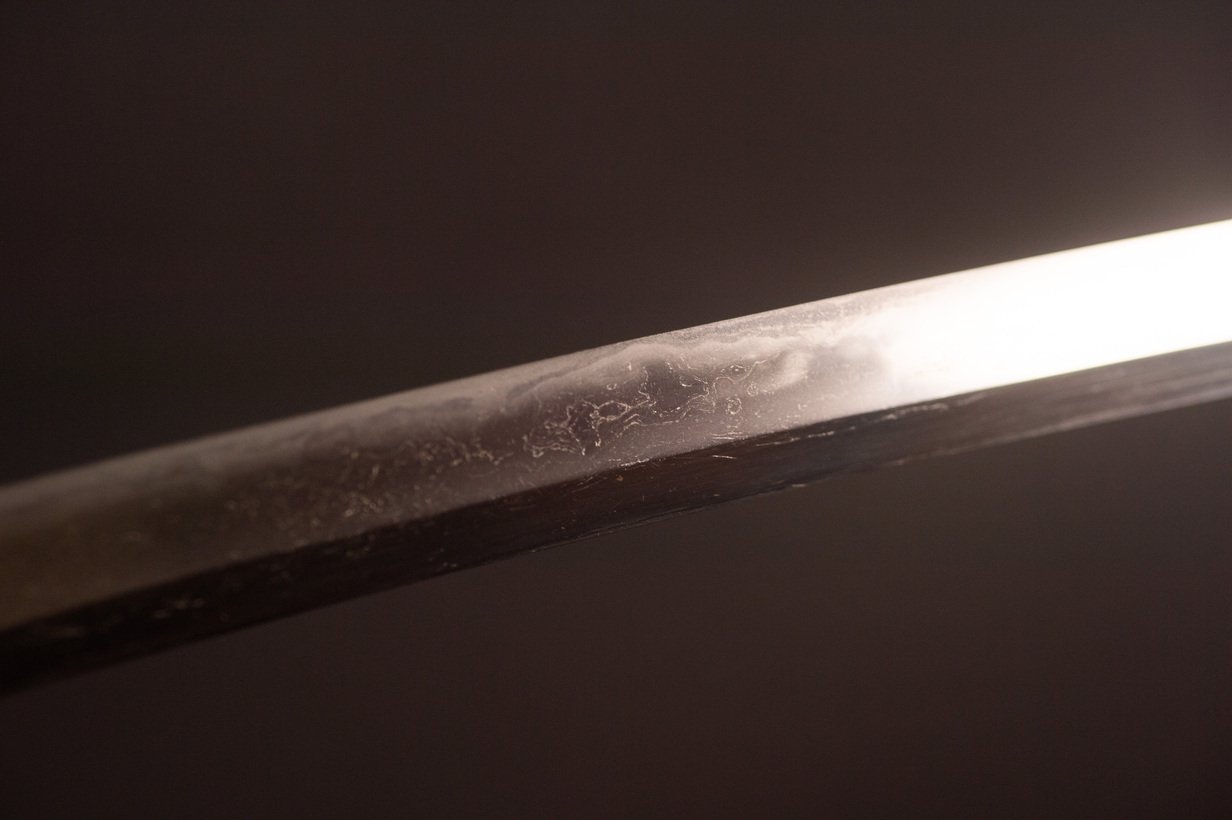
The hamon is a very refined suguha, displaying a calm and straight temper line with subtle variations in nie and nioi. This restrained style demonstrates strong technical control and a disciplined approach to heat treatment.
The blade preserves a good polish, allowing the dense and well-forged hada, or steel grain, to be appreciated. The overall impression is one of sobriety, balance and controlled craftsmanship.
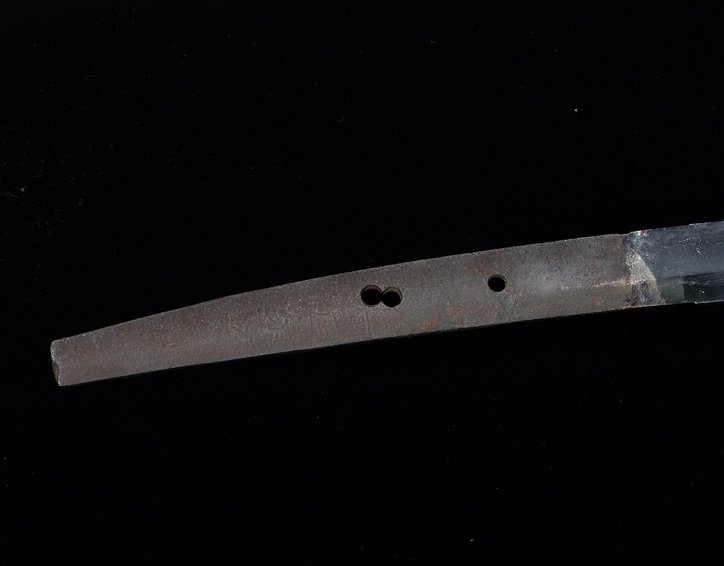
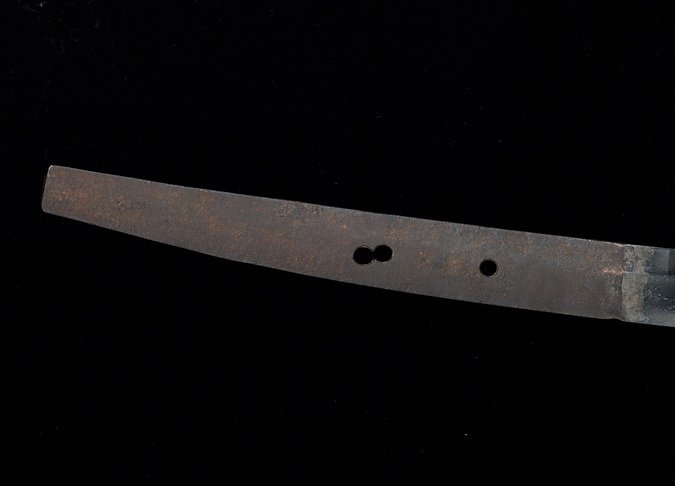
The nakago has two mekugi-ana, indicating that the blade has been mounted and appreciated across different stages of its long history. The signature, or mei, identifies the sword as the work of Bizen Kiyotsugu.
The Koshirae
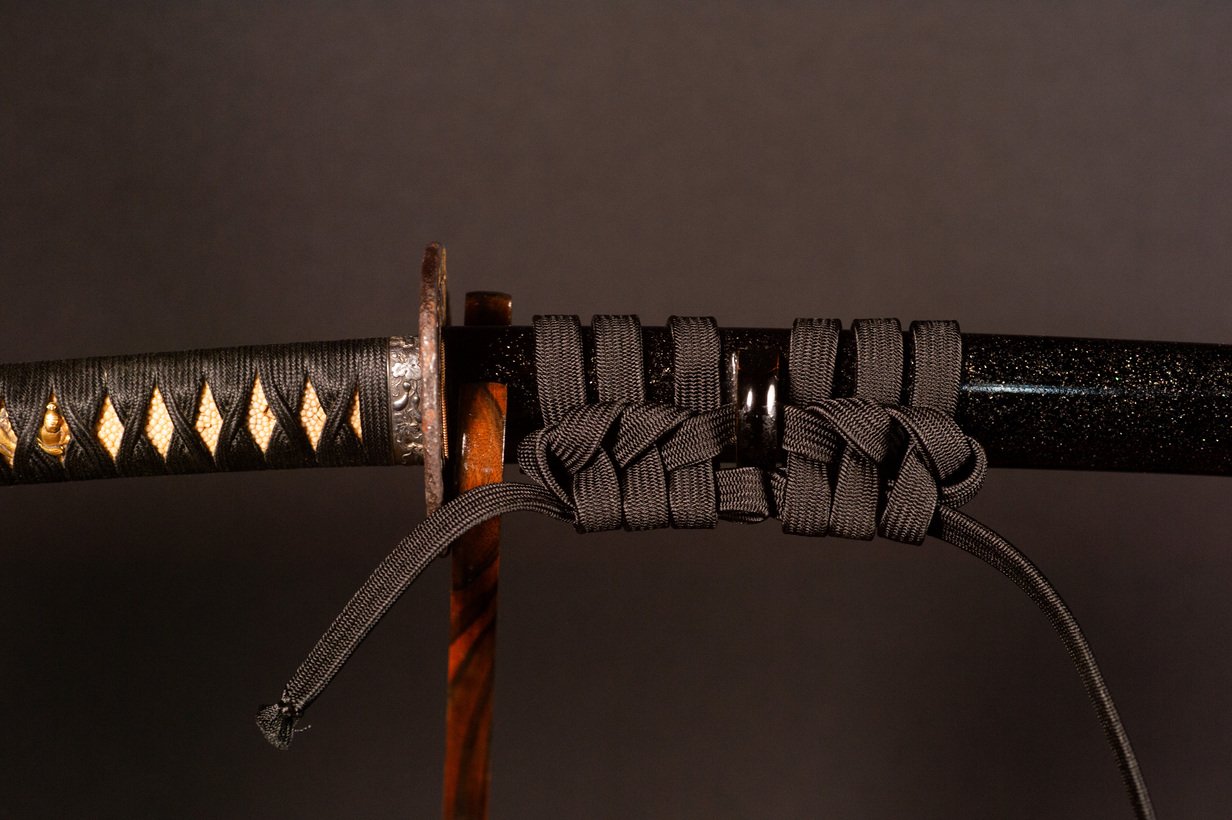
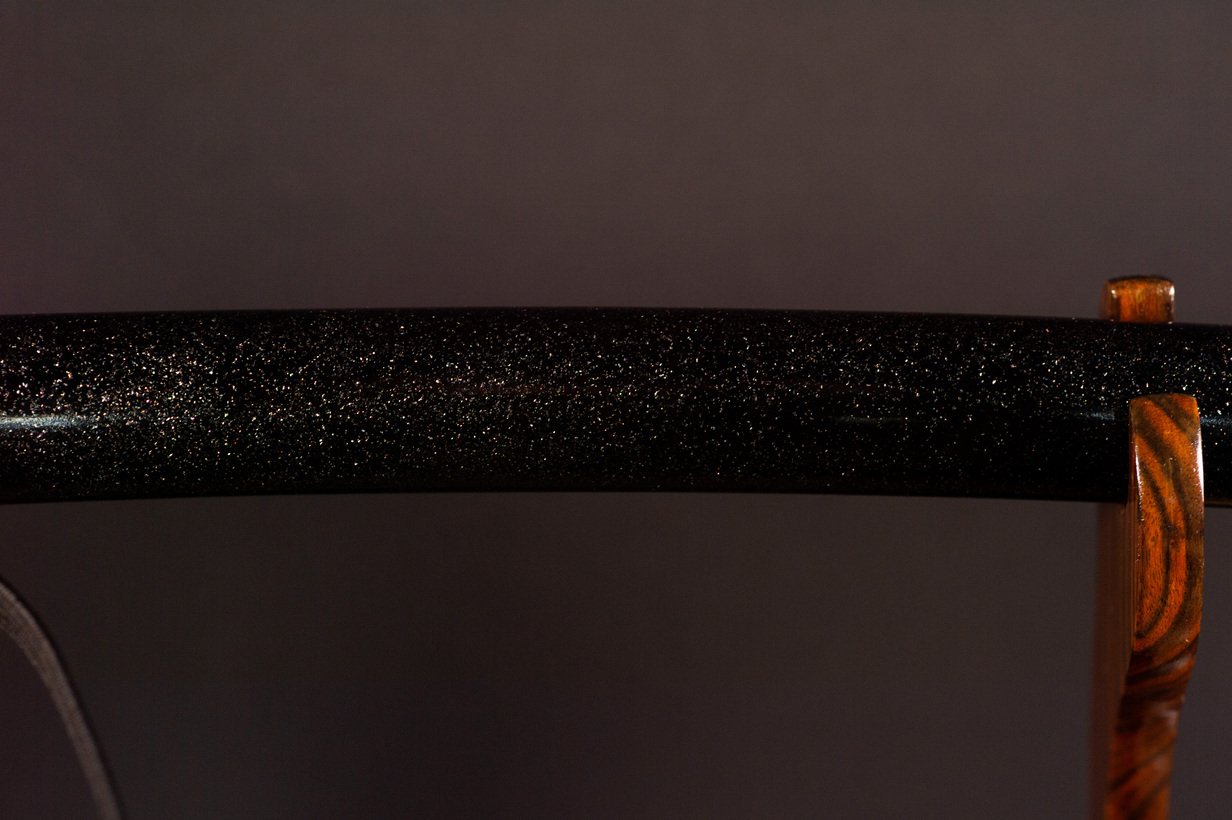
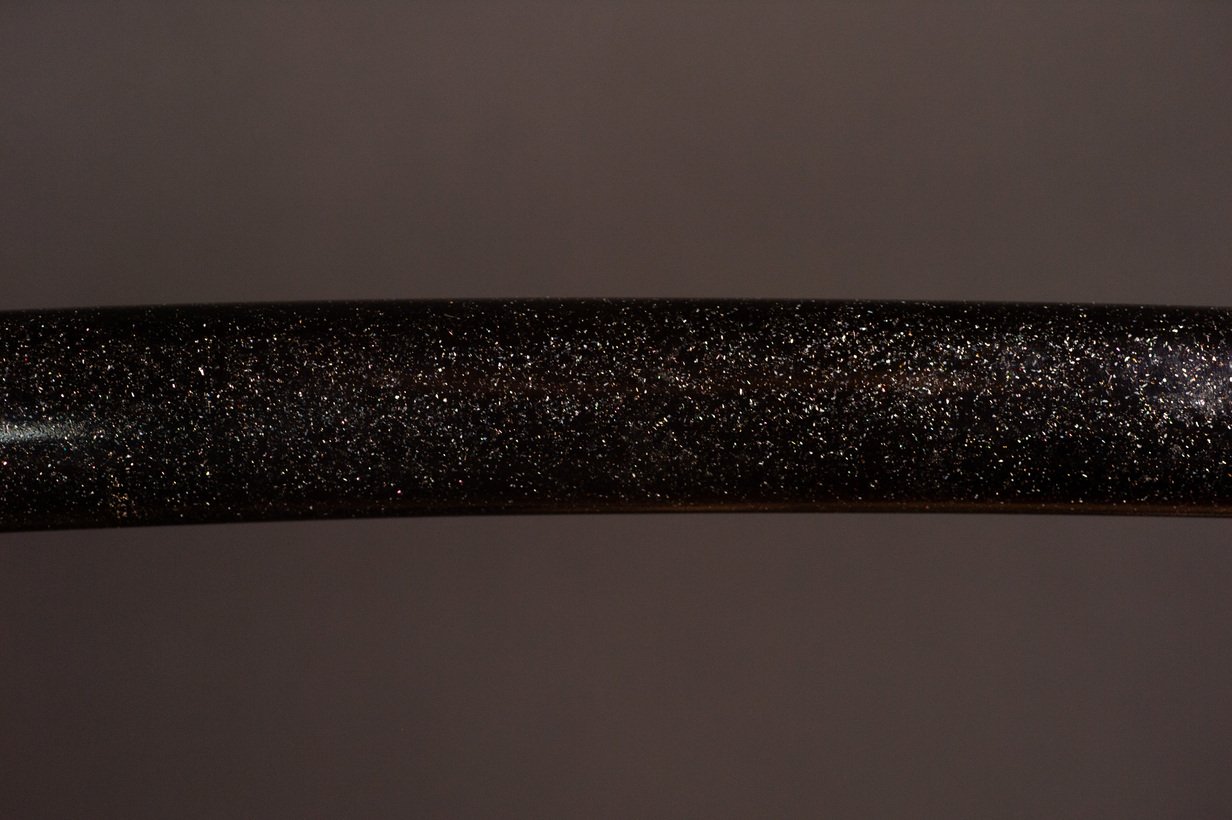
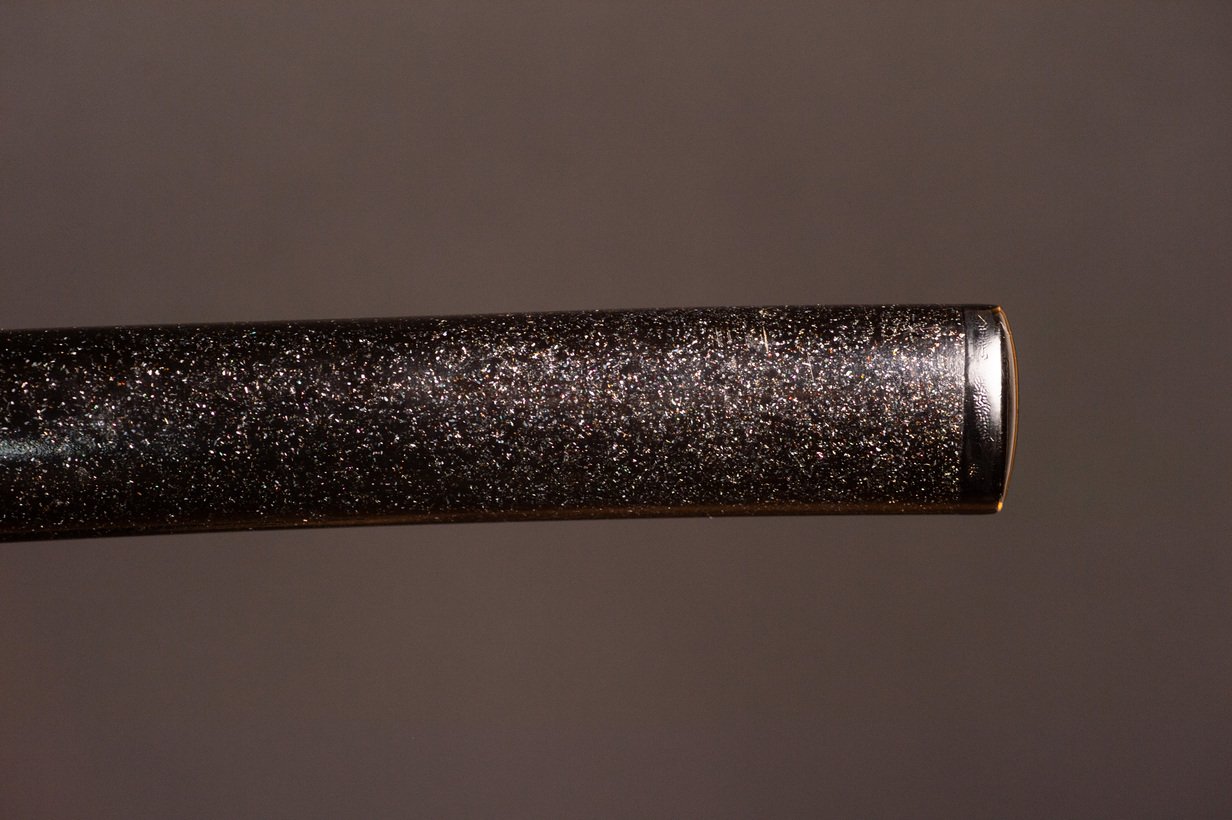
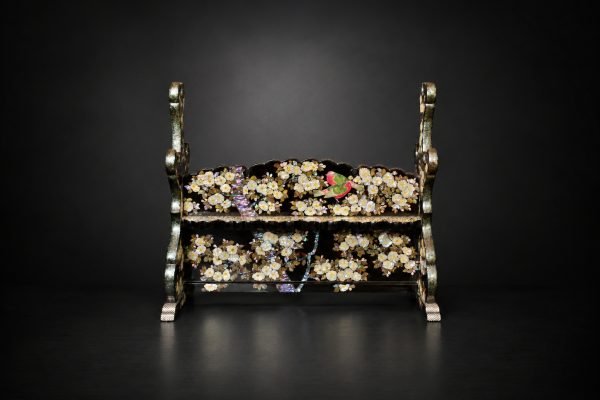
The sword is preserved in an elegant koshirae of strong artistic presence. Its most visually striking feature is the lacquered saya, decorated with raden, the traditional Japanese technique of applying natural mother-of-pearl inlays.
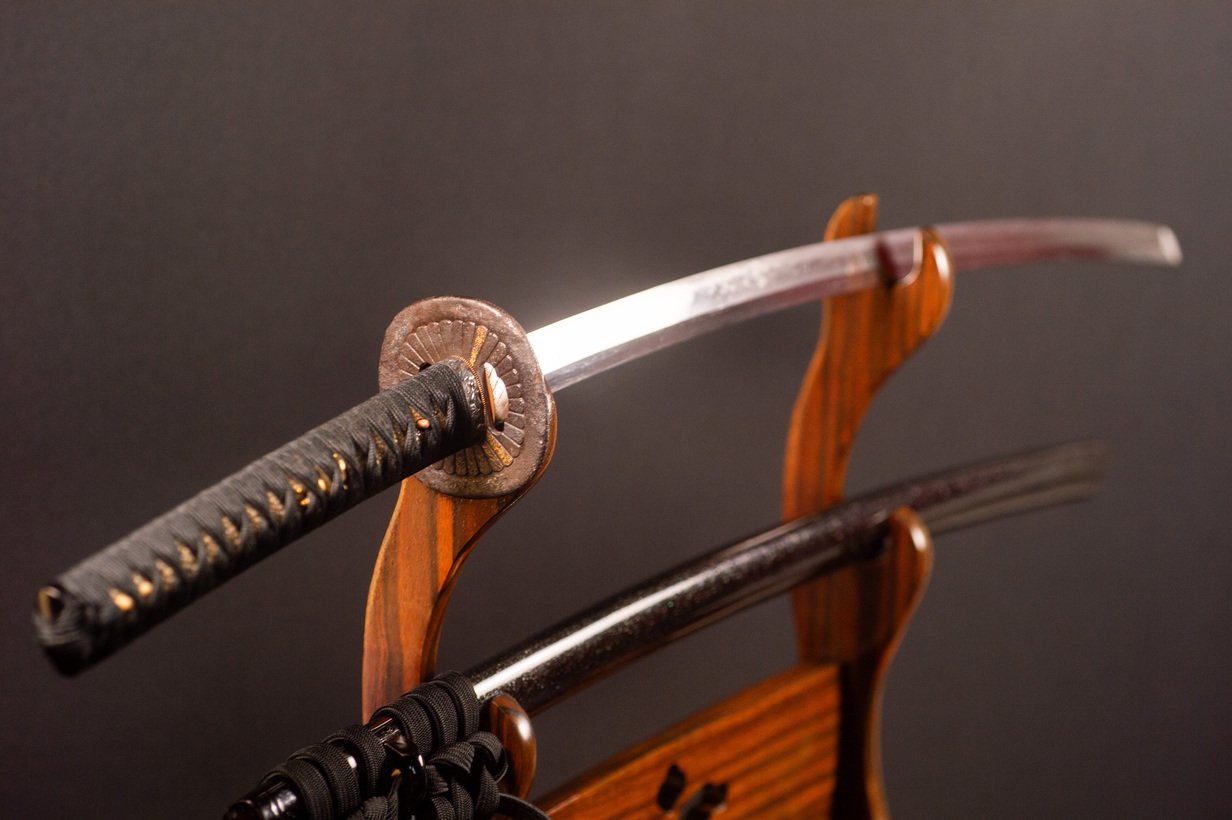
The saya is finished in deep black lacquer, over which the mother-of-pearl fragments create an iridescent surface that changes colour according to the angle of the light. The effect recalls a starry night sky or the reflection of light over water, giving the mounting a refined and luxurious character.
This contrast between the martial sobriety of the Bizen blade and the opulence of the raden decoration gives the sword a particularly memorable visual identity.
Fittings (Kodōgu)
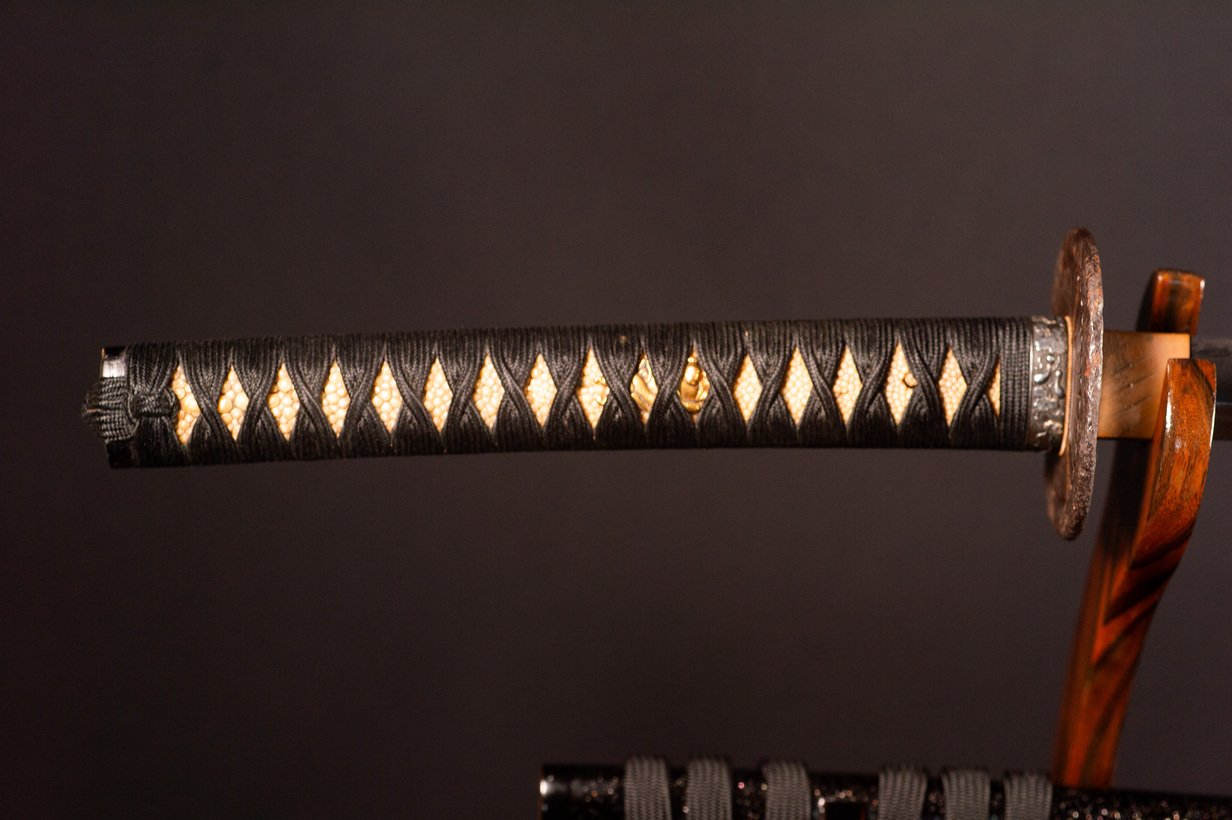
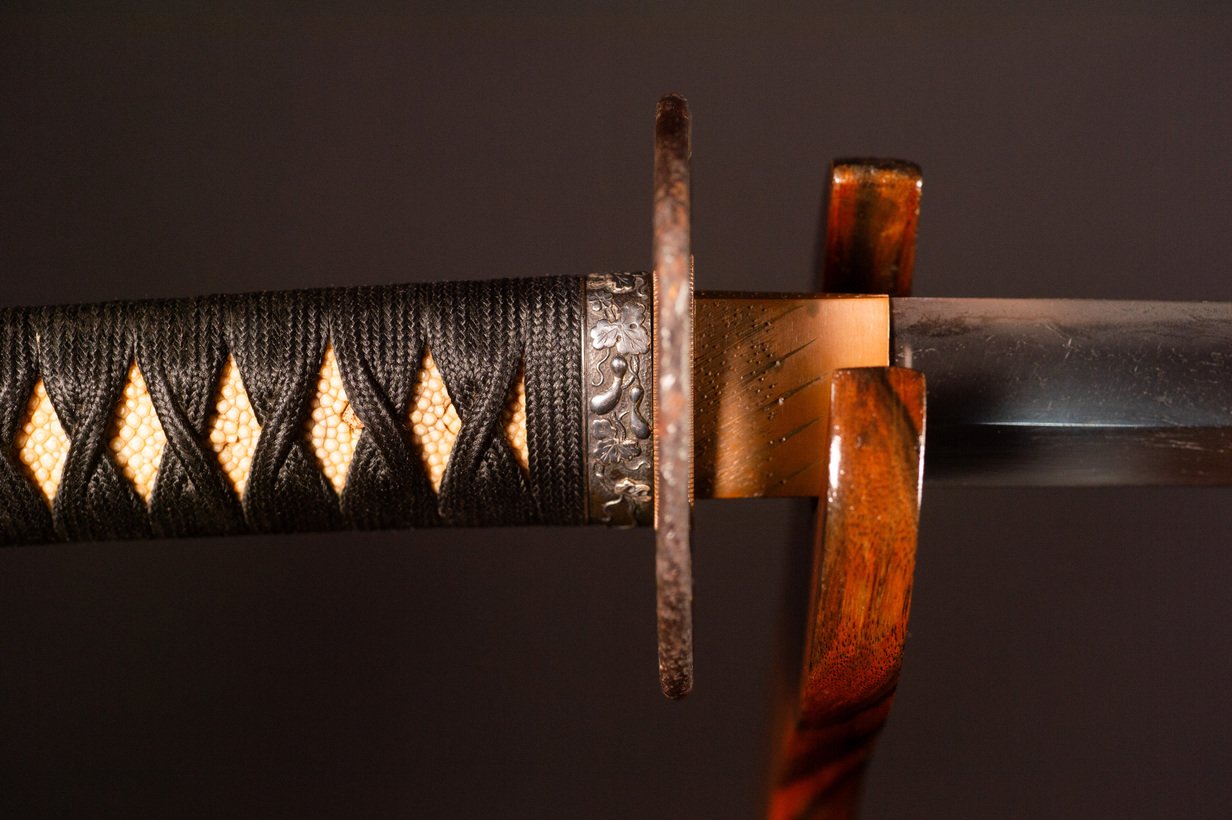
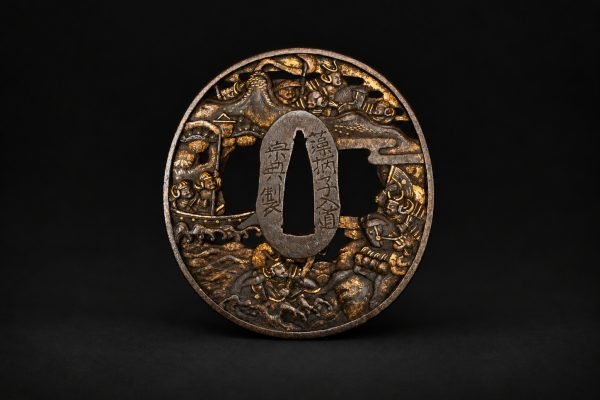
The tsuba is made of solid iron, or tetsu, with a classical form and decoration featuring fan motifs with gold inlays. The fan, associated with authority, refinement and social rank, gives the guard a dignified symbolic presence.
The fuchi-kashira are made of noble metal and decorated with high-quality gold details, possibly representing vegetal or dragon motifs. Their rich surface and contrasting tones add both tactile and visual depth to the mounting.
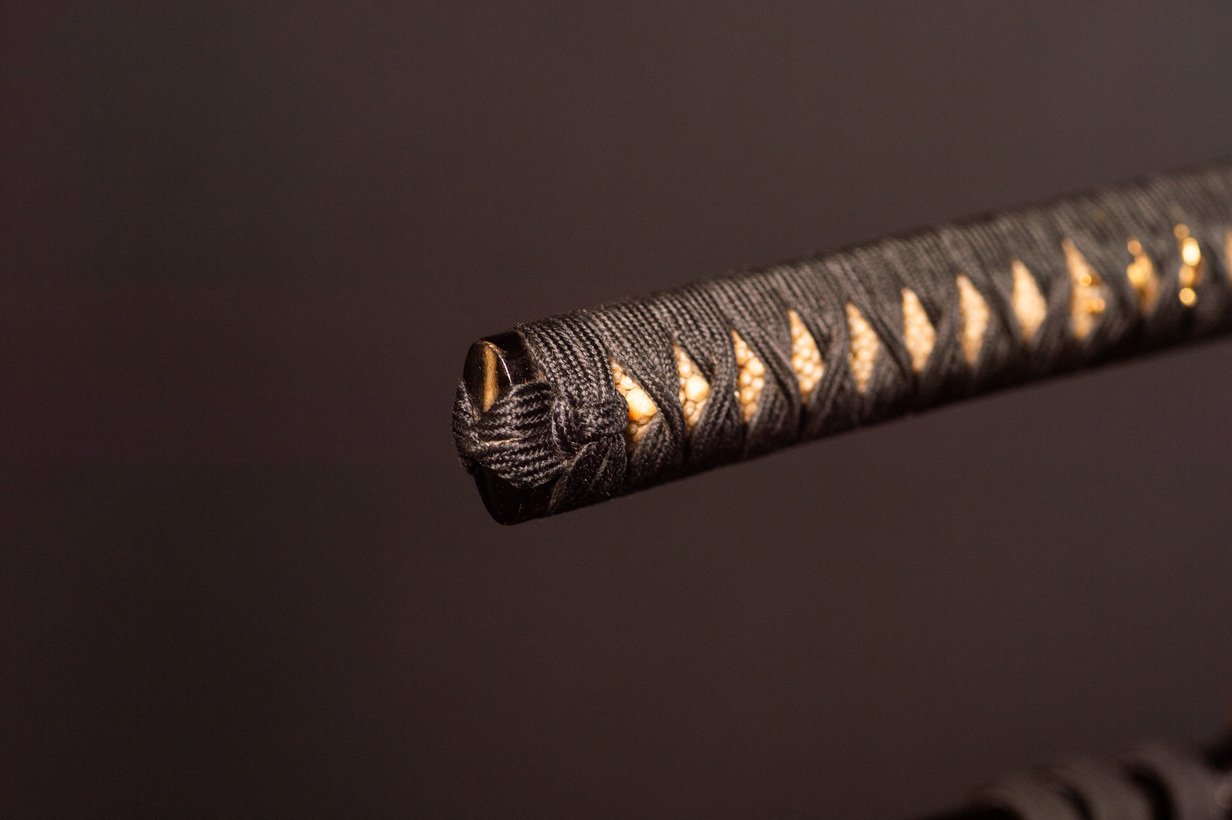
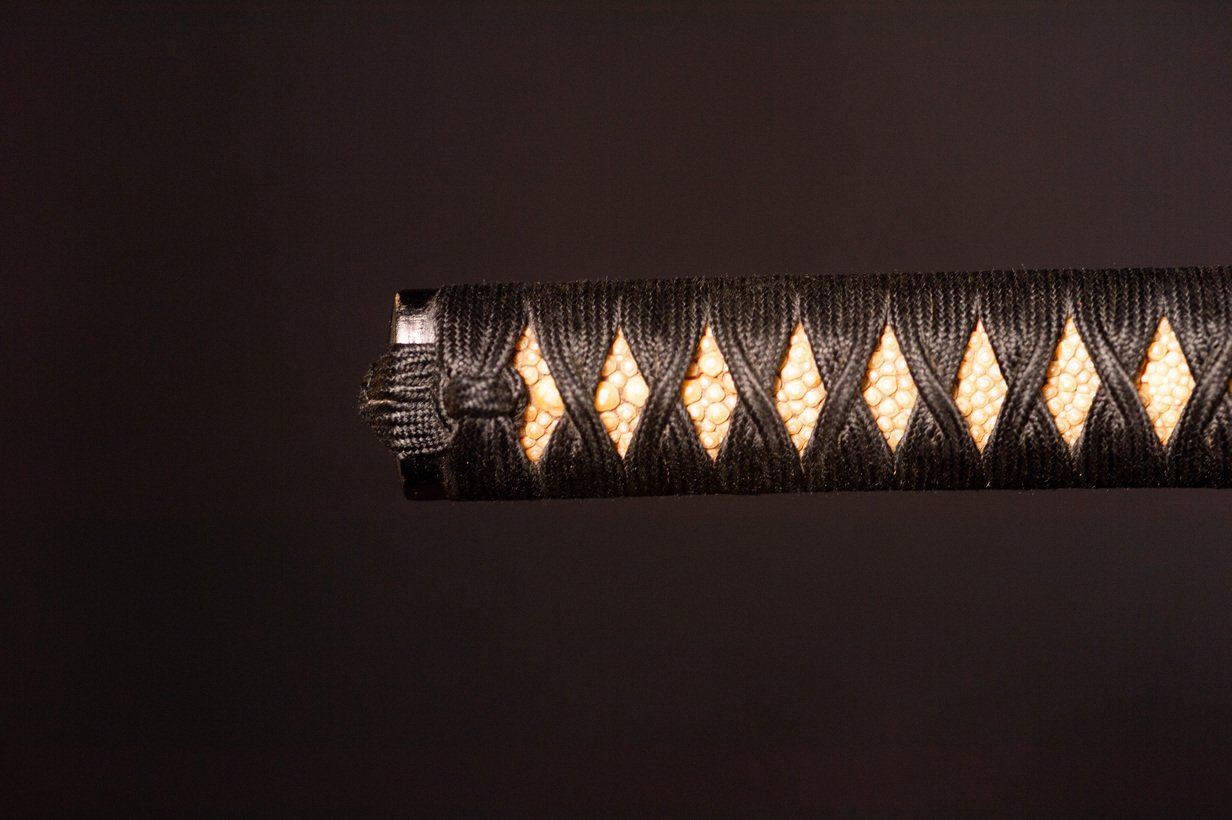
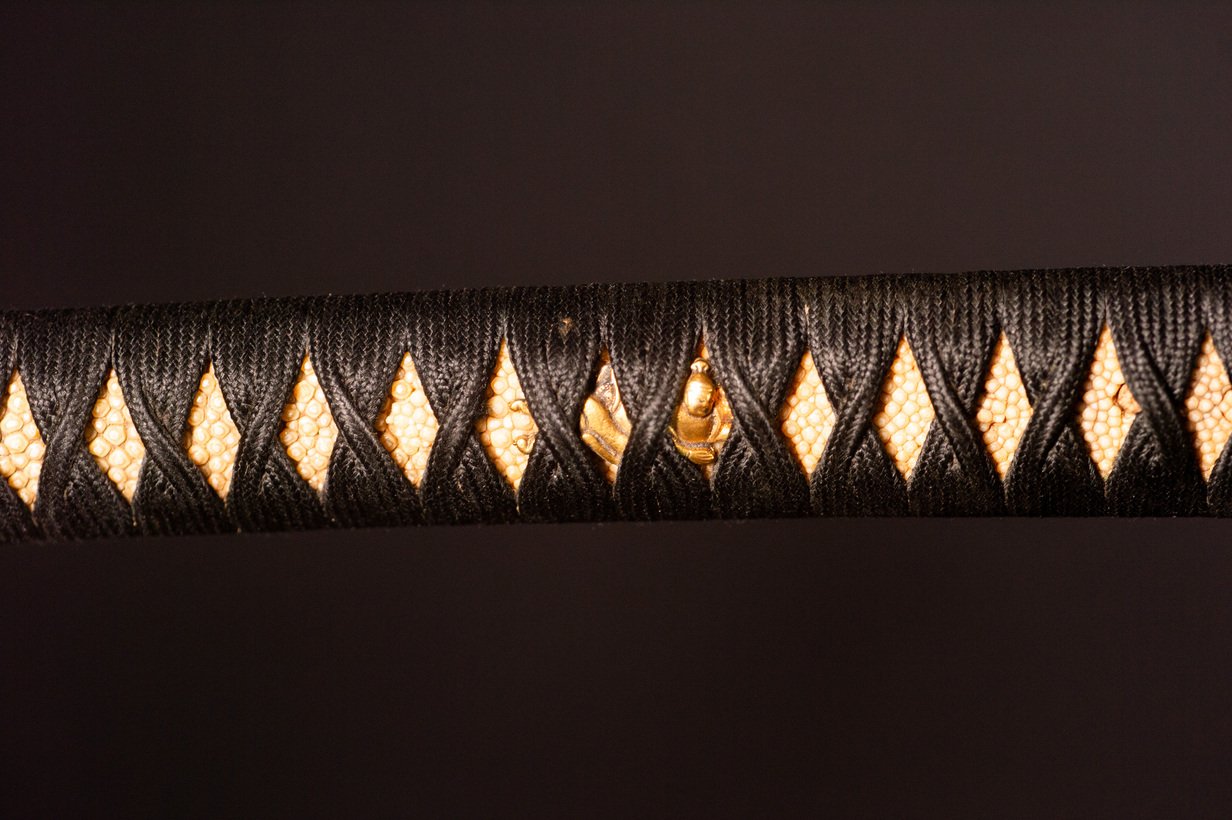
The tsuka is wrapped in black silk over white samegawa, following the classical construction of Japanese sword handles. Gilt bronze menuki complete the ensemble, reinforcing the luxurious aesthetic of the mounting while preserving traditional form.
Documentation
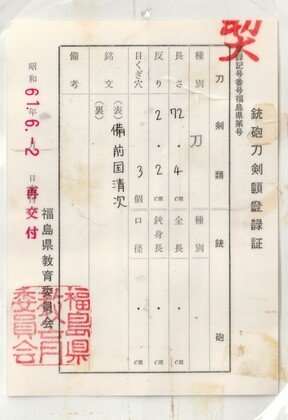
This katana is accompanied by its original Japanese torokusho, the official registration certificate for antique swords in Japan. The registration was issued in Mie Prefecture and records the sword under number 23136.
Also included are the Supein Nihonto Certificate of Authenticity, a copy of the Japanese torokusho and a protective kimono or cotton storage bag.
Specifications
- Classification: Katana 刀 / Nihontō
- Smith: Bizen Kiyotsugu
- Signature: Signed by Bizen Kiyotsugu
- School / Tradition: Bizen-den
- Period: Muromachi Period, 15th–16th century
- Tradition: Kotō
- Nagasa: 66 cm
- Sori: 2.3 cm
- Mekugi-ana: Two
- Hamon: Refined suguha with subtle nie and nioi activity
- Hada: Dense, well-forged steel grain visible in polish
- Koshirae: Complete lacquered koshirae
- Saya: Deep black lacquer with raden mother-of-pearl inlays
- Tsuba: Iron tsuba with fan motifs and gold inlays
- Fuchi-kashira: Noble metal with gold details
- Tsuka: Black silk tsukamaki over white samegawa
- Menuki: Gilt bronze menuki
- Registration: Original Japanese Torokusho, Mie Prefecture No. 23136
- Certificate: Supein Nihonto Certificate of Authenticity
- Accessories: Kimono or cotton storage bag included
Collector’s Value
This katana brings together several qualities highly appreciated by collectors: a signed kotō blade from the Muromachi period, association with the prestigious Bizen-den tradition, official Japanese registration and an exceptional koshirae decorated with raden mother-of-pearl.
The contrast between the restrained martial character of the Bizen blade and the luminous elegance of the mother-of-pearl lacquerwork makes this sword especially compelling. It is not only a historical weapon, but also a refined object of Japanese decorative art.
Historically significant, visually refined and beautifully presented, this signed Bizen Kiyotsugu katana represents an excellent example of Muromachi-period kotō swordmaking. With its Bizen-den heritage, elegant suguha hamon, original Mie torokusho, luxurious raden mother-of-pearl koshirae and Supein Nihonto Certificate of Authenticity, it is a distinguished piece for serious collection and refined display.