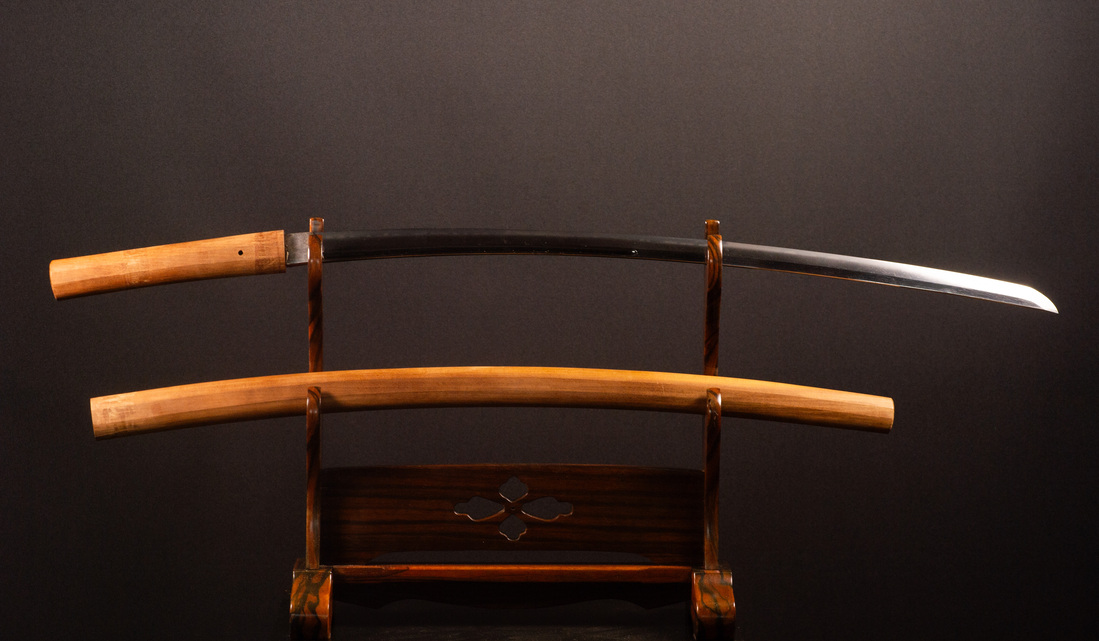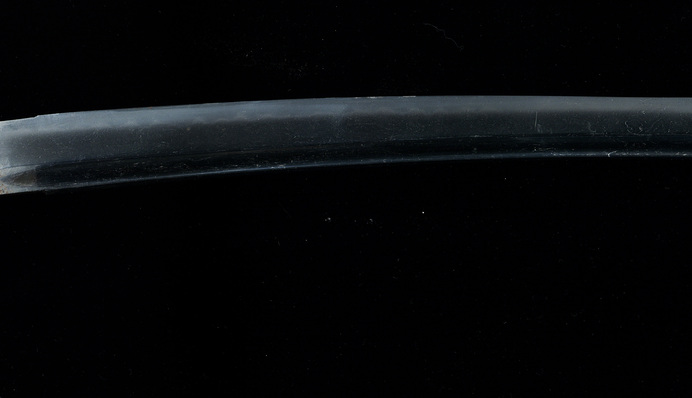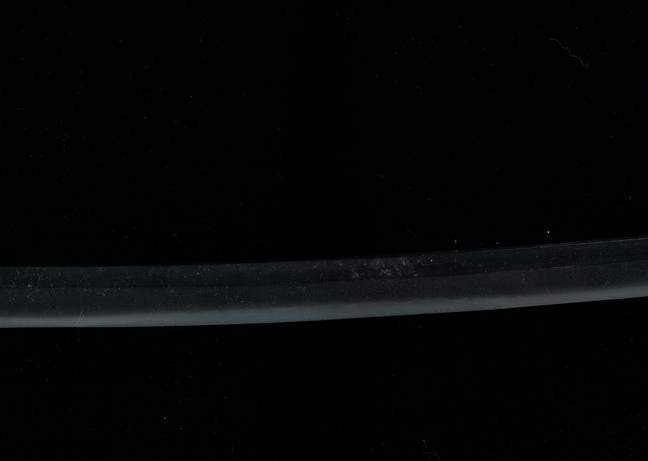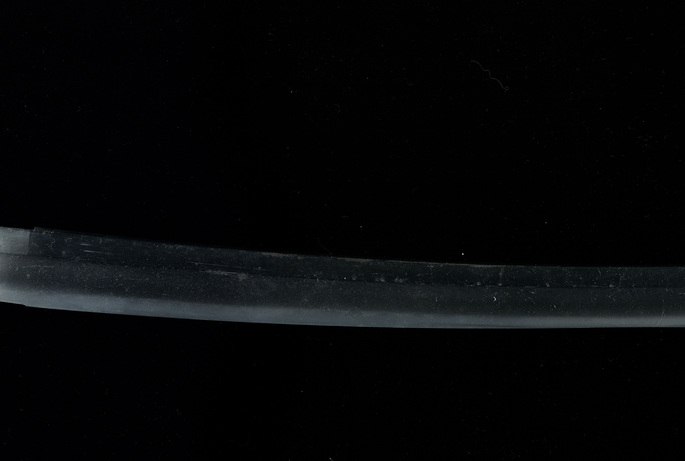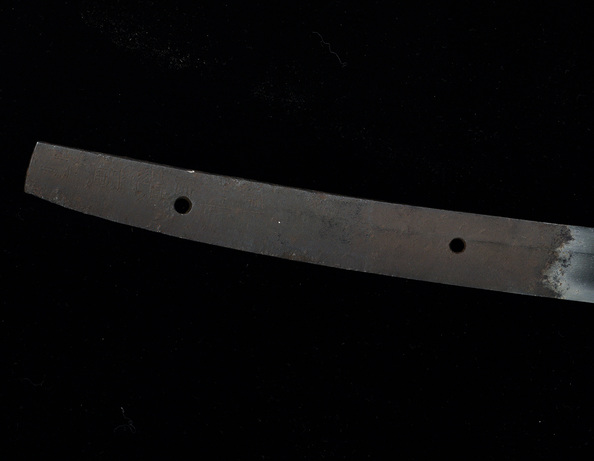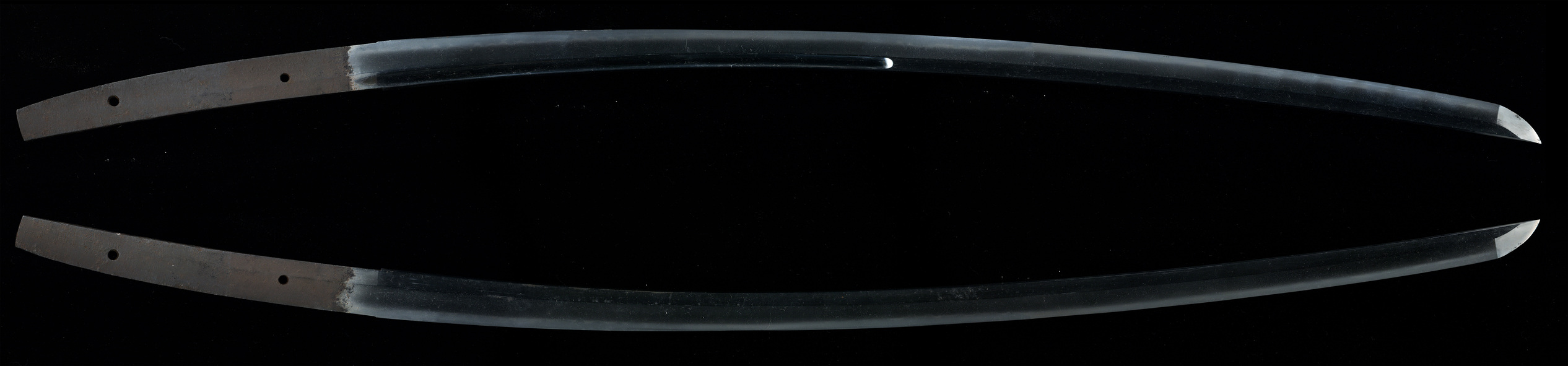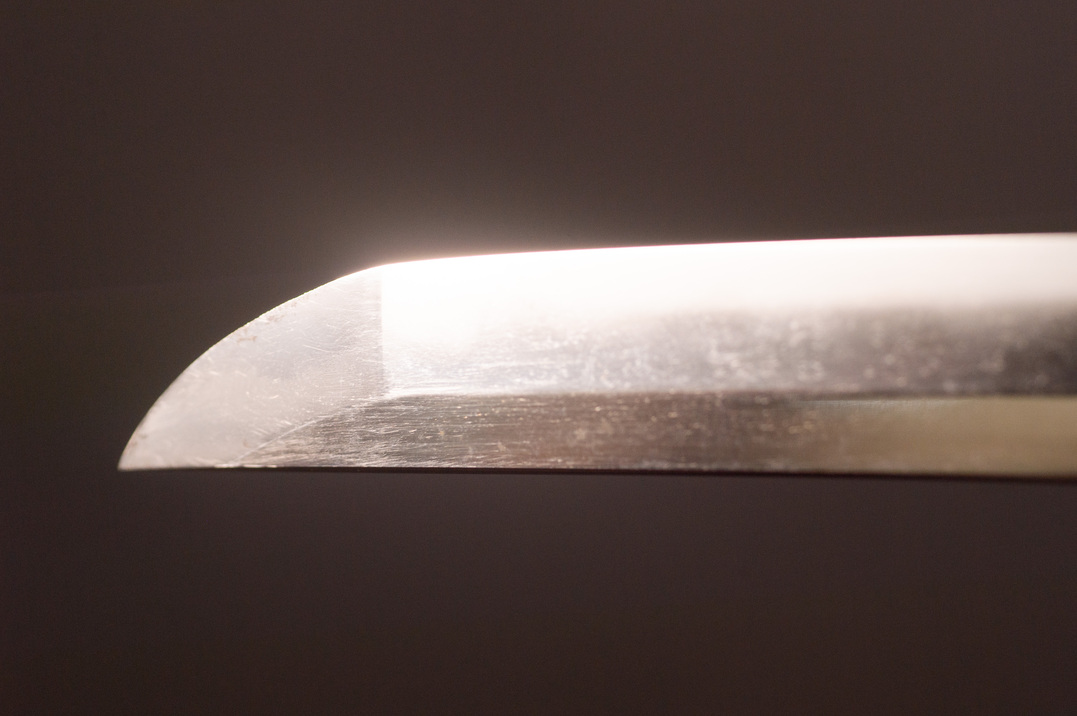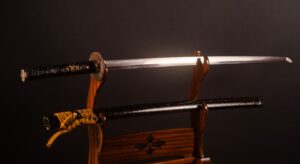
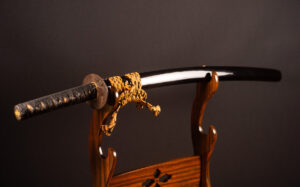
An authentic signed tachi by Sōshū-jū Tsunahiro (相州住綱広作), forged during the late Muromachi period. Distinguished by its elegant proportions and remarkable deep curvature, this blade represents one of the finest names of the Sue-Sōshū tradition. Preserved in its original shirasaya, the sword is accompanied by a copy of its original Japanese torokusho, the Supein Nihonto Certificate of Authenticity, and a protective cotton or kimono sword bag.
The graceful silhouette, refined workmanship and historically significant signature make this tachi an outstanding example of the Odawara-Sōshū tradition. Closely associated with the powerful Hōjō clan of Odawara and the legacy of the legendary Masamune, it represents both the martial spirit of the Sengoku period and the refined craftsmanship for which the Sōshū school became world-renowned.
This blade bears the signature Sōshū-jū Tsunahiro saku (相州住綱広作), meaning “Made by Tsunahiro, resident of Sagami Province.” The name Tsunahiro occupies a distinguished place within the Sōshū tradition, one of the most celebrated schools of Japanese swordsmithing, founded by the legendary master Masamune during the Kamakura period.
The Tsunahiro lineage emerged around the Tenbun era (1532–1555). According to historical tradition, the first master originally signed Masahiro (正広) before receiving the character “Tsuna” (綱) from Hōjō Ujitsuna (1486–1541), lord of Odawara Castle. In recognition of this honour, he adopted the name Tsunahiro. The family, whose surname was Yamamura (山村), proudly claimed descent from Masamune, counting Tsunahiro as the eighth generation after the great master.
Working exclusively for the Go-Hōjō clan, the Tsunahiro smiths became the principal representatives of what is now known as the Odawara-Sōshū tradition. Their swords earned an excellent reputation for combining the powerful cutting ability expected by Sengoku warriors with the elegant forging techniques inherited from classical Sōshū workmanship.
The prestige of the lineage extended well beyond the Muromachi period. Successive generations continued forging throughout the Shintō and Shinshintō eras, while the Yamamura family tradition survives today through the Masamune Kōgei workshop in Kamakura, making it one of the oldest continuously active swordsmithing lineages in Japan.
Among the Sue-Sōshū smiths, Tsunahiro is widely regarded as the leading representative of the Odawara school, preserving the artistic legacy of Masamune while producing robust blades intended for the battlefield.
This tachi belongs to the closing years of the Muromachi period, one of the most turbulent eras in Japanese history. The country was engulfed in the Sengoku Jidai—the Age of Warring States—when powerful daimyō fought continuously for territorial control and political supremacy.
The Hōjō clan ruled much of the Kantō region from the imposing Odawara Castle, one of the strongest fortifications of medieval Japan. Their military success relied heavily upon disciplined samurai forces equipped with practical, durable weapons capable of withstanding prolonged campaigns.
The Tsunahiro school was established specifically to serve these military needs. Unlike many provincial smiths, the Odawara-Sōshū craftsmen inherited one of the most prestigious artistic traditions in Japanese sword history while producing blades intended for real combat rather than ceremonial display.
Every sword signed Tsunahiro therefore evokes the atmosphere of sixteenth-century Odawara: the headquarters of the Hōjō clan, the constant military campaigns of the Sengoku period, and a direct artistic lineage tracing its origins back to Masamune himself.
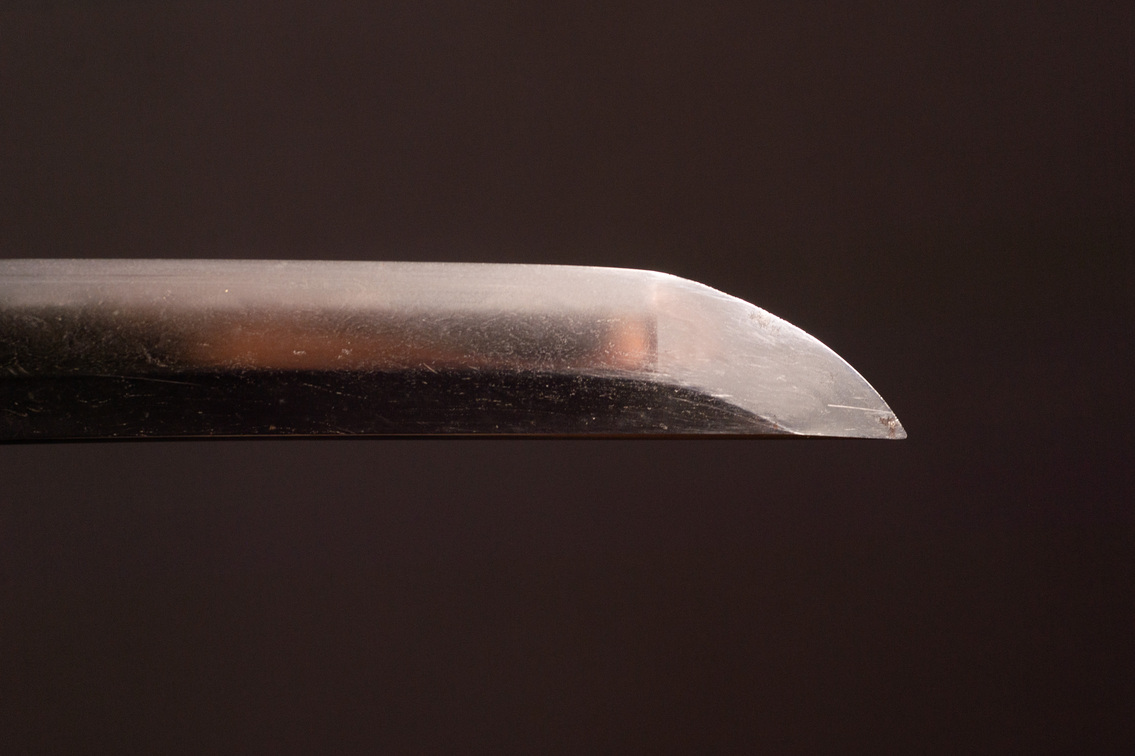
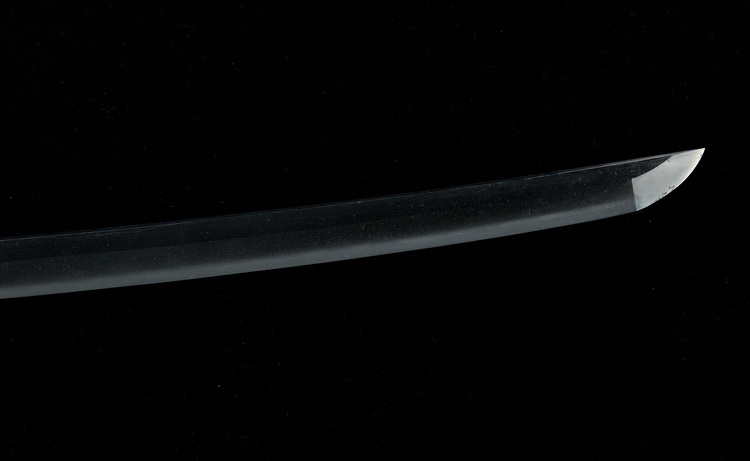
The most striking feature of this sword is its magnificent sugata. Measuring 70.4 cm in nagasa with an impressive sori of 2.6 cm, the blade displays the deep sweeping curvature characteristic of classical tachi. Its elegant profile immediately recalls the cavalry swords carried by mounted samurai during Japan’s medieval period, combining grace with unmistakable authority.
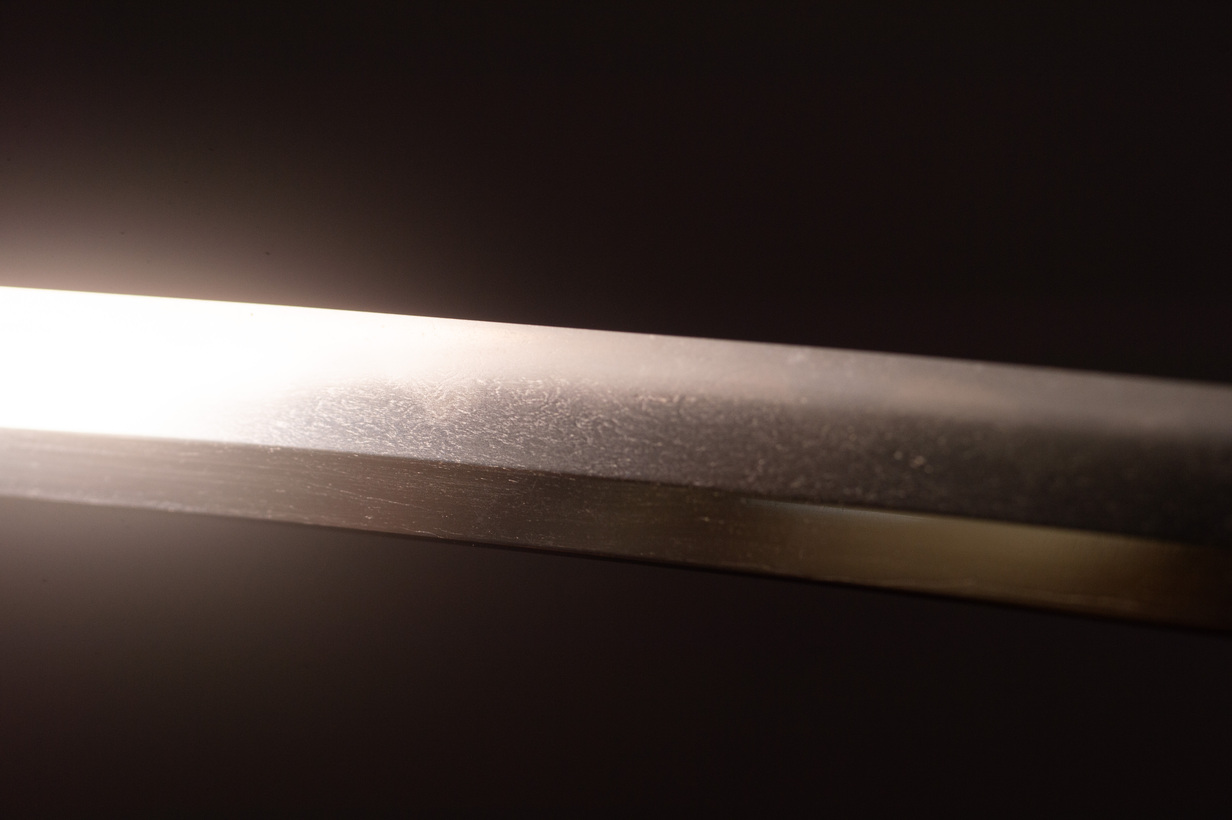
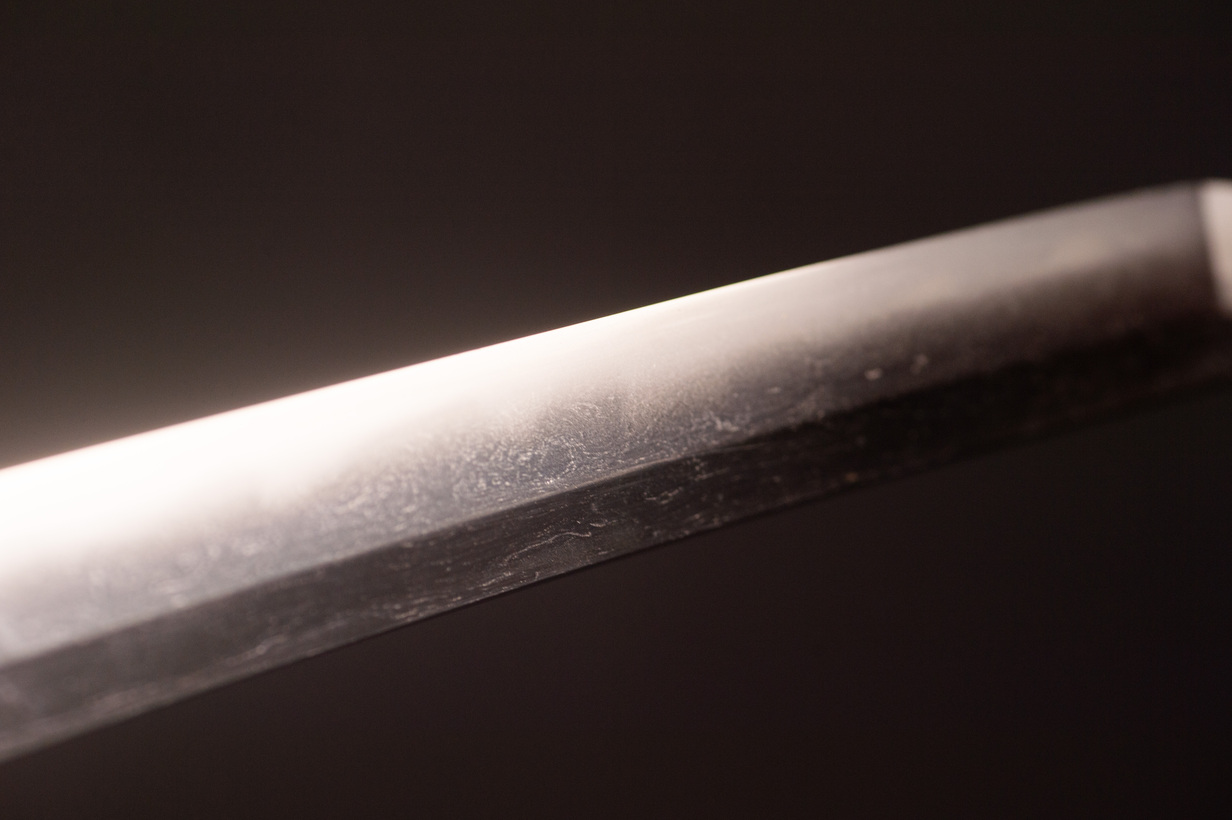
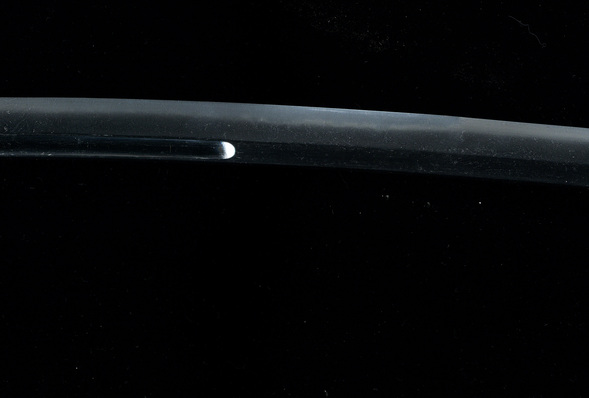
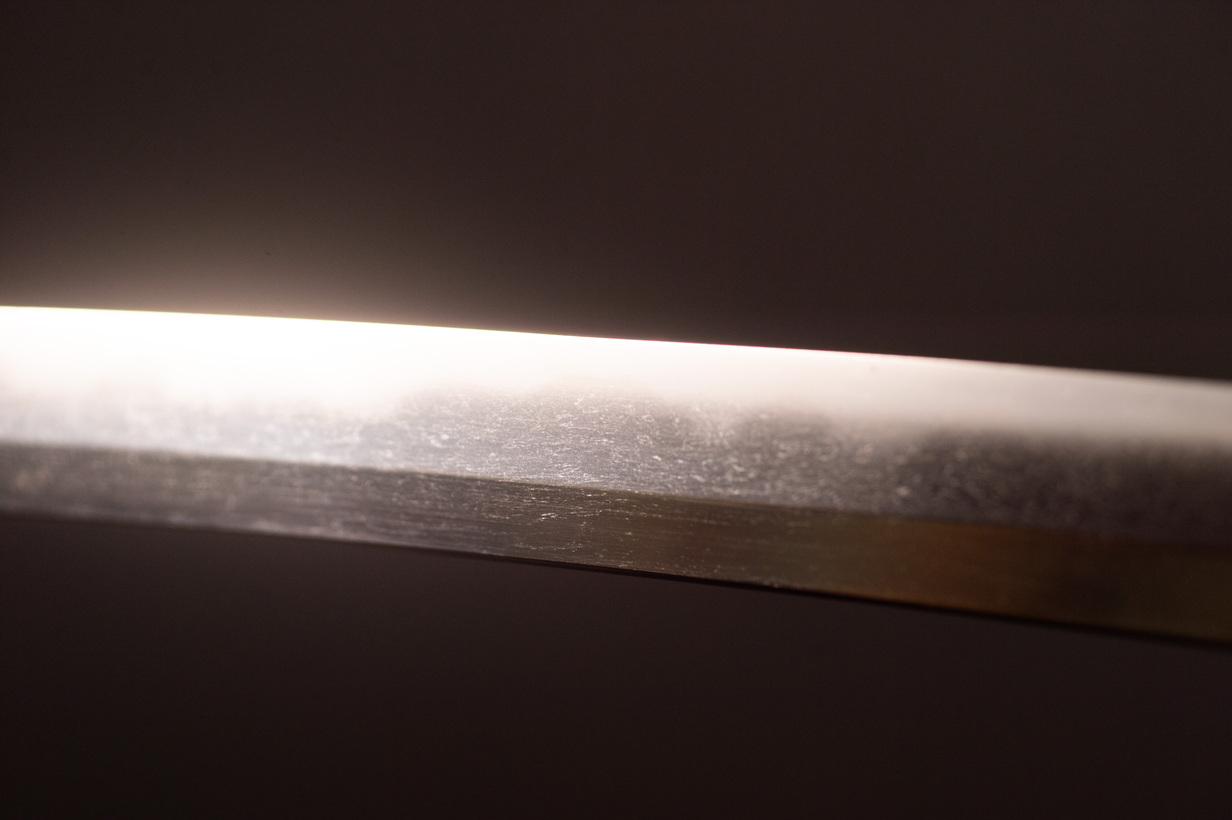
The hamon consists of a refined suguha flowing gently into soft notare, executed in bright nie. The temper line remains continuous and well balanced throughout the blade, terminating in a neat ko-maru boshi. Rather than dramatic flamboyance, the overall impression is one of quiet confidence and technical refinement, perfectly in keeping with the more restrained expression of the Sōshū tradition.
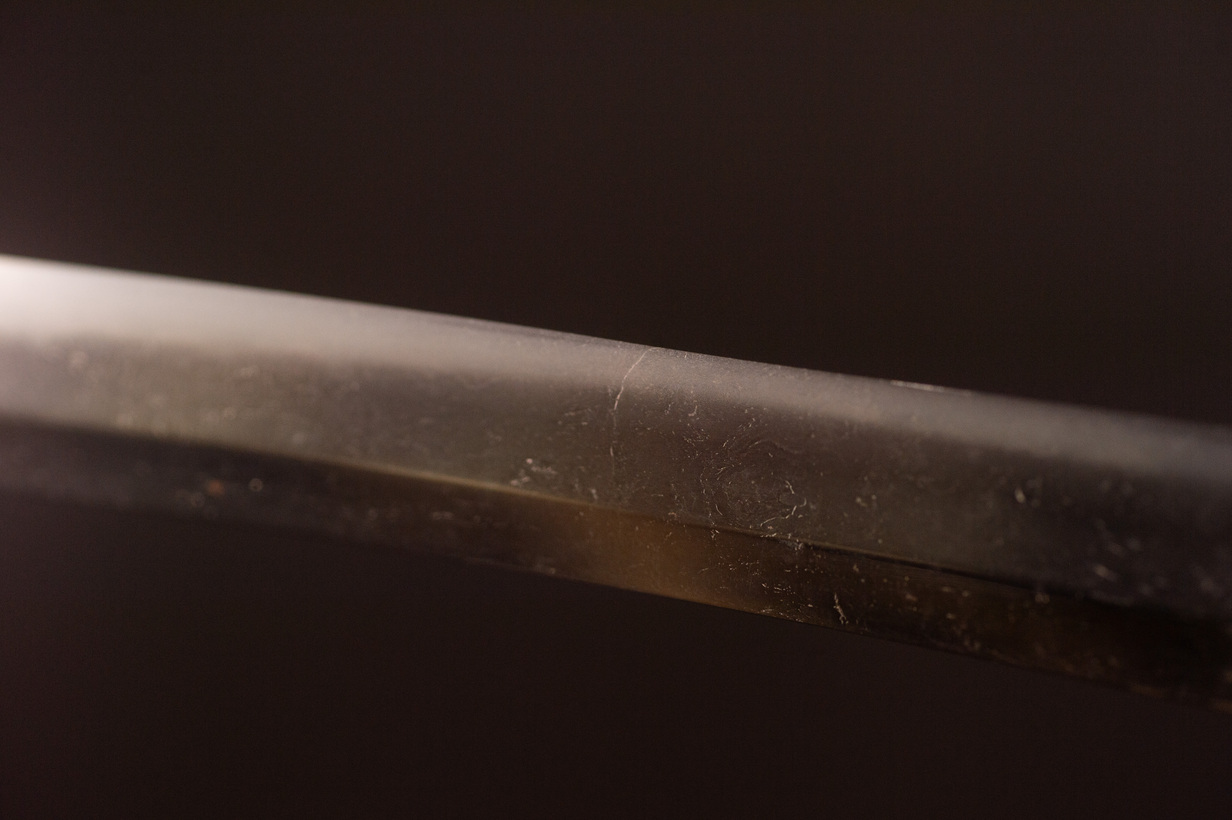
The forged steel displays an attractive combination of itame and mokume grain enriched with visible ji-nie. The texture possesses the dark, vibrant appearance long associated with quality Sōshū workmanship, revealing careful forging and excellent material selection.
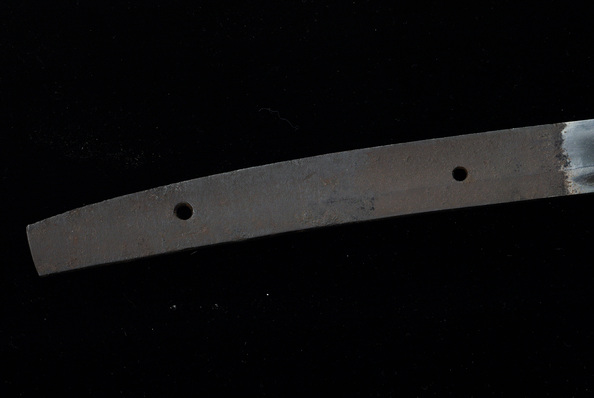
The nakago has been suriage, having been shortened during its long history, yet importantly retains its original signature. Two mekugi-ana remain visible, while the deep black patina developed over centuries is entirely consistent with authentic late Muromachi kotō manufacture. The workmanship, proportions, signature and overall character of the sword form a harmonious whole that faithfully represents the traditions of the Odawara-Sōshū school.
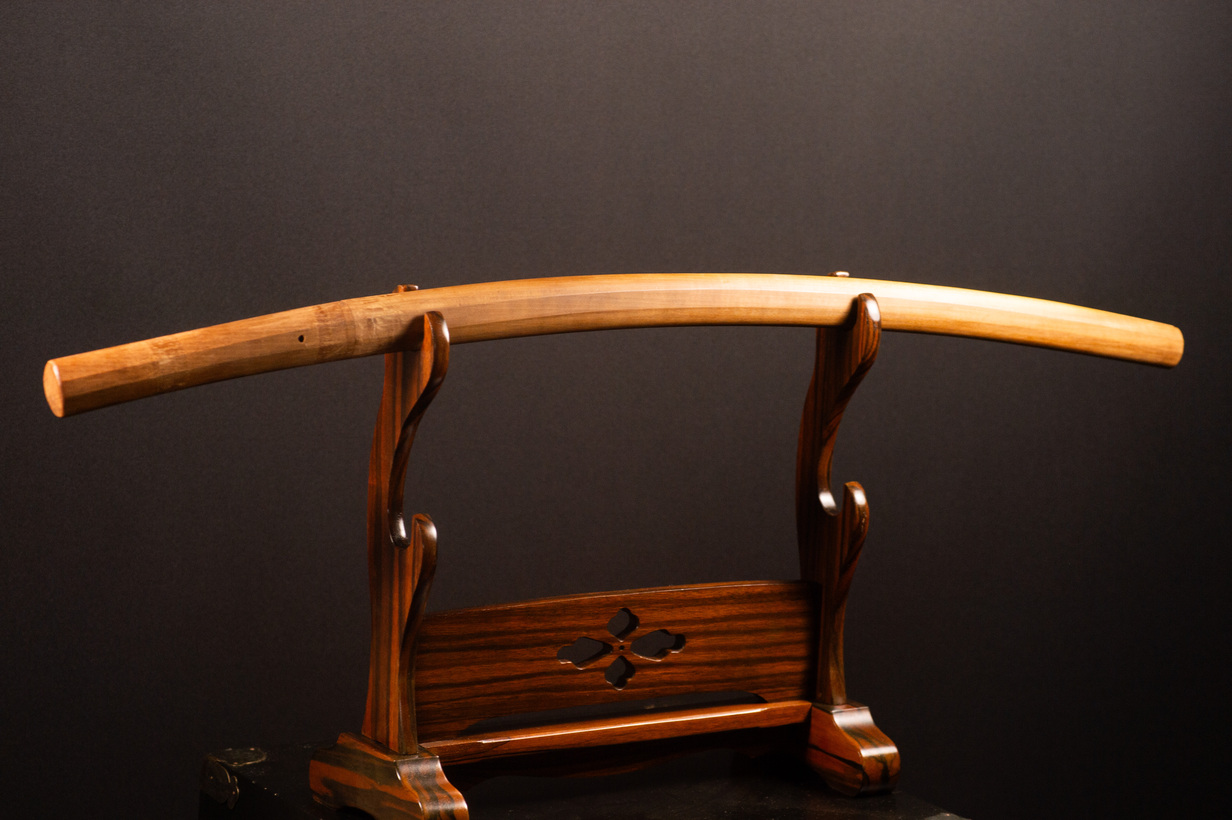
The sword is preserved in its shirasaya, the traditional plain white-wood mounting used in Japan for the long-term preservation of valuable blades. Unlike decorative mountings intended for wear, the shirasaya provides a stable environment that helps protect the polish and steel from unnecessary wear and humidity.
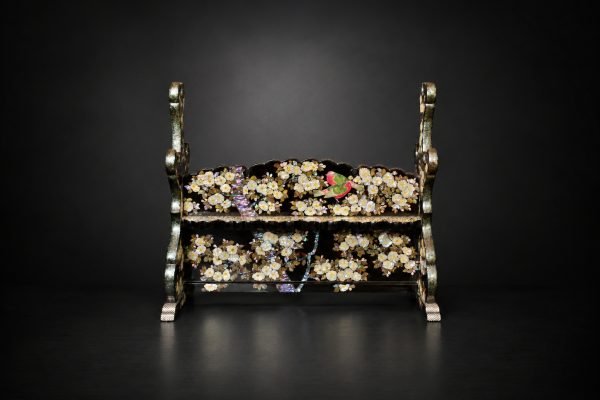
Presented on its display stand, the elegant mounting allows the remarkable curvature of this tachi to be fully appreciated while ensuring appropriate long-term conservation.
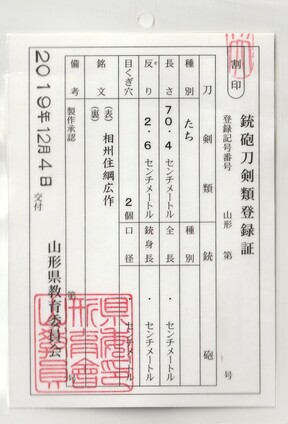
This tachi is accompanied by a copy of its original Japanese torokusho registration issued by Yamagata Prefecture, confirming its legal registration in Japan.
The sword also includes the Supein Nihonto Certificate of Authenticity, prepared by our specialists, describing the principal characteristics, historical attribution and condition of the blade.
A protective cotton or traditional kimono sword bag is included with the purchase.
No modern NBTHK or NTHK appraisal paper accompanies this sword. It is offered as a signed (zaimei) work of Sōshū-jū Tsunahiro, supported by the retained signature, the workmanship, the blade’s sugata and the characteristic features of the Odawara-Sōshū tradition.
Signed swords by Tsunahiro have long been appreciated by collectors for their historical association with the prestigious Sōshū tradition and the powerful Hōjō clan of Odawara. As one of the principal representatives of the Sue-Sōshū school, Tsunahiro occupies a distinguished place in Japanese sword history, combining the artistic heritage of Masamune with the practical requirements of the Sengoku battlefield.
This example is especially attractive for its graceful tachi proportions, exceptionally deep curvature and retained signature. Although the blade has been shortened during its long history, the preservation of the mei considerably enhances both its historical interest and collectability.
Together with its elegant shirasaya, documented Japanese registration and carefully preserved condition, this sword represents an excellent opportunity to acquire an authentic Muromachi-period tachi by one of the most respected names of the Odawara-Sōshū tradition.
Elegant, historically significant and unmistakably representative of the Sōshū tradition, this signed Sōshū-jū Tsunahiro tachi embodies the martial spirit of late Muromachi Japan. Combining an impressive sugata, refined workmanship, a retained signature and documented provenance, it is a distinguished collector’s sword that rewards both historical study and refined display.
| Época | Edo |
|---|

Order above 1.000,00 € gets free shipping.

Secure and hassle-free payment process.

Certificate of authenticity included.

Have questions? Contact us via WhatsApp.
Contact