NBTHK Hozon Katana by Kanenori of the Mino Seki Tradition
Muromachi Period · Certified Japanese Katana with Koshirae and Shirasaya
A finely mounted Japanese katana attributed to Kanenori 兼則 of the Mino Seki tradition, accompanied by an official NBTHK Hozon Tōken certificate, its original Japanese registration license and a companion shirasaya for preservation.
This elegant blade belongs to the renowned Mino tradition, one of the five great classical schools of Japanese swordmaking. Preserved with both a handsome dragon-themed koshirae and a white-wood resting scabbard, it offers a compelling combination of historical authenticity, collector appeal and strong visual presence.
The Smith (Kanenori 兼則)
This blade is the work of Kanenori 兼則, a respected name within the Mino tradition, also known as Mino-den. Mino was one of the Gokaden, the five great classical traditions of Japanese swordmaking, and became especially famous for swords created in and around the town of Seki.
The Mino tradition developed from the older Yamato tradition during the late Kamakura period and reached its full maturity during the Muromachi era. Seki smiths became renowned for qualities highly valued by warriors: sharpness, structural reliability and a direct, purposeful elegance.
Kanenori was not a single individual smith but a lineage that continued for several generations from the early Muromachi period onward. The earliest bearer of the name is recorded as an important figure among the early Seki schools, while later generations continued the name into subsequent periods and even neighbouring provinces such as Echizen and Owari.
Blades of this line from the Muromachi period belong to the celebrated group known as Sue-Seki, Mino swords forged during the height of Seki’s prosperity.
Historical Context
The Muromachi period, especially its turbulent latter half during the Sengoku era, was the golden age of Mino swordmaking. Constant warfare created enormous demand for reliable swords, and Mino’s strategic position between the Kantō region and the capital made it one of Japan’s most important forging centres.
Seki blades were produced for feudal lords, retainers and samurai across the country. They were valued not only as beautiful objects, but above all as dependable weapons intended to be carried and used.
This katana belongs directly to that world. Its form, construction and later remounting history give it the honest, battle-tested character associated with true working swords of the samurai age.
The Blade (Tōshin)
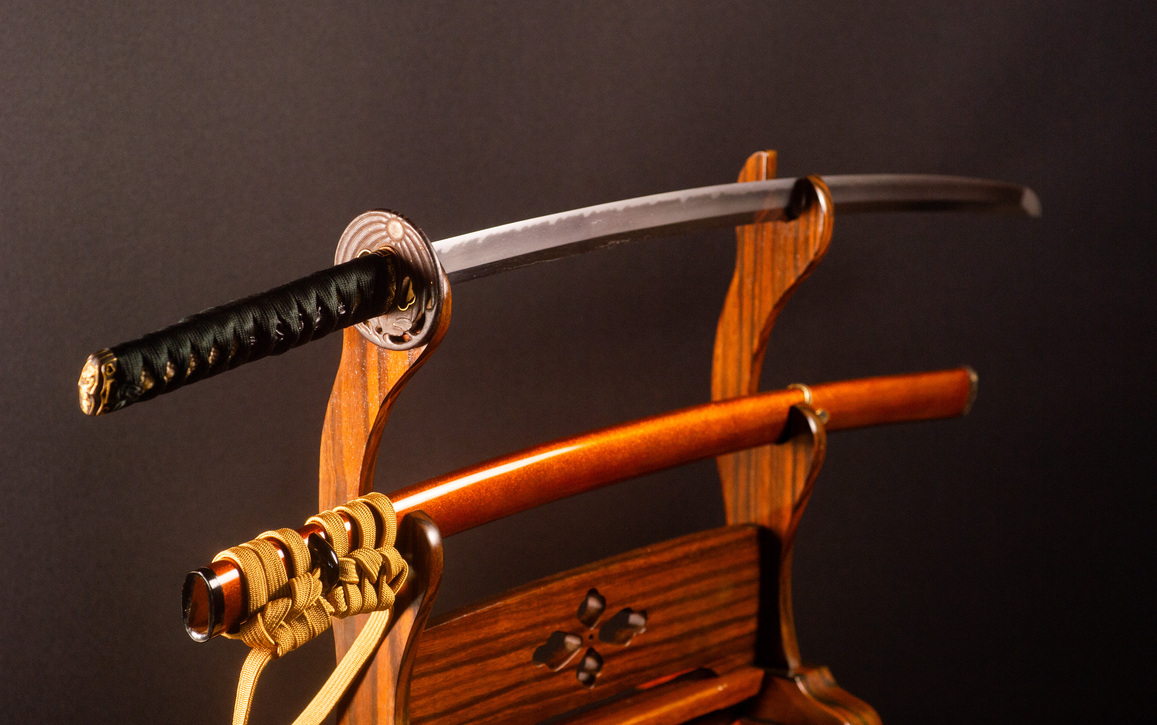
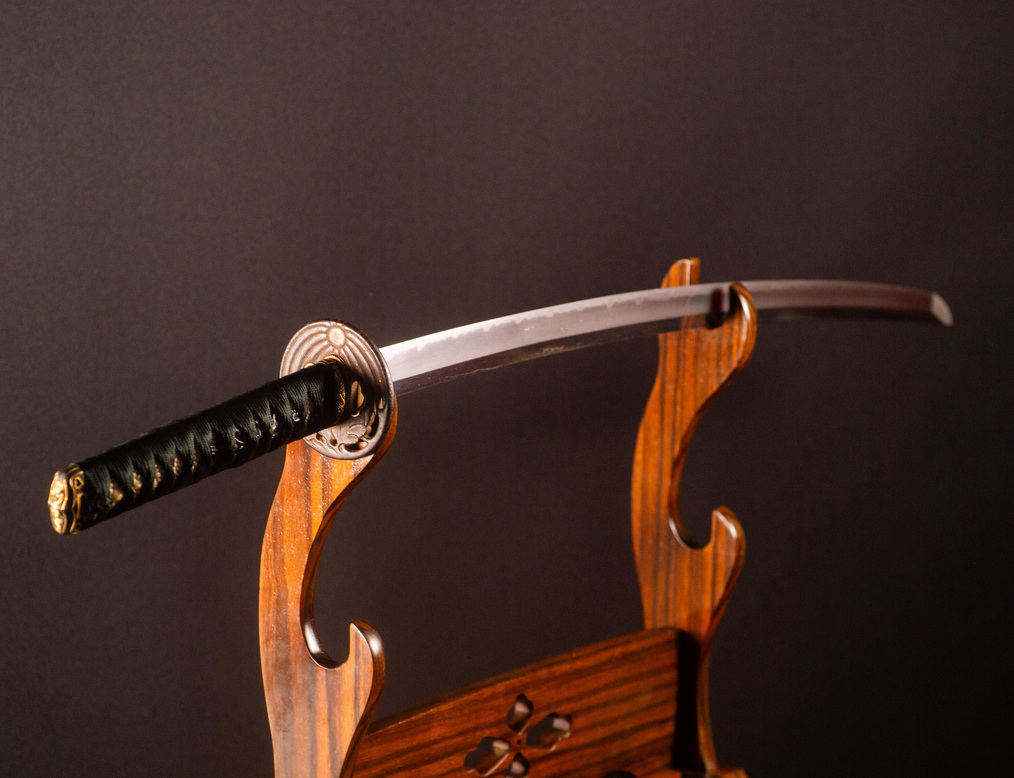
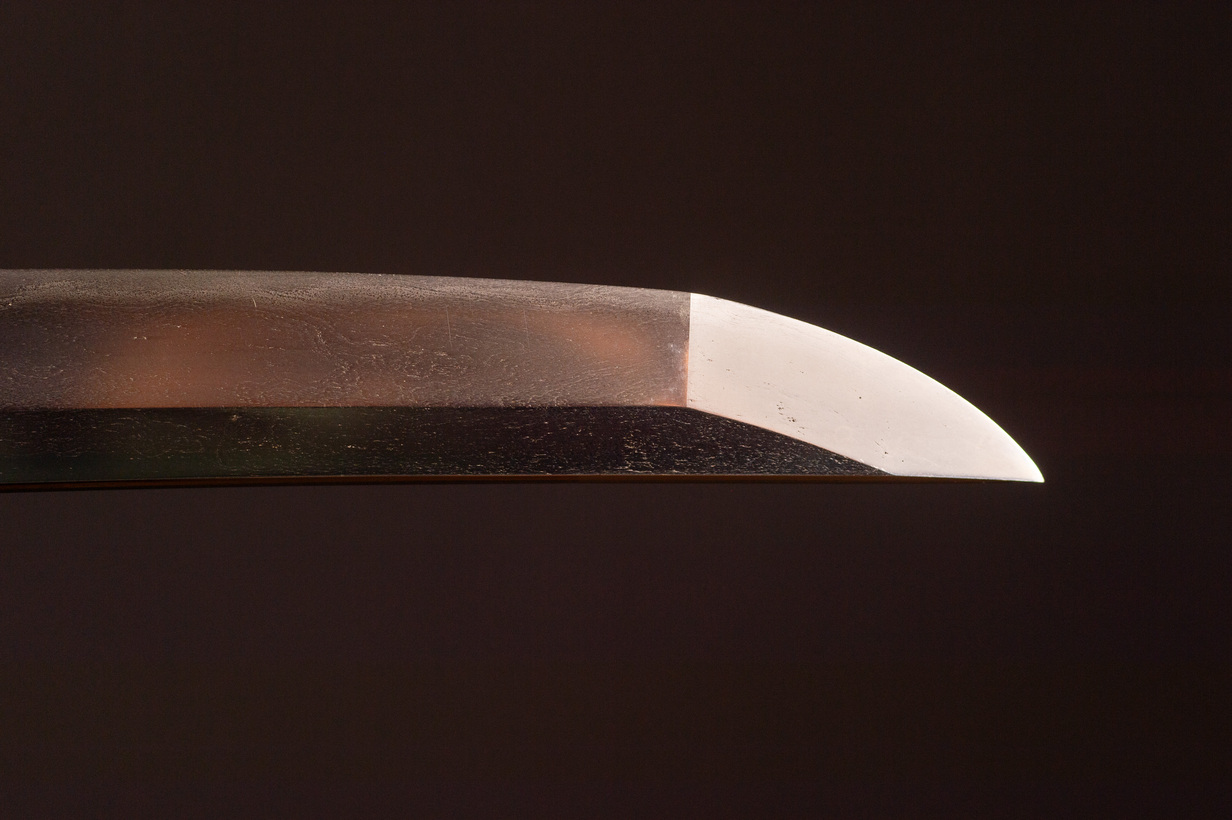
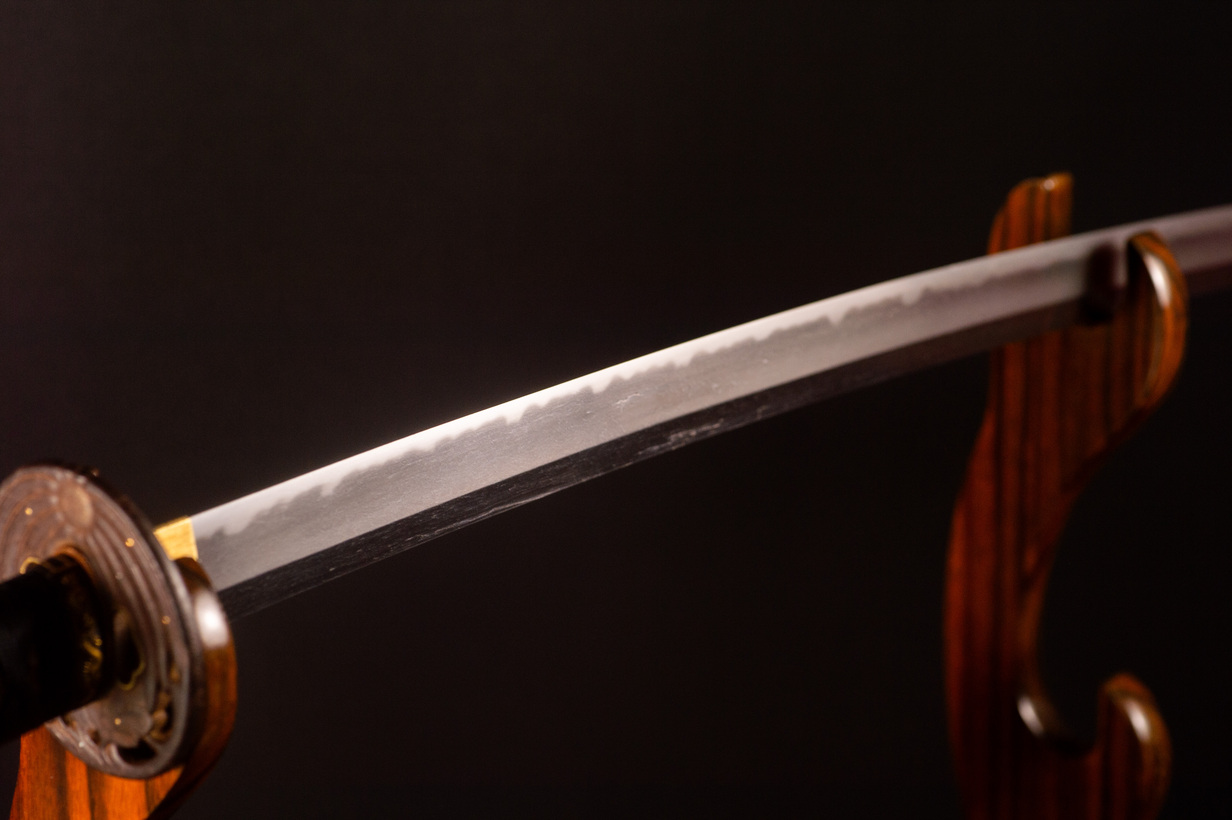
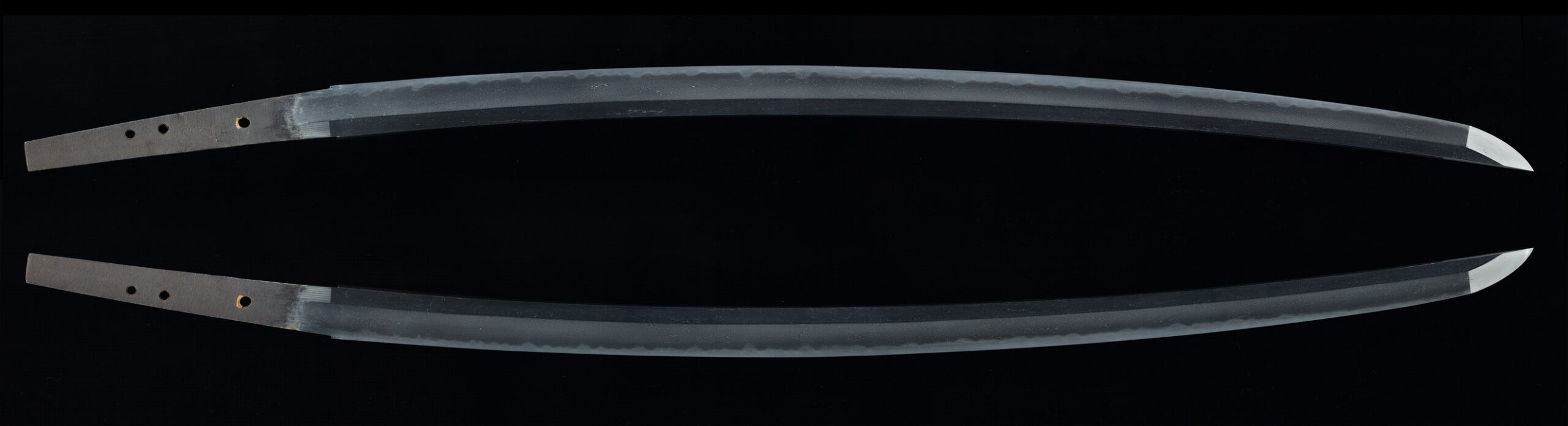
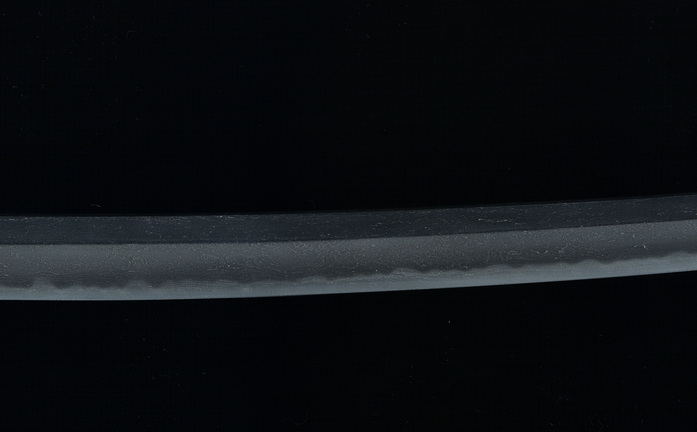
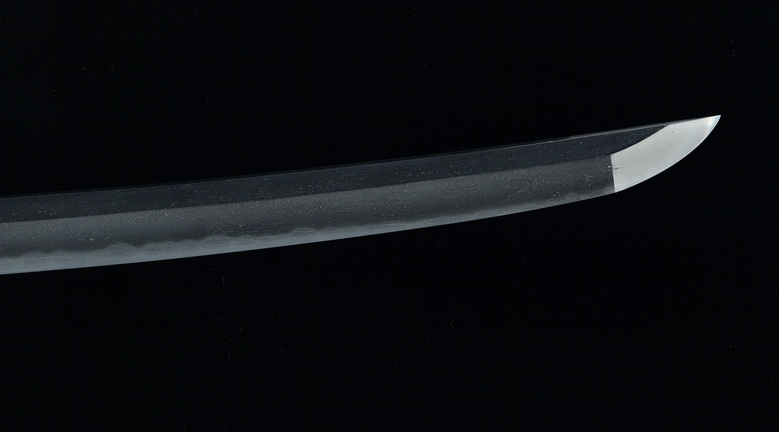
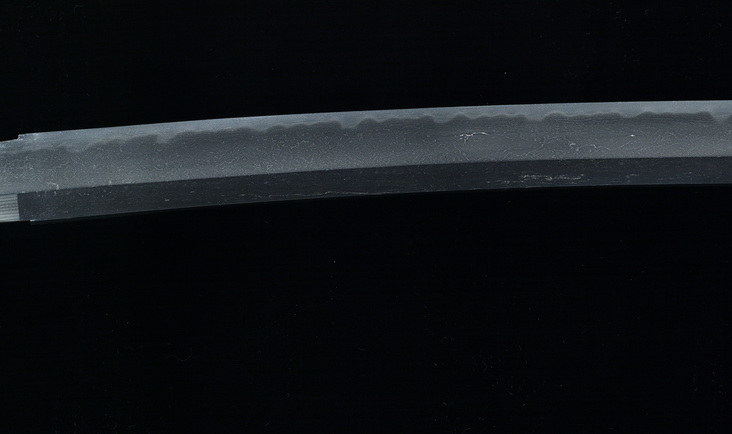
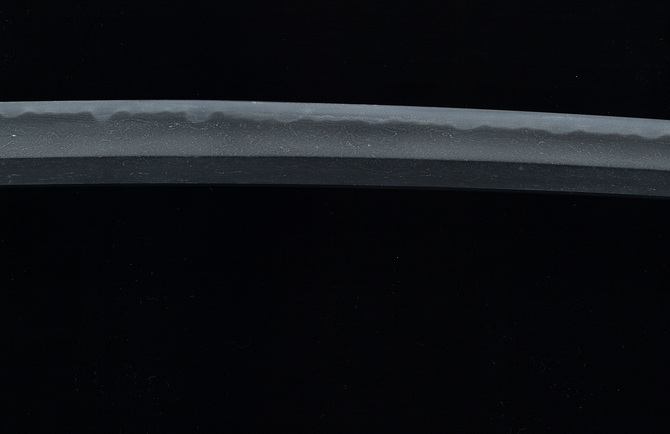
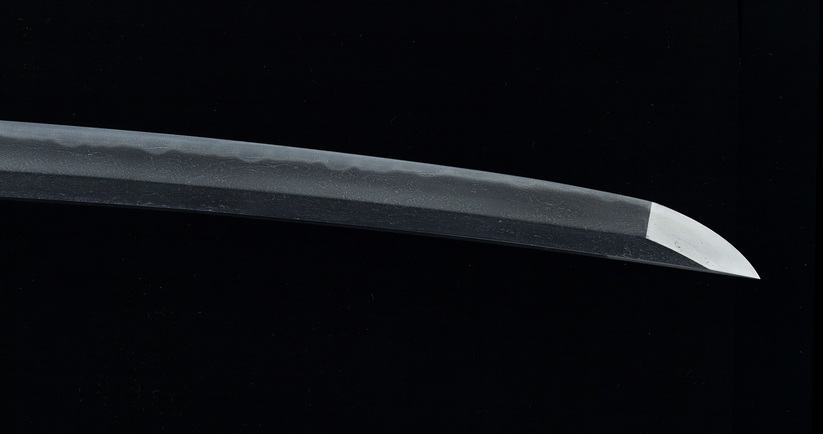
The blade is forged in classic shinogi-zukuri form with an iori-mune back. Its graceful and well-balanced curvature rises toward a medium point, or chū-kissaki, giving the sword a confident and elegant silhouette.
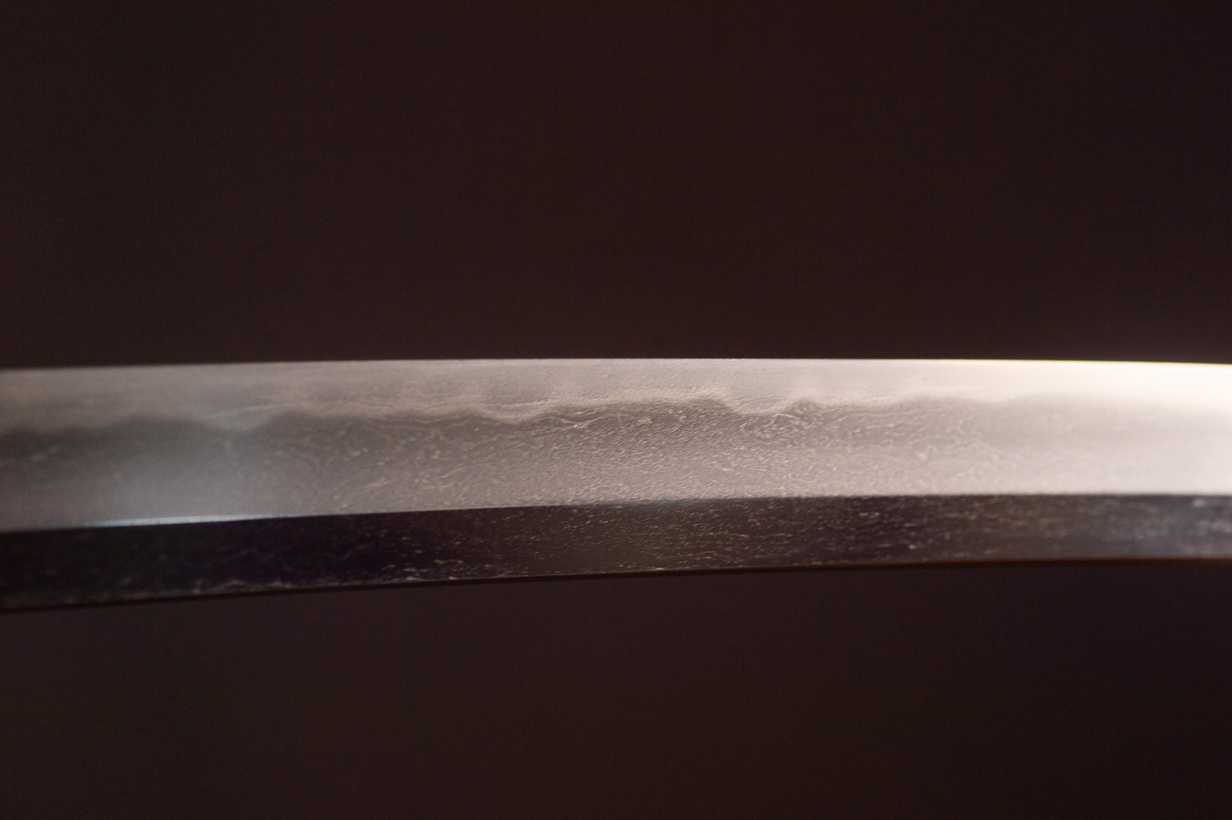
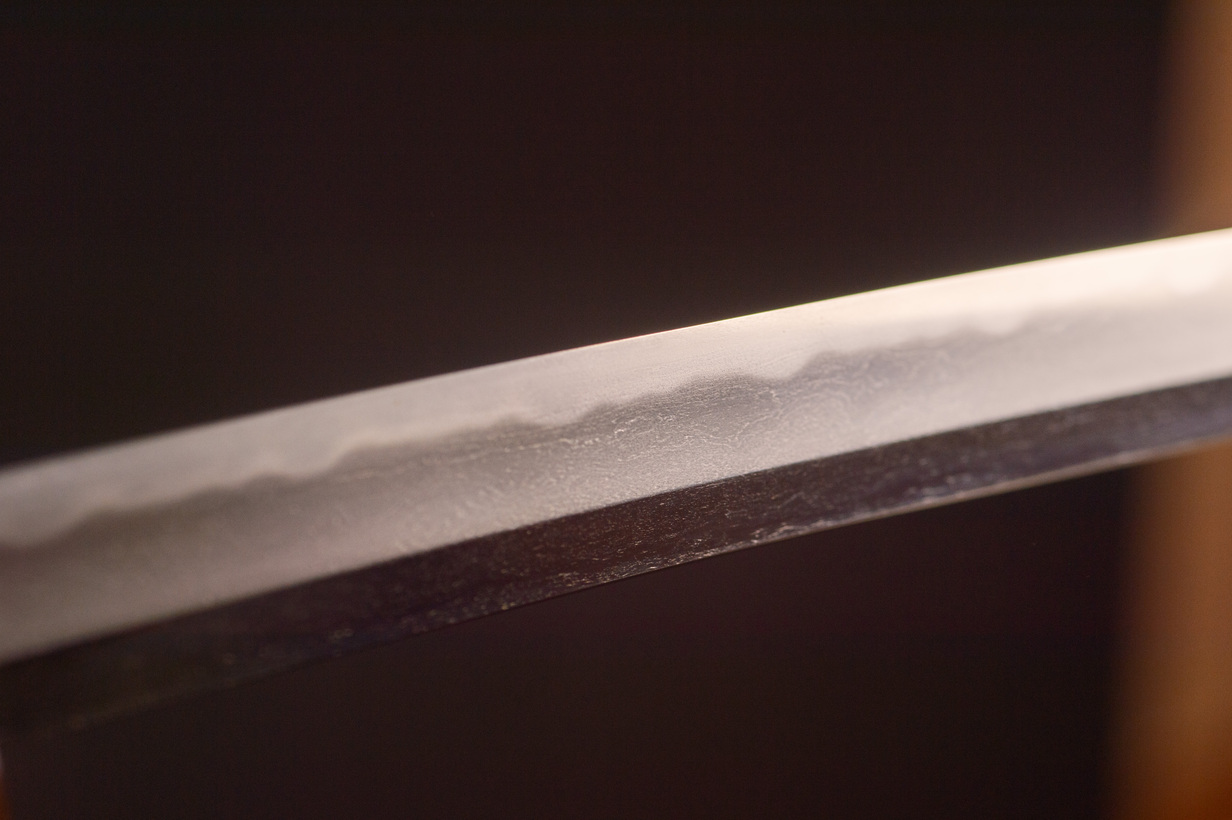
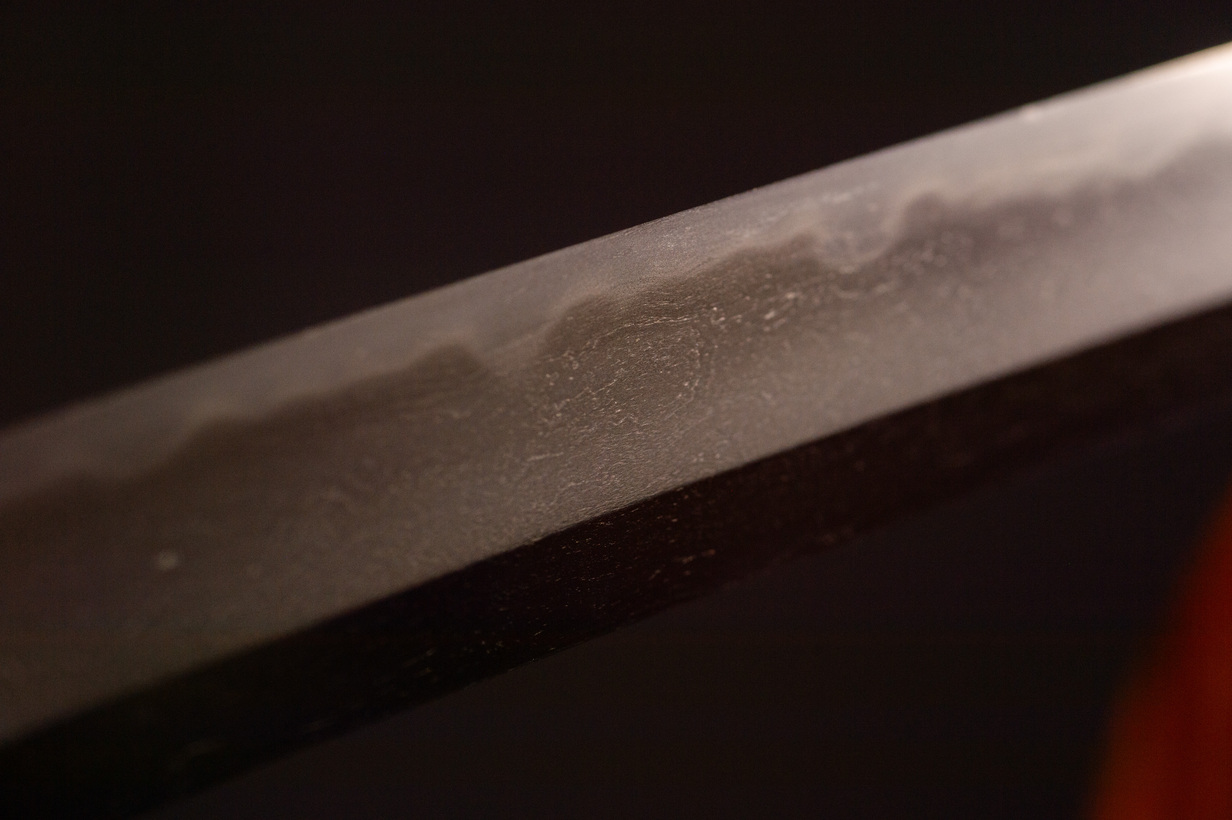
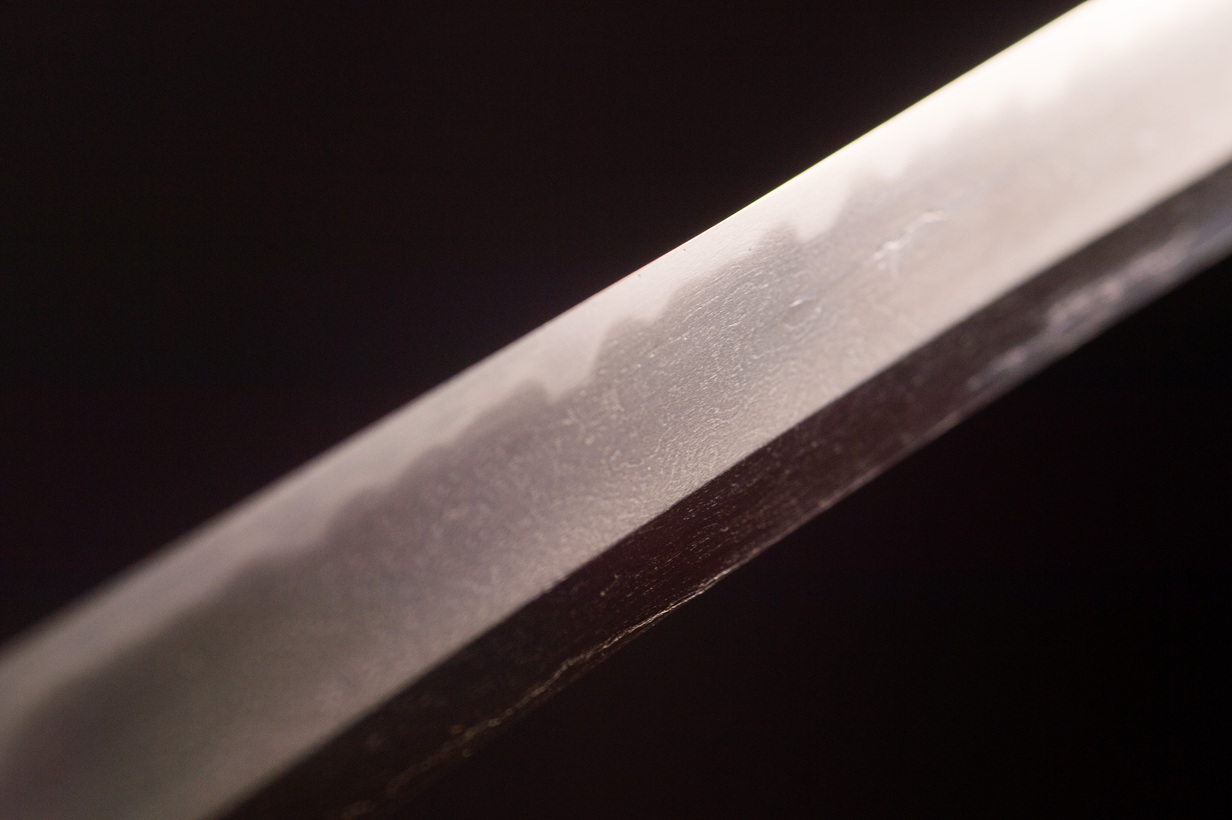
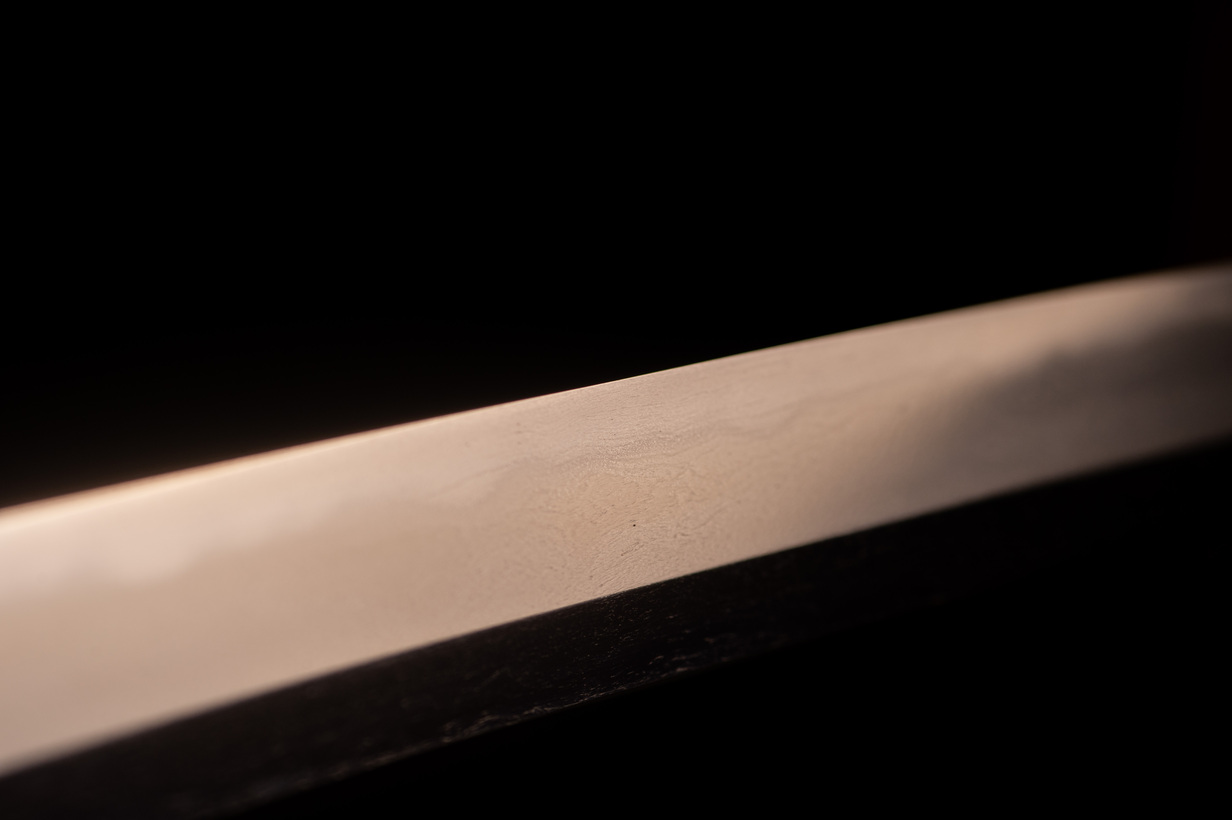
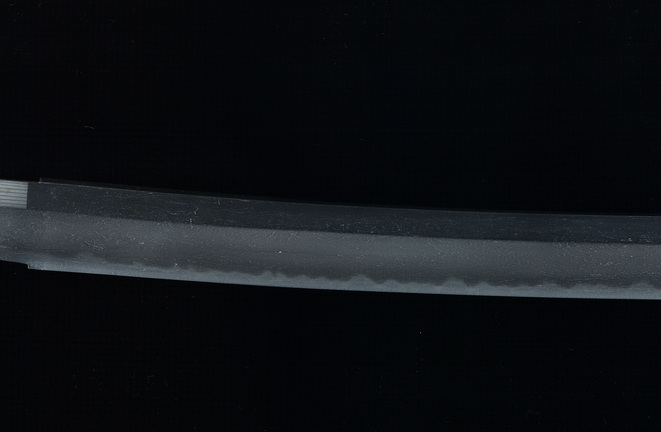
The hamon is lively and expressive, combining notare, gunome and midare elements worked in nioi with bright nie activity. This energetic temper line is unmistakably associated with the Mino tradition.
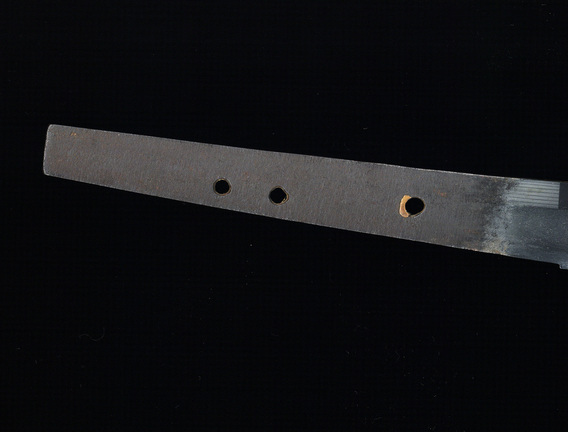
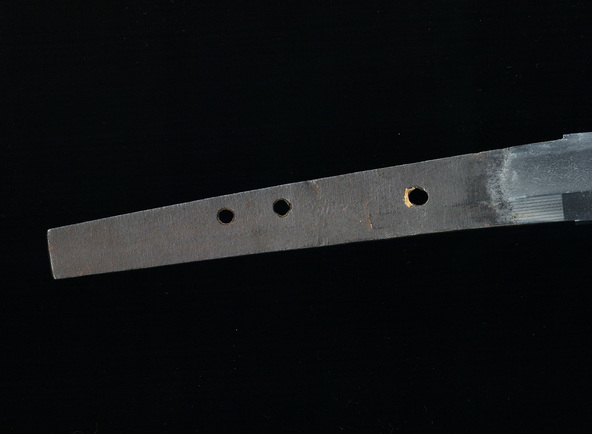
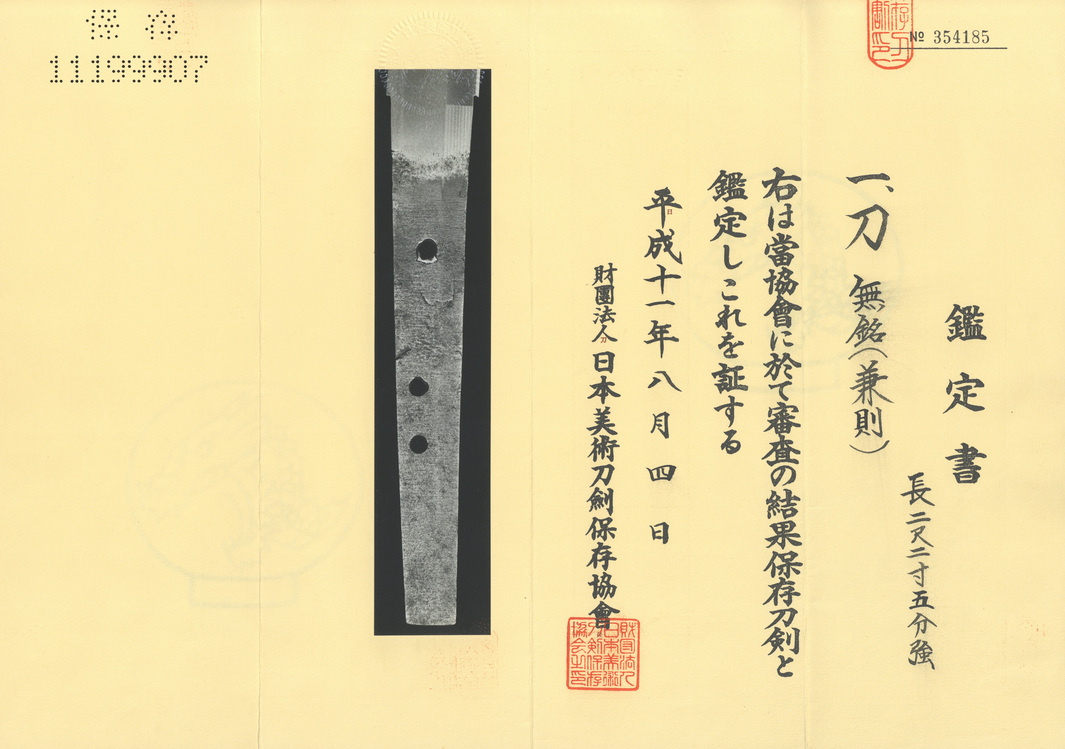
The nakago is ō-suriage and mumei, with three mekugi-ana. These features reflect the long working life of a blade that was preserved, shortened and remounted across generations.
The Koshirae
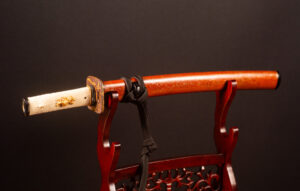
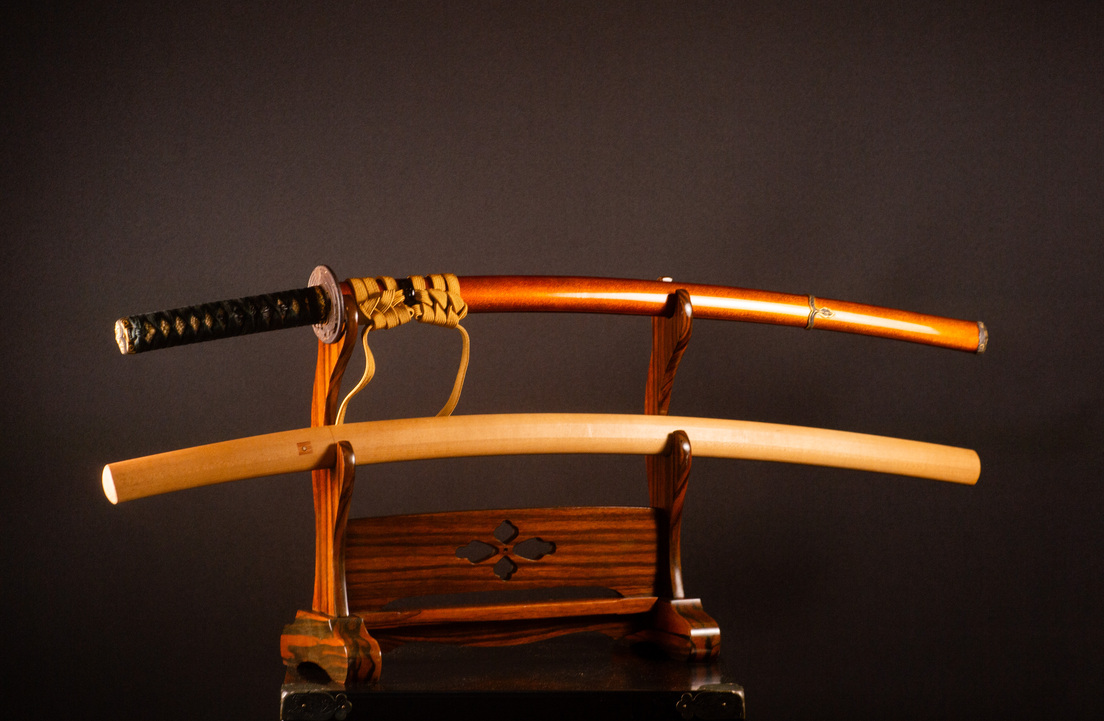
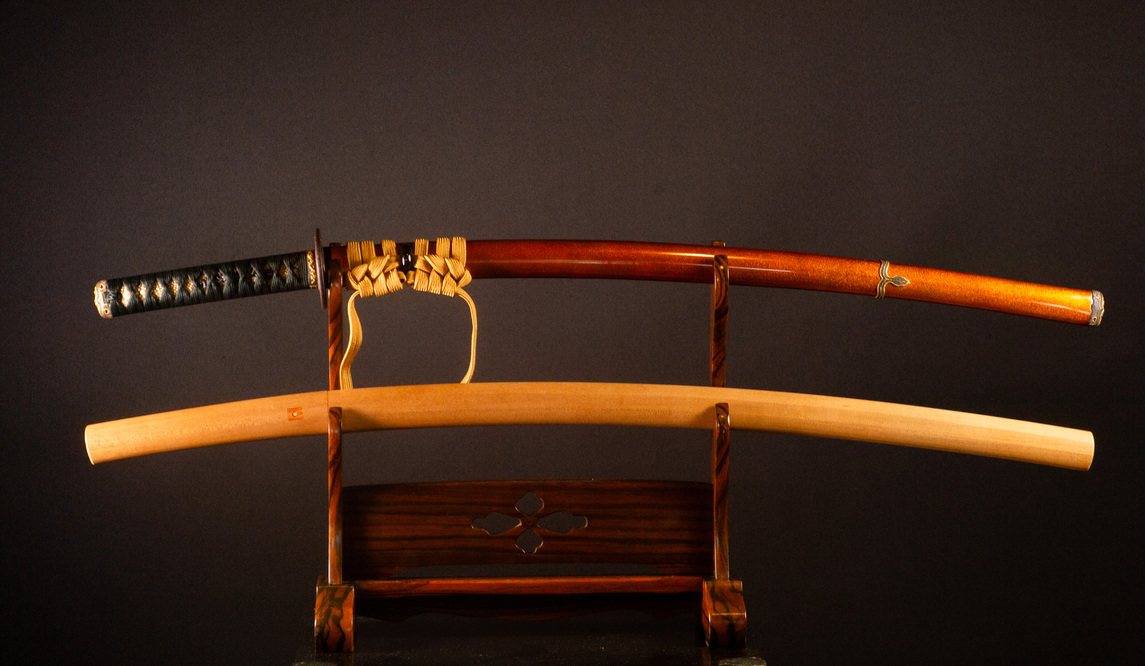
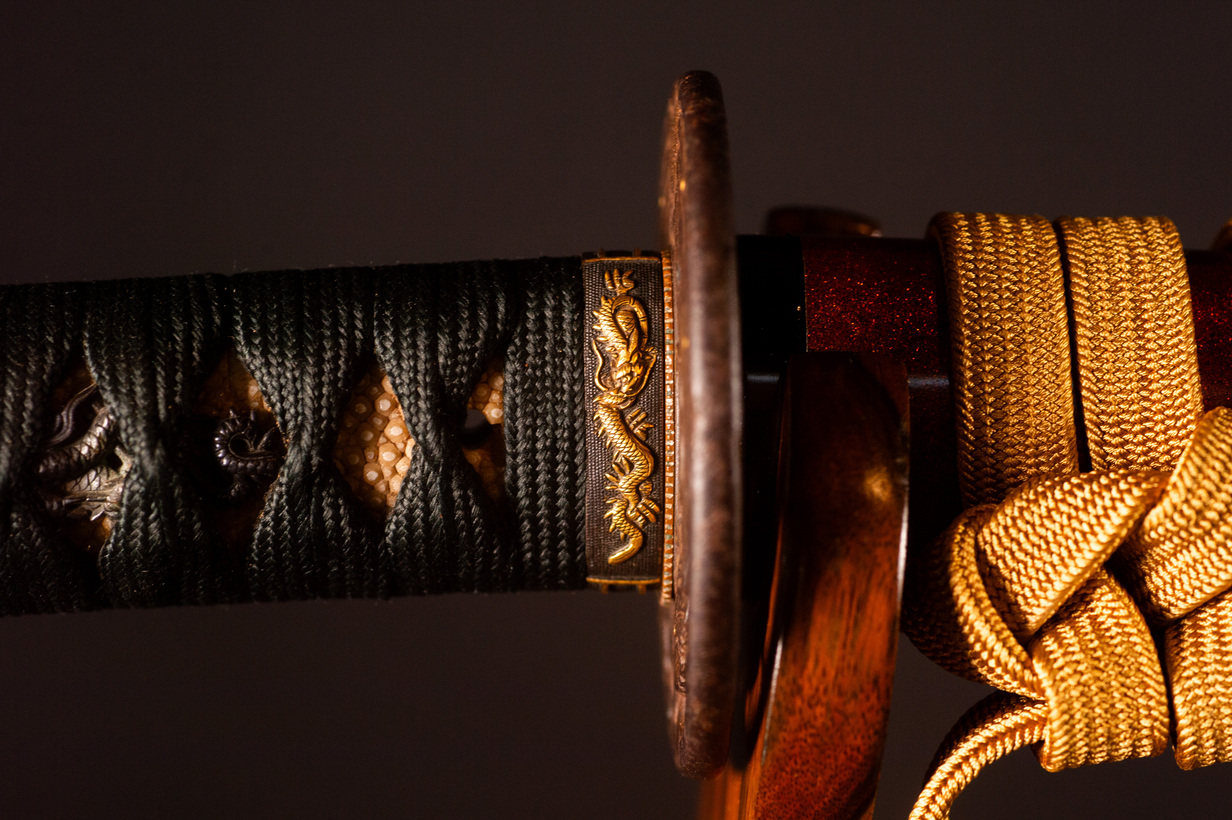
The katana is accompanied by a handsome and well-preserved koshirae with a strong dragon theme.
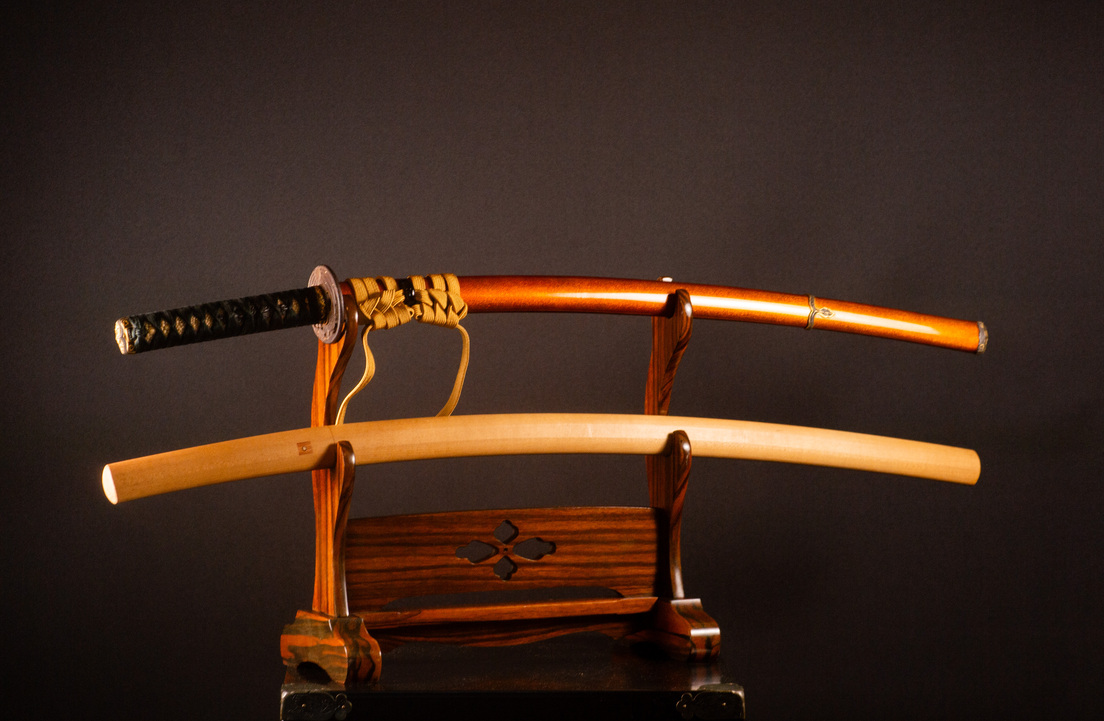
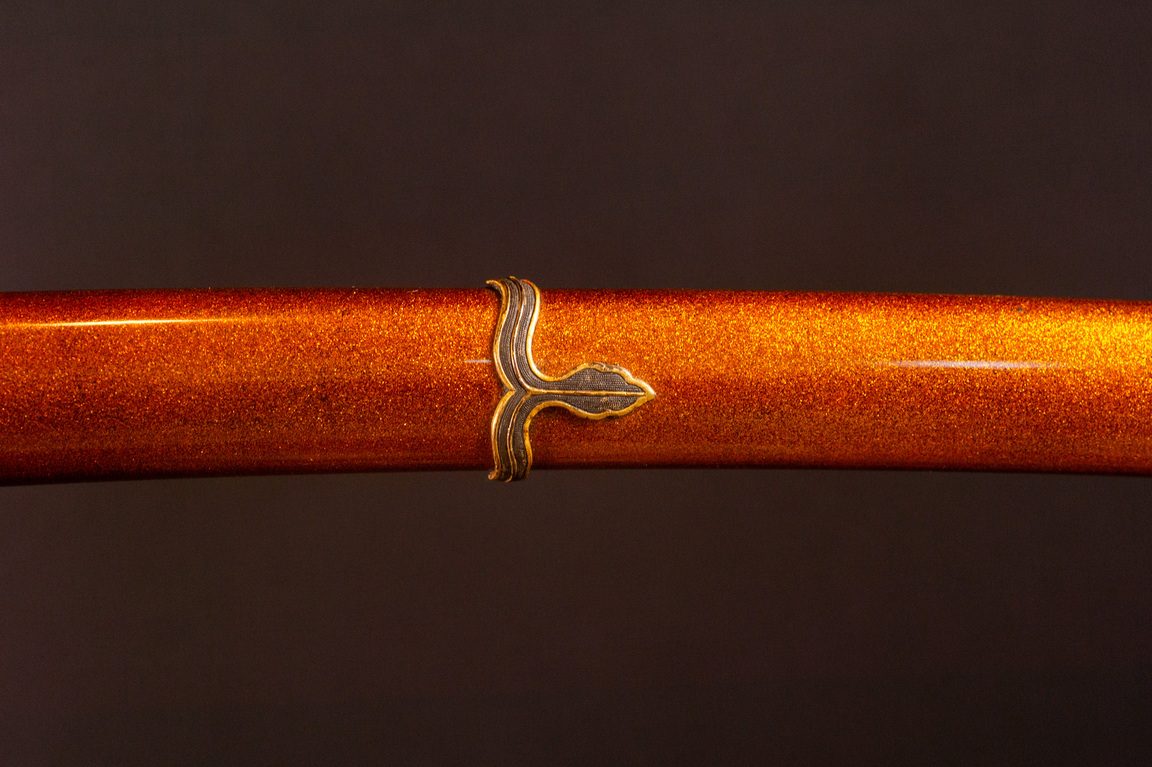
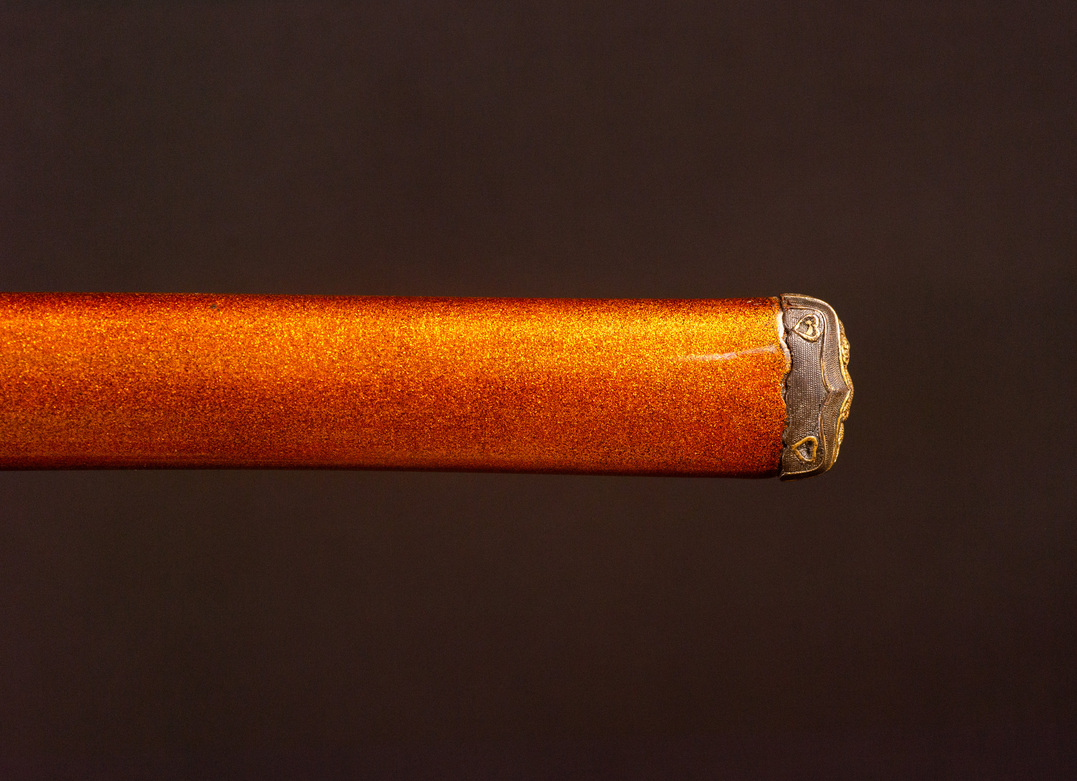
The saya is finished in brilliant vermilion lacquer with a sparkling granular ishime and nashiji surface, creating a striking and luxurious appearance.
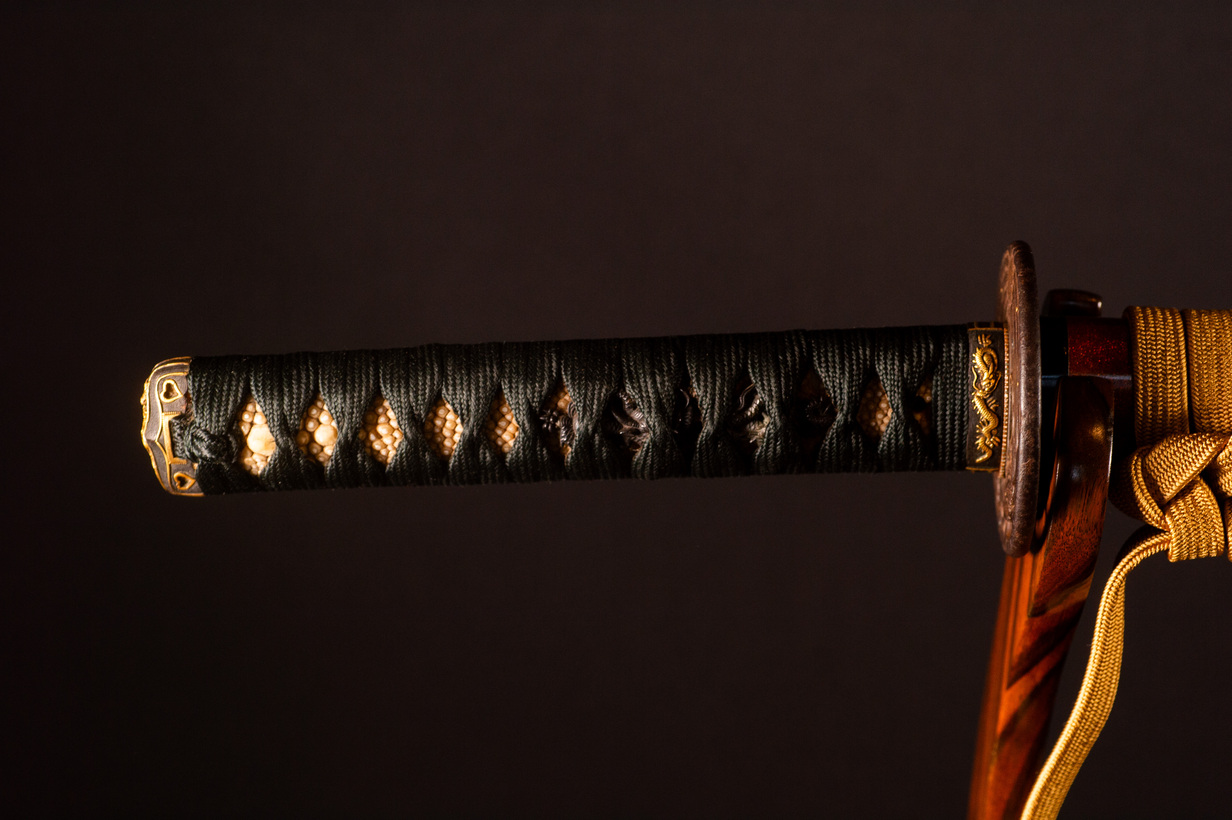
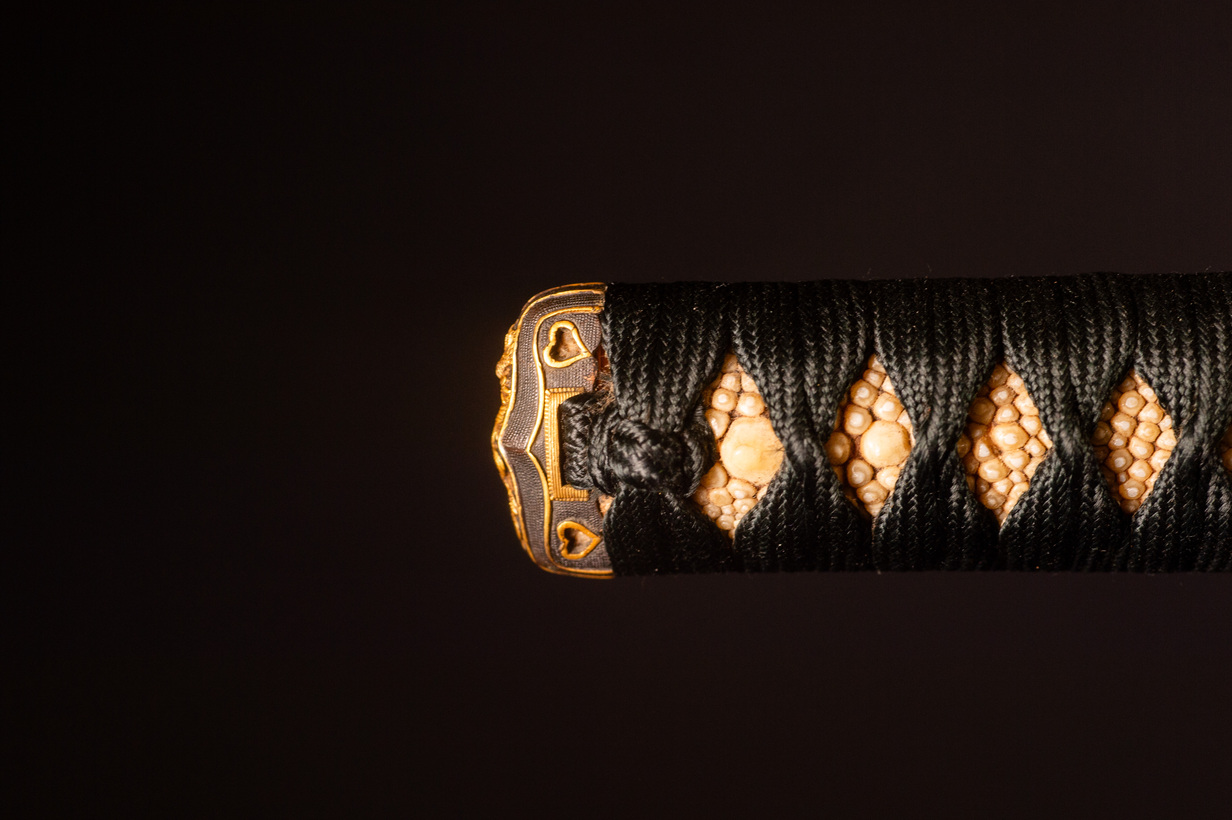
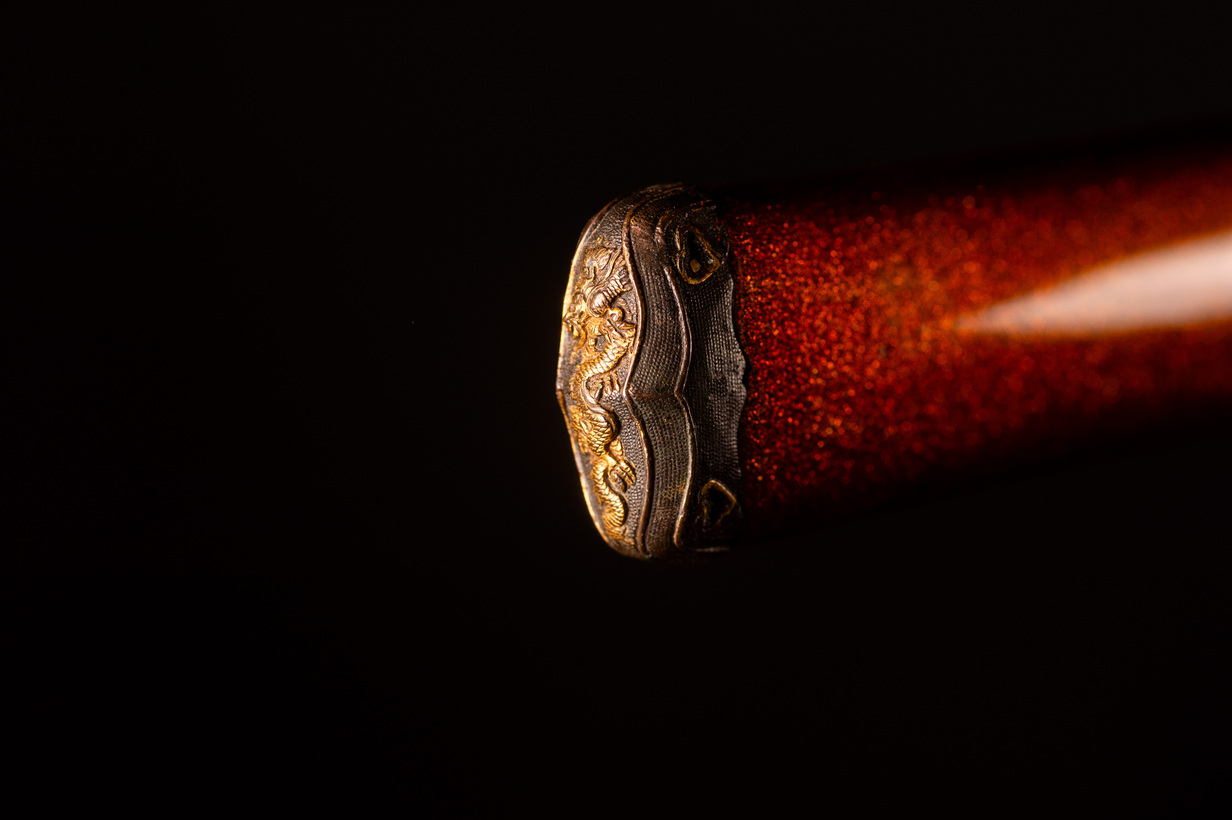
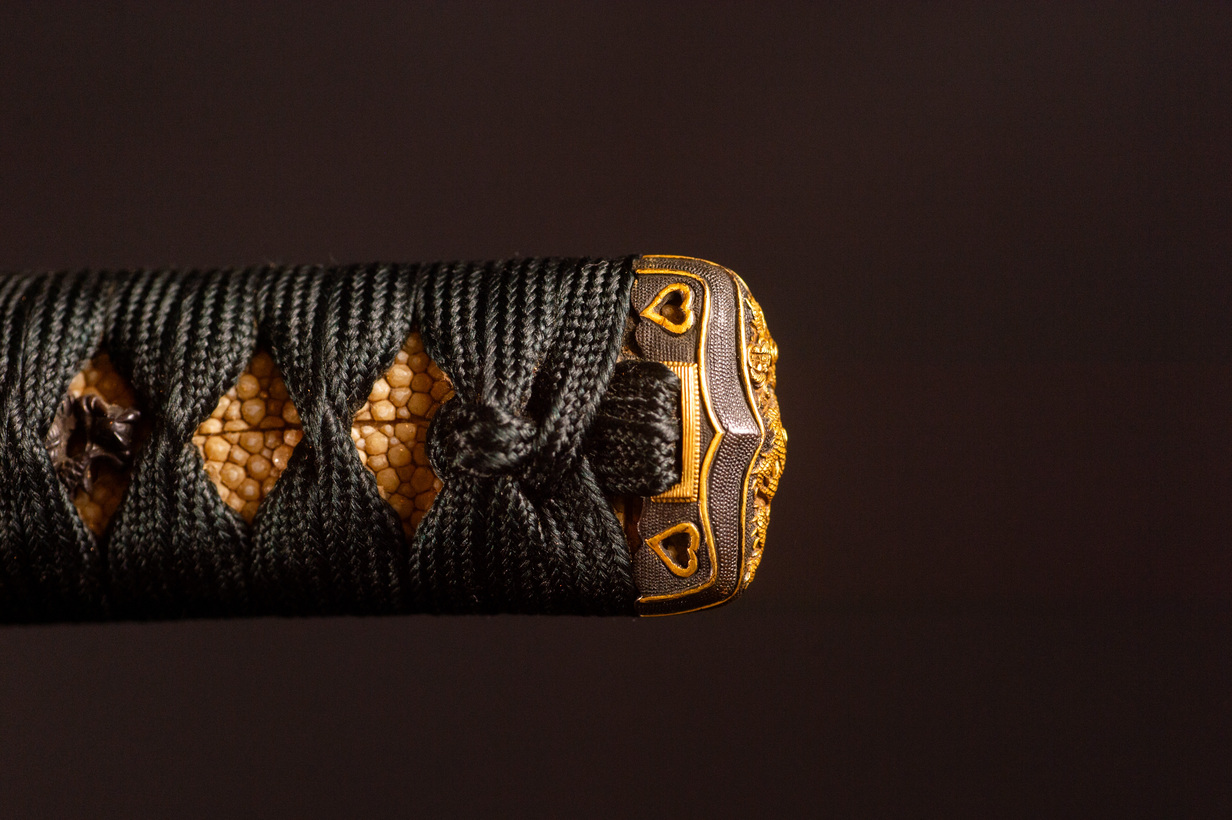
The fuchi-kashira and kojiri are crafted in dark shakudō-style metal and decorated with gilt dragons and heart-shaped inome openwork, combining martial symbolism with refined decorative craftsmanship.
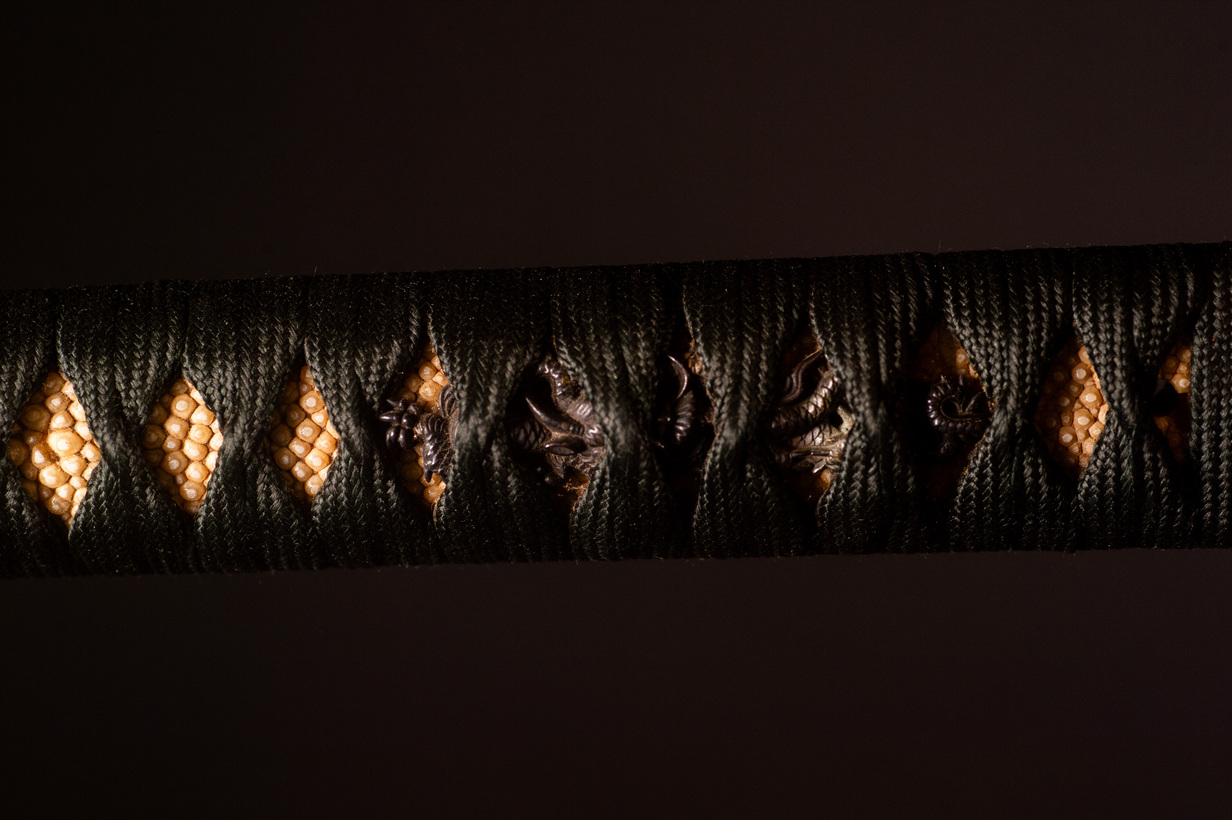
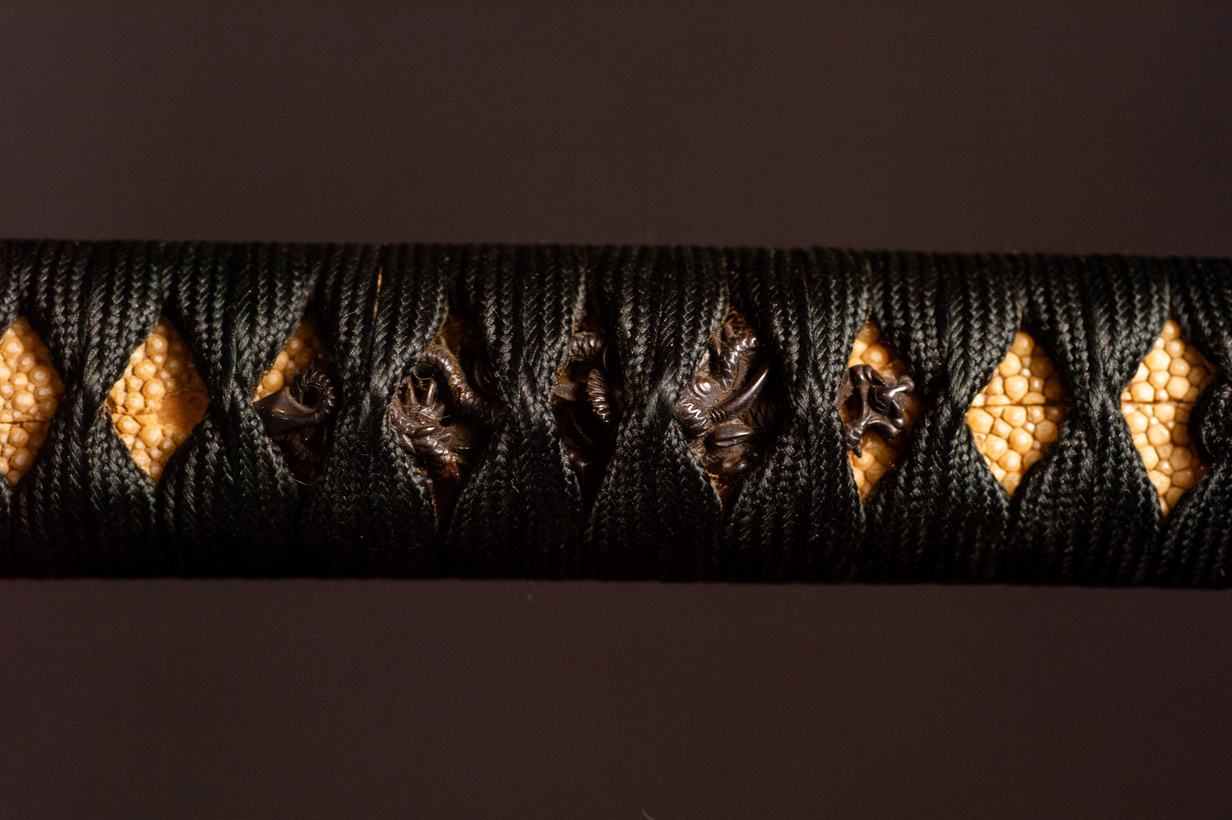
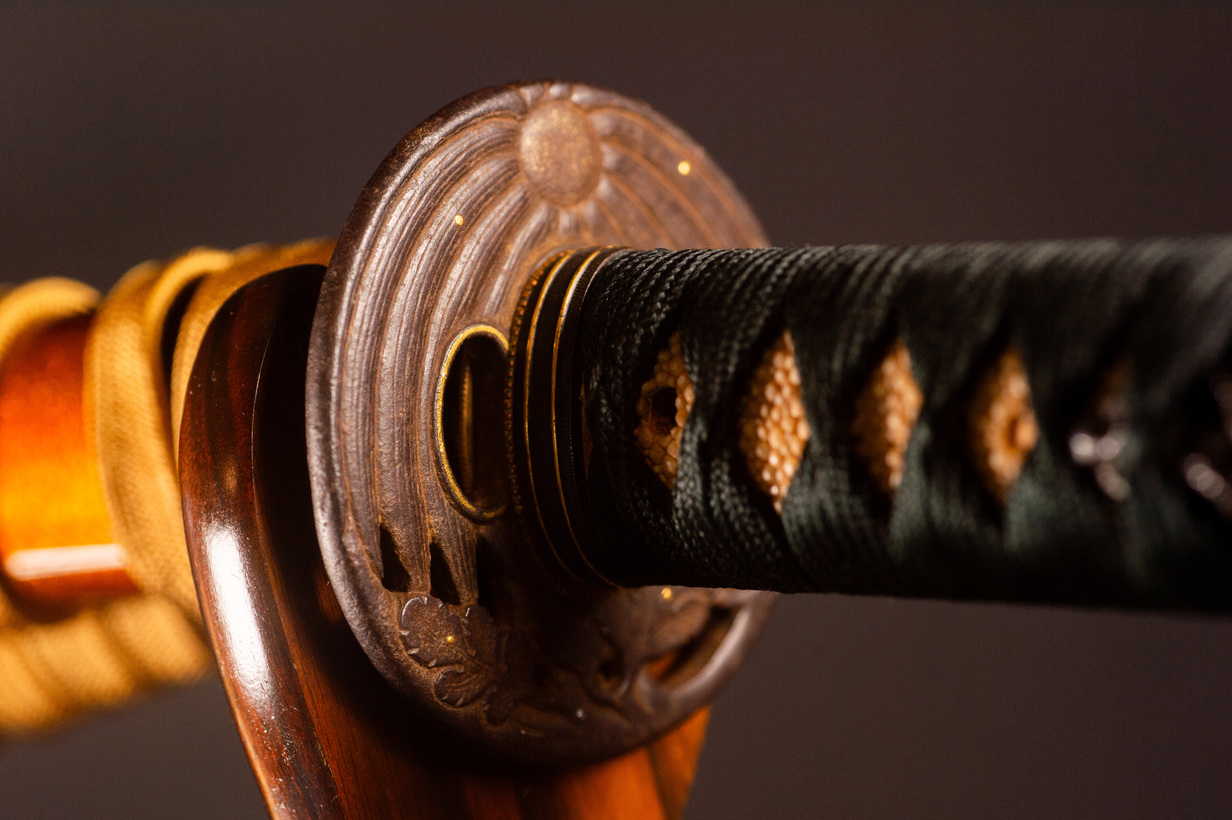
The tsuka is covered in genuine rayskin (same) and bound in black silk tsuka-ito over dragon menuki, creating a strong visual harmony with the rest of the mounting.
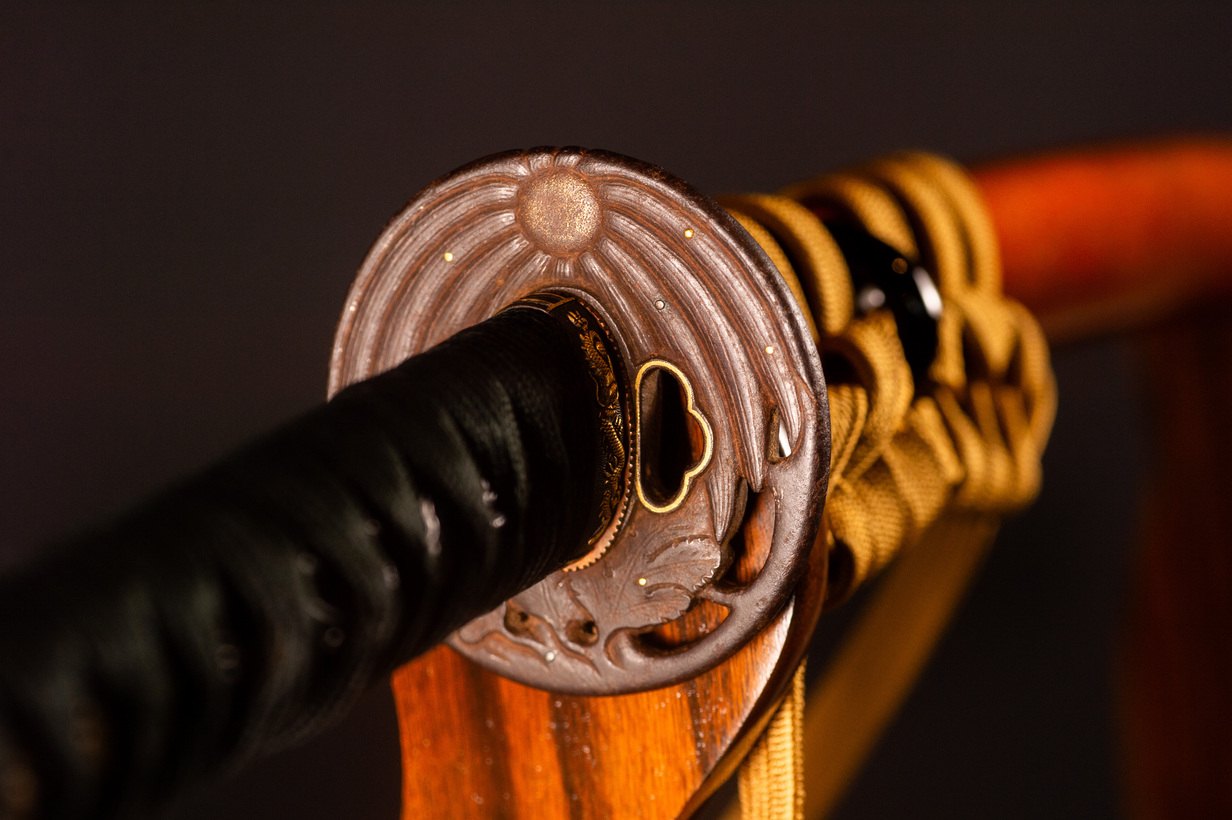
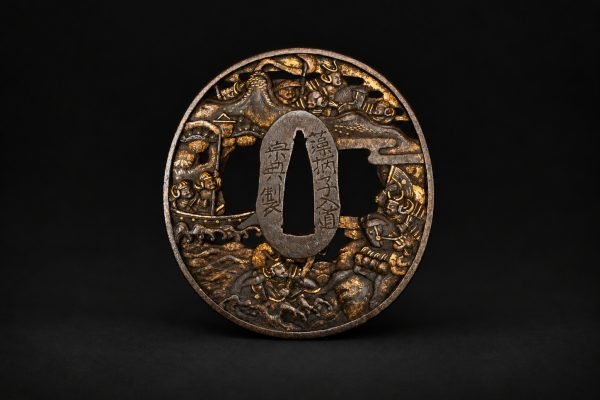
The round iron tsuba is decorated with chrysanthemum and foliage sukashi openwork enriched with gilt accents, while the braided silk sageo is finished in a rich mustard-gold tone.
Shirasaya and Preservation
In addition to its decorative koshirae, the sword is accompanied by a companion shirasaya, a plain white-wood resting scabbard traditionally used for the safe long-term preservation of Japanese blades.
This combination of both koshirae and shirasaya is especially desirable, allowing the blade to be properly preserved while the complete mounted form can also be appreciated and displayed.
Documentation
The blade is accompanied by an official NBTHK Hozon Tōken certificate, No. 354185, issued on 4 August Heisei 11 (1999), confirming its attribution to Kanenori of the Mino tradition.
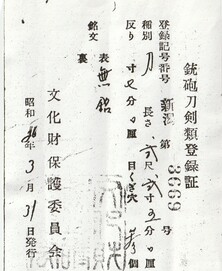
It is also accompanied by its original Japanese torokusho registration, Niigata No. 3669, issued on 31 March Shōwa 36 (1961), where it is recorded as a katana and listed as mumei.
Specifications (寸法)
- Classification: Katana 刀
- Attribution: Kanenori 兼則
- Tradition: Mino Seki tradition
- Period: Muromachi period
- School: Mino-den / Sue-Seki
- Nagasa: 2 shaku 2 sun 5 bu strong / approx. 68.2 cm
- Sugata: Shinogi-zukuri with iori-mune and chū-kissaki
- Hamon: Notare-gunome / midare in nioi with bright nie activity
- Nakago: Ō-suriage, mumei, three mekugi-ana
- Koshirae: Vermilion lacquer saya with dragon-themed fittings
- Shirasaya: Included
- Certificate: NBTHK Hozon Tōken No. 354185
- Certificate Date: 4 August Heisei 11 (1999)
- Registration: Niigata No. 3669
- Registration Date: 31 March Shōwa 36 (1961)
Collector’s Value
This katana combines several highly desirable qualities: a Muromachi-period Mino blade, NBTHK Hozon certification, original Japanese registration, a complete and attractive dragon-themed koshirae, and an accompanying shirasaya for preservation.
Its ō-suriage and mumei condition speak to the long life of a blade that was valued, preserved and remounted through generations, while its workmanship remains firmly rooted in the practical and historically important Seki tradition.
A complete, well-preserved and fully documented Muromachi-period Mino katana, this Kanenori blade represents a genuine sword of the samurai age: elegant, purposeful and deeply connected to one of Japan’s most renowned forging traditions.