Muromachi Katana Signed Nanto-jū Kanabō – Yamato Tradition
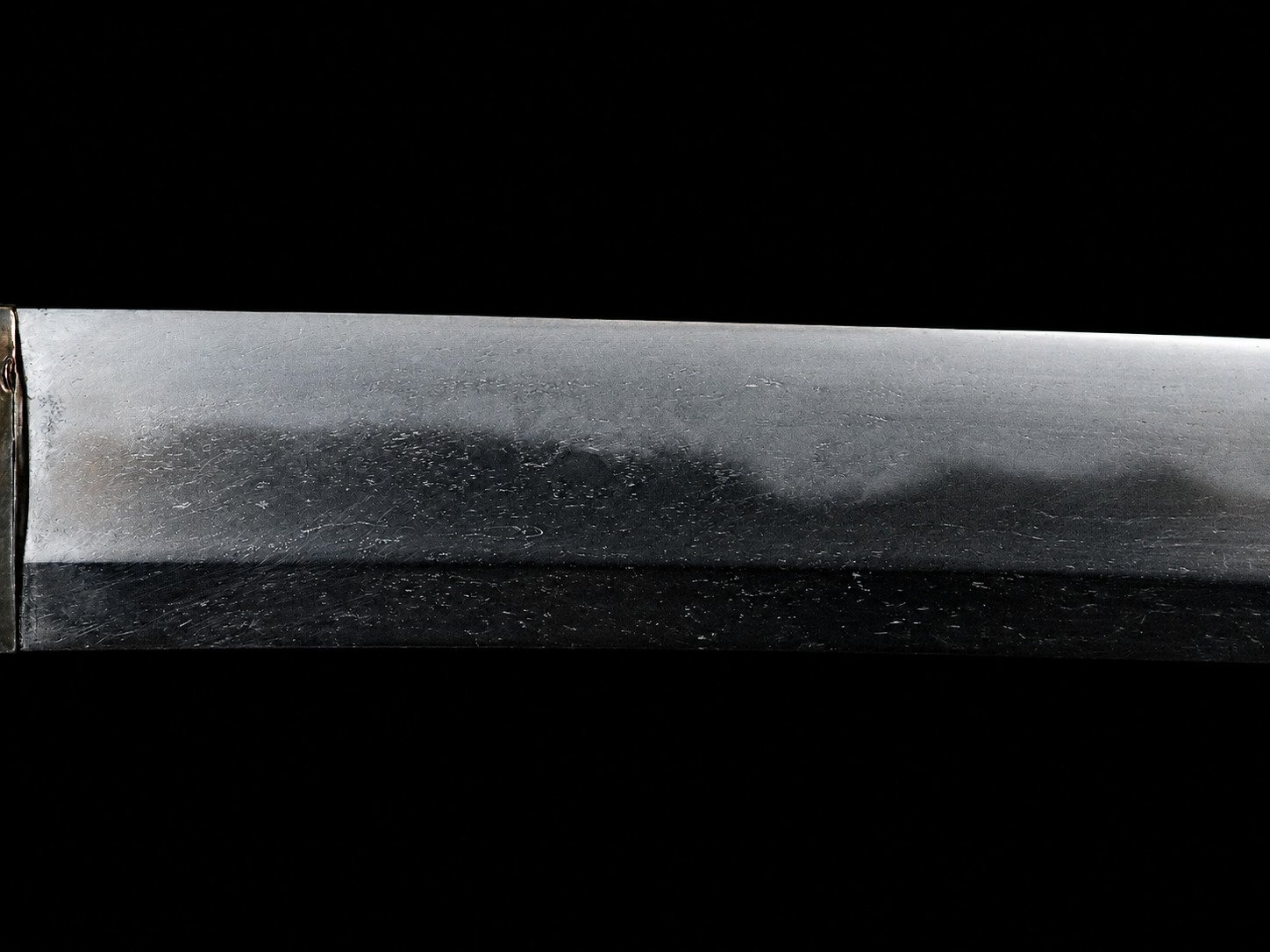
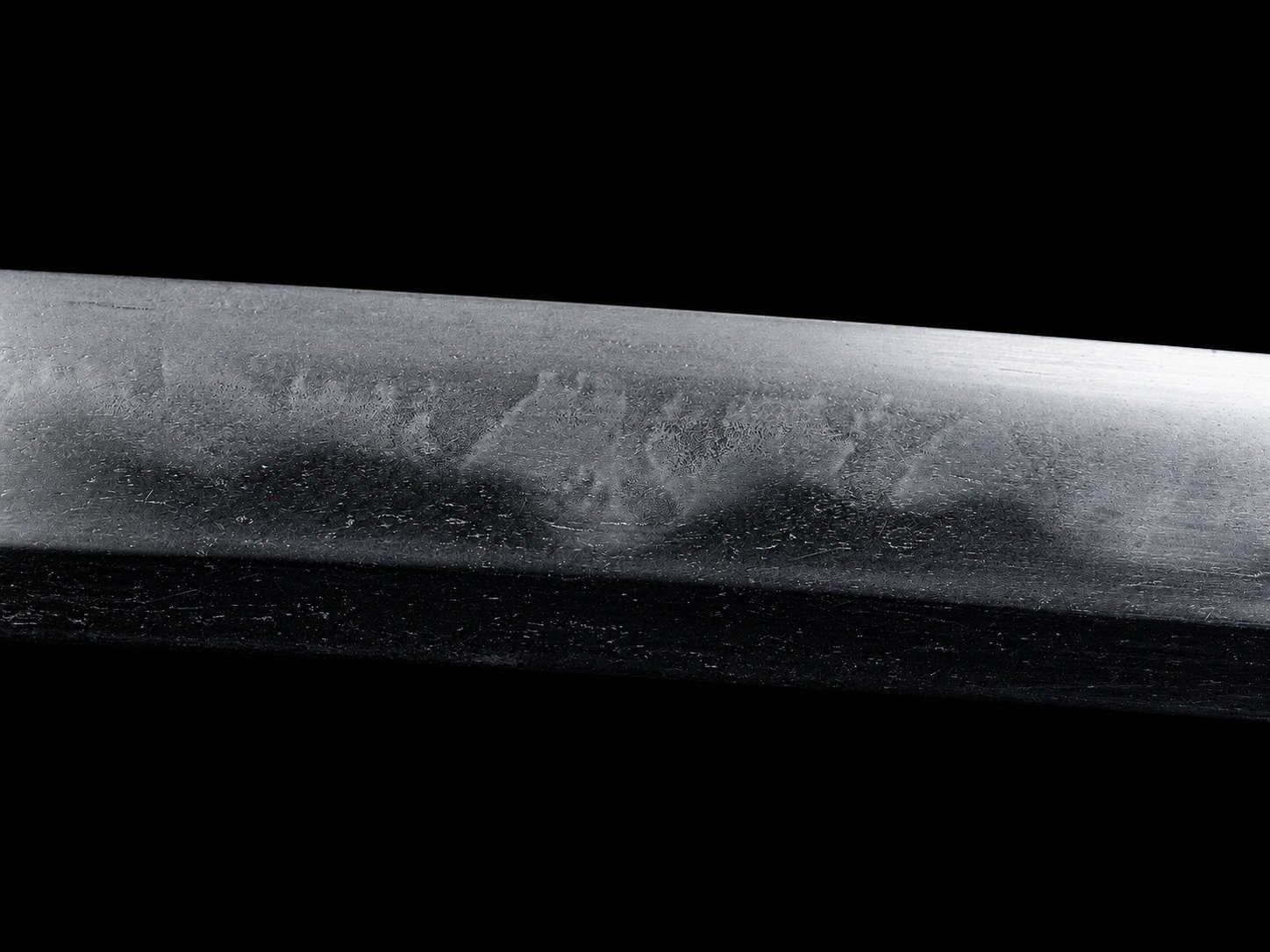
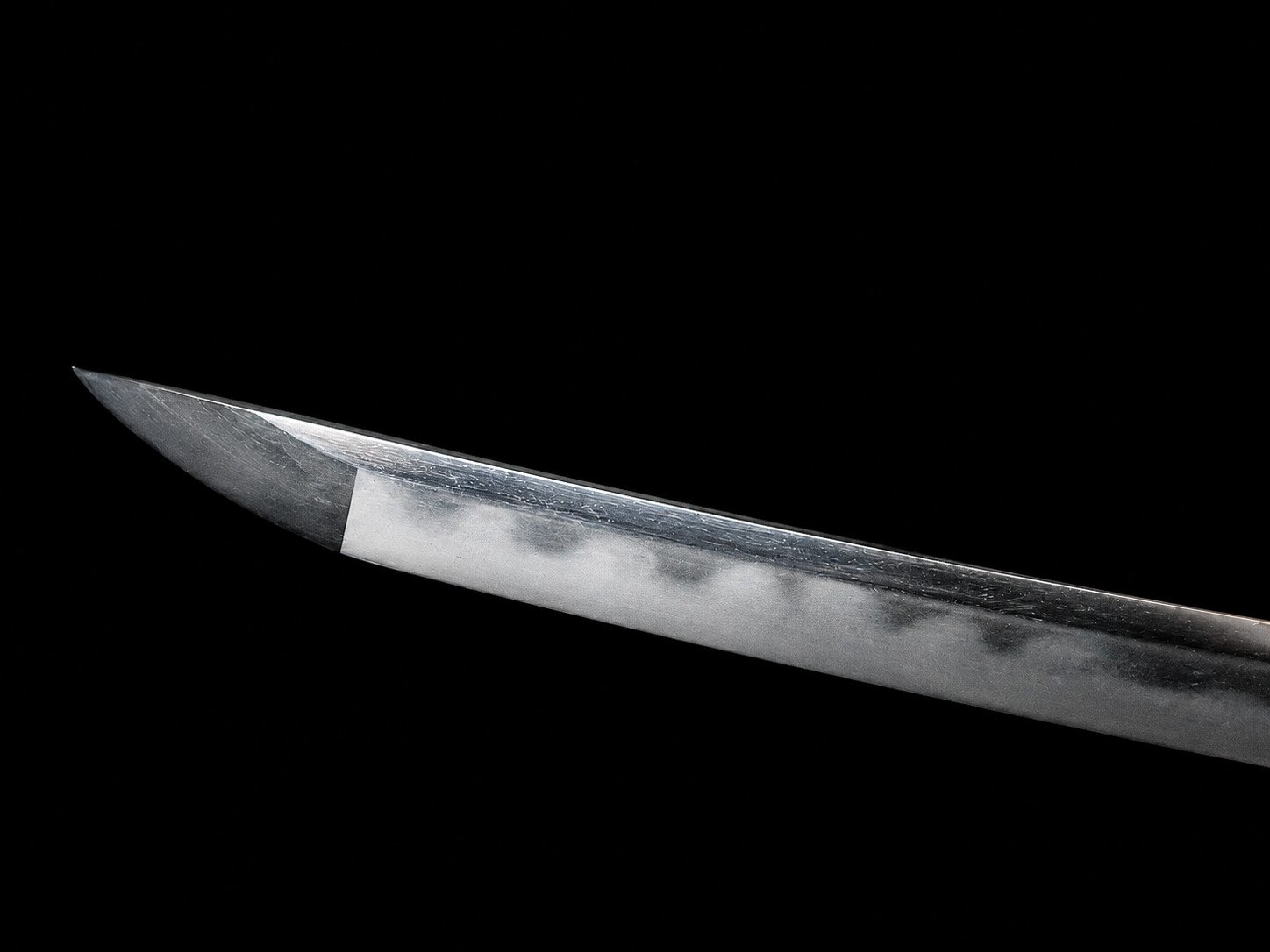
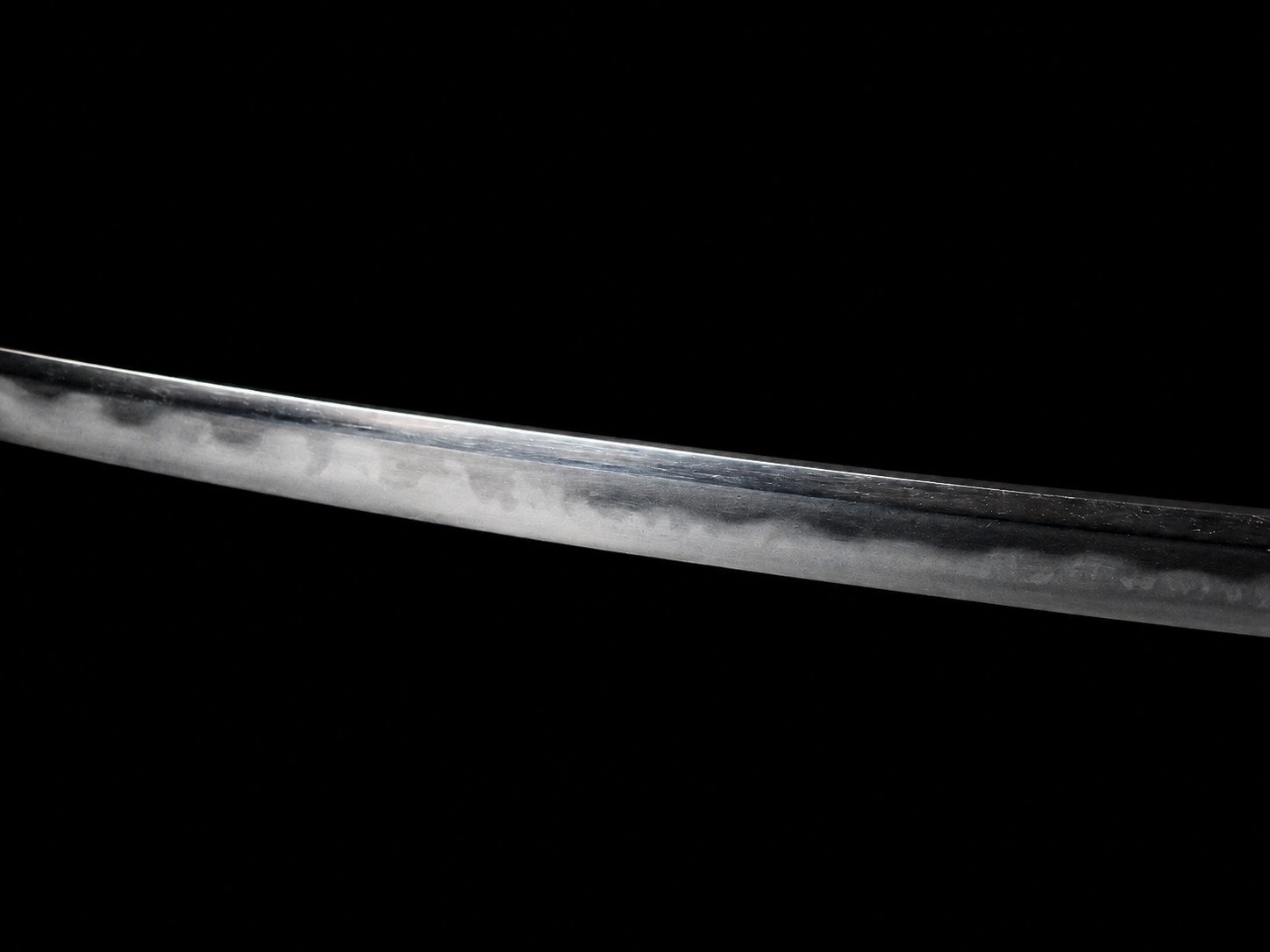
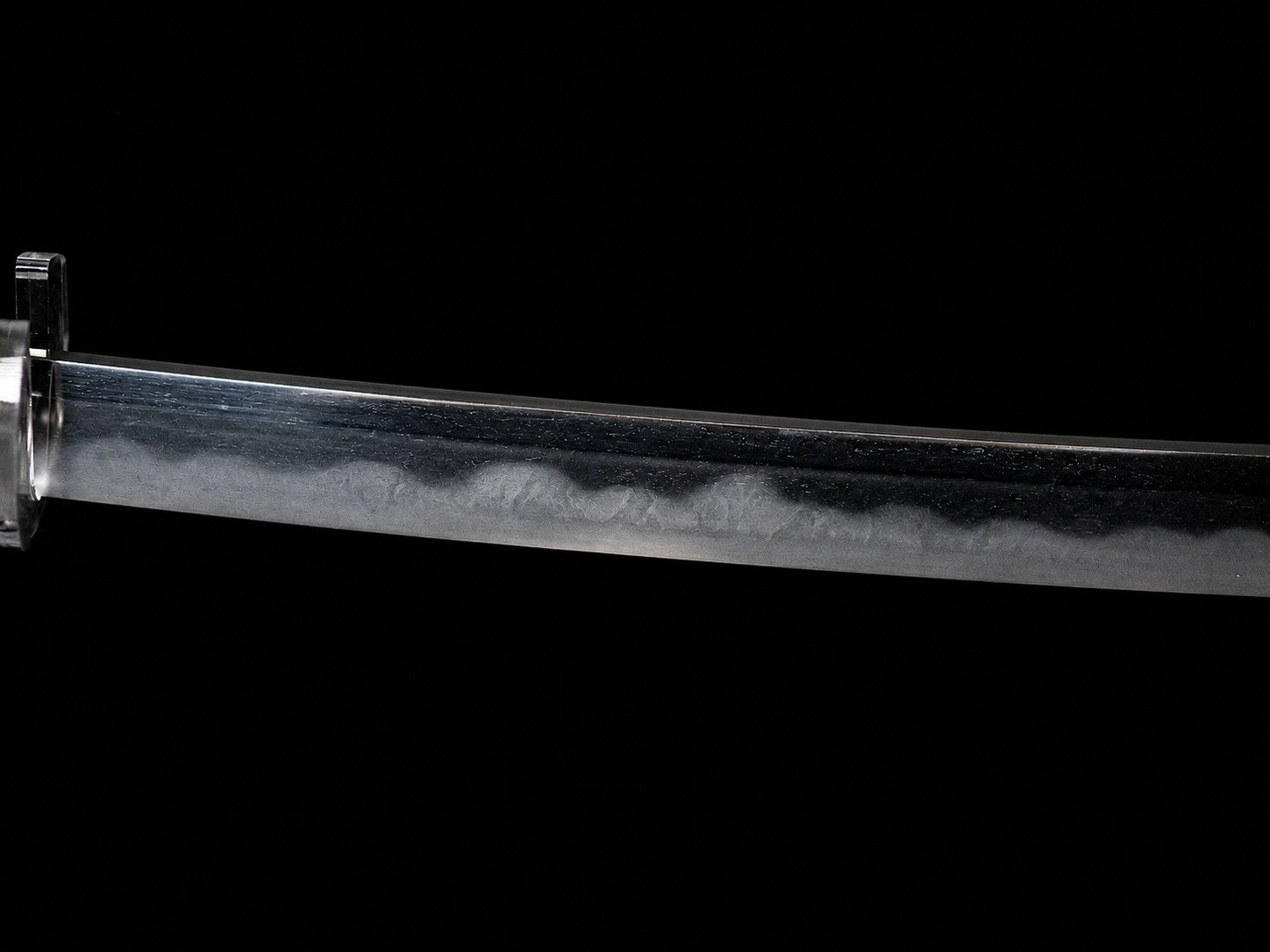
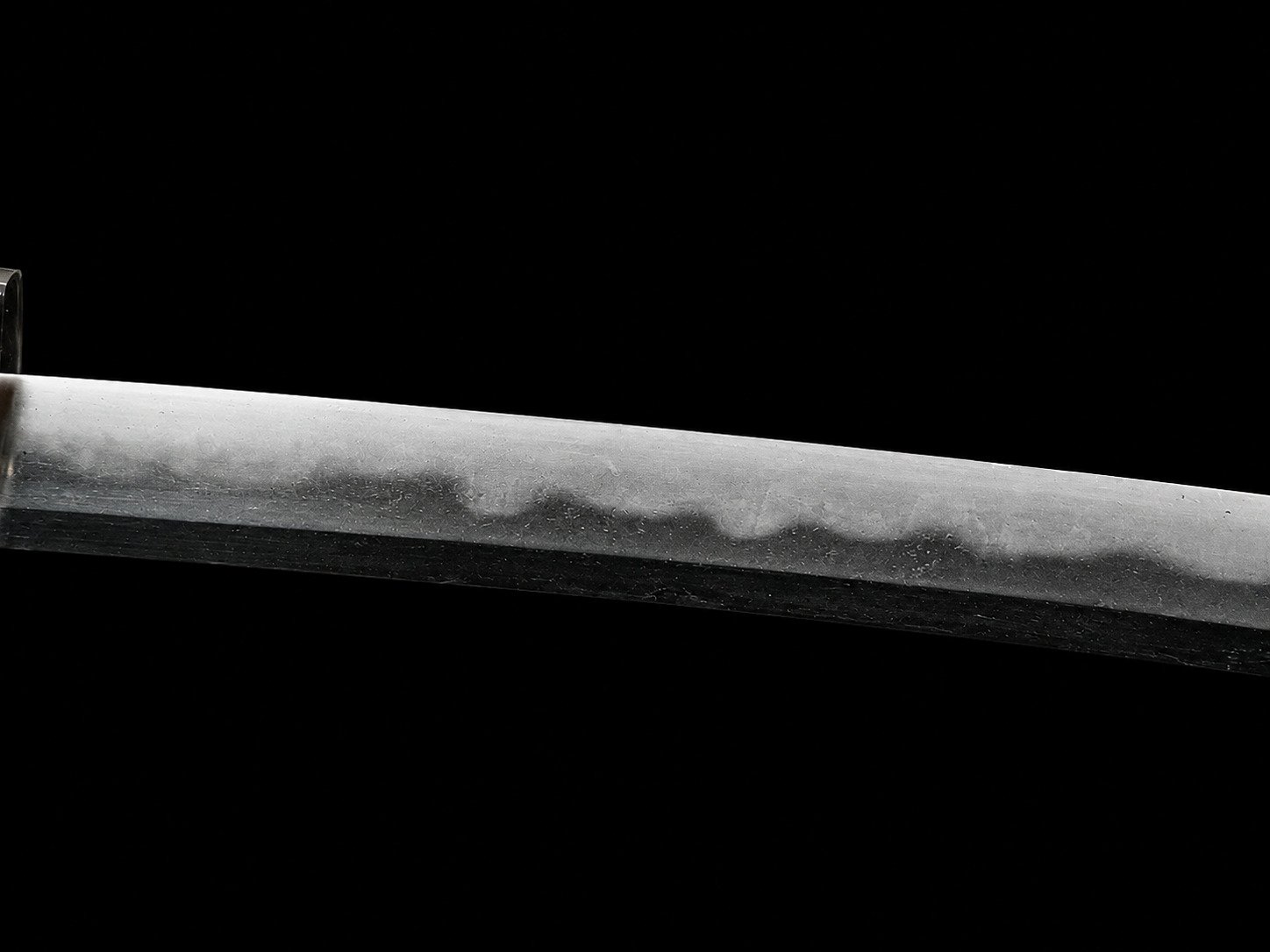
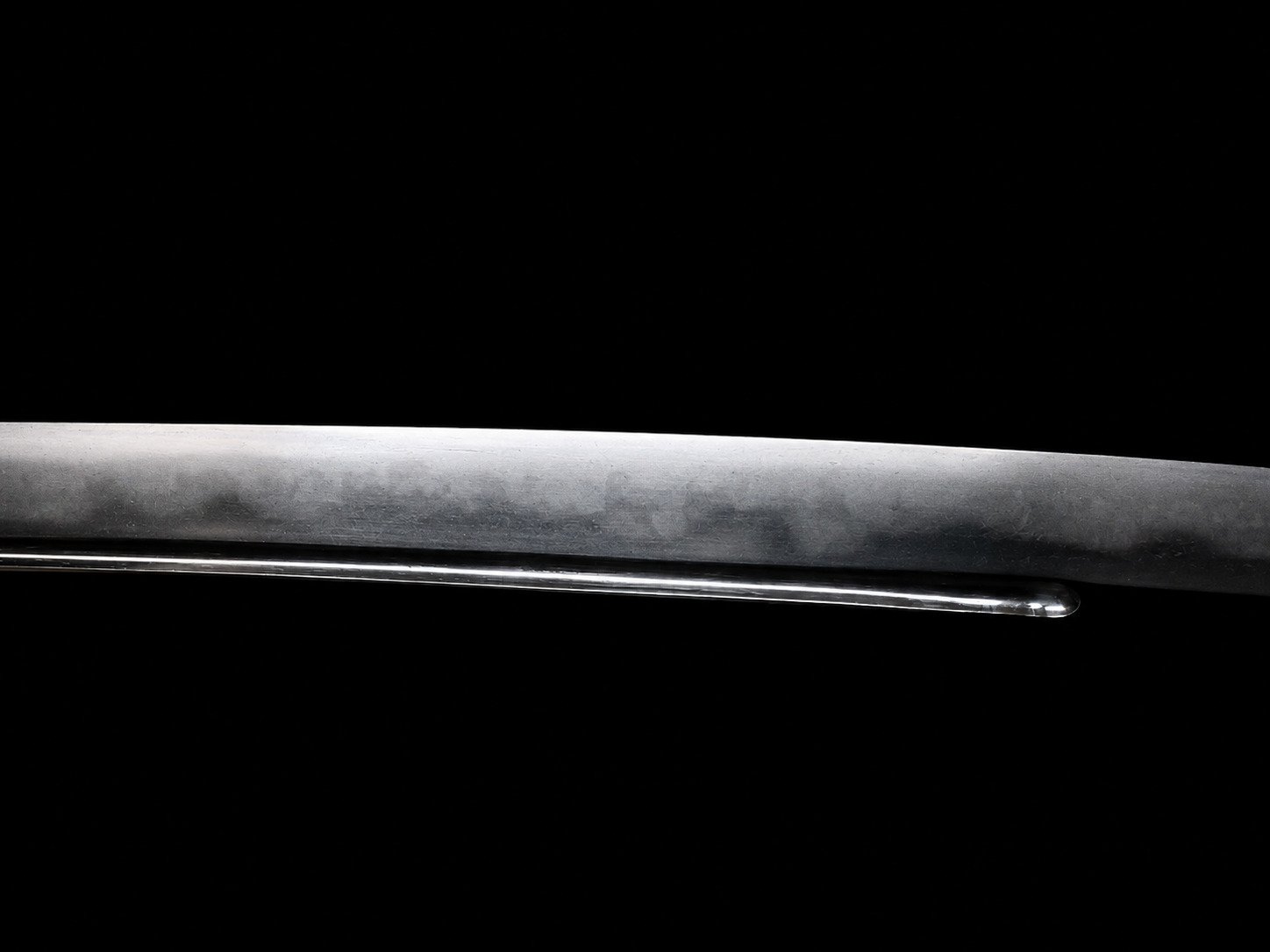
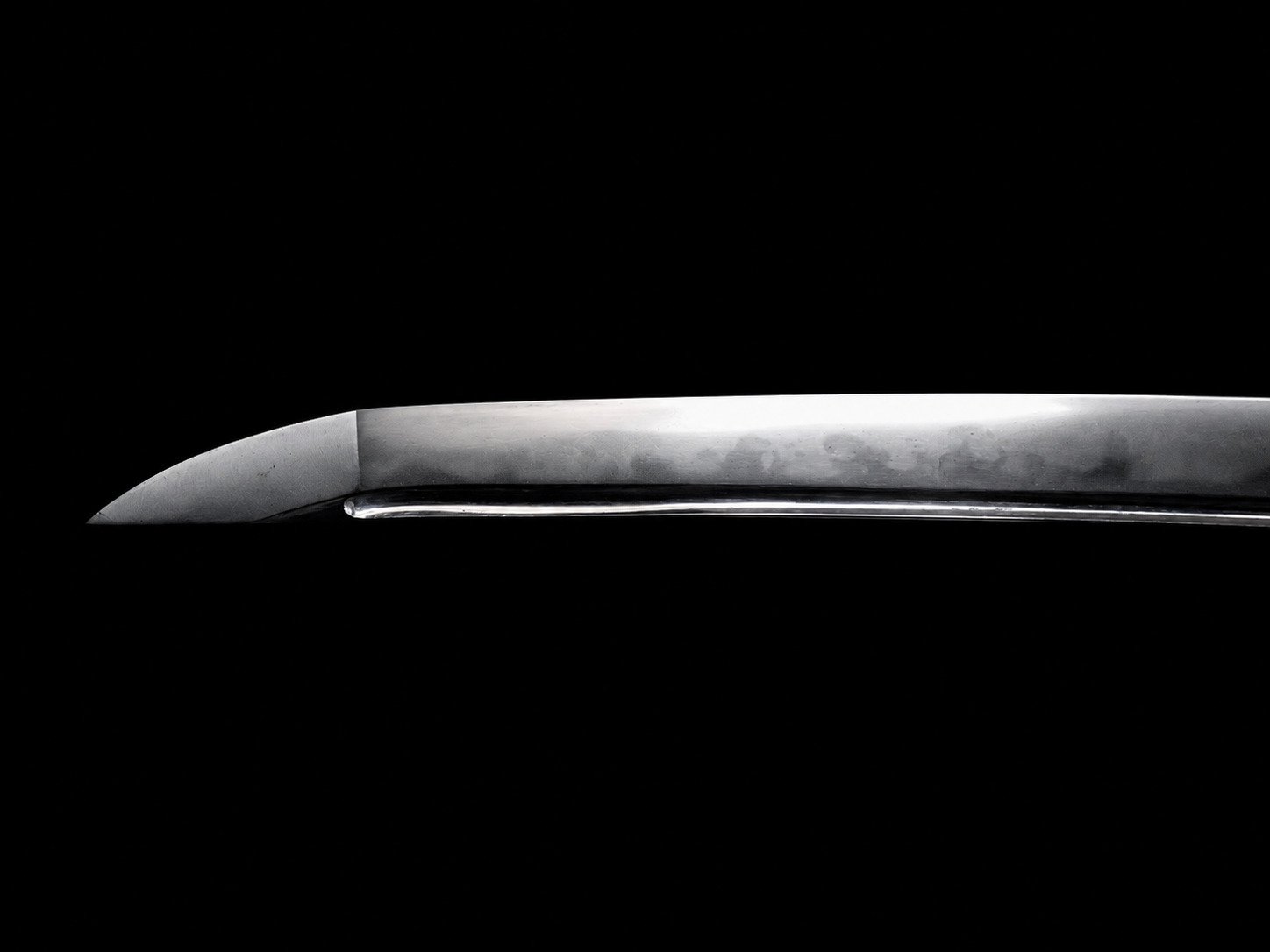
A signed Japanese katana associated with the Kanabō tradition of Nara, an important group of swordsmiths working within the broader cultural and technical environment of Yamato sword production.
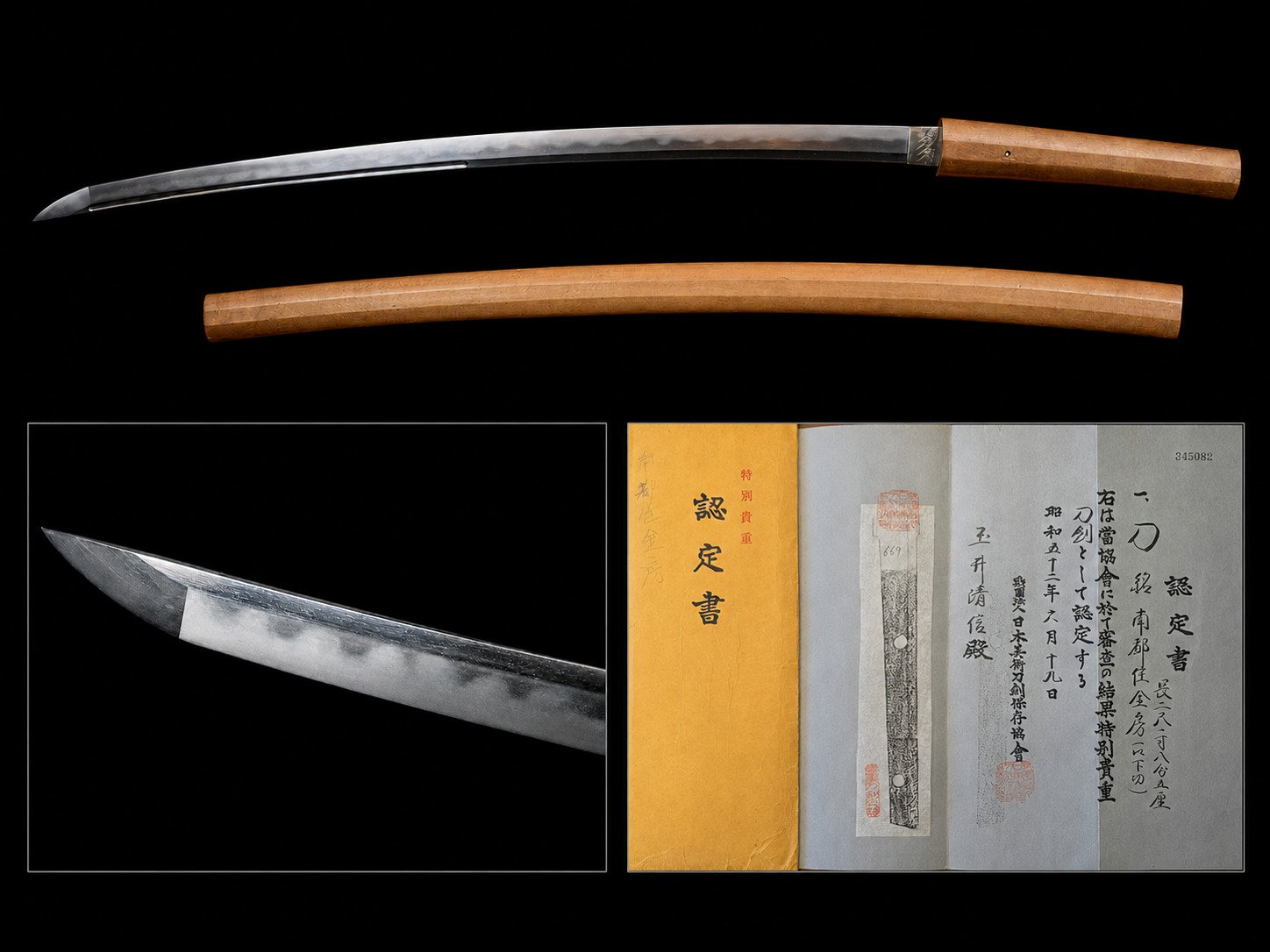
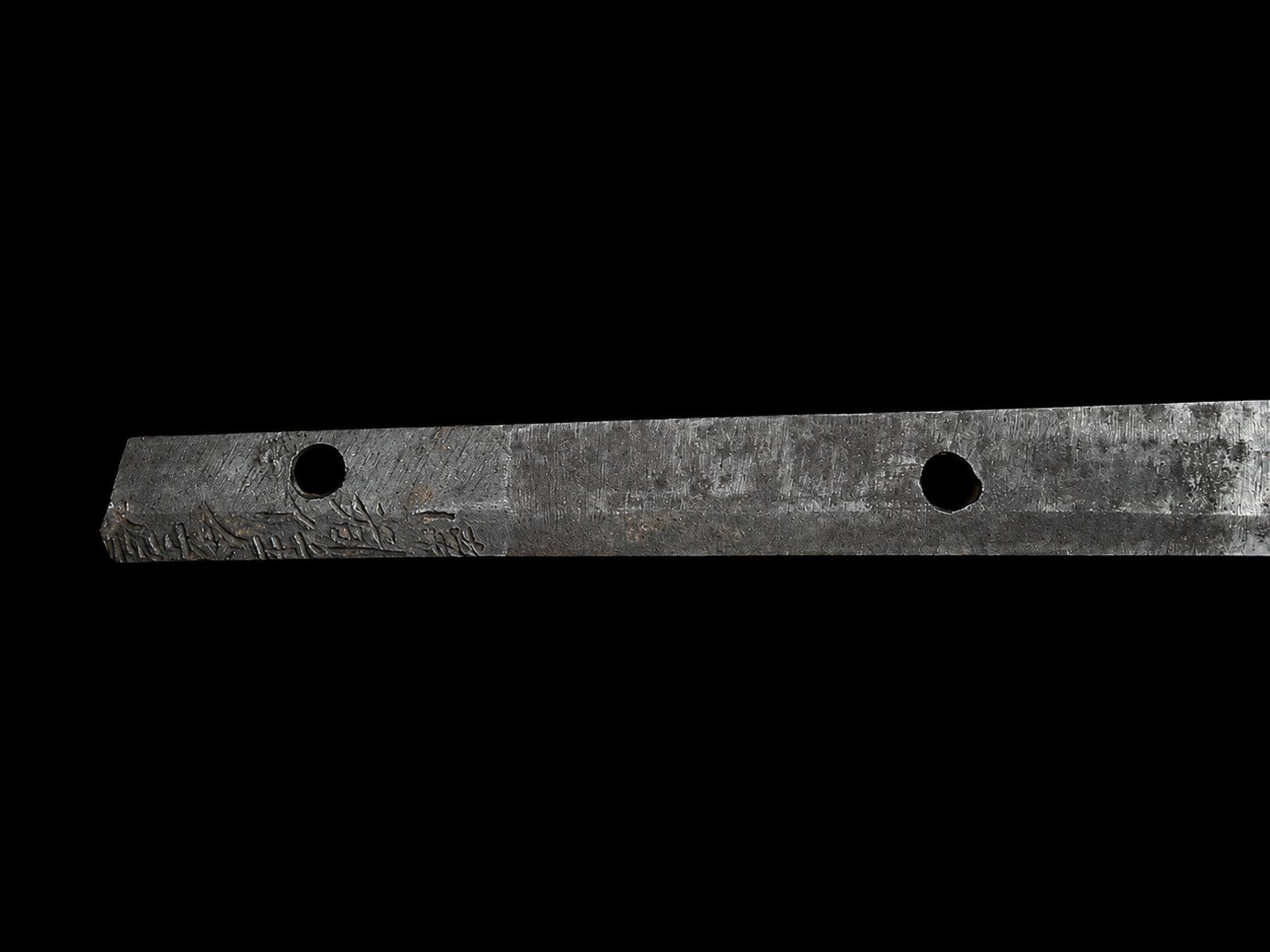
The tang bears the inscription 南都住金房 — Nanto-jū Kanabō, meaning “Kanabō, resident of Nanto”. Nanto was an historical name for Nara, one of the principal centres of religious, military and sword-making activity in medieval Japan.
The blade has undergone historical shortening (suriage), and the lower portion of the inscription is consequently lost. The surviving signature is recorded as ika kiru — indicating that the lower part has been cut away — a feature consistent with a blade adapted during its working life.
Signature – Nanto-jū Kanabō
The surviving mei reads:
南都住金房
Nanto-jū Kanabō
“Kanabō, resident of Nanto [Nara]”
The inscription is located on the omote side of the tang.
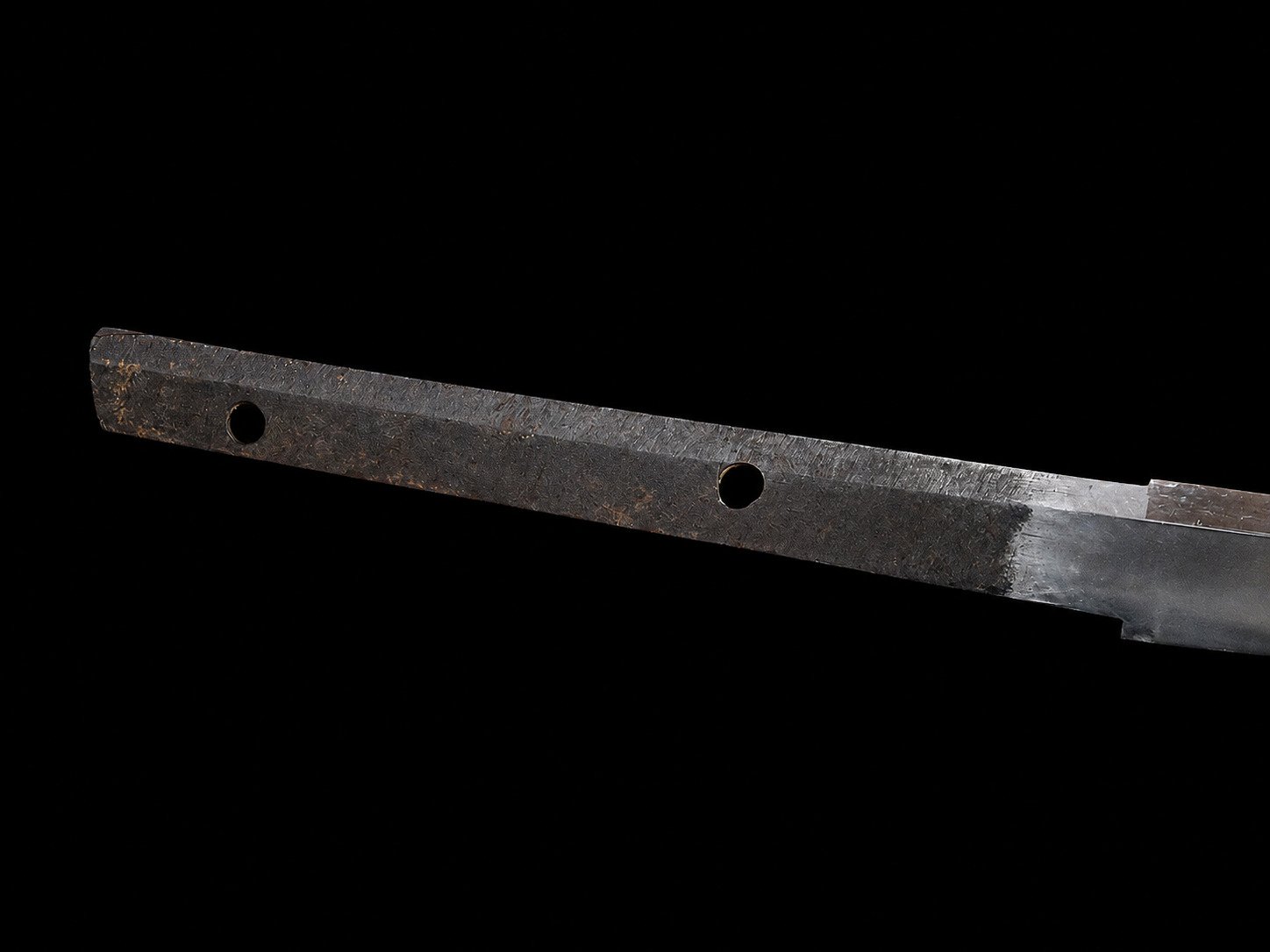
Because the blade has been shortened, the lower portion of the nakago and consequently part of the original inscription are no longer present. Historical shortening of Japanese swords was common and could be carried out to adapt an older blade to later mounting preferences or changing methods of use.
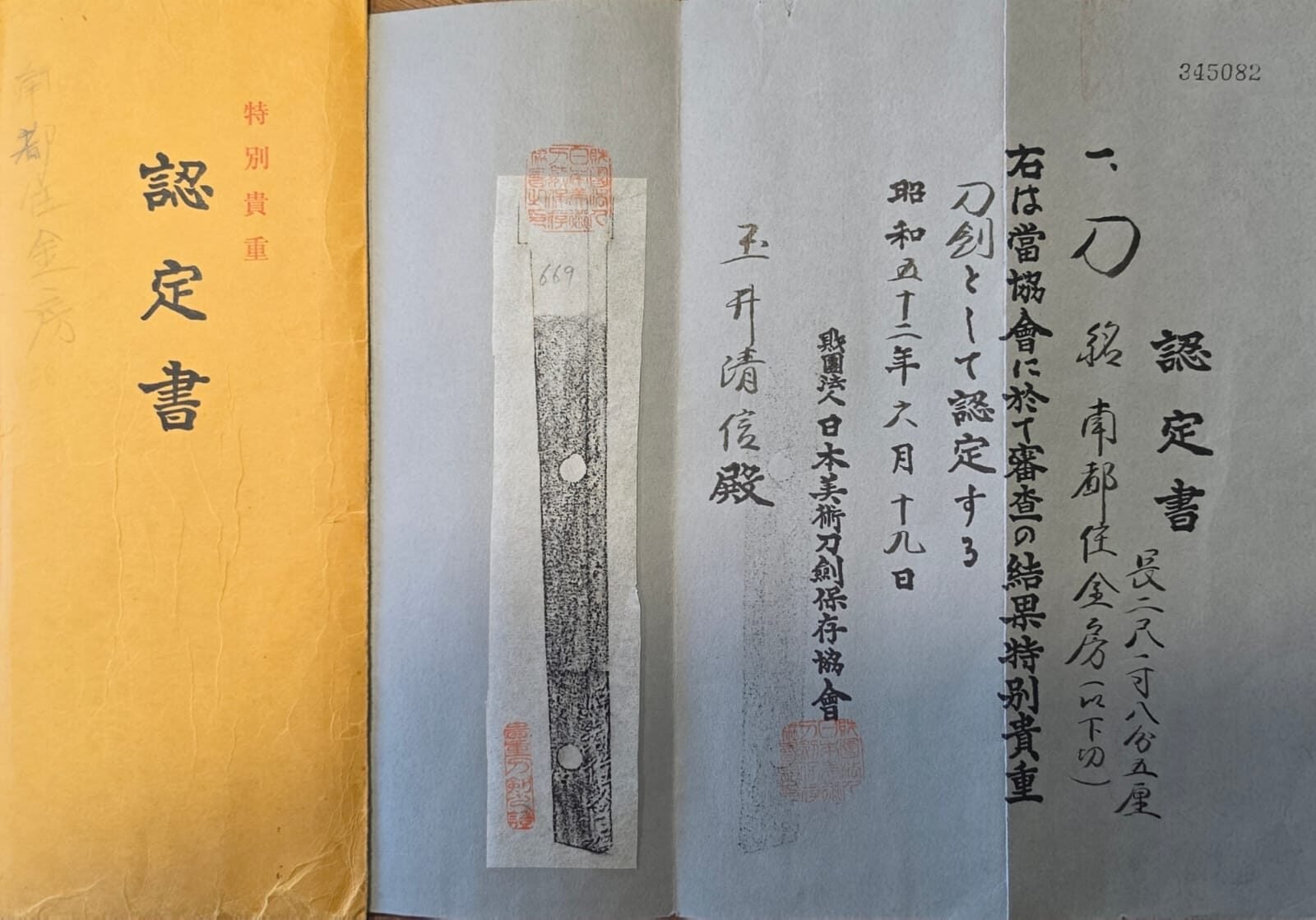
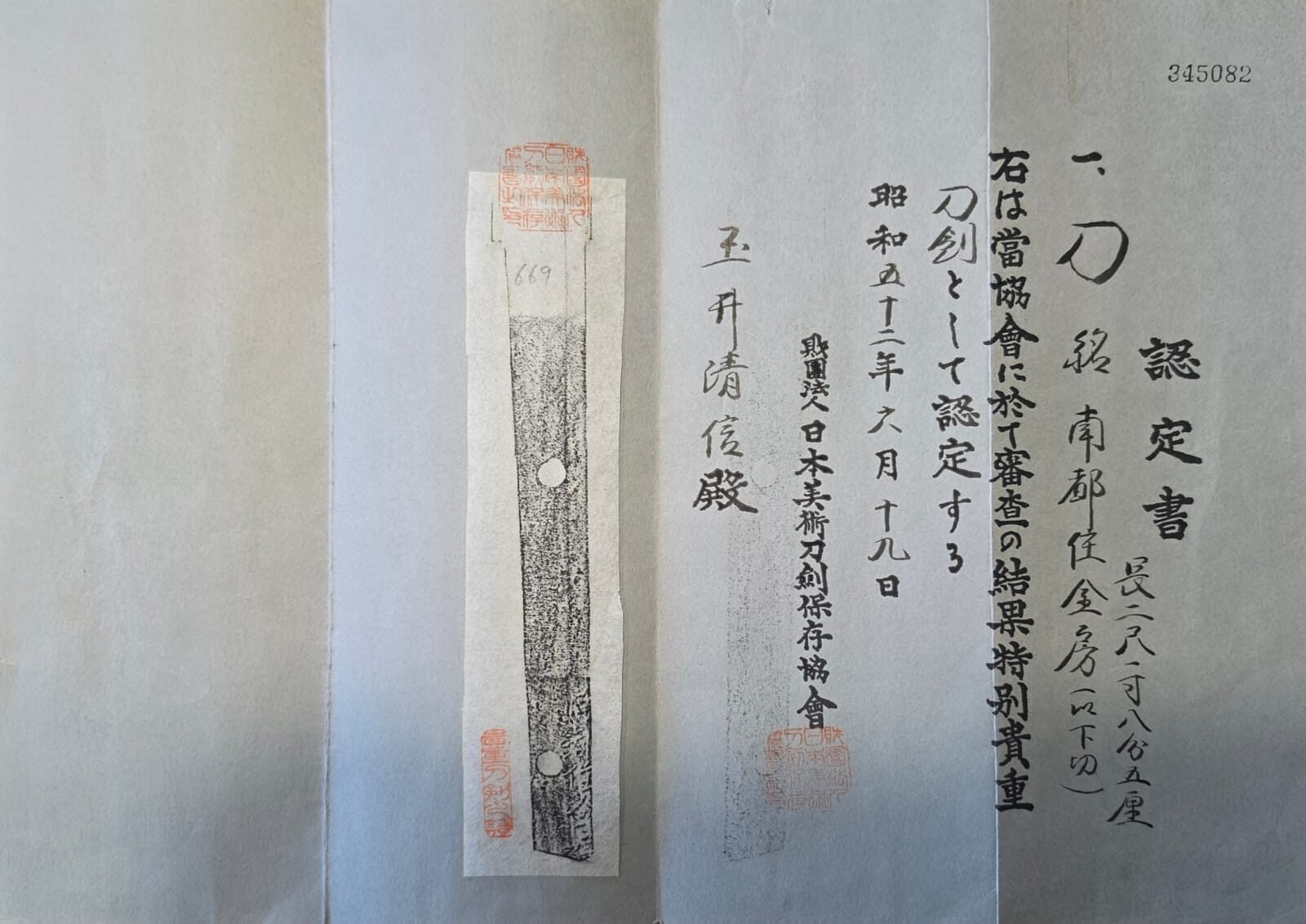
NBTHK Tokubetsu Kichō Certificate
The katana is accompanied by an official NBTHK Ninteisho issued by the Nihon Bijutsu Tōken Hozon Kyōkai (NBTHK).
- Organisation: NBTHK – Nihon Bijutsu Tōken Hozon Kyōkai
- Certificate: Ninteisho
- Certificate No.: 345082
- Classification: Tokubetsu Kichō
- Date: 19 June 1977 (Shōwa 52)
- Recorded nagasa: 2 shaku 1 sun 8 bu 5 rin
Tokubetsu Kichō — literally “Especially Valuable” — belonged to the NBTHK’s historical certification system in use at the time this paper was issued. It should therefore be understood within that historical grading framework rather than treated as a direct equivalent of the organisation’s current paper classifications.
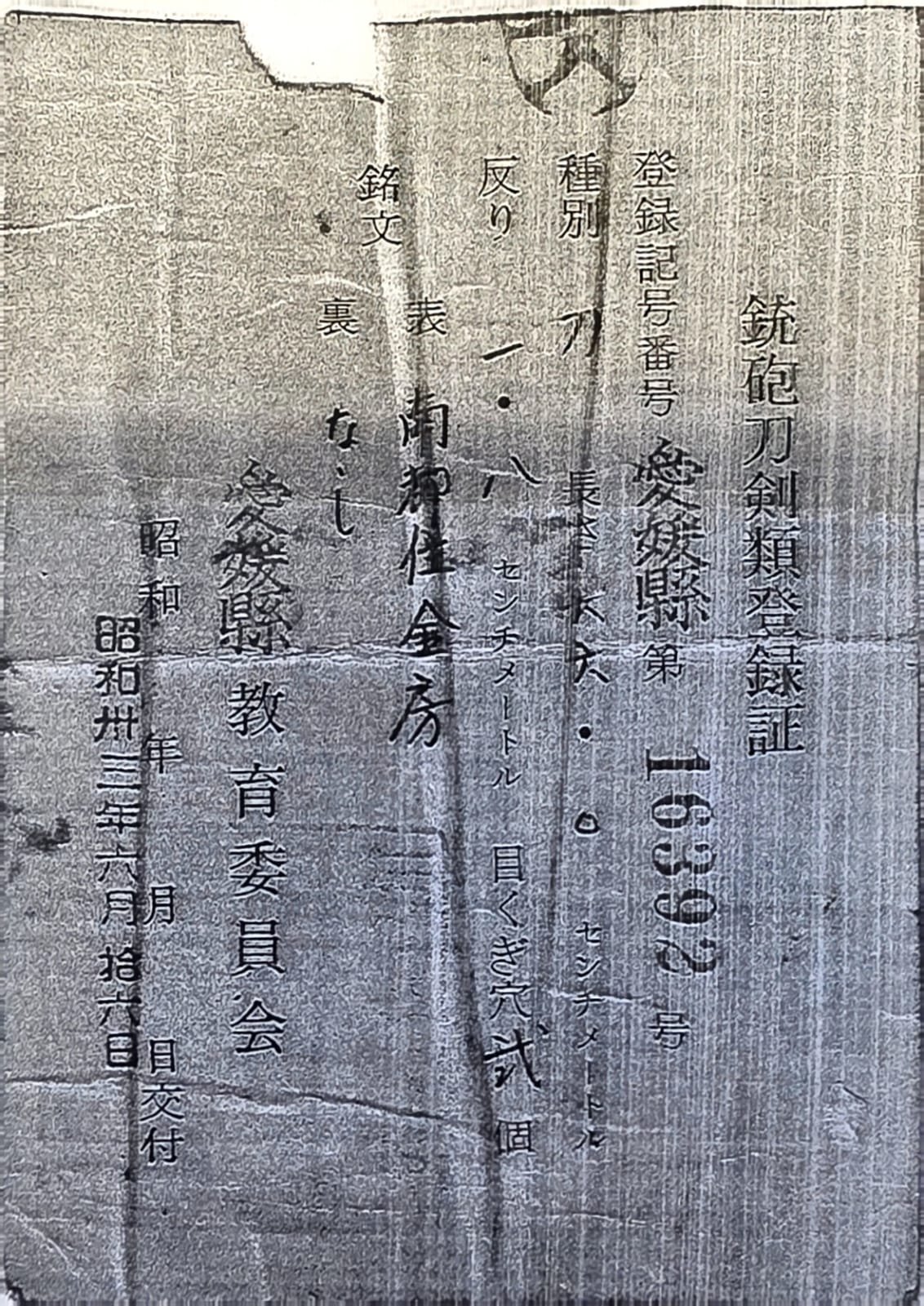
The sword is also accompanied by its Ehime Prefecture registration certificate, registration No. 16392.
The Kanabō Tradition of Nara
The Kanabō group was active in and around Nara, historically known as Nanto, and is generally considered within the broader sphere of the Yamato sword-making tradition.
Kanabō smiths are associated with the area around Komori-gō and the great temple complexes of medieval Nara, including Kōfuku-ji. Their precise genealogical relationship with the classical Yamato schools is not completely settled, although the tradition has often been discussed in connection with the Tegai lineage.
The workshops produced a wide range of weapons, including swords, spears and naginata, serving the martial environment of Nara and the surrounding region. This included both samurai clientele and the powerful religious institutions whose armed retainers and warrior-monks formed an important part of medieval Nara’s military culture.
Yamato Character and Kanabō Style
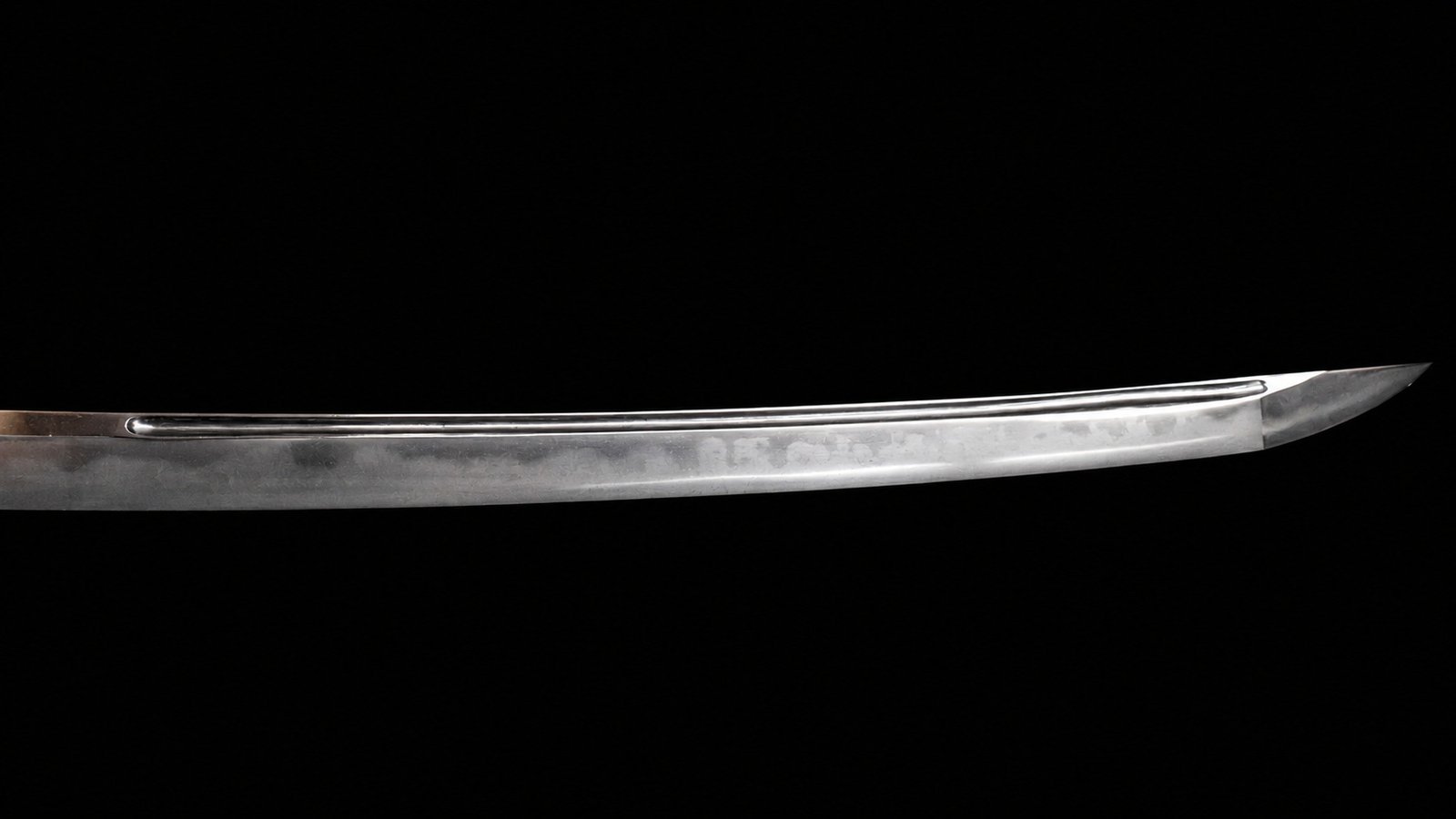
Kanabō blades are often discussed as representing a comparatively robust expression of the Yamato tradition. Rather than the most restrained classical forms associated with some earlier Yamato work, later Kanabō production can display strong proportions and an assertive overall shape appropriate to the martial conditions of the Muromachi period.
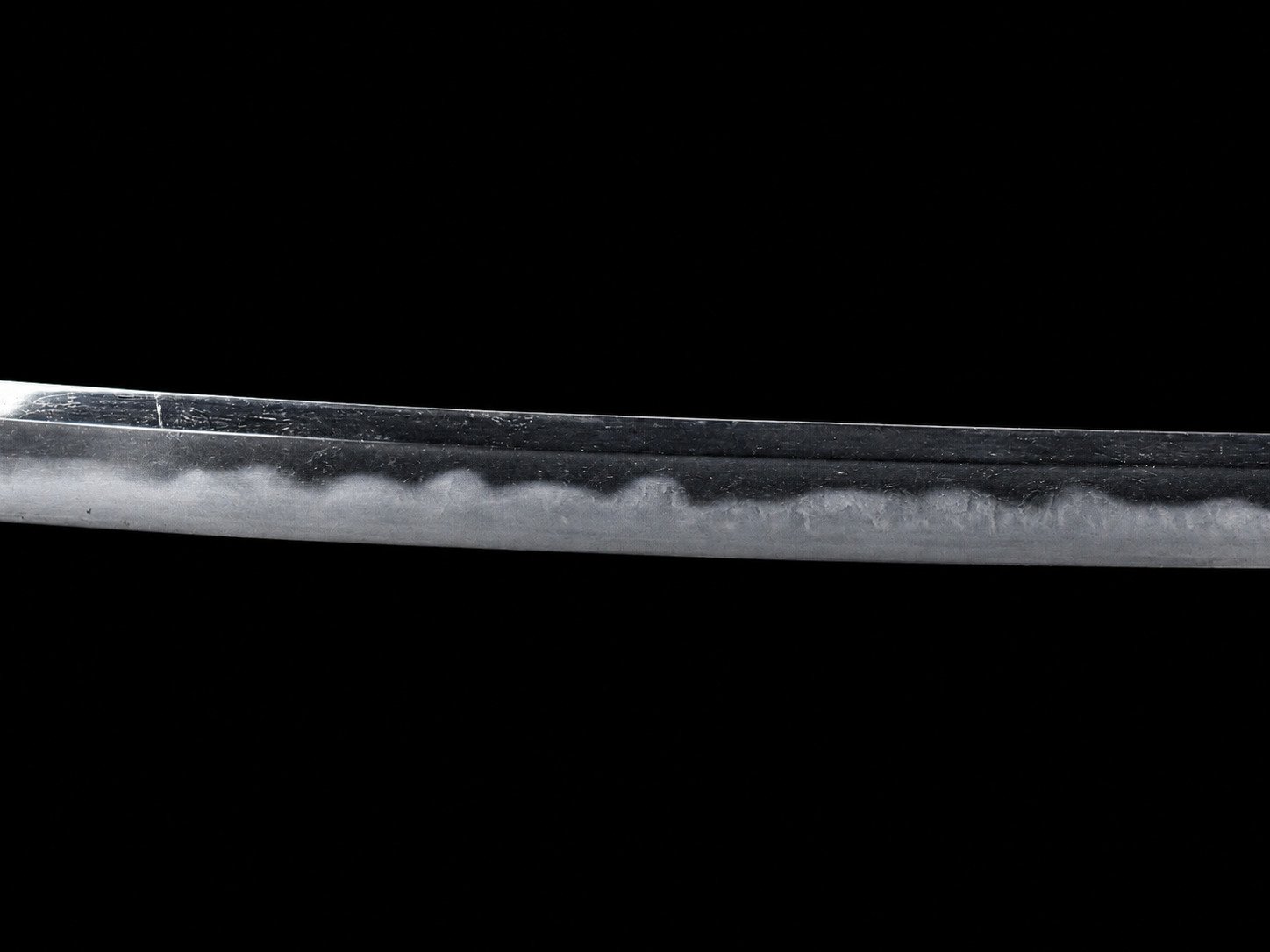
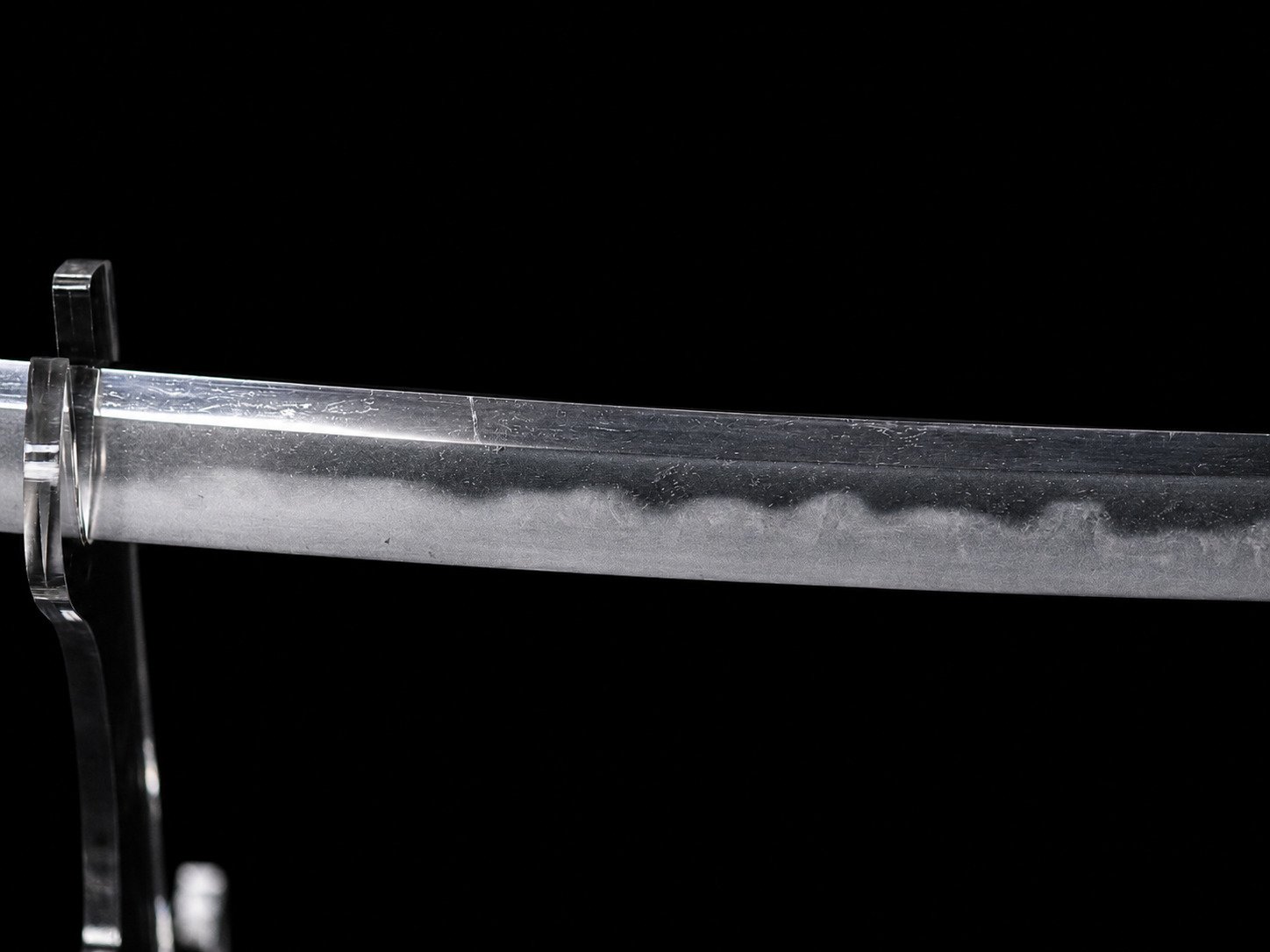
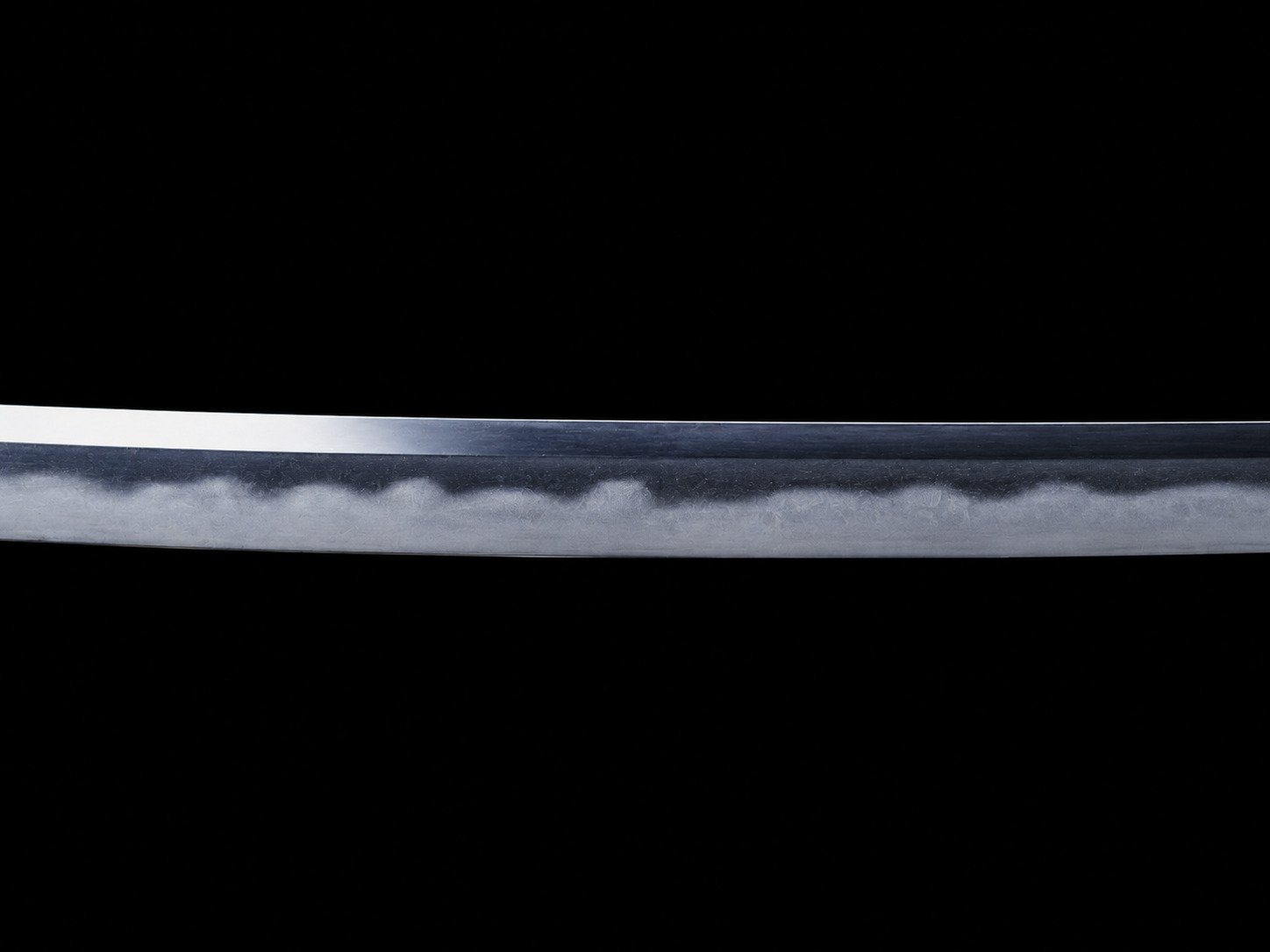
Features traditionally associated with the group can include pronounced curvature, relatively powerful blade geometry and active temper patterns. Individual blades, however, should always be assessed on their own visible characteristics rather than assuming that every work bearing the Kanabō name follows a single formula.
This example should therefore be understood first as a signed and papered sword associated with the Nara Kanabō tradition, with its own geometry, forging characteristics and tempering activity deserving direct study.
Muromachi-Period Martial Context
The Kanabō tradition developed within the militarised environment of medieval Nara and the broader Muromachi period, when the demand for practical swords and polearms was substantial.
Nara was not only a religious and cultural centre but also home to powerful temple institutions with significant military influence. Swordsmiths working in this environment supplied weapons for a society in which both regional warriors and armed religious communities played active roles.
Kanabō is also historically associated with the production of polearms, reinforcing the tradition’s close relationship with the martial culture of Nara.
Historical Suriage
The nakago has been shortened through suriage, with the lower portion of the original tang removed.
As a consequence, part of the mei has been lost, while the remaining inscription Nanto-jū Kanabō survives above the shortened section.
Suriage is a well-documented historical practice in Japanese sword culture. Older blades were frequently adapted to later preferences in length and mounting configuration, and such modification should be evaluated as part of the sword’s historical biography rather than automatically regarded as unusual damage.
Shirasaya
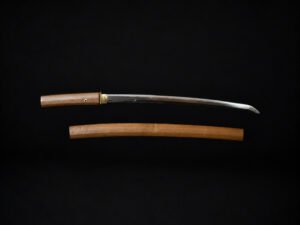
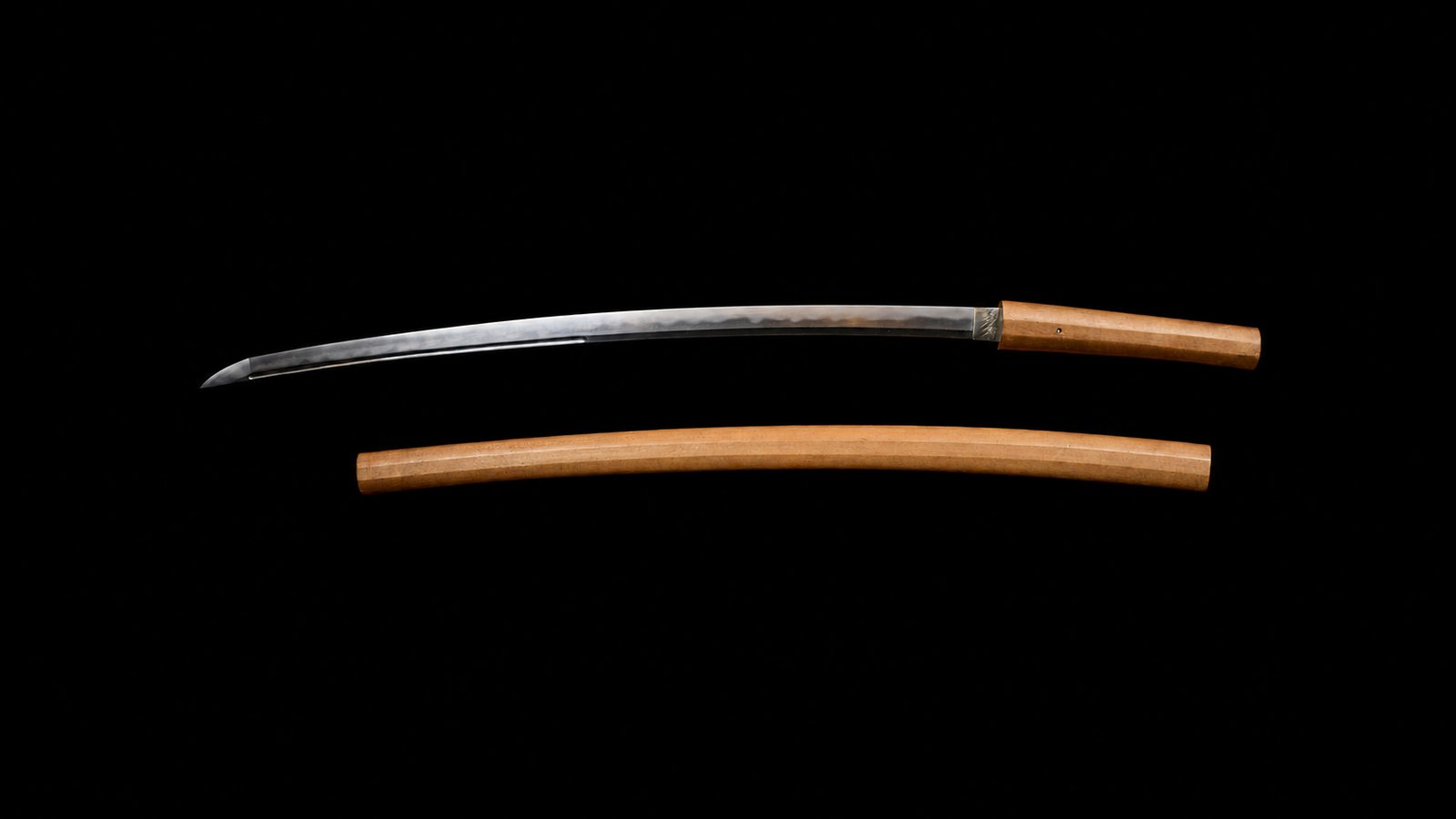
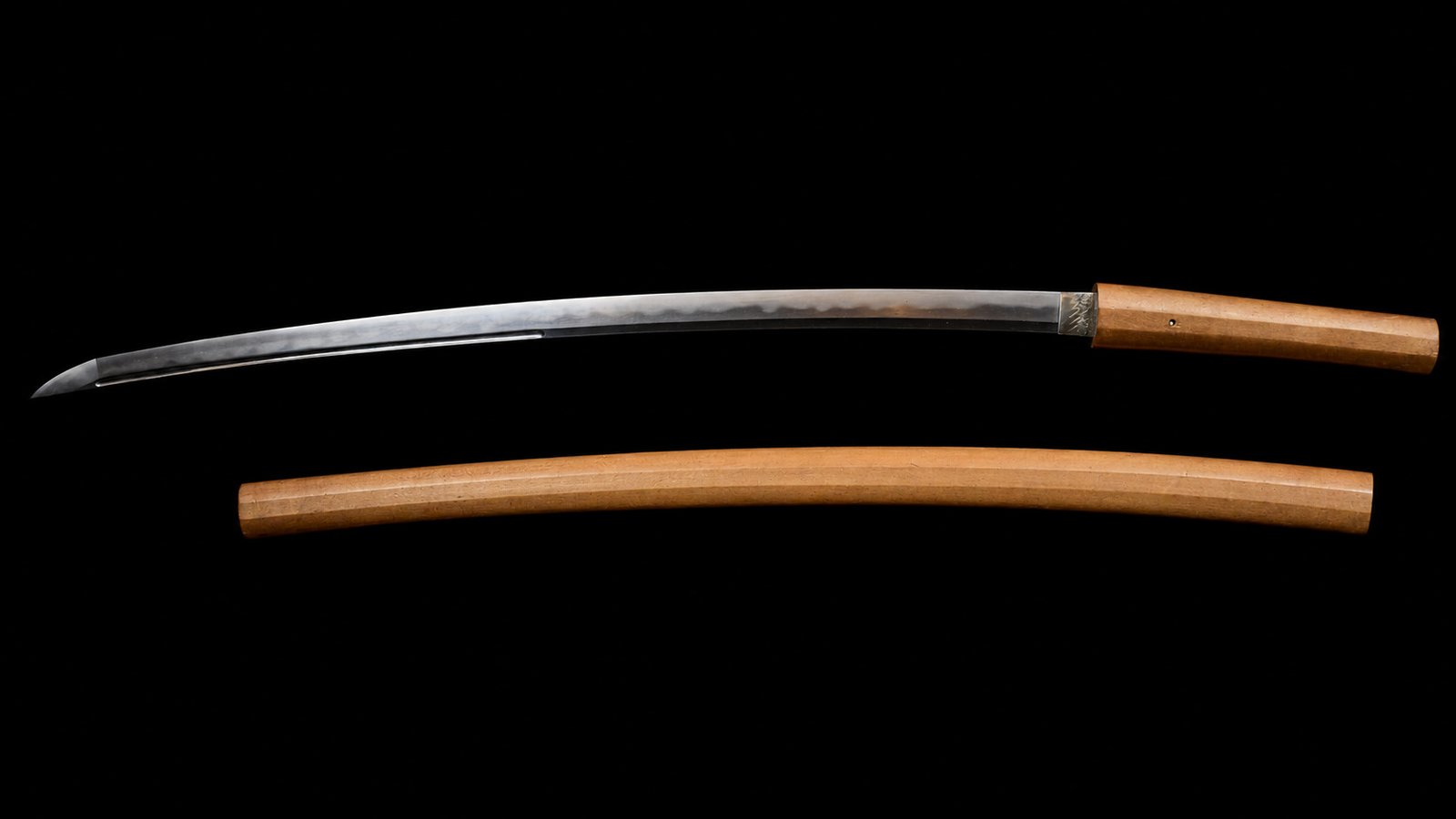
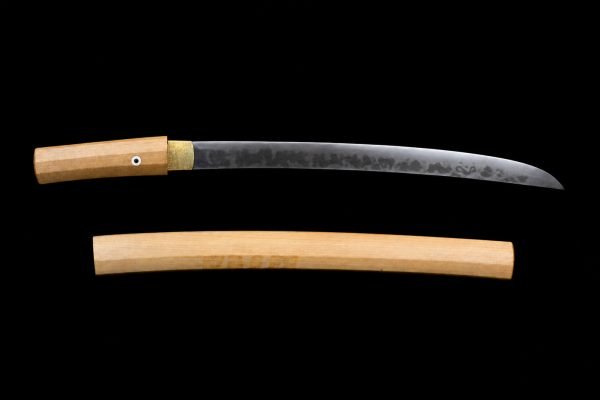
The blade is currently preserved in a plain wooden shirasaya, consisting of a simple wooden scabbard and matching hilt intended primarily for storage and protection of the blade.
The understated mounting keeps visual attention on the sword itself and provides an appropriate conservation-oriented presentation for a historic Japanese blade.
Key Features
- Period: Muromachi period, circa 15th century
- Type: Katana
- Tradition: Yamato
- School / group: Kanabō
- Signature: 南都住金房
- Reading: Nanto-jū Kanabō
- Signature position: Omote
- Nakago: Suriage
- Mei condition: Lower portion cut away (ika kiru)
- NBTHK paper: Tokubetsu Kichō Ninteisho
- Certificate No.: 345082
- NBTHK date: 19 June 1977 (Shōwa 52)
- Recorded nagasa: 2 shaku 1 sun 8 bu 5 rin
- Registration: Ehime Prefecture No. 16392
- Mounting: Shirasaya
Condition
The blade has undergone historical suriage, resulting in the removal of the lower part of the nakago and a corresponding portion of the original inscription.
The surviving mei remains clearly identifiable as Nanto-jū Kanabō, and the historical alteration is consistent with the long working life often encountered on Japanese swords of this age.
The sword is preserved in shirasaya and is accompanied by both its historical NBTHK Tokubetsu Kichō certificate and its Japanese registration documentation.
As with any antique Japanese sword, minor surface variations and signs of age should be considered within the context of the blade’s long history rather than as modern manufacturing imperfections.
A signed and documented Kanabō katana of the Yamato tradition, connecting the sword-making culture of medieval Nara with the martial environment of the Muromachi period. With its surviving Nanto-jū Kanabō mei, historical suriage and 1977 NBTHK Tokubetsu Kichō certificate, it represents a particularly interesting study piece from one of Nara’s distinctive sword-making traditions.