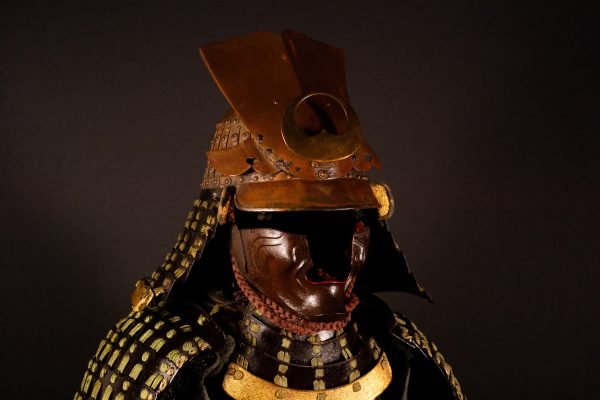
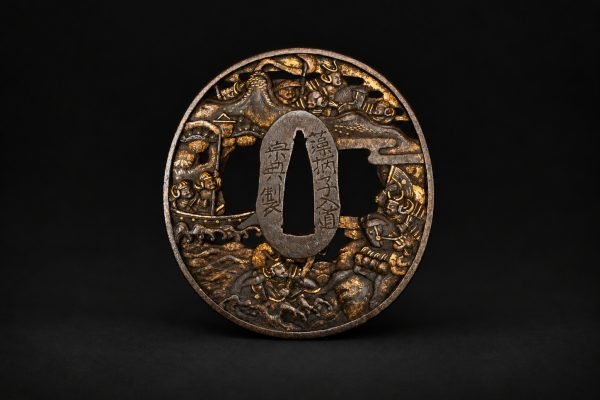
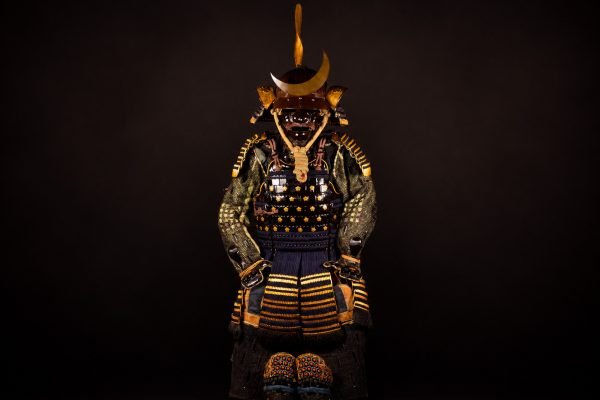
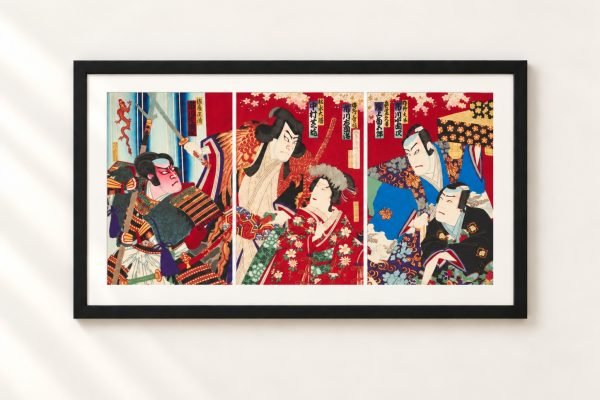
Japanese Sword Signed Nobukuni Yoshimasa in Koshirae
Chikuzen Nobukuni Tradition · Early Edo Period · Signed Blade · 53.1 cm
A Japanese sword bearing the signature of Nobukuni Yoshimasa (信國吉政), a distinctive early Edo-period smith whose career developed within one of Japan’s most important swordmaking lineages.
Yoshimasa was the eldest son of Nobukuni Yoshisada, twelfth master of the venerable Kyō-Nobukuni tradition and founder of its Chikuzen branch. Rather than simply continuing the established family style, Yoshimasa developed an individual approach combining elements inherited from the Nobukuni tradition with additional Bizen influence.
The Smith — Nobukuni Yoshimasa
Nobukuni Yoshimasa (信國吉政) was born around 1590 and died on December 4, 1653. He was the eldest son of Nobukuni Yoshisada, an important figure in the transmission of the Nobukuni school from Kyoto to Chikuzen.
In 1602, when Yoshimasa was still a boy of approximately twelve years of age, he accompanied his father from Buzen to Chikuzen. According to historical accounts, the departure was made under the pretext of a pilgrimage to Mount Hiko, allowing the family to leave the territory of the Hosokawa and fulfil Yoshisada’s earlier commitment to Kuroda Nagamasa.
The family subsequently settled in Chikuzen, where the Nobukuni smiths worked under the patronage of the Kuroda clan.
Two Swordmaking Traditions
Yoshimasa initially inherited the swordmaking tradition transmitted through his father, whose lineage incorporated influences associated with the Rai Kuniyuki tradition and the Sōshū tradition of Masamune.
In 1616, at approximately twenty-six years of age, Kuroda Nagamasa is recorded as having ordered Yoshimasa to further his studies under the Bizen master Ichimonji Sukemune of Fukuoka.
This additional training introduced a strong Bizen influence into Yoshimasa’s work and distinguished his style from that of the principal Nobukuni workshop.
Historical sources record that this stylistic divergence contributed to Yoshimasa being passed over for succession to the main school, whose leadership instead went to his younger brother Yoshitsugu. Yoshimasa subsequently established what records describe as a separate Nobukuni house (信国別家).
Renowned for Naginata
Despite the succession of the main family line passing to his younger brother, Yoshimasa established a considerable reputation of his own within the Kuroda domain.
He became particularly celebrated for the production of naginata. His work in this form became sufficiently renowned that examples were informally known as “Heishirō’s naginata” (平四郎の薙刀), referring to Yoshimasa’s courtesy name, Heishirō.
Works bearing his earlier signature are regarded as considerably rarer today than those produced by the second-generation smith who subsequently inherited the Yoshimasa art name. Toward the end of his career, the first-generation Yoshimasa is also recorded as having used the name Zenga (善雅).
Historical Context
Yoshimasa’s career belongs to an important transitional moment in Japanese swordmaking. His arrival in Chikuzen in 1602 and his death in 1653 place his working life across the transition from the final years of the Momoyama period into the early and mid-Edo period, principally within the Keichō through Jōō eras.
This period was particularly significant for the development of sword production within the Kuroda domain, as smiths established in Chikuzen developed an increasingly distinctive identity separate from their earlier Buzen roots.
The Sword
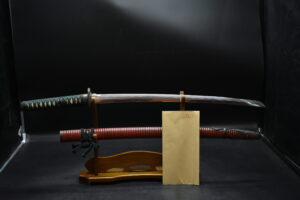
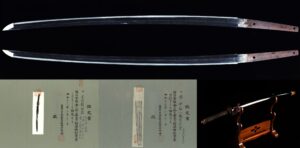
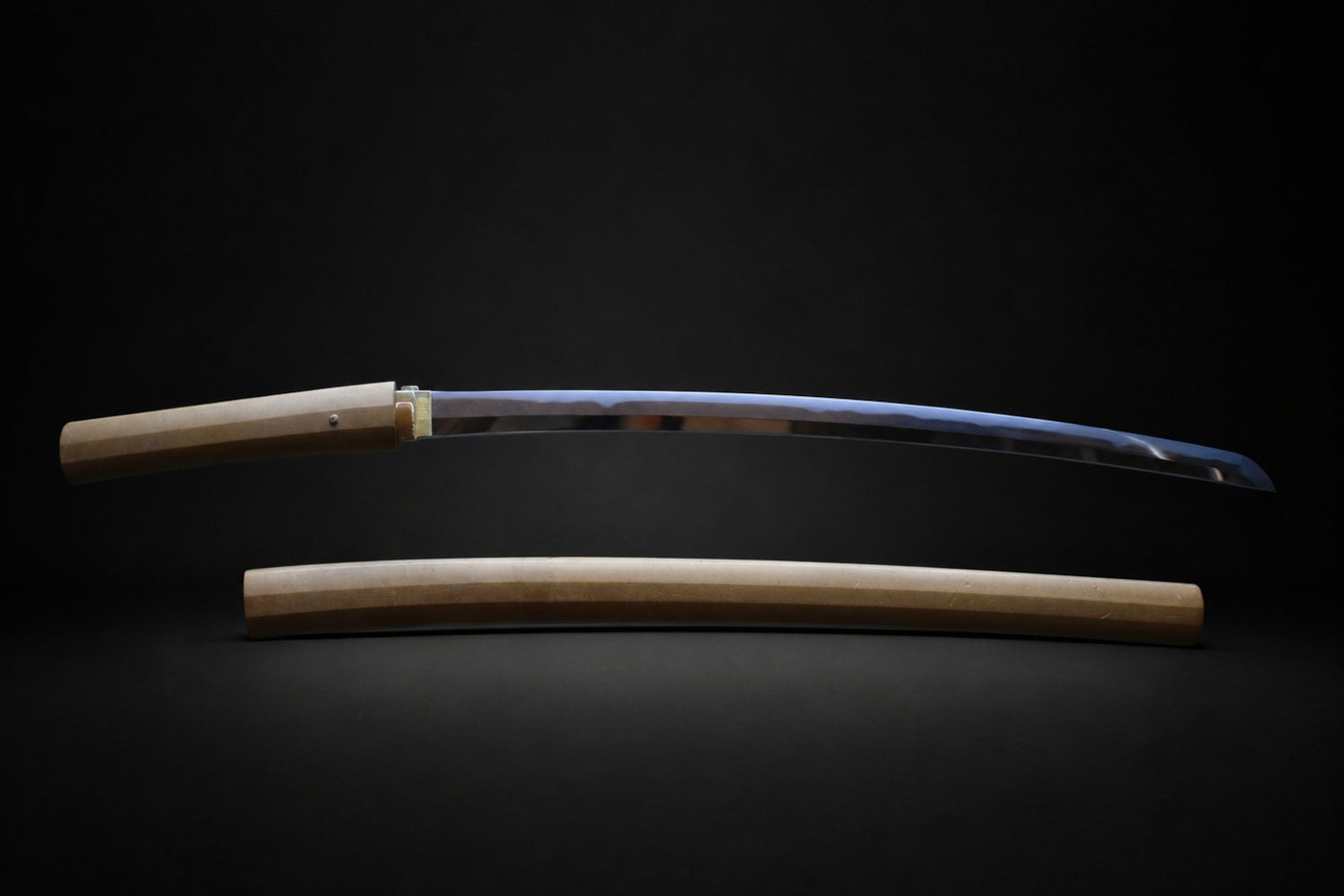
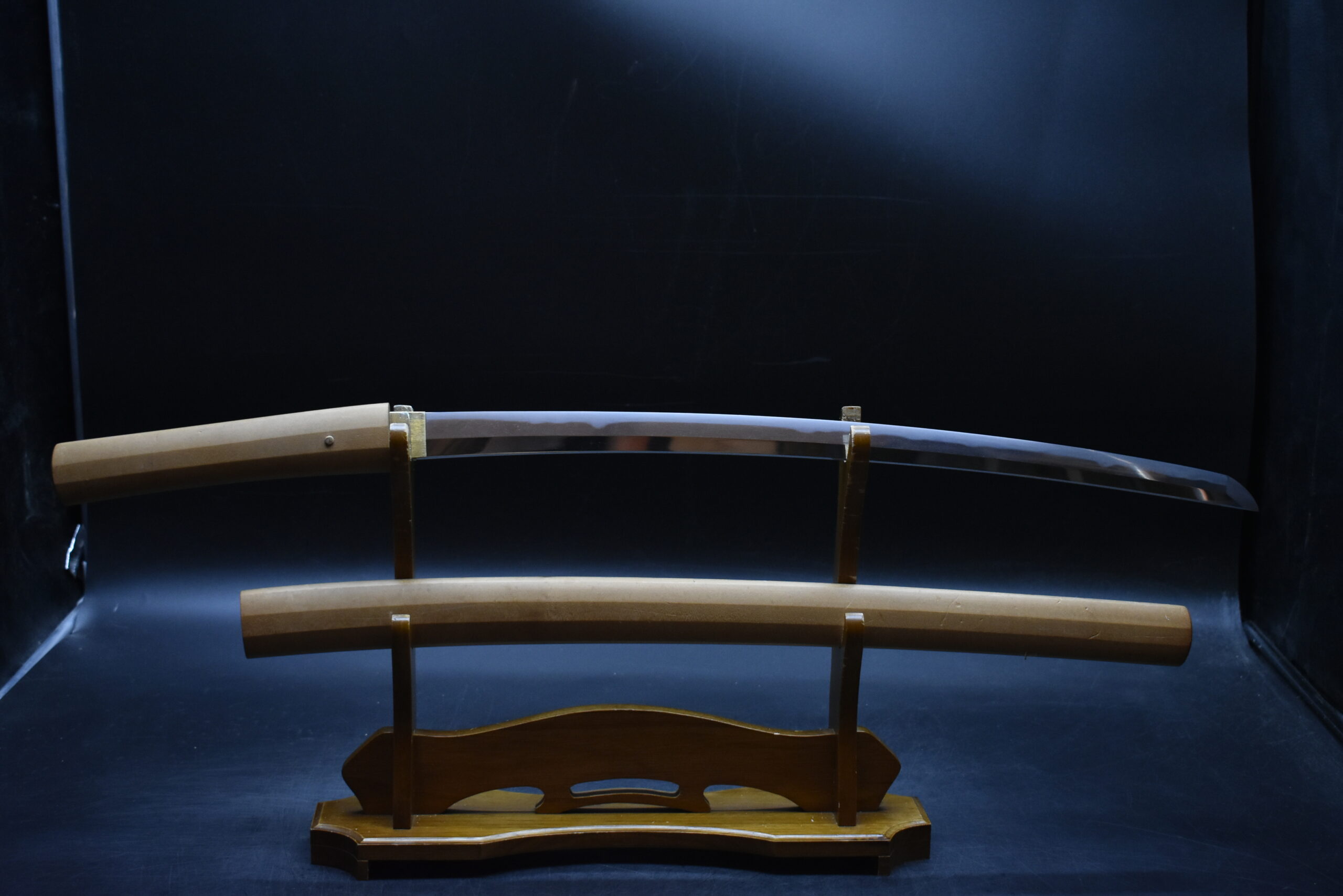
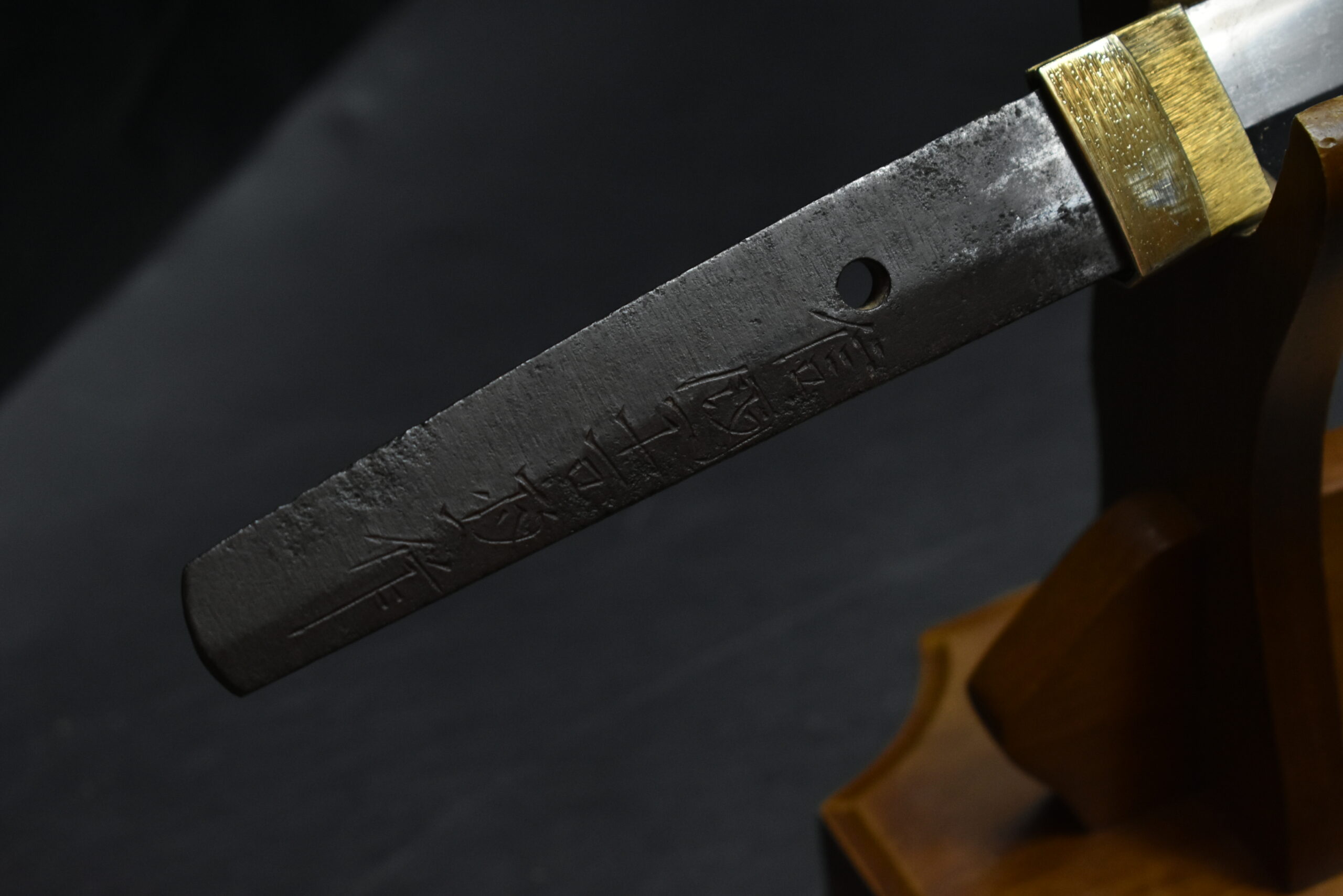
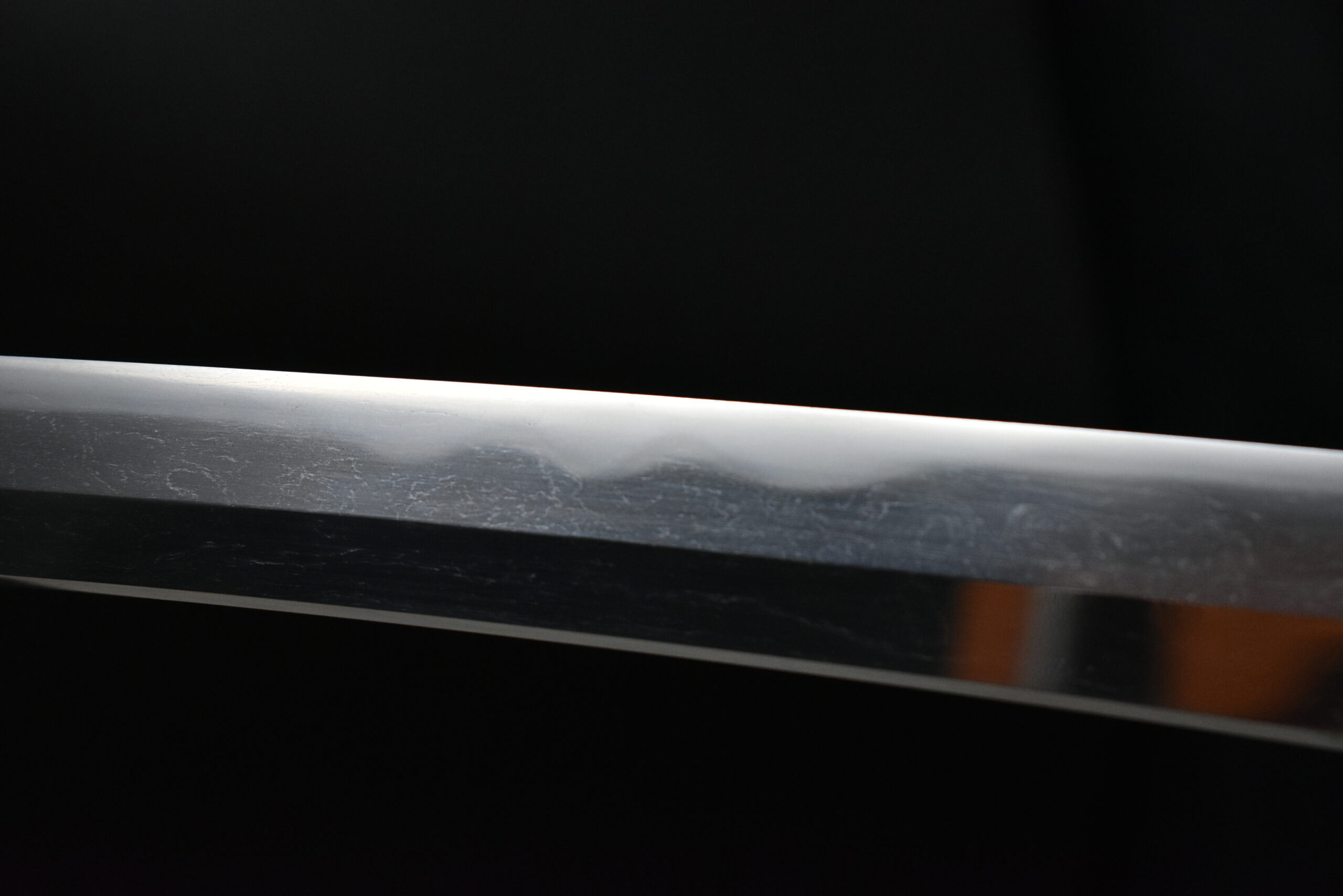
This sword is preserved with its koshirae and carries a signature read as Nobukuni Yoshimasa (信國吉政).
The blade measures 53.1 cm with a sori of 1.2 cm, while the complete koshirae measures approximately 80 cm in length.
The importance of the piece lies particularly in its signed attribution to a smith who occupied an unusual position within the history of the Nobukuni lineage: the firstborn son of the Chikuzen branch founder who ultimately developed an independent artistic tradition rather than inheriting leadership of the principal family workshop.
Attribution
The attribution to Nobukuni Yoshimasa presented here is based on the reading of the signature (mei) on the blade.
The sword is not accompanied by NBTHK or NTHK-NPO authentication papers confirming the signature or attribution. It should therefore be understood as a signed blade bearing the name Nobukuni Yoshimasa rather than as an independently certified work of this smith.
Given the historical importance of the name, the sword may represent an interesting candidate for a future shinsa submission should its next owner wish to seek formal authentication by a recognised Japanese sword appraisal organisation.
Specifications
- Object: Japanese sword in koshirae
- Signature: Nobukuni Yoshimasa (信國吉政)
- Tradition: Chikuzen Nobukuni
- Historical context: Early Edo period
- Blade length: 53.1 cm
- Sori: 1.2 cm
- Koshirae full length: 80 cm
- Authentication: No NBTHK or NTHK-NPO papers
- Attribution basis: Signature reading
Collector’s Value
This sword offers collectors an opportunity to study a signed work associated with one of the most historically interesting figures of the Chikuzen Nobukuni tradition.
Yoshimasa’s position within the family, his additional training in the Bizen tradition, the establishment of his own branch and his celebrated reputation as a maker of naginata make his name particularly noteworthy within the history of early Edo-period swordmaking.
A signed Japanese sword connected through its inscription to Nobukuni Yoshimasa — a smith who stepped outside the expected succession of his family school and established an individual reputation that continued to be remembered centuries after his death.