Edo Period Iron Mempō with Three-Lame Yodare-kake
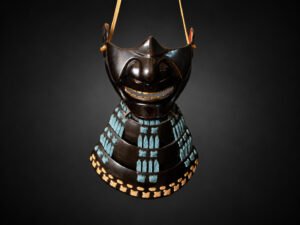
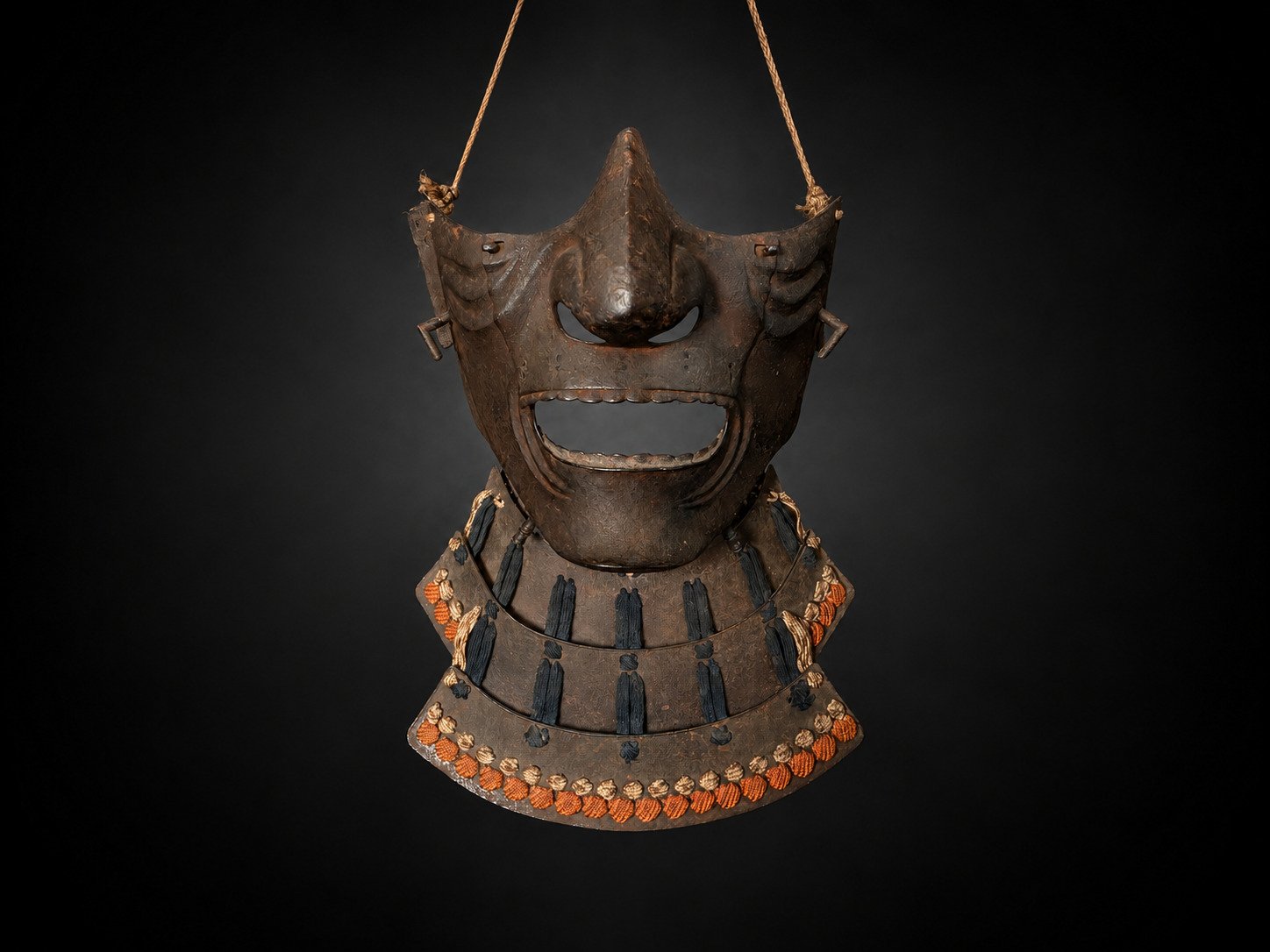
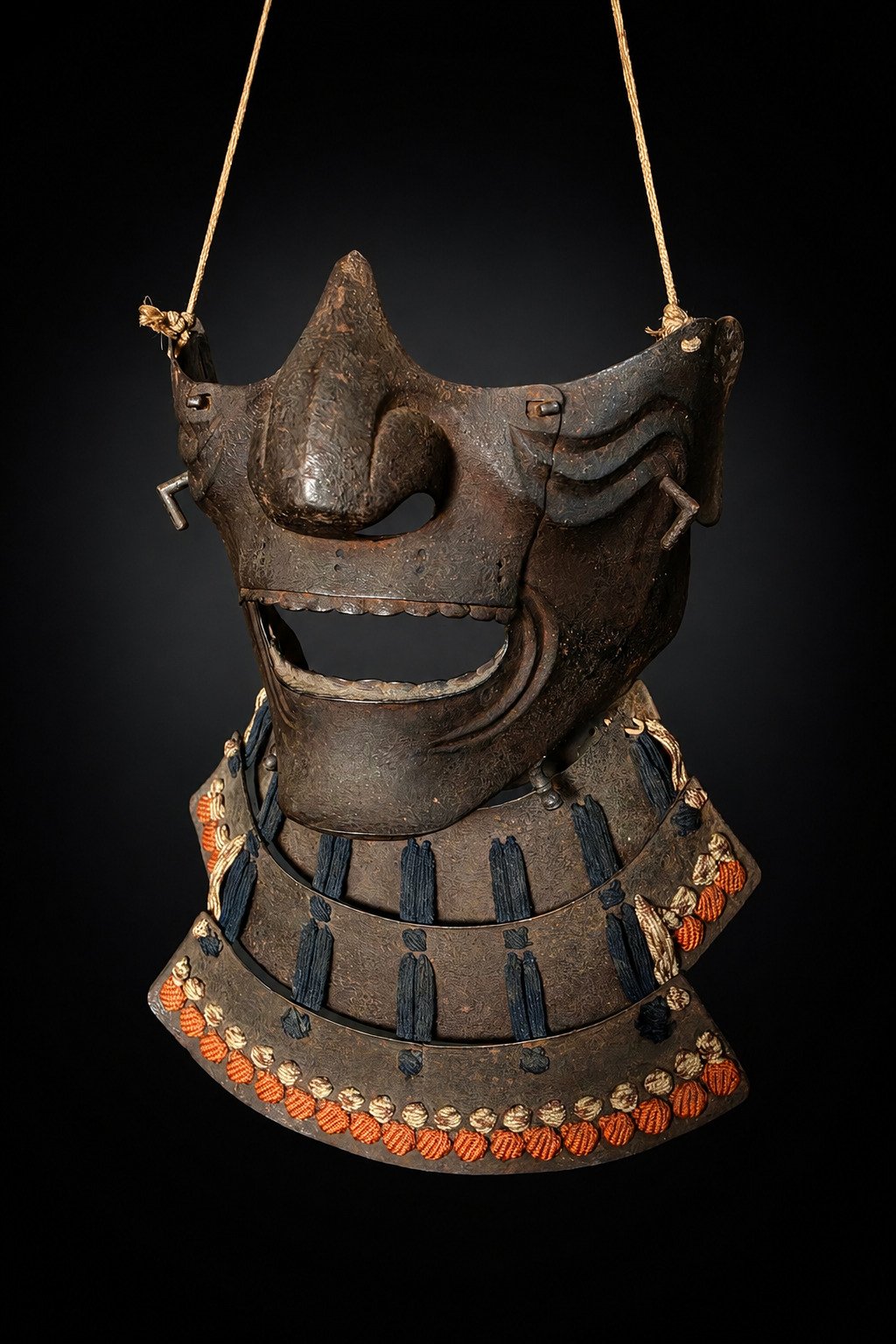
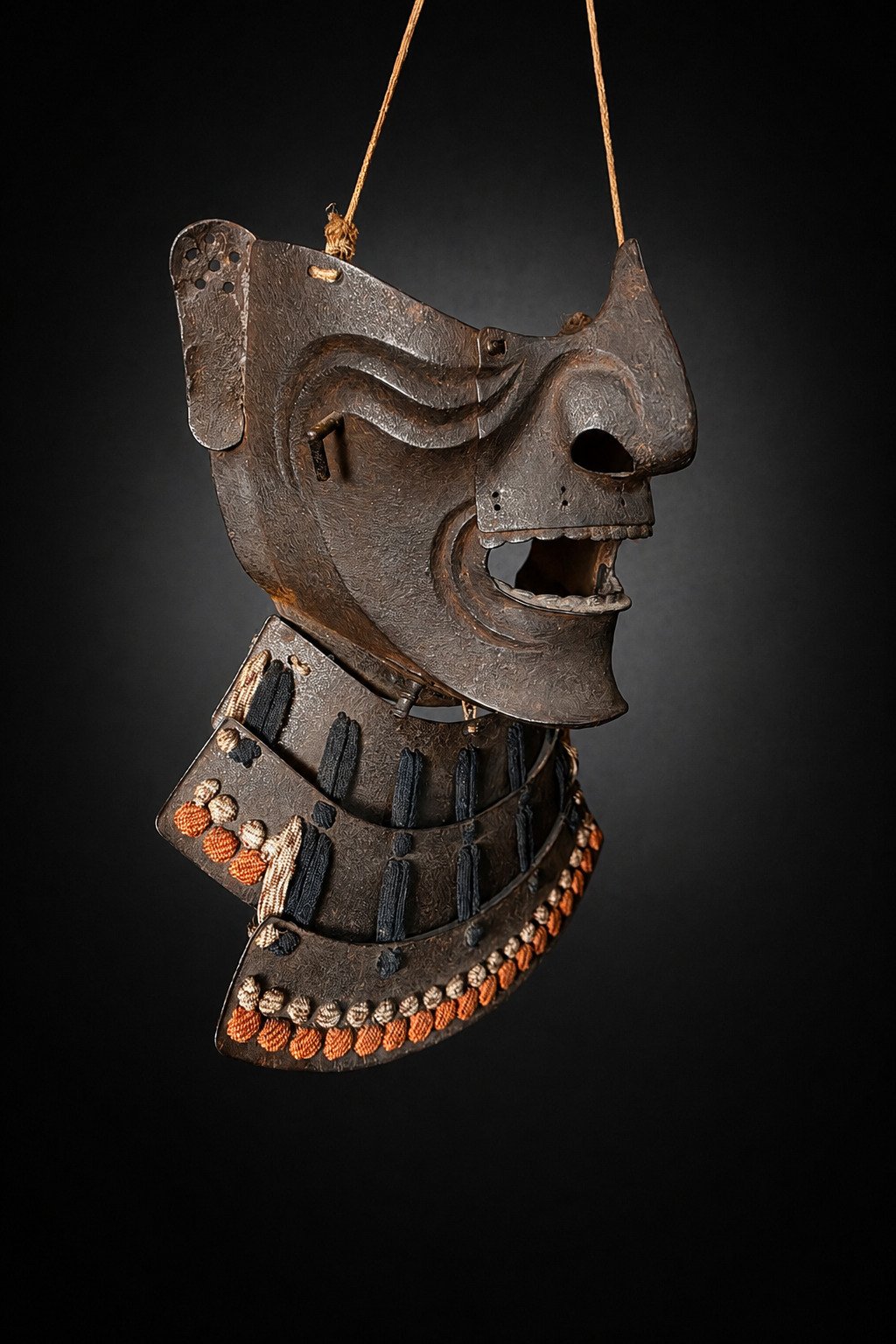
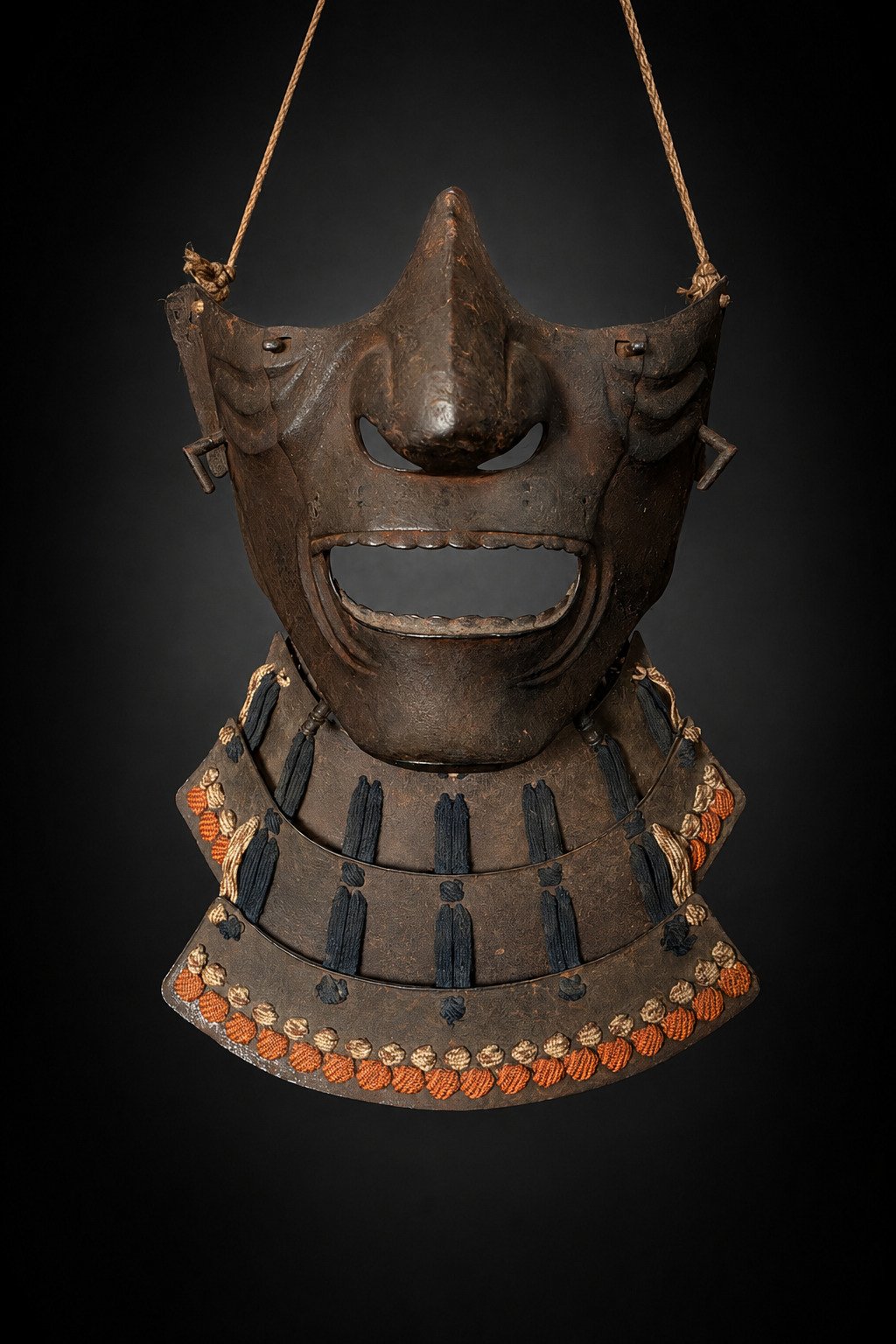
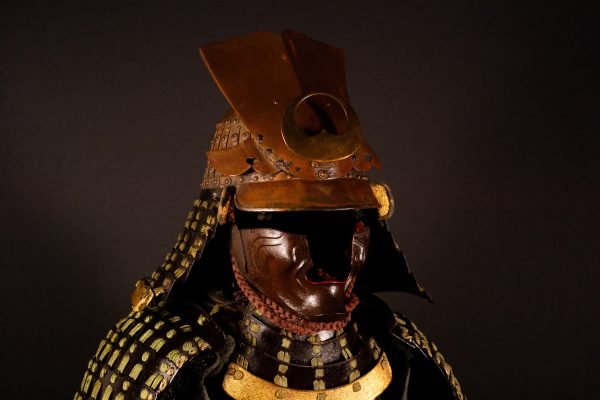
A powerful and expressive example of Japanese samurai facial armour, this iron mempō combines a deeply modelled face mask with a complete three-lame yodare-kake protecting the throat and upper chest.
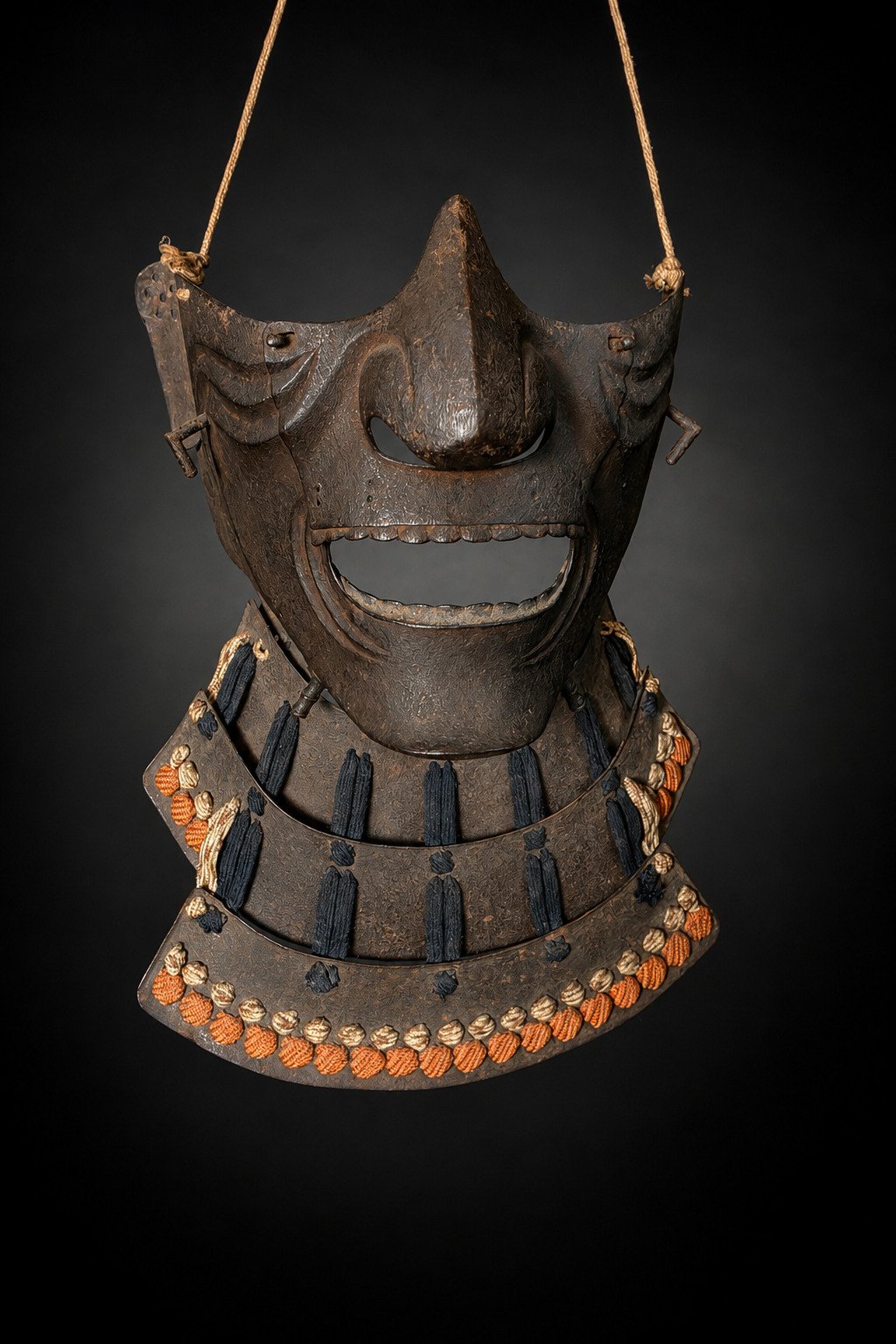
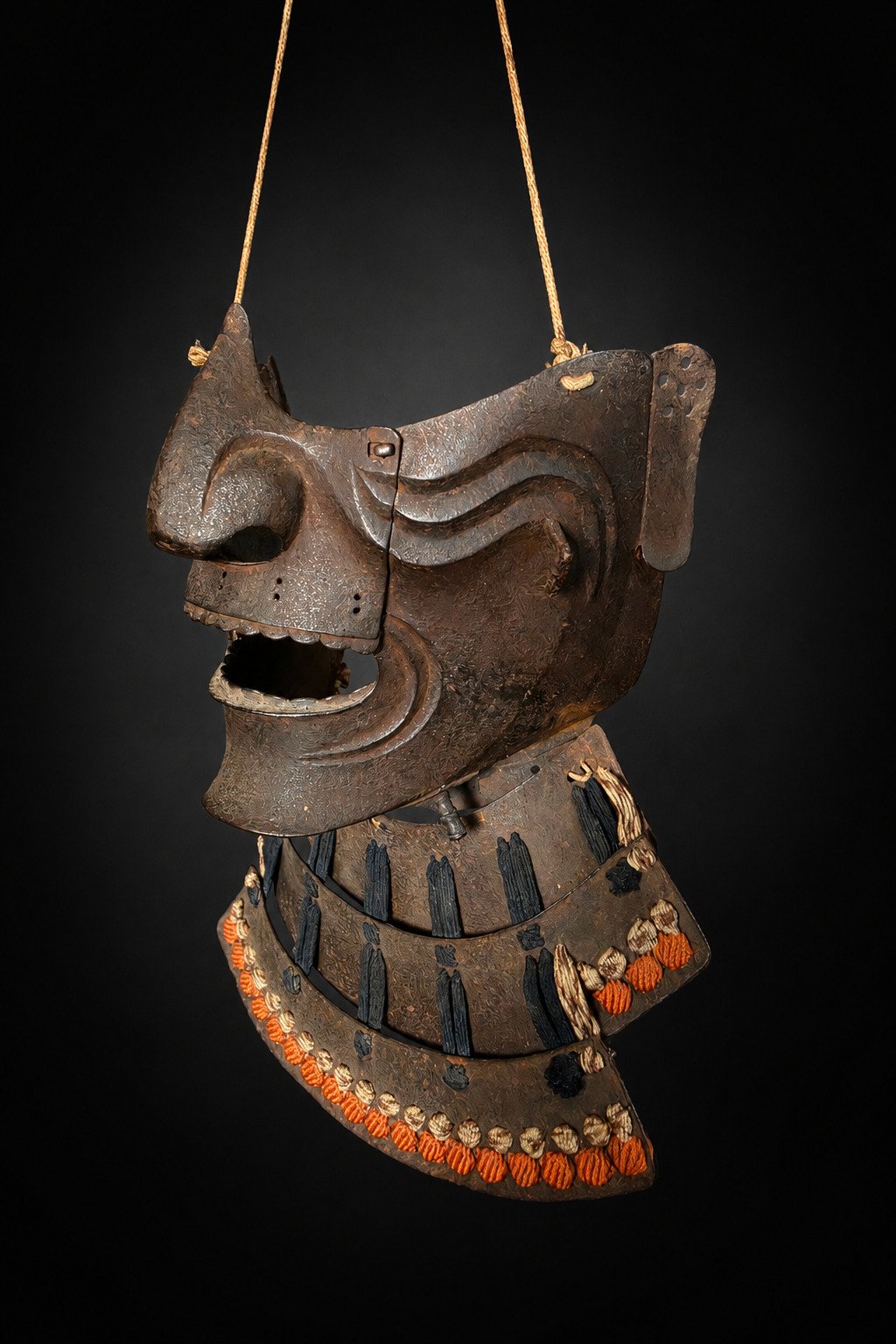
The mask has a strongly individual character: a pronounced hooked nose, deeply furrowed cheeks, carved wrinkle lines and an open, snarling mouth with stylised teeth create a severe expression without relying on excessive decorative embellishment.
The aged russet-brown surface, surviving lacing and evident historical wear give the piece a particularly convincing presence as functional armour rather than a purely ornamental object.
Forged Iron Mempō
The principal face plate is worked in iron and finished with a textured russet-brown surface. The finish has a subtly irregular, granular character associated with textured lacquer treatments sometimes described in relation to saibi-ji-style surfaces.
Rather than presenting a smooth and idealised face, the mask is deliberately severe. The cheeks are strongly modelled, with wrinkle lines radiating from the nose and mouth, while the central nose projects dramatically forward in a hooked form.
The simple eye openings remain largely unadorned, allowing the modelling of the iron itself to define the expression.
Snarling Mouth and Articulated Construction
The open mouth reveals a full row of stylised teeth, reinforcing the intimidating appearance of the mask. The lower portion of the face is articulated, allowing greater mobility than a completely rigid facial defence.
This combination of protection and movement was fundamental to the practical design of samurai facial armour: the mask needed to shield vulnerable areas while still allowing the wearer to breathe, speak and move the jaw and head with reasonable freedom.
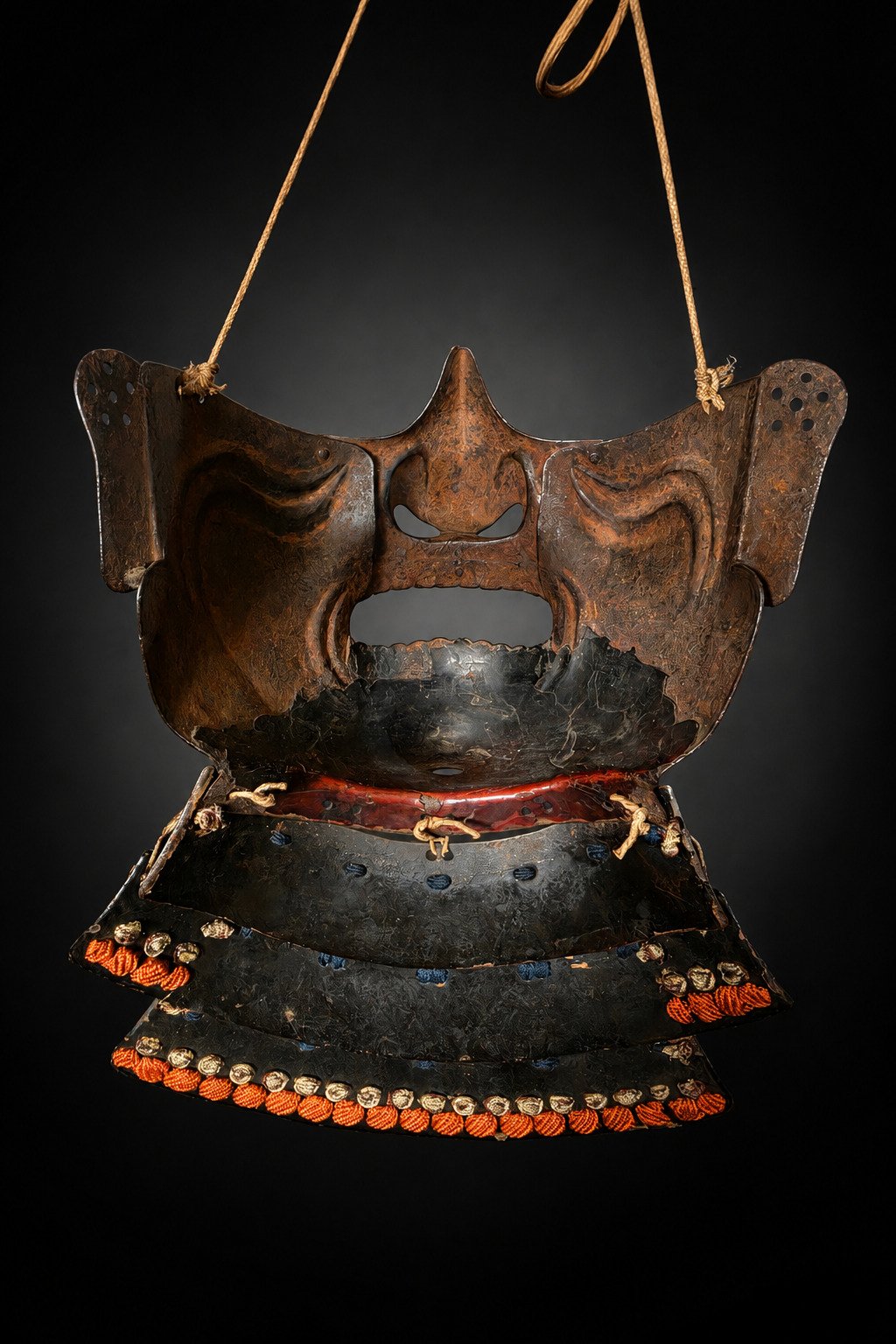
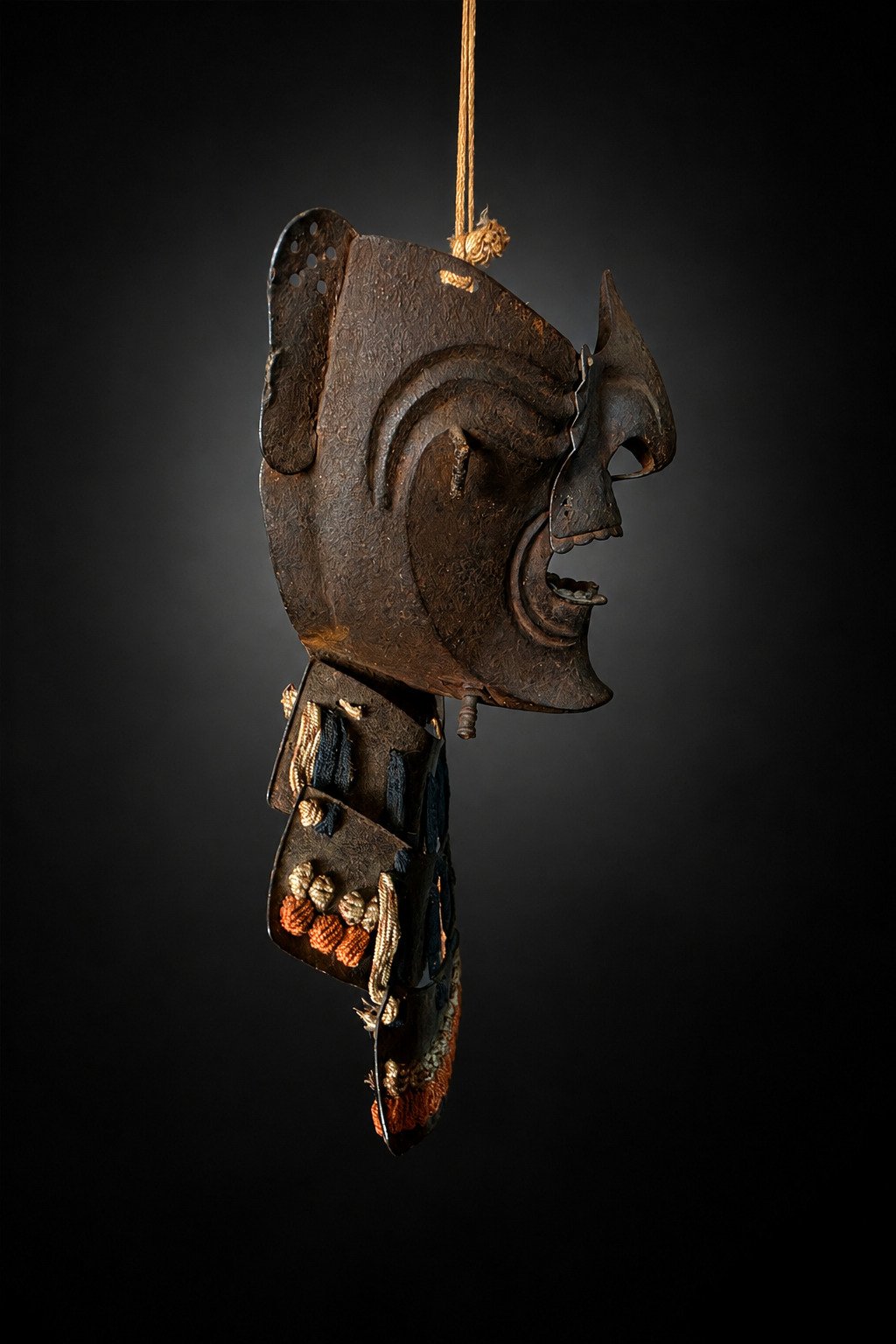
Side elements and attachment fittings survive around the cheeks, together with the cords used to secure the mask. A small drainage opening beneath the chin provides a practical detail traditionally associated with the management of perspiration while the armour was being worn.
Three-Lame Yodare-kake
Suspended beneath the mask is a complete three-lame yodare-kake, forming a protective defence for the throat and upper chest.
The three iron lames flare gradually outward as they descend, creating the characteristic profile needed to protect the neck while preserving sufficient freedom of movement for the head.
The lames are connected with dark indigo to black kebiki-odoshi lacing. Along the lower edge, alternating orange-and-cream silk knots provide an unexpectedly decorative accent against the otherwise restrained brown-black iron surface.
This contrast between practical armour construction and carefully arranged coloured lacing is characteristic of the Japanese ability to combine protection with visual refinement.
Surface, Patina and Historical Wear
The iron displays an even aged brown-black appearance with the natural variation expected from prolonged age, handling and use. The raised nose, cheeks and other prominent surfaces show minor wear consistent with their exposed position.
The lacing has likewise developed a softened, naturally faded appearance rather than the uniform colour expected from recent replacement. These age-related changes contribute to the overall coherence of the object.
Surface irregularities, minor losses and wear should be understood as part of the historical condition of the armour rather than as modern manufacturing imperfections.
The Psychological Role of Samurai Facial Armour
A mempō served several purposes simultaneously. It provided additional protection to the face, helped support the helmet through its fastening system and created a deliberately imposing visual identity for the wearer.
The deeply furrowed and aggressive expression of this example belongs to the broader tradition of intimidating samurai face masks sometimes discussed using terms such as aku-bō or oni-menpō. Without documentary attribution, however, such terminology is best treated as a description of expressive type rather than a definitive classification.
Its exaggerated nose, exposed teeth and deeply modelled facial lines would have produced a dramatically different appearance once combined with a kabuto and the remaining elements of a complete armour.
Protection and Mobility
Despite its intimidating appearance, the construction remains fundamentally practical. The articulated facial elements, side fittings, securing cords and layered throat defence were designed to balance protection with the mobility required when wearing a complete suit of armour.
The three-lame yodare-kake follows the movement of the neck more effectively than a single rigid plate, while its outward flare increases coverage across the upper chest.
This balance between function, visual identity and craftsmanship is one of the defining characteristics of historical Japanese armour.
Key Features
- Period: Edo period
- Type: Mempō / samurai facial armour
- Material: Iron
- Surface: Aged russet-brown textured finish
- Expression: Pronounced hooked nose, deeply modelled cheeks and snarling mouth
- Teeth: Stylised exposed teeth
- Construction: Articulated facial elements with surviving side fittings
- Yodare-kake: Three iron lames
- Odoshi: Dark indigo/black kebiki-odoshi
- Accent lacing: Orange-and-cream silk knots along the lower edge
- Practical detail: Drainage opening beneath the chin
- Condition: Antique condition with natural surface and lacing wear
Condition
The mempō and yodare-kake survive in coherent antique condition, showing the surface wear, patination and ageing expected from a historical piece of Japanese armour.
The raised areas of the face show natural wear, while the iron retains a largely consistent brown-black aged surface. The textile elements display fading and wear associated with age and handling.
The articulated components remain functional. As with all antique Japanese armour, minor irregularities, abrasions, textile wear and surface changes should be considered part of the history and character of the object.
A striking Edo-period iron mempō combining an uncompromising, deeply modelled facial expression with a complete three-lame yodare-kake. Its aged russet surface, surviving lacing and functional construction make it a particularly evocative example of the protective, practical and psychological dimensions of samurai armour.