Zunari Kabuto with Large Crescent-Ring Wakidate – Edo Period
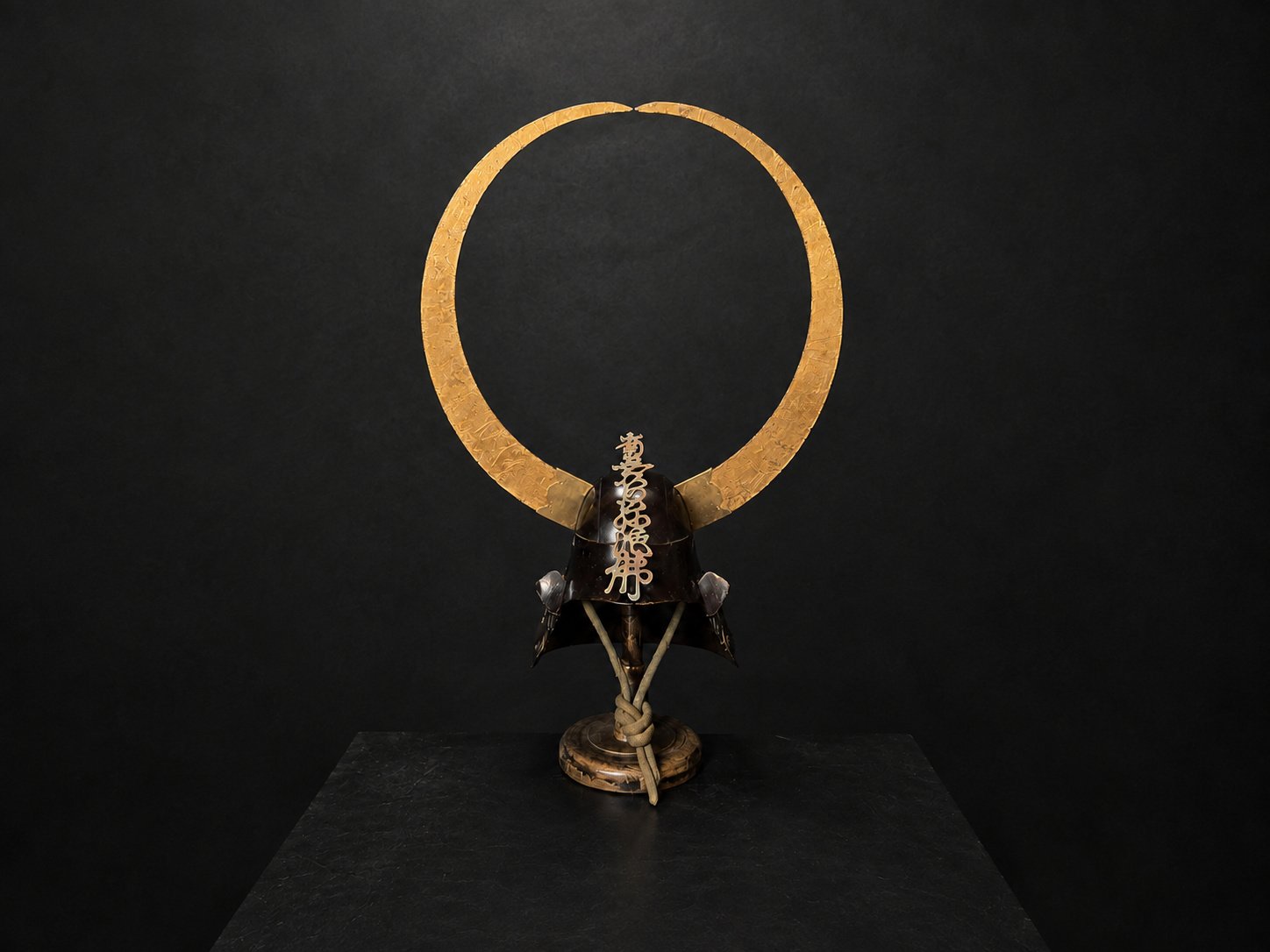
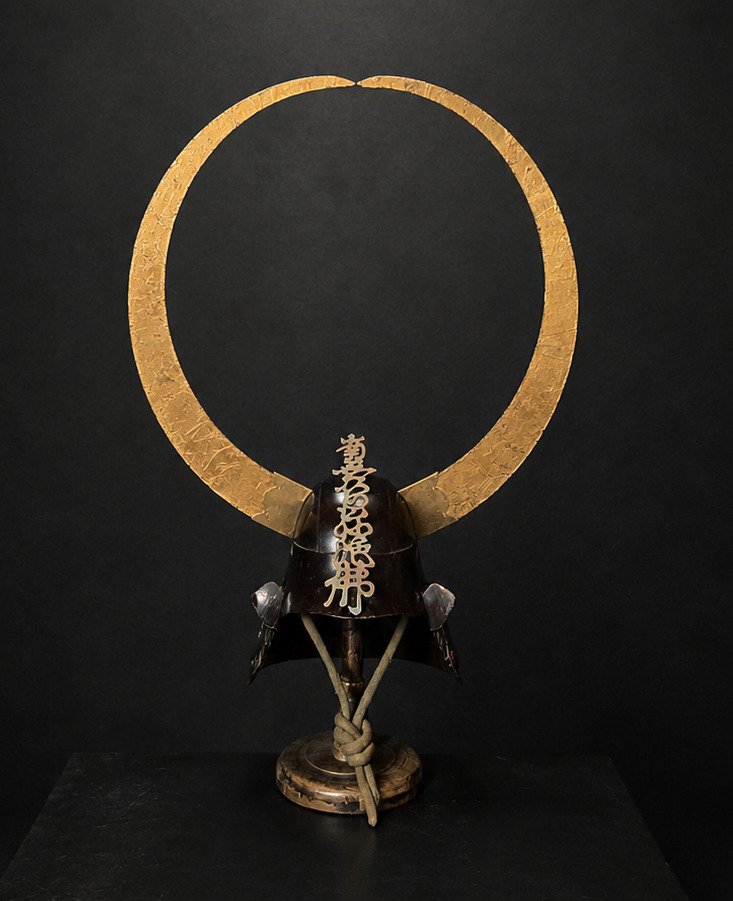
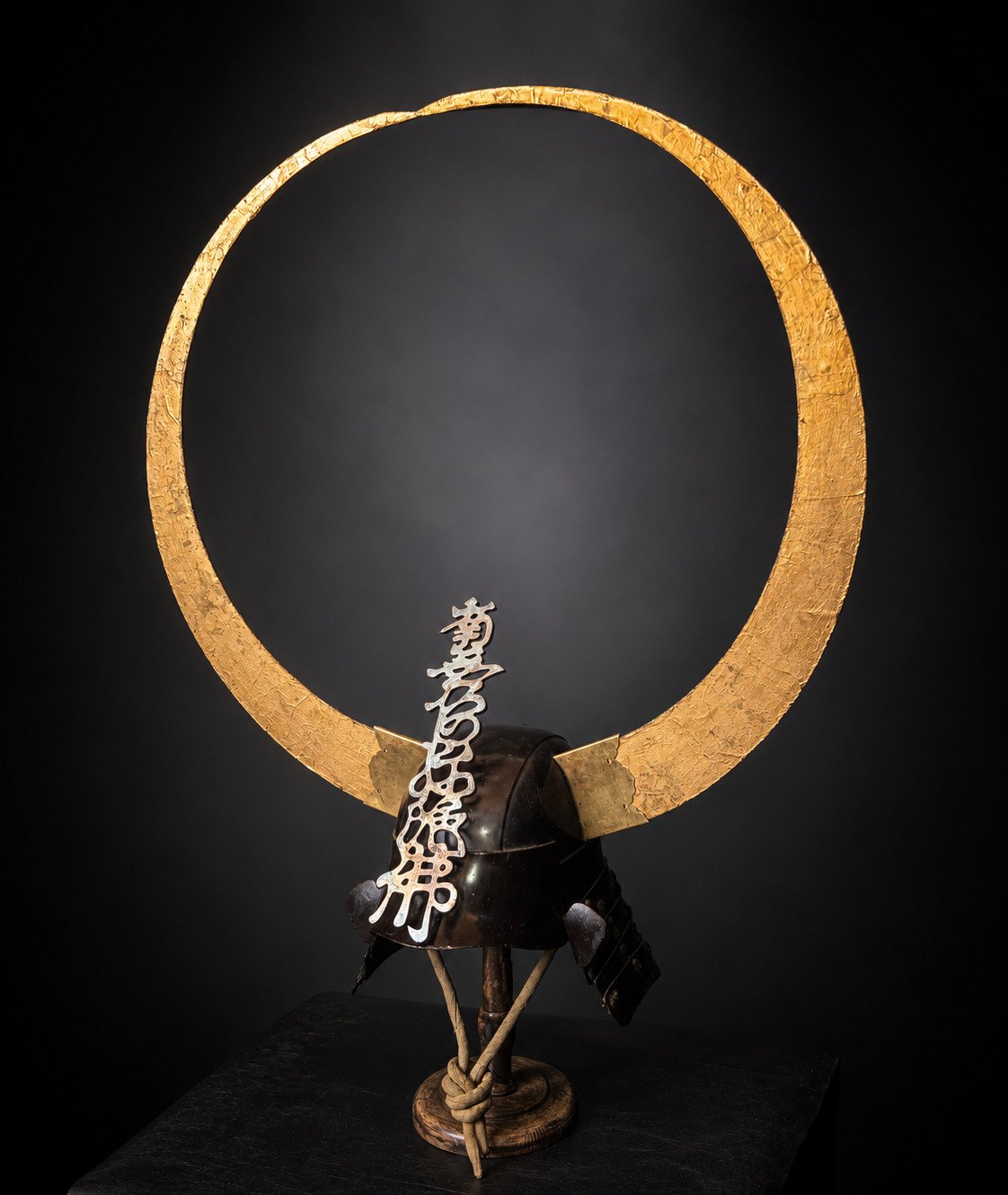
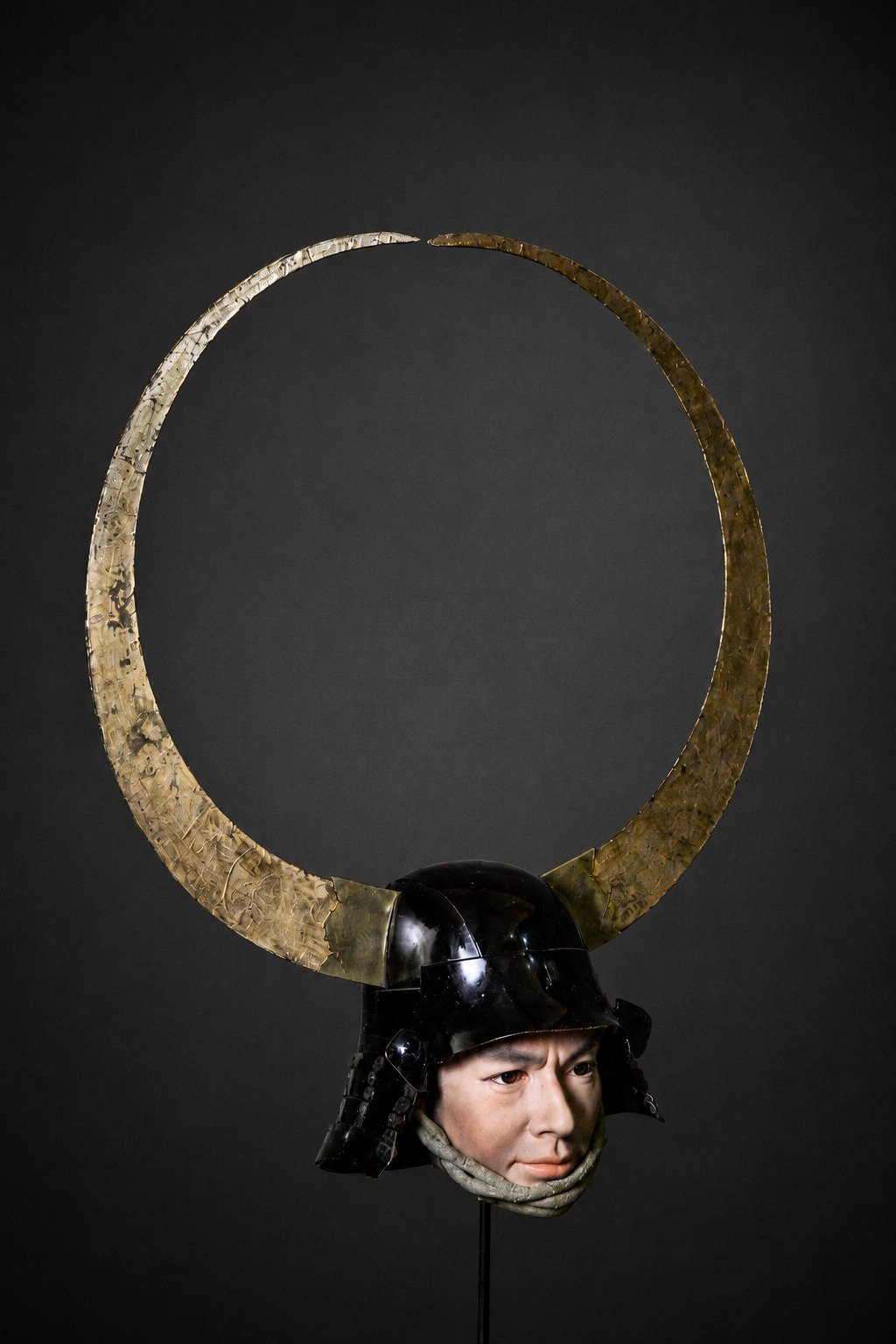
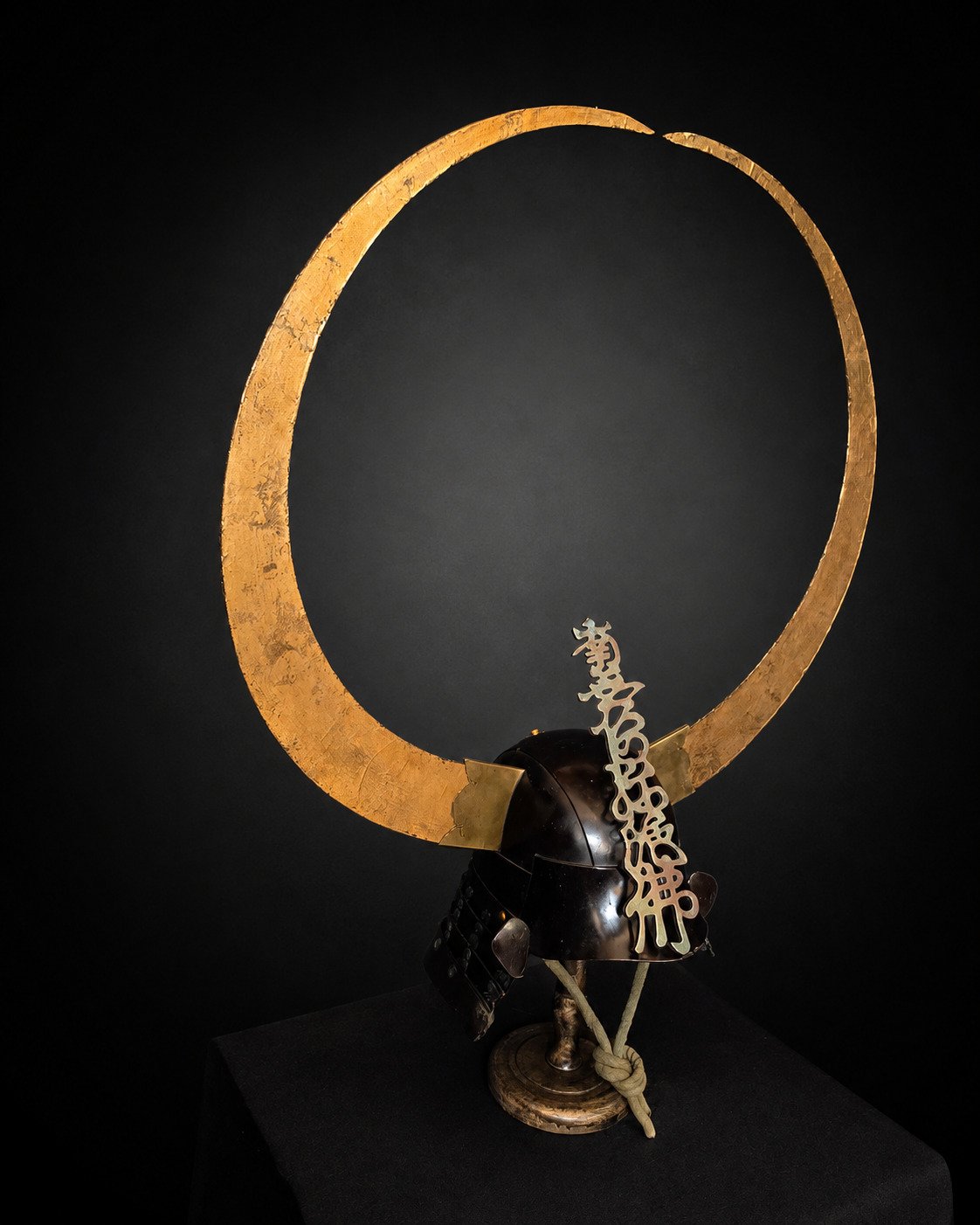
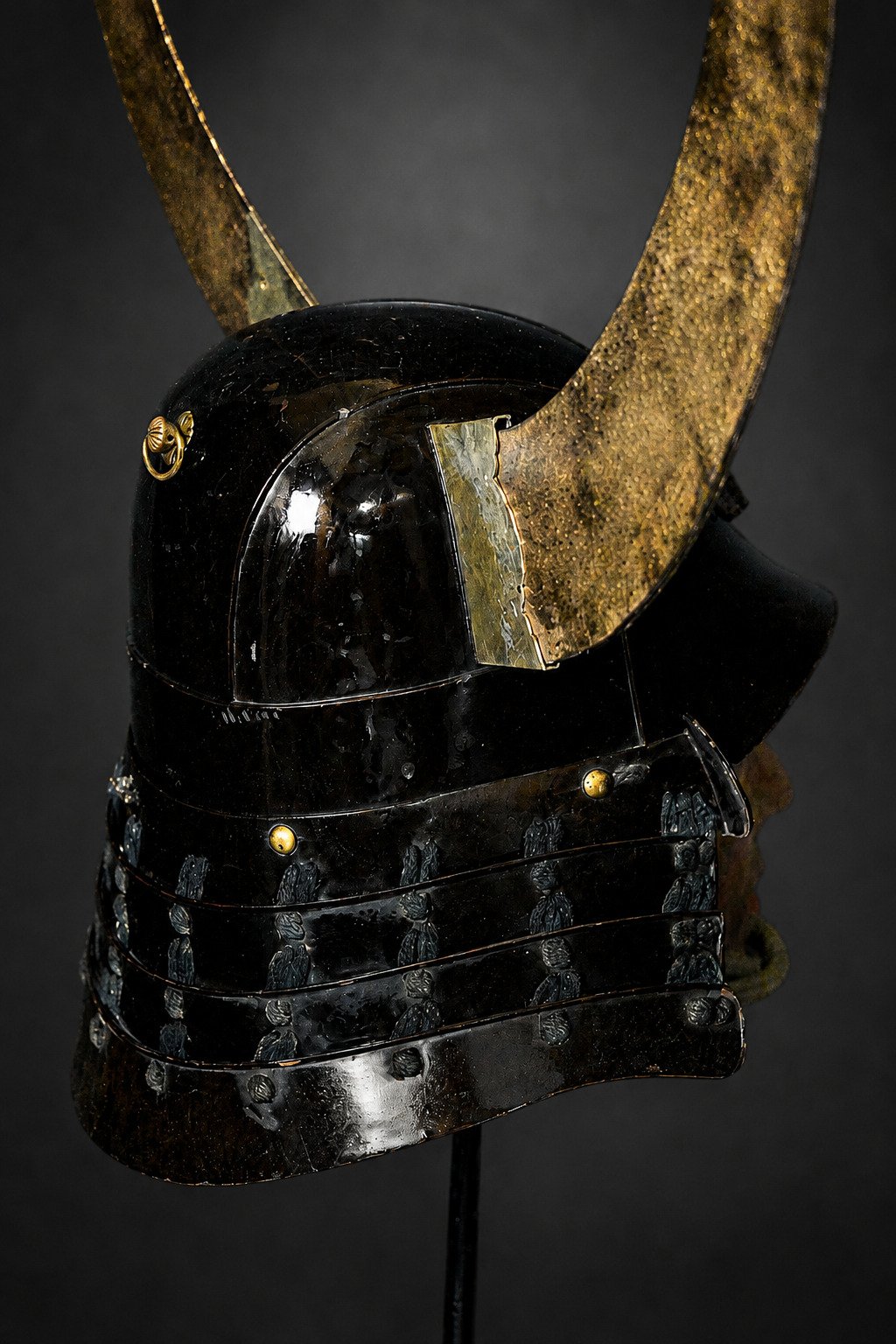
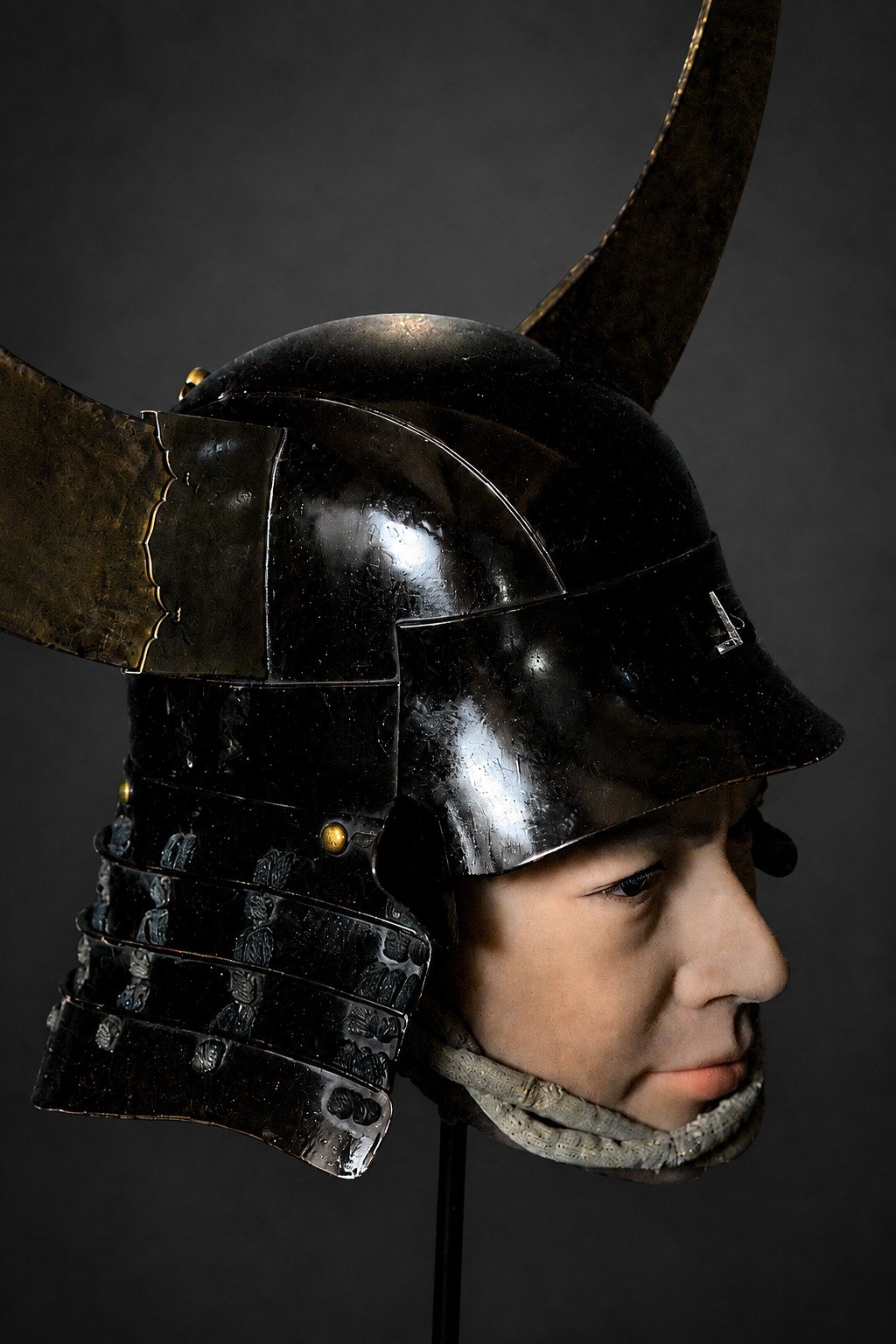
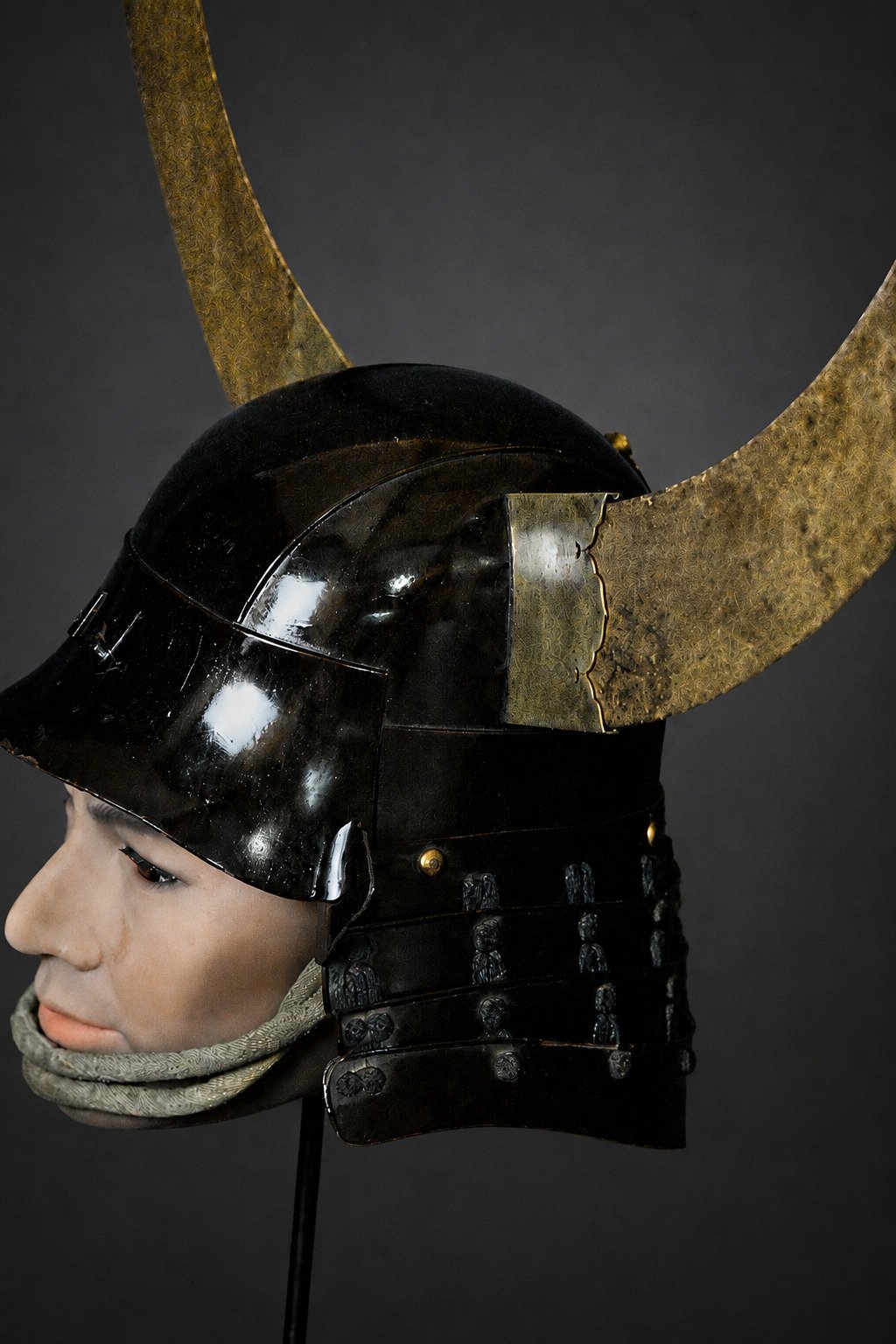
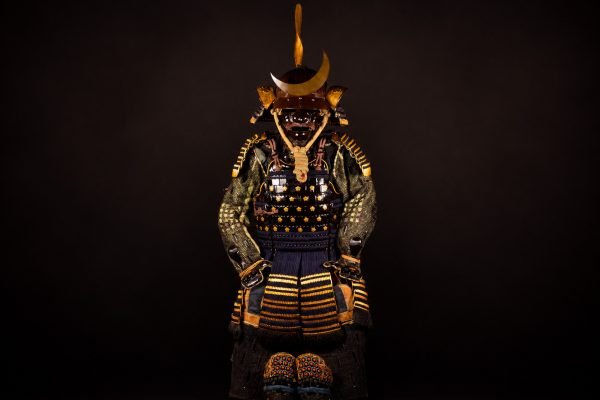
An imposing Japanese samurai helmet of zunari — “head-shaped” — form, constructed from forged iron plates and finished in a deep, glossy black lacquer. Its restrained bowl provides a dramatic contrast to the exceptionally large gold-leaf wakidate rising from either side, creating one of the helmet’s most distinctive visual features.
The smooth, rounded iron bowl rises to a low crown and retains gilt-metal fittings that complement the monumental side ornaments. The overall construction combines the practical strength of an iron kabuto with the highly individual visual language characteristic of distinctive Edo-period armour.
Monumental Crescent-Ring Wakidate
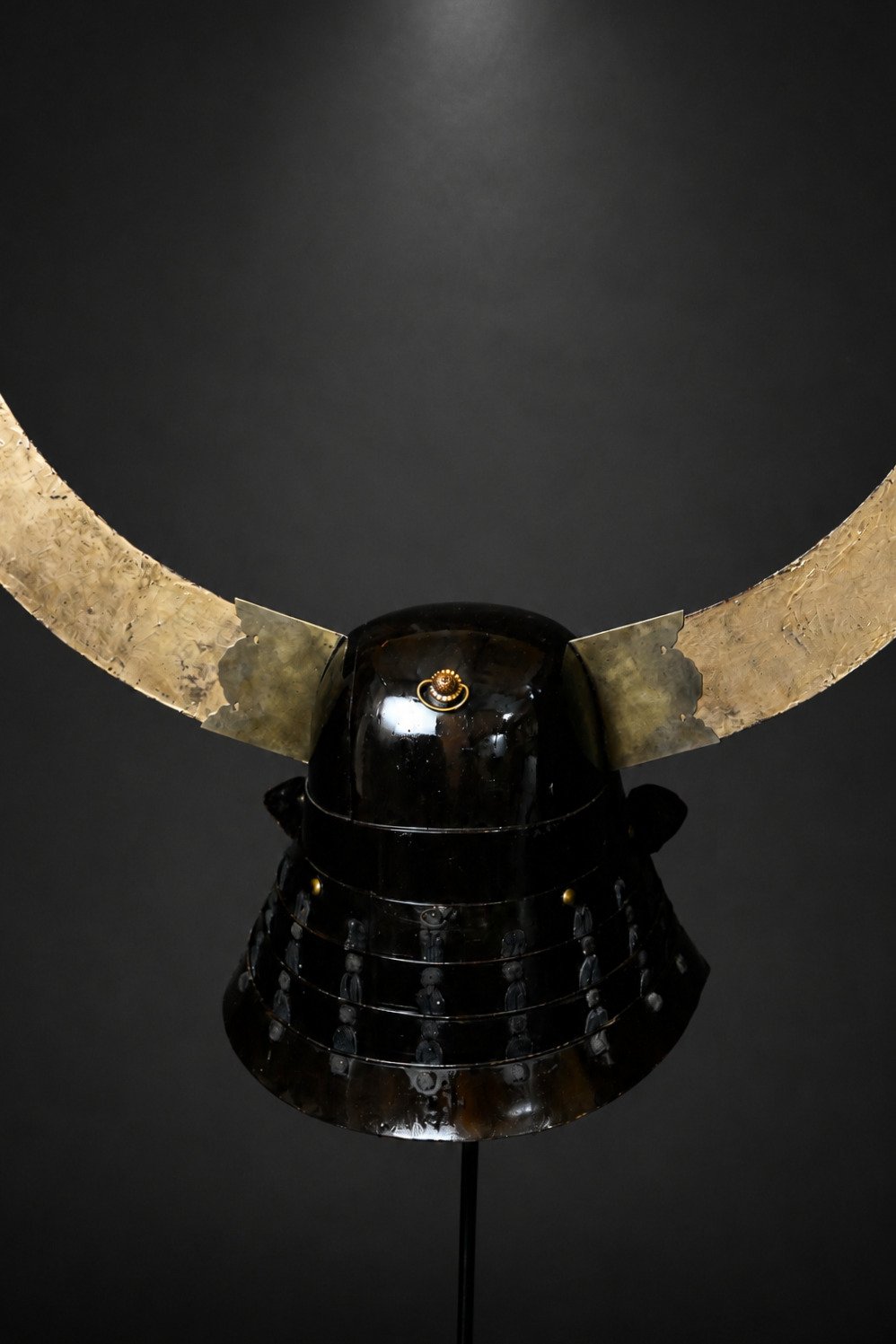
The defining feature of this kabuto is its extraordinary pair of wakidate — side-mounted ornaments — which together form a broad, almost continuous circular or crescent-shaped silhouette above the helmet.
Carved from wood and finished with applied gold leaf (kinpaku), the ornaments retain a subtly textured surface that catches the light without appearing excessively polished. Their scale is remarkable: the arc rises well above the bowl and visually dominates the entire composition.
The exact intended symbolism cannot be established from appearance alone, although the form may evoke the moon (tsuki), stylised horns, or a highly individual reinterpretation of the bold horned ornaments frequently encountered in Japanese armour.
Each ornament is fitted into a metal mounting base at the sides of the helmet. The surviving attachment system appears integral to the construction and allows the large ornaments to be mounted securely while remaining removable in the traditional manner.
Forged Iron Zunari Bowl
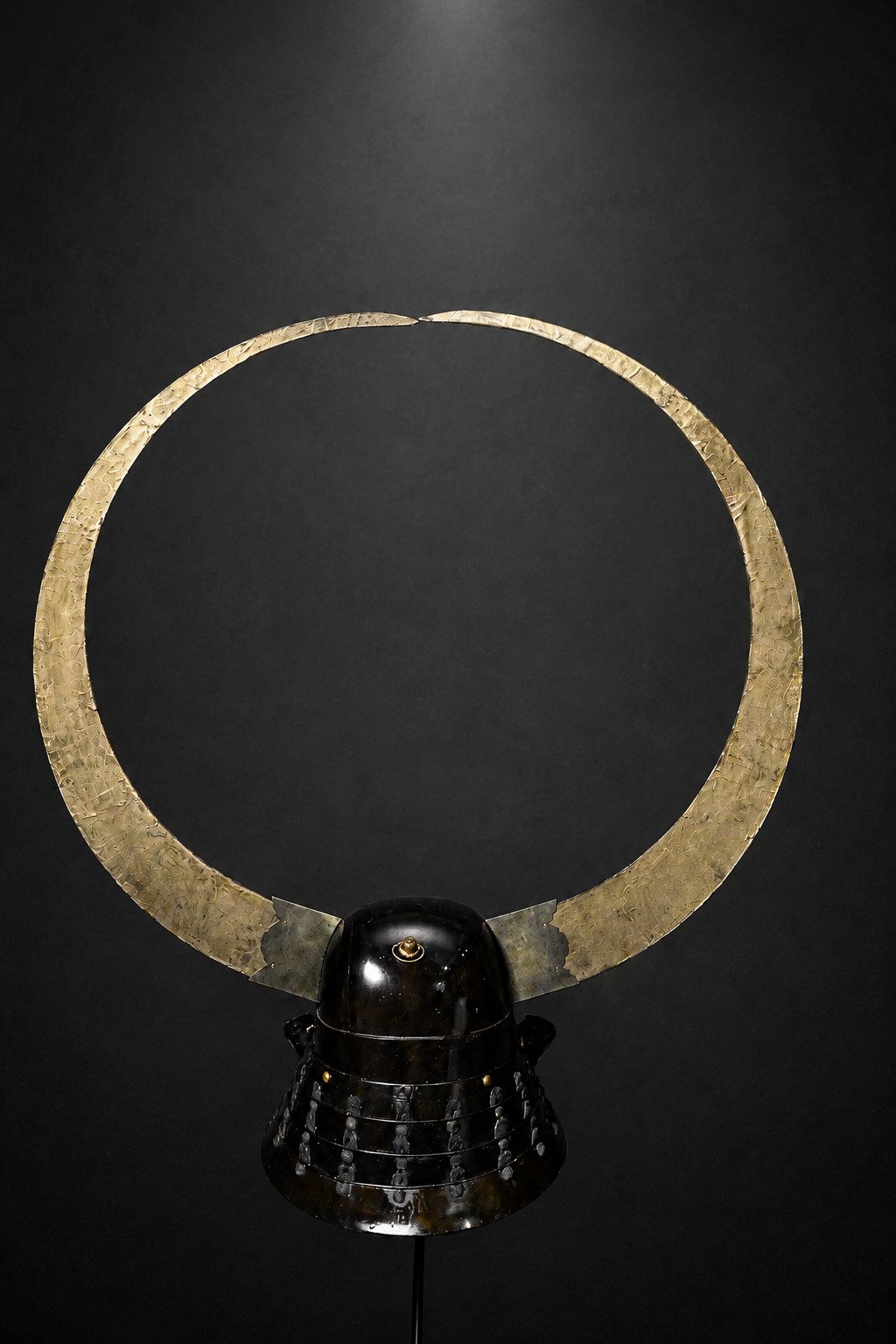
The helmet bowl follows the practical zunari kabuto form, constructed from shaped iron plates to create a smooth, compact silhouette closely following the form of the head.
The iron surface is covered in glossy black lacquer, now showing the subtle signs of age and use expected from an antique piece. Against this dark finish, the broad golden wakidate create a particularly powerful contrast.
A small gilt-metal fitting at the front provides an additional decorative accent while maintaining the otherwise restrained character of the bowl.
Five-Lame Shikoro
A five-lame shikoro descends from the lower edge of the bowl, protecting the neck while preserving the layered flexibility characteristic of Japanese armour construction.
The lames are finished in black lacquer and joined with dark blue-grey odoshi lacing. Gilt-metal rivets and fittings provide restrained highlights that visually connect the neck guard with the gold-leaf wakidate above.
The combination of dark lacquer, subdued cordage and gold ornamentation gives the helmet a controlled visual hierarchy: the functional structure remains understated while the monumental crest becomes the clear focal point.
Original Interior Details
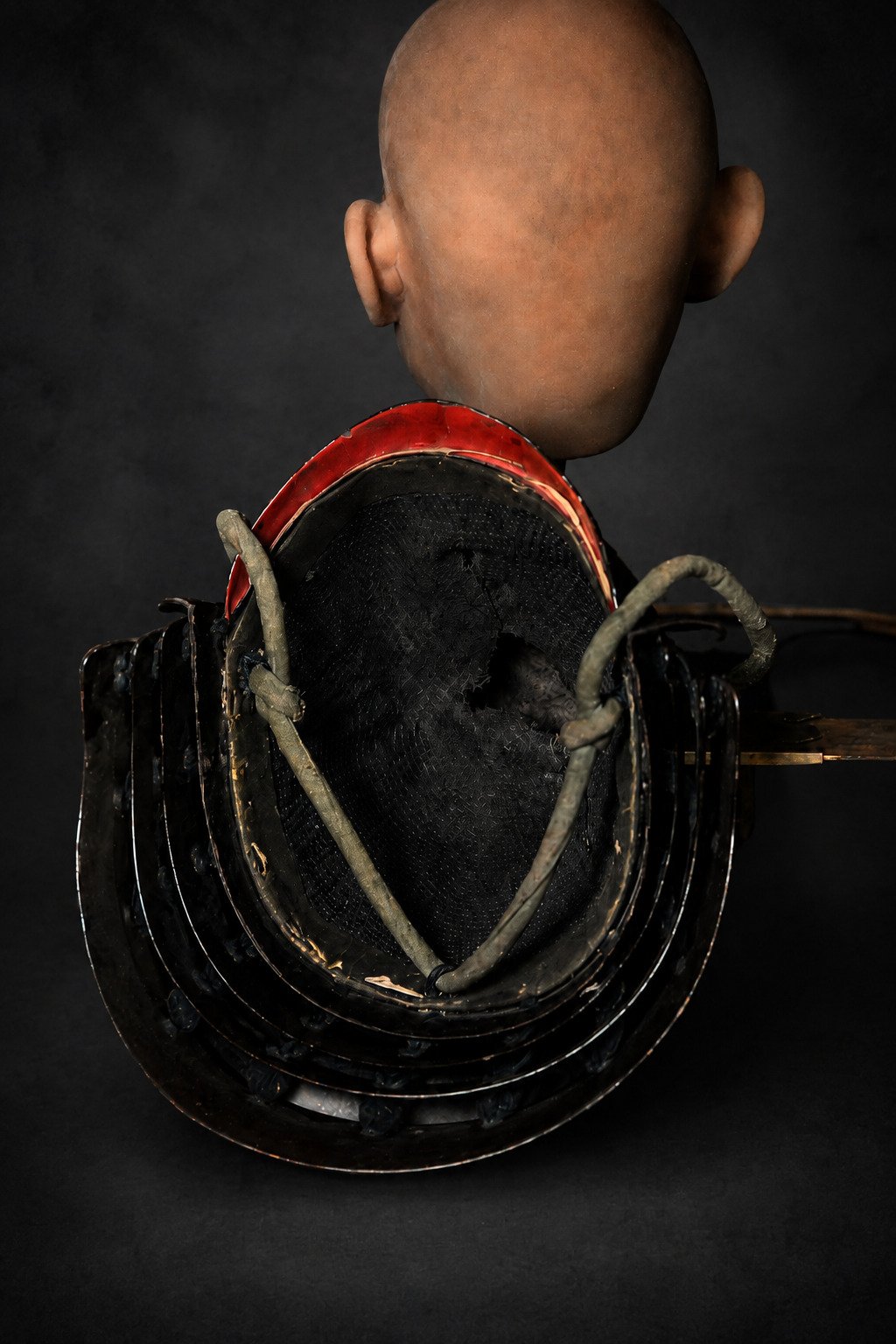
The interior retains important elements of its historical construction, including an antique quilted lining and original suspension cords. Red lacquer visible along the inner edge provides an additional period detail and contrasts with the predominantly black exterior.
These surviving interior components are particularly valuable when examining an antique kabuto, as they preserve evidence of the way the helmet was originally fitted, worn and supported.
Visual Presence and Samurai Armour Design
Large wakidate were not merely decorative. Bold helmet ornaments made a warrior visually identifiable and allowed a distinctive silhouette to be recognised at a distance, whether on the battlefield, during formal procession or within the broader display culture of samurai armour.
In this example, the enormous circular arc transforms an otherwise restrained zunari bowl into a highly individual object. The contrast between the compact black helmet and the expansive gold-leaf ornament is particularly effective when viewed from the front.
The result is a kabuto whose visual impact comes not from excessive decoration, but from scale, proportion and the deliberate opposition between black lacquer and gold.
Key Features
- Period: Edo period
- Type: Zunari kabuto
- Bowl: Forged iron construction
- Finish: Glossy black lacquer
- Wakidate: Large wooden crescent-ring side ornaments
- Wakidate finish: Applied gold leaf (kinpaku)
- Mounting: Removable side-mounted fittings
- Shikoro: Five-lame neck guard
- Odoshi: Dark blue-grey lacing
- Interior: Antique quilted lining and suspension cords retained
- Condition: Antique condition with expected age-related wear
Condition
The helmet survives in good antique condition consistent with its age. The lacquer, gold-leaf surfaces, fittings, lacing and interior elements show natural wear associated with historical use and preservation.
As with all antique Japanese armour, minor irregularities, surface wear and age-related changes should be understood as part of the history of the object rather than as modern manufacturing imperfections.
A visually commanding Edo-period zunari kabuto, distinguished by its monumental gold-leaf crescent-ring wakidate, forged iron construction and surviving historical interior. A particularly striking example of how Japanese armour combined practical protection with highly individual visual identity.