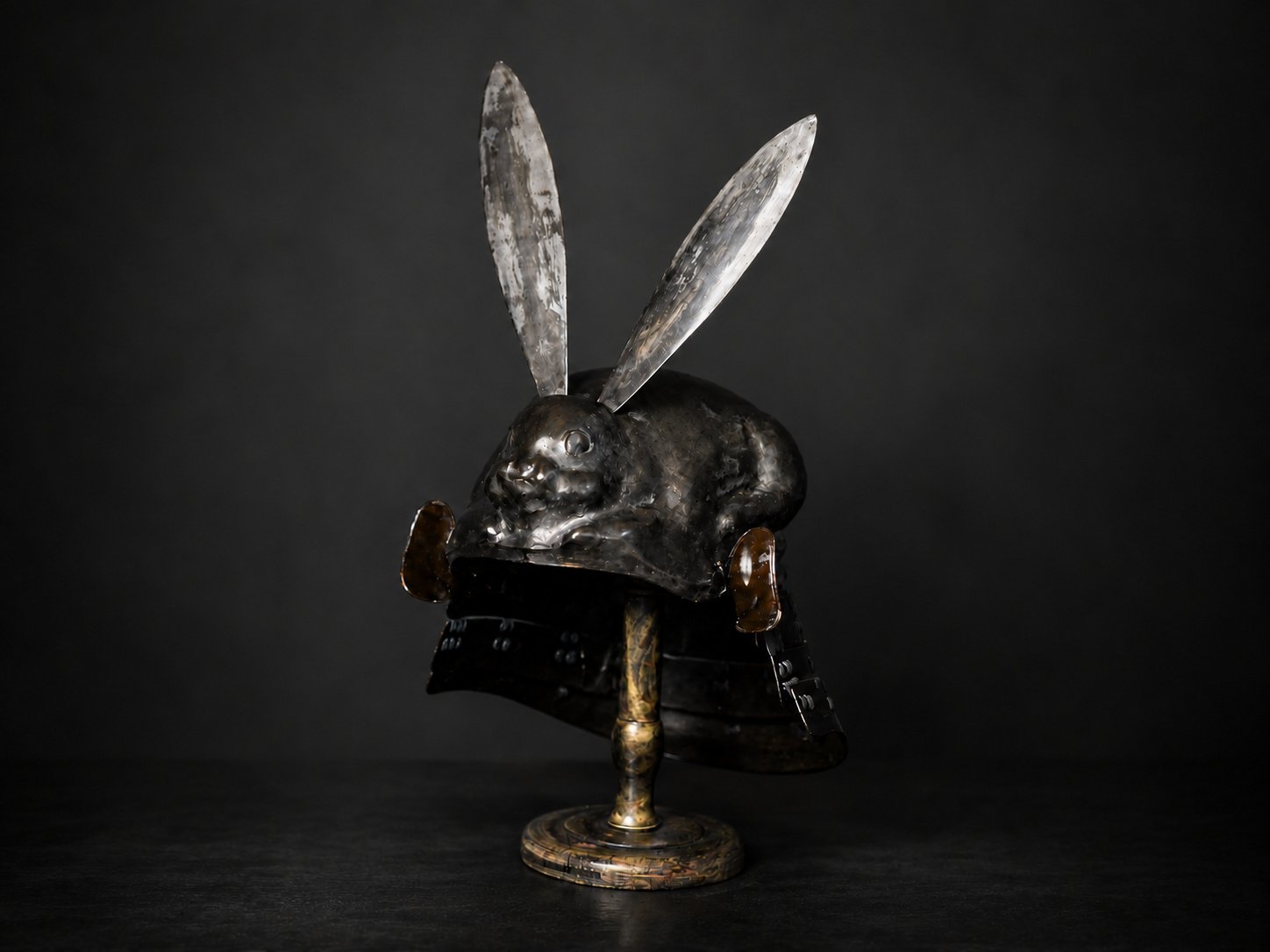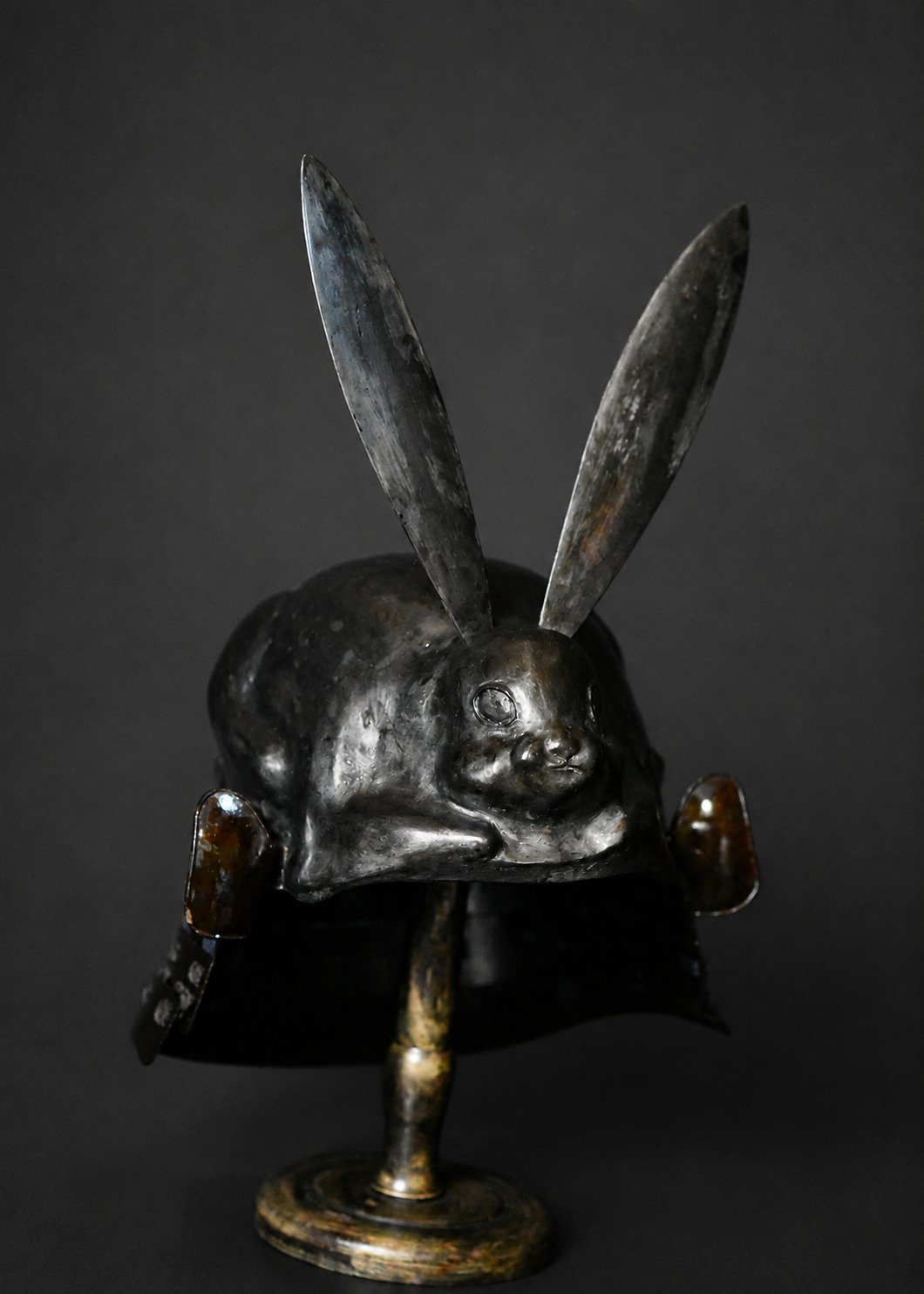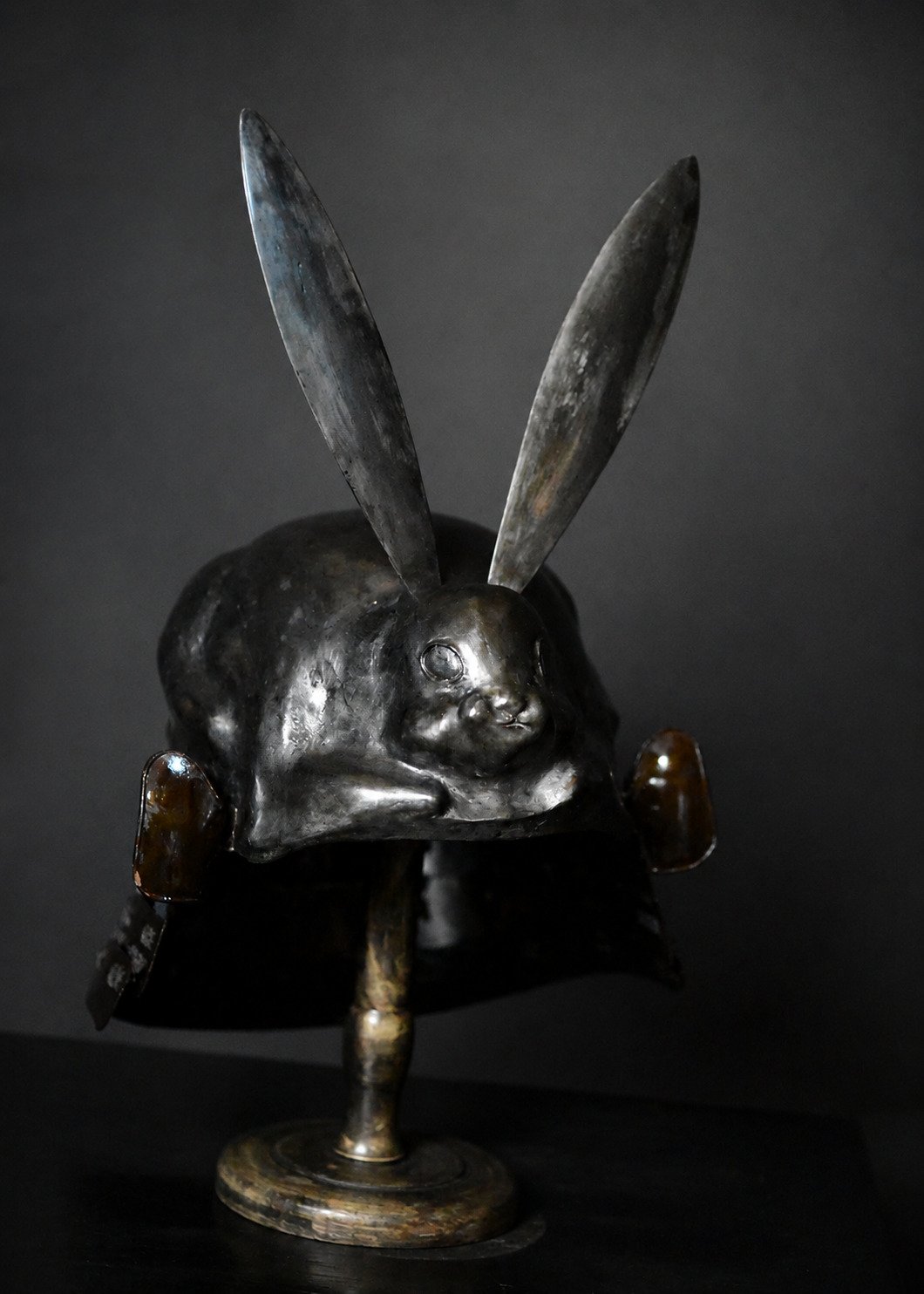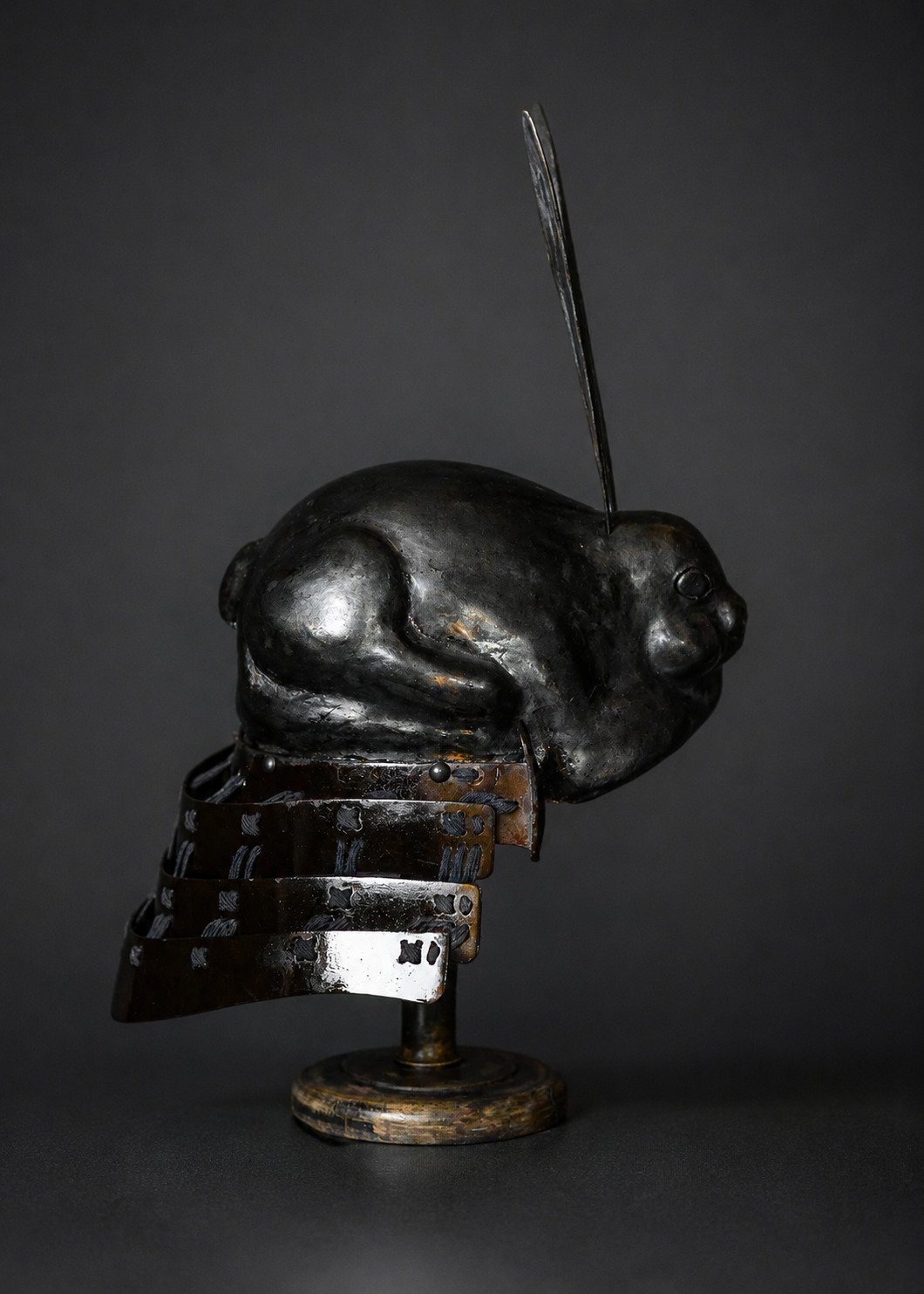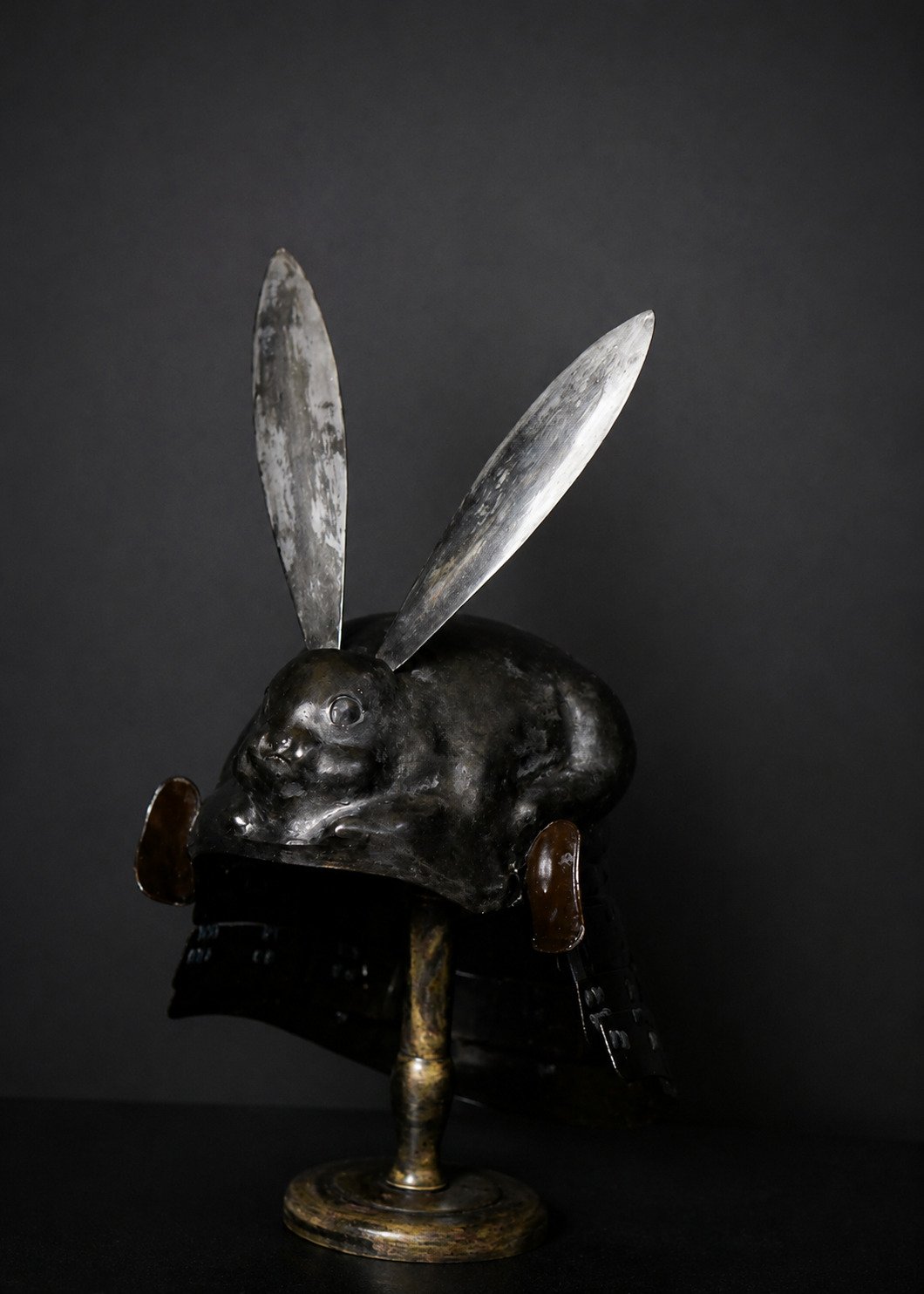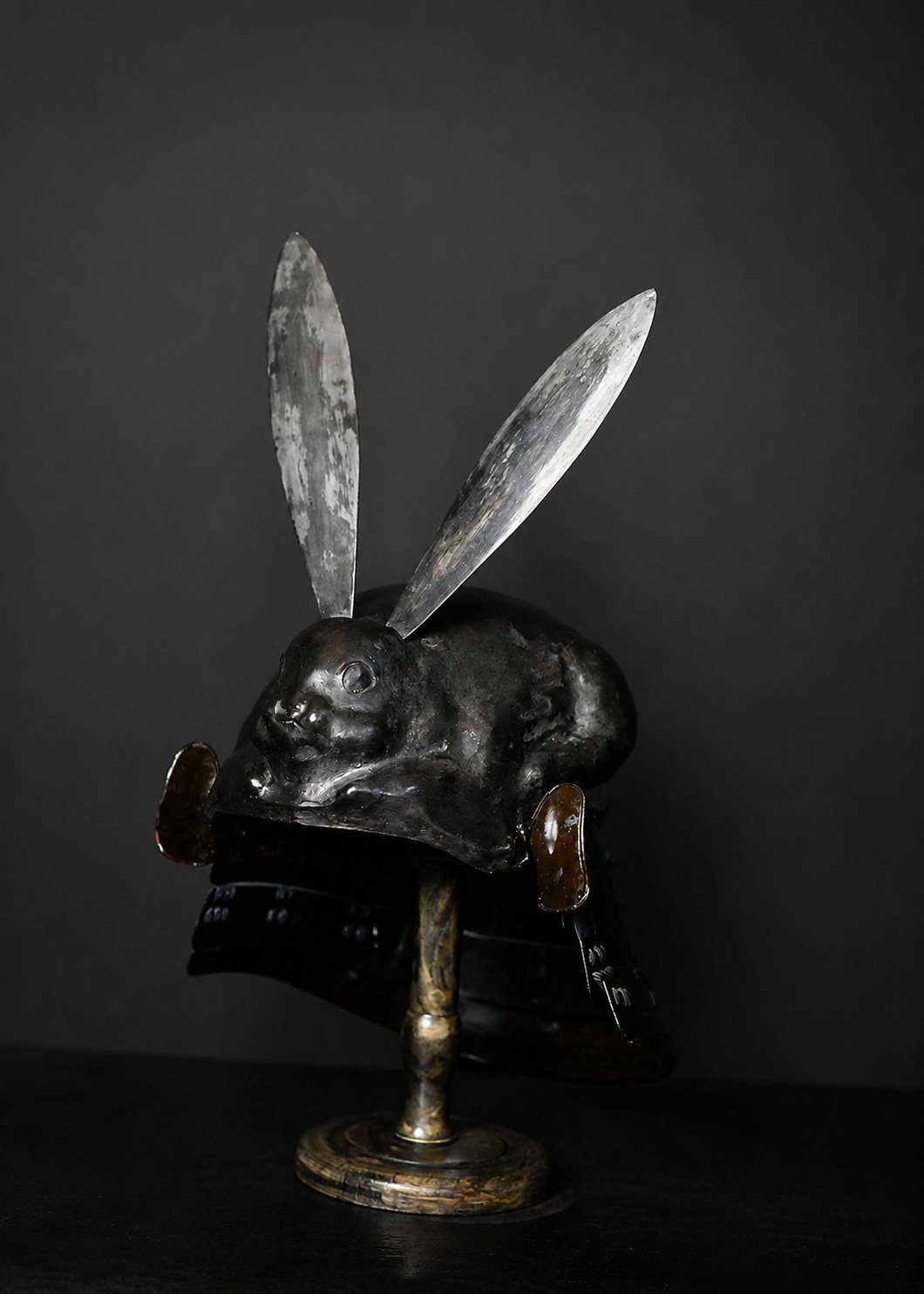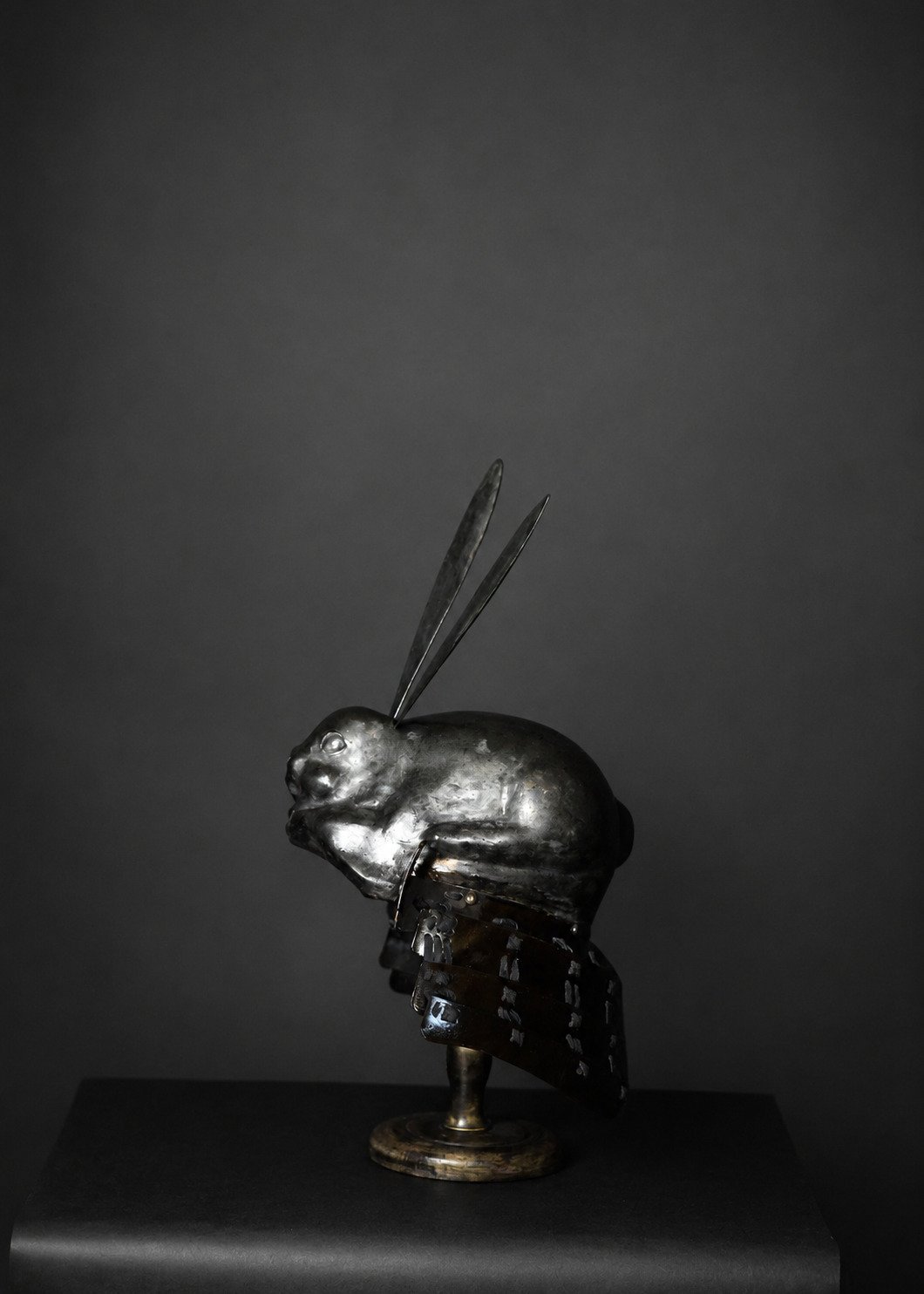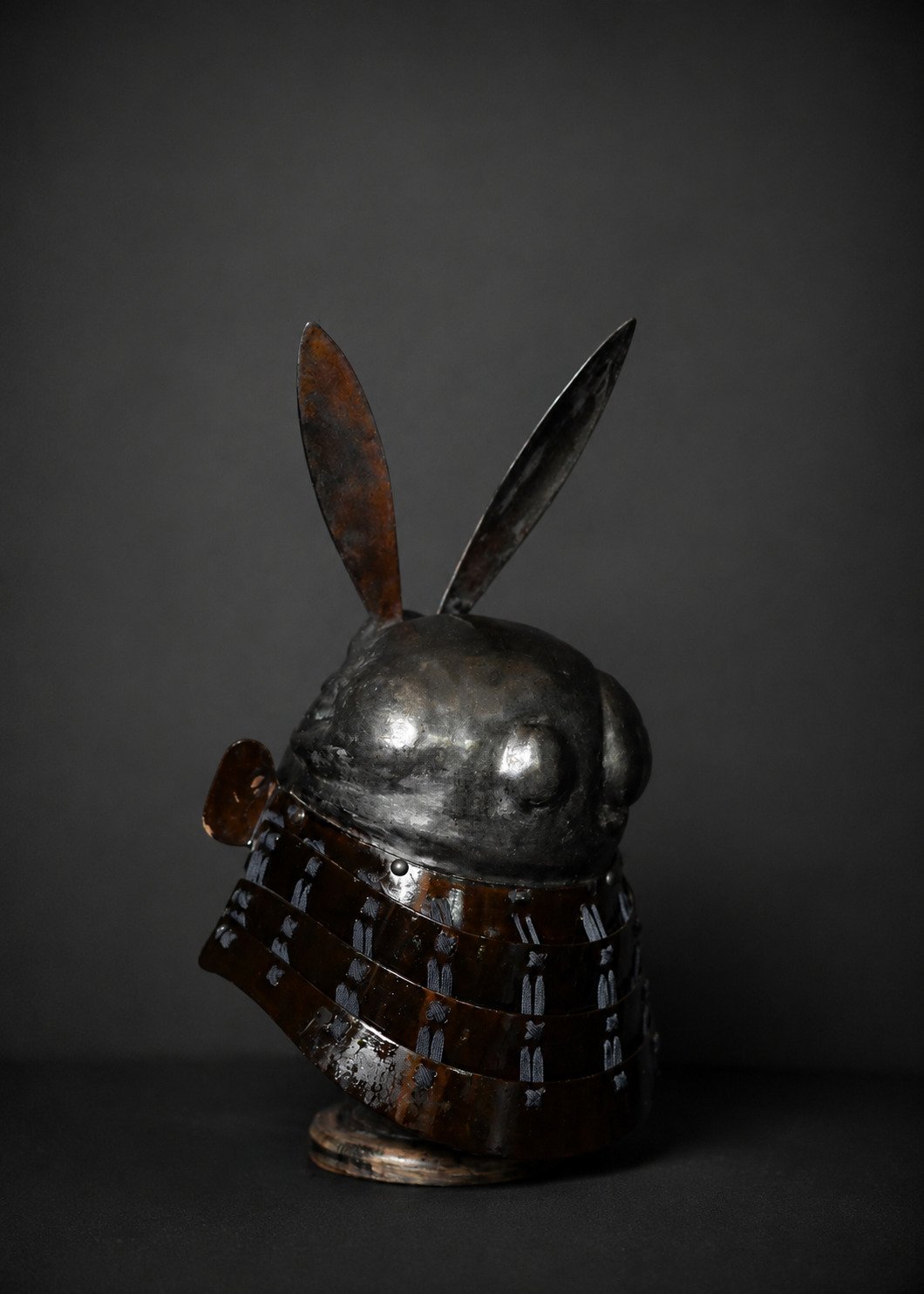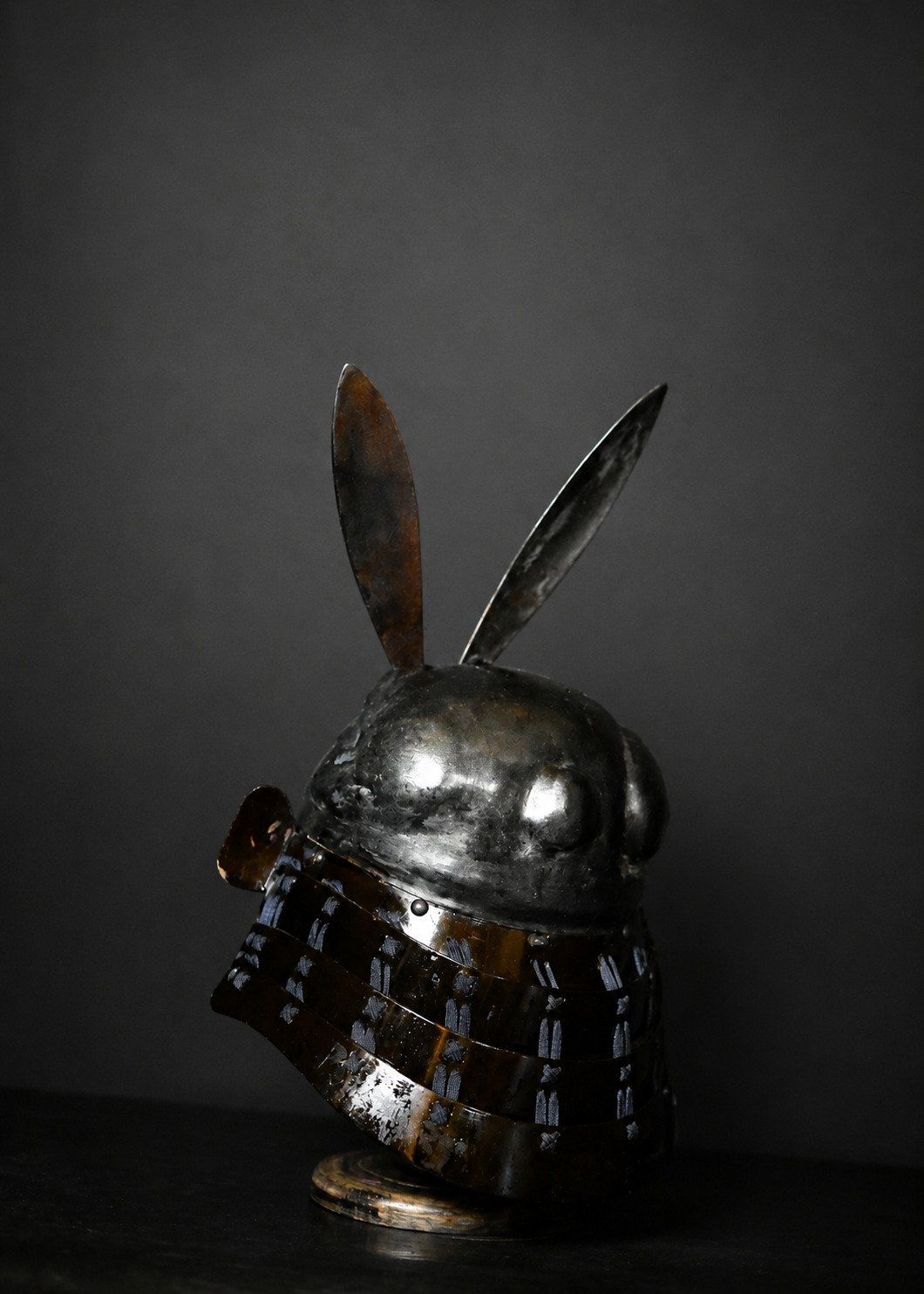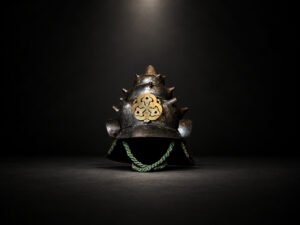
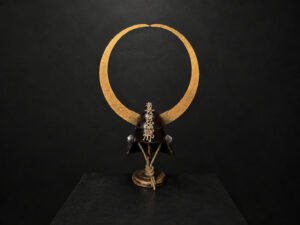
An exceptional and highly charismatic Japanese usagi-nari kawari kabuto, sculpted in the round as a crouching rabbit and dating to the Edo period.
The helmet combines a remarkably naturalistic animal-form silhouette with traditional hari-kake (張懸) construction, using hardened leather built up over an internal armature rather than relying on a conventional forged iron bowl. Its surface is finished in gin-paku oshi (銀箔押), applied silver foil, now naturally aged into a complex black, grey and silver patina.
The crouching rabbit is modeled as a complete three-dimensional form: rounded back and haunches, tucked forepaws, an expressive frontal face and two exceptionally long ears. These ears are constructed as separate detachable elements, functioning as a removable maedate and allowing the dramatic silhouette to be dismantled for storage or transport.
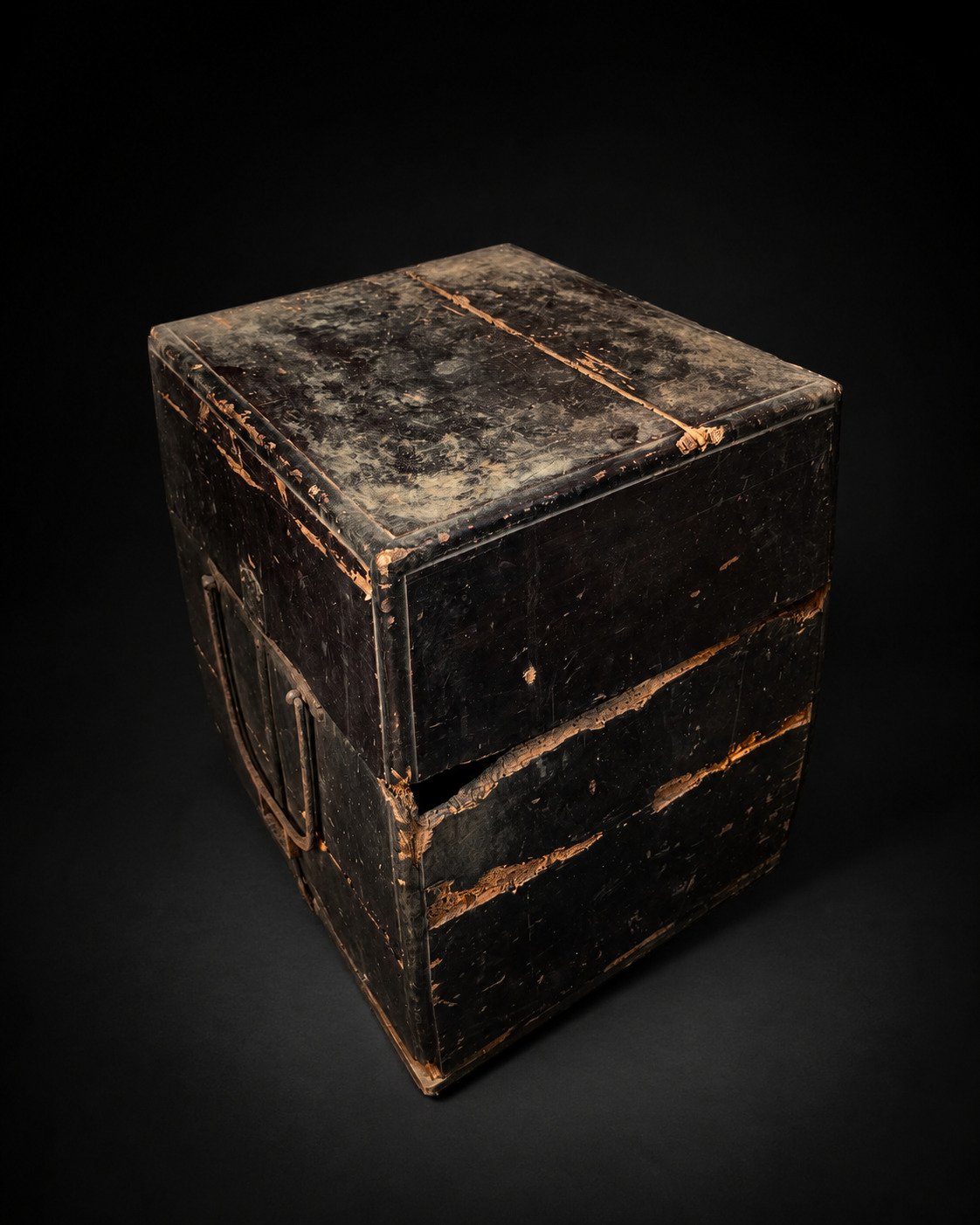
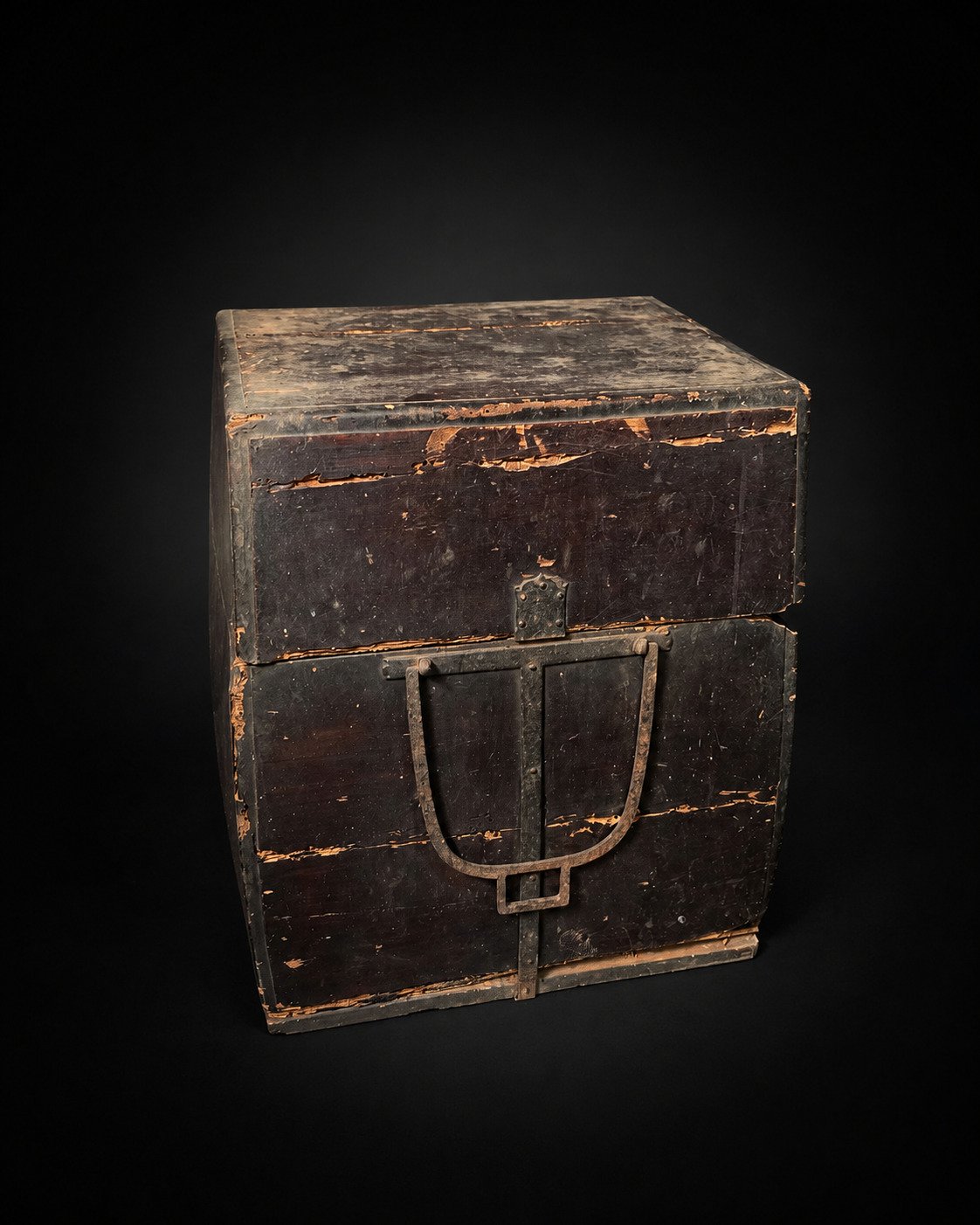
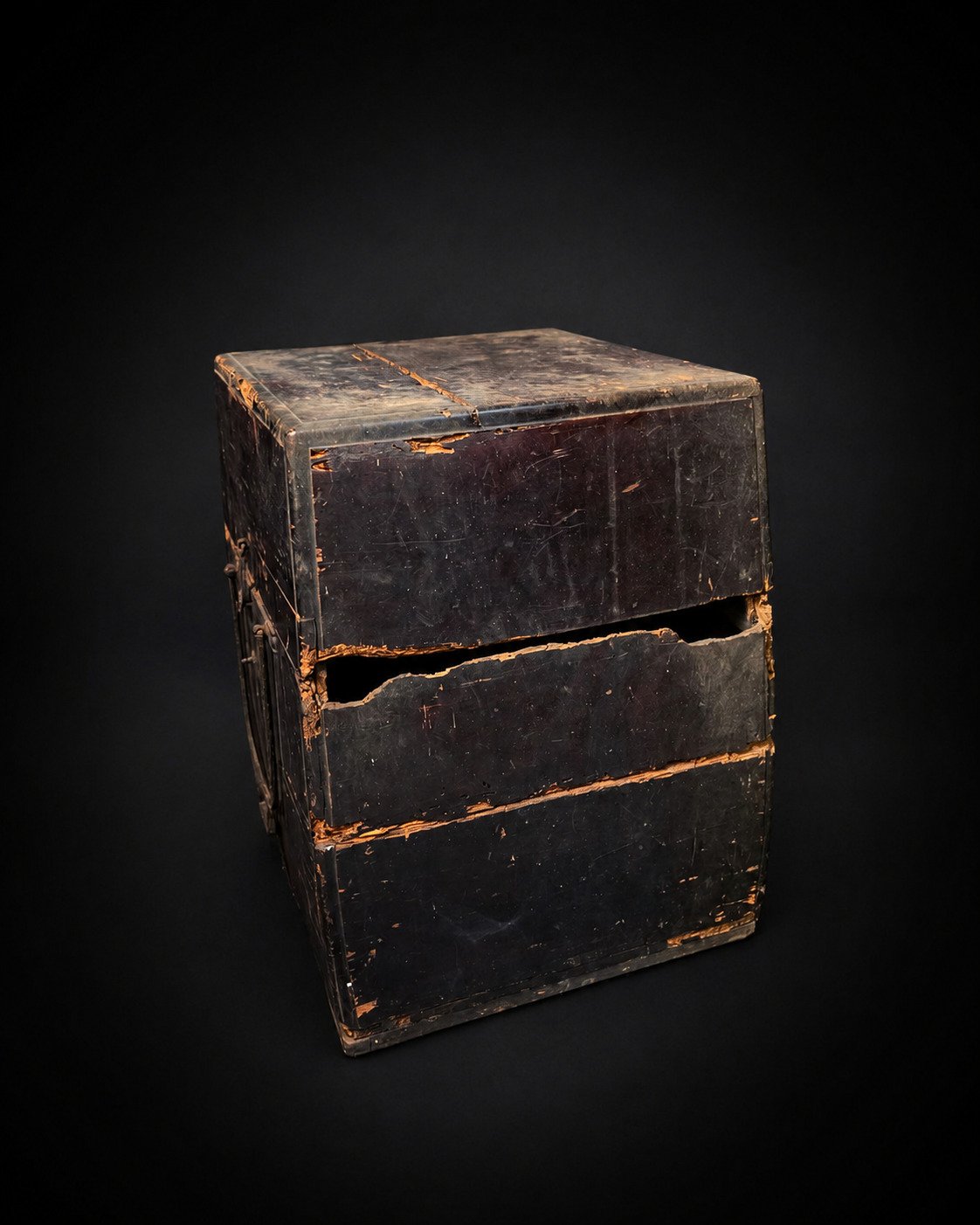
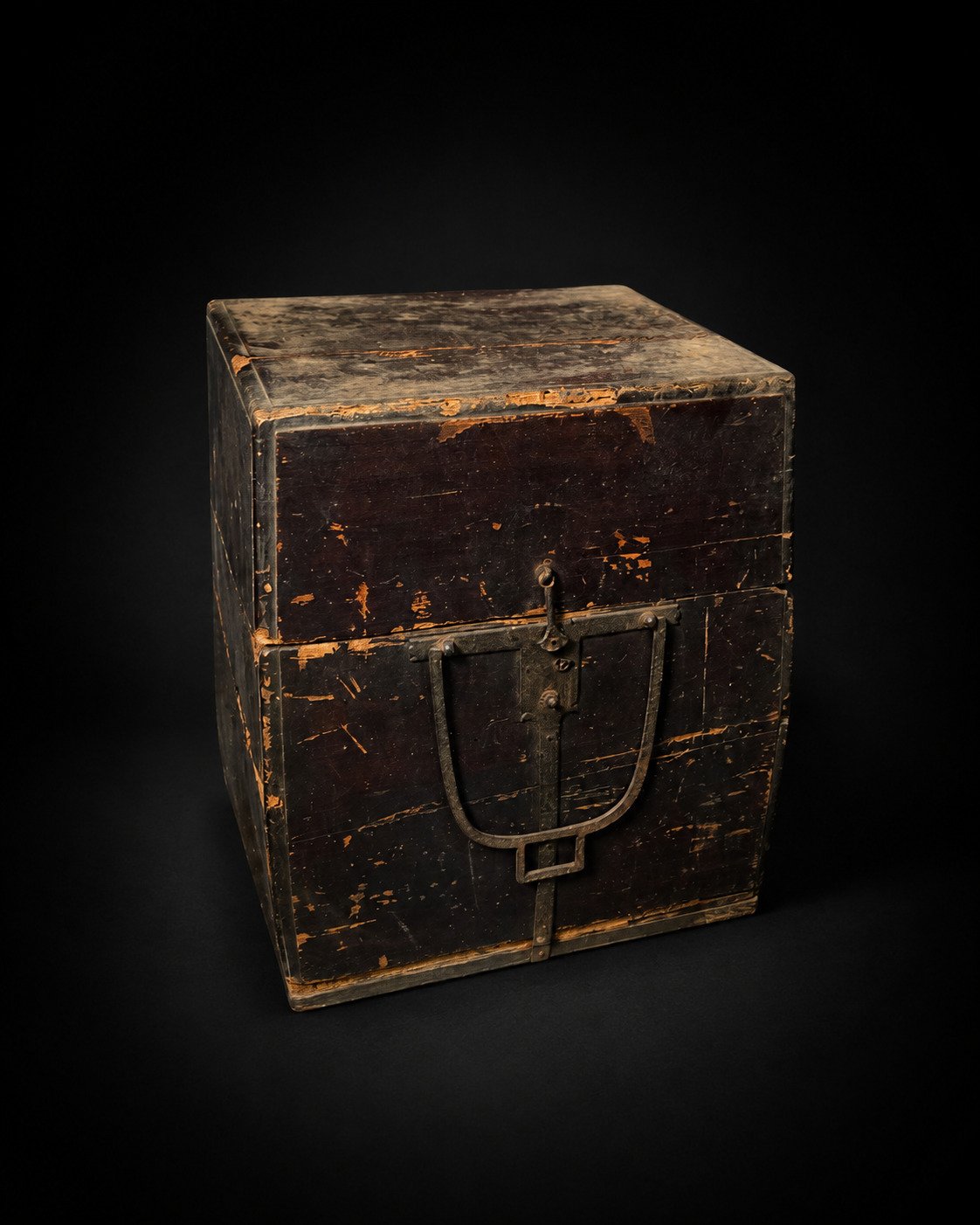
The helmet is accompanied by its original antique storage box.
The defining feature of the helmet is its usagi-nari design, in which the entire upper structure takes the form of a crouching rabbit.
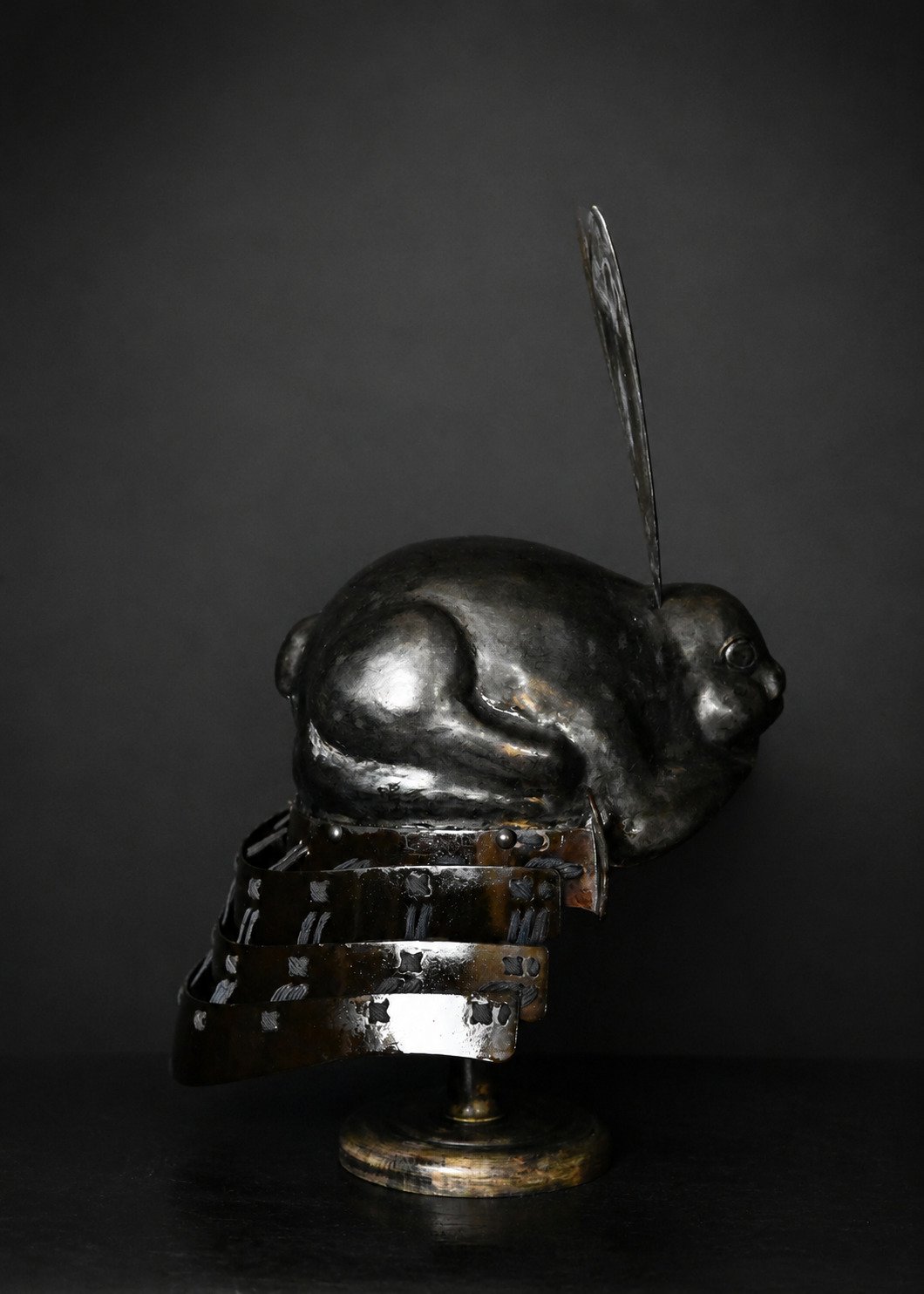
Rather than merely attaching a rabbit emblem to a conventional helmet bowl, the maker transformed the complete crown into the animal itself. The broad rounded back forms the principal mass of the helmet, while the haunches rise naturally toward the rear and the forelegs are drawn forward beneath the chest.
The face occupies the front of the helmet and is modeled with an unexpectedly expressive quality. The rounded eyes, gently projecting snout and softly articulated cheeks give the piece a lively sculptural presence when viewed from the front or three-quarter profile.
This type of fully integrated figural design represents the inventive spirit of kawari kabuto, helmets in which silhouette and visual impact were deliberately pushed beyond conventional armor forms.
The bowl is formed using hari-kake (張懸) construction, a traditional lightweight sculptural technique particularly suitable for complex kawari-kabuto forms.
In this example, the modeled outer form is built up from hardened leather over an internal support structure, with successive layers bonded and finished to create the rounded body of the rabbit.
This method offered a major practical advantage when producing highly sculptural forms. Creating the rabbit’s back, haunches, face and ears entirely from forged iron plate would have been substantially more difficult and heavier.
Hari-kake therefore allowed armor makers to combine dramatic form with a comparatively manageable weight while preserving the functional character of the helmet.
The surface is finished in gin-paku oshi (銀箔押), with silver foil applied over the sculpted body of the helmet.
Age and oxidation have transformed the original silver appearance into an atmospheric mixture of blackened metal tones, grey areas and surviving brighter silver highlights.
The mottled finish is particularly effective across the rabbit’s rounded back and face, where changing reflections emphasize the volumes of the sculpted form.
Rather than diminishing the piece, the aged silver surface contributes greatly to its character, making the animal’s form appear almost simultaneously metallic and organic.
The rabbit’s two long ears are among the helmet’s most distinctive features.
Instead of being permanently integrated into the bowl, they are made as separate detachable elements fitted to the crown in the manner of a maedate or removable crest.
This construction is both practical and visually ingenious. Removing the ears greatly reduces the height and vulnerability of the helmet during storage or transport, while fitting them transforms the piece into its full dramatic usagi-nari silhouette.
The ears are long, narrow and slightly asymmetrical in stance, reinforcing the impression of a living rabbit alert to its surroundings.
The modeling of the animal goes well beyond simple symbolism.
The rounded haunches, arched back and tucked forepaws are carefully integrated into the underlying helmet form, allowing the rabbit to remain clearly recognizable from multiple angles.
The face is particularly successful: the eyes are applied as separate elements, the snout projects gently forward and the cheeks and forequarters merge naturally into the lower front of the bowl.
The result is a helmet that functions simultaneously as armor and as a complete sculptural representation of an animal.
The rabbit (usagi) carried rich symbolic associations in Japanese culture.
It was closely connected with the moon through the well-known image of the lunar rabbit, and was also associated with fertility, longevity and swiftness.
Its speed and alertness made the animal particularly appropriate within a warrior context, while its auspicious associations gave the motif additional meaning beyond its striking visual appearance.
In a kawari kabuto, the rabbit therefore combines recognizable symbolism with an unmistakable battlefield or ceremonial silhouette.
The lower edge of the helmet is fitted with a five-lame shikoro, providing protection to the back and sides of the neck.
The lames are lacquered in deep brown-black tones and connected with pale blue-grey odoshi lacing, creating a subtle contrast with the dark silvered crown.
The relatively restrained horizontal rhythm of the shikoro provides a visual counterbalance to the dramatic vertical emphasis of the rabbit ears above.
Small fukigaeshi turn outward at the front corners of the shikoro.
They are finished in a warm brown, tortoiseshell-like lacquer tone that contrasts with both the black neck guard and the silvered body of the rabbit.
These side elements preserve the recognizable vocabulary of traditional kabuto construction despite the highly unconventional form of the upper bowl.
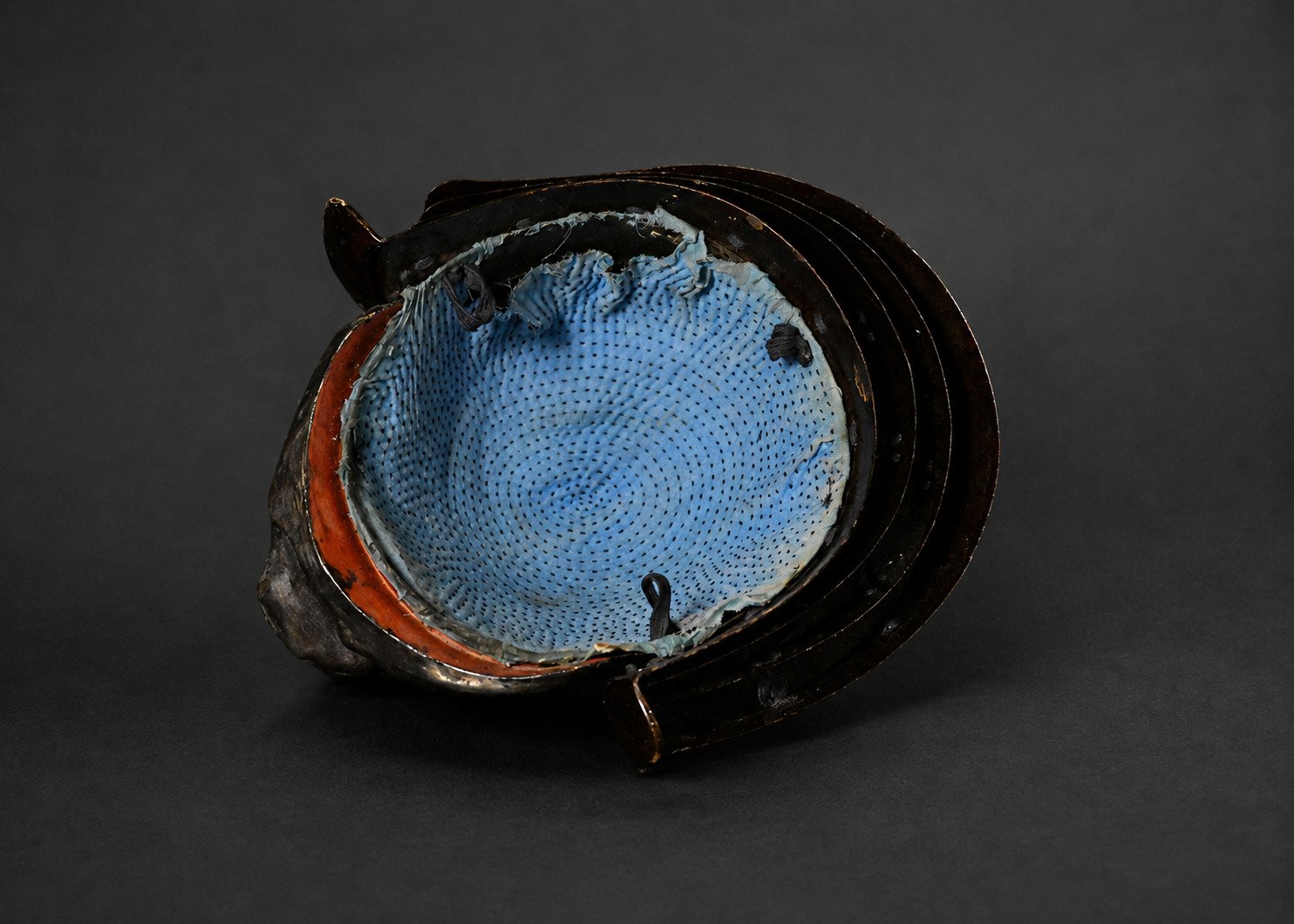
The front edge incorporates a mabizashi, the projecting visor element characteristic of Japanese helmets.
A surviving red-lacquer trim along its edge introduces a discreet additional color accent beneath the darkened silver body of the rabbit.
This detail contributes to the layered decorative character of the helmet without competing visually with the dominant animal form.
The interior retains its original quilted textile lining or ukebari, in a pale blue tone.
This surviving interior material is an important functional and historical detail, providing physical evidence of the helmet’s practical construction and original use.
The preservation of the ukebari also enhances the completeness of the piece as an armor object rather than simply as a sculptural shell.
The helmet is accompanied by its original antique box.
The survival of an associated period storage box is particularly valuable for an object of this sculptural form, since helmets with projecting or detachable elements required careful storage and protection when not in use.
The box adds to the historical integrity and collector interest of the ensemble.
This helmet is an especially compelling example of the creativity associated with Edo-period kawari kabuto.
Its appeal lies not only in the instantly recognizable rabbit form, but in the way sculptural invention and practical armor construction are successfully combined.
The lightweight hari-kake structure allowed the maker to model the complete animal in three dimensions, while the detachable ear maedate solved the practical problem of storing and transporting such a dramatically elevated silhouette.
The aged silver-foil surface, original shikoro, surviving textile lining and antique storage box further contribute to the historical depth and visual individuality of the piece.
An exceptional Edo-period usagi-nari kawari kabuto sculpted as a complete crouching rabbit, combining naturalistic modeling with lightweight hari-kake construction over hardened leather. Finished in aged gin-paku oshi silver foil, the helmet is distinguished by its detachable long-ear maedate, expressive animal face, five-lame lacquered shikoro, pale blue-grey odoshi and surviving original ukebari. Accompanied by its original antique storage box, it is a highly distinctive example of the inventive sculptural character of Edo-period kawari kabuto.
| Época | Edo |
|---|

Order above 1.000,00 € gets free shipping.

Secure and hassle-free payment process.

Certificate of authenticity included.

Have questions? Contact us via WhatsApp.
Contact