Edo Period Kabuto and Menpō with Oni-Style Maedate
Antique Japanese Samurai Helmet and Face Mask · Edo Period · Horned Maedate · Black Lacquer · Gold-Toned Fukigaeshi · Laced Neck and Throat Guards
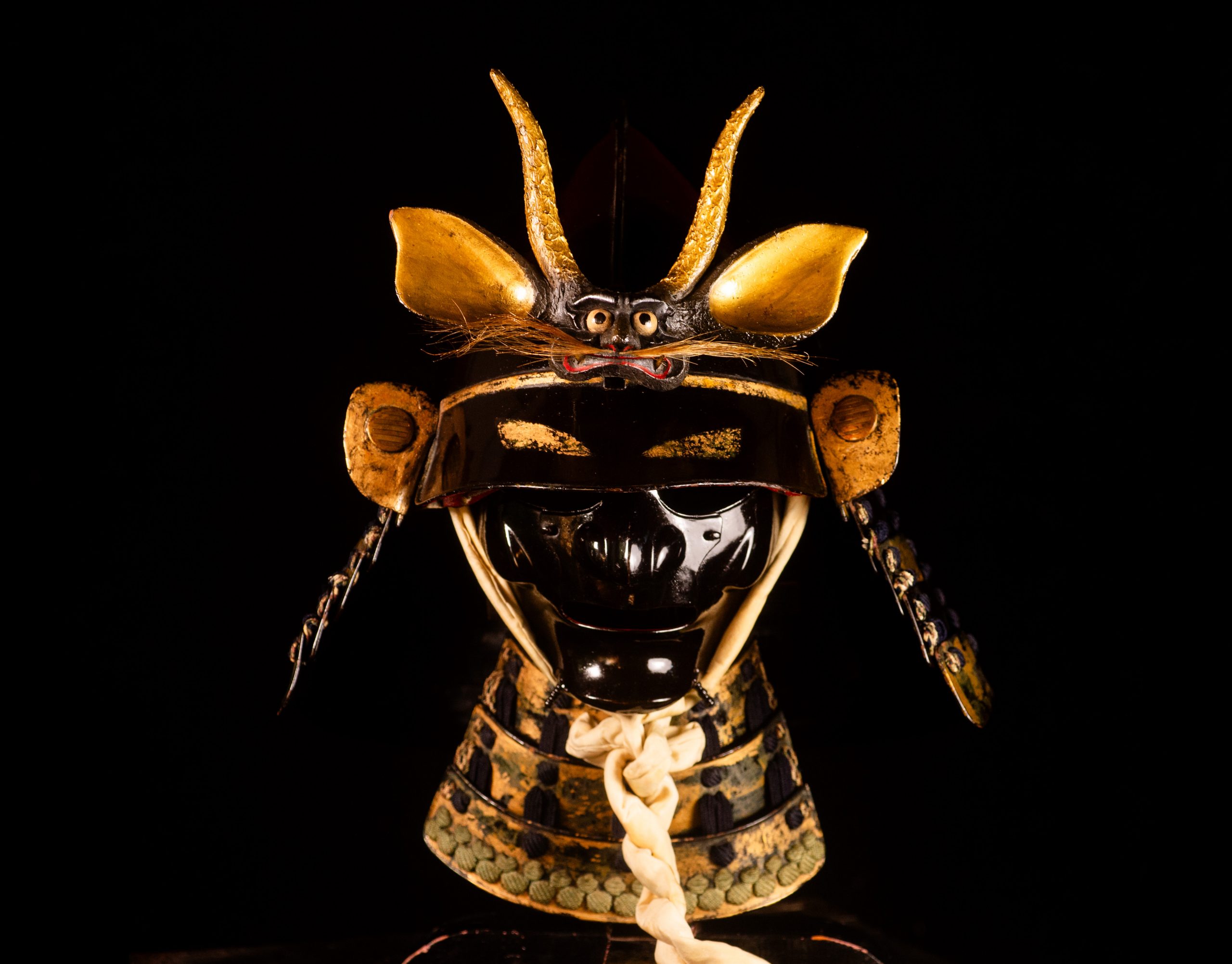
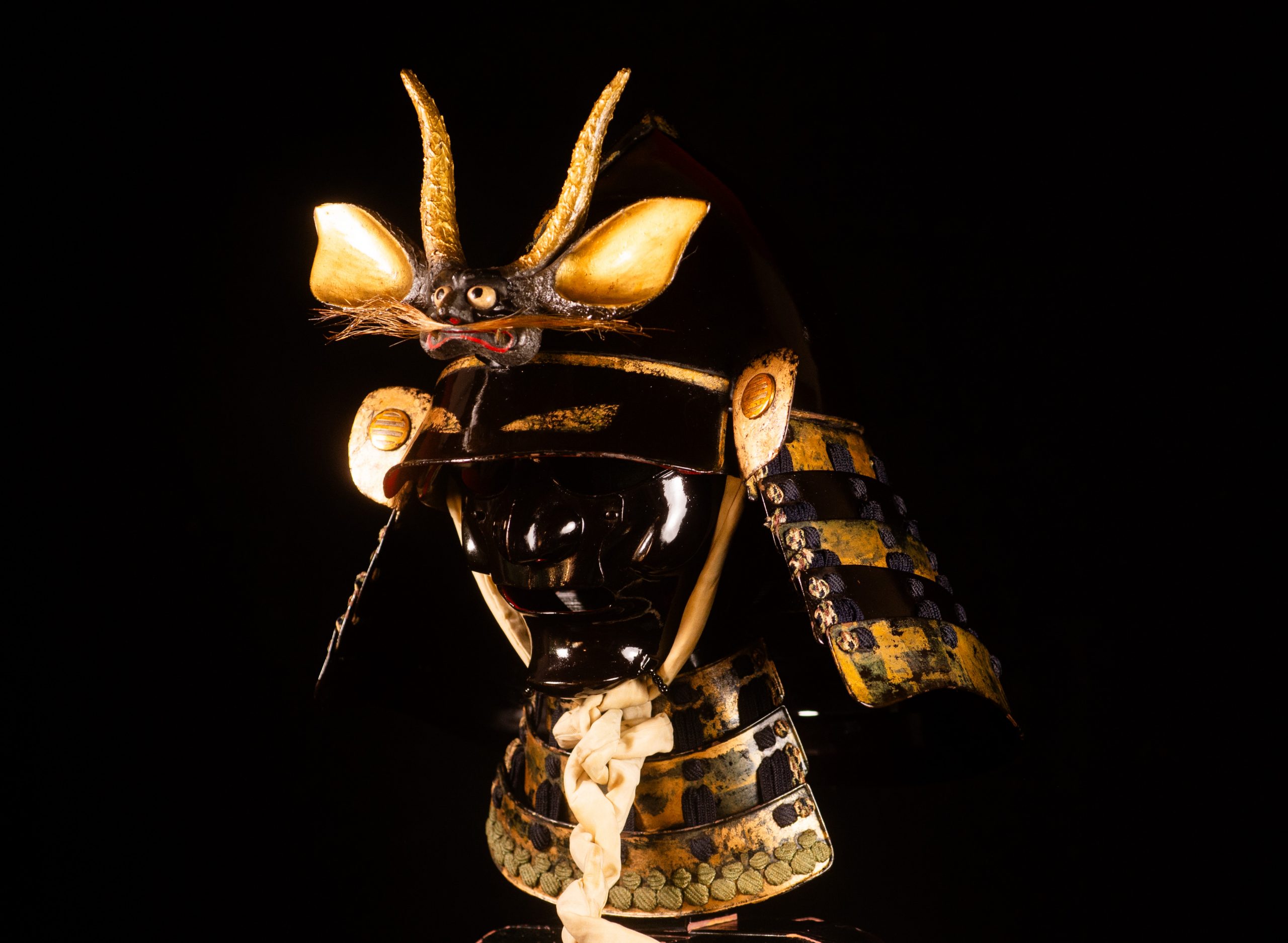
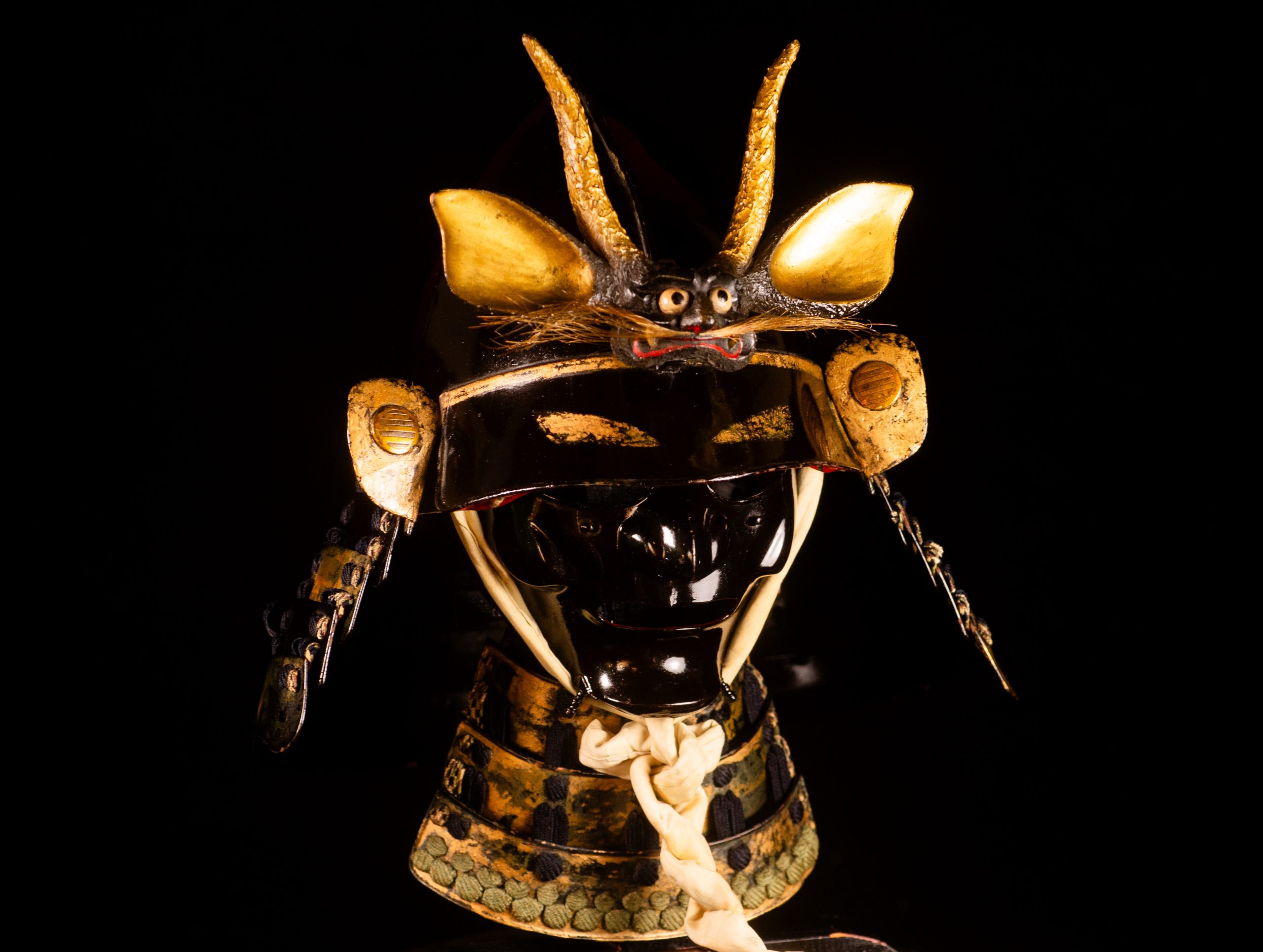
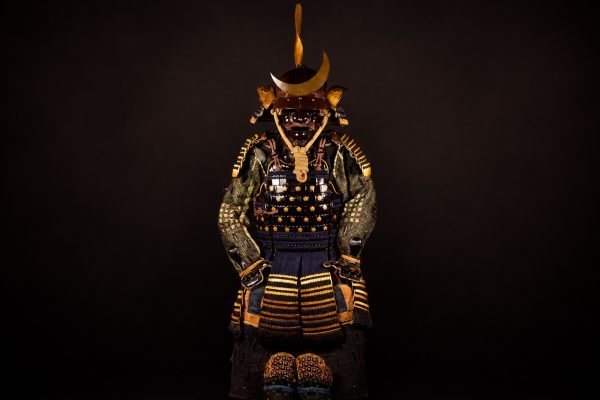
This Japanese kabuto and menpō, attributed to the Edo period, form a visually striking display of samurai armor. The black-lacquered helmet is crowned by an expressive, horned maedate with prominent eyes, broad ears and whiskers. Beneath it, a glossy black face mask adds depth to the composition, while gold-toned details and laced guards bring color and texture to the ensemble.
The ornament’s dramatic features give it an oni-like appearance. Its precise iconographic identity has not been established, so the description refers to its visible form rather than assigning it to a specific creature, legend or clan.
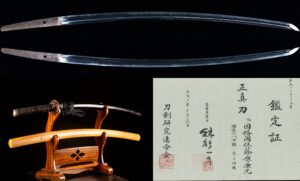
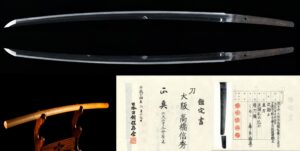
The kabuto and menpō are offered together with a Supein Nihonto certificate.
The Black-Lacquered Kabuto
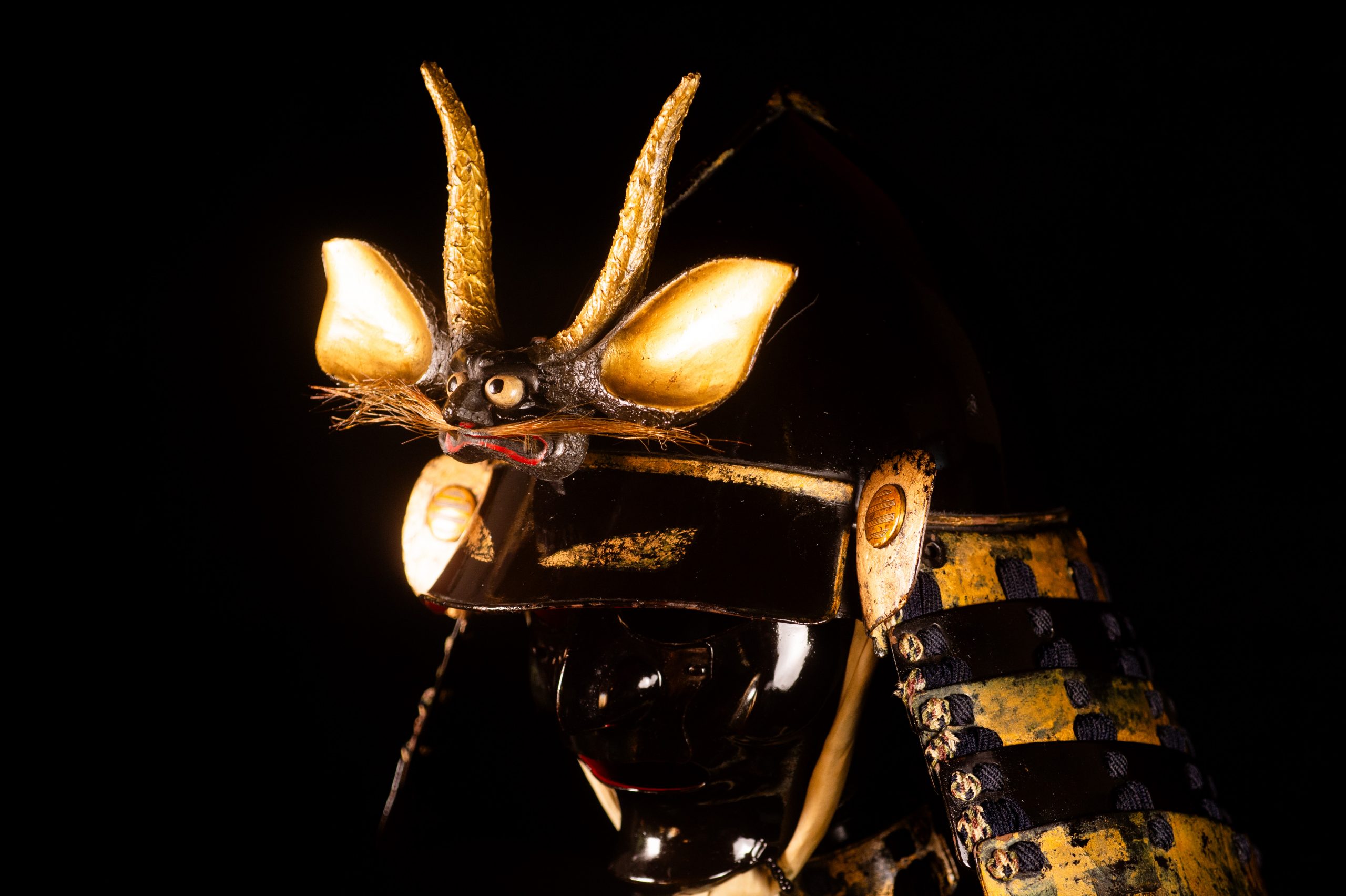
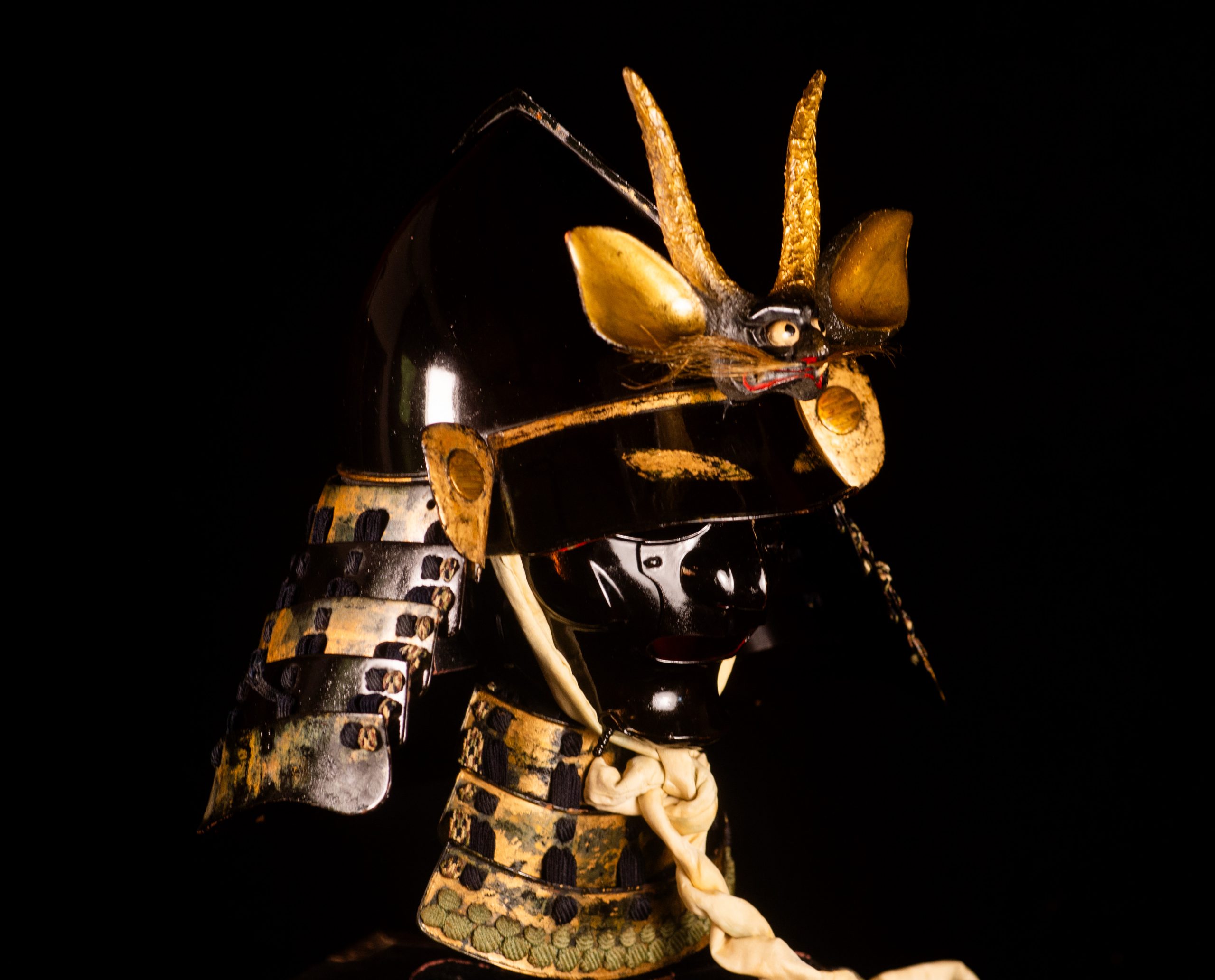
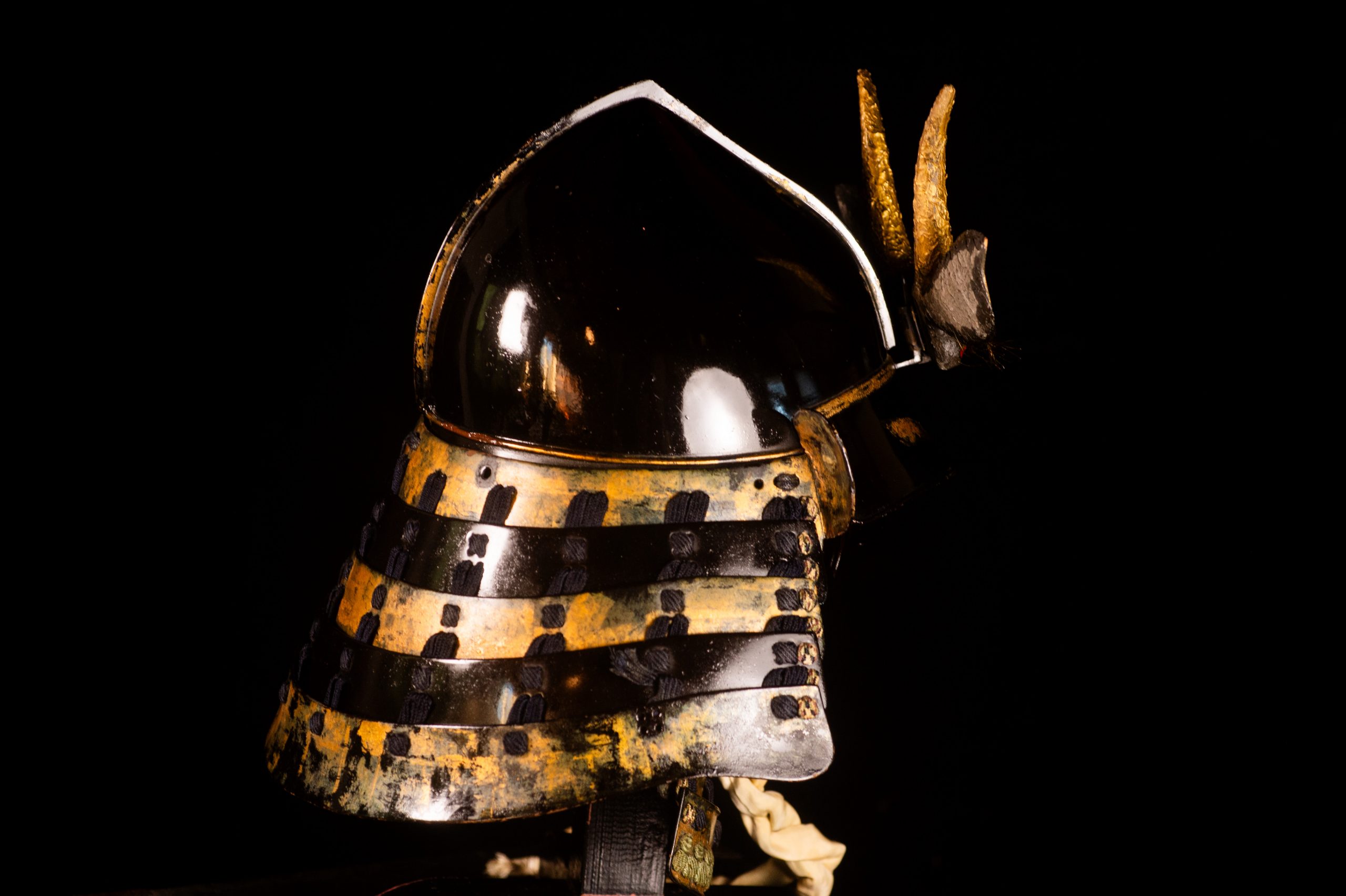
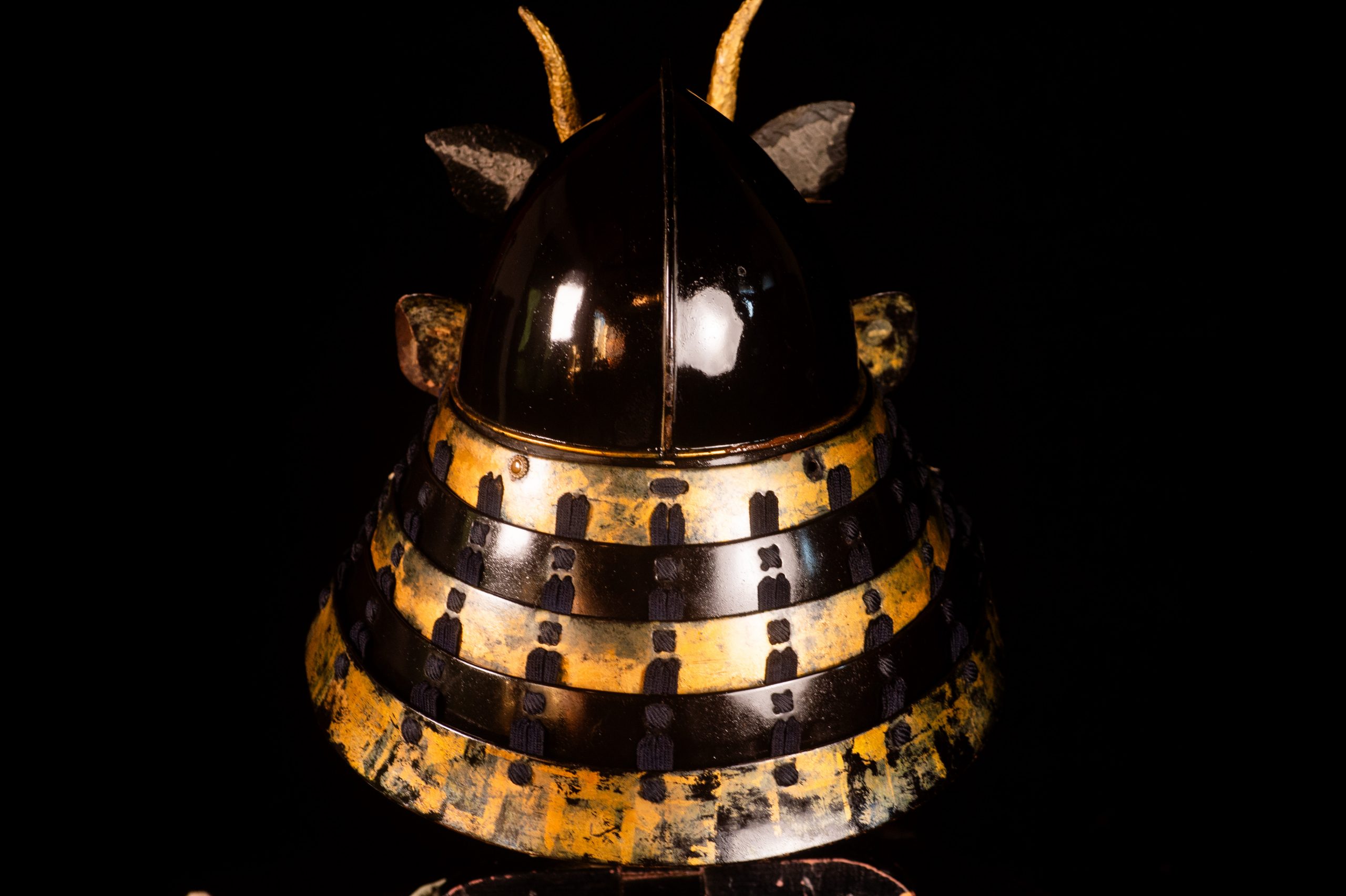
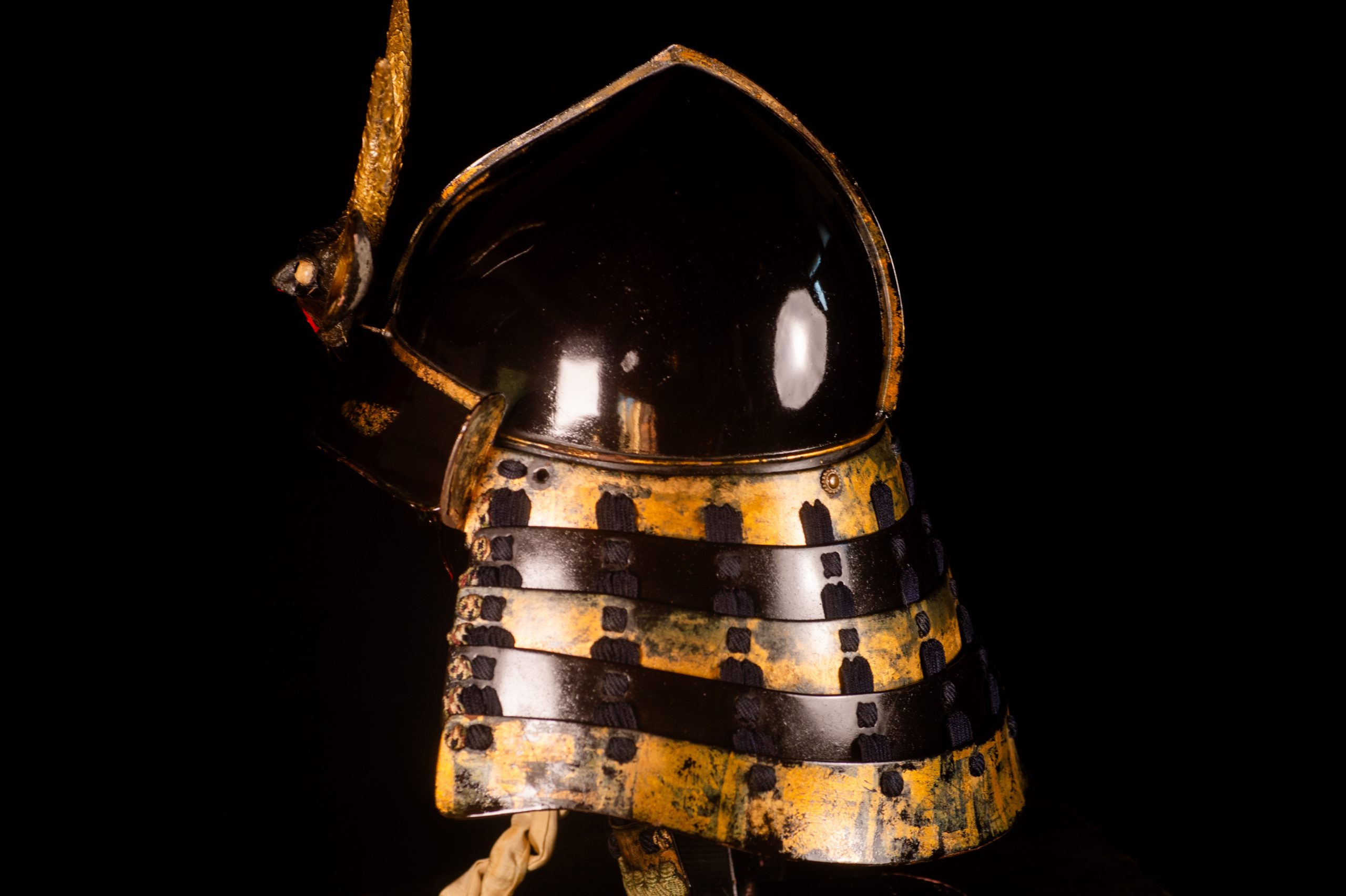
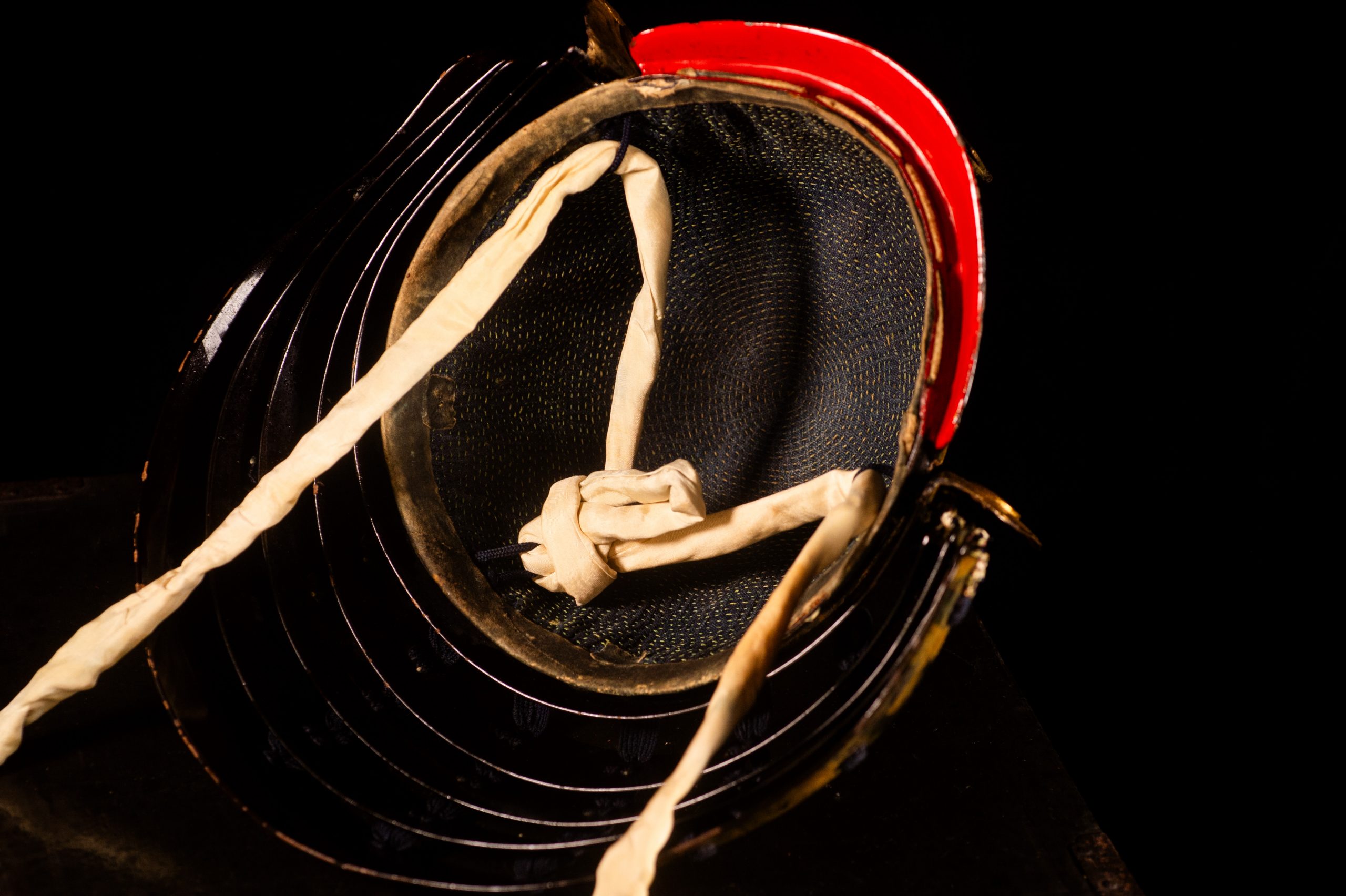
The helmet has a high-profile hachi, or helmet bowl, finished in glossy black lacquer. A pronounced ridge runs along the crown, giving the bowl a strong, clearly defined silhouette.
The restrained dark surface provides a visual backdrop for the elaborate ornament at the front. Seen head-on, the contrast between the black bowl and the projecting gold-toned features immediately draws attention to the helmet’s distinctive character.
The Horned Oni-Style Maedate
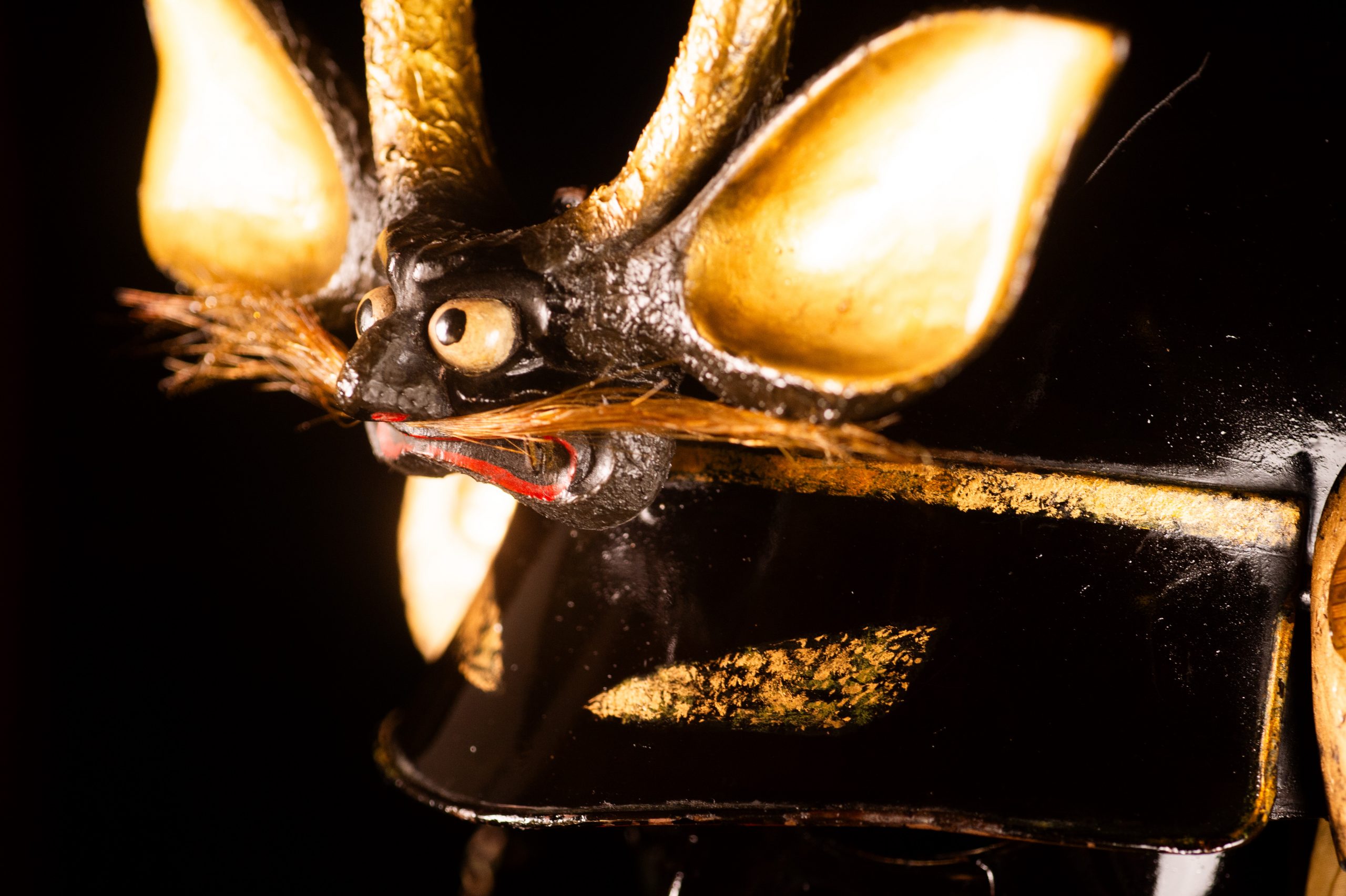
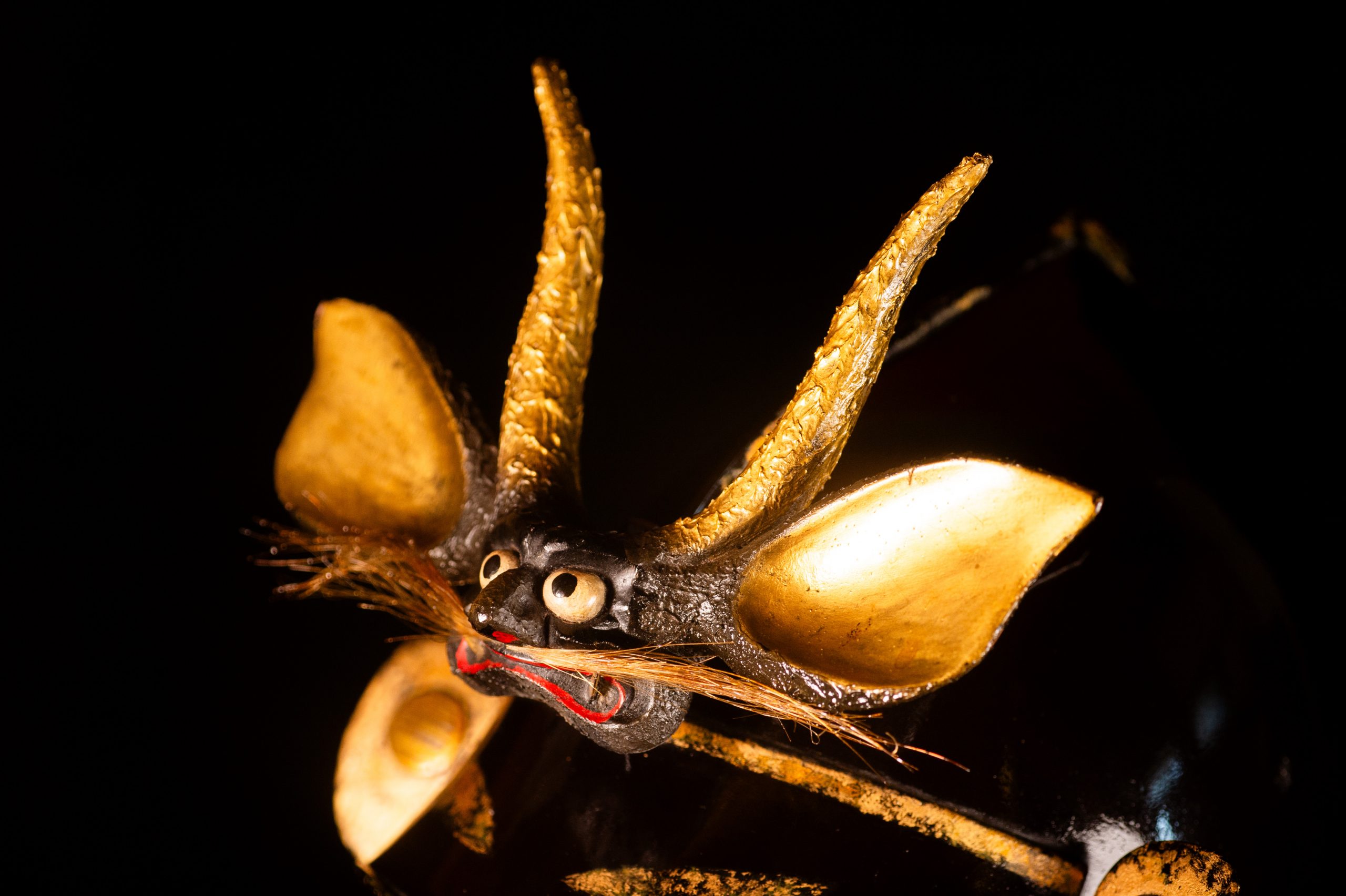
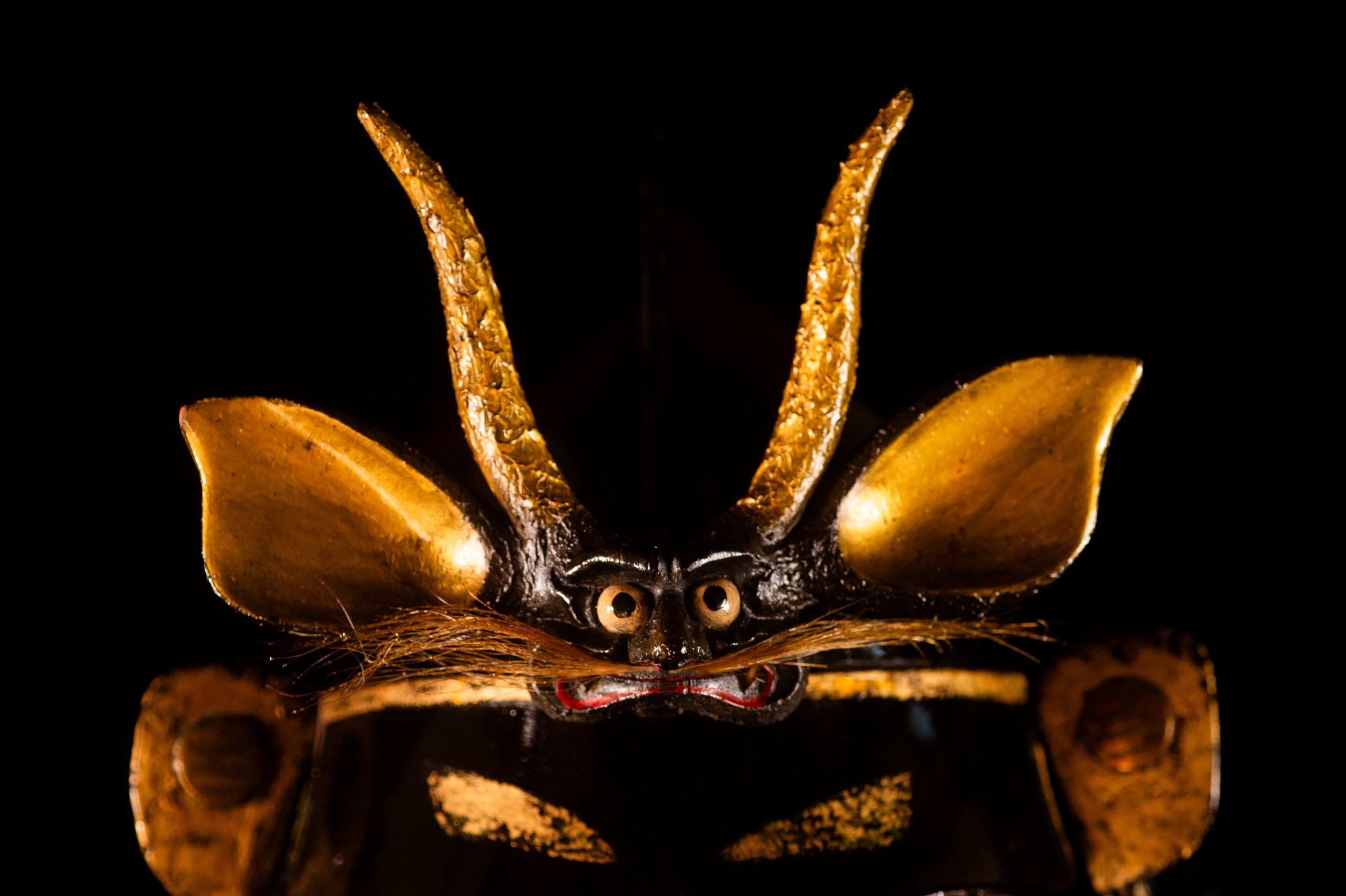
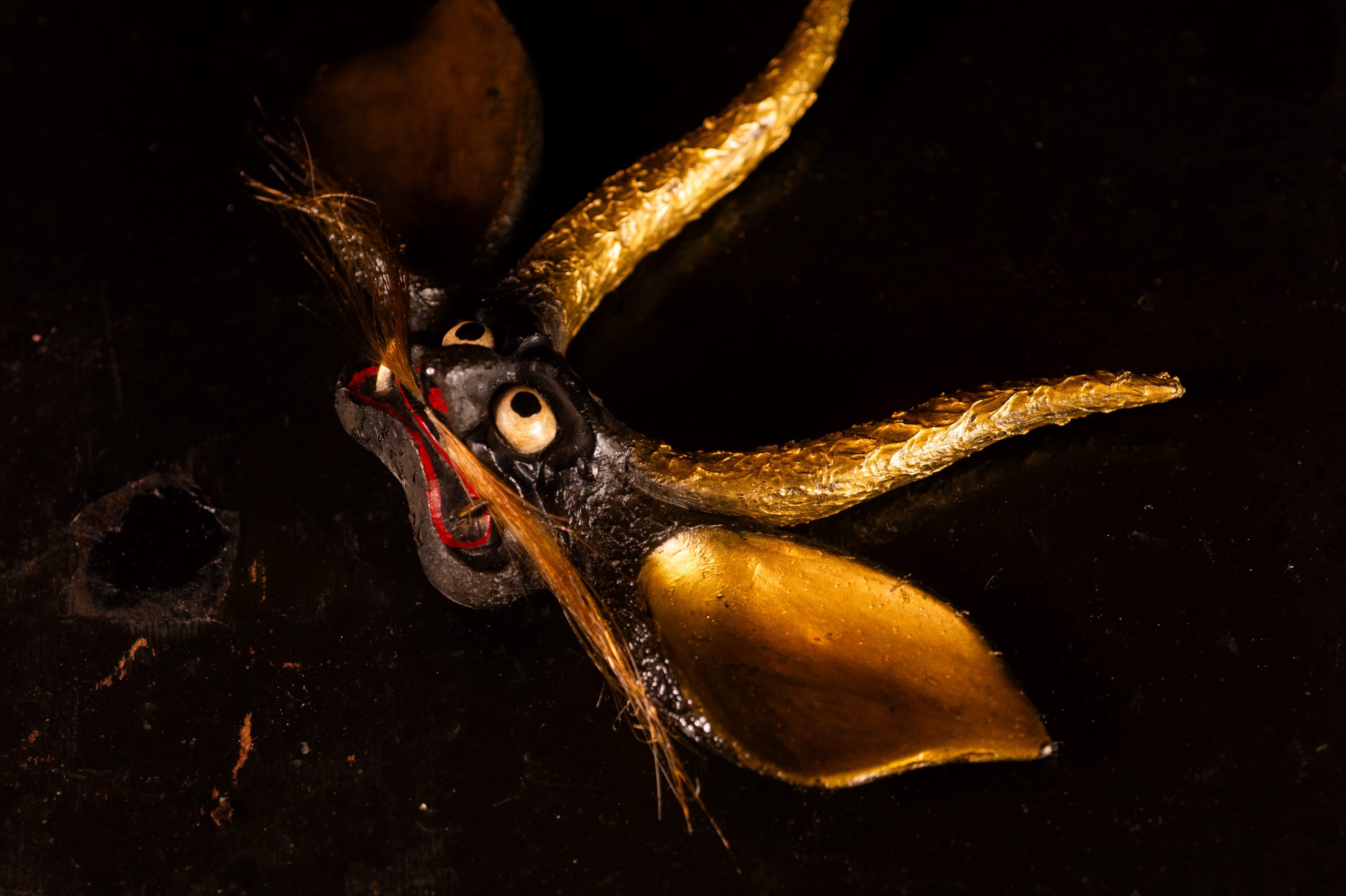
The focal point of the kabuto is its sculptural maedate, the ornament mounted above the brow.
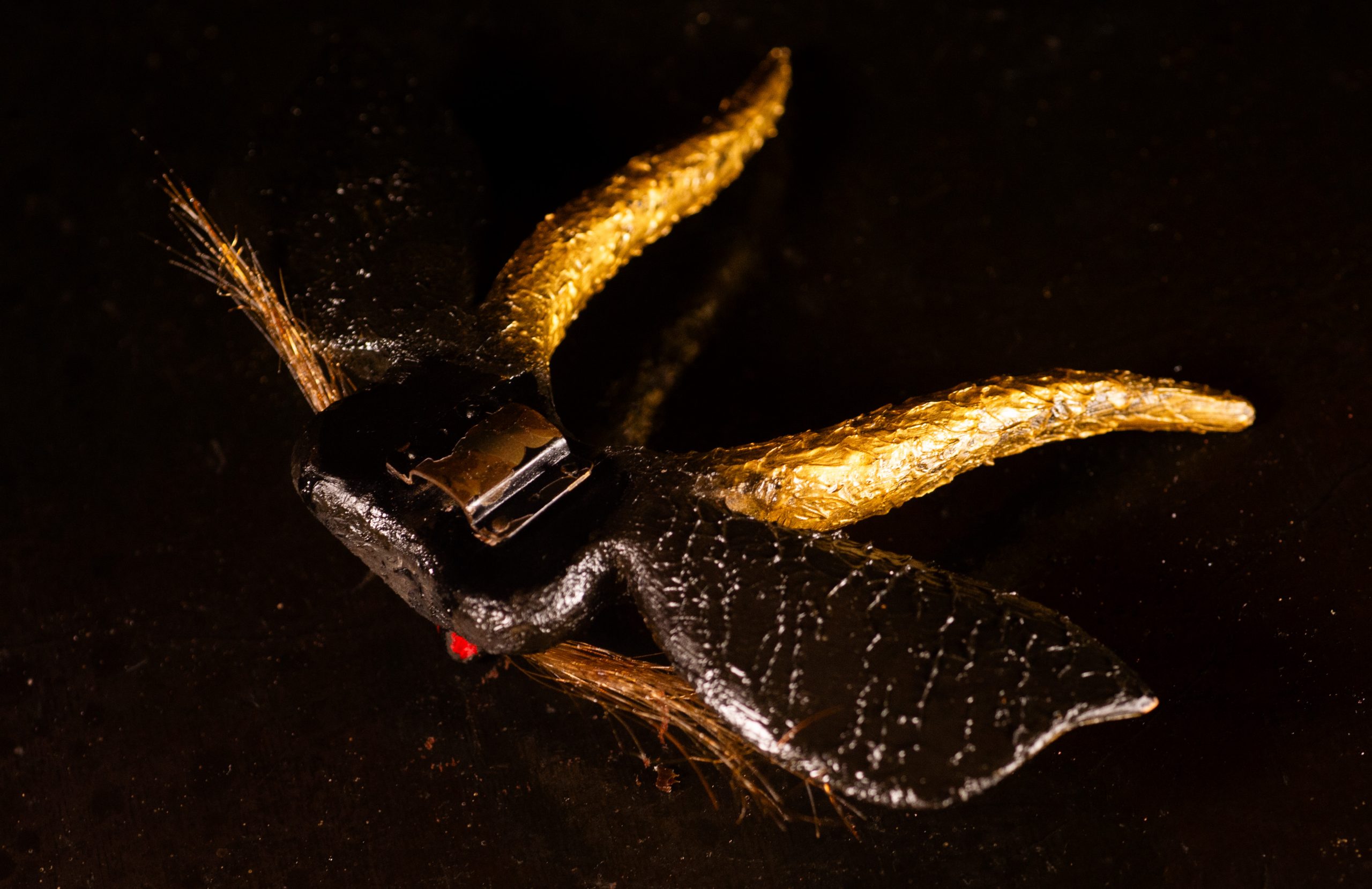
Two tall, upward-curving horns rise from a dark face with wide eyes and a red-accented mouth. Broad gold-toned ears extend to either side, while long whiskers project horizontally across the front. Together, these elements create a memorable silhouette when the helmet is viewed from a distance.
The ornament has a creature-like, theatrical quality often associated with the visual language of Japanese armor. Its exact subject remains open to interpretation; the horns and facial features are described here without claiming a documented identification.
Gold-Toned Fukigaeshi and Circular Motifs
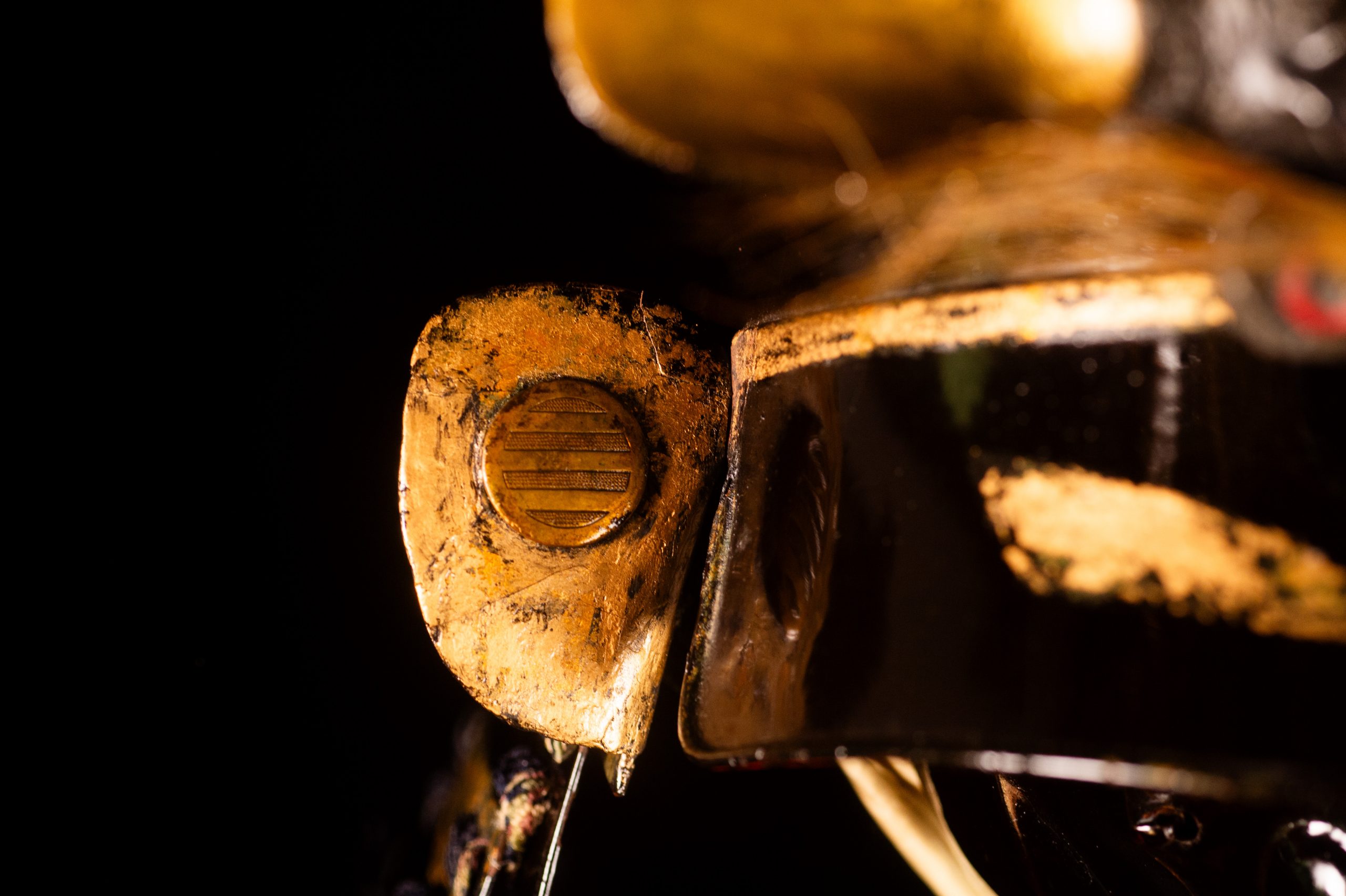
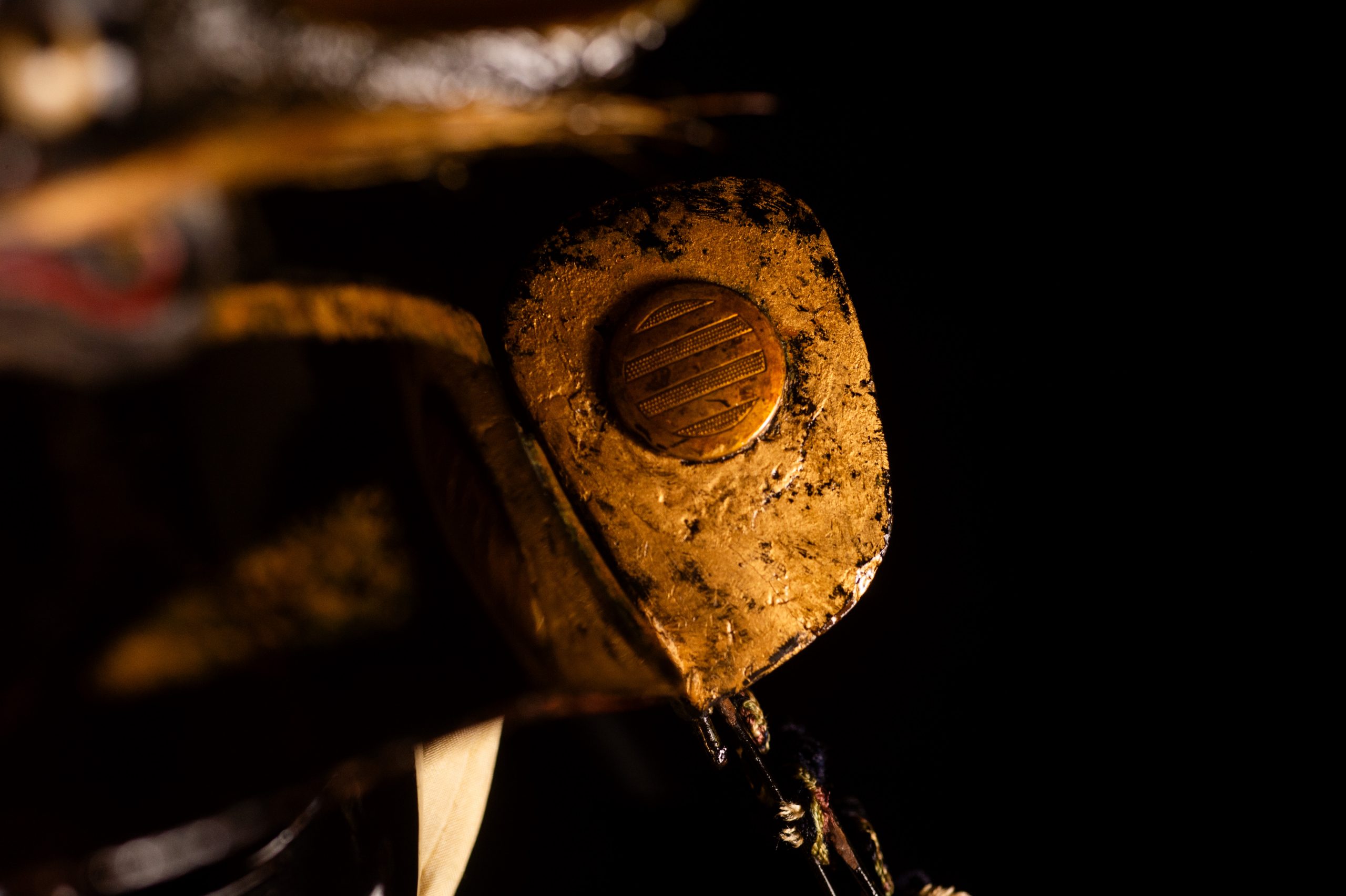
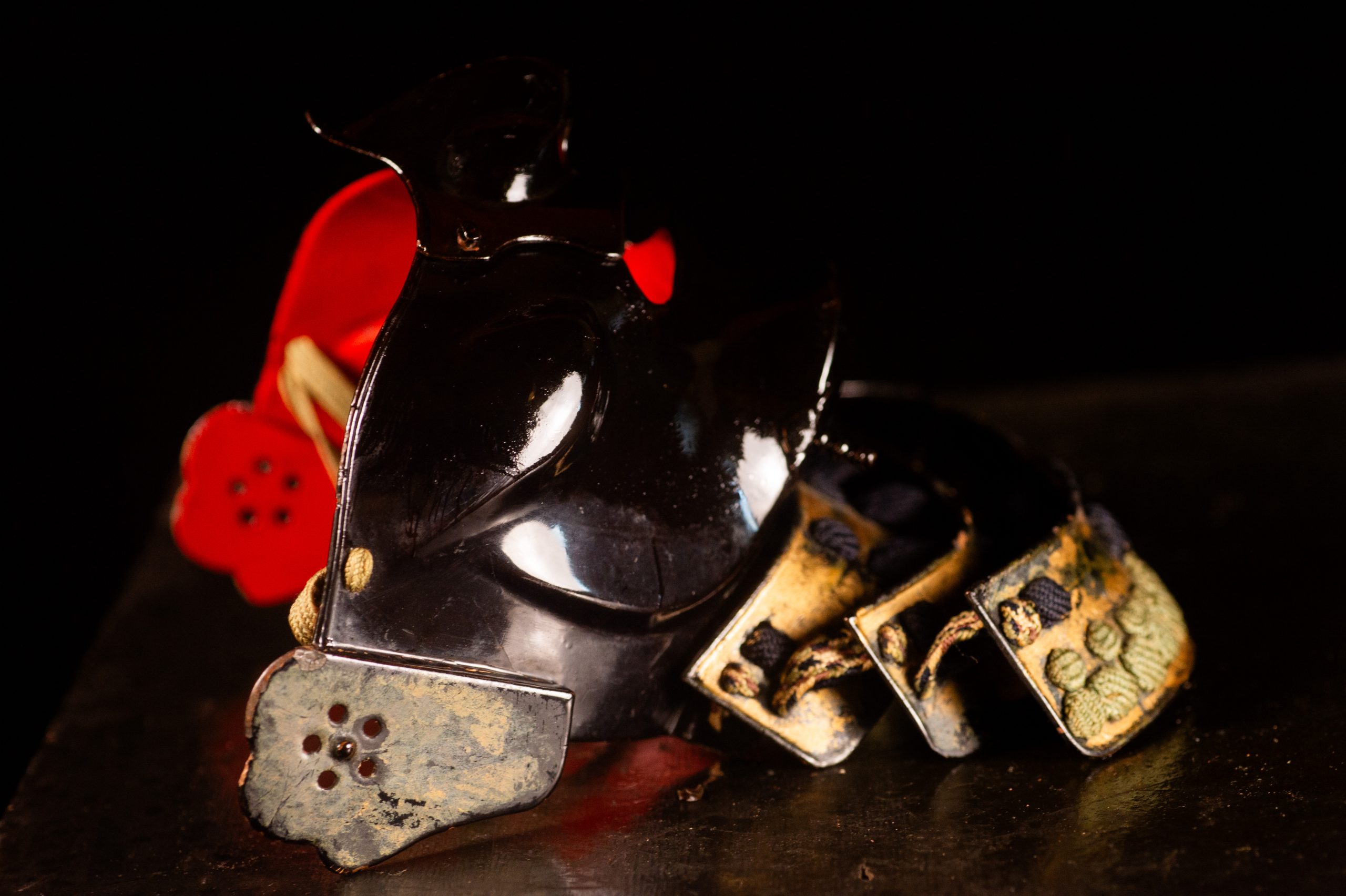
At either side of the helmet are compact fukigaeshi, the turned-back elements that frame the face.
Their gold-toned surfaces contrast with the black lacquer of the bowl and face mask. Each bears a visible circular motif containing horizontal bars.
Although these devices have a heraldic appearance, no specific family or clan attribution has been established for them.
The Laced Shikoro
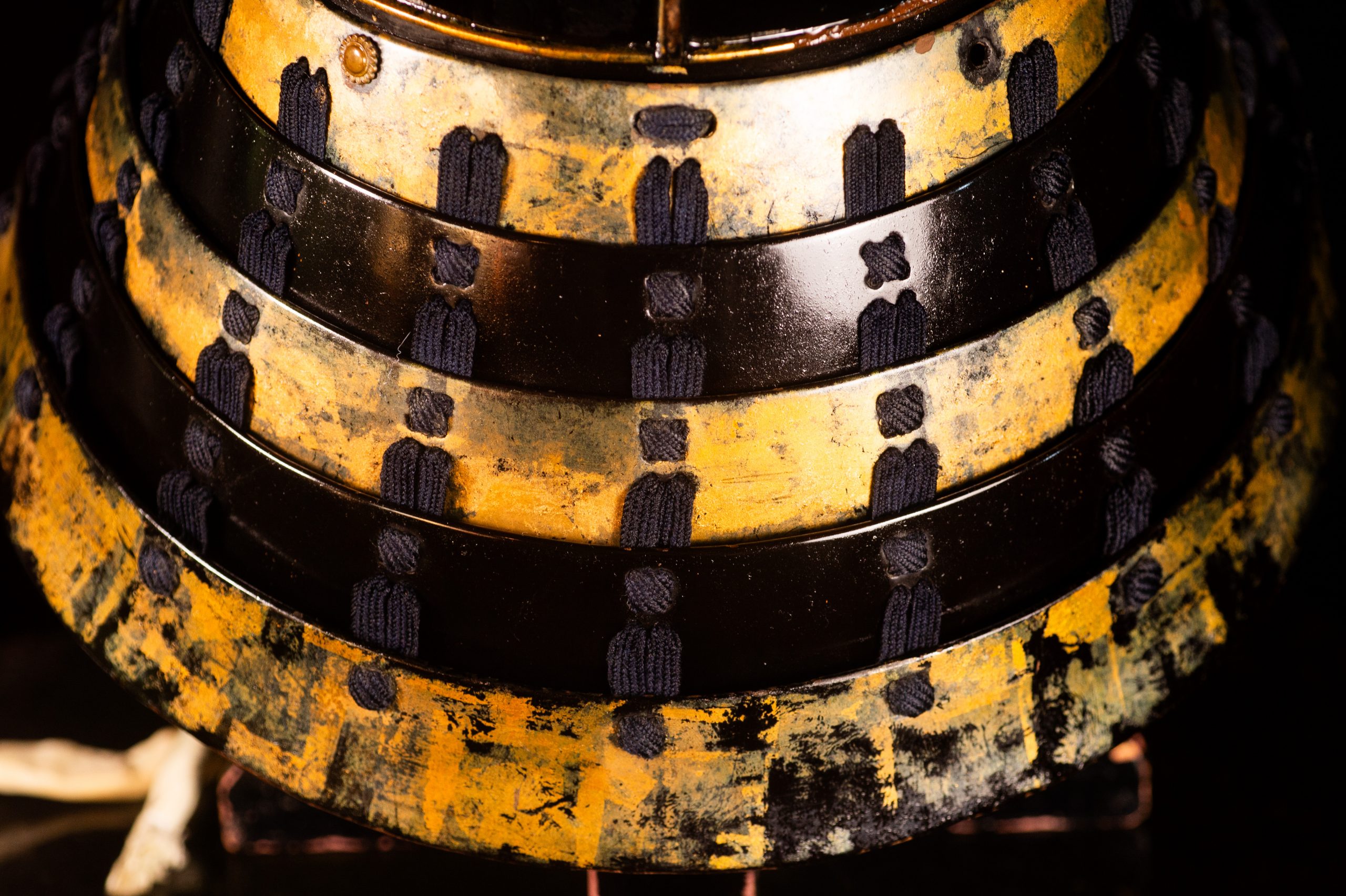
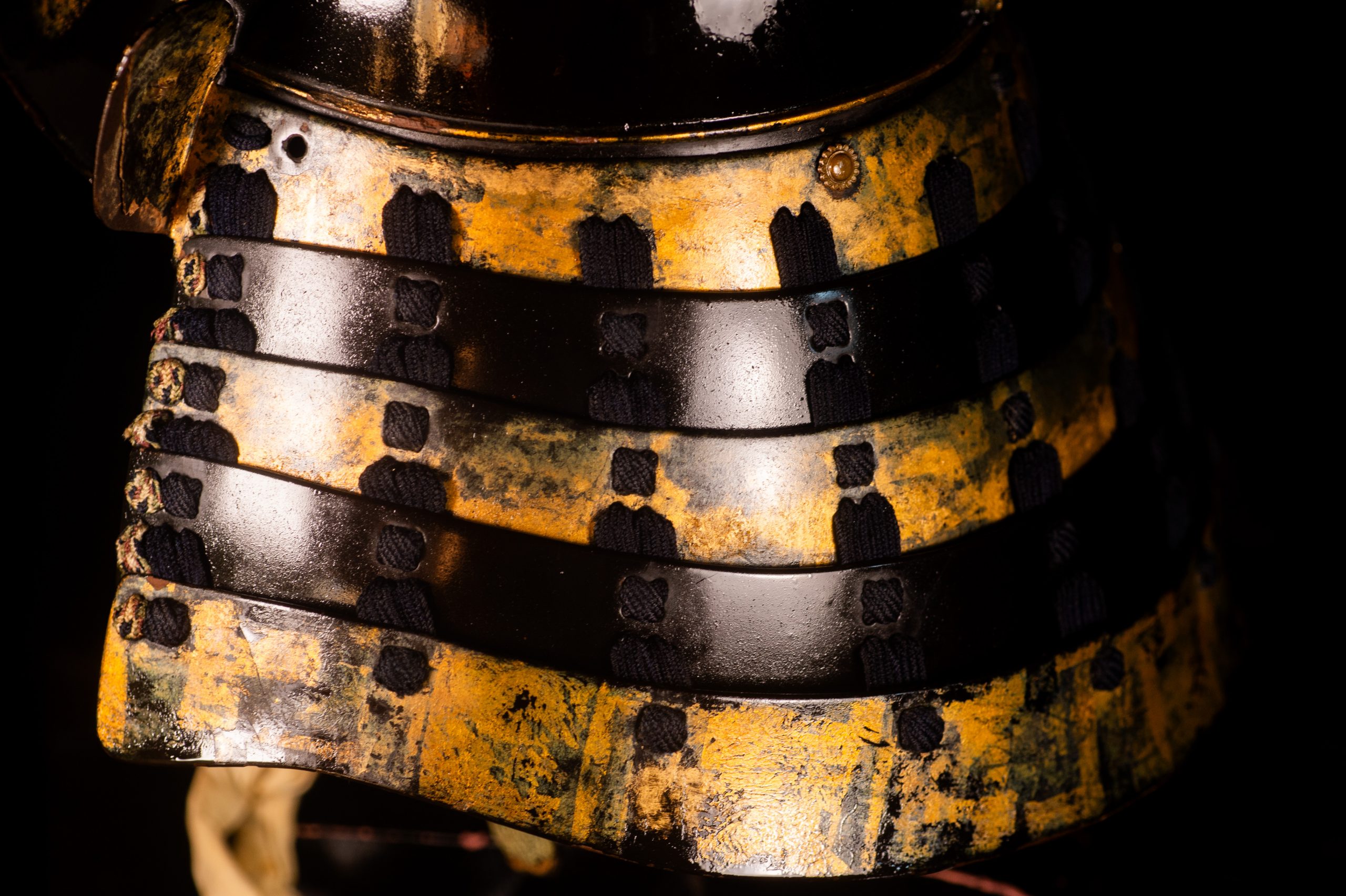
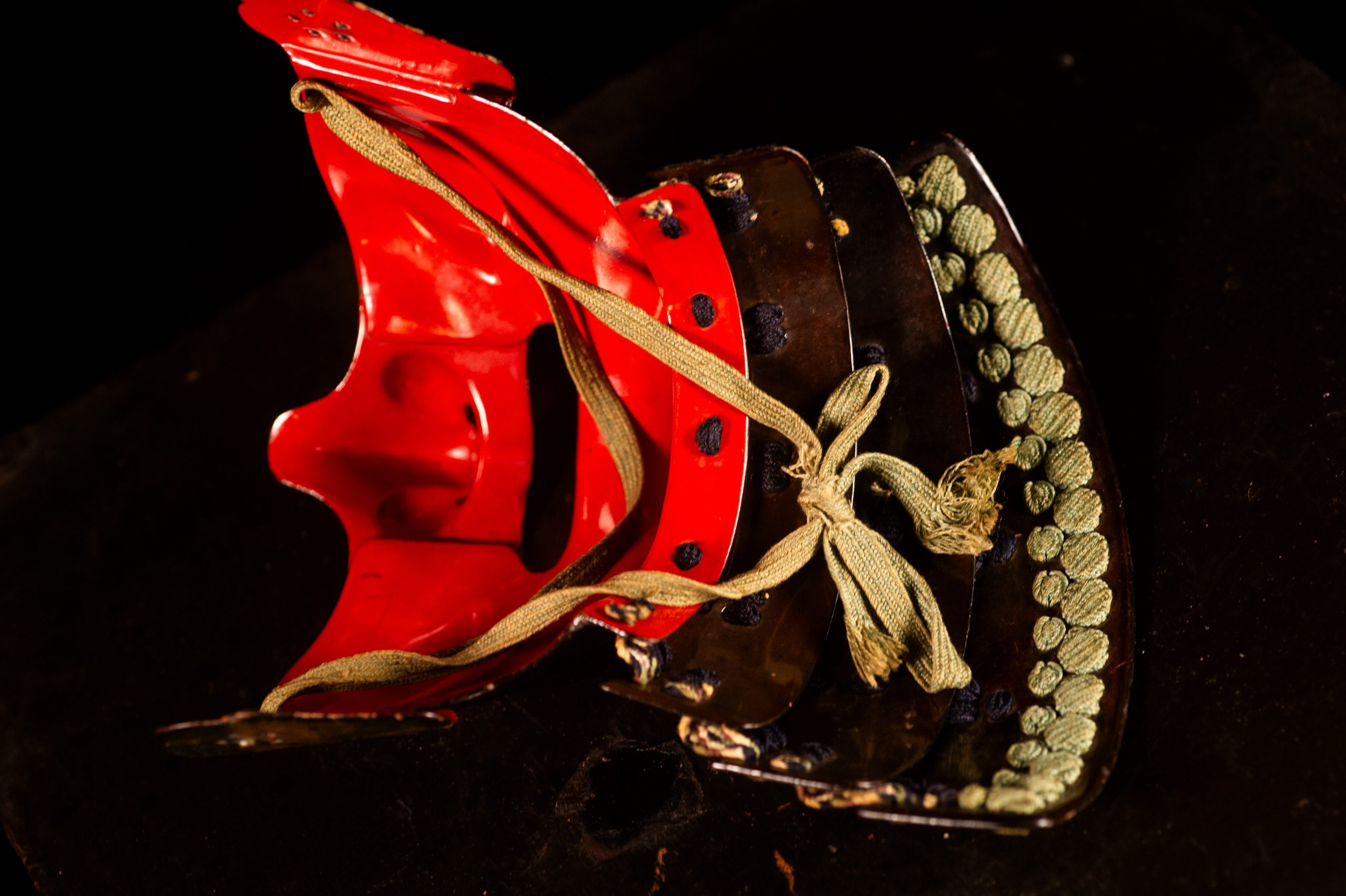
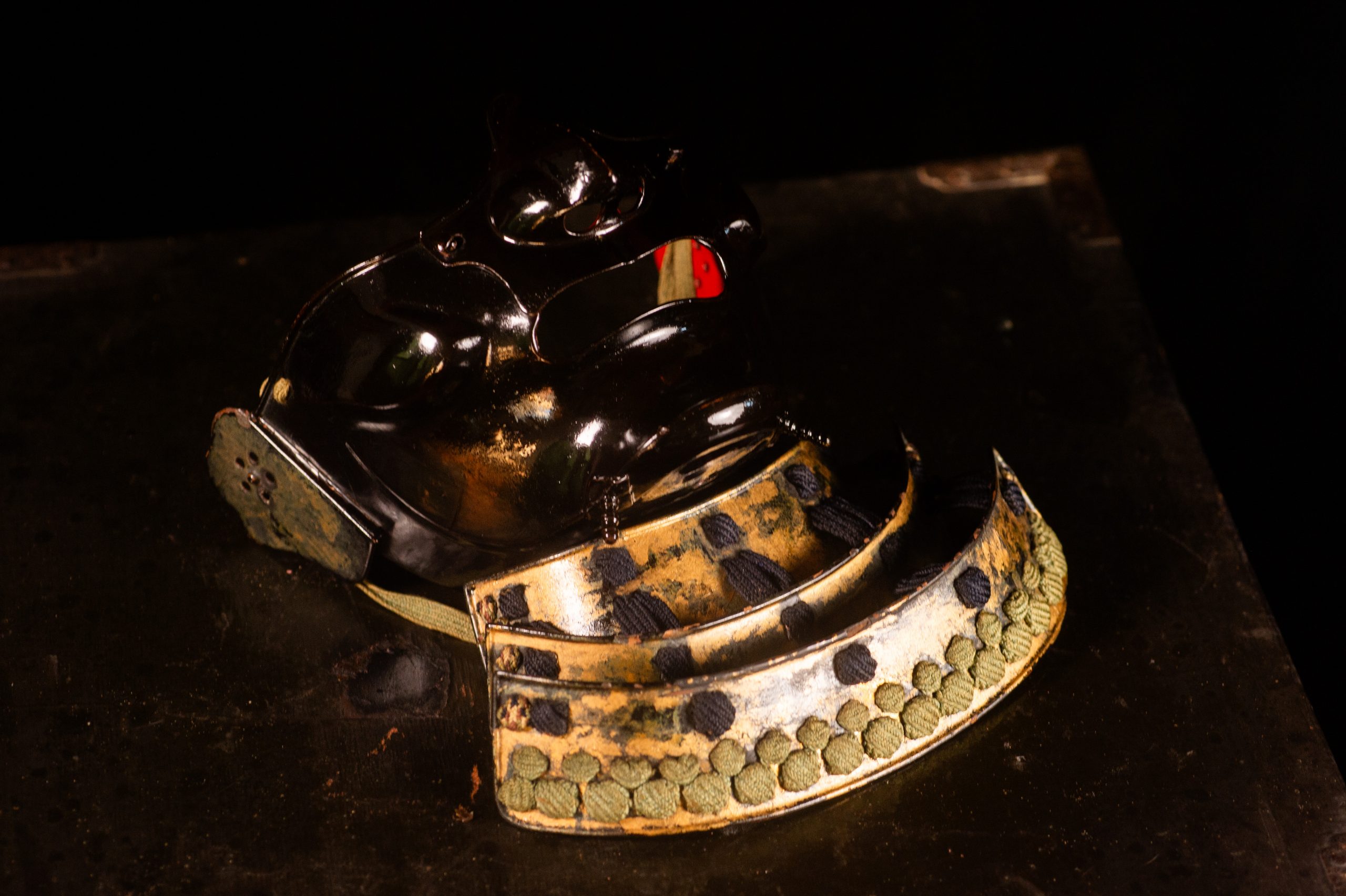
The kabuto retains a broad, flared shikoro, or neck guard, formed from overlapping plates.
Dark lacing creates a regular pattern across the plates. Worn gold-toned areas and a green-toned border add further contrast to the black lacquer and give the lower part of the helmet its layered appearance.
The shikoro is an important part of the object visually as well as structurally: its outward flare broadens the helmet’s profile beneath the compact bowl and projecting maedate.
The Black-Lacquered Menpō
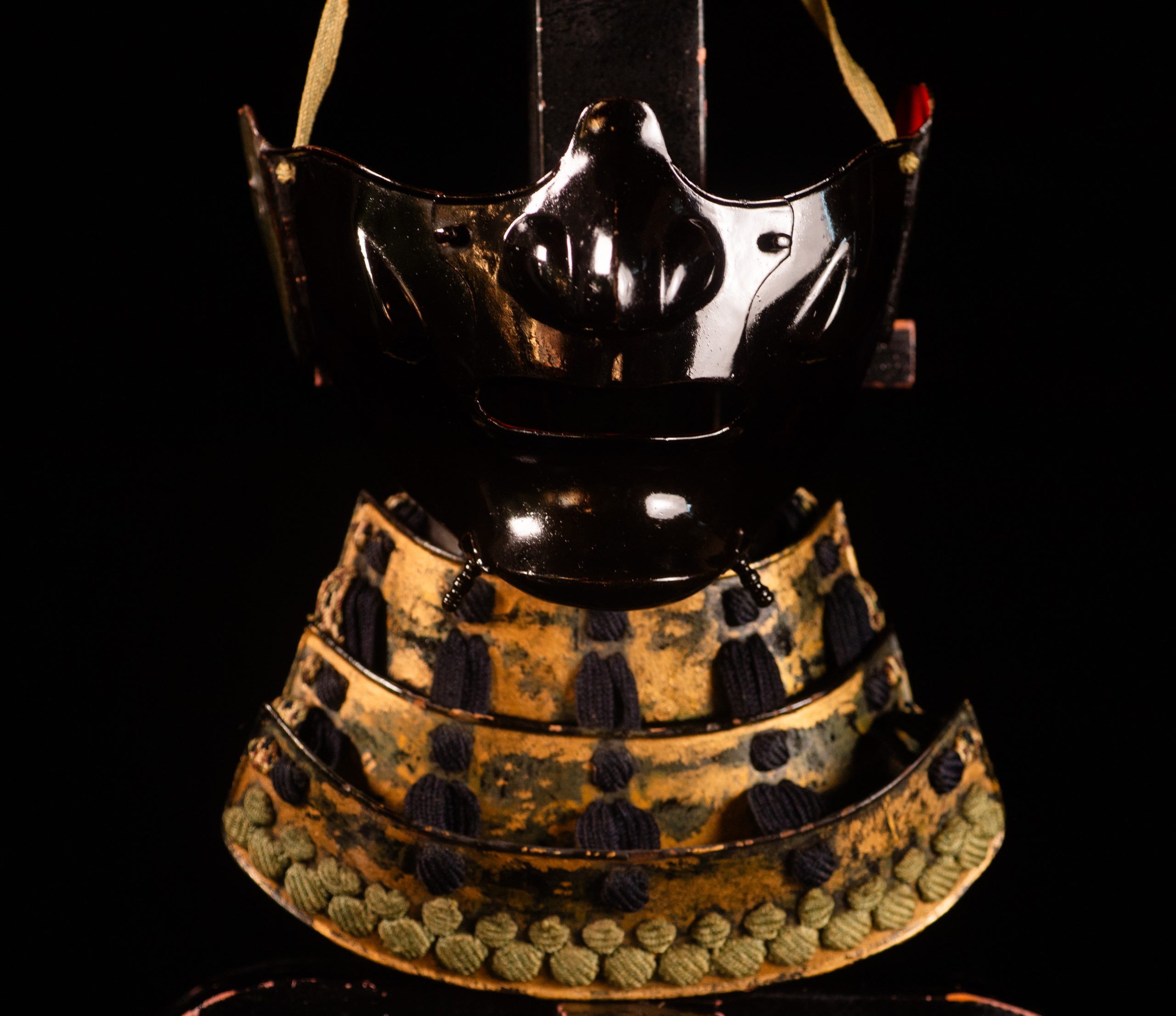
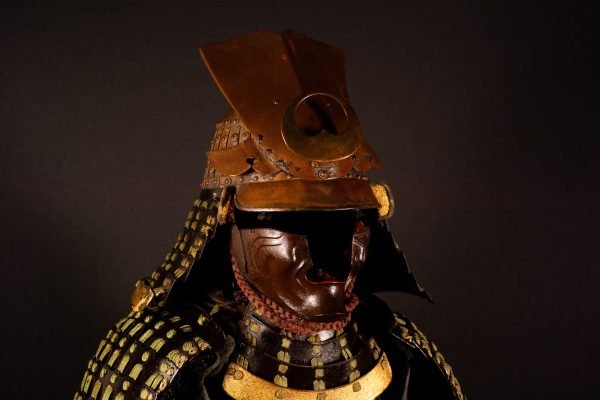
Displayed beneath the kabuto is a menpō, a Japanese samurai face mask. Its glossy black finish echoes the helmet bowl and gives the two pieces a cohesive appearance when presented together.
The mask has a strongly modeled nose and facial contours. Pale cords are visible at its sides, while a laced guard extends below the chin to protect the throat.
The menpō contributes substantially to the impact of the ensemble. Its dark surface places the brightly colored facial features of the maedate directly above a second, more restrained face.
The available information does not establish whether the kabuto and menpō were originally made or used together; they are described as the components offered in this listing.
Color and Display
Black lacquer provides the dominant color across the helmet and face mask. Against it, the gold-toned horns, ears, edging and fukigaeshi become especially prominent.
Red accents around the maedate’s mouth, dark lacing, the green-toned border and pale mask cords introduce smaller contrasts without distracting from the ornament.
The result is an ensemble with a particularly strong frontal presentation. The projecting horns and whiskers give the upper section height and width, while the shikoro and throat guard extend the composition downward.
Edo Period Attribution
The ensemble is attributed to the Edo period (1603–1868).
During this period, Japanese armor continued to serve as an expression of identity and status as well as protective equipment. Elaborate helmet ornaments could transform the wearer’s outline and give an individual kabuto a recognizable character.
This example is distinguished by the contrast between its dark-lacquered components and its unusually expressive front ornament.
Condition and Preservation
The photographs show wear and losses to gold-toned surfaces, particularly around the projecting ornament and edges. Surface variation is also visible on the laced guards and other components.
The black lacquer remains visually prominent, and the maedate retains its horns, ears, facial features and whiskers. Please examine all available photographs carefully for the condition of the lacquer, finishes, lacing, cords and fittings.
No assessment of concealed construction, repairs or the precise materials of individual components is implied by this visual description.
Certificate
The kabuto and menpō are accompanied by a Supein Nihonto certificate.
Specifications
- Object: Japanese samurai helmet and face mask
- Components offered: Kabuto and menpō
- Period: Attributed to the Edo period (1603–1868)
- Helmet bowl: High-profile hachi with a pronounced central ridge
- Visible exterior finish: Glossy black lacquer
- Maedate: Horned, whiskered, oni-style figural ornament
- Fukigaeshi: Gold-toned surfaces with circular motifs
- Shikoro: Flared, multi-plate neck guard with dark lacing
- Menpō: Black-lacquered face mask with pale cords
- Throat protection: Laced guard displayed below the mask
- Documentation: Supein Nihonto certificate
Collector’s Interest
This ensemble brings together two visually complementary elements of Japanese samurai armor: an ornate kabuto and a dark-lacquered menpō.
Its defining feature is the figural maedate. The tall horns, broad ears, alert eyes and projecting whiskers give the helmet an immediately recognizable profile, while the black and gold-toned surfaces provide a strong contrast throughout the display.
The mask, shikoro and throat guard add layers to the presentation, allowing the object to be appreciated as more than an isolated helmet ornament.
Collectors interested in Japanese armor can explore further examples in our kabuto collection or learn more about helmet construction in our guide to Japanese kabuto.
An Edo-period-attributed Japanese kabuto and menpō distinguished by a black-lacquered helmet bowl, a horned and whiskered oni-style maedate, gold-toned fukigaeshi and a flared, laced shikoro. The accompanying black-lacquered face mask and throat guard complete a dramatic samurai armor display. Offered with a Supein Nihonto certificate.