Japanese Samurai Armor – Tōsei Gusoku with Torii Maedate
Japan · Edo Period (1603–1868) · Tōsei Gusoku · Torii Maedate · With Gusoku Bitsu
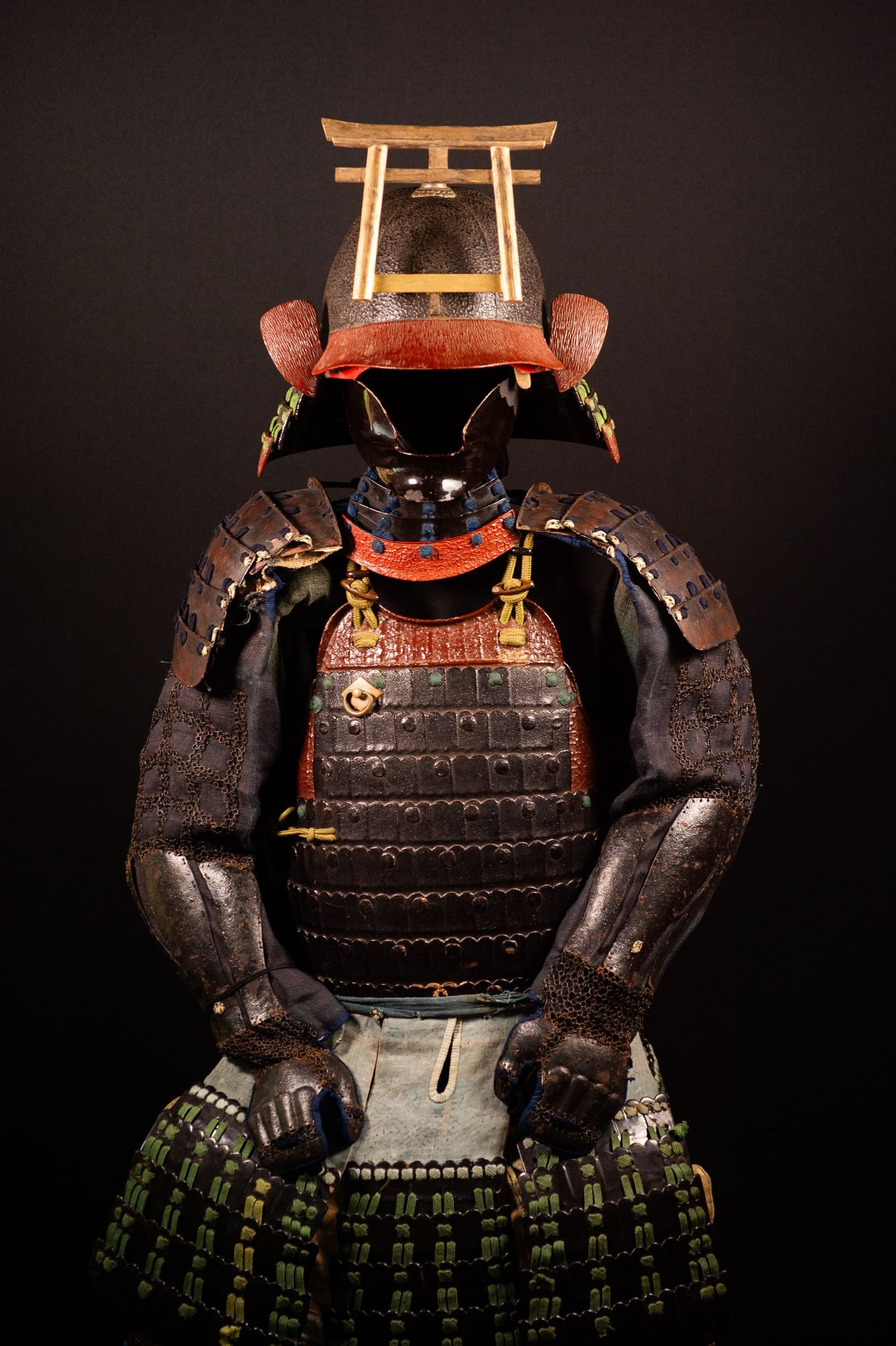
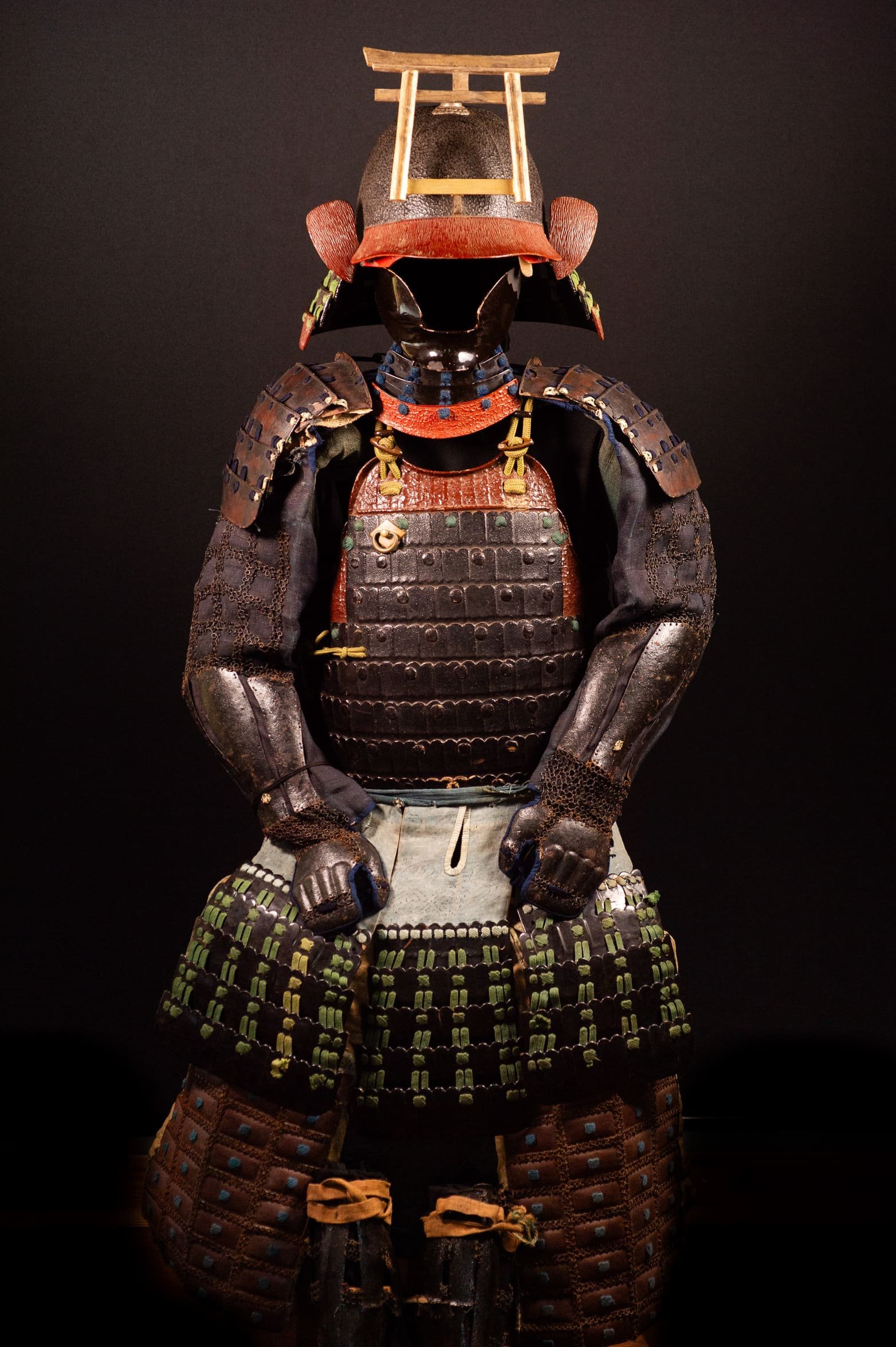
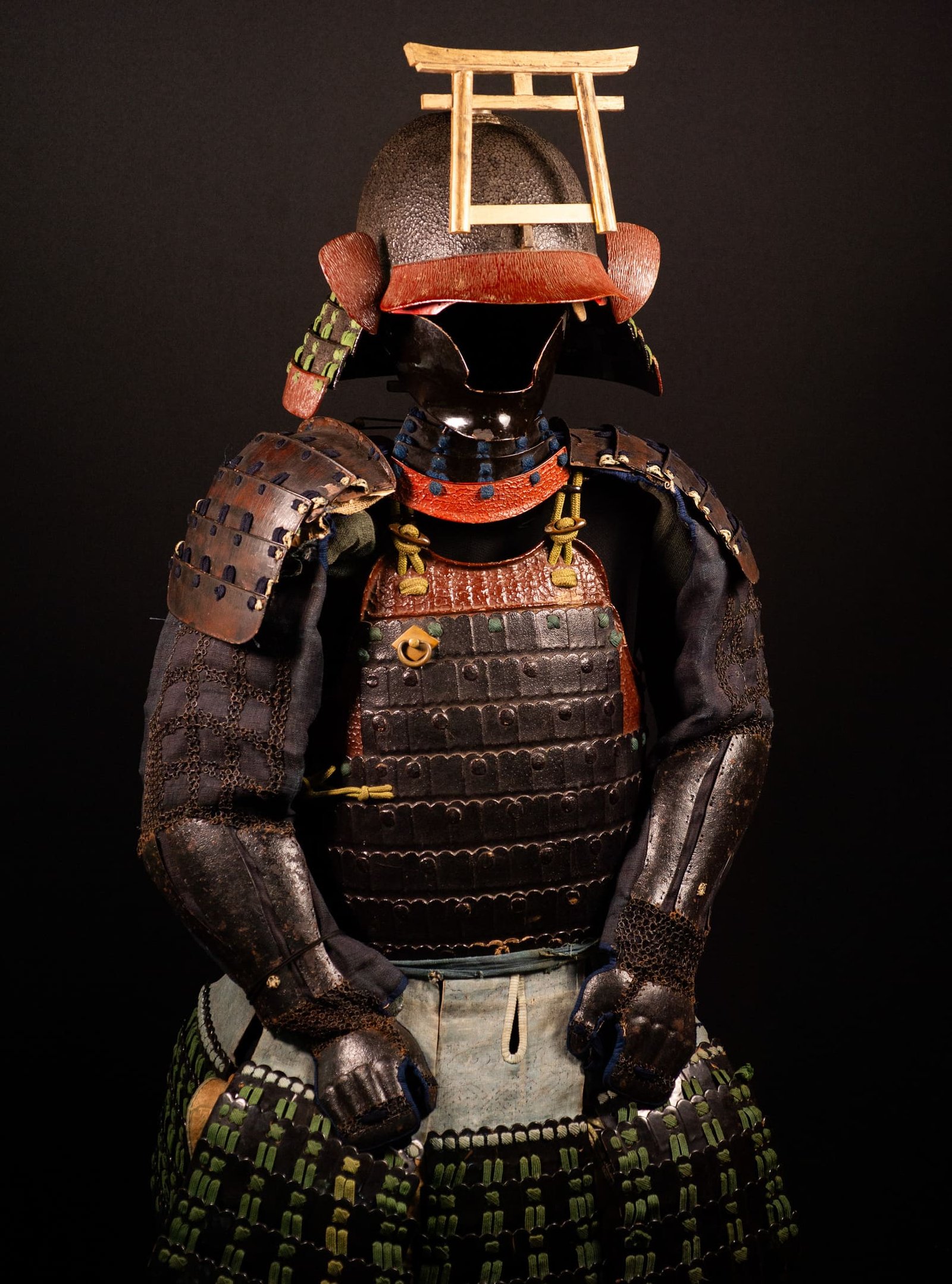
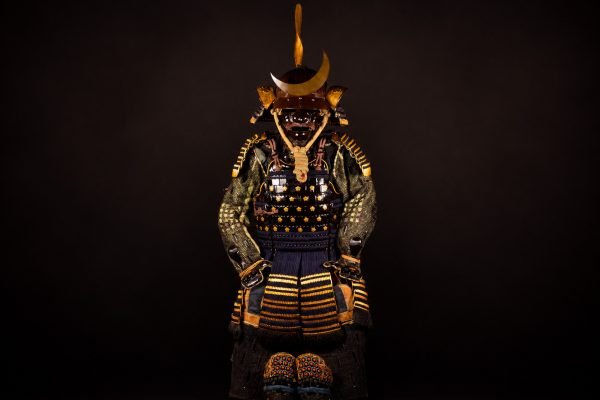
A striking and highly decorative Japanese composite samurai armor (tōsei gusoku) from the Edo period, distinguished by its imposing proportions, rich combination of lacquered iron, chain mail and textile, and above all by the unusual torii-shaped maedate mounted prominently on the front of the helmet.
The ensemble presents a powerful and unmistakably martial appearance, combining dark lacquered surfaces with restrained accents of red, green and blue. Its aged patina, surviving original finishes and visible traces of use give the armor a particularly strong historical presence.
The Kabuto
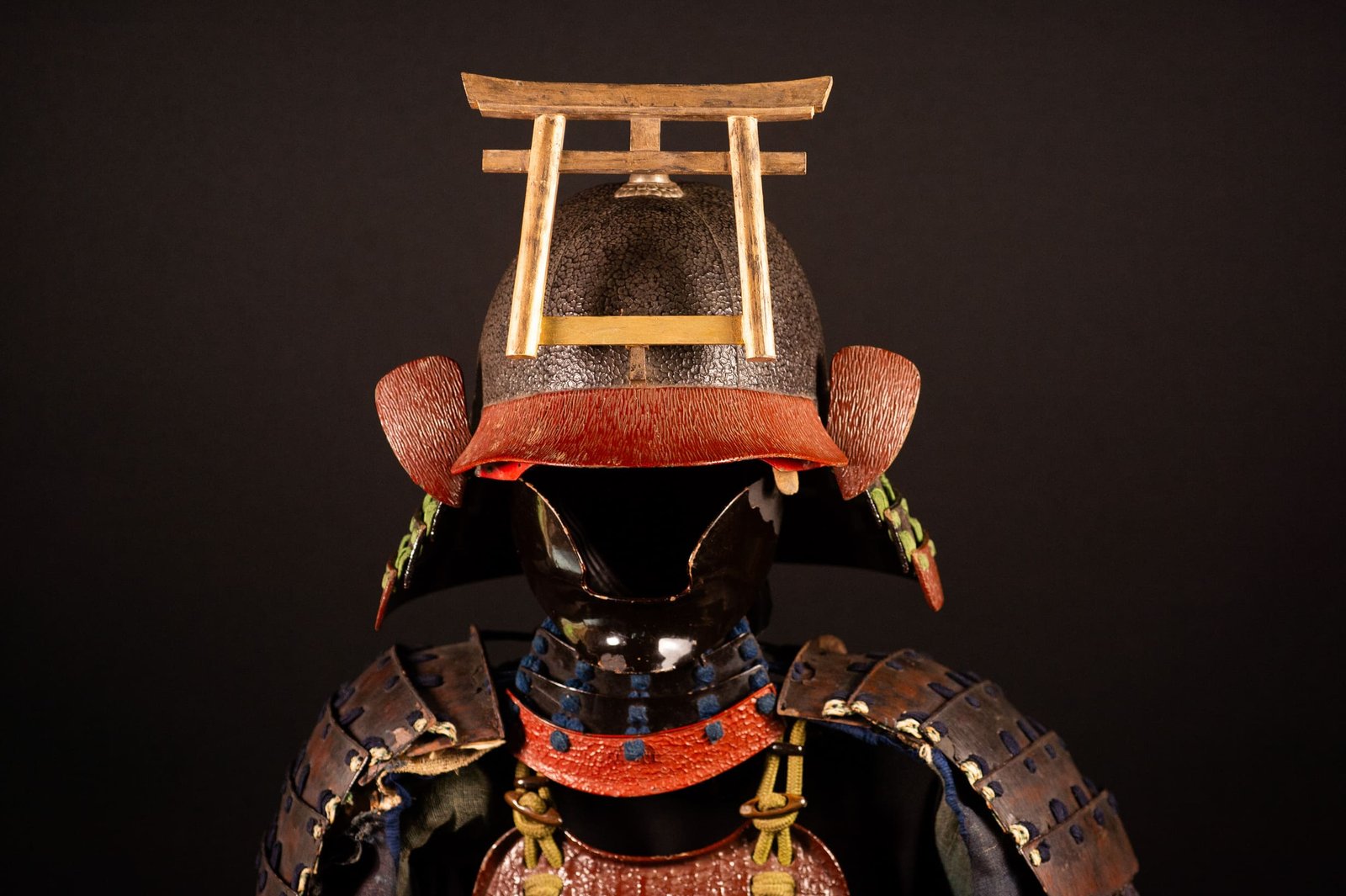
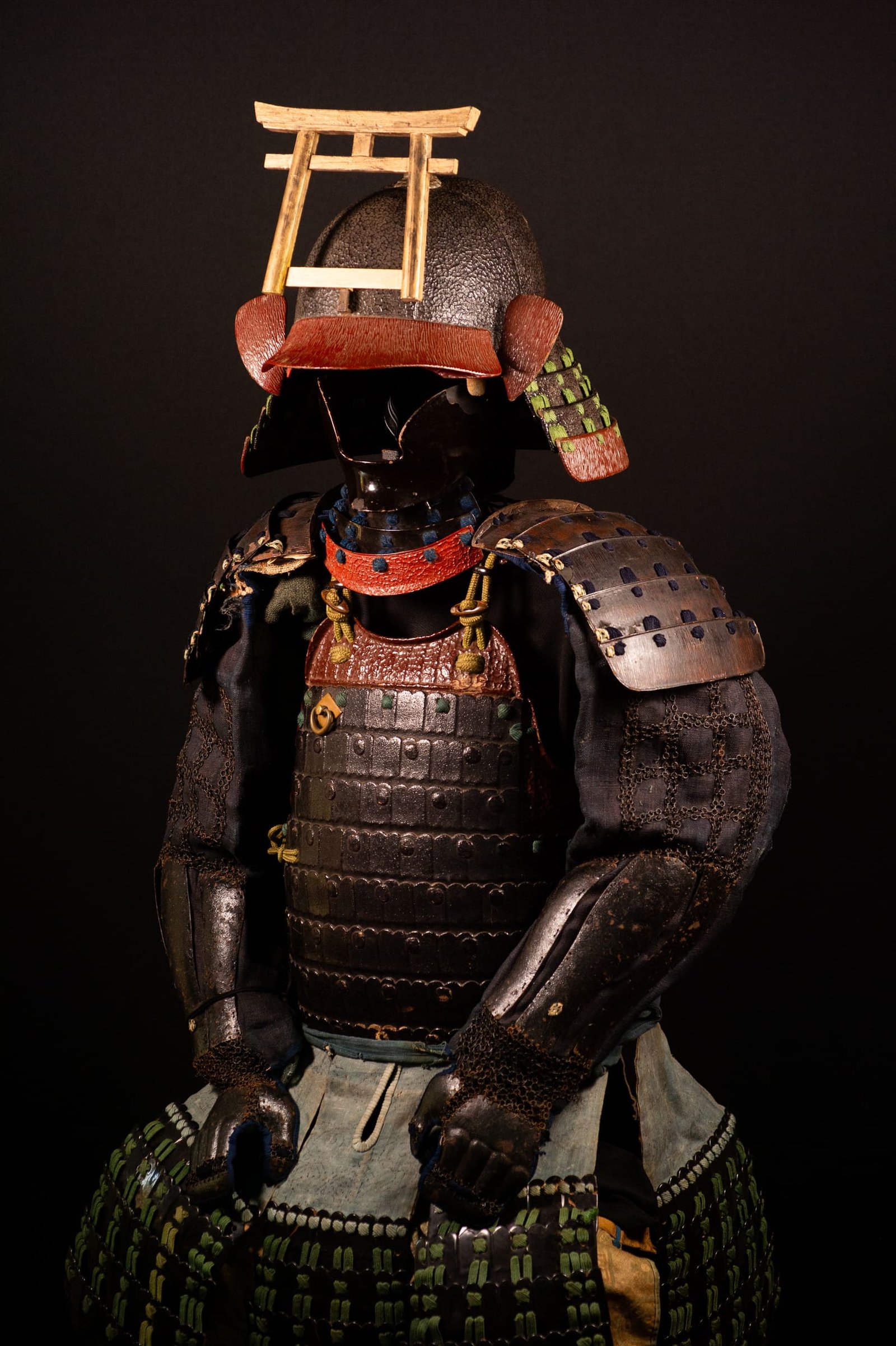
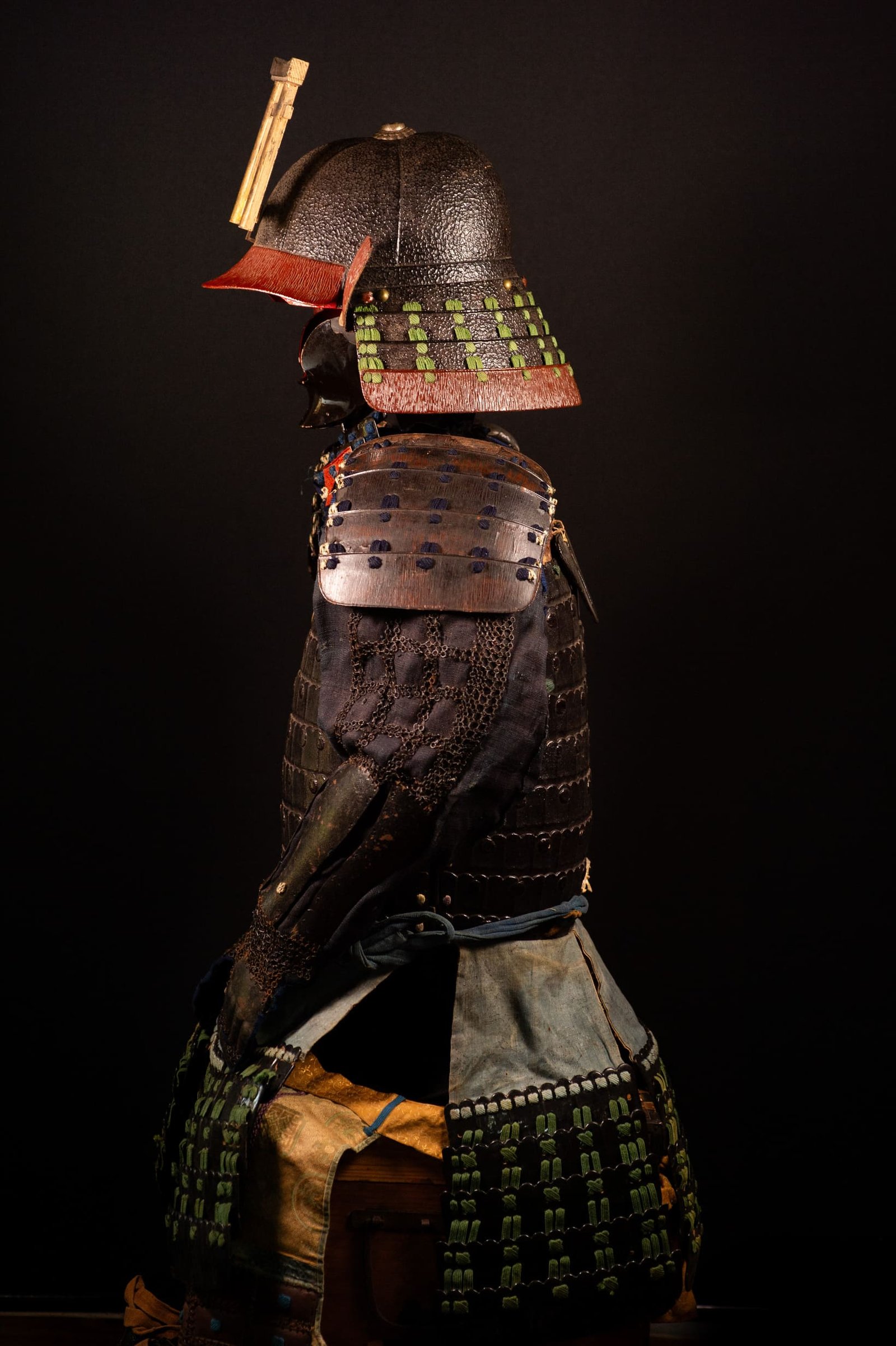
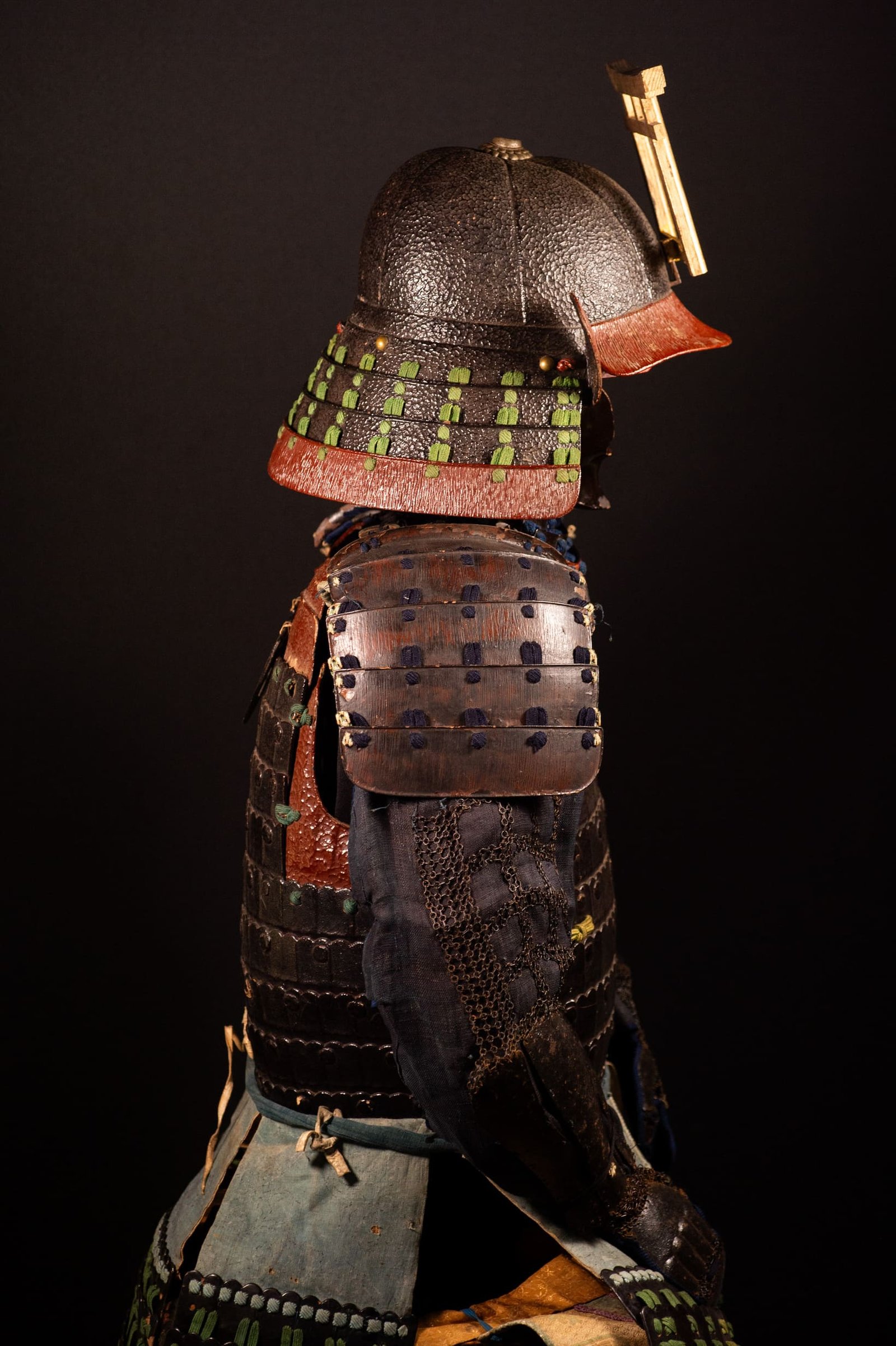
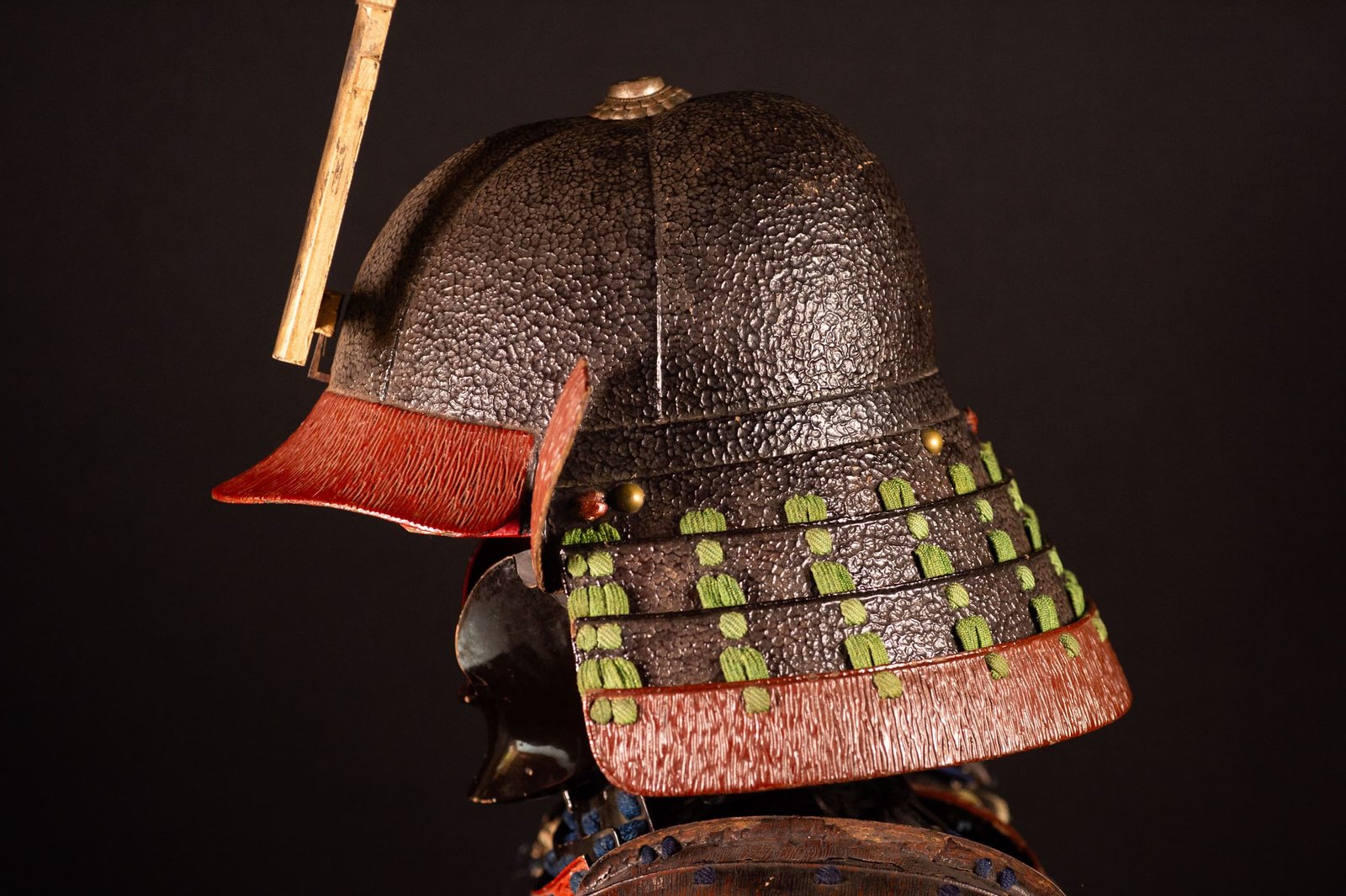
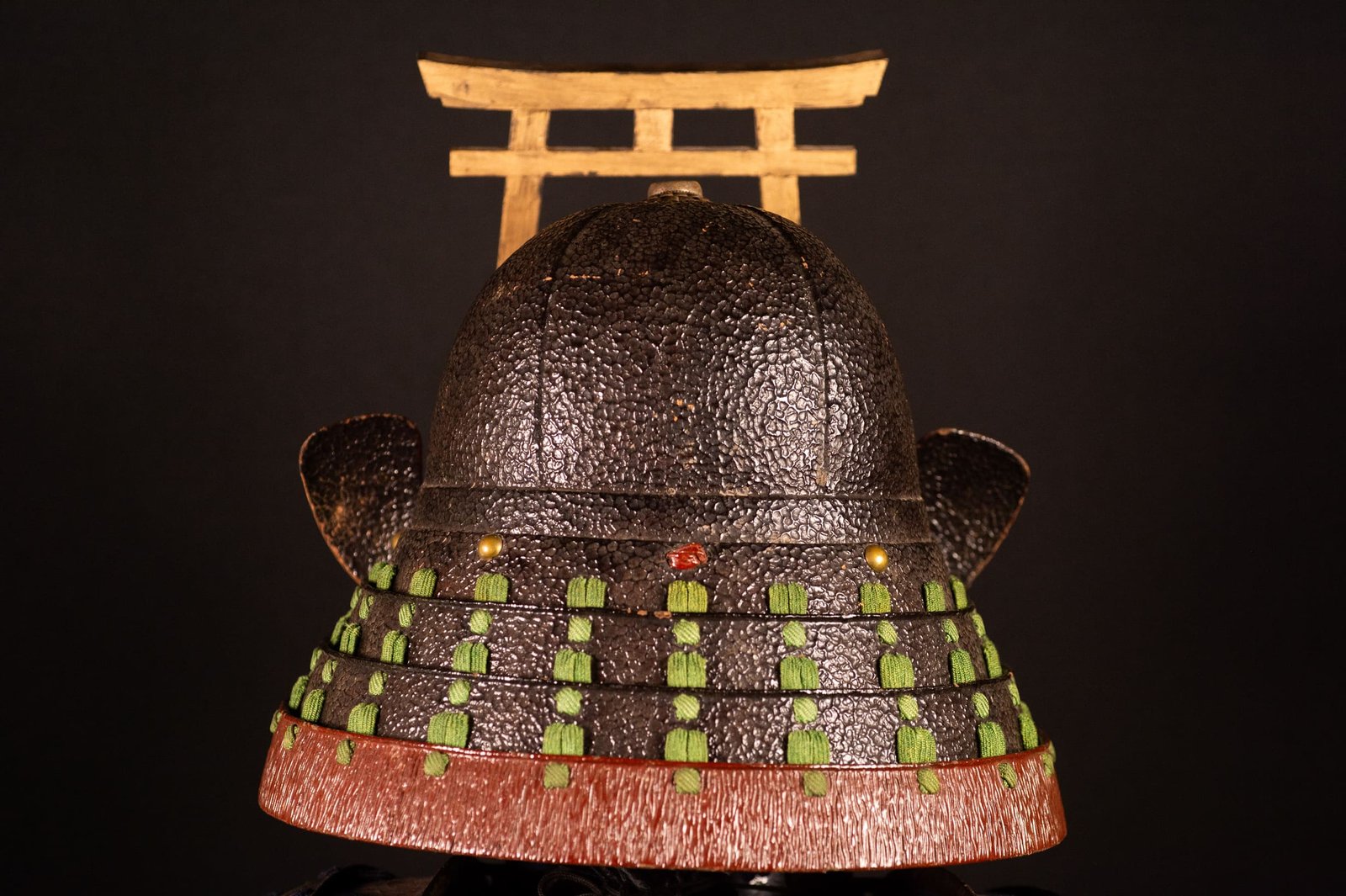
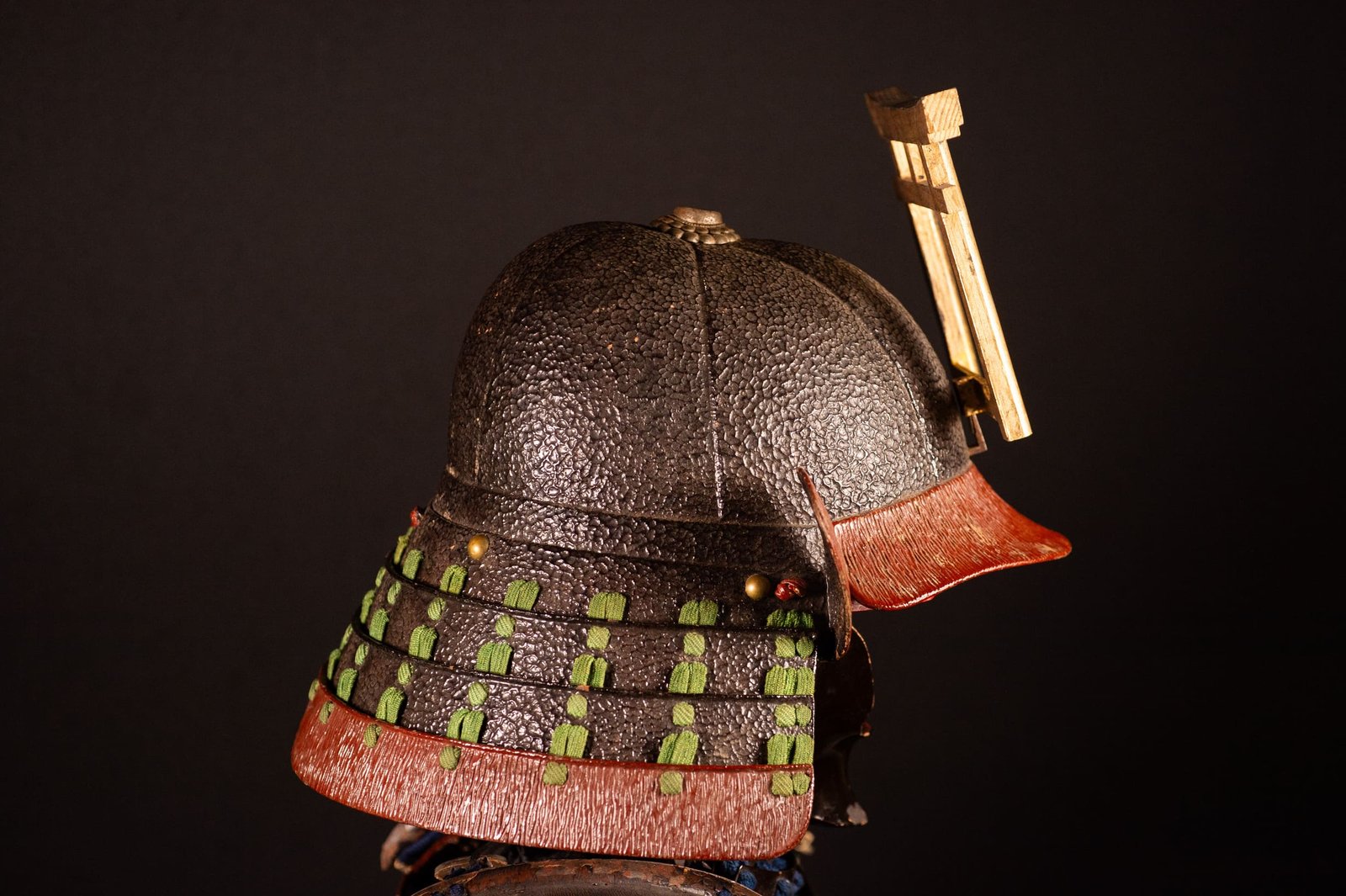
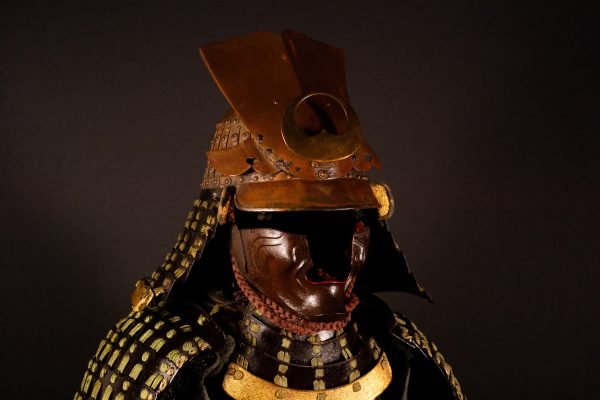
The kabuto is constructed in iron and finished with a dark, strongly textured lacquer surface in ishime-ji, producing an attractive granular appearance.
The helmet is fitted with a red-lacquered mabisashi and fukigaeshi, while the multi-lame shikoro is finished in dark brown to black lacquer and connected with contrasting green lacing.
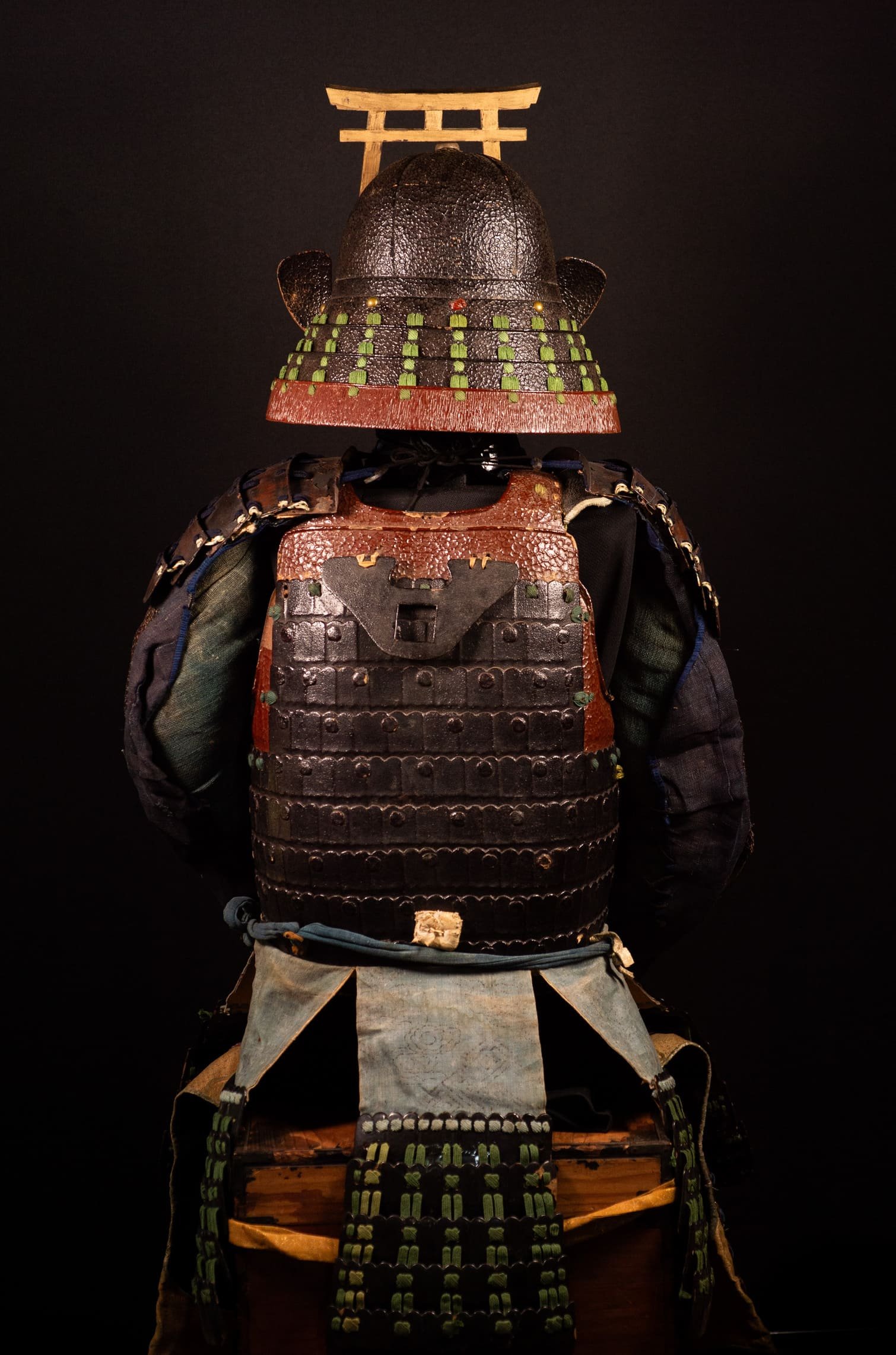
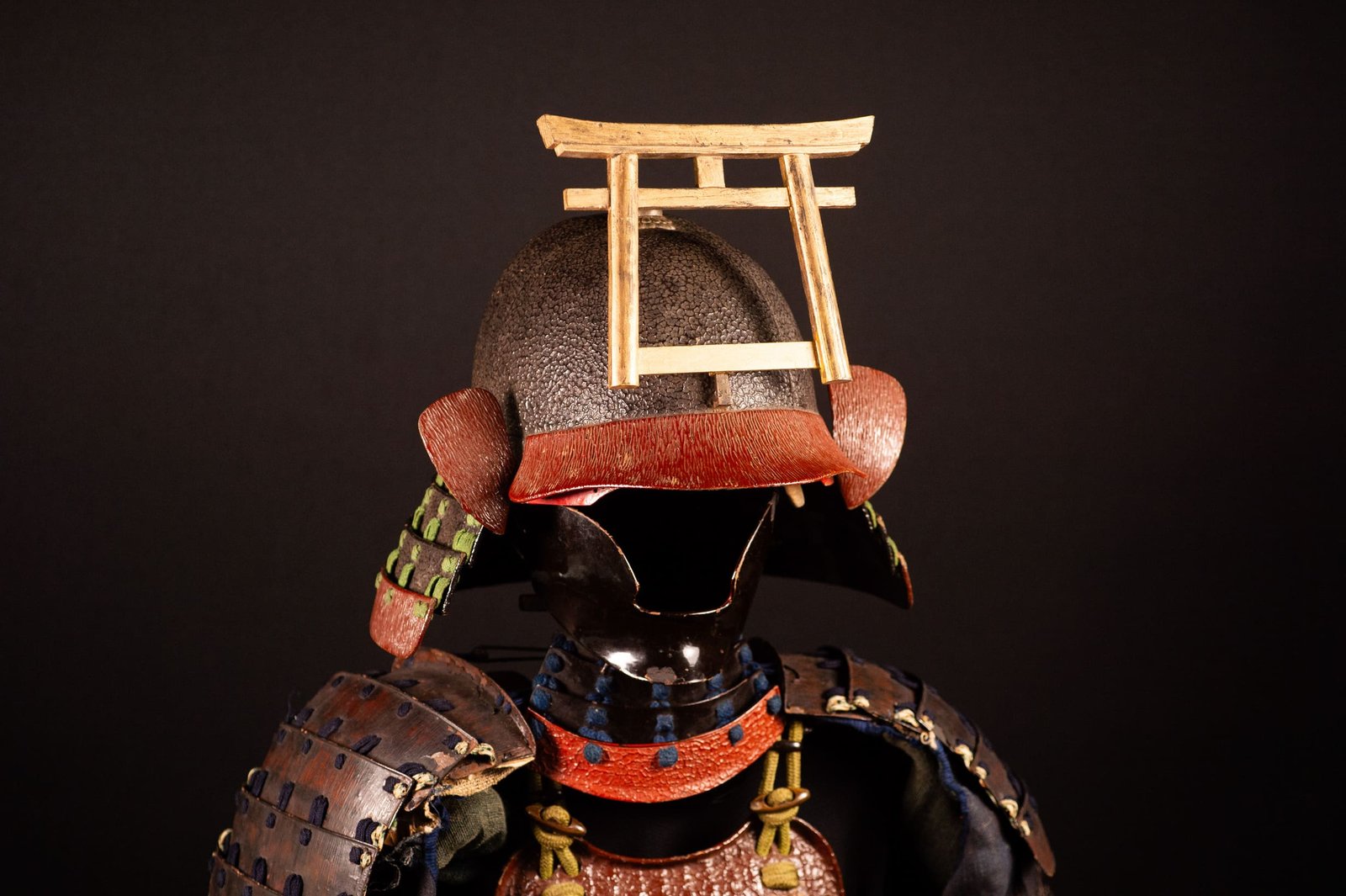
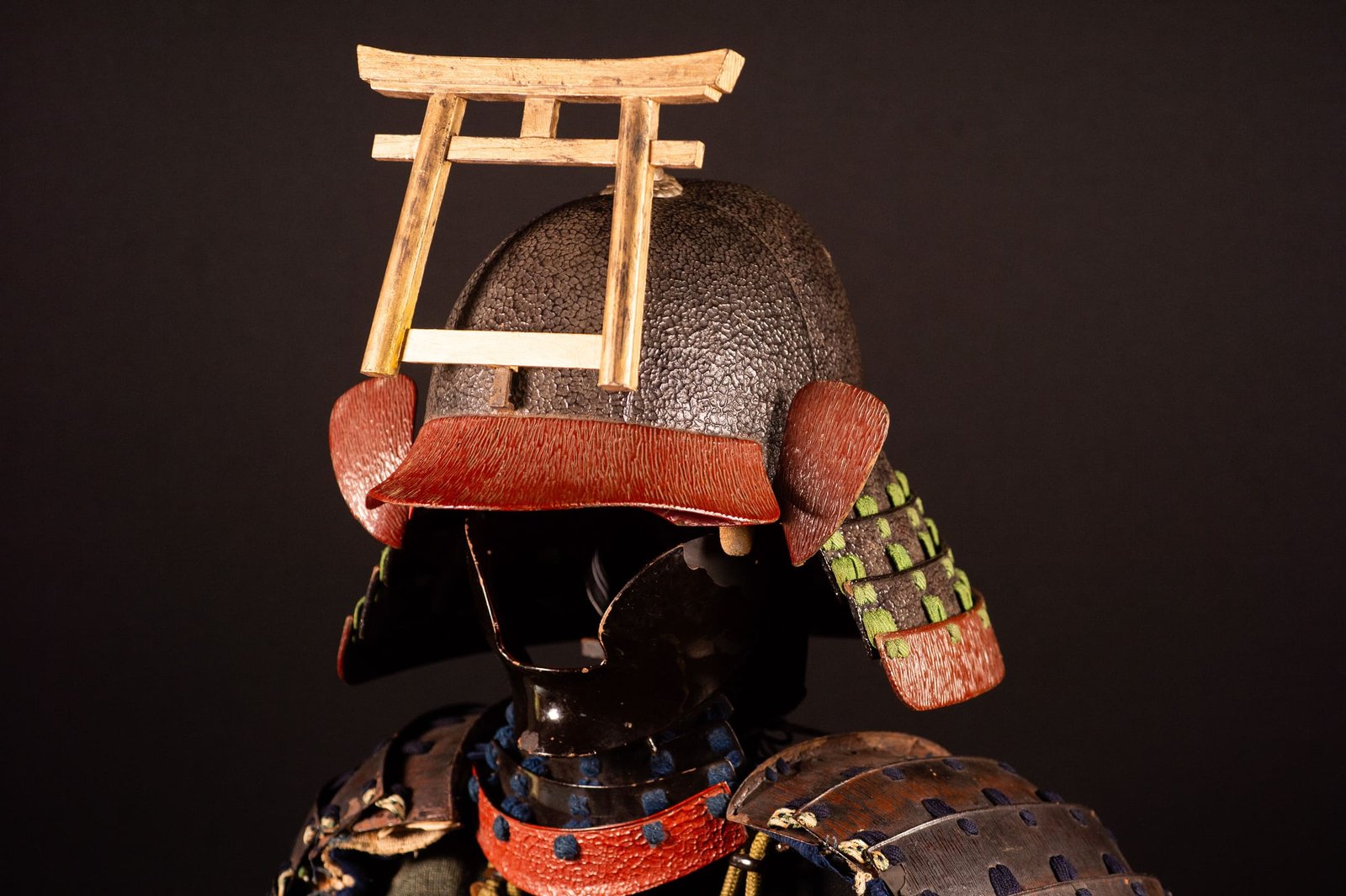
Its most distinctive feature is the large gilt-toned maedate in the form of a torii, the traditional gateway marking the entrance to a Shinto shrine. Mounted prominently at the front of the kabuto, this unusual crest gives the armor an immediately recognizable silhouette and considerable visual impact.
Torii Maedate
The torii is one of the most recognizable architectural and religious symbols of Japan, traditionally marking the transition between the secular world and the sacred space of a Shinto shrine.
Used here as a maedate, the motif creates a commanding focal point while adding a strong cultural and symbolic character to the helmet. Its large scale and gilt-toned finish contrast dramatically with the dark textured lacquer of the kabuto.
Face and Throat Protection
The face is protected by a black-lacquered hanpō, providing protection to the lower part of the face while preserving the imposing appearance associated with samurai armor.
Below it is a laminated yodarekake protecting the throat. This element combines dark blue lacing with a vivid red-lacquered lower plate, creating a strong visual contrast against the darker tones of the helmet and cuirass.
The Dō
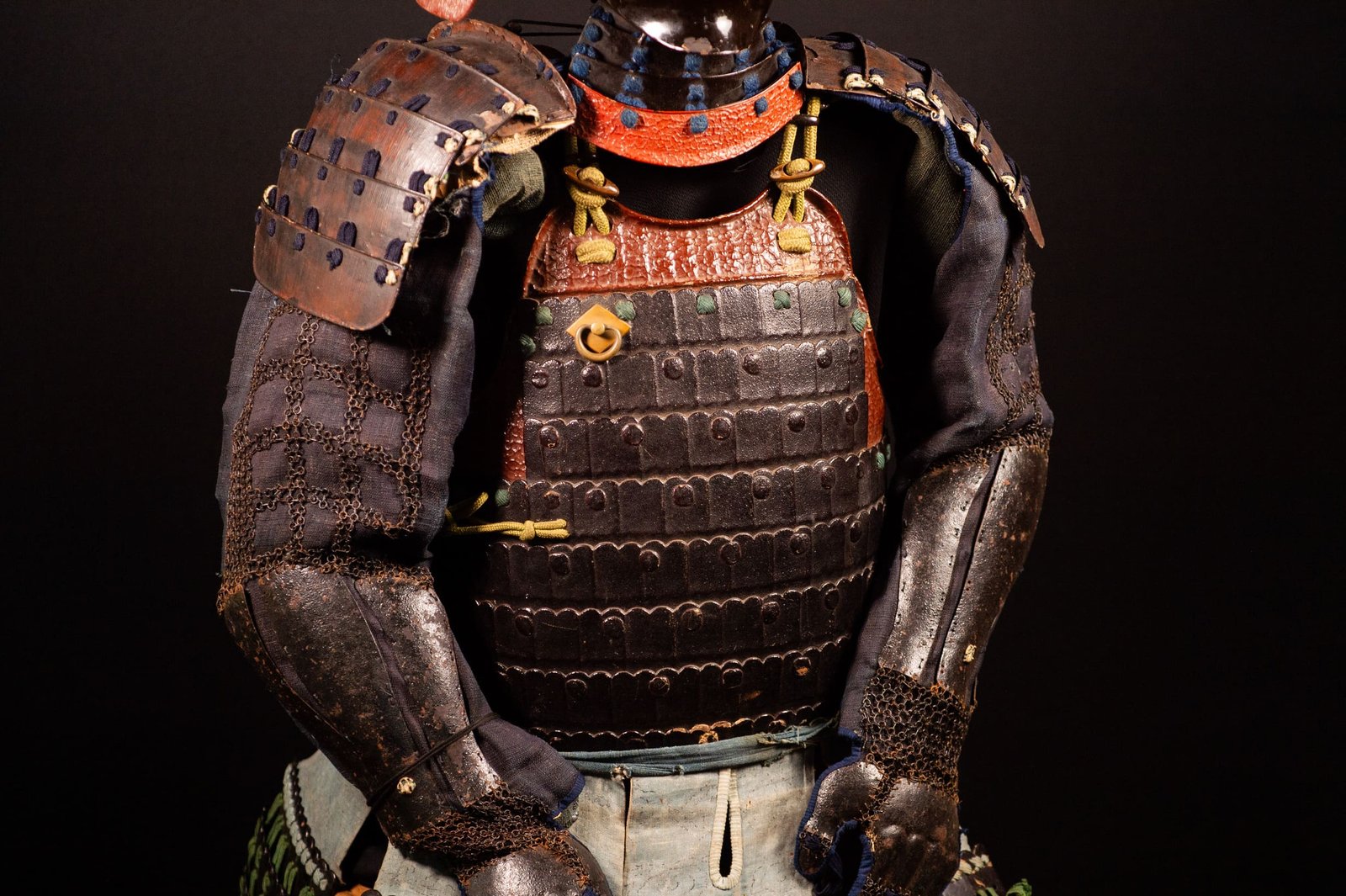
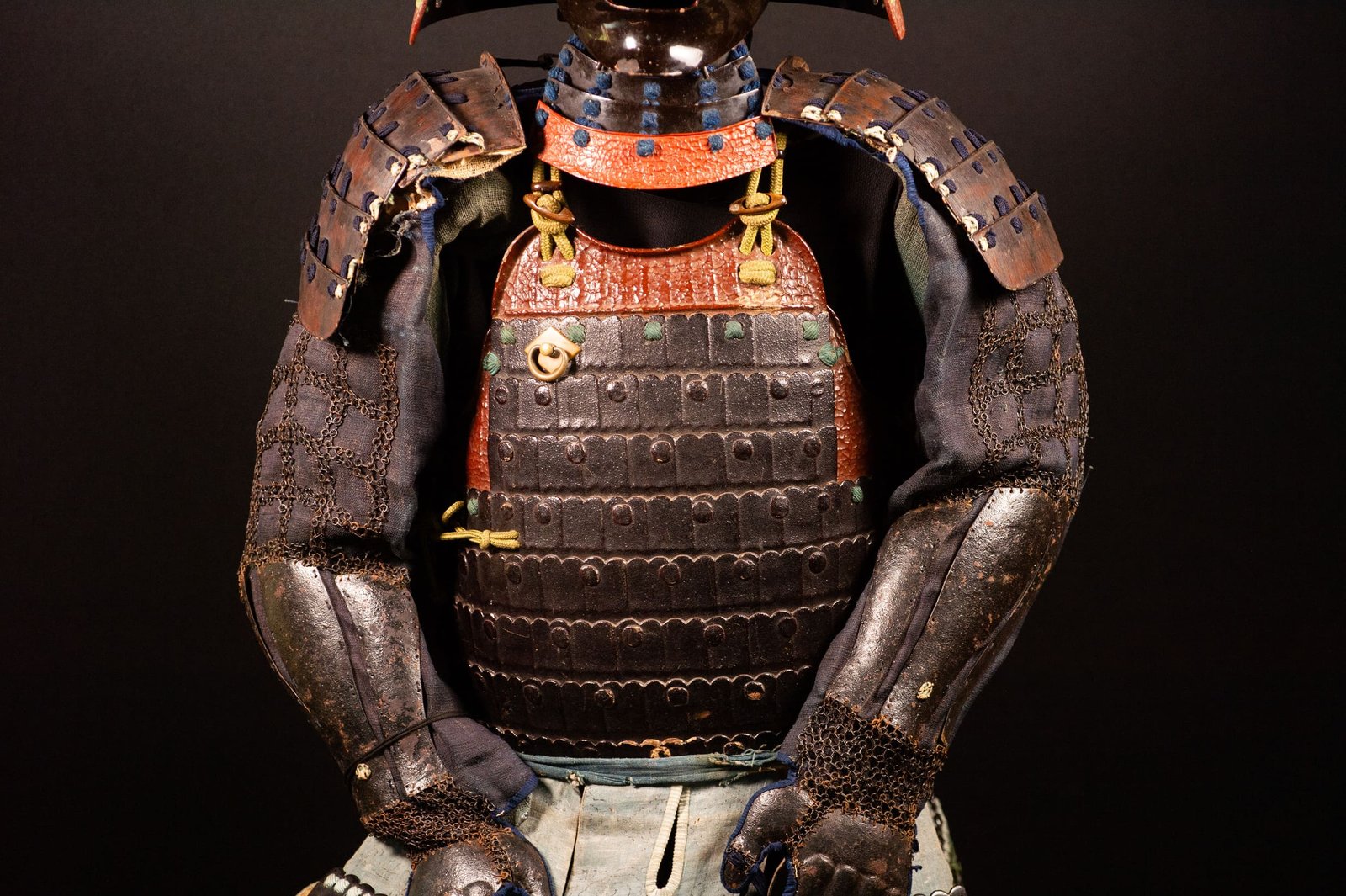
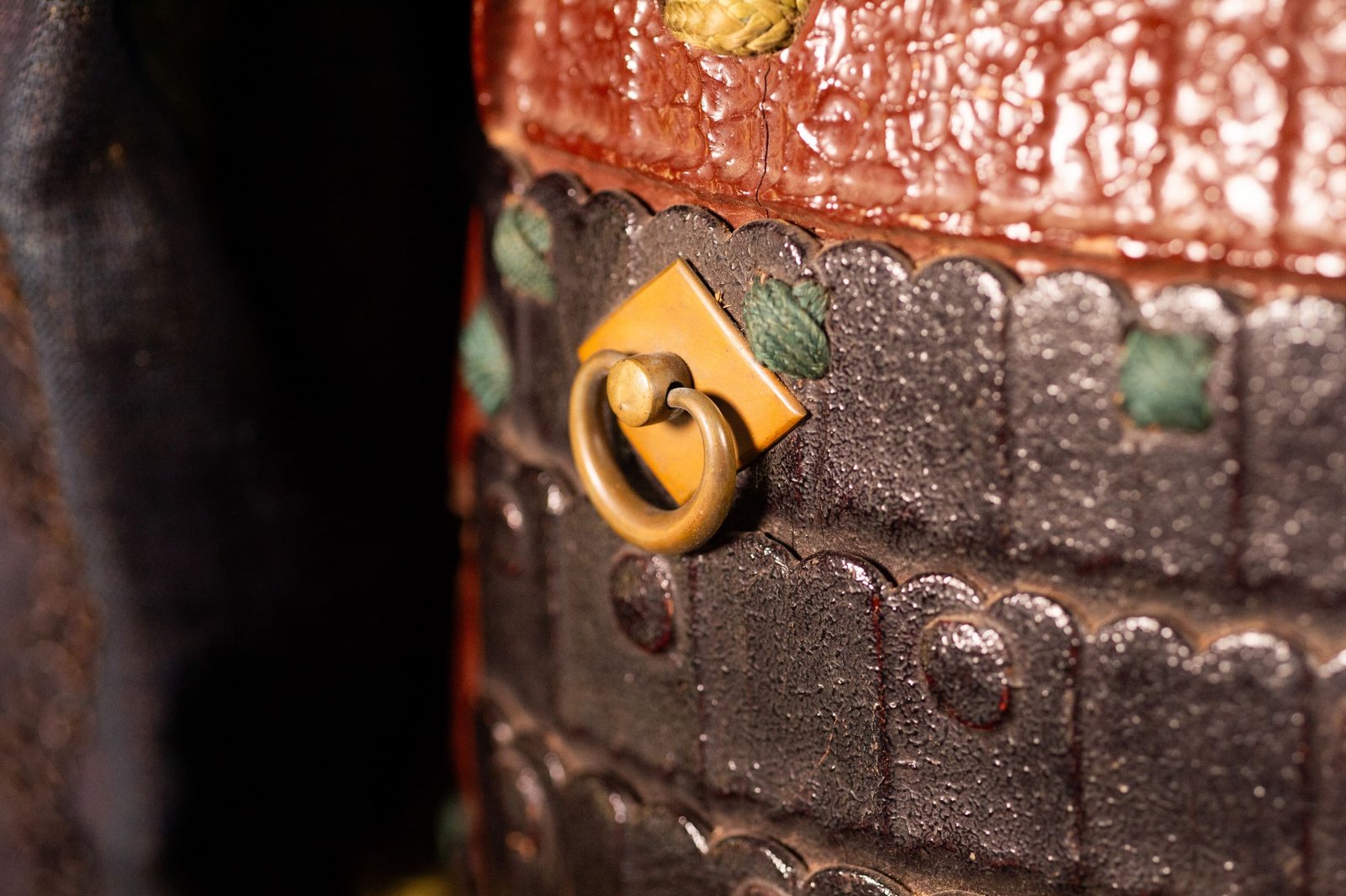
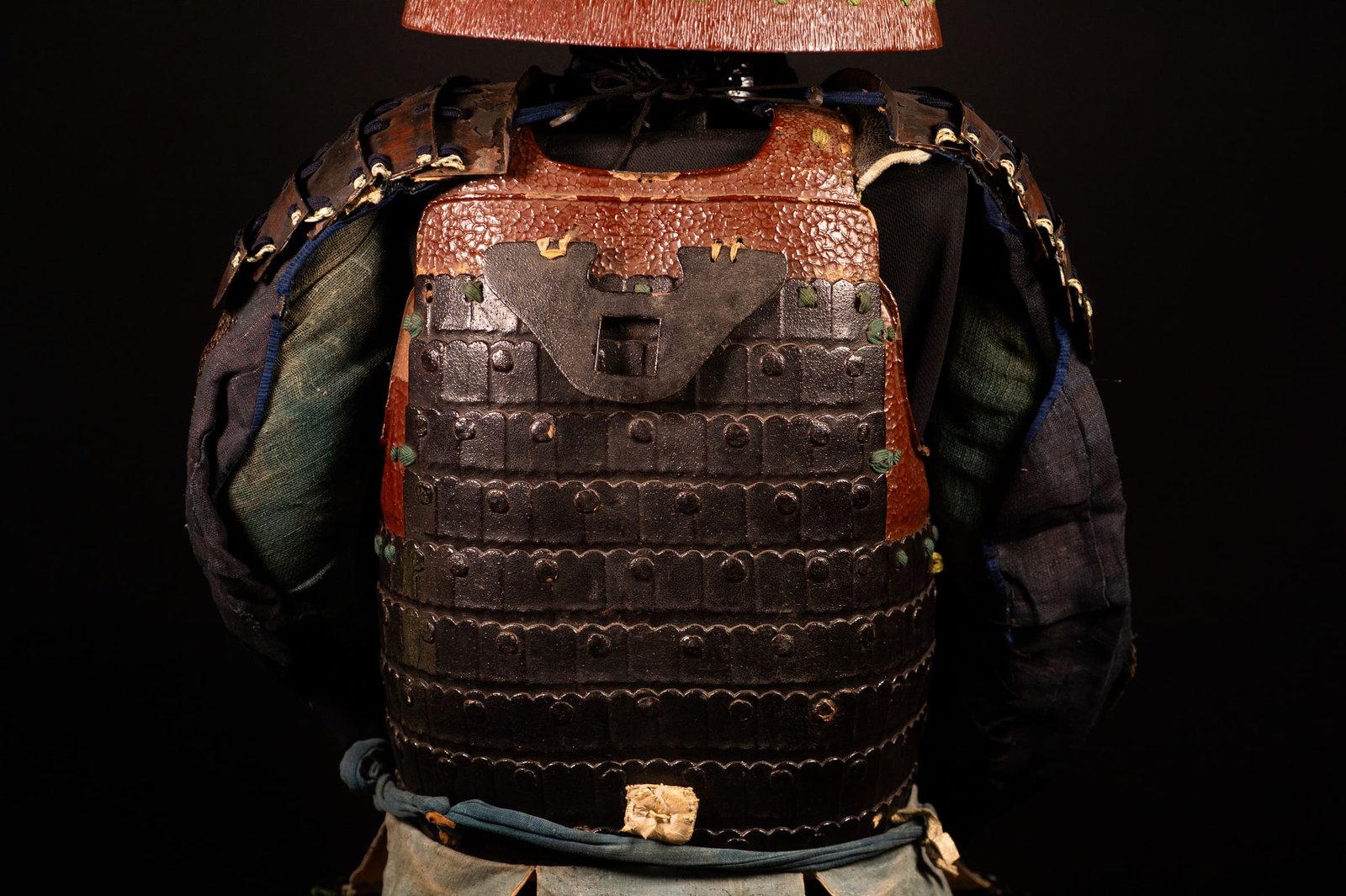
The dō is composed of numerous horizontal rows of black-lacquered iron plates. A substantial amount of the original finish remains, together with the surface irregularities, wear and patina expected from an antique armor that has survived centuries of use and ageing.
The upper section is finished in a reddish-brown lacquer, while areas of green lacing and restrained decorative fittings add subtle color to the otherwise dark and martial palette.
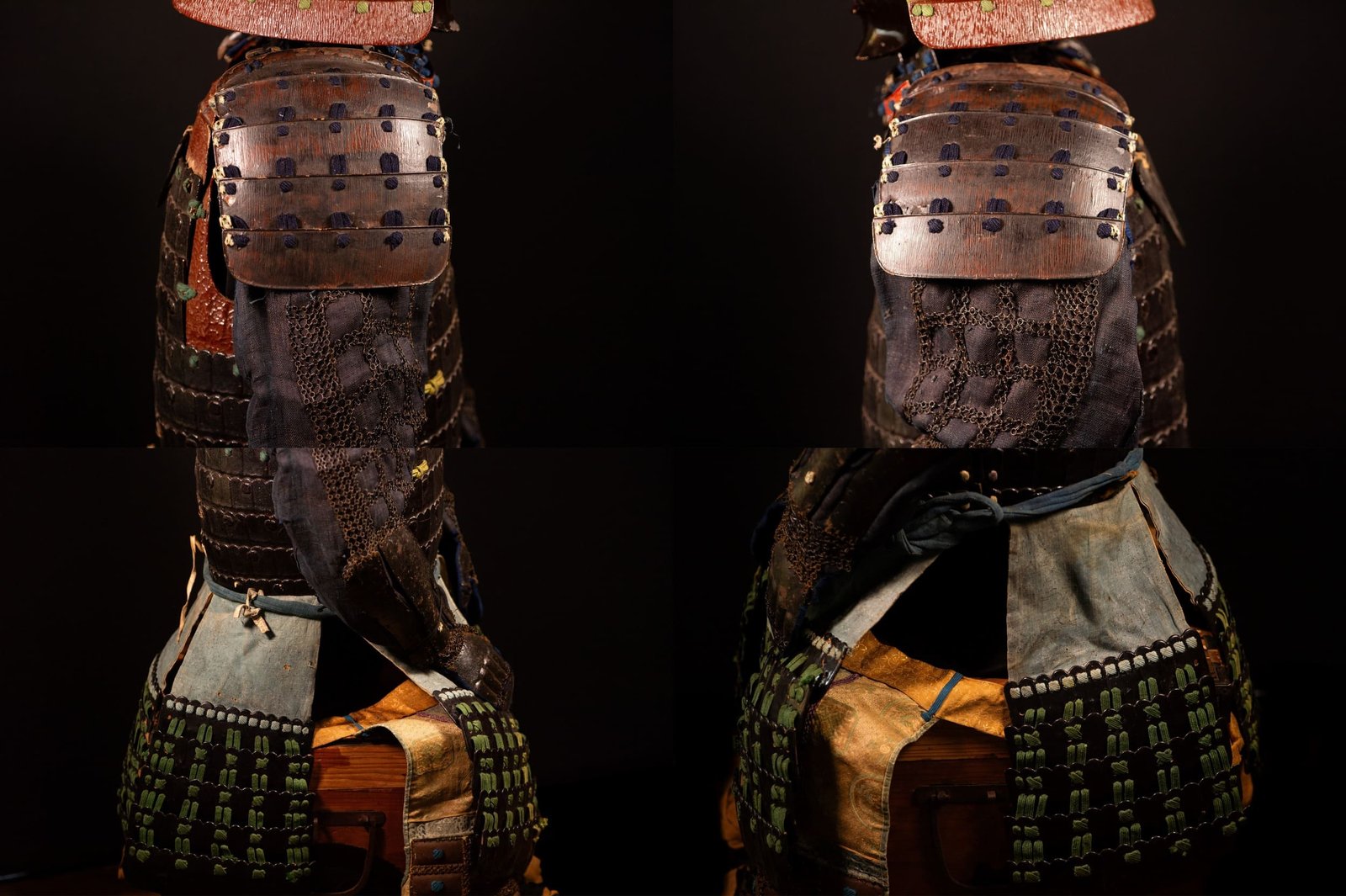
The rear of the cuirass reveals further details of its traditional construction, including the fastening system, textile sections and continuation of the lacquered plate work.
Sode and Arm Protection
The shoulders are protected by substantial laminated sode, constructed from overlapping lacquered plates joined with dark textile lacing.
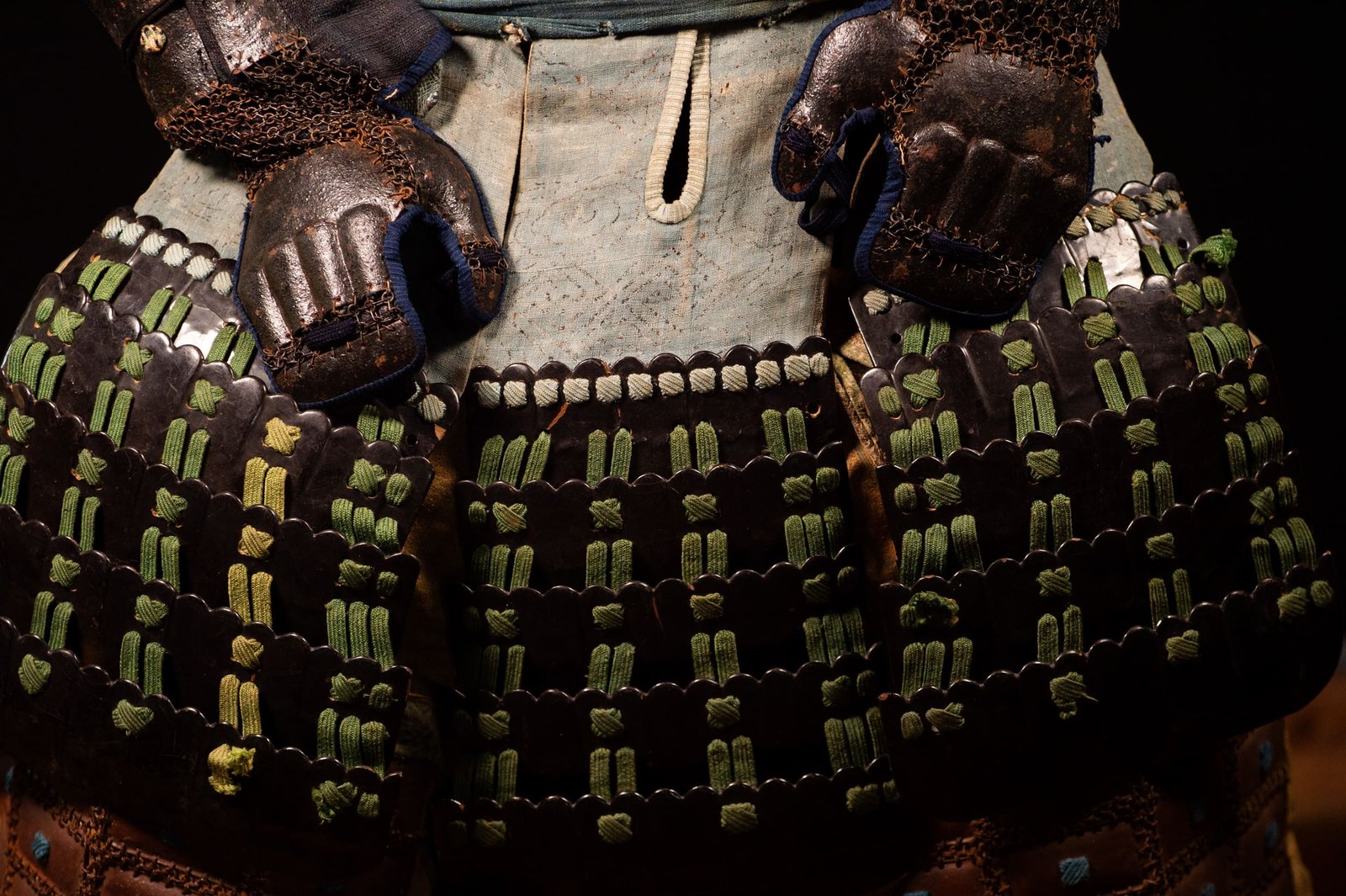
Both arms retain their kote, combining dark textile, fine kusari chain mail and iron splints and plates protecting the forearms and hands.
These components display natural oxidation, rubbing and age-related wear, contributing to the historical character and visual depth of the ensemble.
Lower Armor
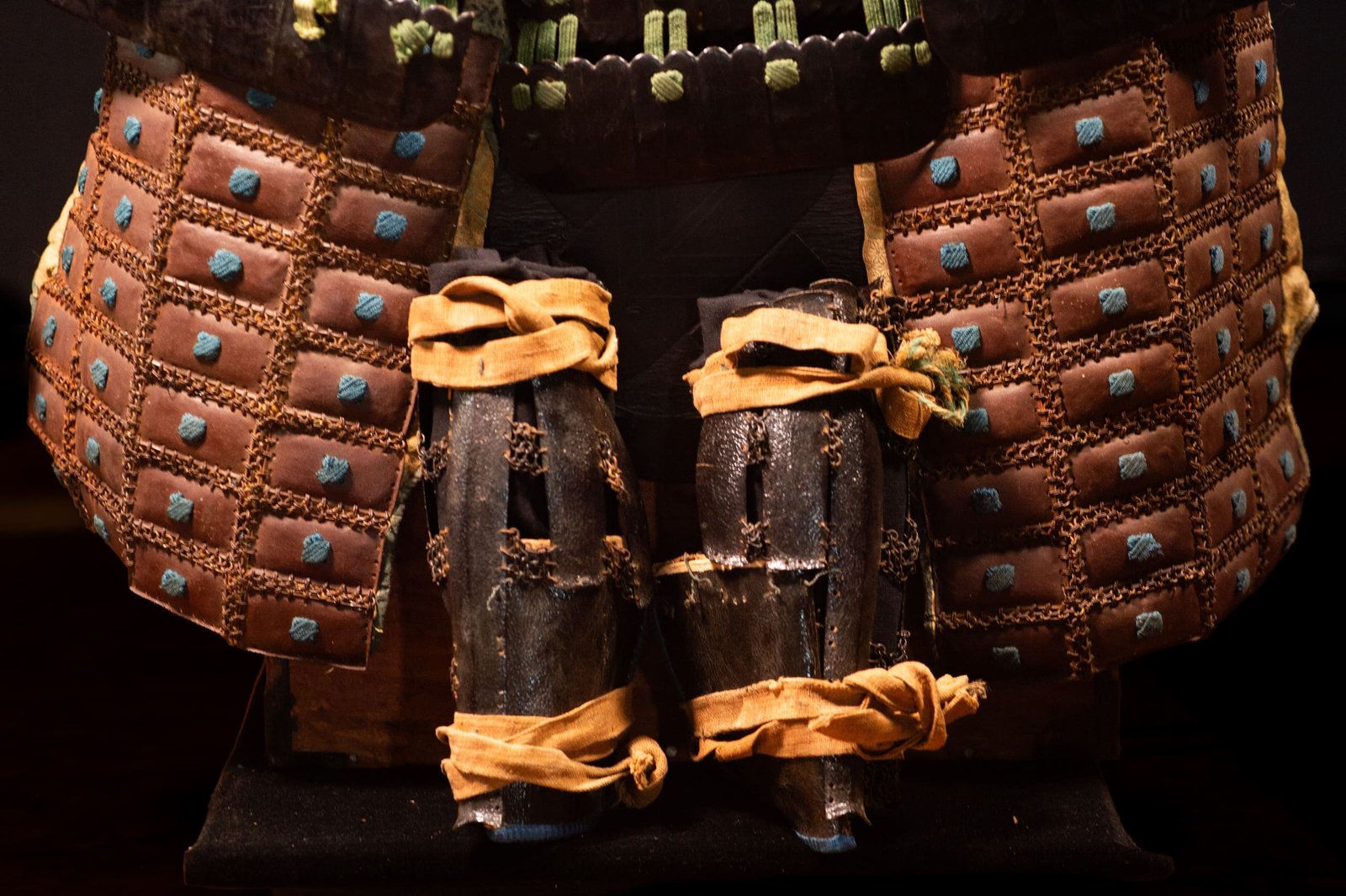
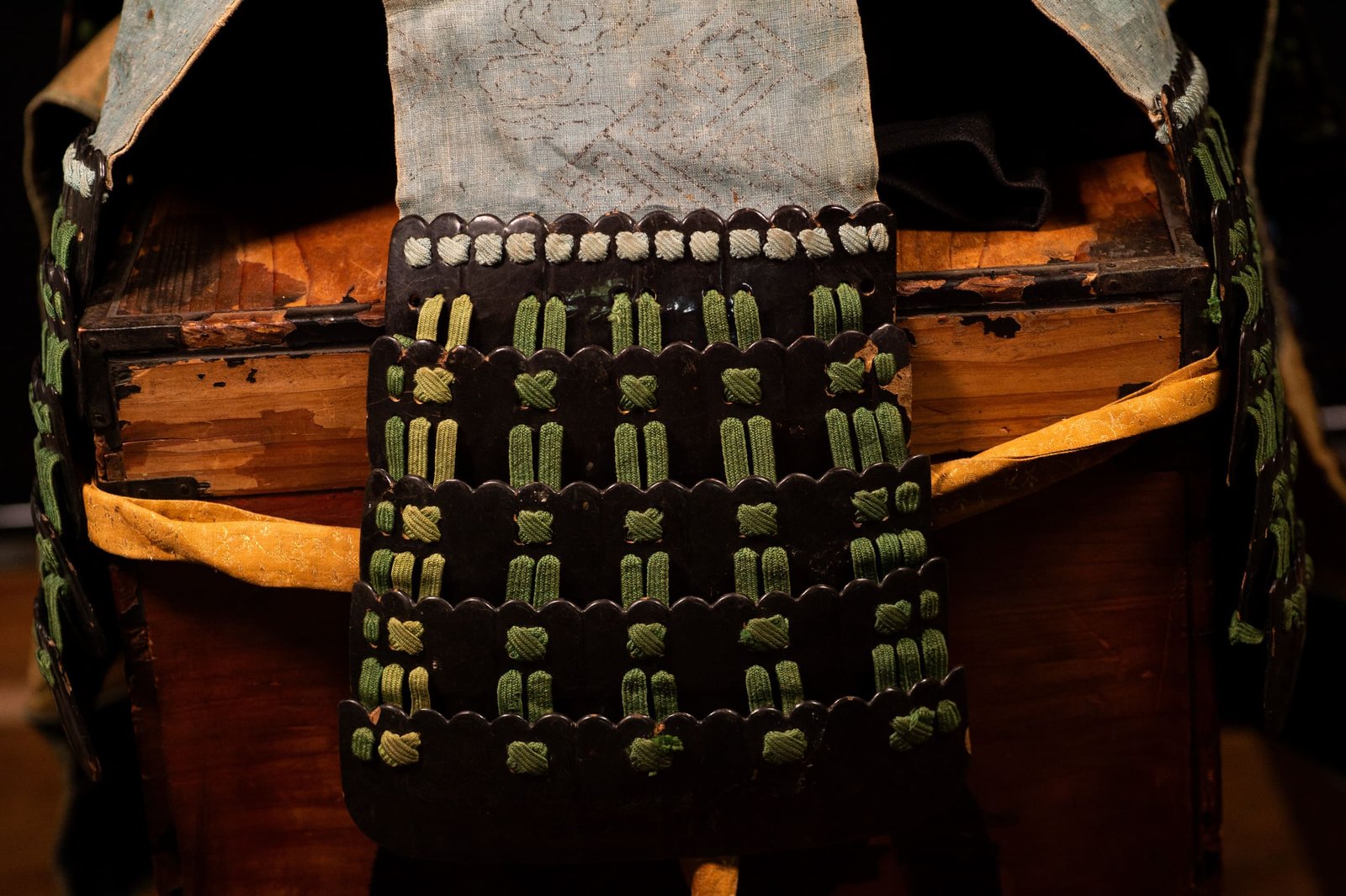
The lower section retains its defensive components with extensive dark lacquered lamellar construction and distinctive green odoshi lacing, complemented by pale blue-grey textile elements.
The restrained combination of black, russet brown, green and blue gives the armor a sober and powerful appearance, avoiding the excessively ornamental character found on many later ceremonial ensembles.
The result is an armor that retains a particularly convincing martial presence when displayed.
Traditional Gusoku Bitsu
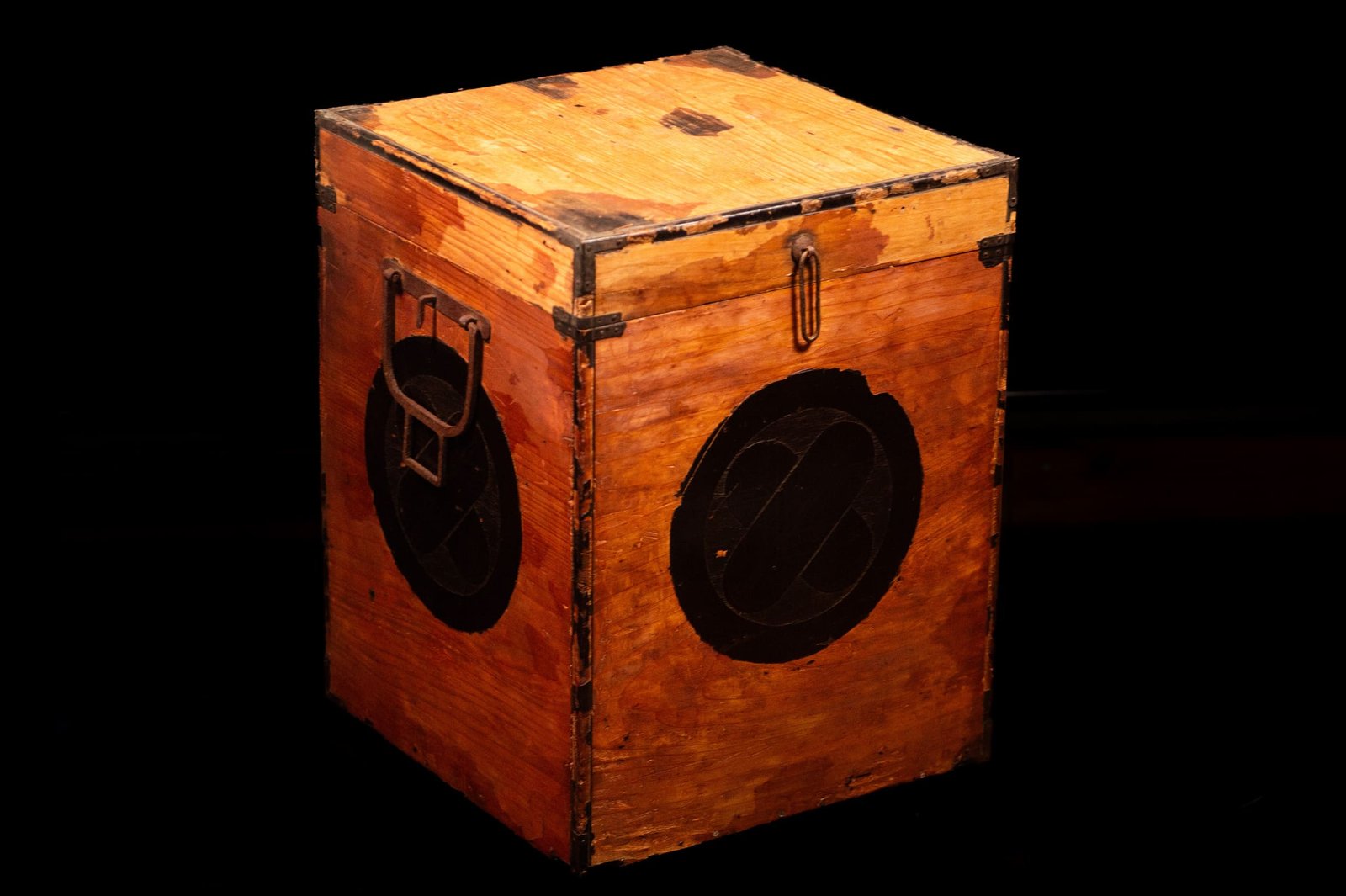
The armor is accompanied by its traditional wooden storage box, or gusoku bitsu.
The box displays extensive age-related patina, surface wear and signs of long use. Far from detracting from the ensemble, these features form an important part of its historical presentation and help preserve the traditional relationship between the armor and the box in which it was stored and transported.
Condition
The armor is preserved in good antique condition considering its age, with expected traces of use and centuries of natural ageing.
There are areas of oxidation, lacquer loss, rubbing, wear to the textiles and lacing, small losses, and old repairs or alterations consistent with a historical Japanese armor.
These signs of age have deliberately not been disguised. They form part of the history and character of the piece and provide visible evidence of its long life.
As with all antique Japanese armor, the ensemble should be handled with appropriate care, particularly around the original textile, lacing, lacquered surfaces and iron components.
Materials and Construction
- Object: Japanese samurai armor
- Type: Tōsei gusoku
- Period: Edo period (1603–1868)
- Origin: Japan
- Kabuto: Iron with textured dark lacquer finish
- Maedate: Large gilt-toned torii motif
- Face protection: Black-lacquered hanpō
- Throat protection: Laminated yodarekake
- Cuirass: Lacquered iron plate construction
- Shoulder protection: Laminated sode
- Arm protection: Kote with kusari chain mail and iron plates
- Lacing: Green, dark blue and dark textile odoshi
- Storage: Traditional wooden gusoku bitsu
- Condition: Antique condition with age-related wear, oxidation, lacquer losses and historical repairs
Collector’s Value
This armor should be appreciated not simply as a decorative object, but as a complex assemblage of traditional Japanese craftsmanship combining lacquer work, ironworking, chain mail, textile construction and specialized armor-making techniques.
The imposing torii maedate, surviving lacquer surfaces, strong original patina and unusually complete visual presentation make the ensemble especially attractive for a serious collection of Japanese arms and armor.
Displayed on a traditional armor stand, its scale, silhouette and contrasting materials create an exceptional presence, making it suitable both as a historically significant collectible and as a commanding centerpiece.
A powerful Edo-period Japanese samurai armor with an unmistakable torii maedate, preserving the visual presence, craftsmanship and character associated with an authentic antique gusoku.