Complete Japanese Samurai Armor Gusoku
Edo Period · Colourful Lacquered-Iron Gusoku with Moegi Green Lacing
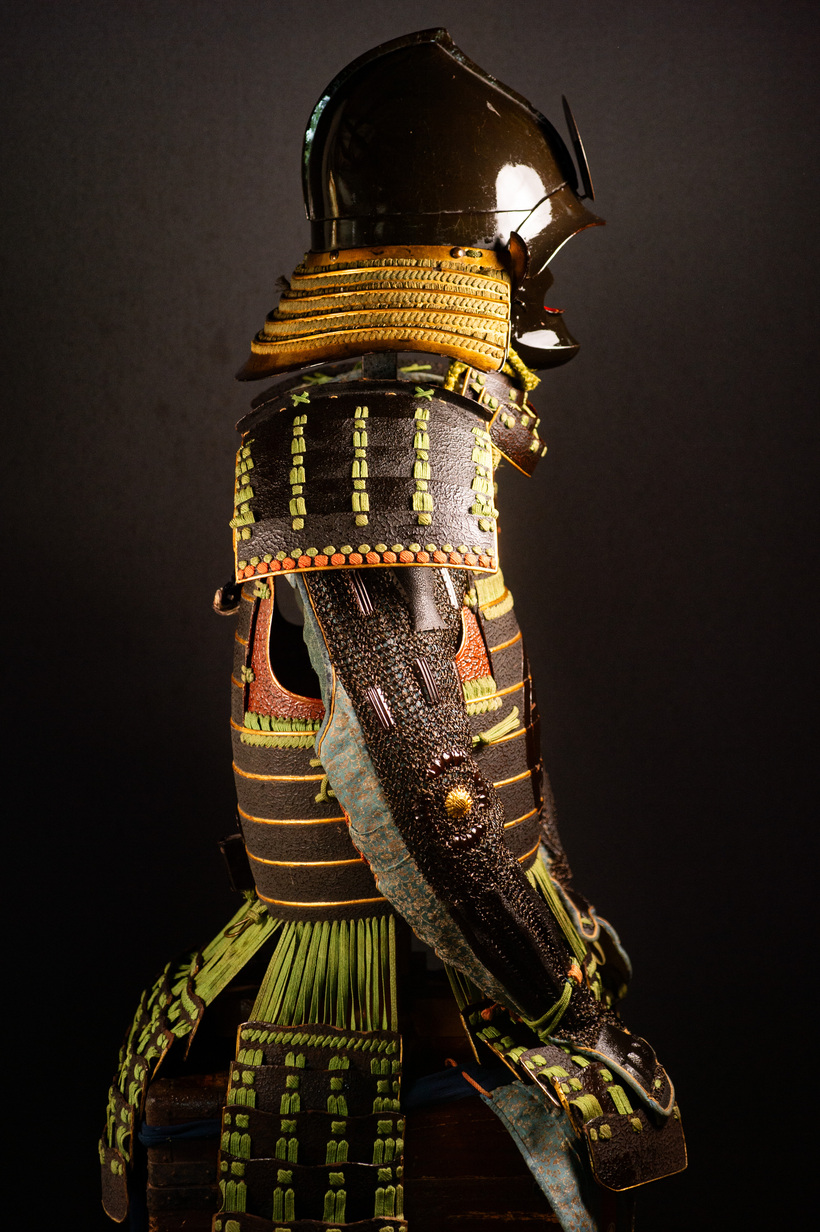
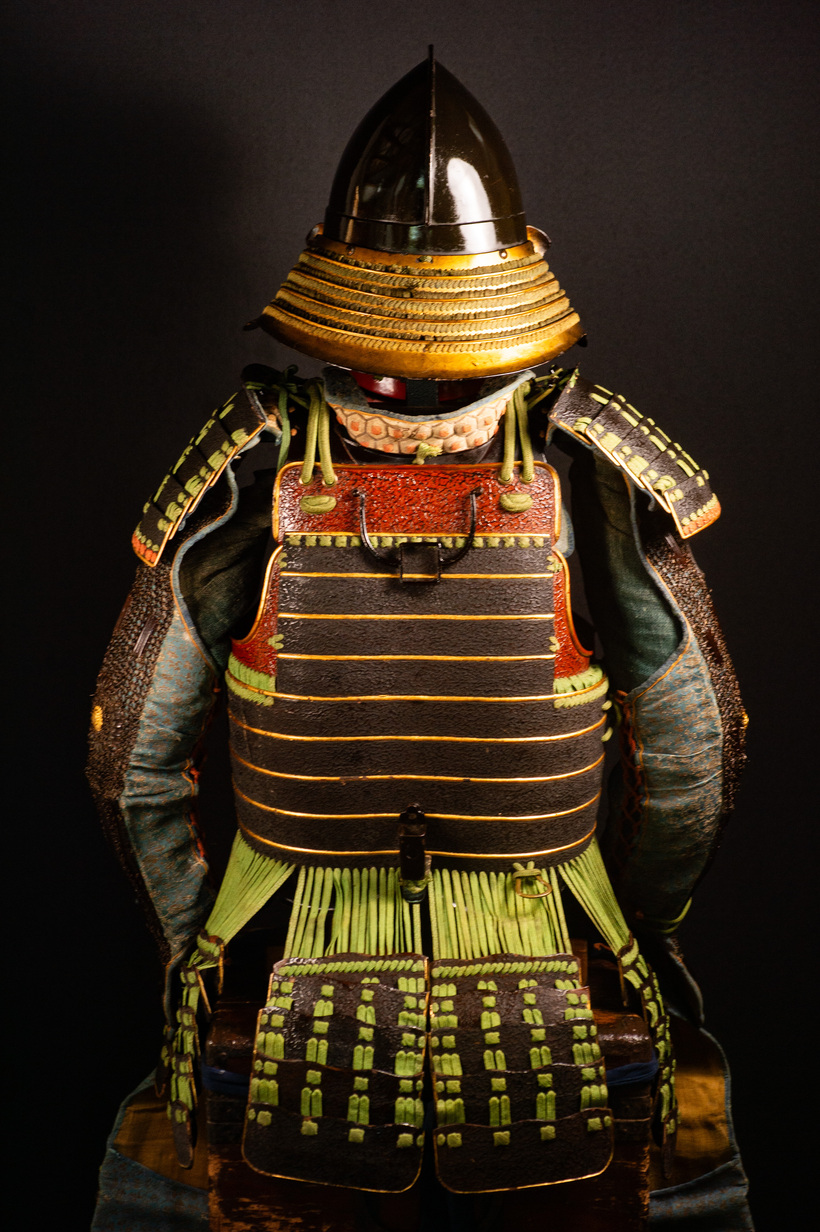
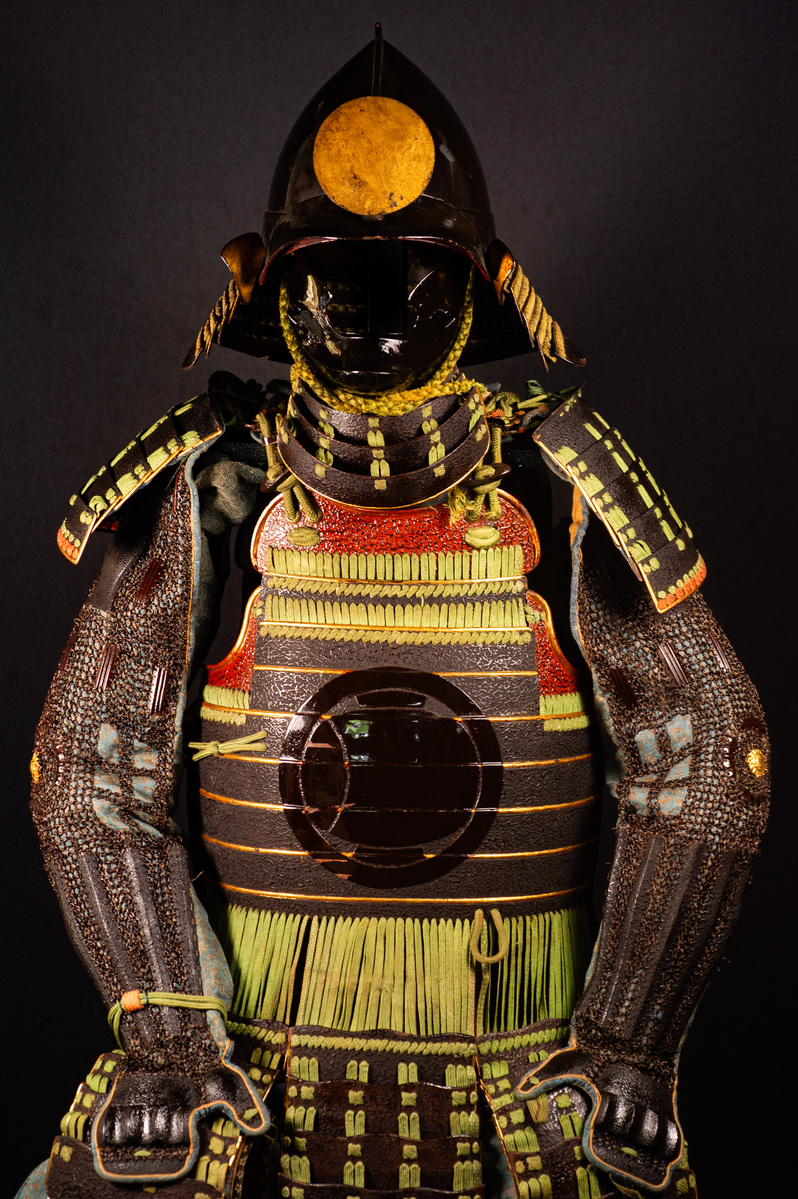
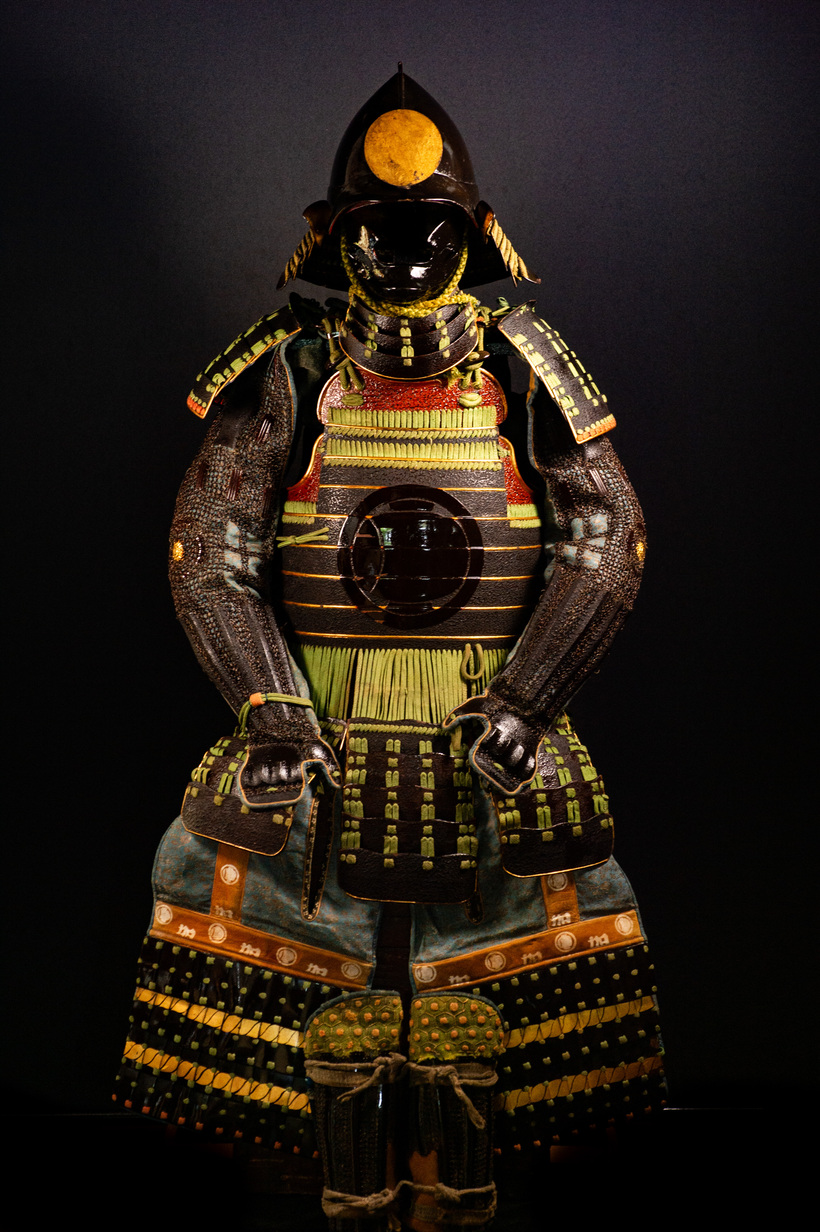
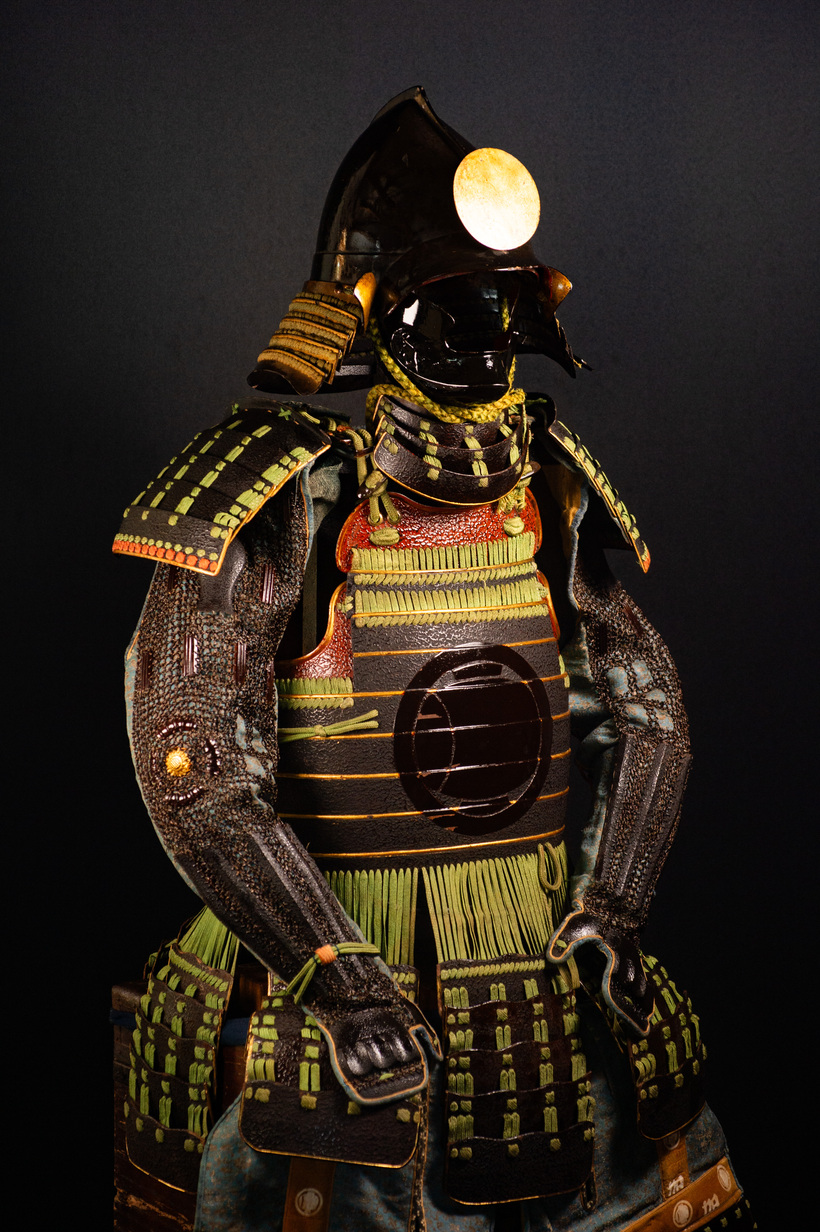
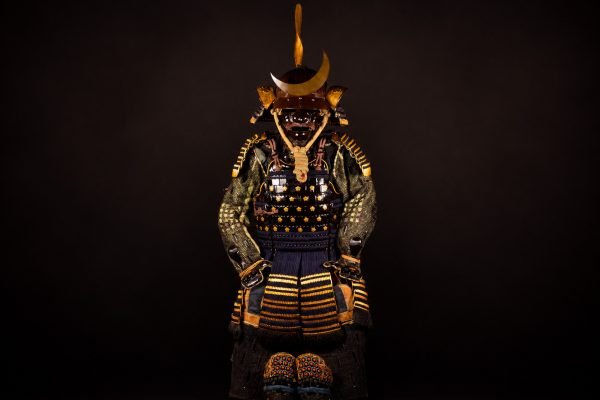
An exceptionally colourful and complete Japanese samurai armor, or gusoku, dating to the Edo period. Built with striking visual presence, this ensemble combines russet and black lacquered iron, vivid vermilion details, rich gilt accents and fresh moegi green lacing, creating a powerful parade-grade armor intended for display, ceremony and impact.
This complete gusoku presents a highly decorative and harmonious appearance, with its green lacing, red lacquer, gold detailing and blue ornamental accents working together to create a festive and commanding visual effect. It is a particularly attractive example for collectors seeking a full Japanese armor with strong display value.
The Cuirass (Dō)
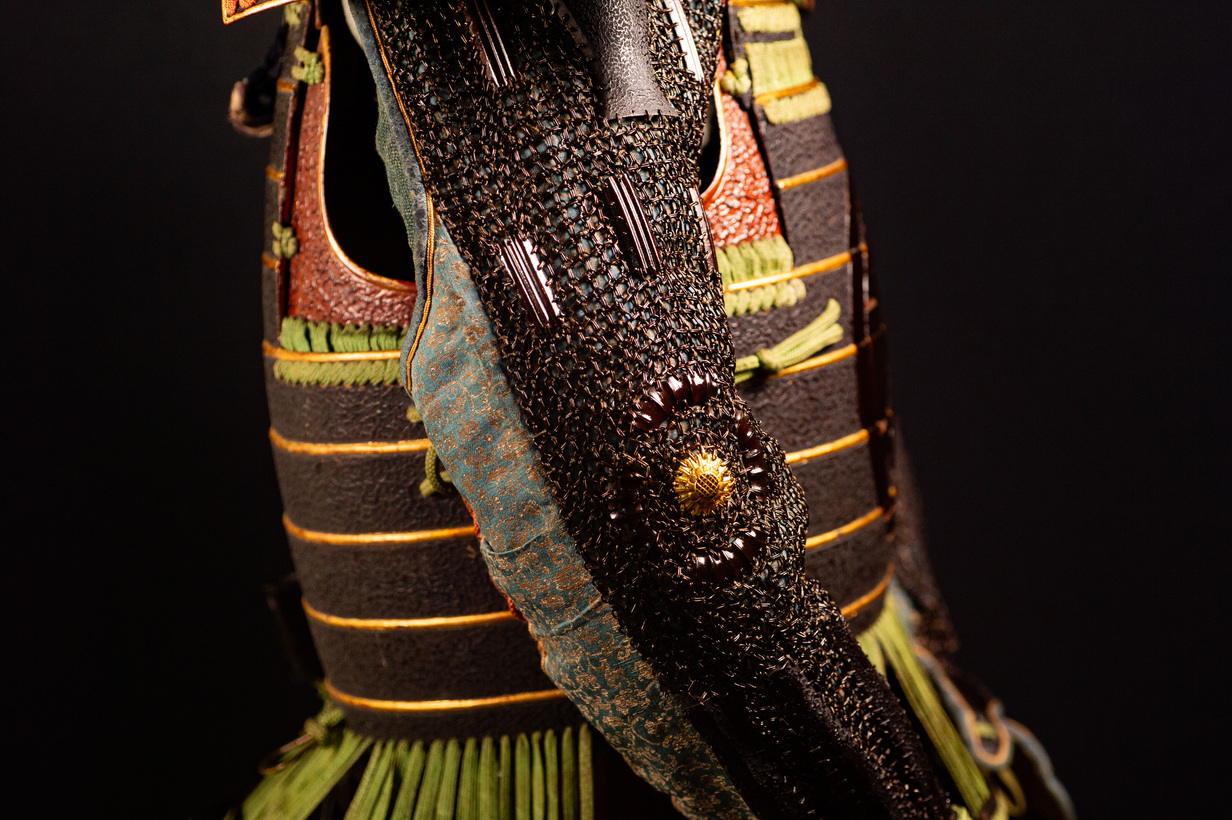
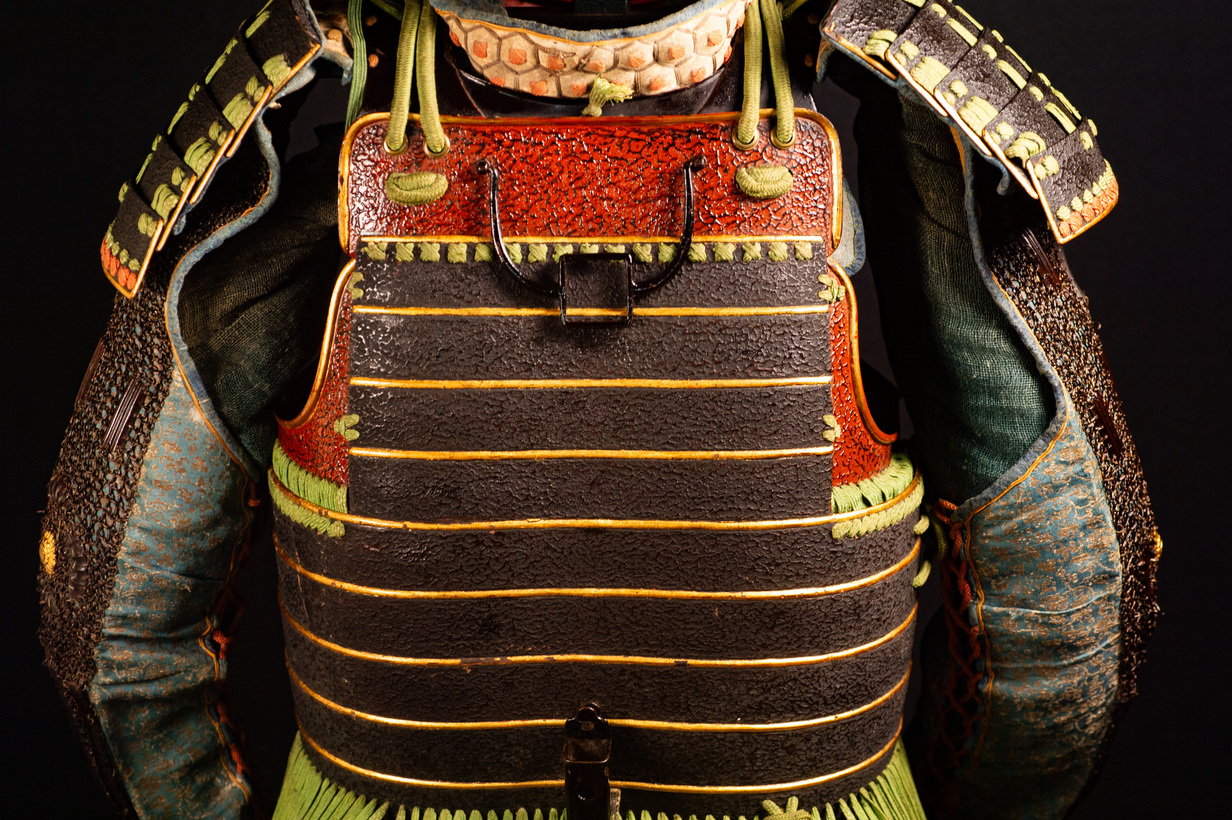
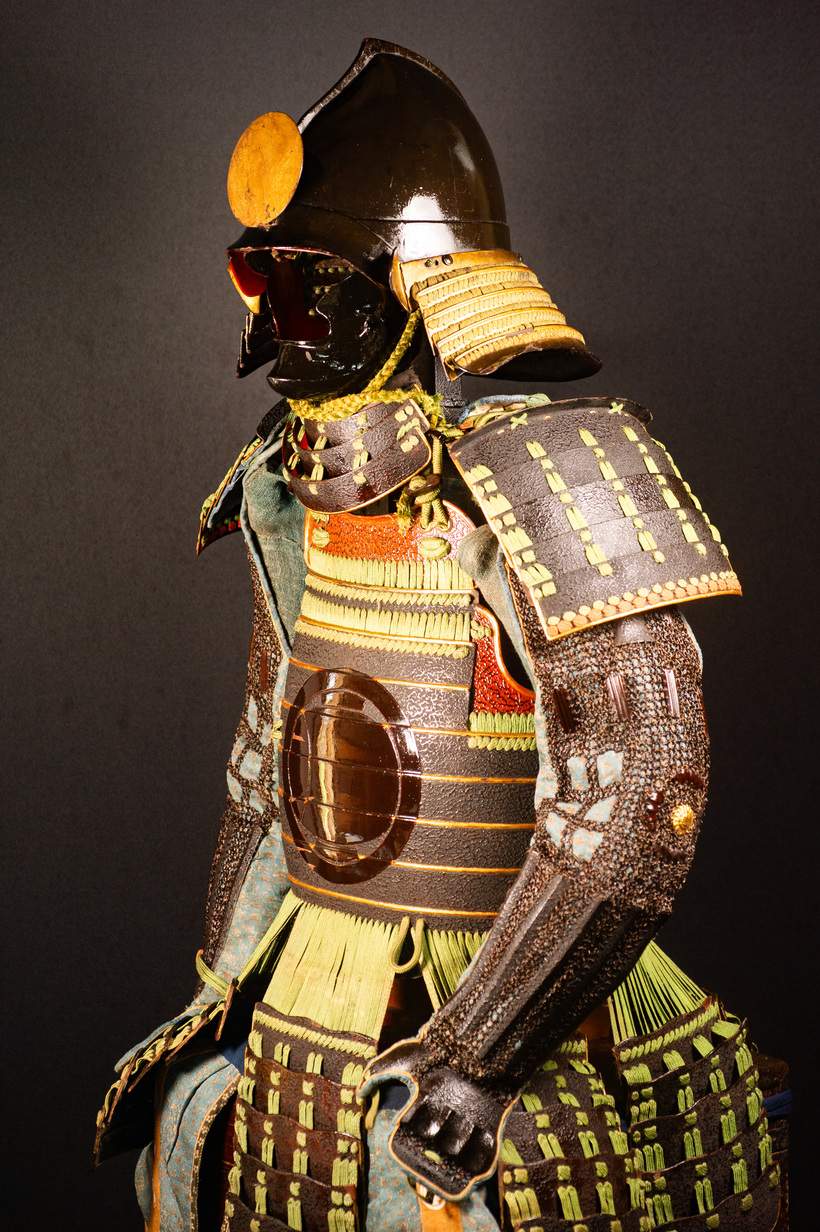
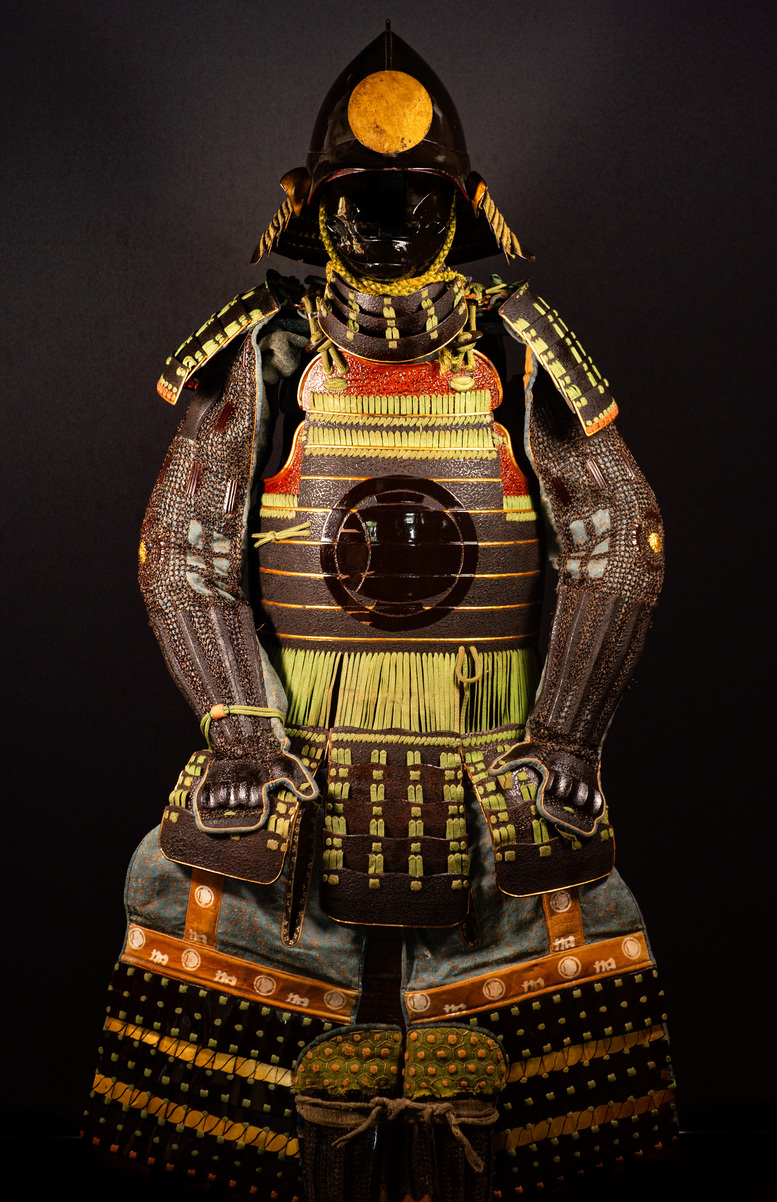
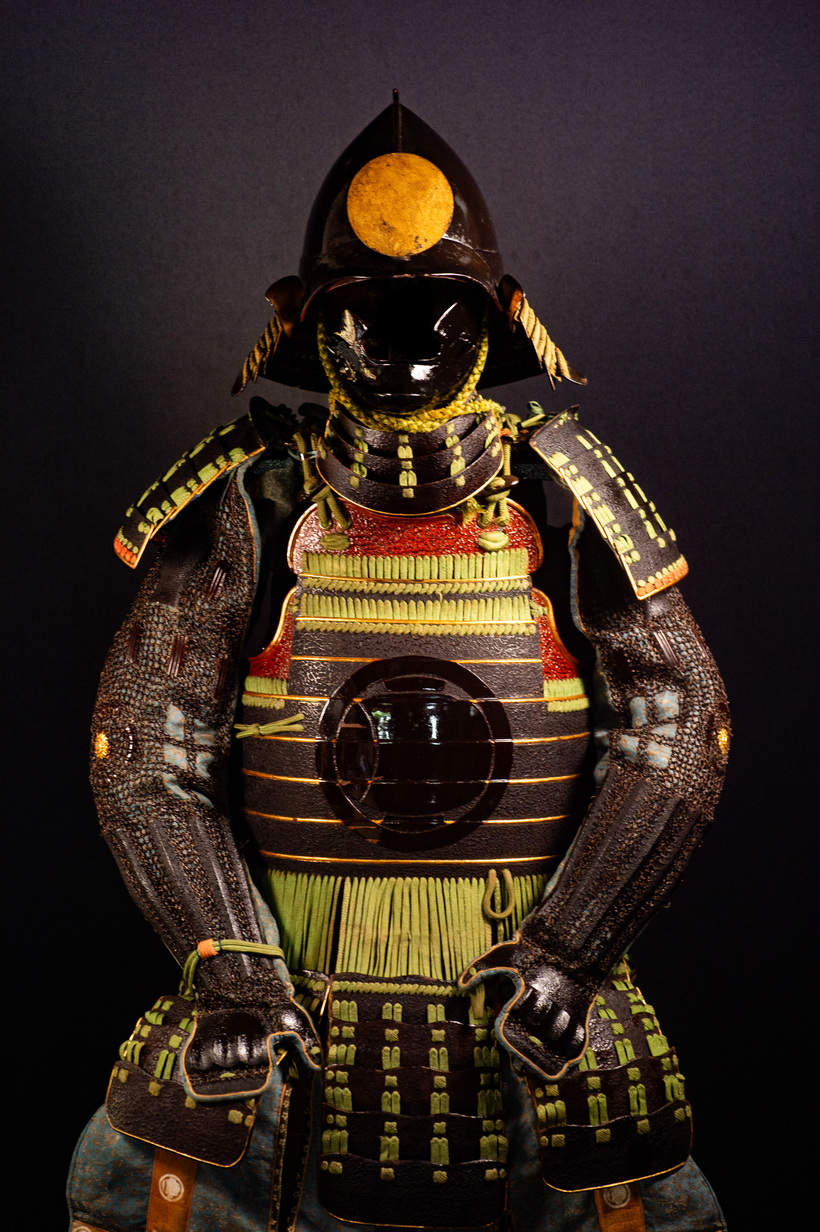
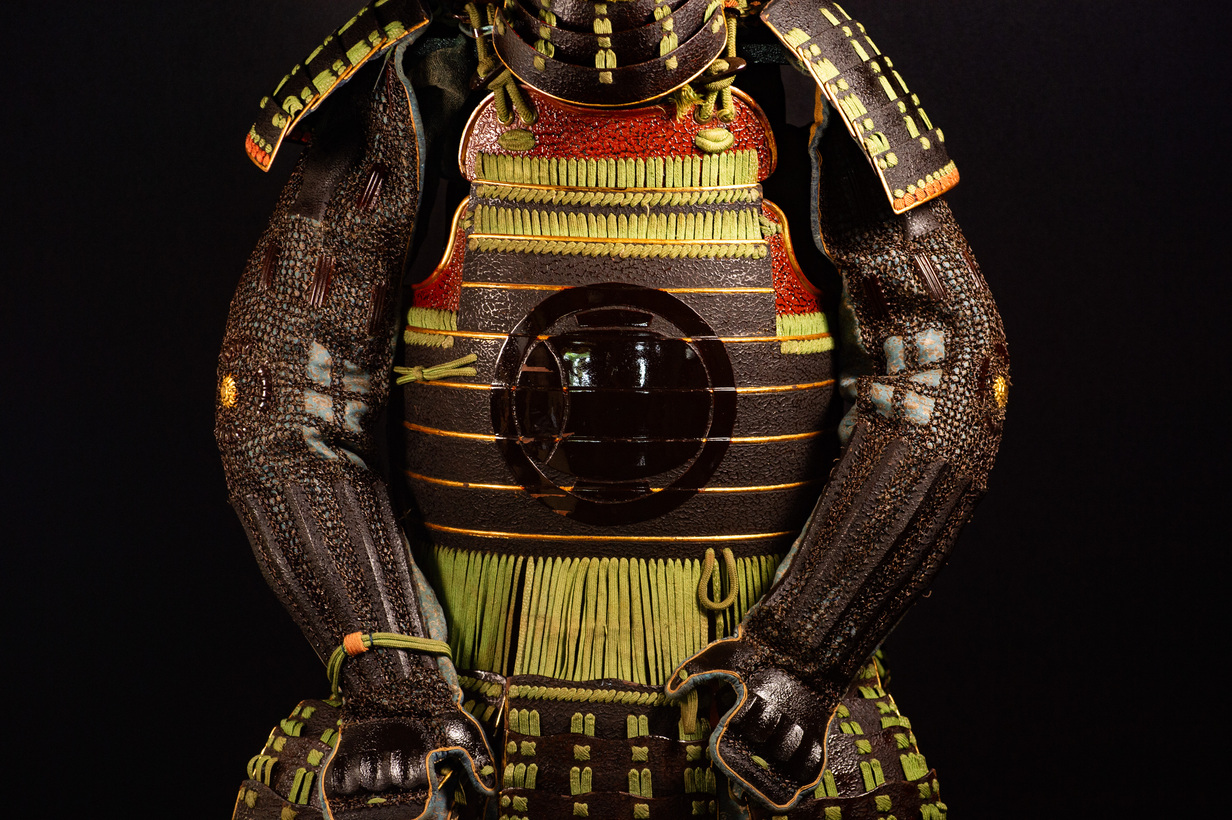
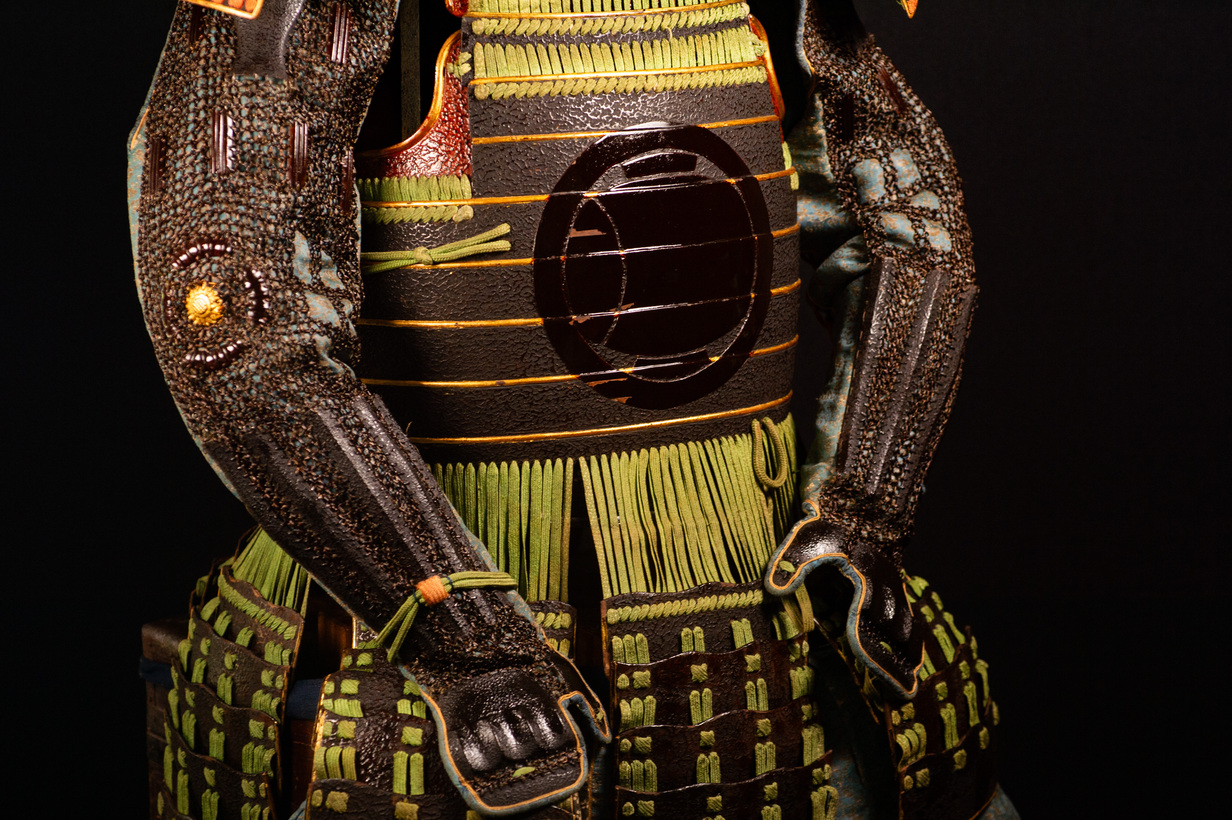
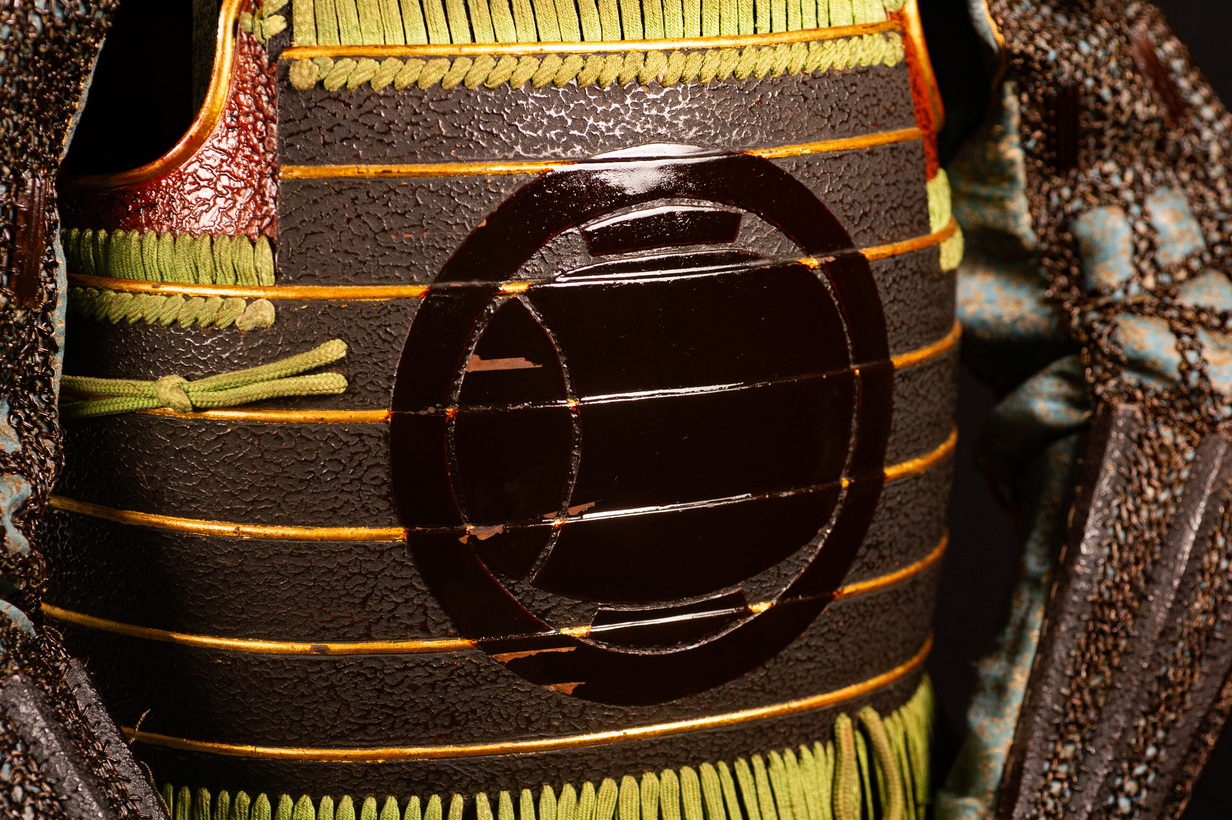
The body armor is formed as a multi-lame dō made of lacquered iron plates, finished in a dark russet and black lacquer surface. The body displays a textured ishime ground, imitating a stone-like surface, with fine gold lines, or kin-suji, carefully ruled between the individual lames.
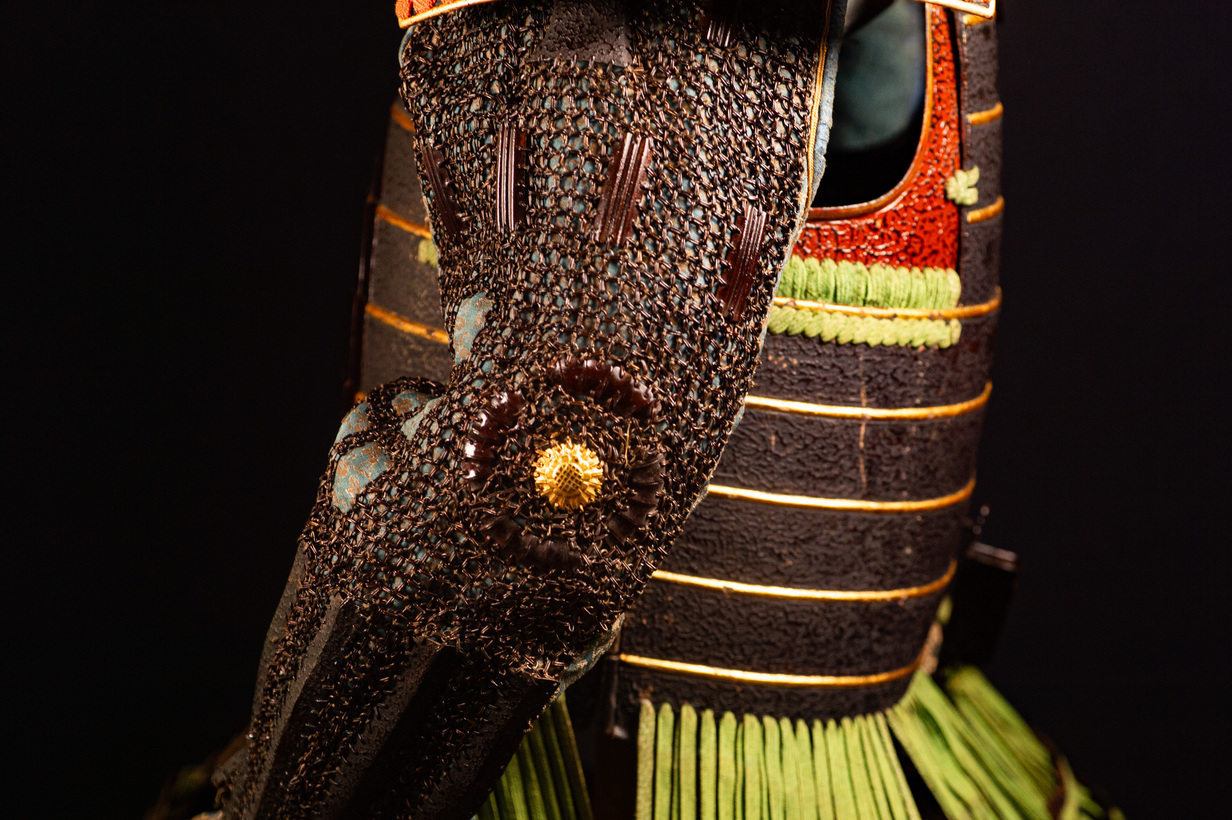
The upper chest is lacquered in a deep vermilion red aka-urushi, also finished with a granulated texture that contrasts beautifully with the darker body plates below. Broad bands of vivid green moegi-odoshi lacing frame the chest and give the armor its distinctive colour harmony.
At the centre of the front sits a bold lacquered circular roundel, creating a strong focal point. Below the cuirass descends a fringed green skirt, framed by gilt edging and reinforcing the ceremonial richness of the ensemble.
The overall impression of the dō is one of strong contrast, colour and authority — a commanding front designed to impress.
Helmet and Face Protection (Kabuto & Menpō)
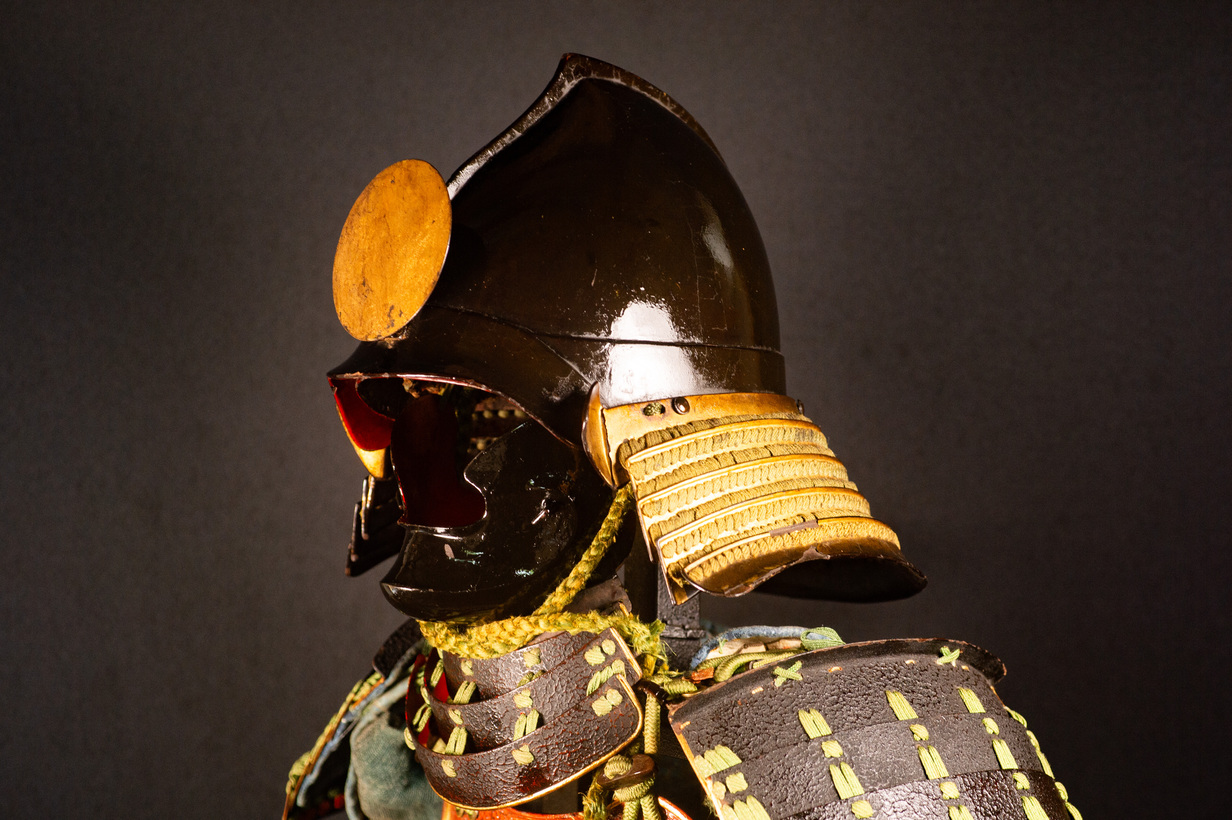
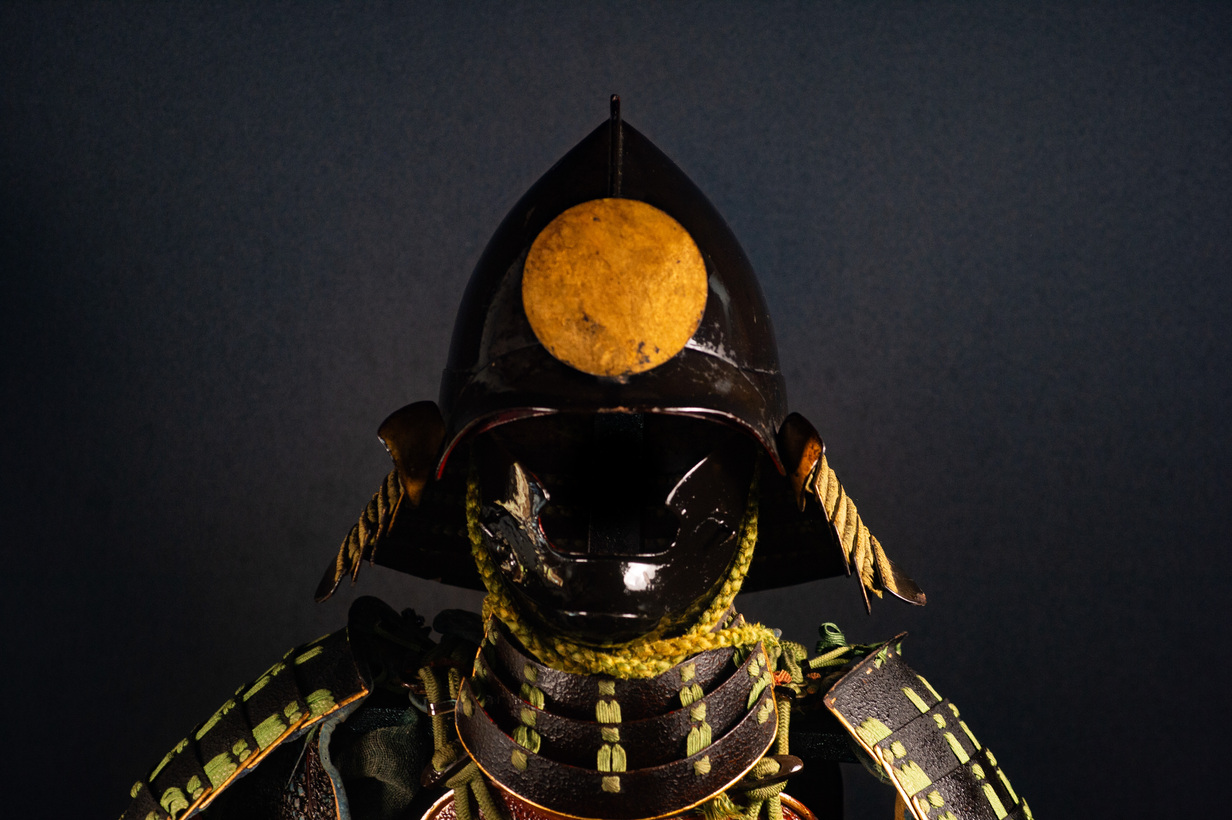
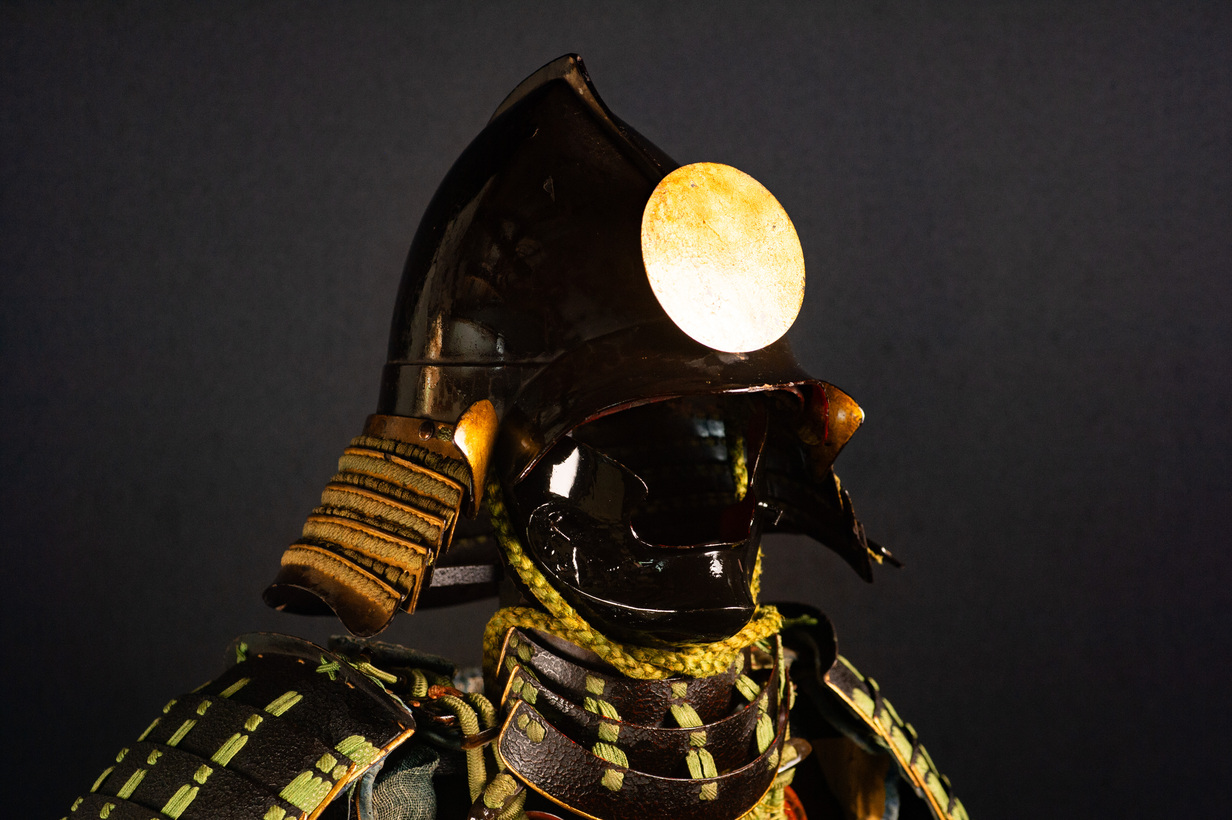
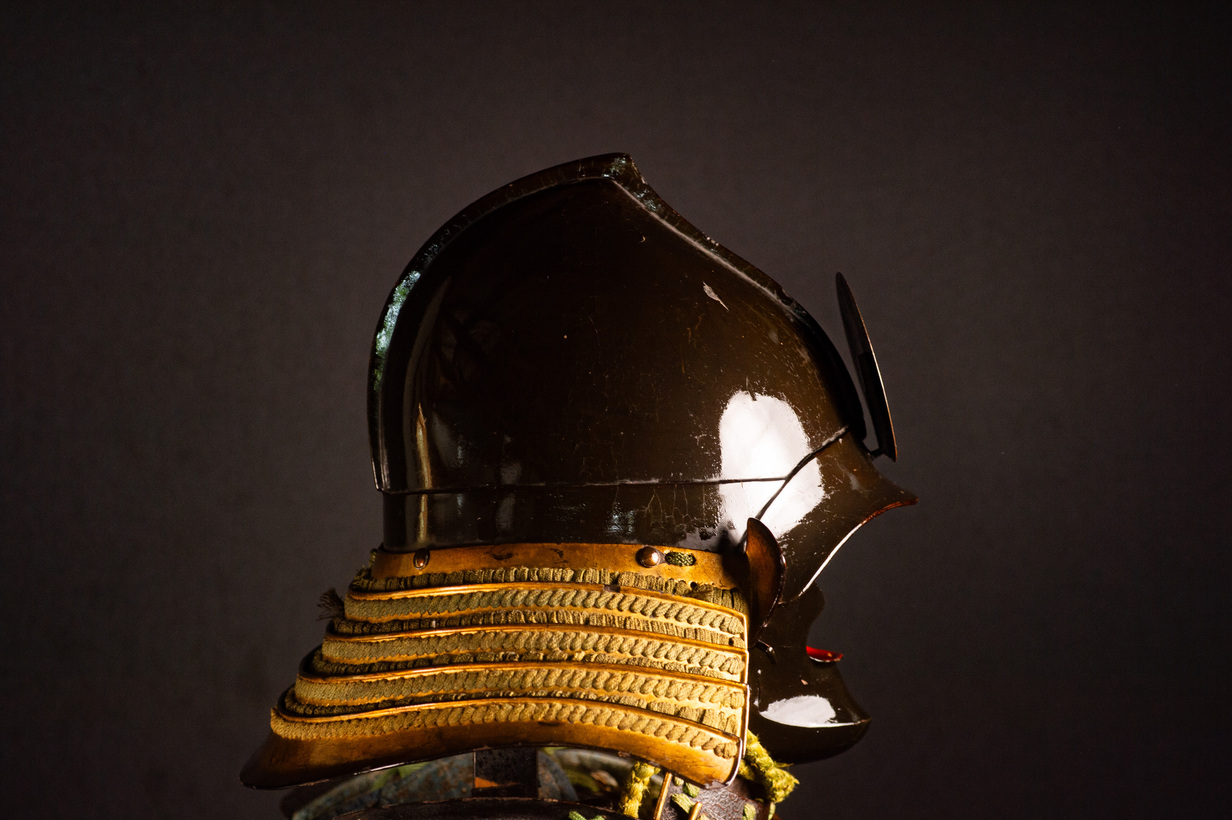
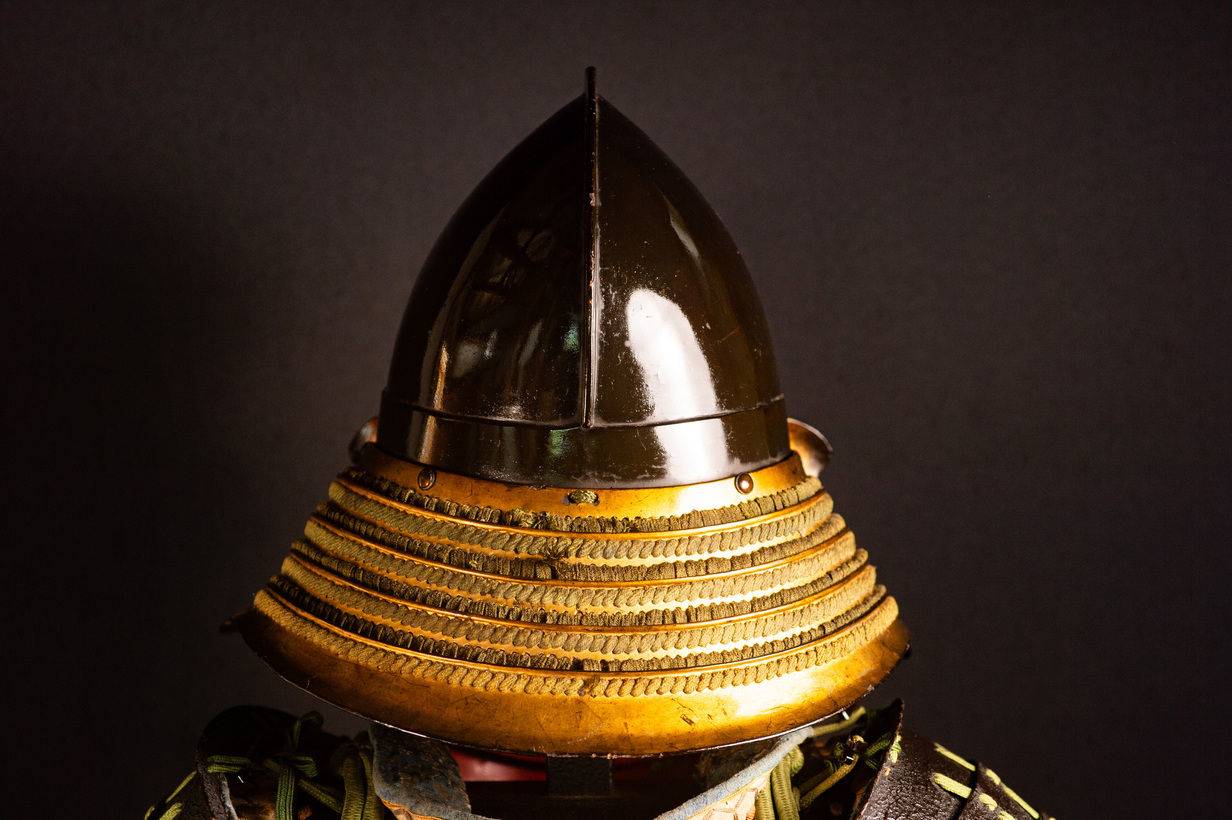
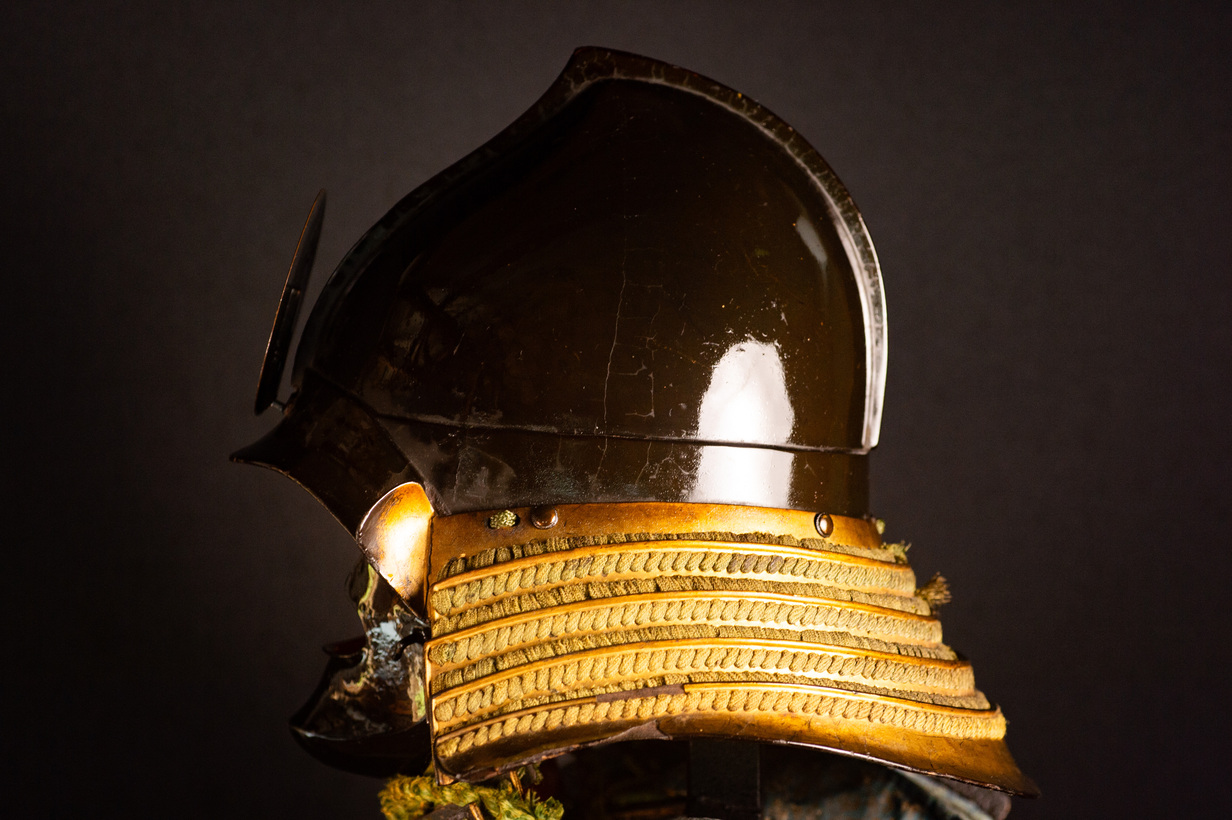
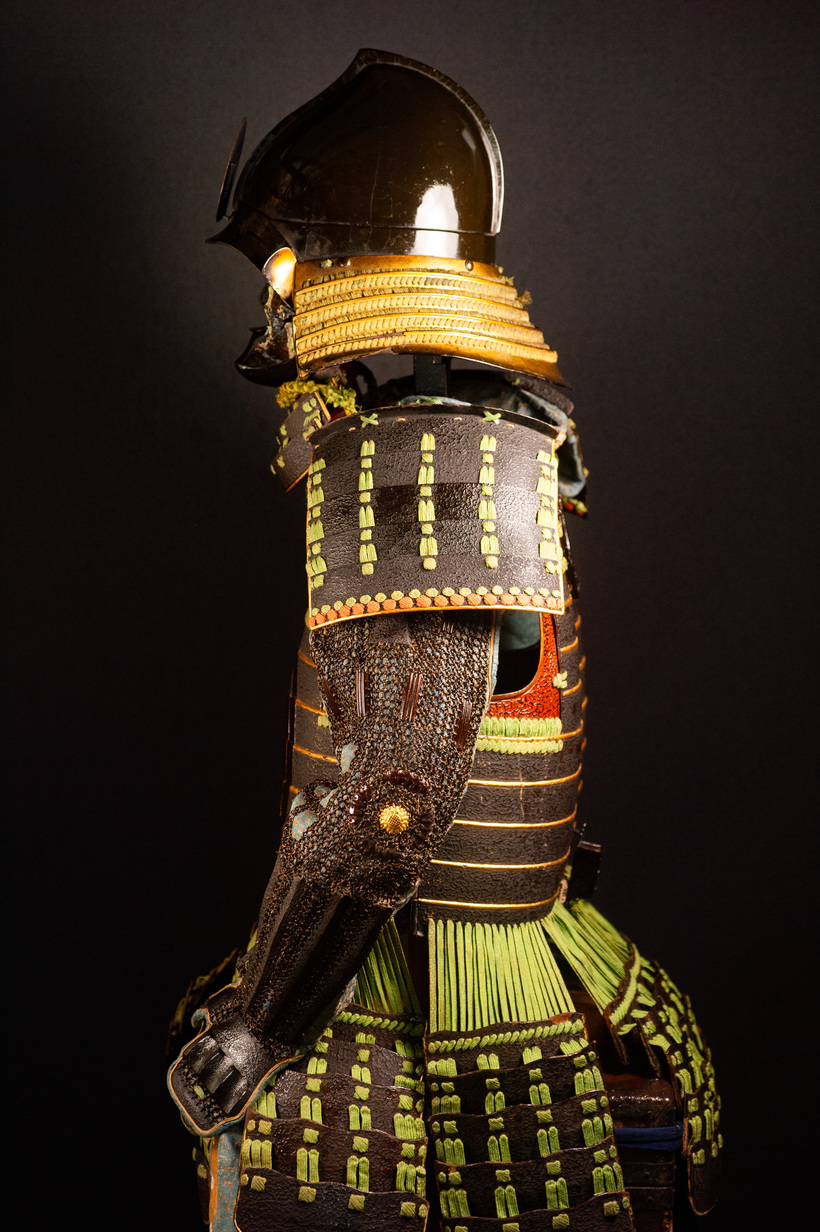
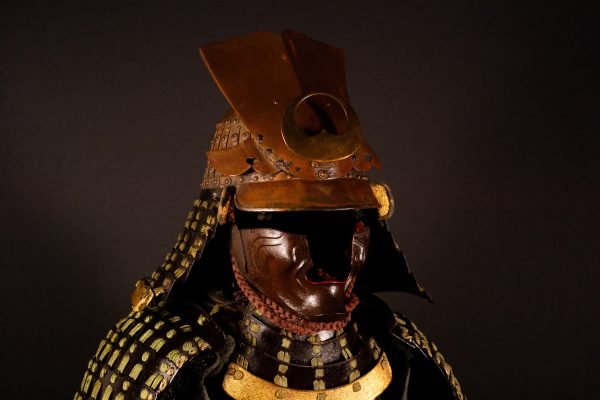
The armor is topped by a tall, smooth-bowled black-lacquered kabuto of pointed toppai or shiinomi form. Its elegant vertical profile gives the helmet a dignified and imposing silhouette, characteristic of armors intended to create a powerful visual presence.
At the front is mounted a large gold disc maedate, evoking the image of the sun and adding a brilliant ceremonial focus to the helmet. Small upturned crest-holders at the brow further enrich the composition.
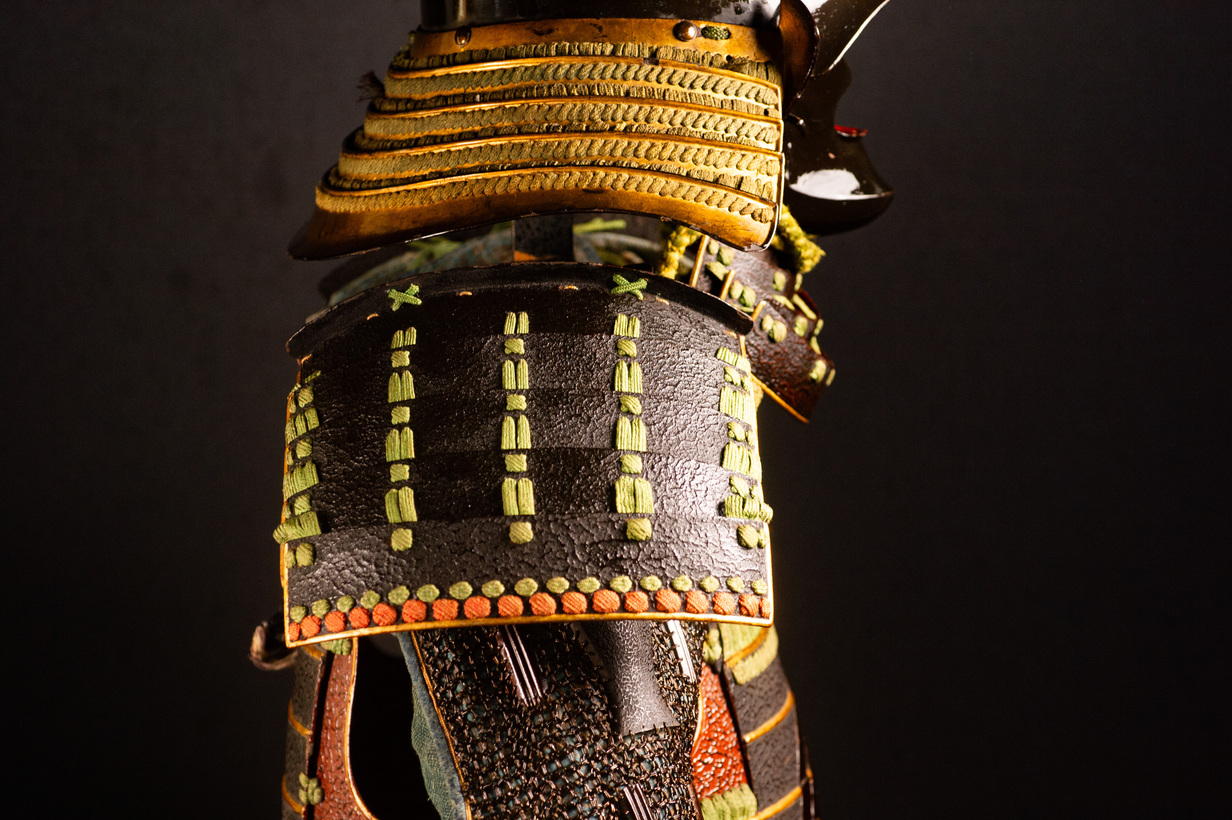
The neck is protected by a flared multi-lame shikoro, laced in gold tones and designed to frame the helmet while protecting the back and sides of the neck.
A black-lacquered menpō completes the head defence. Its glossy dark exterior contrasts dramatically with the red-lacquered interior, while the attached laced yodarekake throat guard visually connects the mask with the rest of the armor.
Shoulders, Arms and Lower Defences
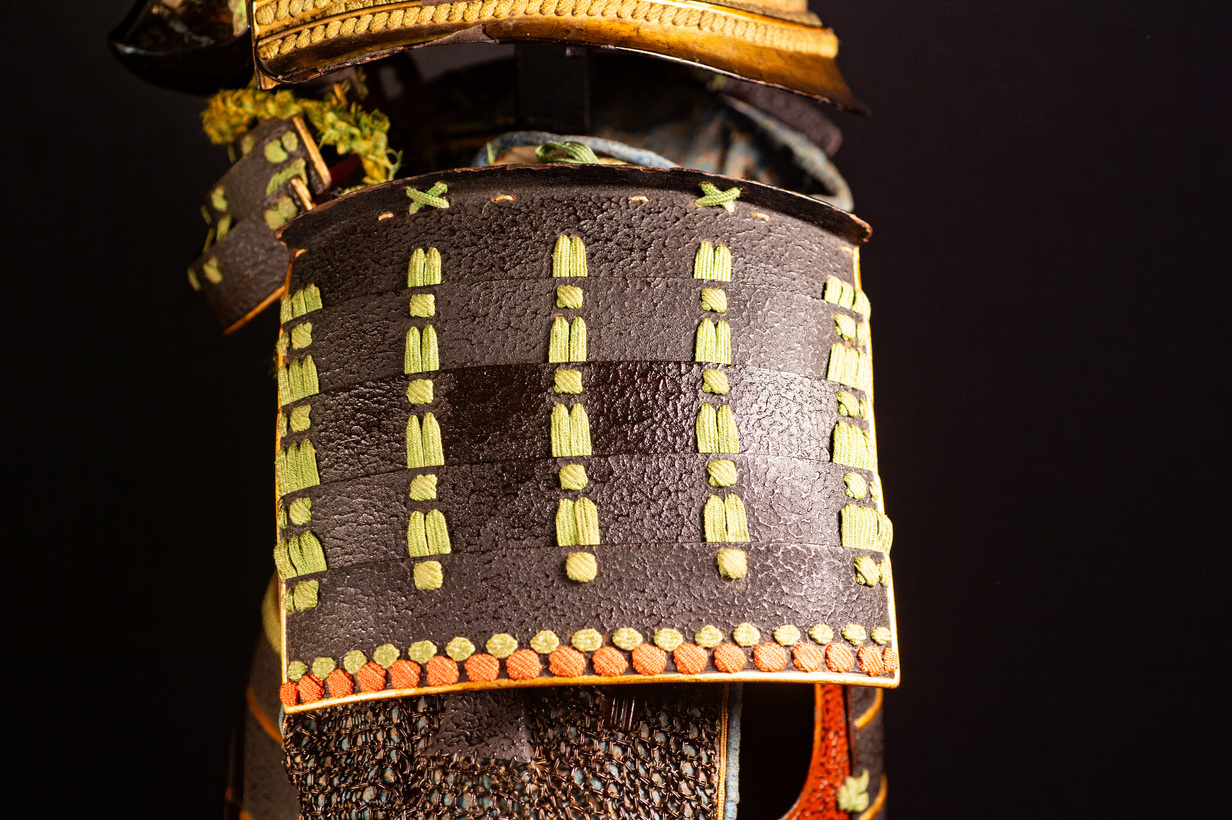
The shoulders are protected by broad laced sode, designed to extend the visual width of the armor while providing traditional shoulder defence. A laced nodowa protects the throat and upper chest area, completing the transition between helmet, mask and cuirass.
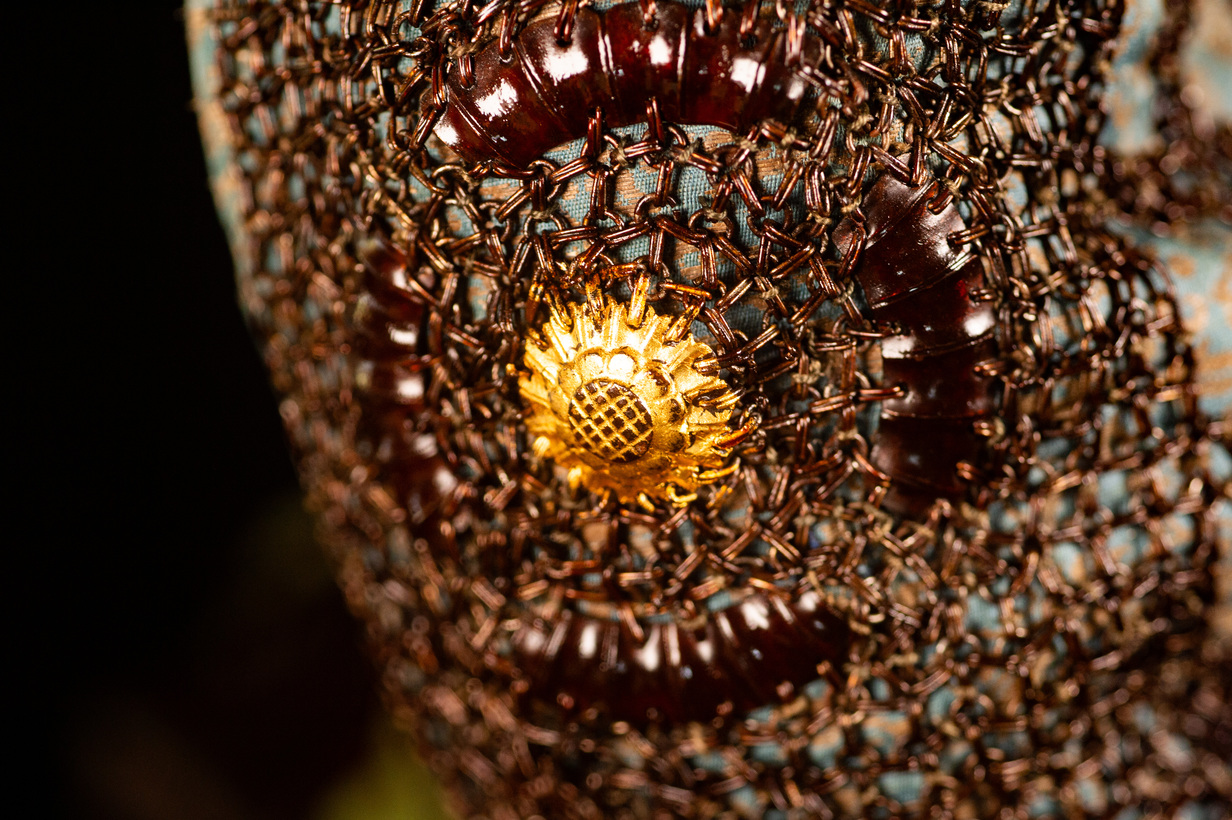
The arms are fitted with fine mail-and-plate sleeves, or kote, worked over patterned textile. These sleeves include gilt rosette bosses and small lacquered scales, combining practical protection with decorative refinement. The forearms terminate in lacquered hand guards, or tekkō.
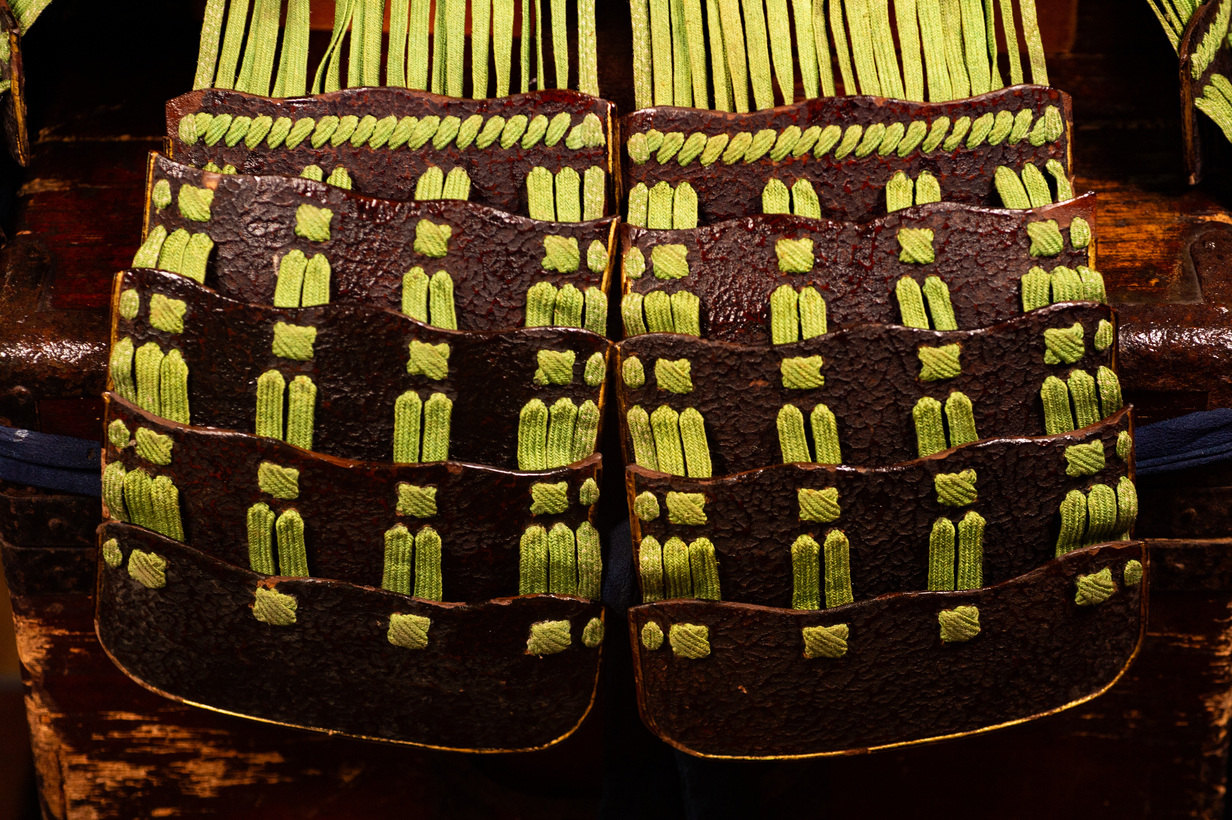
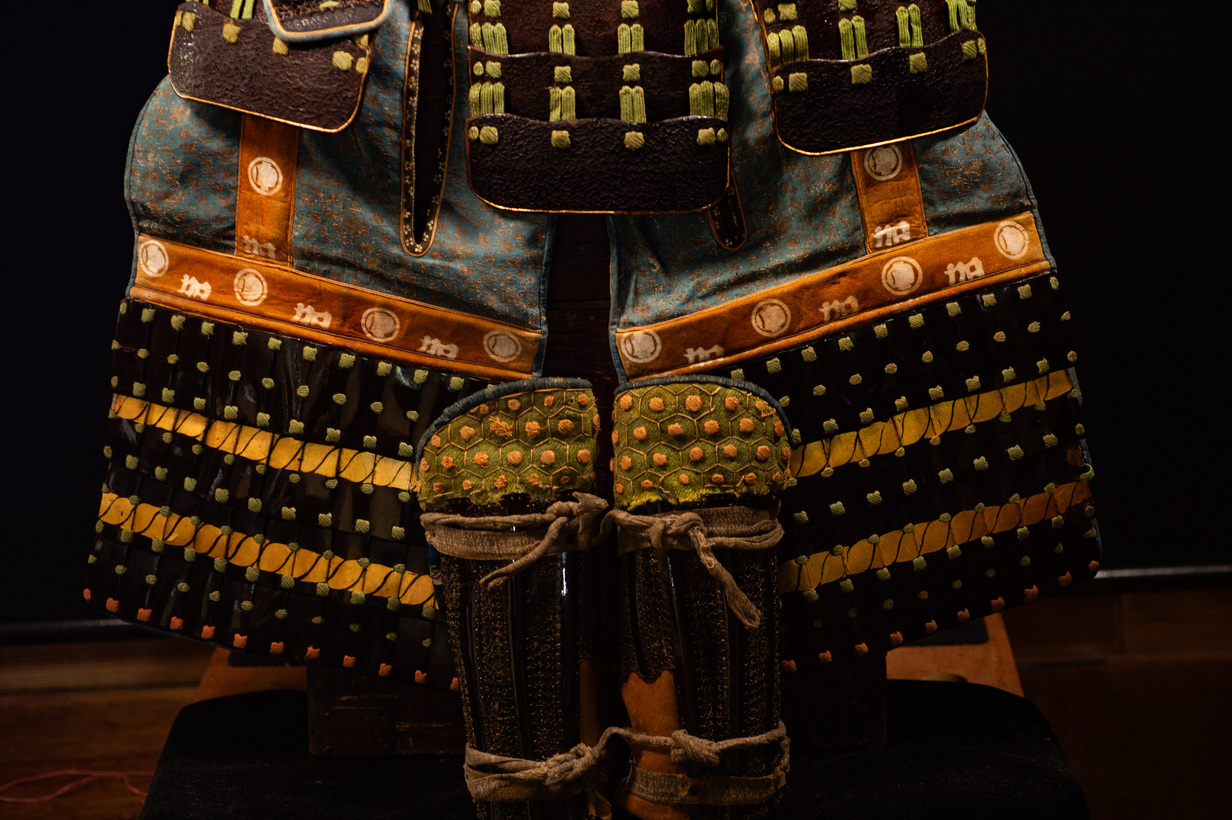
From the waist hang the kusazuri, composed of laced lame tassets that protect the hips and upper thighs. Beneath them are the haidate, thigh guards made with stencilled leather and lacquered elements, decorated with circular crests, or mon, and stylised motifs.
The lower legs are protected by laced suneate, completing the armor from helmet to shin and giving the ensemble the full presence expected of a complete Edo-period gusoku.
Lacing and Decoration
Throughout the armor, the lacing is executed in close kebiki odoshi style using a fresh yellow-green moegi cord. This vivid green tone is one of the defining visual elements of the ensemble, creating a bright and coherent colour rhythm across the cuirass, shoulder guards, skirt and lower defences.
Orange and pale-green accents appear along the lower borders, adding subtle contrast and depth to the overall composition. The stencilled leather panels of the haidate, the gilt detailing, the vermilion lacquer and the black lacquered iron plates combine to create a rich and festive palette.
This is the type of full-dress gusoku intended to be seen: colourful, symmetrical, highly decorative and visually powerful.
Specifications
- Classification: Complete Japanese Armor / Gusoku 具足
- Period: Edo Period
- Type: Multi-lame lacquered-iron gusoku
- Dō: Russet and black lacquered iron with textured ishime ground
- Chest: Vermilion red lacquer with granulated finish
- Lacing: Moegi green kebiki odoshi with orange and pale-green accents
- Kabuto: Tall black-lacquered pointed toppai / shiinomi form
- Maedate: Large gold disc crest
- Menpō: Black lacquered face mask with red-lacquered interior
- Shikoro: Multi-lame flared neck guard with gold-toned lacing
- Sode: Broad laced shoulder guards
- Kote: Mail-and-plate sleeves over patterned textile
- Tekko: Lacquered hand guards
- Kusazuri: Laced lame tassets
- Haidate: Stencilled leather and lacquered thigh guards with mon decoration
- Suneate: Laced shin guards
- Decoration: Gilt edging, gold lines, circular roundel, mon and stylised motifs
Collector’s Value
Complete Edo-period Japanese armors with strong colour harmony and full visual impact are especially desirable for collectors, decorators and institutions. This gusoku stands out for its vivid moegi green lacing, vermilion chest, black lacquered helmet, gold sun-like crest and richly decorated lower elements.
Rather than being a plain battlefield armor, this ensemble has the character of a highly decorative full-dress armor, intended to project rank, taste and presence. The contrast between lacquered iron, gilt detail, patterned textile, stencilled leather and coloured lacing gives the armor exceptional display power.
Its completeness, colour, symmetry and ceremonial character make it an especially attractive piece for a collection of samurai art, Japanese armor, Edo-period antiques or traditional Japanese martial culture.
Colourful, complete and visually commanding, this Edo-period Japanese gusoku is a striking example of samurai armor created for presence and display. With its multi-lame lacquered iron construction, vivid moegi green lacing, vermilion lacquer, gold detailing, Kurikara-like visual energy and full defensive ensemble, it is a powerful collector’s piece that embodies both the martial identity and decorative splendour of the samurai tradition.