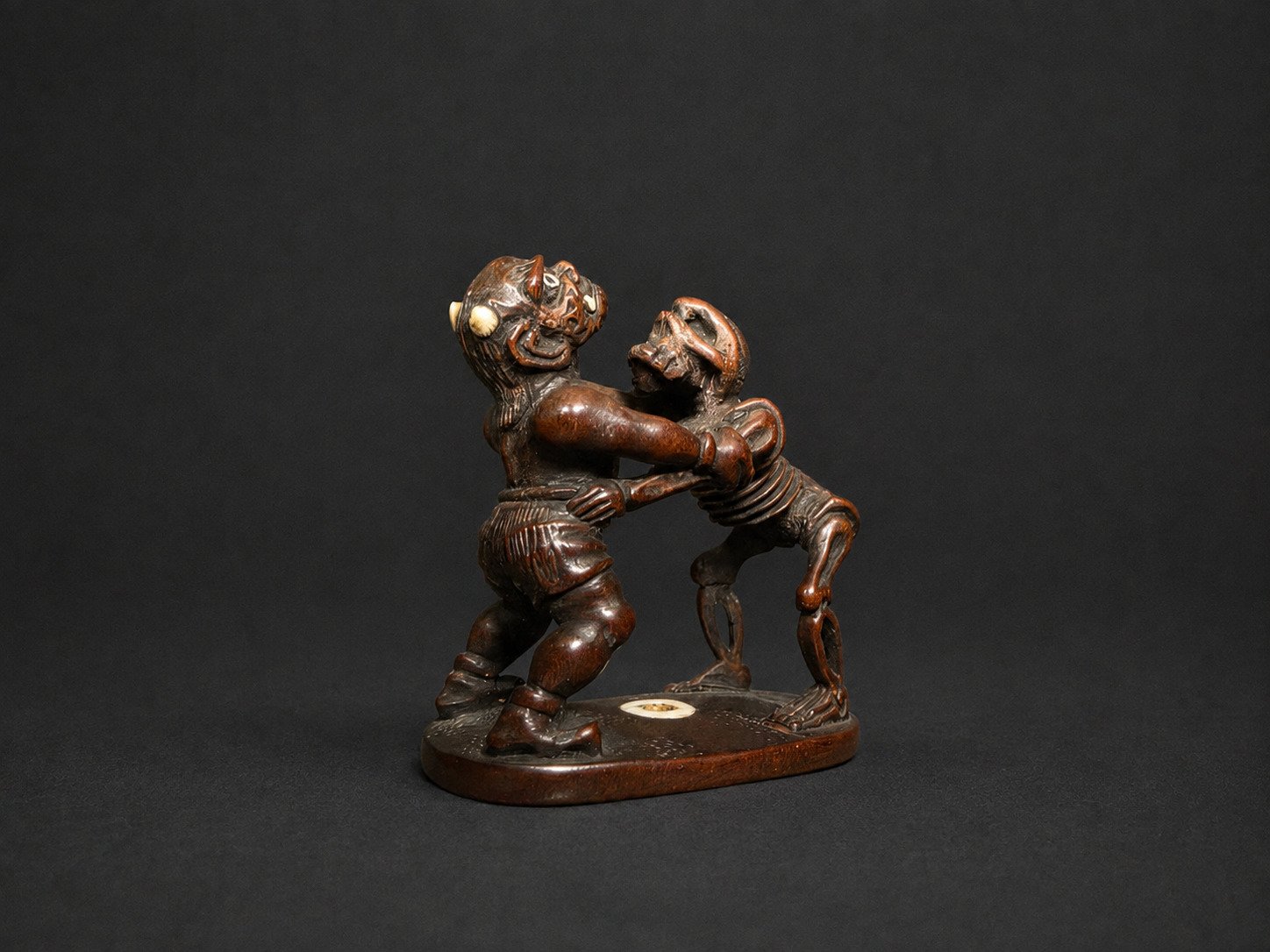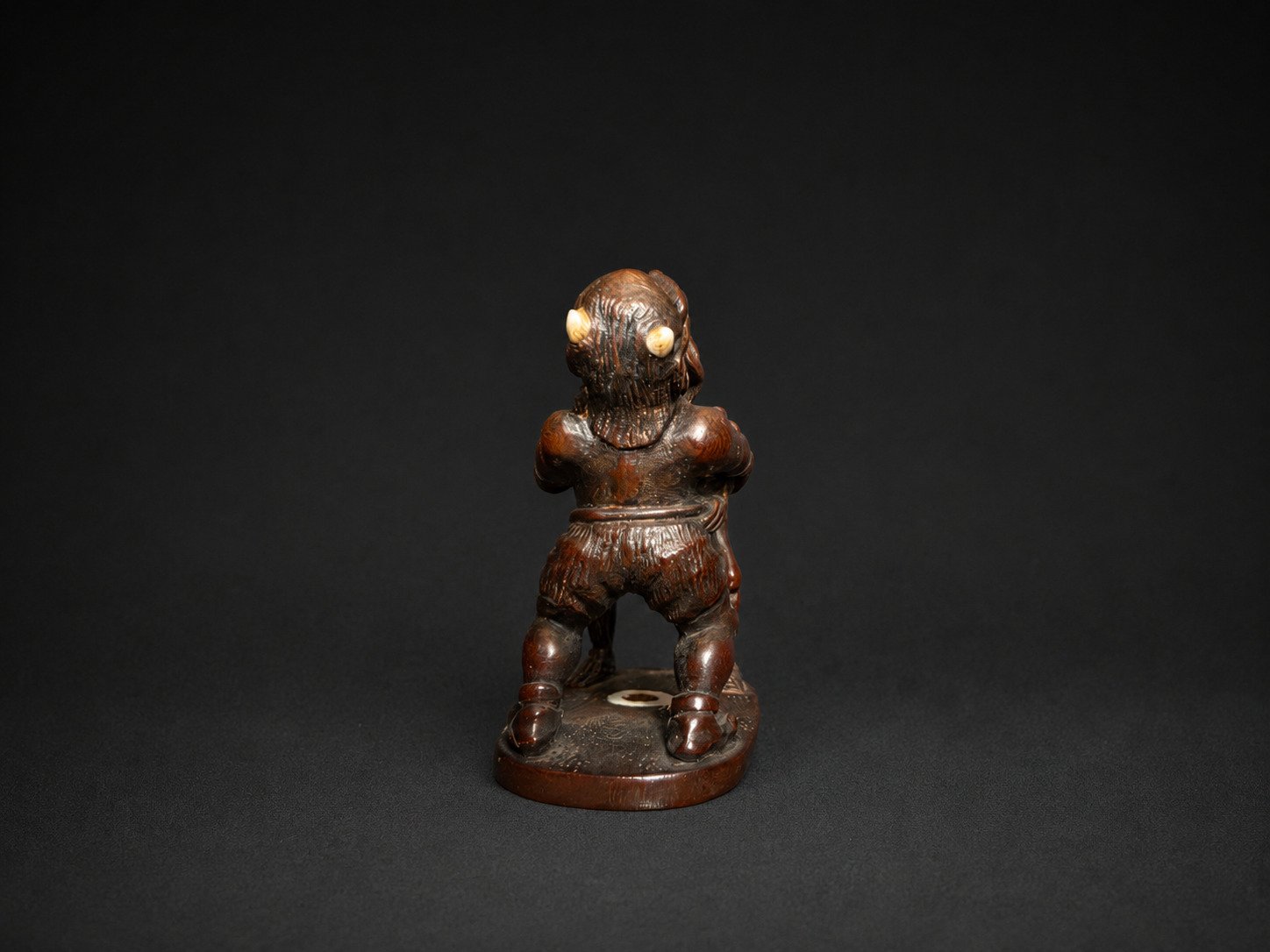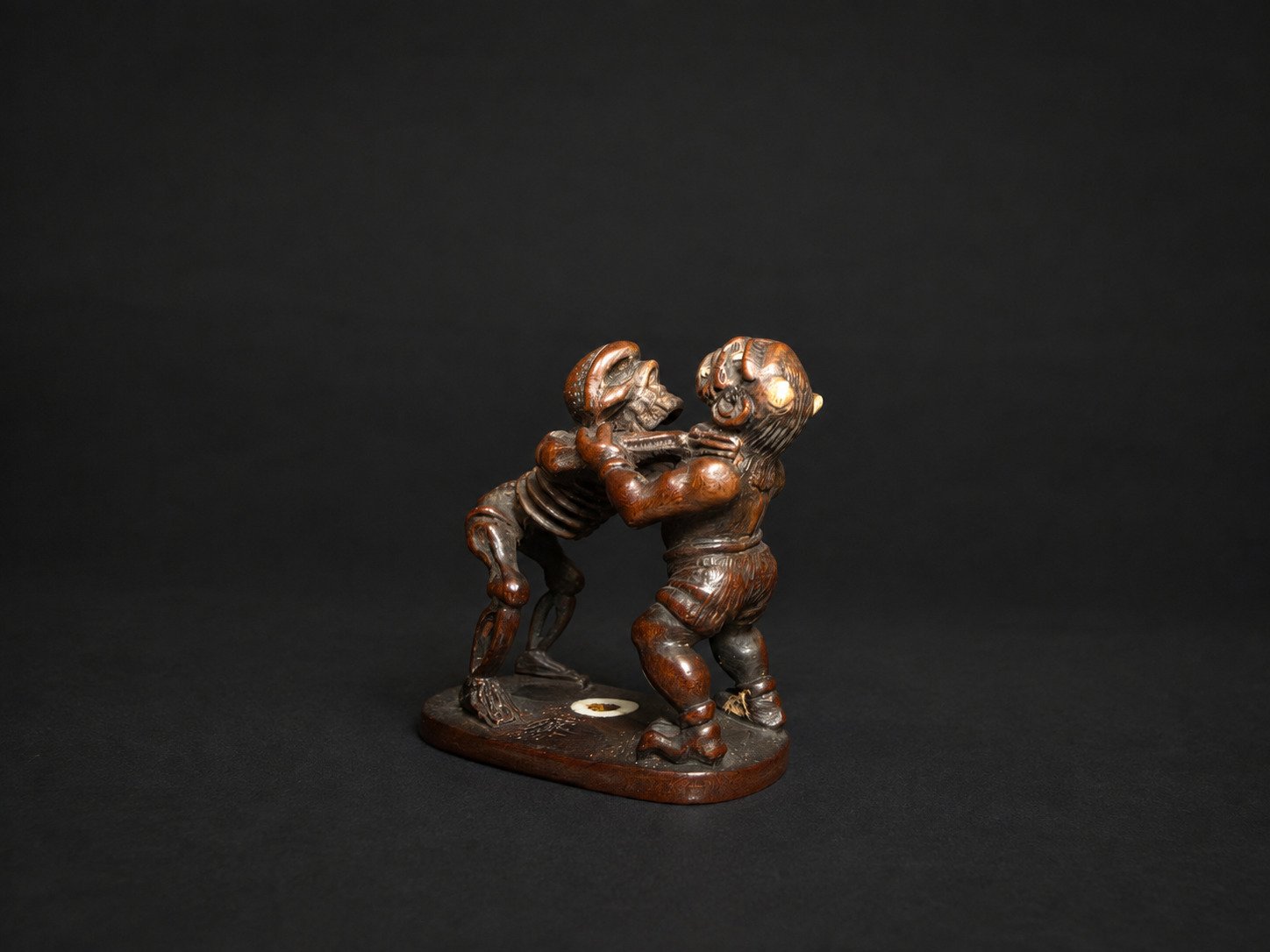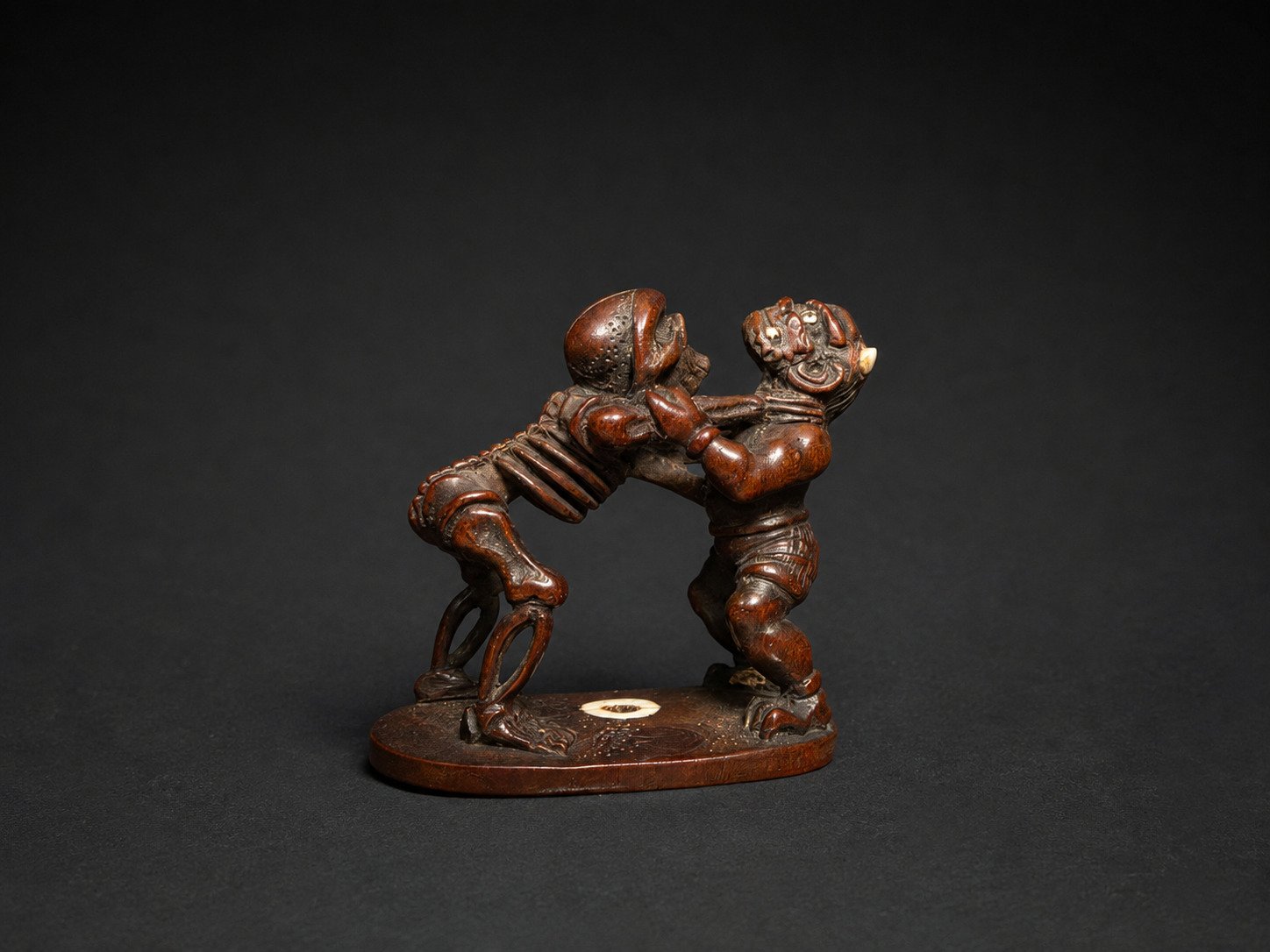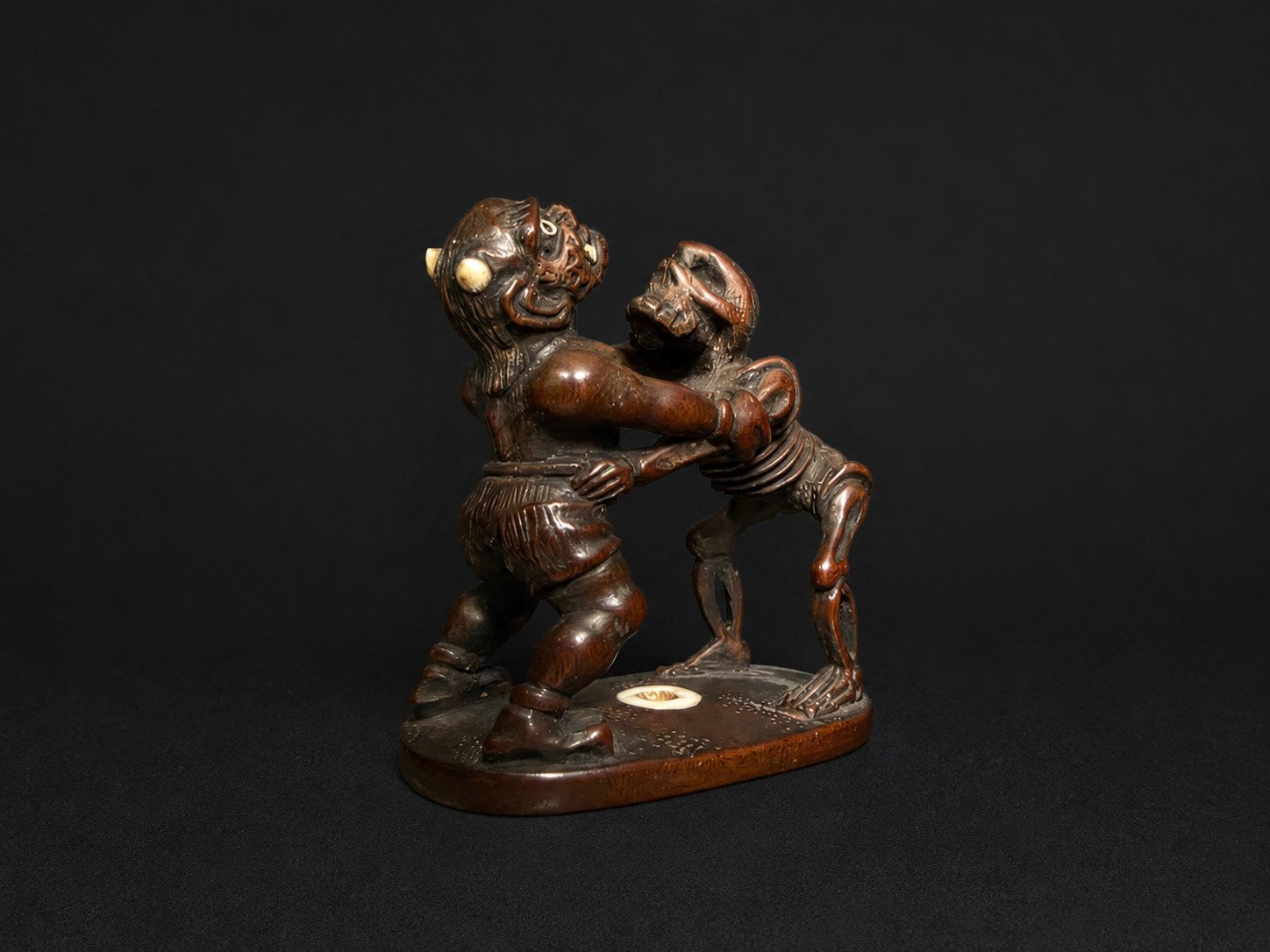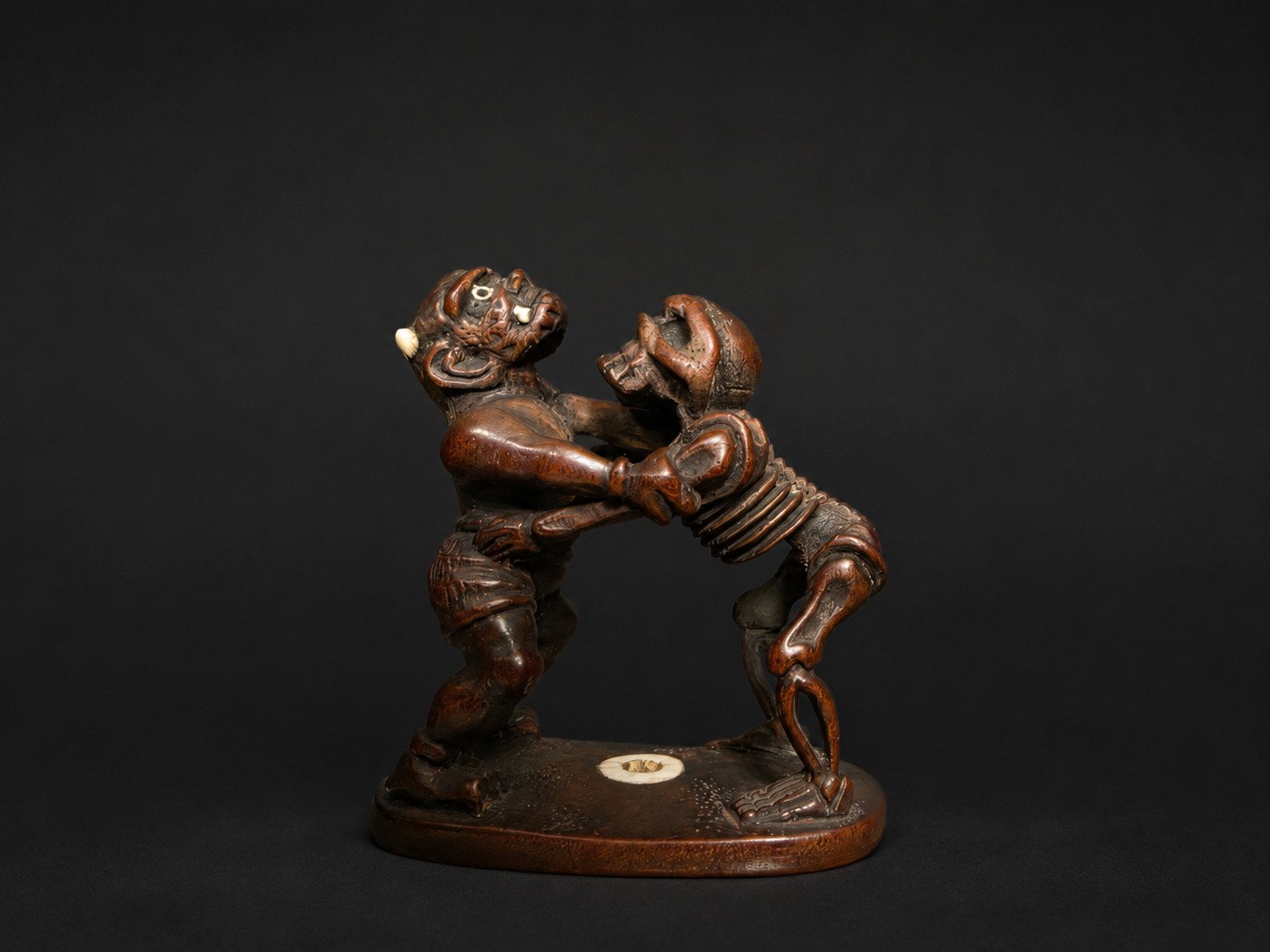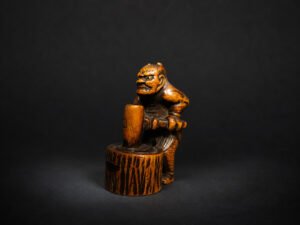

A remarkable Japanese group katabori netsuke from the late Edo to Meiji period, carved in dark-toned wood and depicting a dramatic wrestling match between an oni and an articulated skeleton (gaikotsu).
The two figures are locked together in a pose strongly reminiscent of a sumo bout, transforming a supernatural confrontation between demon and skeleton into a scene of dark humour. Cream-toned ivory inlays used for the oni’s horns, fangs and eyes create a striking contrast against the deeply stained wood.
The compact multi-figure composition combines macabre imagery, comic narrative and technically demanding carving, with both figures shown in active physical tension on an oval base representing the dohyō, or sumo ring.
The oni is represented as a powerful, muscular figure with the characteristic attributes of the demons of Japanese folklore. Wild, shaggy hair surrounds the head, while short horns and prominent fangs project from the face.
The horns, fangs and eyes are picked out in pale ivory inlay, sharply contrasting with the dark wood and drawing attention to the creature’s fierce expression. The mouth is open as if shouting or snarling during the struggle.
The body is vigorously modelled, with rounded shoulders, powerful arms and bent legs conveying the physical force of the wrestling match. A short loincloth is carved around the waist with loose, deeply worked folds.
The opponent is an articulated skeleton (gaikotsu), rendered with strongly exaggerated anatomical detail. The elongated skull, hollow facial expression and exposed skeletal structure create a distinctly macabre appearance that contrasts with the energetic, almost comic nature of the scene.
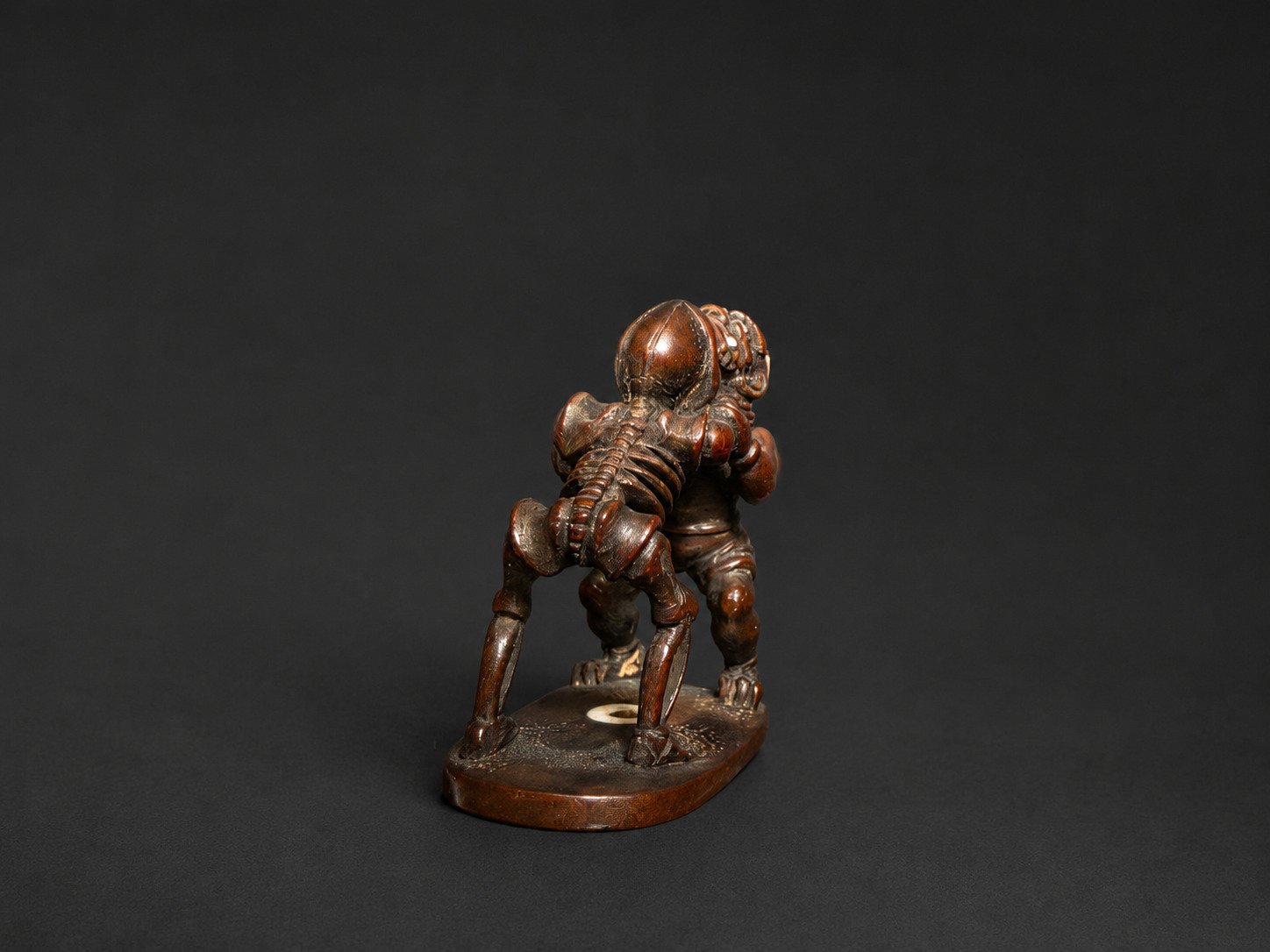
The ribs and joints are carefully articulated, while areas such as the spine, knees and ankles are represented through repeated ring-like forms that emphasise the mechanical structure of the skeleton.
Skeletons were a particularly effective subject for netsuke carvers, allowing them to combine technical virtuosity with themes of mortality, supernatural imagery and humour. Here, the gaikotsu is not a passive symbol of death but an active opponent fully engaged in the contest.
The oni and skeleton grip one another firmly by the shoulders and arms, their bodies leaning into the confrontation with legs bent and feet planted securely against the ground.
The arrangement closely recalls the physical tension of sumo wrestling, although the participants transform the familiar sporting encounter into a supernatural parody. The contrast between the powerful demon and the skeletal opponent adds both humour and visual drama.
This type of playful reversal is characteristic of Japanese netsuke imagery, where gods, demons, ghosts and legendary beings are frequently drawn into the ordinary activities of human life.
The two wrestlers stand upon an oval base conceived as a miniature dohyō, the traditional sumo wrestling ring.
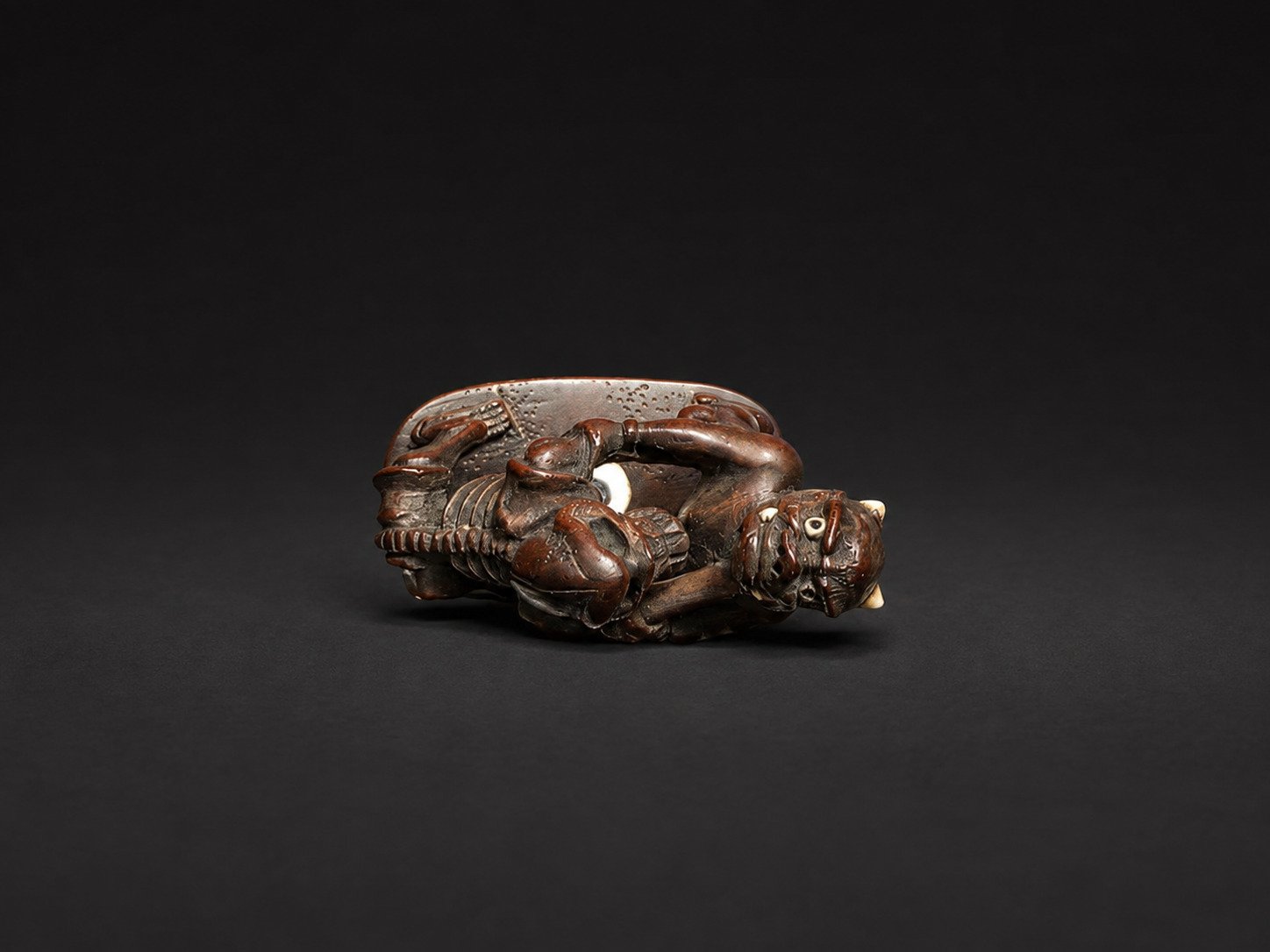
Its upper surface is engraved with a fine granular texture suggesting sand or compacted earth. At the centre is a pale ivory inlay, providing a strong visual focal point and reinforcing the interpretation of the base as a stylised wrestling arena.
The broad base also serves an important structural purpose, allowing the two dynamically posed figures to be connected within a stable and coherent composition.
Carving two figures in active physical interaction within such a compact format requires considerable control of volume and negative space. The arms, torsos and legs overlap while remaining visually distinct, allowing the wrestling action to be understood from several viewpoints.
Deep carving separates the limbs and bodies, while smoother polished surfaces on the muscles contrast with the sharply defined anatomy of the skeleton.
The dark staining or ebonised appearance of the wood further increases the sculptural contrast, particularly against the pale inlaid elements of the oni and the base.
The group is carved from a dense, dark-toned wood, likely stained or ebonised boxwood. The dark finish provides an effective background for the lighter inlaid details and accentuates the depth of the carving.
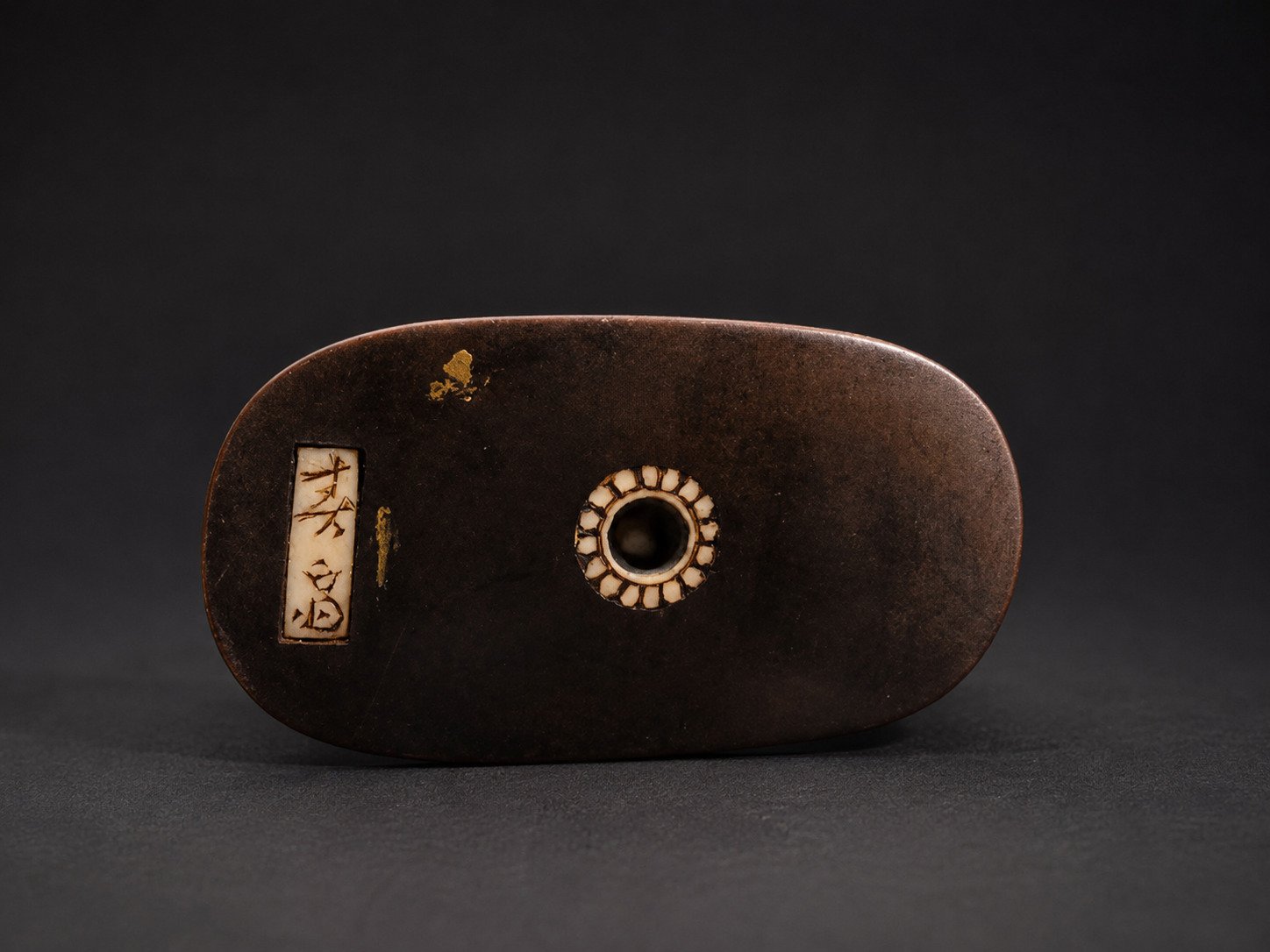
Cream-toned ivory inlay is used selectively for the oni’s horns, eyes and fangs, as well as for details incorporated into the base and underside. This combination of contrasting materials adds refinement and visual complexity to the composition.
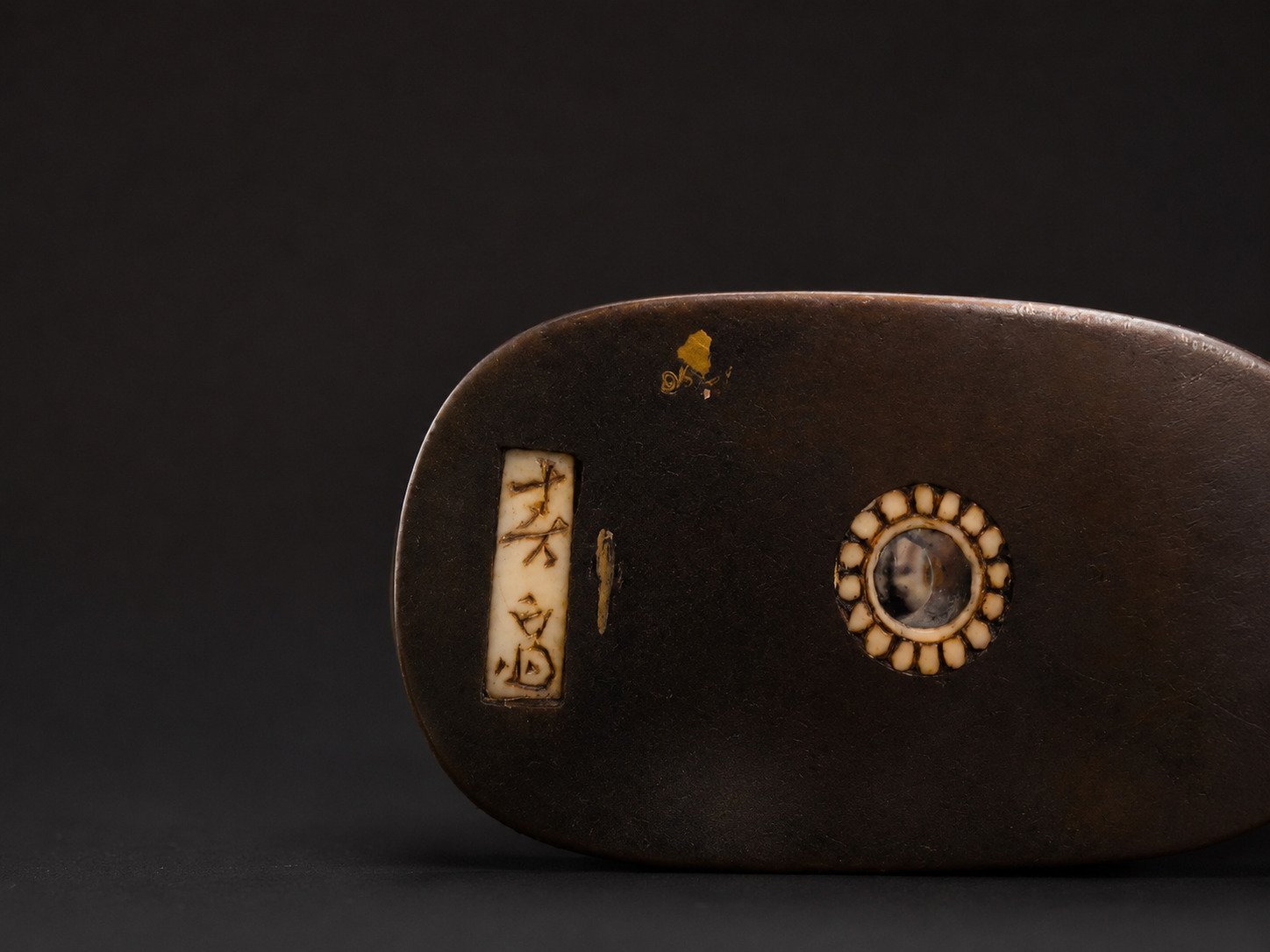
The underside of the base contains two particularly notable details.
A signature (mei) is carved on a pale ivory inlay panel. Two kanji are visible in a cursive or abbreviated style, but no reliable reading or artist attribution should be made from the photographs alone.
Nearby is a circular himotoshi surrounded by a decorative ivory rim composed of small radiating segments. This carefully finished detail is unusual and demonstrates the attention given even to areas normally hidden when the piece was worn.
The pairing of an oni and a skeleton brings together two powerful motifs from Japanese supernatural imagery. Oni represent formidable demonic forces, while skeletons naturally evoke mortality and the world of spirits.
Rather than presenting them in a frightening context, however, the carver places them within the recognisable framework of a sumo contest. The result is a scene that combines the supernatural with parody, turning potentially terrifying figures into participants in an energetic and humorous sporting encounter.
This mixture of wit, macabre imagery and technical display is particularly well suited to the netsuke tradition, in which highly sophisticated subjects were often compressed into remarkably small sculptural compositions.
This netsuke is particularly notable for its multi-figure composition, unusual oni-versus-skeleton subject, contrasting inlay and dynamic treatment of the wrestling action.
The articulated anatomy of the gaikotsu, expressive modelling of the oni, miniature dohyō and detailed underside demonstrate a high degree of narrative and technical ambition.
The combination of supernatural iconography, comic sumo imagery and contrasting materials makes the piece an especially distinctive example of Japanese figurative netsuke carving from the transition between the late Edo and Meiji periods.
An exceptional late Edo–Meiji group netsuke depicting an oni and articulated skeleton locked in a comic sumo wrestling match. Carved in dark stained wood with contrasting ivory inlay, the piece combines supernatural imagery, macabre humour, sophisticated multi-figure carving and finely executed details in a compact and highly expressive composition.

Order above 1.000,00 € gets free shipping.

Secure and hassle-free payment process.

Certificate of authenticity included.

Have questions? Contact us via WhatsApp.
Contact