Meiji Period Boxwood Netsuke – Two Shishi at Play
Japan · Meiji Period · Katabori Netsuke · Two Shishi · Boxwood (Tsuge) · Dark Eye Inlay
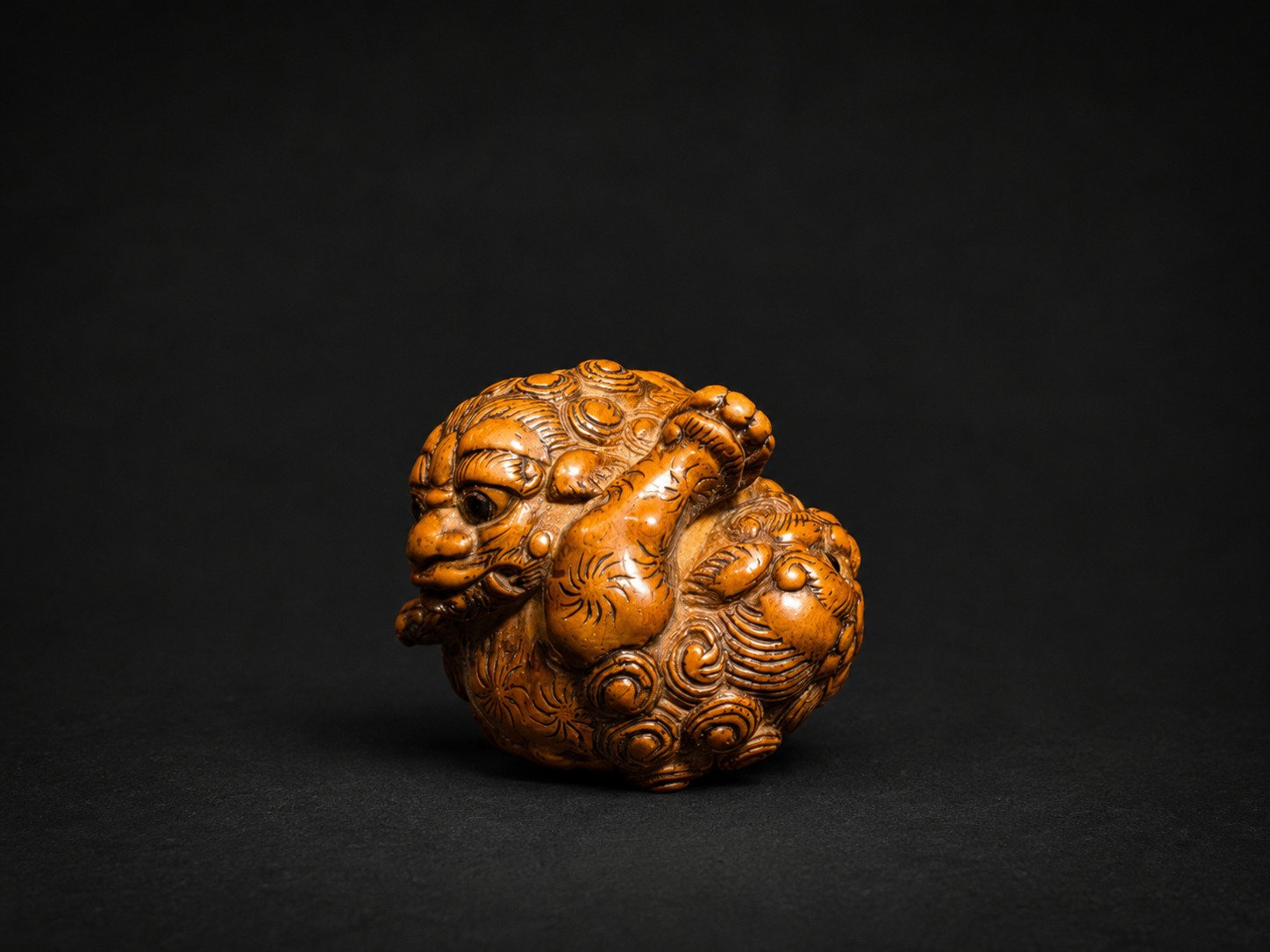
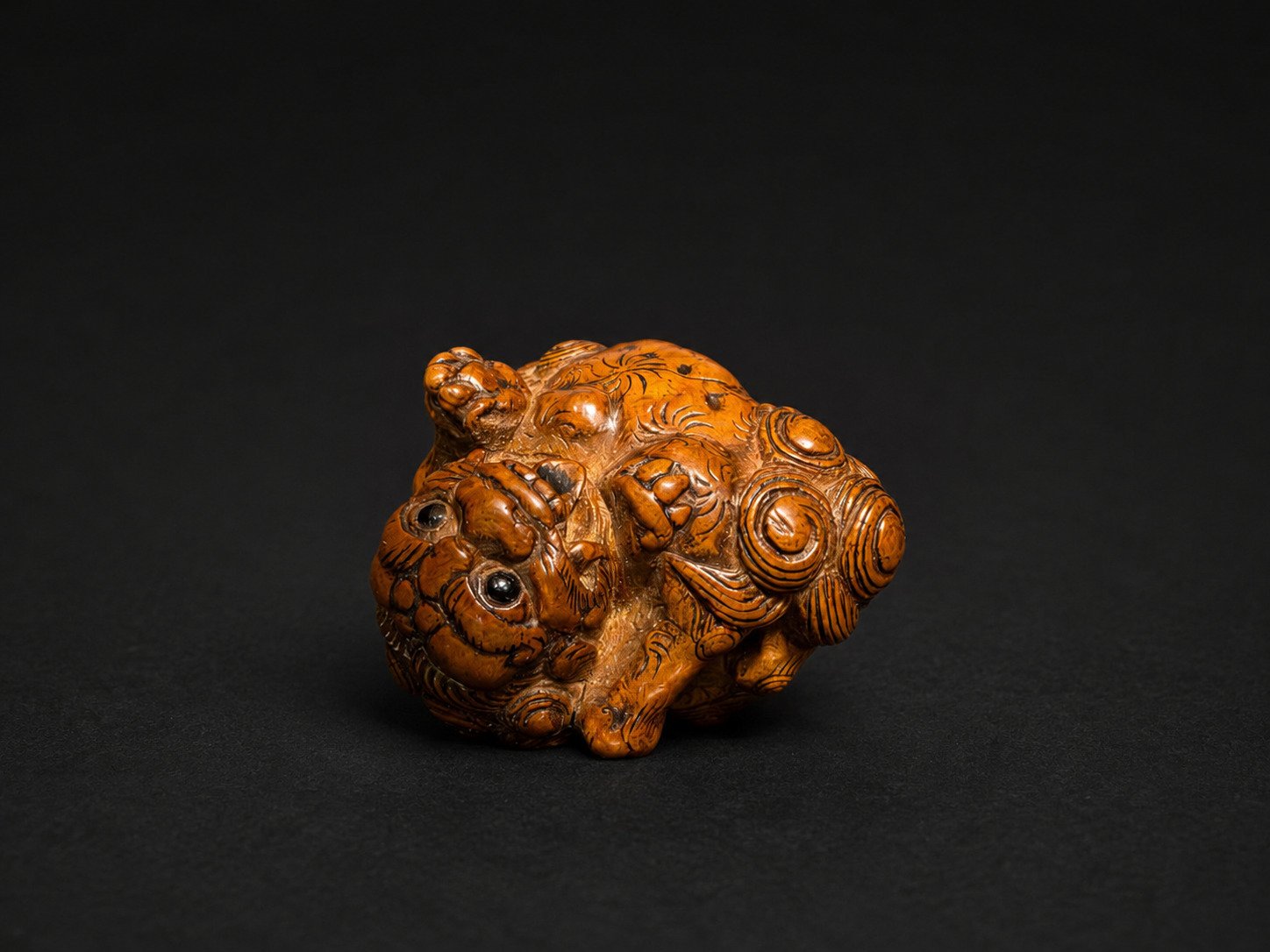
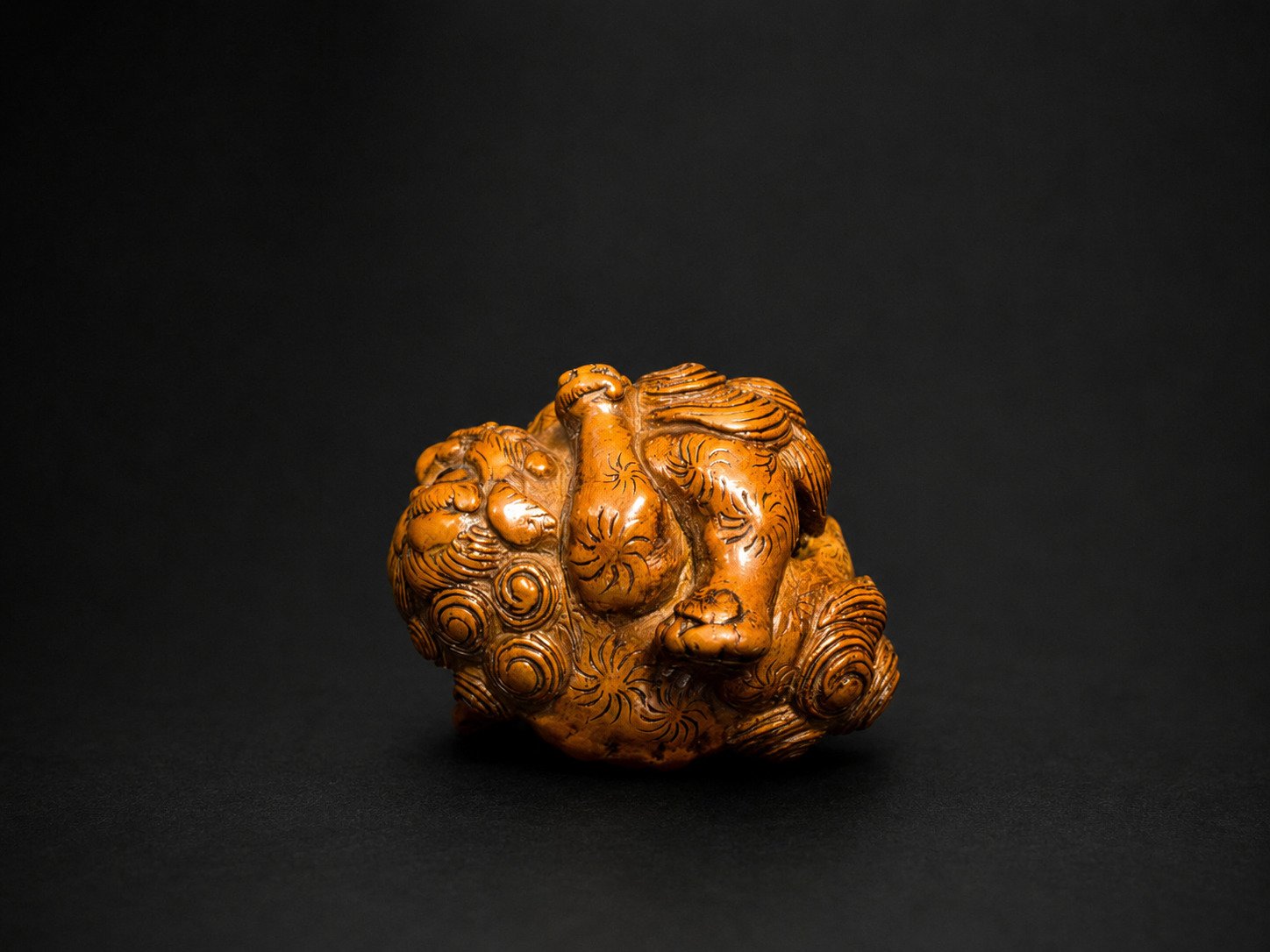
A charming Japanese boxwood katabori netsuke from the Meiji period, depicting two shishi — guardian lion-dogs of East Asian Buddhist tradition — playfully entwined within a compact, rounded composition.
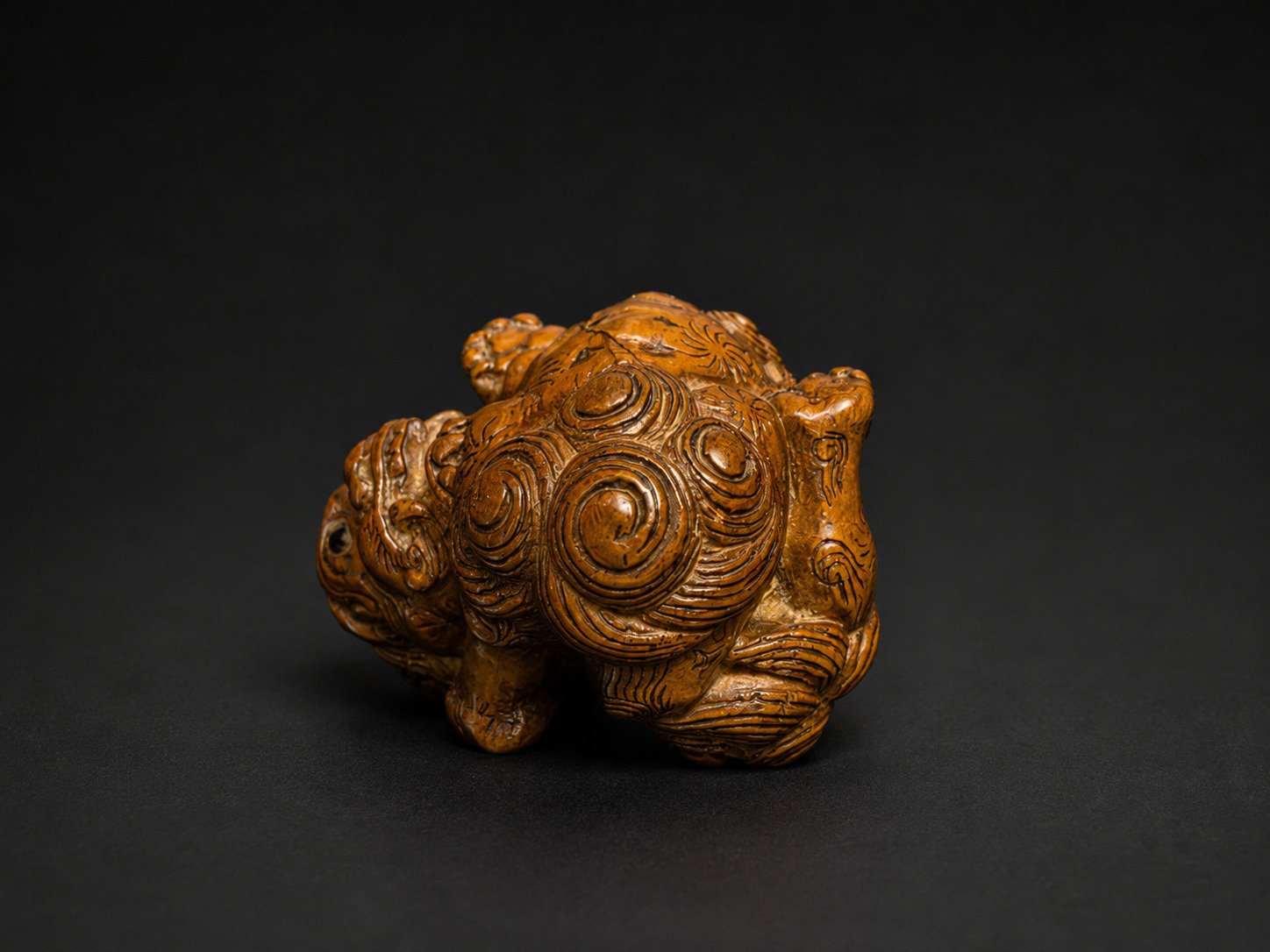
Carved from boxwood (tsuge), the piece displays a rich caramel-brown patina that enhances the deeply incised details of the curling manes, paws and ornamental coat patterns. The two animals are compressed into an almost globular sculptural mass, creating a highly tactile composition designed to be appreciated from multiple angles.
The subject transforms the powerful guardian imagery traditionally associated with shishi into an intimate and playful scene, recalling the spontaneous energy of animals tumbling and climbing over one another.
The Principal Shishi
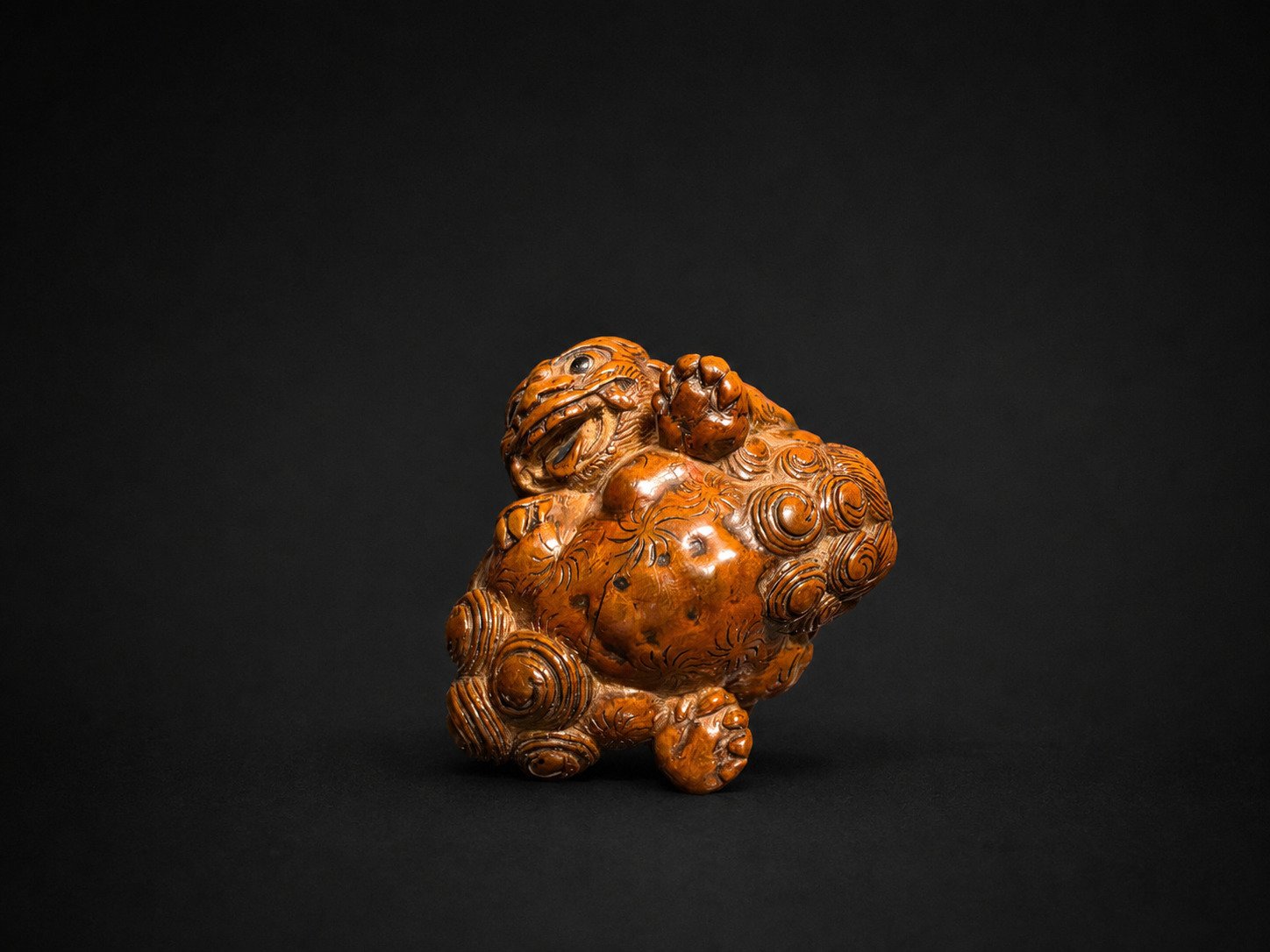
The larger shishi dominates the composition, its head turned outward toward the viewer with a remarkably alert and expressive gaze.
The eyes are highlighted with dark inlay, likely horn or another dark organic material, creating a strong contrast against the warm boxwood. Heavy brows frame the eyes, while the broad muzzle, open mouth and visible teeth give the animal the characteristic combination of fierceness and animated expression associated with traditional shishi imagery.
The mane is carved as a series of deeply defined curling locks that flow around the head and shoulders, integrating naturally with the spiral decoration covering the rest of the body.
The Smaller Shishi
A second, smaller shishi emerges from above and behind its companion. Its small head and one paw are clearly visible as it climbs over or playfully pounces upon the larger animal.
The interaction creates a convincing sense of movement despite the compact proportions of the carving. Rather than presenting the two creatures separately, the carver has intertwined them into a single sculptural mass in which paws, heads, manes and bodies overlap continuously.
The scene recalls traditional representations of an adult shishi playing with a younger companion or cub, a theme that softens the protective and formidable character of these mythical animals with an unusual sense of tenderness and humour.
Shishi – Guardian Lion-Dogs
Shishi occupy an important place in Japanese Buddhist and decorative imagery. Derived ultimately from representations of lions transmitted across Asia, they became protective creatures associated with temples, sacred spaces and the warding off of harmful influences.
In Japanese art they are often represented with exaggerated curls, powerful paws, broad faces and highly stylised manes. Their appearance is closely related to the wider tradition of guardian lion-dogs, including komainu, although the terms and iconographic types are not always completely interchangeable.
Within netsuke carving, shishi became a particularly popular subject because their compact bodies, curling manes and animated poses lent themselves exceptionally well to small-scale three-dimensional sculpture.
Spiral Coat Decoration – Uzumaki
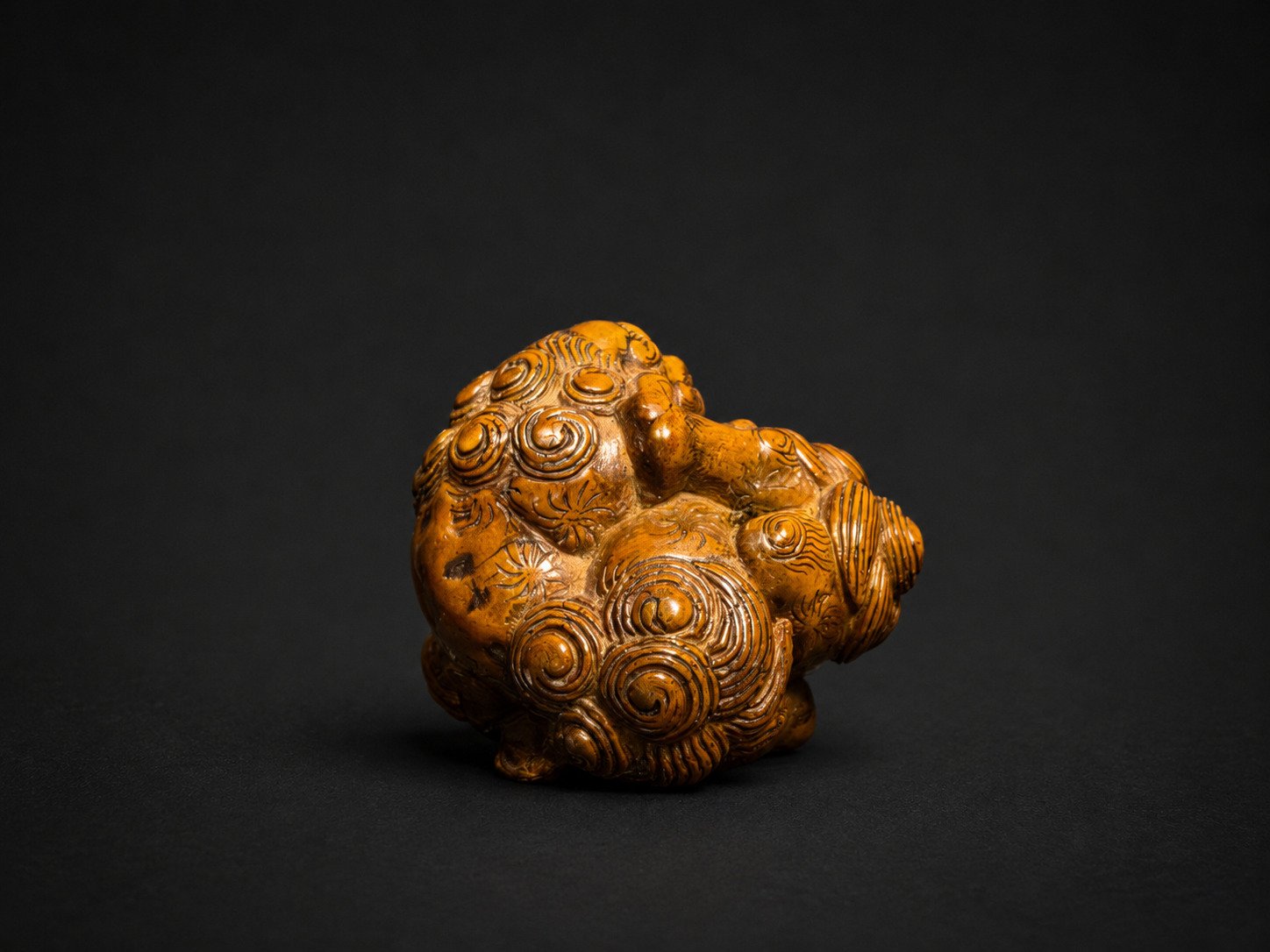
One of the most visually distinctive features of the piece is the extensive use of concentric spiral motifs (uzumaki) across the bodies of the animals.
These raised spirals appear across the back, haunches and tail, creating an almost textile-like ornamental surface. The repeating pattern visually unifies the two intertwined figures and makes it possible to follow the composition even where their bodies overlap.
Deep incised lines surrounding the spirals enhance their relief and create strong shadows, while the darker coloration retained in the recesses increases the contrast against the polished caramel-coloured surfaces.
Compact Sculptural Composition
The two shishi are compressed into a dense, rounded form with very little unused space. The resulting silhouette is almost spherical, giving the piece a visual compactness reminiscent of the closed form of a manjū, while remaining fundamentally a fully three-dimensional katabori netsuke.
This arrangement requires considerable control of volume. The larger shishi provides the principal structural mass, while the smaller animal emerges from the upper and rear sections without breaking the overall rounded silhouette.
The interlocking bodies encourage the viewer to rotate the netsuke in the hand, revealing different relationships between the heads, paws, tails and spiral motifs from each viewpoint.
Boxwood and Patina
The netsuke is carved from boxwood (tsuge), a dense, fine-grained wood traditionally favoured by Japanese netsuke carvers for its strength and capacity to retain intricate detail.
The surface has developed a deep caramel to amber-brown patina, particularly attractive across the rounded volumes of the animals and the raised spiral ornament.
Darker coloration remains concentrated within the deeply incised areas of the manes, facial features and decorative patterns, strengthening the sculptural definition of the carving.
Himotoshi
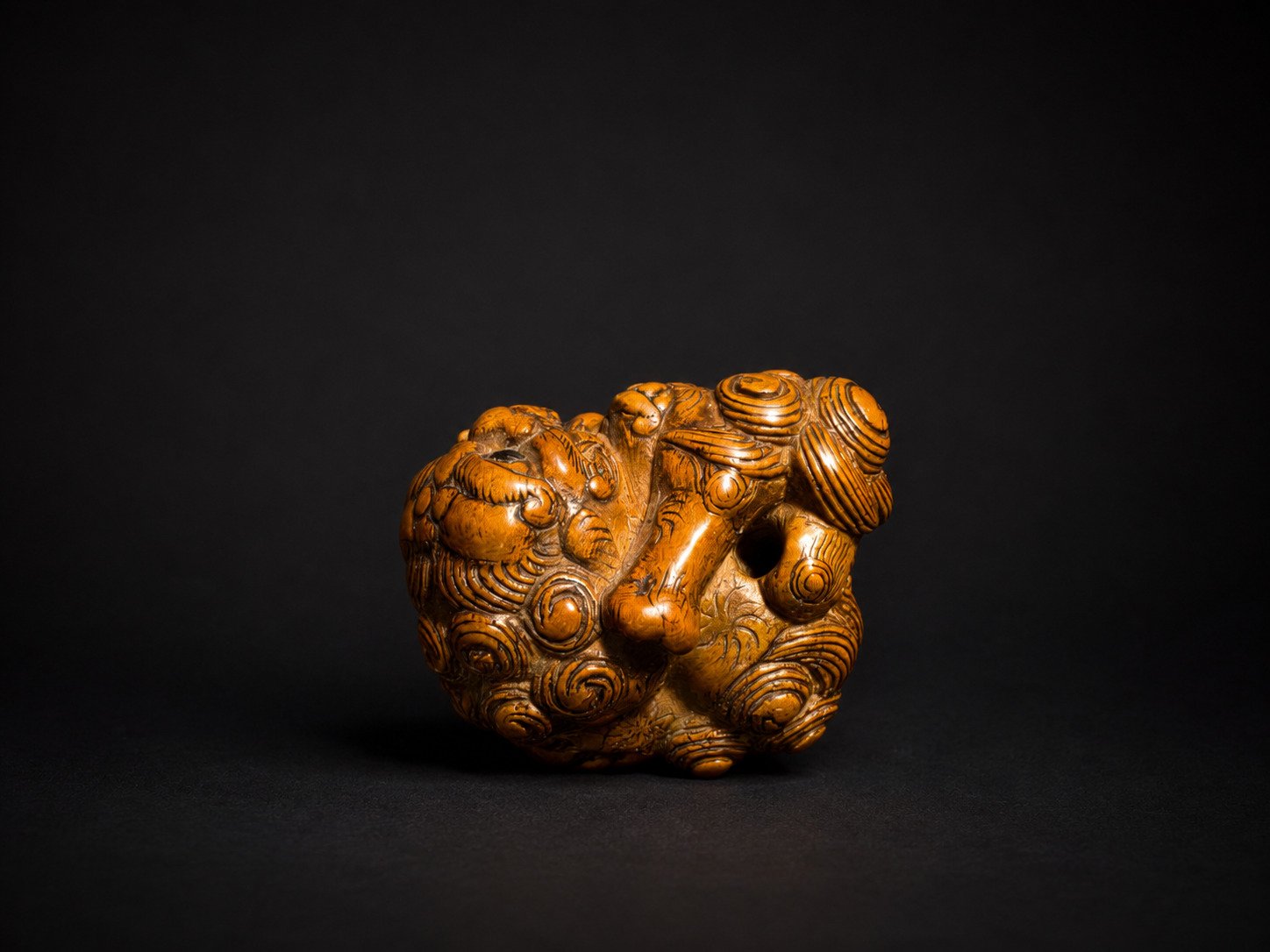
The himotoshi is formed as a circular opening drilled directly through the body mass rather than incorporated into a separate base.
This solution is particularly appropriate for the closed, globular composition, allowing the original cord function of the netsuke to be incorporated without interrupting the continuous sculptural flow of the intertwined animals.
Collector’s Interest
This netsuke combines several characteristics attractive to collectors: the enduring shishi subject, an intimate two-figure composition, rich boxwood patina, dark eye inlay and extensive spiral ornamentation.
The playful interaction between the larger and smaller shishi gives the carving unusual emotional warmth, while the compact organisation of the two bodies demonstrates considerable skill in designing a complex multi-figure subject within a very small volume.
The combination of guardian-animal iconography, tactile carving and highly decorative uzumaki patterning makes the piece an appealing example of Meiji-period figurative netsuke carving.
Specifications
- Object: Japanese netsuke
- Type: Katabori netsuke
- Subject: Two shishi at play
- Period: Meiji period
- Origin: Japan
- Material: Boxwood (tsuge)
- Eye inlay: Dark material, likely horn or similar organic material
- Decoration: Raised concentric spiral motifs (uzumaki)
- Composition: Compact, rounded multi-figure form
- Himotoshi: Circular opening passing directly through the body mass
A charming Meiji-period boxwood netsuke depicting two playful shishi intertwined in a compact rounded composition. Rich caramel patina, dark eye inlay and deeply carved spiral ornamentation combine with the affectionate interaction of the two guardian lion-dogs to create a highly tactile and expressive example of Japanese figurative netsuke carving.