Edo Period Boxwood Netsuke – Oni Resting by a Mochi Mortar (Usu and Kine)
Japan · Edo Period · Katabori Netsuke · Oni · Mochi-Pounding Mortar and Pestle · Boxwood (Tsuge)
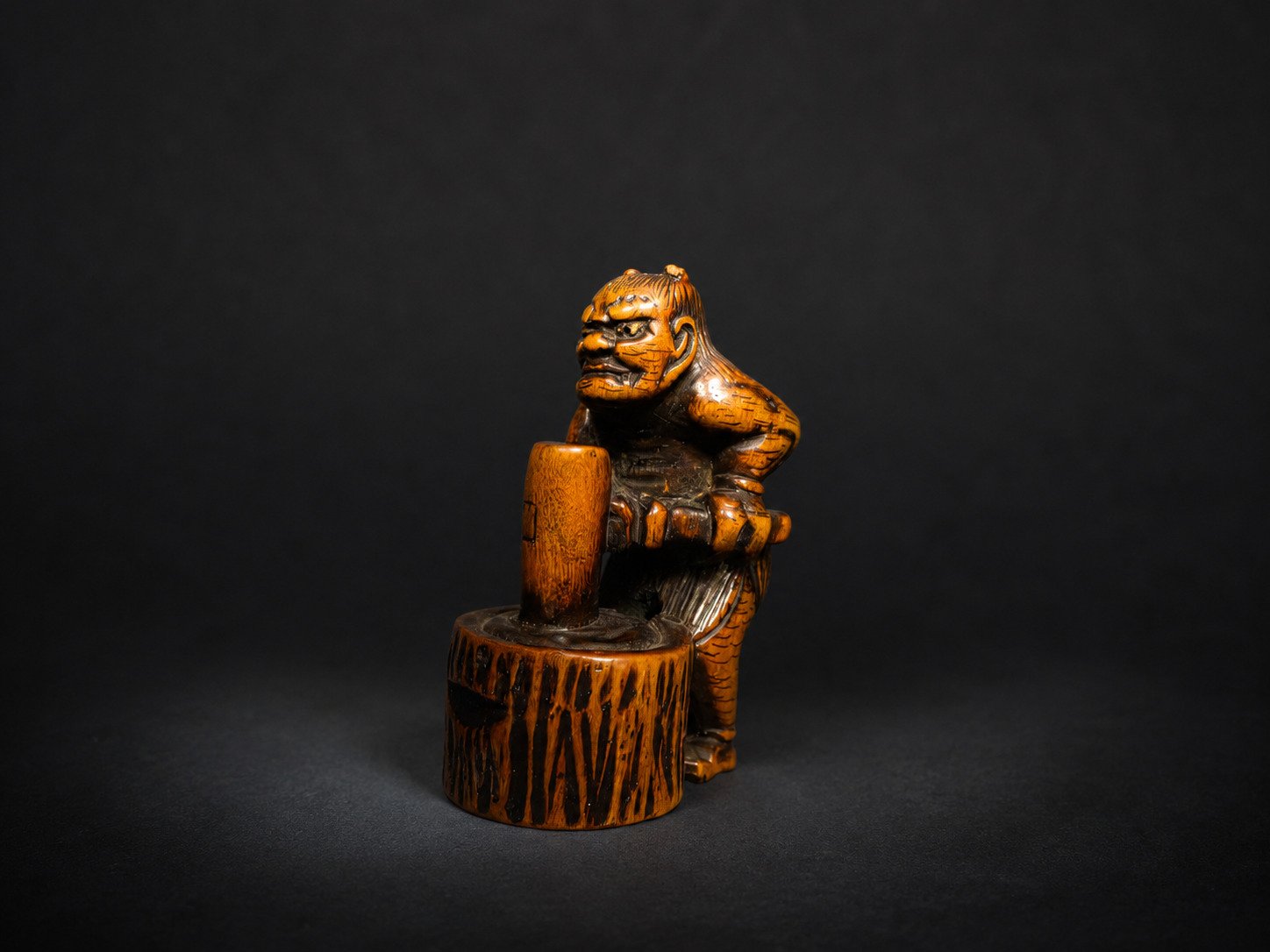
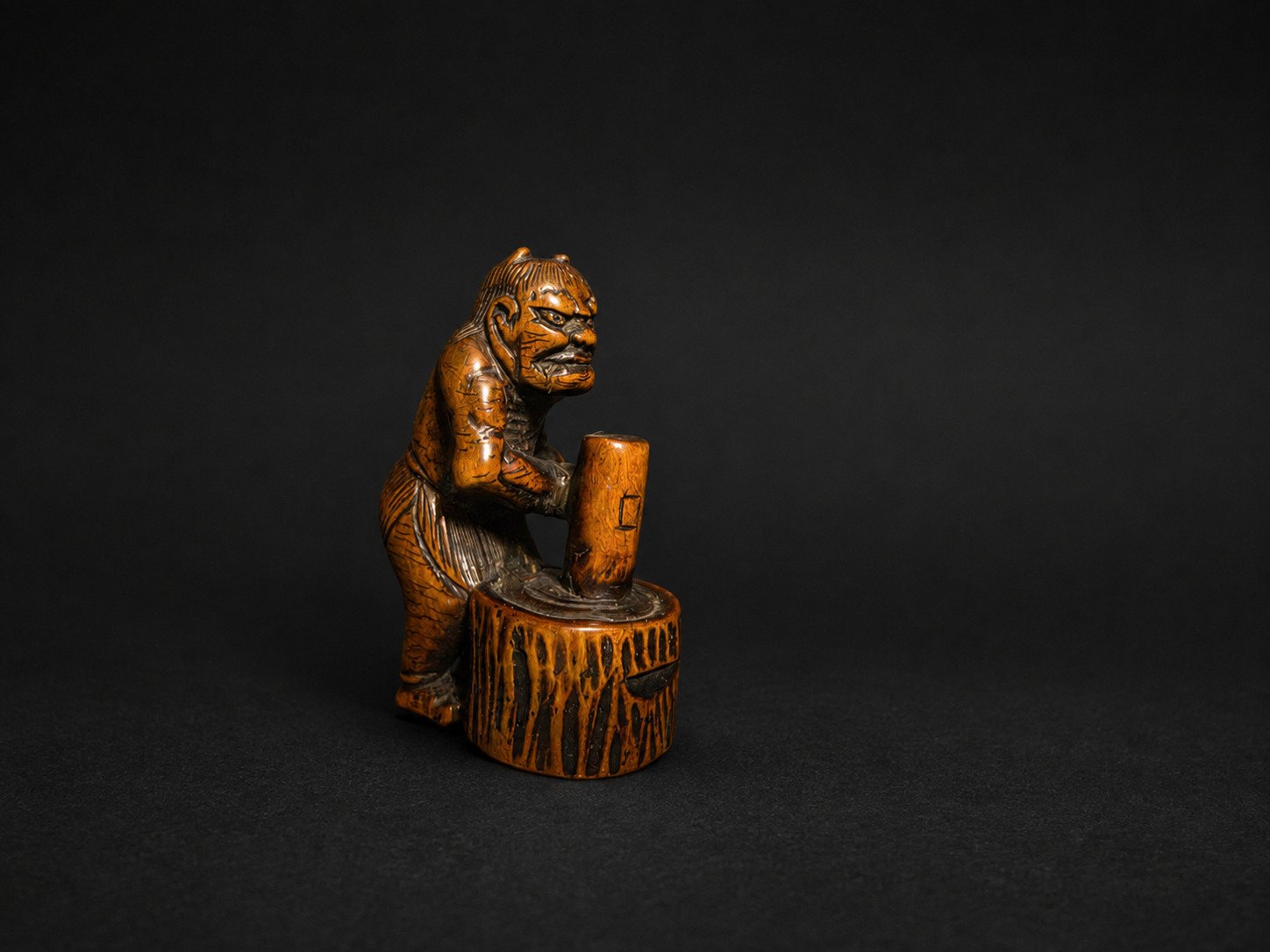
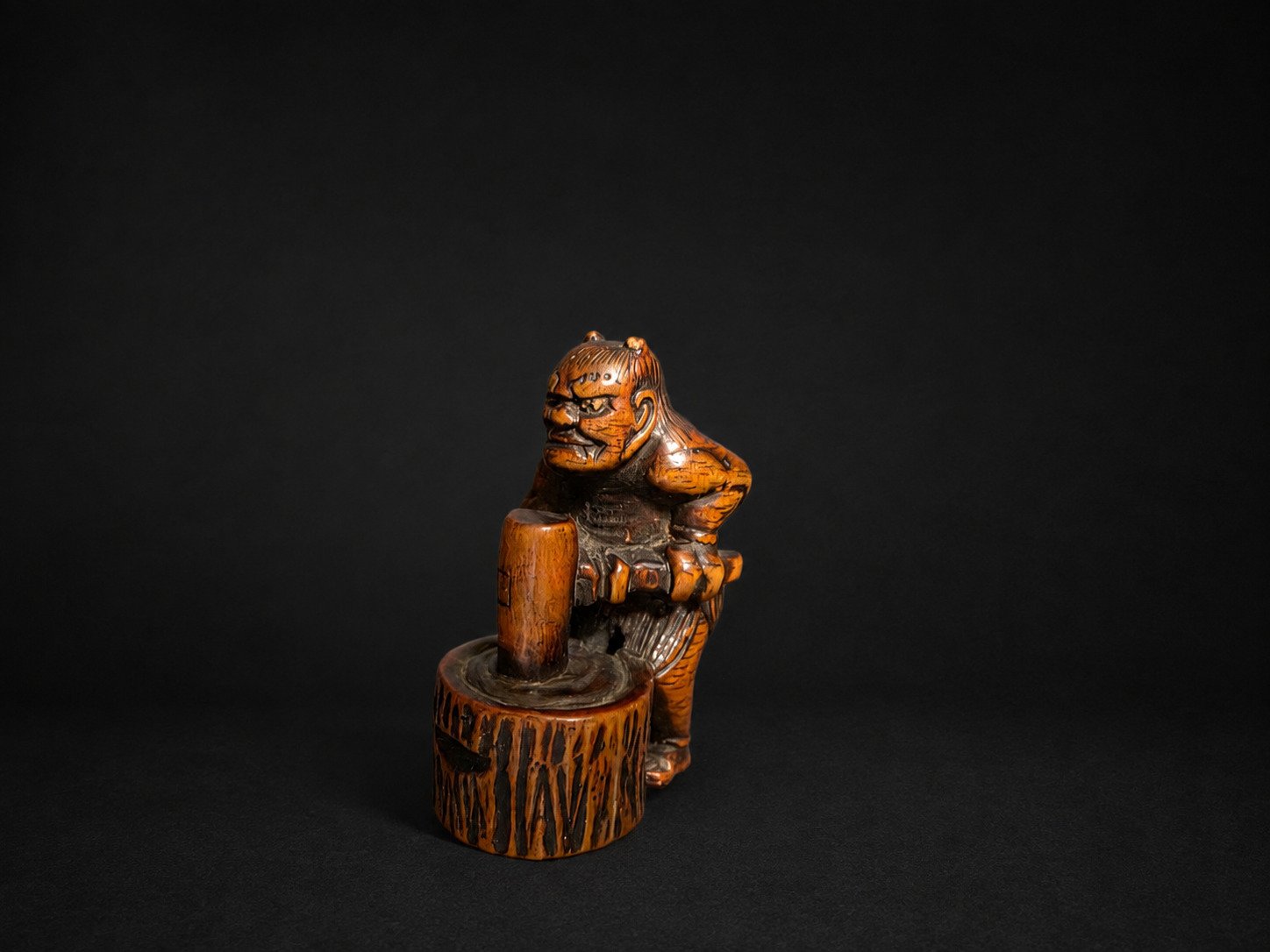
A characterful Japanese boxwood katabori netsuke from the Edo period, depicting an oni resting against a traditional wooden mortar (usu) with its pestle (kine) still standing at the centre.
Carved from boxwood (tsuge), the piece displays warm toasted-brown tones with darker shading retained in the deeper cuts, enhancing the modelling of the demon, the grain of the mortar and the details of the composition.
The scene transforms one of the most fearsome creatures of Japanese folklore into a humorous genre figure: rather than terrorising mortals, the oni appears to be taking a break from the thoroughly domestic task of pounding mochi.
The Oni
The standing figure possesses the classic attributes associated with the oni of Japanese popular imagery. Two short horns rise from the forehead above a fierce face with heavy brows, narrowed eyes and a half-open mouth revealing prominent fangs.
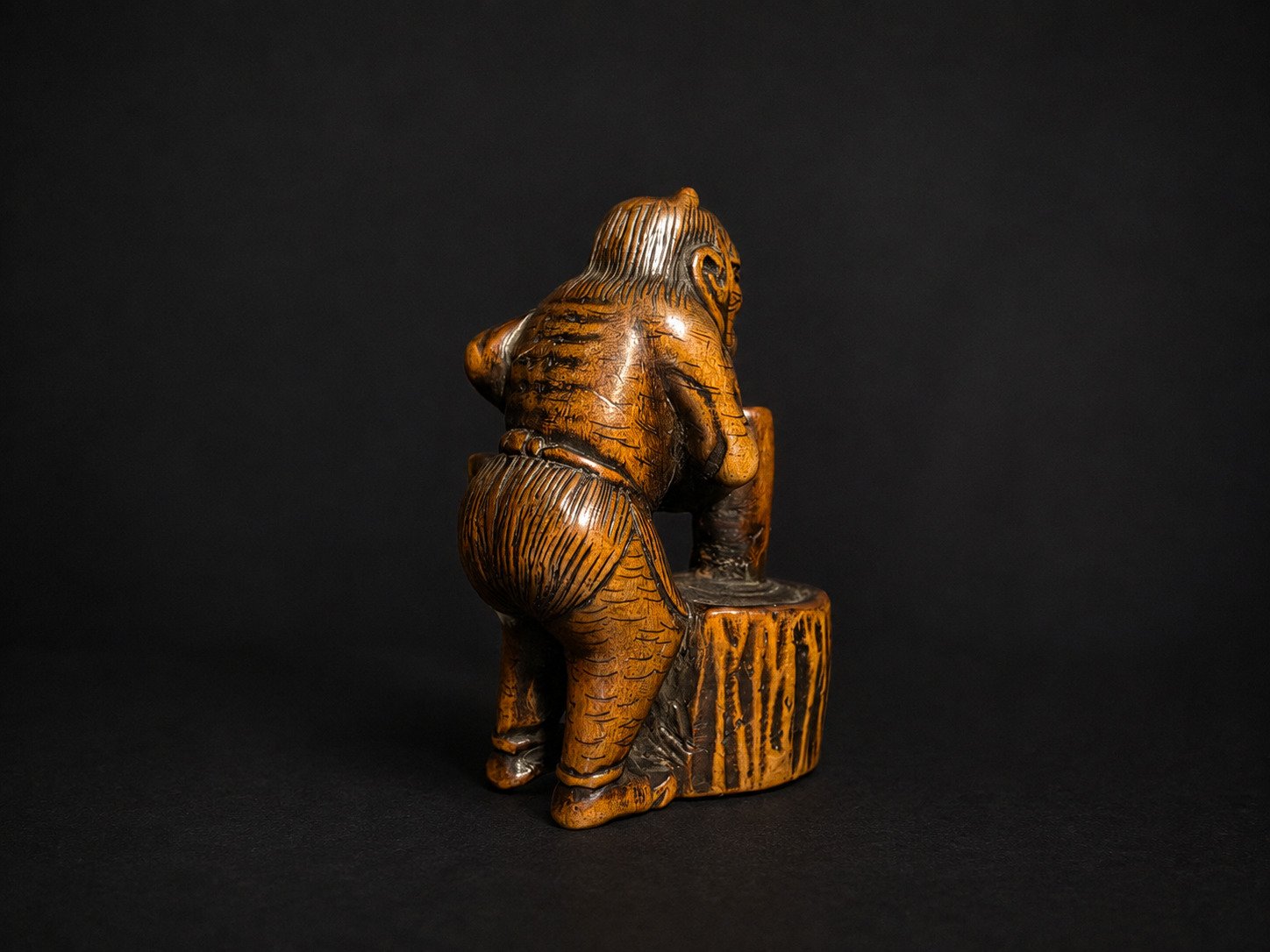
Pointed ears and a shaggy mane frame the face, reinforcing the creature’s wild supernatural character. The powerful body is represented leaning forward, with both arms resting against or around the pestle and mortar as if pausing after physical exertion.
The aggressive facial expression contrasts deliberately with the relaxed pose, producing the kind of visual humour frequently encountered in Japanese netsuke, where supernatural and intimidating beings are often shown engaged in surprisingly ordinary human activities.
Tiger-Skin Iconography
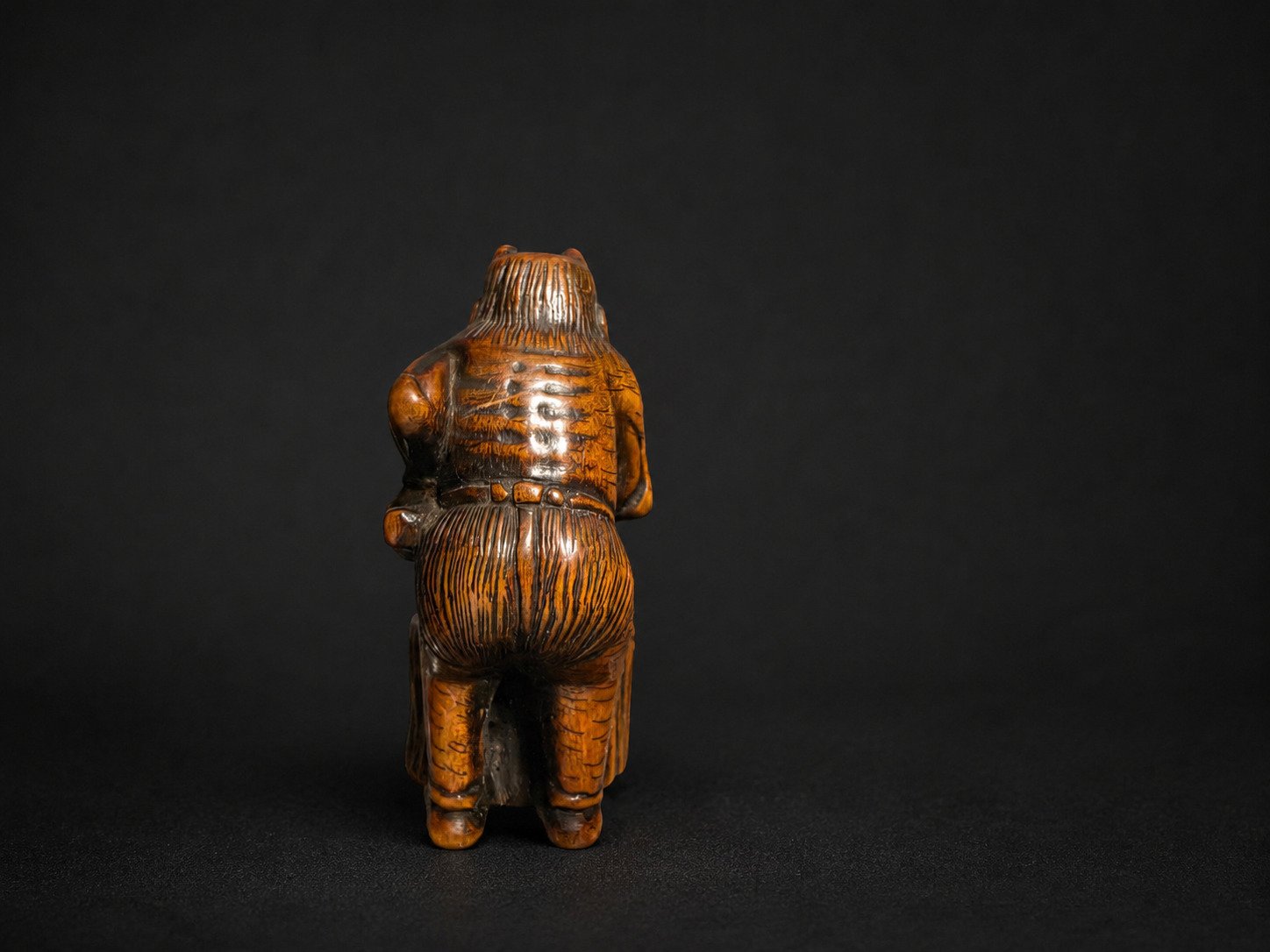
The oni is associated with the traditional tiger-skin garment (torafu), one of the most recognisable attributes of these demons in Japanese visual culture. The carving incorporates extensive diagonal and crosshatched striping across the figure, creating a strongly patterned surface evocative of a tiger’s coat.
The association between oni and tiger imagery is traditionally connected with the northeastern direction known as the kimon, or “demon gate.” In the zodiacal directional system this sector corresponds to the ox and tiger, helping explain the familiar combination of ox-like horns and tiger-skin clothing in representations of oni.
The deeply incised patterning also serves a sculptural purpose, creating contrast between the demon’s textured body and the smoother polished surfaces of the mortar and pestle.
Usu and Kine – The Mochi-Pounding Tools
The oni leans against a traditional usu and kine, the mortar and pestle used in Japan for pounding steamed glutinous rice into mochi.
The usu is represented as a substantial section of timber, its exterior carefully carved with vertical irregularities that imitate natural bark. The upper surface forms the working cavity of the mortar, while the long kine remains positioned upright at its centre.
This domestic equipment provides the key humorous element of the composition. The supernatural ferocity of the oni is deliberately softened by showing the creature occupied with a familiar everyday activity, creating a playful contrast between mythology and ordinary life.
Such humorous reversals were particularly well suited to netsuke, where carvers frequently transformed legendary beings, gods, demons and animals into lively scenes filled with wit and human character.
The Mortar and Carved Details
The outer surface of the mortar retains a pronounced bark-like texture, with deeply carved vertical channels suggesting the irregular surface of a tree trunk. A small crescent-shaped motif or mark is visible on one side.
The upright pestle bears an incised square mark. This may represent a maker’s mark, ownership mark or another identifying device, although its precise significance cannot be established from the carving alone and should therefore remain unconfirmed.
The different surface treatments — the patterned oni, textured mortar and relatively smooth pestle — give the compact composition considerable visual variety.
Carving and Composition
The composition is arranged vertically around the mortar and pestle, which provide both a functional narrative element and a structural centre for the carving. The oni bends naturally towards them, creating a balanced interaction between figure and object.
Deep incision is used throughout the hair, facial features, striped pattern and bark of the mortar, while broader polished surfaces catch the light across the limbs and wooden implements.
Darker coloration preserved within the recessed carving strengthens the contrast and contributes to the mature, toasted appearance of the boxwood.
Boxwood and Surface
The netsuke is carved from boxwood (tsuge), a dense, fine-grained wood traditionally favoured by Japanese netsuke carvers for its durability and ability to retain precise detail.
The wood displays warm toasted and amber-brown tones, with darker shading concentrated within deeply carved areas. This tonal contrast helps articulate the oni’s features, the patterned surfaces and the naturalistic bark of the mortar.
Folklore and Collector’s Interest
The oni occupies a central place in Japanese folklore as a powerful supernatural being commonly associated with physical strength, violence and punishment. Yet Japanese popular art frequently treated these demons with considerable humour, placing them in situations that undermine their fearsome reputation.
Here, the image of an oni apparently resting after pounding mochi creates precisely this kind of comic reversal. The combination of folklore, domestic life and expressive characterisation gives the netsuke a strong narrative quality beyond its function as a small wearable object.
For collectors, the piece combines several desirable characteristics: classic oni iconography, boxwood carving, an unusual usu and kine subject, varied surface treatment and a compact yet highly readable composition.
Specifications
- Object: Japanese netsuke
- Type: Katabori netsuke
- Subject: Oni resting by a mochi-pounding mortar and pestle
- Period: Edo period
- Origin: Japan
- Material: Boxwood (tsuge)
- Equipment depicted: Usu (mortar) and kine (pestle)
- Iconography: Horned oni with tiger-skin-inspired striped decoration
- Marks: Incised square mark to the pestle; meaning unconfirmed
- Dimensions: 4.3 × 2.6 cm
A lively Edo-period boxwood netsuke depicting a horned oni resting beside a traditional usu and kine used for pounding mochi. Combining fierce demon iconography with humorous domestic imagery, richly textured carving and warm toasted patination, the piece exemplifies the wit and narrative imagination found in Japanese figurative netsuke.