Nimai-dō Gusoku Samurai Armor
Mid Edo Period · Certified Especially Valuable Material · Nihon Katchū Bugu Kenkyū Hozonkai
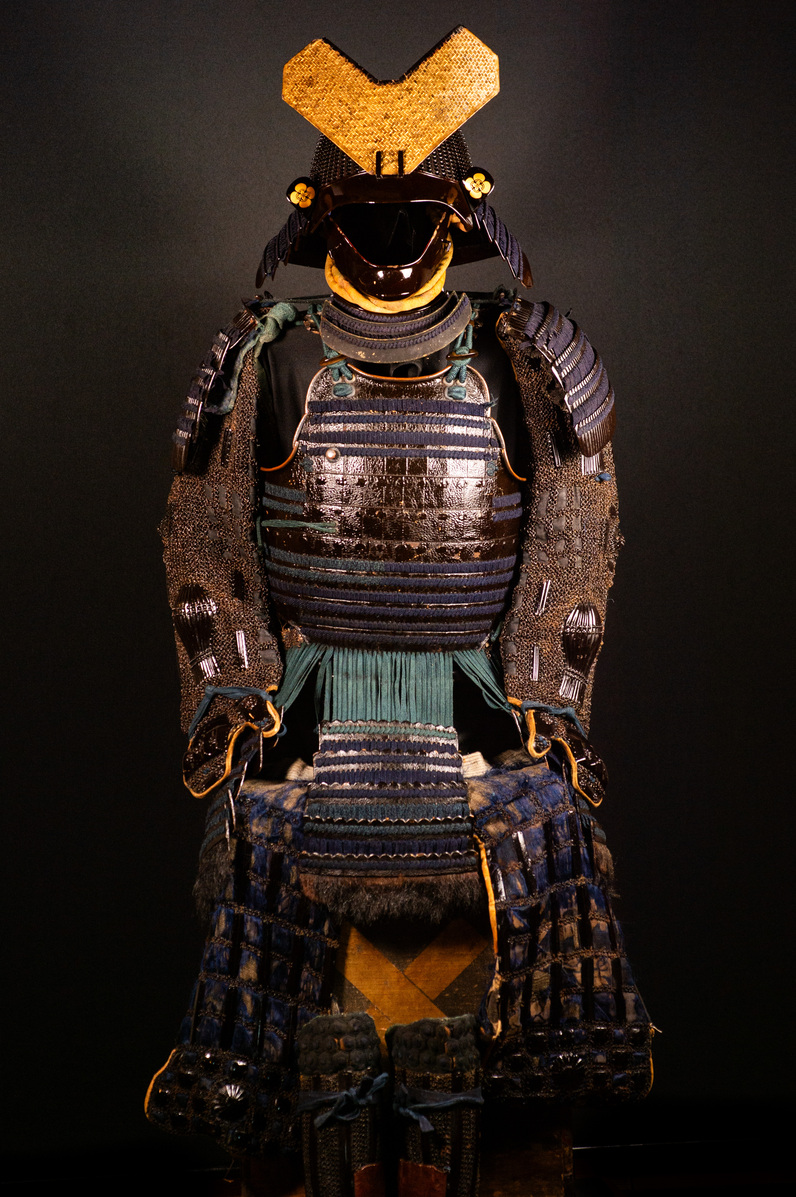
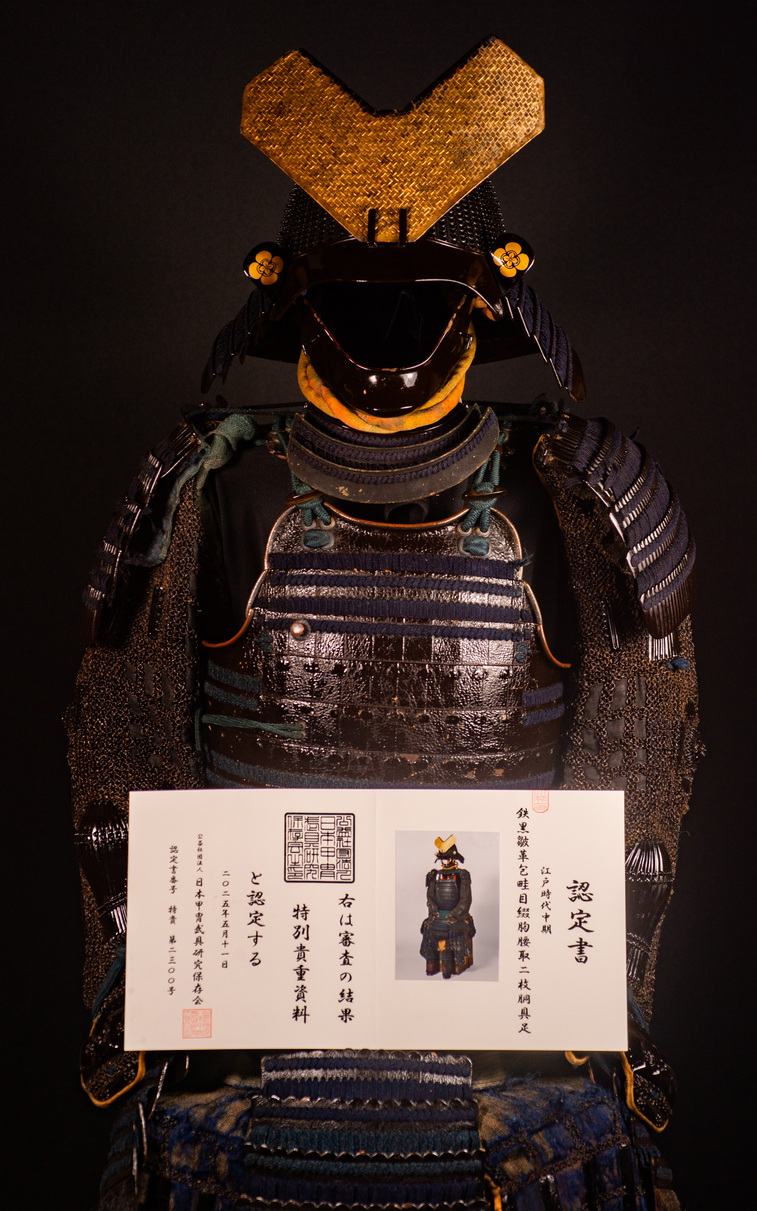
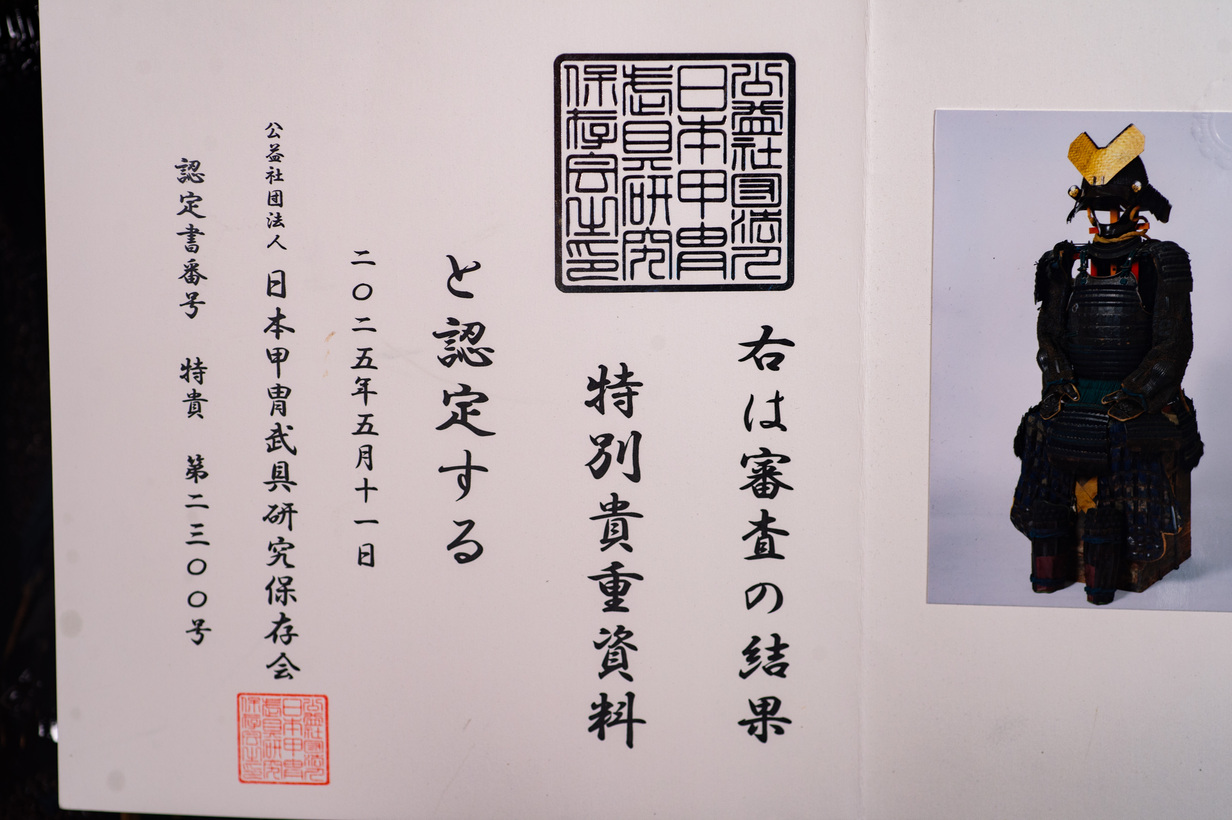
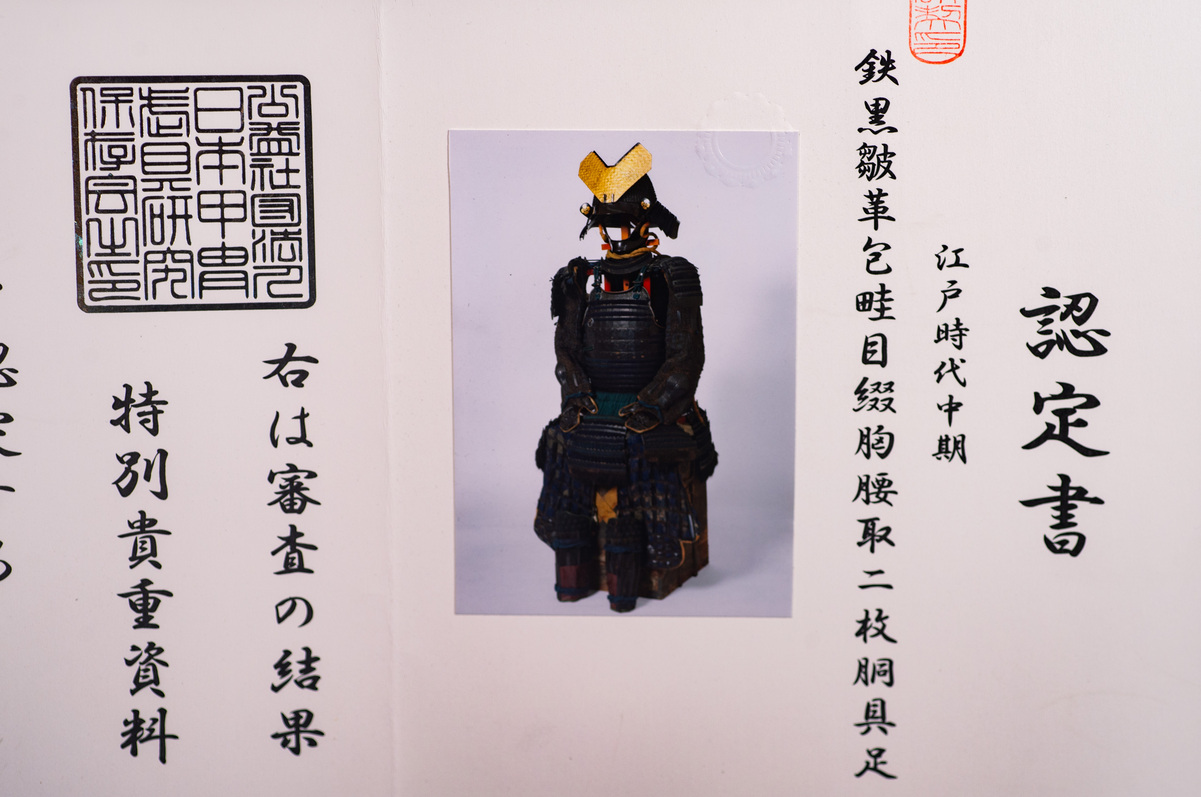
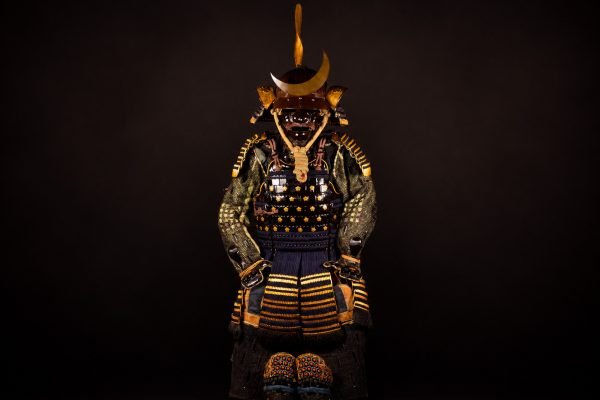
A complete and authentic Japanese samurai armor, or gusoku, dating to the mid Edo period. This exceptional nimai-dō gusoku is accompanied by an official certificate of authenticity issued by the Nihon Katchū Bugu Kenkyū Hozonkai, the Japanese Society for the Research and Preservation of Armor and Weaponry, where it is classified as Especially Valuable Material, certificate number 2300, dated May 11, 2025.
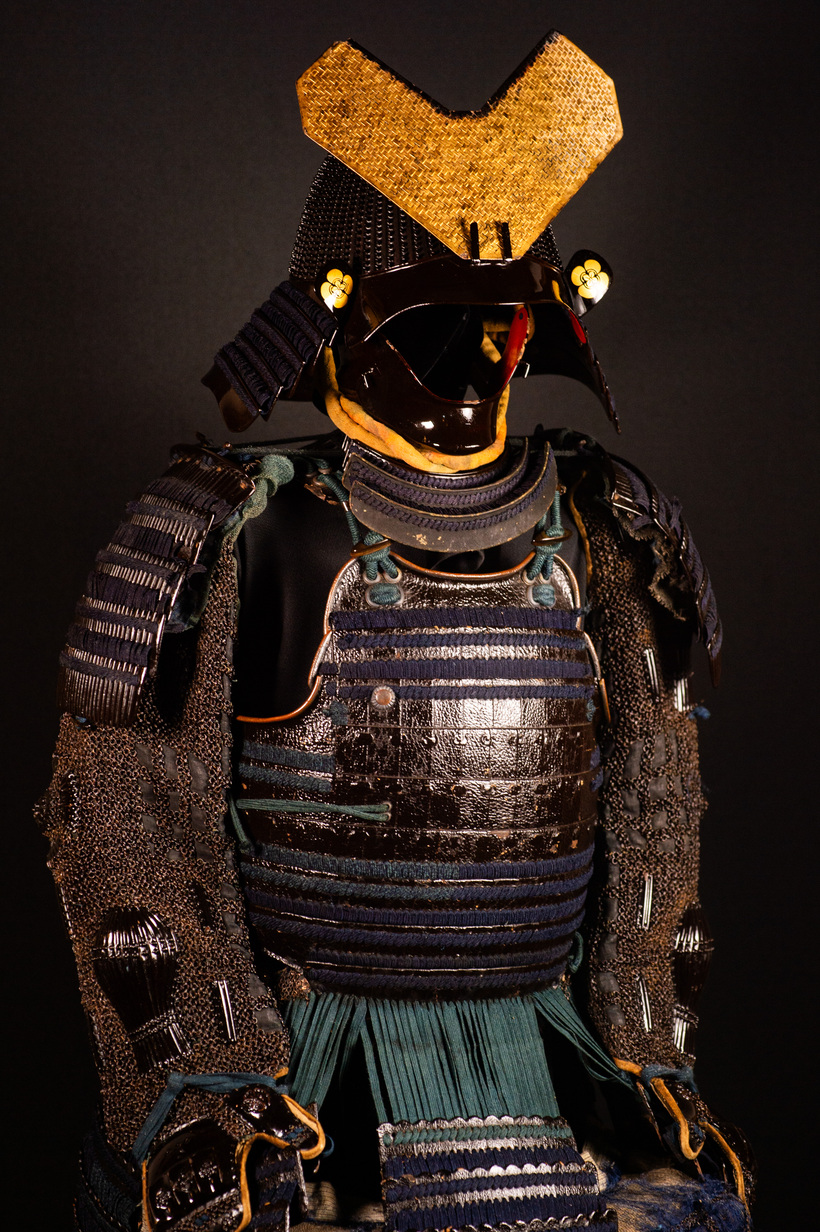
This armor represents a highly desirable combination of historical authenticity, honest condition, original lacquer and formal Japanese authentication. Built for practical use rather than purely decorative display, it preserves the sober strength and technical refinement characteristic of high-quality Edo-period samurai armor.
The Helmet (Kabuto)
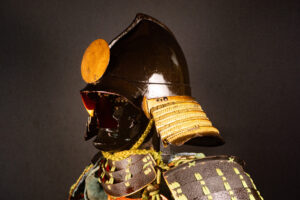
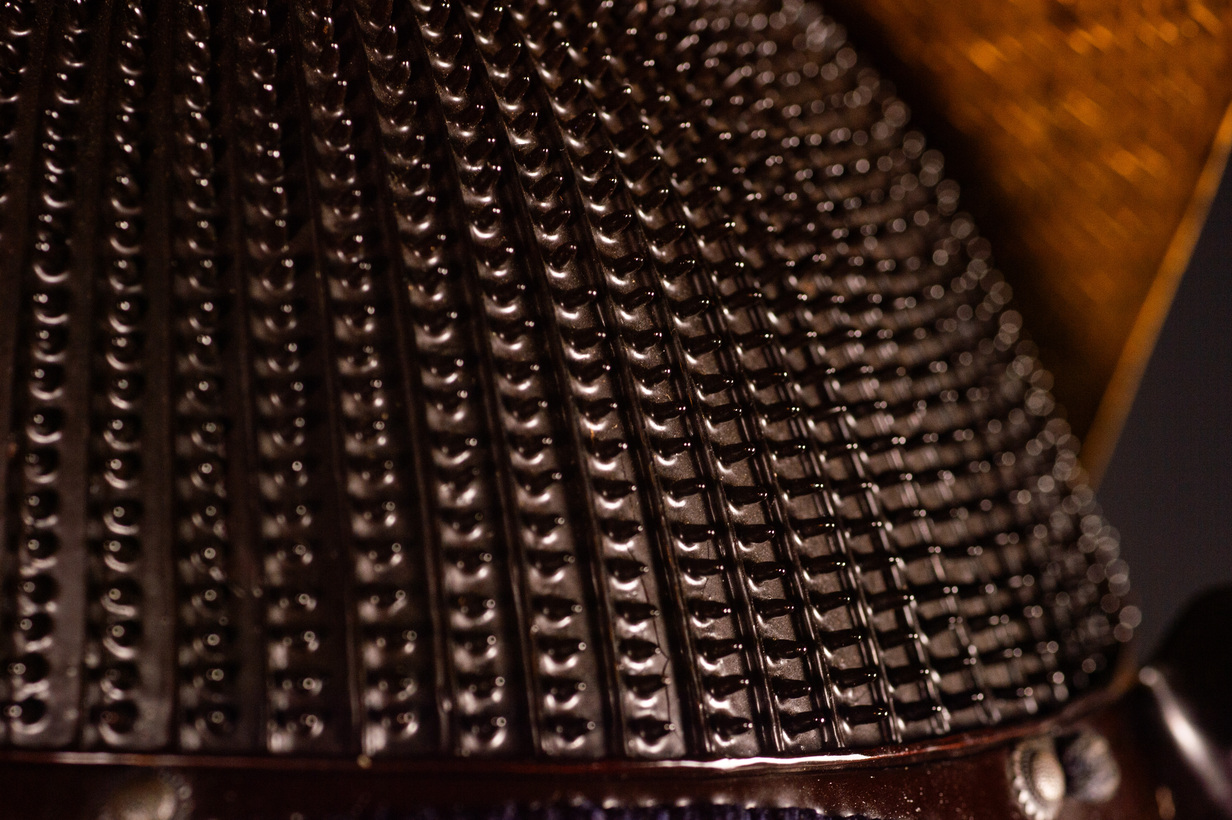
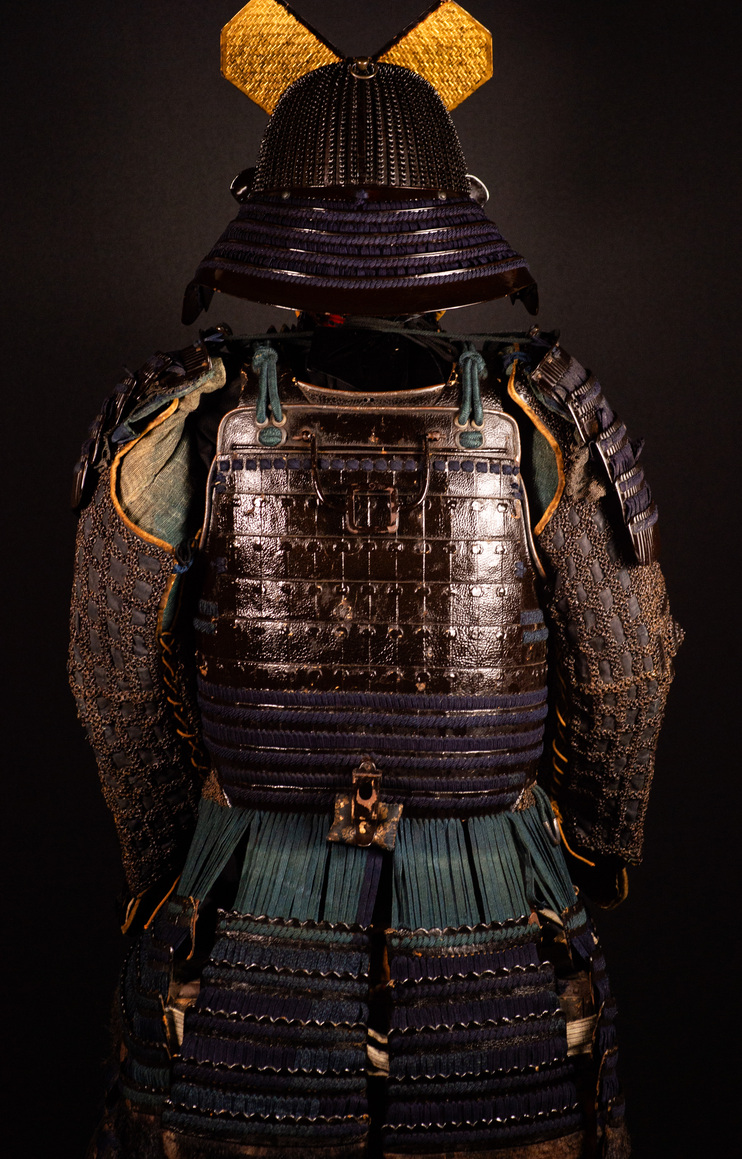
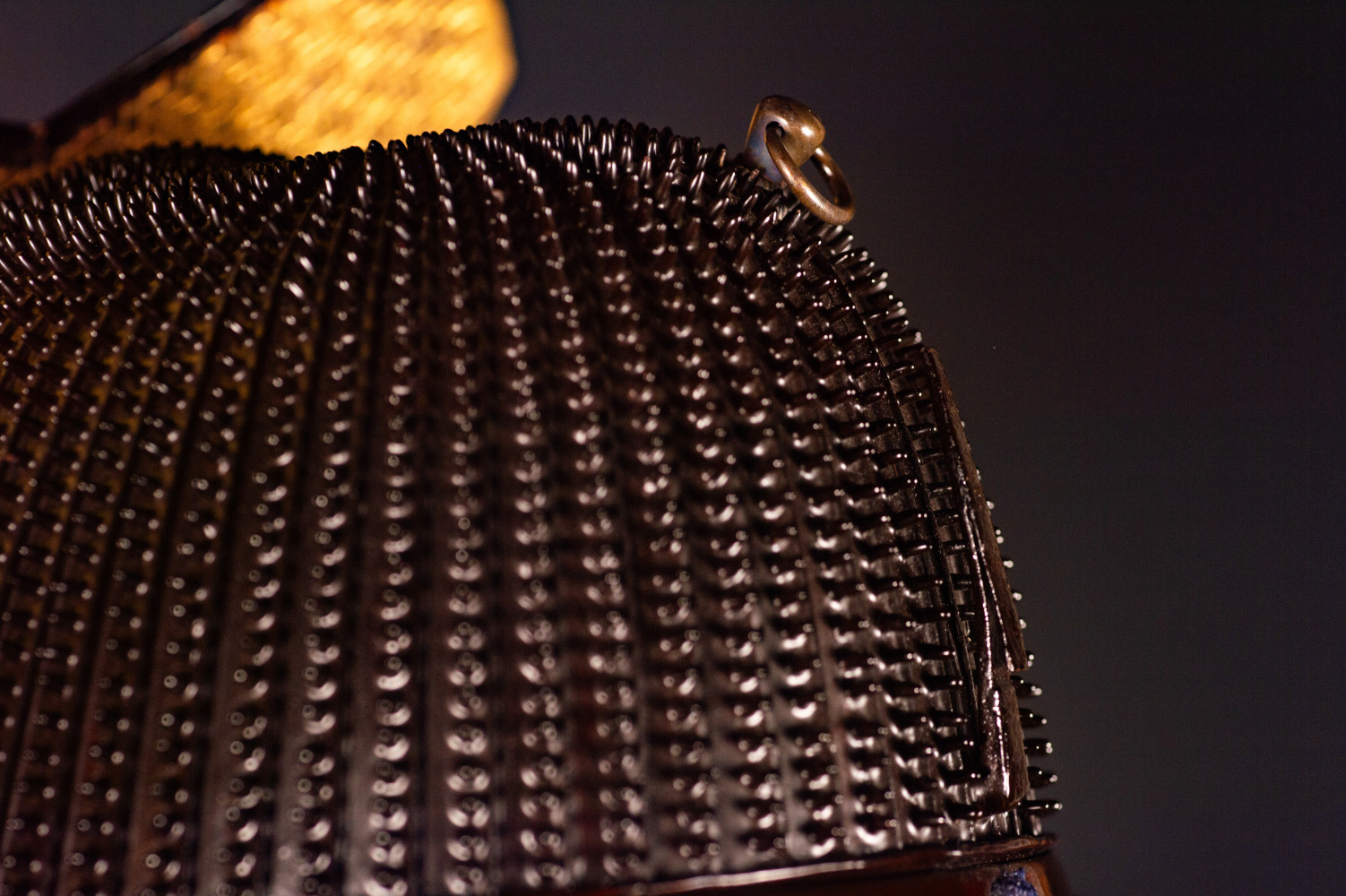
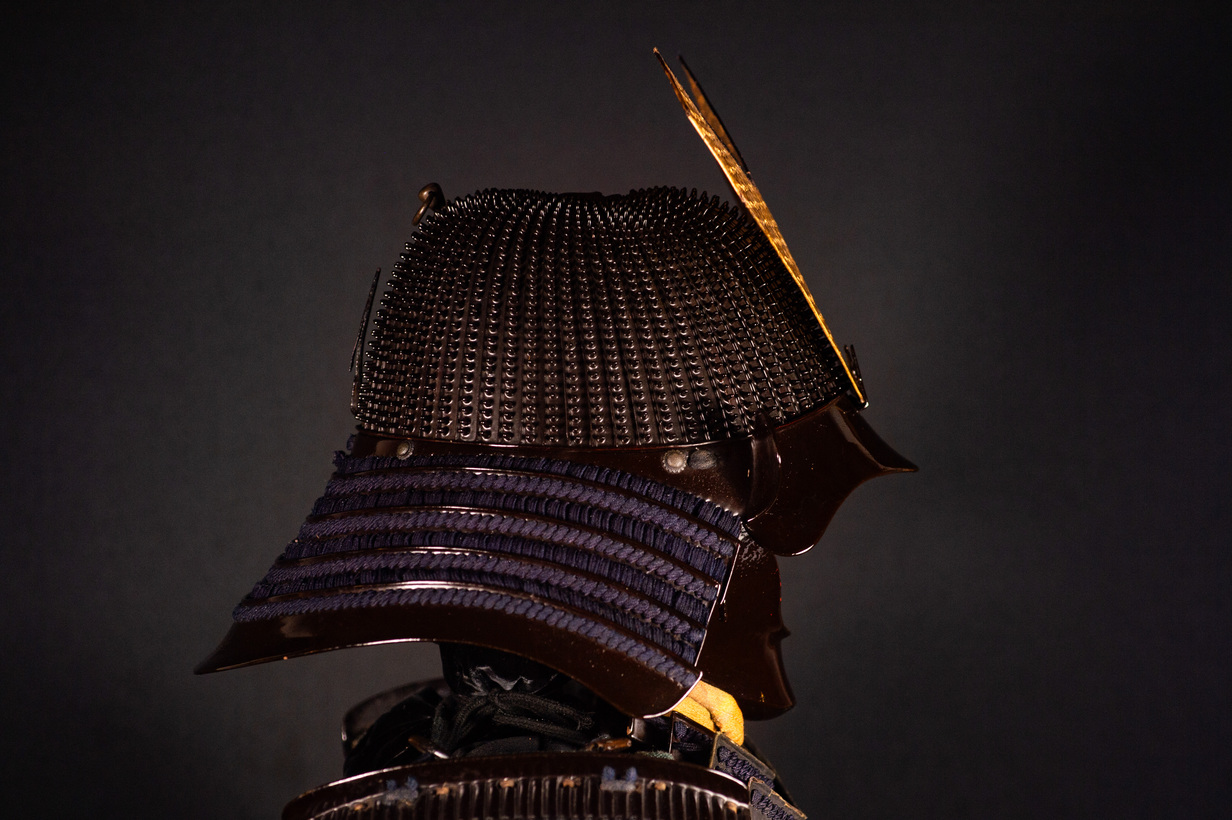
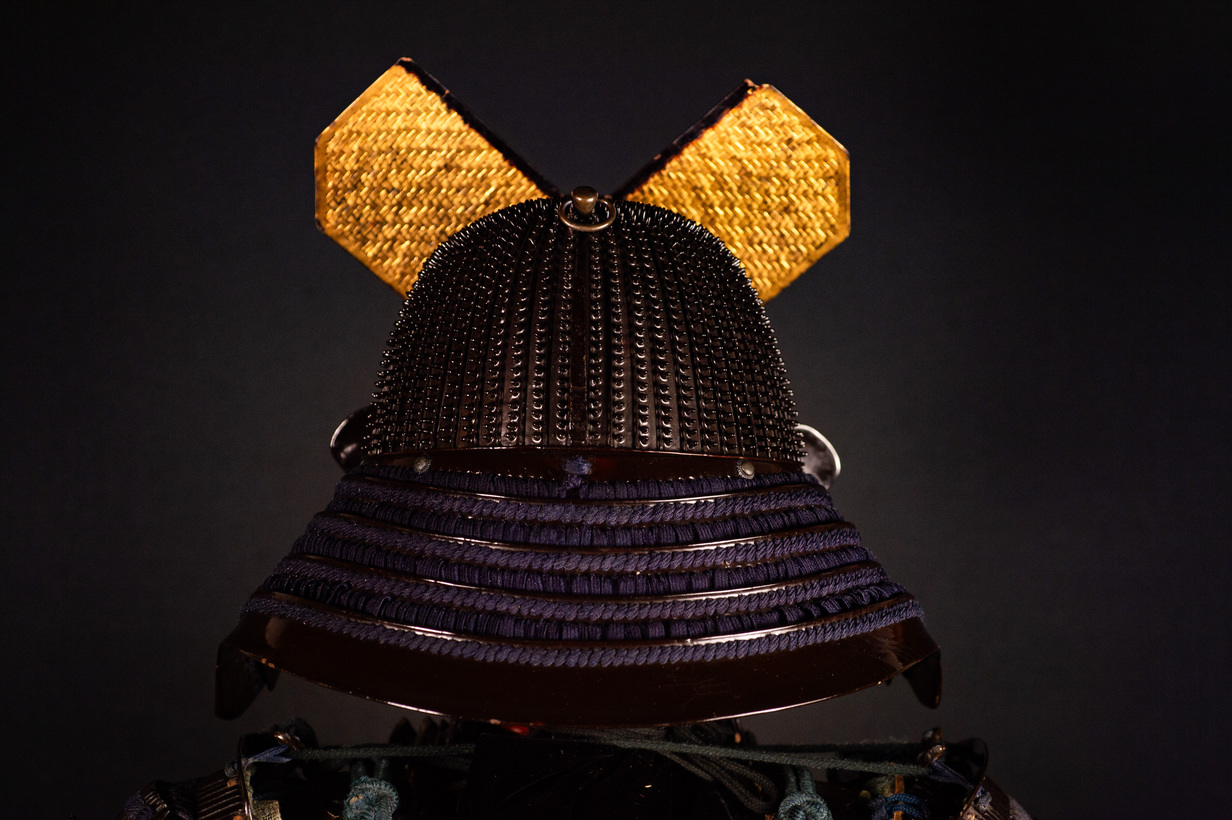
The helmet bowl, or bachi, is of koboshi type, a multi-plate riveted construction fitted with small conical rivets arranged in tightly packed vertical rows. This is one of the most labor-intensive and technically demanding forms of Japanese lamellar helmet construction, and it is highly regarded by collectors and scholars of samurai armor.
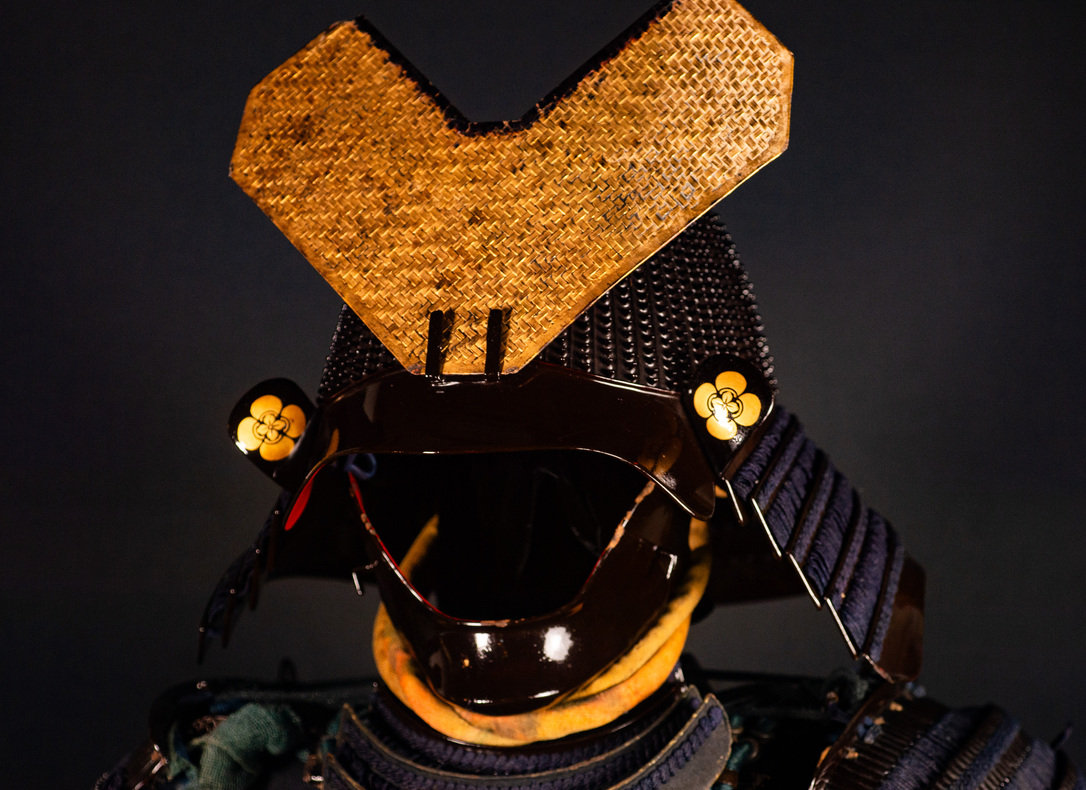
The fukikaeshi retain their original black lacquer on the exterior and vermilion lacquer on the interior. This is an especially important detail, as the interior surfaces of helmets are rarely restored, making the preserved vermilion lacquer a strong indication of the armor’s period-original quality.
Rising from the crown is a striking V-shaped maedate woven in gold fiber, giving the helmet a powerful and elegant presence. Both fukikaeshi bear a five-petaled floral mon applied in gold over black lacquer.
The shikoro descends in stepped lamellar tiers, laced with the same indigo-blue odoshi that appears throughout the armor, creating a coherent and dignified visual rhythm.
The Mask (Menpō)
The menpō protects the lower part of the face and is finished in dark lacquer. Its pronounced anatomical modelling across the cheekbones and chin gives the mask a strong and expressive character.
It features an applied moustache made of natural horsehair and a vermilion-lacquered lower lip, a distinguishing feature often associated with high-grade menpō of this period. The combination of dark lacquer, natural hair and red lacquer creates a dramatic and authoritative expression.
The Cuirass (Dō)
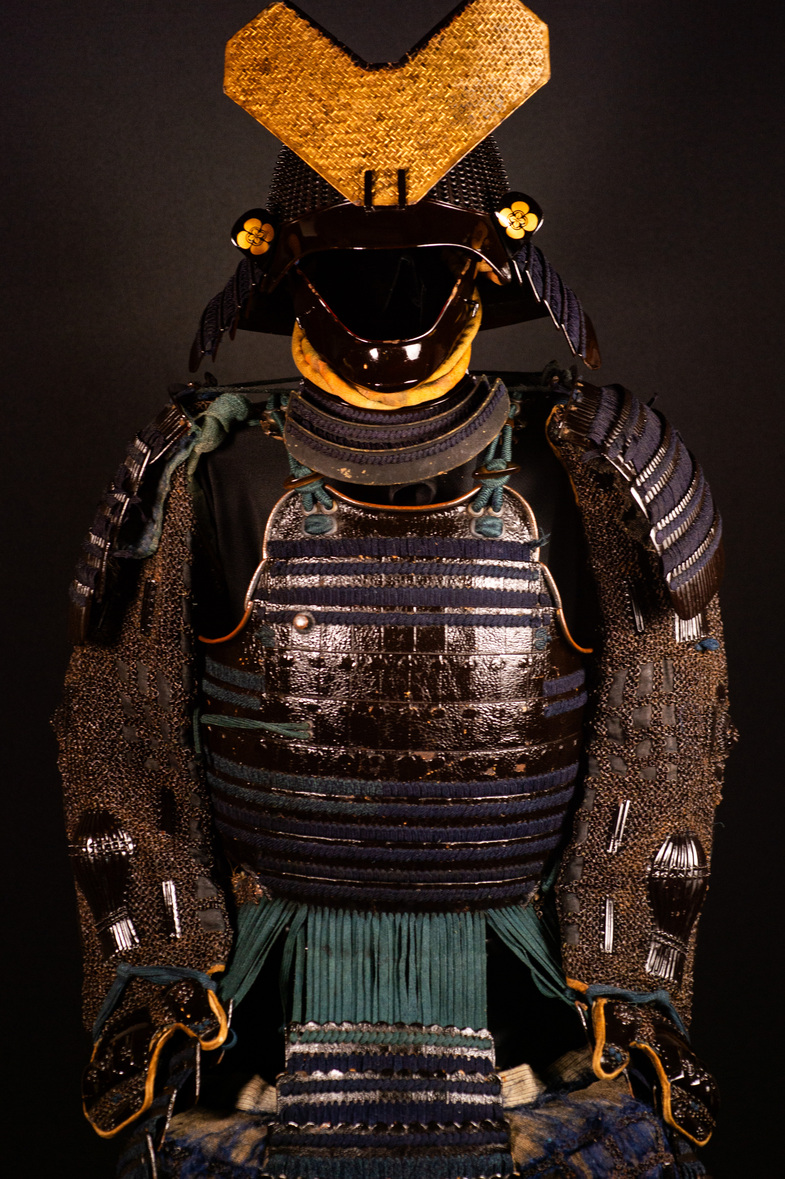
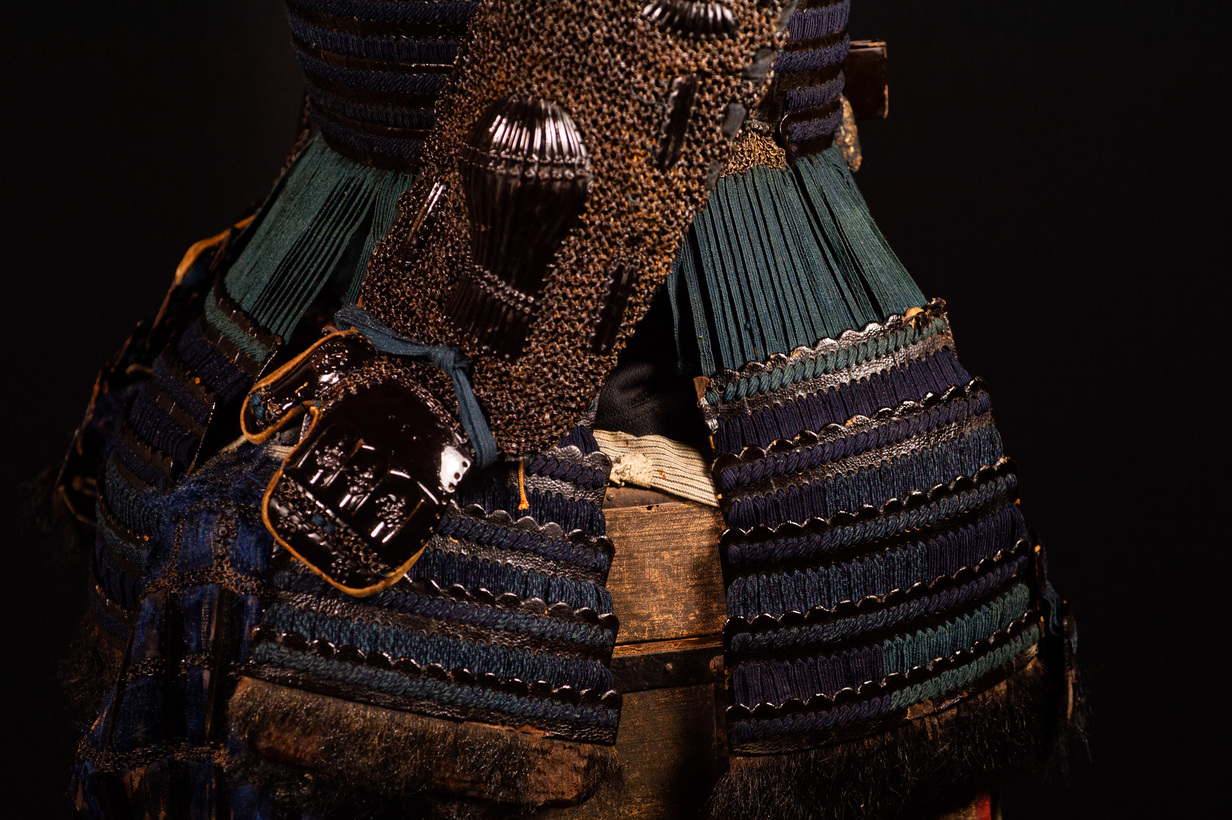
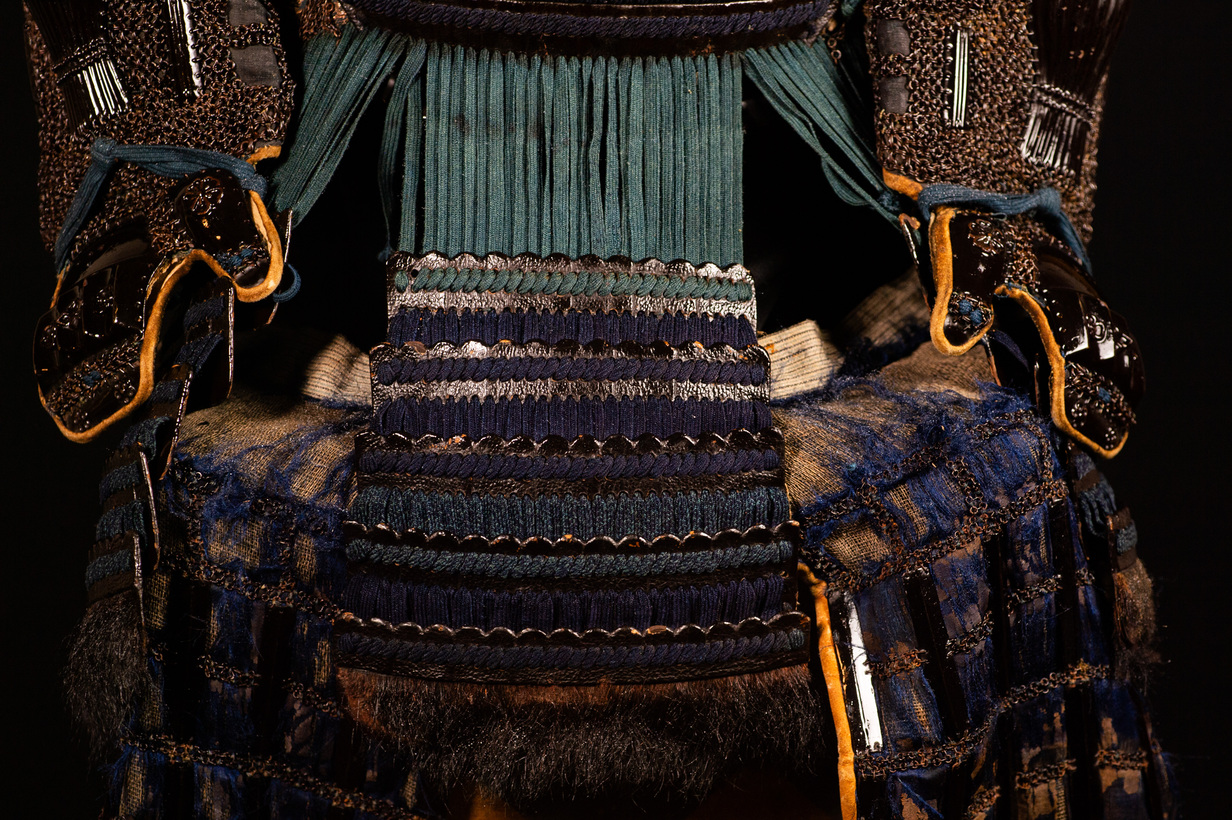
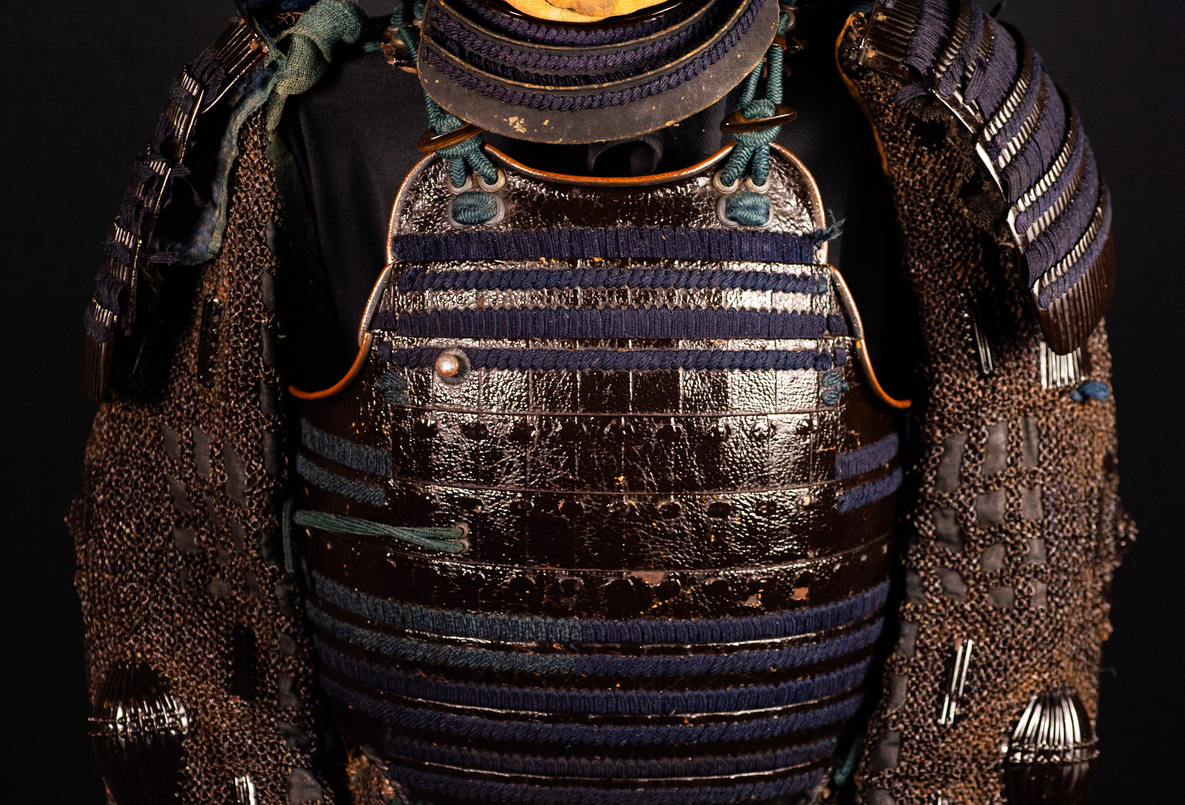
The cuirass is a nimai-dō, formed from two main sections and constructed with horizontal black-lacquered plates. These plates are joined with azamezuri stitching over indigo-blue sugake odoshi lacing.
This spaced lacing system is characteristic of practical Edo-period armor. Lighter and less dense than earlier full-laced constructions, sugake odoshi allowed greater efficiency, flexibility and ease of maintenance while preserving the protective function of the armor.
The sides incorporate chainmail reinforcement fitted with riveted floral plates, a sophisticated hybrid solution combining the rigidity of lacquered iron plate construction with the flexibility of mail. This technical feature reflects the practical intelligence of Edo-period armor design.
Sleeves and Shoulder Guards (Kote & Sode)
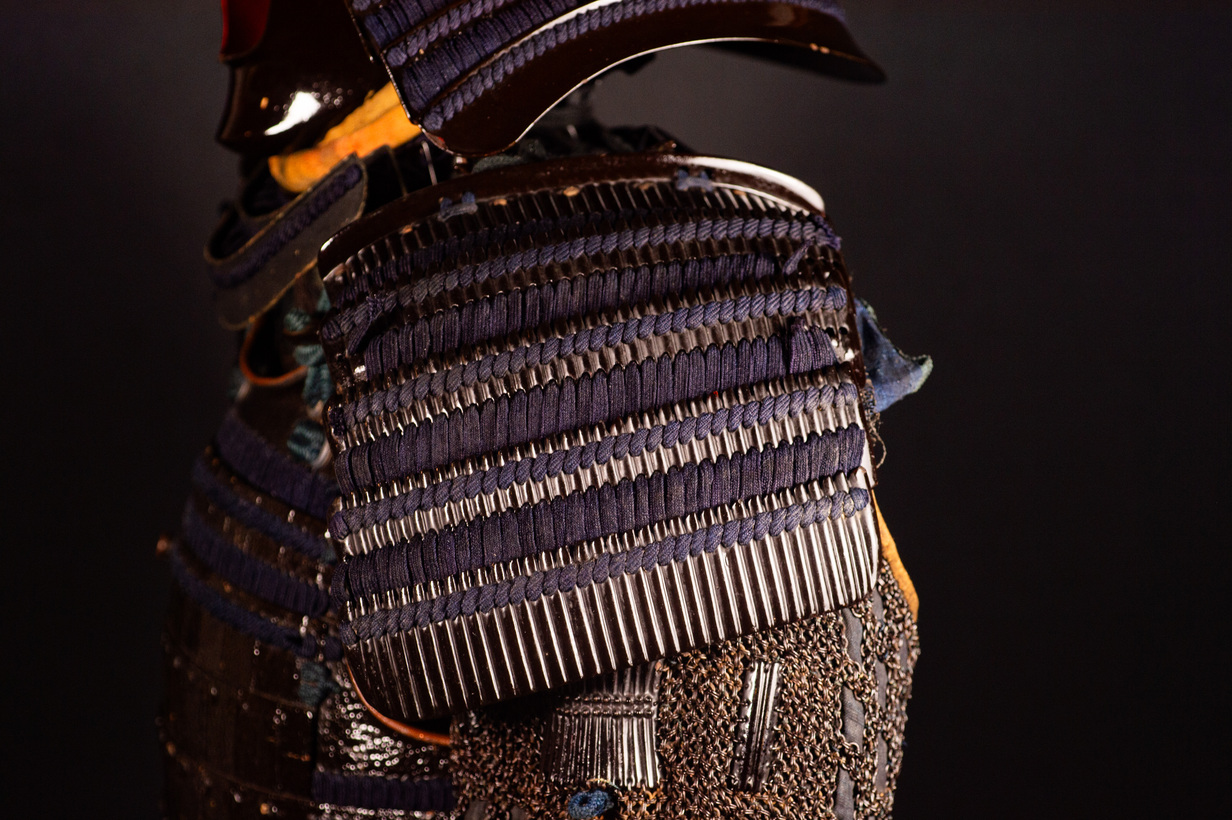
The kote protect the arms with chainmail reinforced by riveted metal plates arranged along the length of the sleeves. This construction provides protection from shoulder to wrist while maintaining the mobility required for use.
The sode, or rectangular shoulder guards, combine lacquered lamellae with mail panels. Their edges are trimmed in tanned leather in green and ochre tones, adding subtle colour contrast while preserving the sober and functional character of the armor.
The Tassets (Kusazuri)
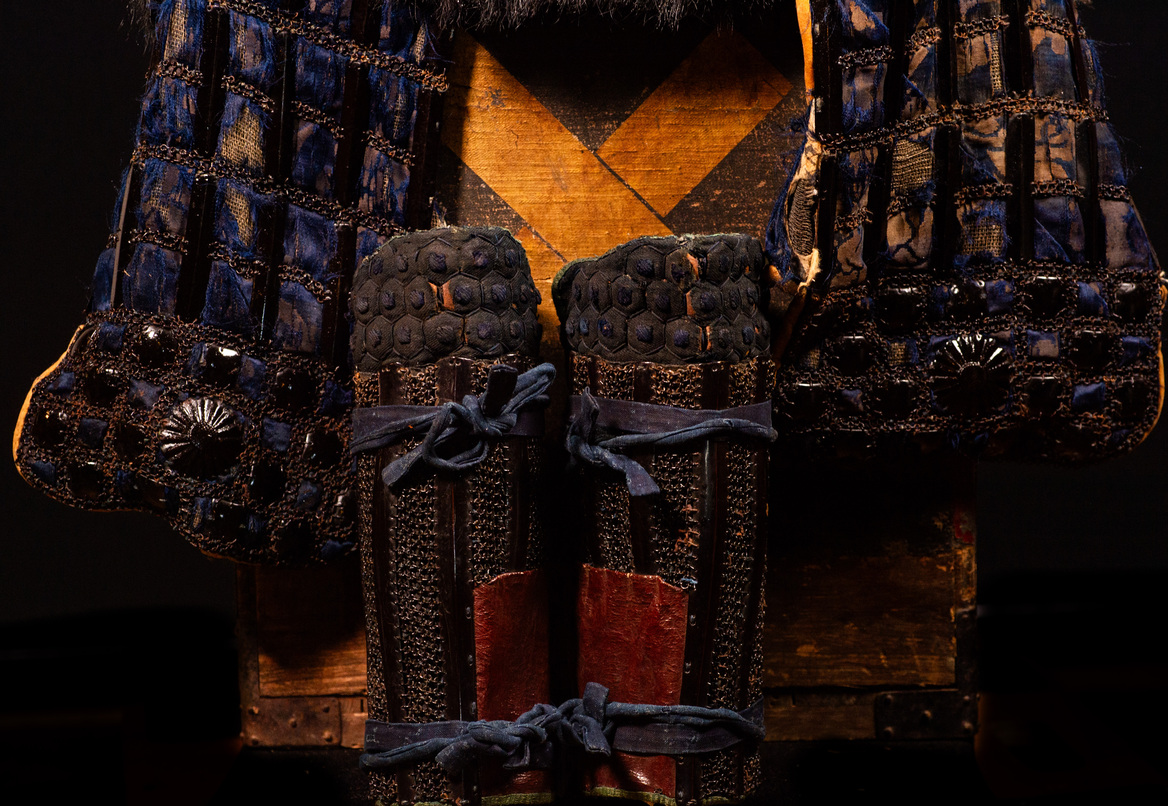
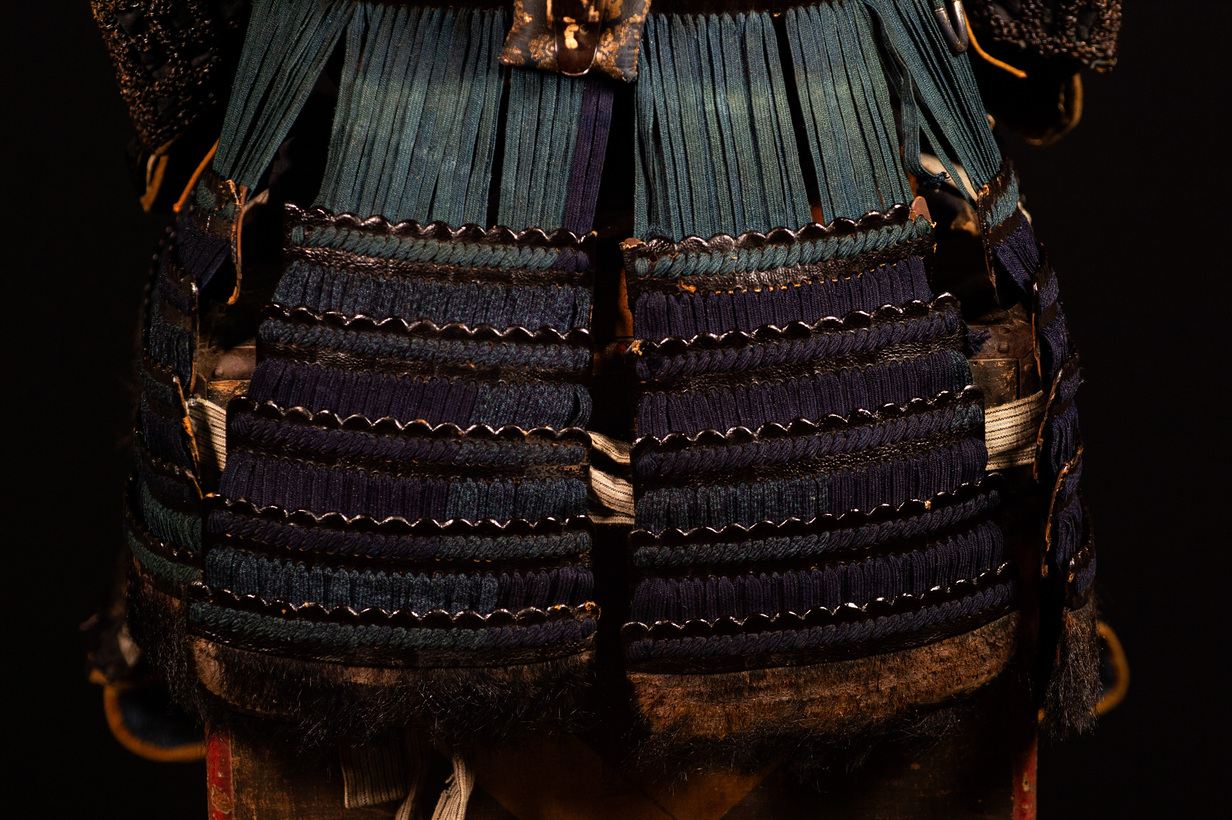
The kusazuri descend from the waist in lacquered lamellae, laced with the same indigo-blue odoshi used throughout the set. This consistent lacing gives the armor visual unity and reinforces its identity as a complete, coherent ensemble.
The lower elements are finished with pleated fabric in a blue-green shade, adding texture and movement while maintaining the restrained colour palette of the armor.
Condition
The original lacquer survives across the vast majority of the armor’s surfaces. Wear is concentrated mainly in areas of greatest friction, such as the underarms and the lower edge of the cuirass, consistent with genuine historical use.
There are no invasive restorations. The preserved wear, original lacquer and structural integrity give the armor a strong sense of authenticity and historical honesty.
The armor is accompanied by its original Japanese certificate of authenticity, which supports and confirms the main characteristics described above.
Documentation
This armor is accompanied by an official certificate issued by the Nihon Katchū Bugu Kenkyū Hozonkai, the Japanese Society for the Research and Preservation of Armor and Weaponry.
The certificate classifies the armor as Especially Valuable Material, certificate number 2300, dated May 11, 2025.
Specifications
- Classification: Complete Japanese Samurai Armor / Gusoku 具足
- Type: Nimai-dō Gusoku
- Period: Mid Edo Period
- Dō: Two-section cuirass with horizontal black-lacquered plates
- Lacing: Indigo-blue sugake odoshi
- Helmet: Koboshi bachi kabuto with multi-plate riveted bowl
- Maedate: V-shaped crest woven in gold fiber
- Fukikaeshi: Black lacquer exterior, vermilion lacquer interior, gold floral mon
- Shikoro: Stepped lamellar neck guard with indigo-blue lacing
- Mask: Dark lacquered menpō with natural horsehair moustache
- Menpō Details: Vermilion-lacquered lower lip
- Kote: Chainmail sleeves with riveted metal plates
- Sode: Lacquered lamellae with mail panels and leather-trimmed edges
- Kusazuri: Lacquered lamellar tassets with indigo-blue odoshi
- Condition: Original lacquer largely preserved, honest wear, no invasive restorations
- Certificate: Nihon Katchū Bugu Kenkyū Hozonkai
- Classification on Certificate: Especially Valuable Material
- Certificate Number: 2300
- Certificate Date: May 11, 2025
Collector’s Value
Certified complete samurai armors from the Edo period are highly sought after, particularly when they preserve original lacquer, honest signs of historical use and formal authentication from a recognized Japanese armor preservation society.
This nimai-dō gusoku is especially appealing for its koboshi kabuto, original lacquered surfaces, expressive menpō, indigo-blue lacing and practical construction. Rather than being a purely decorative assembly, it retains the character of armor made with real function in mind.
The official certificate from the Nihon Katchū Bugu Kenkyū Hozonkai, classifying the armor as Especially Valuable Material, adds considerable importance and confidence for collectors of Japanese arms and armor.
Authentic, complete and formally certified, this mid Edo-period nimai-dō gusoku is a distinguished example of Japanese samurai armor. With its highly regarded koboshi kabuto, expressive lacquered menpō, original surfaces, indigo-blue lacing and official Japanese certification, it represents an important and historically honest armor for serious collection, study and display.