Signed Maki-e Inrō with Rooster and Hen – Gold, Silver & Red Lacquer
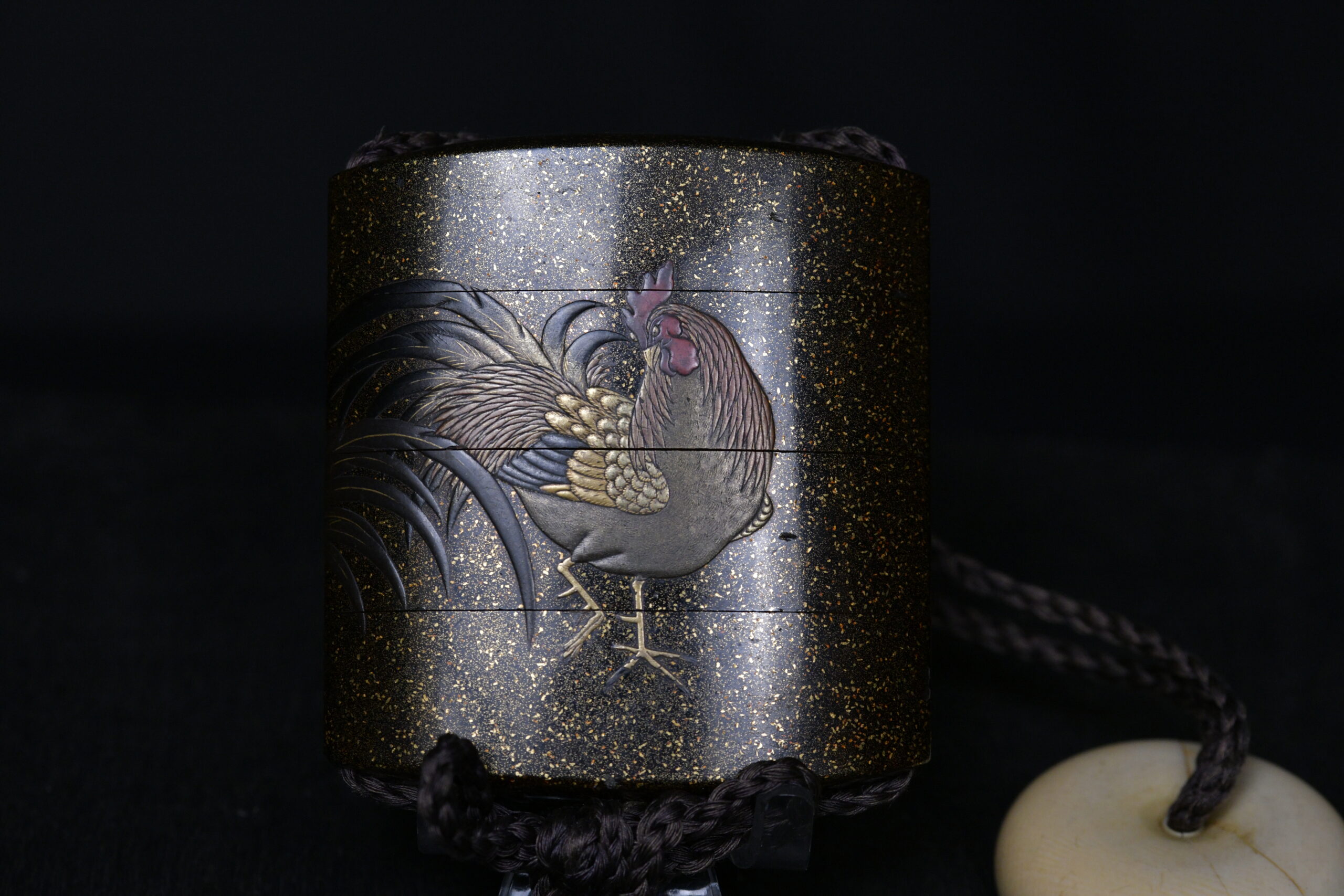
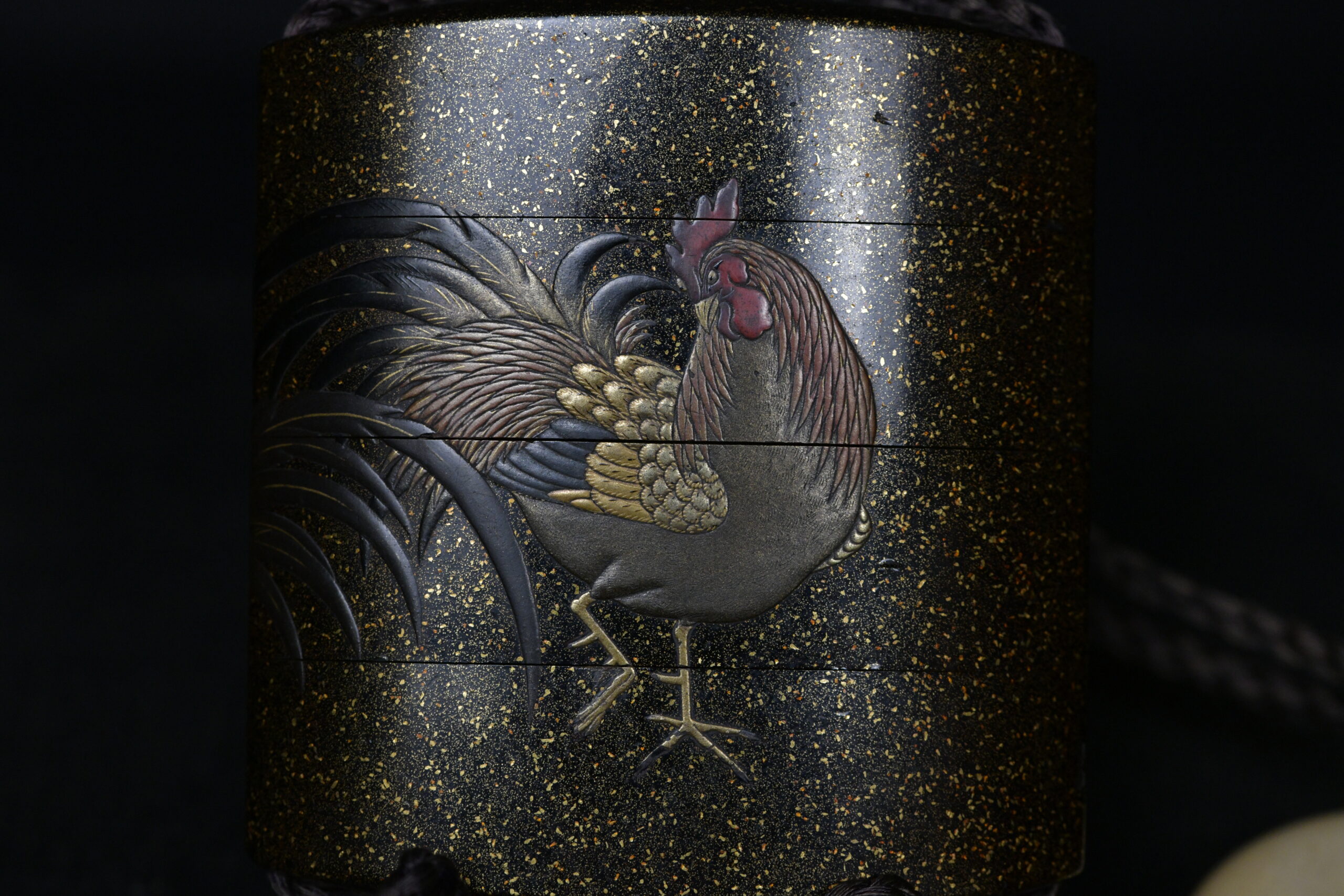
A finely decorated Japanese maki-e inrō depicting a rooster and hen in an animated naturalistic composition.
The birds are rendered with careful attention to posture, plumage and movement, while the use of gold, silver and red lacquer creates contrast across the surface. Particularly striking are the red accents used for the birds’ crests, which enliven the composition against the lacquer ground.
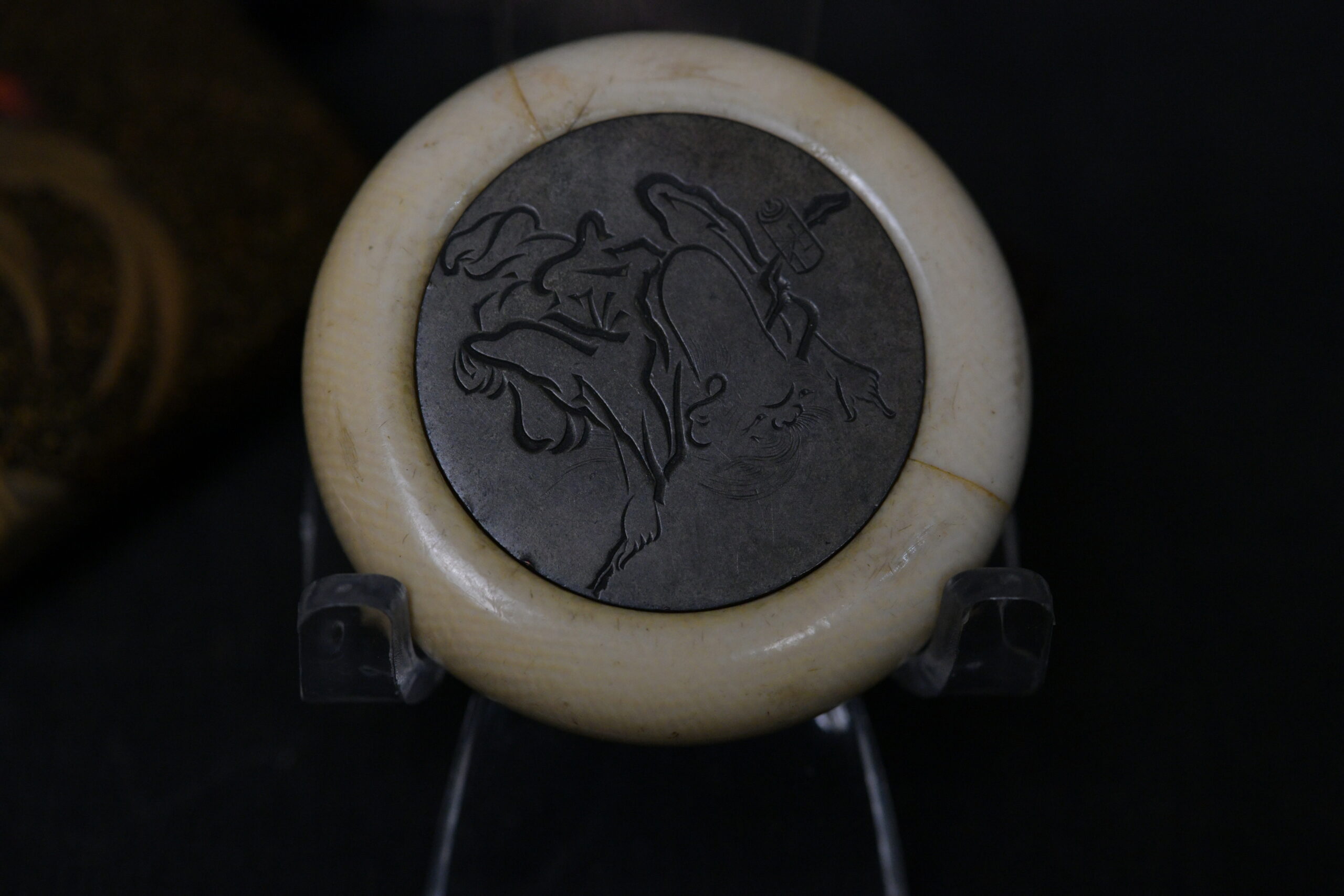
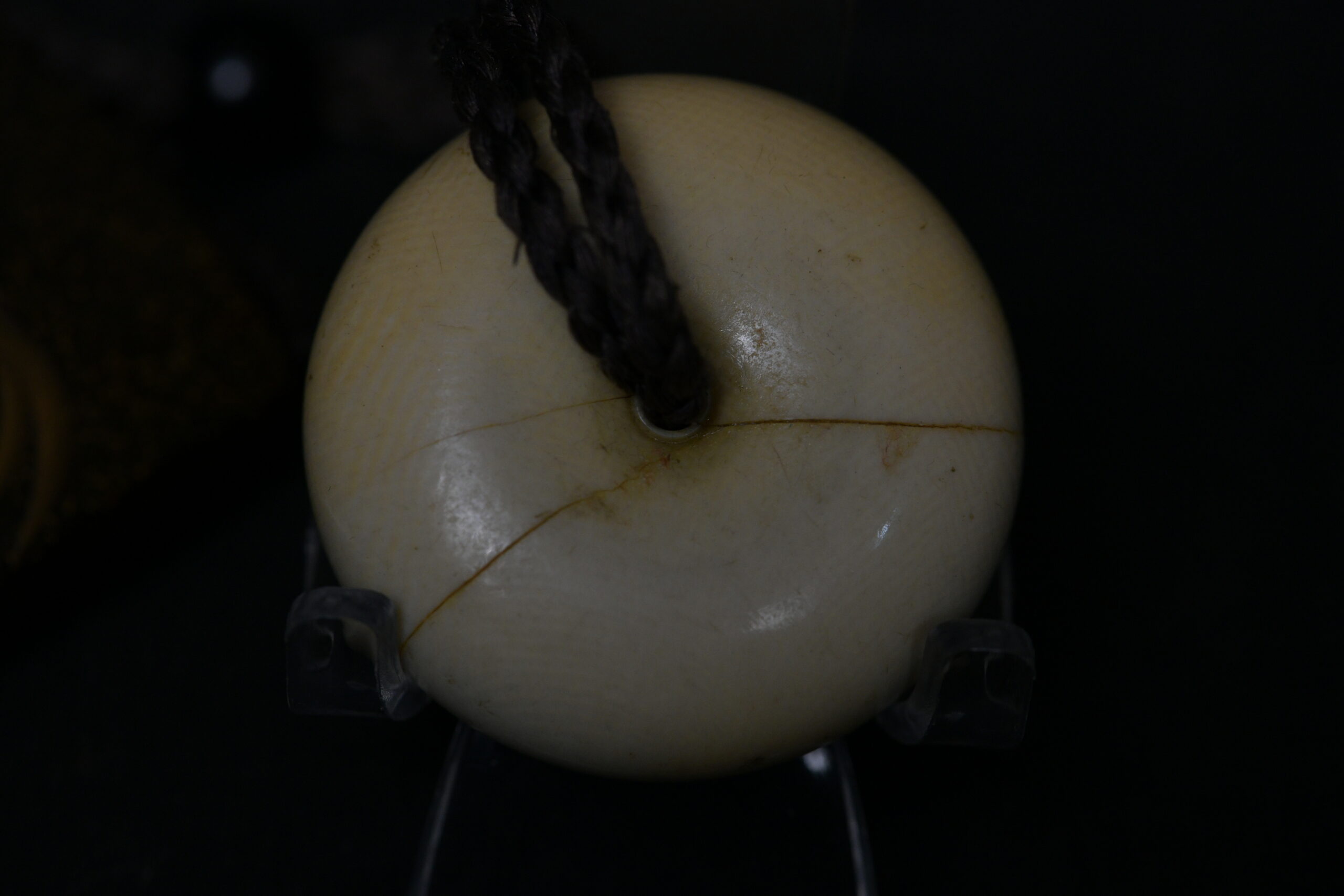
The inrō is signed and is accompanied by a kagamibuta netsuke. The kagamibuta shows historical repairs, which form part of the documented condition of the ensemble.
The inrō measures approximately 8 × 7 cm.
Rooster and Hen Motif
The principal decoration depicts a rooster and hen, a subject well suited to the compact format of an inrō because the contrasting postures and plumage of the two birds allow the artist to create movement across a relatively small surface.
Rather than appearing static, the birds are presented with an evident sense of interaction and animation. Their bodies, feathers and crests become the central decorative elements of the composition.
Birds and animals were recurring subjects in Japanese decorative arts, allowing lacquer artists to combine close observation of nature with stylised design.
Maki-e Lacquer Decoration
The decoration is executed in maki-e, one of the most characteristic techniques of Japanese lacquer art.
Maki-e — literally “sprinkled picture” — involves applying metallic powders, traditionally including gold or silver, to designs created on a lacquered surface.
The technique can produce subtle changes in colour, texture and reflection, allowing very small objects such as inrō to carry surprisingly complex pictorial decoration.
On this example, the use of metallic tones is complemented by red lacquer, adding visual emphasis to individual details of the birds.
Gold, Silver and Red Lacquer
The decorative scheme combines gold, silver and red lacquer, creating a richer palette than a purely monochromatic lacquer treatment.
Gold and silver contribute reflective highlights to the plumage and surrounding details, while the red colouring of the crests immediately draws the eye toward the birds’ heads.
The result is a compact composition in which colour and metallic decoration are used selectively rather than uniformly across the entire surface.
What Is an Inrō?
An inrō is a traditional Japanese portable case made from several fitted compartments stacked vertically and held together by a cord.
Because traditional Japanese clothing such as the kimono did not incorporate conventional pockets, small personal objects could be carried suspended from the obi, or sash.
The inrō belonged to the broader group of hanging accessories known as sagemono. A netsuke acted as a toggle above the obi, preventing the suspended case from slipping through the sash.
Although fundamentally functional, inrō developed into an important field of Japanese decorative art. Lacquer artists used their small surfaces for exceptionally sophisticated compositions employing techniques such as maki-e, shell inlay and various forms of relief decoration.
Kagamibuta Netsuke
This ensemble is accompanied by a kagamibuta netsuke.
Kagamibuta are a distinctive form of netsuke generally constructed as a shallow bowl or base fitted with a separate decorative plate. Their different construction sets them apart from netsuke carved entirely as a single sculptural form.
The kagamibuta accompanying this inrō shows historical repairs. These should be considered when assessing the condition of the complete ensemble and represent part of its history of use and preservation.
Signed
The inrō bears a signature.
No specific reading or attribution of the signature is proposed here, so the piece is described simply as signed rather than assigned to a particular lacquer artist or workshop.
Movement and Composition
One of the most attractive aspects of the piece is the way the birds have been arranged to create a sense of movement within the small surface of the inrō.
The lacquer artist uses changes in posture, feather detail and colour to differentiate the two birds while keeping them visually connected as part of a single composition.
This ability to transform a compact utilitarian object into a miniature pictorial surface is one of the defining qualities of high-level Japanese inrō decoration.
Dimensions
- Inrō: approximately 8 × 7 cm
Key Features
- Object: Japanese inrō
- Technique: Maki-e lacquer
- Subject: Rooster and hen
- Decoration: Gold, silver and red lacquer
- Signature: Signed
- Accompanying piece: Kagamibuta netsuke
- Kagamibuta condition: Historical repairs
- Inrō dimensions: Approximately 8 × 7 cm
Condition
The inrō is preserved in attractive condition and retains the decorative details of the rooster-and-hen composition, including its gold, silver and red lacquer elements.
The accompanying kagamibuta netsuke has undergone old repairs. These interventions are part of the historical condition of the ensemble and should be considered when evaluating the piece.
As with all antique Japanese lacquer objects, minor variations, surface wear and traces of age should be understood within the context of the object’s historical use.
A finely decorated signed Japanese maki-e inrō with rooster and hen, distinguished by its animated bird composition and selective use of gold, silver and vivid red lacquer. Accompanied by a historically repaired kagamibuta netsuke, the ensemble combines the practical tradition of sagemono with the refined miniature artistry for which Japanese lacquerwork is renowned.