








1 in stock
1 in stock
Add to Compare
Add to Wishlist
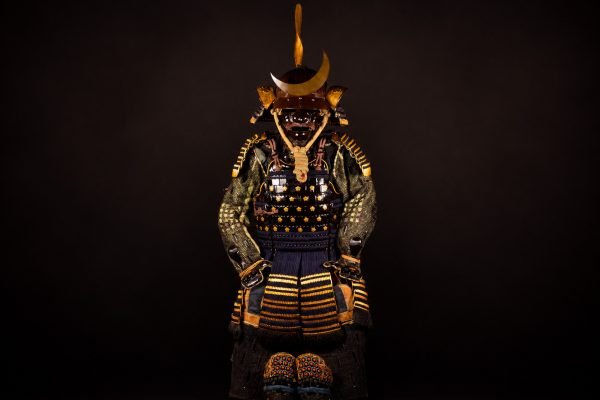
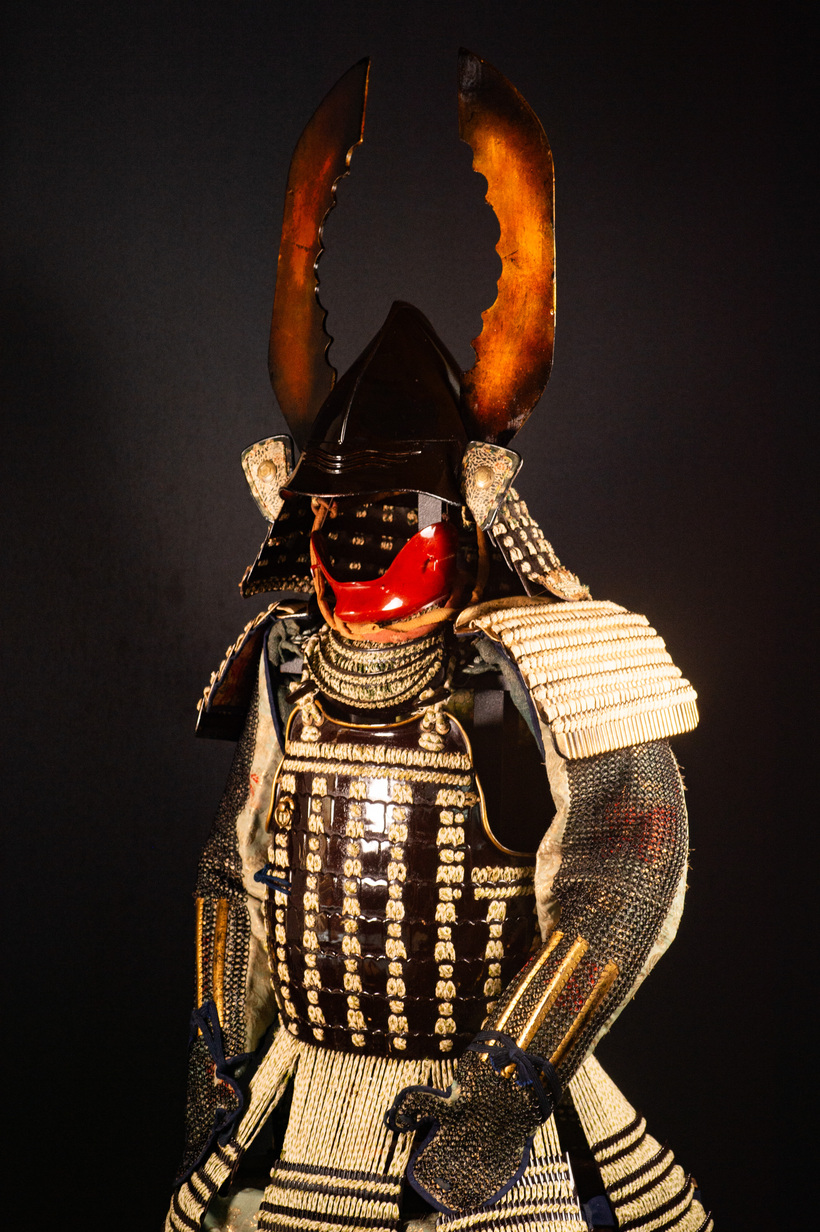
A spectacular and exceptionally rare Japanese gusoku dating to the early Edo period, distinguished by its magnificent pair of towering gilt ōkuwagata crests and an impressive vermilion-lacquered menpō. Officially certified as Tokubetsu Kichō Shiryō by the Nihon Katchū Bugu Kenkyū Hozon Kai (NKBKHK), this complete armour represents an outstanding example of early Edo samurai craftsmanship.
Armour of this period is considerably rarer than the late Edo examples that dominate today’s market. Its early seventeenth-century dating, exceptional state of preservation and official Japanese certification place this gusoku among the most desirable categories for advanced collectors of Japanese armour.
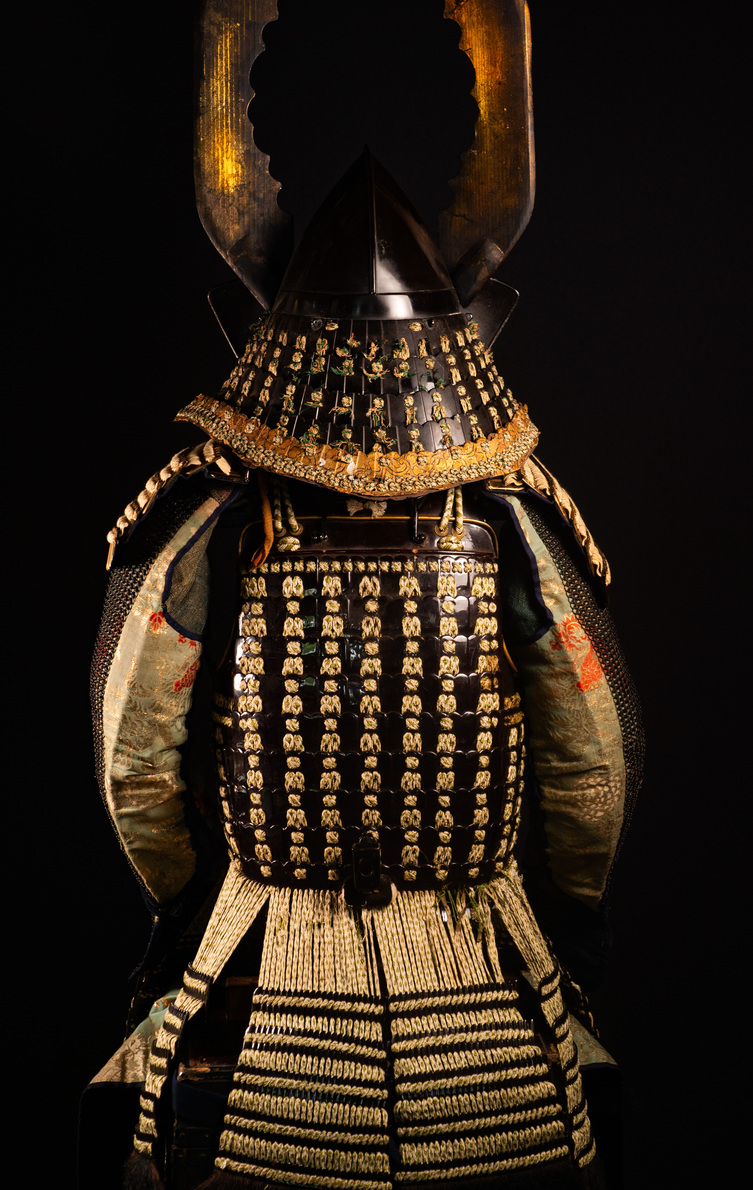
The armour is centred around a finely preserved two-piece nimai-dō constructed from black-lacquered iron using kiritsuke-iyozane, solid iron plates carefully fashioned to imitate individual lamellar scales while offering superior durability.
The cuirass is laced in elegant sugake odoshi using distinctive takuboku silk cords combining cream, green and blue tones. Across the upper breastplate, a beautifully executed band of granulated vermilion lacquer contrasts harmoniously with the deep black lacquer and dark navy lacing.
The result is a refined yet martial composition demonstrating the technical sophistication achieved by Japanese armour makers during the early Edo period.
This armour has been officially certified as Tokubetsu Kichō Shiryō by the Nihon Katchū Bugu Kenkyū Hozon Kai (Certificate No. 2361, 2025), one of the highest distinctions awarded by Japan’s leading authority on traditional armour.
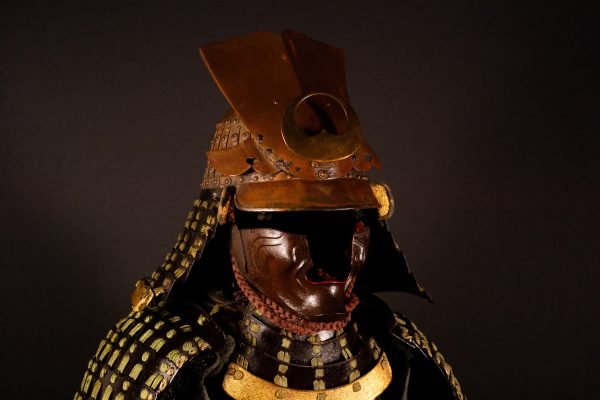
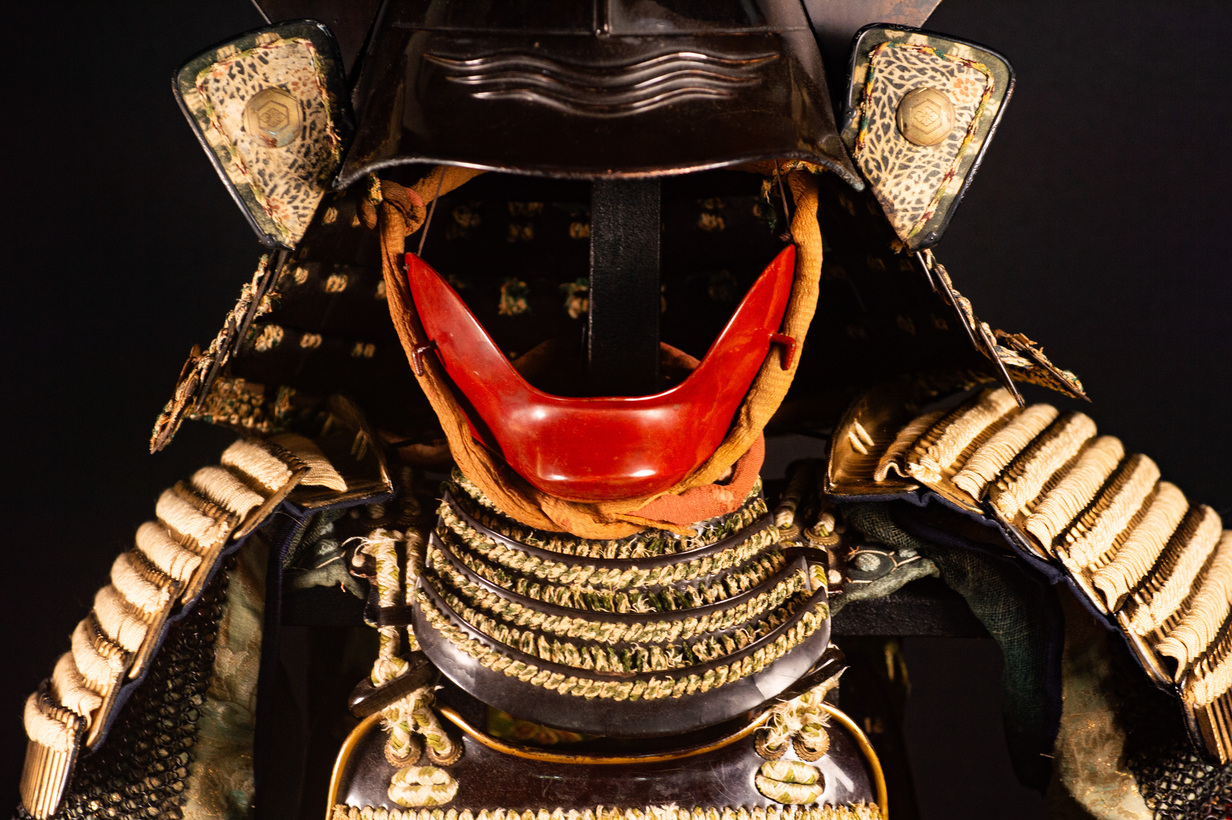
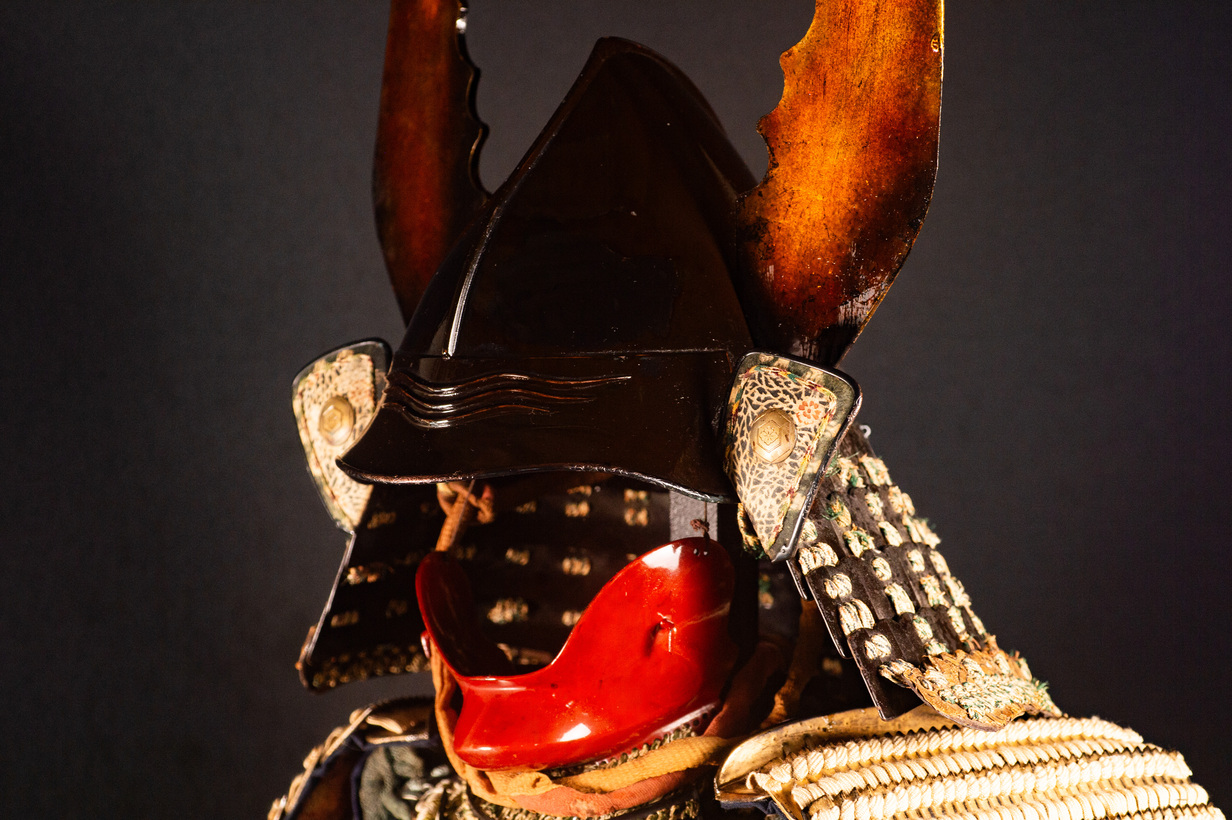
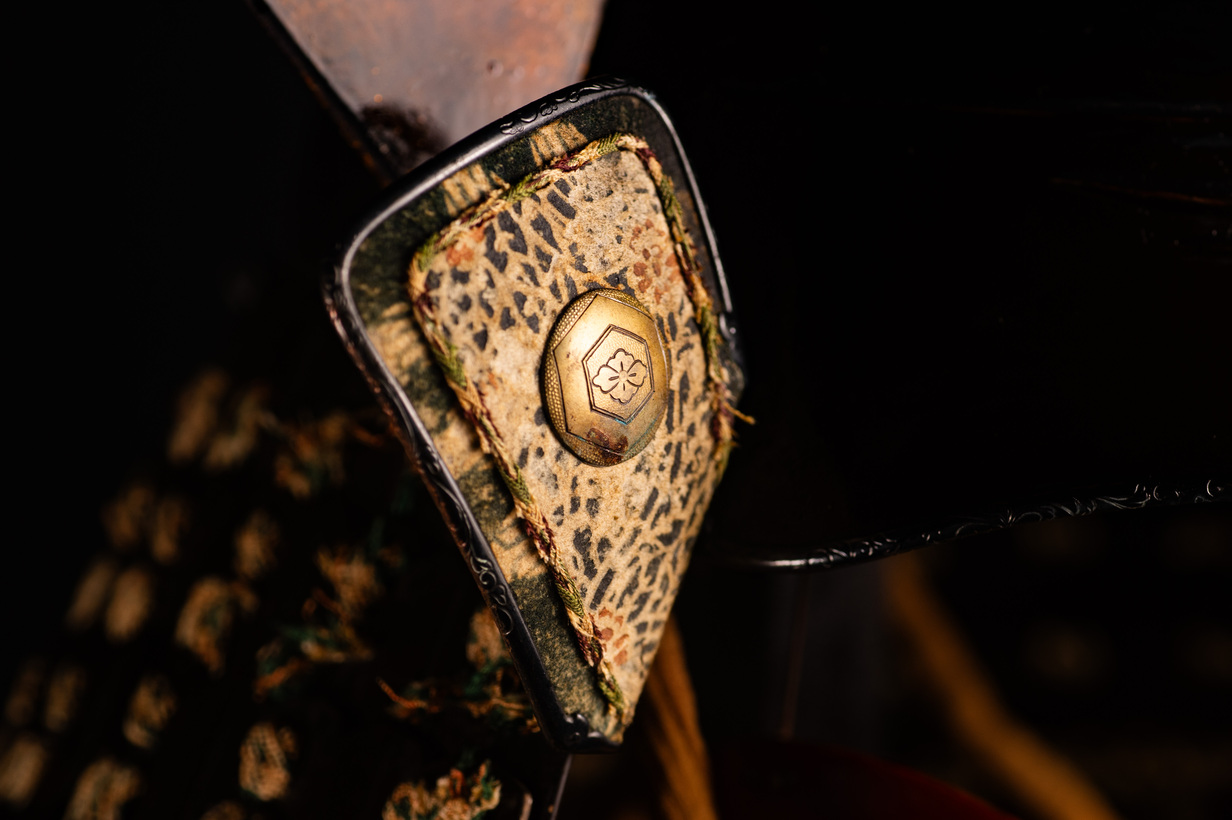
The helmet is an imposing black-lacquered kabuto with a sharply pointed bowl and an embossed wave-form ridge decorating the brow. The fukigaeshi are covered with finely stencilled mottled leather and adorned with elegant gilt family crests (mon).
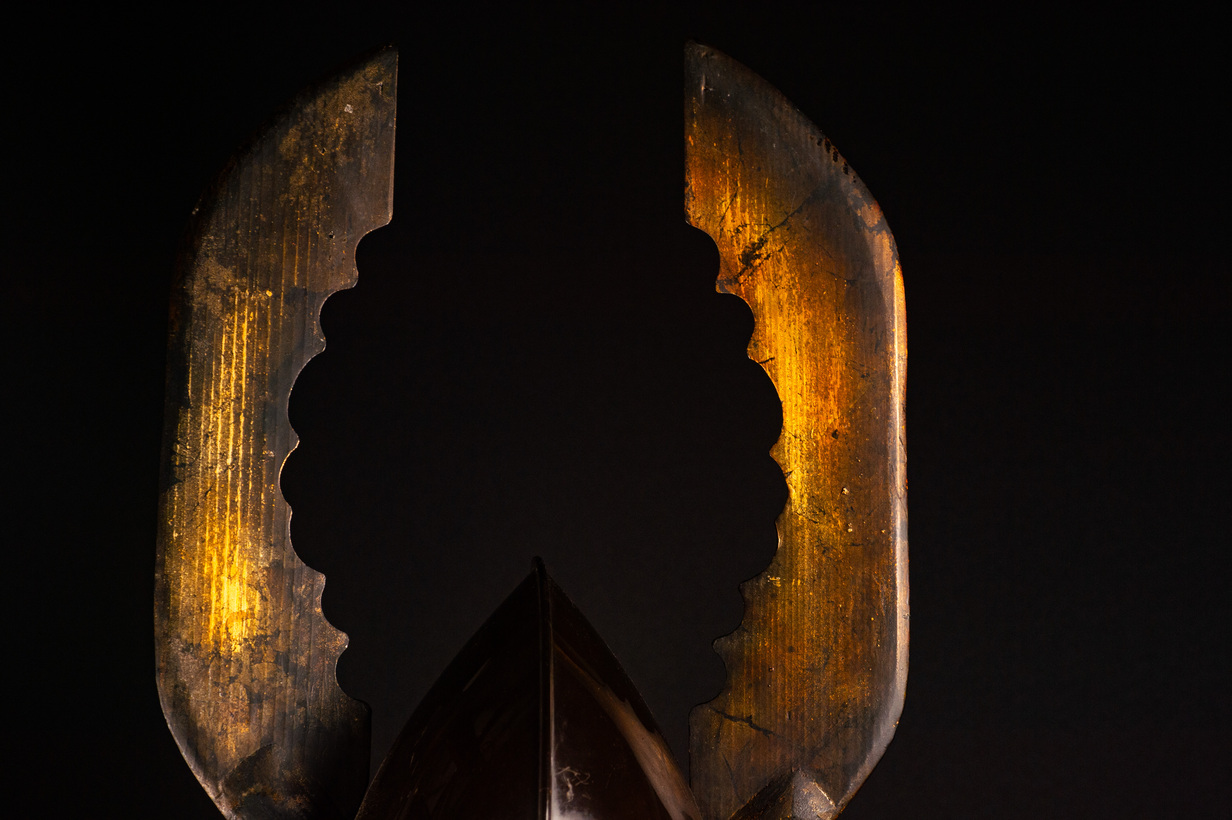
Dominating the composition is an extraordinary pair of monumental gilt ōkuwagata, their fire-patinated surfaces creating one of the most dramatic silhouettes found in Japanese samurai armour.
These towering antler-shaped crests symbolised military authority, courage and prestige while making the wearer instantly recognisable on the battlefield.
Beneath the helmet sits a striking vermilion-lacquered iron menpō, accompanied by a matching yodarekake throat guard with traditional silk lacing.
The vivid vermilion finish creates a spectacular contrast against the black armour while reinforcing the fierce appearance expected of high-ranking samurai armour.
Both protective and symbolic, the mask projects strength and authority while showcasing the refined lacquer techniques of Edo-period armour craftsmen.
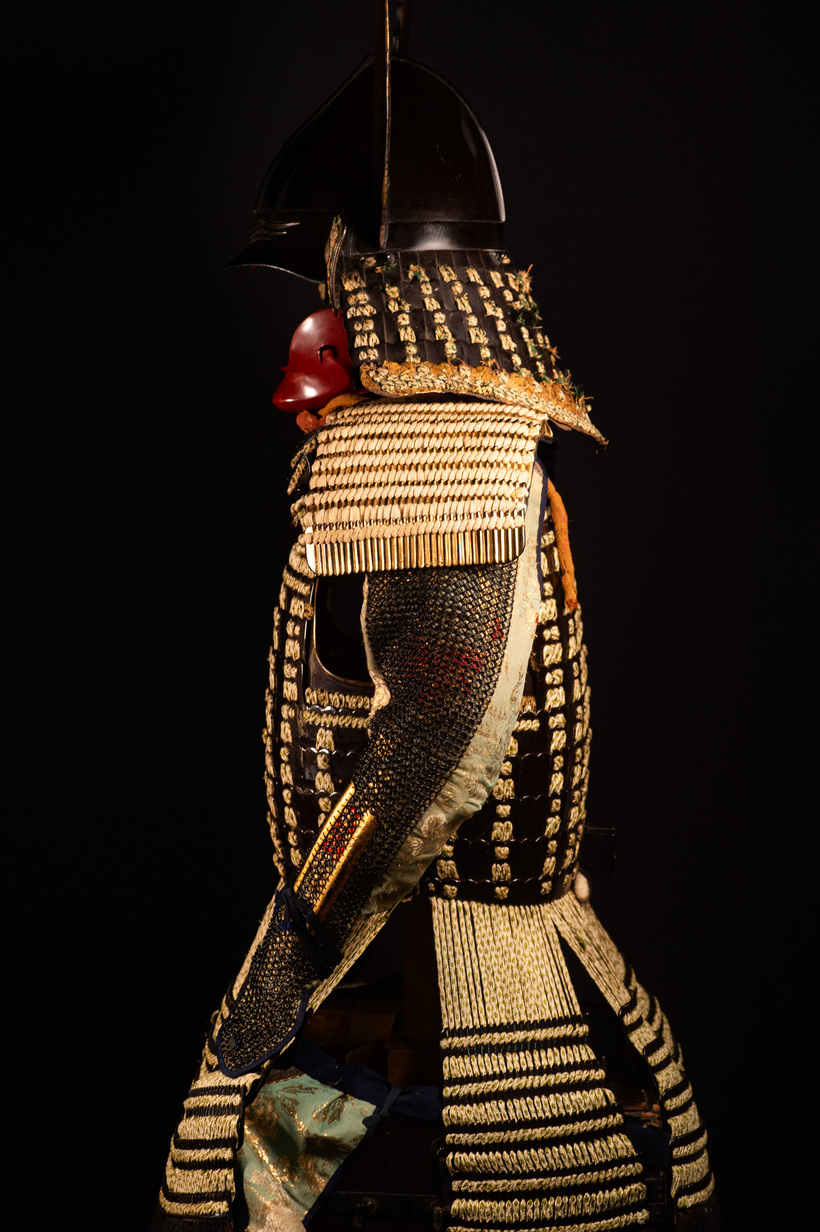
Large sode constructed from finely laced cream-coloured lames protect the shoulders above a layered nodowa gorget.
The arms are defended by traditional kote combining chain mail and iron plates mounted over luxurious brocaded silk, enhanced by gilt protective plates.
The lower armour consists of matching kusazuri, richly decorated haidate covered in stencilled leather, and lacquered suneate protecting the shins.
Celadon-green silk combined with richly woven floral brocade in gold and red provides an elegant decorative contrast that elevates the entire ensemble.
The armour displays one of the most dramatic colour compositions encountered in Japanese armour.
Deep black lacquer forms the foundation of the ensemble, brilliantly contrasted by the towering gilt ōkuwagata and the vivid vermilion menpō. The cream, green and blue silk lacing introduces further richness while maintaining perfect visual harmony.
The result is an armour that perfectly balances battlefield authority with the refined artistic taste of the early Edo samurai elite.
Dating to the early Edo period, this armour belongs to one of the most desirable phases of Japanese armour production. Unlike the far more common late Edo examples found on today’s market, armour from the seventeenth century survives in considerably smaller numbers and offers collectors a much closer connection to the great military traditions that immediately followed the unification of Japan under the Tokugawa Shogunate.
Although large-scale warfare had begun to decline, samurai continued to commission magnificent suits of armour that reflected both their military heritage and social status. Armour makers combined the practical construction developed during the Sengoku period with increasingly refined decorative techniques, producing works that balanced battlefield functionality with exceptional artistic sophistication.
This armour is accompanied by a Tokubetsu Kichō Shiryō certificate issued by the Nihon Katchū Bugu Kenkyū Hozon Kai (NKBKHK), certificate number 2361, issued in 2025.
Tokubetsu Kichō Shiryō represents one of the highest levels of certification awarded by Japan’s foremost authority dedicated to the study and preservation of traditional Japanese armour. This designation is reserved for pieces of particularly high historical and artistic importance that have also been selected as candidates for the organisation’s next and even higher certification grade.
As a general comparison, this level is widely regarded as broadly equivalent to the Tokubetsu Hozon certification issued by the NBTHK for Japanese swords, confirming that the armour possesses quality well above the standard certification level.
Early Edo armour certified at the Tokubetsu Kichō Shiryō level is encountered only rarely on the international market. The combination of an authenticated seventeenth-century dating, magnificent gilt ōkuwagata, striking vermilion menpō, complete display-ready configuration and one of the highest certifications available for Japanese armour makes this an exceptional collector’s piece.
Particularly noteworthy is its period. While the majority of surviving Japanese armour available today dates from the late Edo period, authenticated examples from the early Edo period are significantly scarcer and are consequently regarded as considerably more desirable among advanced collectors.
Combining remarkable historical importance, official Japanese certification, exceptional craftsmanship and one of the most dramatic visual presentations found in samurai armour, this magnificent Early Edo gusoku represents an outstanding opportunity to acquire an authentic masterpiece of Japan’s warrior tradition and one of the finest forms of Japanese military art.
| Época |
|---|

Order above 1.000,00 € gets free shipping.

Secure and hassle-free payment process.

Certificate of authenticity included.

Have questions? Contact us via WhatsApp.
Contact