Edo Period Shibuichi Fuchi with River Plants – Gold & Silver Inlay
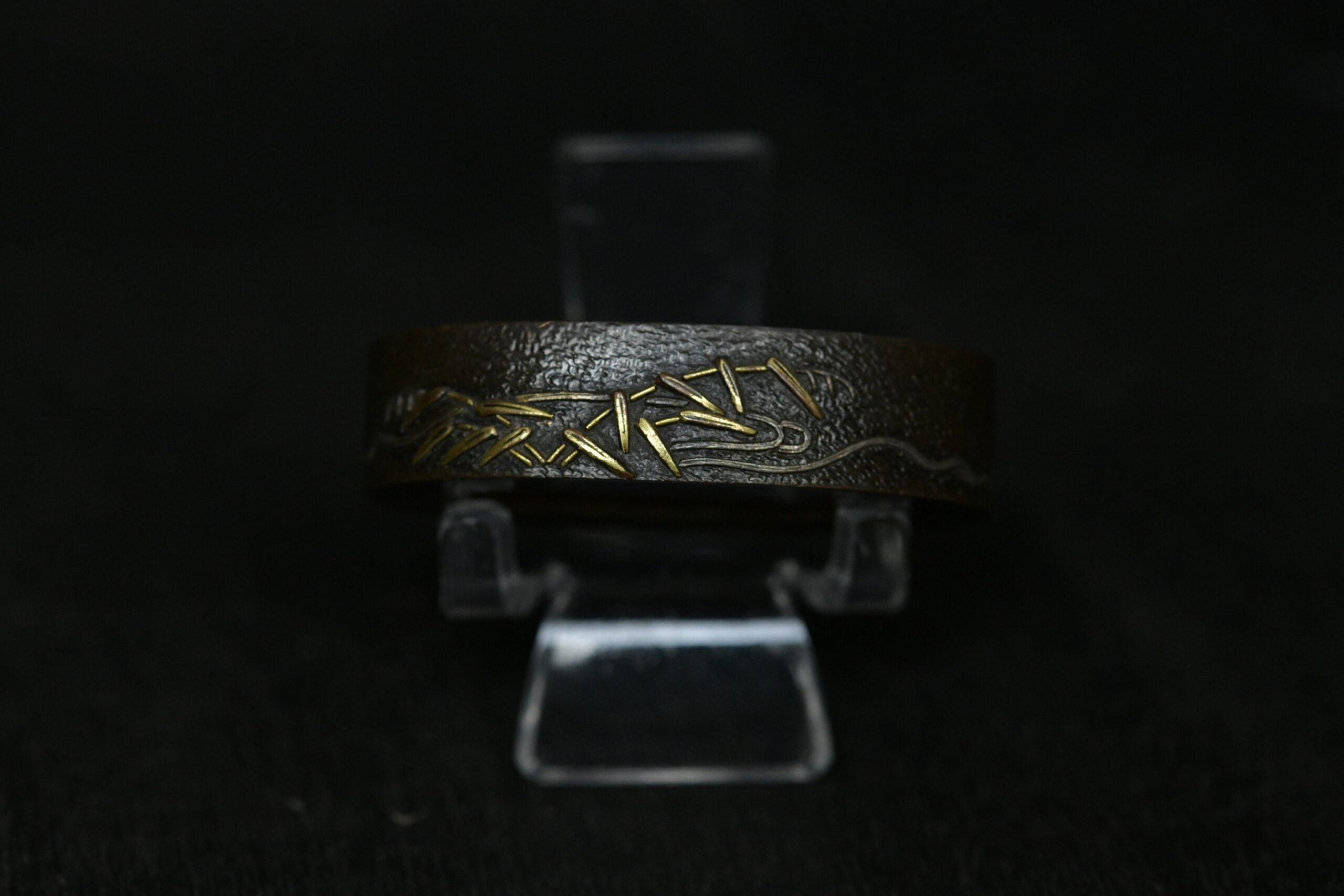
A refined Japanese fuchi from the Edo period, executed in shibuichi and decorated with a naturalistic scene of river plants and flowing water.
The composition is enriched with gold and silver inlay, used to define selected elements of the vegetation and water against the muted grey surface of the alloy.
The restrained palette and compact landscape treatment are characteristic of the sophisticated decorative approach found in Japanese tosogu.
The fuchi measures approximately 4.2 × 2.3 cm and is suitable in scale for a katana or wakizashi koshirae.
Shibuichi – A Classic Japanese Sword-Fitting Alloy
Shibuichi is a traditional Japanese copper-silver alloy widely used in sword fittings and decorative metalwork.
When patinated, shibuichi can develop a range of subdued grey tones, from soft ash-grey to darker charcoal shades, depending on the exact composition and treatment of the metal.
This restrained surface made it especially effective as a background for contrasting inlays in gold, silver and other metals.
River Plants and Flowing Water
The principal decoration depicts river plants beside flowing water.
The composition relies on a limited number of natural elements rather than a densely populated narrative scene, creating a quieter and more contemplative visual effect.
The flowing lines of the water contrast with the more vertical forms of the plants, giving the small surface of the fuchi a clear sense of movement.
Nature motifs of this kind were frequently used in Japanese decorative arts, where plants, water and seasonal imagery could be adapted to very compact surfaces.
Gold and Silver Inlay
The decoration incorporates gold and silver inlay to highlight selected elements of the river scene.
These brighter metals contrast strongly with the grey shibuichi ground, helping individual details remain visible despite the small dimensions of the fitting.
The combination of subdued alloy and precious-metal accents creates a restrained but sophisticated decorative effect.
Naturalistic Design in Japanese Tosogu
Japanese tosogu often drew inspiration from the natural world.
Plants, rivers, grasses, flowers, insects and changing seasonal landscapes offered metalworkers an enormous vocabulary of forms that could be compressed into the limited surface of sword fittings.
Rather than simply serving as ornament, such motifs allowed a functional component of the sword to become a miniature landscape or pictorial composition.
This fuchi follows that tradition through its understated representation of vegetation and flowing water.
What Is a Fuchi?
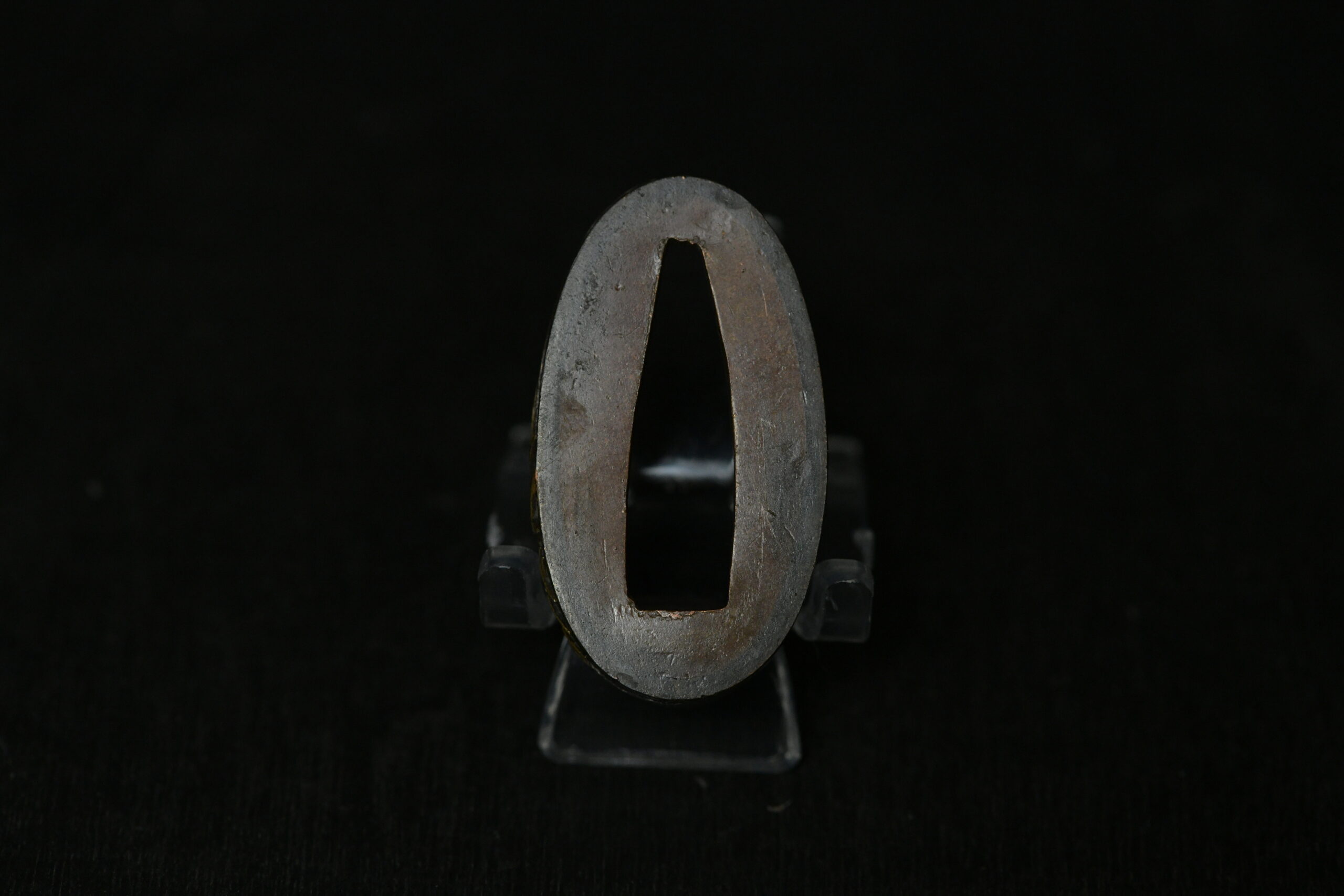
A fuchi is the metal collar positioned at the base of the tsuka, or handle, of a traditional Japanese sword, immediately adjacent to the tsuba.
Its practical role is to reinforce and protect the lower end of the handle, but fuchi also became an important field for decorative metalwork.
They were frequently designed to coordinate with the kashira, menuki or other components of a complete koshirae, although individual fuchi are also collected as independent examples of Japanese metalwork.
Fuchi in the Edo Period
During the Edo period, sword fittings became increasingly sophisticated as specialised metalworkers developed a wide range of alloys, patinas, carving techniques and inlay methods.
Materials such as shibuichi offered artists subtle tonal backgrounds against which gold, silver and copper details could be introduced selectively.
The result was a form of miniature decorative art in which even a relatively small component such as a fuchi could carry a carefully considered naturalistic composition.
Suitable for Katana or Wakizashi
With dimensions of approximately 4.2 × 2.3 cm, this fuchi is suitable in scale for use within a katana or wakizashi mounting.
As with any antique Japanese sword fitting, exact compatibility with a specific tsuka should be checked individually before mounting.
Dimensions
Key Features
- Object: Japanese fuchi
- Period: Edo period
- Category: Tosogu / Japanese sword fitting
- Material: Shibuichi, a copper-silver alloy
- Motif: River plants and flowing water
- Decoration: Gold and silver inlay
- Dimensions: 4.2 × 2.3 cm
- Use: Suitable in scale for katana or wakizashi mounting
Collector’s Interest
This fuchi combines several elements valued in Japanese sword fittings: an Edo-period origin, shibuichi construction, naturalistic river imagery and contrasting gold and silver inlay.
The understated composition demonstrates how Japanese metalworkers could transform a small functional fitting into a refined miniature study of landscape and movement.
A refined Edo-period shibuichi fuchi with river plants and flowing water, enhanced by selective gold and silver inlay. The quiet naturalistic design and muted grey alloy create an elegant example of Japanese tosogu suitable for collectors of sword fittings and traditional metalwork.