Edo Period Wood Netsuke of a Sennin Scratching His Head
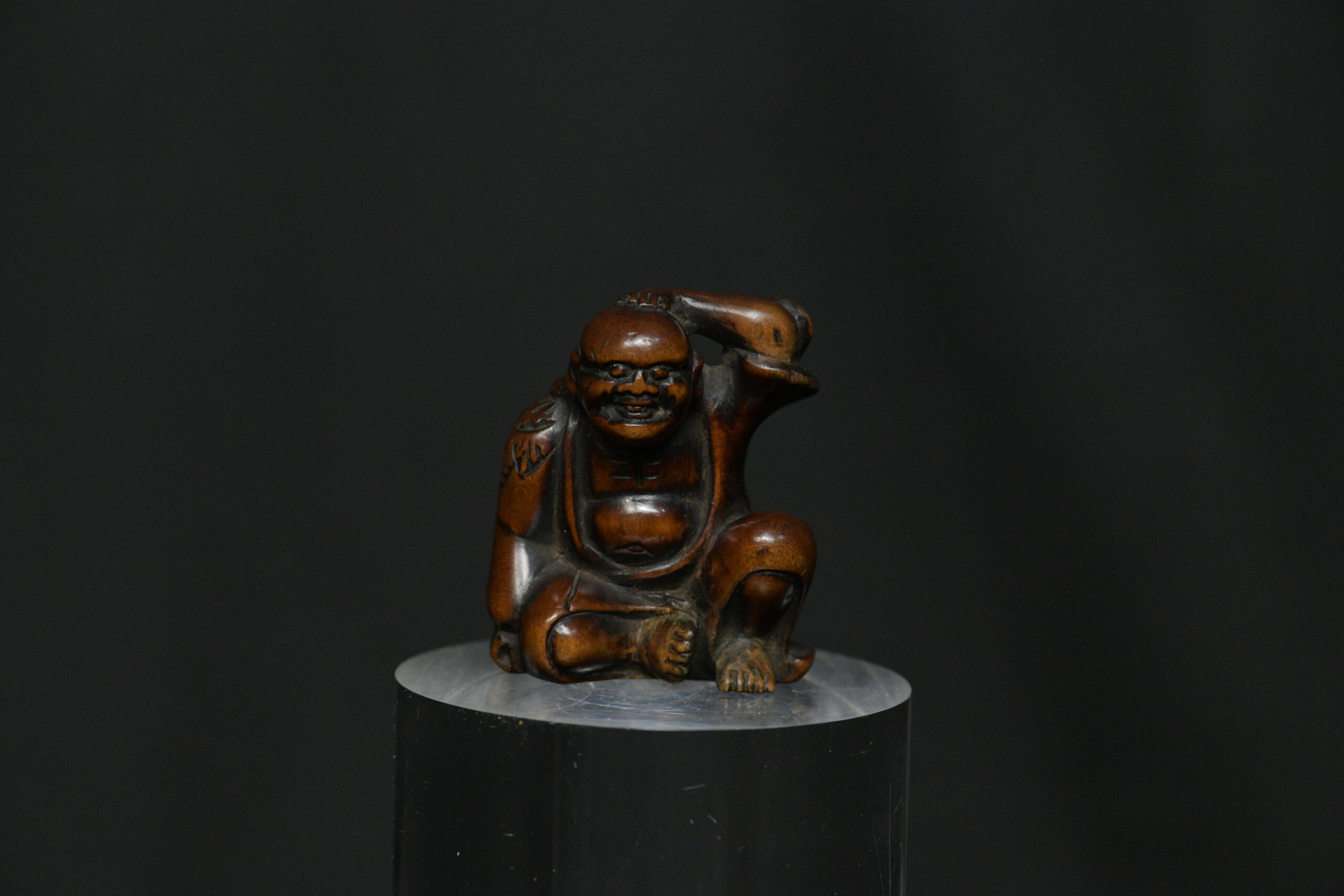
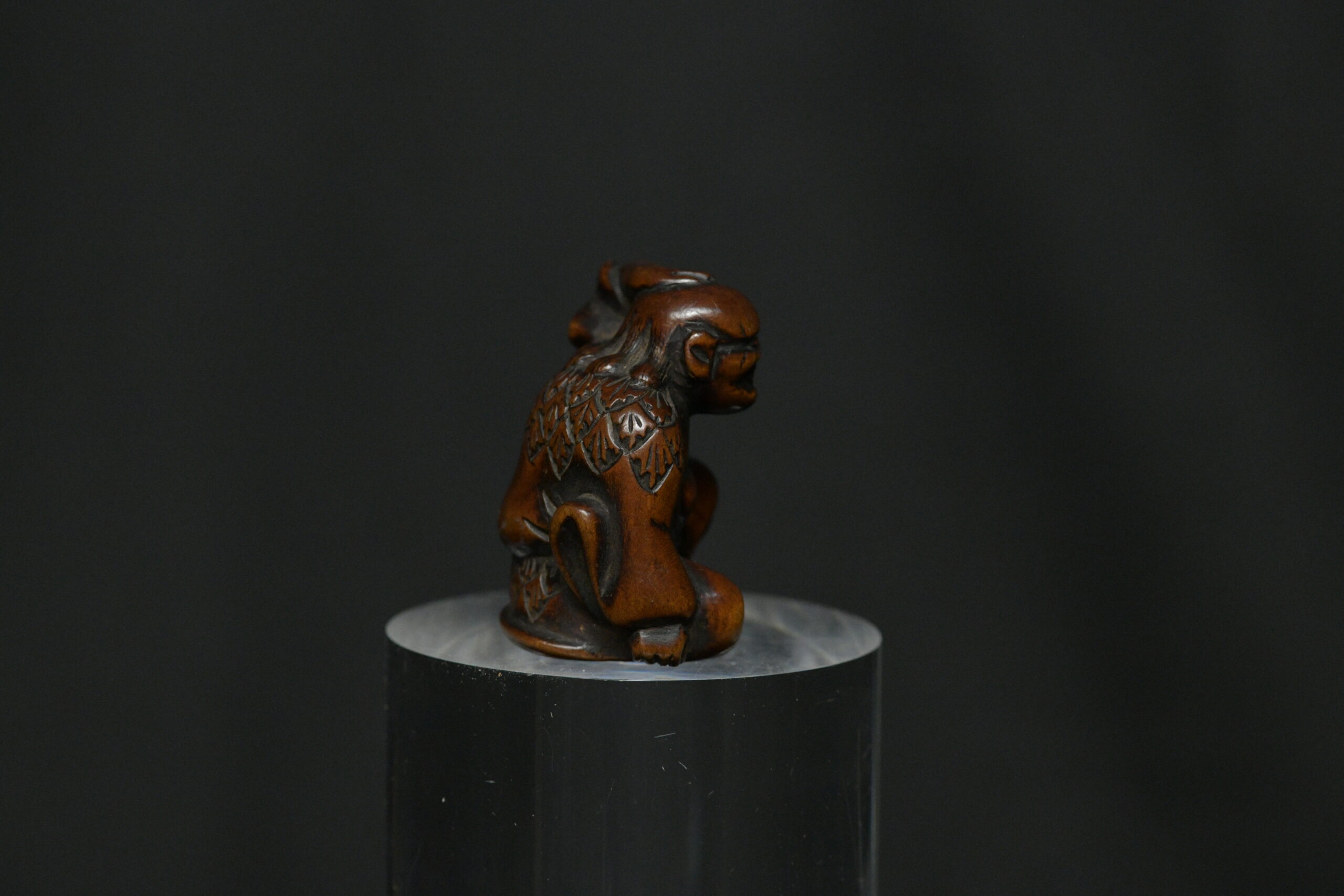
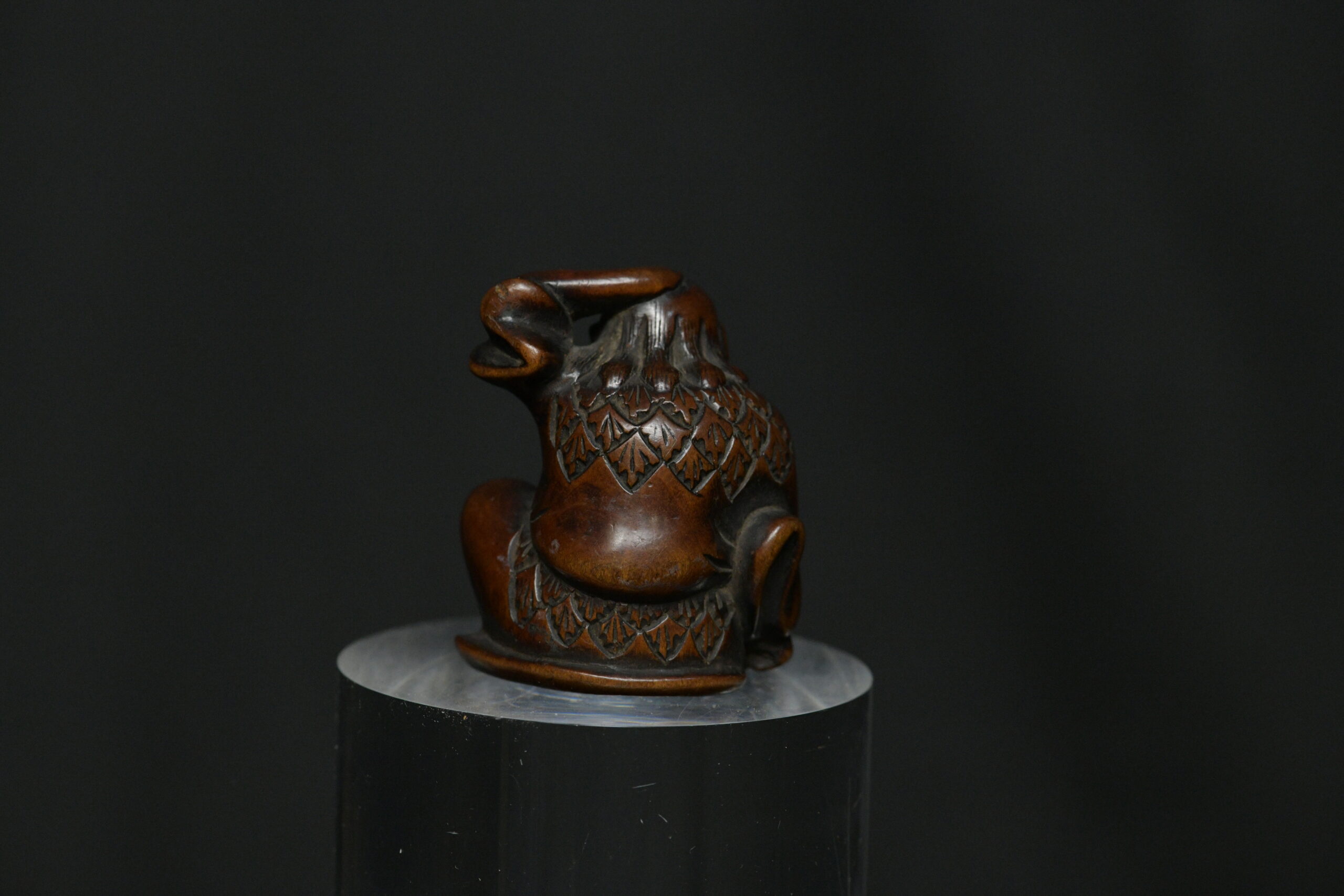
A characterful Japanese wood netsuke from the Edo period depicting a sennin in an unusually animated and humorous pose.
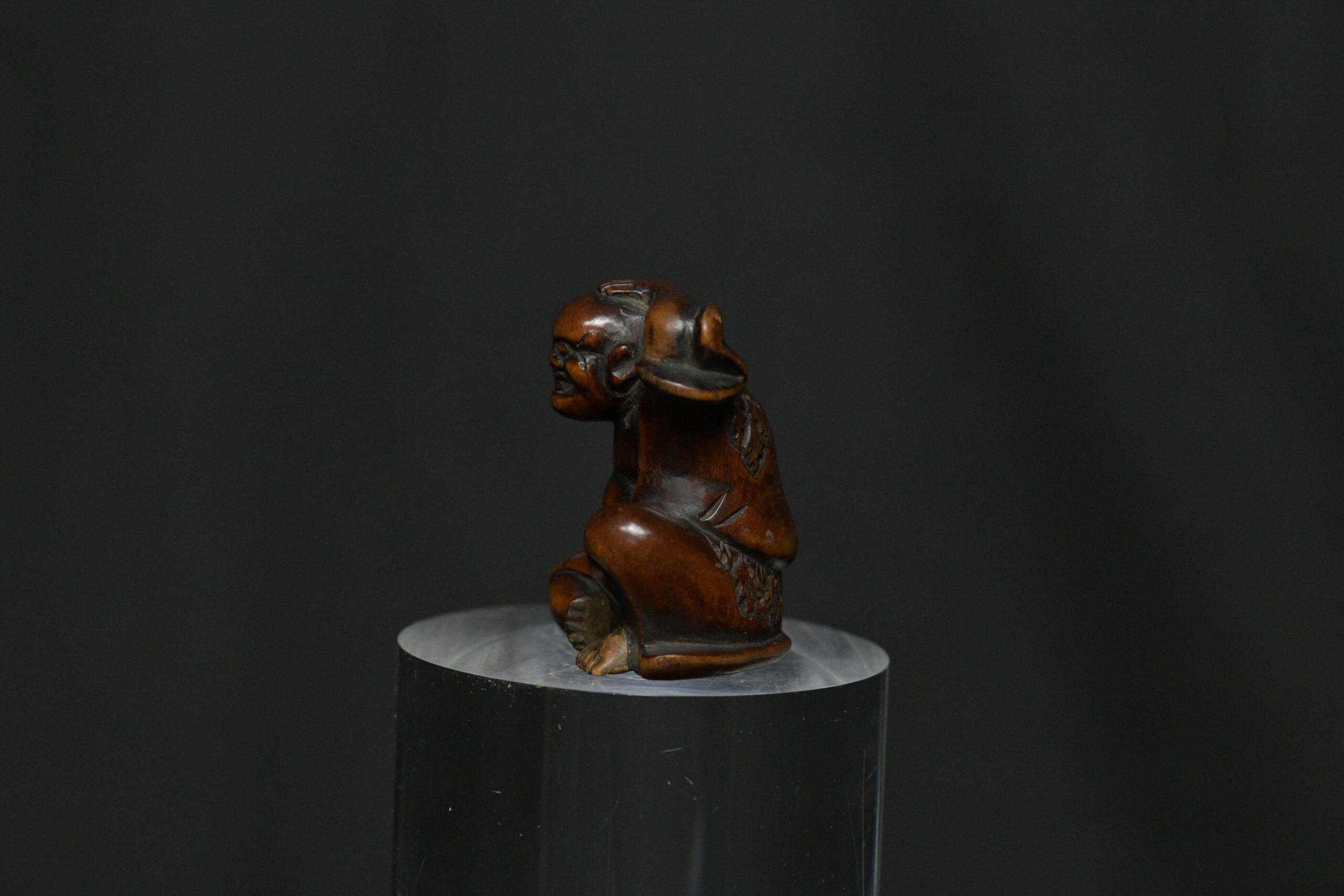
The figure raises one hand to his head as if momentarily confused, distracted or attempting to remember something. This simple gesture gives the carving a strong sense of personality and transforms the legendary immortal into an approachable and distinctly human figure.
The netsuke measures approximately 4.5 × 4.5 × 3 cm.
Sennin – The Immortals of Japanese Tradition
The term sennin is used in Japan for legendary immortals, hermits and sages whose imagery developed largely from Chinese Daoist traditions and was subsequently absorbed into Japanese religion, folklore and art.
Sennin are commonly represented as unconventional figures living apart from ordinary society and associated with spiritual cultivation, extraordinary longevity, supernatural abilities or a particularly close relationship with the natural world.
Japanese artists depicted them in many different ways, ranging from solemn supernatural beings to eccentric and even humorous characters.
No specific identification of the individual sennin represented in this netsuke is proposed here.
A Humorous and Expressive Pose
One of the most appealing features of this netsuke is the figure’s expressive gesture.
Rather than presenting the sennin in a rigid or formal posture, the carver shows him scratching his head, apparently caught in a moment of uncertainty or absent-mindedness.
The pose introduces humour into the composition and encourages the viewer to interpret the figure almost as a moment captured from everyday life.
Such expressive gestures are particularly effective in netsuke, where very small changes in posture, hands and facial expression can give a compact carving considerable narrative character.
Wood Netsuke Carving
The figure is carved from wood, one of the principal materials traditionally used for Japanese netsuke.
Wood allowed carvers to work in three dimensions while also taking advantage of the material’s natural warmth and surface character.
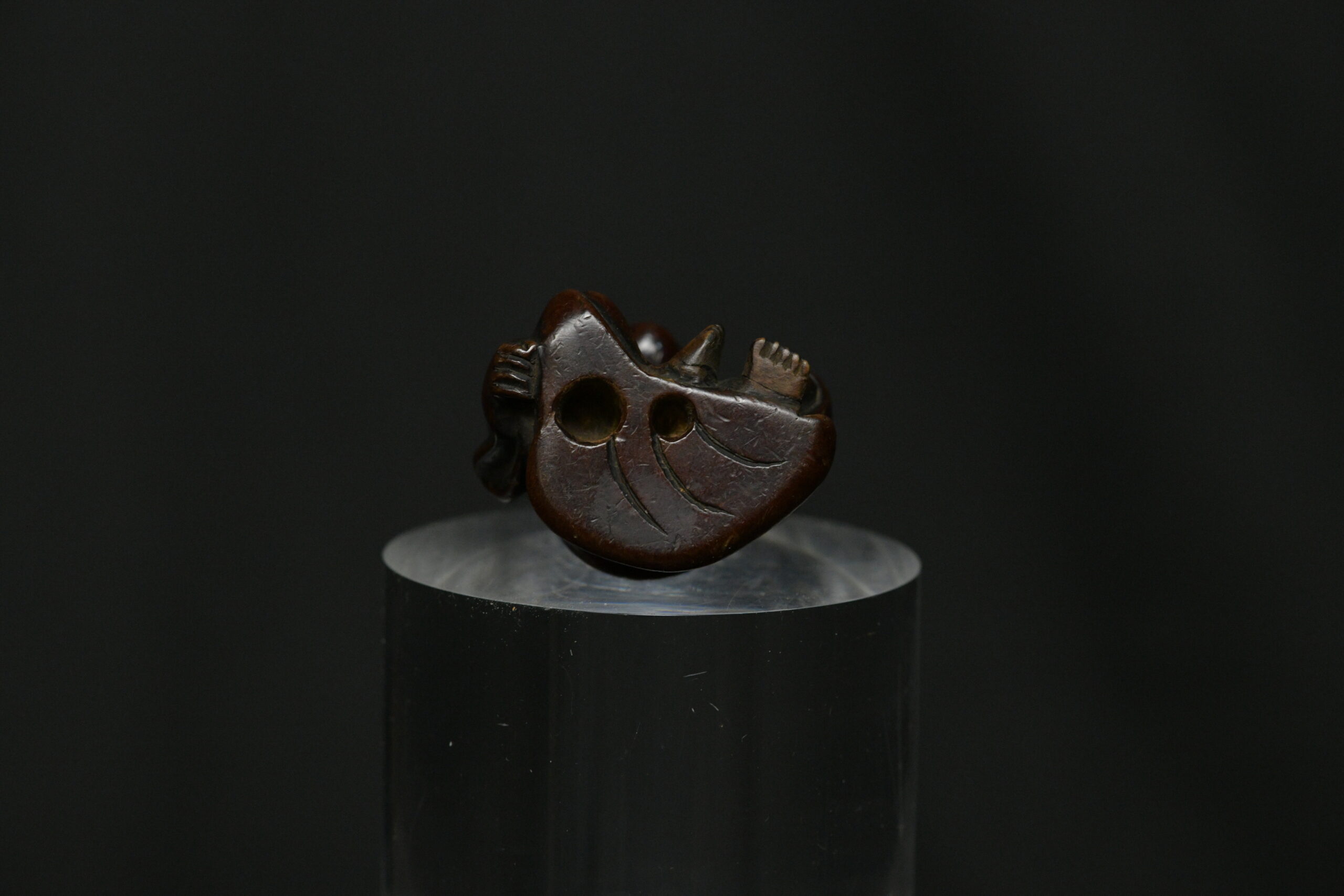
Because netsuke were designed to be handled and viewed from multiple angles, successful carvings often integrate posture, volume and detail throughout the entire object rather than concentrating the composition on a single frontal view.
What Is a Netsuke?
A netsuke is a small Japanese toggle traditionally associated with objects suspended from the obi, or sash.
Traditional Japanese clothing did not include conventional pockets, so small containers and personal accessories could be carried as hanging objects known collectively as sagemono.
The netsuke acted as a counter-toggle above the obi, preventing the suspended object from slipping through the sash.
Although originally functional, netsuke developed into a highly sophisticated field of miniature sculpture, with subjects ranging from people and animals to mythology, folklore, religion and scenes of everyday life.
Sennin in Japanese Netsuke
Sennin were particularly suitable subjects for netsuke carvers because their unconventional appearance and legendary personalities allowed considerable artistic freedom.
They could be represented as elderly hermits, supernatural wanderers, eccentric sages or figures engaged in unexpected gestures and activities.
This example emphasises the more humorous side of the tradition, presenting the immortal not as a remote supernatural figure but in a moment of apparent distraction.
Edo Period
This netsuke dates to the Edo period, when netsuke developed from practical accessories into increasingly sophisticated miniature carvings.
The relatively small format encouraged carvers to communicate character through posture, expression and compact compositions that could be appreciated in the hand and from several viewpoints.
The subject of a sennin fits naturally within the broad range of mythological, religious and folkloric figures represented in Edo-period netsuke.
Dimensions
- Height: 4.5 cm
- Width: 4.5 cm
- Depth: 3 cm
Key Features
- Object: Japanese netsuke
- Period: Edo period
- Material: Wood
- Subject: Sennin / legendary immortal
- Pose: Scratching his head in an animated, humorous gesture
- Dimensions: 4.5 × 4.5 × 3 cm
Collector’s Interest
The appeal of this netsuke lies in the combination of a traditional supernatural subject with a distinctly human and humorous gesture.
The compact wood carving reflects the ability of netsuke artists to convey personality and narrative through very limited space, making the figure engaging from both an artistic and cultural perspective.
A charming Edo-period wood netsuke depicting a sennin scratching his head, notable for its expressive and humorous pose. The carving combines the legendary imagery of the Japanese immortal with the lively sense of character that makes figurative netsuke particularly appealing to collectors.