19th Century Wood Monkey Netsuke with Shibayama Inlaid Eyes – Signed Koichi 光一
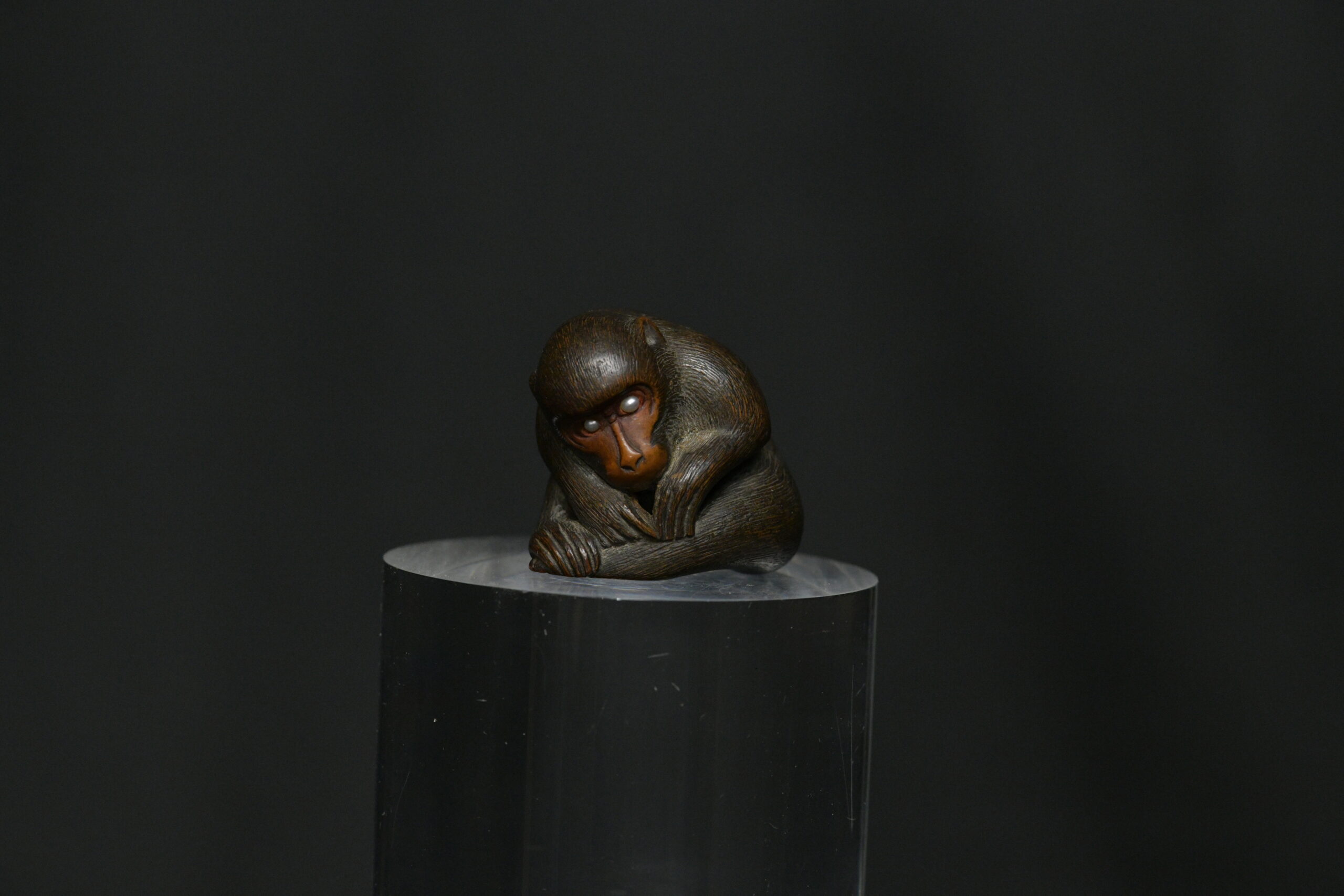
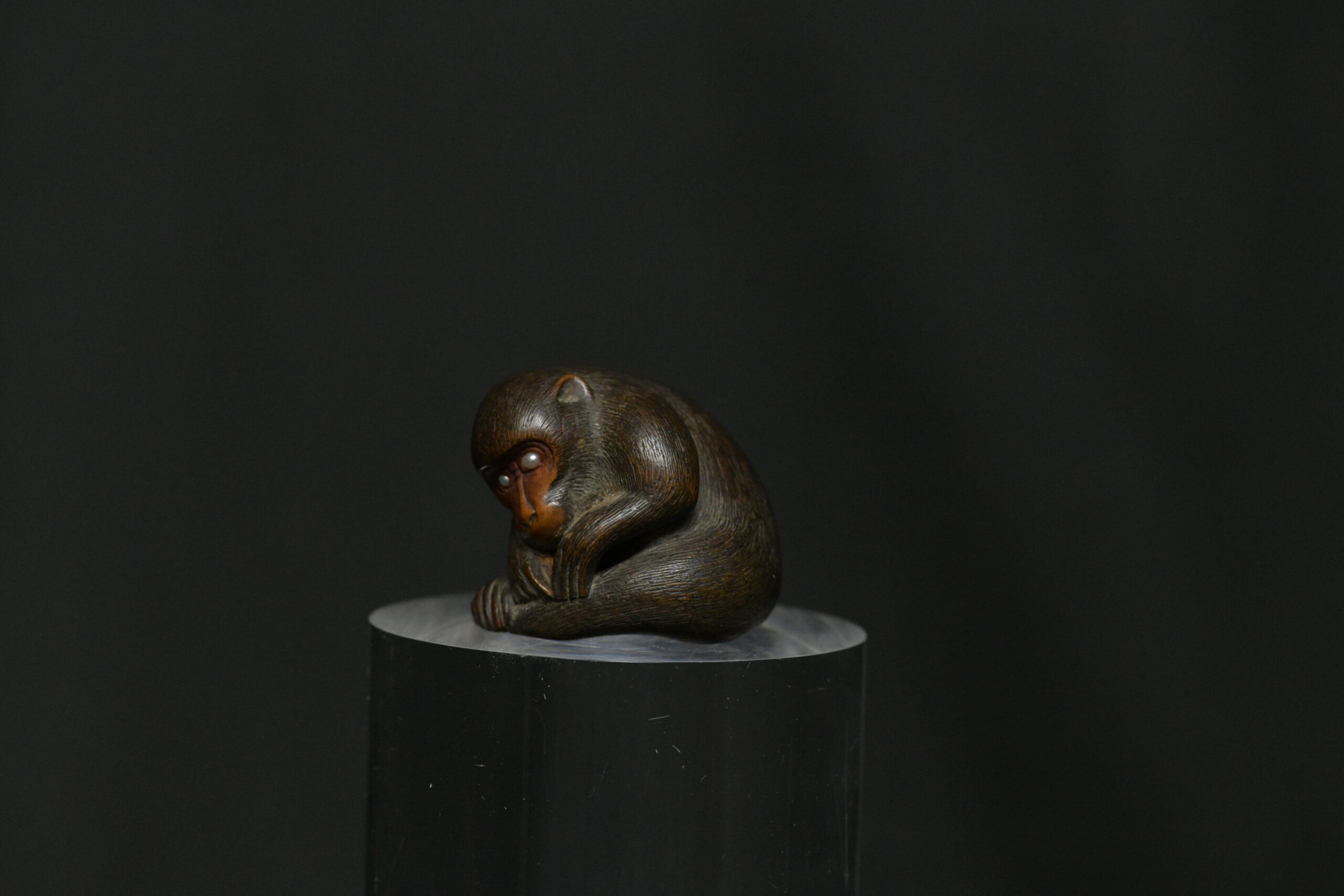
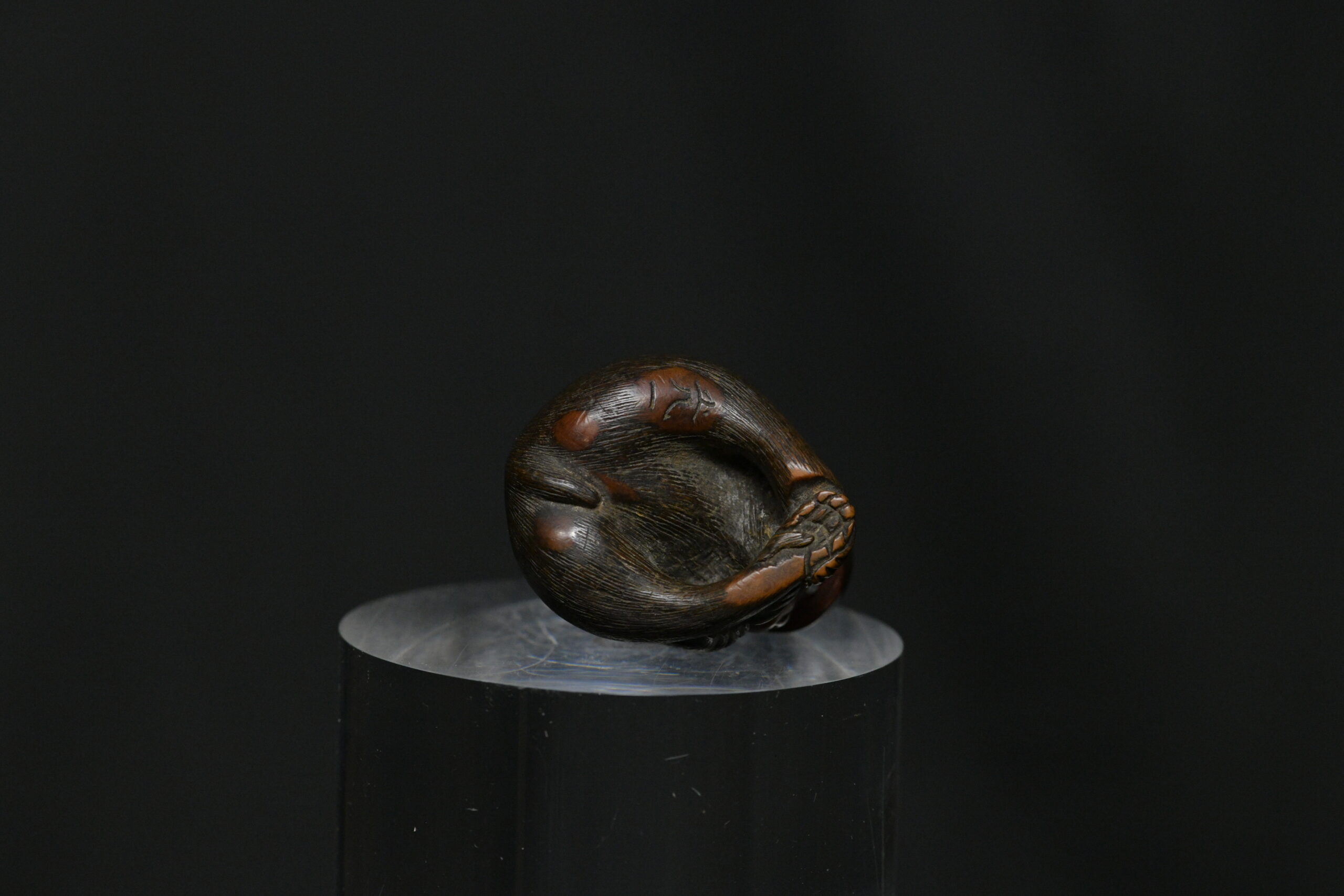
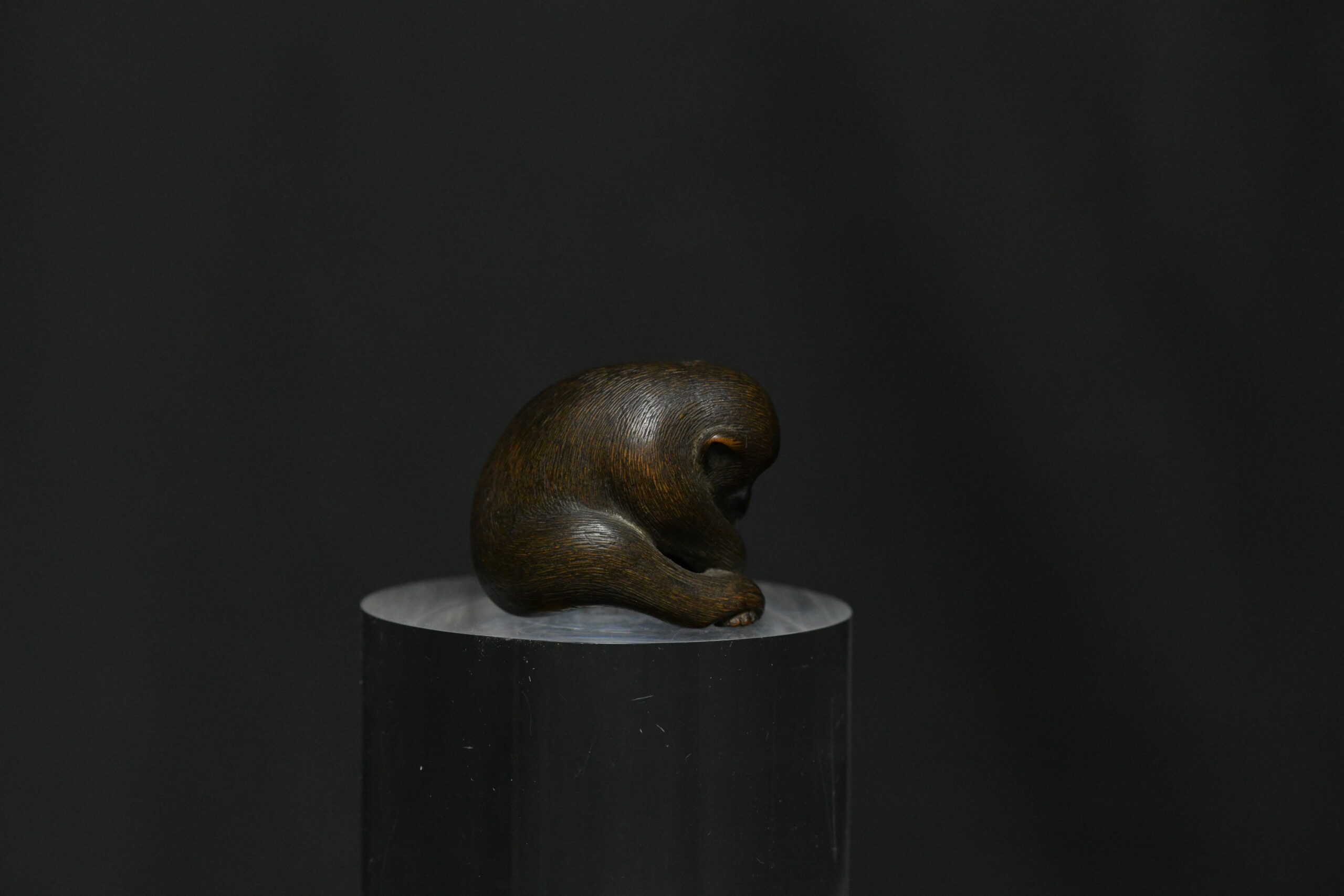
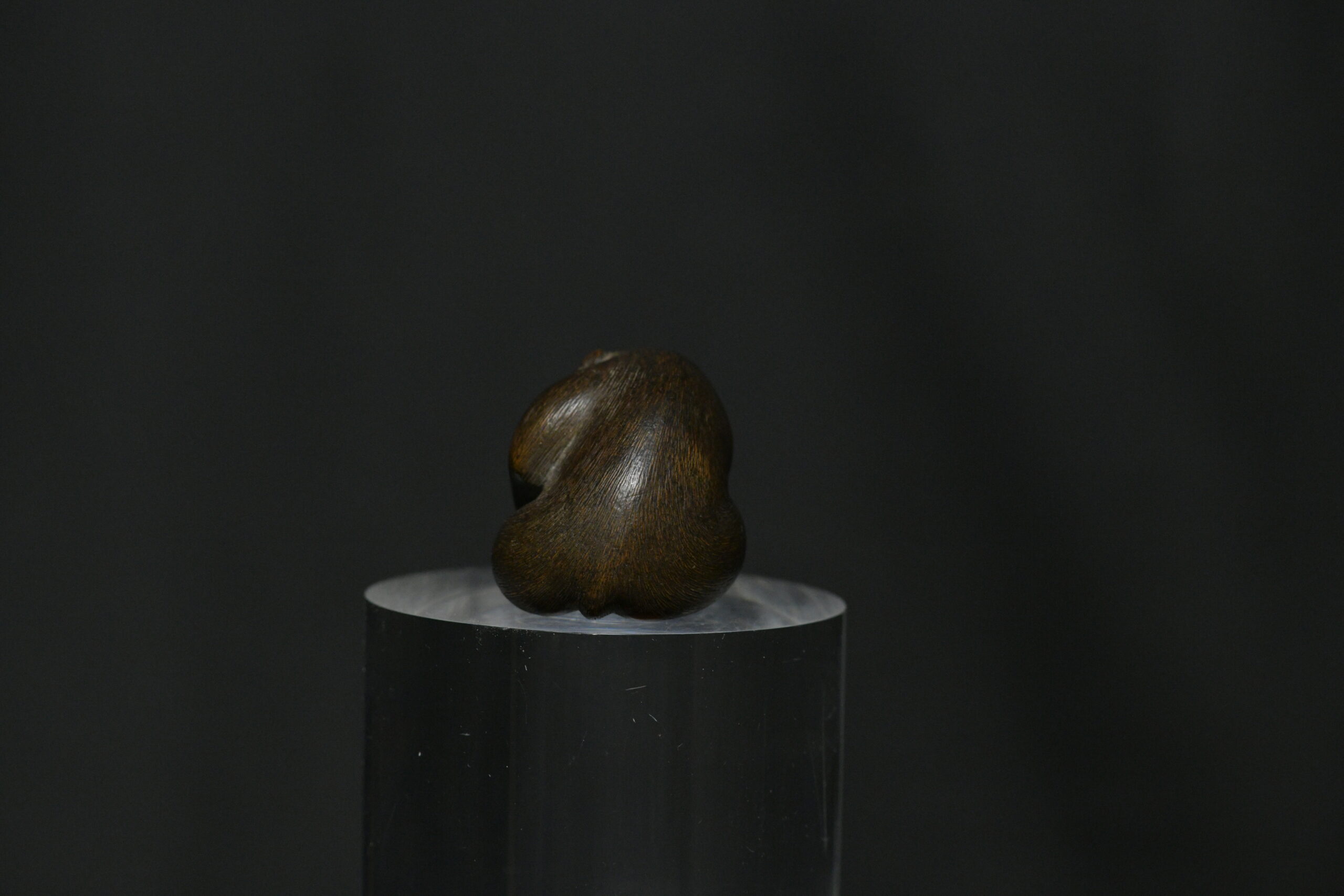
A finely carved Japanese wood netsuke depicting a monkey, dating from the second half of the 19th century.
The compact figure is distinguished by its expressive carving and the use of small pearl inlays in the eyes, creating a subtle Shibayama-style decorative contrast against the warm surface of the wood.
The netsuke bears the signature Koichi 光一 and measures approximately 4 × 3.7 × 3 cm.
Monkey Netsuke
The monkey was a familiar subject within Japanese netsuke carving, lending itself particularly well to compact three-dimensional compositions.
Its expressive face, agile body and recognisable gestures allowed carvers to give even a very small object considerable personality.
Animal subjects were especially effective in netsuke because the entire figure could be integrated into a compact form designed to be handled and appreciated from multiple viewpoints.
Wood Carving
The netsuke is carved from wood, one of the principal materials traditionally used for Japanese netsuke.
Wood offered carvers the ability to model volume, posture and facial expression while preserving the natural warmth and tactile quality of the material.
In this example, the carving is complemented by contrasting eye inlays, introducing an additional decorative element without overwhelming the sculptural form.
Shibayama-Style Inlaid Eyes
A particularly distinctive feature is the treatment of the eyes, which incorporate small pearl inlays.
This type of contrasting inlay recalls the broader decorative vocabulary associated with Shibayama work, in which materials of different colours and textures were inserted into a base surface to create highly visible details.
Here, the inlay is restrained and concentrated on the eyes, enhancing the expression of the monkey and creating a strong focal point within the small composition.
Shibayama Decoration
Shibayama is associated with a Japanese tradition of decorative inlay using contrasting materials such as shell, mother-of-pearl and other materials applied to surfaces including wood, lacquer and ivory.
The technique became particularly prominent during the 19th century and was used across a wide range of decorative objects.
On this netsuke, the reference to Shibayama is limited to the small inlaid details of the eyes rather than an extensive multi-material decorative scheme.
Signed Koichi 光一
The netsuke bears the signature Koichi 光一.
No further attribution to a specific workshop, lineage or individual carver is proposed here solely on the basis of the signature.
The signature nevertheless forms an important part of the object and its historical documentation.
Japan, Second Half of the 19th Century
The netsuke dates to the second half of the 19th century, a period that witnessed significant developments in Japanese decorative arts and miniature carving.
Netsuke continued to be produced both as functional accessories and as increasingly sophisticated objects appreciated for their craftsmanship, subject matter and decorative qualities.
The combination of wood carving and contrasting inlay seen here reflects the growing experimentation with materials characteristic of Japanese decorative work during the period.
What Is a Netsuke?
A netsuke is a small Japanese toggle traditionally used with objects suspended from the obi, or sash.
Because traditional Japanese clothing did not include conventional pockets, personal objects could be carried in hanging containers collectively known as sagemono.
The netsuke acted as a stopper above the obi, preventing the suspended object from slipping through the sash.
Although originally functional, netsuke developed into an important field of miniature sculpture, with subjects ranging from animals and people to mythology, folklore and everyday life.
Dimensions
- Height: 4 cm
- Width: 3.7 cm
- Depth: 3 cm
Key Features
- Object: Japanese netsuke
- Subject: Monkey
- Material: Wood
- Decoration: Small pearl inlays to the eyes
- Decorative reference: Shibayama-style inlay
- Signature: Koichi 光一
- Origin: Japan
- Date: Second half of the 19th century
- Dimensions: 4 × 3.7 × 3 cm
Collector’s Interest
This netsuke combines several elements of interest to collectors of Japanese miniature carving: a classic animal subject, finely worked wood, contrasting eye inlays and a visible signature.
The restrained use of pearl inlay adds a distinctive detail to the monkey’s expression while preserving the sculptural character of the wood carving.
A finely carved 19th-century Japanese wood monkey netsuke signed Koichi 光一, distinguished by expressive modelling and small pearl inlays to the eyes in a Shibayama-style treatment. A compact and characterful example of Japanese miniature sculpture from the second half of the 19th century.