Wakizashi in Shirasaya – Azuchi-Momoyama to Early Edo Period
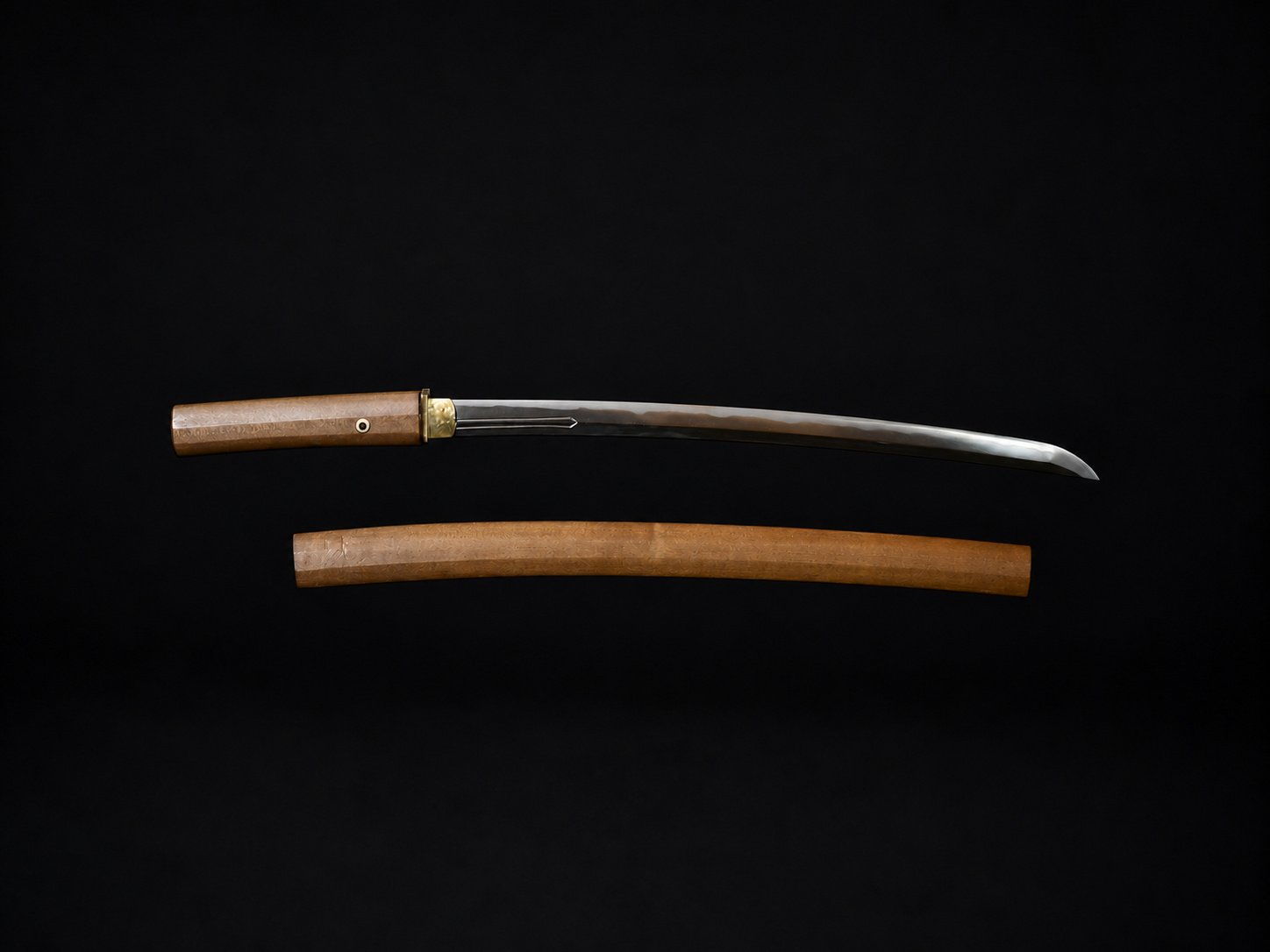
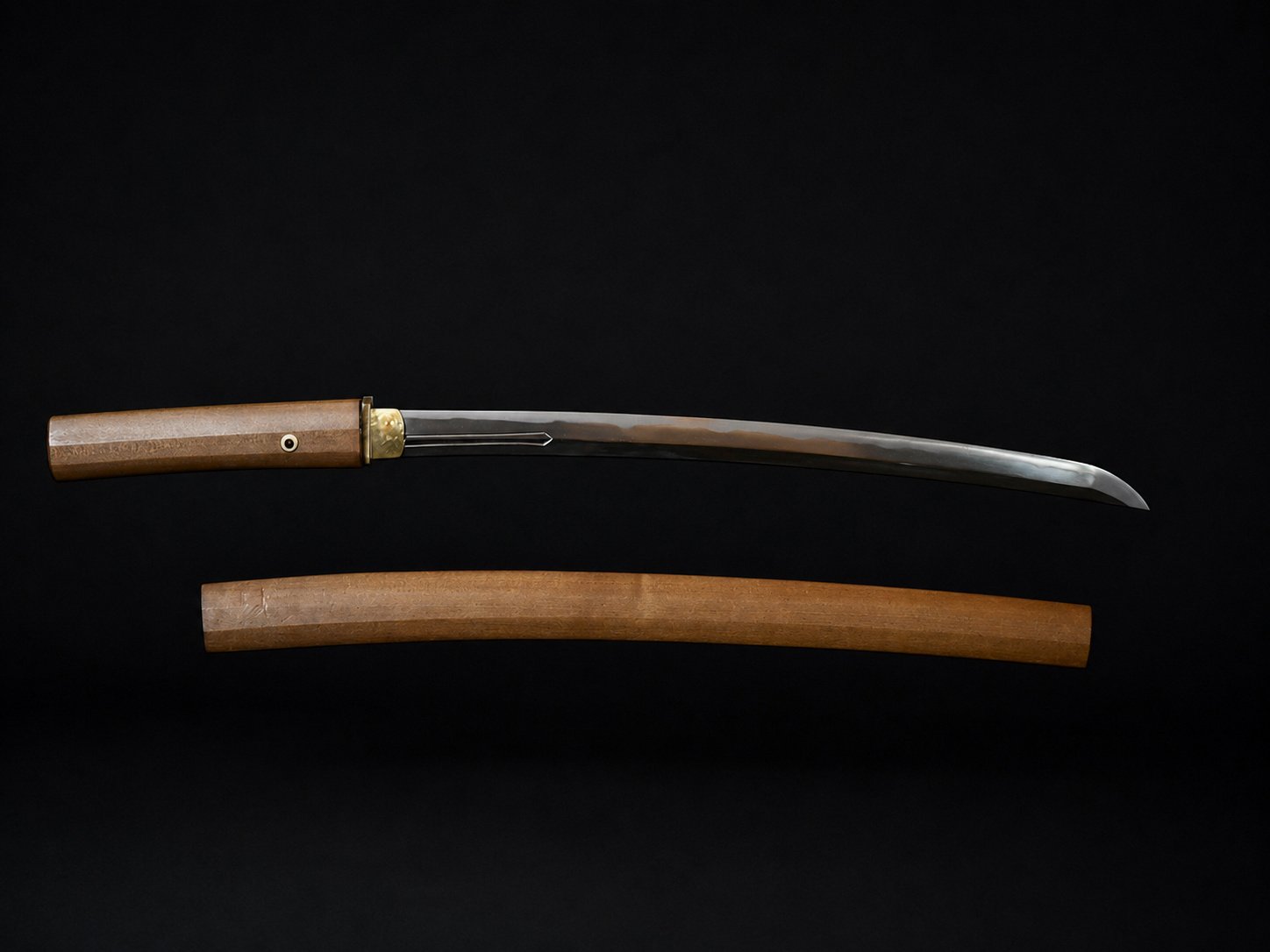
A well-preserved Japanese wakizashi presented in plain wooden shirasaya, allowing the blade itself to remain the principal focus.
The sword combines restrained proportions with a quiet and elegant temper line, a tightly forged surface and an historically shortened nakago. Its overall character is consistent with a blade from the transition between the Azuchi-Momoyama and early Edo periods.
Rather than relying on elaborate koshirae, this example is preserved in a simple storage mounting that places emphasis on the steel, geometry and activity of the blade.
Blade Construction
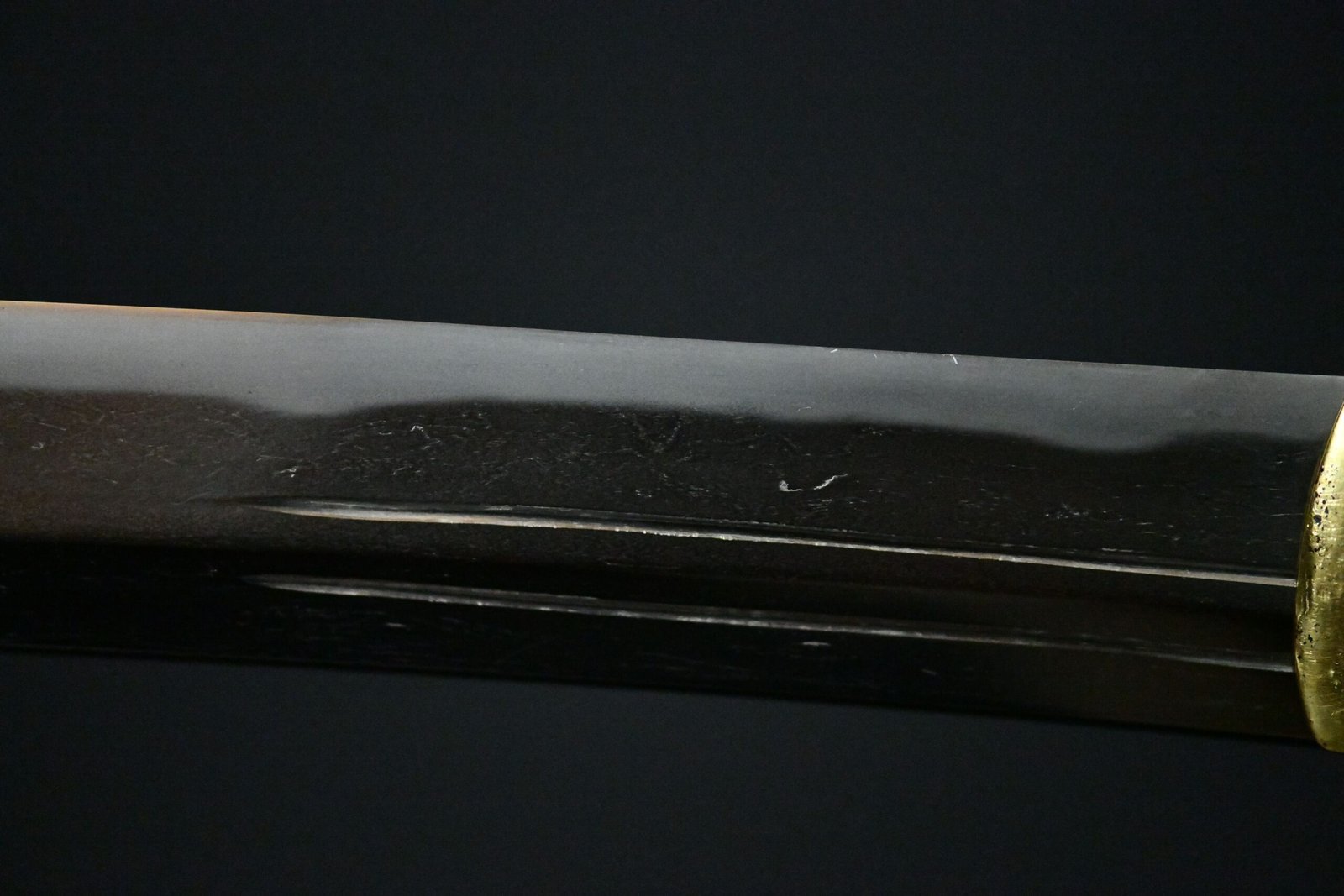
The blade is forged in shinogi-zukuri construction with an iori-mune, presenting the classic ridged cross-section associated with many Japanese swords of this period.
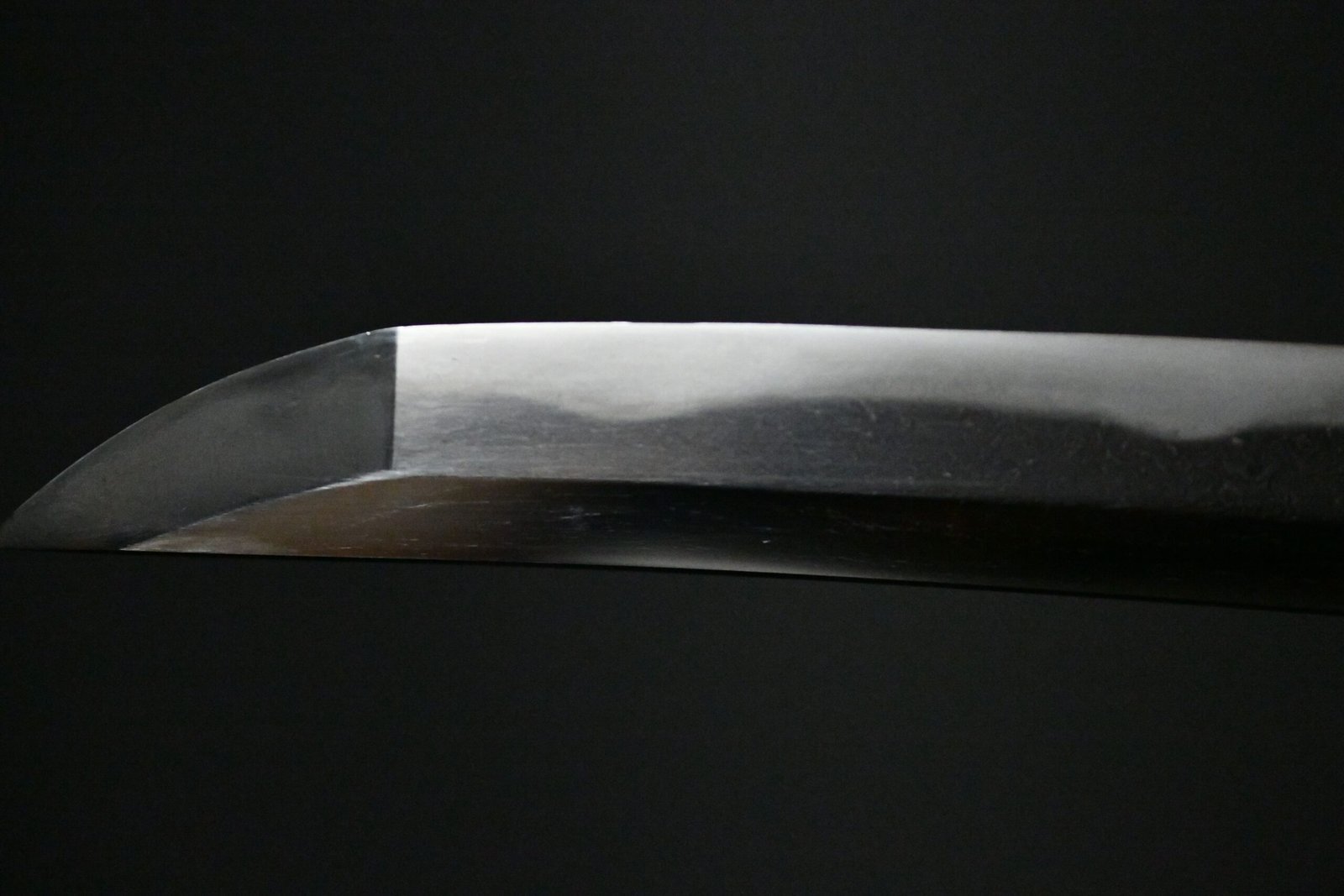
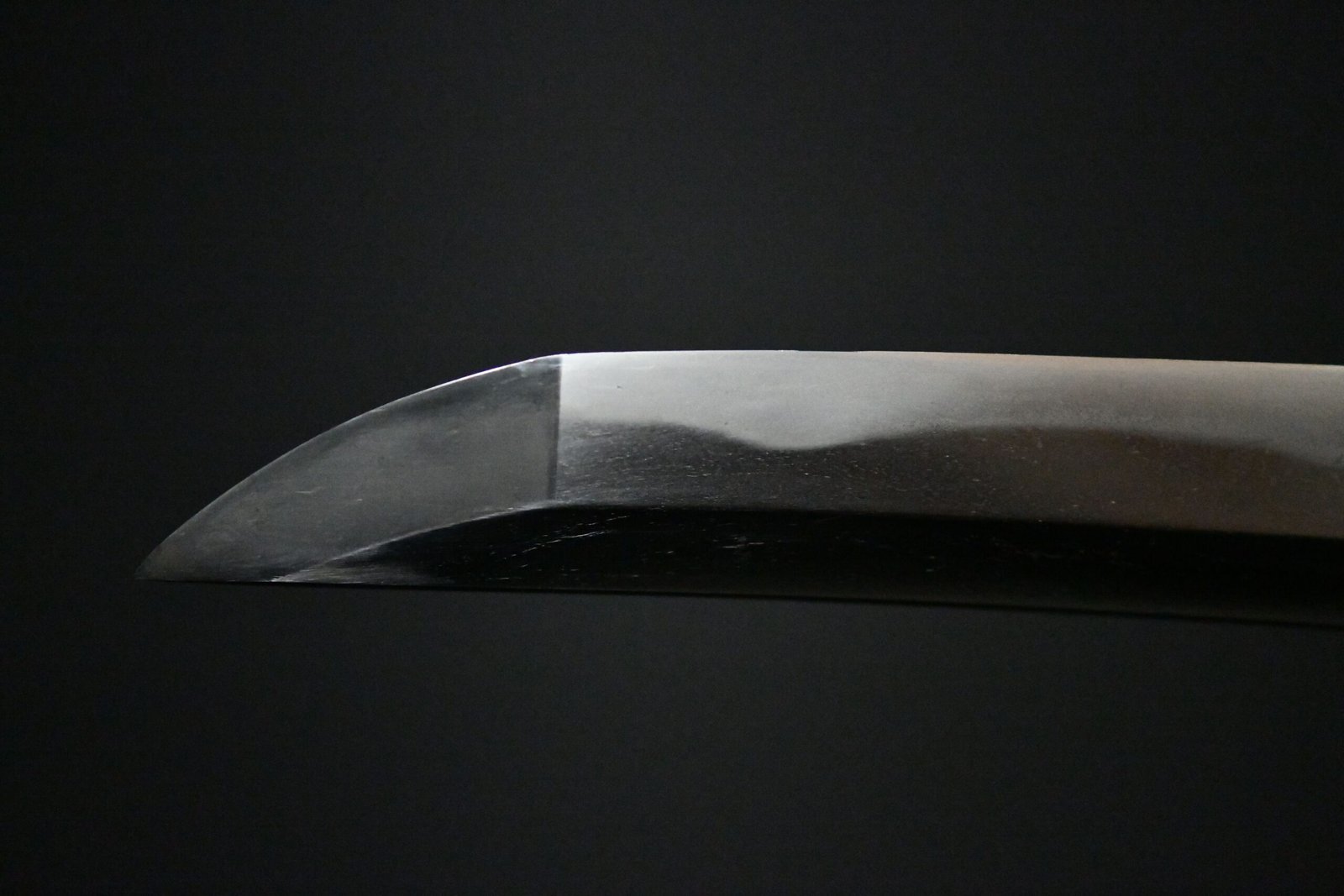
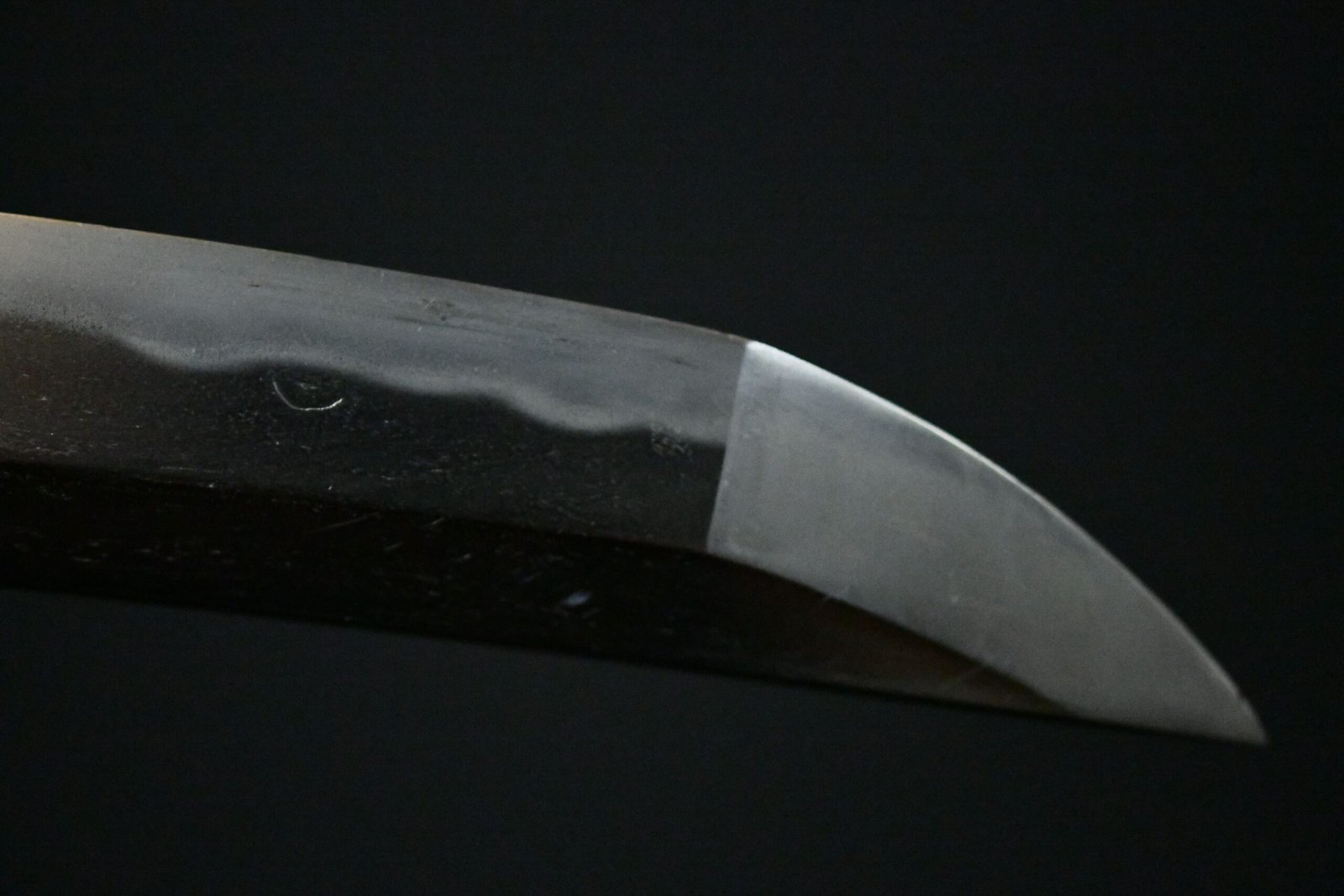
Its profile shows a graceful, moderate curvature and balanced proportions. The kissaki is of chū-kissaki form, with a clearly defined yokote separating the point from the main body of the blade.
The shape is restrained and functional, without excessive curvature or exaggerated proportions, giving the sword a composed and practical appearance.
Suguha-Notare Hamon
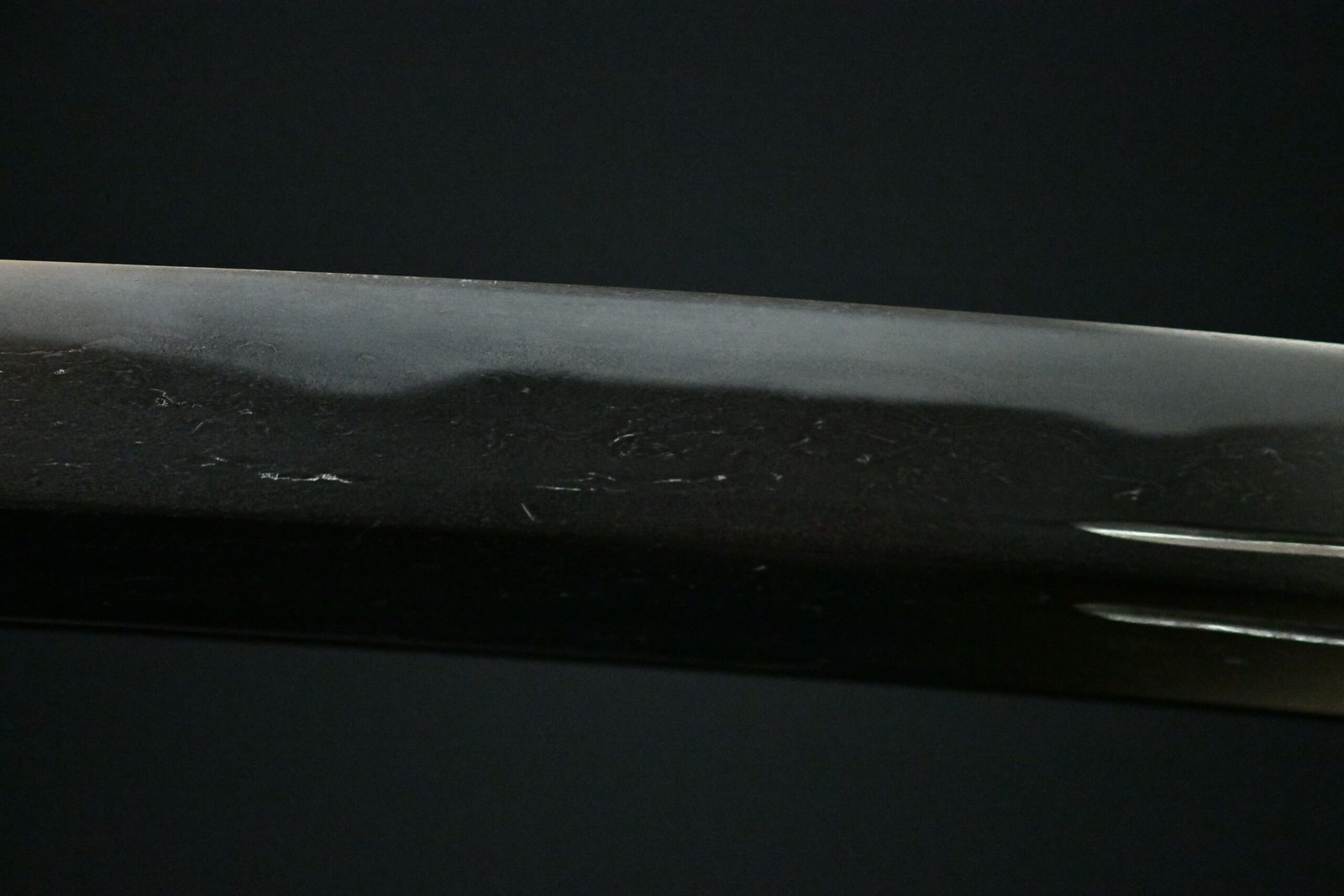
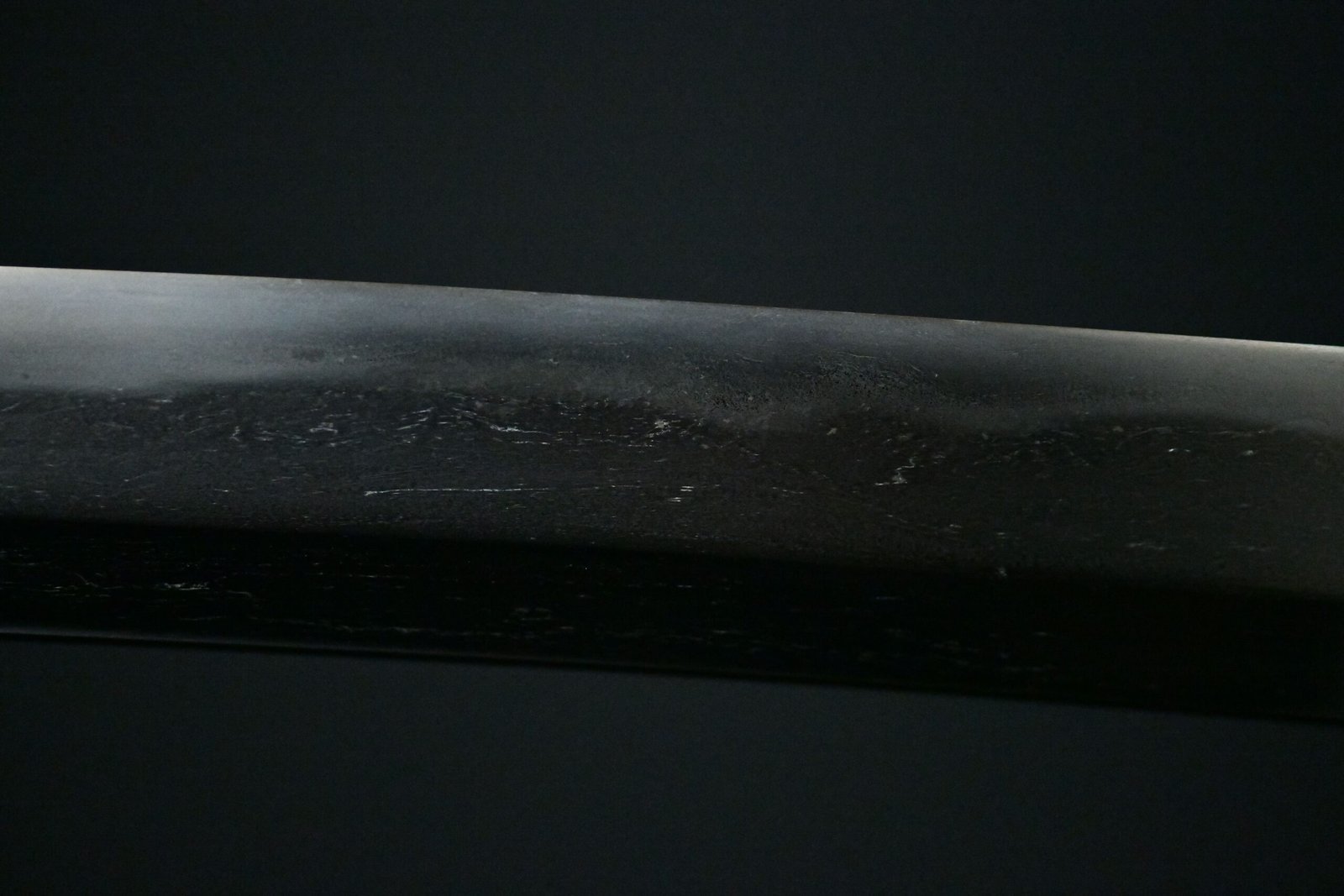
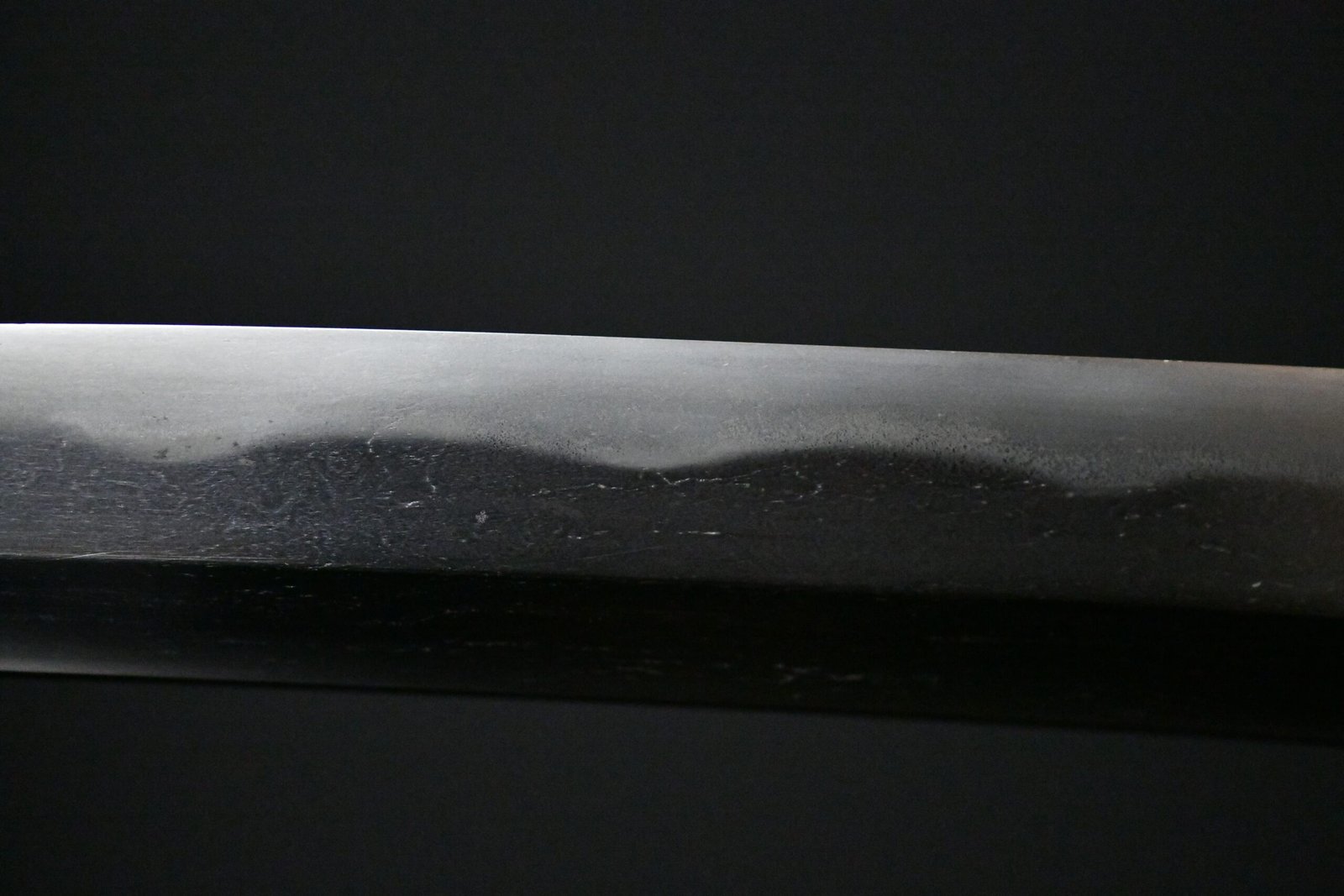
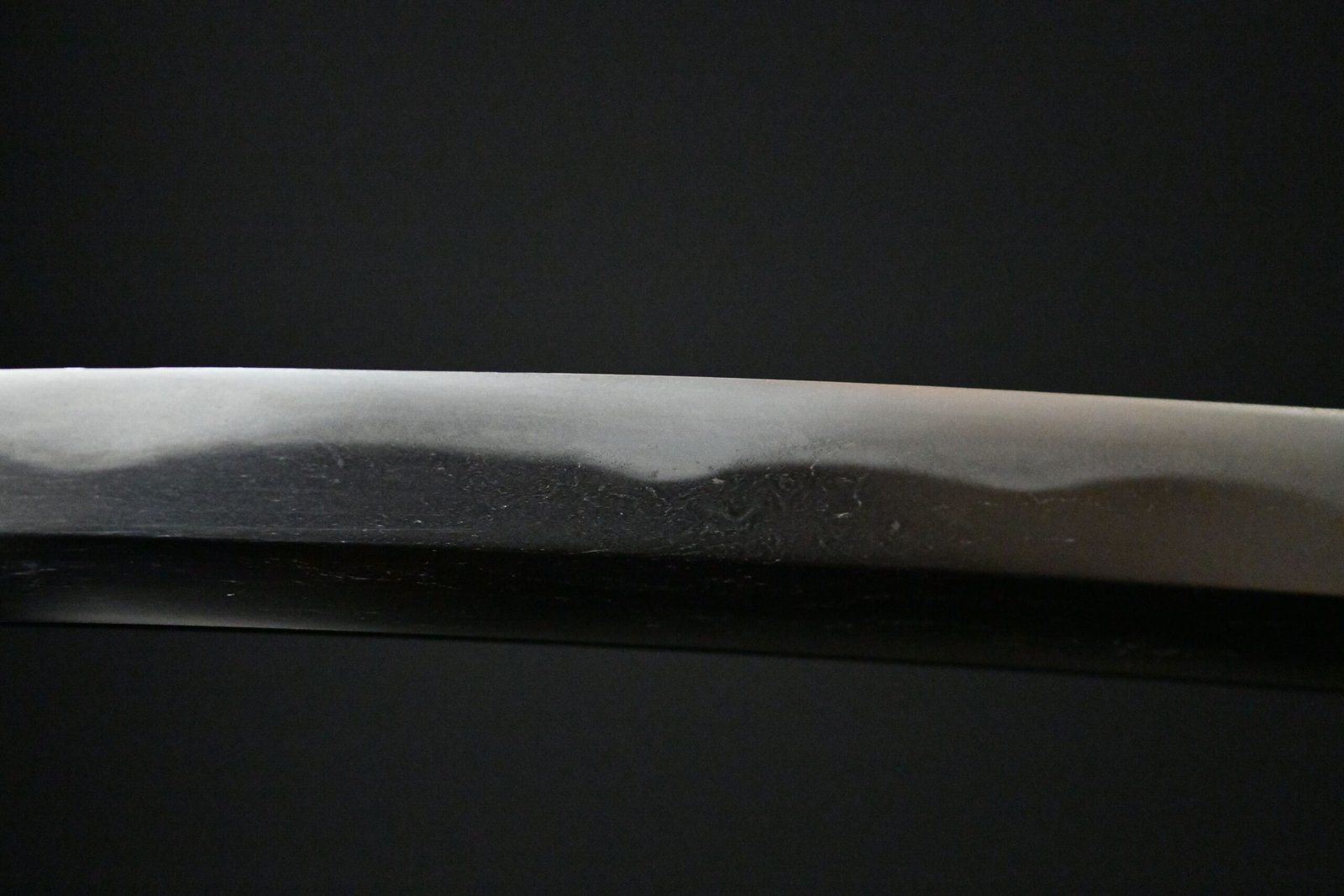
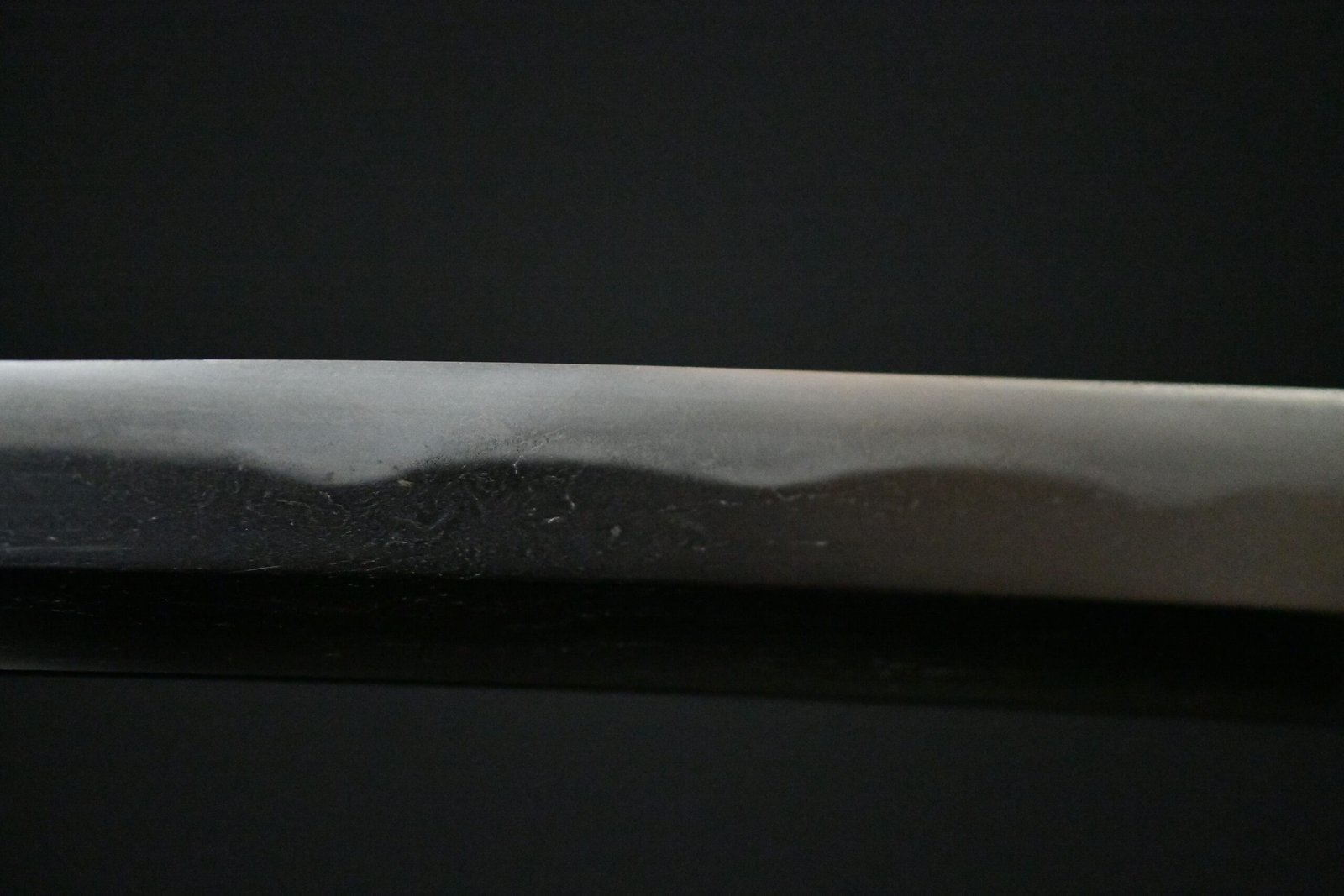
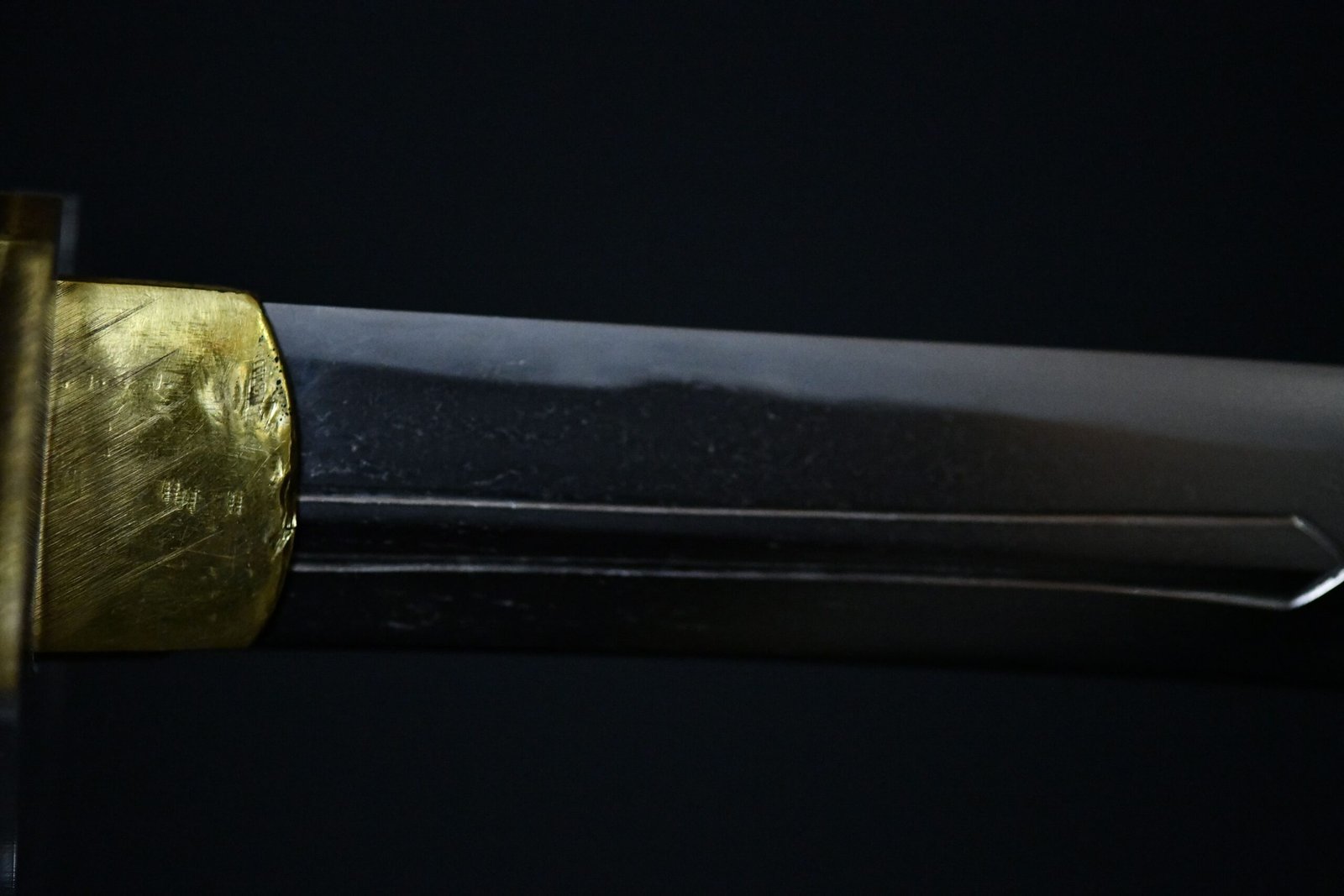
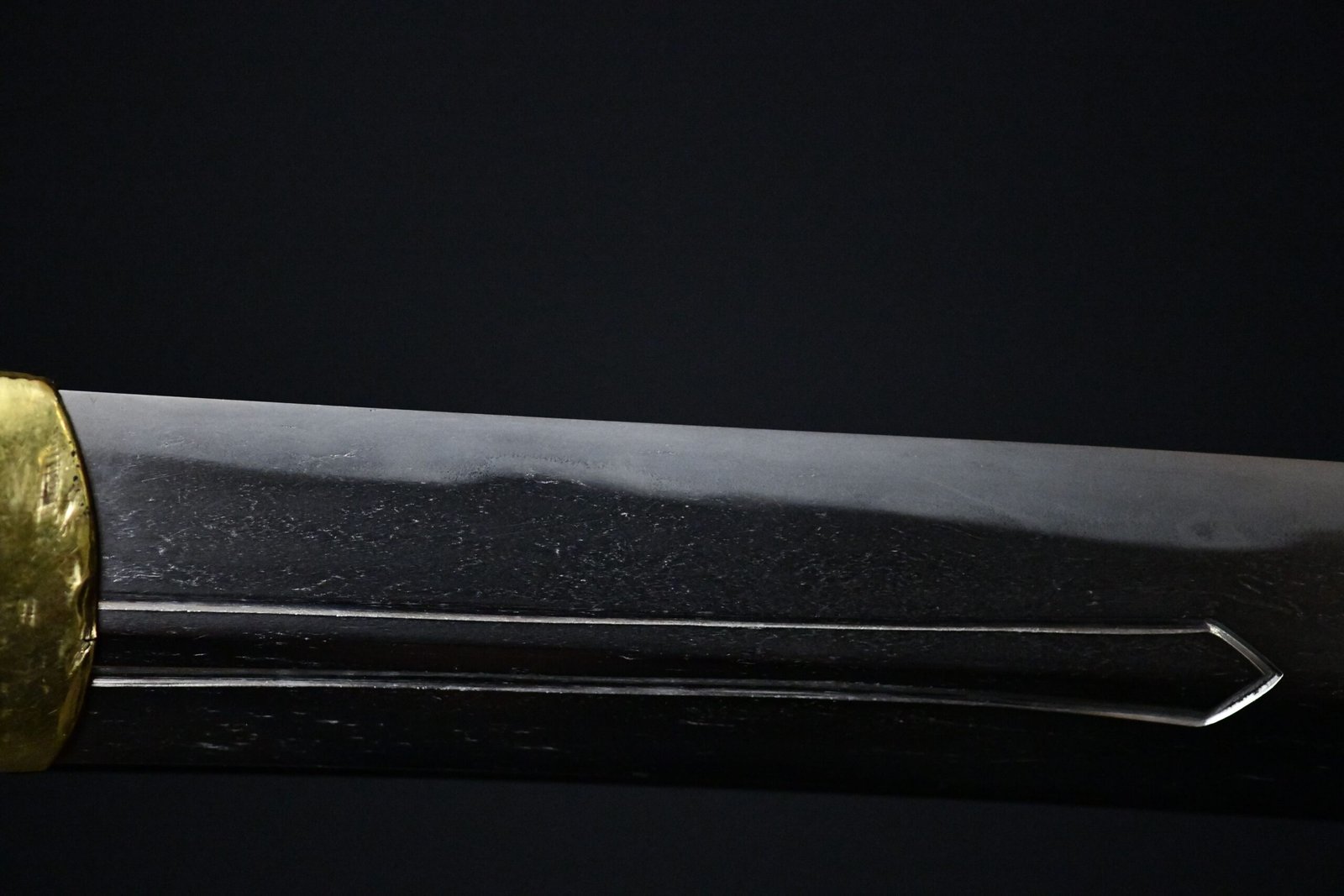
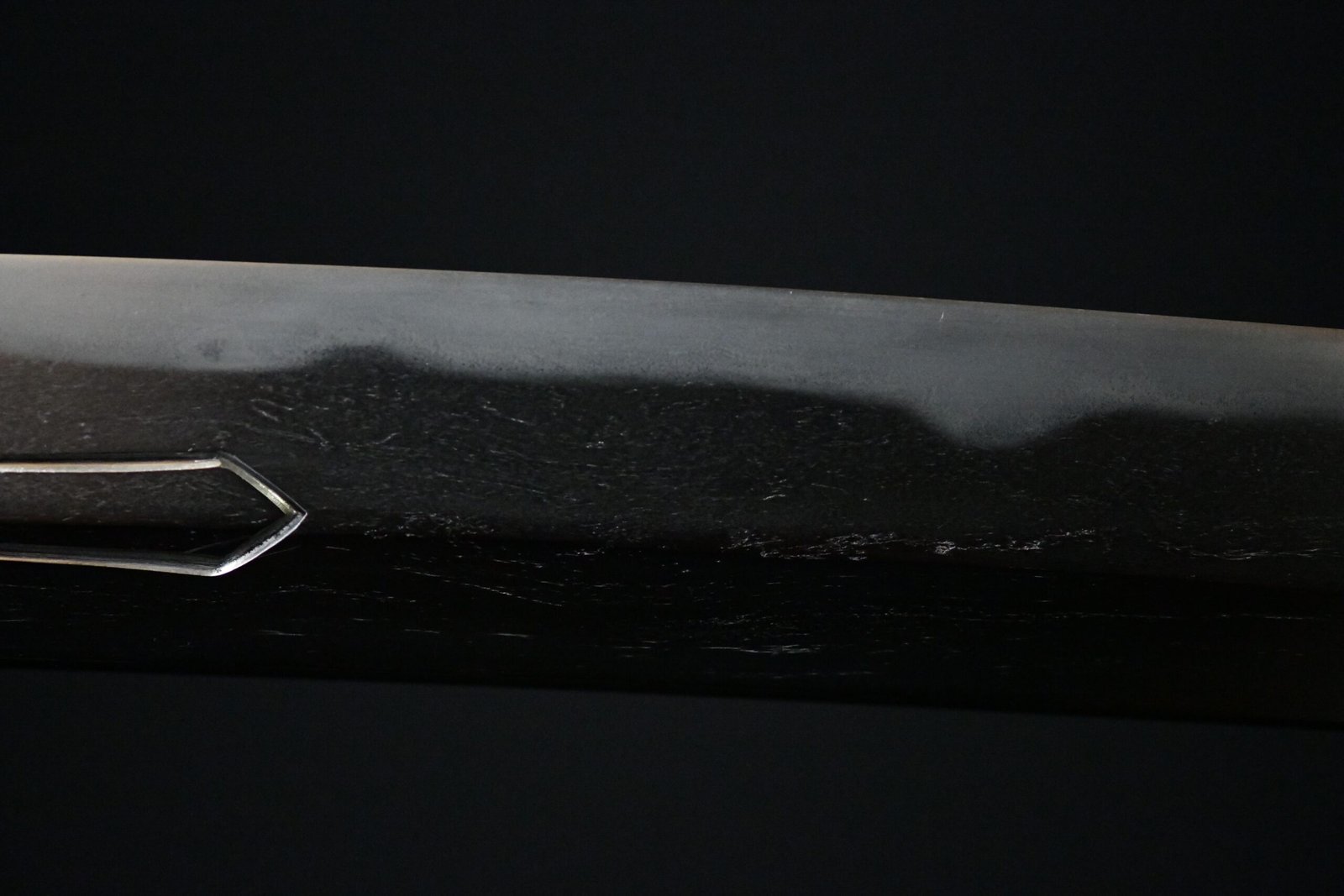
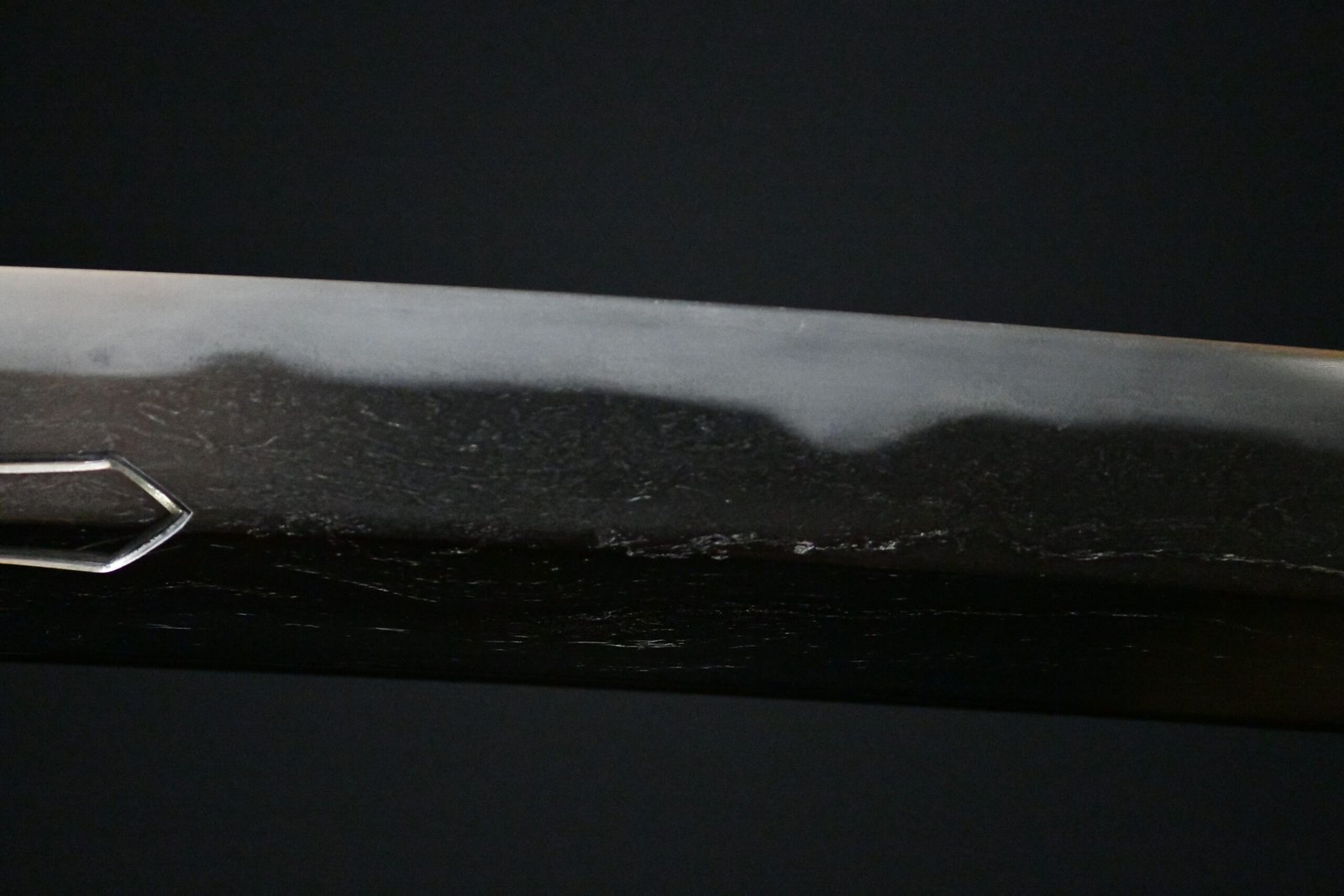
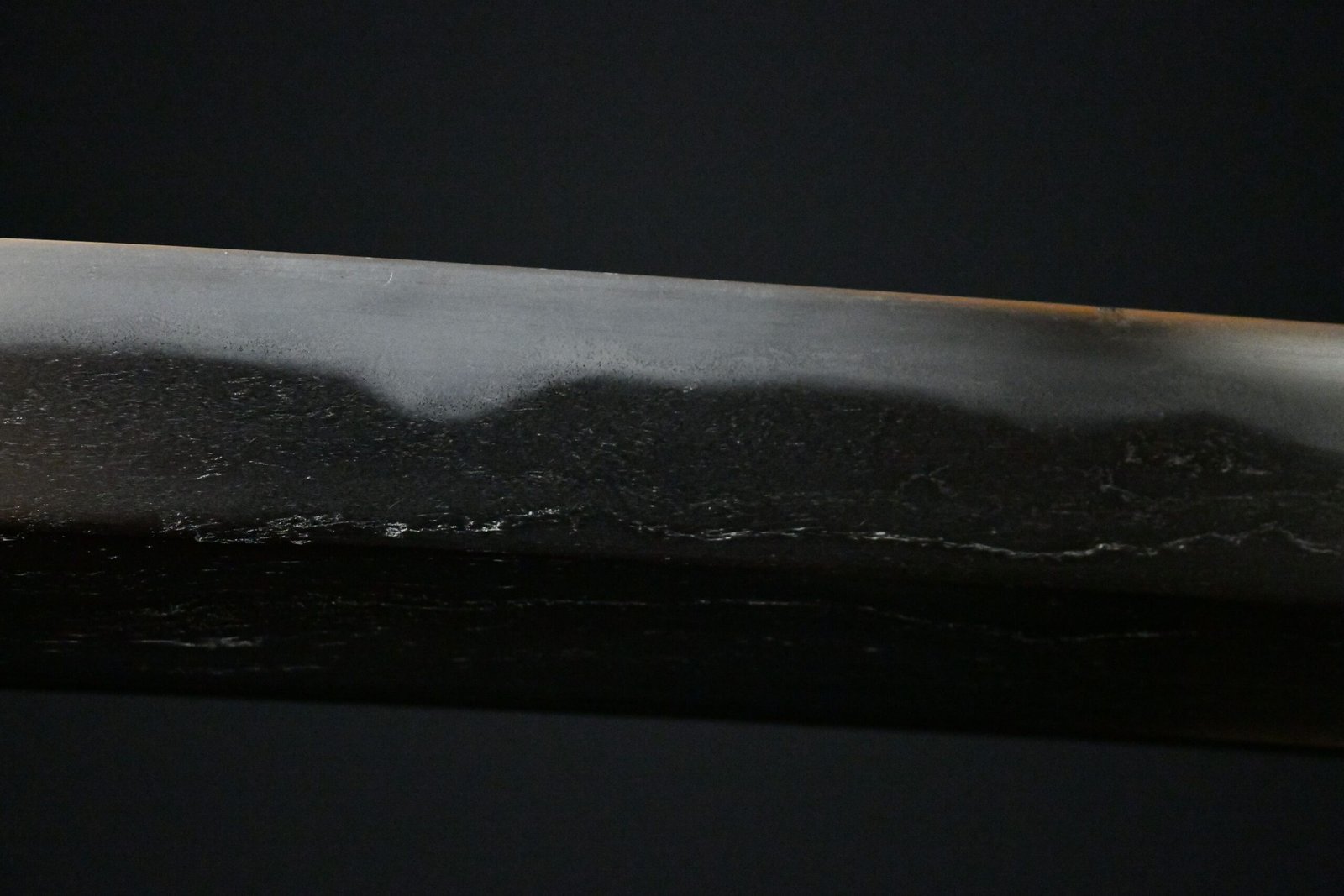
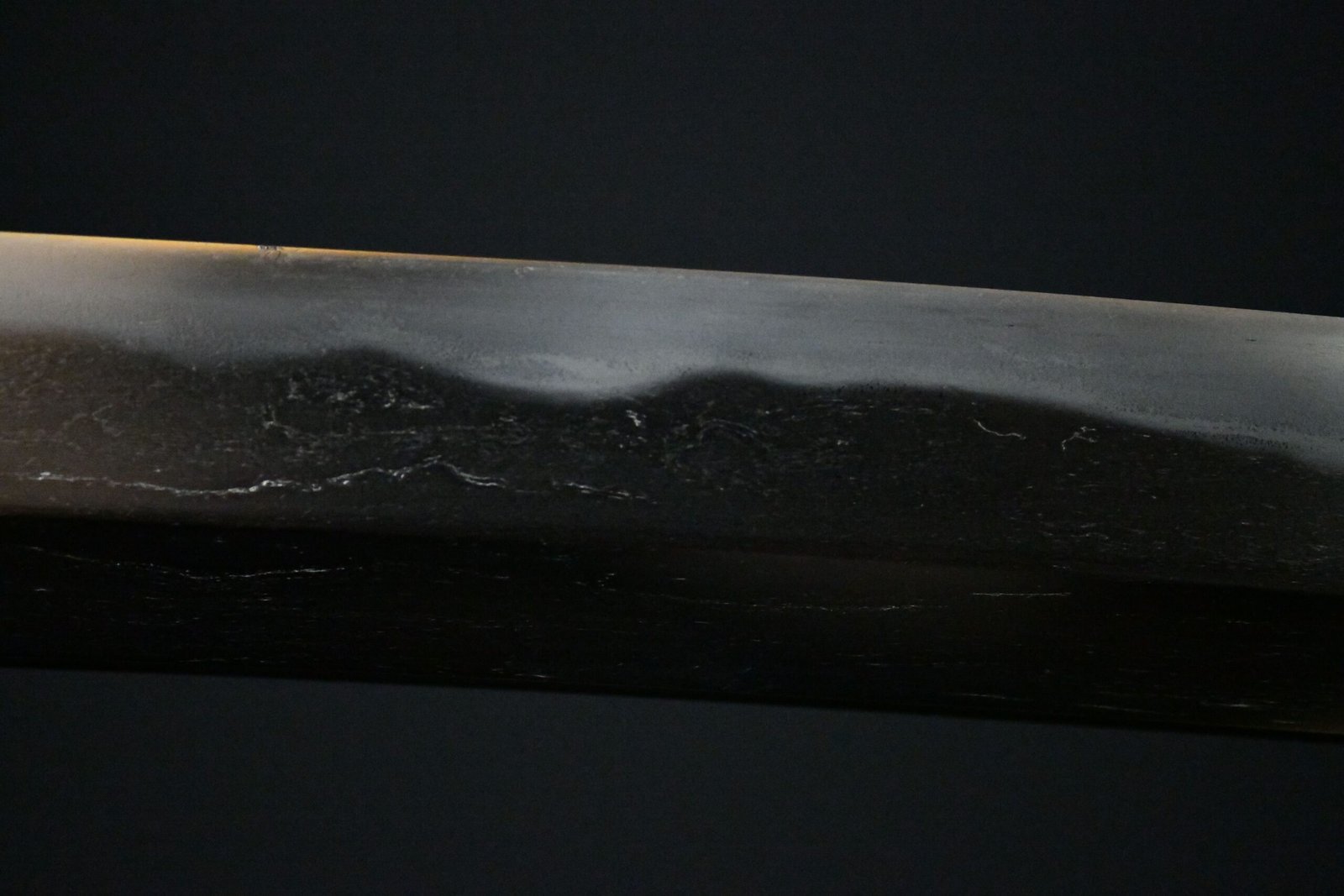
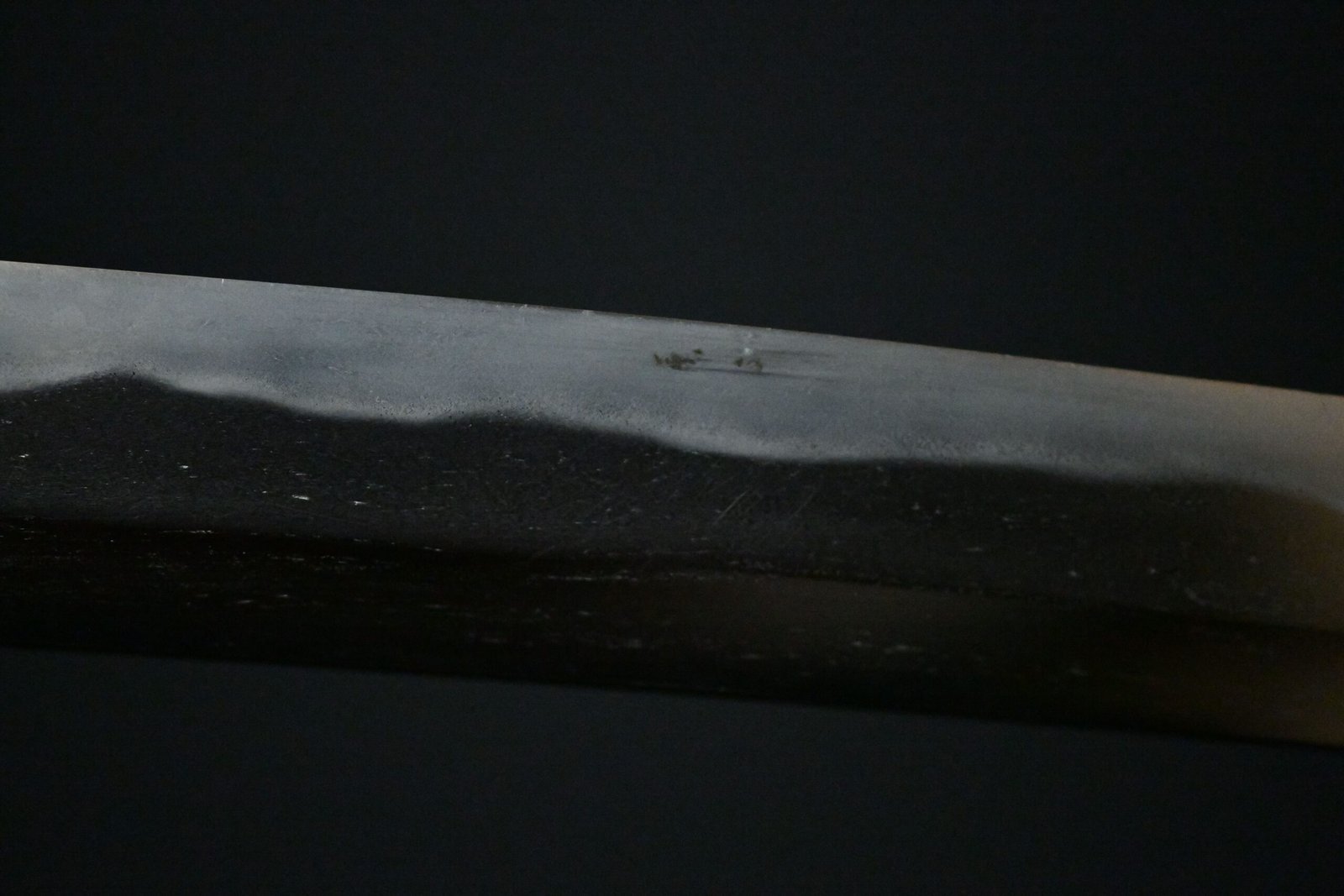
The hamon is based on a refined suguha — predominantly straight temper line — with gentle notare undulation running along the cutting edge.
The hardened boundary appears relatively quiet and controlled rather than highly flamboyant. It is formed primarily in soft nioi, with scattered ko-nie contributing a subtle granular sparkle to the edge under appropriate lighting.
The result is an elegant hamon whose interest lies in its restraint and internal activity rather than in a highly dramatic outline.
Bōshi and Kissaki
The temper continues cleanly into the kissaki, forming a controlled bōshi with a rounded return (kaeri).
In the visible areas, the transition through the point appears coherent and uninterrupted, with no obvious indication of temper loss or structural interruption.
The clearly defined yokote and moderate chū-kissaki reinforce the balanced geometry of the blade.
Jihada and Forged Surface
The surface of the blade shows a tight, well-forged jihada, with fine grain activity becoming more evident under raking light.
The steel presents the compact visual character expected from traditionally forged and folded Japanese sword steel, without relying on an exaggerated or heavily contrasted grain.
This comparatively subtle surface complements the restrained hamon and gives the blade an overall impression of visual coherence.
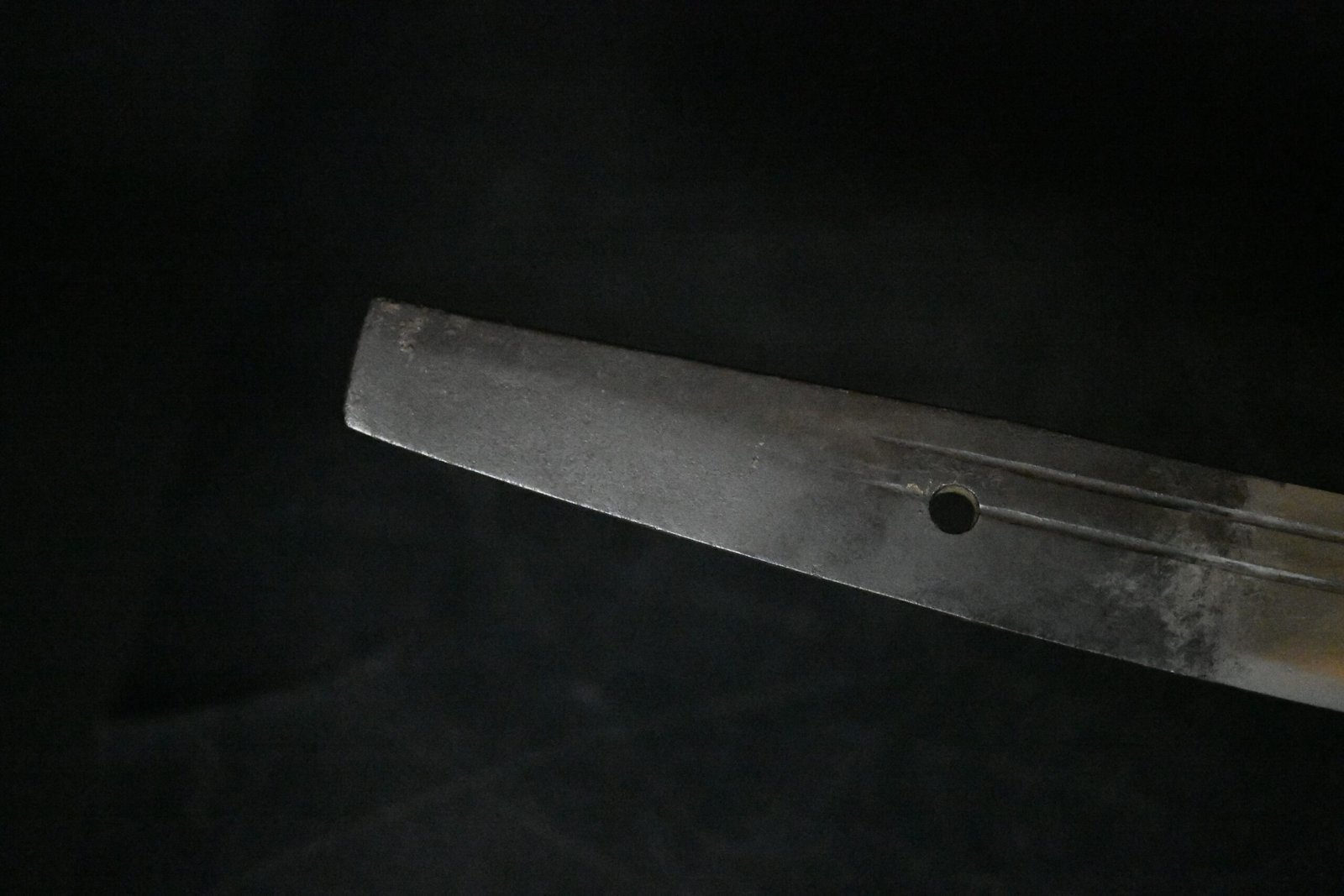
Ō-suriage Nakago
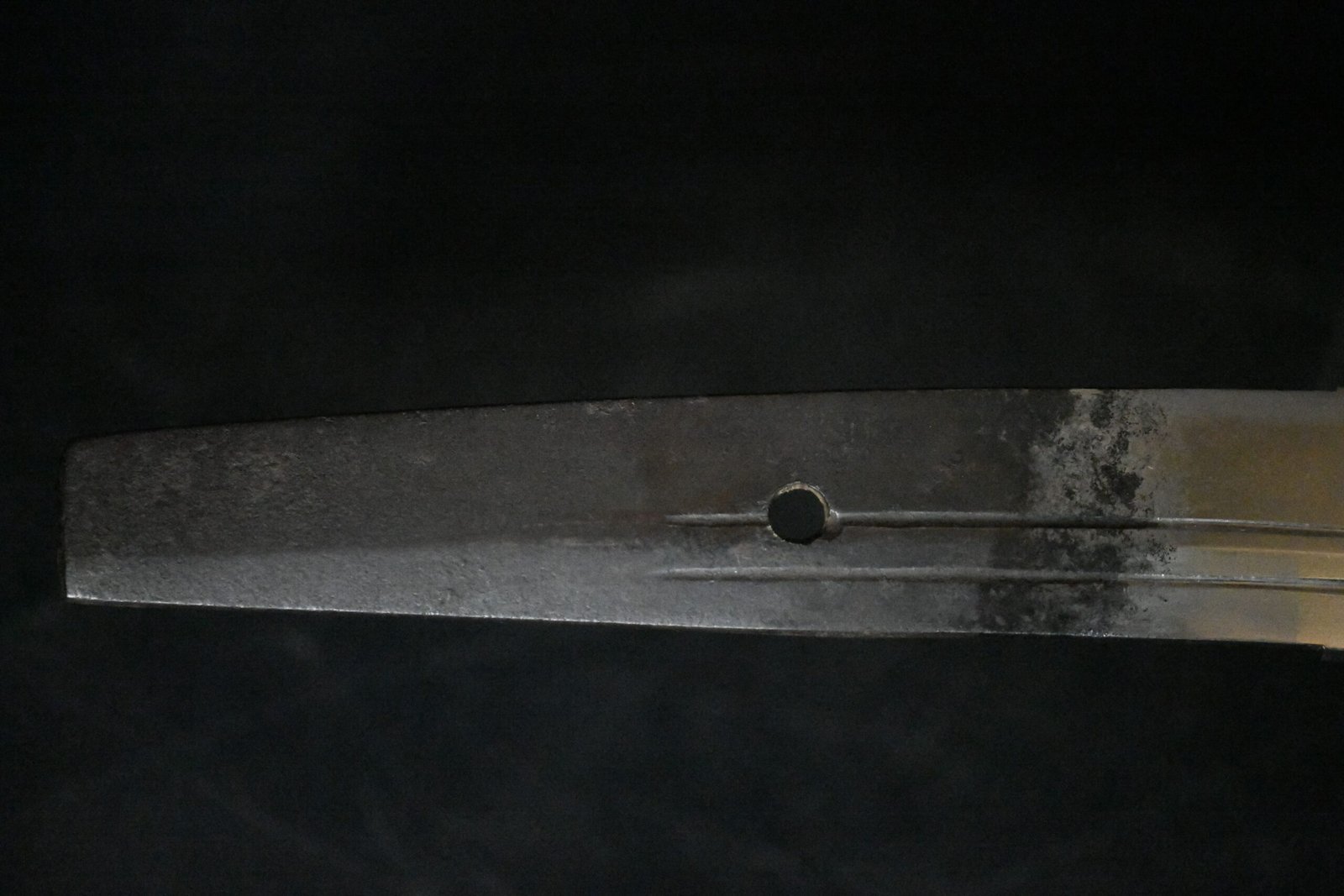
The tang is ō-suriage, indicating that the blade was substantially shortened from its original length at some point during its working life.
Visible file marks (yasurime) remain on the nakago, together with a single mekugi-ana.
Historical shortening is a well-documented practice in Japanese sword culture. Blades were frequently adapted to later mounting preferences, changing fashions or practical requirements, and suriage should therefore be considered part of the working history of a sword rather than inherently unusual damage.
Azuchi-Momoyama to Early Edo Dating
The blade is estimated to date from the transition between the Azuchi-Momoyama period and the early Edo period.
This dating is based on the overall proportions, blade geometry and restrained temper style described for the piece rather than on a surviving dated signature.
As with any unsigned or substantially shortened Japanese blade, period assessment should be understood as an attribution based on the sword’s surviving characteristics rather than as documentary certainty.
Shirasaya and Habaki
The blade is housed in a plain wooden shirasaya with matching saya and tsuka in light unfinished wood.
Shirasaya are simple storage mountings designed primarily to preserve a blade when it is not mounted in active koshirae. Their understated construction helps regulate contact with the blade and keeps visual attention focused on the sword itself.
A plain single-band brass habaki is fitted at the base of the blade.
Dimensions
- Nagasa: 45.4 cm
- Sori: 1.1 cm
- Total length: 65 cm
Key Features
- Period: Azuchi-Momoyama to early Edo period
- Type: Wakizashi
- Construction: Shinogi-zukuri
- Mune: Iori-mune
- Kissaki: Chū-kissaki
- Hamon: Suguha-based with gentle notare
- Hamon activity: Nioi with scattered ko-nie
- Bōshi: Controlled rounded kaeri
- Jihada: Tight, fine forged grain
- Nakago: Ō-suriage
- Mekugi-ana: One
- Habaki: Plain single-band brass
- Mounting: Shirasaya
- Nagasa: 45.4 cm
- Sori: 1.1 cm
- Total length: 65 cm
Condition
The blade presents in clean and healthy overall condition in the photographed areas, with the cutting edge and polished surfaces remaining visually coherent.
No obvious cracks, deep pitting or active rust are visible in the areas shown. The hamon remains readable and the kissaki and yokote retain clear definition.
The nakago has undergone historical ō-suriage, representing a substantial modification to the original length of the sword during its working life.
As with all antique Japanese swords, minor surface variations and traces of age should be understood within the context of the blade’s long history rather than as modern manufacturing imperfections.
A refined ō-suriage wakizashi dating approximately from the Azuchi-Momoyama to early Edo transition, distinguished by its elegant suguha-notare hamon, subtle nioi and ko-nie activity, tight jihada and restrained shirasaya presentation. A blade whose appeal lies primarily in the steel itself, its historical adaptation and its quiet, disciplined workmanship.