November 17, 2026
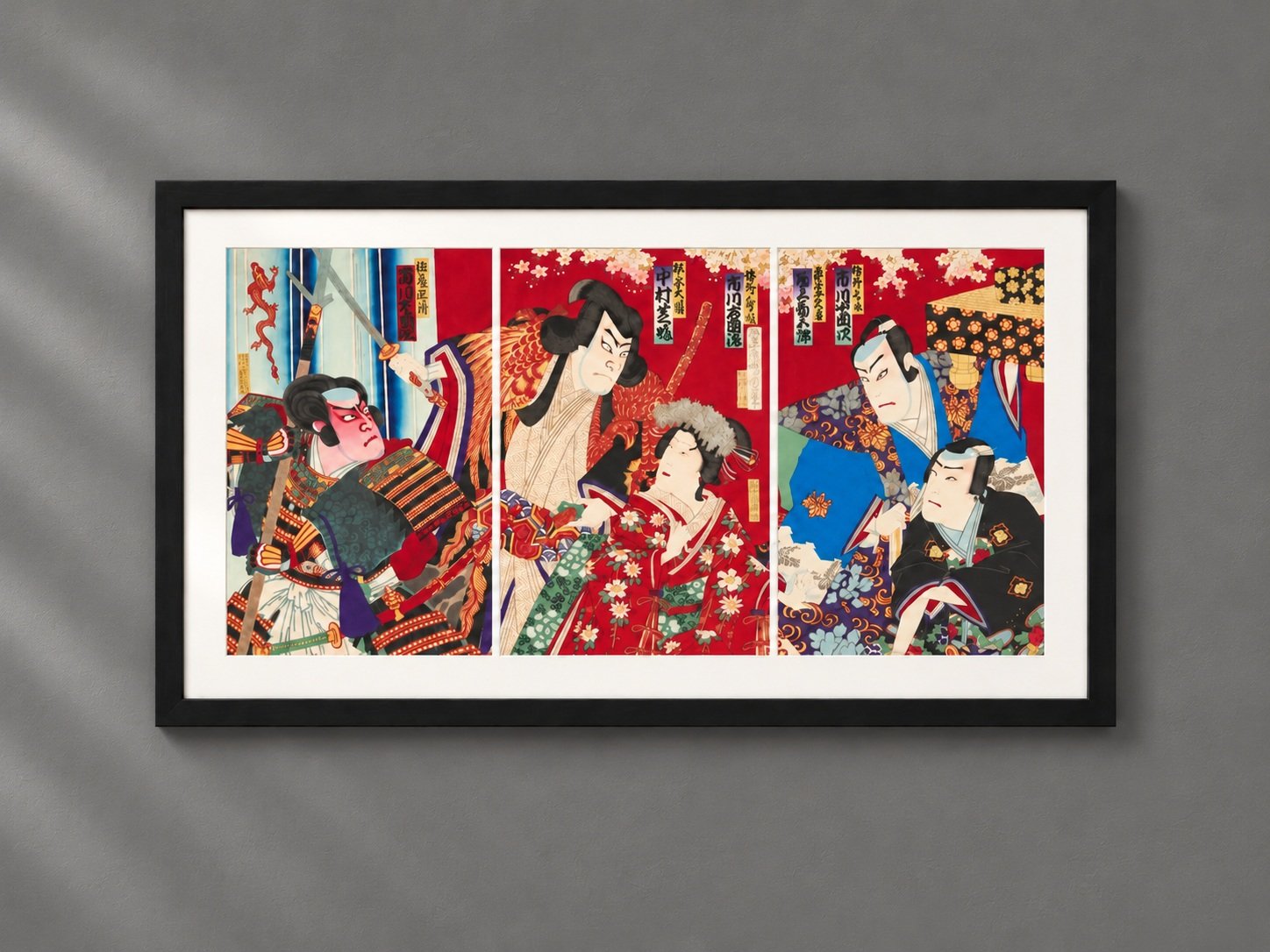
Look at a print by Toyohara Kunichika for a few seconds and you can almost imagine the moment that came before it. An actor has turned his head. A hand has risen. A costume catches the eye beneath a rush of blue water. The scene is still, yet it feels as though something is about to happen.
That sense of anticipation is one of the reasons we enjoy his work so much.
Toyohara Kunichika (1835–1900) lived through an extraordinary change in Japan, from the final years of the Edo period into the Meiji era. He designed many kinds of images, but he is best known for his prints of kabuki actors, known as yakusha-e. If you are new to his work, these theatrical portraits are a wonderful place to start: they invite you to look closely at a face, a gesture and the role an actor is playing.
Kunichika trained under Utagawa Kunisada, one of the great artists of nineteenth-century ukiyo-e. Kabuki became a central subject of his career.
A kabuki print can show more than a performer’s likeness. The actor may be appearing as a hero, a villain, a woman or a figure from legend. Kunichika had to make that identity legible while also conveying the energy of a performance. The result is often a portrait that feels poised between two people: the actor the audience recognised and the character they had come to see.
Consider Ichikawa Danjūrō as Jiraiya. His sword is raised and his body cuts across the vertical fall of the water behind him. Your eye meets his expression first, then follows the movement of his arm. You do not need to know Jiraiya’s story to feel the tension in the scene. Knowing the role adds another layer to it.
When people talk about ukiyo-e, colour often gets the attention. With Kunichika, I find myself returning to the lines around the eyes and brows. A small change in their angle can make a face look watchful, furious or deeply absorbed. The outline of a sleeve or a shoulder then carries that feeling through the rest of the figure.
His compositions can be crowded with patterned fabric and dramatic scenery, but the face rarely gets lost. In our print of an actor from the Nakamura family beneath a waterfall, the sideways glance holds its own against the falling water and richly decorated costume. To me, that is where Kunichika is especially compelling: he gives you plenty to explore, yet you know where to look first.
There is a detail about ukiyo-e worth remembering here. Kunichika designed the image, while specialist carvers and printers worked with the publisher to turn that design into a finished woodblock print. The expressive line we admire on the paper is part of that shared craft.
In the Kunichika prints we have at Supein Nihonto, blue is hard to miss. Several place an actor against a waterfall. That repeated setting gives us a way to see how differently each figure responds to the scene. Against the cool blue, a purple robe, a red lining or a dark silhouette becomes especially vivid.
I would hesitate to name one colour as Kunichika’s colour. What interests me more is how confidently he sets colours against one another. In the Jiraiya print, the purple costume stands out against the blue cascade and reinforces the force of the actor’s pose. In Bandō Hikosaburō as Otsuji, lavender and red draw us toward a very different, more vulnerable moment.
The water may be similar, but the mood is not. That is what makes these works rewarding to view together.
Colour in an antique print also deserves careful looking. The tones we see today have passed through more than a century of handling, display and storage. If a particular shade matters to you as a collector, examine the individual impression and its condition rather than relying on a general description of the artist’s palette.
One of my favourite things about Kunichika’s actor prints is that they reward two kinds of curiosity. You can enjoy them immediately as images. Then you can ask: who is this performer, and who is the character?
In the print of Mongaku Shōnin beneath Nachi Waterfall, the setting and the figure’s prayerful pose create a very different impression from Jiraiya’s raised sword. Viewed side by side, the prints show how much Kunichika could do with an actor, a waterfall and a single decisive moment.
You need not recognise every theatrical reference to enjoy them. But learning the role can change what you see. An expression that first seemed simply dramatic begins to suggest fear, resolve, grief or defiance.
It is easy to approach a nineteenth-century print as a beautiful object from a distant past. Kunichika makes that distance feel a little smaller. His actors seem intensely present: dressed for the stage, caught in character, demanding our attention for one more moment.
That is why we wanted to introduce the artist alongside the works themselves. A short biography tells you when Kunichika lived. Looking across his prints tells you more about what held his attention—and may help you discover what holds yours.
Explore the Toyohara Kunichika prints at Supein Nihonto, and try viewing two portraits together. Start with the faces, follow the lines of the costumes, then notice what the colours and settings do to the mood. You may find that the longer you look, the less still these images feel.
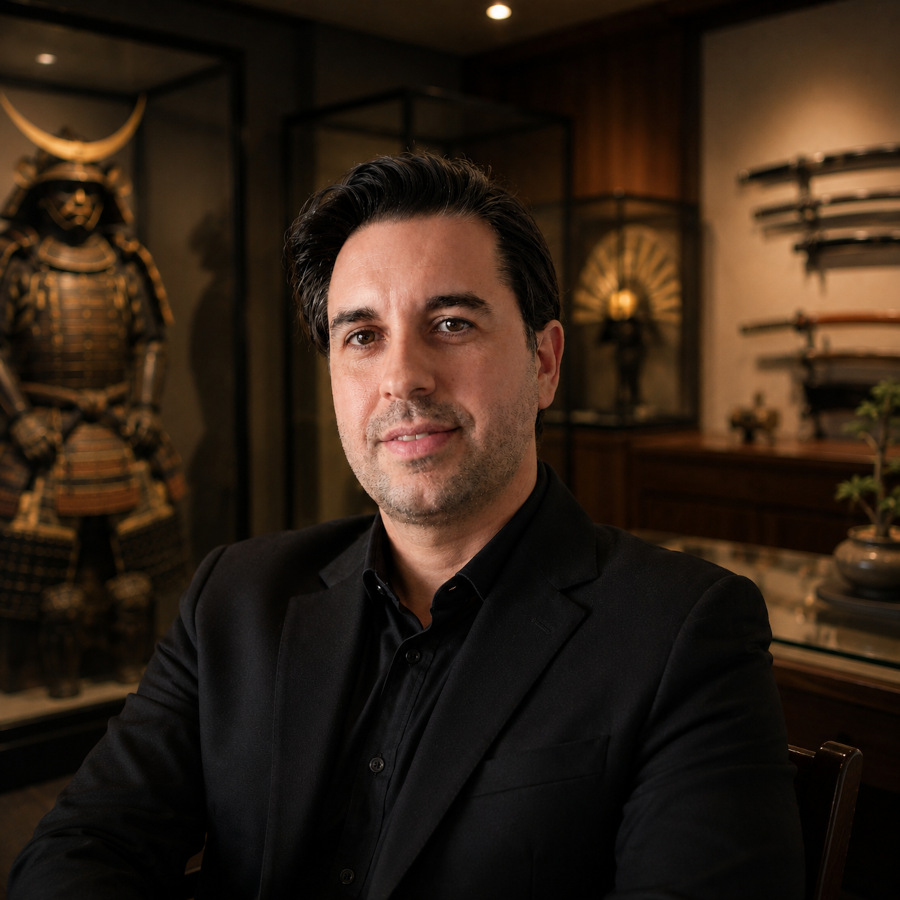
CEO of SupeinNihonto, dealer and collector of ancient Japanese art and weapons from Canillo, Andorra.
Contact