November 10, 2026
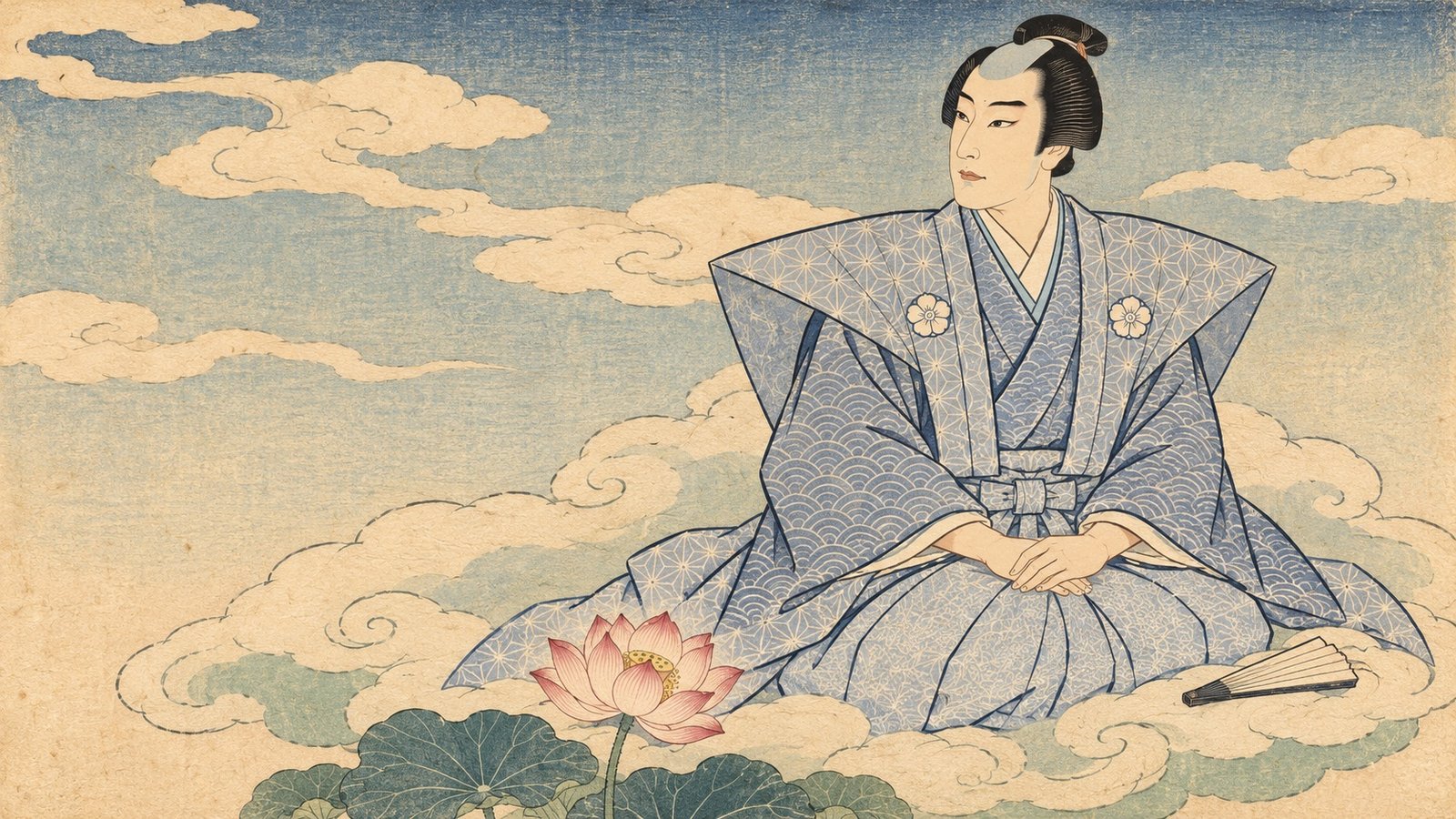
A face, a robe, a few lines of writing. At first glance, a Japanese actor print can seem to offer a familiar pleasure: the chance to admire a striking portrait and the skill of the artist who designed it.
Then a museum description identifies it as a memorial portrait, and the image changes.
The person looking back at us has died. The writing may record his posthumous name or preserve a poem. The print belongs to a moment when an audience was learning to remember someone it would never see perform again.
That is what draws me to shini-e, the memorial prints associated especially with kabuki actors. They make me curious about the people who first wanted these images, and about what a familiar face might have meant to them.
Shini-e are Japanese memorial prints, often translated as “death pictures.” JAANUS, the dictionary of Japanese art terminology, describes nineteenth-century examples as images published to announce a well-known person’s death and pray for the repose of their soul. Most subjects were kabuki actors, although writers and artists were also commemorated. projects.mcah.columbia.edu
That combination of announcement, portrait, and prayer interests me. A single sheet could give people news while also offering a way to remember the person who had died.
I find it helpful to keep those different purposes in mind. They encourage me to give the writing around the figure as much attention as the face.
One example I would begin with is Utagawa Kunimasa’s Memorial Portrait of Ichikawa Danjūrō VI, dated 1799 and held by the University of Michigan Museum of Art.
The actor kneels before a waterfall with his hands clasped. A fan bearing a poem lies on the ground in front of him. The museum places memorial portraits of this actor among the early examples of the genre. University of Michigan Museum of Art
It is the fan that makes me pause. Such a small object gives the eye somewhere to rest, then invites us to read.
Knowing the purpose of the portrait changes the questions I bring to it. Why remember him through this gesture? What does the poem contribute? How would someone familiar with the performer have understood the scene?
I would want a reliable reading of the inscription before offering an answer. But even those unanswered questions make the portrait more absorbing.
The response to the death of Ichikawa Danjūrō VIII gives a remarkable sense of the scale this form of remembrance could reach. JAANUS records an estimated 120 to 130 different obituary prints following his death in Osaka in 1854.
That figure refers to different designs, rather than the number of individual sheets printed.
I find the variety more revealing than the number alone. How many ways can an audience imagine a farewell to the same person? Which face, gesture, or remembered role feels appropriate?
The University of Michigan Museum of Art notes that memorial images of Danjūrō VIII included him walking on a cloud, sitting on a lotus blossom, or being carried toward another world while admirers tried to hold him back.
That last idea is especially affecting. The desire to keep someone with us is easy to recognize, even when the imagery used to express it comes from another time and culture.
A Kunisada memorial portrait of Danjūrō VIII, also in Michigan’s collection, brings the actor’s theatrical identity into the farewell. The museum cautiously identifies the portrayal as Enya Hangan from Chūshingura, connecting the character’s tragic scene with the actor’s own death by suicide.
For me, this introduces a difficult question: when we remember a performer, how much of that memory belongs to the person, and how much belongs to the characters through which we knew them?
I cannot separate those things on behalf of his audience. The portrait makes me aware of how closely they could become intertwined.
It also changes the way I approach kabuki actor prints. Identifying the performer and the role opens up questions about why that particular portrayal was chosen.
Memorial prints could include a posthumous Buddhist name, a death poem, burial information, and dates of birth and death.
In Kunisada’s Danjūrō VIII portrait, the museum identifies his posthumous name and death date at the upper right, with a memorial poem above.
These are details I would miss if I treated the lettering only as part of the composition. A name that seems unfamiliar may be an important clue to the image’s purpose.
When studying a possible shini-e, I would begin with a documented catalogue entry, then compare the inscriptions with the exact design. A solemn expression alone would leave too much unanswered.
Milwaukee Public Library preserves an accordion-bound scrapbook of nineteenth-century Japanese prints in which Danjūrō VIII and Bandō Shūka I appear repeatedly. The library describes their memorial prints as marking a break in the album’s sequence.
I find that a particularly rewarding way to think about these objects. The placement of one print beside another can change how both are read.
A portrait viewed on its own invites one kind of attention. Encountering a memorial after several images of the same familiar performer creates another. The sequence gives the farewell a place within a larger collection of images.
We do not need to invent the album maker’s feelings to appreciate the care involved in arranging those pages.
Whenever I explore Japanese woodblock prints, I am drawn to details that help me understand why someone might have wanted to keep an image.
With shini-e, I return to the fan beside the waterfall, the names above a face, and the admirers trying to hold a departing actor back. Each offers a different starting point for understanding remembrance.
I will never hear these performers’ voices or see the movements their audiences knew. But I can look at the images made after their deaths and try to understand what people chose to preserve.
That gives these quiet portraits a lasting interest for me. There is always a little more to read, and another reason to look again.
CEO of SupeinNihonto, dealer and collector of ancient Japanese art and weapons from Canillo, Andorra.
Contact