October 24, 2026
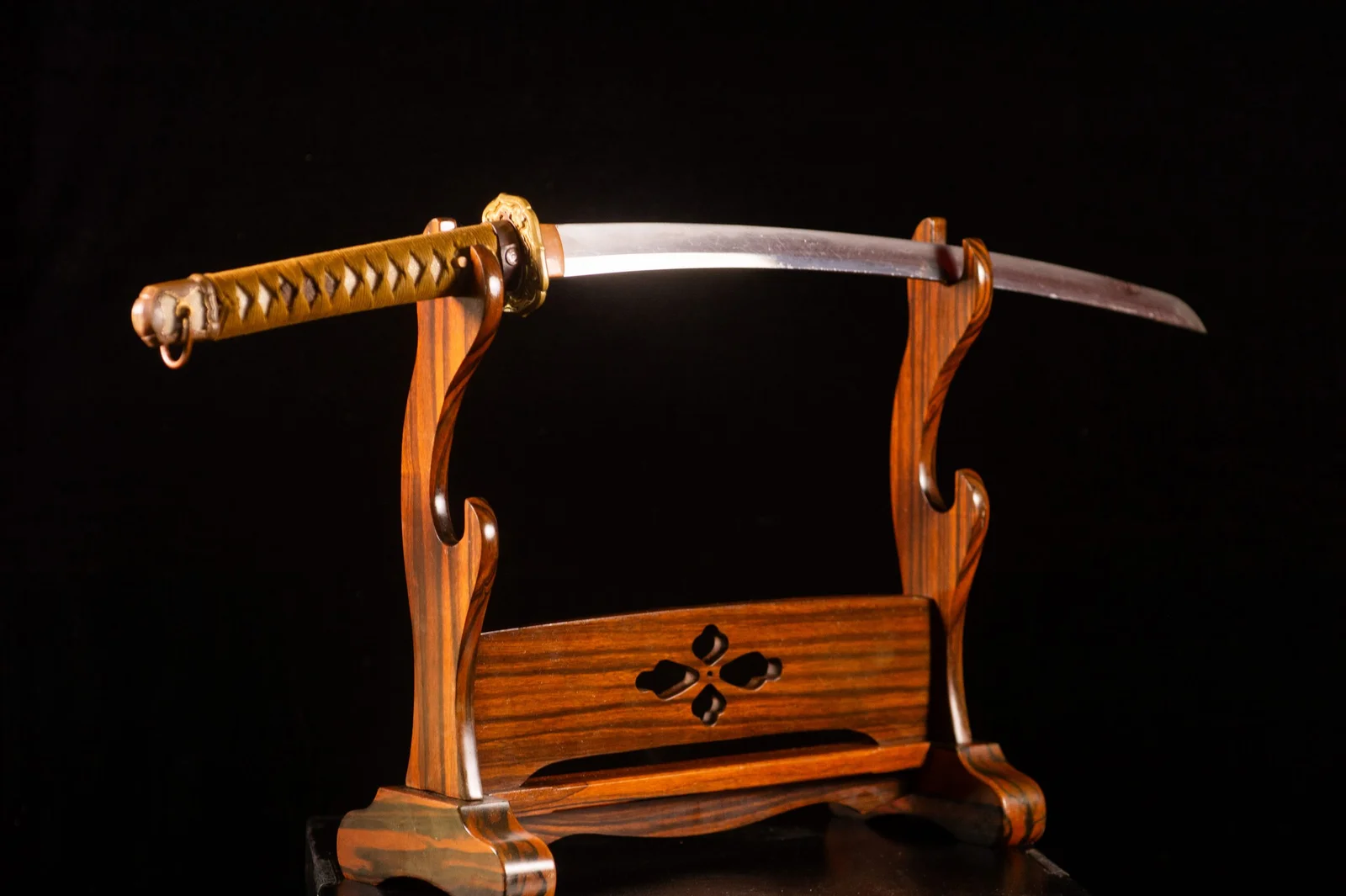
A wakizashi displayed in its scabbard can look like a single creation. The lacquer, handle wrapping, and metal fittings form a complete composition, suggesting that everything belongs to the same moment.
Yet the blade inside may be centuries older.
Museum collections preserve wakizashi that combine sixteenth-century steel with nineteenth-century mountings. Some bring together components from even more periods. These swords offer a fascinating way to understand Japanese craftsmanship: the object we see today may preserve several distinct chapters of its history.
One clear example belongs to the Metropolitan Museum of Art in New York. Its wakizashi, object number 91.2.64, has a blade dated 1560 and a mounting dated to the early nineteenth century.
That places more than two centuries between the blade’s manufacture and its surviving presentation.
The museum records a combination of steel, lacquered wood, ray skin, baleen, and precious metals. These materials belong to different aspects of the sword’s construction, brought together around the older blade.
The dates establish something specific: the blade and its present mounting were not made together. They do not identify every previous owner, explain each alteration, or establish what the sword looked like in 1560.
That distinction makes the object more interesting. Its surviving form is one documented stage in a much longer existence.
The construction of a Japanese sword allowed its blade and exterior fittings to be separated. The Metropolitan Museum’s discussion of sword furniture describes how the hilt assembly could be dismantled and its components exchanged.
The decorated mounting is known as the koshirae. Its craftsmanship can be studied independently of the blade: lacquerwork, metalwork, and the arrangement of fittings each deserve attention.
This construction helps explain how an older blade could survive in a later mounting. It also explains why dating a sword solely by its external appearance can be misleading.
A nineteenth-century exterior does not necessarily contain a nineteenth-century blade. Equally, an early blade does not establish an early date for everything surrounding it.
Another Metropolitan Museum example, 91.2.48, makes this layered history especially clear.
The museum dates its blade to the mid-to-late fourteenth century and attributes it, cautiously, to Uda Kunimitsu. Its other components span a much wider chronology:
There is also a documented physical alteration. According to the museum, approximately four inches of the tang were removed as shorter swords became fashionable, resulting in the loss of the swordsmith’s signature.
The museum further states that the mounting was designed to appeal to European and American tastes.
This particular wakizashi therefore connects medieval swordmaking, later modifications, fittings of different ages, and a nineteenth-century presentation intended for a different audience. Those details come from its catalog record; they do not require an invented account of battles or samurai ownership.
The British Museum preserves a wakizashi, 1958,0730.5.a–e, cataloged as part of a daishō, a matching sword pair.
Its blade is signed by the fourth-generation Tadayoshi of Hizen and dated by the museum to 1650–1700. Its fittings are dated to the nineteenth century.
Dragons and waves appear across the scabbard and fittings, giving the exterior a coordinated decorative theme. That visual unity exists alongside the difference in age between the blade and its furnishings.
The example demonstrates why a coherent appearance and a shared manufacturing date are separate questions. Components can work together visually while belonging to different periods.
When examining a wakizashi description, look for separate information about the blade, the mounting, and any individually dated fittings.
A date inscribed on a blade relates to that inscription and blade; it does not automatically date the scabbard. An attribution to a swordsmith also needs to retain its stated degree of certainty. “Probably by” should remain “probably by.”
These distinctions allow us to appreciate what actually survives. A wakizashi can preserve the work of craftspeople separated by generations, each contributing to the object’s present form.
Its history may be longer than its appearance first suggests and the documented details are often more compelling than any imagined story.

CEO of SupeinNihonto, dealer and collector of ancient Japanese art and weapons from Canillo, Andorra.
Contact