Edo Period Wood Shishi Netsuke with Ball in Mouth
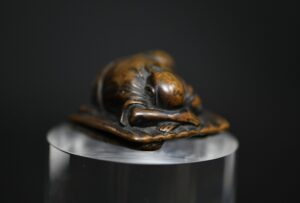
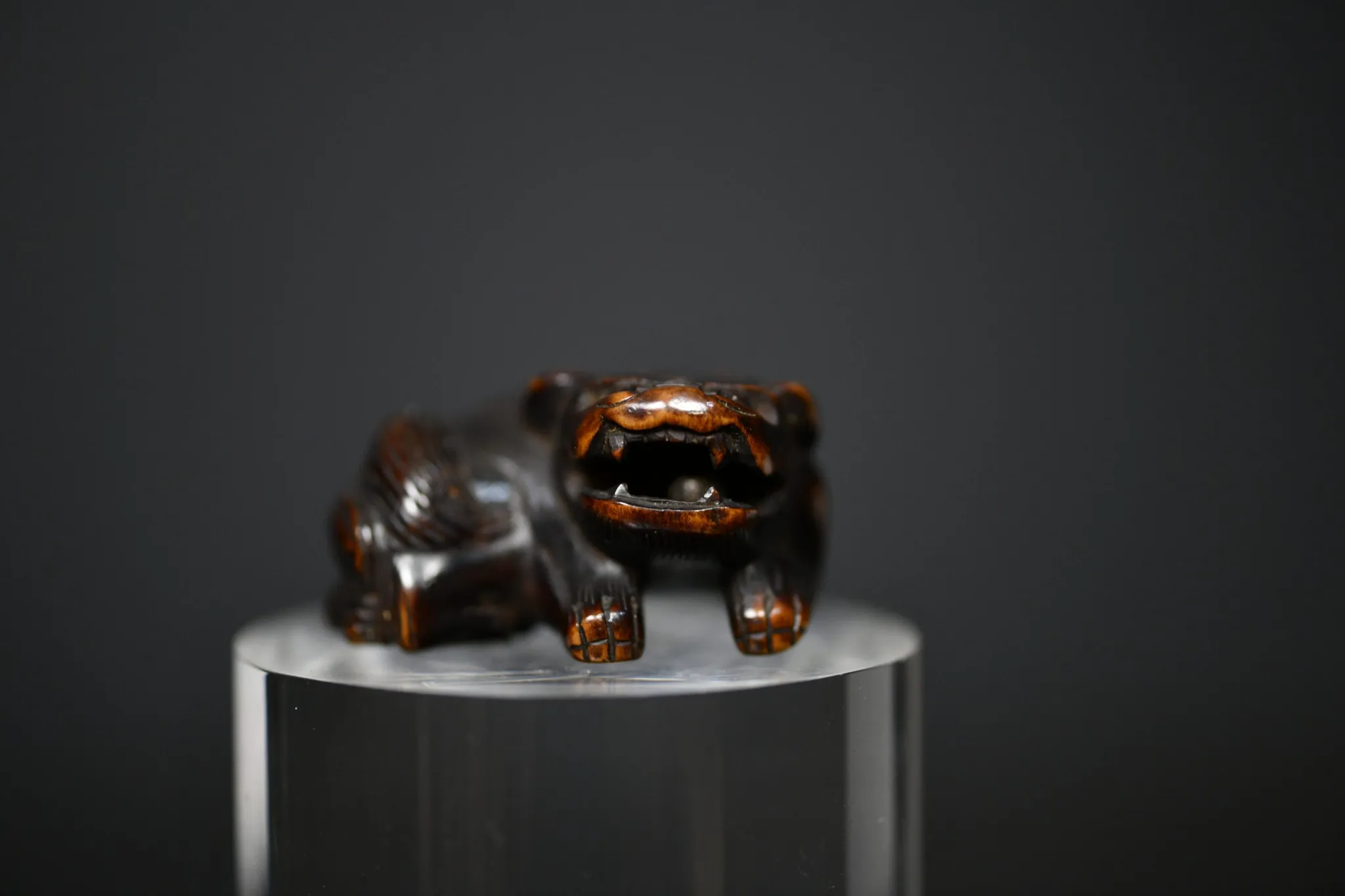
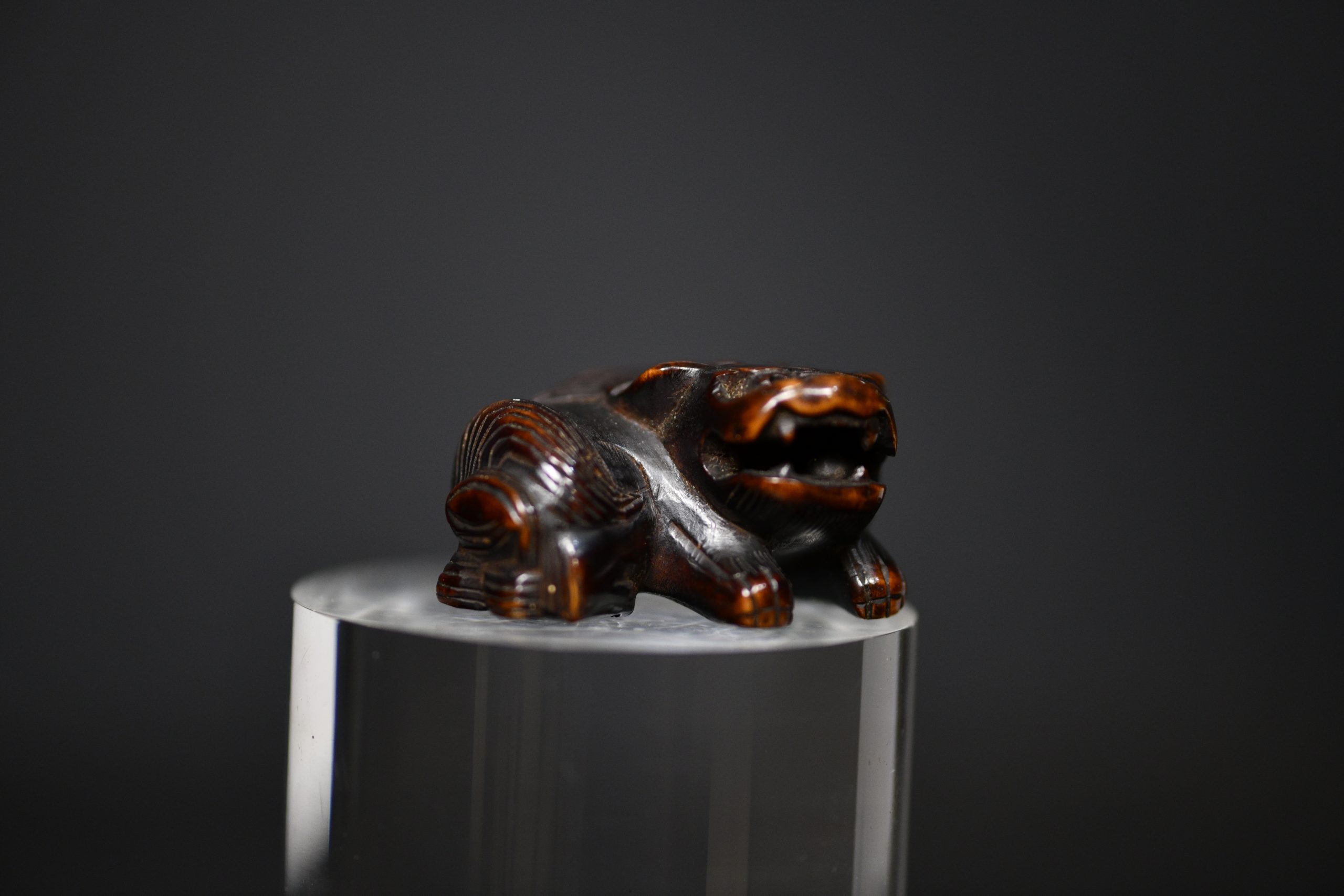
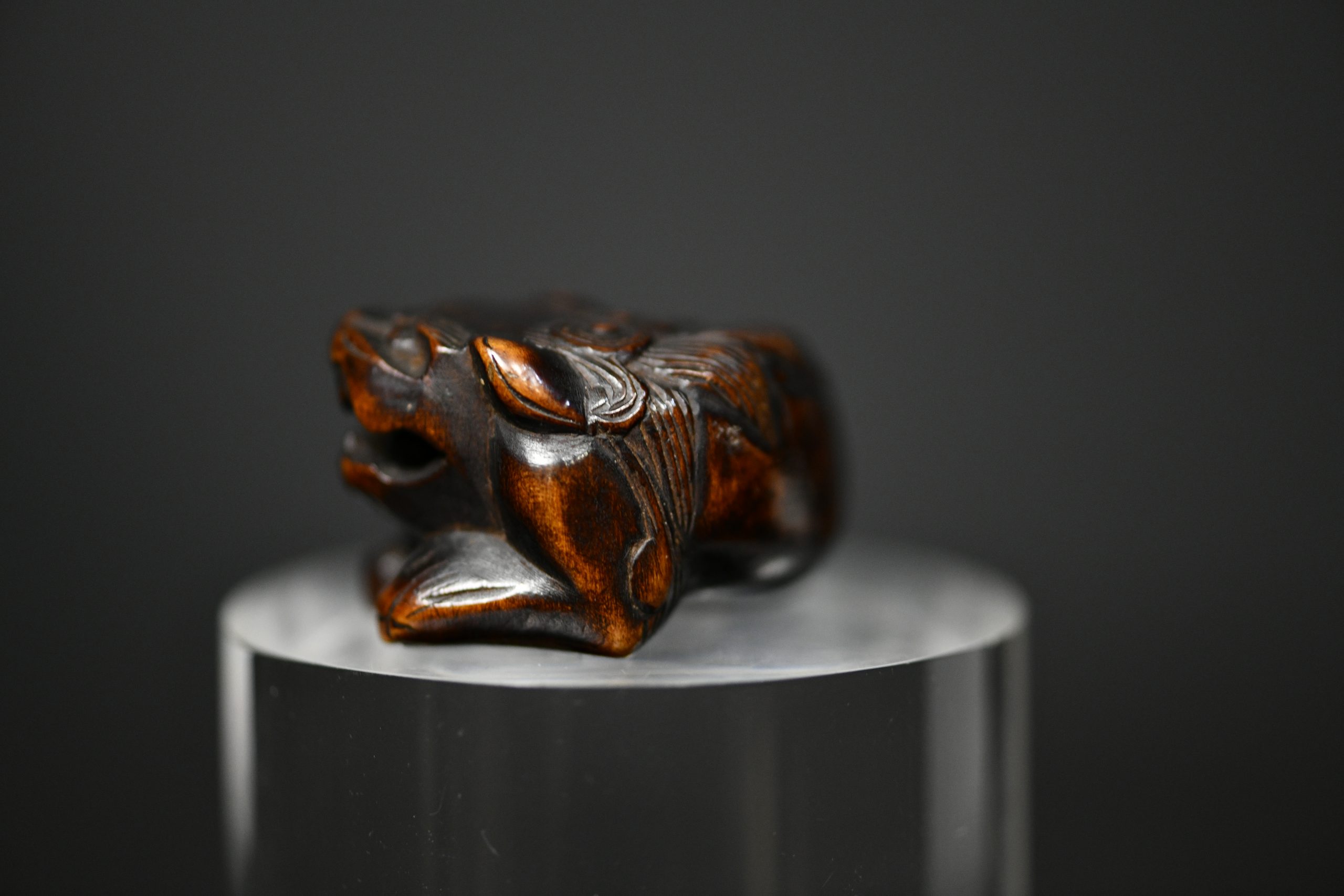
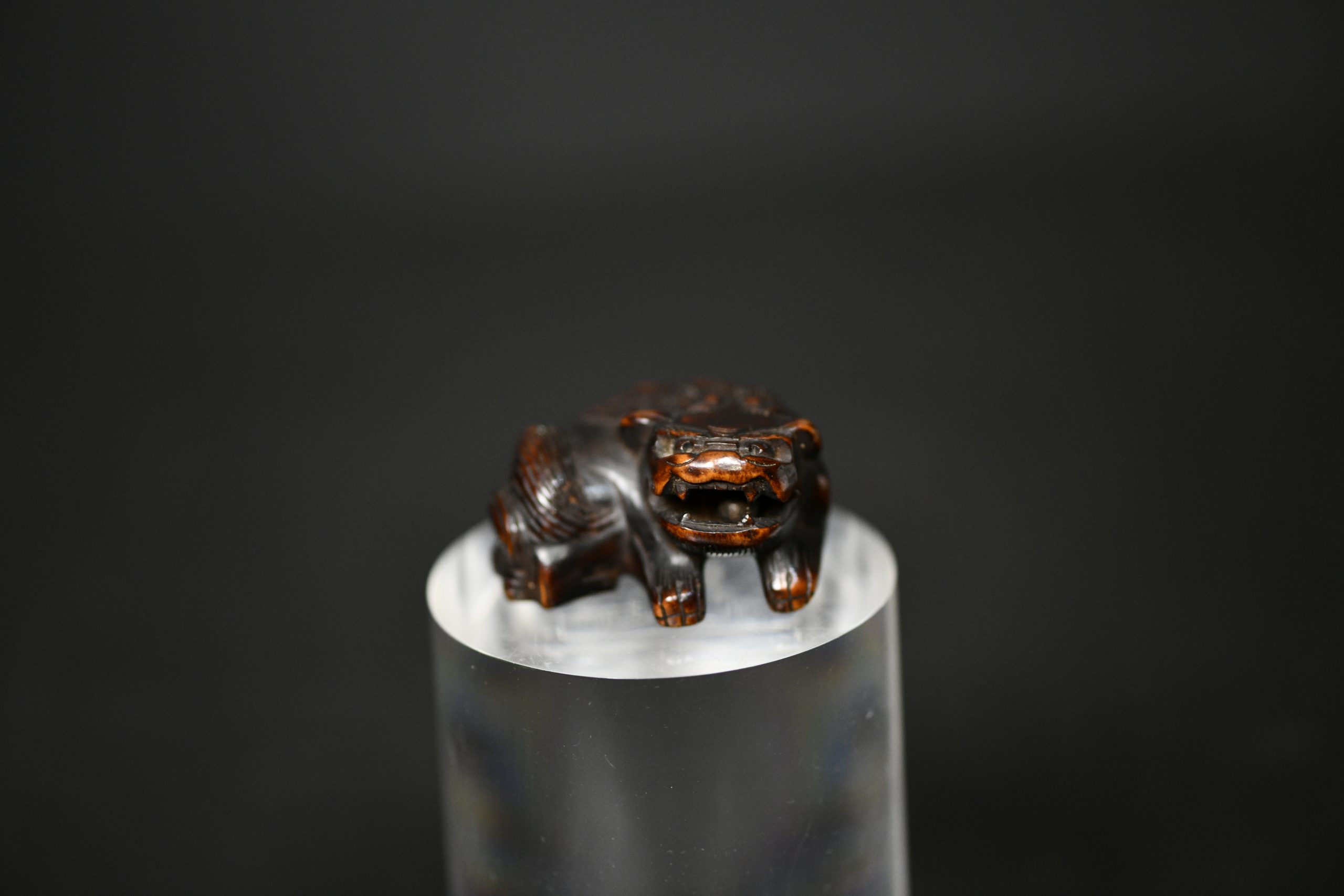
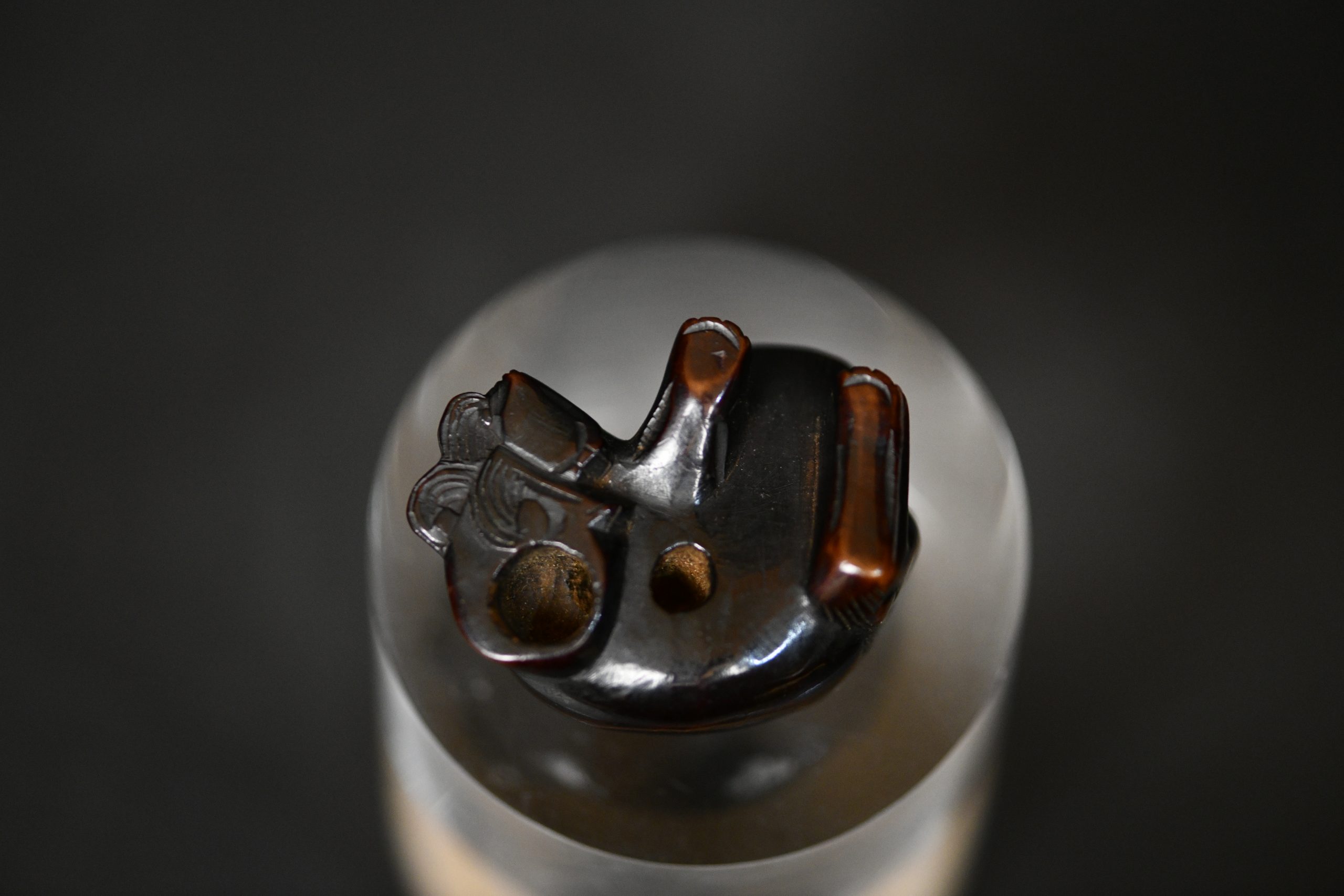
A characterful Japanese wood netsuke from the Edo period depicting a shishi, the mythical lion-like guardian figure widely represented in Japanese decorative arts.
The animal is carved with its mouth open around a wooden ball, creating a strong focal point within the compact composition.
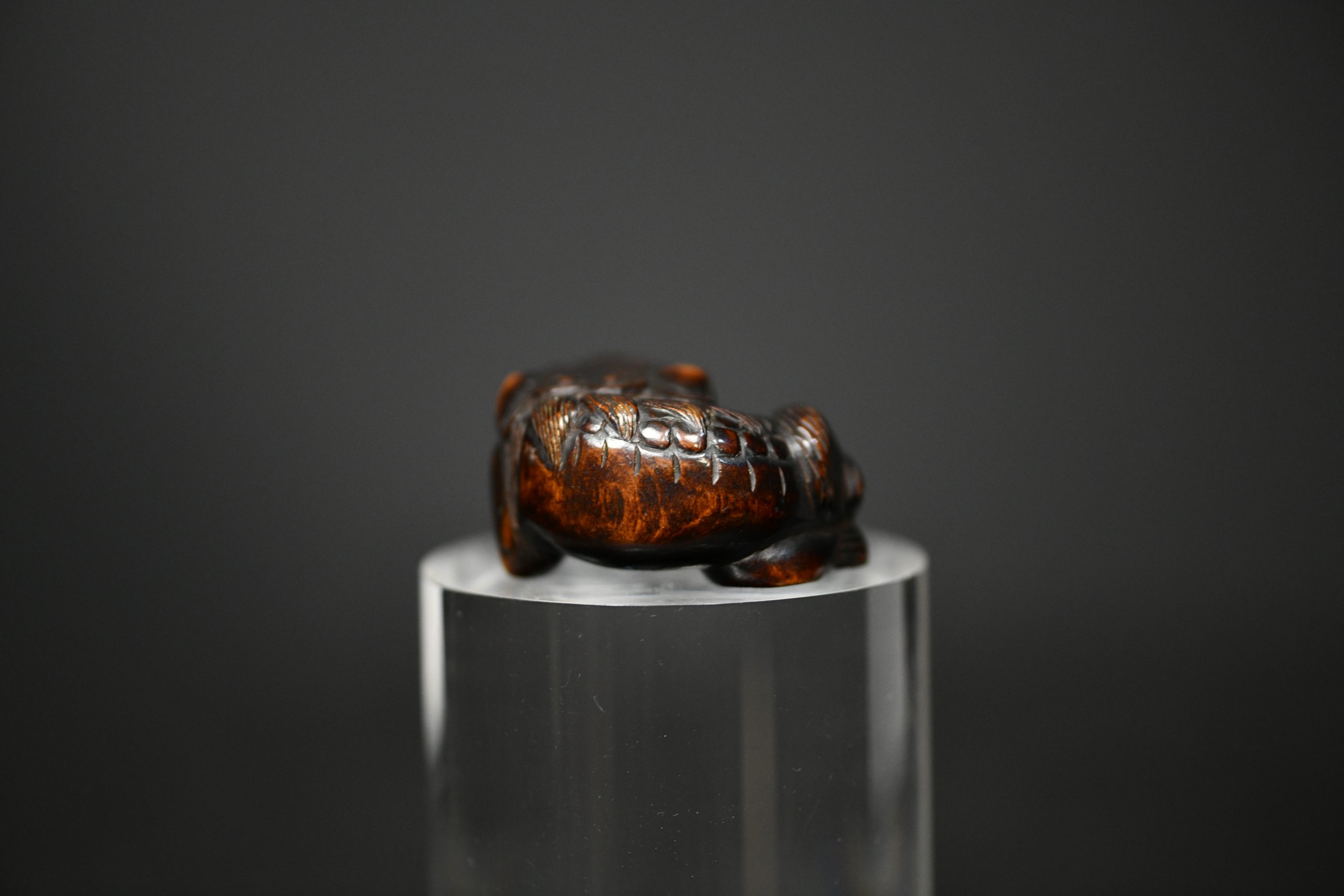
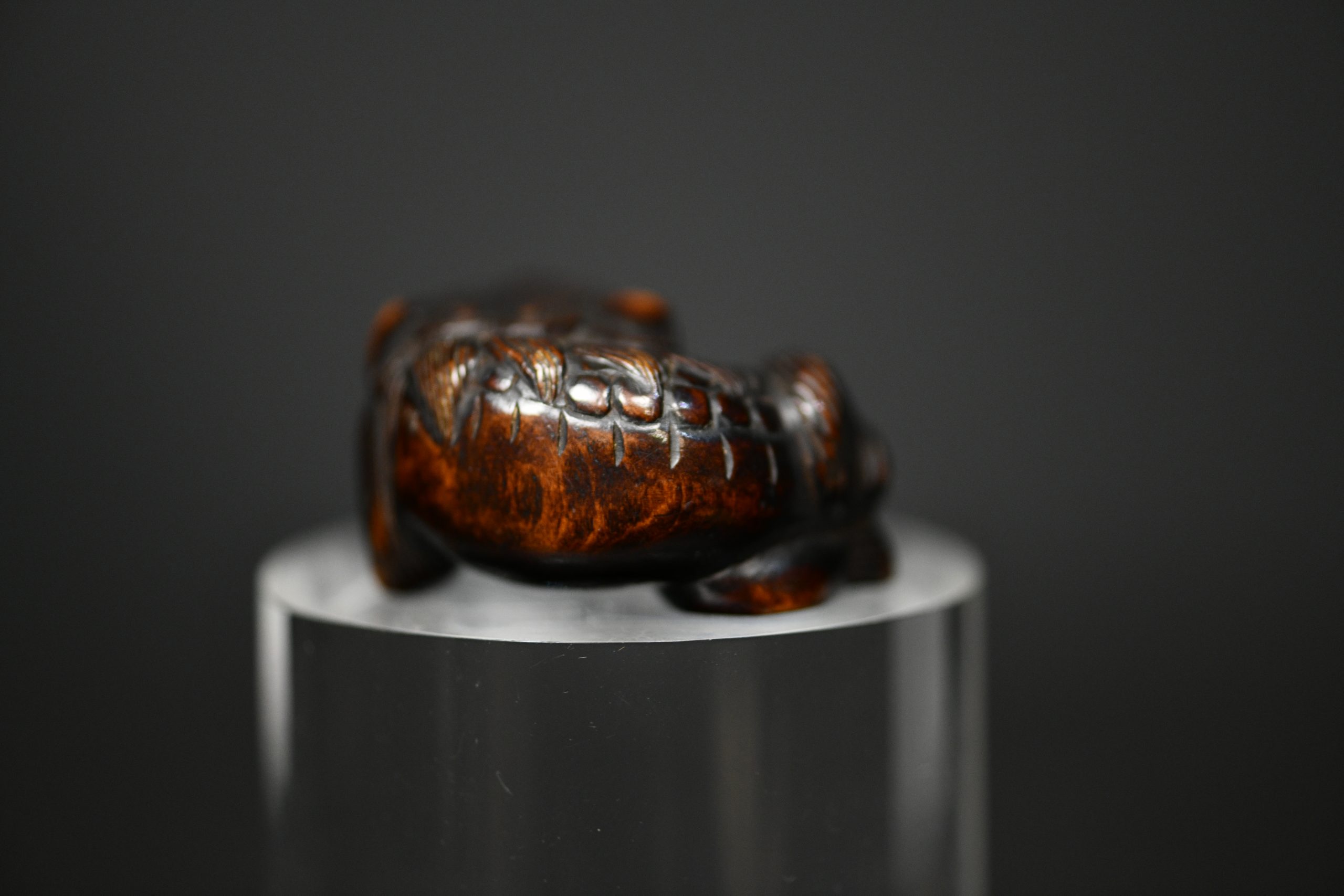
The wood displays a warm natural patina and visible age-related wear from prolonged handling, giving the surface considerable depth and tactile character.
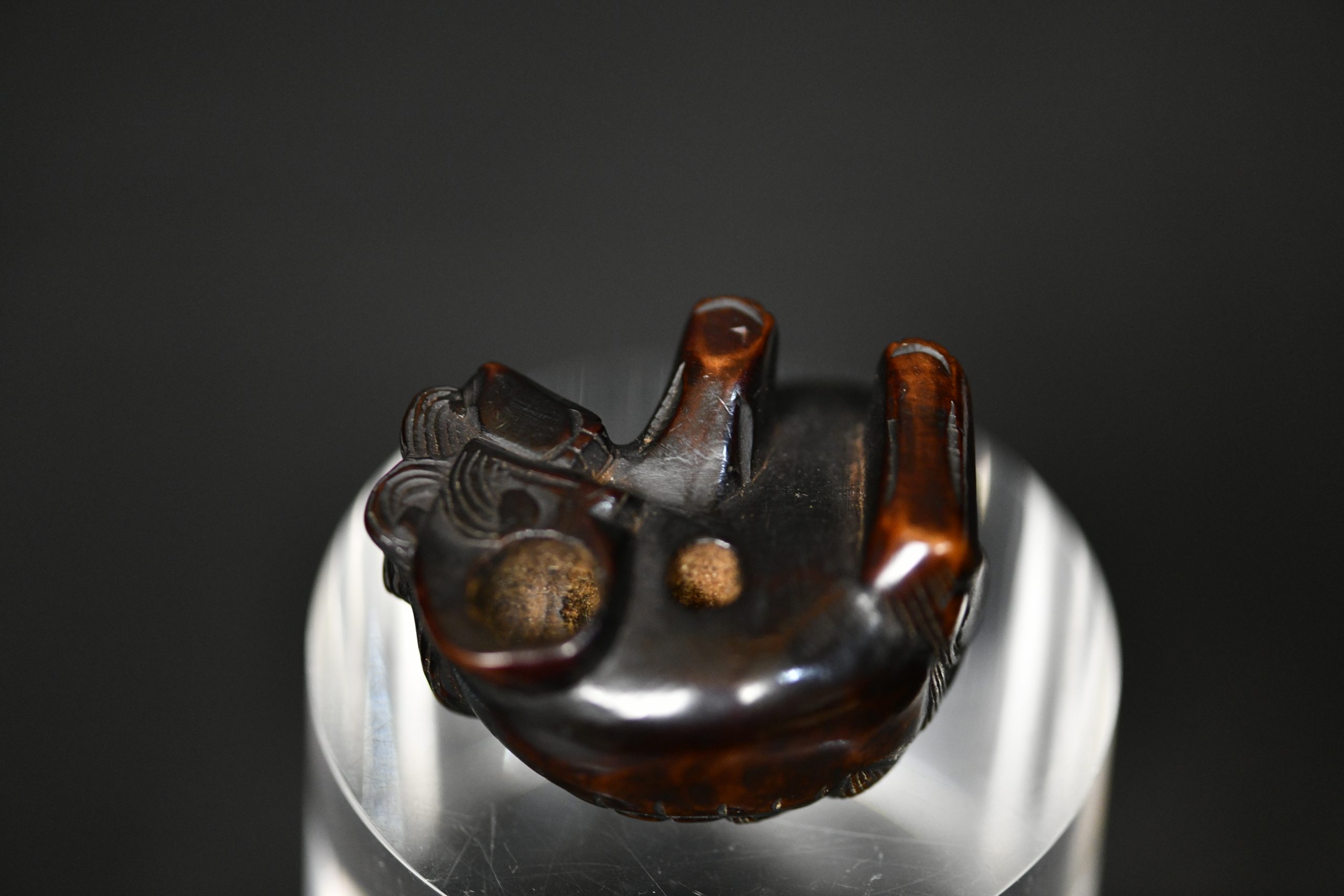
The netsuke also incorporates a clearly formed himotoshi for the passage of the cord.
Dimensions: approximately 4.5 × 4 × 2.3 cm.
Shishi – The Japanese Guardian Lion
The shishi is a mythical lion-like creature that became an important protective figure within Japanese art.
Derived ultimately from East Asian representations of guardian lions, shishi appear across sculpture, architecture, ceramics, textiles, lacquerware and sword fittings.
They are commonly associated with protection and guardianship and are often represented with exaggerated features, powerful bodies and animated expressions.
Their distinctive appearance made them especially suitable for netsuke carving, where a compact body and expressive head could be integrated into a small three-dimensional composition.
Wooden Ball Held in the Mouth
A particularly distinctive element of this netsuke is the wooden ball positioned within the shishi’s open mouth.
The spherical form contrasts with the irregular modelling of the animal and draws immediate attention to the face.
Ball motifs occur frequently in shishi imagery and contribute to the playful as well as powerful character traditionally associated with the creature.
No claim is made here that the ball is movable, as this is not specified in the available description.
Compact Wood Carving
The netsuke is carved from wood, one of the principal traditional materials used for Japanese netsuke.
Wood allowed carvers to create rounded volumes, deeply modelled features and expressive surfaces while retaining a warm tactile quality suited to an object designed to be handled.
The shishi’s body is arranged into a compact form, reducing strongly projecting elements and allowing the sculpture to be appreciated from multiple viewpoints.
Natural Patina and Age-Related Wear
The surface has developed an attractive patina with visible signs of age and handling.
Repeated contact can gradually polish exposed areas of a wooden netsuke while softening edges and producing tonal variation across the surface.
This natural ageing contributes to the visual depth of the carving and forms part of the historical character of the piece.
Himotoshi
The netsuke features a well-defined himotoshi, the cord passage traditionally used to connect a netsuke with a suspended sagemono.
The term refers to the openings through which the cord passed, allowing the netsuke to act as a stopper above the obi.
Because functionality was an essential part of traditional netsuke design, the relationship between the himotoshi and the overall sculptural form is an important aspect of the object.
What Is a Netsuke?
A netsuke is a small Japanese toggle traditionally used to secure objects suspended from the obi, or sash.
Traditional Japanese clothing did not include conventional pockets, so personal objects could be carried in hanging accessories collectively known as sagemono.
The netsuke acted as a stopper above the obi, preventing the suspended object from slipping through the sash.
Although originally functional, netsuke developed into a sophisticated form of miniature sculpture depicting animals, people, mythology, folklore and everyday life.
Shishi in Japanese Netsuke
Shishi were particularly effective subjects for netsuke because their powerful bodies, curling forms and expressive faces could be condensed into compact sculptural compositions.
Artists could emphasise different aspects of the creature, from its protective associations to more animated or playful characteristics.
In this example, the wooden ball in the mouth adds an especially distinctive element to the traditional shishi form.
Edo Period
This netsuke dates to the Edo period, when netsuke developed into an important field of Japanese miniature carving.
Animal and mythological subjects were widely explored, allowing artists to combine functionality with increasingly sophisticated sculptural treatment.
The shishi represented here belongs naturally within that broader tradition of symbolic and expressive animal imagery.
Dimensions
- Length: 4.5 cm
- Width: 4 cm
- Depth: 2.3 cm
Key Features
- Object: Japanese netsuke
- Period: Edo period
- Material: Wood
- Subject: Shishi / mythical guardian lion
- Detail: Wooden ball held within the open mouth
- Himotoshi: Well-defined cord passage
- Surface: Natural patina and age-related handling wear
- Dimensions: 4.5 × 4 × 2.3 cm
Collector’s Interest
The appeal of this netsuke lies in its combination of a classic mythological subject, compact wood carving and distinctive ball-in-mouth composition.
The naturally aged surface and functional himotoshi reinforce the tactile character expected of an object originally created to be worn and handled.
A characterful Edo-period wood netsuke depicting a shishi with a wooden ball held in its mouth, distinguished by its compact sculptural form, warm natural patina and well-defined himotoshi. An engaging example of traditional Japanese mythological animal carving in miniature.