18th Century Edo Wood Netsuke of a Resting Man on Tatami with Kama
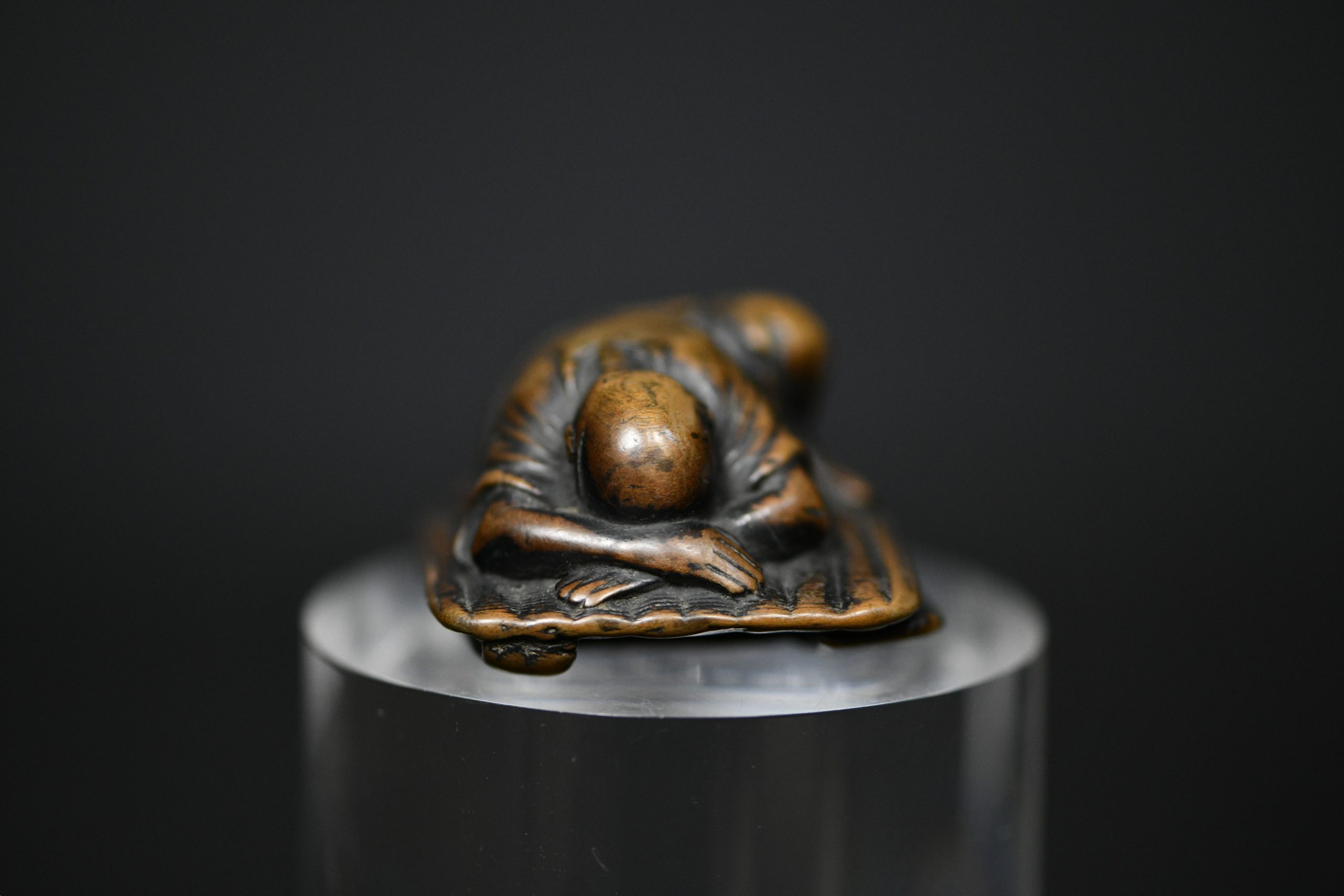
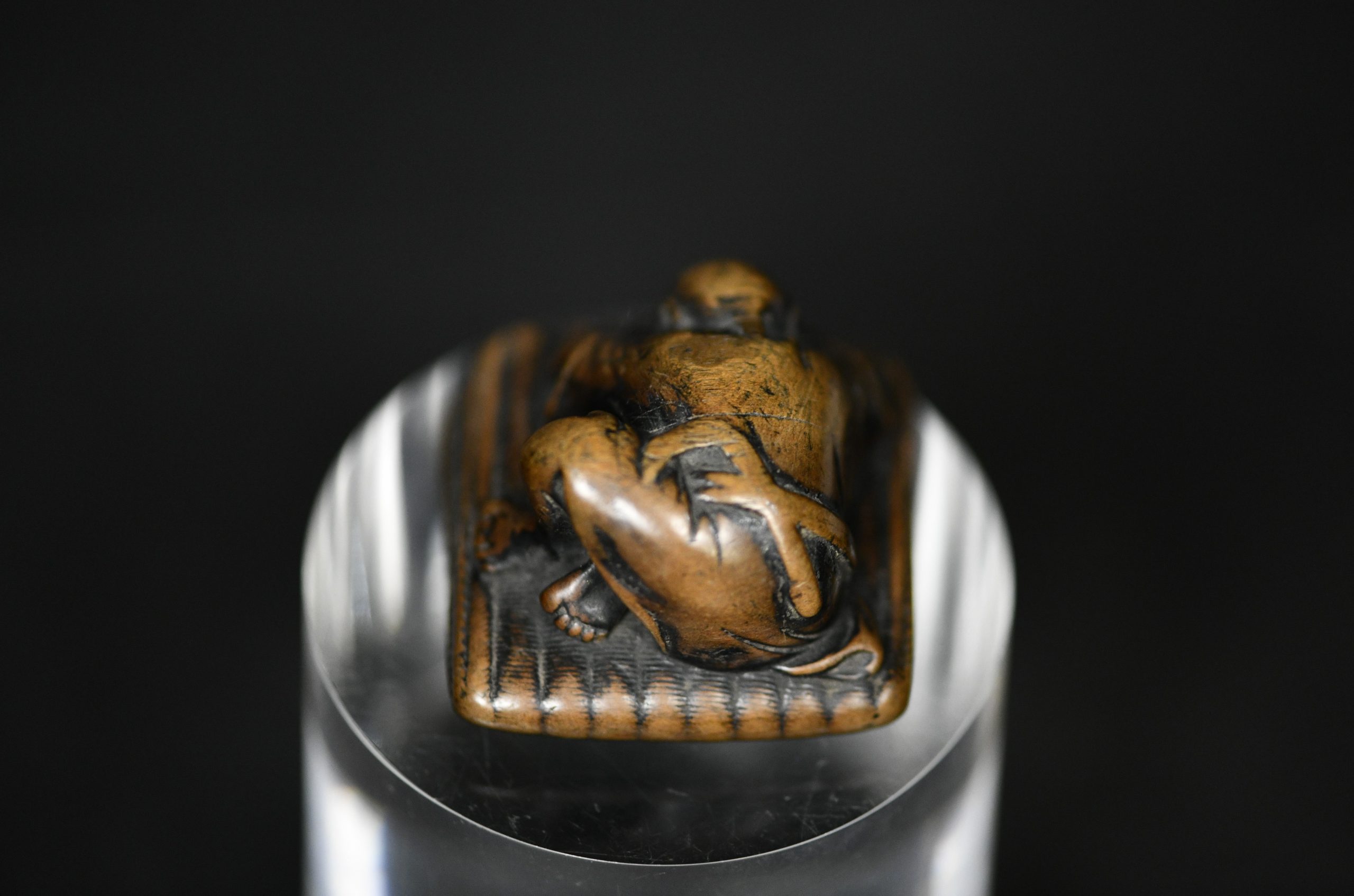
An unusual Japanese wood netsuke from the Edo period, dating to the 18th century, depicting a man resting on a tatami mat.
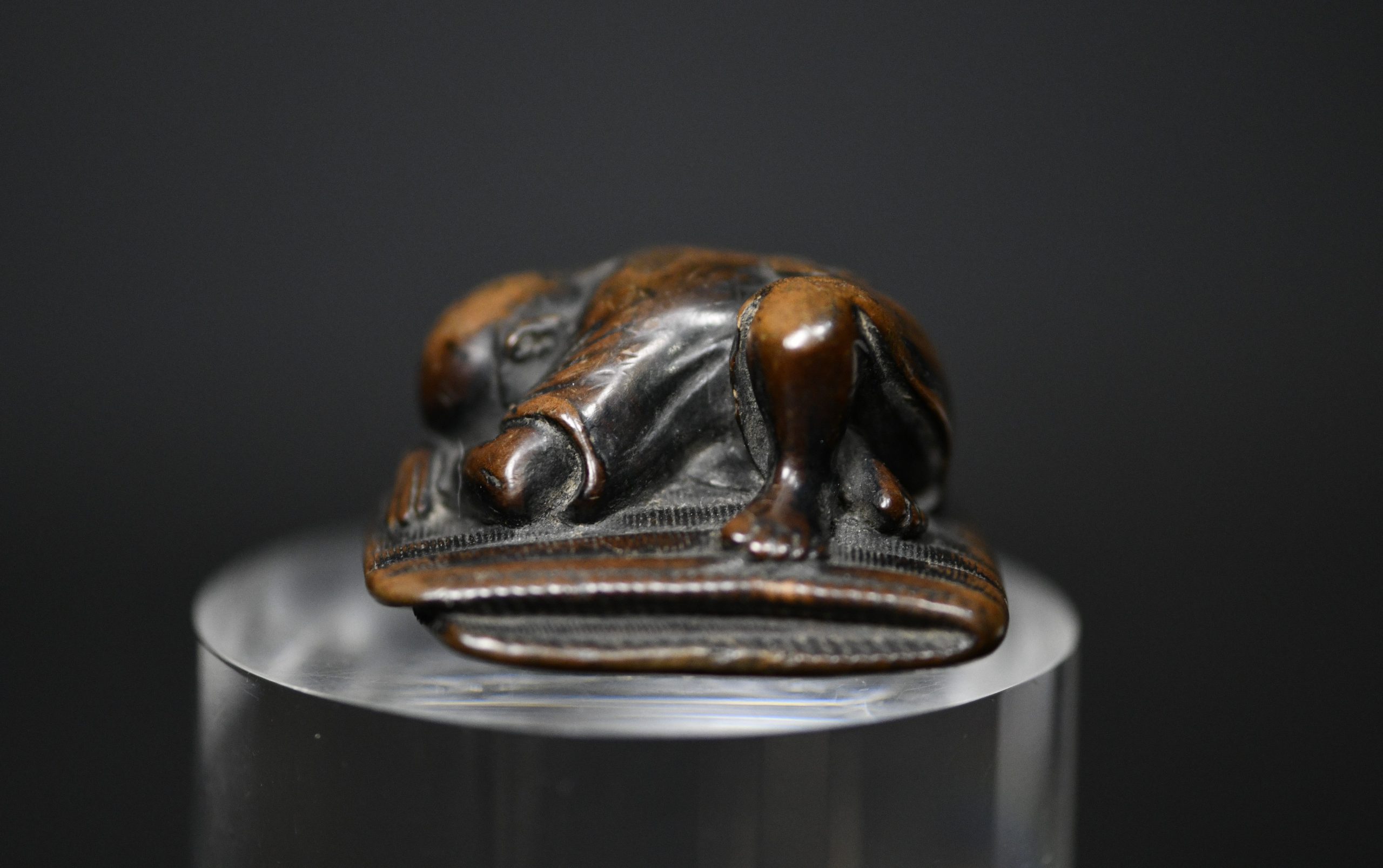
The figure is shown in a relaxed pose, while a kama, or traditional Japanese sickle, is carried behind him at the belt. The combination of the resting posture, tatami and working implement gives the carving the character of a small scene drawn from everyday life.
The wood displays an attractive natural patina and visible age-related wear from prolonged handling, contributing to the tactile quality and historical character of the netsuke.
Dimensions: approximately 4.5 × 4 × 2.8 cm.
A Man Resting on Tatami
The subject depicts a man resting on a tatami mat, an unusually quiet and informal scene for a compact figurative netsuke.
Rather than presenting the figure in a dramatic or ceremonial pose, the carver focuses on a moment of rest, giving the sculpture a direct and recognisably human quality.
The low horizontal arrangement of the figure and mat also creates a stable compact form well suited to the functional requirements of a netsuke.
The Kama – Traditional Japanese Sickle
A notable detail is the kama carried at the back of the figure’s belt.
The kama is a traditional Japanese sickle with a curved blade, historically associated with cutting grasses and agricultural work.
Its inclusion provides important context for the figure and suggests a connection with ordinary working life rather than an elite or ceremonial setting.
The tool also adds a narrative element to the carving, inviting the viewer to imagine the man resting during or after his activities.
Everyday Life as a Netsuke Subject
Japanese netsuke carvers drew subjects from an exceptionally broad range of sources, including mythology, religion, animals, occupations and scenes of everyday life.
Ordinary human activities offered opportunities to explore posture, gesture, humour and character in a highly compact format.
This netsuke belongs to that tradition, transforming a simple moment of rest into a miniature sculptural scene.
Wood Carving
The netsuke is carved from wood, one of the principal traditional materials used in Japanese netsuke.
Wood allowed the carver to integrate the human figure, clothing, tatami and accessory into a cohesive three-dimensional composition.
Its natural warmth and tactile qualities also suited an object intended to be repeatedly handled and worn.
Natural Patina and Age-Related Wear
The surface displays an attractive patina and visible signs of age and handling.
Repeated contact over time can soften the details and surface of wooden netsuke while developing a warmer and more polished appearance in exposed areas.
These characteristics form part of the historical presence of the object and are particularly relevant to netsuke, which were originally functional accessories intended to be handled.
What Is a Tatami?
Tatami are traditional Japanese floor mats historically used within domestic and architectural interiors.
Their characteristic rectangular form and woven surface became closely associated with Japanese interior spaces.
Including the mat beneath the figure gives this netsuke an environmental setting rather than presenting the man as an isolated figure.
What Is a Netsuke?
A netsuke is a small Japanese toggle traditionally used to secure objects suspended from the obi, or sash.
Because traditional Japanese clothing did not include conventional pockets, personal belongings could be carried in hanging containers and accessories collectively known as sagemono.
The netsuke functioned as a stopper above the obi, preventing the suspended object from slipping through the sash.
Over time, these functional objects developed into a highly sophisticated form of miniature sculpture.
Edo Period, 18th Century
This netsuke dates to the 18th century during the Edo period.
By this time, netsuke had become firmly established as both practical accessories and vehicles for highly individual miniature carving.
Subjects could range from supernatural figures and animals to tradespeople and scenes drawn from ordinary daily experience.
The resting man represented here illustrates the quieter, observational side of Edo-period figurative netsuke.
Dimensions
- Length: 4.5 cm
- Width: 4 cm
- Depth: 2.8 cm
Key Features
- Object: Japanese netsuke
- Period: Edo period
- Date: 18th century
- Material: Wood
- Subject: Resting man
- Setting: Tatami mat
- Accessory: Kama / traditional sickle carried at the belt
- Surface: Natural patina and age-related handling wear
- Dimensions: 4.5 × 4 × 2.8 cm
Collector’s Interest
The appeal of this netsuke lies in its unusual everyday-life subject and quiet narrative character.
The resting pose, tatami mat and kama combine to create a complete miniature scene rather than a simple isolated figure, while the aged wood surface reinforces its tactile historical presence.
An unusual 18th-century Edo-period wood netsuke depicting a man resting on a tatami with a kama at his belt. Its relaxed everyday-life subject, compact composition and naturally aged surface make it a distinctive example of Japanese figurative miniature carving.