Japanese Katana, Unsigned (Mumei), Late Muromachi Period, with Dragon Tsuba Koshirae
Japan · Late Muromachi Period · Mumei · Nagasa 63.5 cm · Tōroku-shō
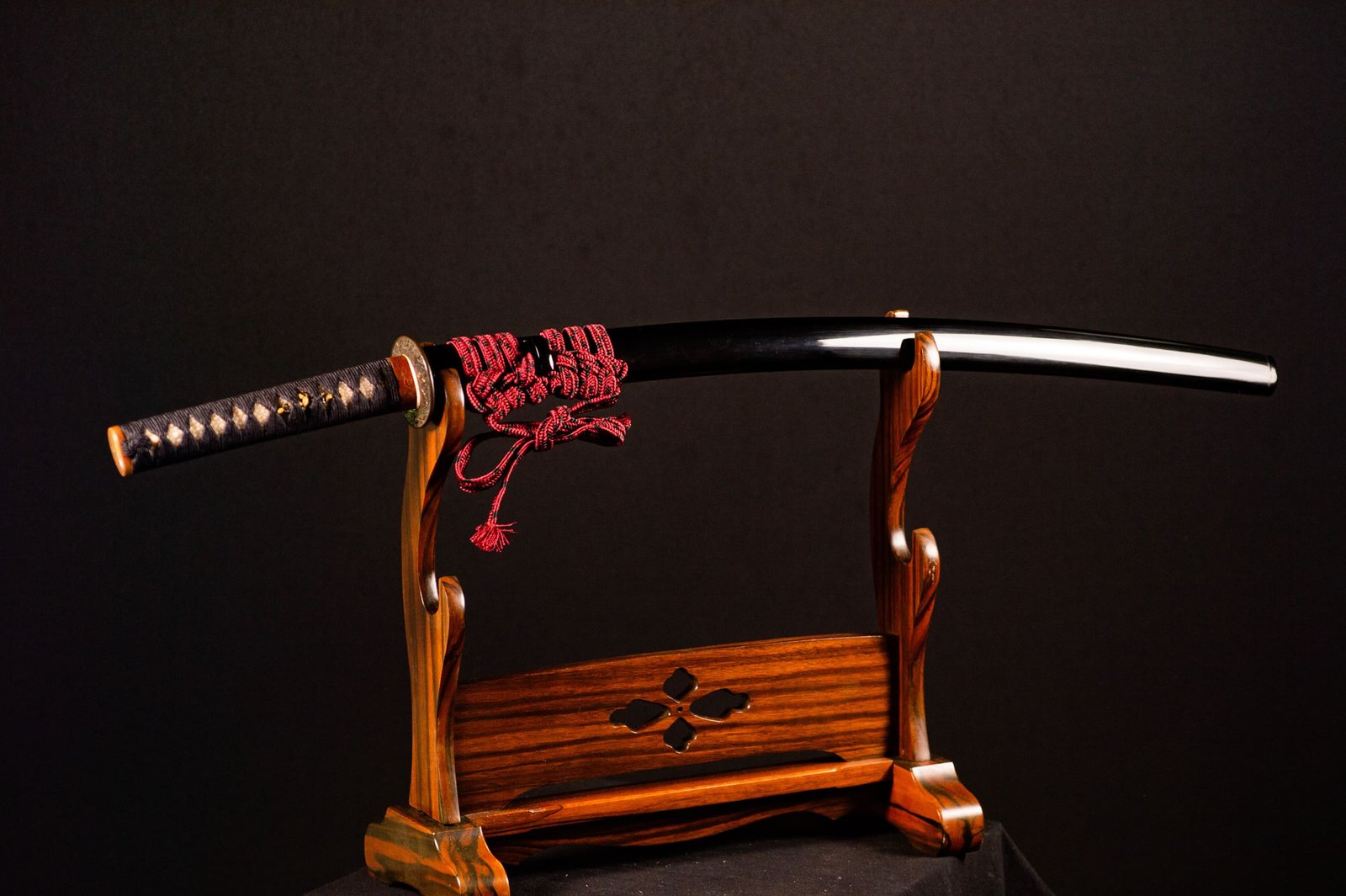
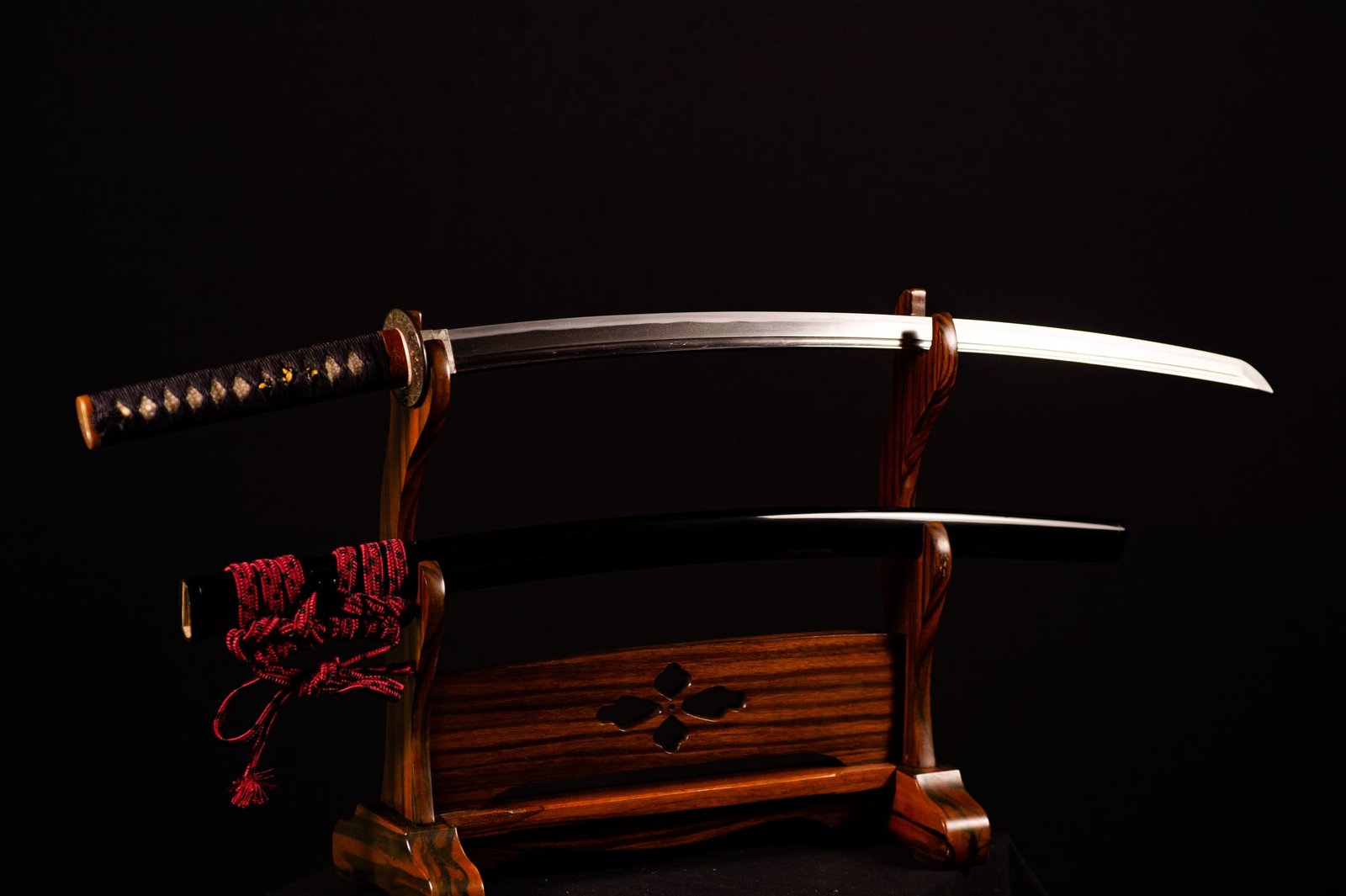
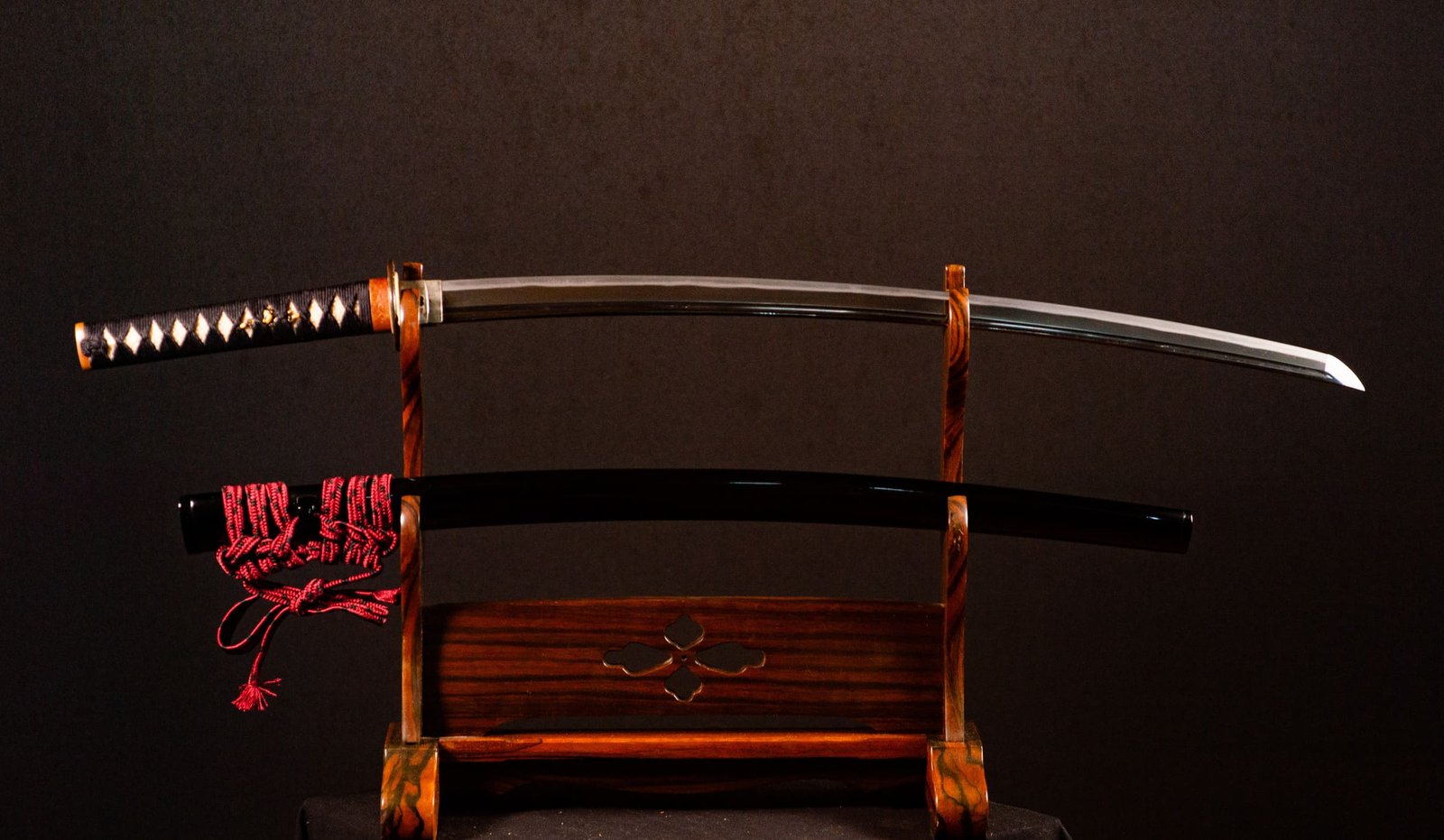
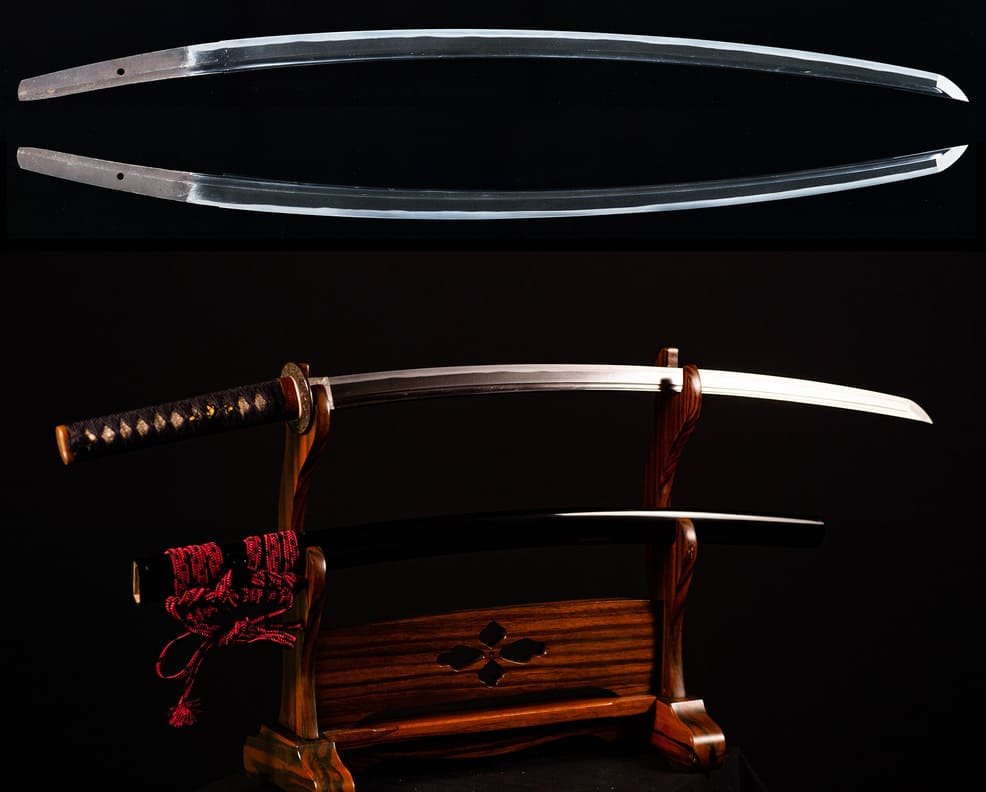
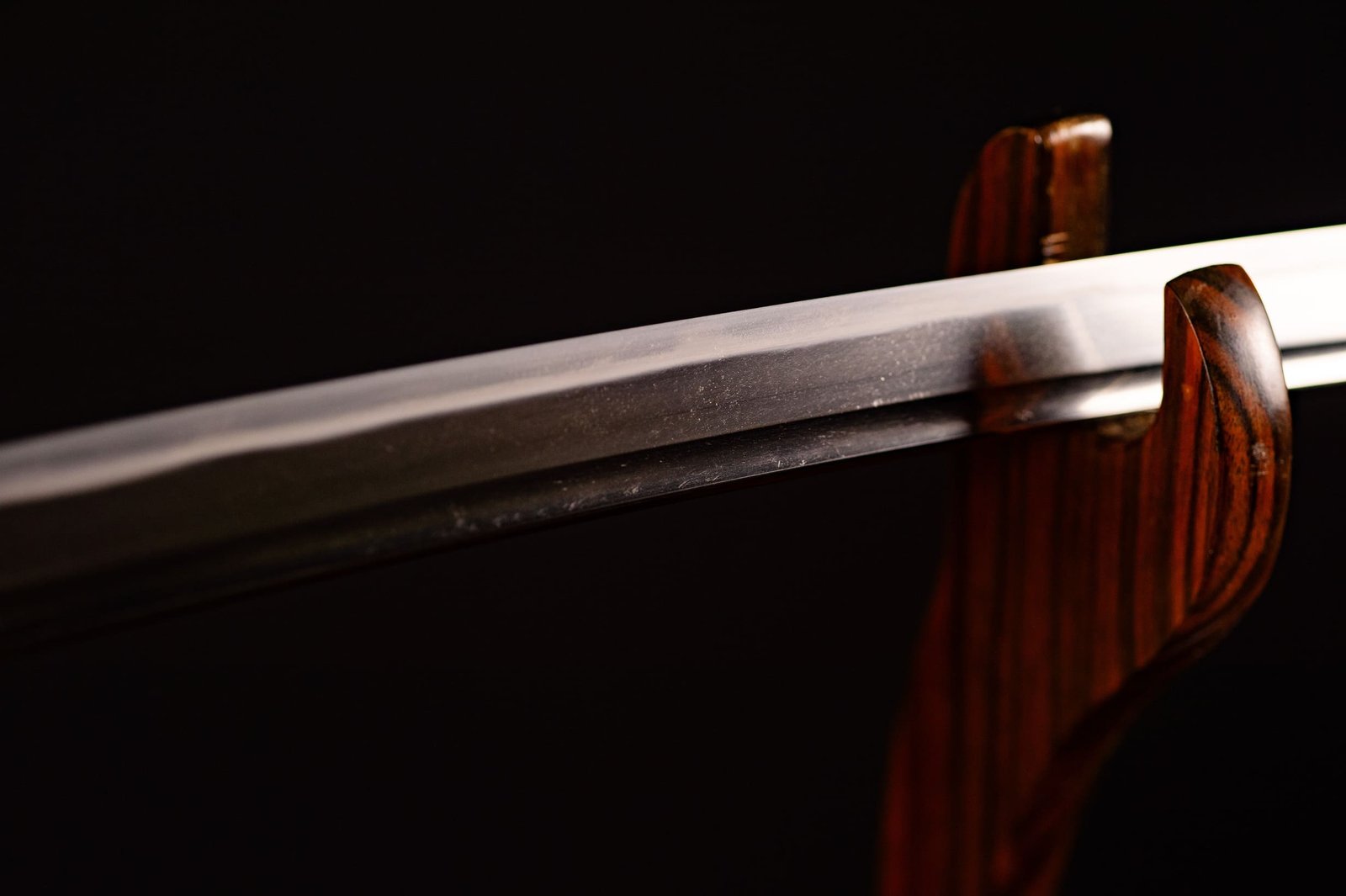
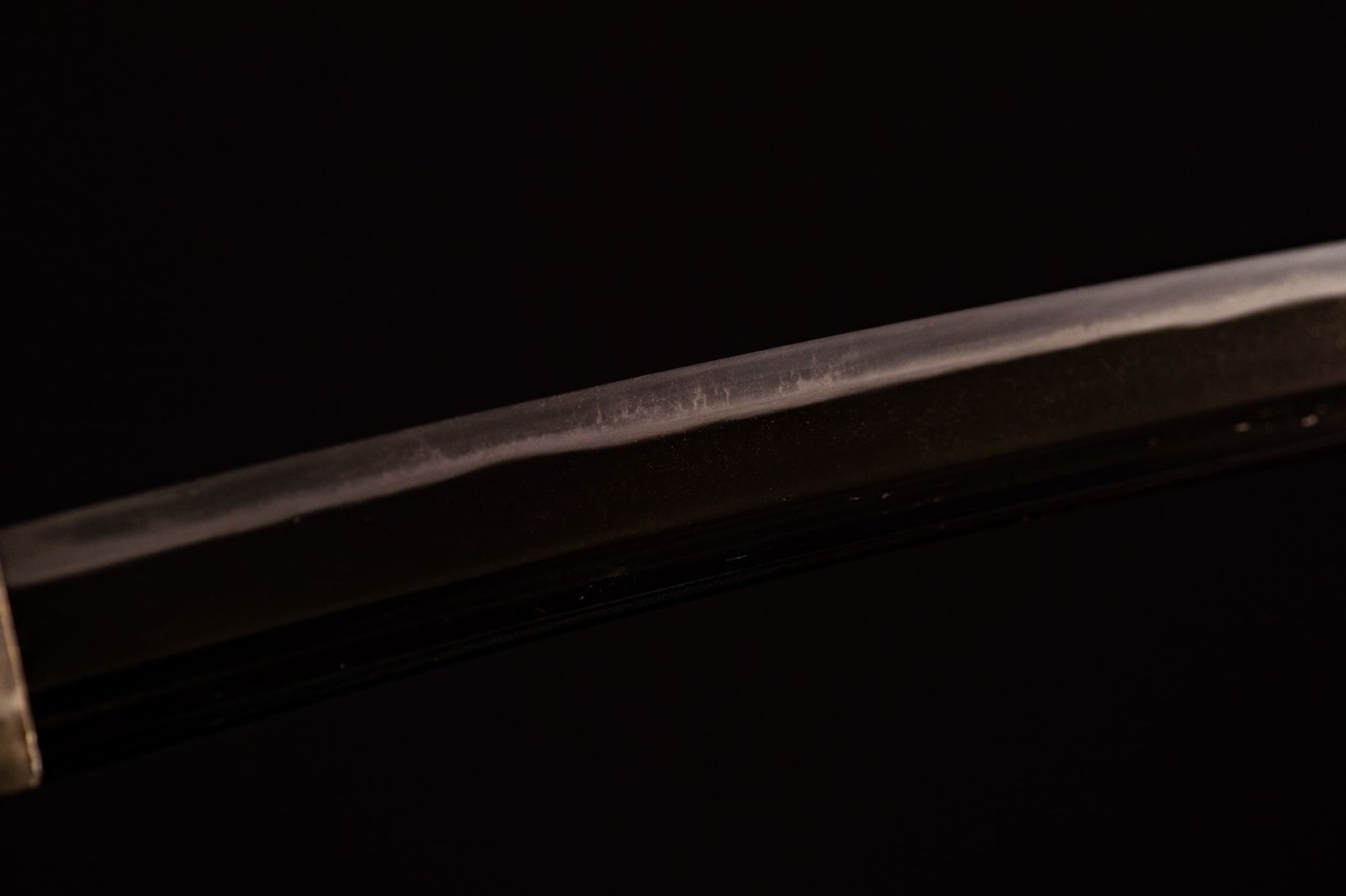
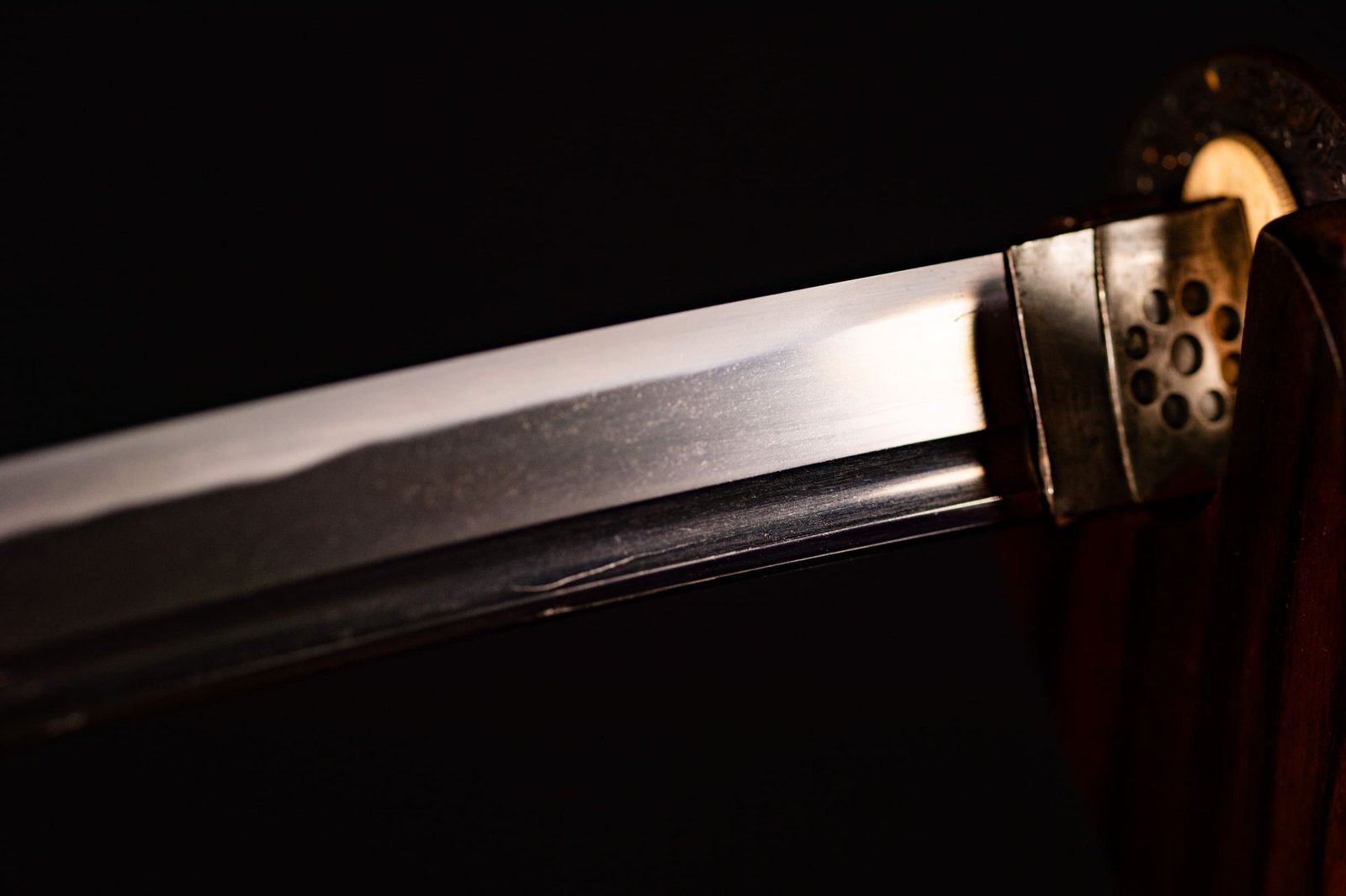
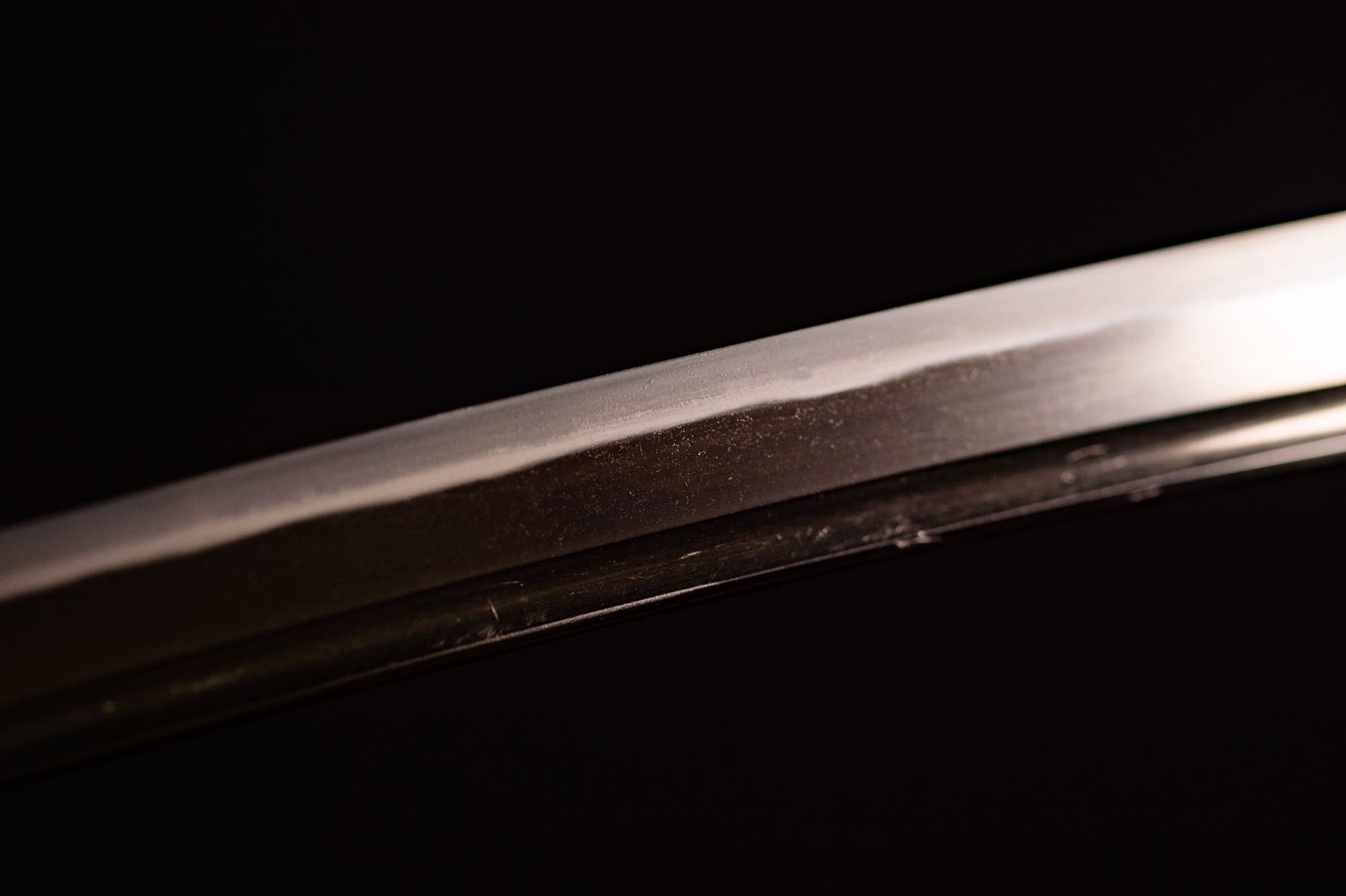
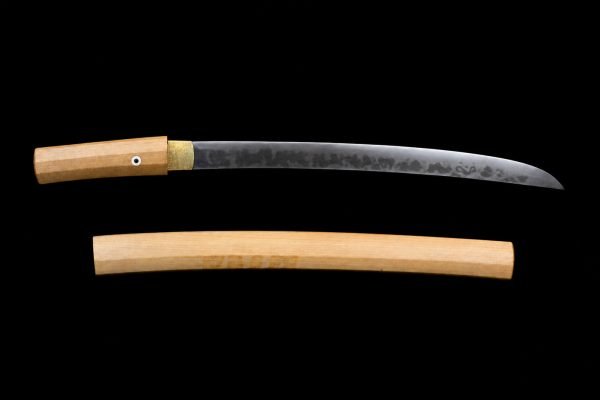
An unsigned (mumei) Japanese katana from the late Muromachi period, with a nagasa of 63.5 cm, a lively shinogi-zukuri form and bōhi on both sides. The blade shows a calm suguha hamon breaking into gentle ko-notare and is presented in a well-matched koshirae with suaka copper fittings, a dragon tsuba and shakudō menuki. Accompanied by its Japanese registration certificate (tōroku-shō).
The Sword of the Warring States
In the Warring States period, the sword at a samurai’s side changed. The long, sweeping tachi of mounted archers gave way to the uchigatana: a shorter, quicker blade worn edge-up through the sash.
It was drawn and cut in a single motion, and could be handled with one hand in the press of close combat.
Most of these blades measured around 2 shaku 1 sun, roughly 63–64 cm, which is exactly the length of this katana. That proportion belongs to an age when the sword was carried into battle, not into ceremony.
Sugata – Blade Form
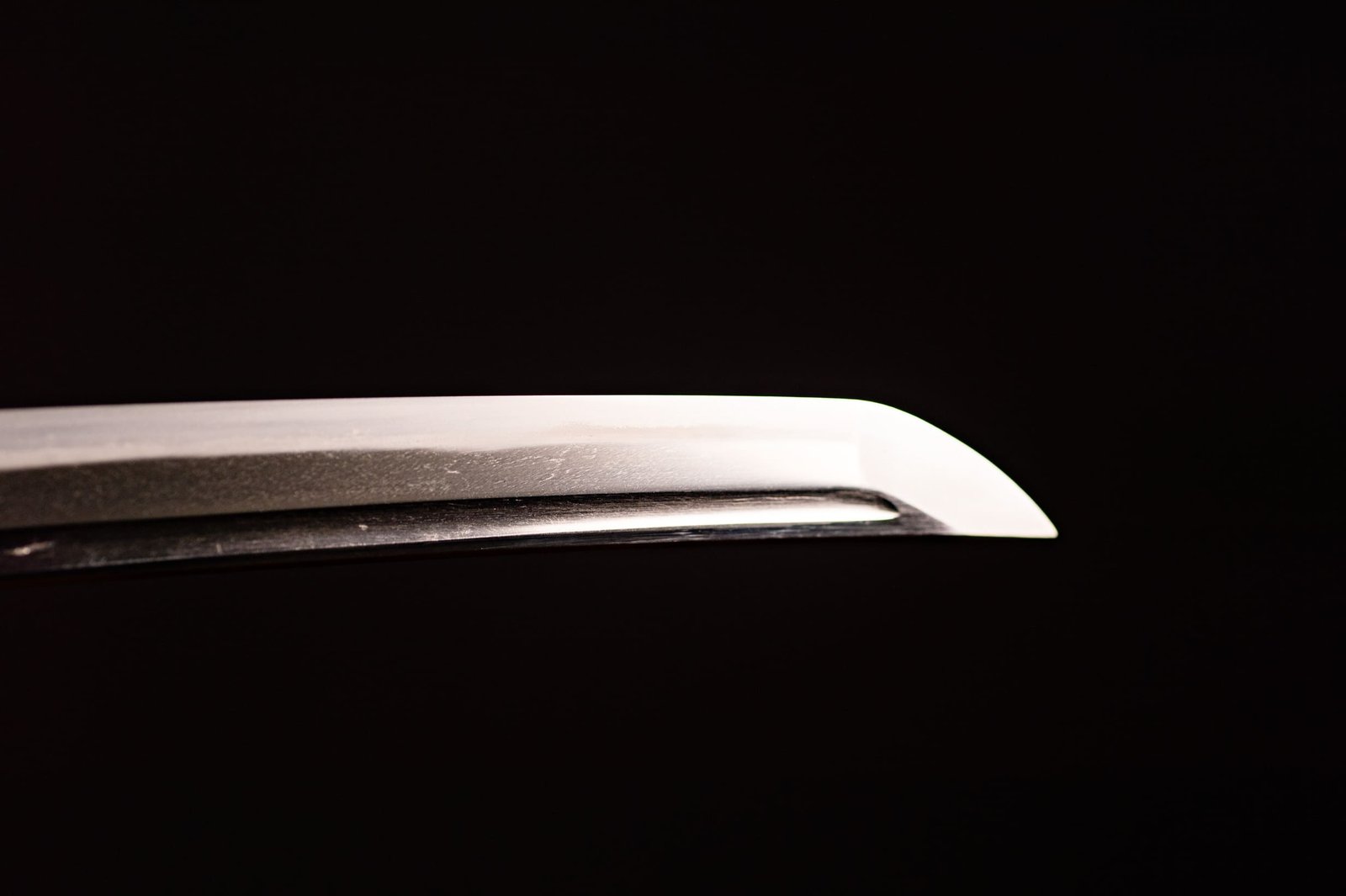
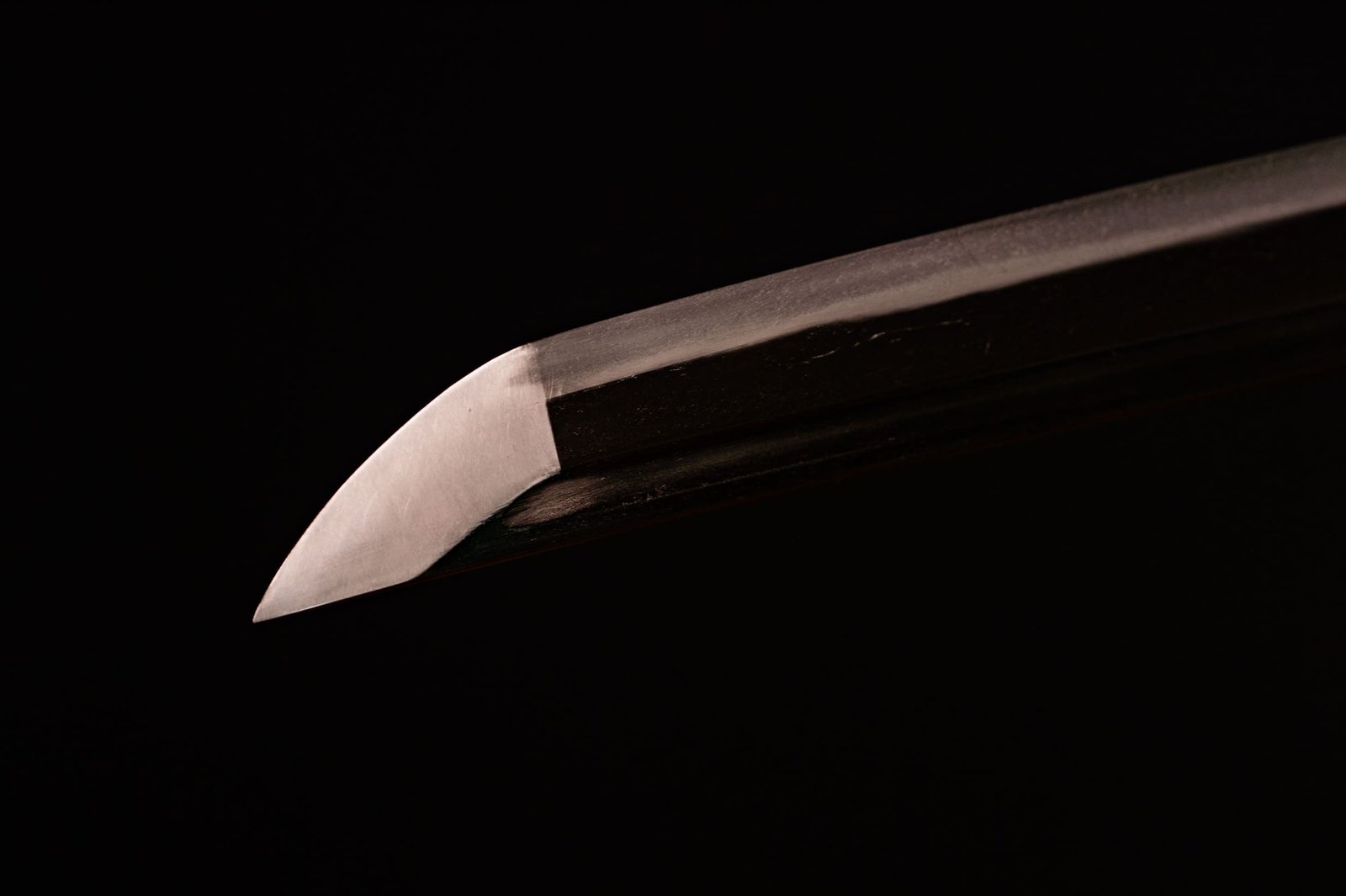
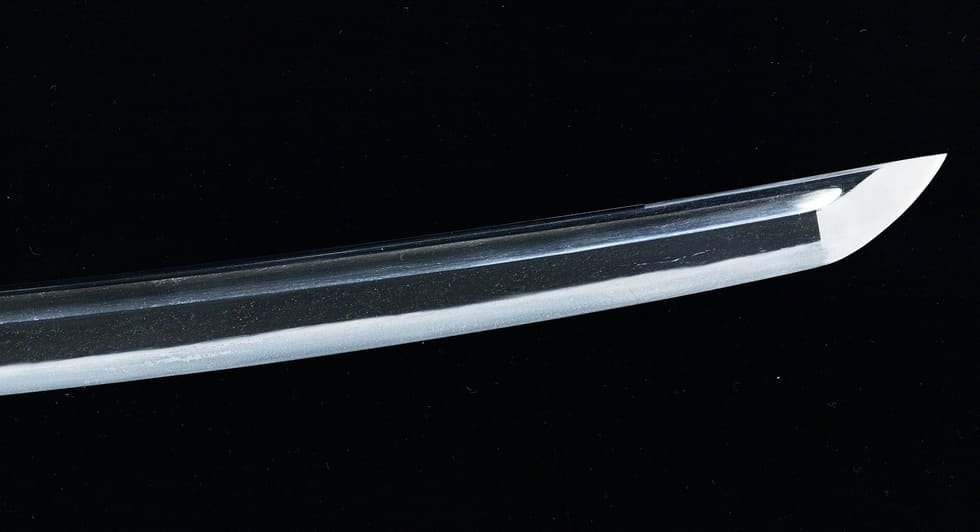
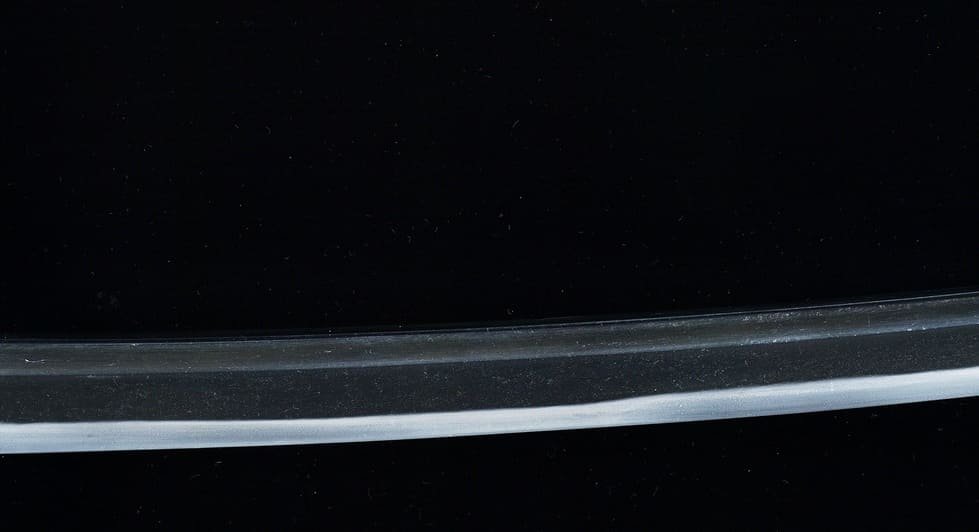
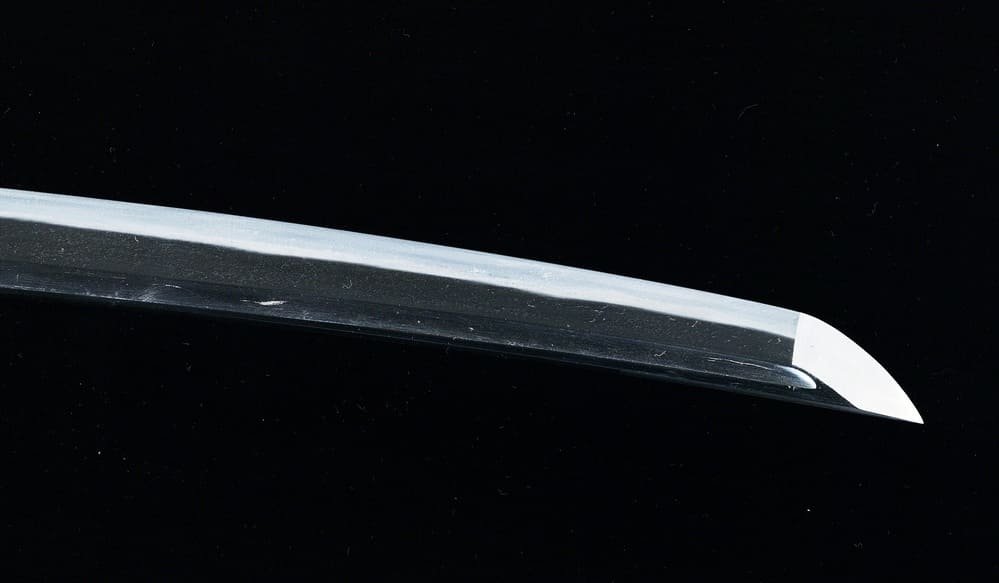
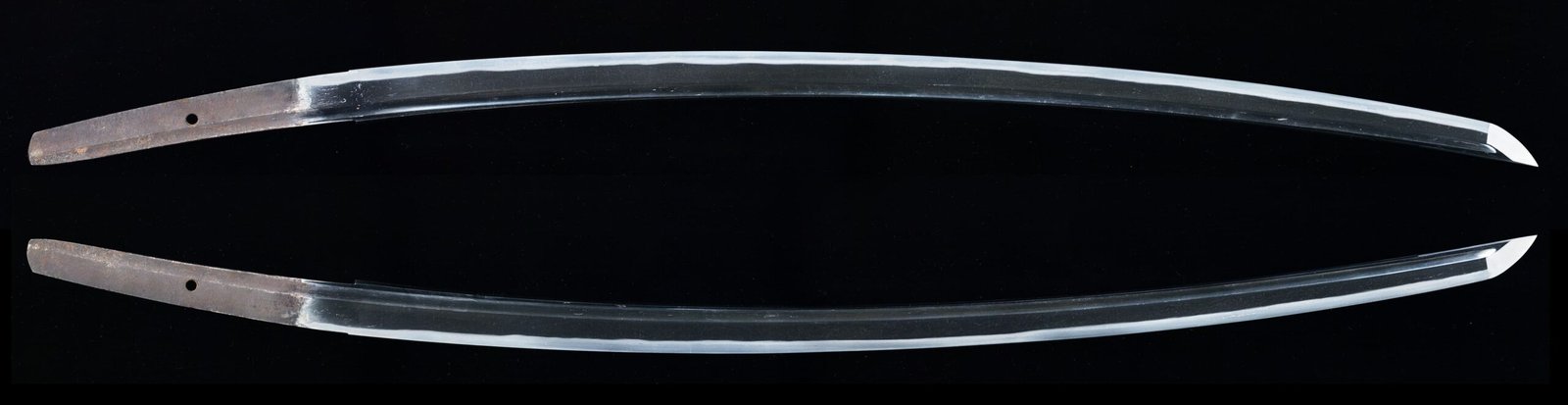
The blade has a lively shinogi-zukuri form with a pronounced curvature (sori of 1.6 cm) and a chū-kissaki.
Its proportions reflect the practical, combat-oriented character of the blades carried during the late Muromachi period.
Bōhi – Grooves on Both Sides
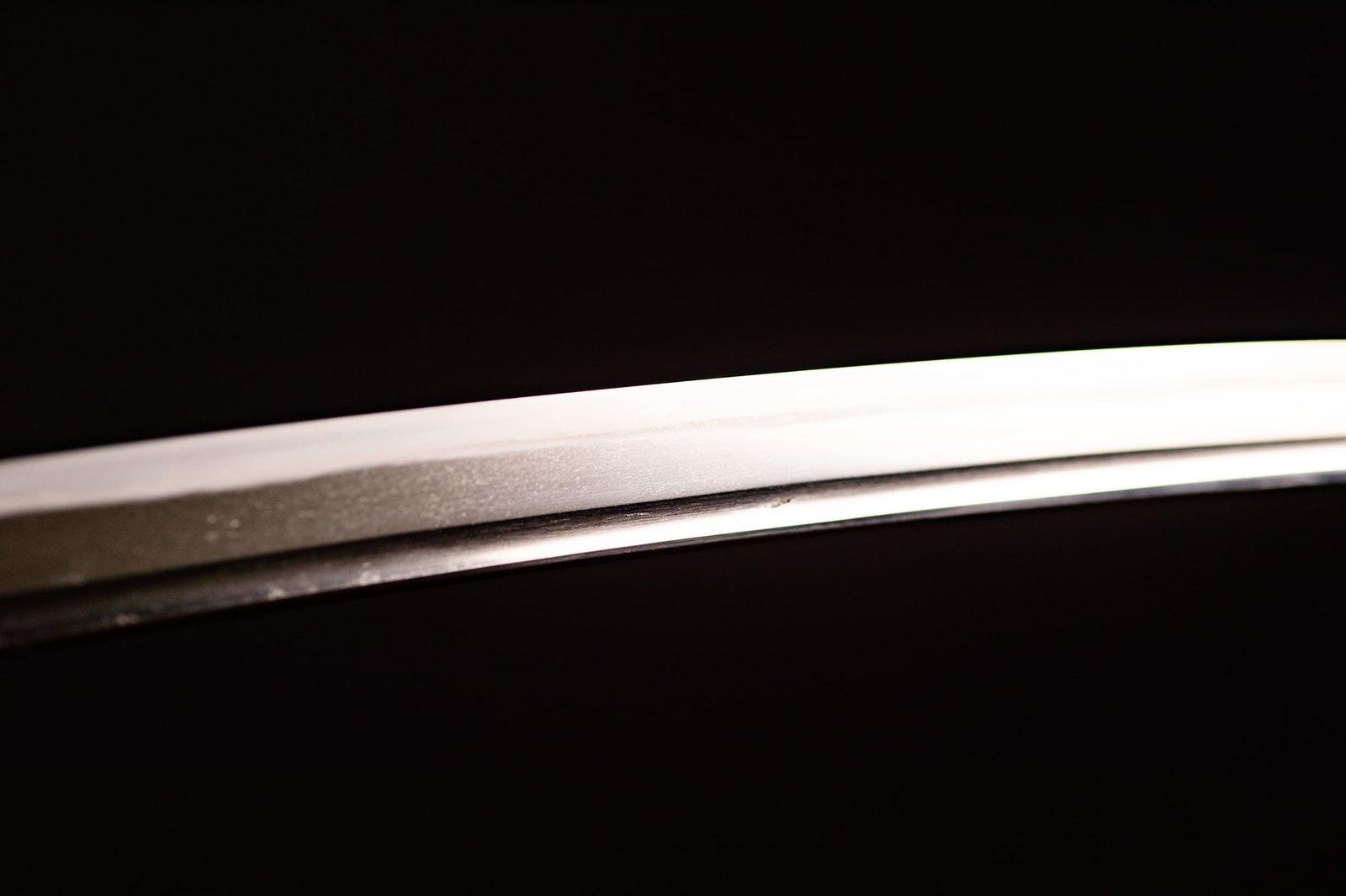
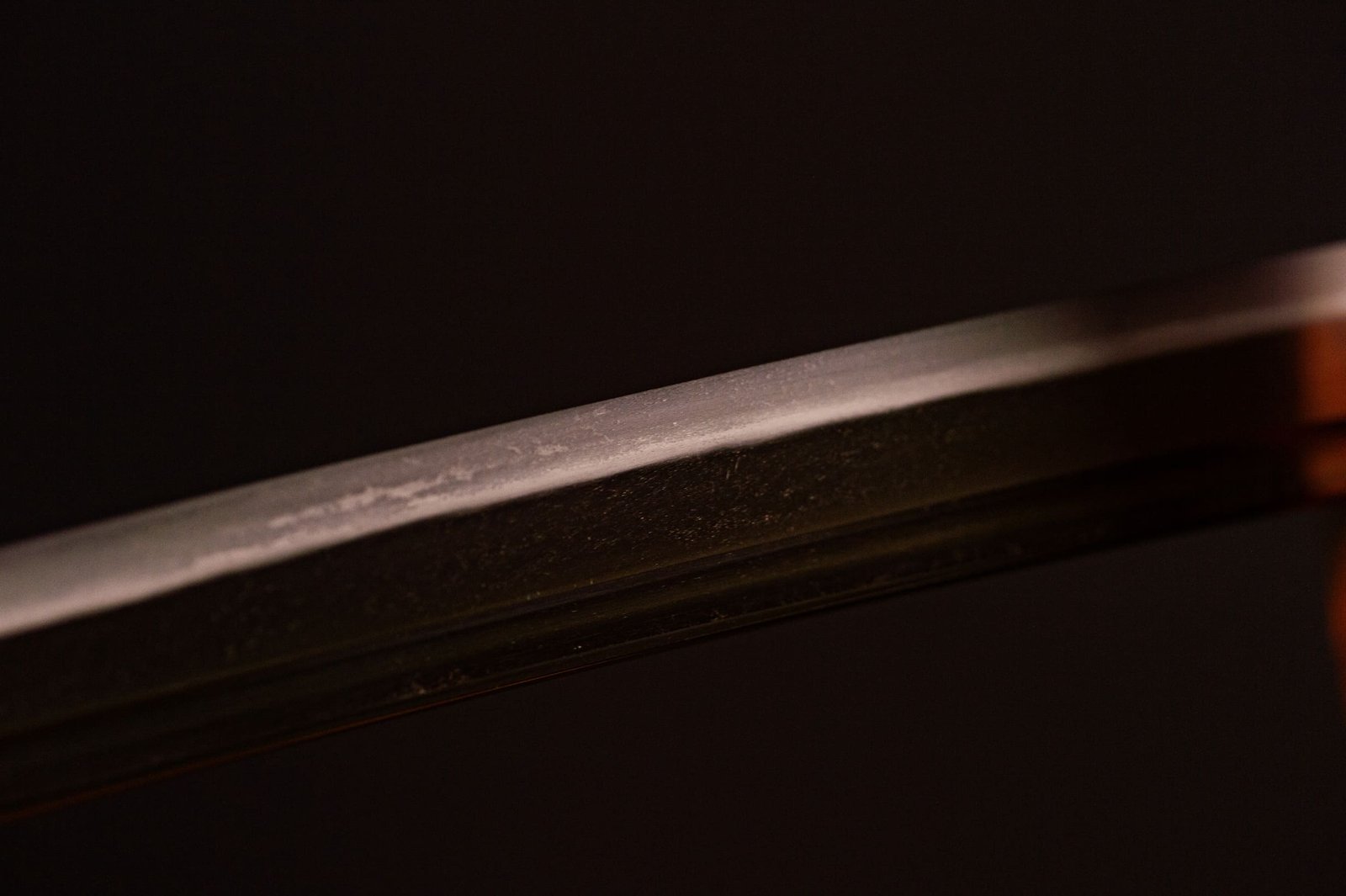
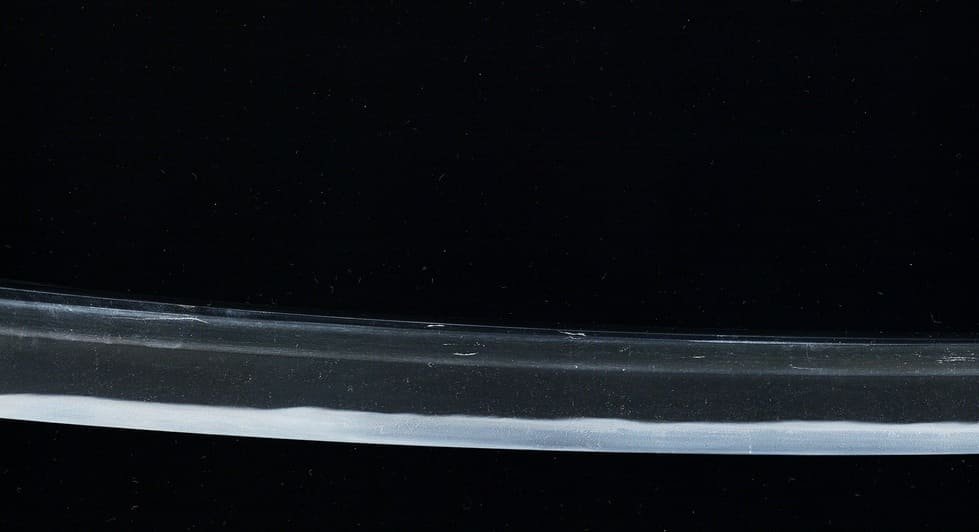
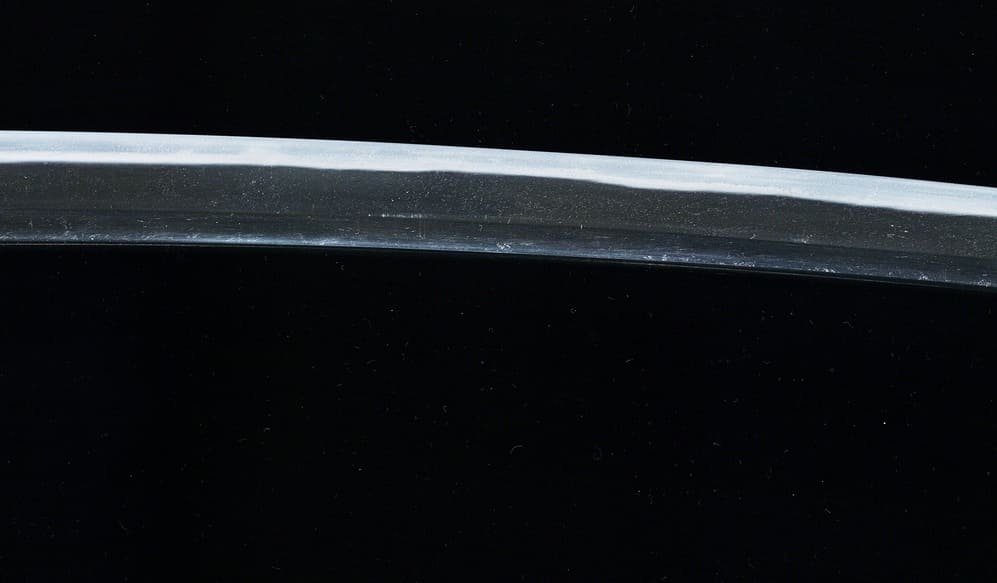
A bōhi, or wide groove, runs along both sides of the blade, lightening it and improving its balance in the hand.
Hamon and Bōshi
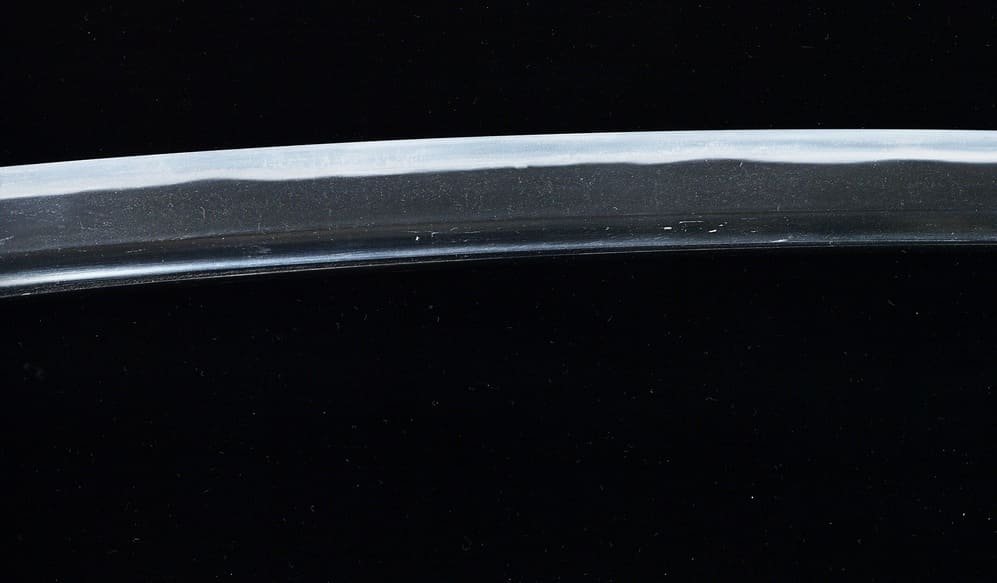
The hamon is a calm suguha that breaks into gentle undulations (ko-notare).
In the point, the bōshi turns back in a neat rounded form.
Nakago – The Tang
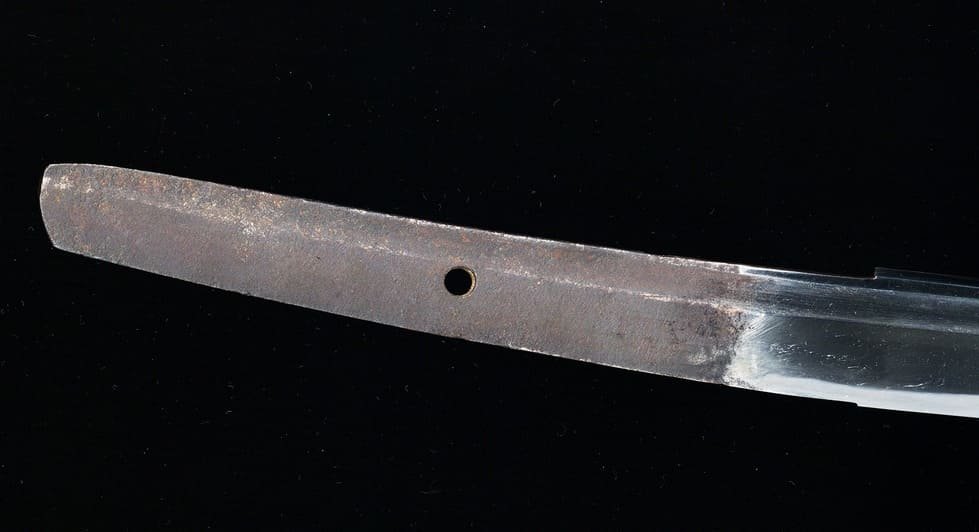
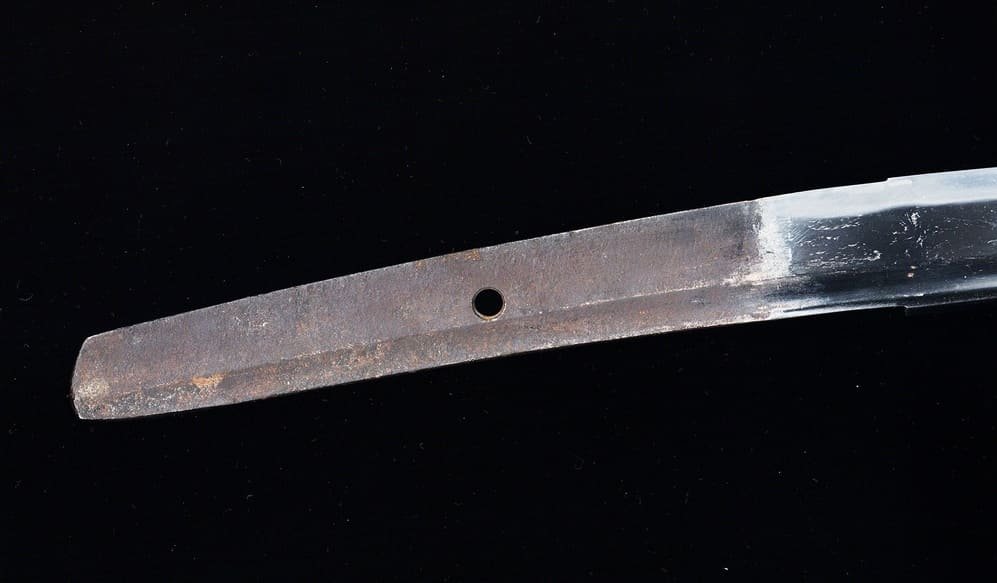
The nakago is unsigned (mumei) and keeps a single mekugi-ana under an even, dark patina.
Koshirae – A Well-Matched Mounting
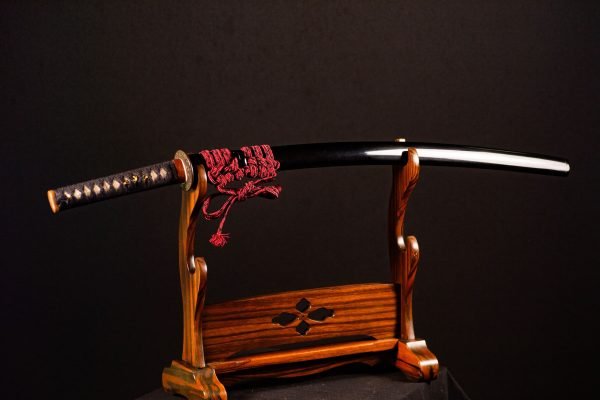
The katana is presented in a well-matched koshirae, in which each fitting contributes to the harmonious appearance of the ensemble.
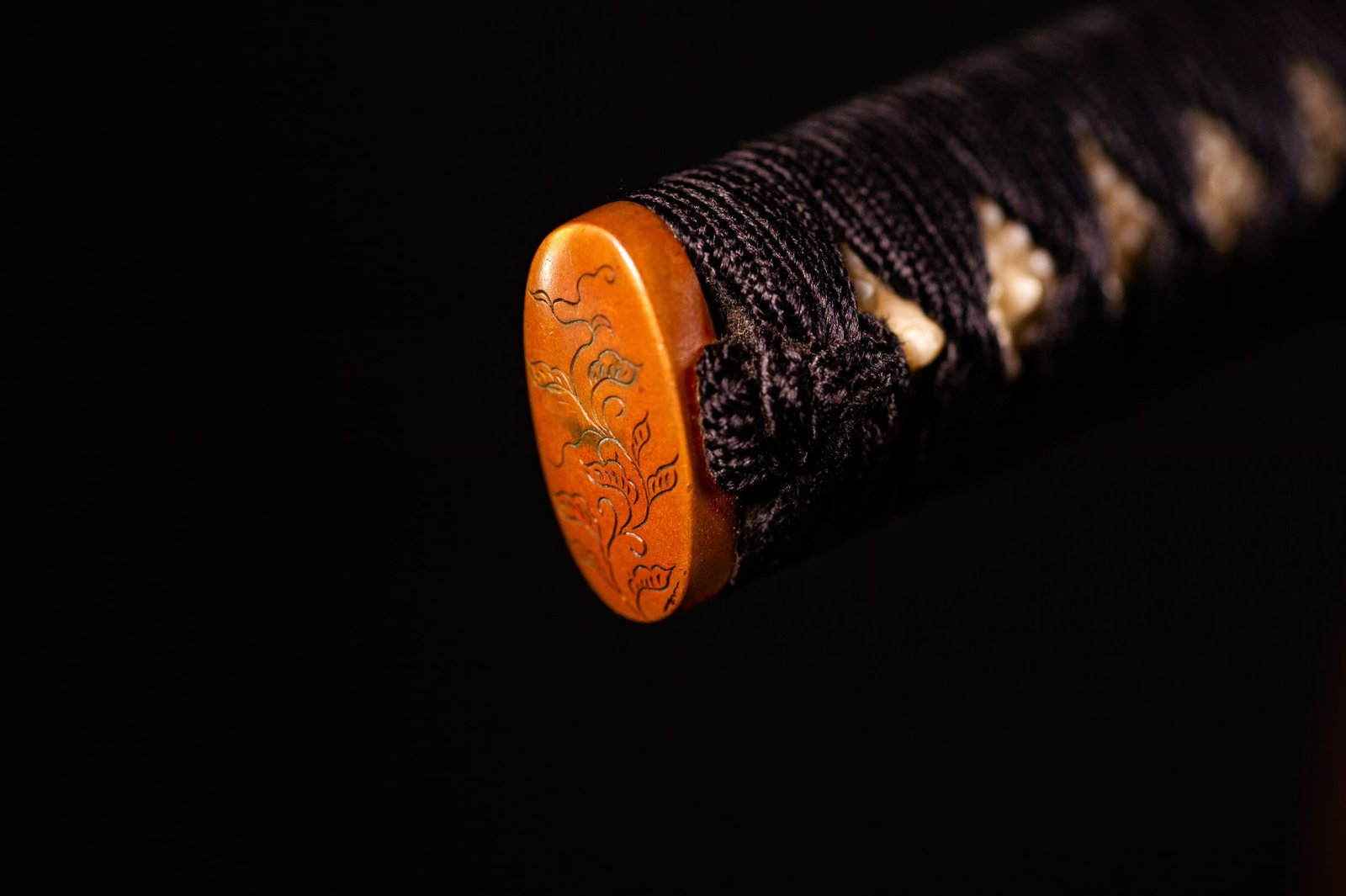
Fuchi and Kashira – Engraved Suaka Copper
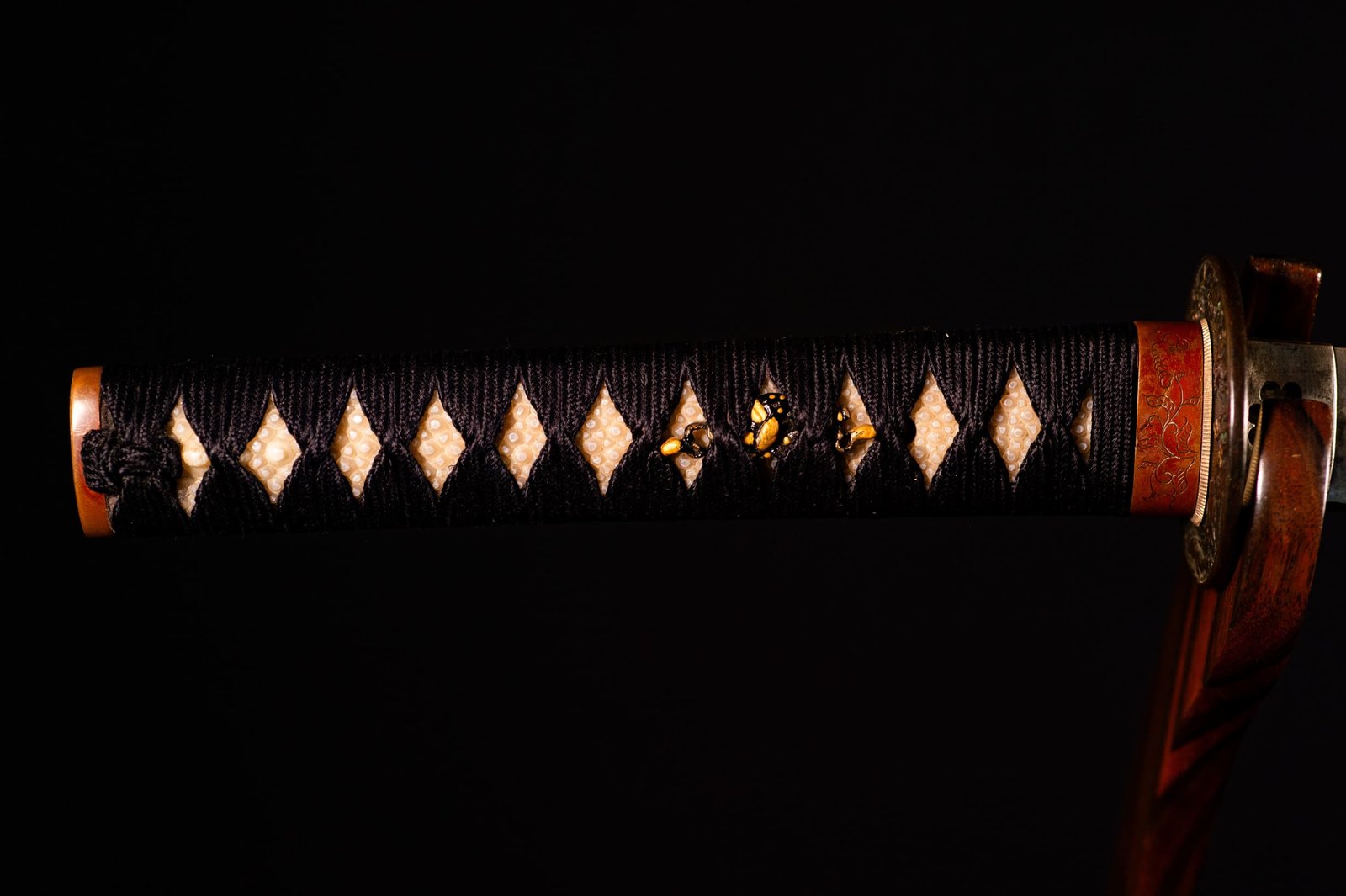
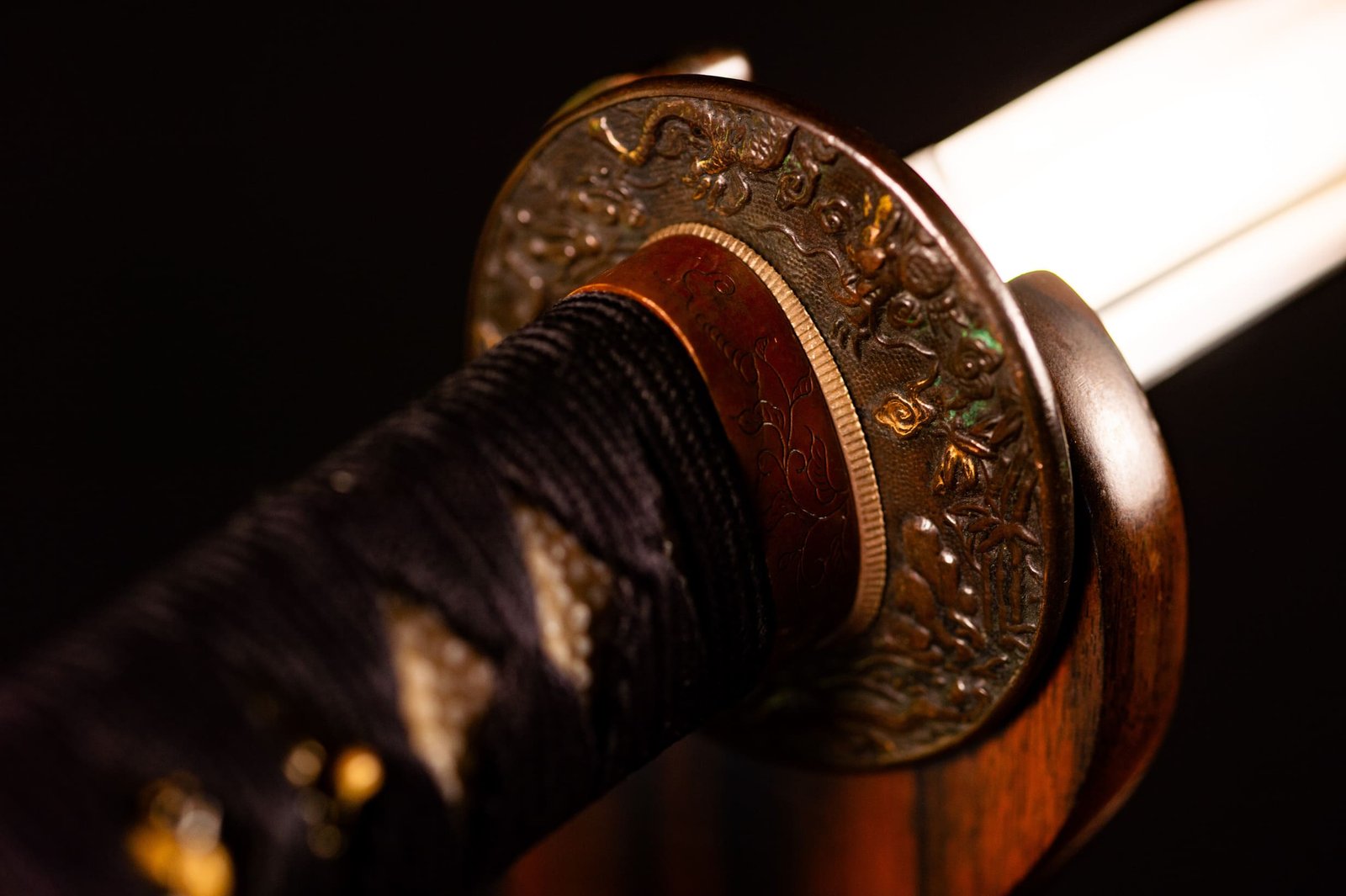
The fuchi and kashira are made of warm suaka copper, finely engraved in kebori with flowering vines.
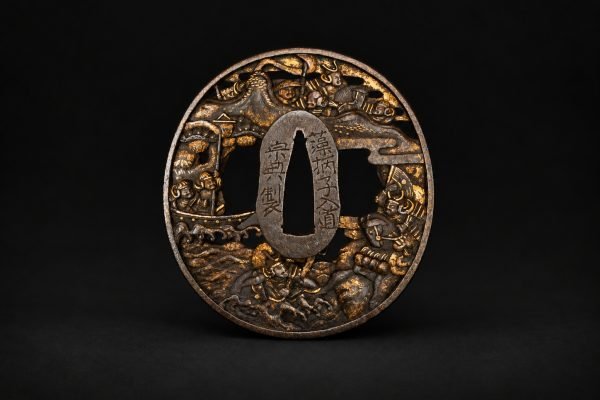
Tsuba – Dragon Among Clouds
The round tsuba is worked in relief with a dragon twisting among clouds, accompanied by bamboo and blossoms, over a finely textured ground.
Menuki – Shakudō with Gilt Accents
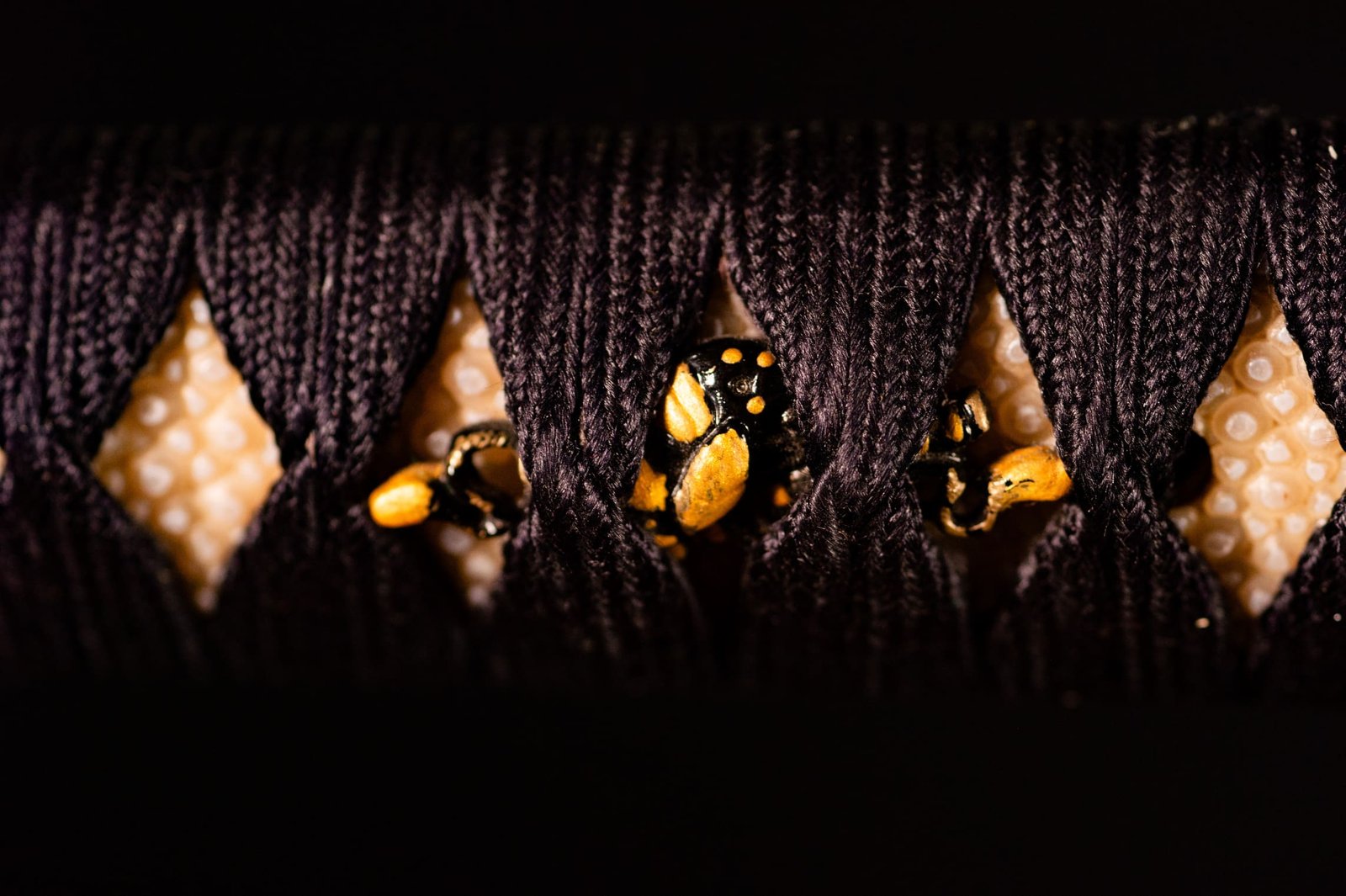
The menuki, partly hidden beneath the wrap, are worked in black shakudō with gilt accents and dotted gold details.
They give the hilt a discreet flash of colour between the diamonds of the ito.
Tsuka, Saya and Sageo
The tsuka is wrapped in black silk ito over white same.
A glossy black lacquered saya and a red-and-black sageo complete the mounting.
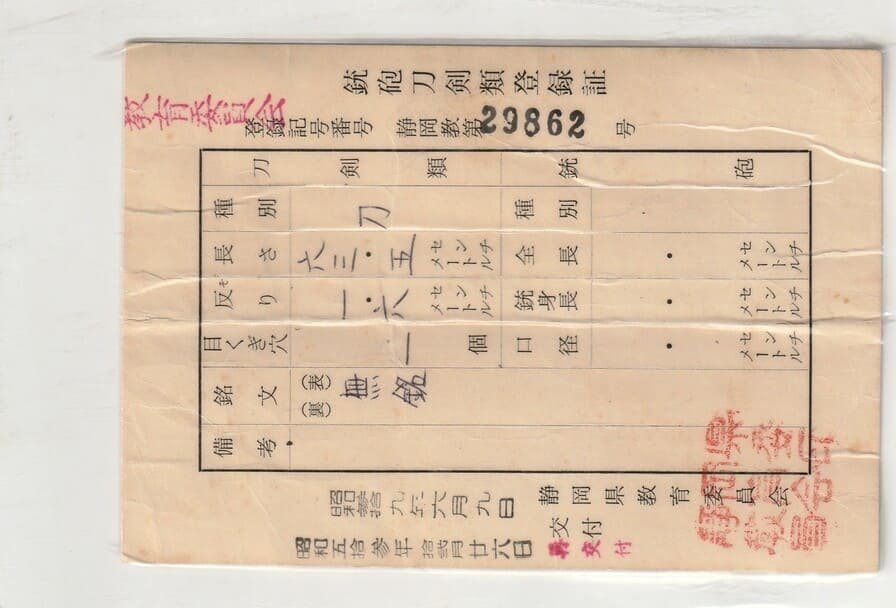
Tōroku-shō – Japanese Registration Certificate
The blade comes with its Japanese registration certificate (tōroku-shō), issued in Shizuoka Prefecture.
Materials and Construction
This katana combines a shinogi-zukuri blade with a koshirae featuring engraved copper, shakudō, silk and lacquer.
- Shinogi-zukuri blade with bōhi on both sides
- Suaka copper fuchi and kashira with kebori engraving
- Round tsuba with relief decoration
- Black shakudō menuki with gilt accents and gold details
- Black silk ito
- White same
- Glossy black lacquered saya
- Red-and-black sageo
Condition
Excellent condition for its age, with only minor wear consistent with its antiquity.
The blade is presented in its koshirae and accompanied by its Japanese registration certificate (tōroku-shō).
Specifications
- Origin: Japan
- Period: Muromachi Period (1336–1573)
- Dating: Late Muromachi period
- Signature: Mumei (unsigned)
- Nagasa: 63.5 cm
- Sori: 1.6 cm
- Mekugi-ana: 1
- Blade construction: Shinogi-zukuri
- Kissaki: Chū-kissaki
- Hi: Bōhi on both sides
- Hamon: Suguha breaking into ko-notare
- Bōshi: Rounded, turning back
- Nakago: Even, dark patina
- Fuchi / Kashira: Suaka copper with kebori flowering vines
- Tsuba: Round, dragon among clouds with bamboo and blossoms in relief
- Menuki: Black shakudō with gilt accents and dotted gold details
- Tsuka: Black silk ito over white same
- Saya: Glossy black lacquer
- Sageo: Red and black
- Certificate: Tōroku-shō issued in Shizuoka Prefecture
- Condition: Excellent for its age
Collector’s Interest
This late Muromachi katana stands out for its battle-ready proportions and its carefully matched koshirae.
- Unsigned (mumei) katana from the late Muromachi period.
- Nagasa of 63.5 cm, the typical length of the uchigatana of the Warring States period.
- Lively shinogi-zukuri form with pronounced curvature and chū-kissaki.
- Bōhi on both sides of the blade.
- Calm suguha hamon breaking into gentle ko-notare.
- Koshirae with suaka copper fuchi-kashira, dragon tsuba and shakudō menuki.
- Japanese registration certificate (tōroku-shō) issued in Shizuoka Prefecture.
- Excellent condition for its age.
A katana that embodies the sword of the Warring States: a blade made to be carried into battle, presented in an elegant koshirae. Its practical proportions, calm suguha hamon and finely decorated fittings make it a compelling addition to a collection of antique Japanese swords.