In Stock
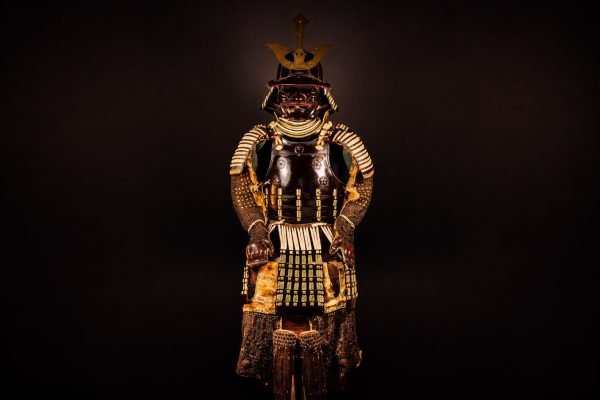
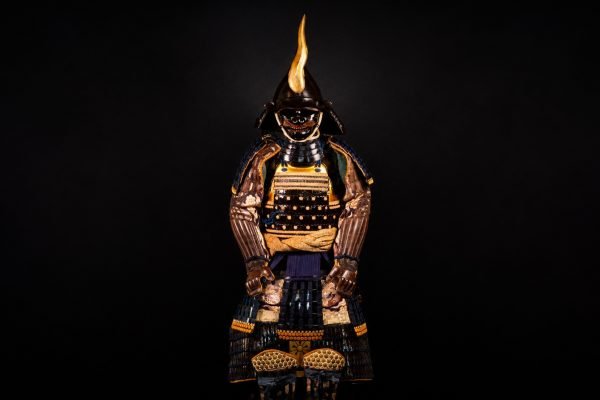
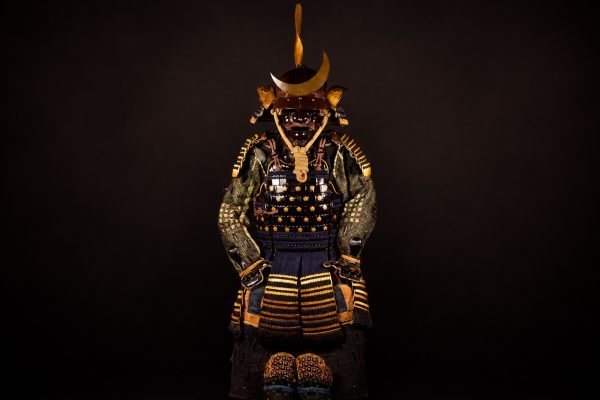
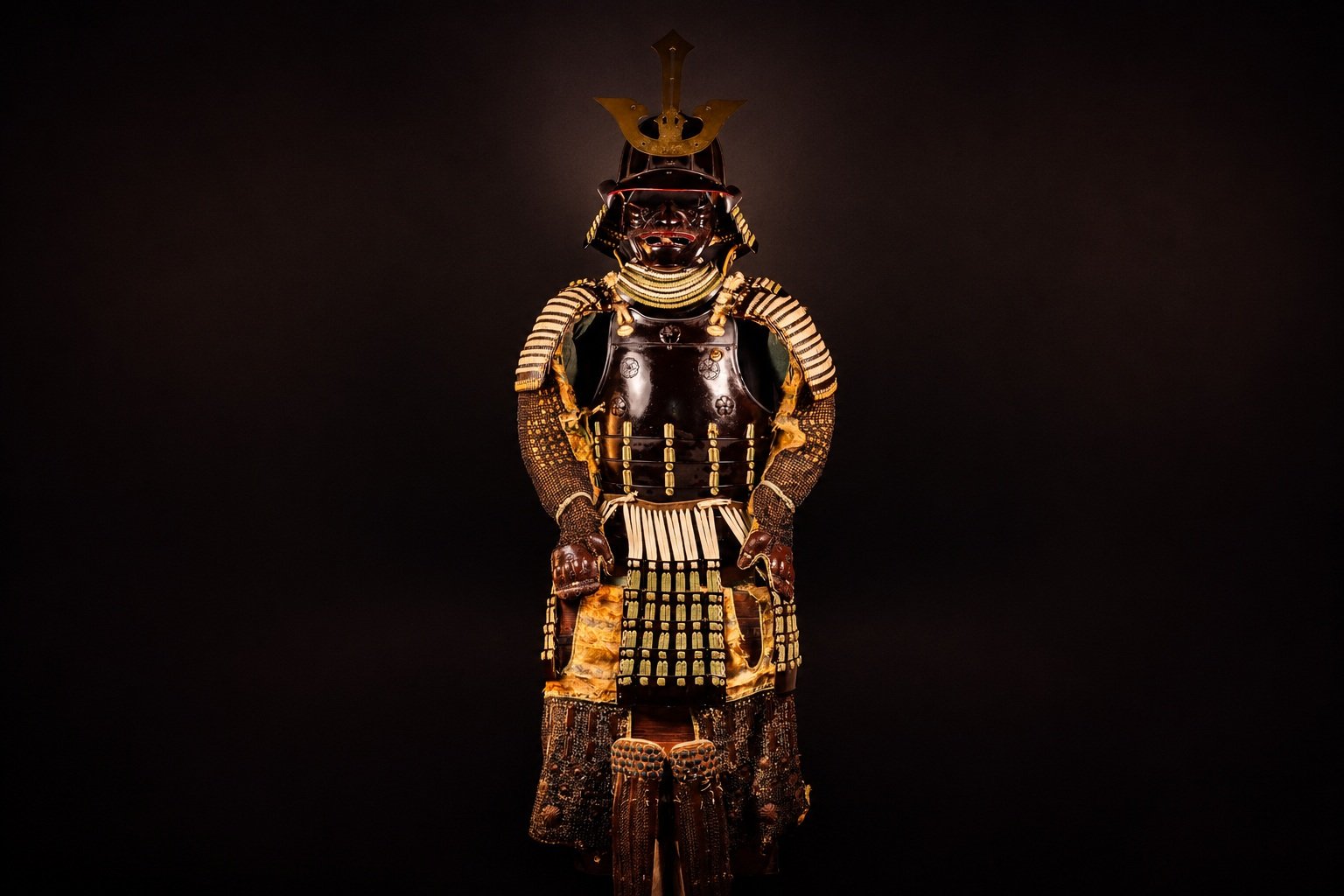
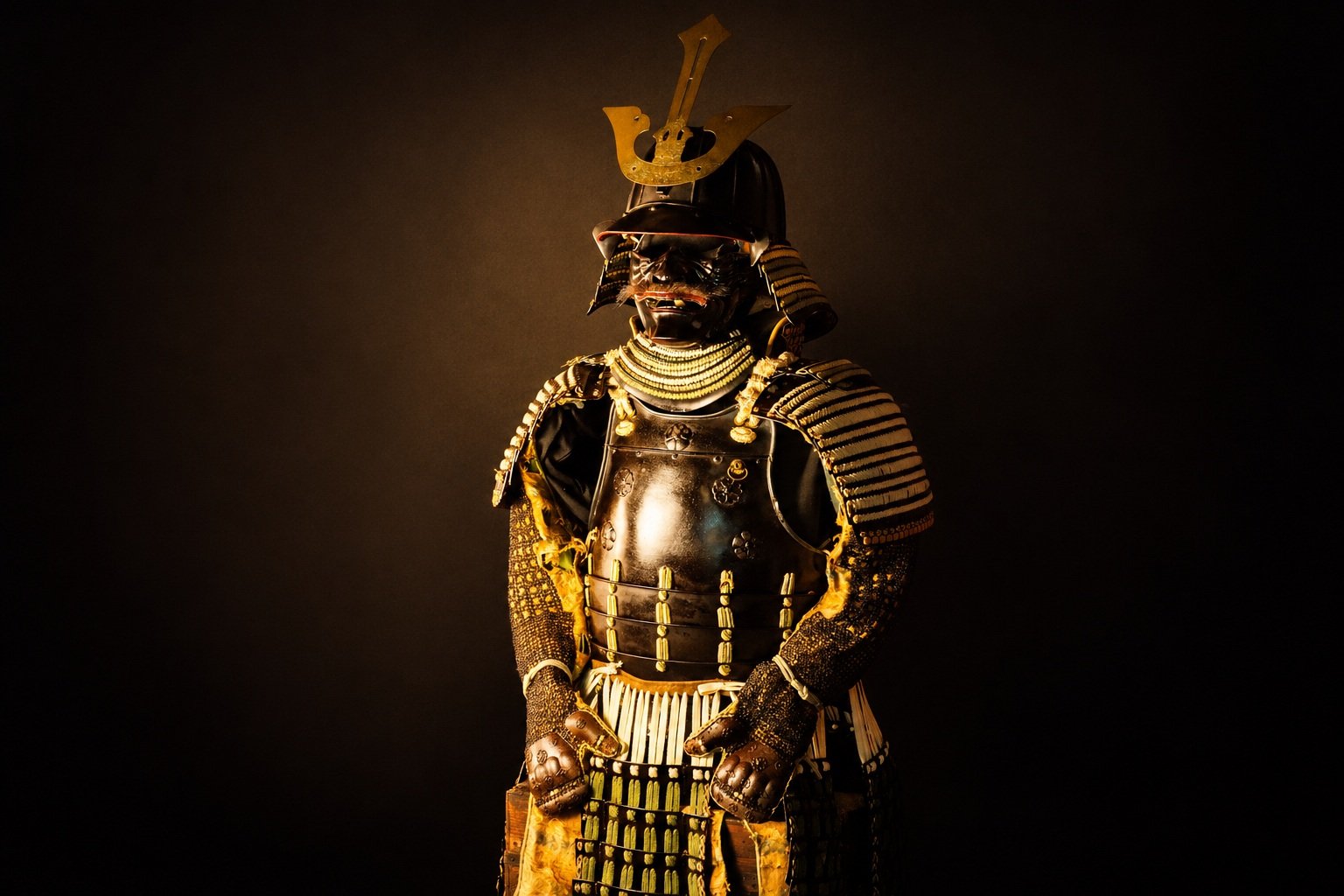
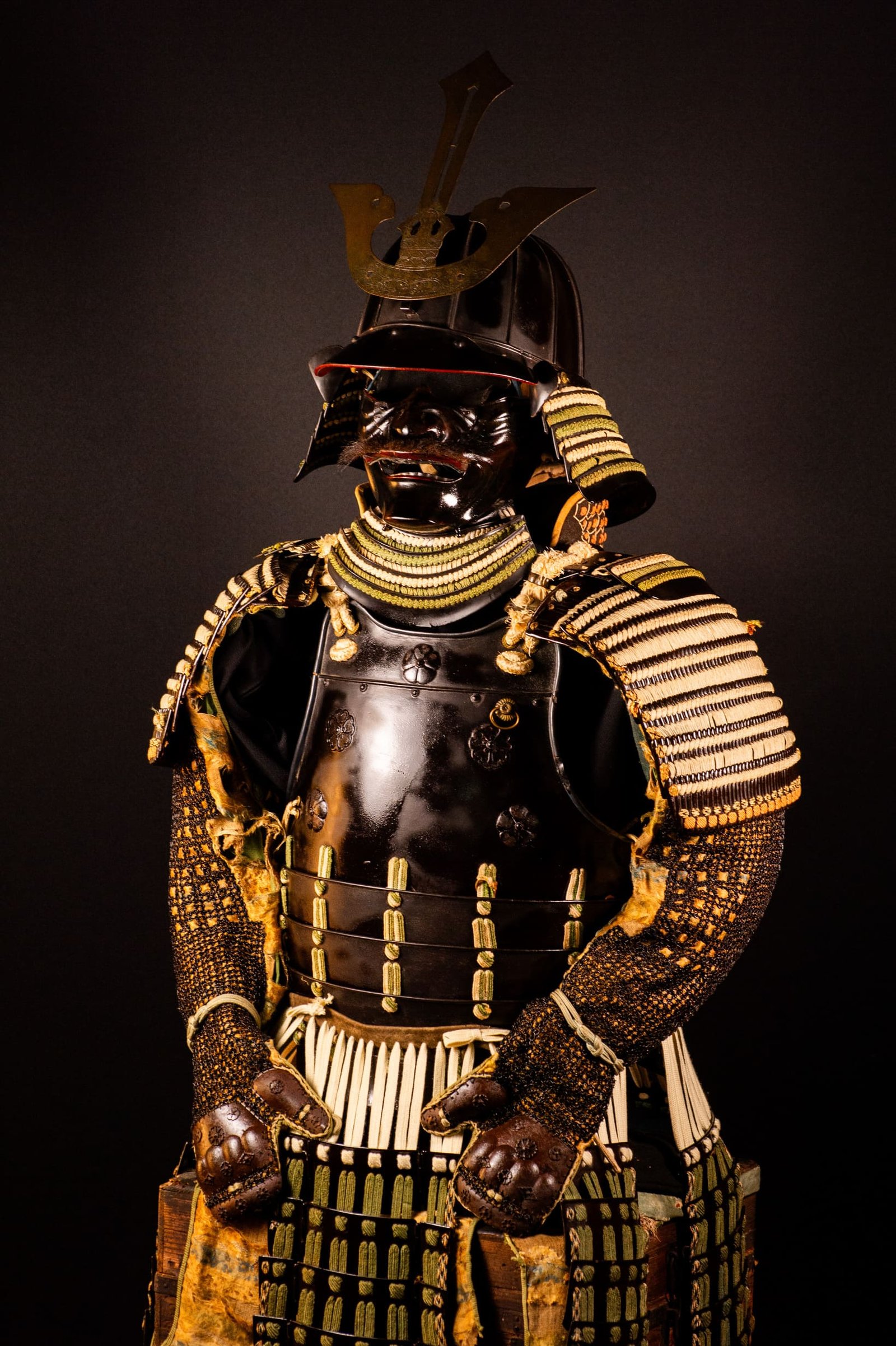
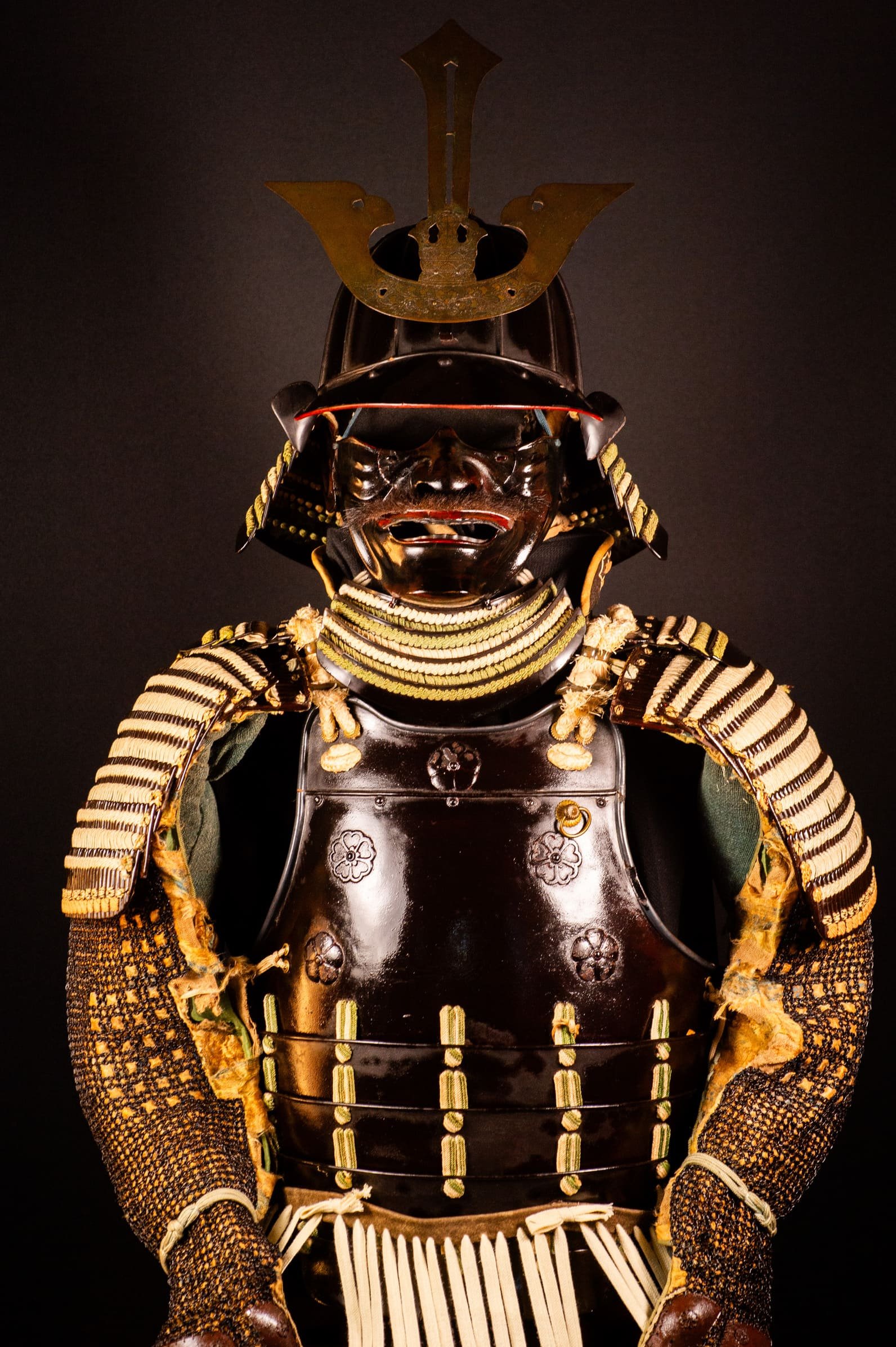
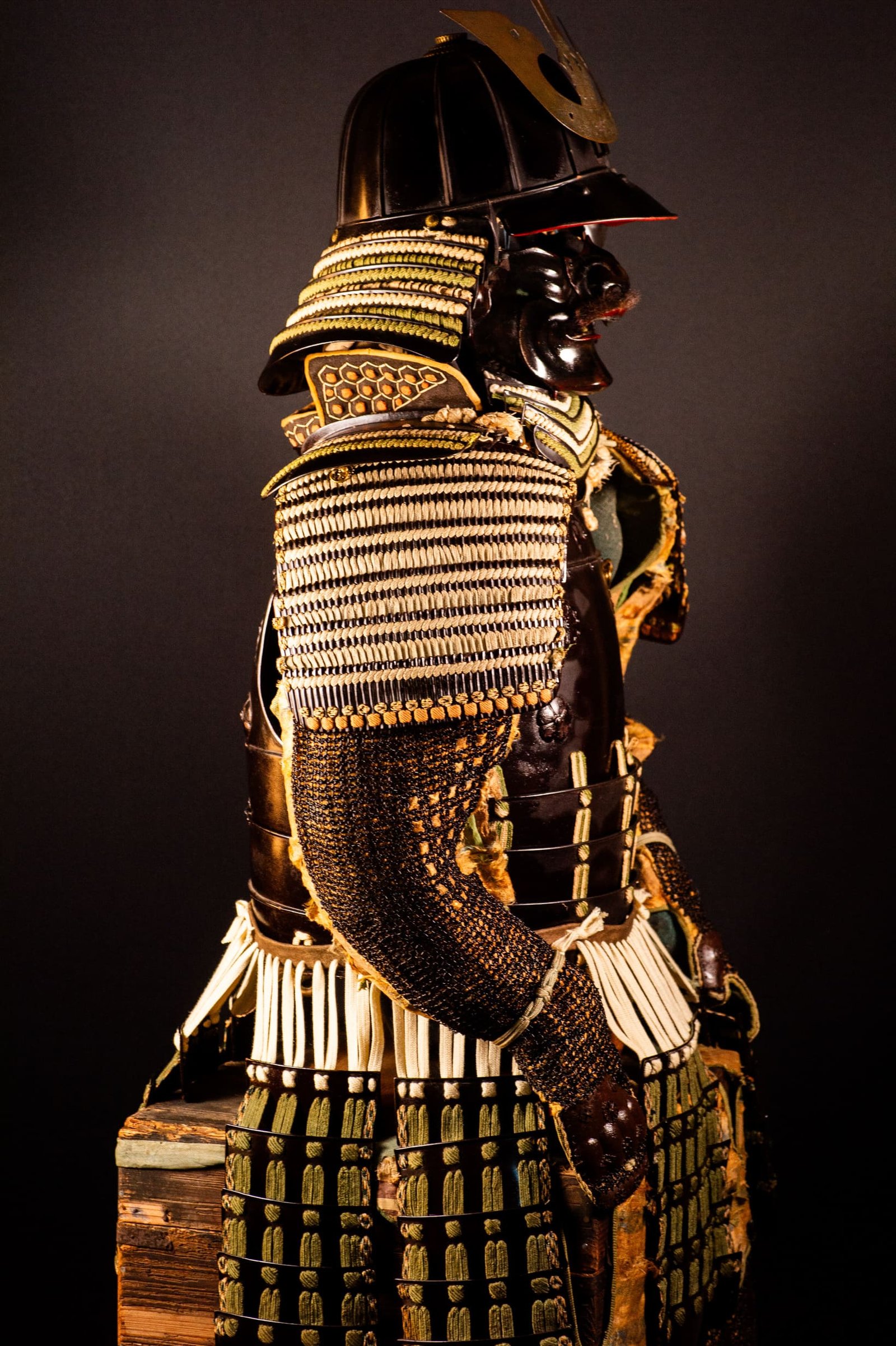
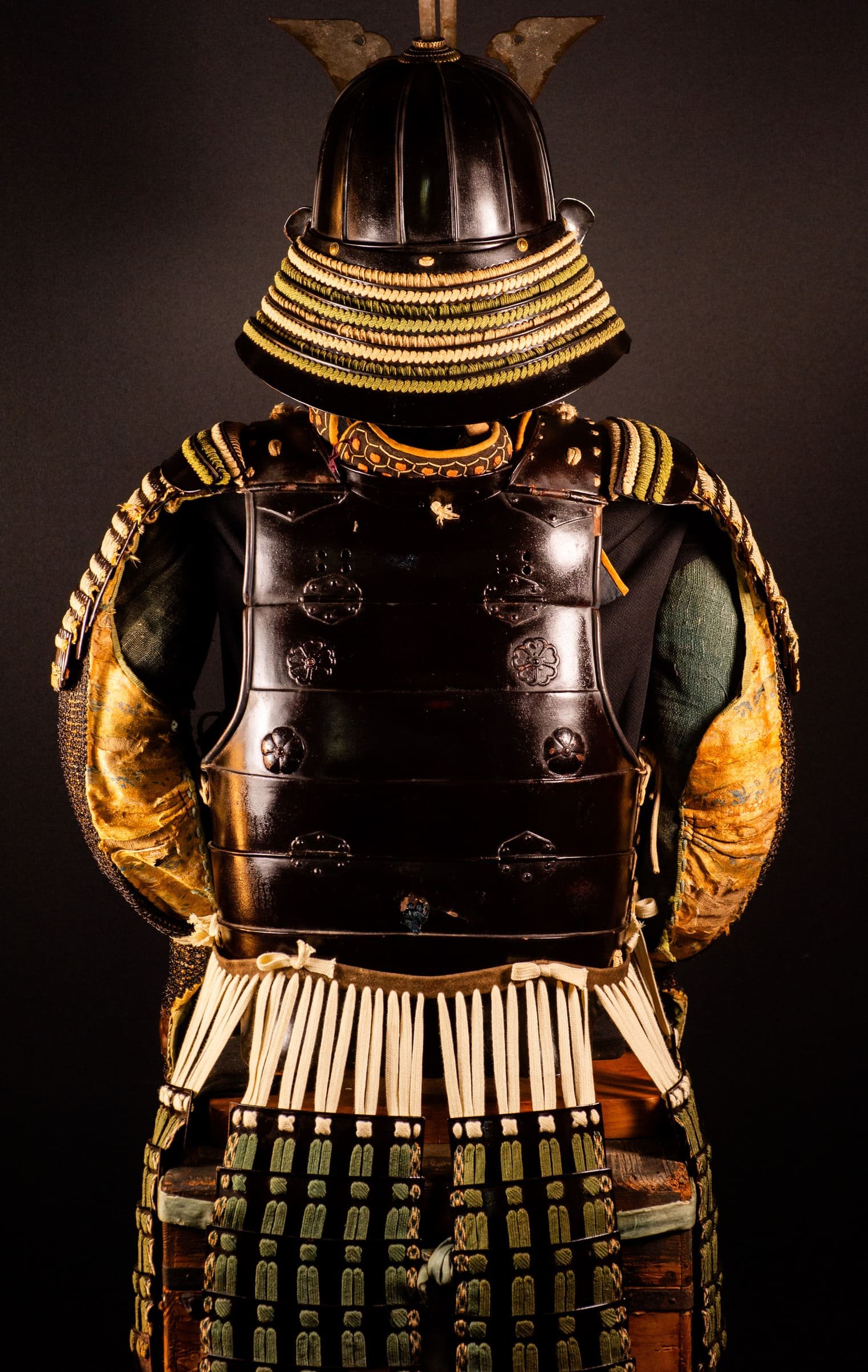
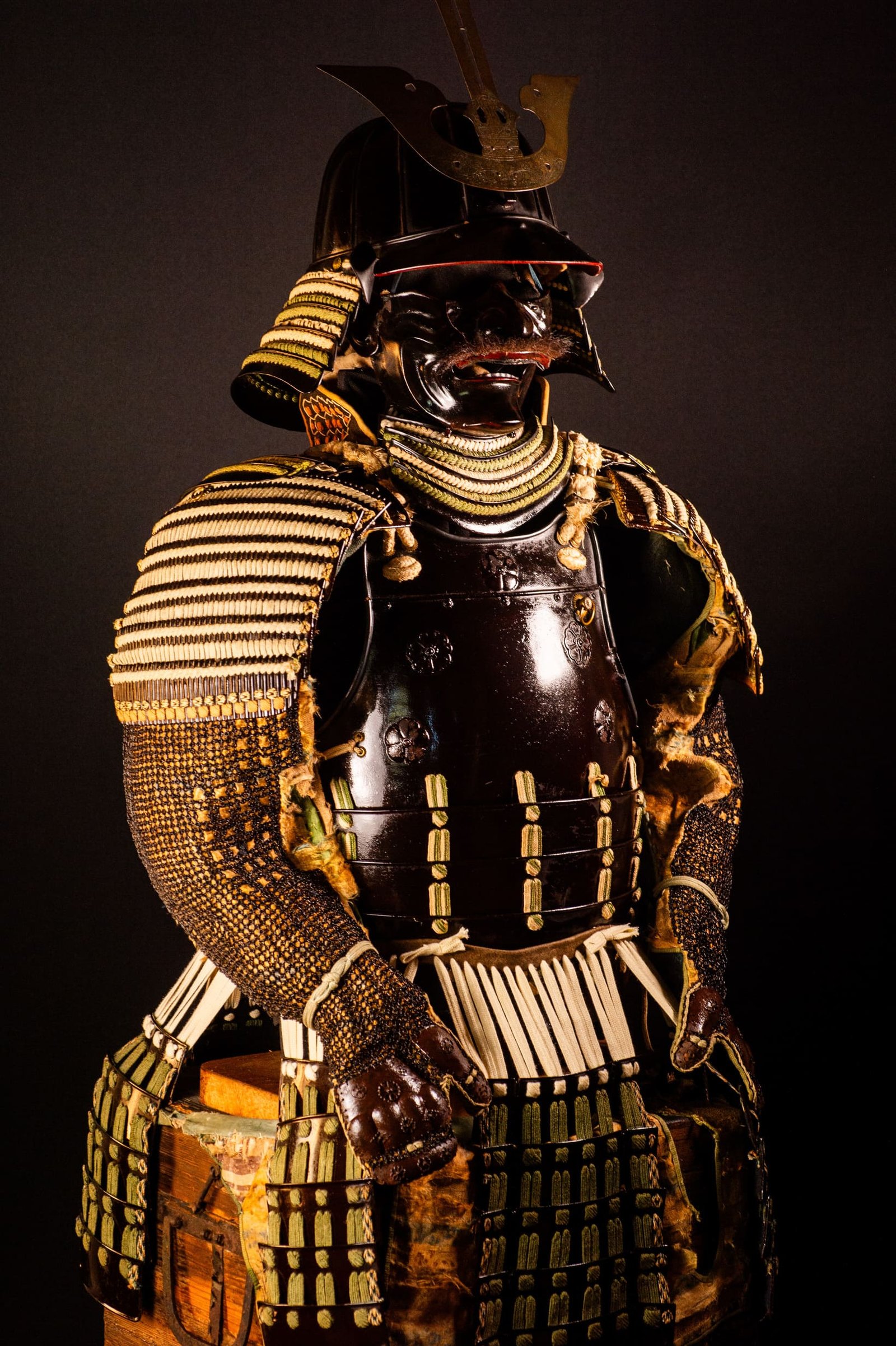
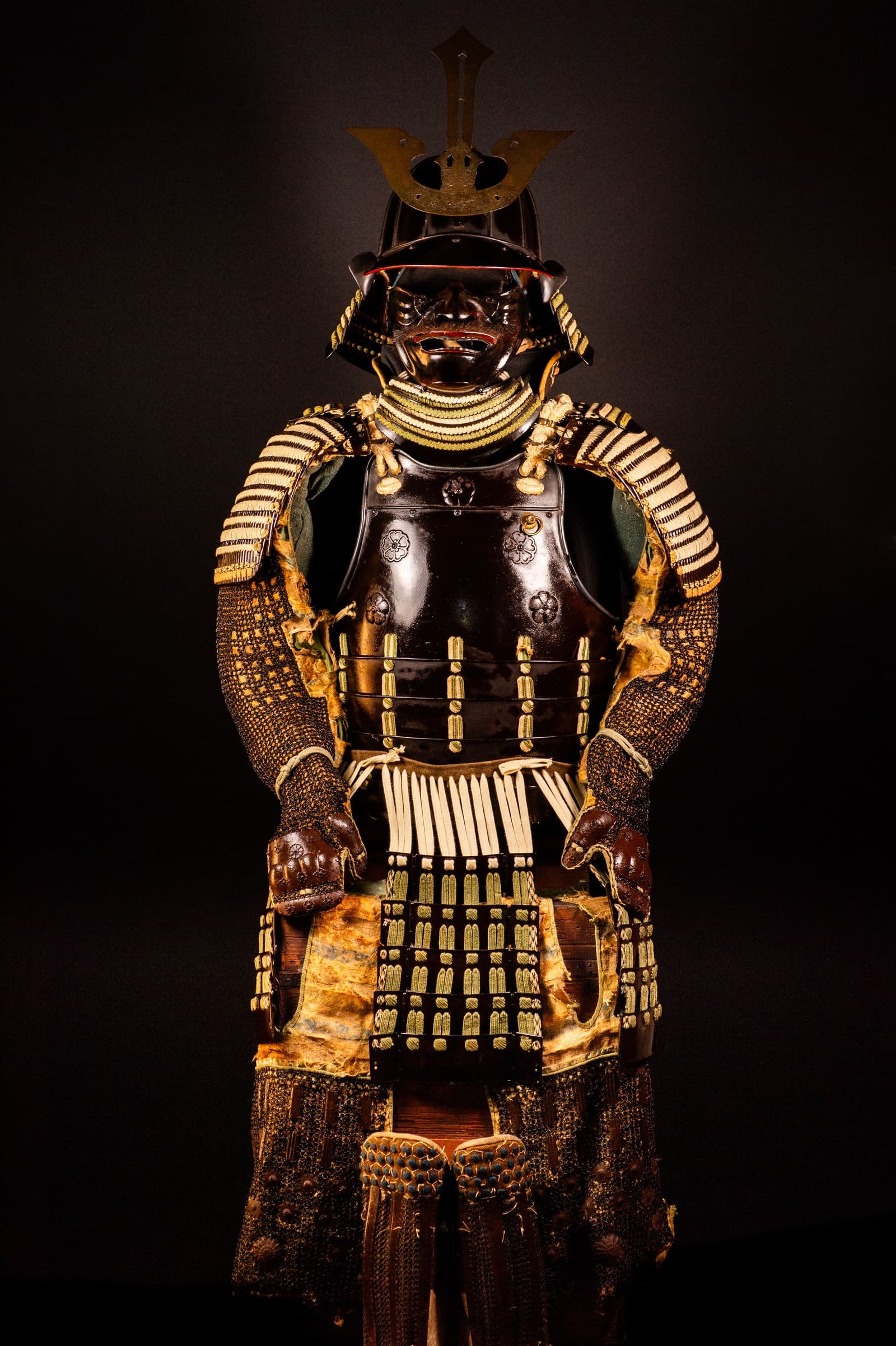
Exceptional complete Japanese samurai armour (Gusoku) dating from the 18th century, Edo period, featuring a black-lacquered multi-plate Kabuto, a finely engraved brass Mitsu-Kuwagata Maedate and an imposing Ressei Menpō with a horsehair moustache. Its floral-decorated iron cuirass and elegant cream and green silk lacing create a remarkable balance between martial strength and artistic refinement. Preserved in excellent condition for its age, with its original wooden Yoroi-bitsu.
Add to Compare
Add to Wishlist
An exceptional complete Japanese samurai armour dating from the 18th century, distinguished by its imposing facial armour, finely engraved brass helmet crest, floral-decorated cuirass and harmonious combination of cream and green silk lacing. A remarkable example of the artistic refinement and martial identity embodied in Japanese armour during the Edo period.
For the samurai, armour was much more than physical protection. It was an expression of identity, social standing and martial tradition. Every element, from the helmet crest to the colours of the silk lacing, contributed to the distinctive appearance of the warrior.
During the Edo period, Japanese armour-making continued to evolve into an increasingly sophisticated form of craftsmanship, combining practical construction with elaborate decorative techniques.
This particular Gusoku embodies that tradition through its powerful silhouette, dark lacquered surfaces and carefully balanced floral ornamentation. Its imposing appearance contrasts beautifully with the delicate decorative details found throughout the ensemble.
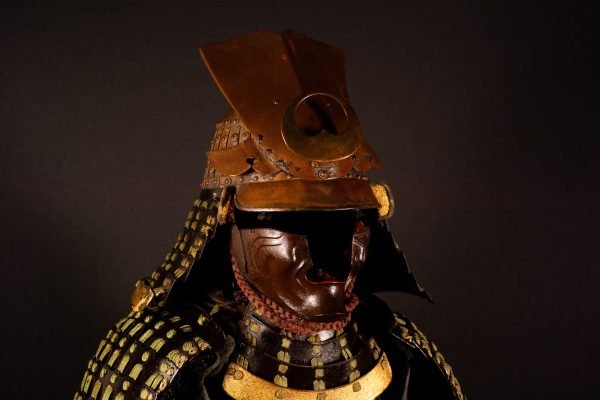
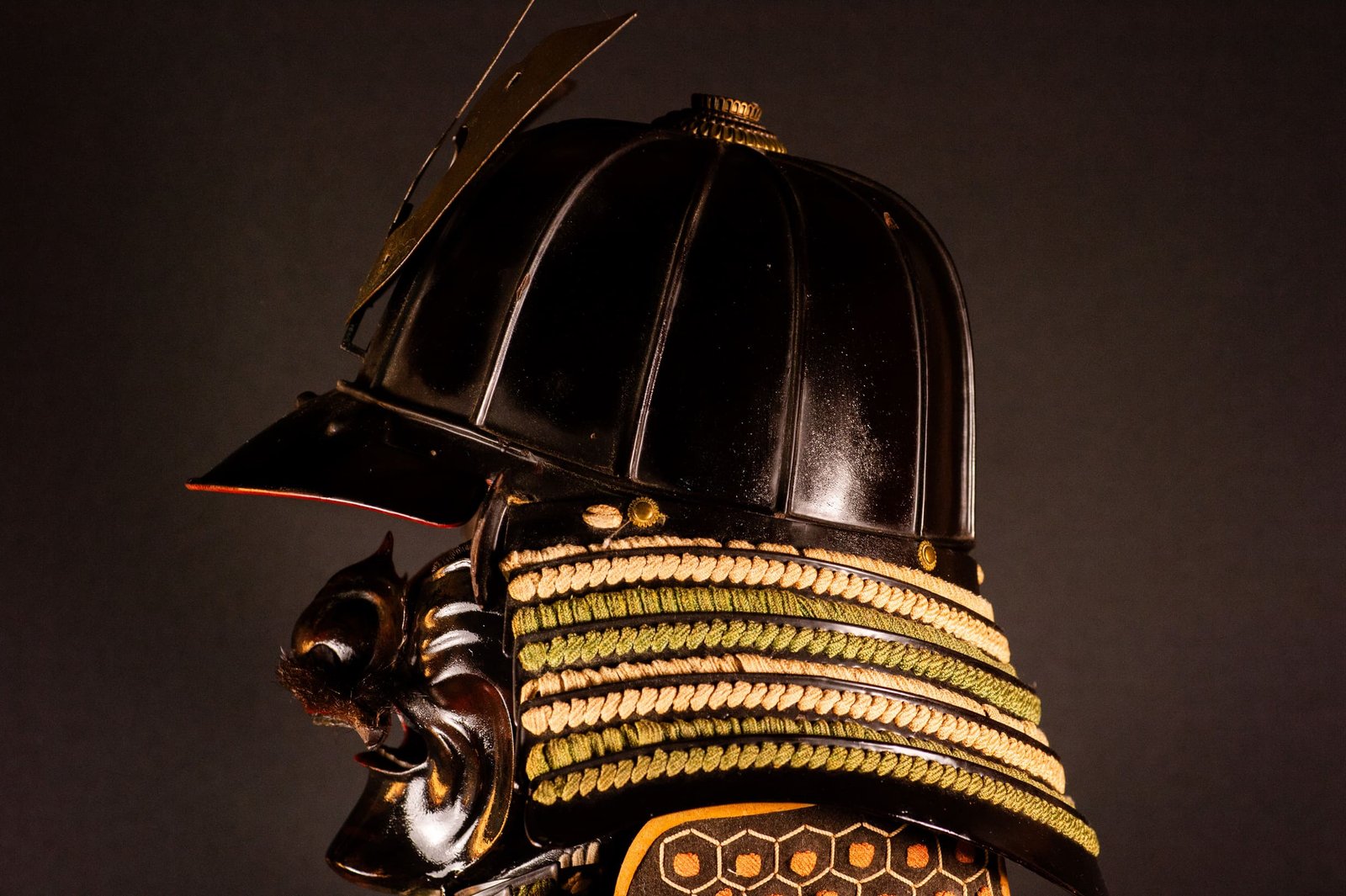
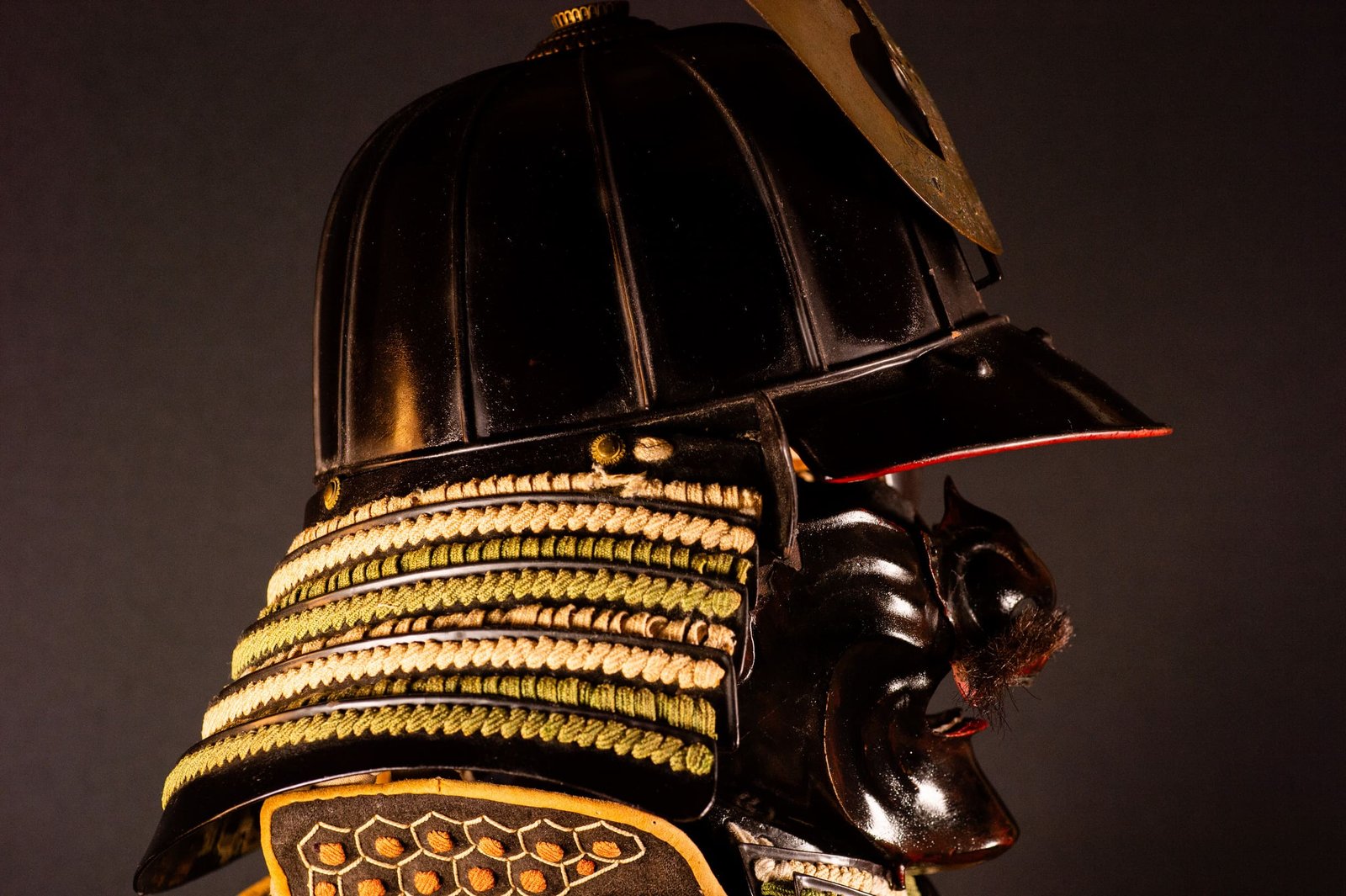
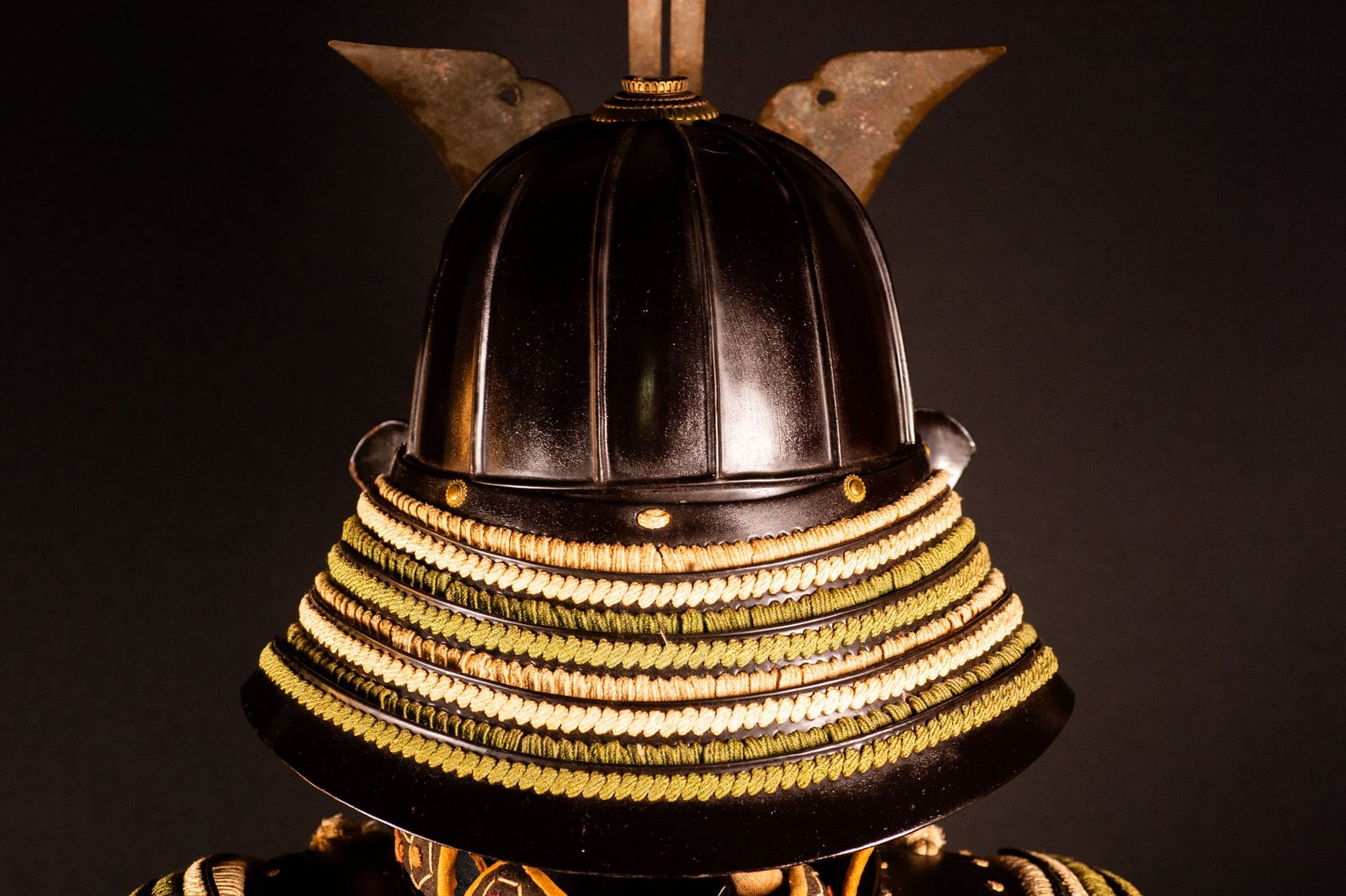
The Kabuto features a helmet bowl constructed from numerous vertical plates with pronounced raised ridges, finished in deep black lacquer and crowned with a gilt Tehen fitting.
The arrangement of the plates gives the helmet a strong architectural appearance, emphasising both its defensive construction and the precision of traditional Japanese metalworking.
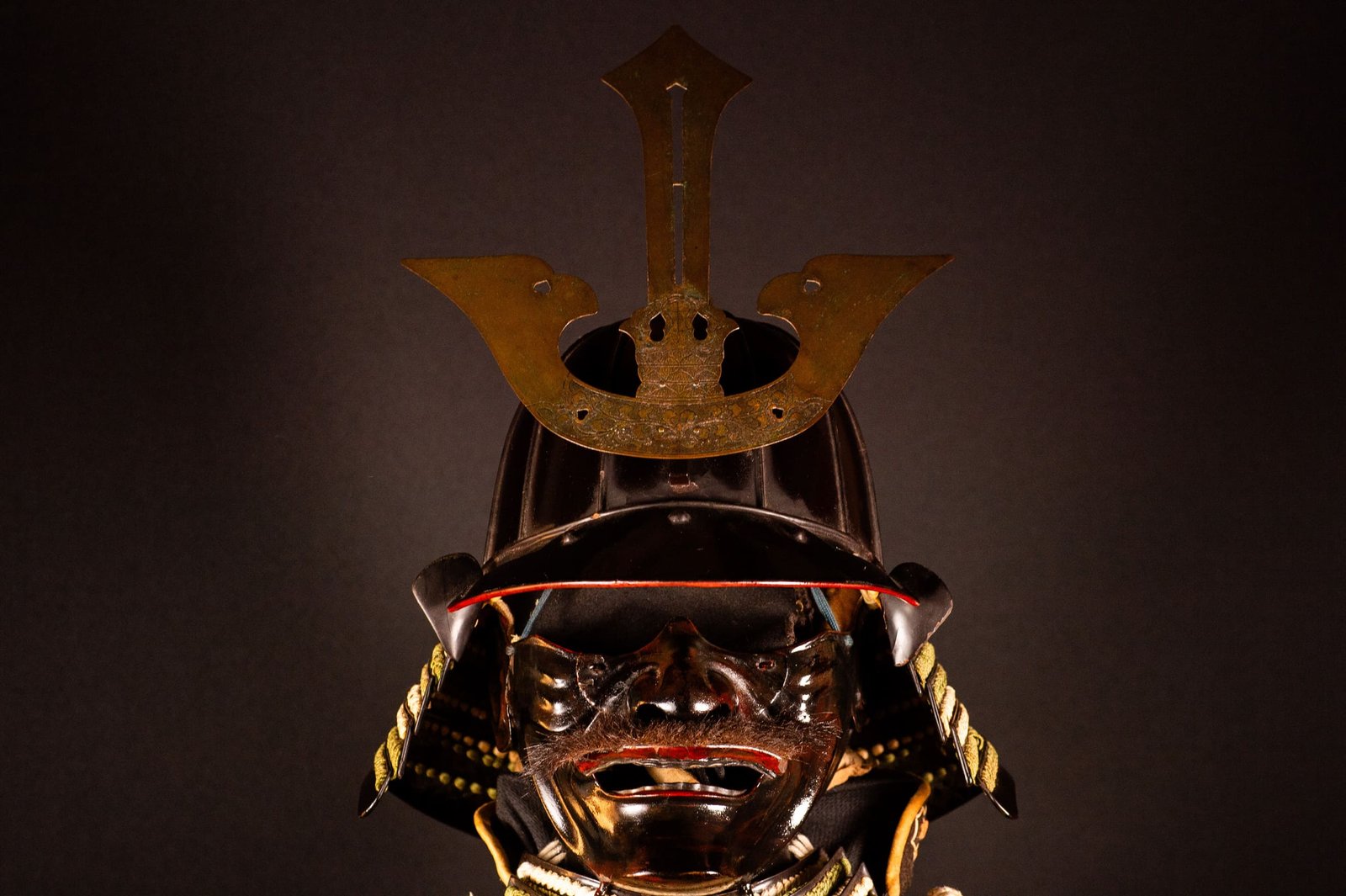
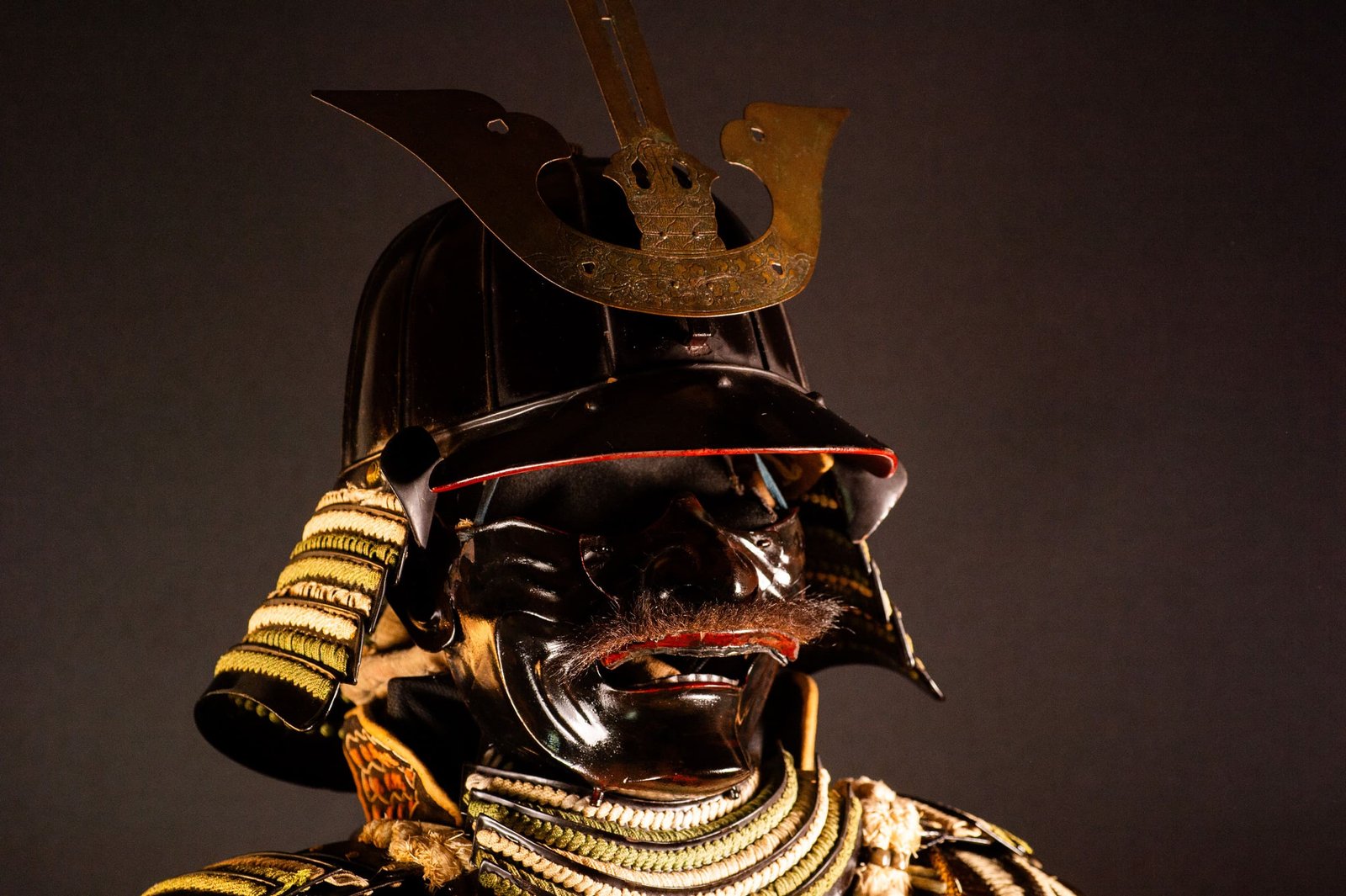
The Mabizashi, or frontal visor, is lined with red lacquer, providing an elegant contrast to the dark exterior of the helmet.
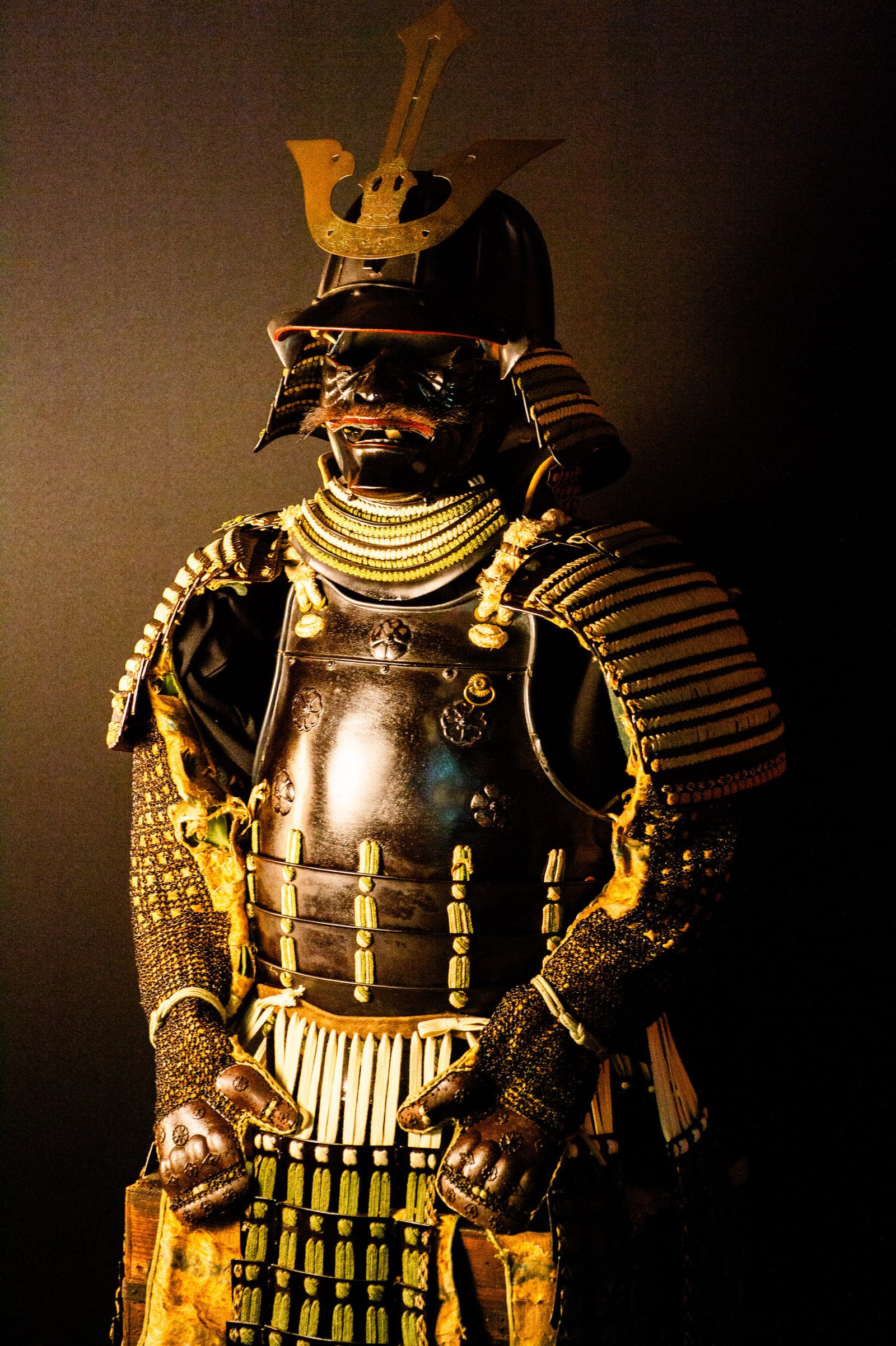
One of the most striking elements of this armour is its impressive brass Maedate, composed of two sweeping Kuwagata framing a tall central blade-shaped ornament.
The surface is finely engraved with scrolling foliage, adding depth and refinement to the golden tones of the brass.
Its distinctive three-part silhouette gives the Kabuto a commanding presence, representing one of the most recognisable forms of traditional Japanese helmet ornamentation.
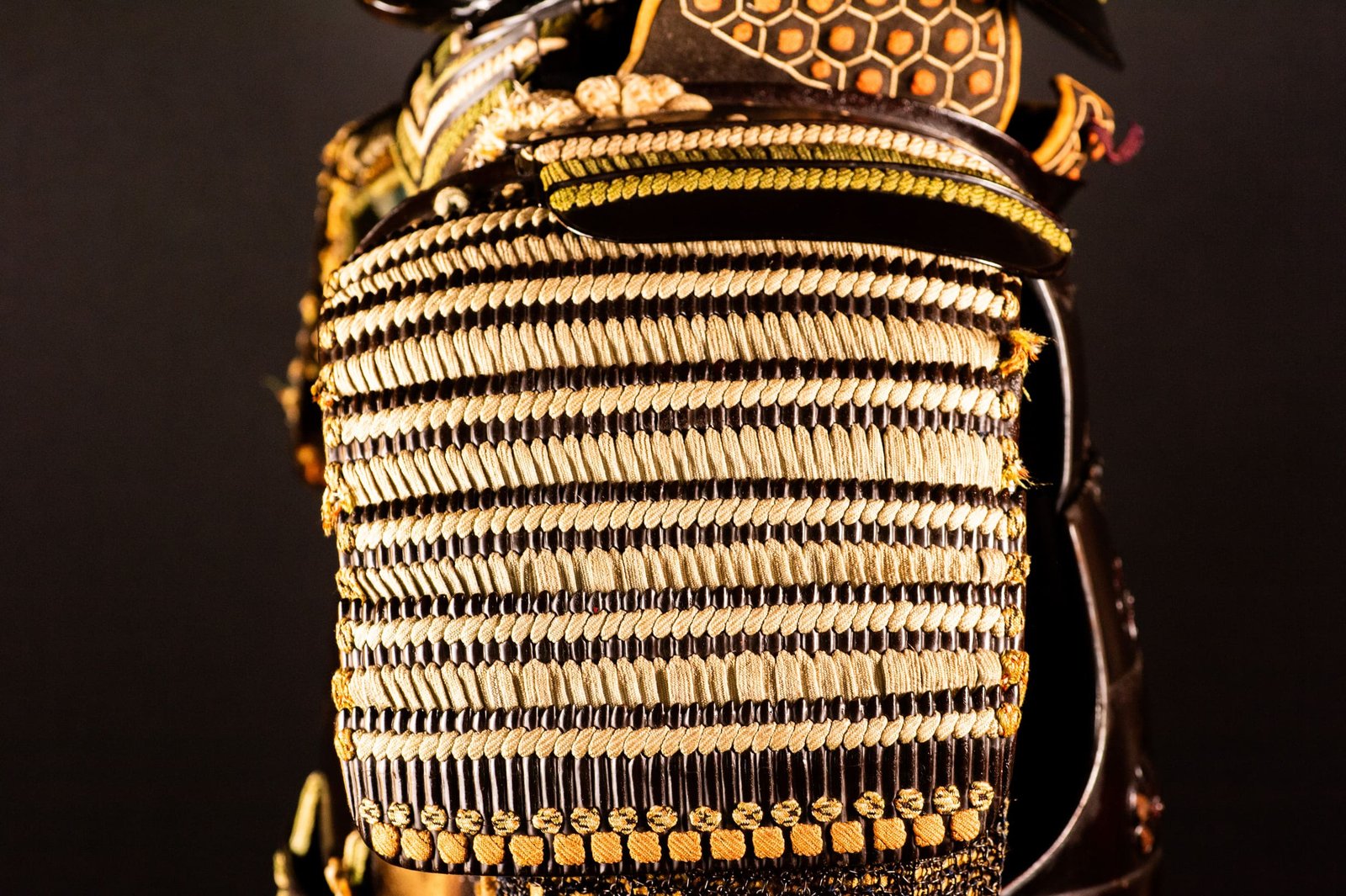
The Shikoro, designed to protect the neck, consists of lacquered plates connected by alternating bands of cream and green silk lacing.
The small turned-back Fukigaeshi complete the helmet’s silhouette, contributing to both its defensive structure and its visual balance.
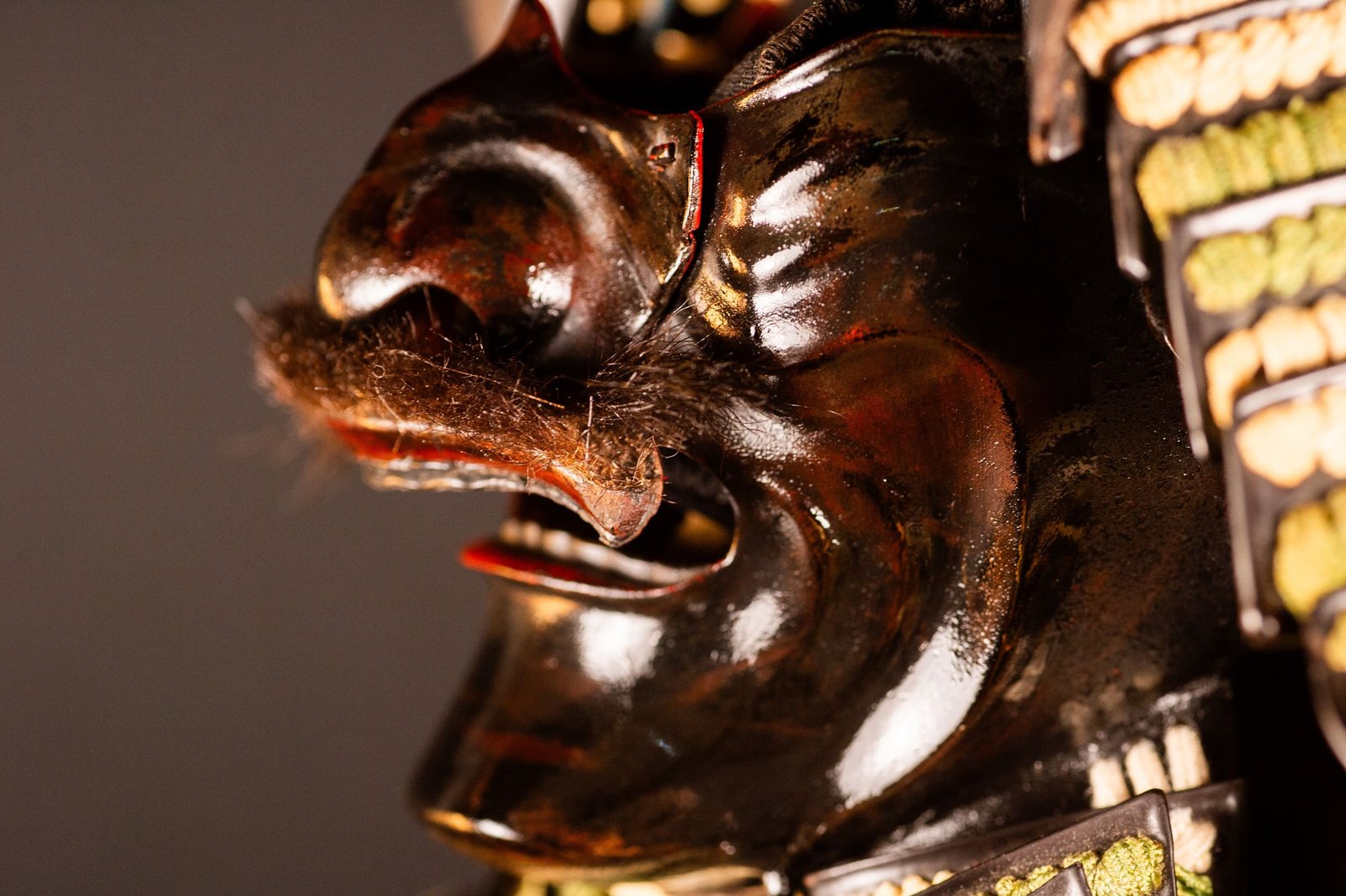
The facial armour is undoubtedly one of the most expressive components of this Gusoku.
Belonging to the Ressei-men type, characterised by its deliberately fierce expression, the mask features deeply modelled cheeks, pronounced facial lines, exposed teeth and a striking horsehair moustache.
The glossy black lacquer is complemented by red-lacquered lips, enhancing the dramatic expression of the face.
Beyond protecting the lower portion of the face and assisting in securing the helmet, this type of facial armour contributed to the intimidating appearance of the samurai.
The accompanying Yodare-kake provides protection for the throat and continues the elegant cream and green silk lacing found throughout the armour.
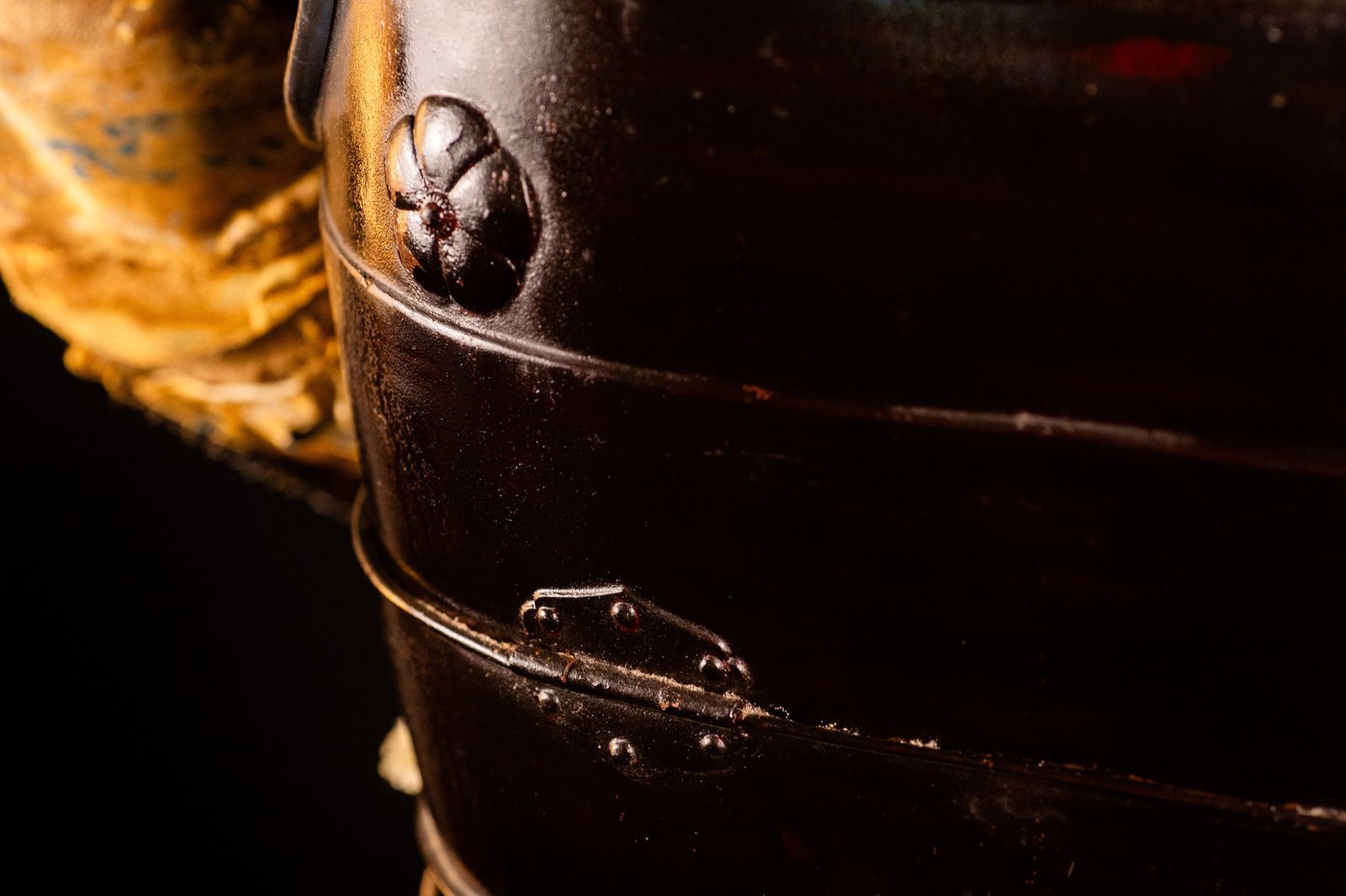
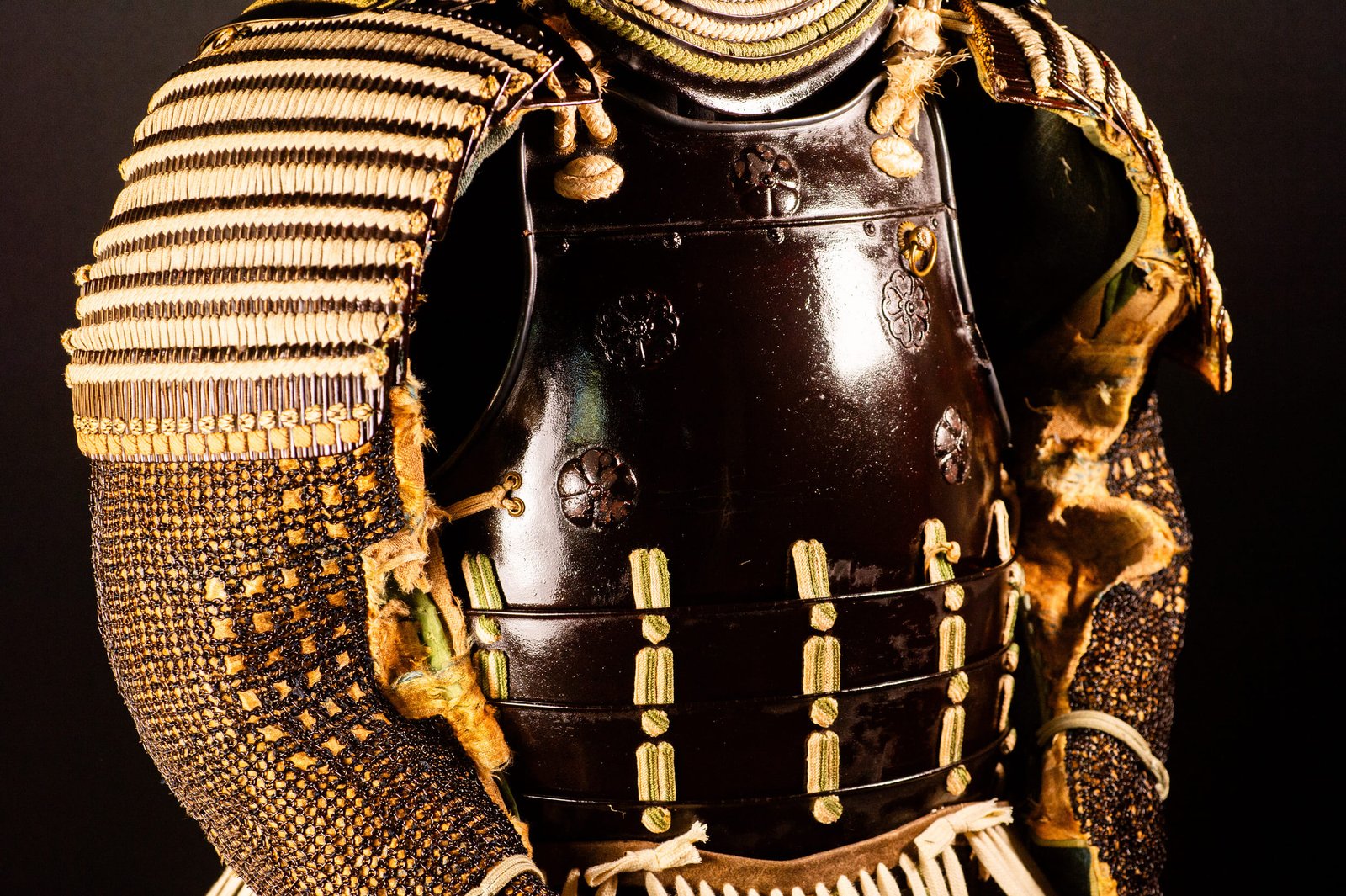
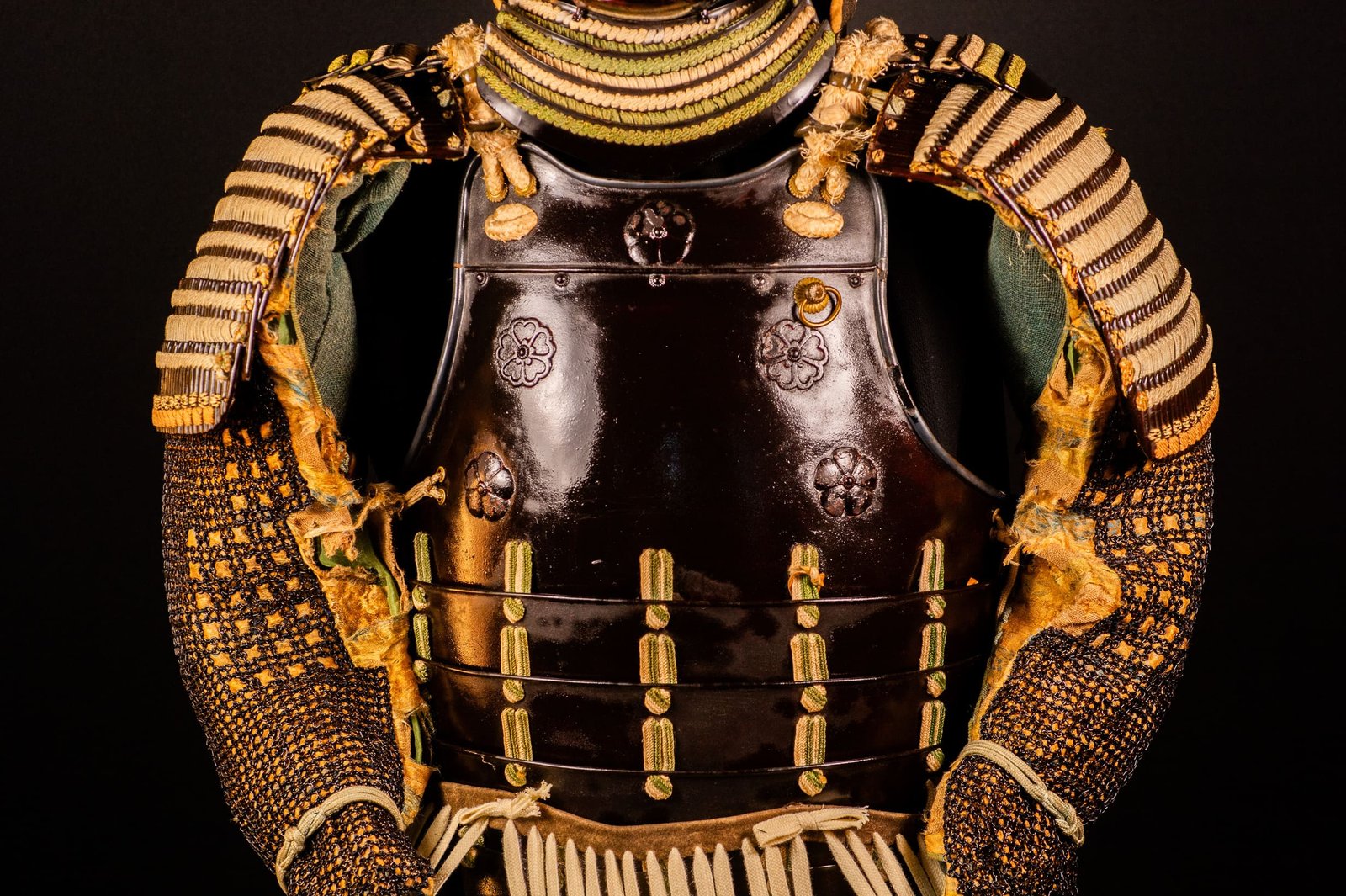
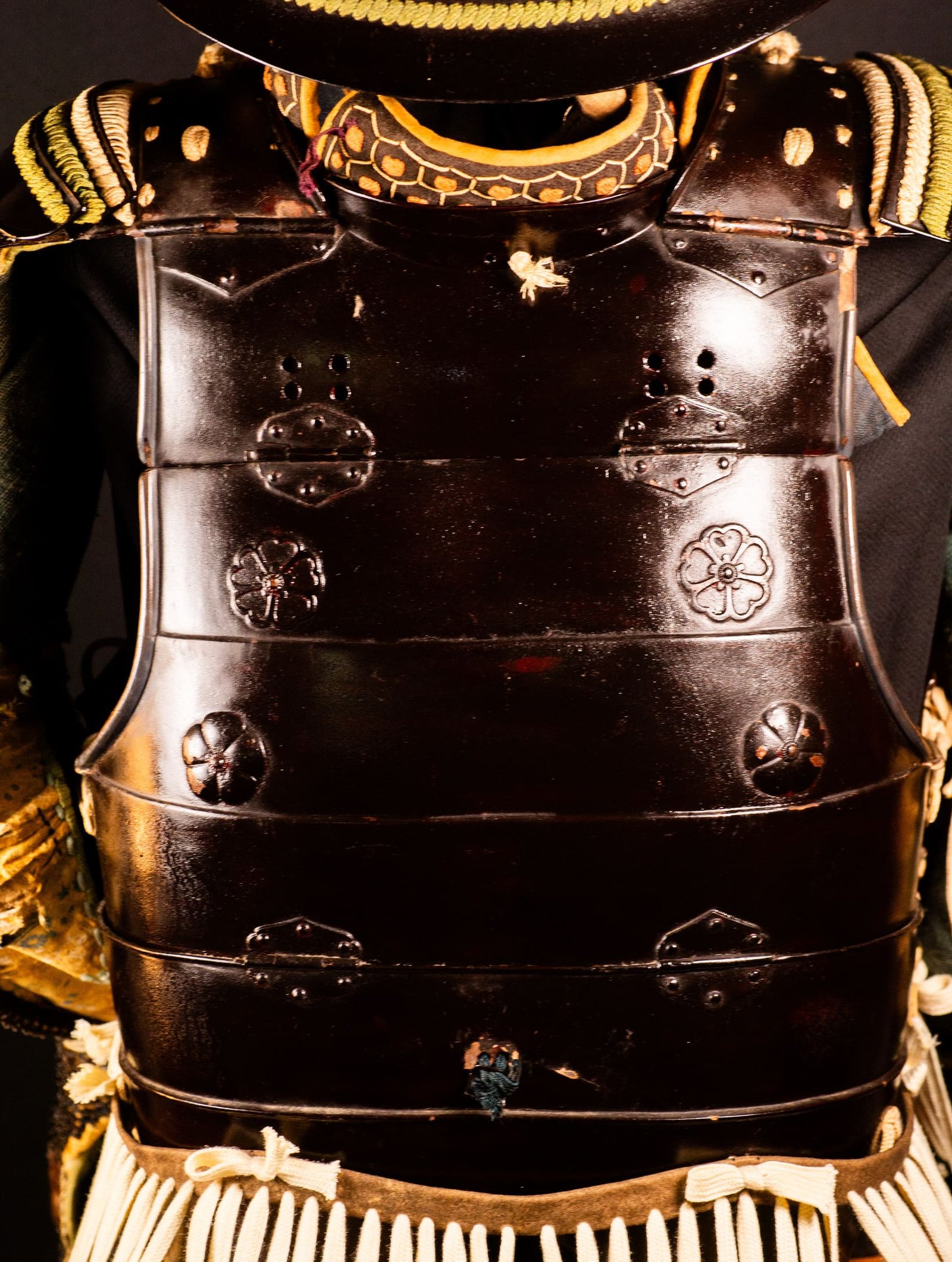
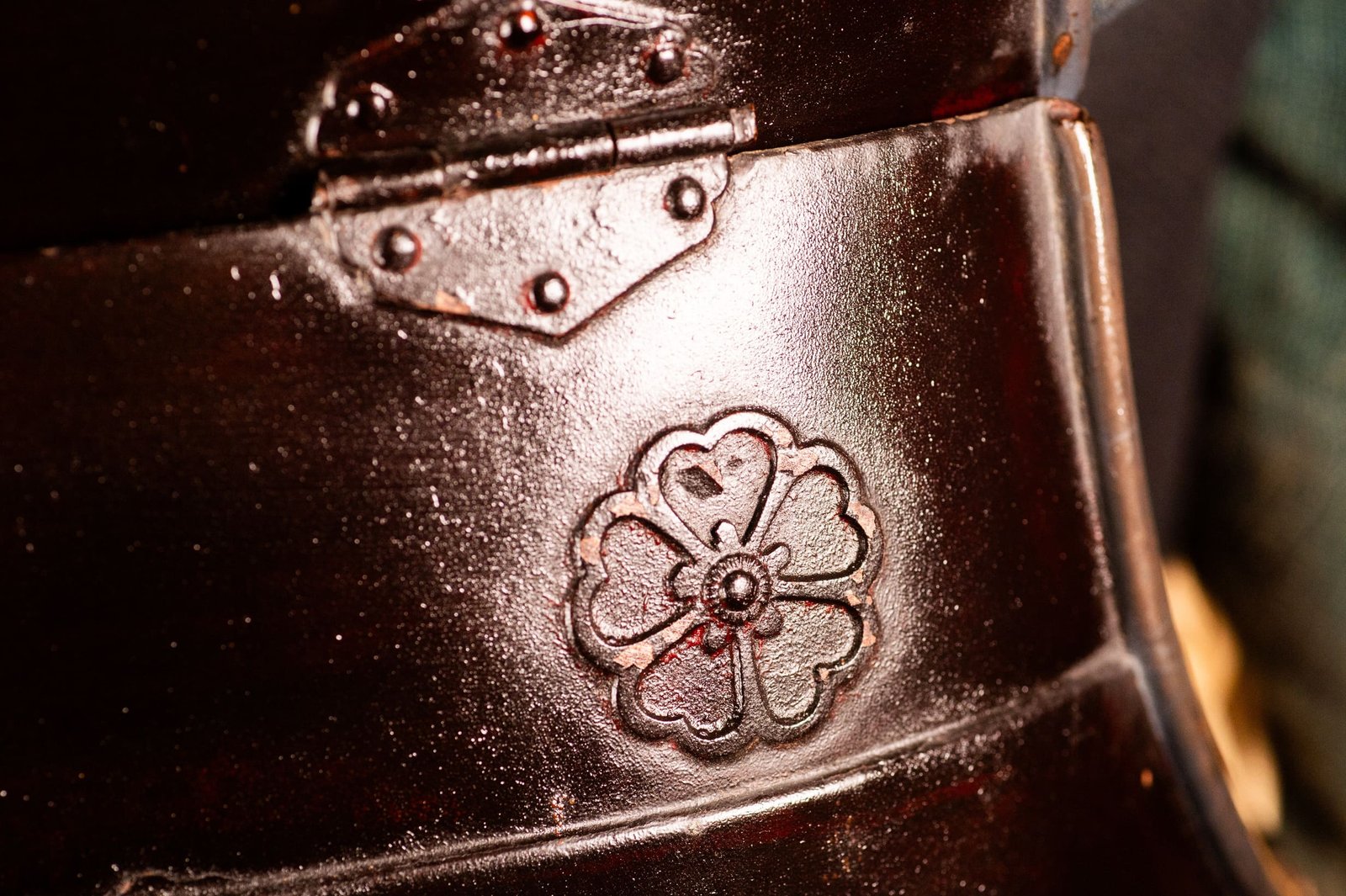
The cuirass is constructed from strong horizontal iron plates, finished in a rich brown-black lacquer and joined by hinged sections.
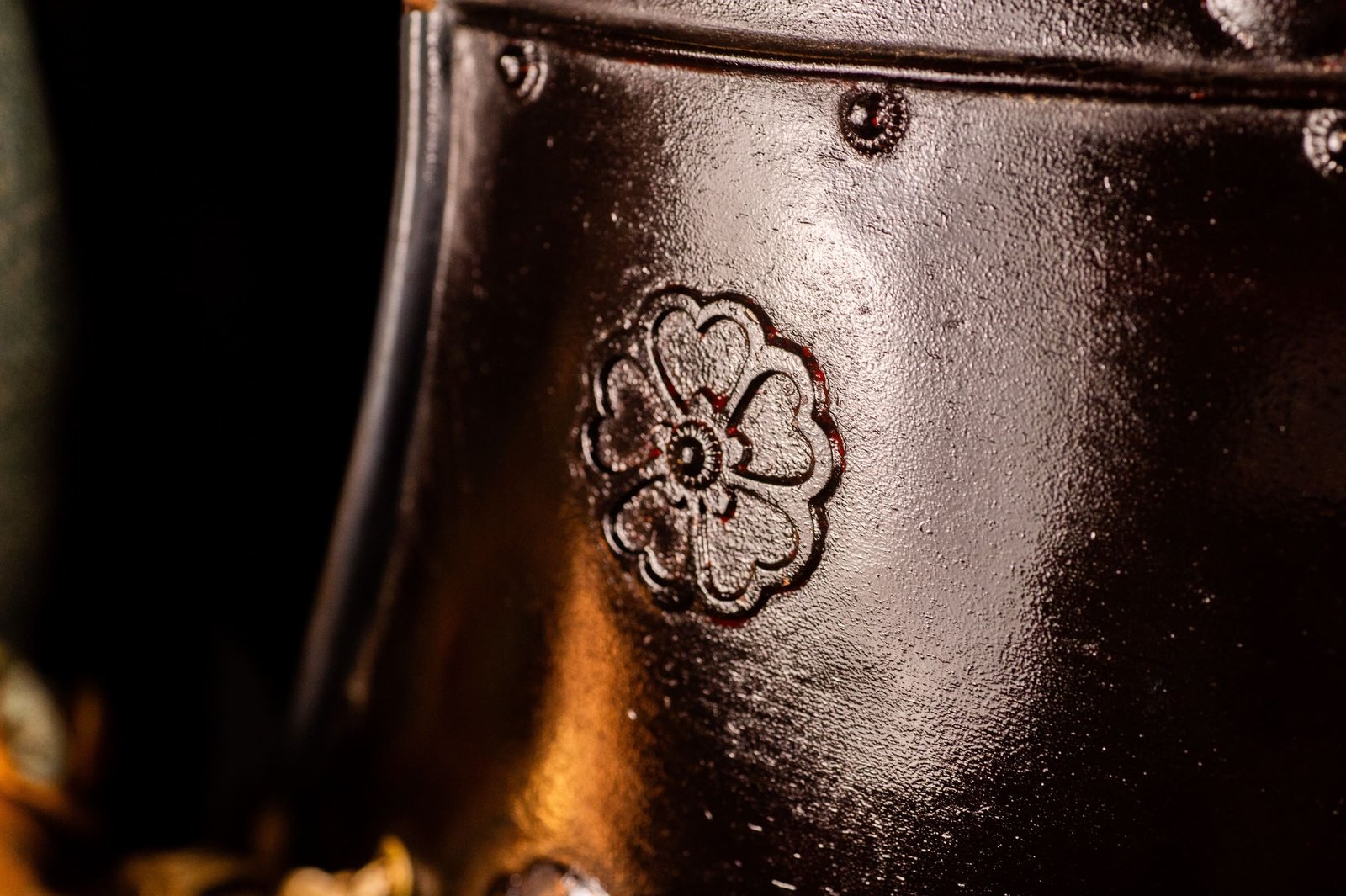
Its surface is decorated with floral rosettes and plum blossoms in relief, introducing an artistic dimension that contrasts with the imposing martial character of the armour.
The plum blossom, known in Japan as Ume, is traditionally associated with perseverance, resilience and renewal. Its ability to bloom during the colder months has made it an enduring motif in Japanese decorative art.
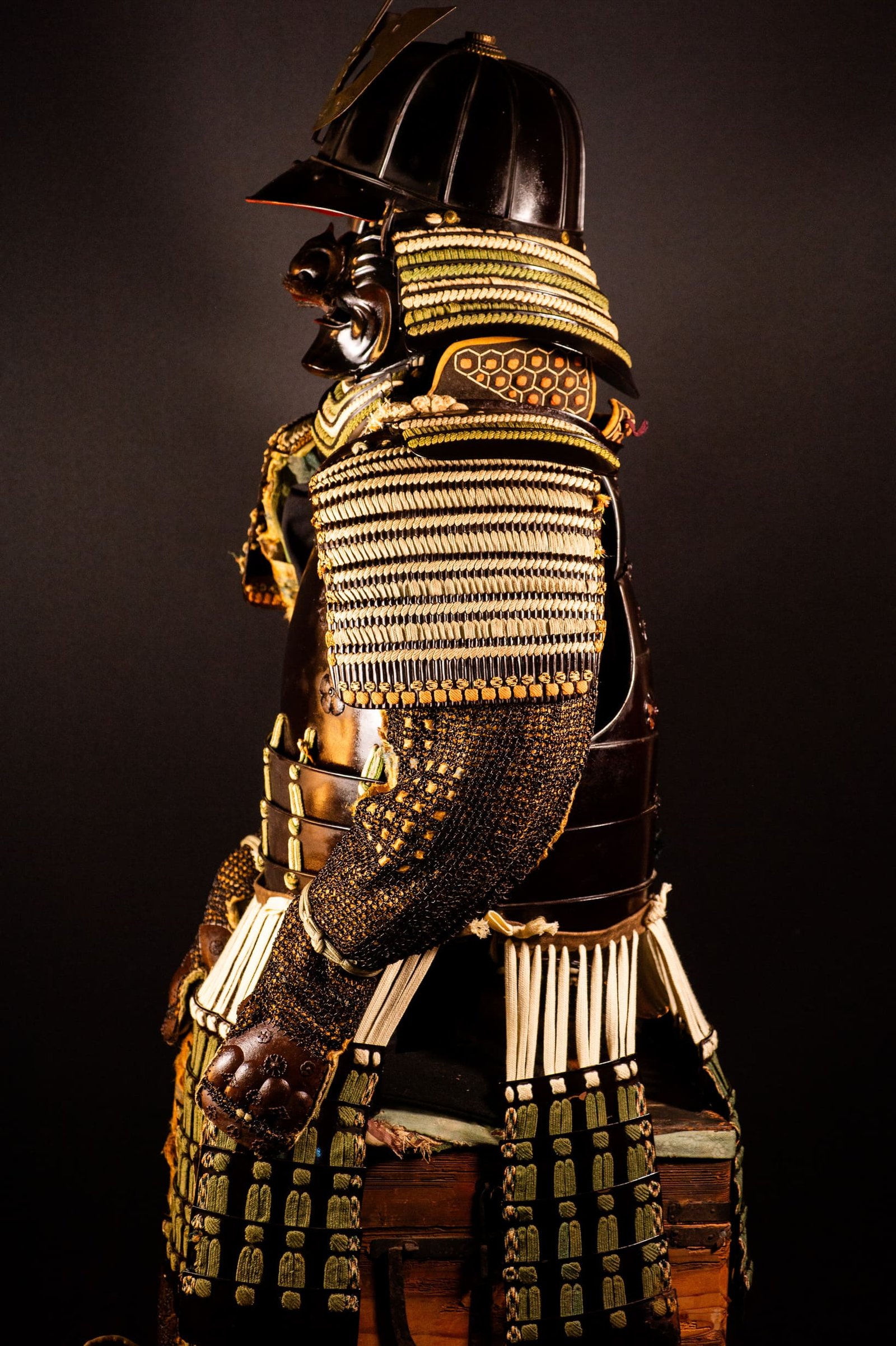
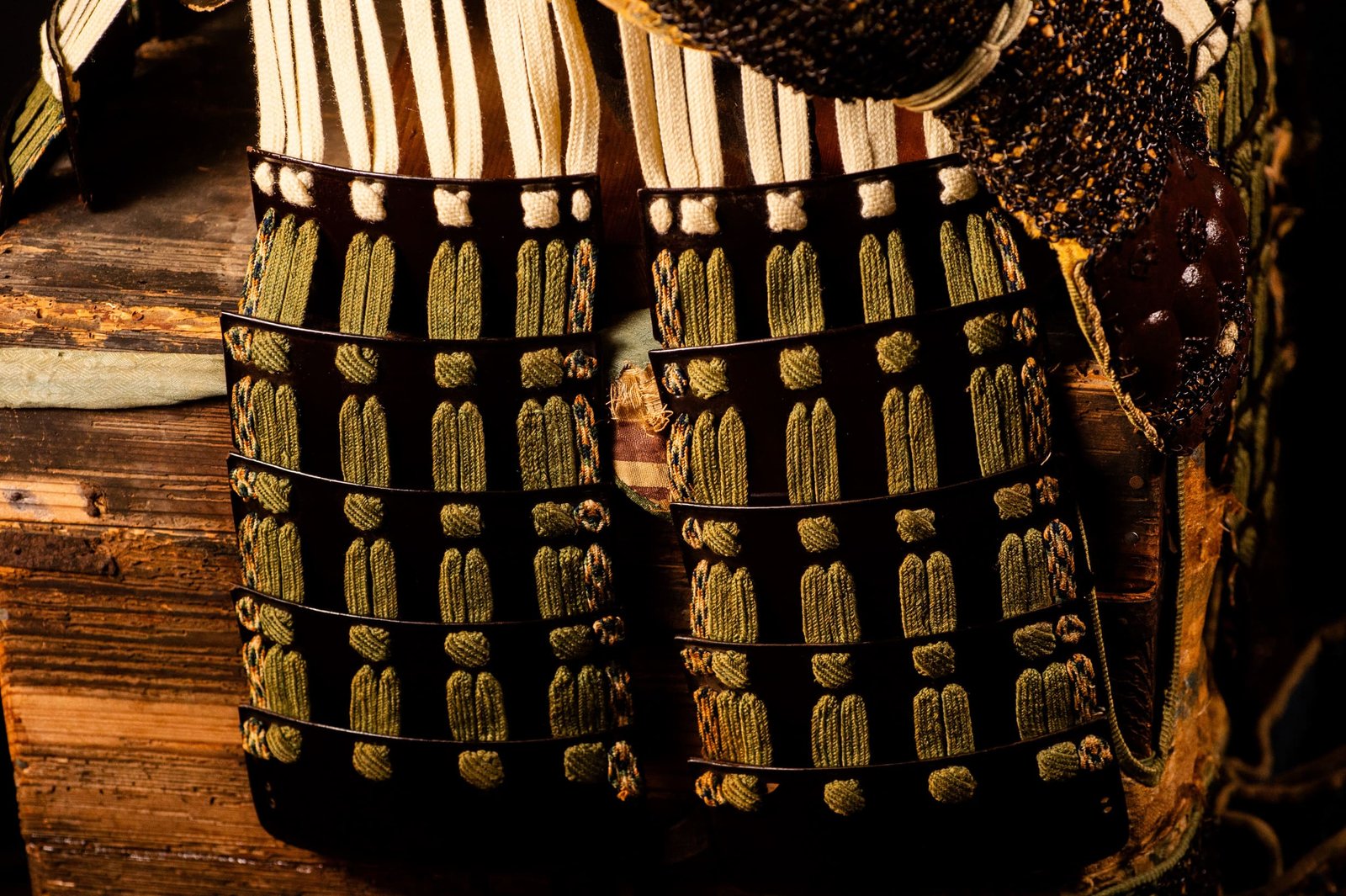
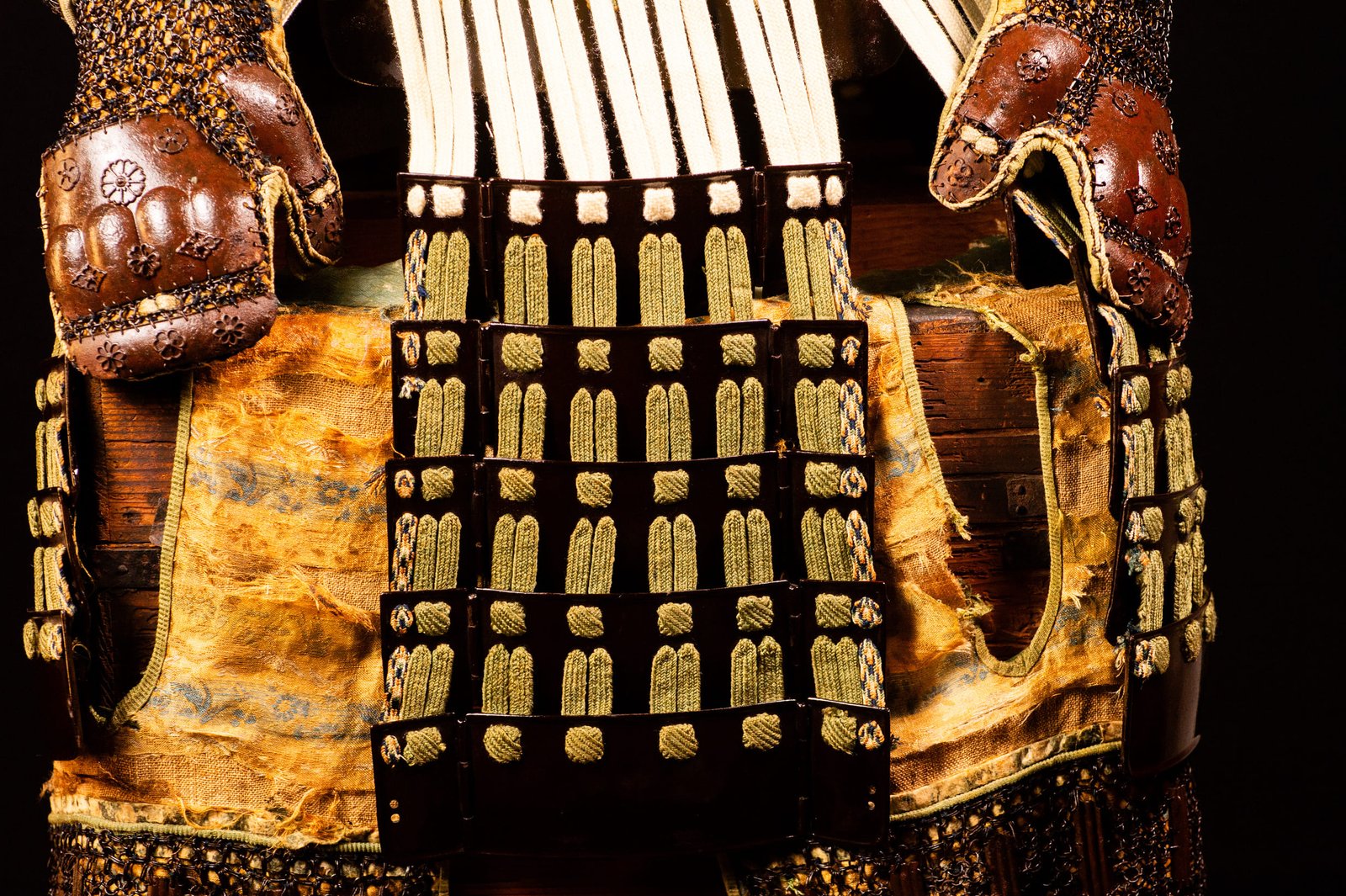
The lower sections incorporate green silk lacing in the spaced Sugake-odoshi style, highlighting the construction of the individual protective plates.
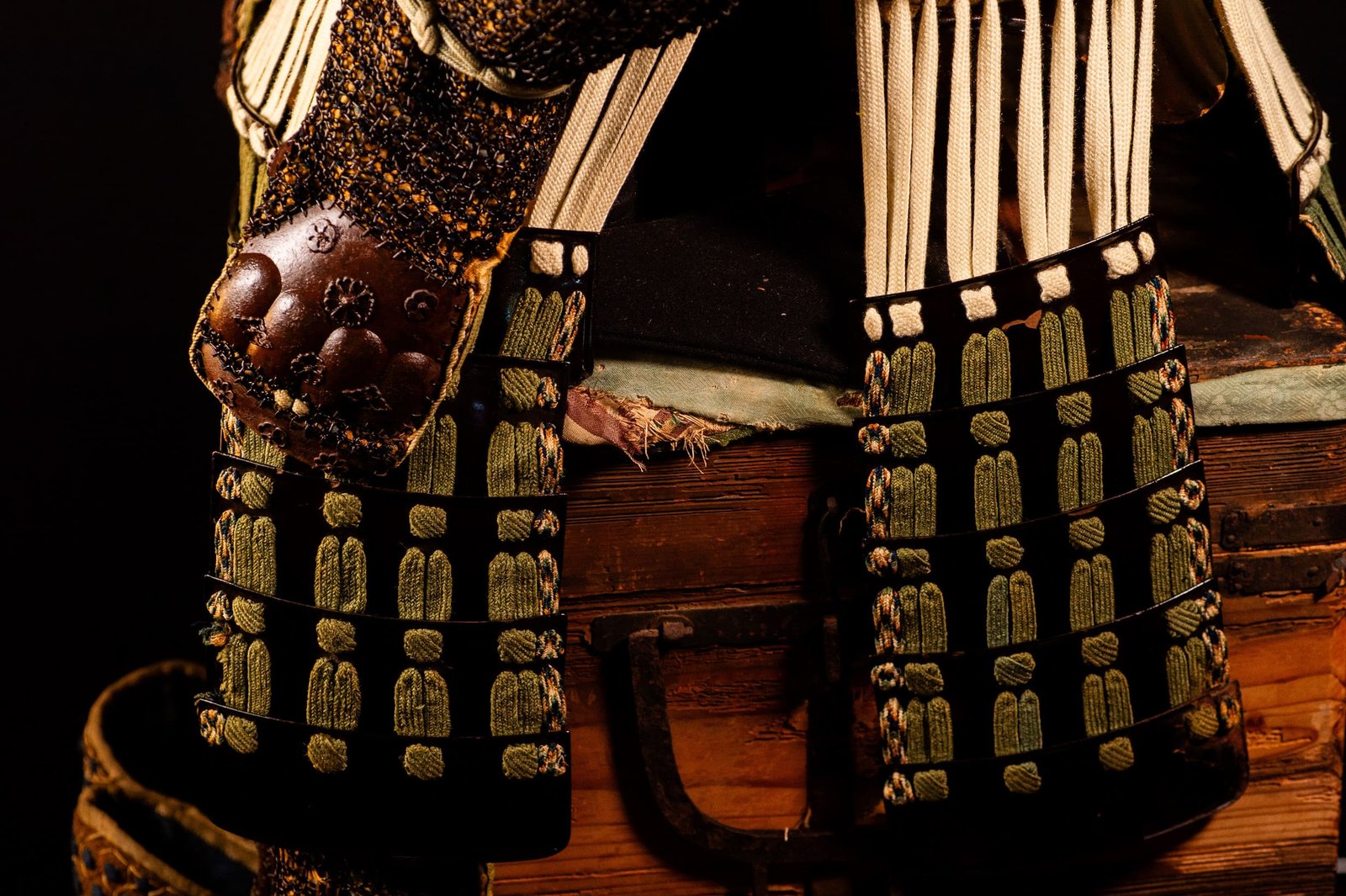
The Kusazuri extend from the lower section of the cuirass, providing protection for the hips and upper thighs while allowing freedom of movement.
The combination of dark lacquered plates, green silk lacing and multicoloured decorative braid creates a harmonious continuation of the armour’s overall aesthetic.
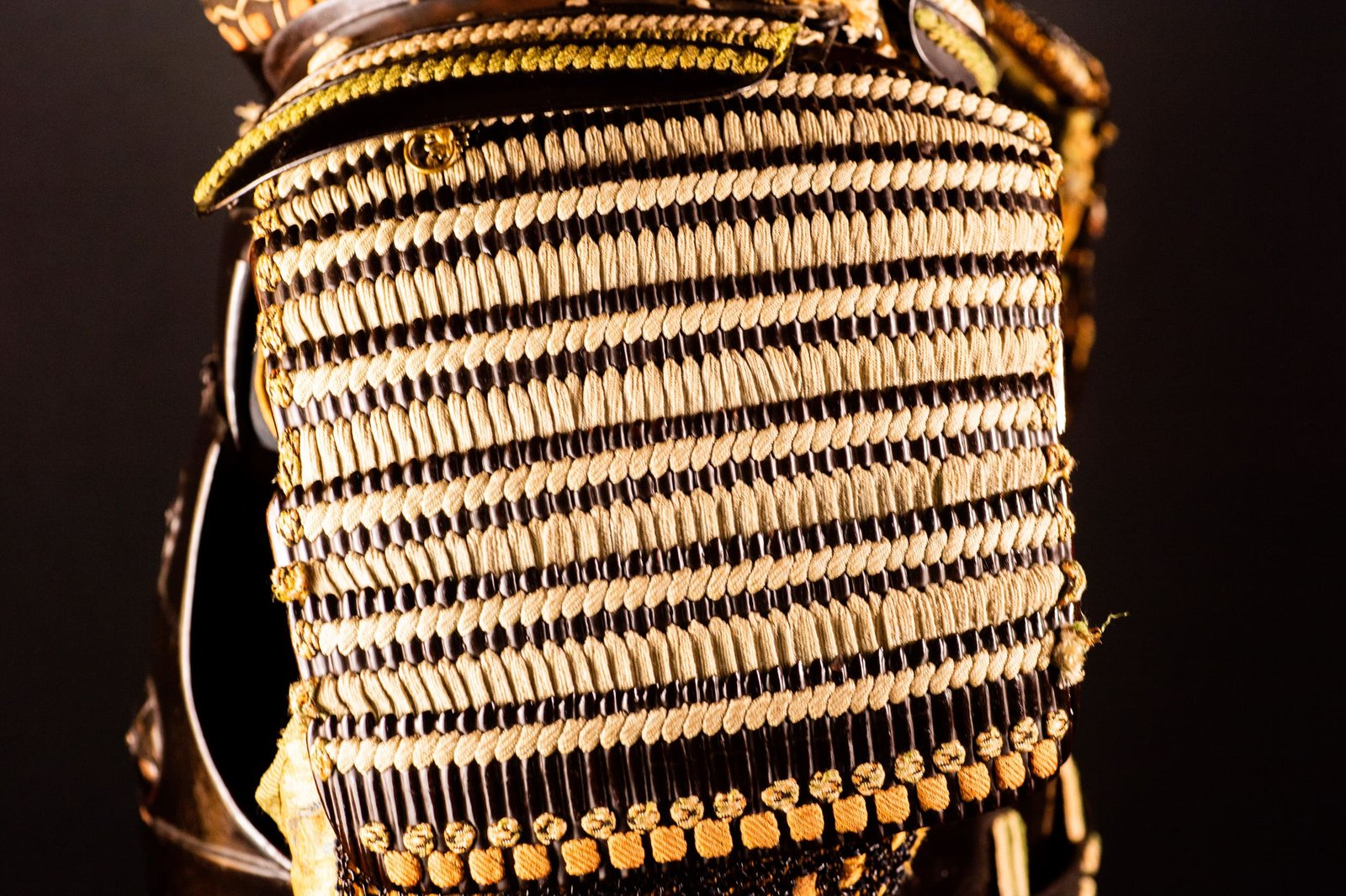
The shoulder guards are composed of dark lacquered plates connected by closely spaced cream silk lacing.
A decorative row of orange knots along their lower edges introduces a subtle accent of colour, enriching the otherwise restrained palette of the armour.
The Kote feature fine Japanese chain mail (Kusari) mounted over gold-toned brocade textiles.
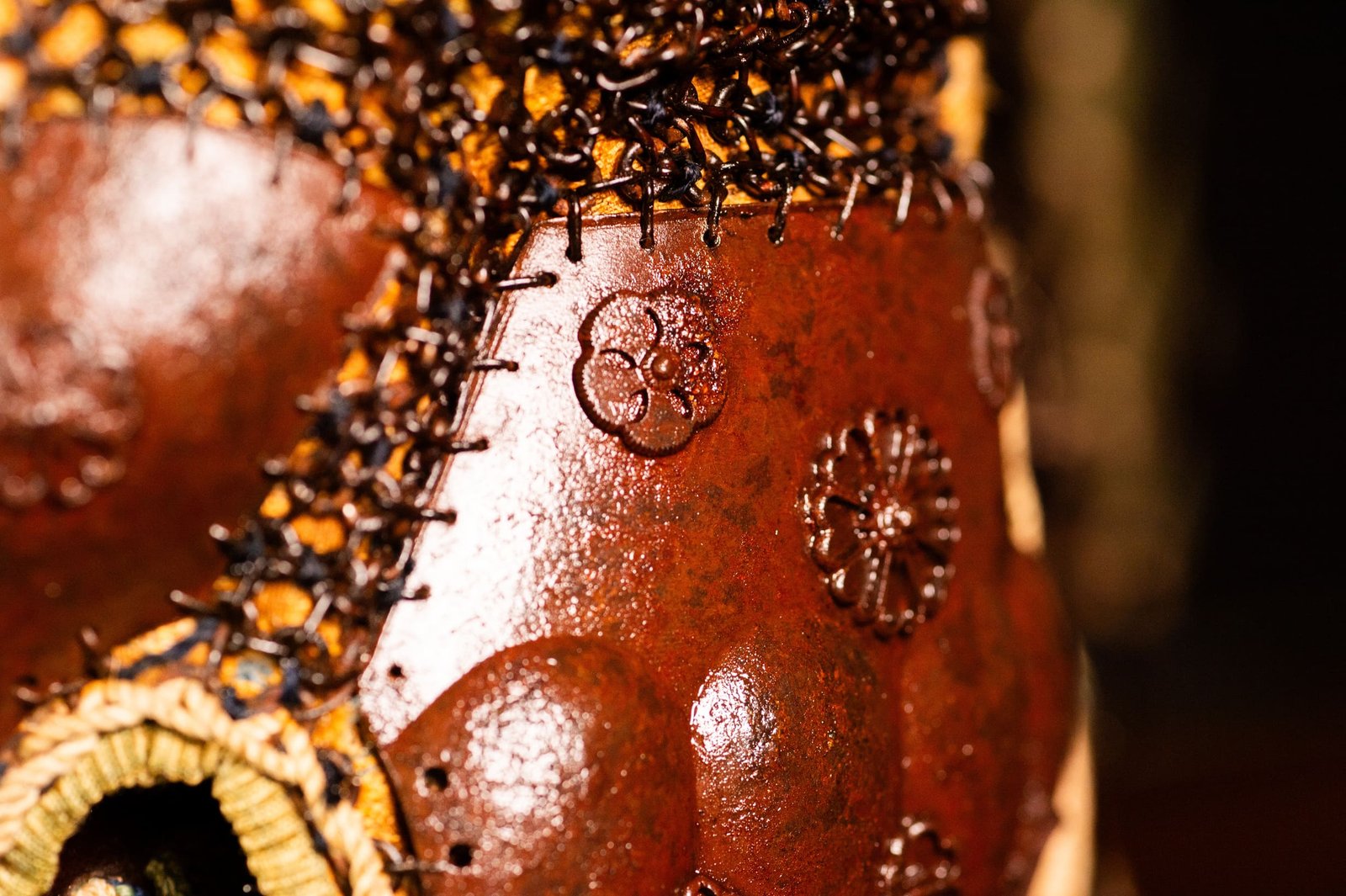
The lacquered Tekkō, protecting the hands, are decorated with chrysanthemums and plum blossoms, continuing the floral decorative language visible on the cuirass.
The combination of metalwork, lacquer and decorative textiles illustrates the diversity of materials and specialised craftsmanship involved in traditional Japanese armour-making.
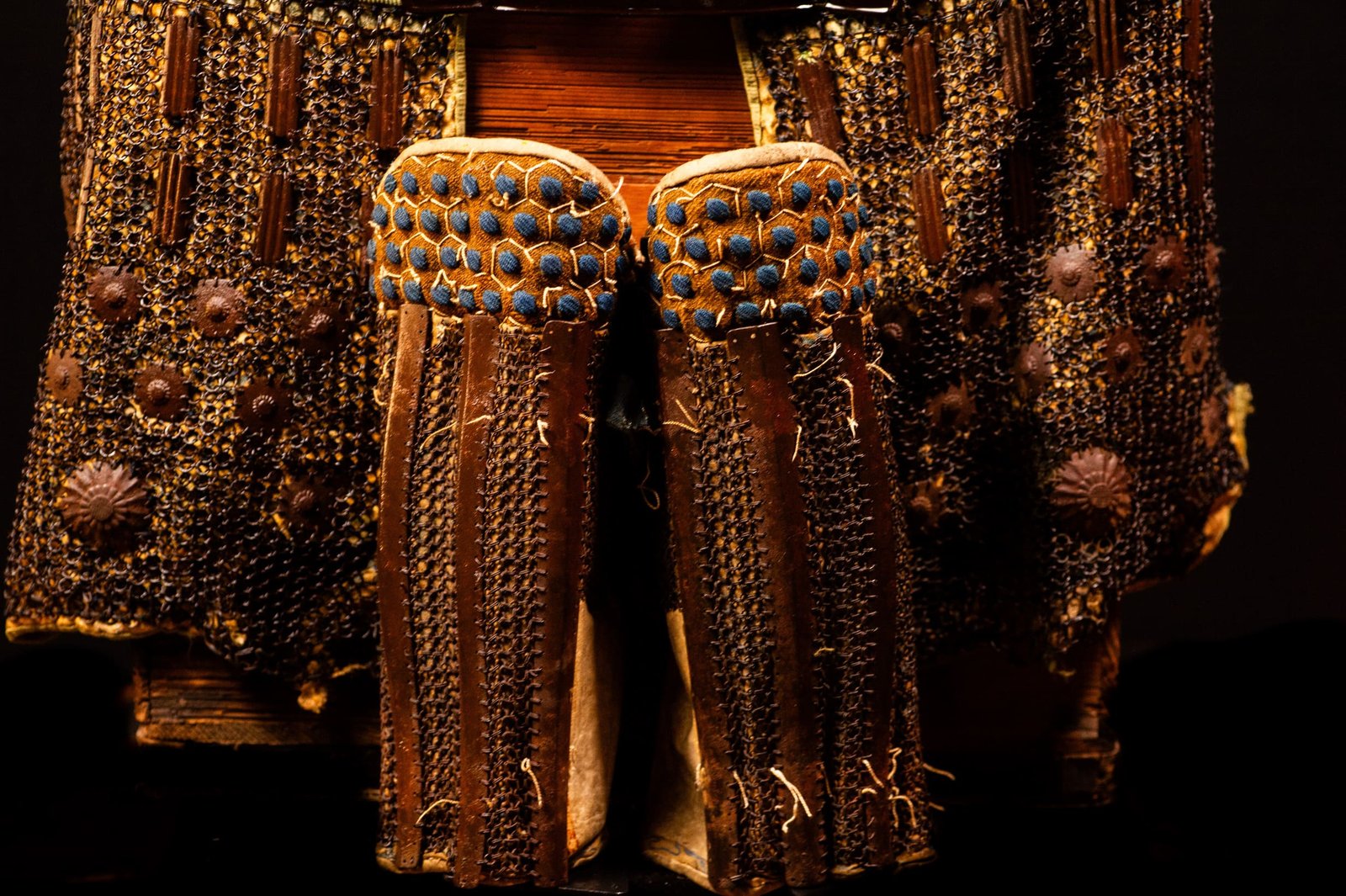
The armour retains its Haidate and Suneate, incorporating matching chain mail and lacquered protective plates.
These components complete the defensive ensemble, contributing to the imposing and visually coherent presentation of the Gusoku.
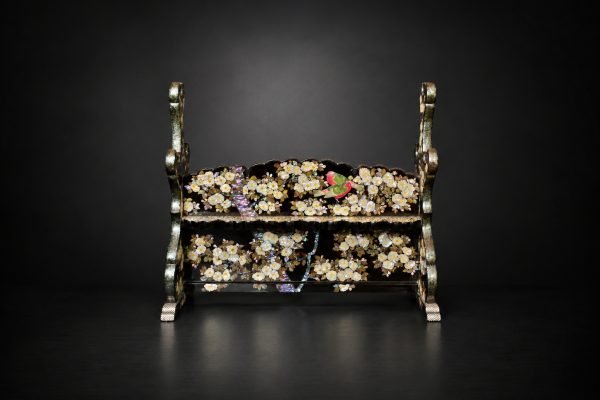
The armour is accompanied by its original wooden Yoroi-bitsu, the traditional chest used for storing and transporting Japanese samurai armour.
Preserving the original storage chest alongside the armour enhances the historical character of the ensemble and offers additional insight into the traditional preservation and care of samurai equipment.
This Gusoku brings together several traditional Japanese armour-making techniques, including iron plate construction, lacquerwork, engraved brass, silk lacing, chain mail and decorative brocade.
Excellent condition for its age, displaying only minor signs of wear consistent with its antiquity.
The armour retains its principal protective components, distinctive decorative features and original wooden storage chest, presenting an impressive and harmonious overall appearance.
This 18th-century Gusoku stands out for the remarkable balance between its intimidating martial appearance and its refined decorative craftsmanship.
A distinguished example of Edo-period Japanese armour, combining the formidable presence of the samurai warrior with the artistic sensitivity of traditional Japanese craftsmanship. Its expressive Ressei Menpō, engraved brass crest and delicate floral decoration make this Gusoku a particularly compelling addition to a collection of antique Japanese arms, armour and martial heritage.
| Época | Edo |
|---|

Order above 1.000,00 € gets free shipping.

Secure and hassle-free payment process.

Certificate of authenticity included.

Have questions? Contact us via WhatsApp.
Contact
Discover exceptional Japanese swords, armor and works of art with our limited-time Black Friday offers.
OFFER ENDS NOVEMBER 30, 2026
Enter your code at checkout. Discounts cannot be combined with other coupons. Eligible orders only.