

Out of stock
Out of stock
Add to Compare
Add to Wishlist
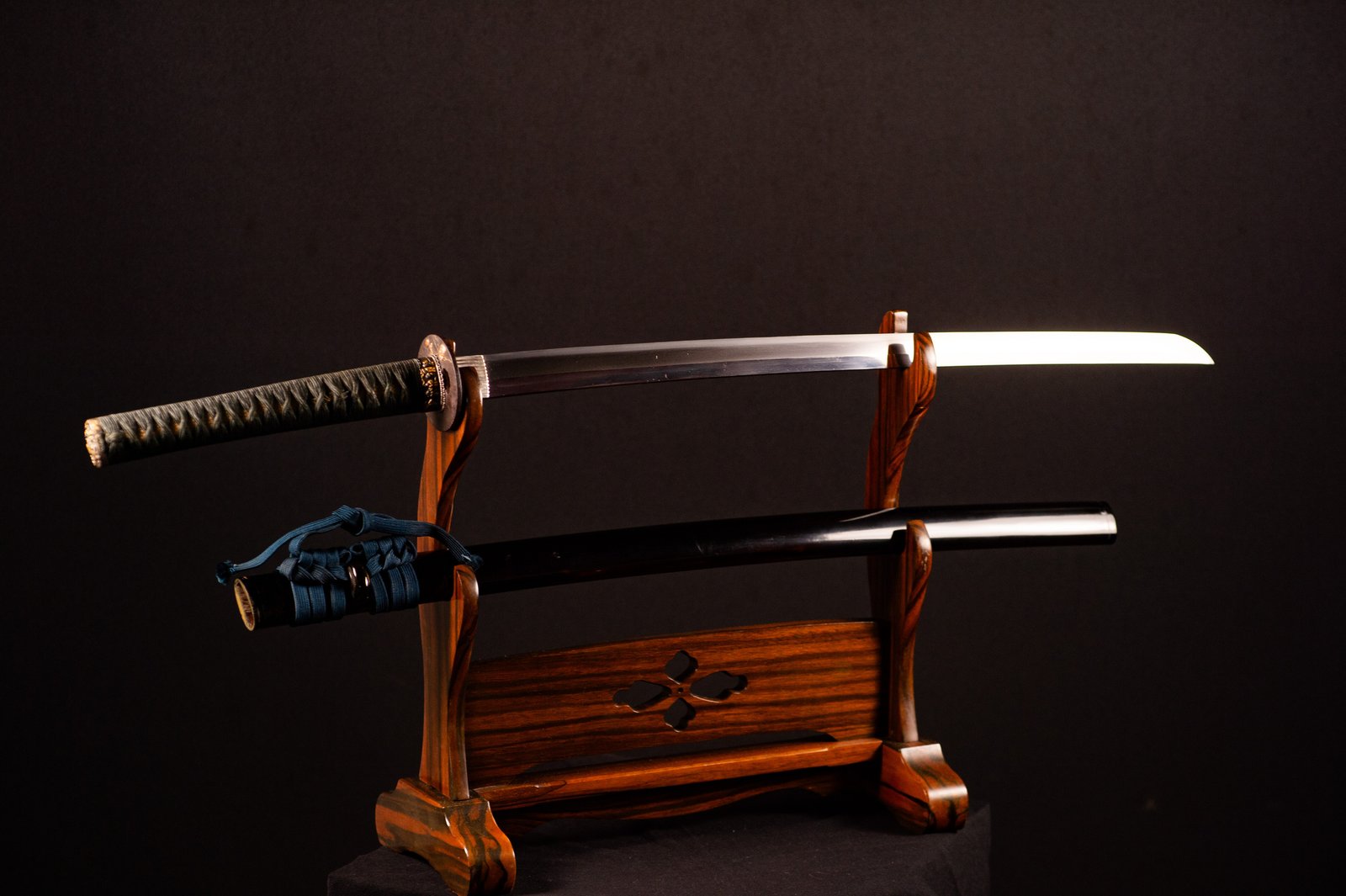
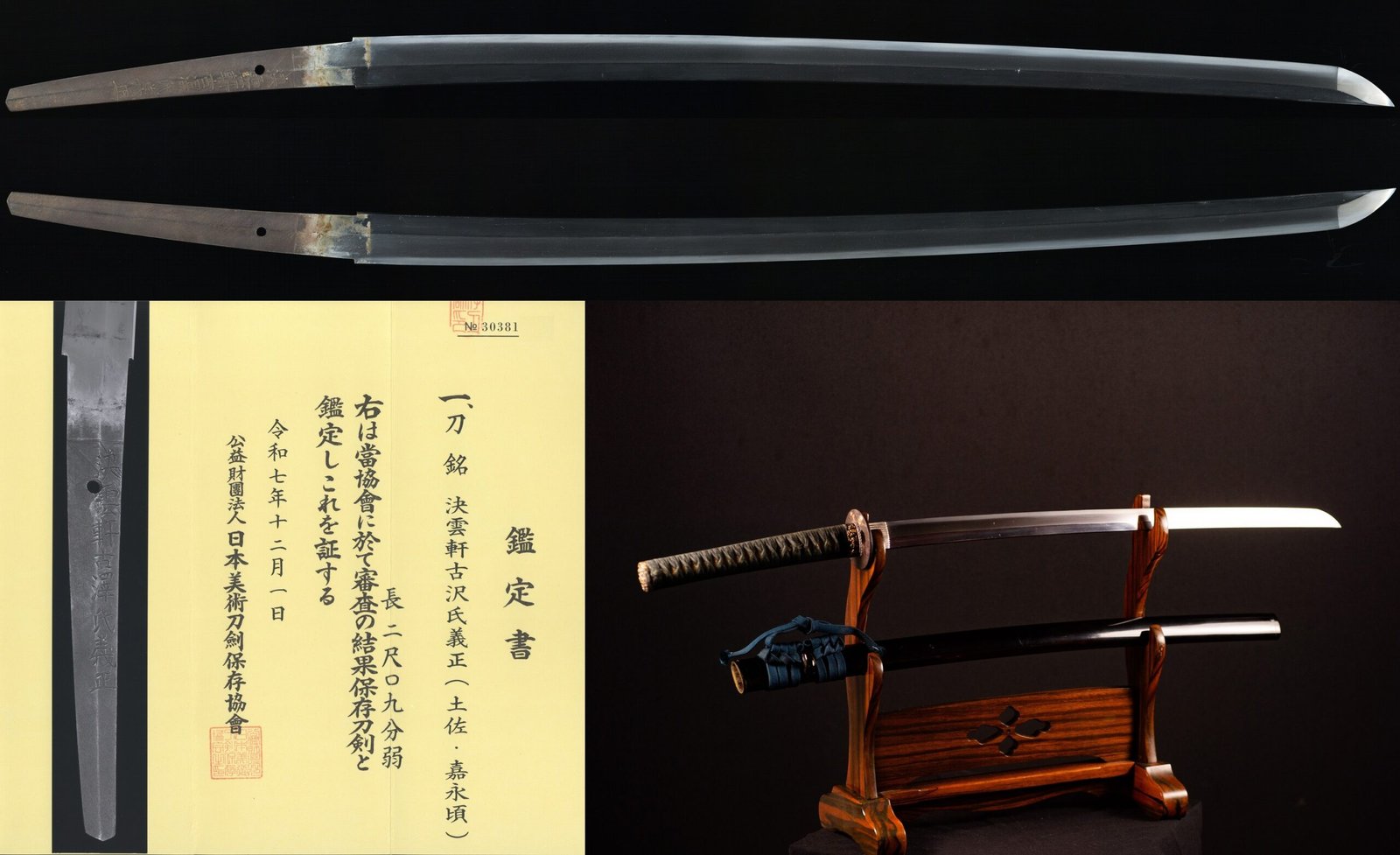
An especially interesting late Edo period Japanese katana signed 決雲軒古沢氏義正 – Ketsuunken Furusawa Yoshimasa, associated with Tosa Province and dated by the accompanying documentation to around the Kaei era, circa 1848–1854. Beyond the quality of the sword itself, this piece is particularly compelling because its maker was not simply a professional smith, but a swordsman-scholar directly connected with the political and martial world of late Bakumatsu Tosa.
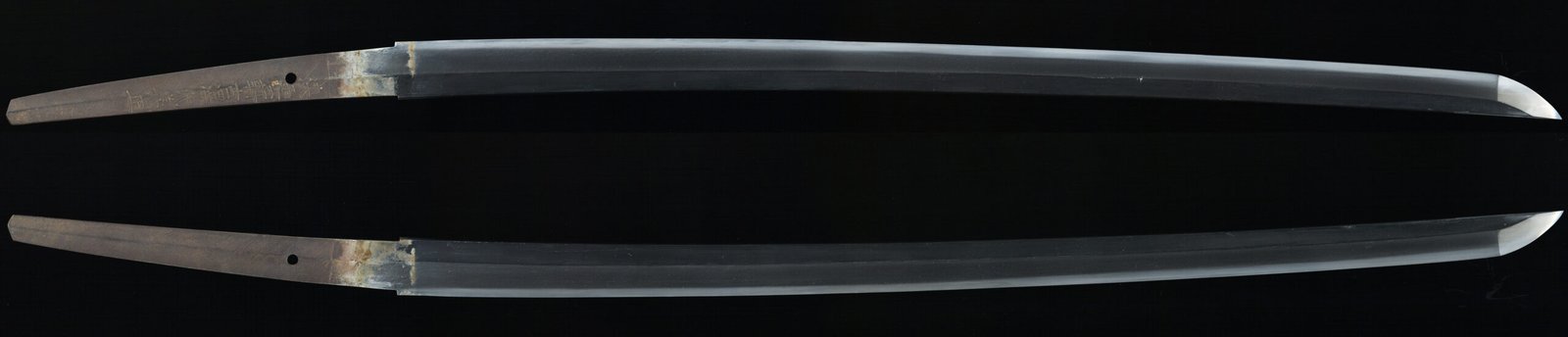
The blade measures approximately 63.3 cm in nagasa, equivalent to 2 shaku 0 sun 9 bu weak, giving it a practical fighting length consistent with the turbulent final decades of the Edo period.
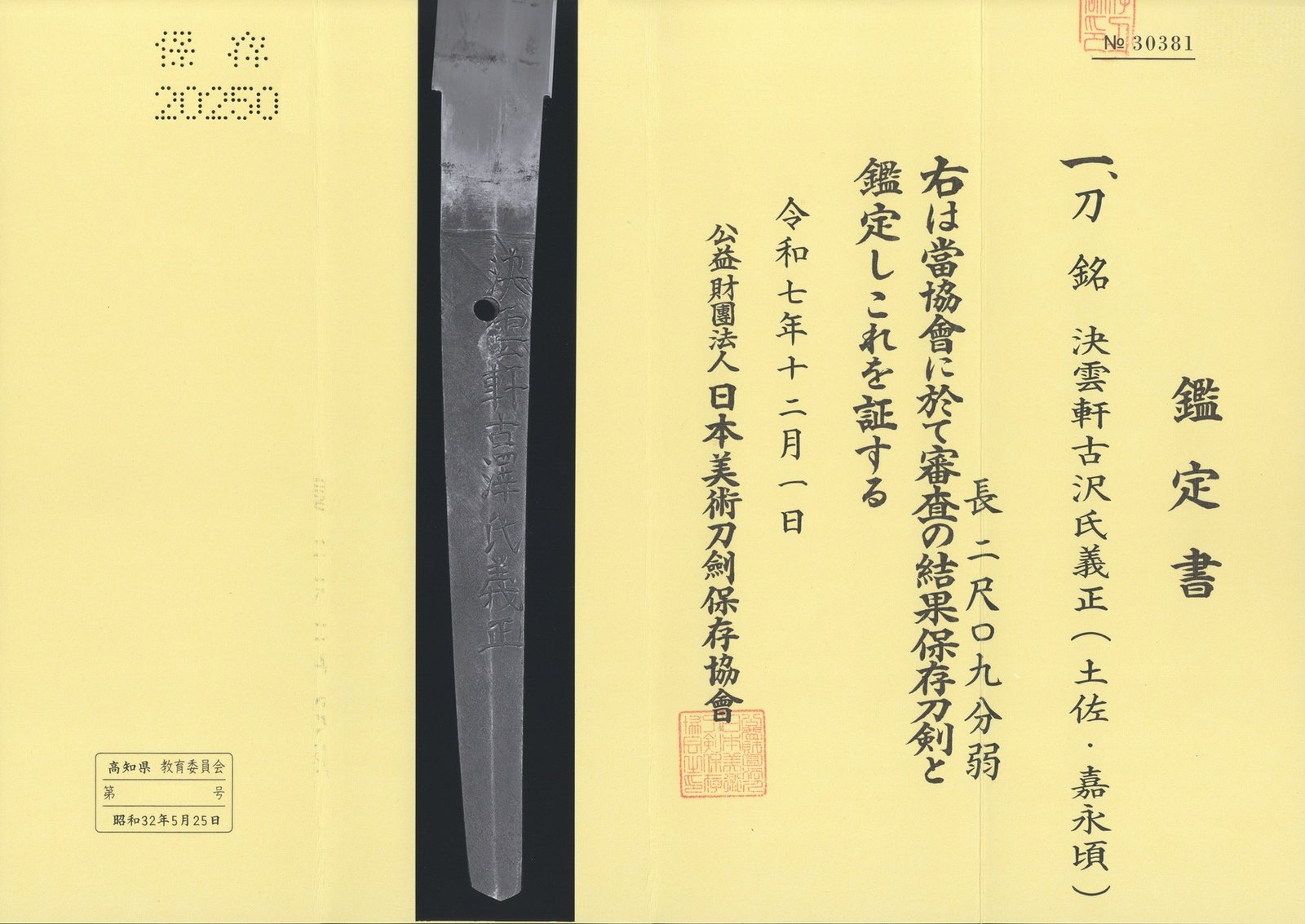
The sword is accompanied by an NBTHK Hozon Token certificate, No. 30381, issued in December 2025, confirming the signature and recognizing the sword as worthy of preservation. It also retains a documented Japanese registration history dating back to May 1957 through the Kochi Prefecture Board of Education. :contentReference[oaicite:0]{index=0}
Furusawa Yoshimasa is a particularly noteworthy historical figure because his importance extends well beyond sword production.
Born in Kochi, he received early training in Edo under Hirayama Eizaburō, son of the well-known strategist Hirayama Kōzō. After returning to Tosa, Yoshimasa taught at the Meikyōkan academy in Sakawa, where he instructed numerous students in both literary and martial disciplines.
His art name, Ketsuunken, reflects this broader identity as a cultivated martial scholar rather than merely a craftsman.
In 1861, when Takechi Zuizan, also known as Takechi Hanpeita, formed the Tosa Kinnōtō, Yoshimasa and members of his family became involved in the loyalist movement that played an important role in Tosa during the Bakumatsu period.
Several of his sons and students were later sent to Kyoto and participated in the broader loyalist cause.
This makes Yoshimasa particularly significant for collectors interested in Bakumatsu-period swords, because the maker himself was a documented participant in the political and martial environment that preceded the Meiji Restoration. :contentReference[oaicite:1]{index=1}
The proposed dating around the Kaei era, 1848–1854 places this katana directly within the final phase of Tokugawa rule.
This was a period marked by increasing political instability, mounting pressure on the shogunate, renewed interest in martial preparedness and, ultimately, the ideological conflicts that would culminate in the Meiji Restoration.
A sword by a figure personally connected with Tosa loyalist circles carries therefore a different historical resonance from a blade produced anonymously for the general market.
Its value lies not only in metallurgy and craftsmanship, but also in its association with a very specific political, intellectual and martial milieu.
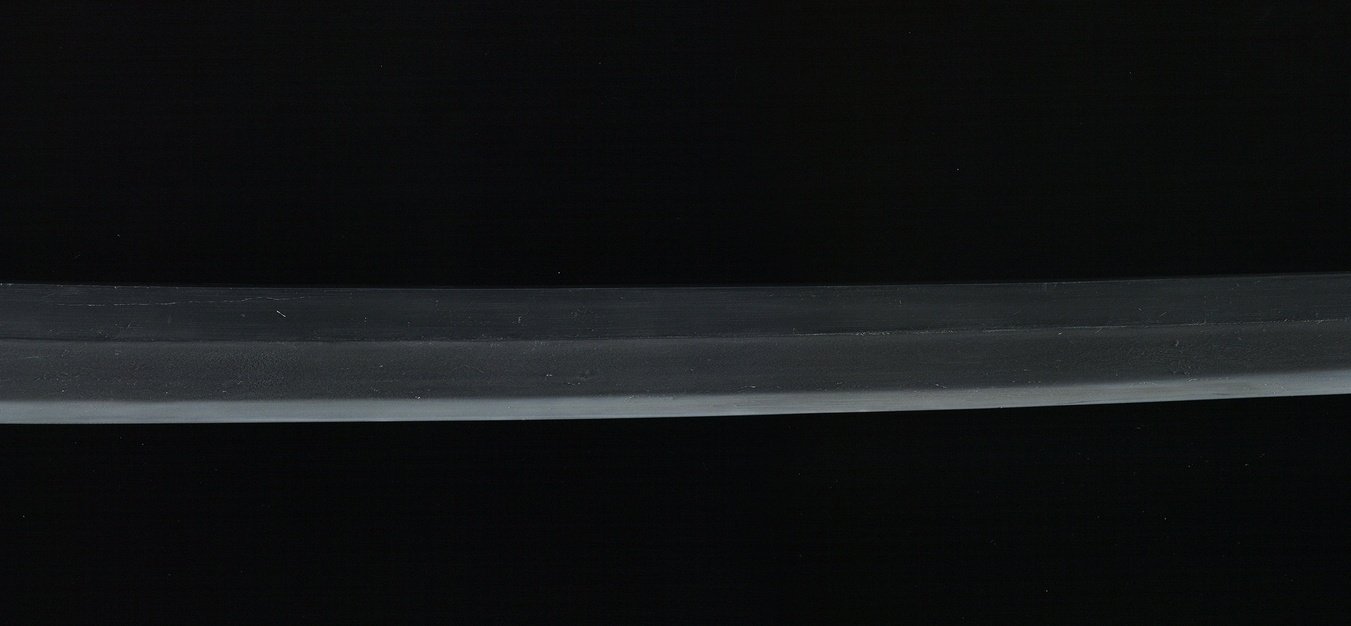
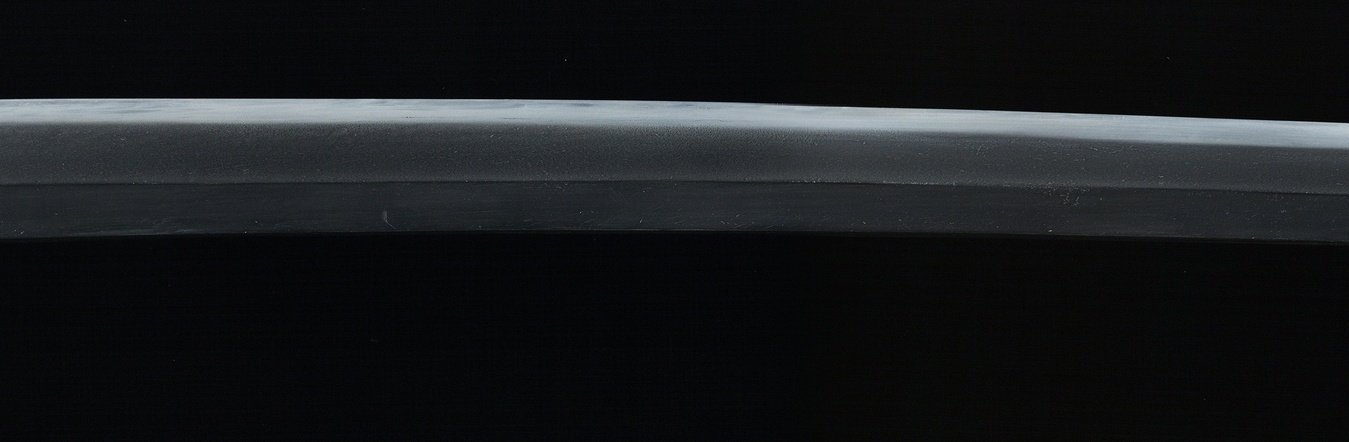
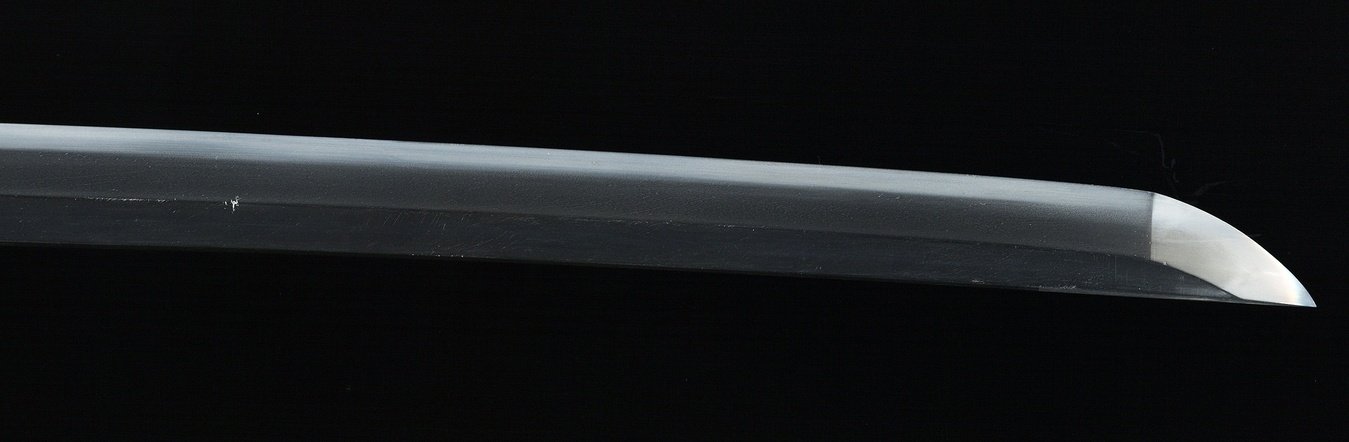
The blade presents a long, elegant profile characteristic of late Edo period katana.
Its registered nagasa is approximately 63.3 cm, or 2 shaku 0 sun 9 bu weak.
The overall form retains a practical fighting character, with balanced curvature and a relatively restrained silhouette.
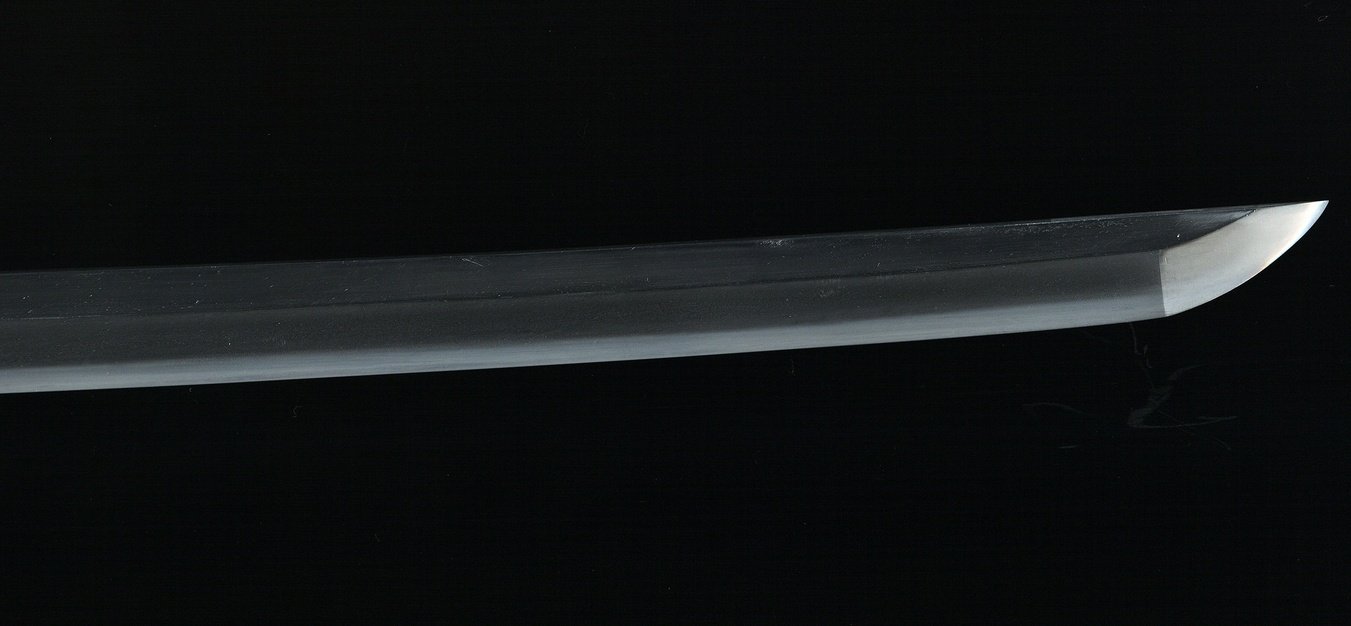
The blade appears healthy in overall geometry, with a well-defined kissaki and a clear transition through the monouchi.
The polish allows the main surface and hardening structure to remain visible for appreciation and study.
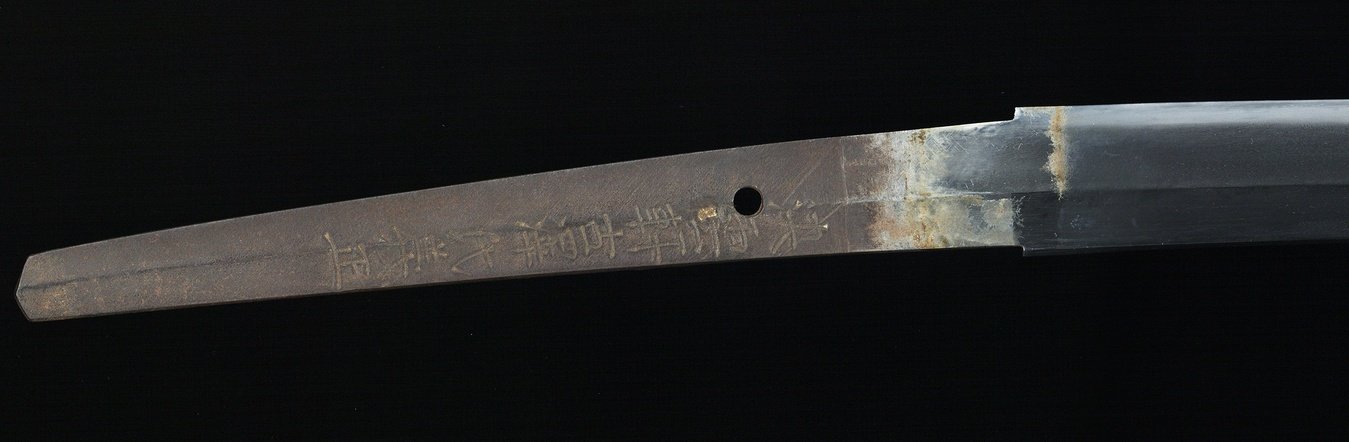
The nakago bears the signature:
決雲軒古沢氏義正
Ketsuunken Furusawa-uji Yoshimasa
The inscription runs clearly along the tang.
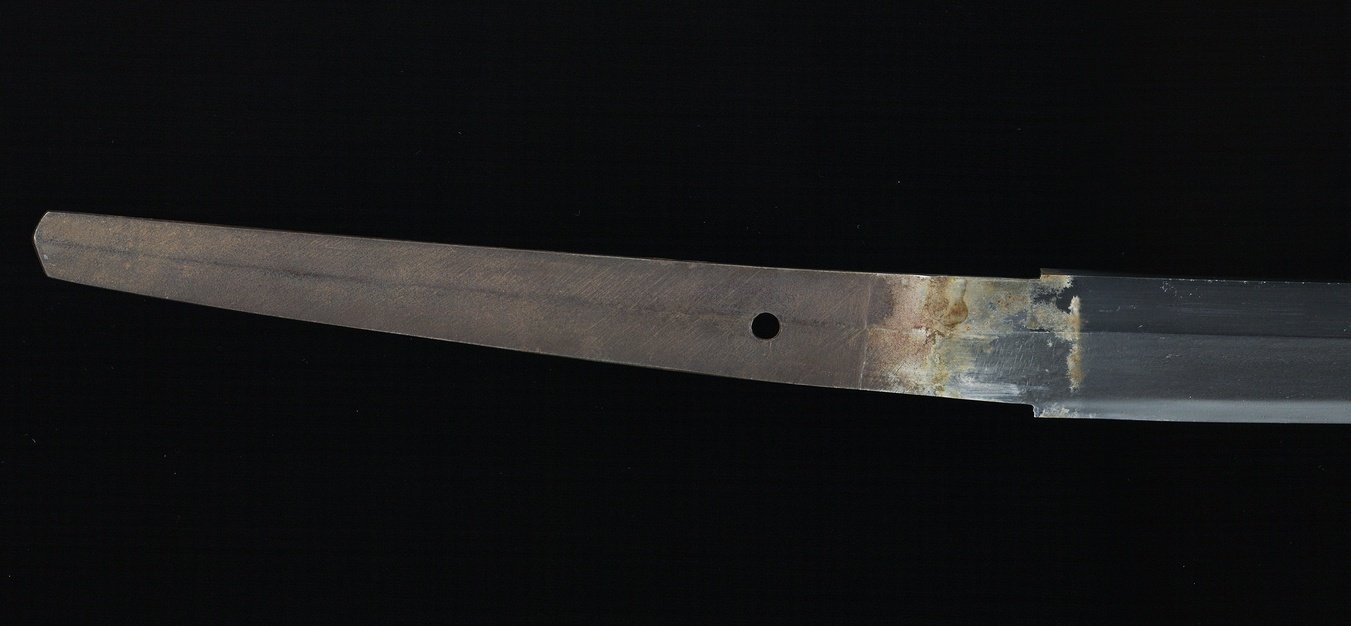
The nakago retains a single mekugi-ana and preserves a stable historical patina.
The surface should remain untouched, since the natural oxidation and condition of the tang are essential components in evaluating the age and authenticity of an antique Japanese sword.
The sword is accompanied by an NBTHK Hozon Token certificate, No. 30381, issued in December 2025, Reiwa 7.
The certification confirms the signature and recognizes the blade as worthy of preservation under the Hozon classification.
For collectors, NBTHK certification adds an important layer of confidence regarding attribution and authenticity, while also providing a formal modern record of the sword within the Japanese appraisal system. :contentReference[oaicite:2]{index=2}
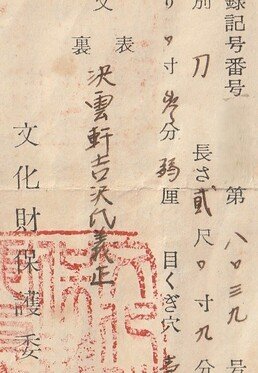
The sword’s documentation also records its original registration through the Kochi Prefecture Board of Education, dated May 1957, Showa 32.
This places the documented post-war history of the blade at nearly seventy years.
Early registration records of this kind are particularly valuable because they provide a traceable Japanese provenance extending back to the early decades of the modern sword registration system.
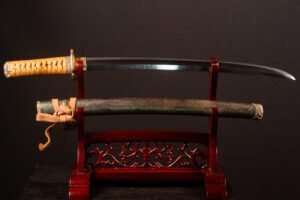
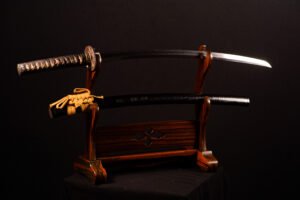
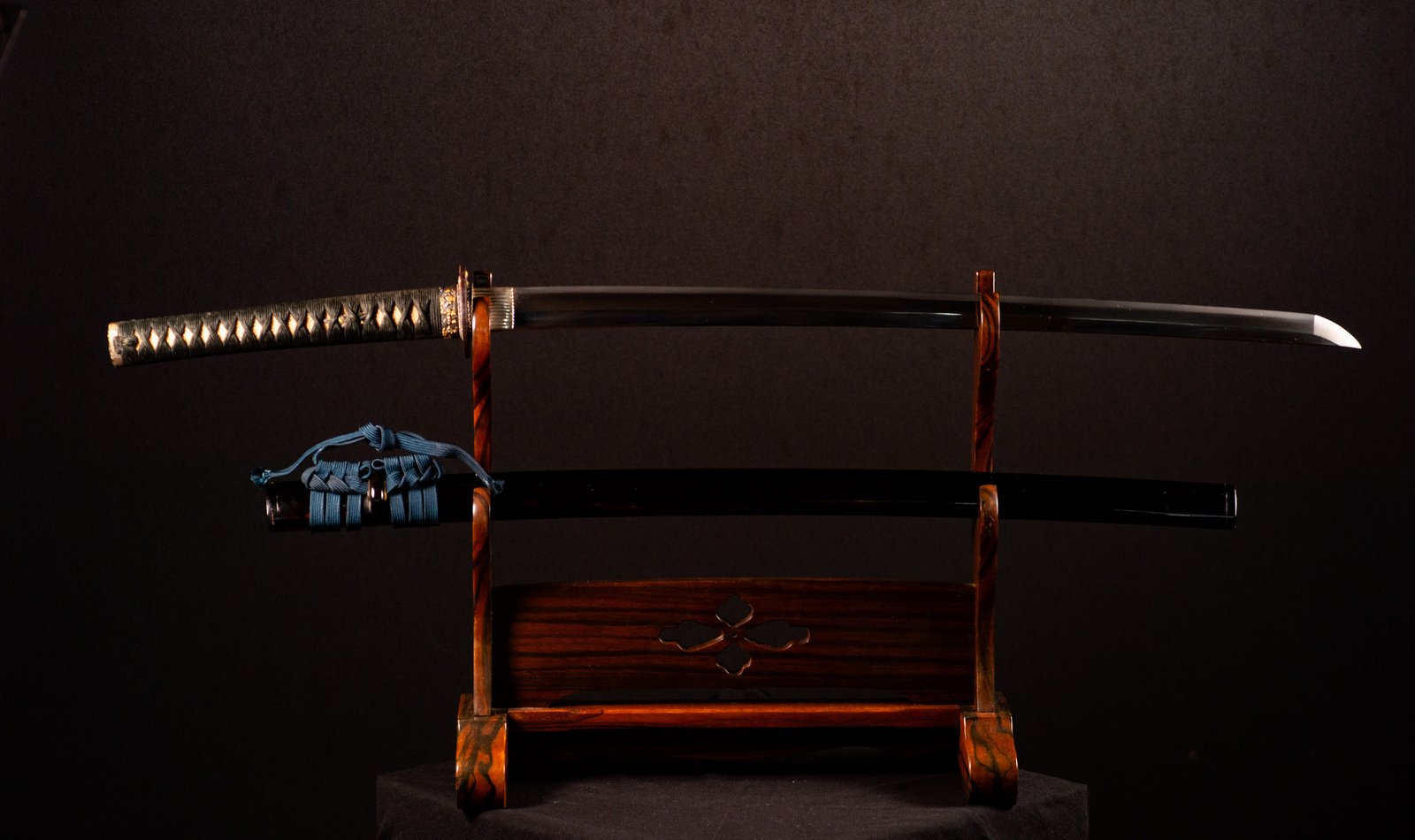
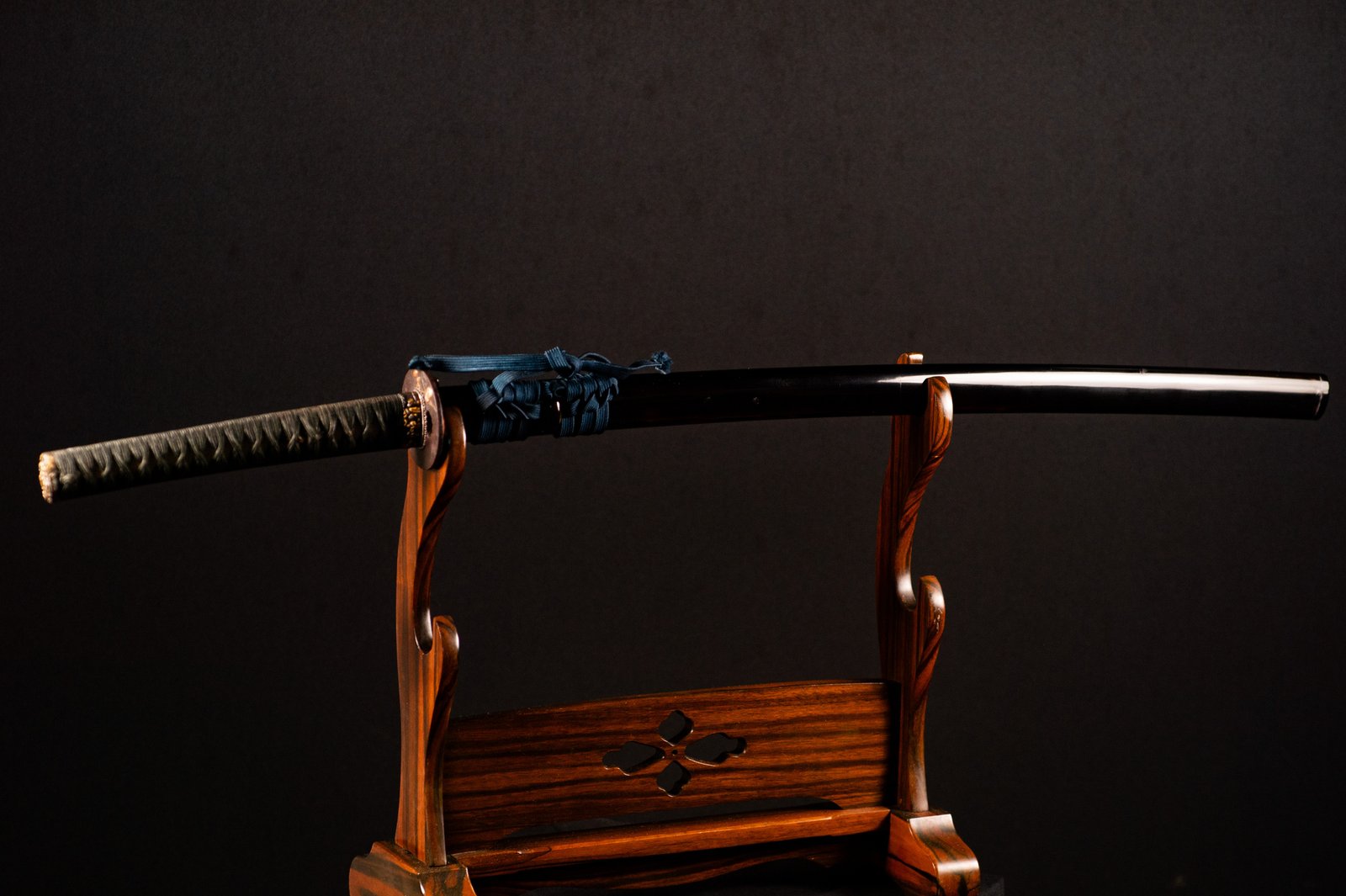
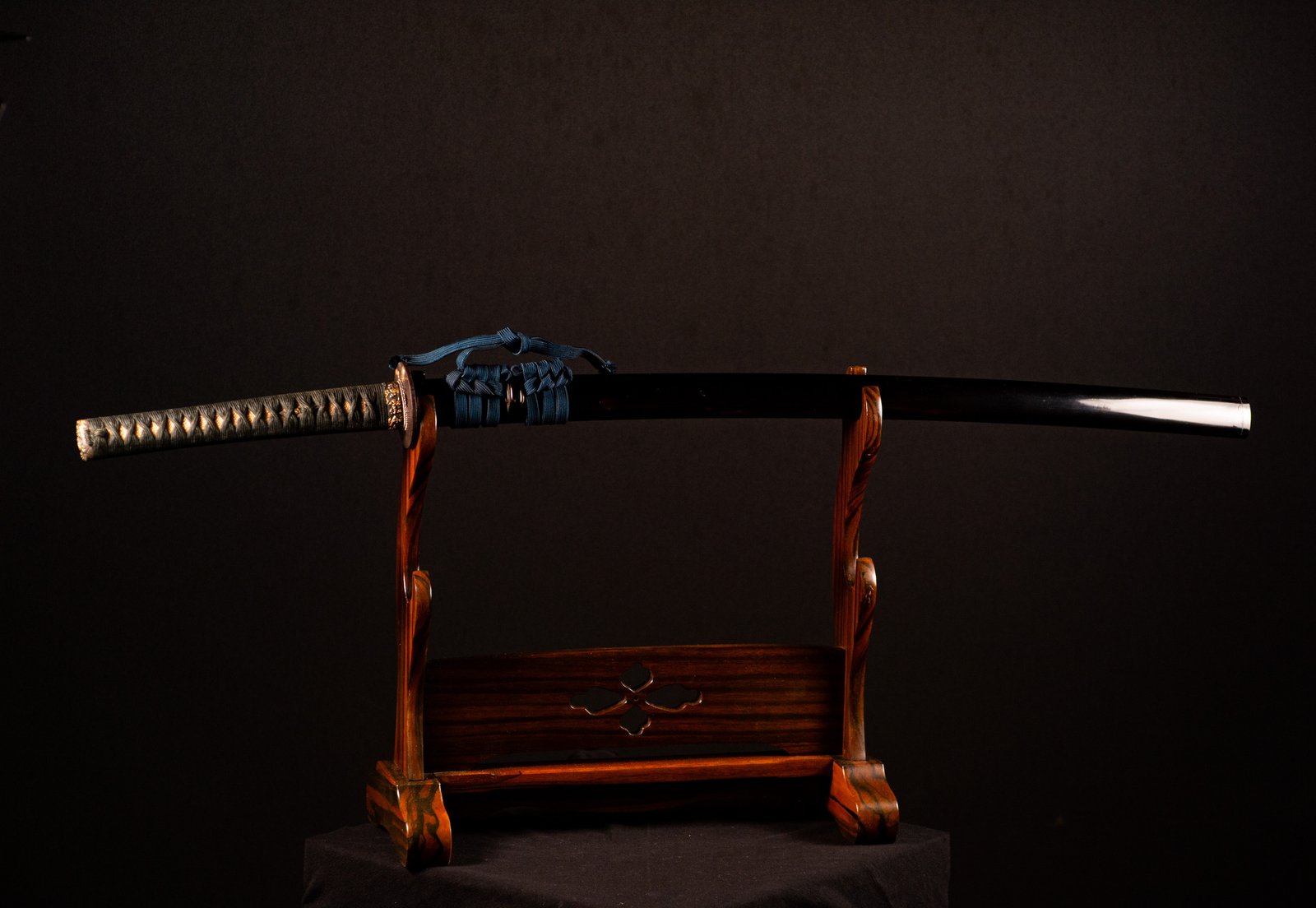
The sword is mounted in a complete and visually coherent koshirae of very good decorative quality.
The overall ensemble is sober and elegant, combining a black lacquered saya, dark silk wrapping, pale samegawa and coordinated metal fittings with gold decorative accents.
What makes the mounting especially interesting is the consistency of the decorative programme across several fittings.
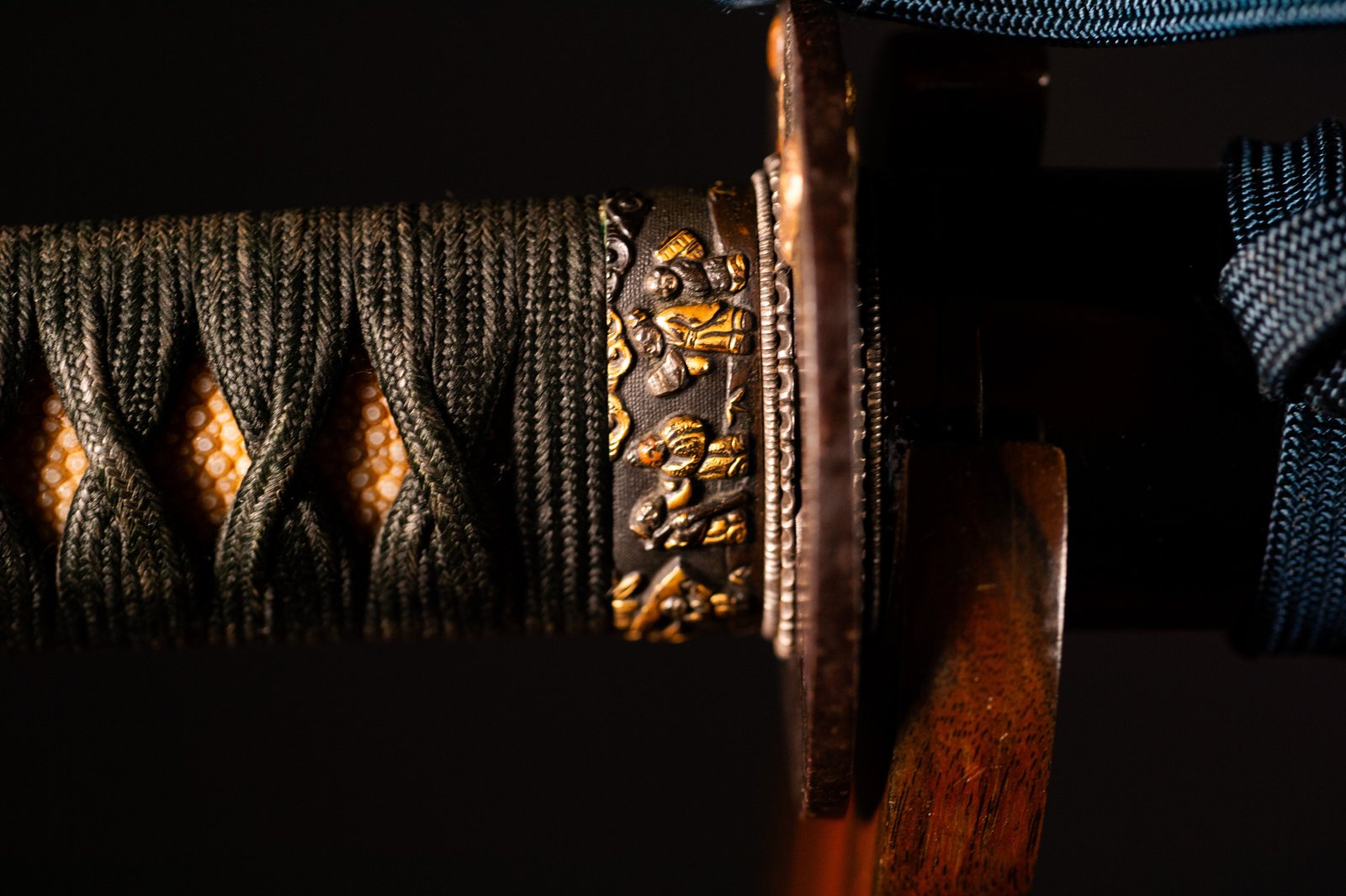
Rather than appearing as a random assembly of unrelated components, the fuchi, kashira, menuki and tsuba present a deliberate visual relationship.
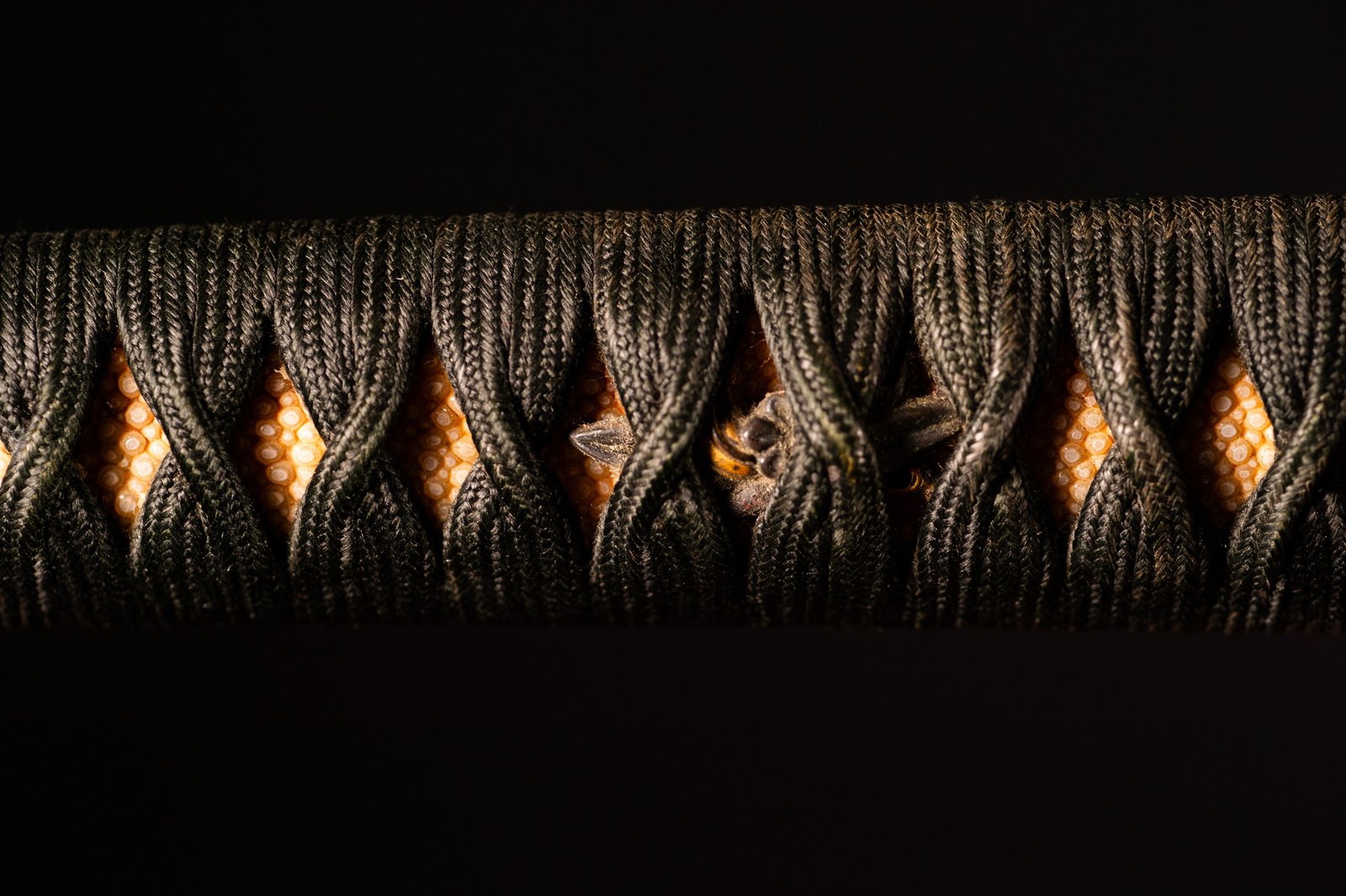
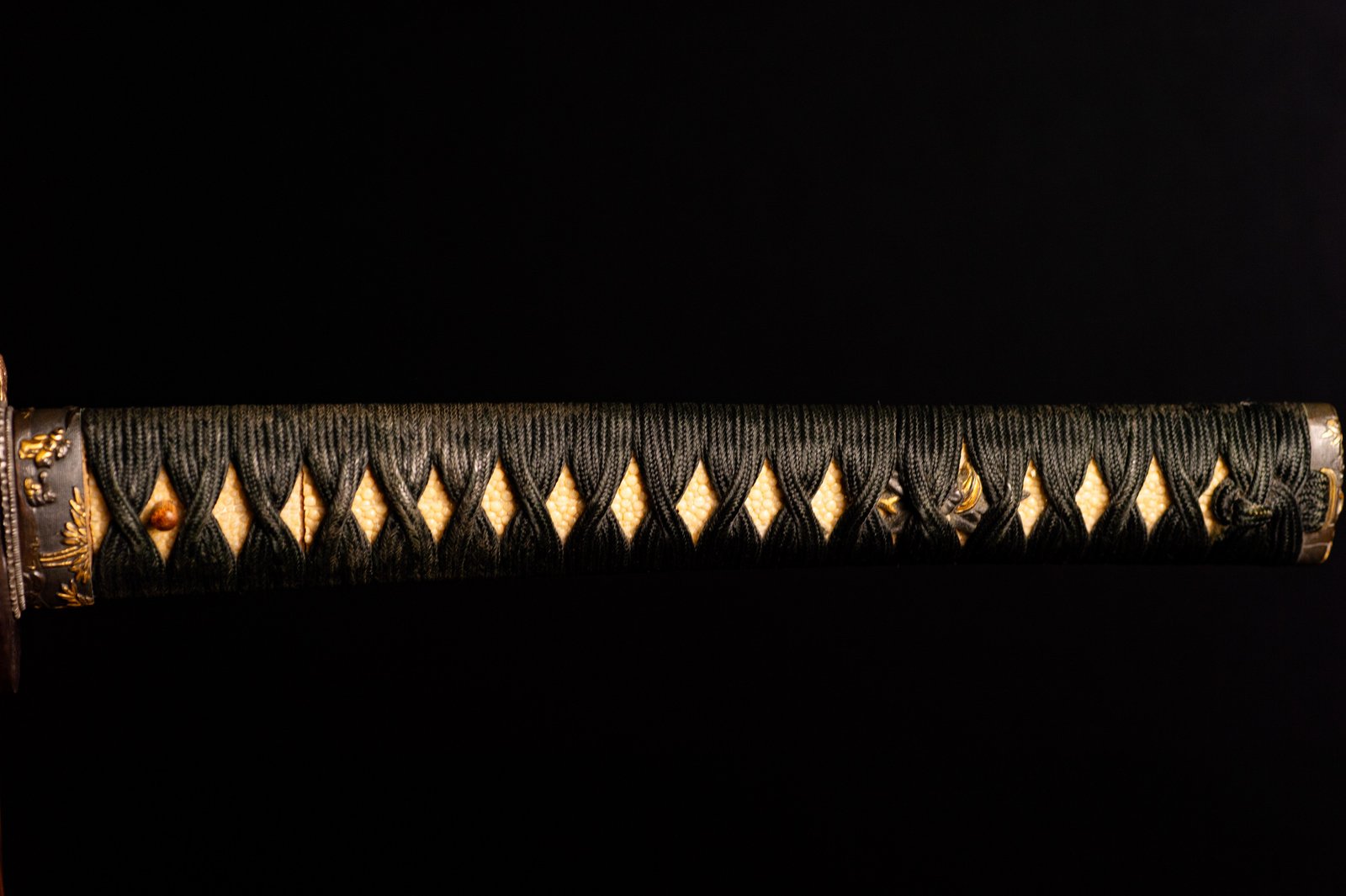
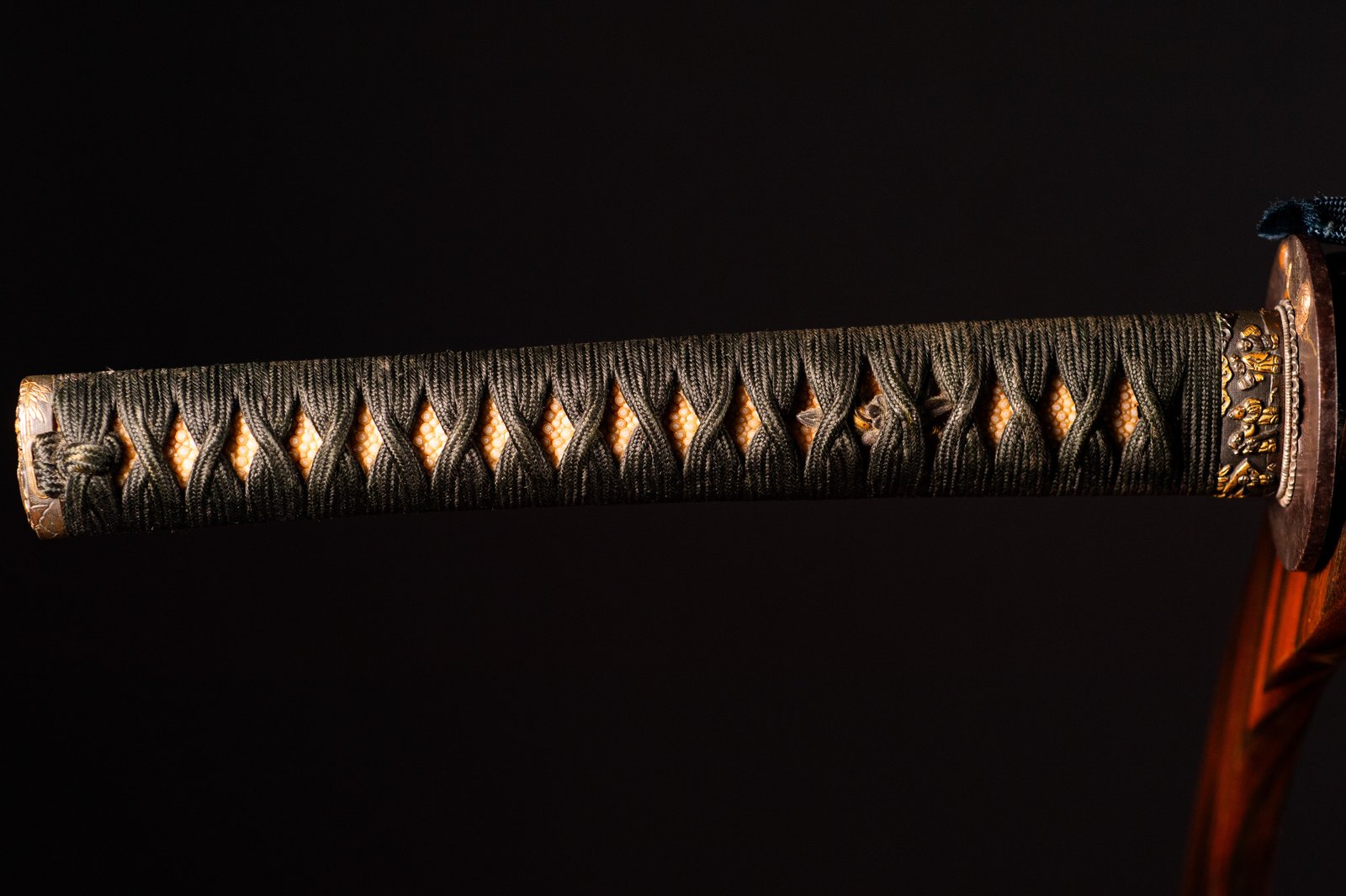
The tsuka is wrapped in black silk ito over pale samegawa in a traditional diamond-pattern binding.
The contrast between the deep black wrapping and the light ray skin gives the handle a classic appearance.
The wrap remains visually sound and provides a strong, disciplined presentation appropriate to the late Edo mounting.
The menuki are executed with gold-highlighted figural decoration in high relief.
The figures form part of a broader narrative decorative programme that continues into the fuchi and kashira.
This continuity is important, as it suggests that the fittings were conceived as a coordinated artistic set rather than assembled from unrelated pieces.
The gold details stand out clearly against the darker metal base and become visible through the openings in the black tsuka-ito.
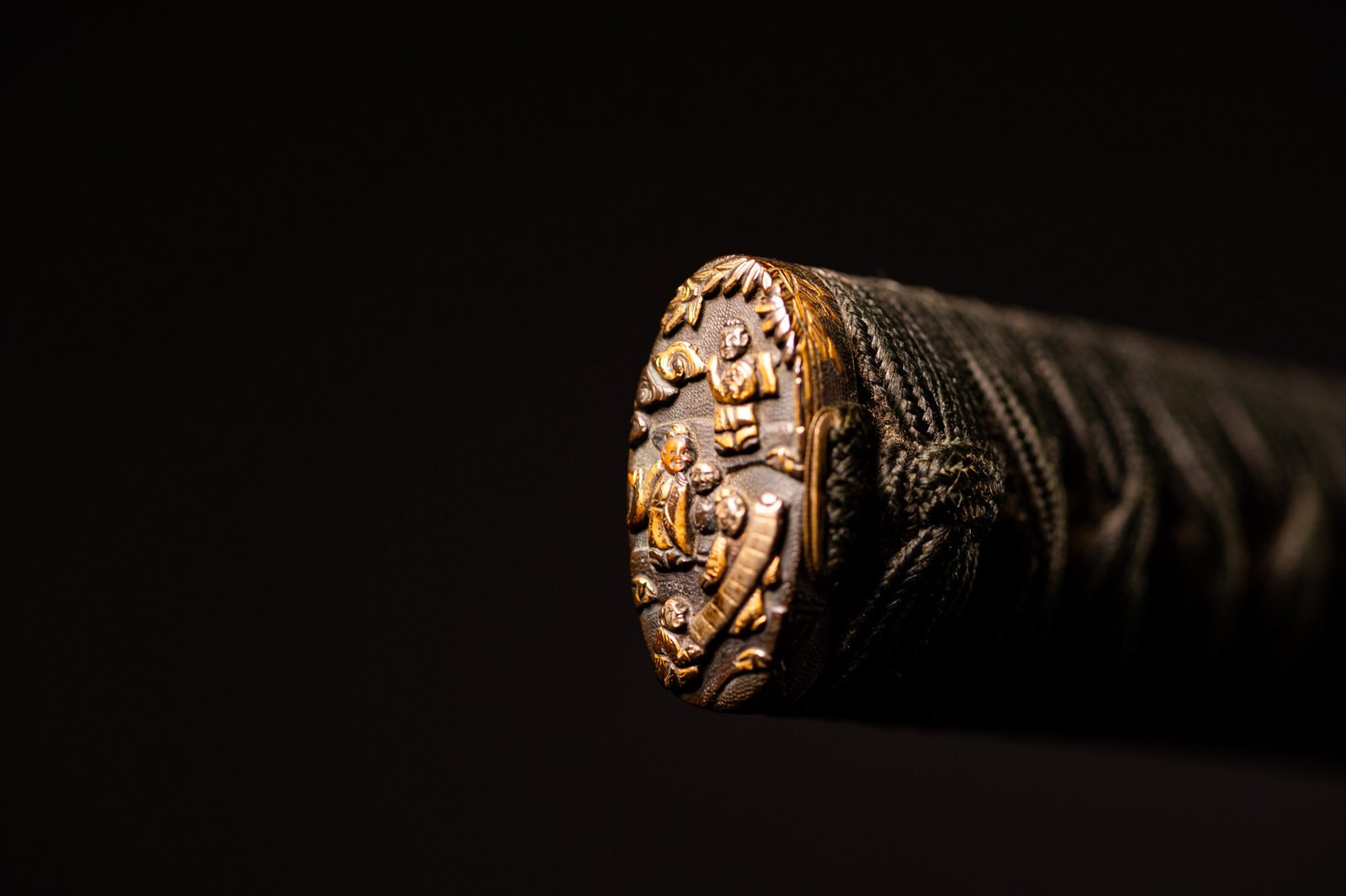
The fuchi and kashira continue the same figurative theme.
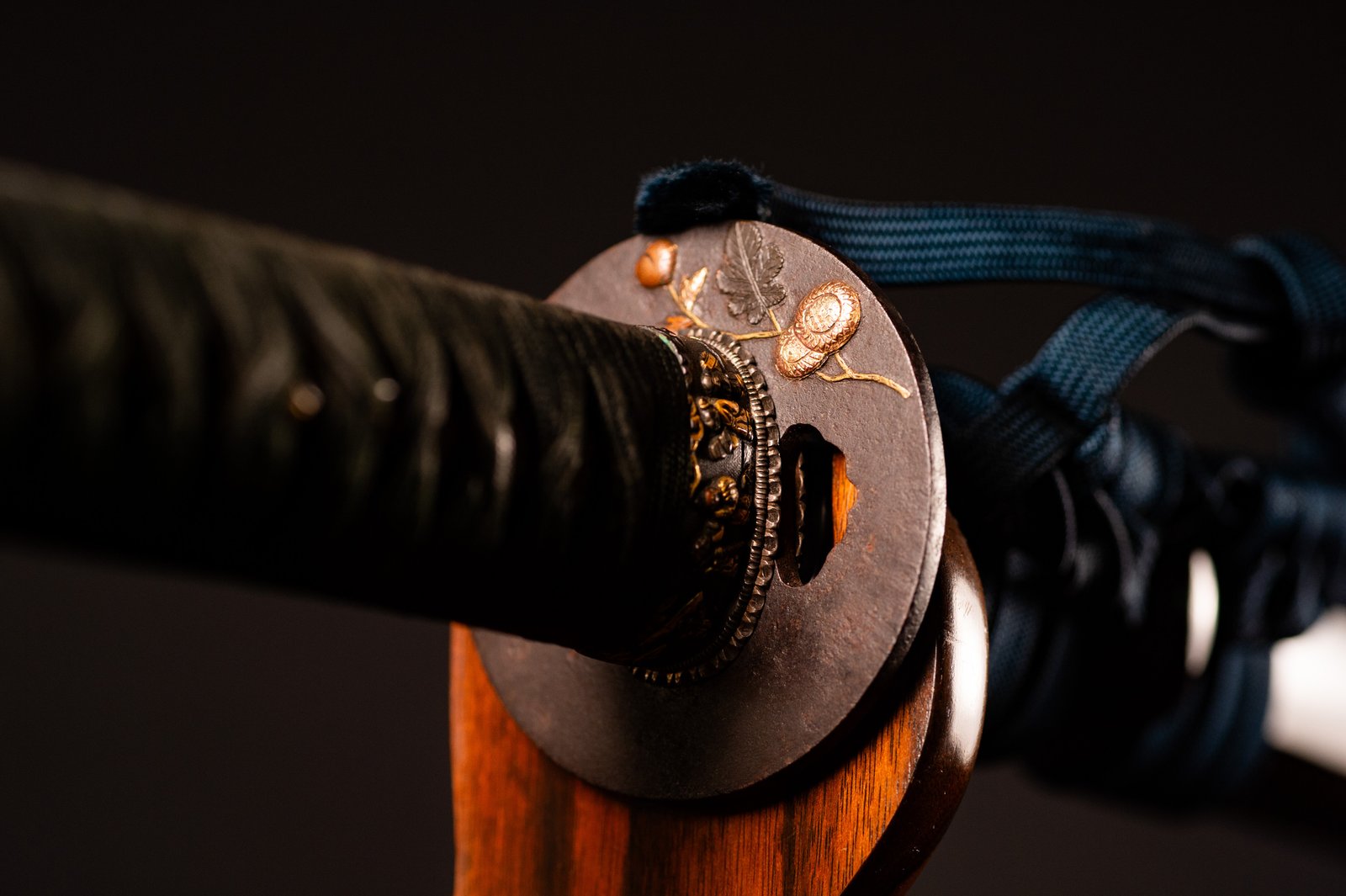
The decoration is executed in dark metal with gold and contrasting metallic highlights, producing a richly layered but controlled surface.
The kashira in particular displays multiple human figures in relief, giving the fitting a distinctly narrative quality.
This level of iconographic continuity across the mounting adds considerably to the visual and collectible interest of the koshirae.
The tsuba is made of iron in a rounded form with hitsu-ana.
Its surface is decorated with a restrained botanical motif using gold accents.
The decoration complements the figural programme of the handle fittings without competing with it.
The dark iron ground gives the piece a sober martial presence, while the selective gold application introduces refinement typical of late Edo decorative taste.
The saya is finished in glossy black lacquer.
Its simplicity provides an effective visual counterpoint to the more elaborate metal fittings of the handle.
The dark, reflective lacquer surface remains elegant and understated, reinforcing the overall coherence of the mounting.
A teal-blue braided sageo is tied around the kurikata, adding a restrained color accent to the otherwise dark presentation.
The sword is preserved as an antique Japanese weapon with the expected signs of age and historical use.
The blade retains a clear overall geometry and visible surface activity.
The nakago has been appropriately left uncleaned, preserving its stable historical patina and original signature.
The koshirae remains visually coherent, with black silk wrapping, pale samegawa, coordinated figural fittings and black lacquered saya.
As with any genuine antique Japanese sword, small signs of age, use and historical handling should be considered part of the object’s character rather than modern defects.
This sword has a level of historical interest that goes beyond the usual appreciation of a signed late Edo katana.
The most important factor is the identity of Ketsuunken Furusawa Yoshimasa himself.
He was not merely a name associated with a forge, but a swordsman-scholar connected to Tosa intellectual and martial circles at a critical moment in Japanese history.
His association with the world surrounding Takechi Zuizan and the Tosa loyalist movement creates a direct historical context for the sword.
For a collector focused on Bakumatsu material, this connection is especially meaningful.
The sword also benefits from strong documentation: a modern NBTHK Hozon Token certificate, a signed nakago, and an original Japanese registration history dating back to 1957.
The complete koshirae provides an additional level of appeal, particularly because its fittings share a consistent decorative vocabulary rather than appearing as unrelated later additions.
A historically compelling signed katana from late Edo-period Tosa, made by Ketsuunken Furusawa Yoshimasa, a swordsman-scholar connected to the political and martial world of the Bakumatsu. With its signed blade, NBTHK Hozon certification, documented registration history extending back to 1957 and a coherent complete koshirae with coordinated figural fittings, this sword offers an unusual combination of historical relevance, documentary strength and visual character.
| Época | Edo |
|---|

Order above 1.000,00 € gets free shipping.

Secure and hassle-free payment process.

Certificate of authenticity included.

Have questions? Contact us via WhatsApp.
Contact