Out of stock
Out of stock
Add to Compare
Add to Wishlist
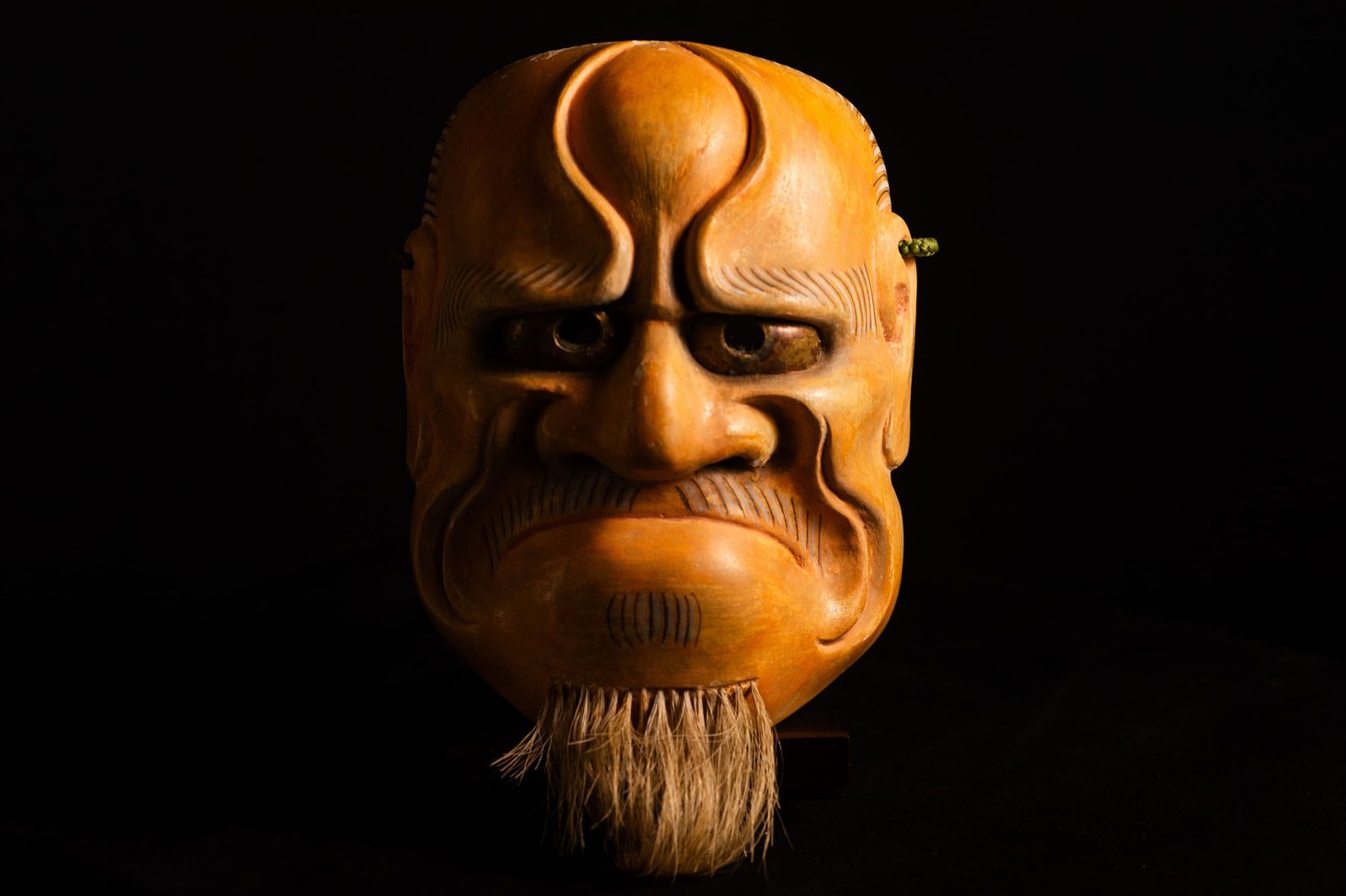
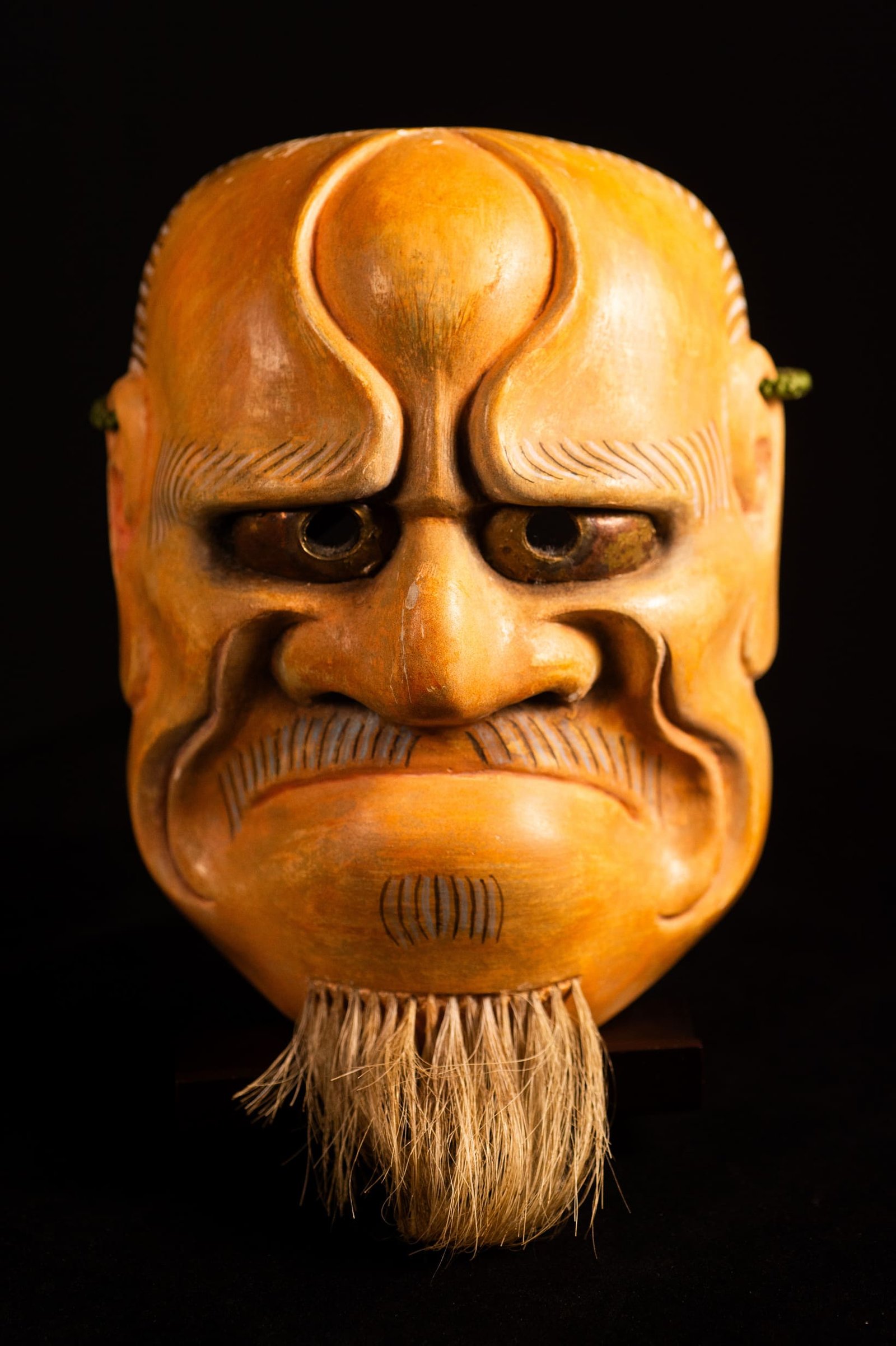
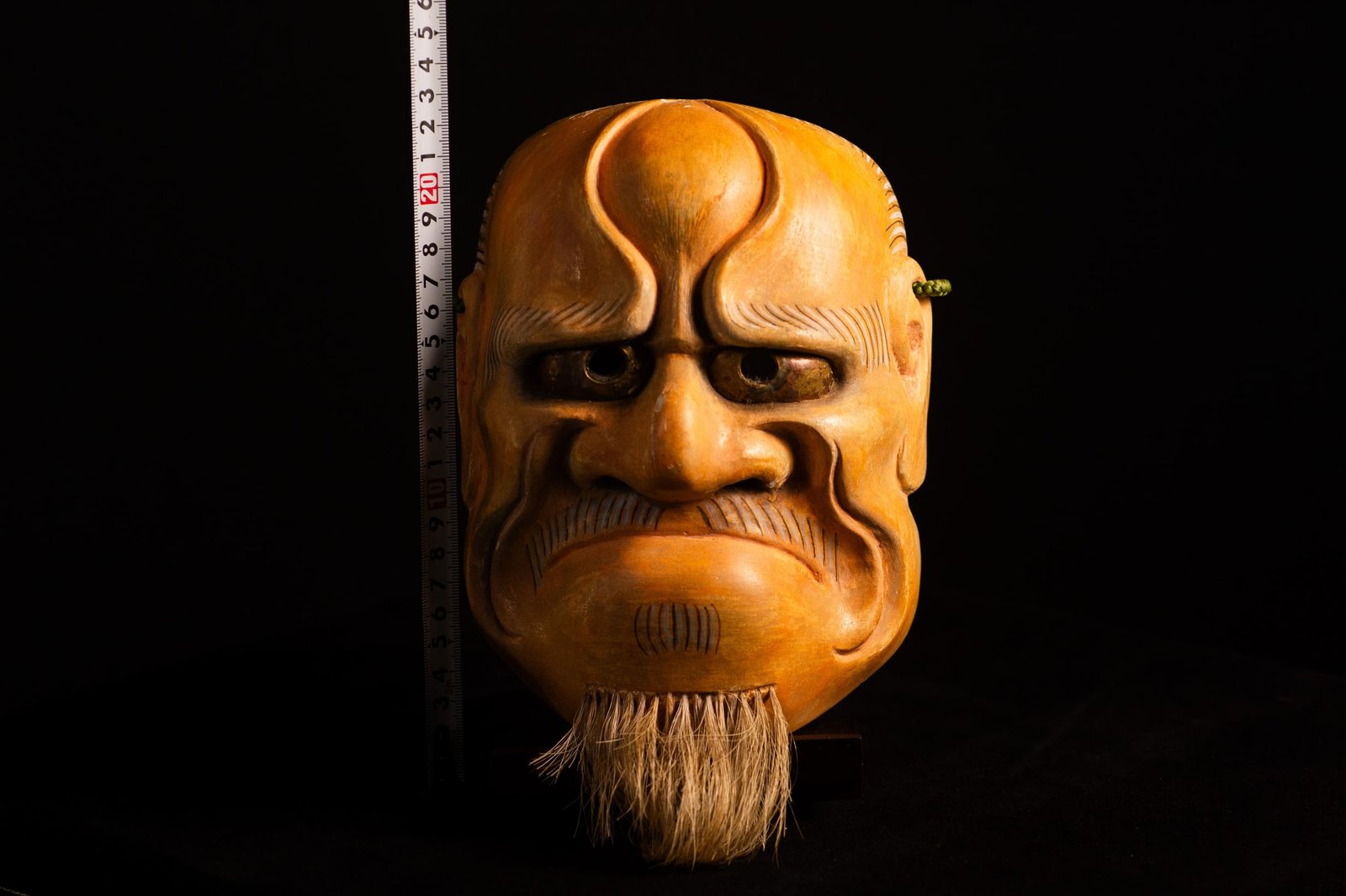
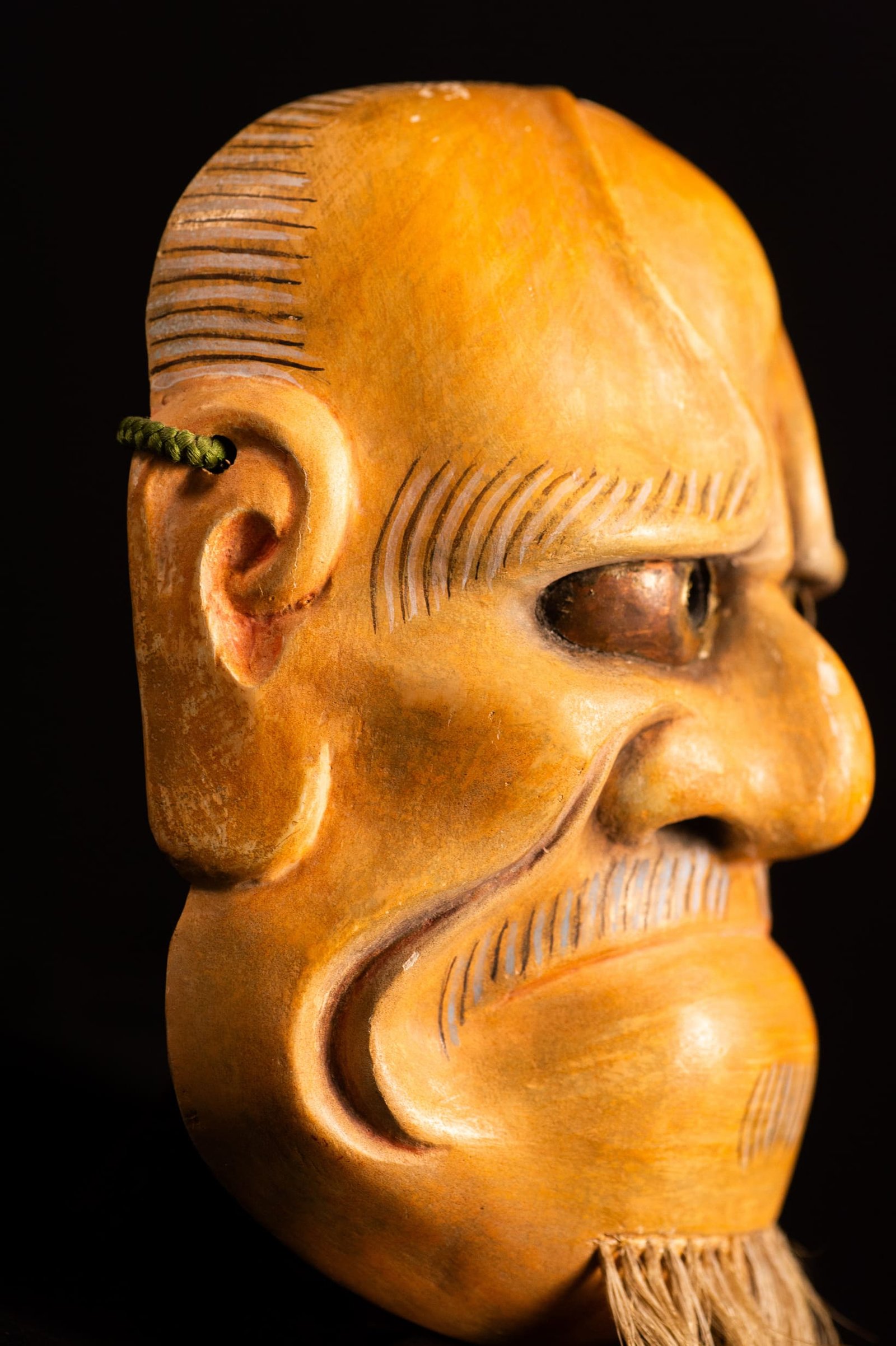
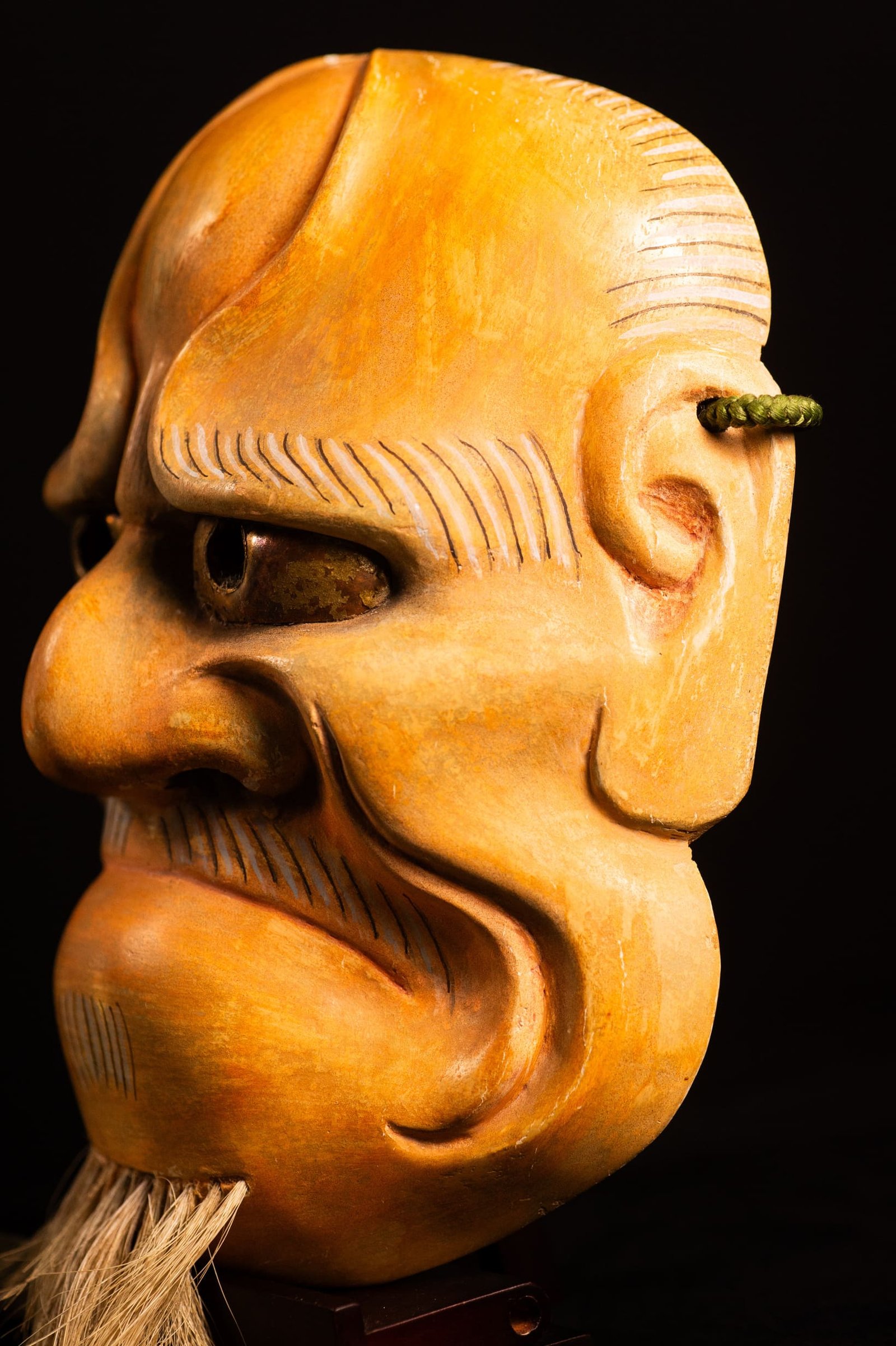
A powerful antique Japanese wooden mask representing Akujo, one of the imposing aged male characters found within the visual and dramatic tradition of Noh theatre. Carved at approximately life size, the mask is distinguished by its monumental brow, deeply recessed eyes, forcefully compressed mouth and full natural-fibre beard.
The name Akujo may be translated literally as “evil old man,” although the term should not necessarily be understood as a reference to moral wickedness. Within the context of the mask, aku conveys ferocity, severity, supernatural power and the overwhelming presence of a fearsome aged being.
The resulting face is not simply that of an elderly man. It presents the image of an ancient and formidable figure whose age is inseparable from authority, spiritual intensity and awe.
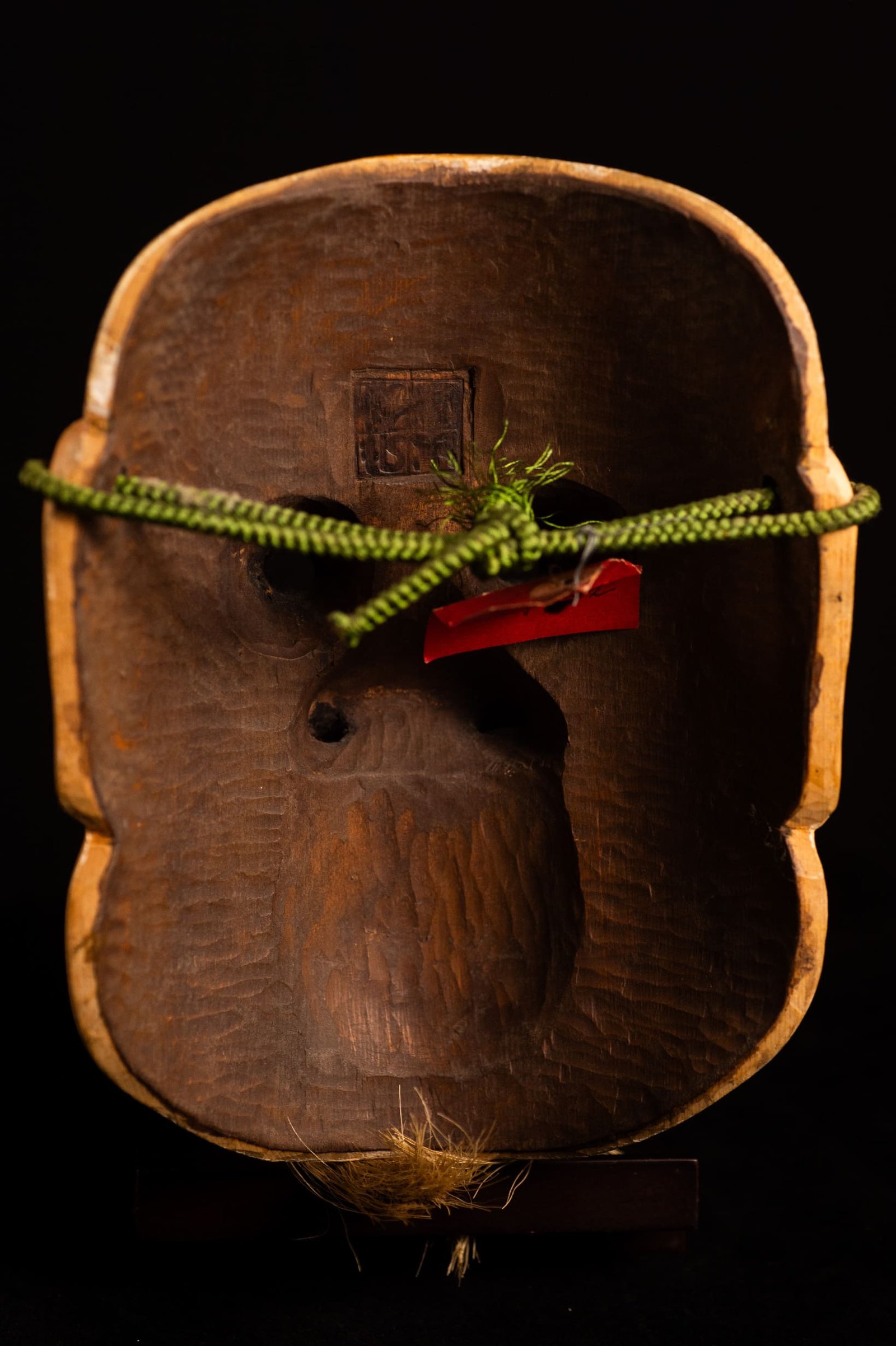
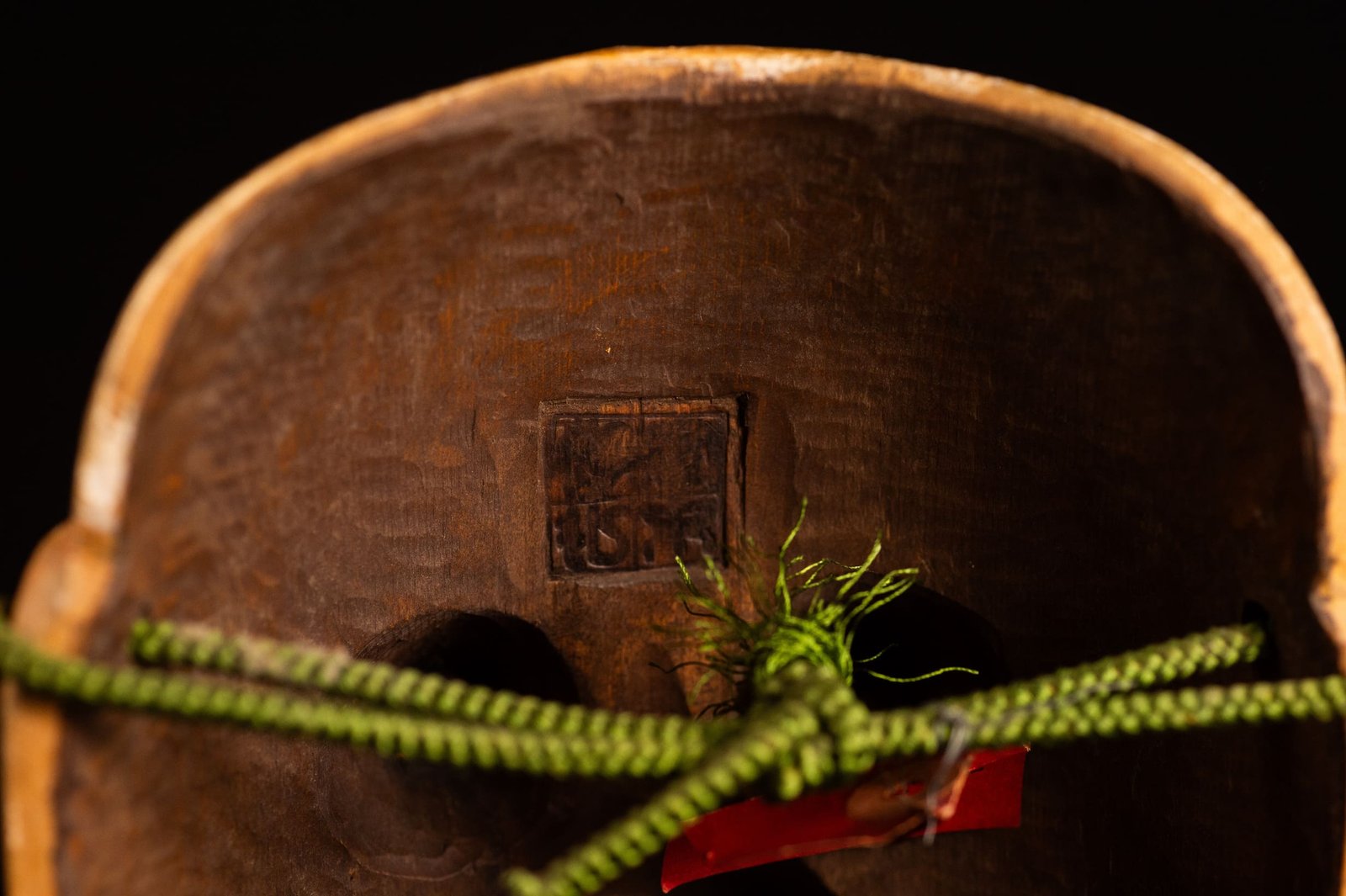
A carved seal is present on the reverse of the mask. No reading or attribution of this seal is provided, and it should therefore not be used to assign the work to a particular carver or workshop without further specialist examination.
Akujo belongs to the broad family of aged male masks used in Japanese theatrical and ritual traditions.
Unlike masks that portray gentle, dignified or contemplative elderly figures, Akujo embodies a much more forceful presence. The character is aged, but his old age is expressed through concentrated energy rather than fragility.
The deeply furrowed brow, compressed mouth and intense gaze suggest a being capable of inspiring fear, reverence and submission.
The mask has traditionally been associated with the representation of a fierce old god or supernatural elder. Its expression combines human age with an authority that extends beyond ordinary human experience.
The mask is carved from wood as a complete sculptural form.
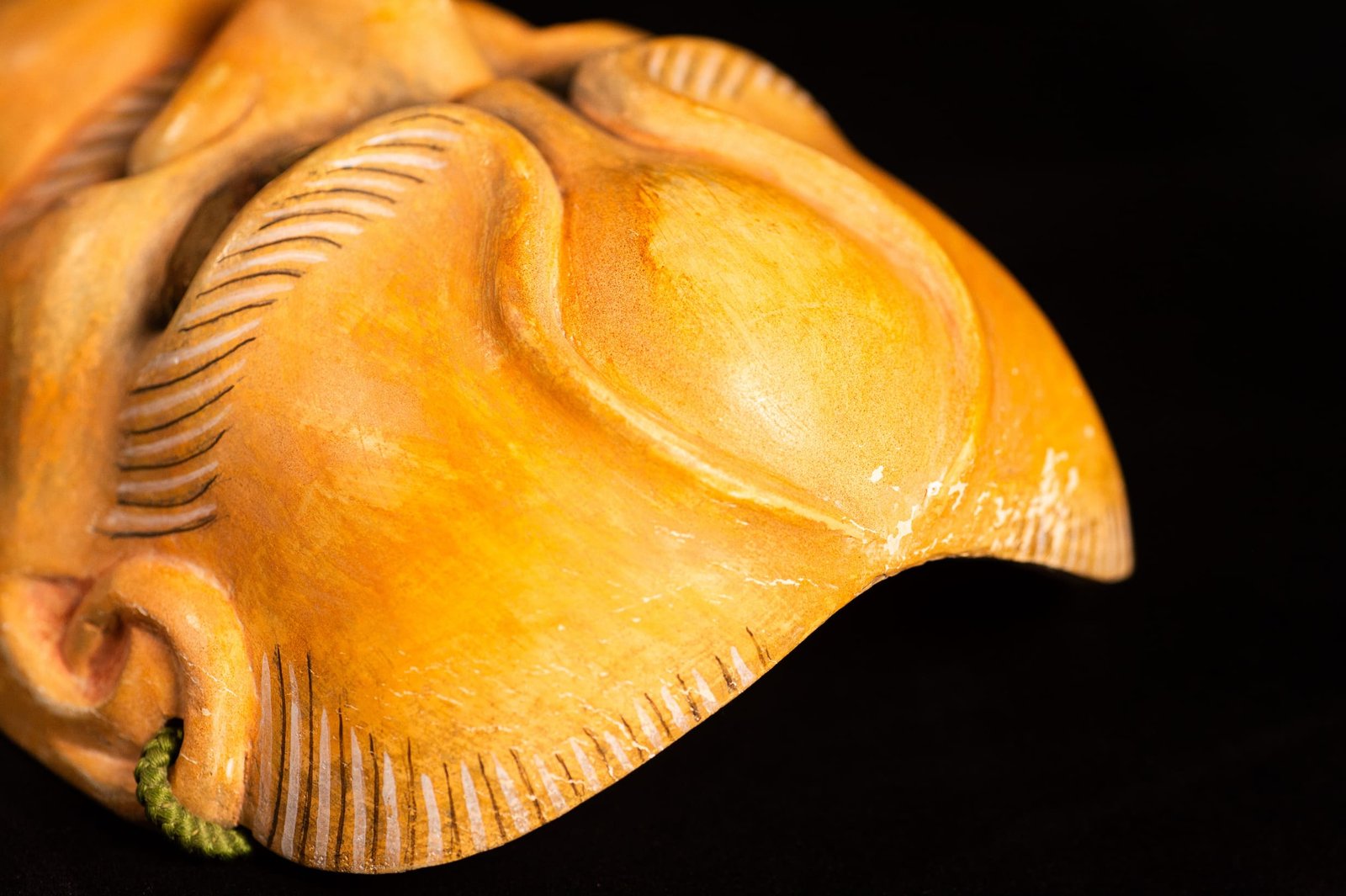
Its facial structure is created through pronounced changes of depth rather than through painted decoration alone. The high forehead, projecting nose, recessed eyes, sharply defined cheeks and heavy lower face produce a strongly three-dimensional appearance.
The wood displays a warm ochre to golden-brown surface, with darker tonal areas around the eyes, mouth and carved recesses.
Visible variations in tone, minor abrasions and surface wear contribute to the antique character of the object and emphasize the depth of the carving.
The mask retains side openings with green fastening cord, consistent with its intended function as a wearable theatrical mask.
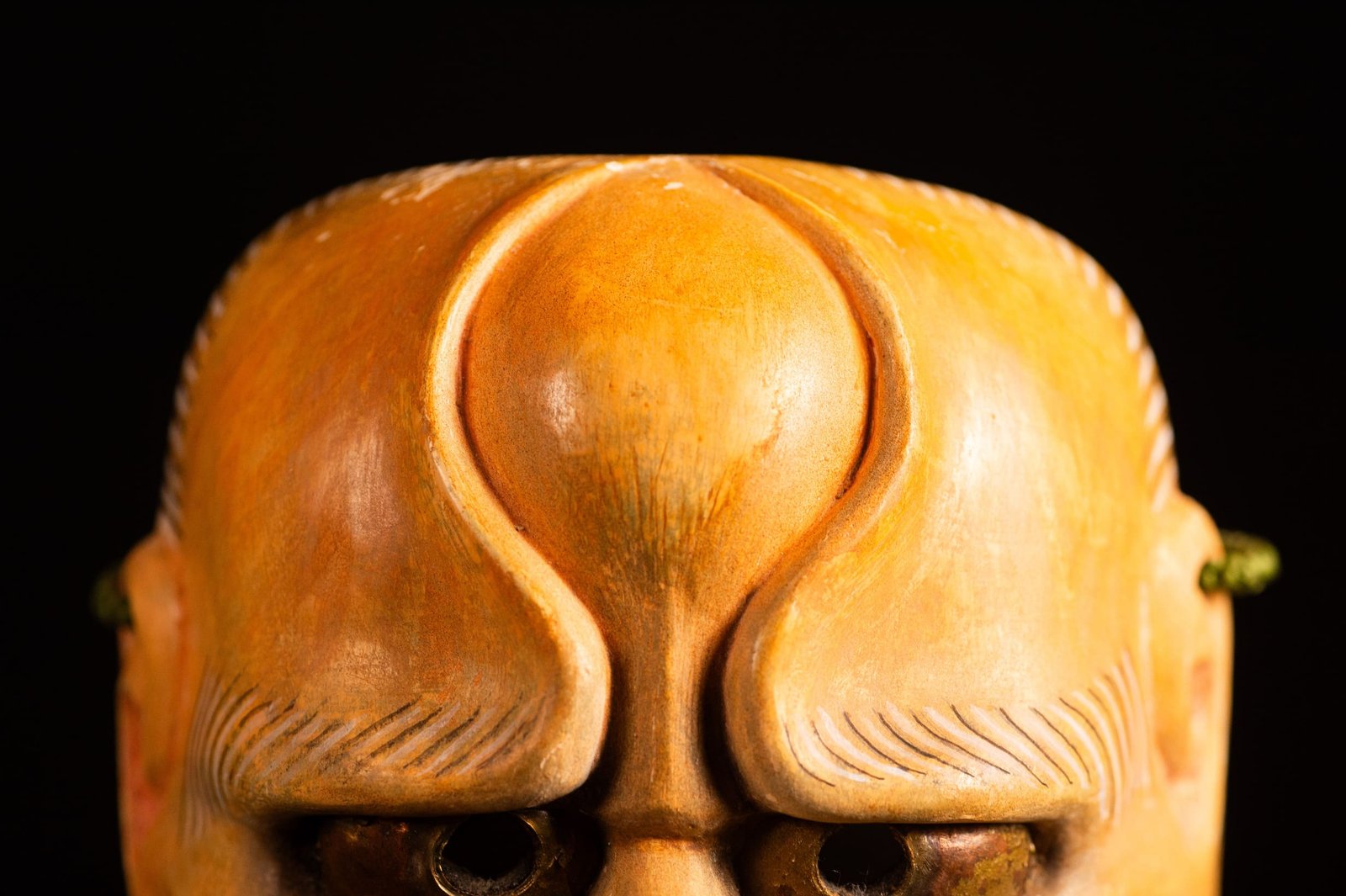
The most distinctive sculptural feature is the continuous raised ridge extending from the upper forehead toward the bridge of the nose.
Beginning as a broad, rounded form at the centre of the forehead, the ridge divides and curves downward above each eye before converging visually toward the nose.
Its flowing shape resembles a continuous scroll or flame-like contour.
This powerful feature enlarges the forehead and intensifies the downward pressure of the brow over the eyes.
Rather than functioning as a naturalistic anatomical detail, the ridge transforms the face into an emblematic and almost supernatural image.
The broad raised forehead suggests accumulated age and authority, while the narrowing central line directs attention toward the mask’s fixed and penetrating gaze.
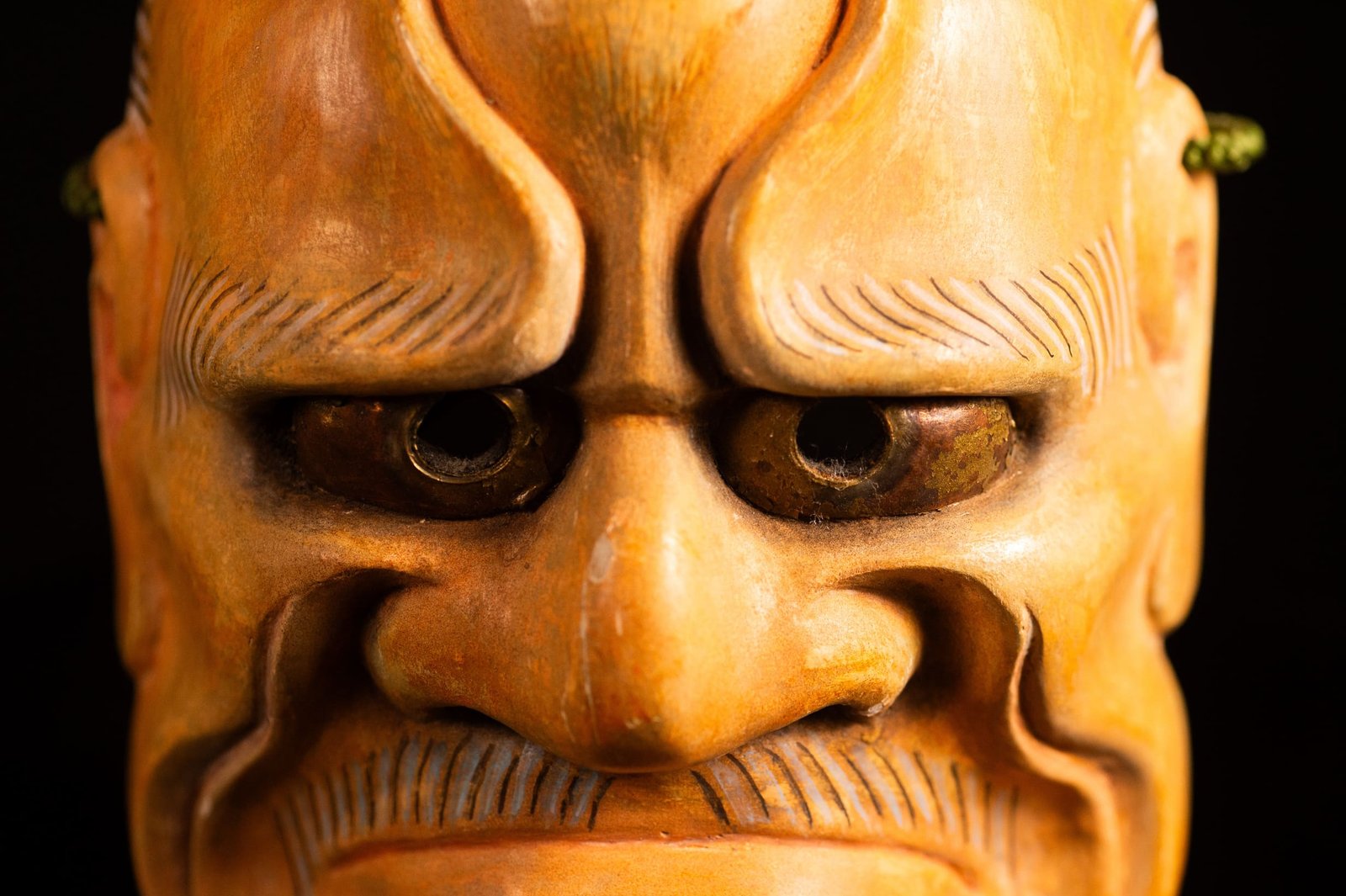
The eyes are set deeply beneath the massive furrowed brow.
Small viewing apertures are positioned within darkened eye areas, allowing the actor to see while preserving the mask’s severe expression.
The heavy upper brow creates the impression that the eyes are partially concealed in shadow.
This produces a concentrated and inward-looking gaze that remains intimidating even when viewed directly from the front.
Changes in lighting and viewing angle alter the apparent direction and emotional intensity of the eyes, an important characteristic of traditional Japanese theatrical masks.
Under strong frontal light, the mask appears confrontational and commanding. Under softer or angled light, the recessed eyes can appear more distant, ancient or otherworldly.
The nose is large, projecting and strongly modelled.
Its broad form occupies the central part of the face and reinforces the mask’s powerful masculine character.
Deep channels descend from either side of the nose toward the mouth, creating strong divisions between the cheeks and the central facial features.
The cheeks are broad and heavy, while the lower contours curve inward toward the mouth and chin.
These deeply carved transitions give the face a sculptural force that remains clearly visible from oblique angles.
The overall modelling emphasizes weight, age and physical authority rather than idealized beauty or delicate expression.
The mouth is firmly closed and strongly downturned, displaying characteristics associated with the severe expression of beshimi-type masks.
The lips are compressed into a broad horizontal form, with the corners pulled downward.
This closed-mouth expression communicates restraint, concentrated power and contained aggression.
Rather than depicting an open cry or visible rage, the mask suggests an immense force held under control.
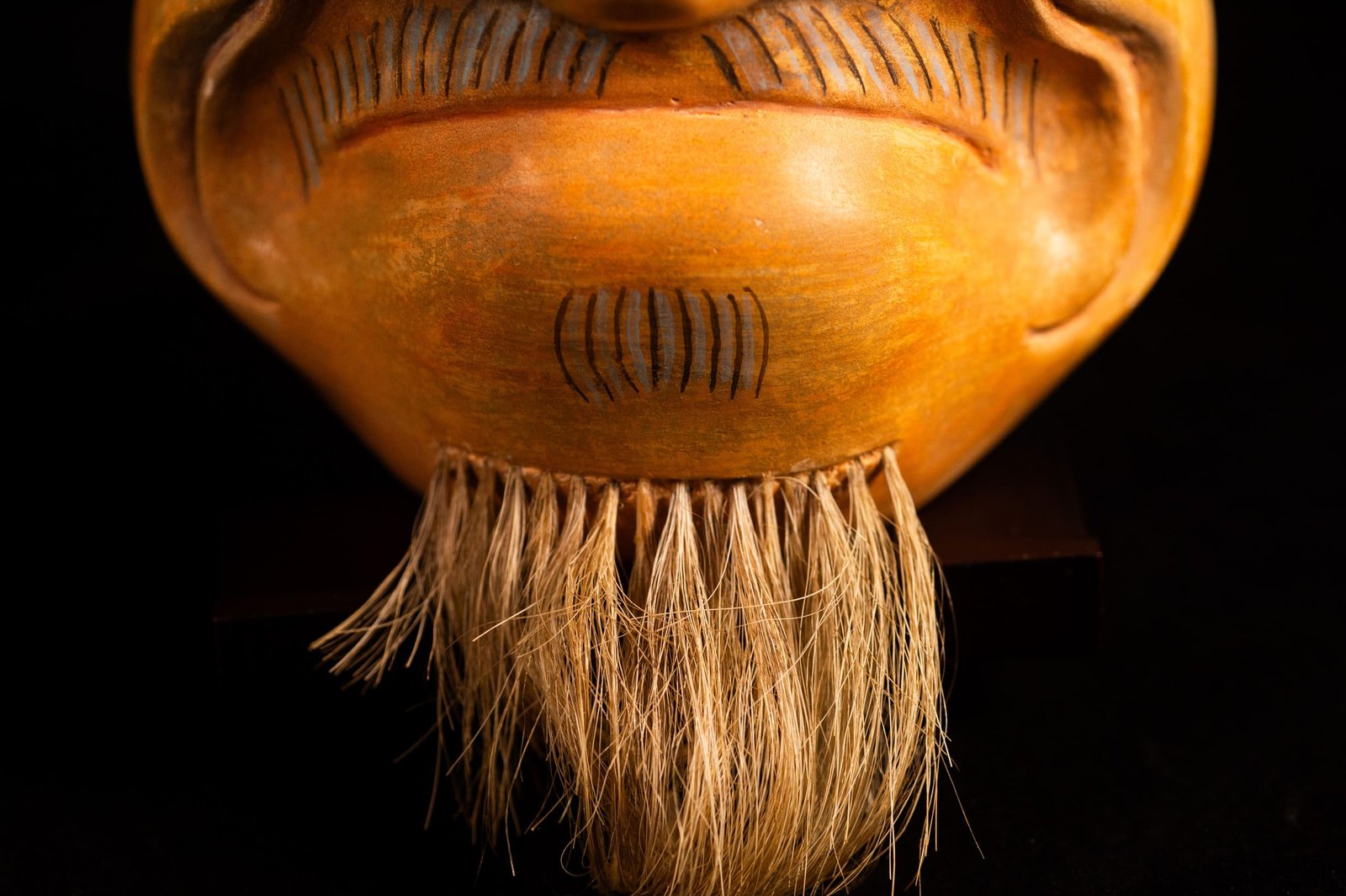
Fine carved lines above the mouth indicate a moustache, while additional short vertical lines appear on the chin.
Together with the downturned lips, these details reinforce the identity of an aged male figure.
The reference to a beshimi-style mouth should be understood as a description of its compressed and forceful expression rather than as a reclassification of the mask itself.
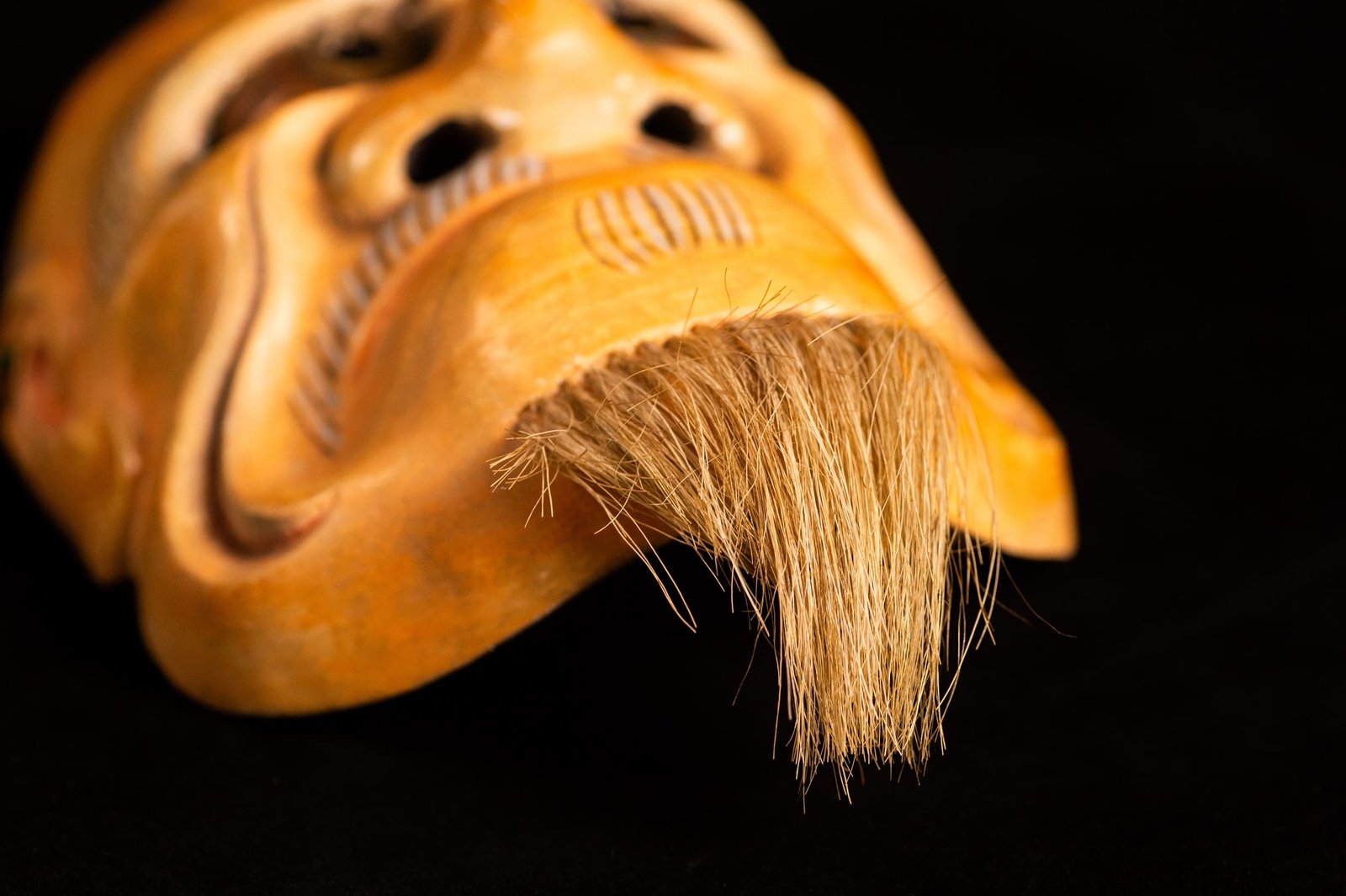
A full beard made from natural fibre is attached beneath the chin.
Its pale straw or blond tone contrasts with the warmer golden-brown surface of the carved wood.
The beard introduces a material element that extends beyond the carved form of the face and would have moved subtly with the actor during performance.
This movement could add life and unpredictability to the mask, particularly when illuminated on stage.
The surviving beard is an important visual component of the character, emphasizing advanced age while contributing to the mask’s wild and supernatural appearance.
As an organic material, the fibres display natural variation, irregularity and signs of age that are consistent with the antique nature of the object.
A carved seal is present on the reverse of the mask.
Seals and inscriptions on the interior of Japanese masks may relate to a carver, workshop, ownership history, collection or later documentation.
However, the mere presence of a seal does not by itself establish authorship or date.
As no transcription, translation or specialist attribution has been supplied for the present mark, it is described only as a carved seal.
Further examination of the reverse by a specialist in Japanese theatrical masks may provide additional information about its meaning or historical context.
Masks have occupied a central place in Japanese ritual, festival and theatrical culture for centuries.
Within Noh theatre, the mask does not function merely as a decorative covering. It transforms the performer into a particular human type, historical figure, ghost, spirit, deity or supernatural presence.
The mask allows the actor’s individual identity to recede while the character represented by the carved face becomes dominant.
This process has often been understood as a form of transformation or possession, in which the performer temporarily embodies the spiritual or dramatic identity represented by the mask.
Subtle movements of the head can significantly alter the expression perceived by the audience.
Tilting the mask slightly upward may make the face appear more open or elevated, while lowering it can deepen the shadows around the eyes and create a more threatening or sorrowful expression.
The carefully carved planes of the present Akujo mask are particularly effective in creating these visual changes.
The history of Japanese masks is closely connected with religious ceremonies, local festivals and performance traditions.
Many masked figures were understood as manifestations of beings whose presence crossed the boundary between the human and spiritual worlds.
Within Japan’s indigenous religious traditions, divine and spiritual beings are often referred to as kami.
The use of masks in ritual and performance could allow the wearer to embody or represent such a presence.
In the case of Akujo, the terrifying aged face communicates supernatural authority rather than simple human cruelty.
The mask’s ferocity should therefore be interpreted within a cultural language of divine power, protection, danger and awe.
The mask is carved at a 1:1 or life-size scale, corresponding to the proportions of a wearable theatrical mask.
Its substantial forehead, broad cheeks and projecting beard give it a commanding physical presence when displayed.
The object can be appreciated both frontally and from oblique angles, where the depth of the brow ridge, nose and cheek carving becomes especially evident.
For display purposes, appropriate support should be used to avoid placing pressure on the beard, side cords or projecting facial features.
Direct sunlight, excessive humidity and sudden environmental changes should be avoided in order to help preserve the wood, surface finish and natural fibres.
The mask is preserved in antique condition with visible evidence of age and handling.
The supplied photographs show tonal variation, surface wear, small abrasions and darkening within recessed areas, particularly around the eyes and carved facial details.
The natural-fibre beard also displays irregularity and age-related wear.
These characteristics contribute to the historical appearance of the object and should not be evaluated according to the standards applied to newly manufactured decorative masks.
The principal carved features remain clearly defined, including the continuous forehead ridge, deeply recessed eyes, projecting nose, downturned mouth and engraved facial hair.
A detailed conservation or restoration report has not been supplied. Prospective buyers should therefore examine all available photographs carefully.
This antique Akujo mask is distinguished by the strength and clarity of its sculptural character.
The continuous ridge dominating the forehead, the shadowed eyes, projecting nose and tightly compressed mouth create an immediately recognizable image of supernatural age and authority.
Its expression avoids simple theatrical exaggeration.
Instead, the mask concentrates its power within the tightly controlled relationship between the brow, eyes and closed mouth.
This gives the face a sense of contained force that changes significantly according to lighting and viewing angle.
The surviving natural-fibre beard adds material variety and strengthens the impression of an ancient, fearsome figure.
The carved seal on the reverse also provides an additional point of interest for future specialist study, although no attribution should be made without further examination.
For collectors of Japanese theatre, religious art, masks and carved wooden sculpture, the piece offers a compelling combination of cultural meaning, expressive carving and strong visual presence.
An imposing antique Japanese Noh mask representing Akujo, the fierce and awe-inspiring aged figure whose expression evokes the face of a fearsome old god. Carved at life size, the mask is defined by its dramatic scroll-like forehead ridge, deeply recessed eyes, broad projecting nose, firmly downturned beshimi-style mouth and full natural-fibre beard. The warm aged surface, visible traces of historical handling and carved seal on the reverse give the piece an individual character, making it a powerful example of Japanese theatrical sculpture and an impressive object for a collection of Noh masks, Asian art or ritual material culture.
| Época | Edo |
|---|

Order above 1.000,00 € gets free shipping.

Secure and hassle-free payment process.

Certificate of authenticity included.

Have questions? Contact us via WhatsApp.
Contact