November 2, 2026

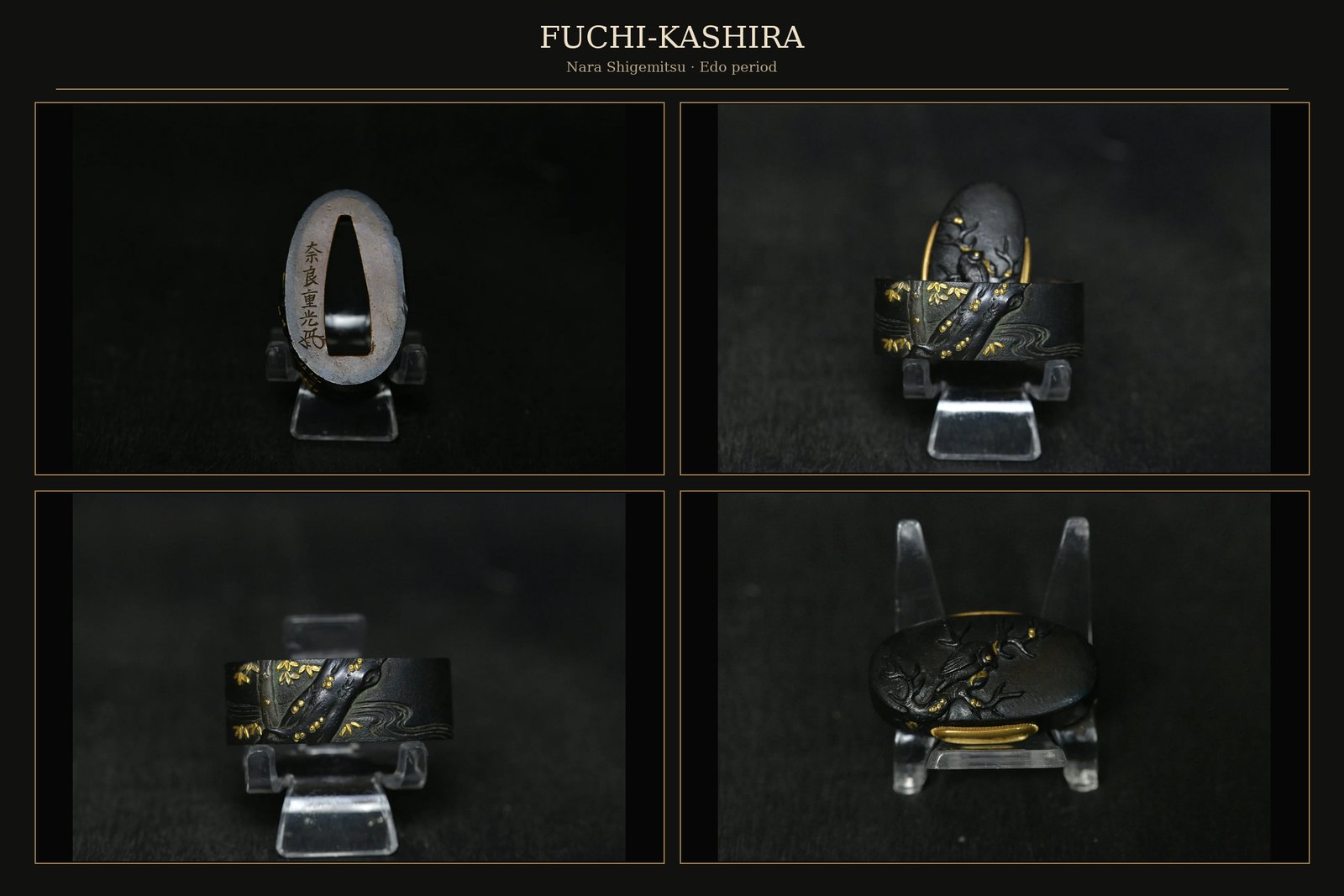
Some sword fittings command attention with bold figures and bright colours. This fuchi-kashira has a quieter appeal: a small landscape that unfolds across a coordinated pair—a bird among the branches, a tree, and the movement of a river.
Made in shakudō with a nanako ground, the fittings are chiselled in relief and inlaid with gold and other metals. The scene invites a close look at how the details sit against the dark surface and relate to one another across the pair.
Explore the Fuchi / Kashira collection.
The bird and tree give the design a sense of place; the river brings movement. Gold highlights draw the eye against the dark shakudō, but the contrast remains measured. The ground is not simply a backdrop: its texture is part of the visual character of the fittings.
The pieces are small—the fuchi measures 3.9 × 2.5 cm and the kashira 3.5 × 2 cm—yet the relief and inlay give the scene depth. Their scale rewards patient observation: as your eye moves over the surfaces, more details begin to emerge.
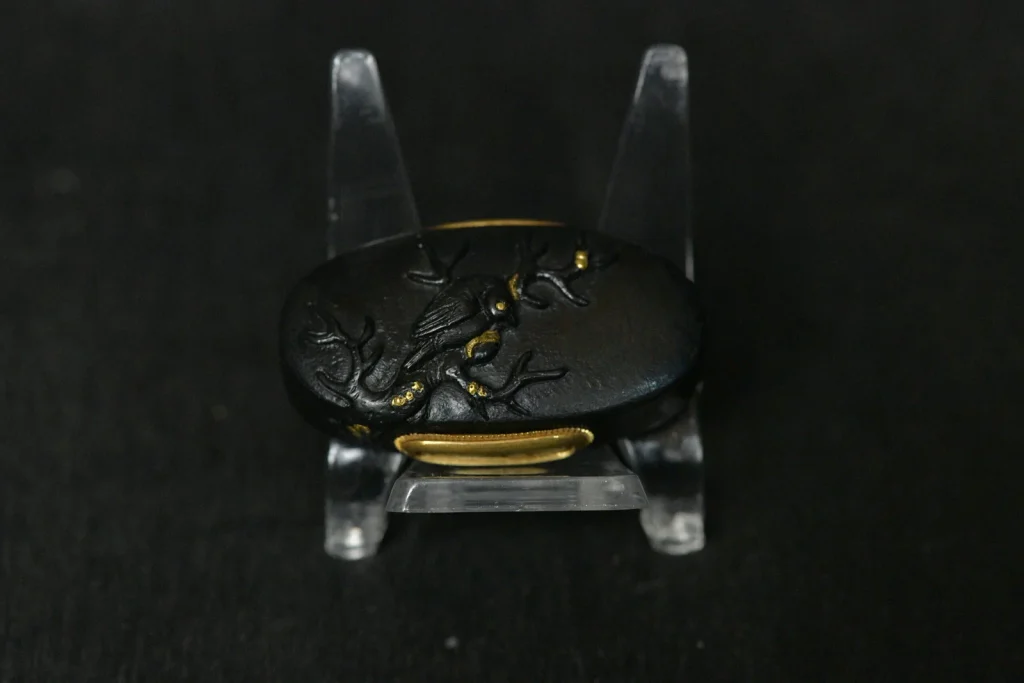
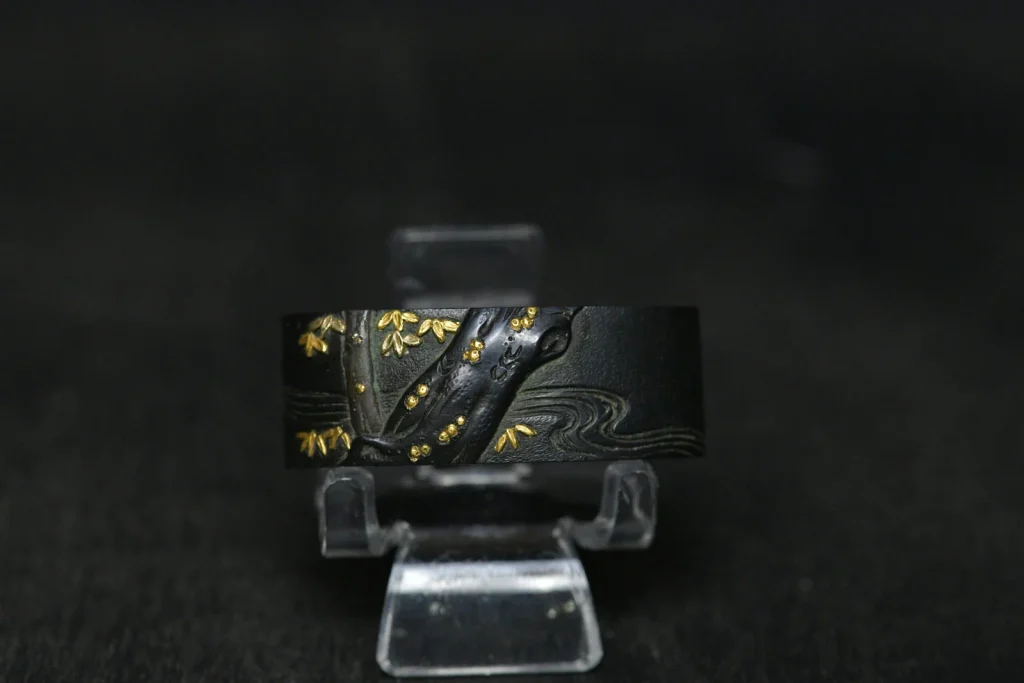
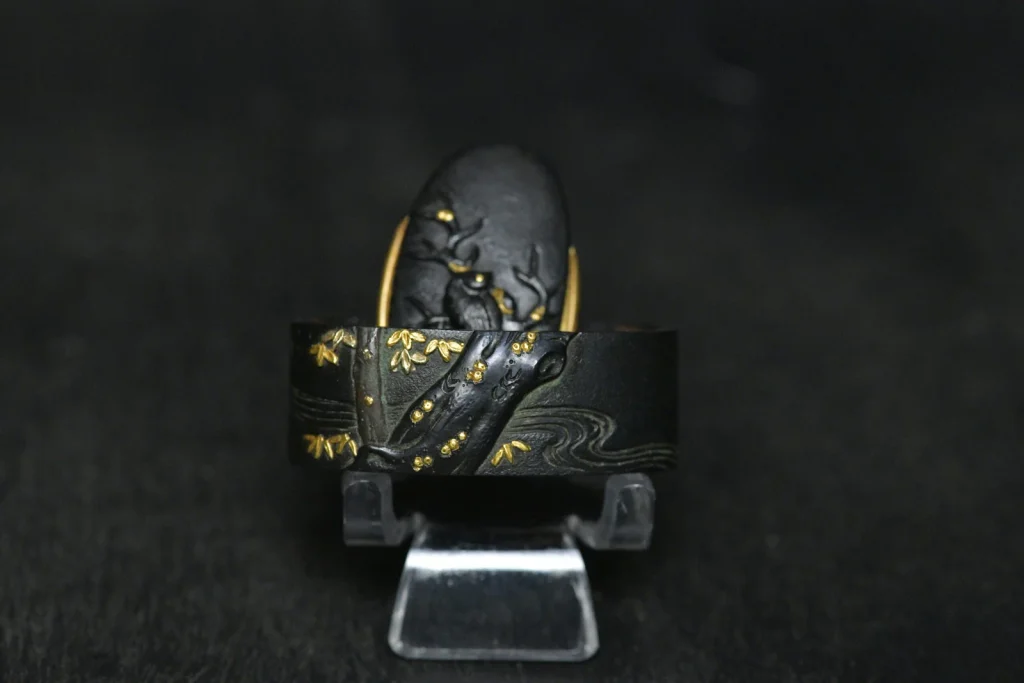
Shakudō is a copper-based alloy known for its dark, patinated appearance. Here, it creates a strong setting for the bird, tree and river, as well as for the gold and other metal details.
Nanako describes a small, repeated ground pattern resembling fish roe. On this pair, that finely worked texture contrasts with the raised carving. The result is a surface with several levels of detail: patterned ground, sculpted forms and carefully placed inlay.
The fuchi is the collar fitted at the base of the sword handle, beside the tsuba. The kashira caps the opposite end. Together, they form a coordinated pair within the koshirae, the sword’s mounting.
Their positions give them a distinctive visual role: once mounted, they frame opposite ends of the tsuka, or handle. A shared subject connects the two fittings, while their different shapes allow the design to vary from one piece to the other.
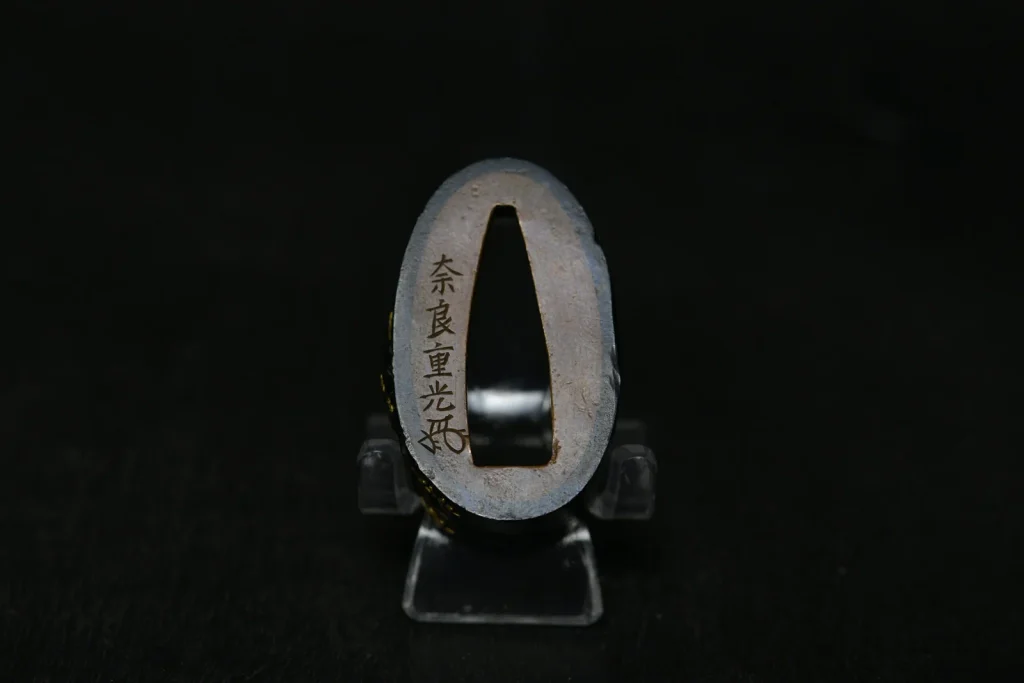
The pair is signed Nara Shigemitsu and bears a kaō, a stylised artist’s mark. The product description records the Haynes reference 08348 and dates the fittings to the Edo period. These details should be considered alongside the materials, workmanship and condition of the pair.
What makes these fittings memorable is the way several elements work together: the textured nanako ground, the chiselled bird and tree, the flowing river, and the touches of gold. Rather than relying on one dramatic feature, the composition draws you in through its details.
For collectors of tosogu, this pair is a reminder that a sword’s visual character is shaped by more than its blade or tsuba. Smaller fittings contribute their own materials, craftsmanship and imagery to the complete mounting.
Browse the Fuchi / Kashira collection at Supein Nihonto to discover more examples of Japanese sword fittings, each with its own design and character.
CEO of SupeinNihonto, dealer and collector of ancient Japanese art and weapons from Canillo, Andorra.