1 in stock
1 in stock
Add to Compare
Add to Wishlist
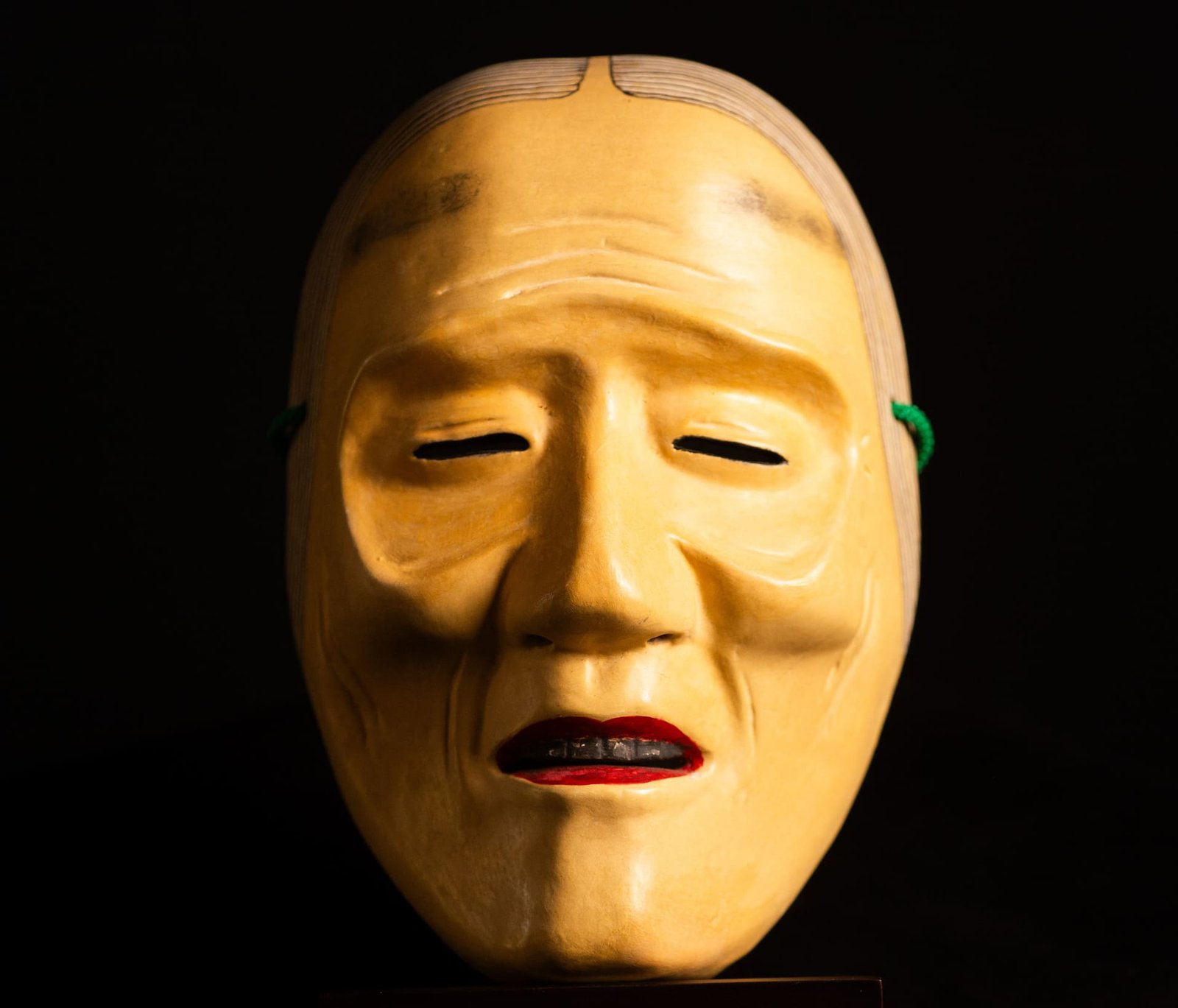
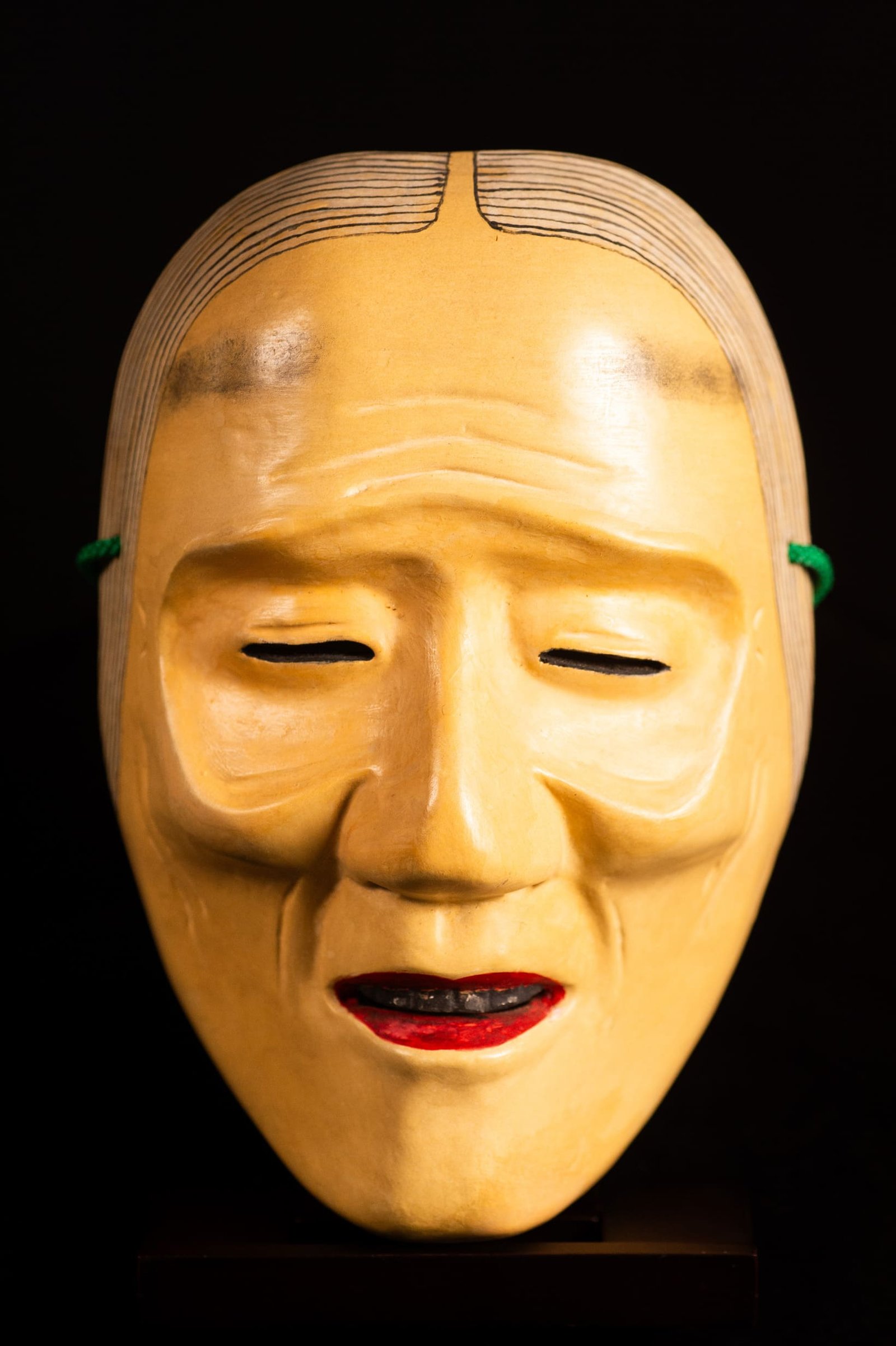
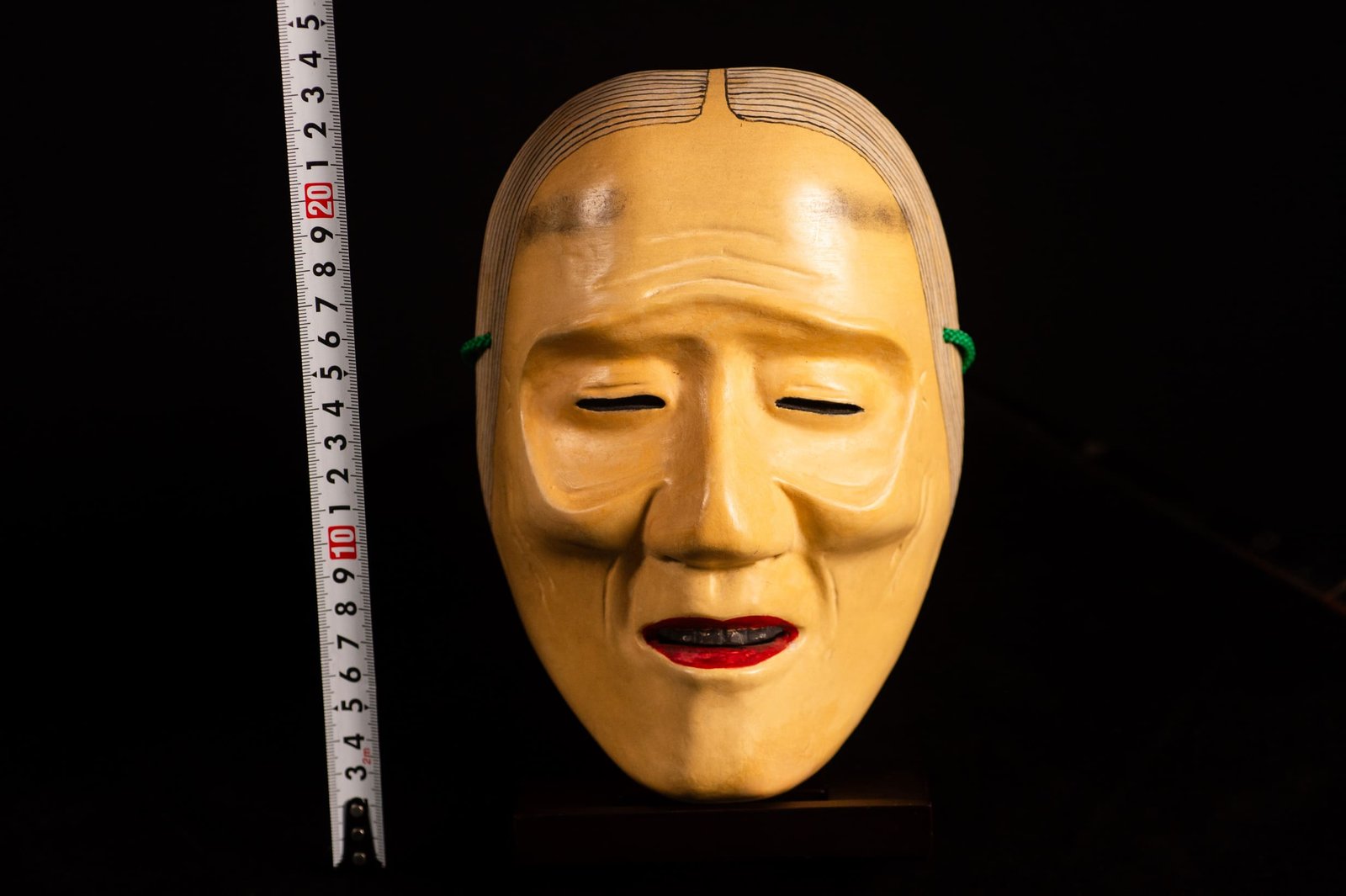
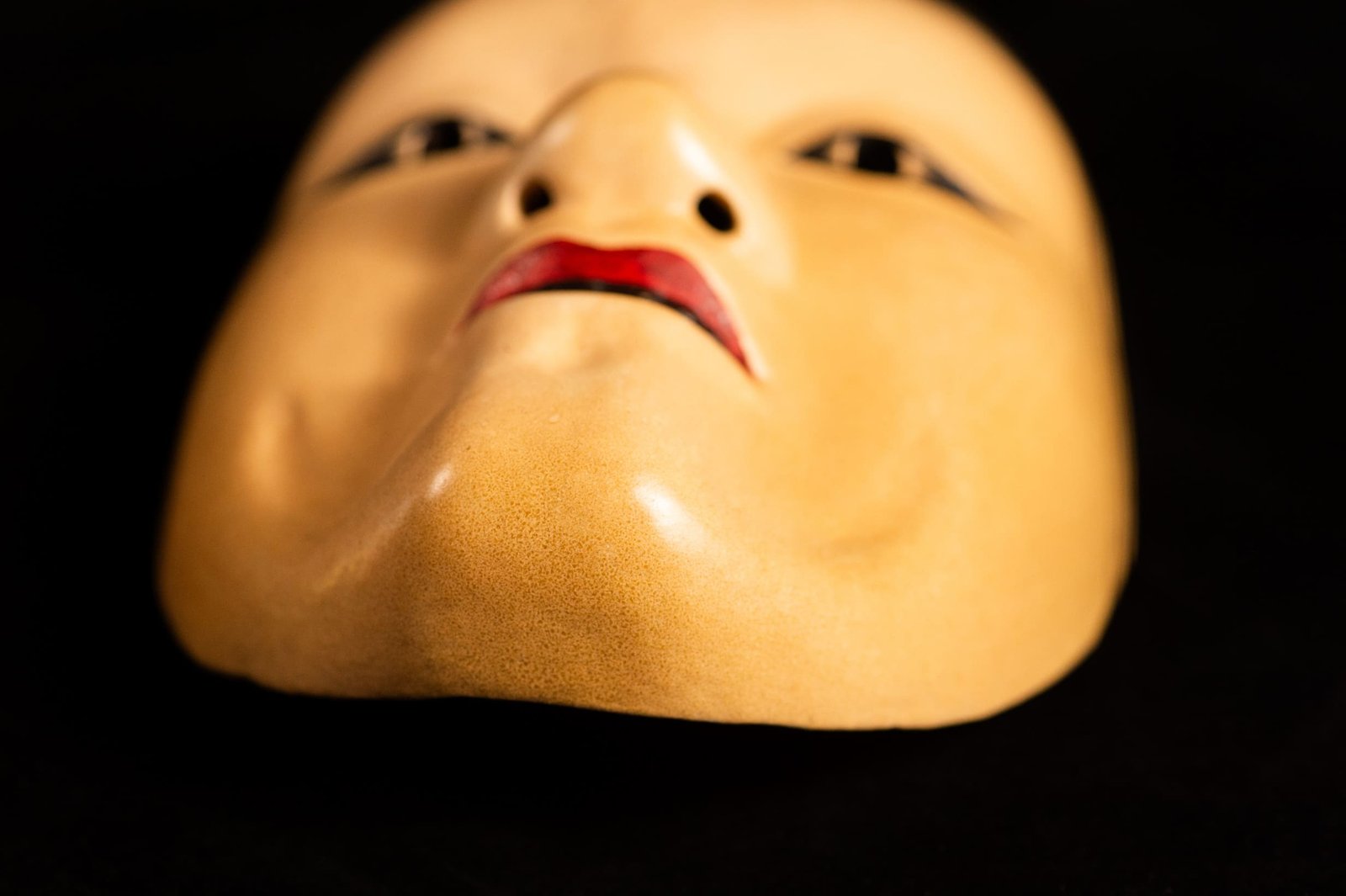
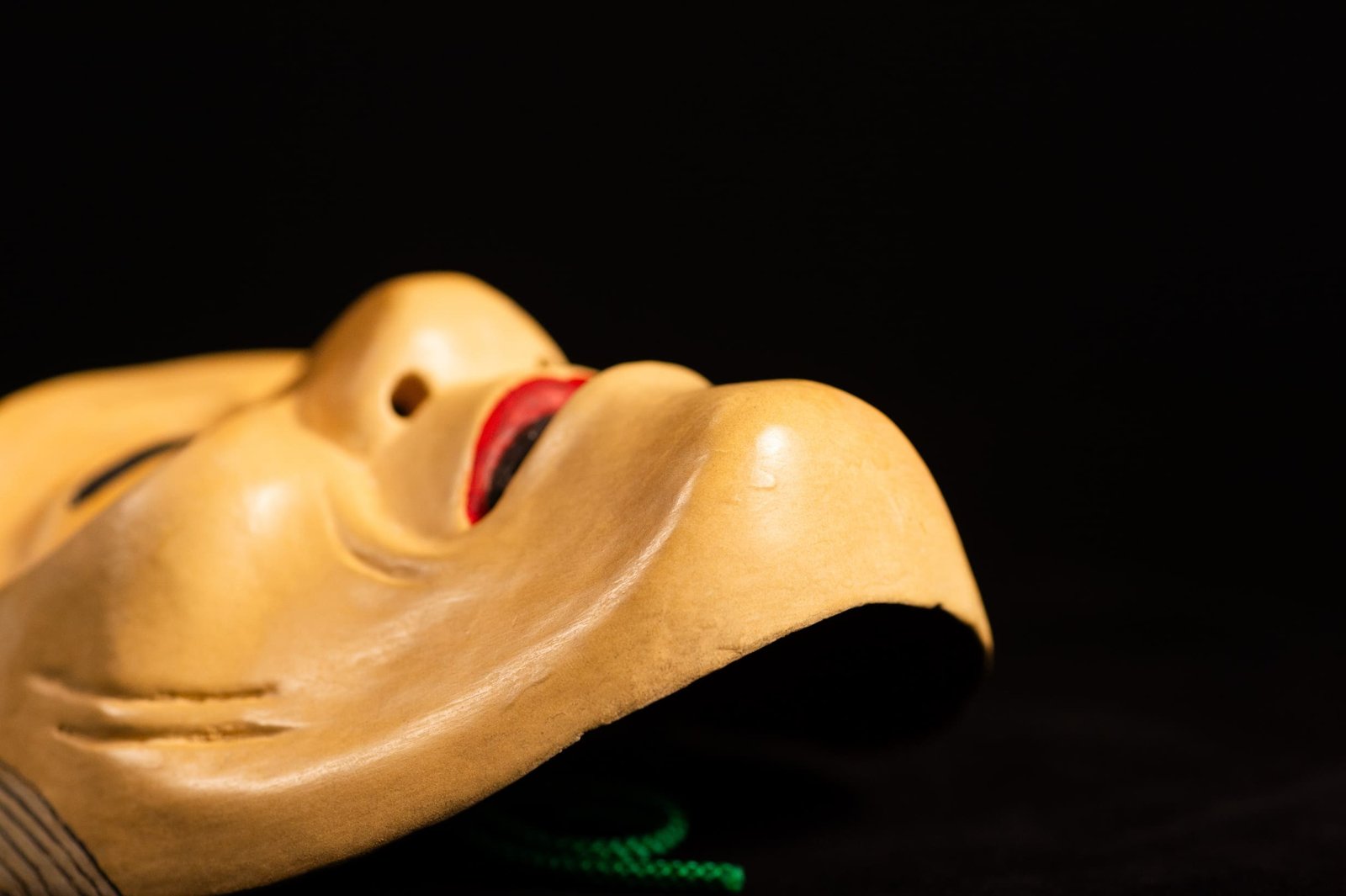
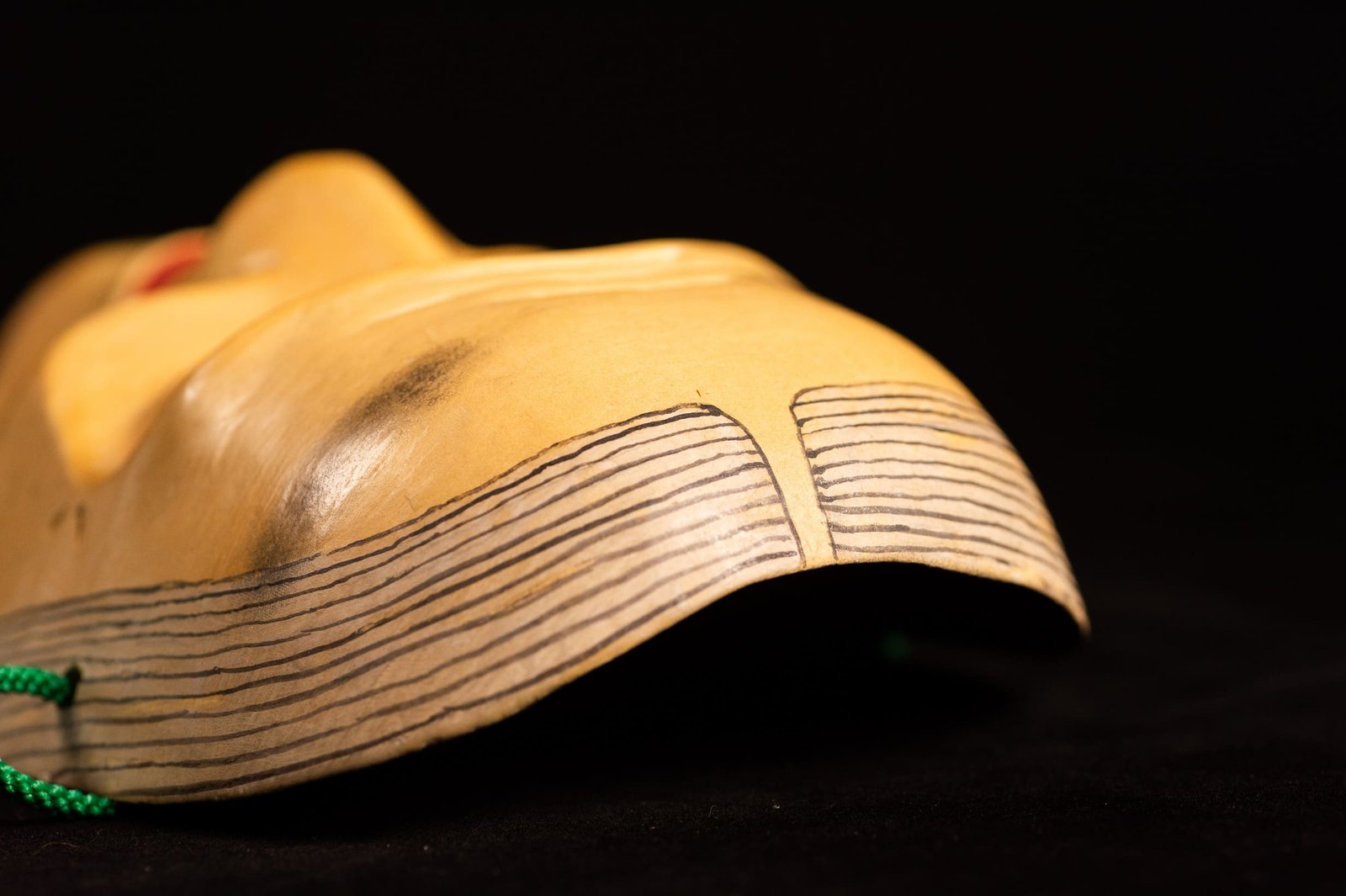
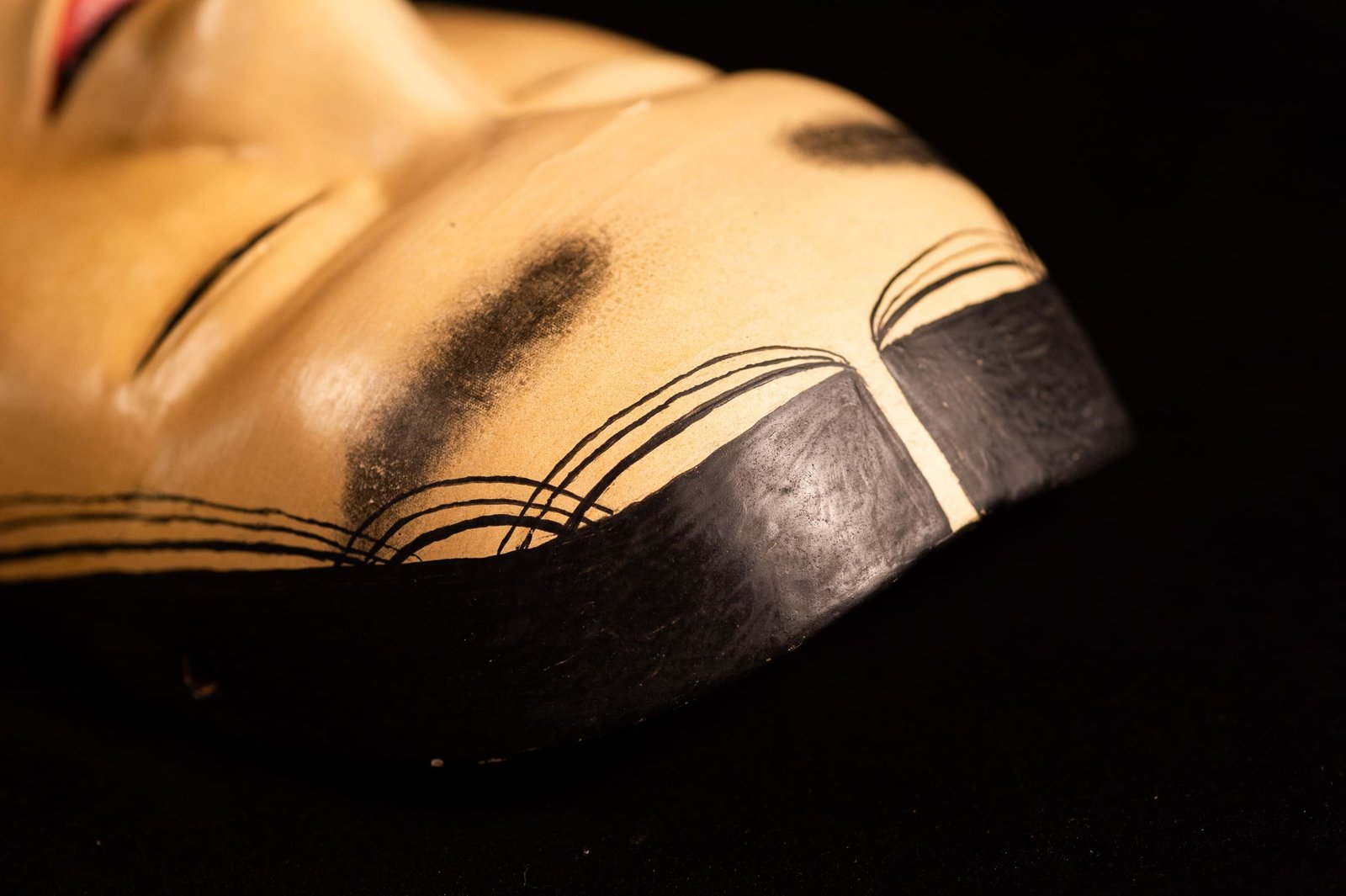
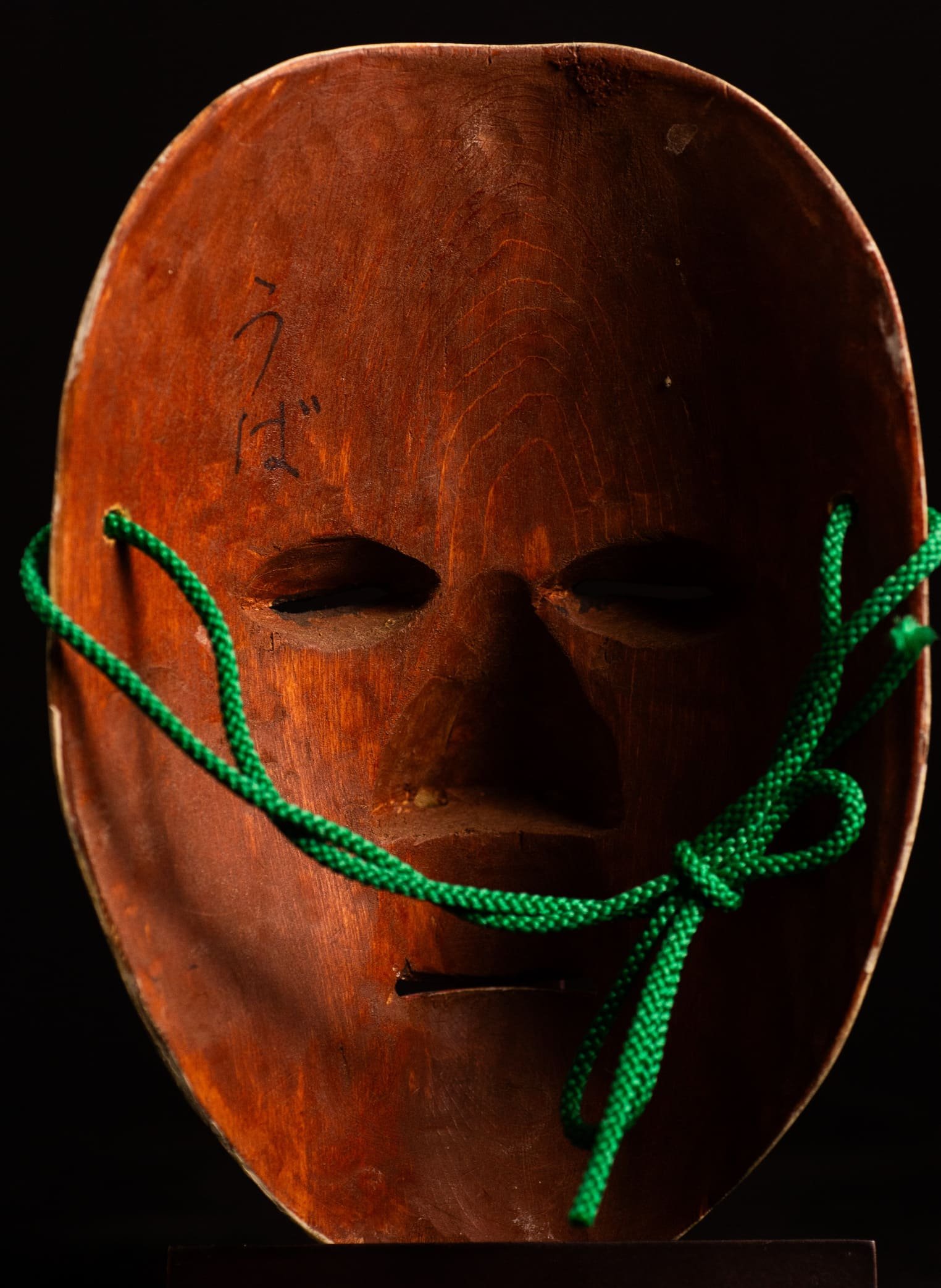
An elegant antique Japanese Noh mask carved in wood and representing Uba, the old woman. Uba is one of the most dignified elderly female character types within the Noh repertoire, associated with age, refinement, gravity and ritual presence. This life-size example presents the characteristic features of the type with great clarity: a swept-back painted hairline, faint high-set eyebrows in the refined court style, narrow slit eyes, sunken cheeks, deeply carved wrinkles, and blackened teeth visible behind red-painted lips. An ink inscription is visible on the reverse.
The mask conveys the presence of an elderly woman of poise and inner gravity, shaped not as a grotesque figure of age, but as a refined and elevated theatrical character.
Its expression is restrained, contemplative and emotionally complex, allowing the performer to evoke dignity, solemnity, melancholy and spiritual depth through movement and angle alone.
In the Noh tradition, Uba represents the old woman.
She is a role of deep dignity within the classical repertoire and is often associated with sacred or elevated theatrical contexts rather than comic or exaggerated old age.
The type is traditionally linked with Okina, the old man mask, forming a divine elder pair within the symbolic world of Japanese performance culture.
This association gives Uba a meaning that extends beyond simple portraiture of age.
She embodies maturity, continuity, ritual gravity and the serene authority of advanced years.
The present mask reflects those qualities through its calm construction and refined surface treatment.
The mask is carefully carved to express old age with subtle authority.
The cheeks are slightly sunken and the areas around the mouth and eyes are shaped with deep carved lines that create a convincing sense of age without losing elegance.
The forehead and upper face remain broad and calm, while the lower face carries the greater emotional weight of the expression.
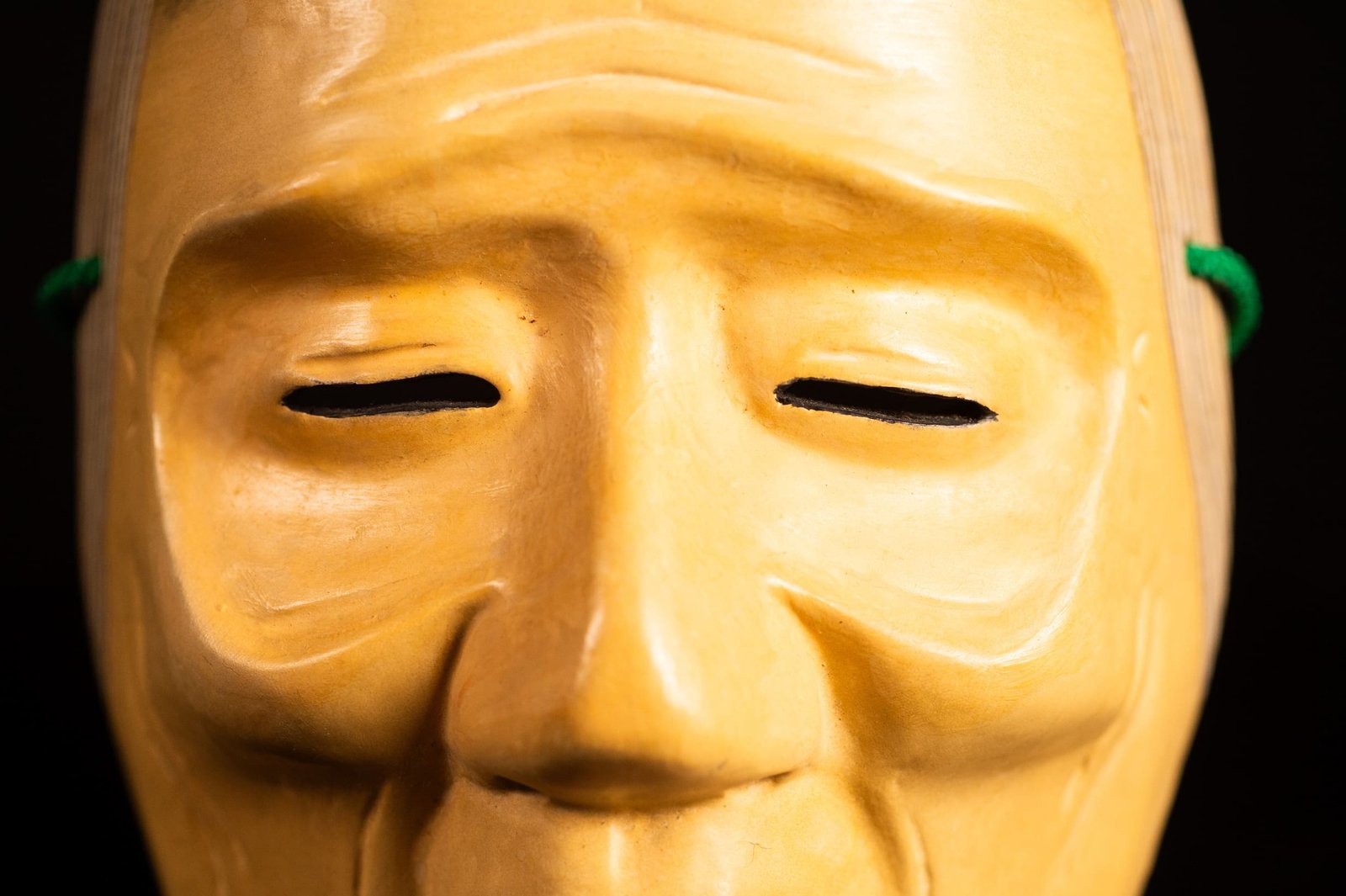
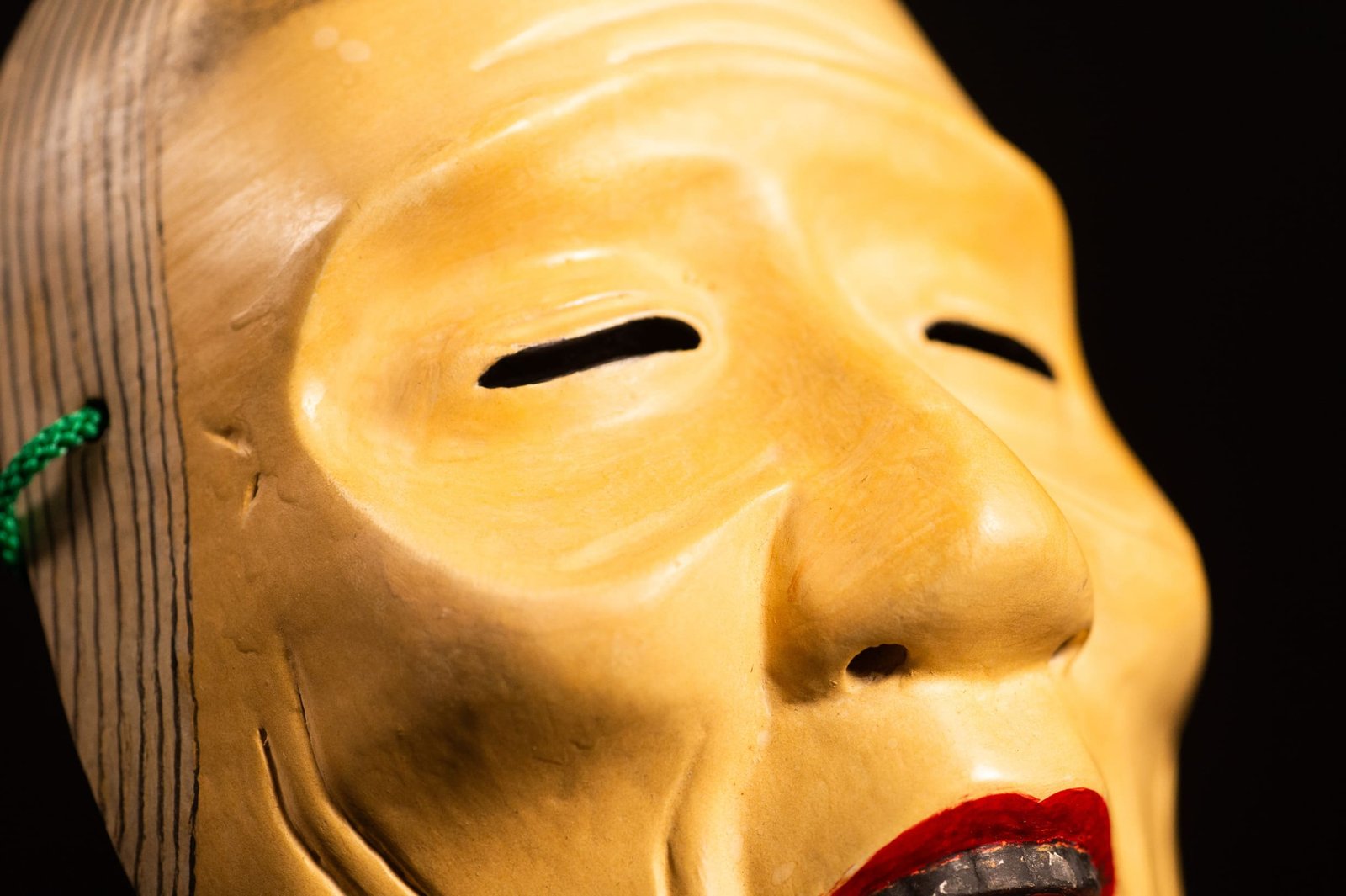
The eyes are rendered as narrow slits, giving the face a withdrawn, introspective and contemplative quality.
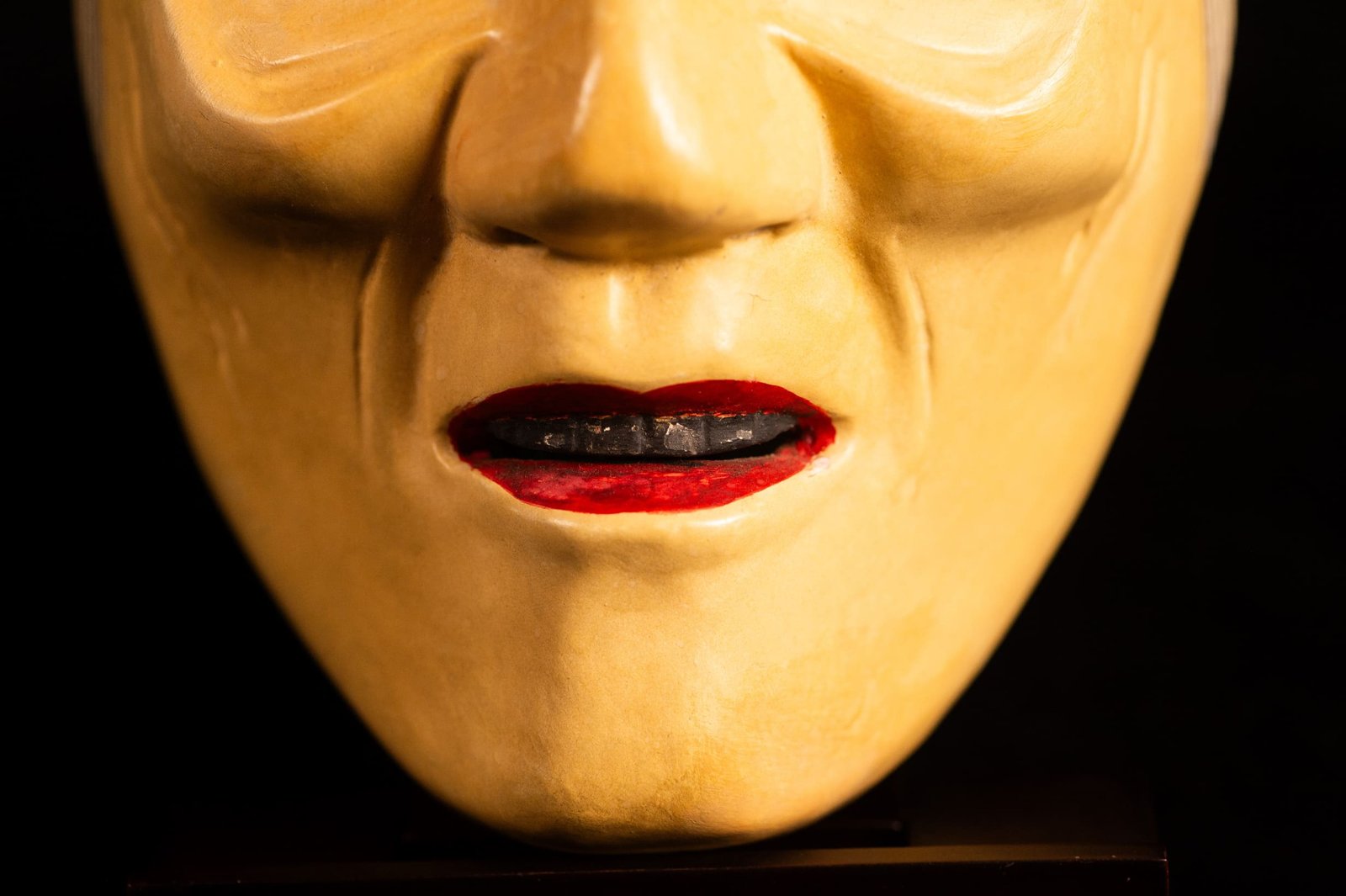
The mouth is slightly open, revealing blackened teeth behind red-painted lips.
This combination creates a restrained but highly evocative expression that can appear solemn, gentle, sorrowful or venerable depending on how the mask is worn and lit in performance.
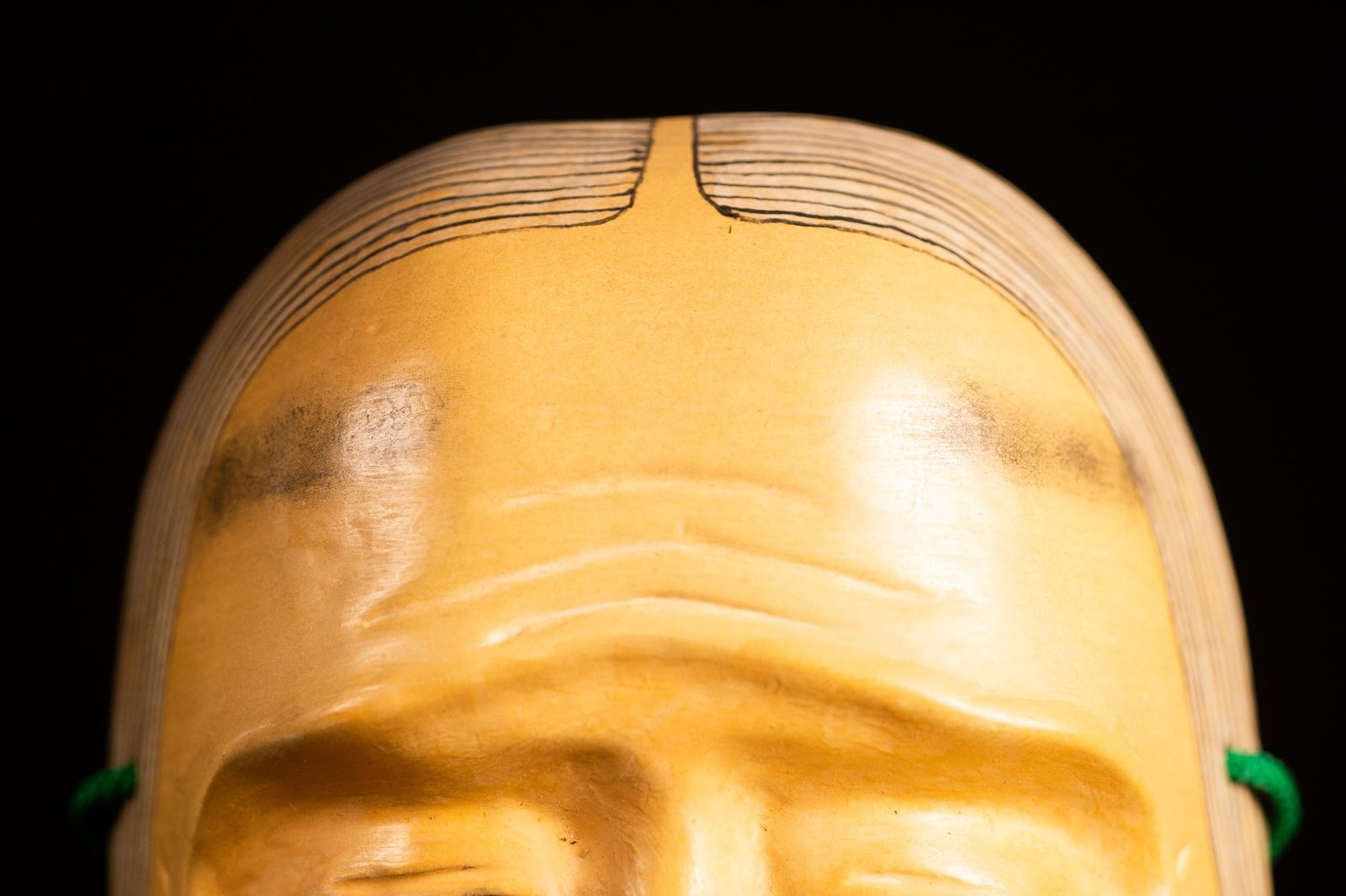
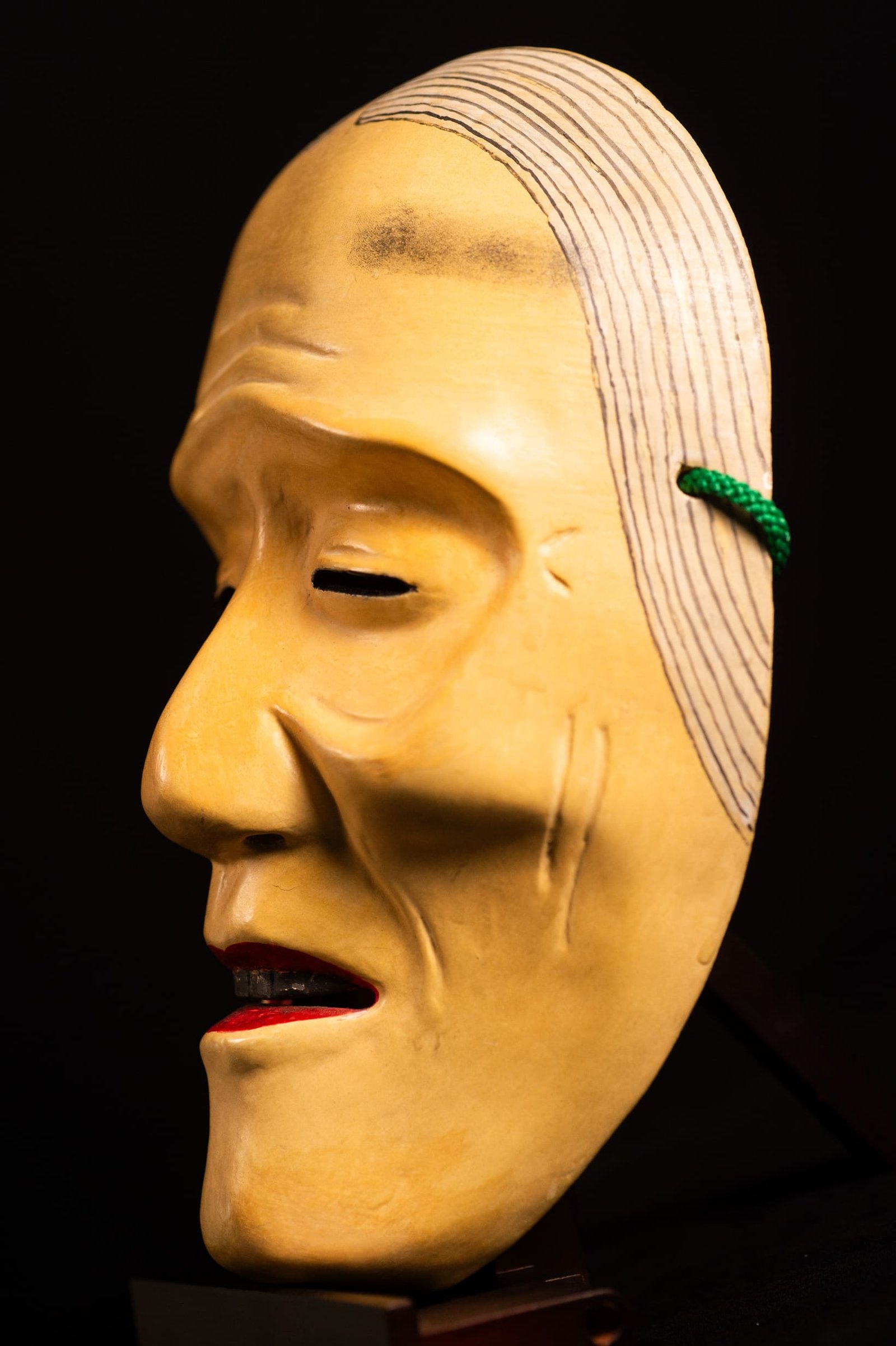
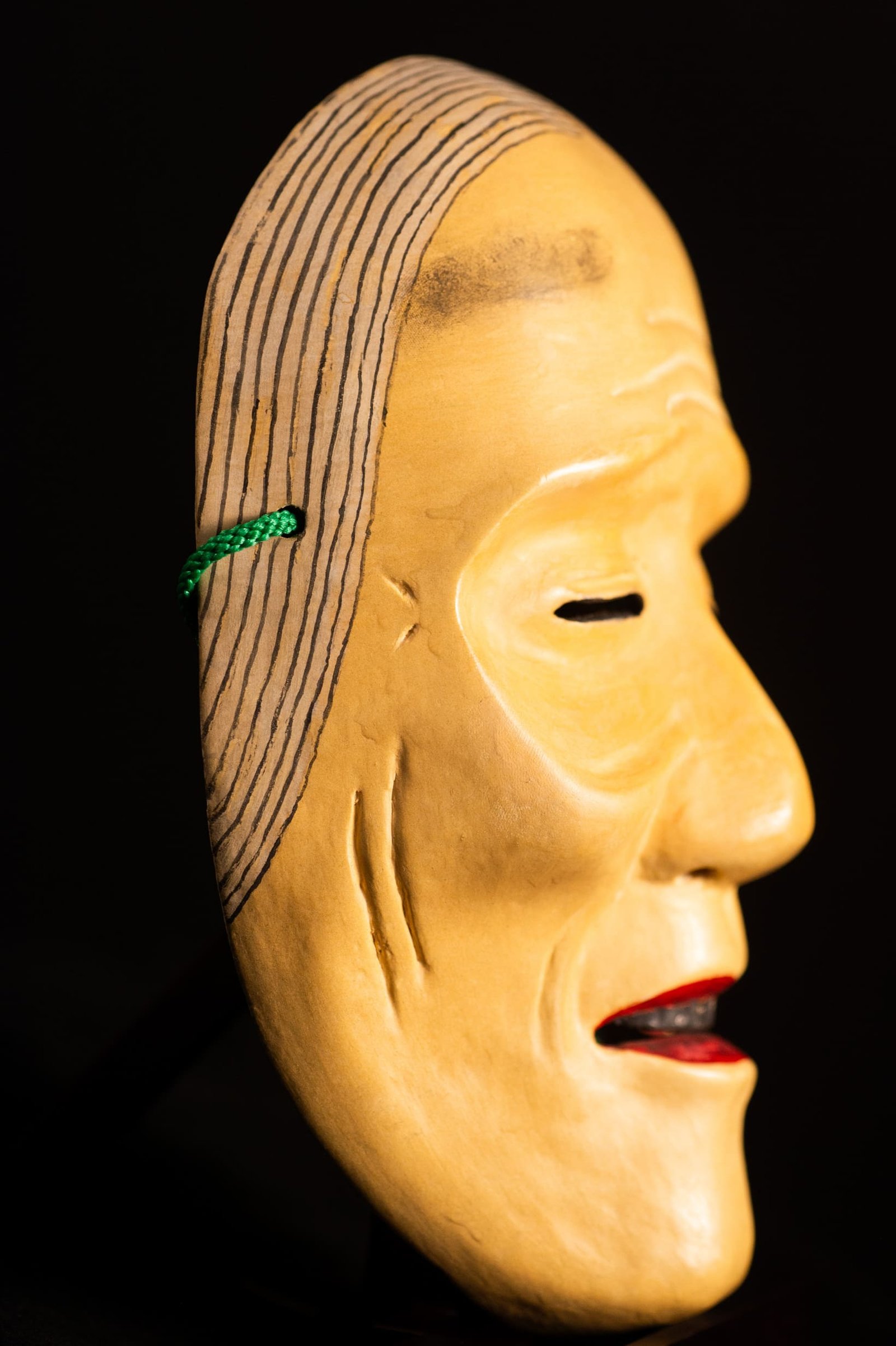
One of the most distinctive visual features of this mask is the painted hairline.
It is rendered in fine parallel strokes that sweep back from the forehead, giving the upper part of the face a highly controlled and refined structure.
This painted treatment reflects the stylised language of Noh mask carving and contributes to the courtly character of the figure.
The faint high-set eyebrows reinforce that impression.
Rather than appearing heavy or strongly naturalistic, they are delicately placed and softly defined, suggesting a classical and refined beauty transformed by age.
These subtle painted elements balance the more strongly modelled wrinkles and hollowed cheeks of the face.
The narrow eyes are fundamental to the identity of the Uba type.
They are understated and calm rather than dramatic, and they contribute to the introspective spiritual character often associated with elderly figures in Noh theatre.
The surrounding carving enhances the impression of age through shallow hollows and soft but definite lines.
The cheeks are sunken and the face is gently elongated, giving the mask a leaner and more mature presence than younger female types such as Ko-omote.
Deep carved wrinkles appear around the eyes, cheeks and mouth, helping to define the character as an elderly woman while preserving dignity and restraint.
The result is not caricature, but a poised theatrical image of venerable age.
The mouth is an especially important detail in this mask.
The lips are painted in red, standing out clearly against the lighter facial ground.
Behind them appear blackened teeth, a feature known in Japan as ohaguro.
In historical Japanese culture, tooth blackening was associated in different periods with beauty, maturity, status and convention, and in the context of Noh masks it can help define age, character and social identity.
Here, the blackened teeth contribute directly to the recognisable iconography of Uba.
Combined with the slightly parted mouth, they add a quiet intensity to the face and strengthen the sense of age and formal refinement.
The surface presents a light painted ground typical of many classical Noh masks, allowing the dark painted hairline, eyebrows, eye slits and red lips to stand out with clarity.
The finish is visually calm and balanced, supporting the solemn theatrical quality of the piece.
From the photographs, the mask appears to retain a coherent painted surface with visible age-related wear and patina consistent with an antique object.
The contrast between the pale face and the red mouth gives the mask a strong visual identity even at a distance, which is essential in stage use.
Its appearance remains highly expressive despite the economy of carved detail.
According to the description, an ink inscription is visible on the reverse of the mask.
This is an important historical feature and may relate to authorship, workshop practice, ownership, cataloguing or later handling.
However, as no transcription or interpretation of the inscription has been provided, it should be described carefully as an ink inscription rather than presented as a confirmed signature or attribution.
This visible inscription nonetheless adds documentary and collectible interest to the object.
Potential buyers should consult the available photographs of the reverse whenever possible for closer study.
Noh masks are among the most refined theatrical objects in Japanese art.
Their power lies not in overt realism, but in controlled stylisation and emotional flexibility.
A Noh mask does not change expression physically, yet in performance it can seem to shift from serenity to sorrow, from dignity to distance, simply through changes in angle, posture and light.
The Uba mask is especially well suited to this subtle expressive system.
Its narrow eyes, aged cheeks, faint brows and slightly open mouth create a face capable of remarkable nuance.
What appears solemn in one moment may seem compassionate or melancholy in another.
This is one of the central aesthetic strengths of Noh theatre and of the best traditional masks.
Uba is not merely an image of old age.
Within Noh culture, she carries associations of venerable age, continuity, dignity and spiritual presence.
Her pairing with Okina, the old man, places her within a broader symbolic context linked to blessing, longevity and sacred theatrical tradition.
Noh masks more generally have long been connected with Japanese ritual, festival and performative culture.
They represent human, historical, spiritual and divine presences through transformation.
Traditionally, the wearing of the mask allowed the performer to embody the role fully, taking on the presence of the being represented rather than simply portraying it.
In that sense, the Uba mask participates in a much wider history of Japanese sacred and theatrical expression.
This mask is described as being carved at 1:1 scale, meaning it is life-size and made according to the proportions of a functional theatre mask.
Its visual presence is especially effective when displayed frontally, where the eyes, wrinkles and mouth create a strong but restrained expression.
A three-quarter or side view reveals the sculptural depth of the nose, cheeks and mouth, as well as the painted hairline wrapping around the upper head.
For display, stable support and controlled lighting are recommended.
As with all antique painted wooden objects, the mask should be protected from direct sunlight, excessive humidity, strong dryness and abrupt environmental changes.
Cleaning or restoration should be undertaken only by a qualified conservator experienced in historic painted wood.
The mask is described as antique.
Based on the description and photographs, it shows the expected signs of age and use consistent with a historical theatrical object.
These may include surface wear, patina, minor irregularities in the painted finish and age-related tonal variation.
An ink inscription is visible on the reverse.
No separate condition report, restoration history, maker attribution or certificate has been provided in the available description.
Buyers should therefore examine all photographs carefully to assess the precise condition, surface character and preservation of the piece.
This antique Uba mask is a compelling example of the quiet dignity and ritual depth found in Japanese Noh theatre.
Its appeal lies in the balance between stylised refinement and visible signs of age: the elegant painted hairline and eyebrows, the narrow contemplative eyes, the hollow cheeks, the deeply carved wrinkles, and the red mouth revealing blackened teeth.
The visible ink inscription on the reverse adds further historical interest, while the strong identification of the character type makes the piece especially attractive to collectors of Japanese masks, theatre arts, religious and ritual material, or carved wooden works.
It is a life-size theatrical object with a powerful yet restrained presence, representing one of the most venerable female types in the Noh tradition.
An antique carved wooden Noh mask representing Uba, the old woman, one of the most dignified and symbolically rich female types in the Japanese Noh repertoire. Featuring a swept-back painted hairline, faint high-set eyebrows, narrow slit eyes, sunken cheeks, deeply carved wrinkles, and blackened teeth visible behind red-painted lips, this life-size mask conveys venerable age, refinement and theatrical gravity. An ink inscription is visible on the reverse, adding further historical interest. A compelling piece for collectors of Japanese masks, Noh theatre and traditional Japanese art.
| Época | Edo |
|---|

Order above 1.000,00 € gets free shipping.

Secure and hassle-free payment process.

Certificate of authenticity included.

Have questions? Contact us via WhatsApp.
Contact