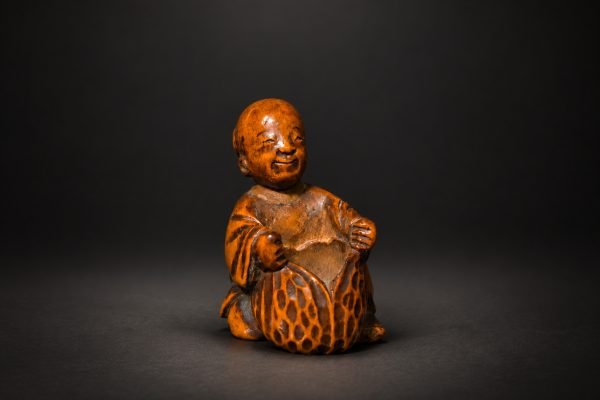
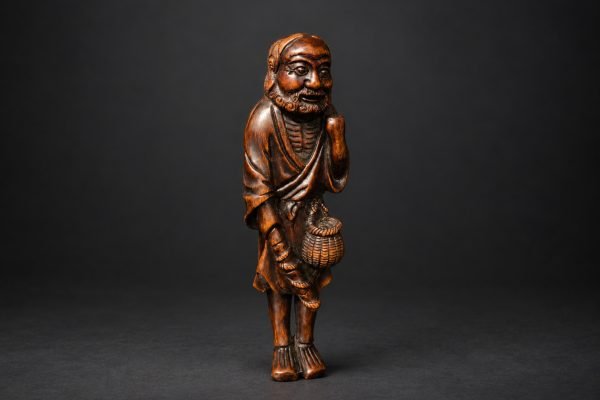
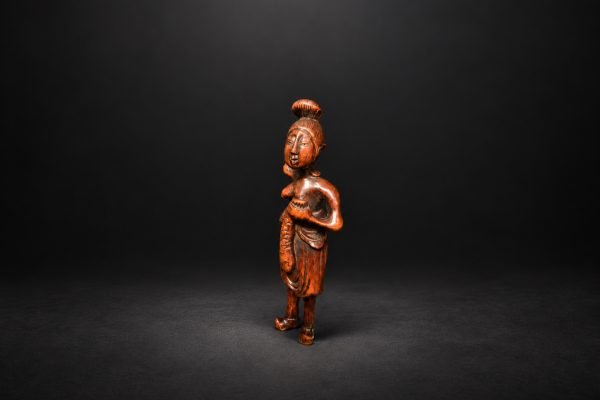
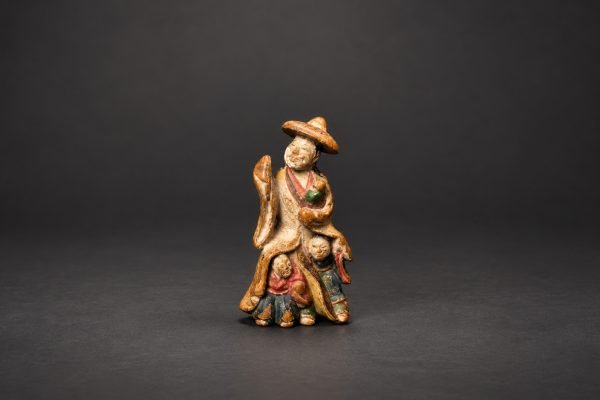
19th Century Ivory Okimono of a Matsuri Festival Scene – Signed, with CITES
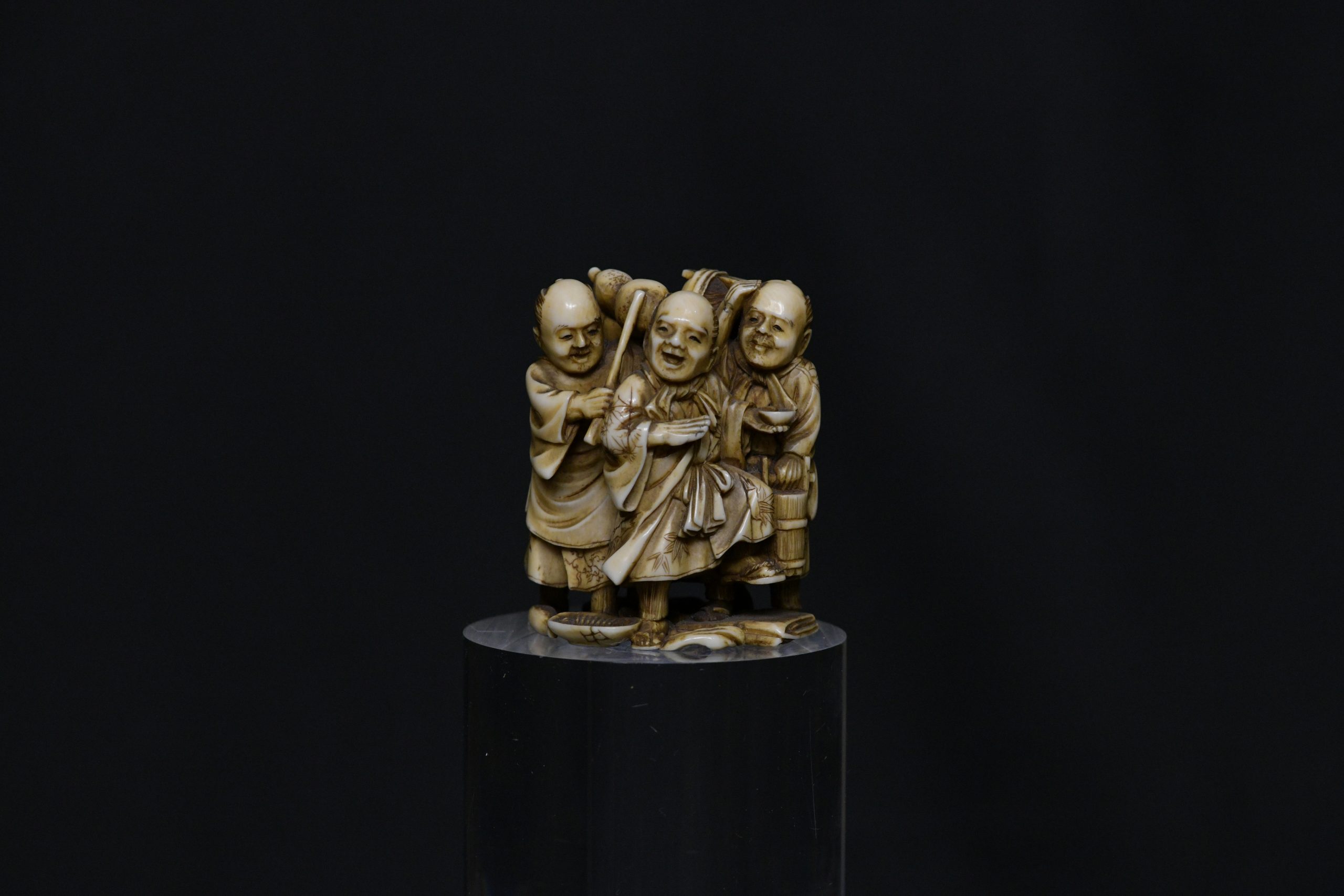
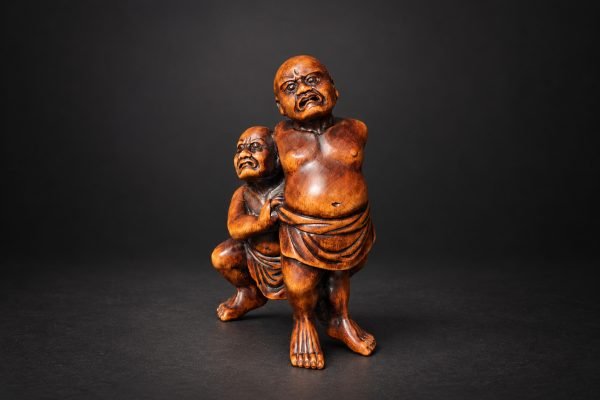
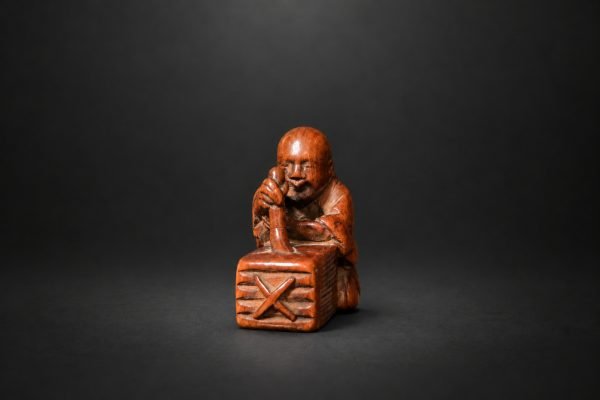
A finely carved Japanese ivory okimono from the 19th century, depicting a lively group of men taking part in a matsuri, or traditional Japanese festival celebration.
The compact composition brings together several figures engaged in different activities. Some carry mochi, while another holds a gourd-shaped container associated with drink. Plates or dishes placed on the ground add further detail to the festive setting.
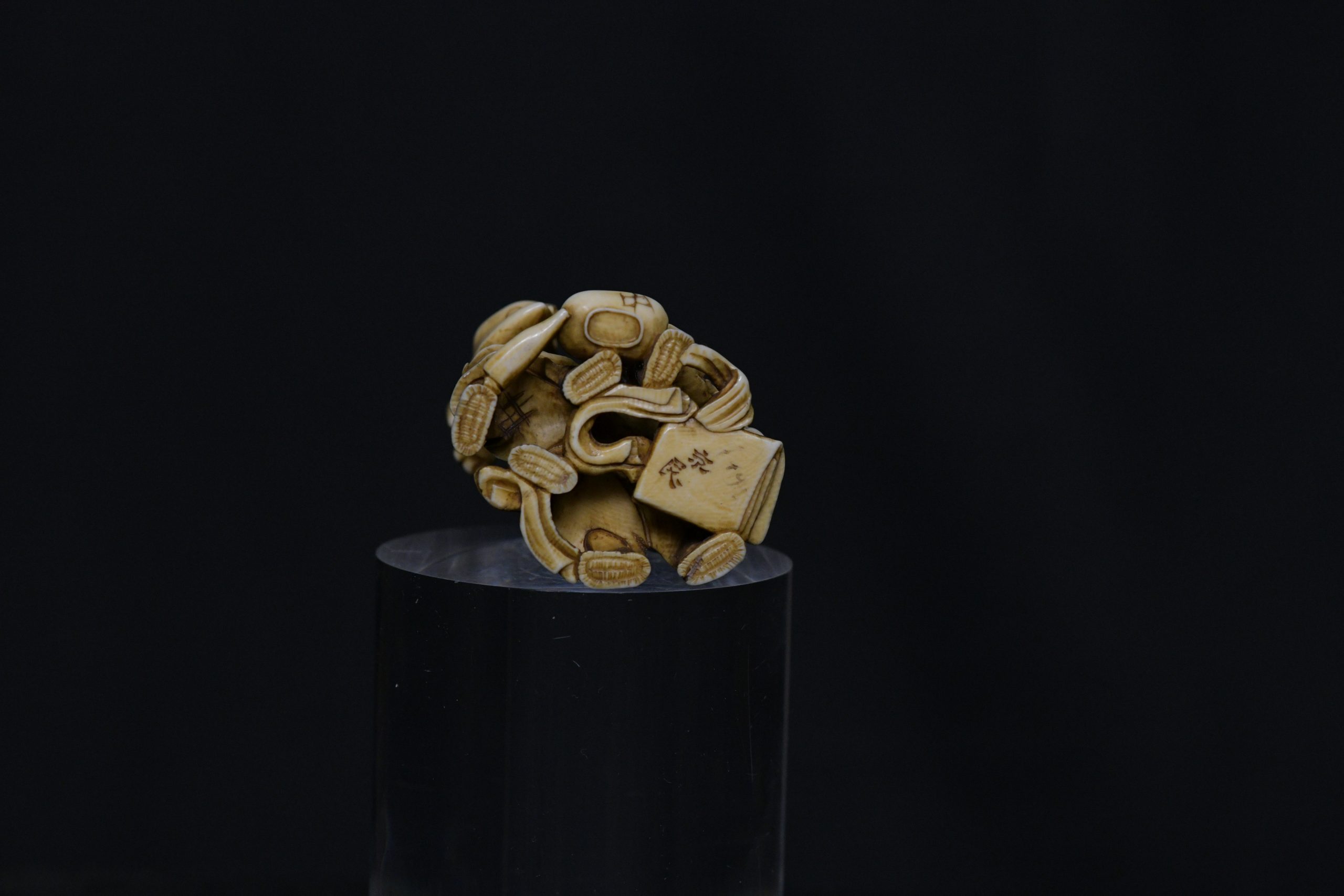
Both the figures and the base are carefully worked, creating a dense narrative scene that can be appreciated from multiple viewpoints.
The okimono is signed on the base and is accompanied by an appraisal certificate and CITES documentation.
The piece dates to the 19th century, late Edo to early Meiji period, and measures approximately 5.7 × 4.8 × 4.2 cm.
A Japanese Matsuri Festival Scene
The central subject is a group of men participating in a matsuri, the Japanese term commonly used for traditional festivals.
Matsuri could be associated with shrines, local communities, seasonal observances and a wide variety of celebratory traditions.
Rather than depicting a single isolated figure, this okimono presents a collective scene in which the gestures, objects and positioning of the men create a strong sense of activity and social interaction.
No specific festival is identified in the available documentation, so the scene is best understood more broadly as a representation of communal festivity.
Mochi and Festival Food
Several of the figures are represented carrying mochi, a traditional Japanese food made from glutinous rice and closely associated with a variety of seasonal, ceremonial and celebratory contexts.
The presence of mochi and dishes on the ground helps establish the scene as one of communal celebration and shared food.
These small accessories also give the sculptor opportunities to introduce narrative details into an otherwise extremely compact composition.
Gourd-Shaped Drink Container
One of the figures carries a gourd-shaped container, described in the original documentation as holding drink.
Gourd forms have a long history as containers in East Asian material culture and are frequently recognisable in Japanese art through their distinctive curved silhouette.
Within this composition, the object reinforces the convivial atmosphere of the gathering without requiring identification of a specific beverage.
Multi-Figure Composition
One of the most notable aspects of this okimono is the number of figures compressed into such a small sculptural space.
Each man is given an individual pose or activity, while the group remains visually connected through gesture, direction and shared objects.
This kind of multi-figure composition requires careful planning, particularly in a carving measuring only a few centimetres across.
The result is a miniature narrative that rewards close viewing from different angles.
Ivory Carving
The okimono is carved from ivory, a material historically used in Japanese miniature sculpture because its fine grain allowed artists to execute very small details with considerable precision.
This made it particularly suitable for crowded narrative compositions involving multiple figures, garments, facial features and small accessories.
In this example, the material allows both the figures and the base to carry a high level of carved detail despite the compact dimensions of the piece.
What Is an Okimono?
An okimono is a Japanese decorative object created primarily for display.
Unlike netsuke, which developed as functional toggles used with objects suspended from the obi, okimono were conceived mainly as independent sculptures.
They could represent people, animals, legends, religious subjects, scenes from everyday life and complex narrative groups.
During the 19th century, increasingly detailed okimono were produced for both Japanese appreciation and the expanding international market for Japanese decorative arts.
Late Edo to Early Meiji
This piece is dated to the 19th century, from the late Edo to early Meiji period.
This transitional era was especially significant for Japanese decorative arts, as established carving traditions continued while artists increasingly explored elaborate compositions and highly detailed workmanship.
The dense group of figures and careful treatment of small narrative accessories are consistent with the broader taste for intricate miniature sculpture during the period.
Signed on the Base
The okimono bears a signature on the base.
No reading or specific attribution of that signature has been supplied, so the piece is described simply as signed rather than assigned to a particular artist or workshop.
The signature nevertheless forms an important part of the object and its documentation.
Appraisal Certificate and CITES Documentation
The okimono is accompanied by an appraisal certificate as well as CITES documentation relating to the ivory material.
These documents should be retained together with the piece as part of its associated records.
Regulations concerning ivory differ between jurisdictions, so any transport, import, export or future resale should be considered in accordance with the applicable legislation.
Dimensions
- Height: 5.7 cm
- Width: 4.8 cm
- Depth: 4.2 cm
Key Features
- Object: Japanese okimono
- Date: 19th century
- Period: Late Edo to early Meiji
- Material: Ivory
- Subject: Men celebrating at a matsuri
- Details: Mochi, gourd-shaped drink container and dishes
- Composition: Multi-figure festival scene
- Signature: Signed on the base
- Documentation: Appraisal certificate and CITES documentation
- Dimensions: 5.7 × 4.8 × 4.2 cm
Collector’s Interest
This okimono combines a lively subject with an ambitious multi-figure composition, offering considerable narrative detail within very small dimensions.
The representation of food, drink and communal celebration gives the carving a particularly animated quality, while the signed base and accompanying documentation add further historical context to the piece.
A detailed 19th-century Japanese ivory okimono depicting men celebrating at a matsuri, with mochi, a gourd-shaped drink container and dishes incorporated into the scene. Signed on the base and accompanied by an appraisal certificate and CITES documentation, this late Edo to early Meiji carving is a lively example of Japanese narrative miniature sculpture.