1 in stock
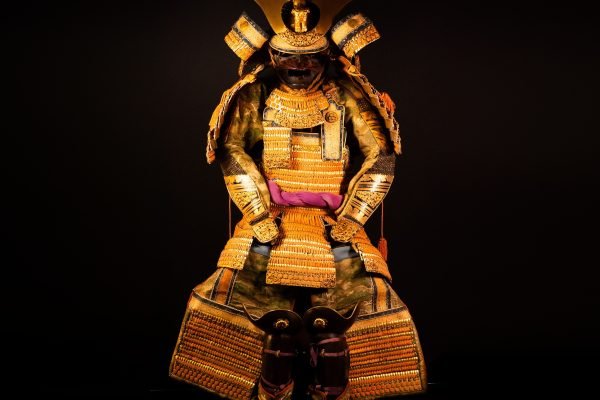
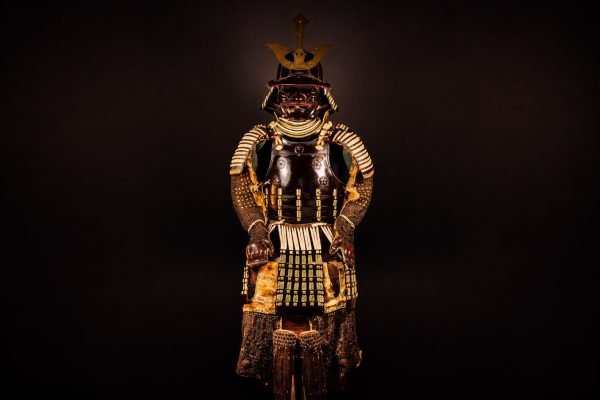
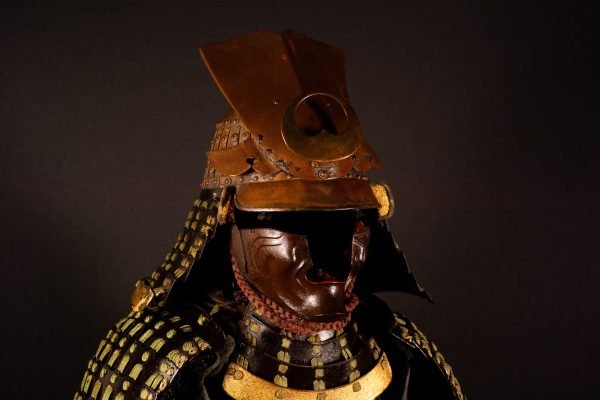
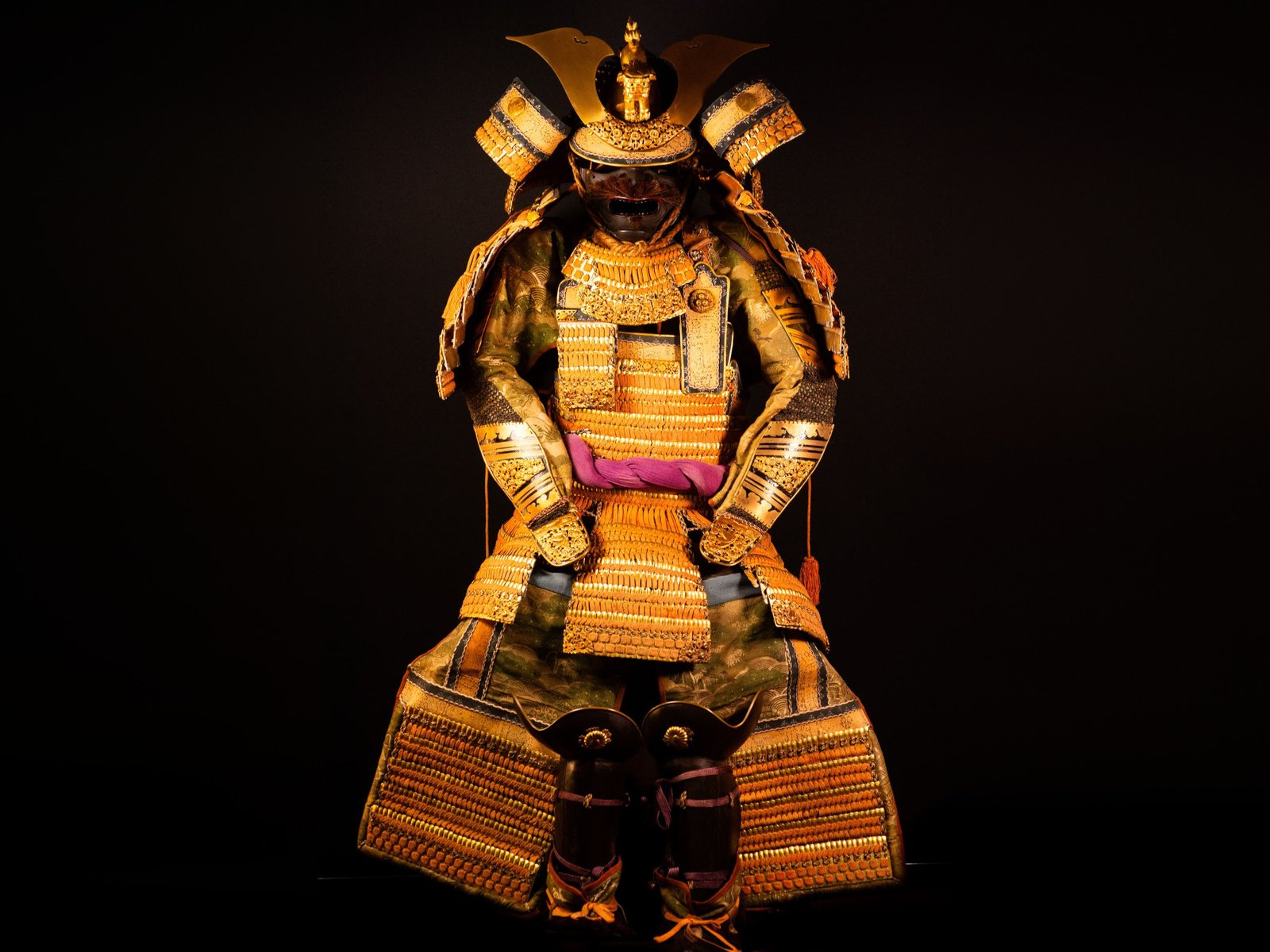
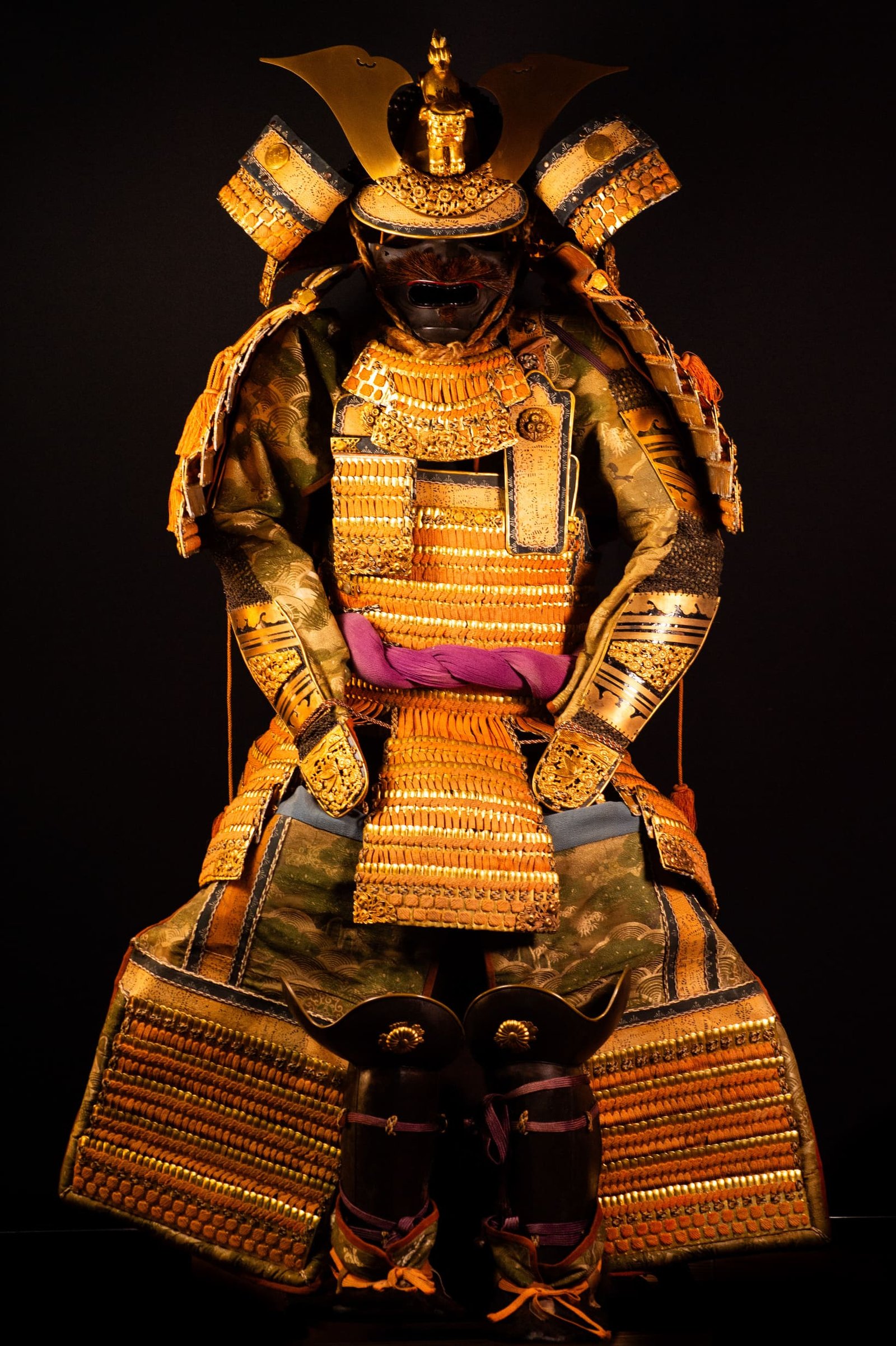
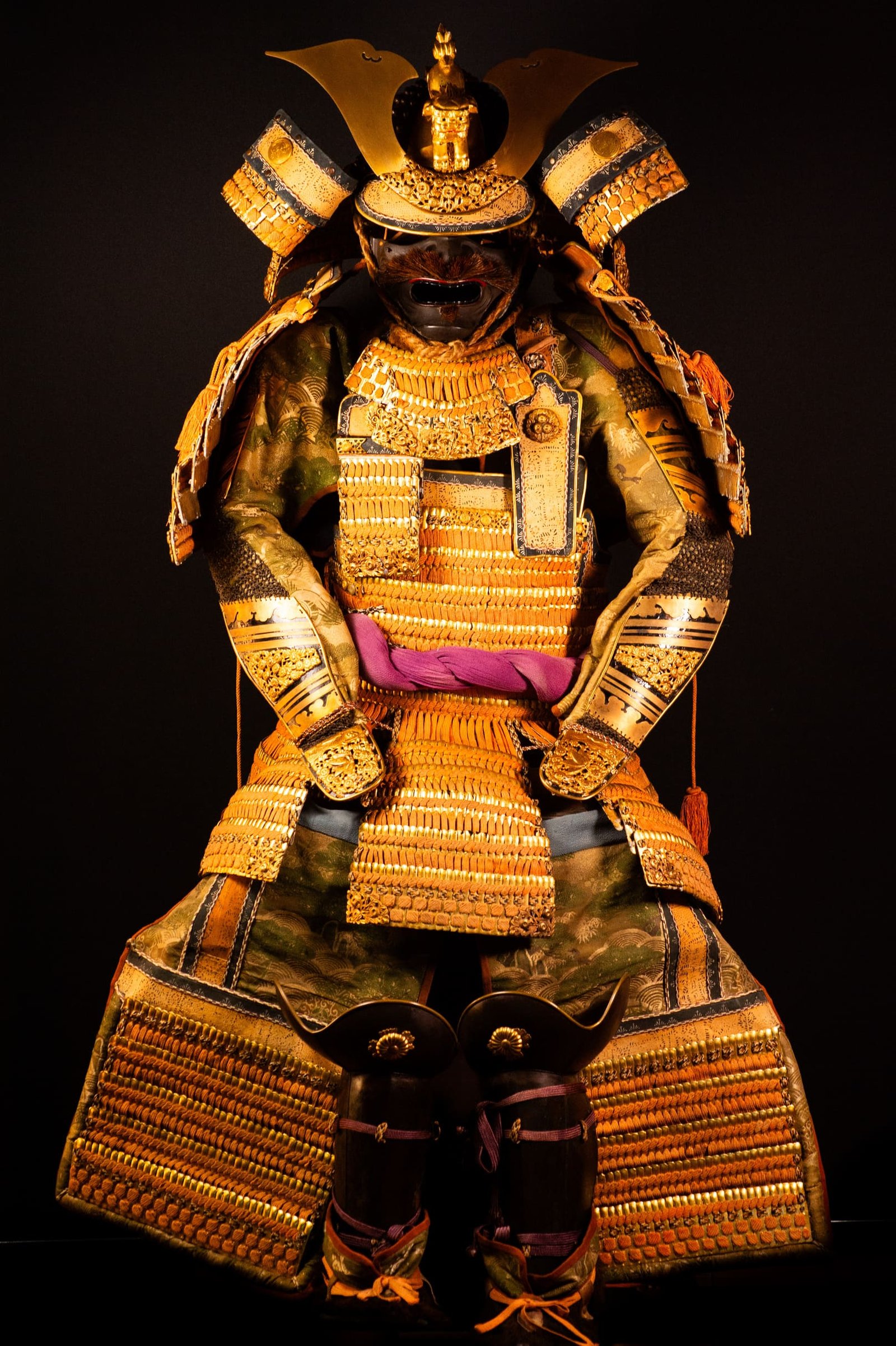
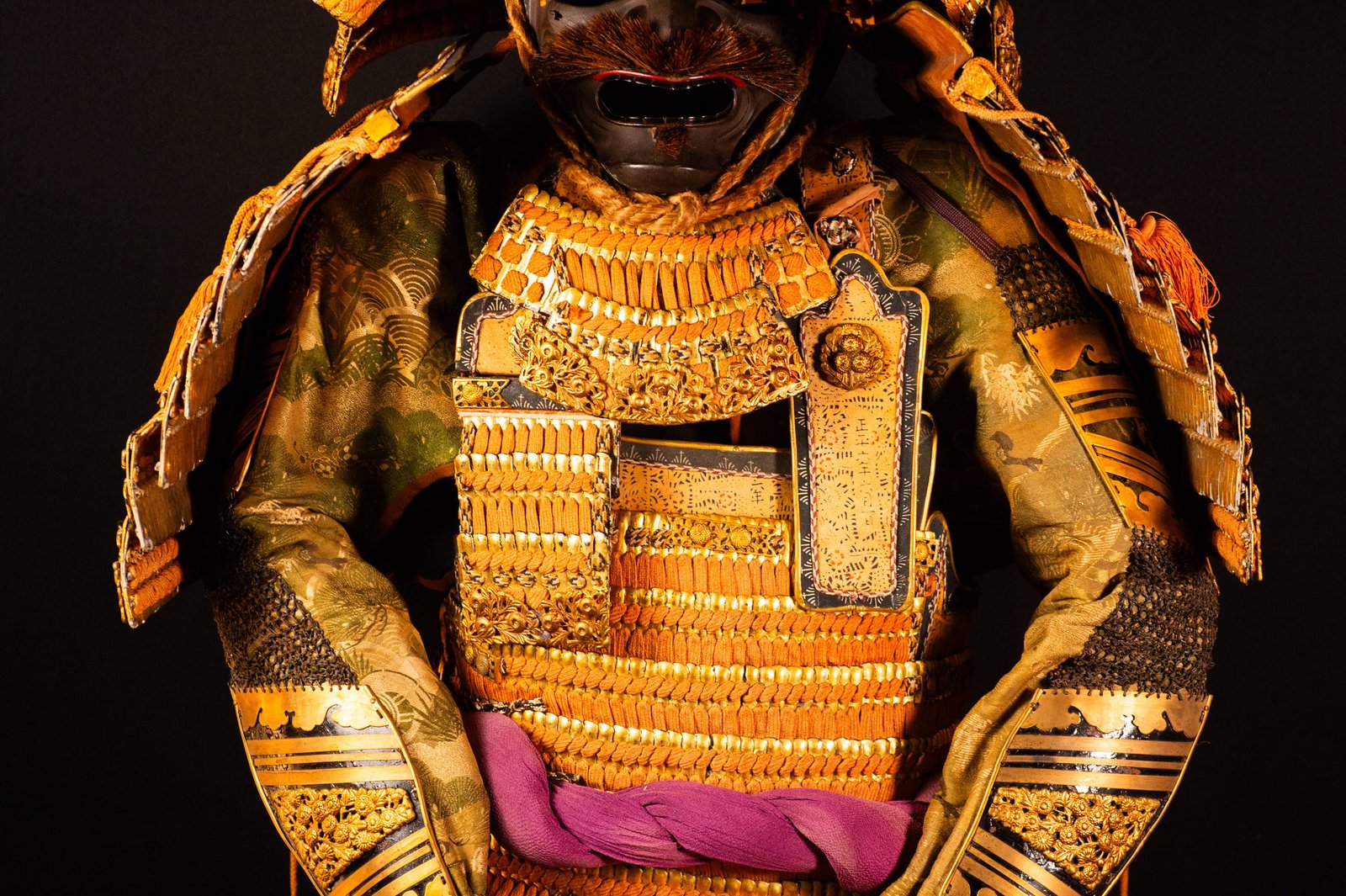
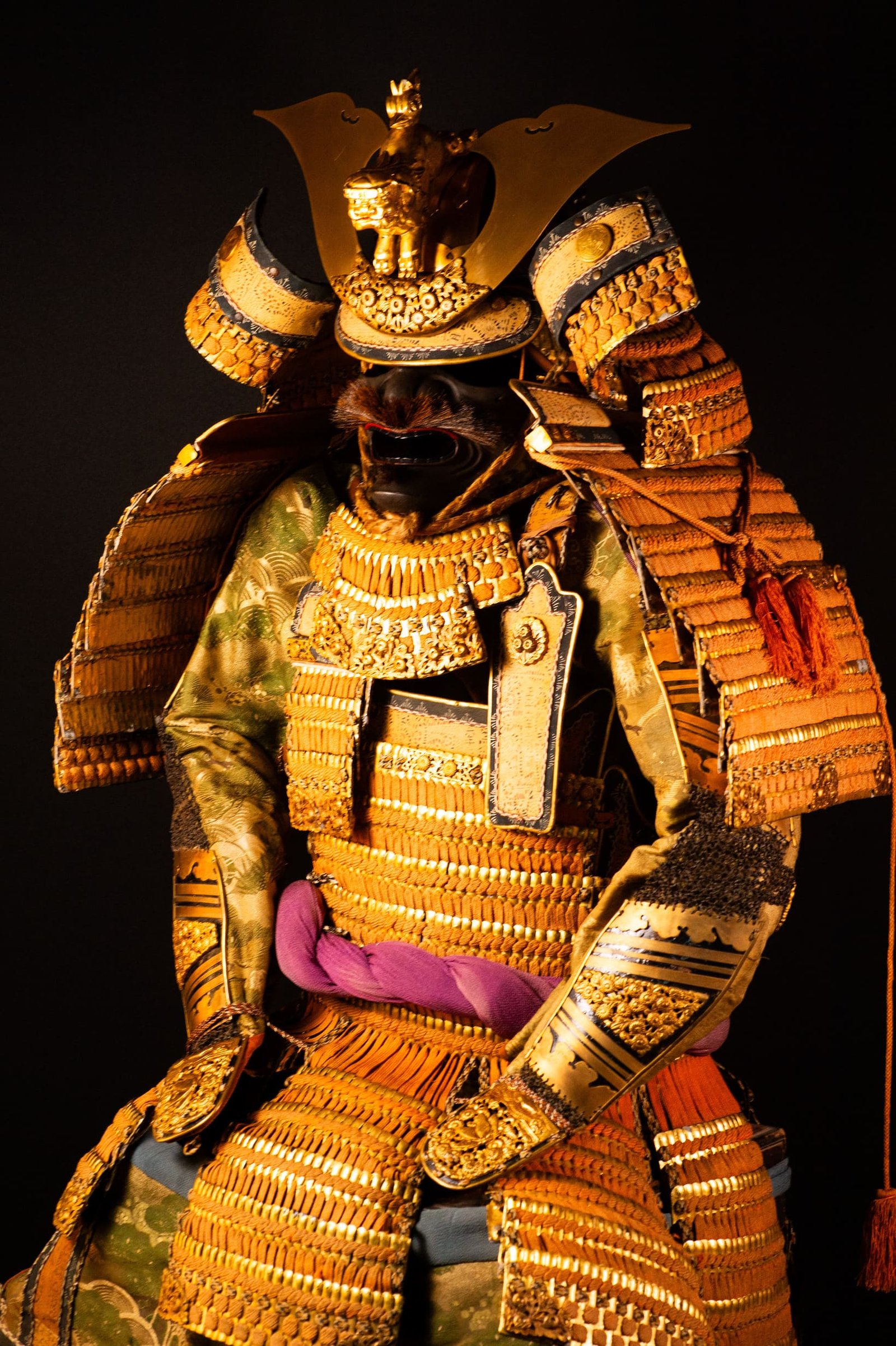
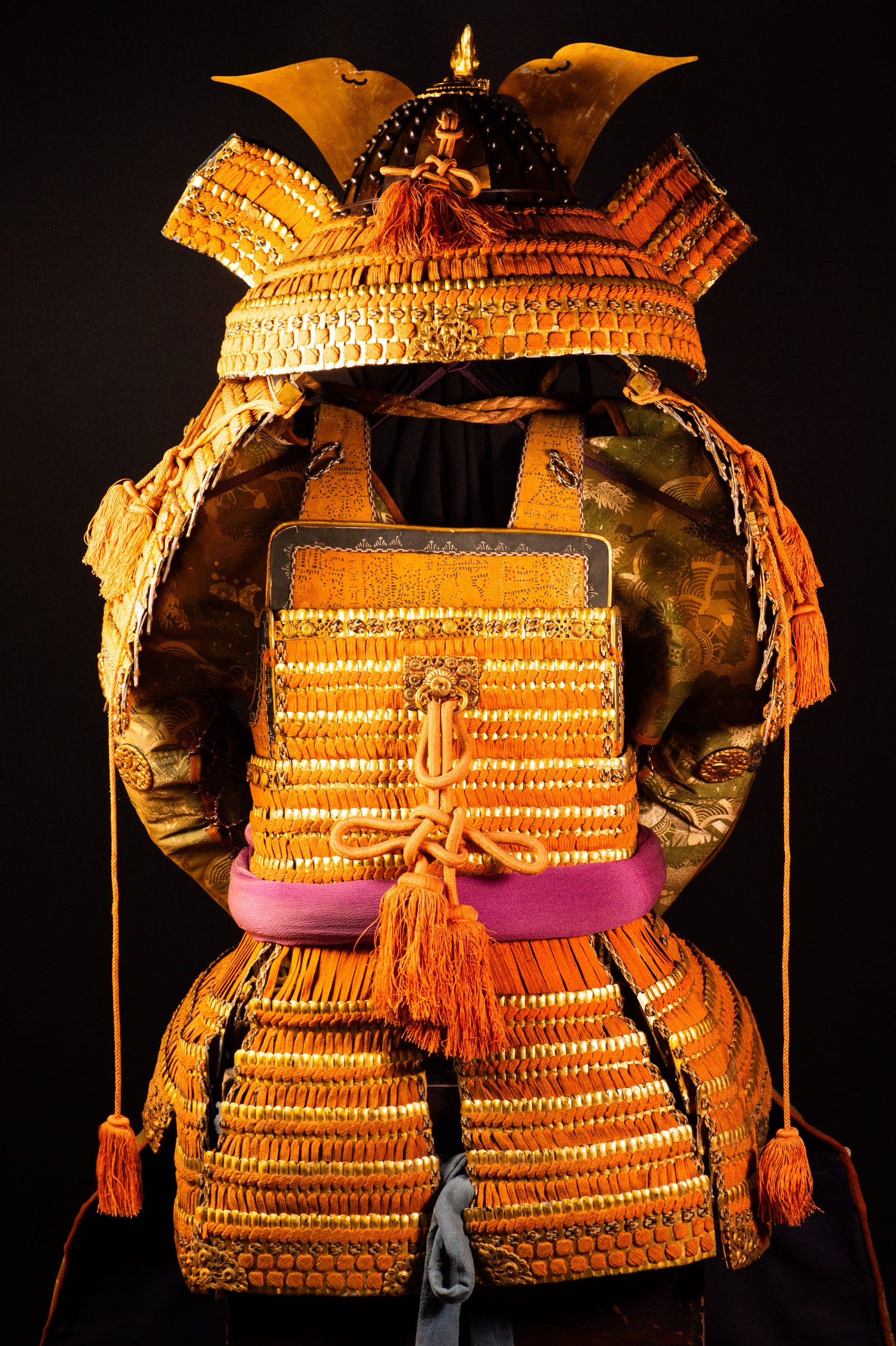
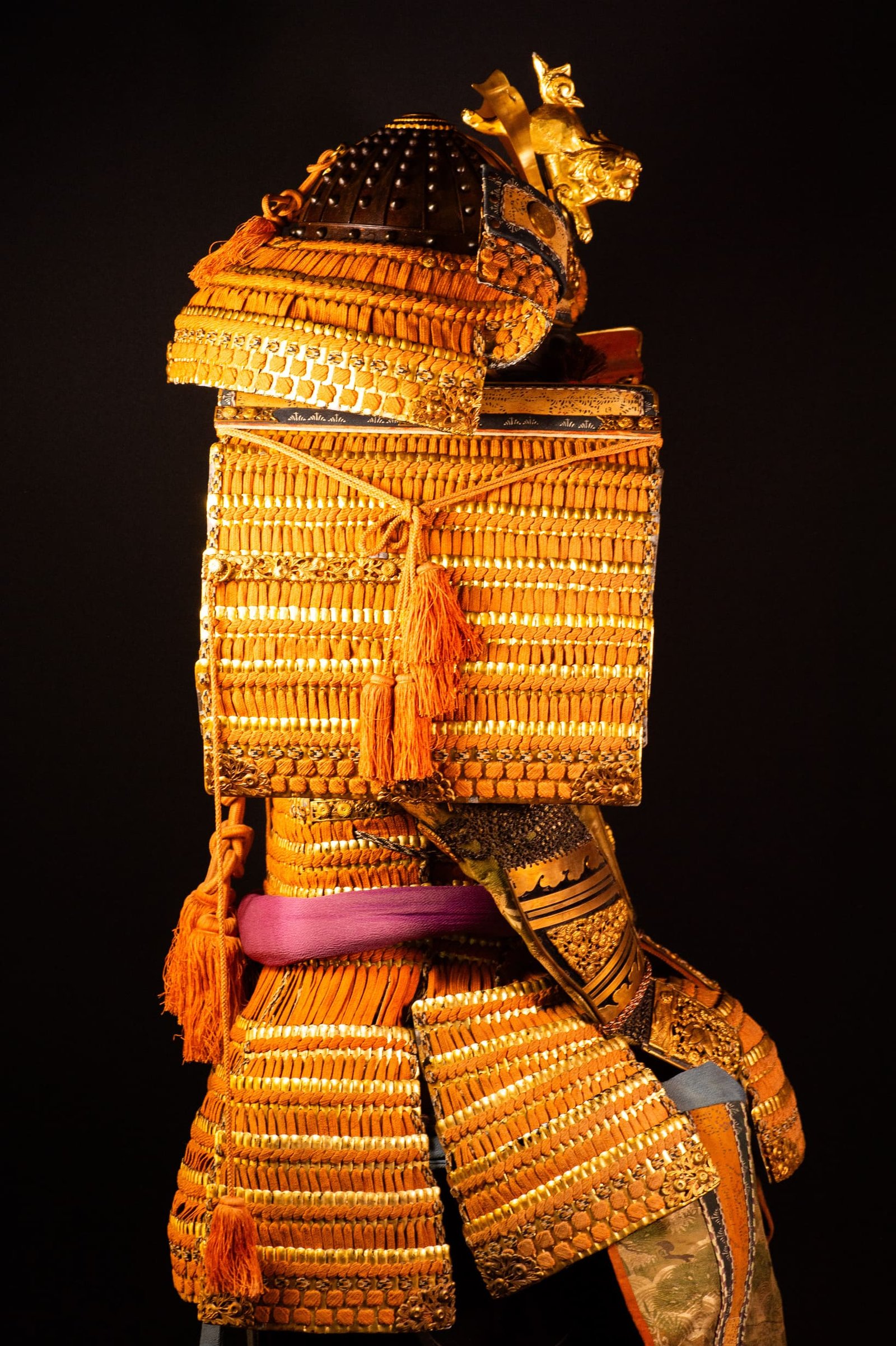
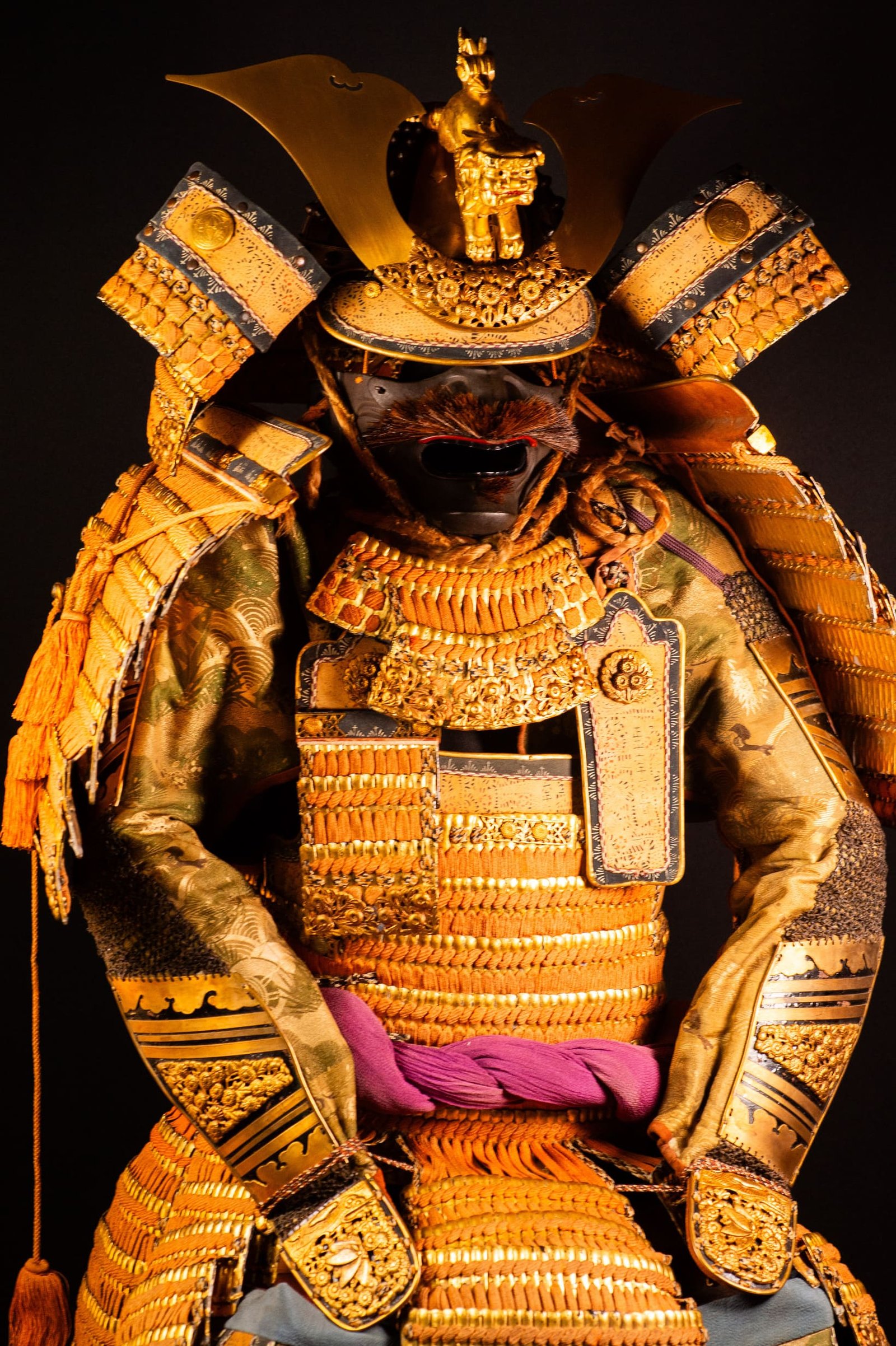
Complete Japanese gusoku in the ō-yoroi revival style, dating to the late Edo to Meiji period, 19th century. Bright orange silk lacing, gilt lamellae, and Shōhei-gawa printed leather define the ensemble, complemented by a hoshi-bachi kabuto with gilt kuwagata and a shishi maedate. Large ō-sode, classical chest guards, chrysanthemum fittings, brocade sleeves, and fur footwear recall the appearance of early mounted warriors. Accompanied by a wooden yoroi-bitsu storage chest.
1 in stock
Add to Compare
Add to Wishlist
A complete Japanese ō-yoroi revival armor from the late Edo to Meiji period, 19th century, distinguished by bright orange silk lacing, gilt lamellae, and richly patterned leather. Its broad shoulder guards, flaring neck guard, and paired chest defenses recall the imposing forms of the classical mounted warrior.
The orange lacing extends across the cuirass, shoulder guards, and skirt, bringing the components together visually. Gilt chrysanthemum fittings, green and gold brocade, dark lacquer, and a purple waist sash add contrasting textures and colors. Above them, a gilt shishi is positioned between broad kuwagata, giving the helmet a distinctive focal point.
The design draws on the great ō-yoroi of the Heian and Kamakura periods, associated with mounted archers. During the Edo period, renewed interest in Japan’s medieval warrior culture encouraged armorers to study and revive these earlier forms for wealthy samurai patrons. Such armors expressed an appreciation of ancestral traditions, lineage, and prestige.
This ensemble incorporates several characteristic features of that revival: large square ō-sode, a broad flaring shikoro, and the paired chest guards known as sendan-no-ita and kyūbi-no-ita. These last elements recall the defenses that protected the chest fastenings of the early mounted archer.
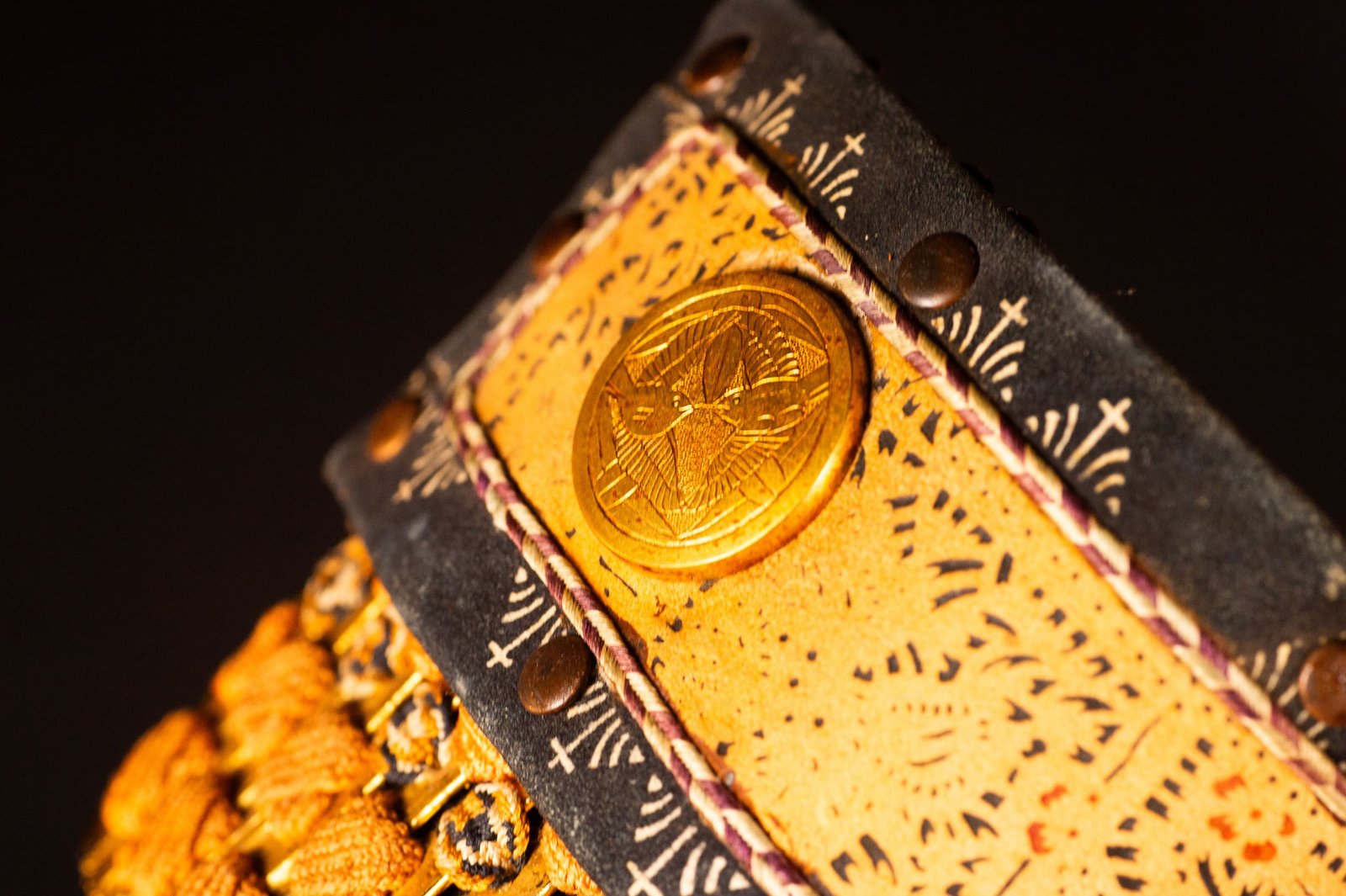
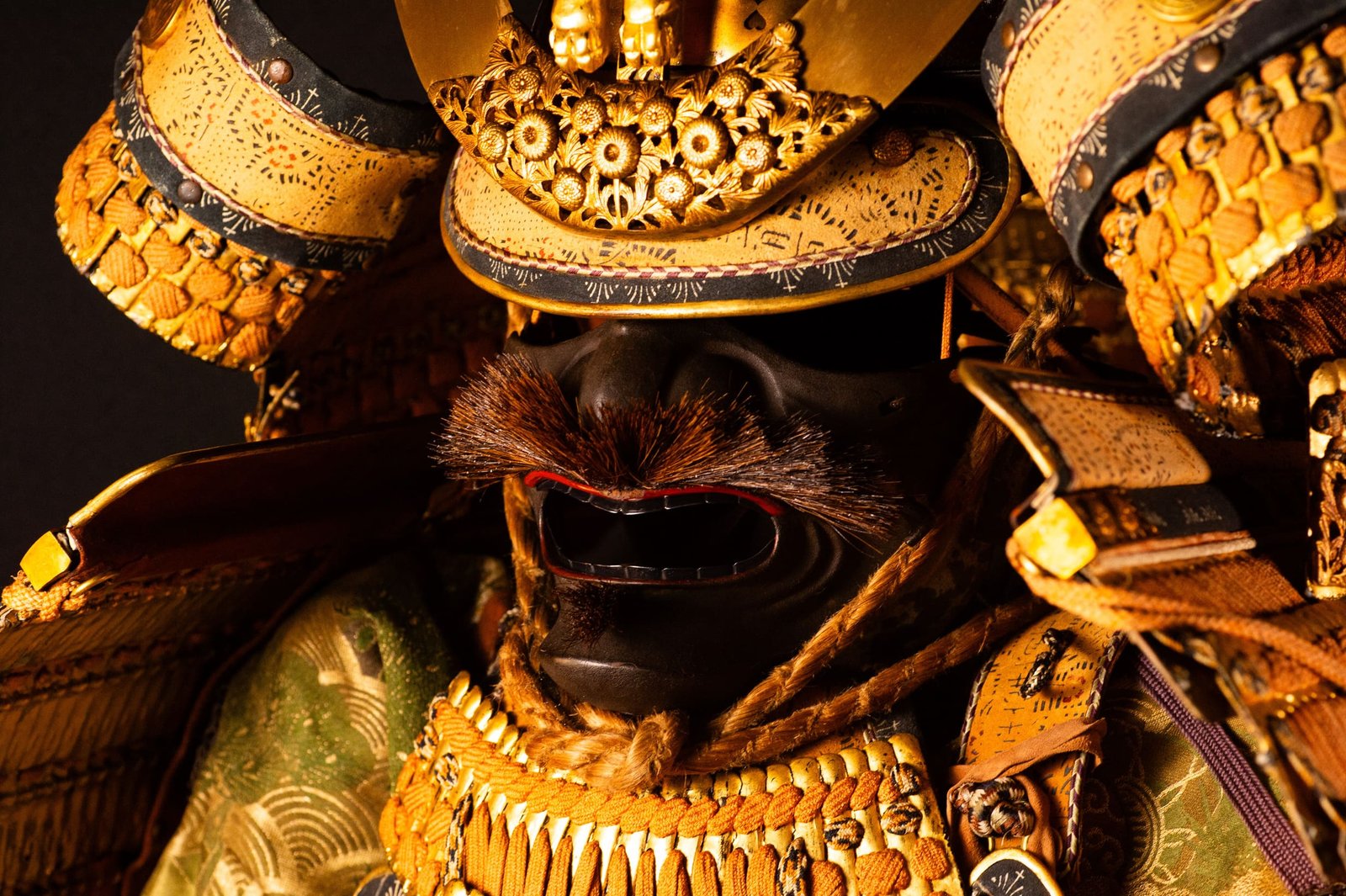
The decorative printed leather, or e-gawa, facing the chest guards, helmet visor, and fukigaeshi is of the Shōhei-gawa type. Its pattern combines small scattered motifs with repeated characters incorporating the date 正平六年 — Shōhei 6, or 1351, a year of the Southern Court during the Nanbokuchō period.
This date is traditionally associated with the introduction or approval of the leather pattern, which continued to be reproduced for centuries. It records the design’s historical association. The armor itself dates to the nineteenth century.
On this example, the characters are particularly clear on the kyūbi-no-ita. The pale printed fields, bordered by darker patterned strips, provide a detailed counterpoint to the orange silk and gilded surfaces.
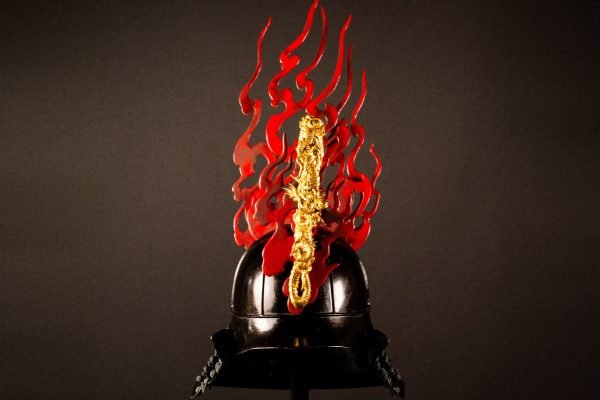
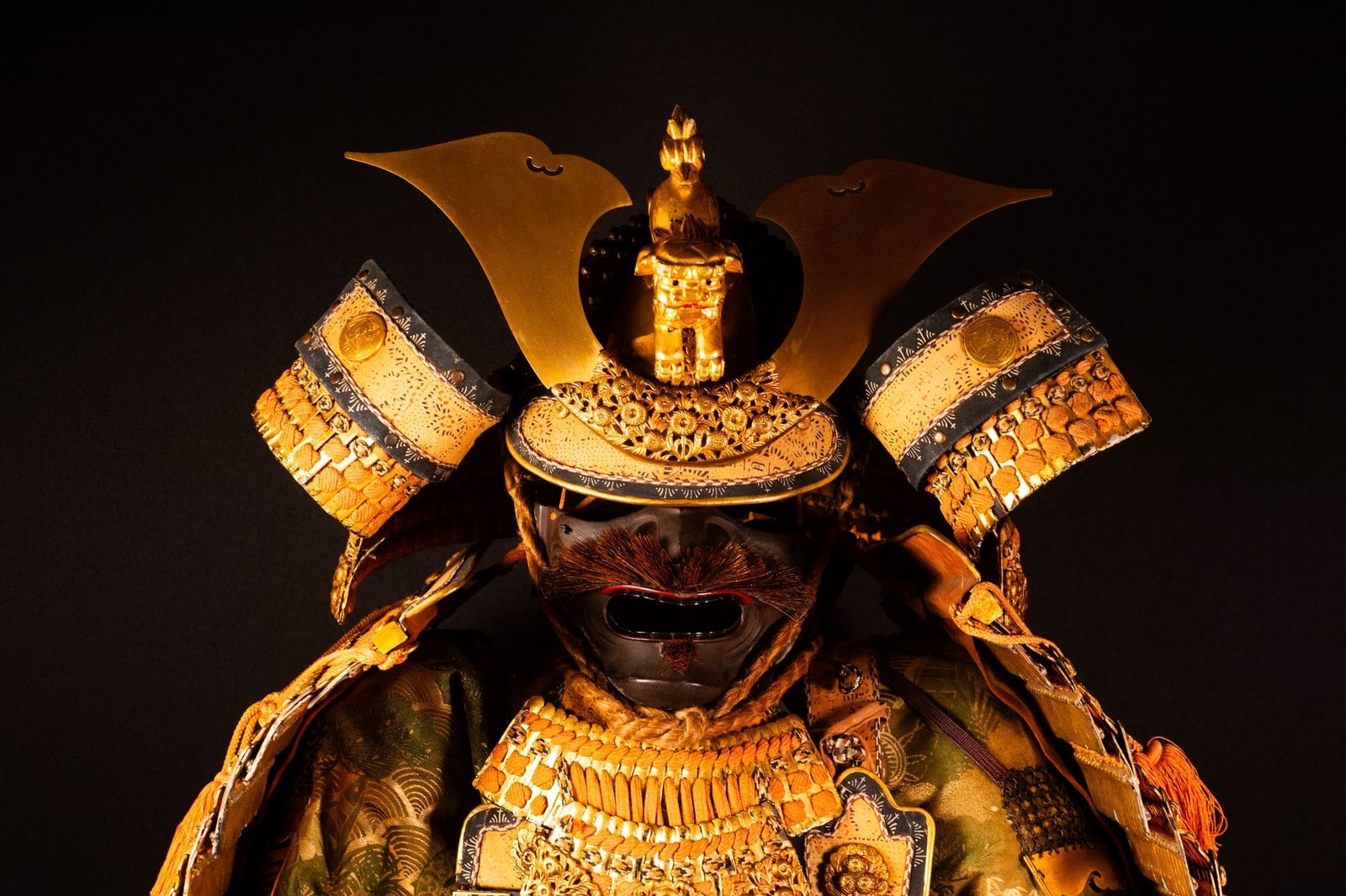
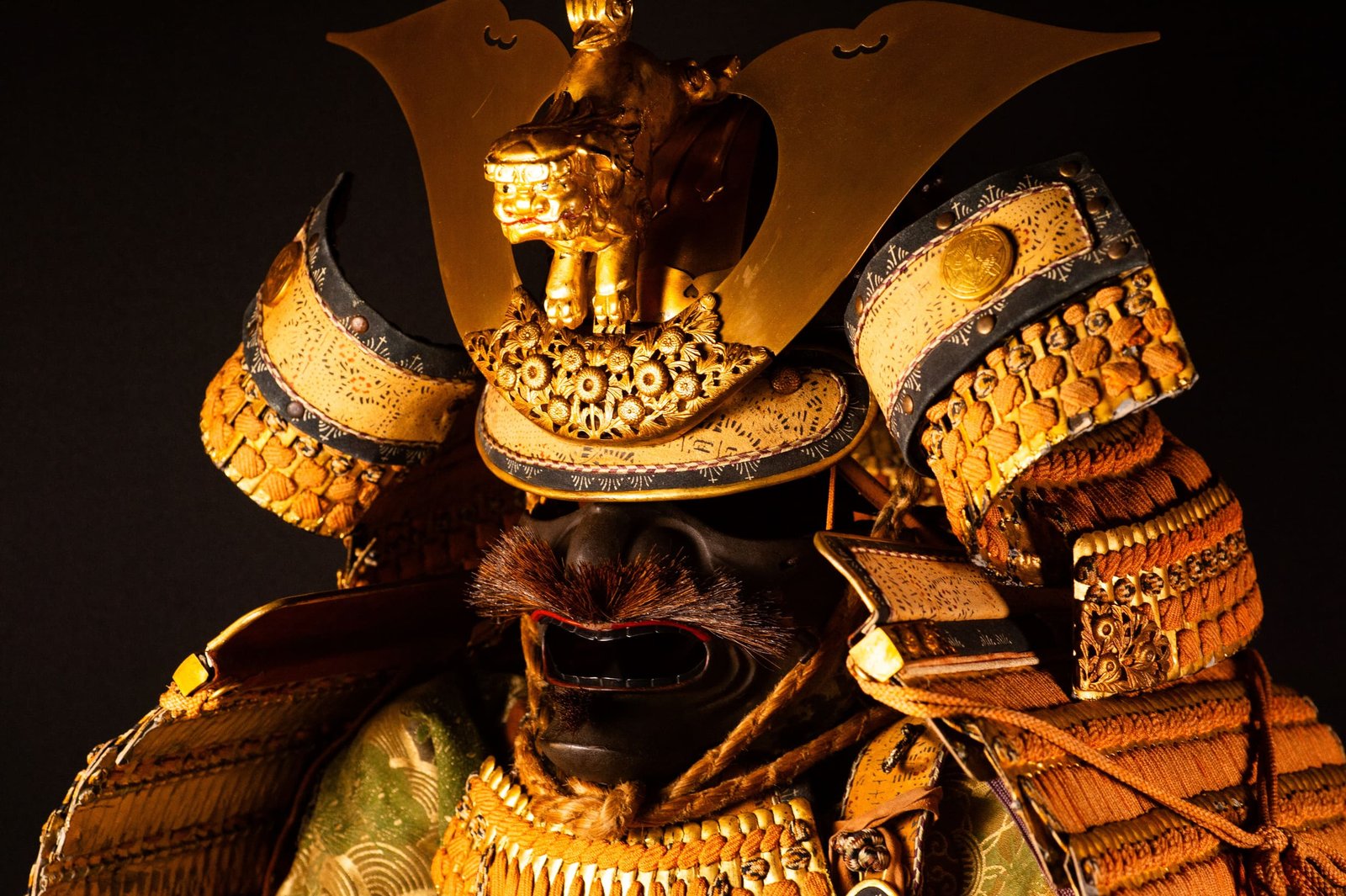
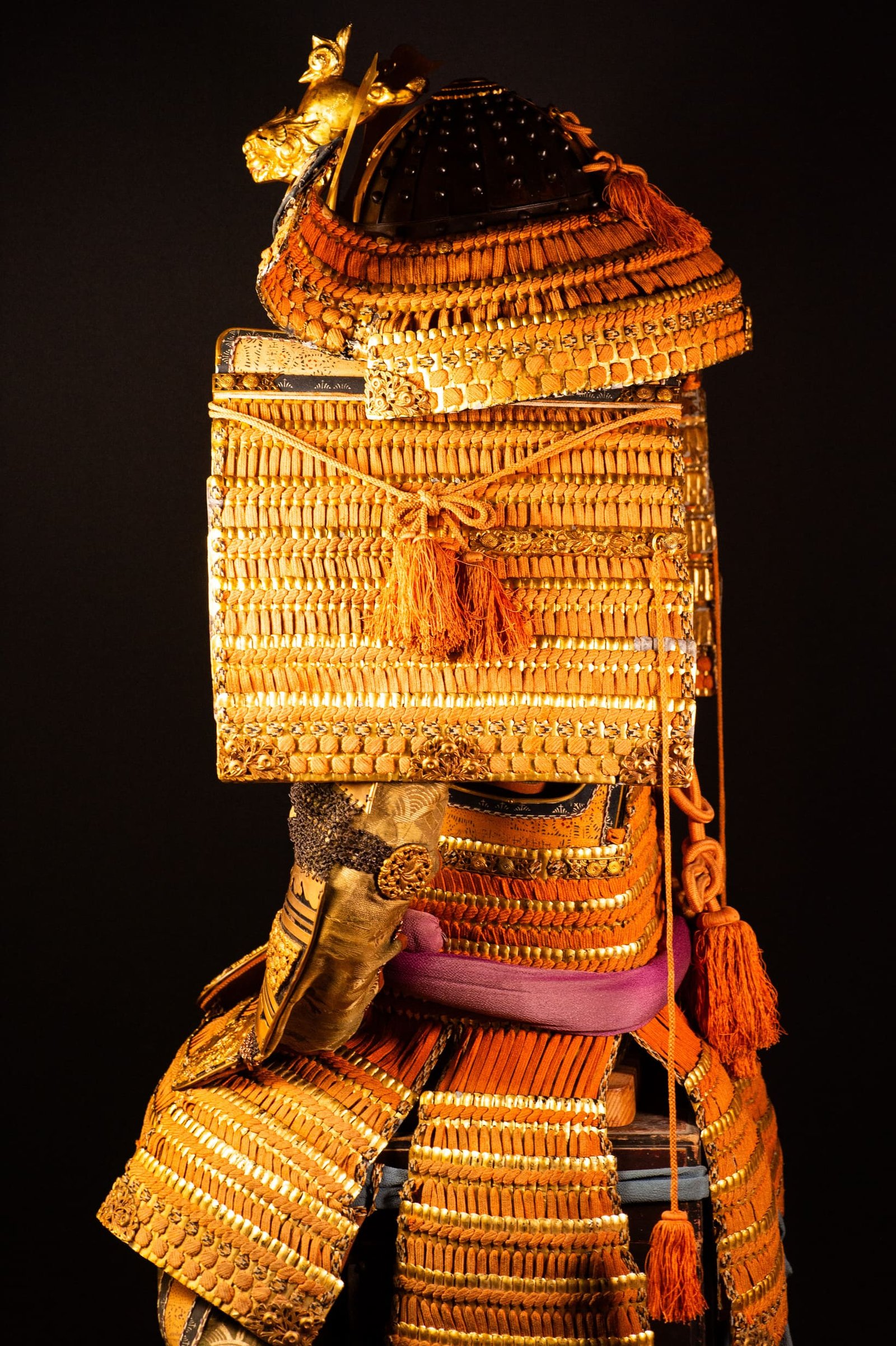
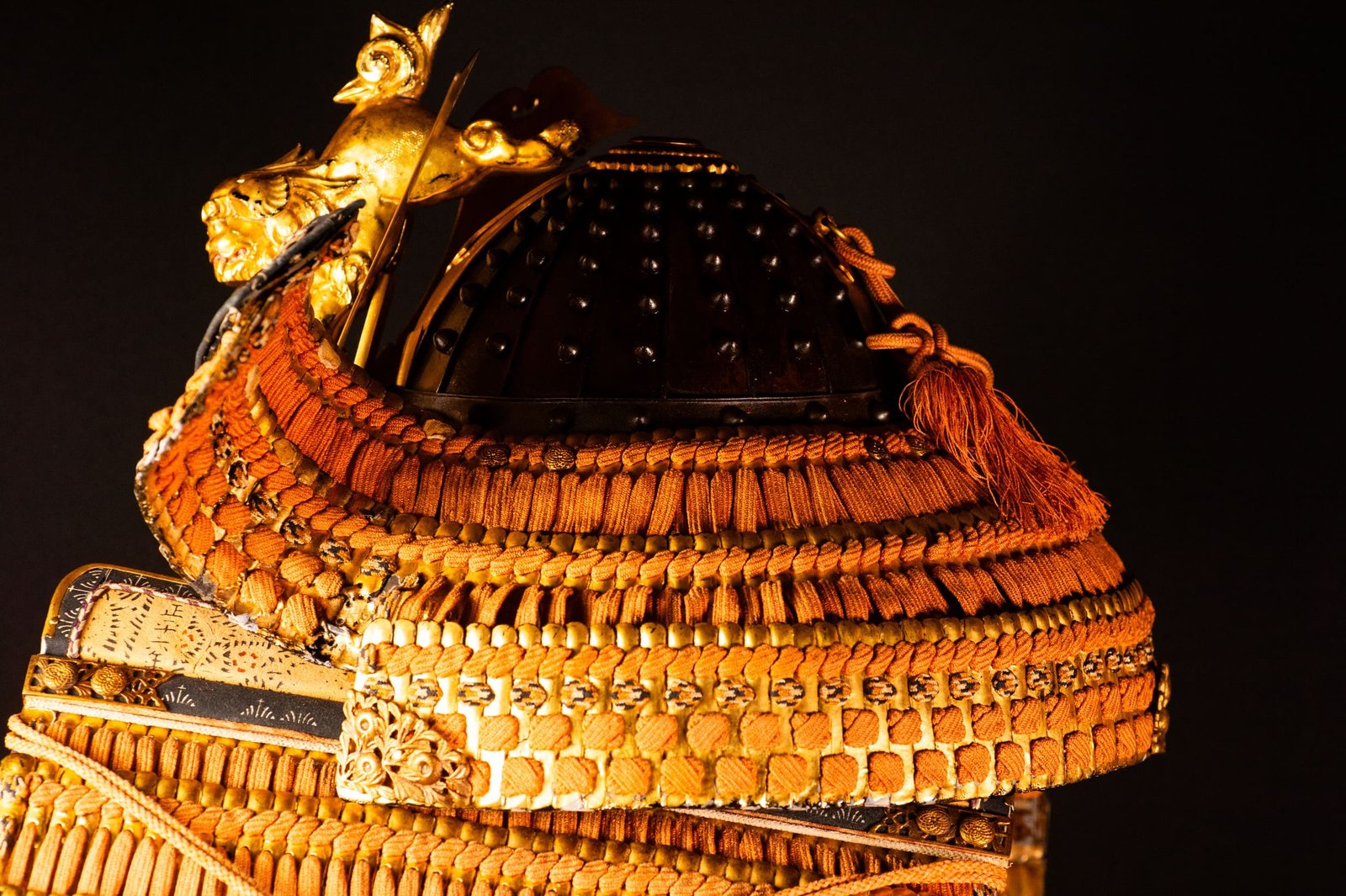
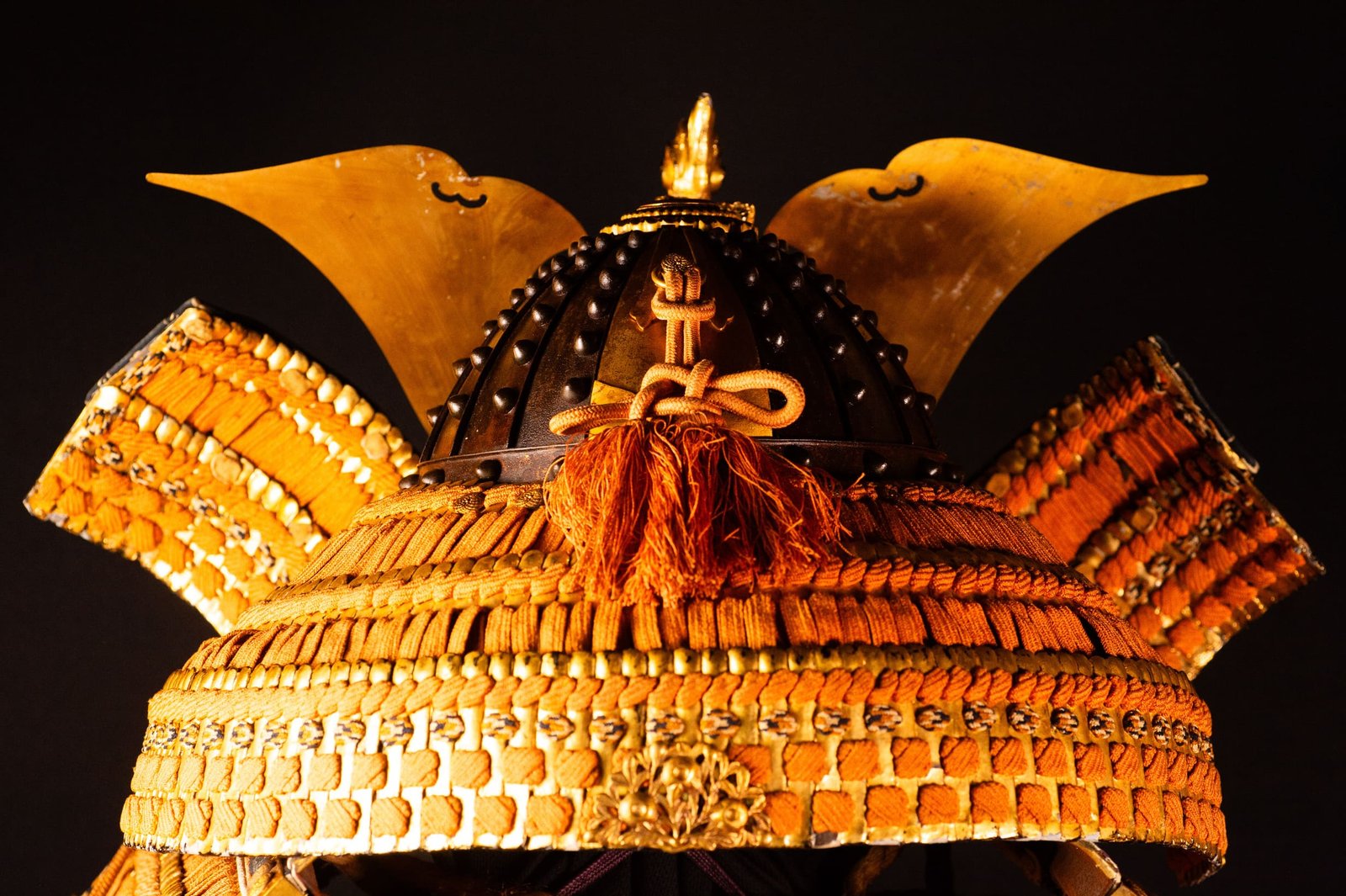
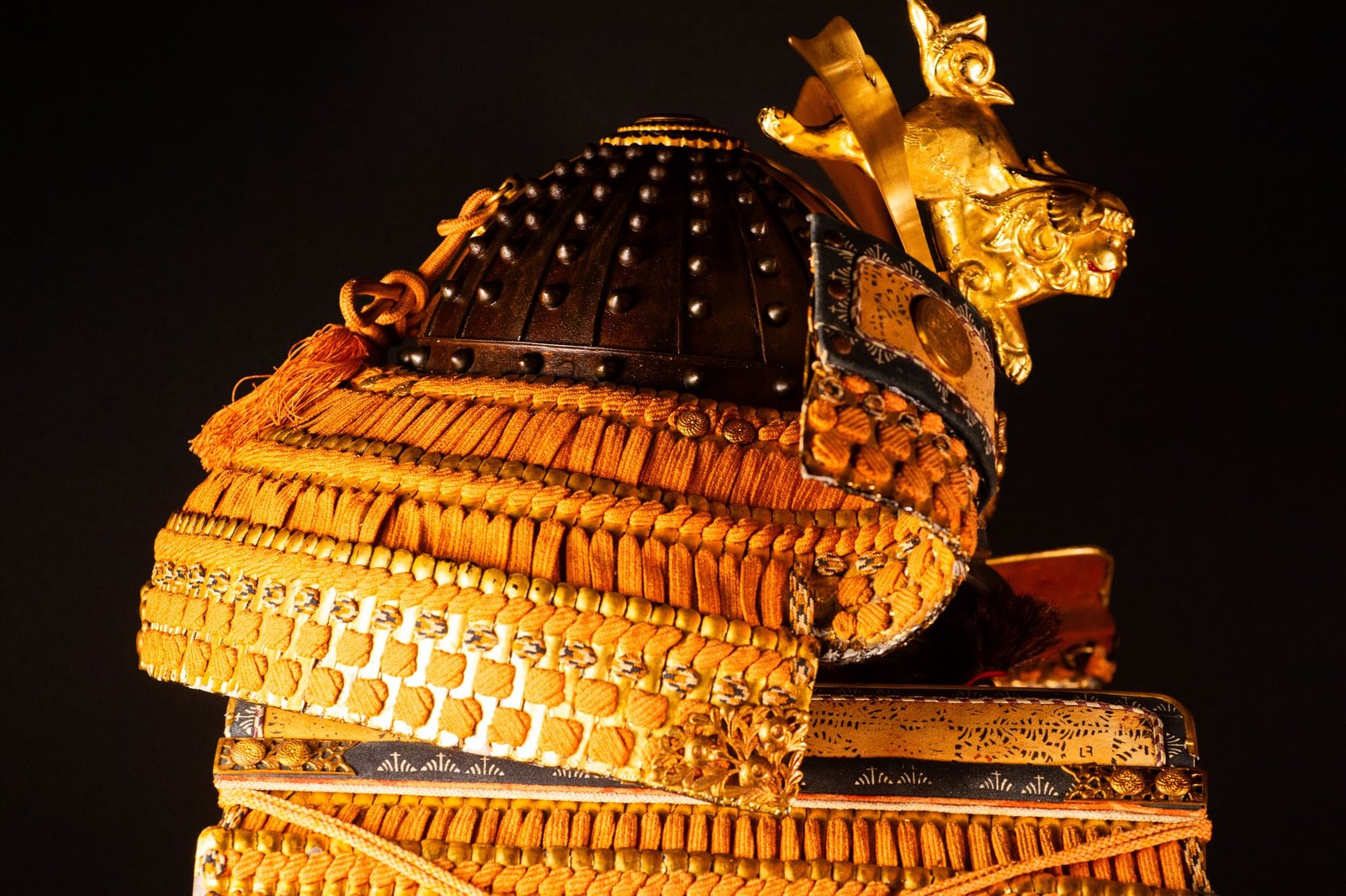
The kabuto has a dark hoshi-bachi bowl with rows of prominent raised rivets. At the rear, an agemaki bow with an orange tassel echoes the lacing of the neck guard and armor.
A pair of large gilt kuwagata, pierced with small cloud motifs, extends above the brow. Between them is a gilt shishi maedate, representing the guardian lion associated with Buddhist temples. The lion is set above a base of openwork gilt chrysanthemums, linking the helmet decoration to the floral metalwork repeated throughout the ensemble.
The mabizashi, or visor, and the turned-back fukigaeshi are faced with Shōhei-gawa leather. Each fukigaeshi carries a gilt crest within a roundel. Below the bowl, the broad shikoro is laced in matching orange silk and finished with gilt openwork fittings.
The menpō is finished in dark lacquer, with a horsehair mustache and beard and an open mouth outlined in red lacquer. Its dark surface creates a strong contrast with the orange and gold surrounding it.
A laced yodare-kake protects the throat, continuing the color and decorative treatment of the rest of the armor.
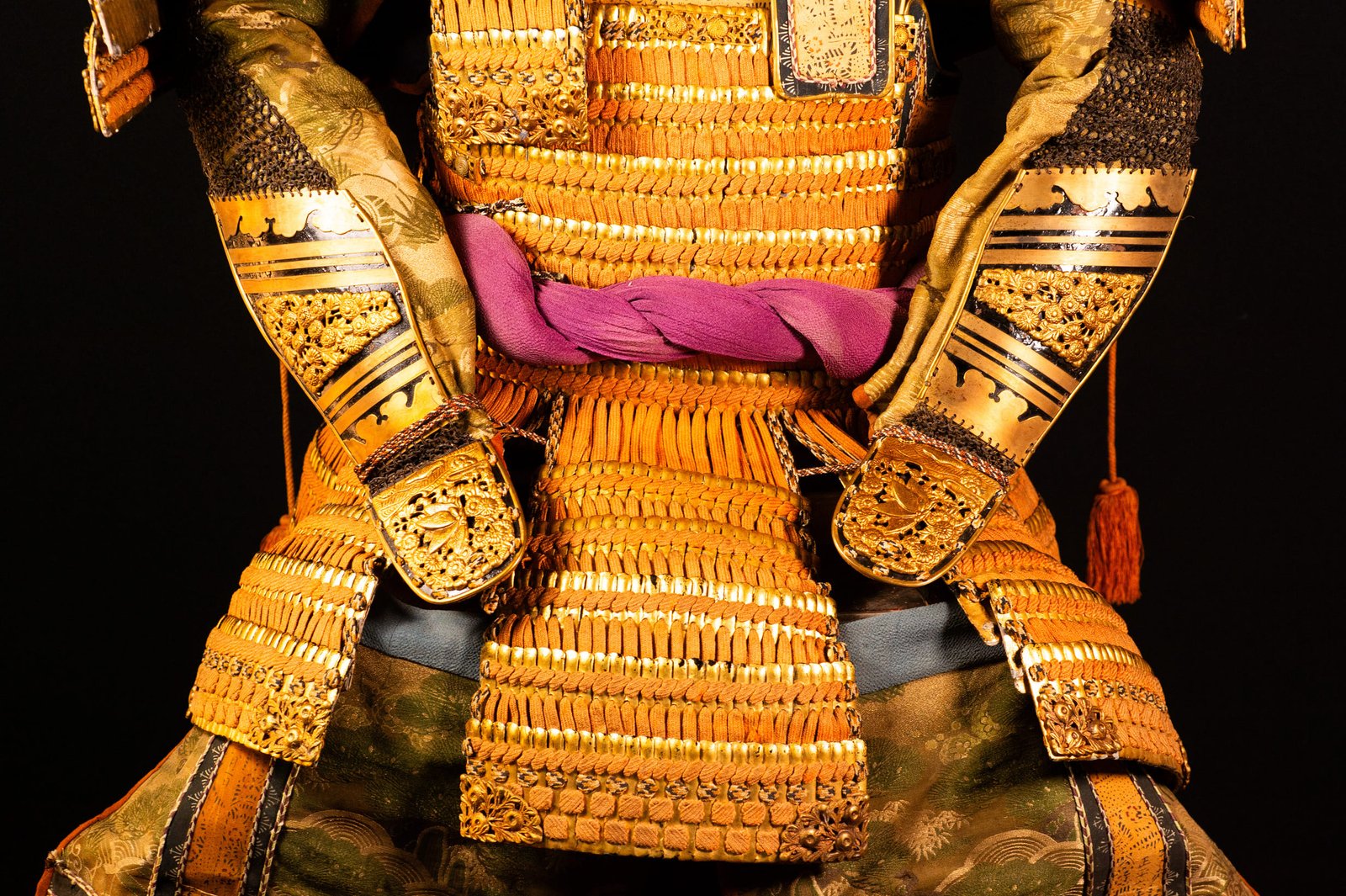
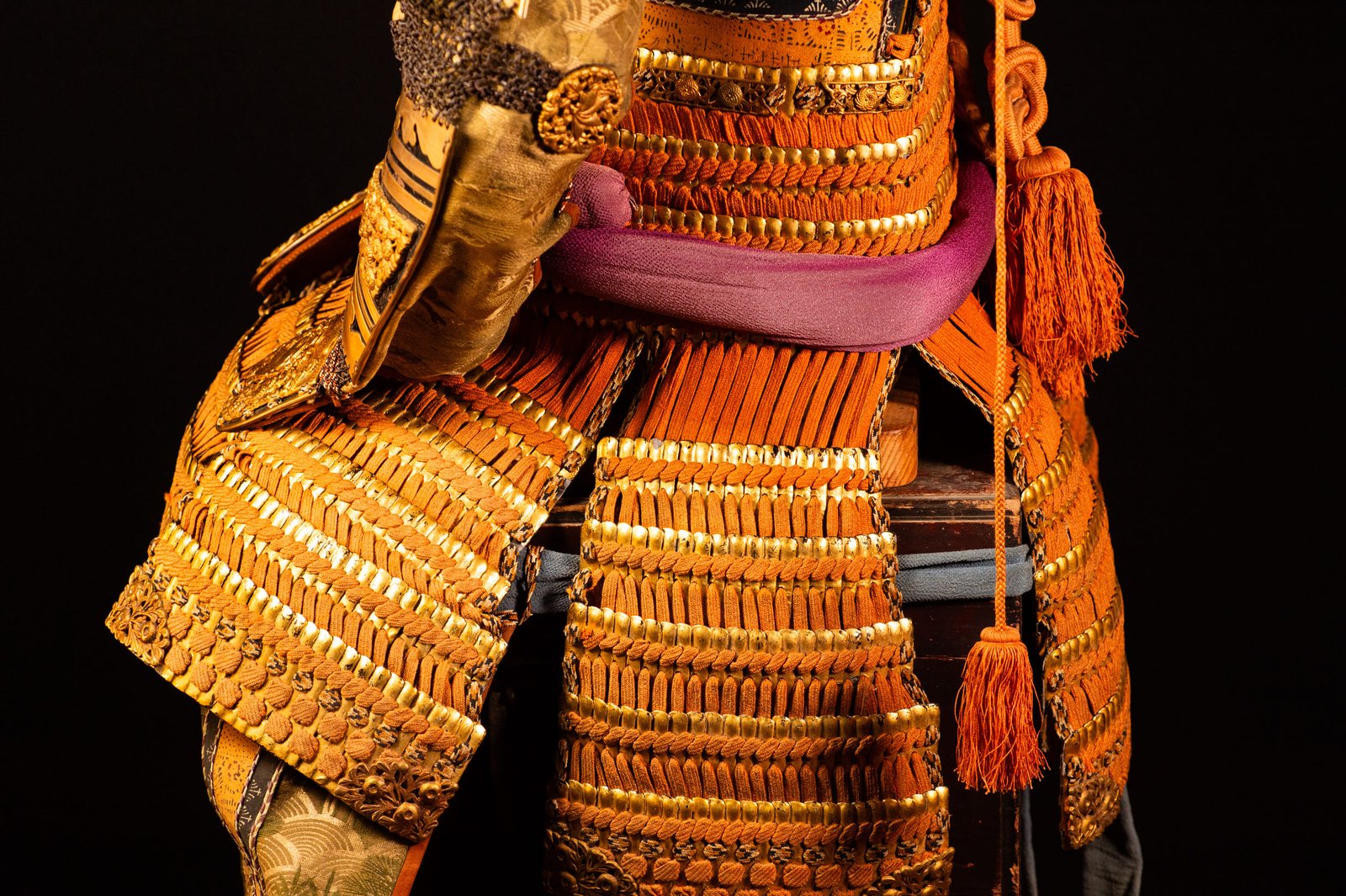
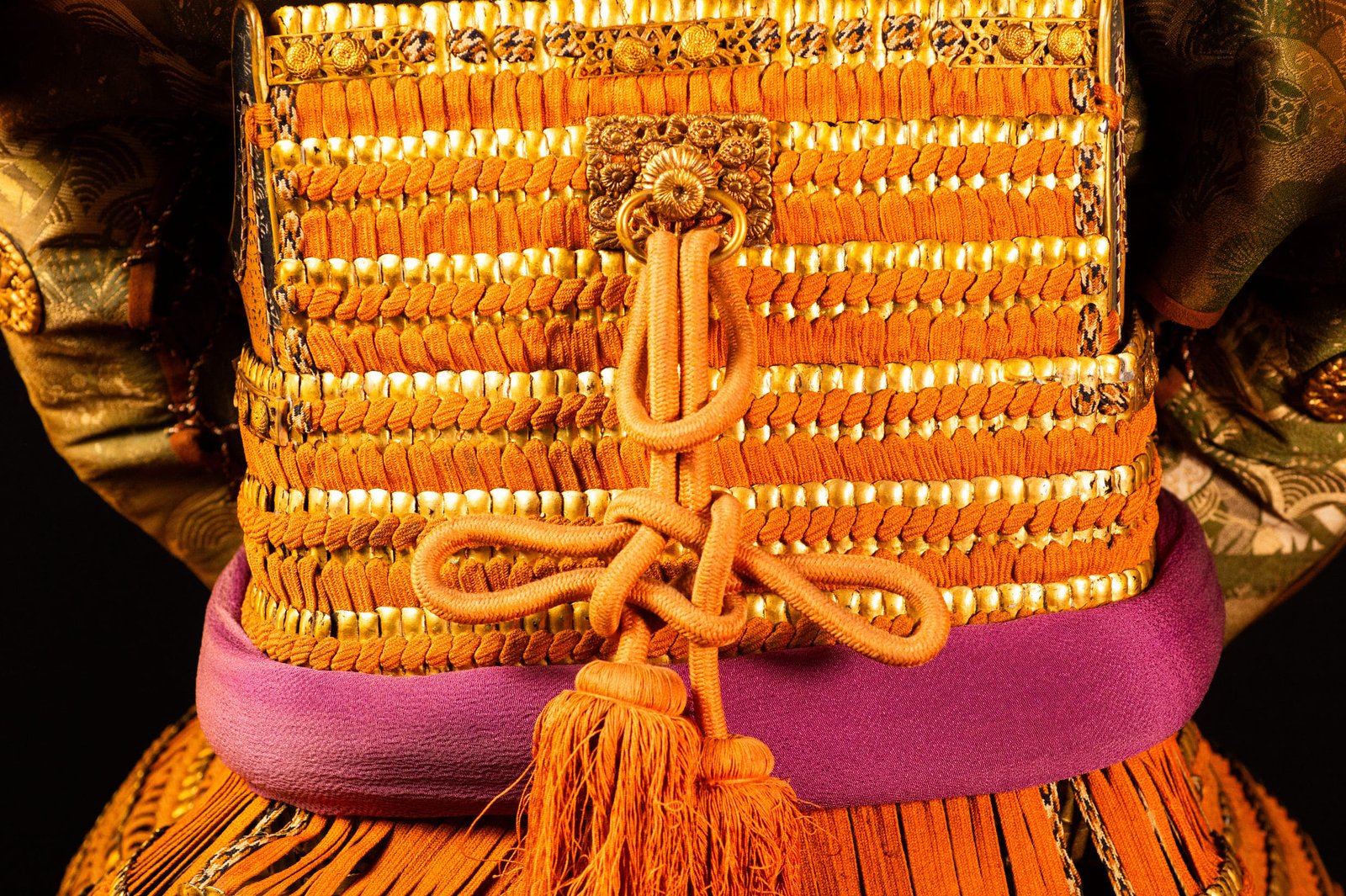
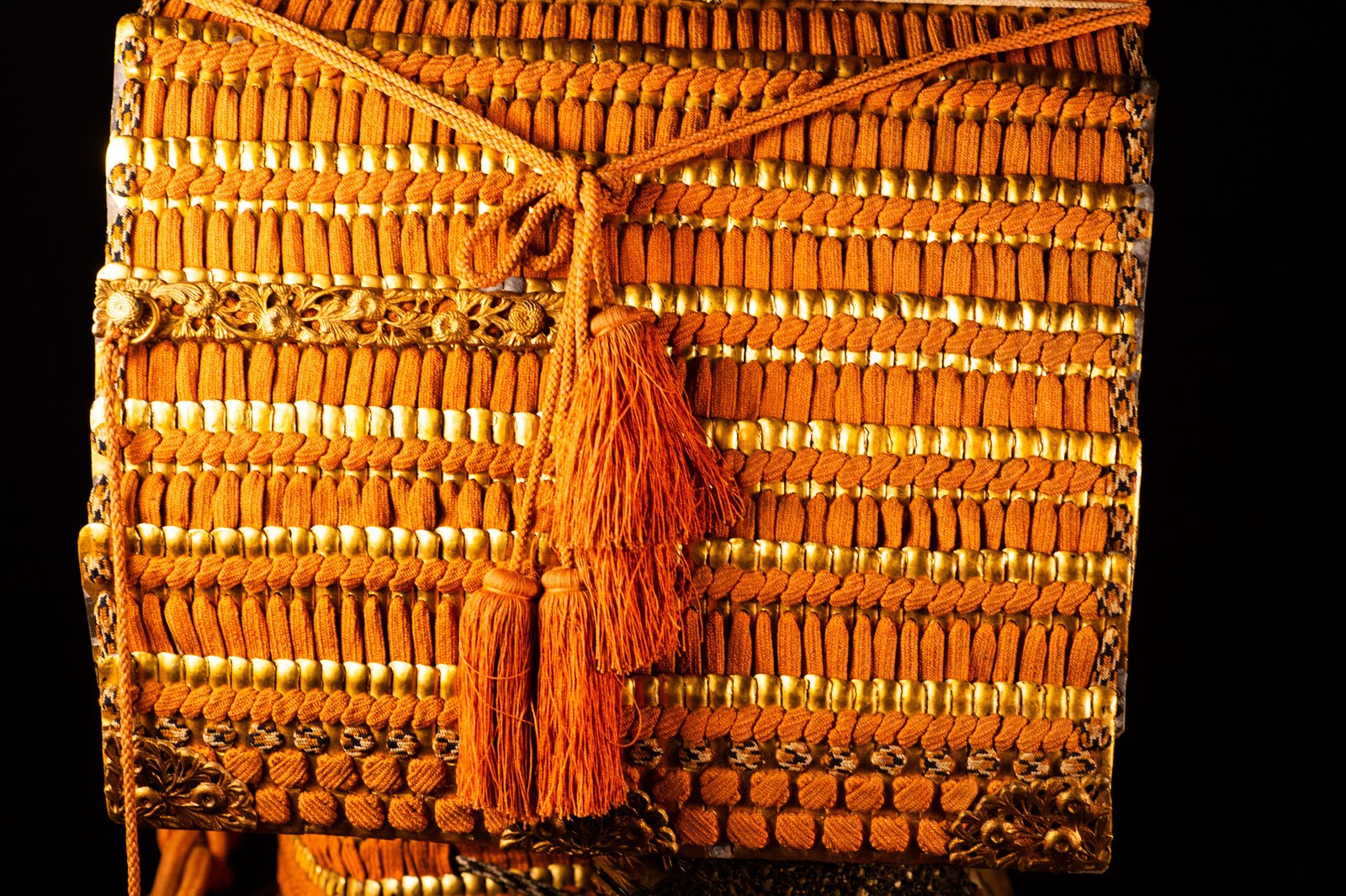
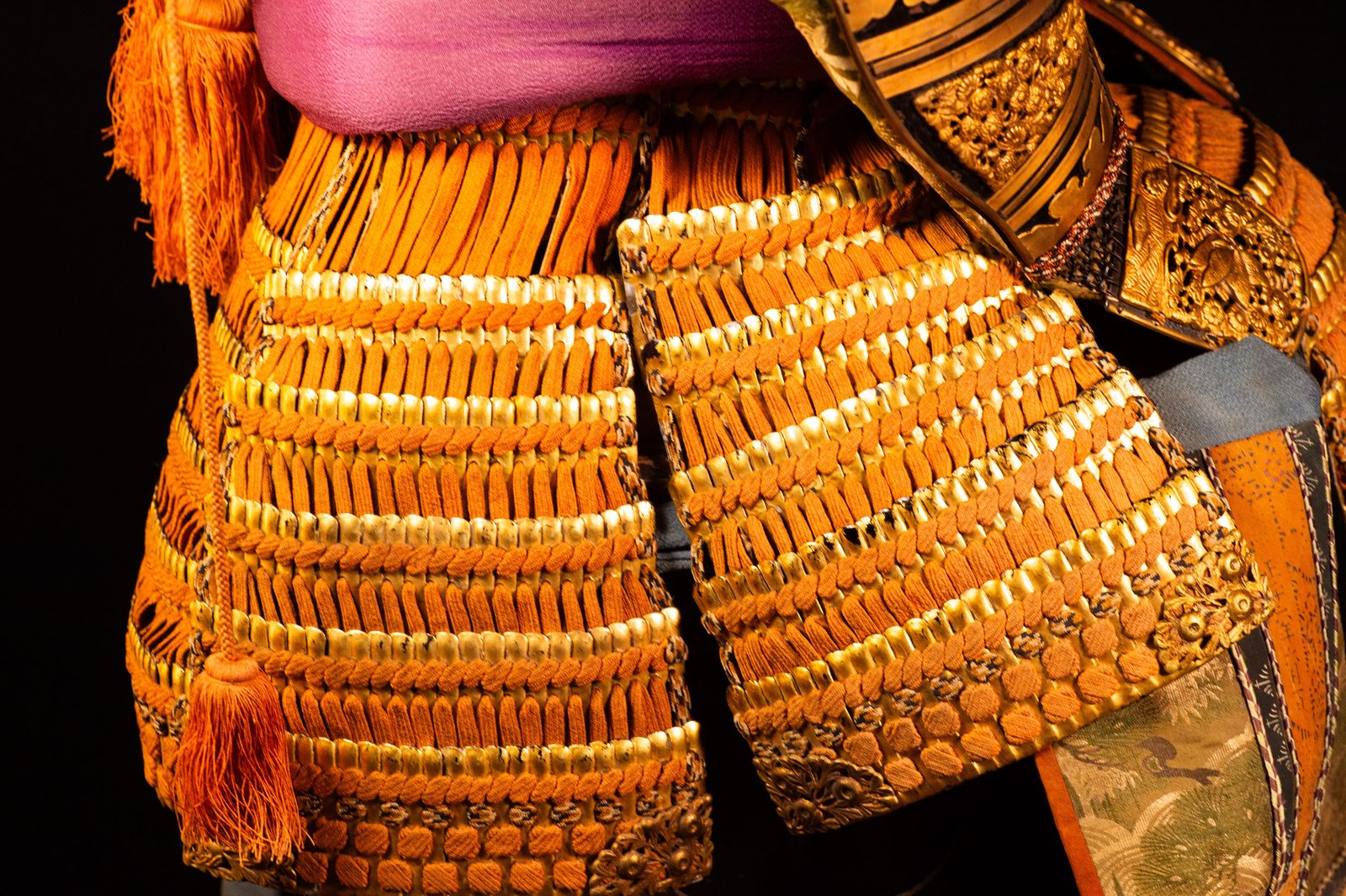
The dō, or cuirass, is laced in full kebiki odoshi, with closely spaced orange silk cords over gilt lamellae. Openwork gilt kanamono in chrysanthemum designs enrich the edges and principal decorative areas.
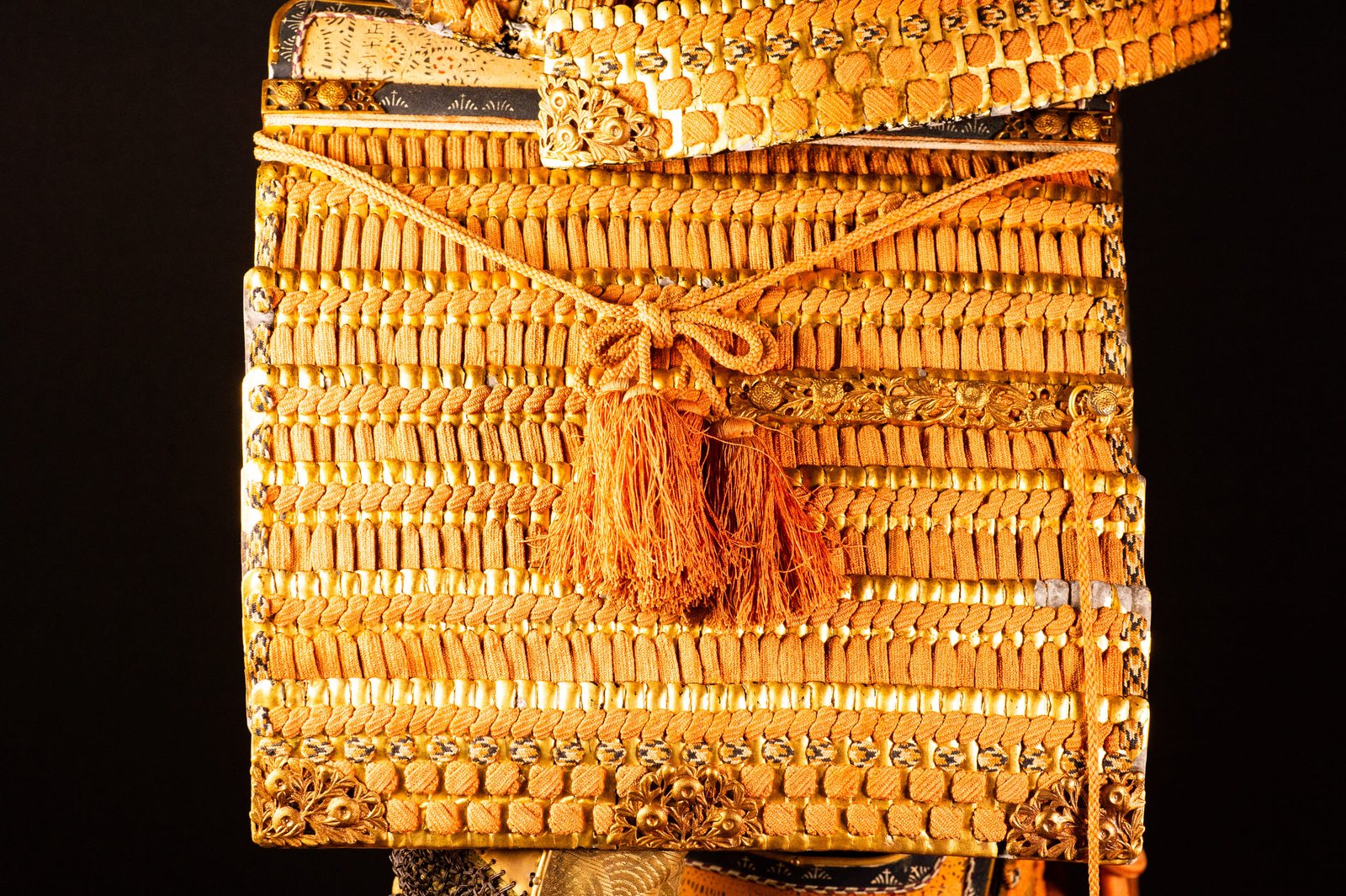
The large, square ō-sode hang from the shoulders in the classical manner. Their broad surfaces repeat the dense orange lacing and gilt details of the cuirass, giving the armor its expansive silhouette.
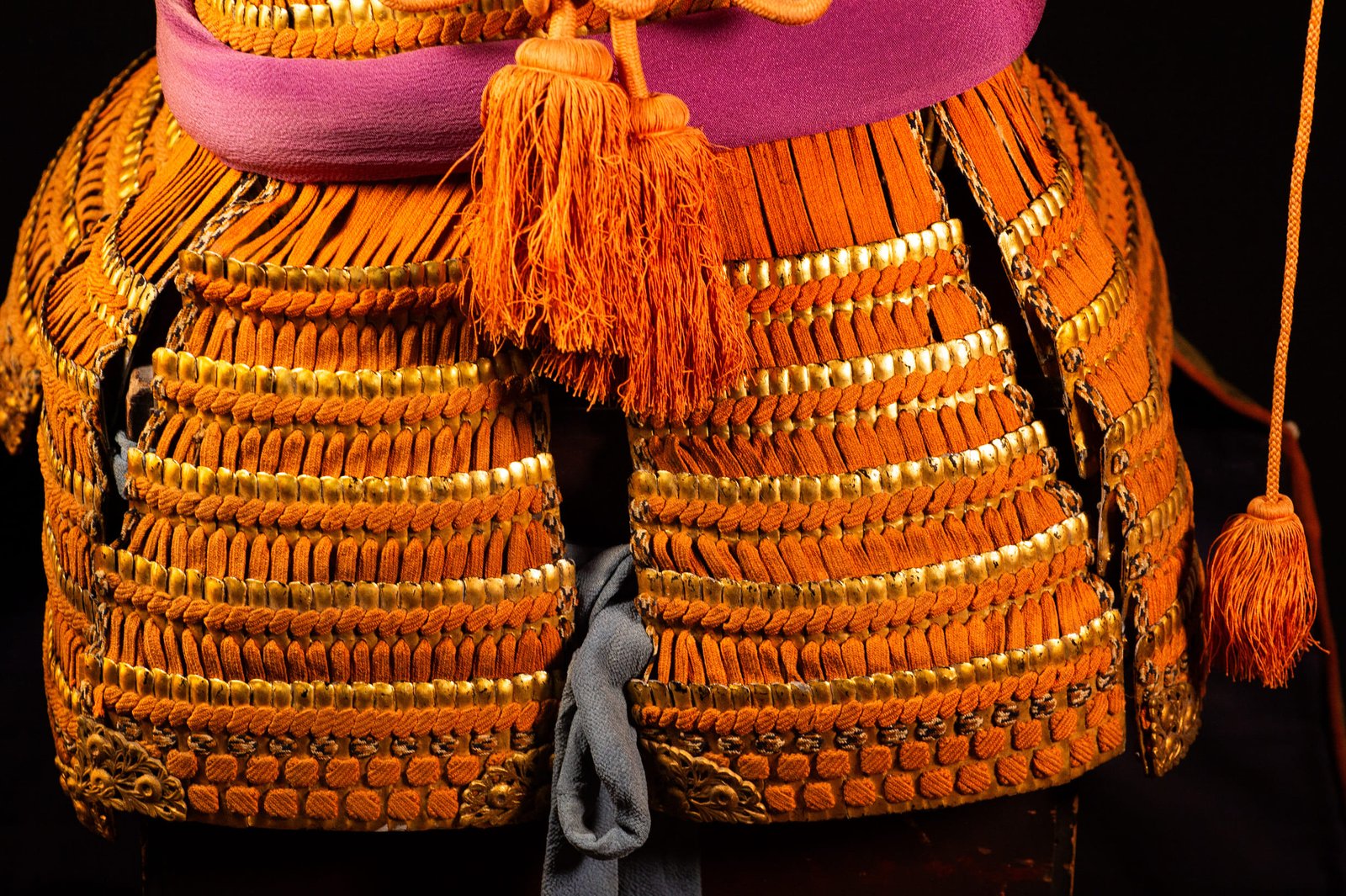
At the back, a gilt chrysanthemum ring mount supports the large agemaki bow with orange tassels. A purple silk uwa-obi encircles the waist, introducing a contrasting band of color between the cuirass and skirt.
The kote, or armored sleeves, combine brocade woven with pines and waves with sections of kusari chain mail. Their gilt plates have stylized wave borders, black-lacquered bands, and openwork gilt chrysanthemum panels.
The gilt tekkō protecting the backs of the hands are pierced with floral openwork. Their detailed surfaces continue the botanical decoration found on the helmet, cuirass, and shoulder guards.
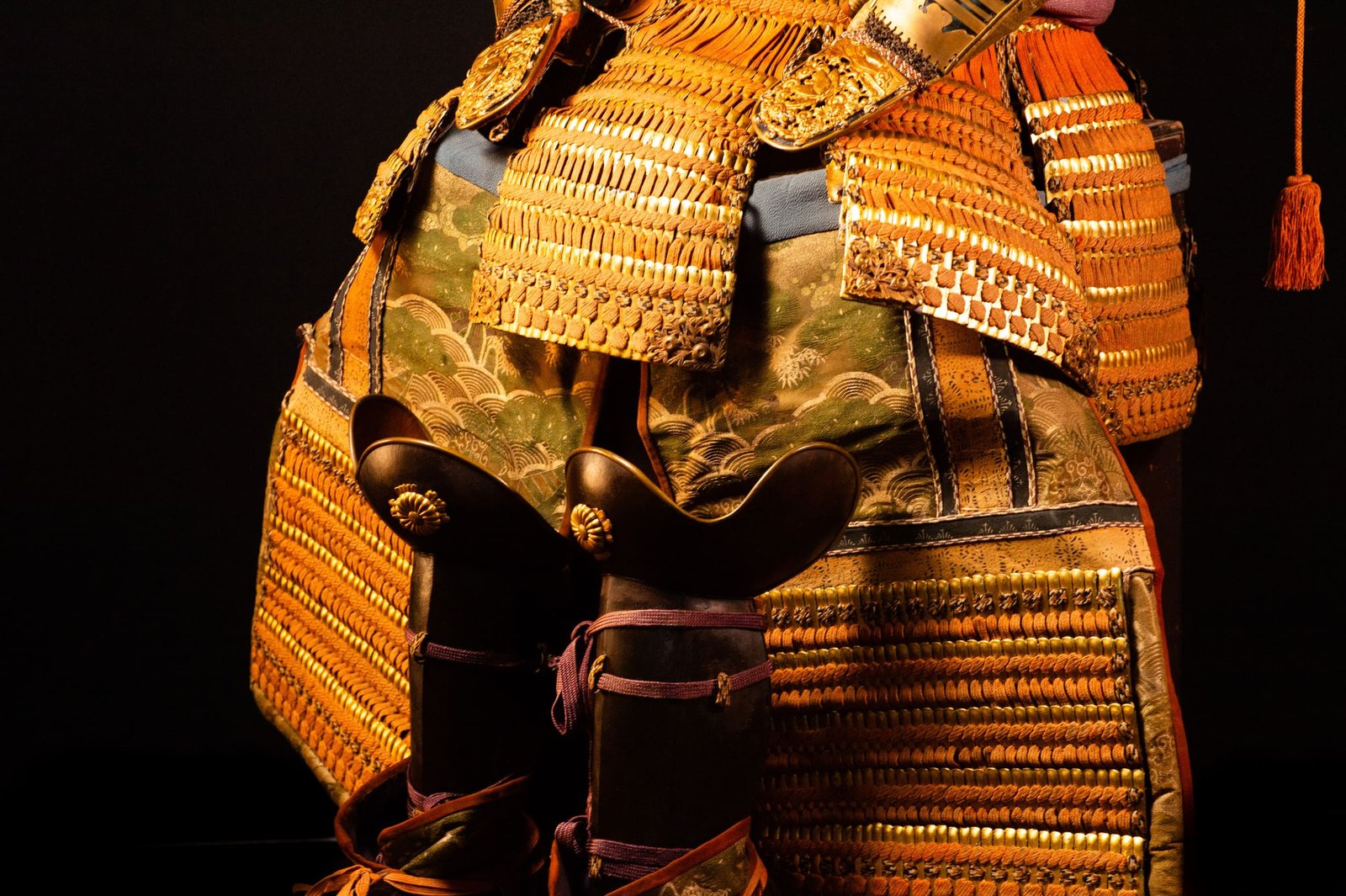
The kusazuri, or skirt defenses, hang in long laced sections edged with gilt openwork fittings. Their closely arranged orange cords carry the visual rhythm of the cuirass into the lower part of the ensemble.
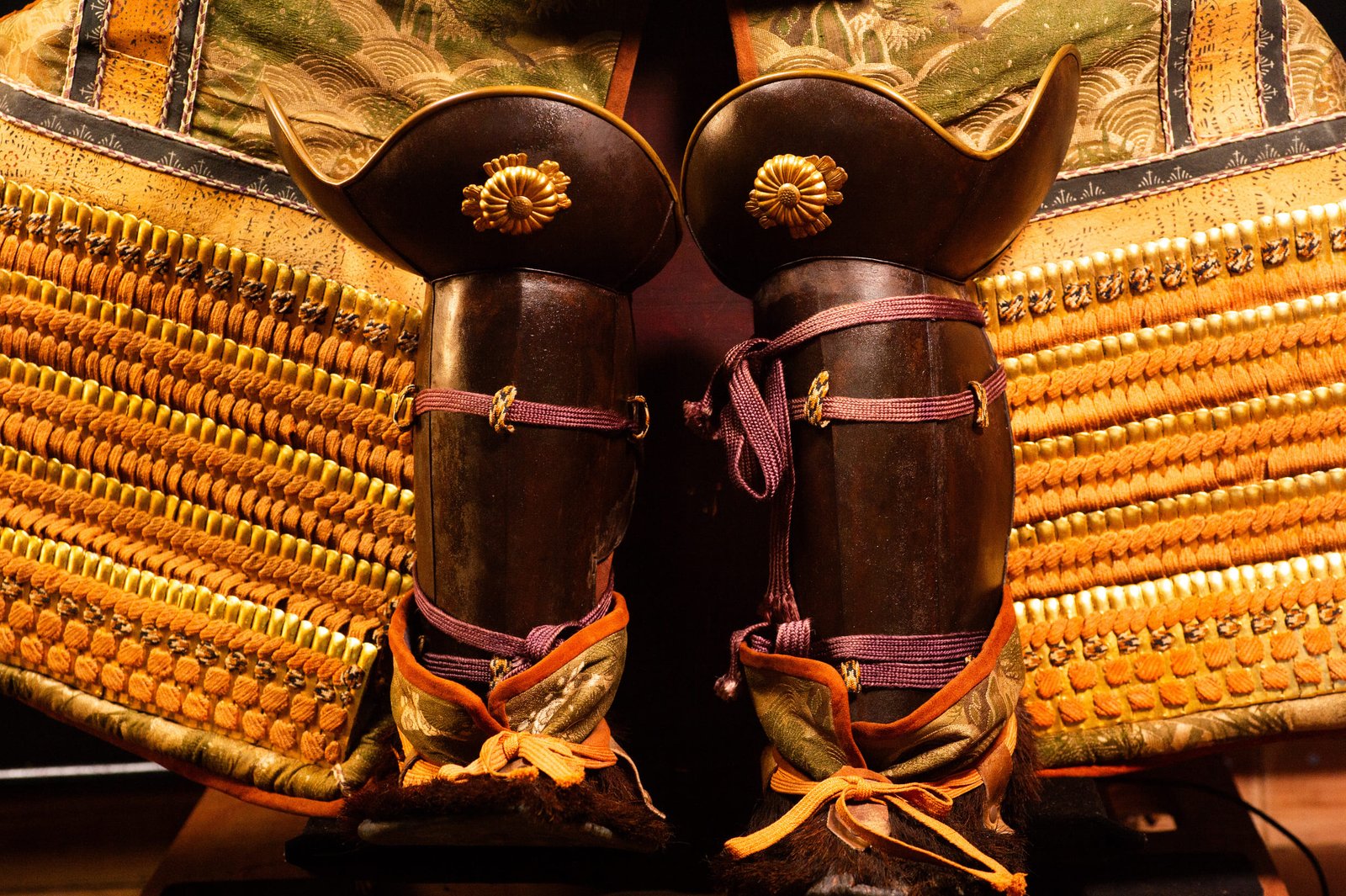
The haidate, protecting the thighs, combine brocade woven with seigaiha wave patterns and pines with laced lamellar panels below. Printed leather borders add further continuity with the decoration of the upper armor.
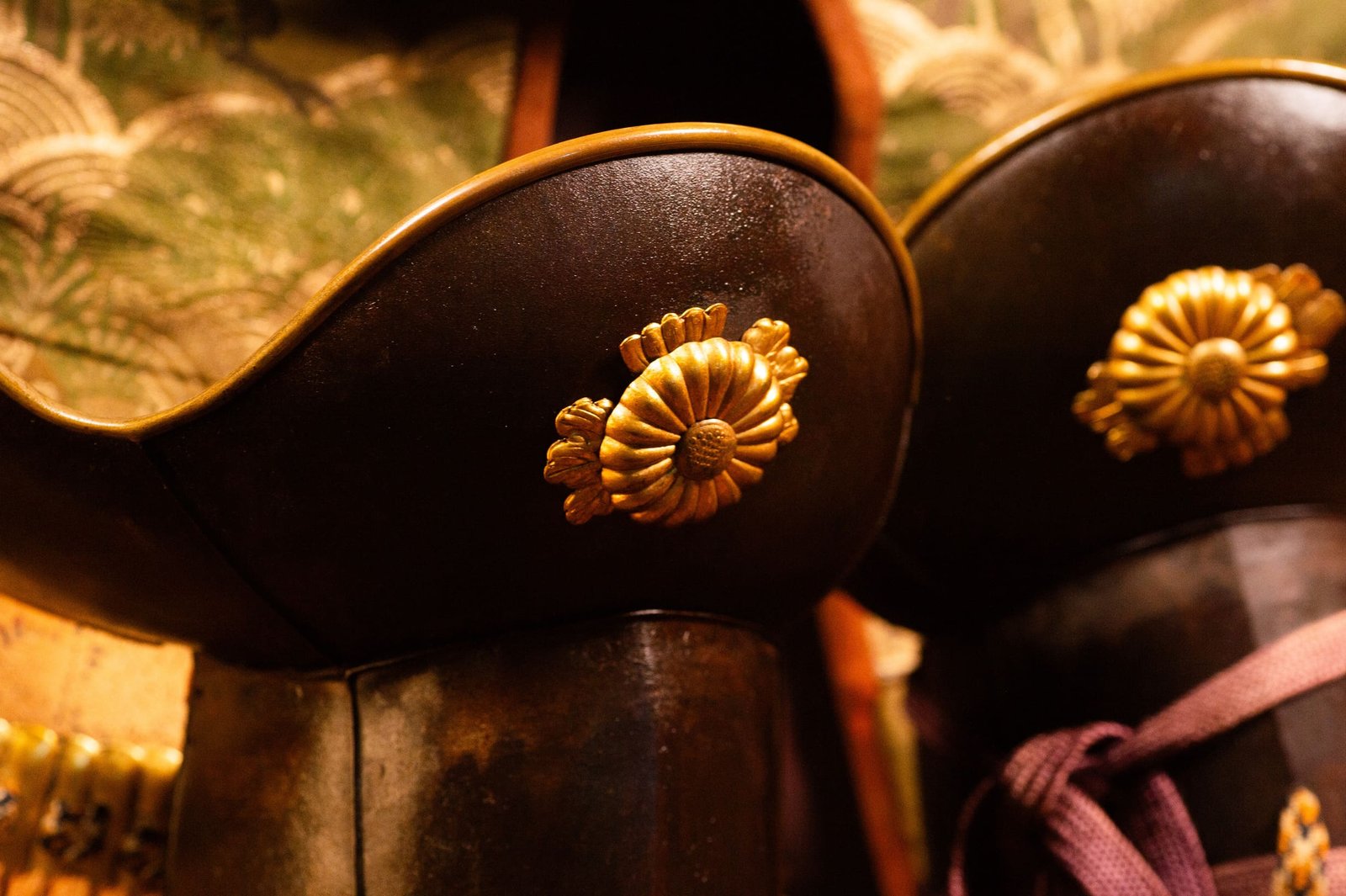
The lower legs are protected by dark-lacquered tsutsu-suneate. Their large raised knee guards, or tate-age, each carry a gilt chrysanthemum fitting. Purple cords secure the defenses over the brocade.
The ensemble is completed by kegutsu, fur footwear traditionally associated with high-ranking warriors wearing ō-yoroi. Together with the broad shoulder guards and classical chest defenses, they reinforce the armor’s reference to early warrior dress.
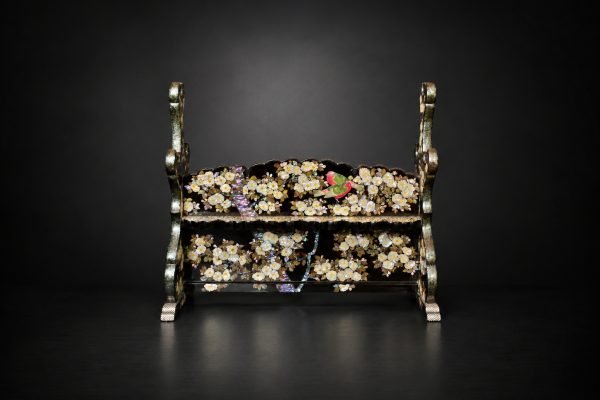
The armor is accompanied by a wooden yoroi-bitsu, the type of chest traditionally used to store and transport Japanese armor.
The armor is in excellent overall condition for its age, with minor wear consistent with its antiquity. This includes gentle fading of the silk lacing, light wear to the printed leather and brocade, and rubbing to the gilding on raised areas.
The orange lacing, patterned textiles, and gilt fittings retain a strong visual presence. The detailed photographs show the surface wear and textile condition across the individual components.
This ō-yoroi revival gusoku brings together classical armor forms, Shōhei-gawa leather, and richly worked chrysanthemum fittings. Its character emerges through both the broad orange-and-gold silhouette and the smaller details: the printed date on the chest guard, the raised rivets of the helmet, and the openwork flowers repeated across the ensemble.
| Época | Edo |
|---|

Order above 1.000,00 € gets free shipping.

Secure and hassle-free payment process.

Certificate of authenticity included.

Have questions? Contact us via WhatsApp.
Contact
Discover exceptional Japanese swords, armor and works of art with our limited-time Black Friday offers.
OFFER ENDS NOVEMBER 30, 2026
Enter your code at checkout. Discounts cannot be combined with other coupons. Eligible orders only.