Edo Period Kabuto with Kurikara Dragon Maedate and Great Flame Ushirodate
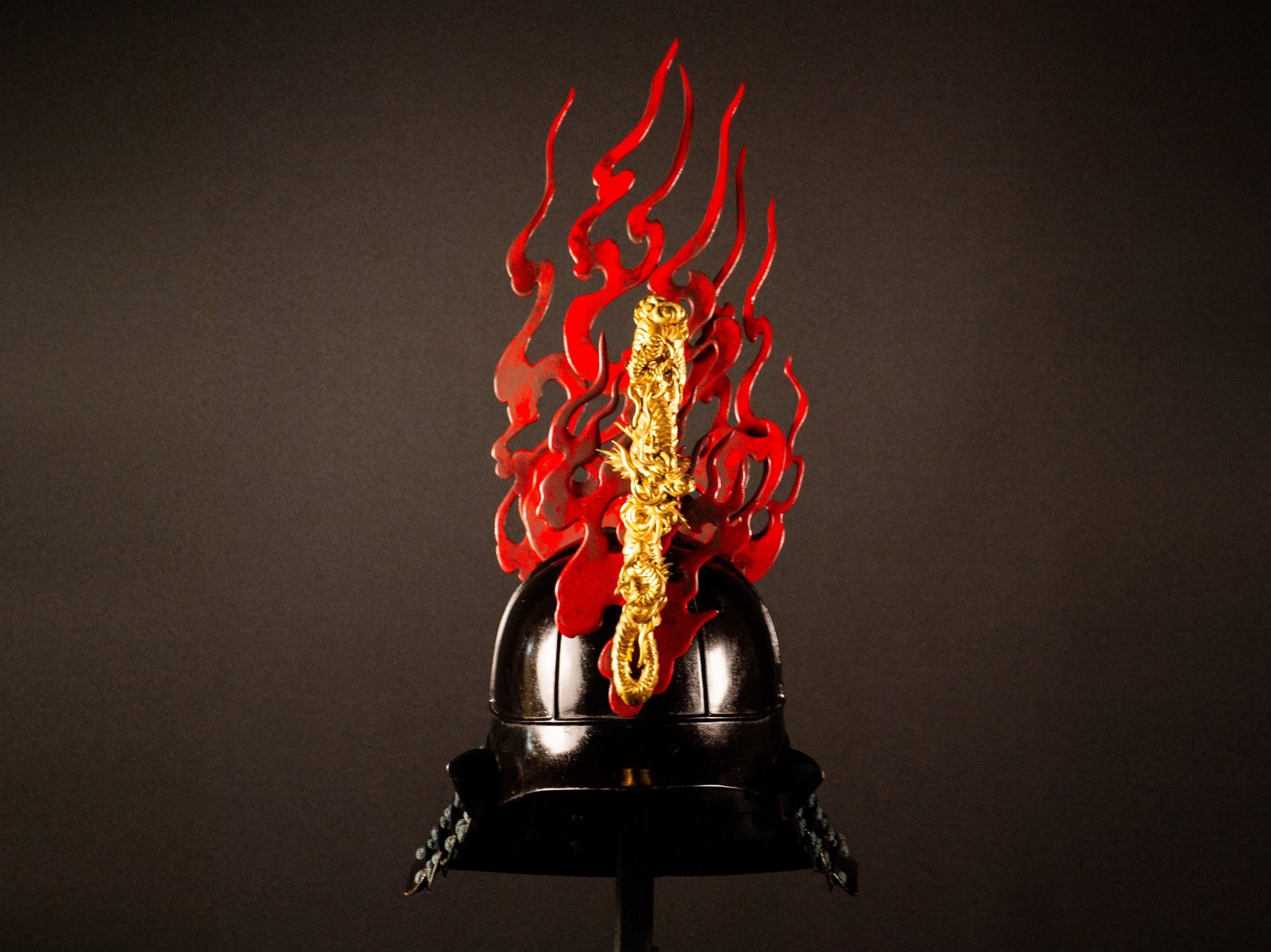
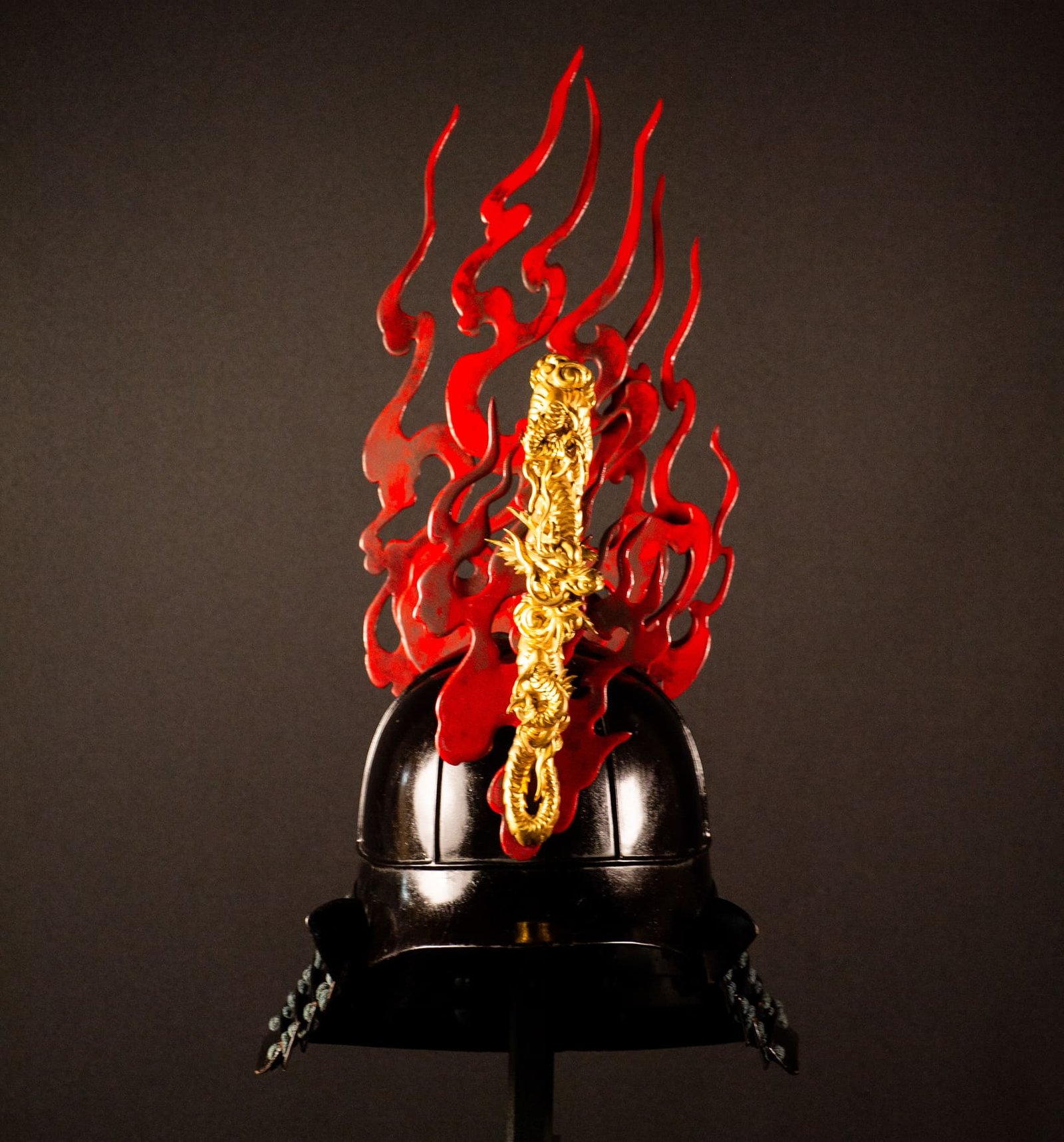
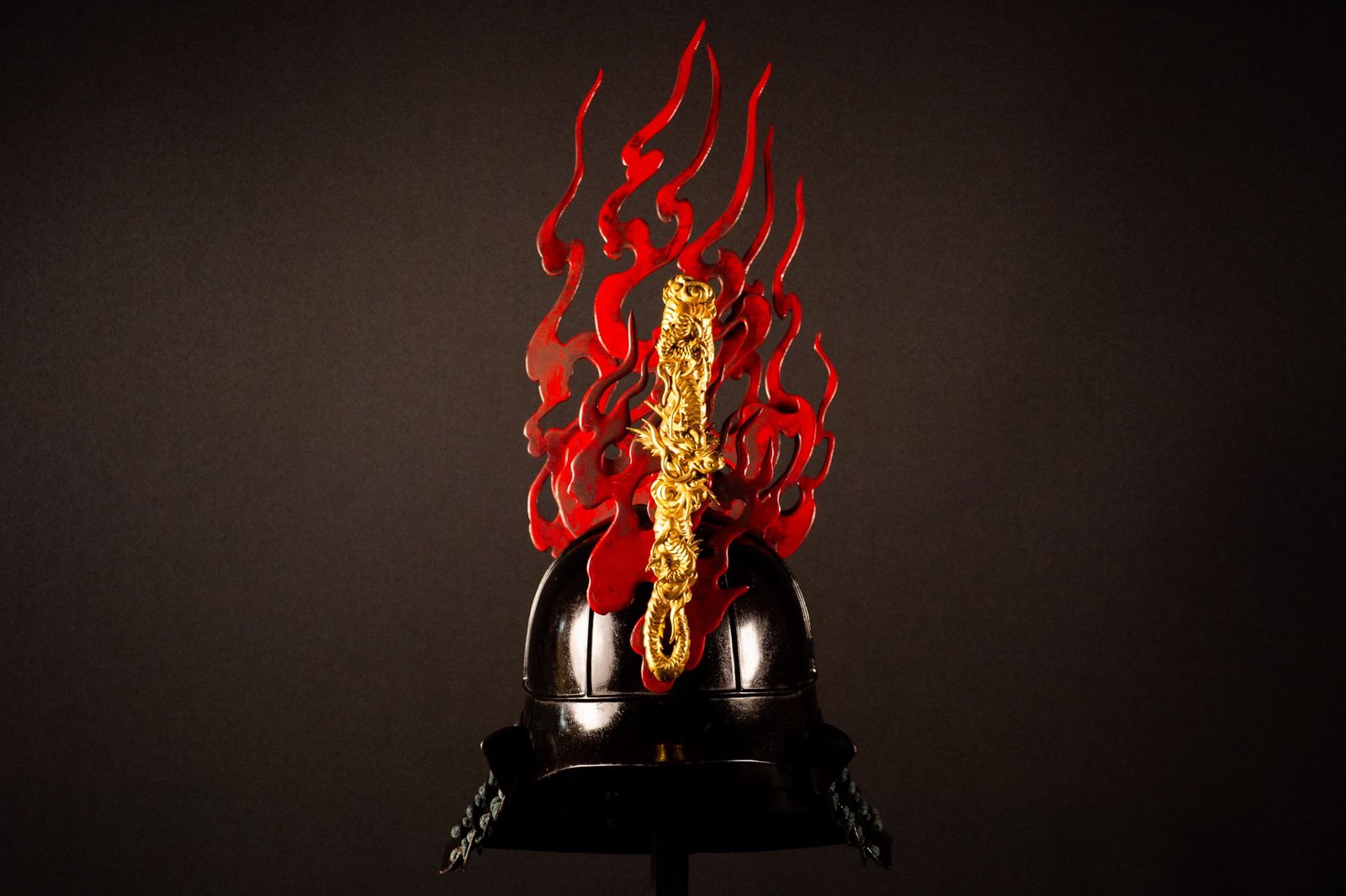
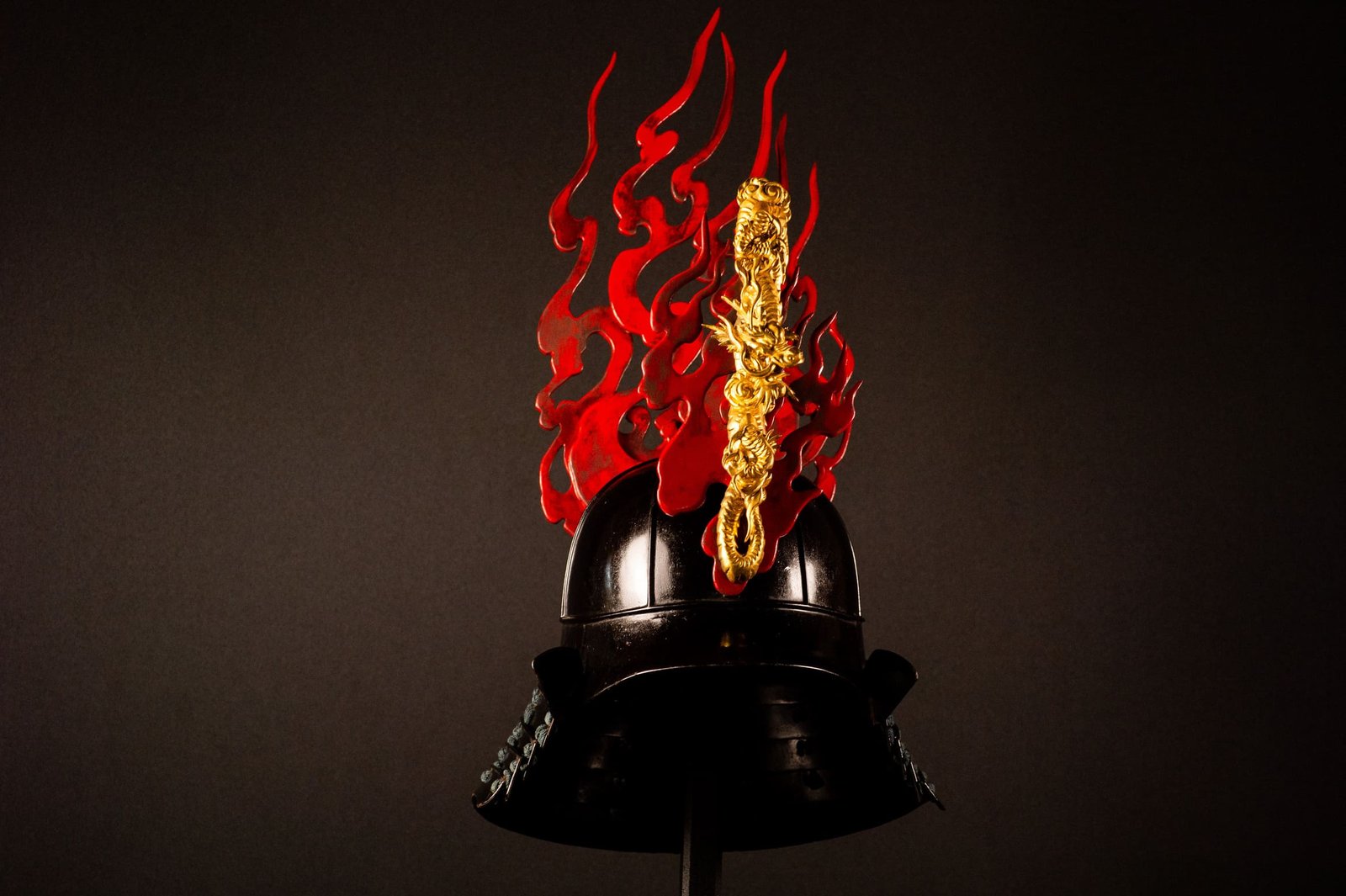
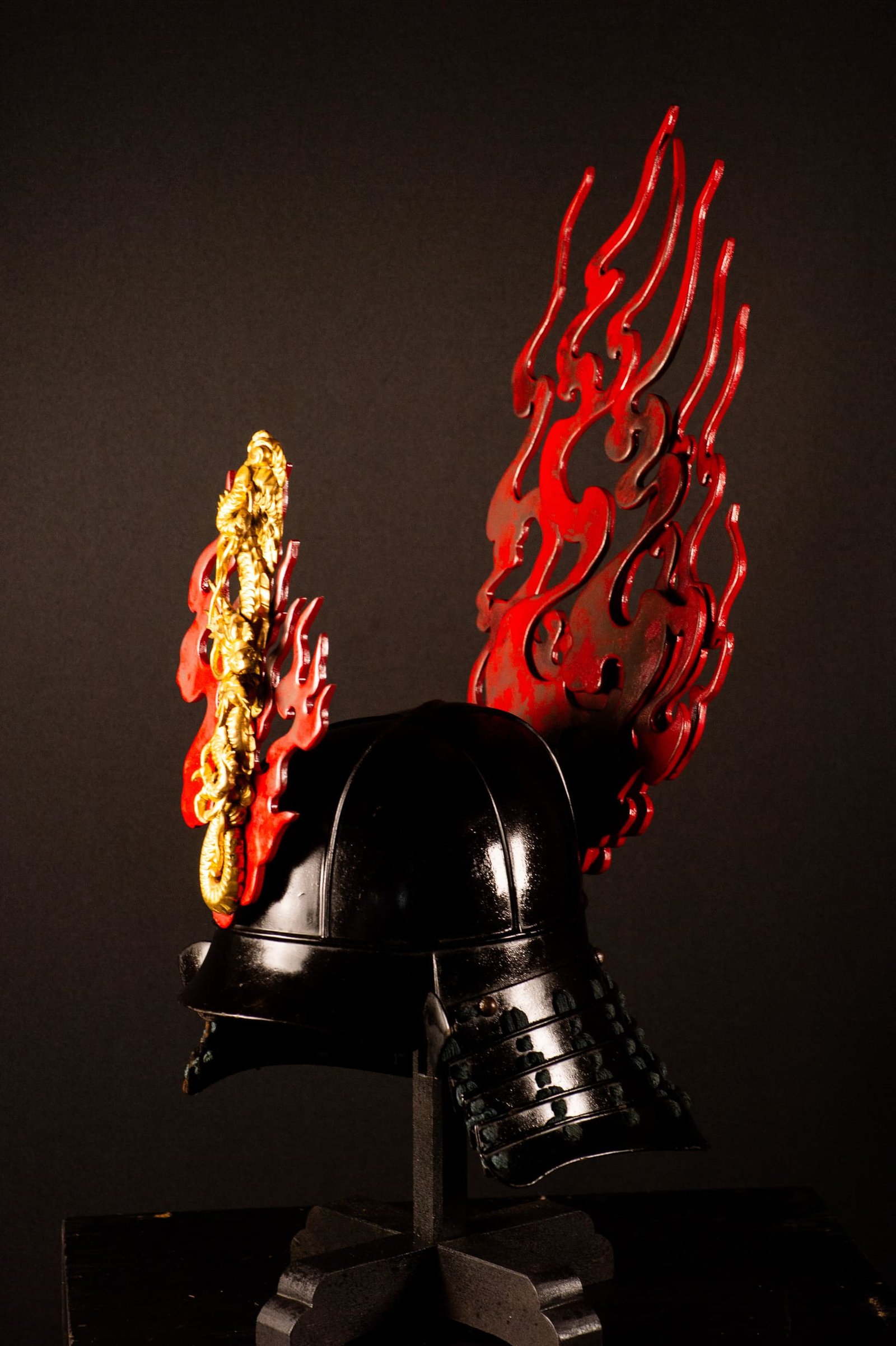
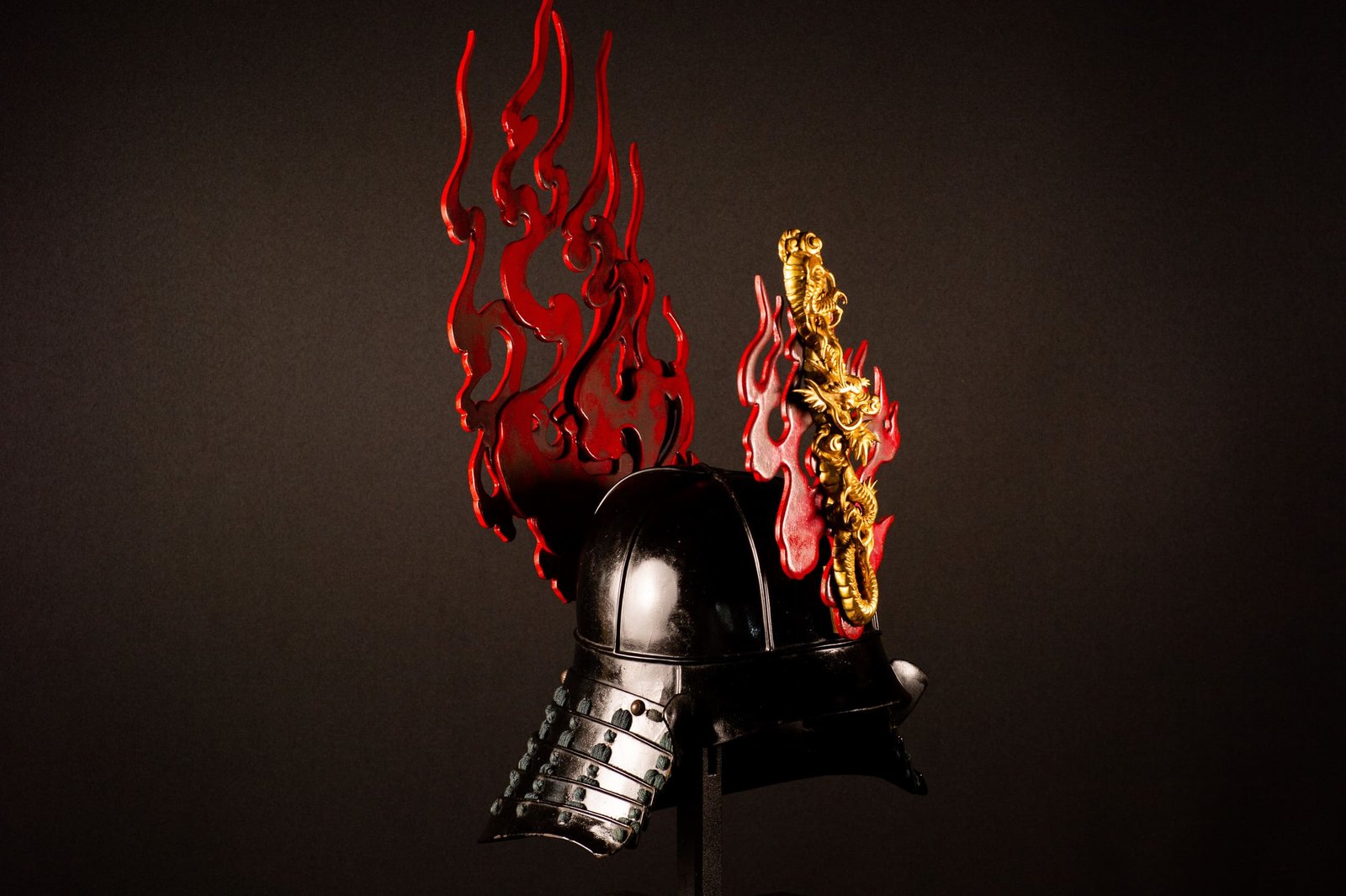
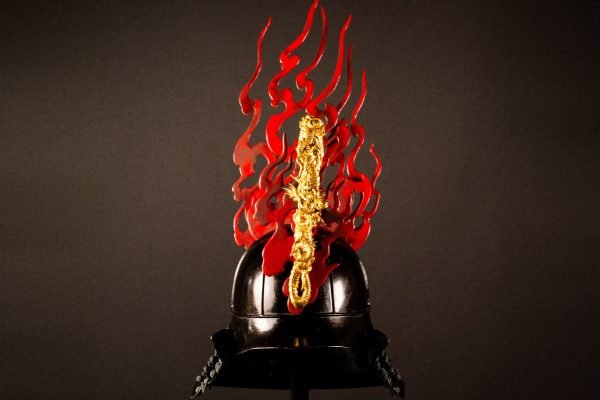
A Japanese kabuto from the Edo period (1603–1868), distinguished by the contrast between its glossy black bowl, gilt dragon ornament, and vivid red flames. The combination of a sculptural Kurikara dragon maedate at the front and a tall flame ushirodate at the rear gives the helmet a particularly expressive silhouette.
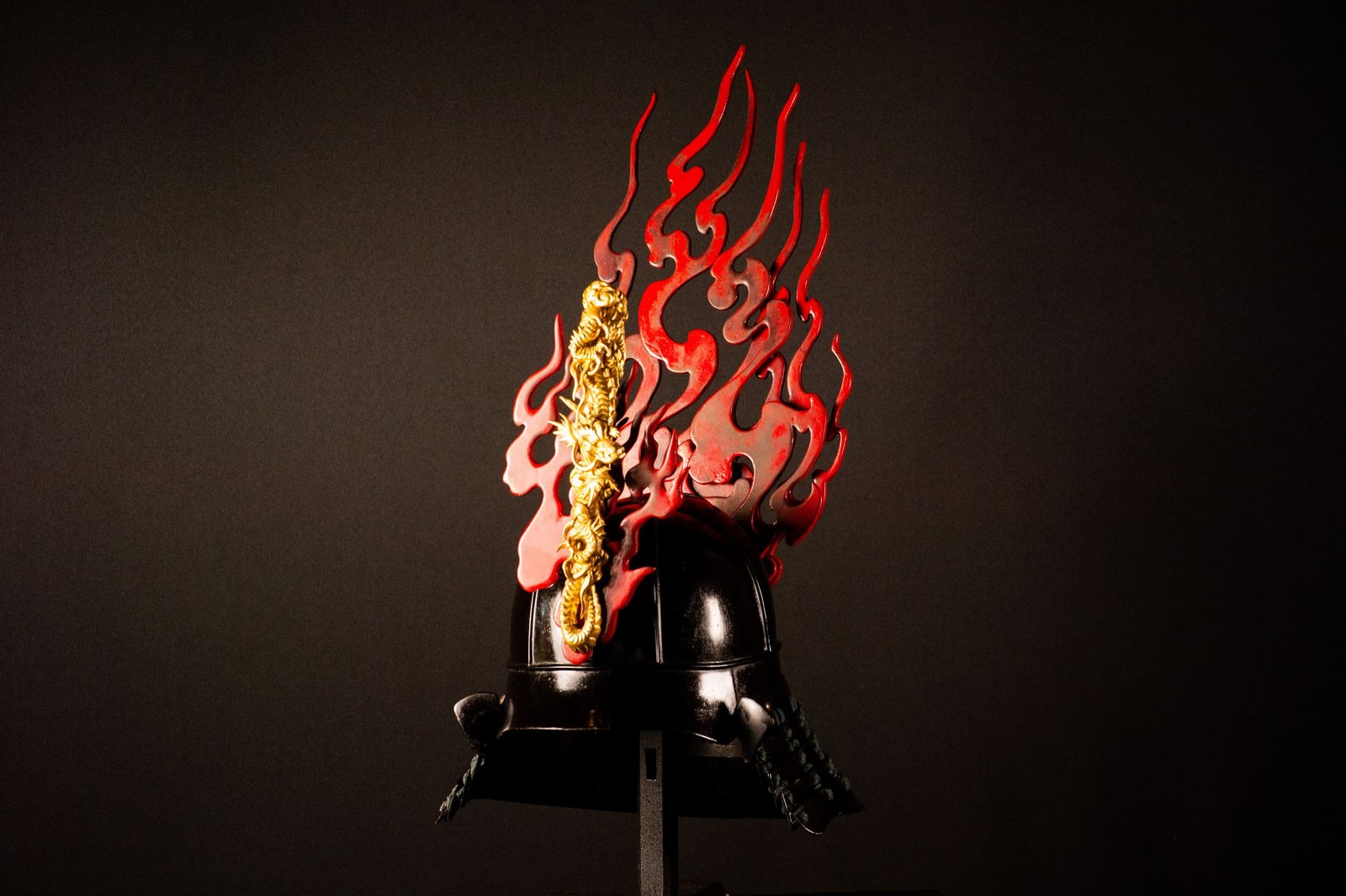
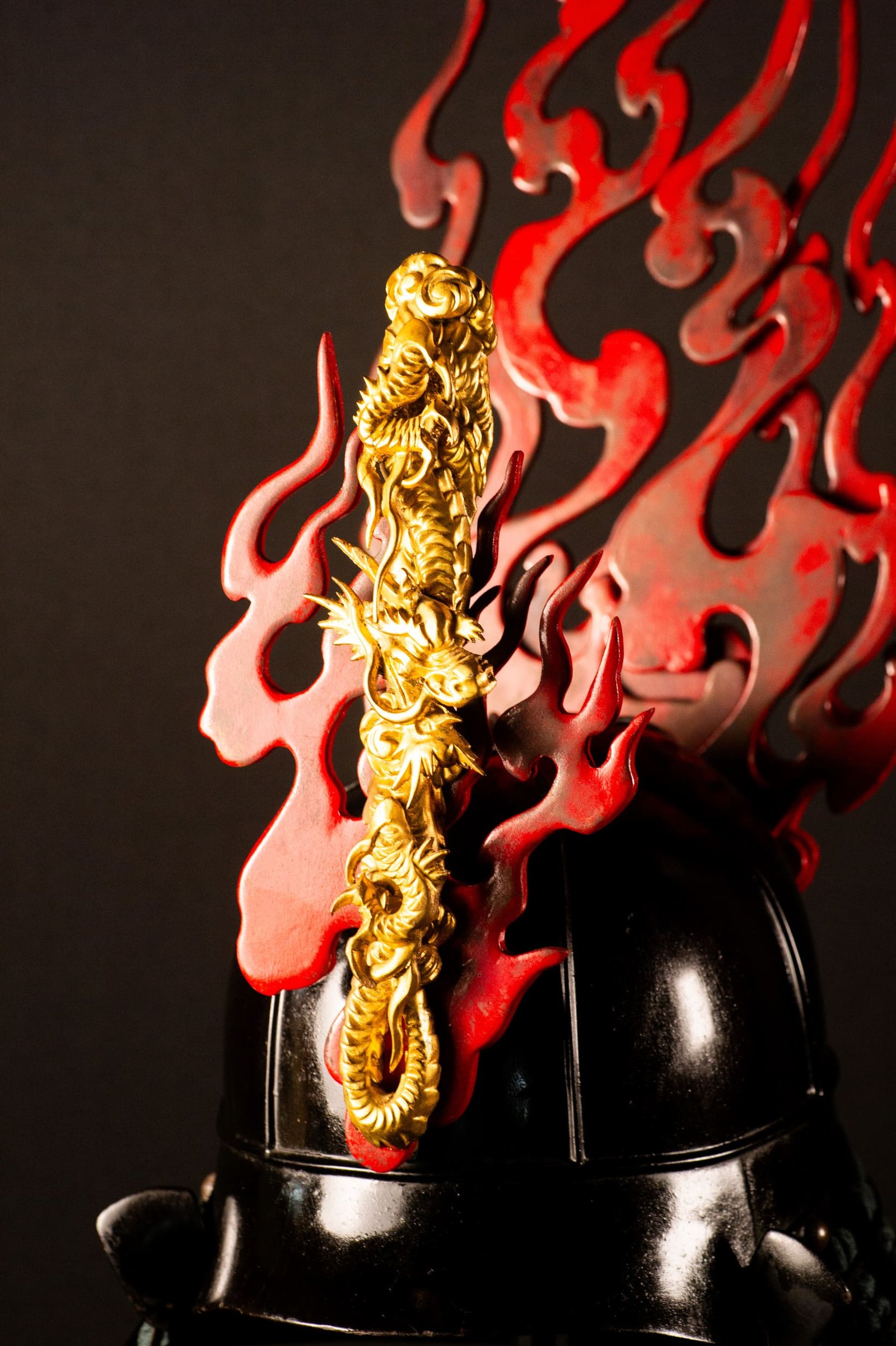
Seen from the front, the gilded dragon stands out against the overlapping red flame forms. In profile, the separation between the two crests becomes clear: the smaller frontal composition and the larger rear ornament frame the rounded bowl, creating a sense of height and movement above the neck guard.
The Helmet Bowl
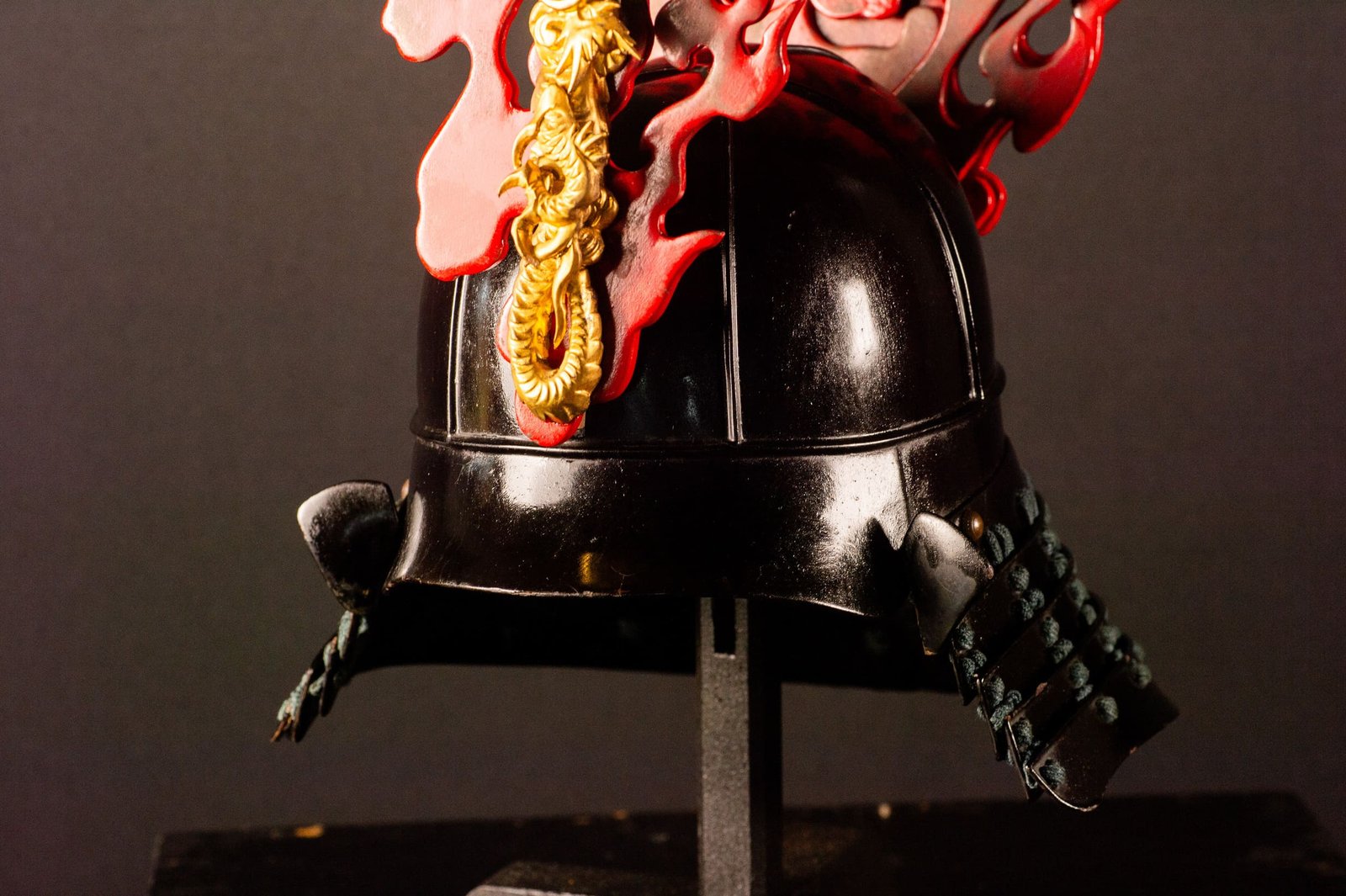
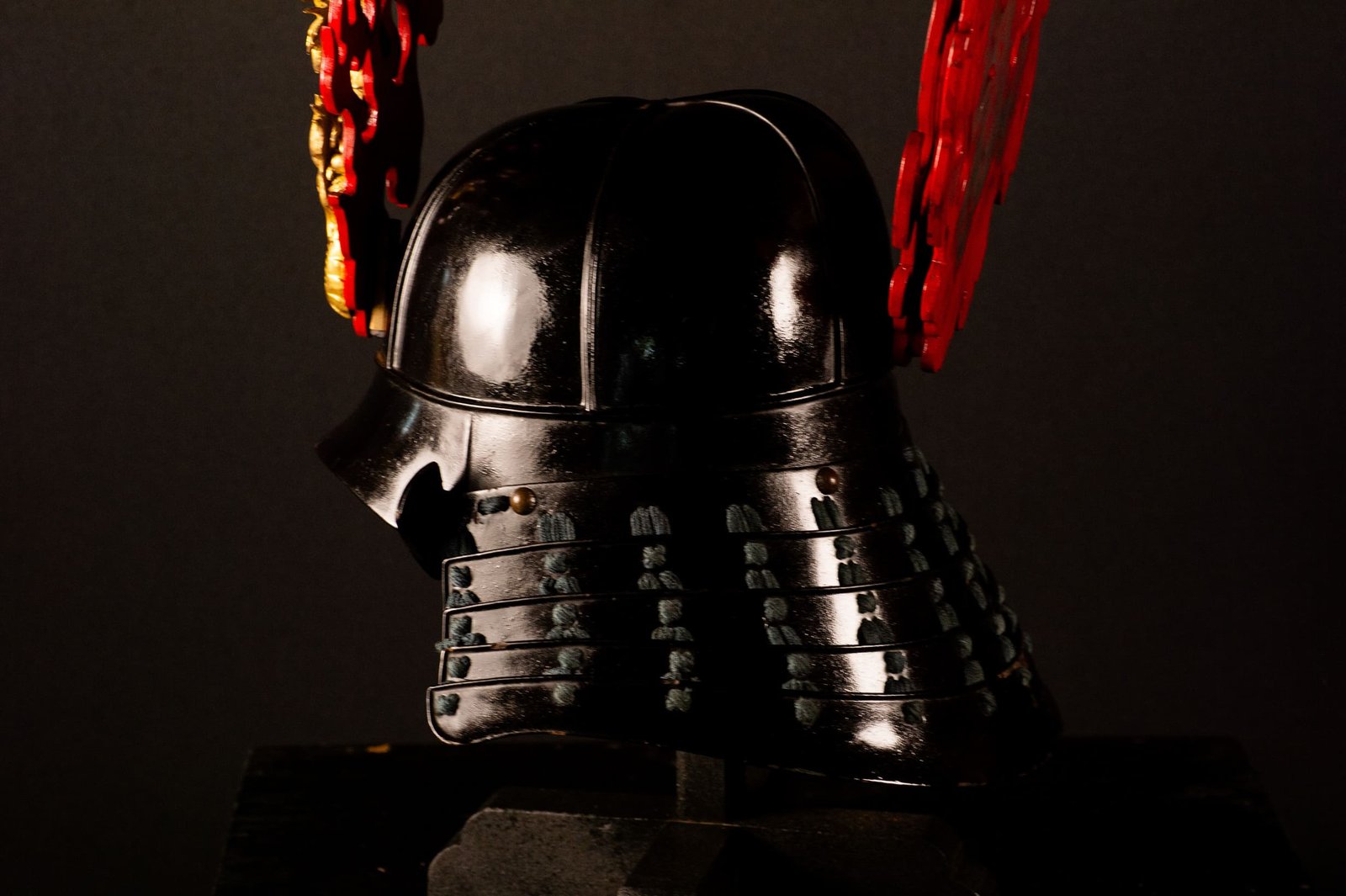
The multi-plate bowl has a rounded profile articulated by raised vertical ridges and finished in deep, glossy black lacquer. Light follows these ridges across the curved surface, revealing the structure beneath the dark finish.
The comparatively restrained bowl provides a balanced foundation for the elaborate front and rear ornaments. Its broad lacquered surfaces also establish the black, red, and gold palette that defines the helmet.
The Kurikara Dragon Maedate
The frontal maedate depicts a gilt dragon coiled around an upright sword-form element, with red-lacquered flames rising behind it. The dragon’s modeled head, projecting whiskers, claws, and overlapping scales give the narrow composition considerable sculptural detail.
The subject evokes Kurikara, the dragon-and-sword manifestation associated with Fudō Myōō, the Immovable Wisdom King of Esoteric Buddhism. The dragon entwined around a sword is an established expression of this deity, whose imagery also appears on Japanese arms and armor.
Within this Buddhist context, the sword is associated with cutting through ignorance, while Fudō’s fierce appearance expresses his protective role. The dragon and surrounding flames therefore give the helmet a religious dimension alongside their strong decorative effect.
The Great Flame Ushirodate
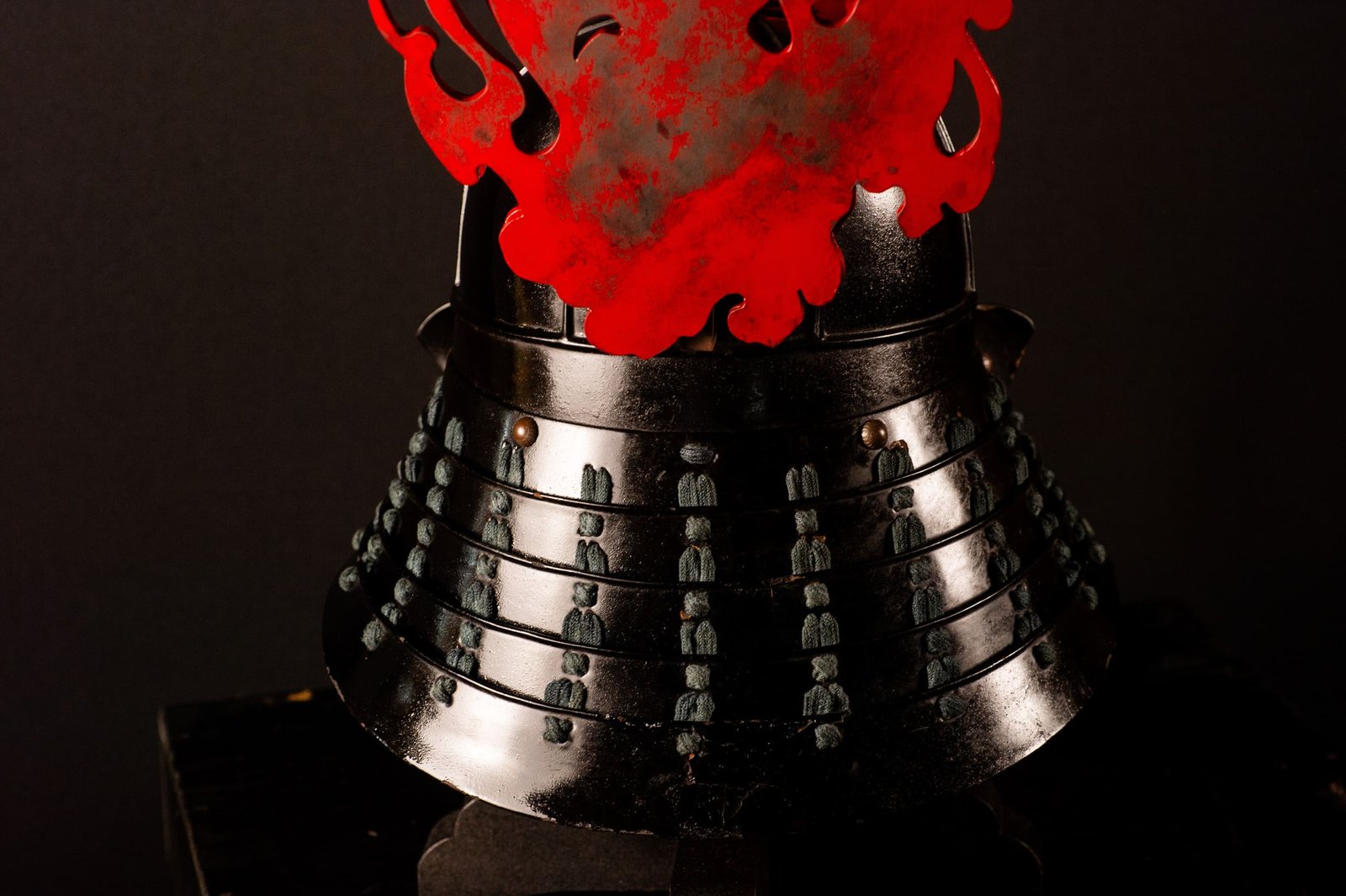
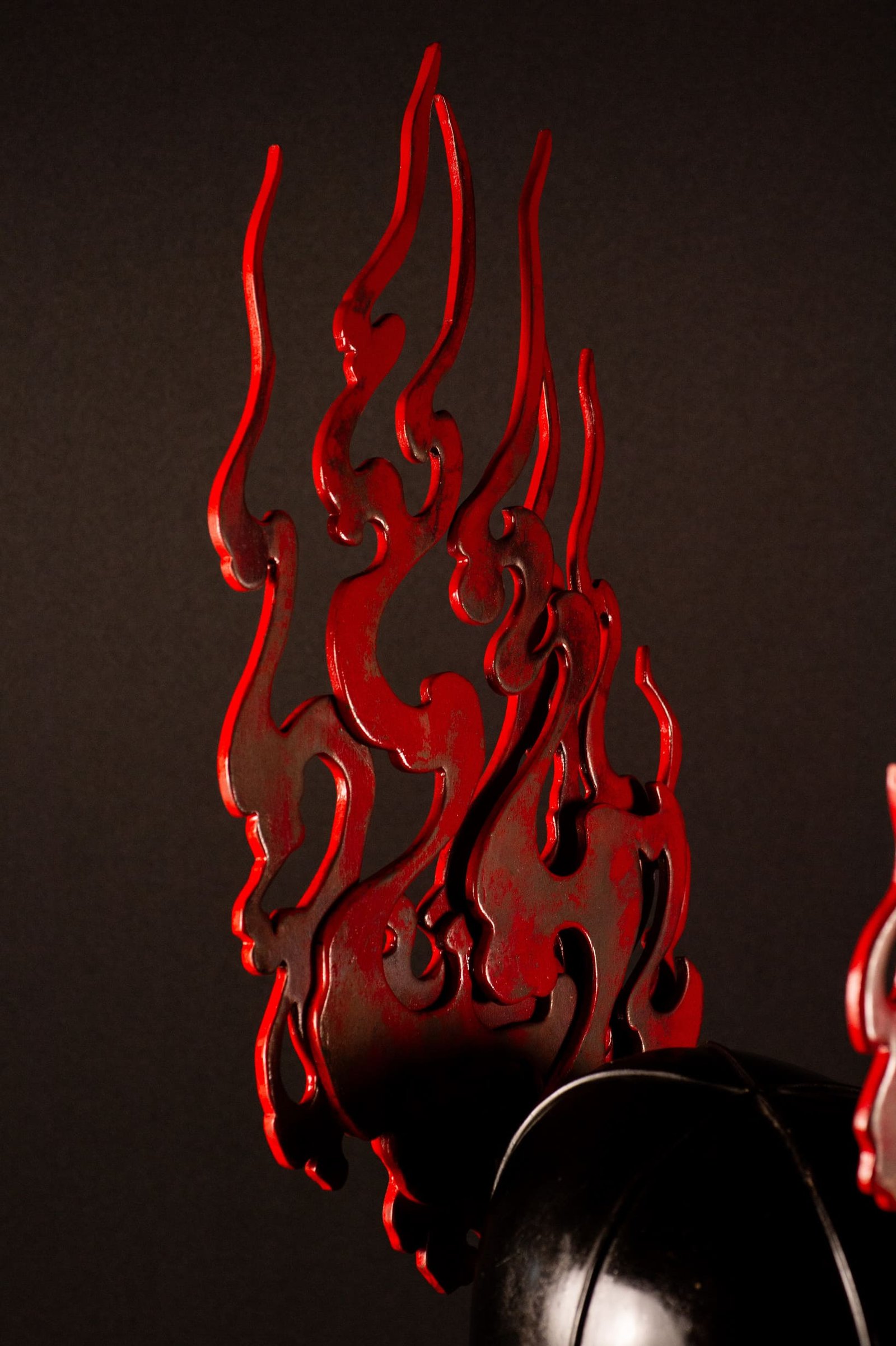
At the rear rises a large ushirodate formed as an openwork arrangement of flames. Long, tapering tongues alternate with curling shapes and irregular openings, creating a flowing outline that extends well above the bowl.
The ornament is finished in vermilion-red lacquer, with darker areas visible across its surface. From the side, its depth and layered forms become especially apparent. From behind, the flame crest becomes the dominant feature, giving the helmet a distinctive rear view as well as a dramatic frontal appearance.
Fukigaeshi and Visor
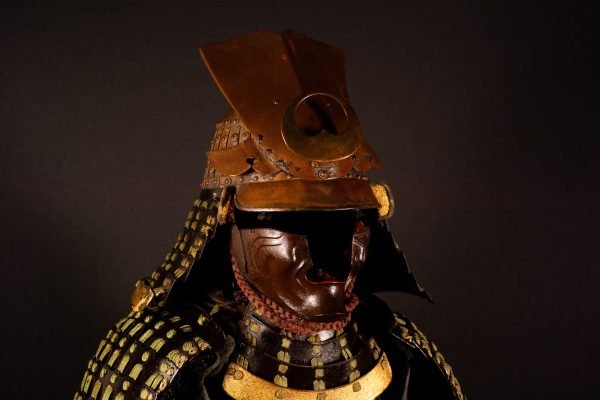
The fukigaeshi, the small turned-back sections at the sides of the neck guard, are finished in black lacquer. Their compact proportions preserve the clarity of the helmet’s outline.
The mabizashi, or visor, continues the glossy black exterior and has a red-lacquered underside. This adds a quieter color contrast beneath the brow, complementing the more prominent red ornaments above.
The Five-Lame Shikoro
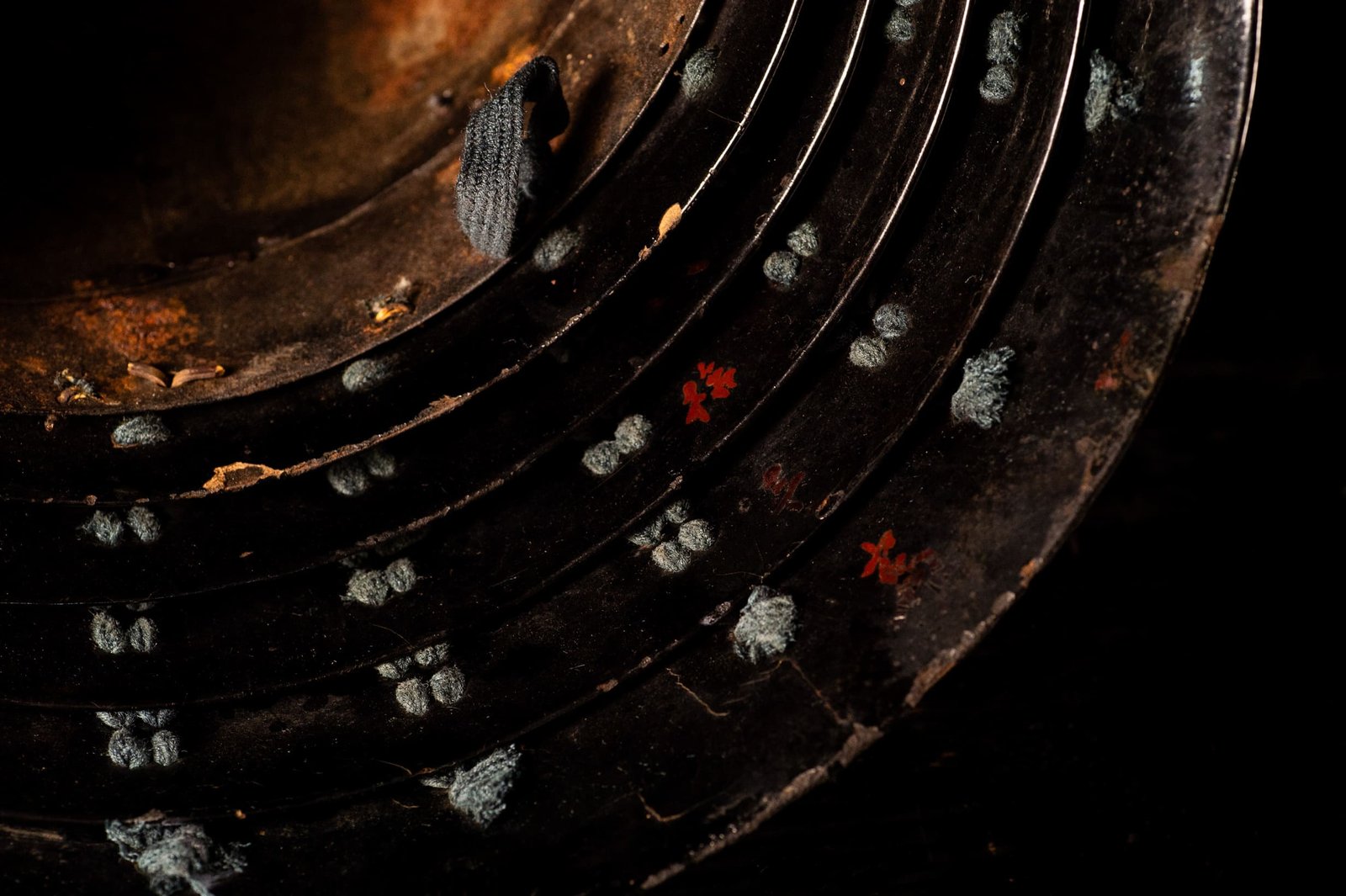
The shikoro consists of five black-lacquered lames forming the protective neck guard. The overlapping rows widen toward the lower edge and are linked by dark blue-green silk lacing in a spaced sugake odoshi arrangement.
The visible intervals between the lacing groups allow the black lacquer to remain prominent. The orderly rows provide a measured visual rhythm beneath the freer, curling forms of the flame crests.
Interior and Assembly Details
The interior retains a textile lining, showing age-related softness and wear, together with cord loops for the shinobi-no-o, the helmet’s chin cord.
Small red lacquer marks on the inner faces of the shikoro lames are consistent with assembly or positioning marks. Such marks could help indicate the order of components during assembly. These modest details add interest to the helmet’s construction alongside its more conspicuous decoration.
Condition
The helmet retains a strong overall presentation, with a deep gloss to the black bowl and clearly defined ornamental detail. The photographs show rubbing, small surface marks, and localized lacquer wear or losses, particularly on the red flame ornament and around some plate edges.
The interior lining shows wear consistent with age, with light toning to the inner faces of the neck-guard lames. The detailed photographs should be consulted for the extent and distribution of the visible surface wear.
Key Features
- Object: Japanese samurai helmet, kabuto
- Period: Edo period (1603–1868)
- Bowl: Multi-plate construction with raised vertical ridges and glossy black lacquer
- Maedate: Gilt Kurikara dragon coiled around an upright sword-form element, backed by red-lacquered flames
- Ushirodate: Large openwork flame crest with vermilion-red lacquer
- Fukigaeshi: Small, turned-back sections finished in black lacquer
- Visor: Black-lacquered exterior with red-lacquered underside
- Shikoro: Five black-lacquered lames
- Lacing: Dark blue-green silk in spaced sugake odoshi
- Interior: Textile lining and chin-cord loops
- Interior details: Red lacquer marks consistent with assembly or positioning marks
- Condition: Age-related wear, including rubbing and localized lacquer wear or losses
An Edo period kabuto whose character rests on the relationship between its rounded black bowl, finely detailed gilt dragon, and tall red flame crest. The Kurikara motif brings Buddhist symbolism to a helmet with a distinctive appearance from the front, side, and rear.