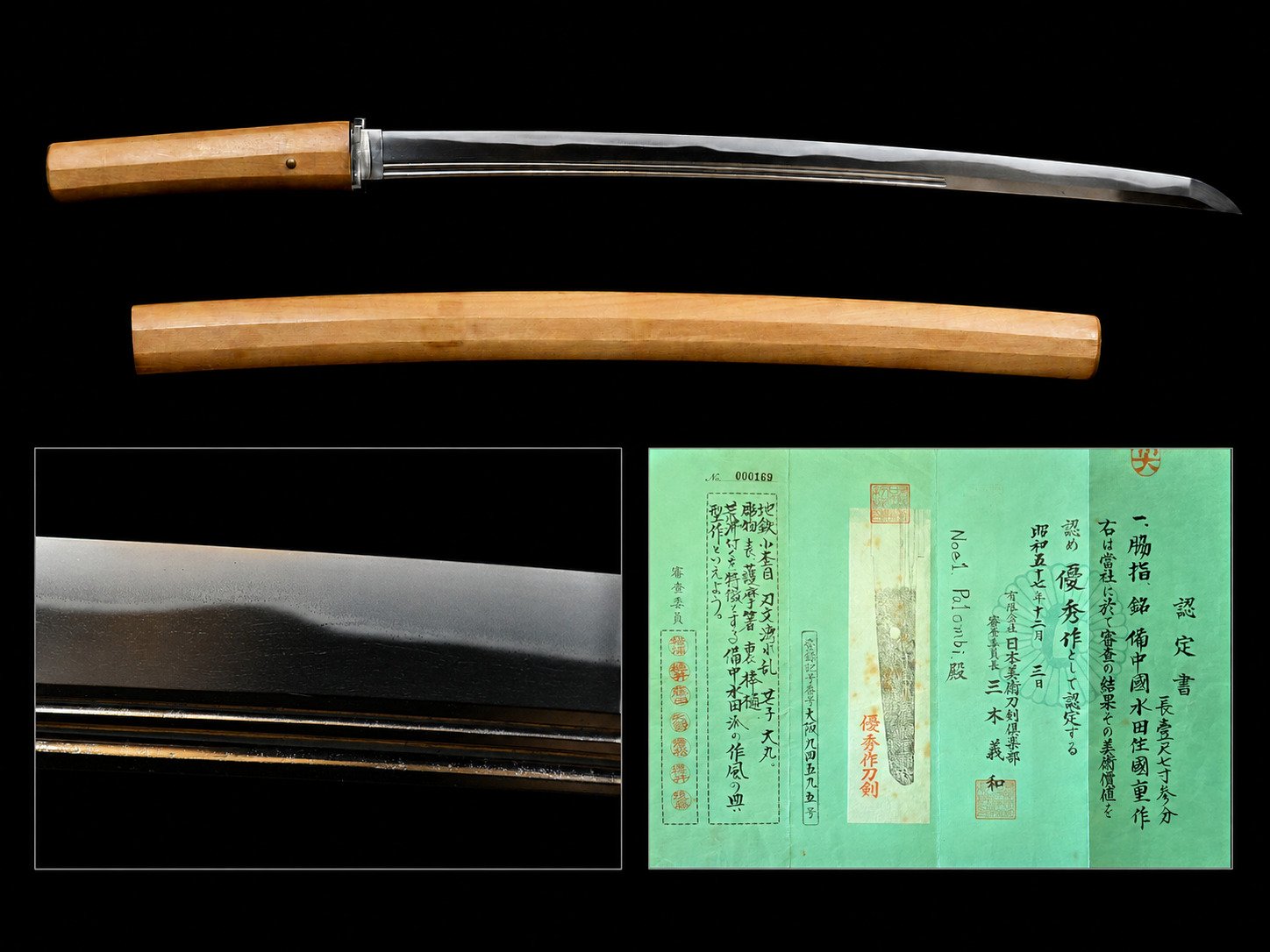
Wakizashi Signed Bitchū Mizuta Kunishige – Sōshū-Influenced Gunome-Midare
A signed Japanese wakizashi associated with the prolific Mizuta Kunishige group of Bitchū Province, one of the better-known regional swordmaking traditions of western Japan.
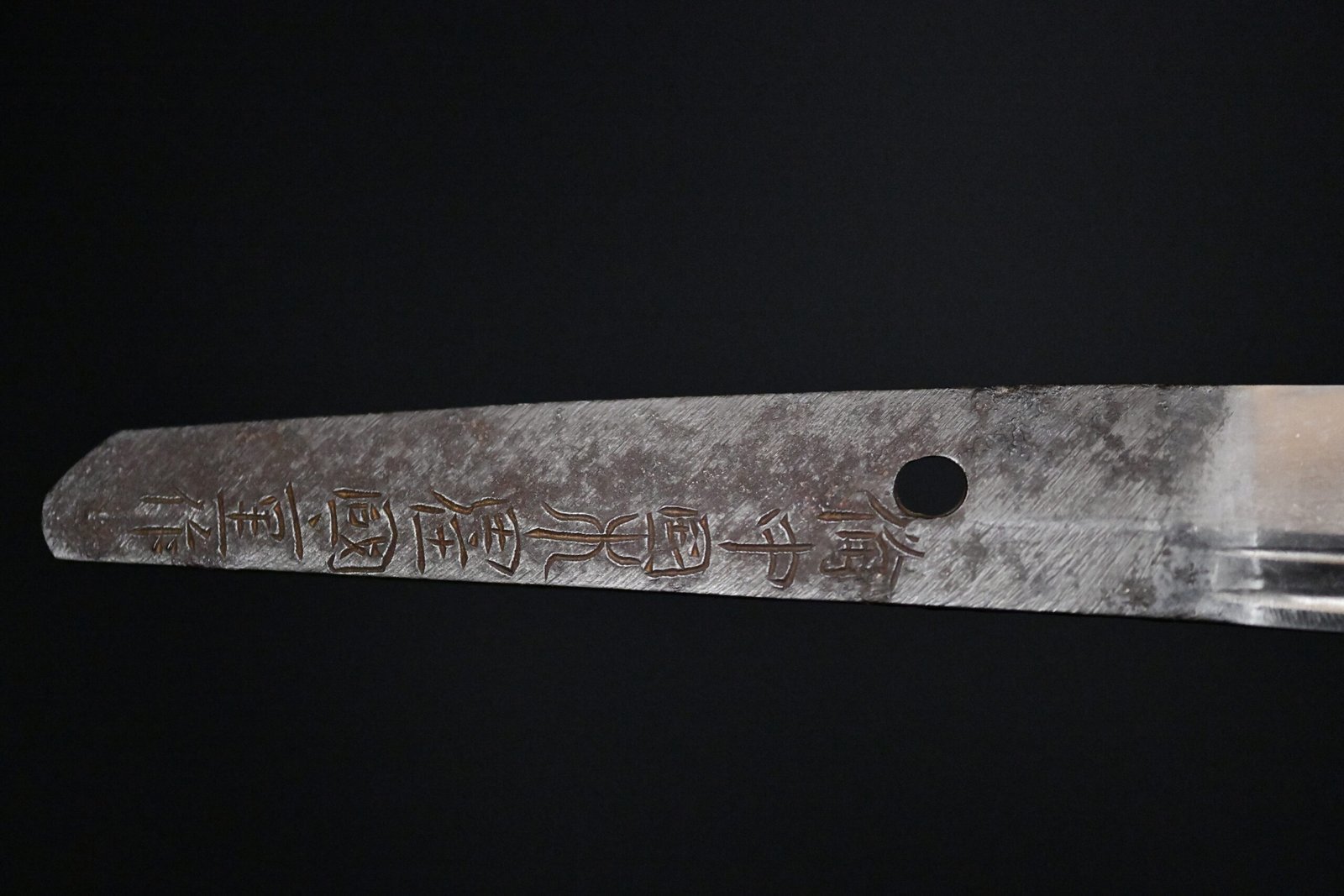
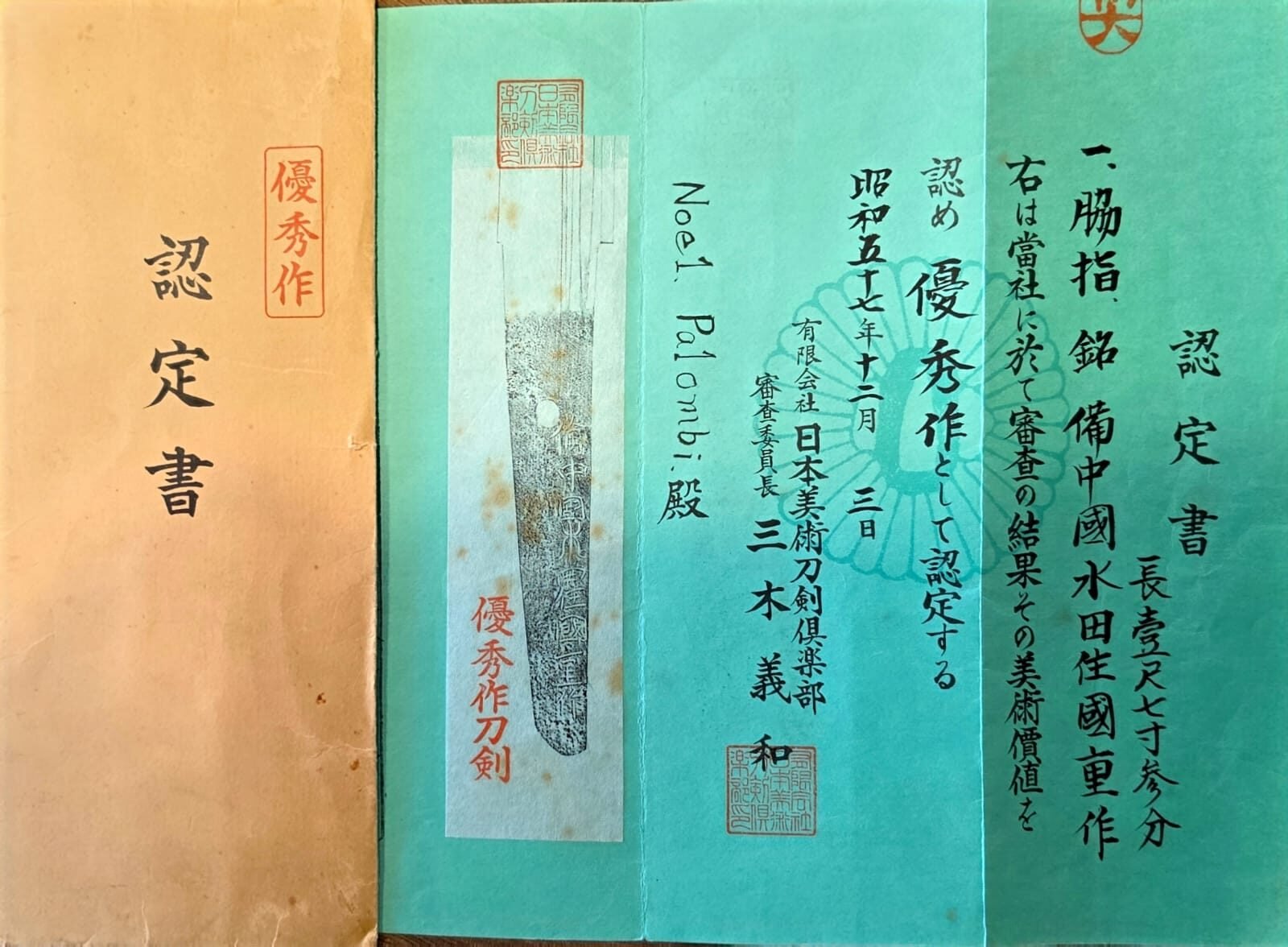
The blade bears the inscription 備中國水田住國重作 — Bitchū no Kuni Mizuta-jū Kunishige saku — identifying a Kunishige smith working at Mizuta in Bitchū Province.
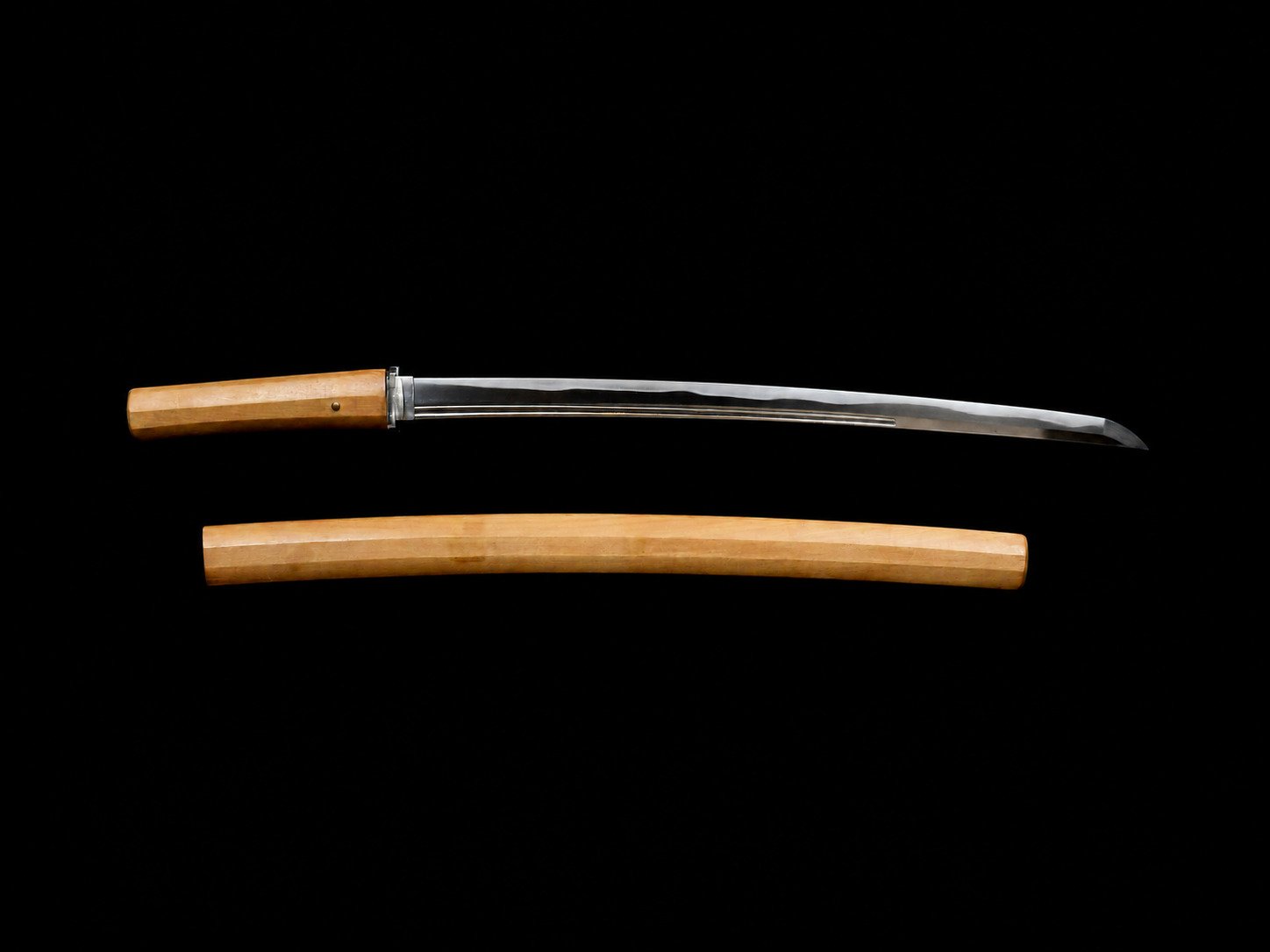
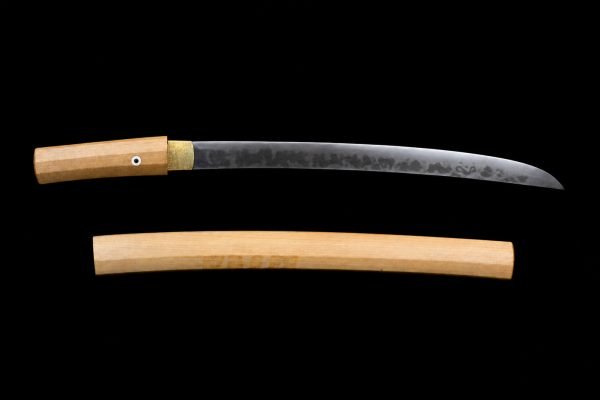
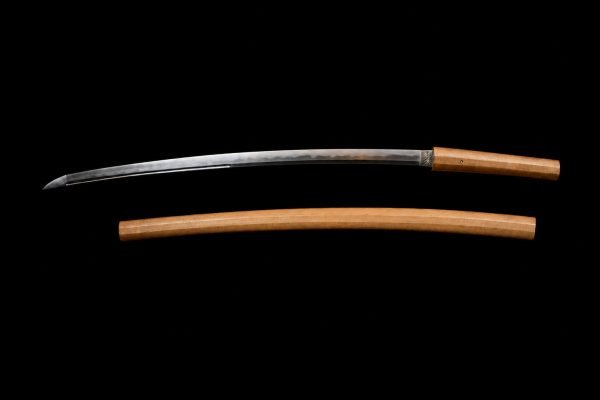
The sword combines a bold overall construction with an active tempering style traditionally associated with the Mizuta group and its strong exposure to Sōshū-den influence. The blade is currently preserved in a plain wooden shirasaya, keeping the focus on the steel itself.
Signature – Bitchū Mizuta Kunishige
The mei reads:
備中國水田住國重作
Bitchū no Kuni Mizuta-jū Kunishige saku
“Made by Kunishige, resident of Mizuta in Bitchū Province”
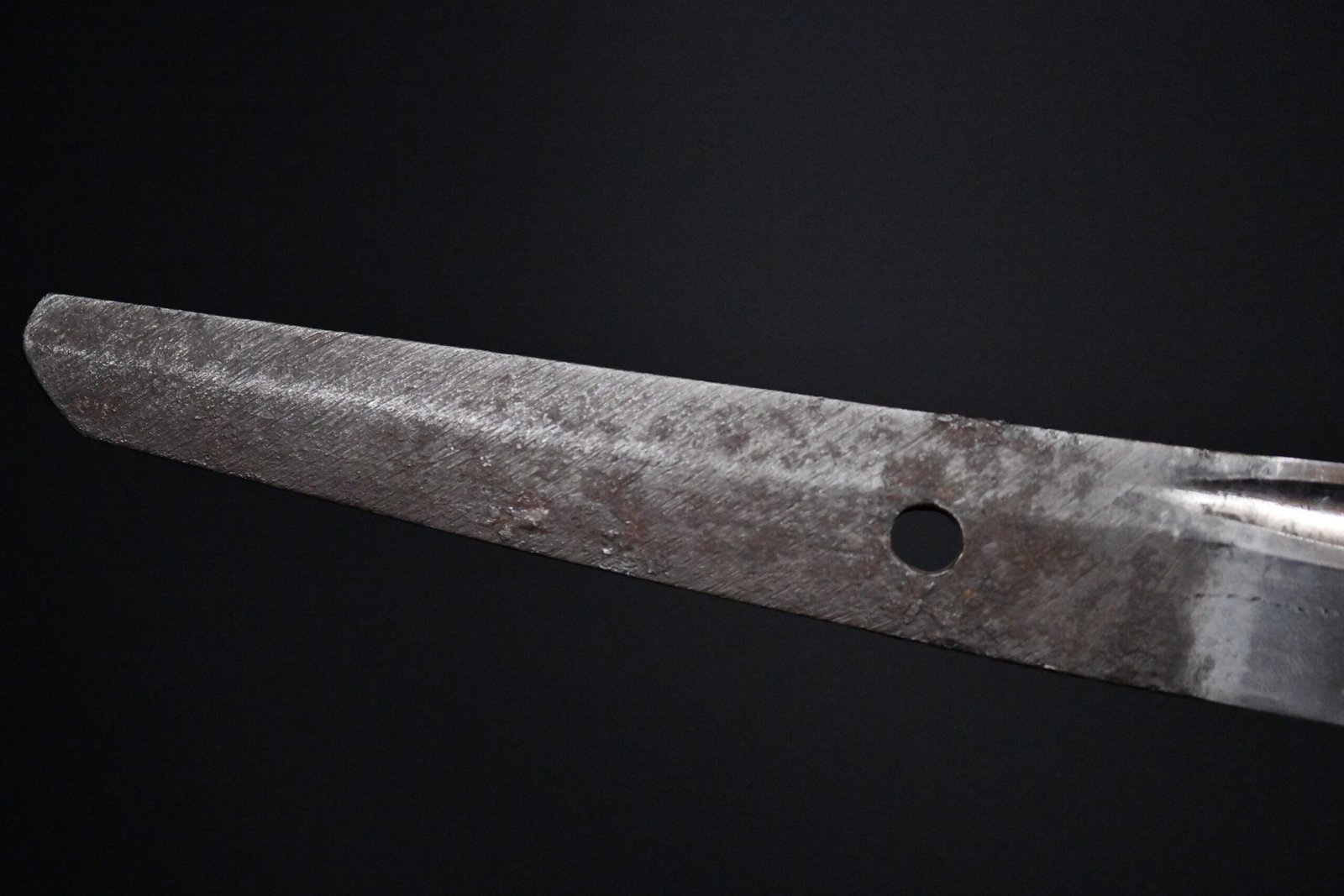
The inscription is located on the omote side of the nakago.
The name Kunishige was used across multiple generations within the Mizuta group rather than identifying a single individual smith. Numerous smiths bearing the name are recorded, making Kunishige one of the defining signatures associated with the broader Mizuta tradition.
The Mizuta Kunishige Tradition
The Mizuta group developed in Bitchū Province and became one of the region’s most productive swordmaking lineages.
Traditional accounts of the lineage connect its origins with descendants of the Kōno family of Iyo Province. The family is associated in historical tradition with maritime warfare and later displacement during the political upheavals of the late Sengoku period. According to these accounts, descendants eventually settled in Bitchū under the protection of figures connected with the Mōri sphere and established themselves as swordsmiths.
The Mizuta workshops subsequently became highly productive and influential. Smiths connected with the tradition also moved to other centres, giving rise to branches commonly referred to as Edo-Mizuta, Awa-Mizuta and Osaka-Mizuta.
Because the Kunishige name was repeated through many generations, evaluation of an individual blade depends not only on the mei but also on workmanship, shape, forging, hamon and surviving documentation.
Sōshū-Influenced Temper Style
Mizuta Kunishige blades are often associated with a comparatively bold and energetic style that differs from the quieter restraint commonly linked with classical Bizen work.
The tempering tradition frequently incorporates strong Sōshū-den influence, including active gunome-midare, often developing from a notare base and enriched with prominent nie activity.
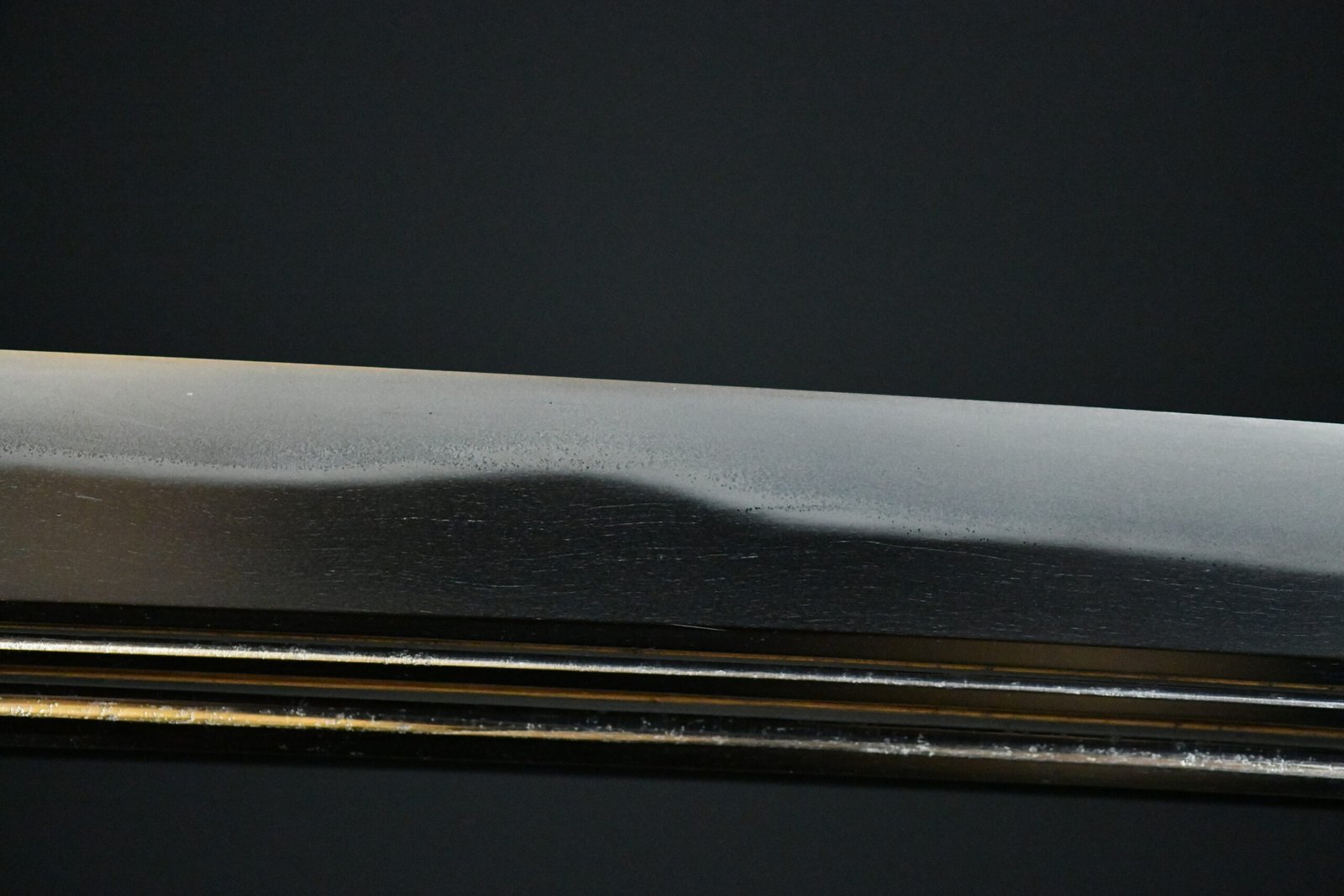
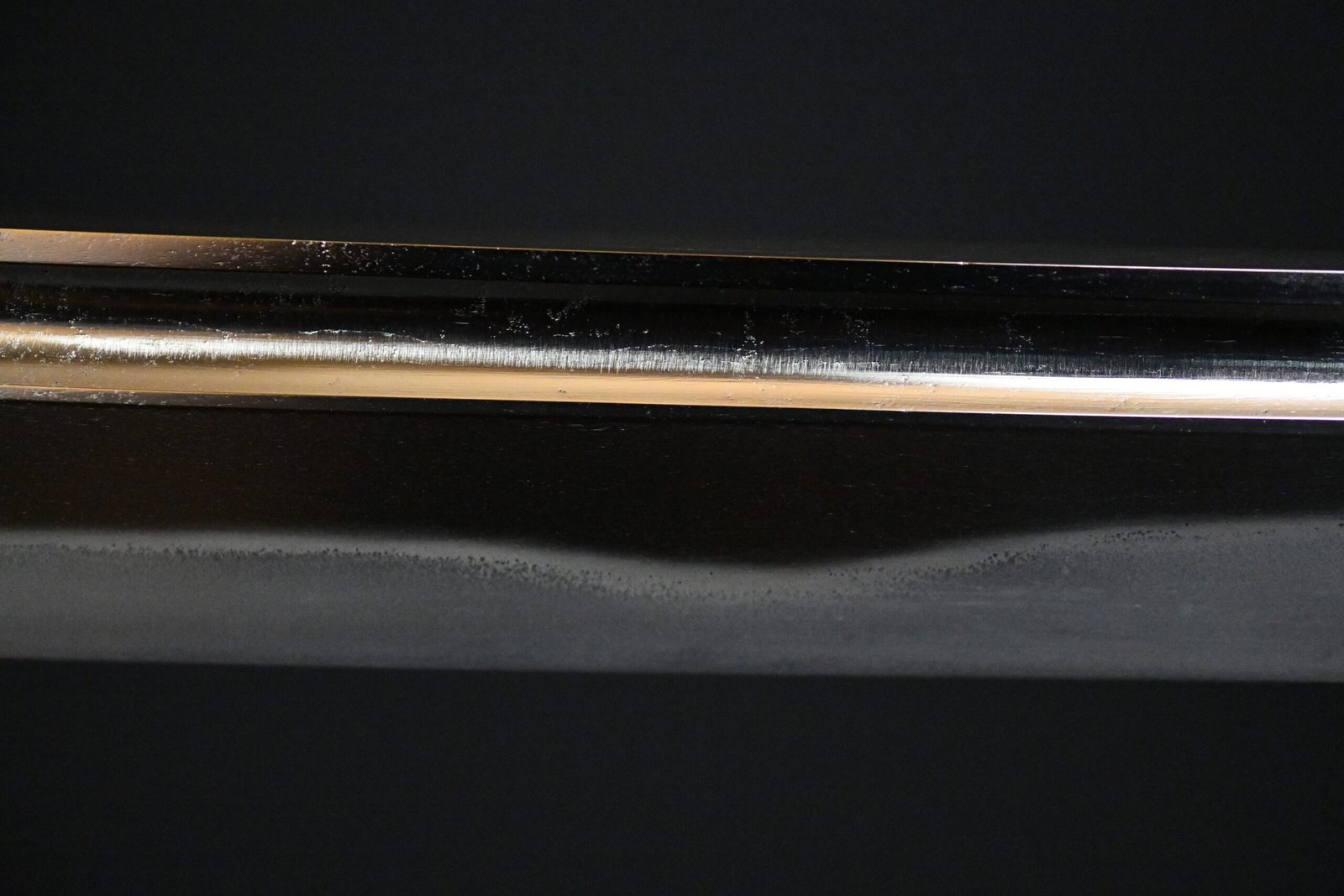
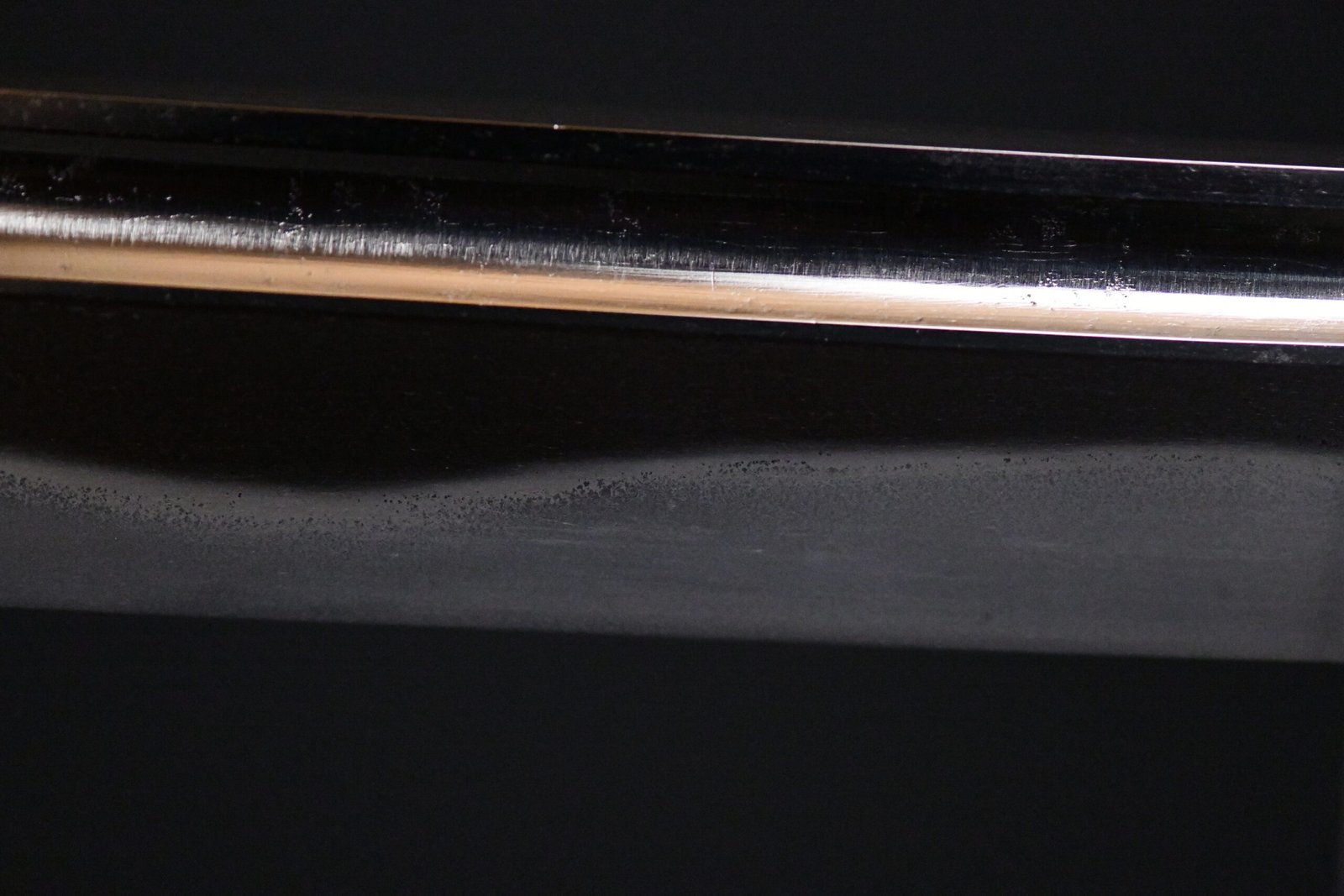
The hamon described on this wakizashi follows that expressive character, favouring an irregular and vigorous temper pattern rather than a simple straight line.
Such activity gives the blade a visually forceful character while remaining firmly rooted in traditional Japanese differential hardening.
Gunome-Midare and Nie Activity
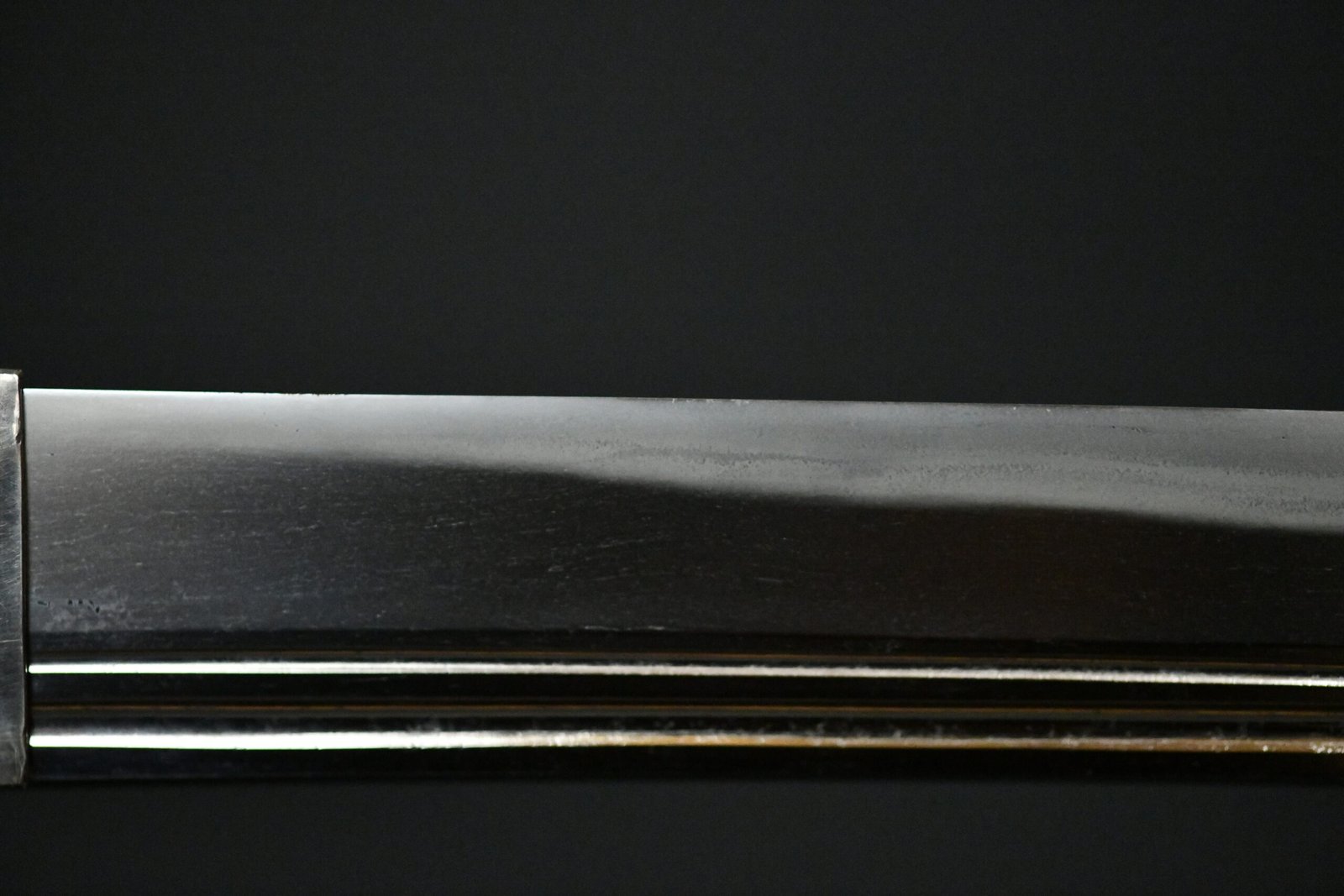
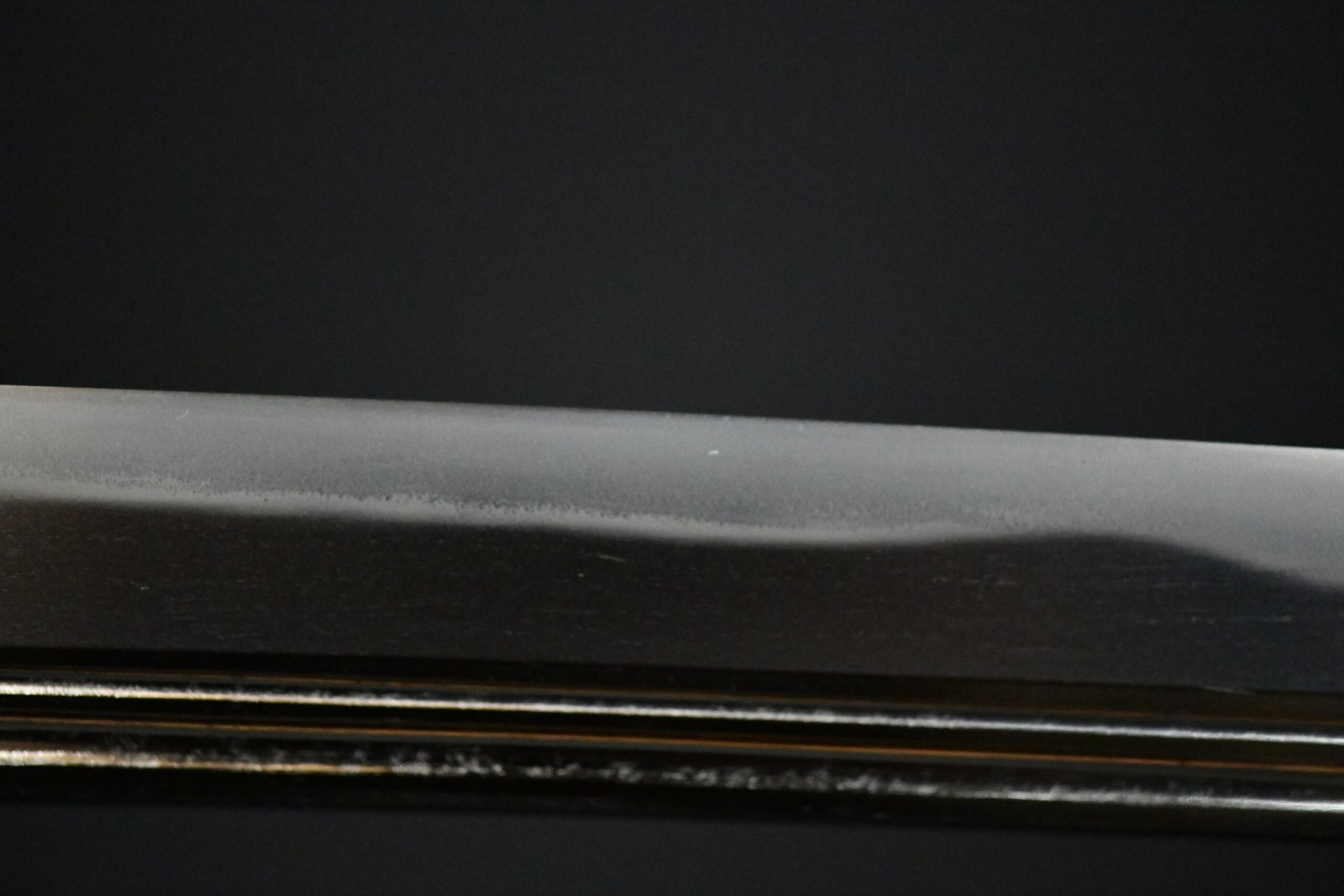
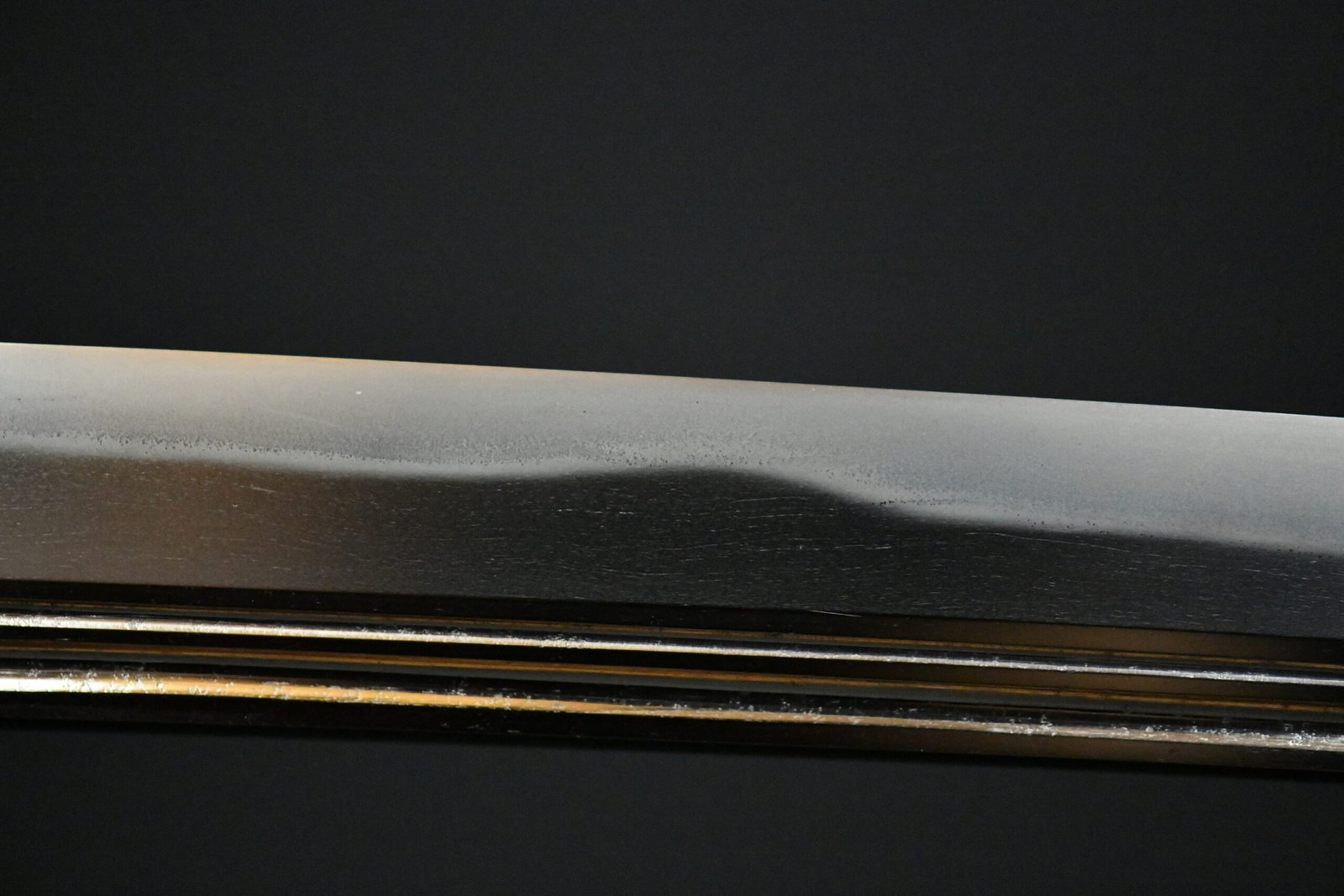
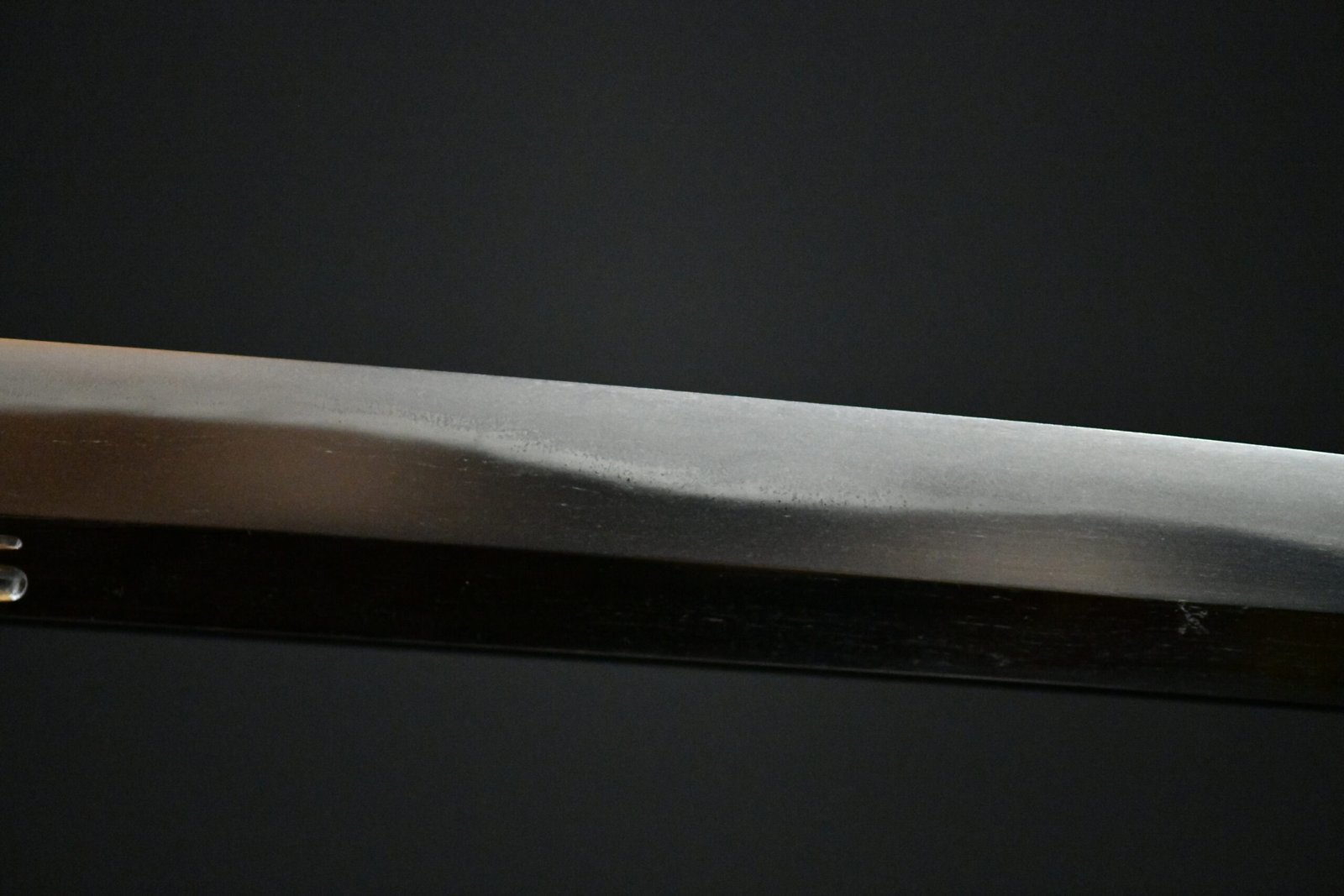
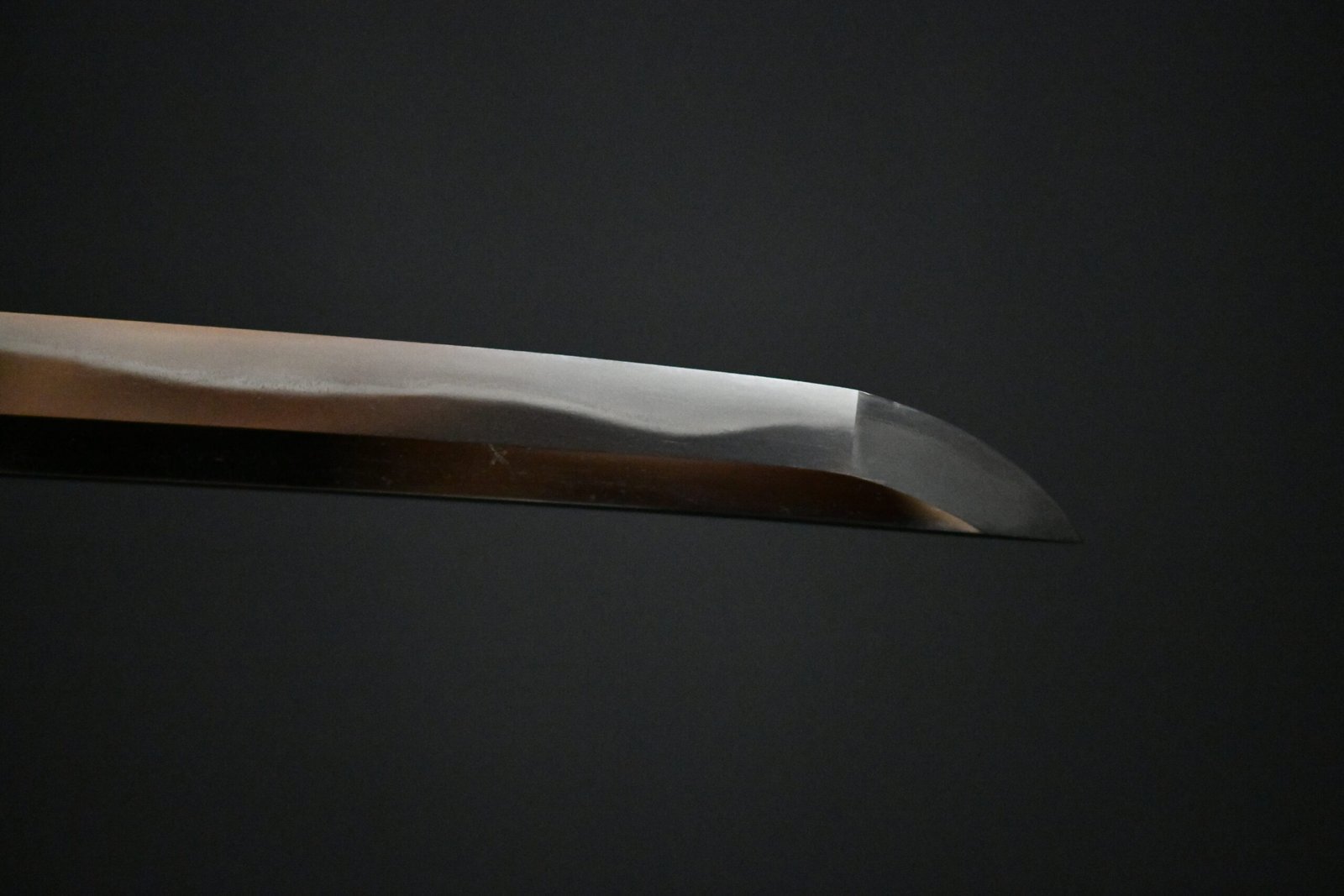
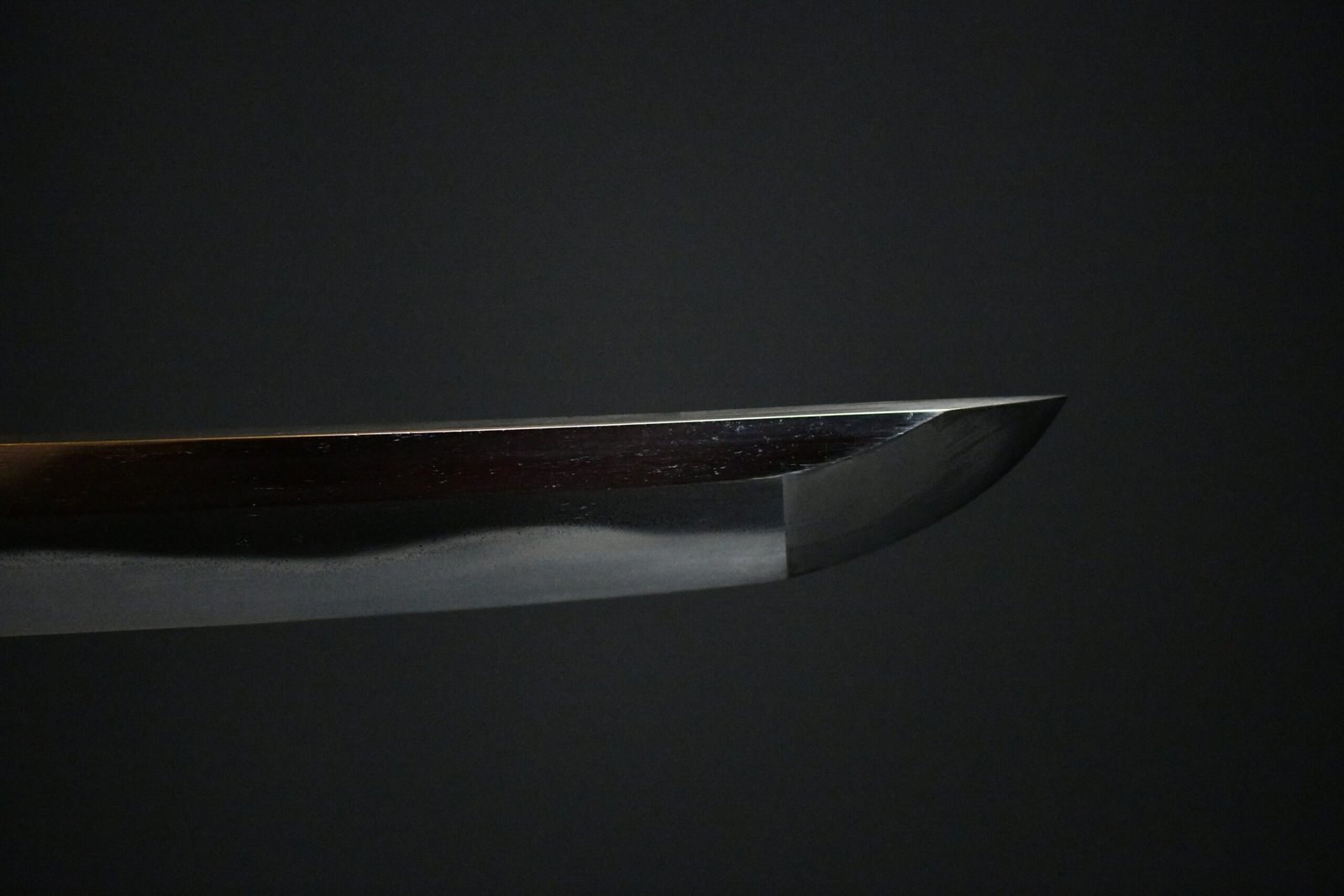
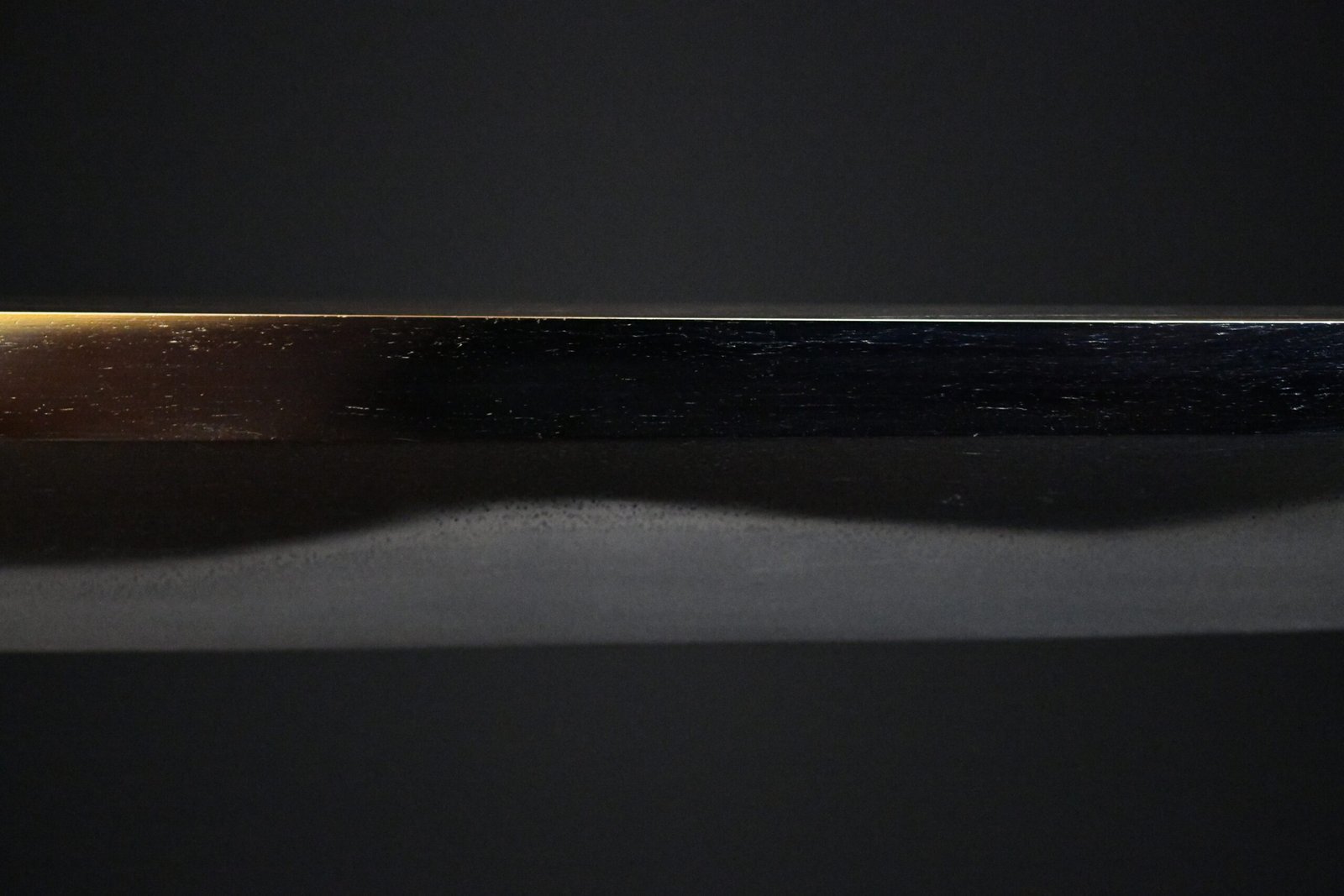
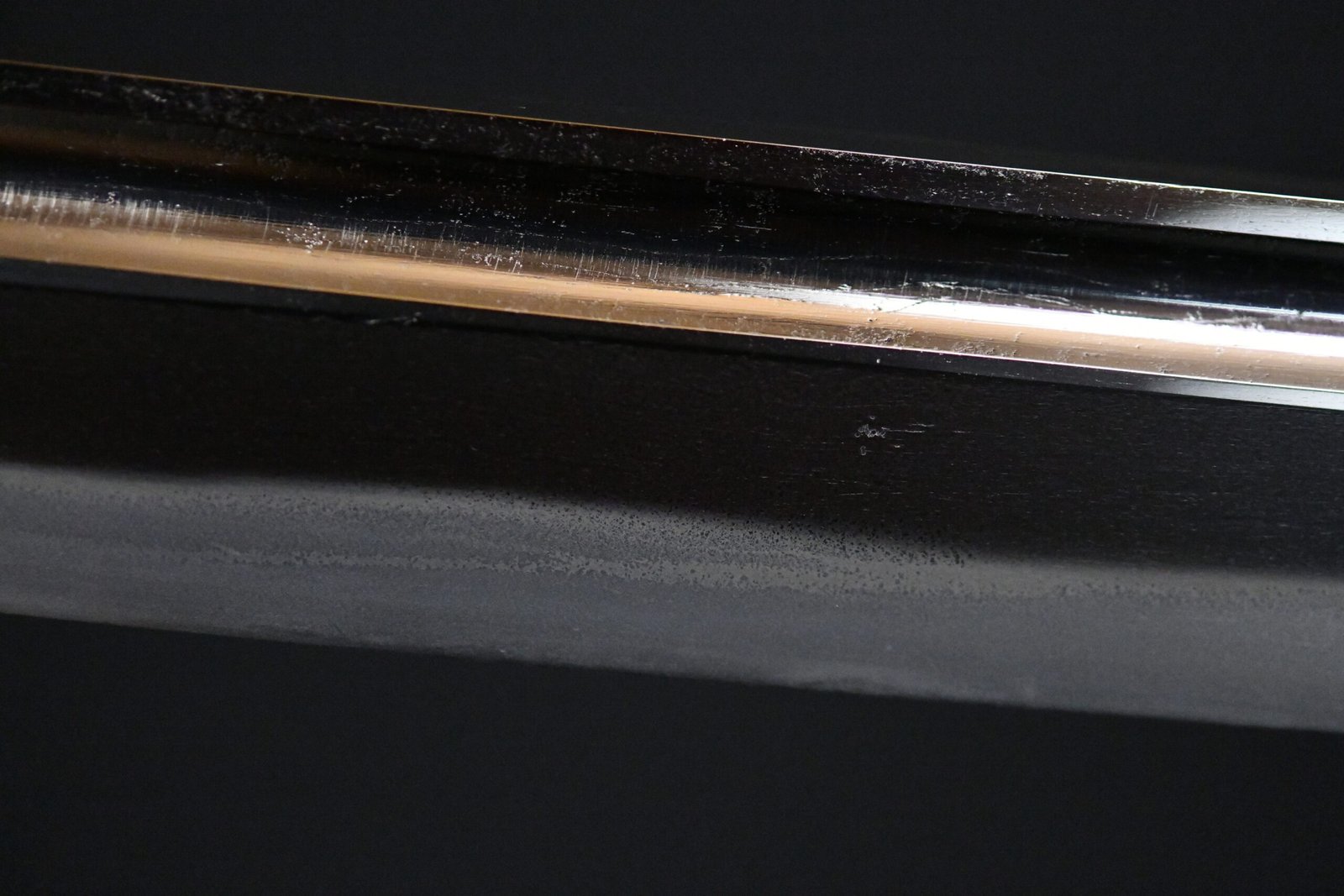
The hamon is characterised as gunome-midare, with irregular repeated peaks and variations creating a dynamic rhythm along the cutting edge.
The pattern is associated with substantial nie activity, including comparatively coarse ara-nie in the broader Mizuta style.
Mizuta work can also show tempering activity extending beyond the main yakiba, including occasional mune-yaki or activity entering the ji. These features are part of the visual vocabulary traditionally associated with the school, although each blade must ultimately be judged by what is directly visible on the individual example.
Asymmetric Hi
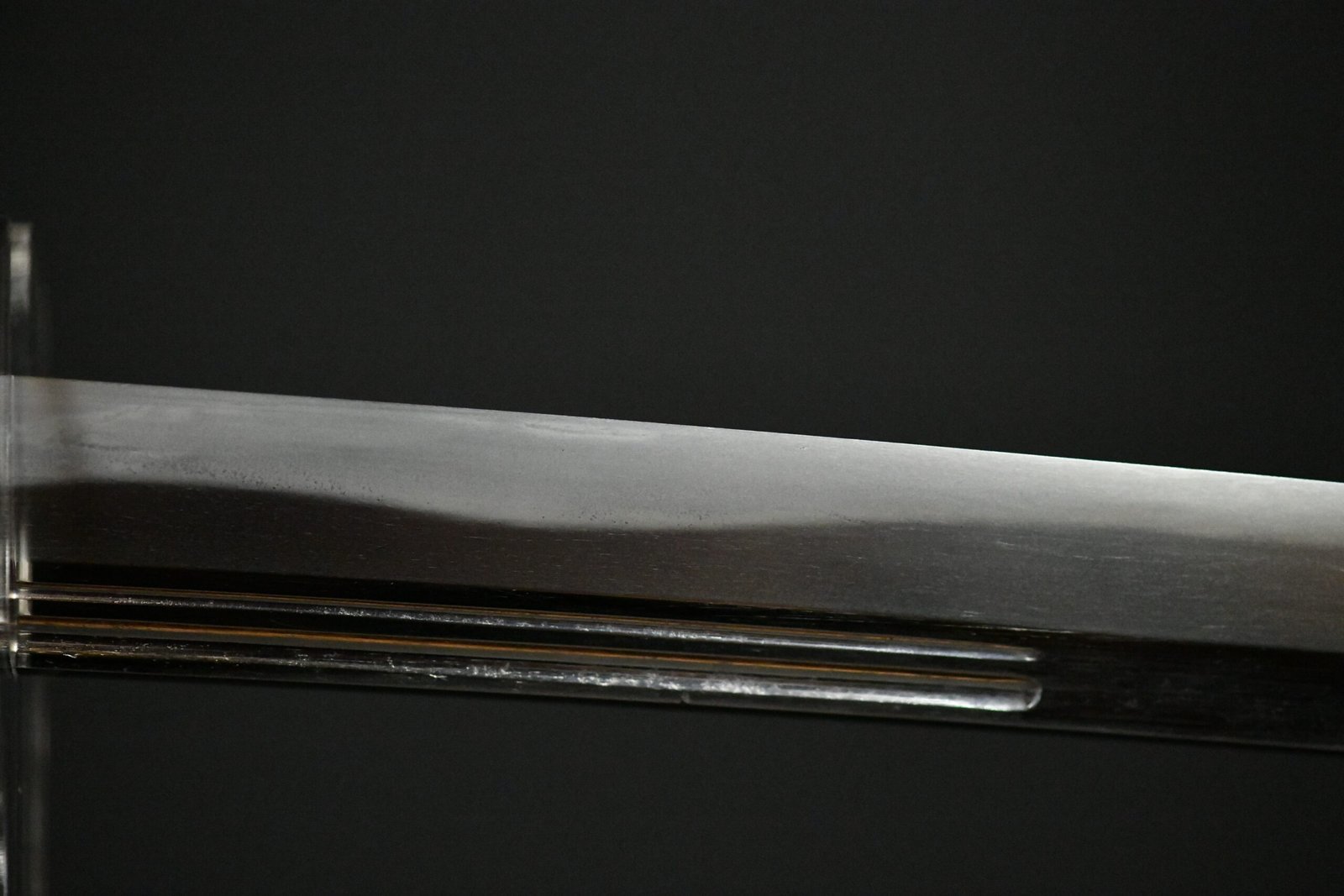
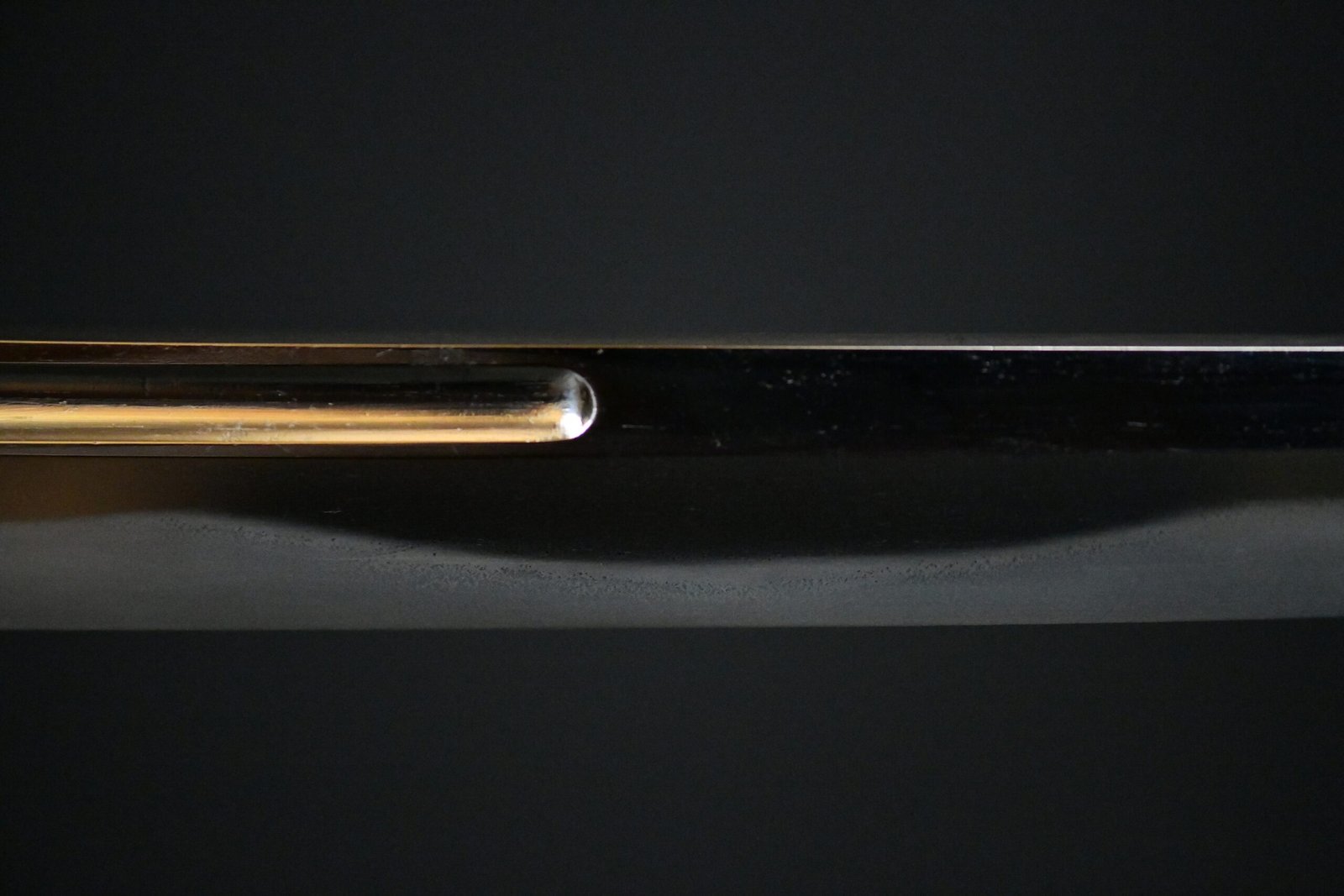
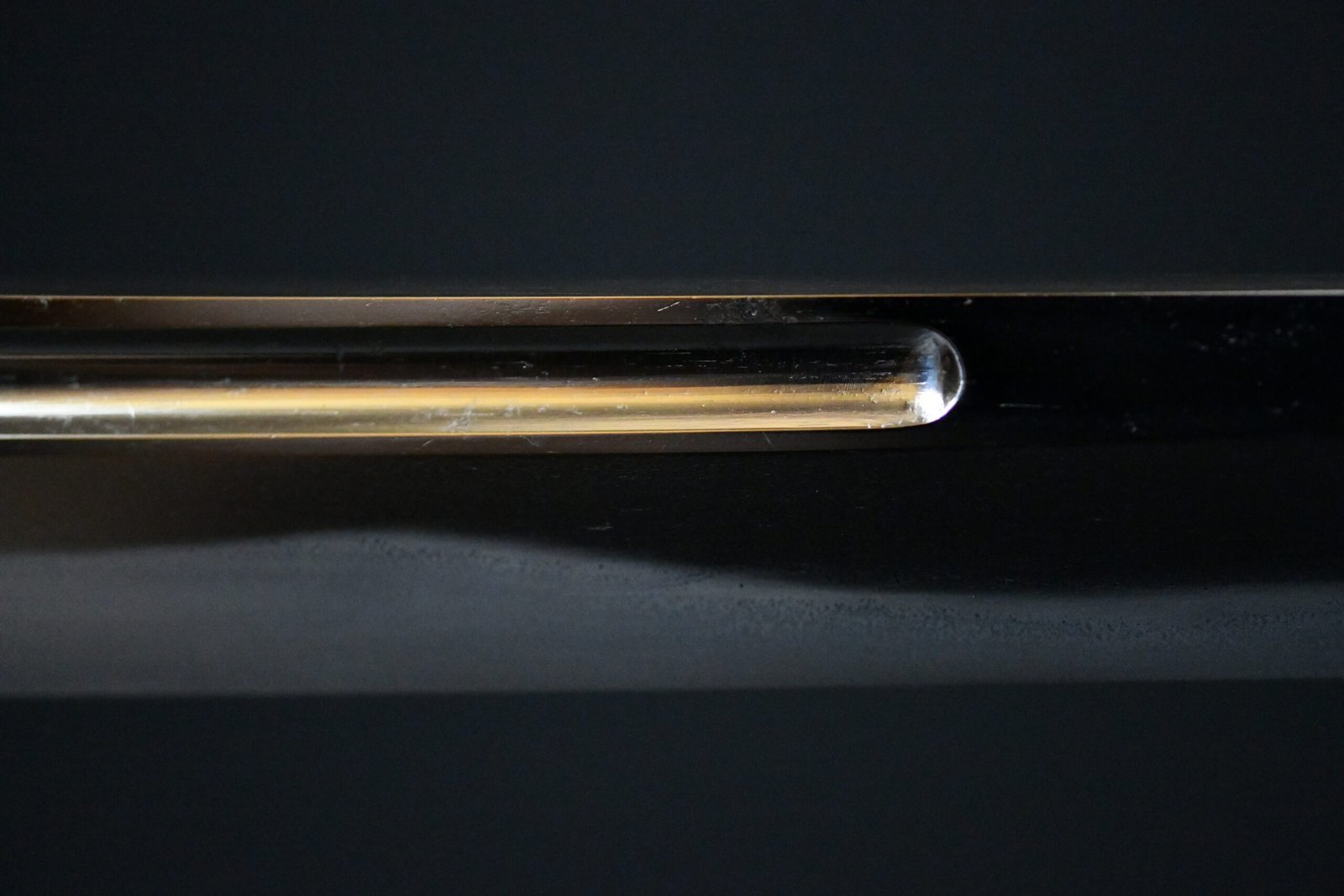
One particularly distinctive feature of the blade is its asymmetric groove treatment.
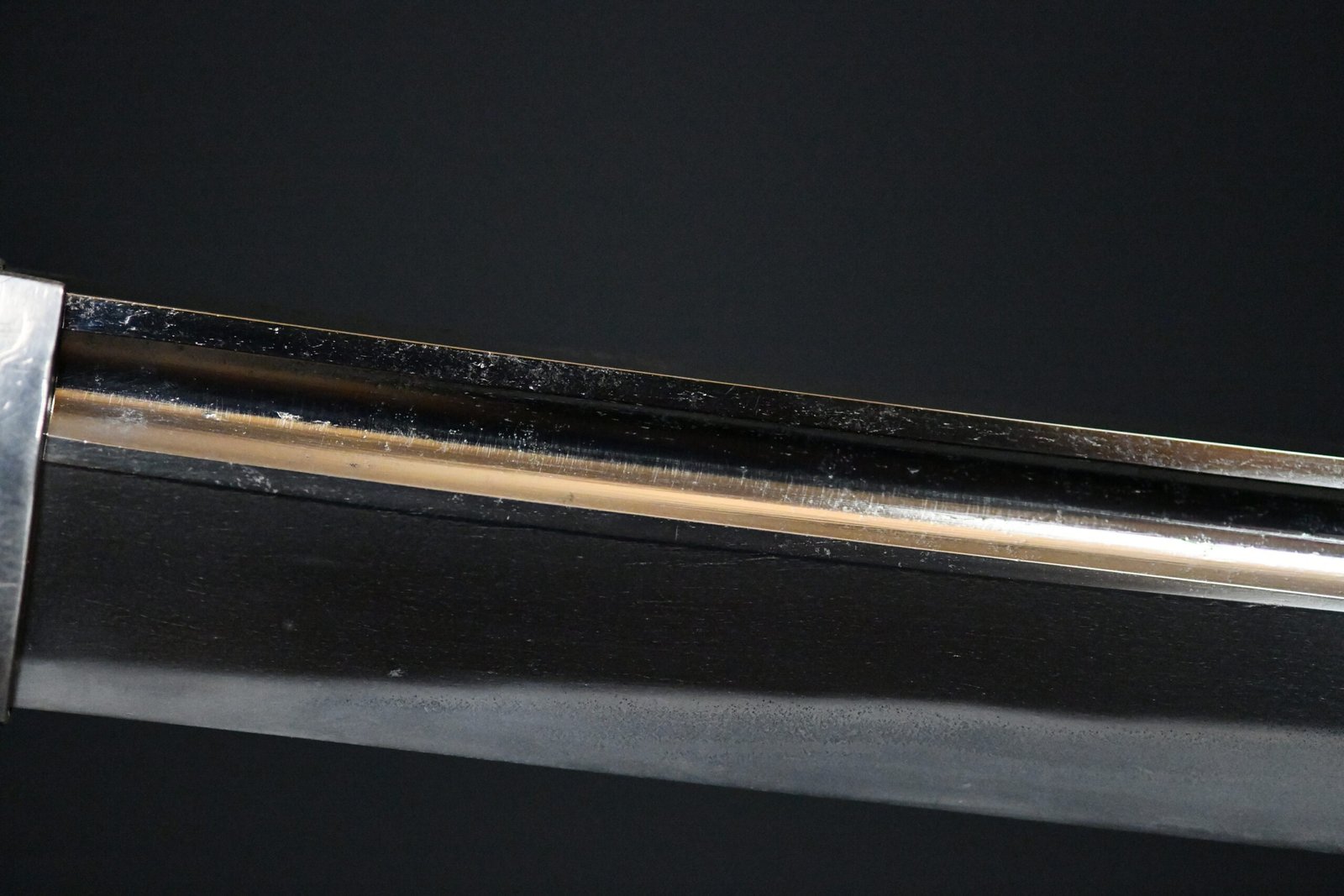
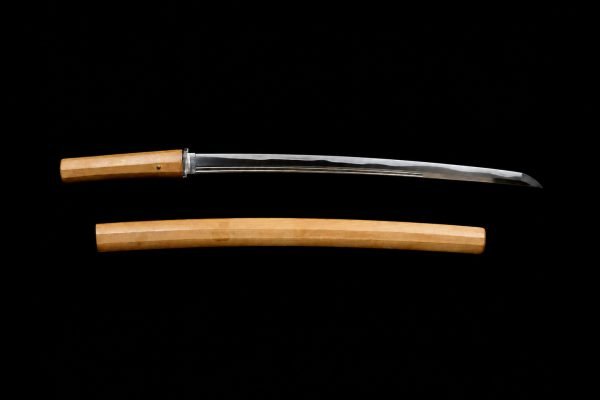
One face carries a single bōhi, while the reverse is described as carrying a pair of parallel hi. This asymmetry gives the blade an immediately individual character and reflects a practical, confident approach to horimono and groove construction.
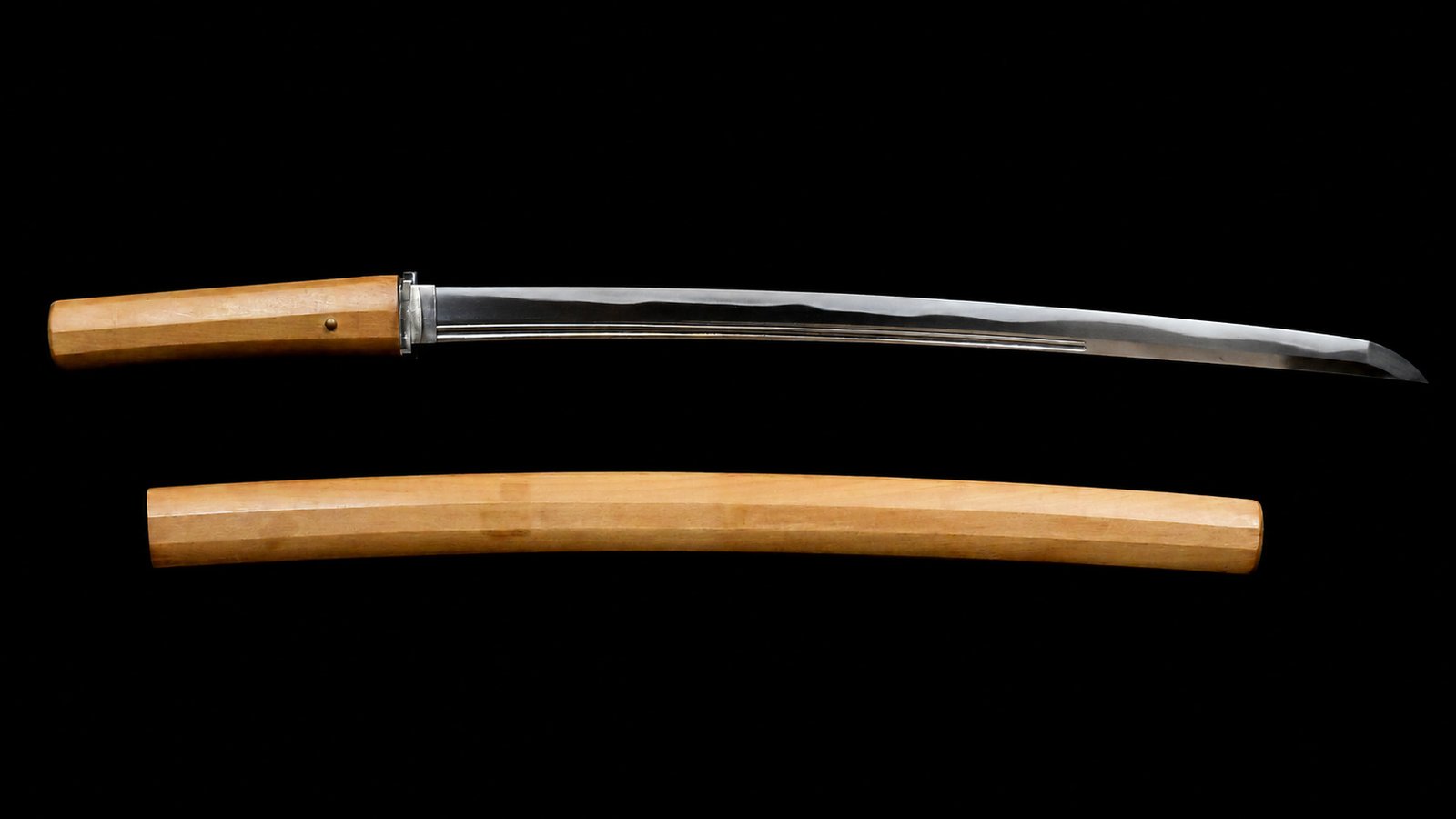
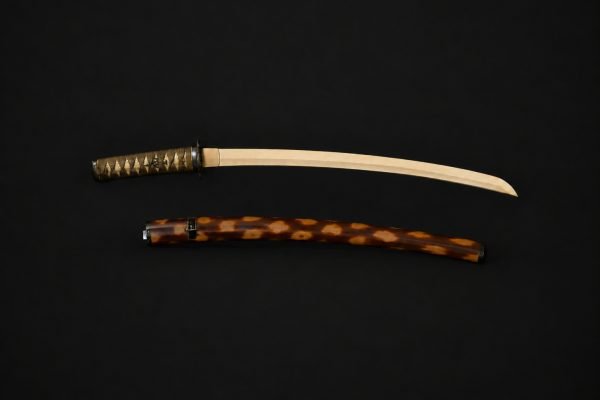
In the photographed view, the long grooves remain clearly visible along the body of the blade, adding strong linear definition to the otherwise restrained geometry.
Bold Bitchū Construction
The overall form reflects the robust character frequently associated with Mizuta work. Rather than appearing delicate or excessively refined, the blade presents a confident martial geometry intended to retain visual and structural strength.
This relationship between powerful shape and active hamon is one of the principal reasons Mizuta blades are readily distinguishable from quieter traditions.
The result is a wakizashi whose visual interest comes both from the hardened edge and from the fundamental construction of the blade itself.
1982 Appraisal Documentation
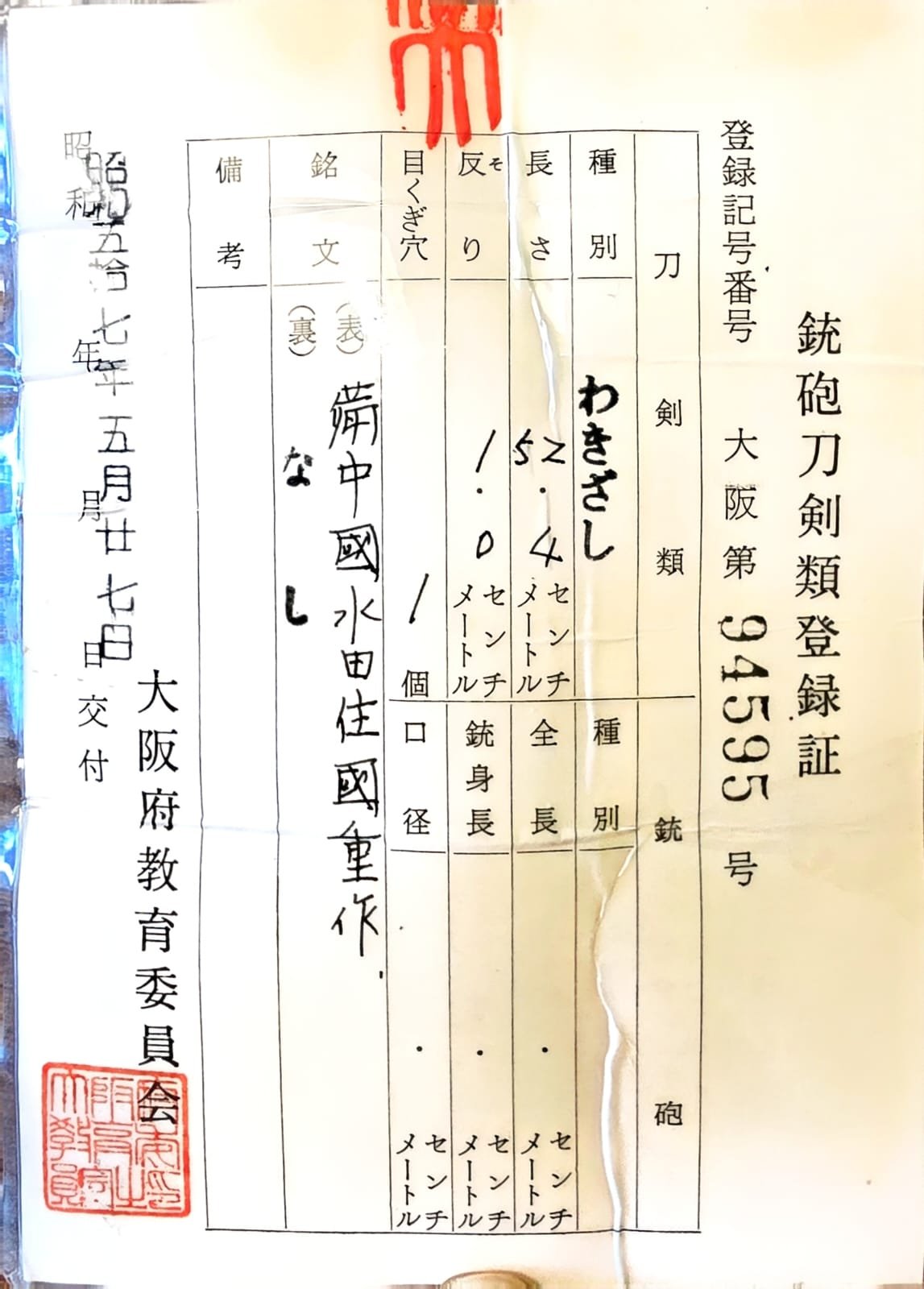
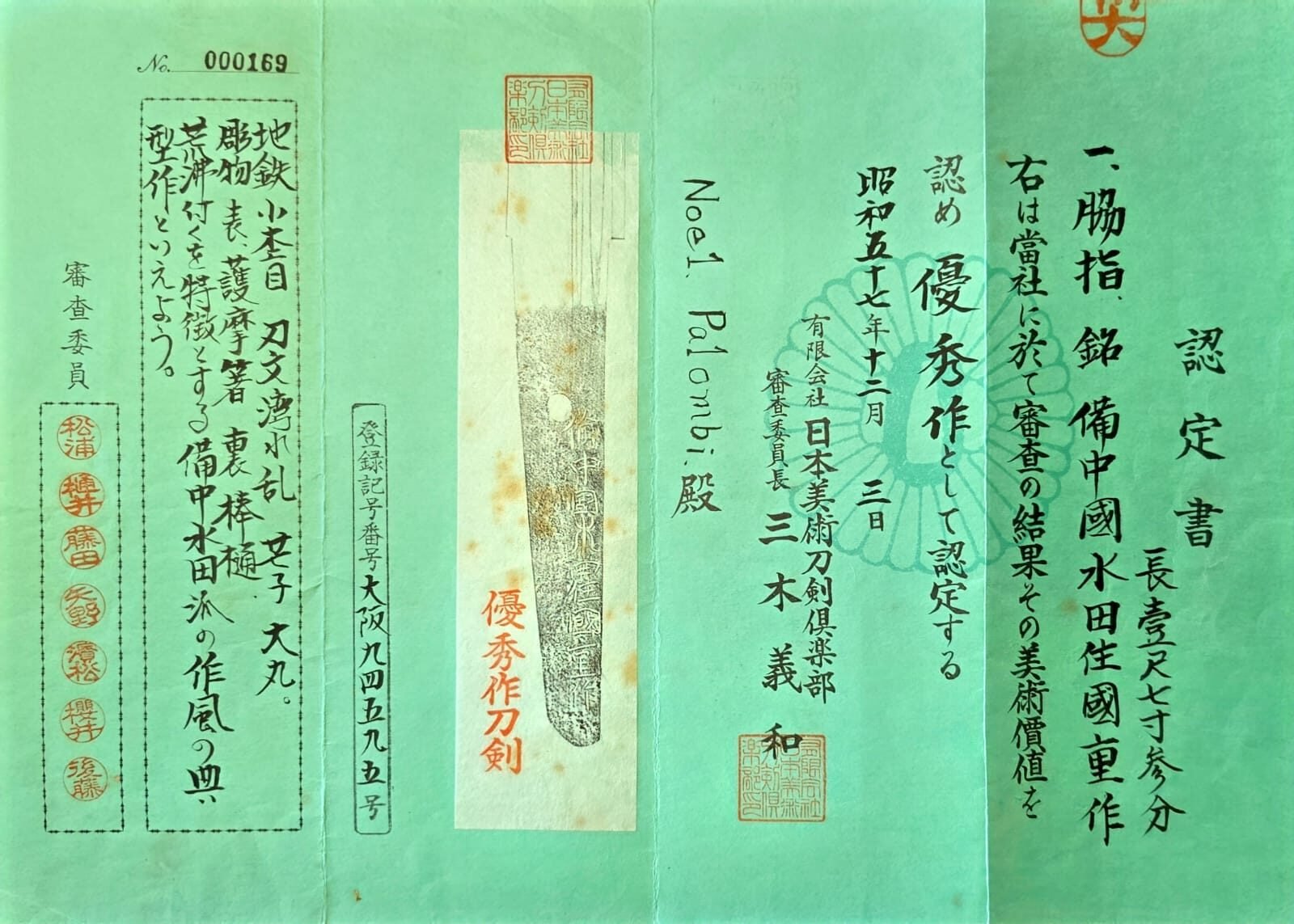
The sword is accompanied by historical Japanese documentation dating from 1982.
- Registration: Osaka Prefecture
- Registration No.: 94595
- Date: Shōwa 57 (1982)
- Additional appraisal: Nihon Bijutsu Tōken Club
- Appraisal date: 1982
- Assessment: Yūshūsaku — “excellent work”
The Nihon Bijutsu Tōken Club appraisal should be understood as documentation from a Japanese sword-appraisal organisation active during that period and is distinct from NBTHK certification.
Together with the Osaka registration document, these papers form part of the documented history accompanying the sword.
Shirasaya
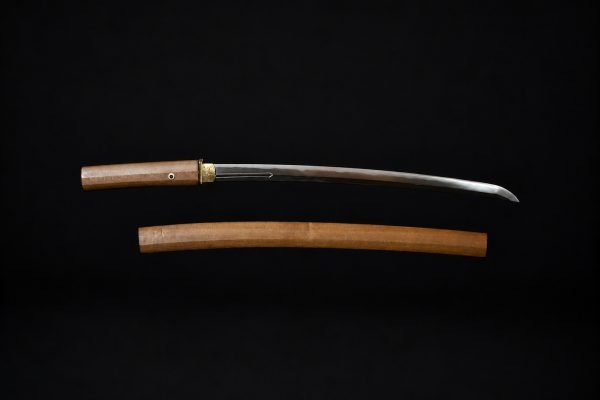
The wakizashi is currently preserved in a plain wooden shirasaya, with matching tsuka and saya.
Shirasaya are intended primarily for storage and preservation rather than active wear. Their simple construction keeps attention focused on the blade and provides an appropriate presentation for study and long-term conservation.
Key Features
- Type: Wakizashi
- Province: Bitchū
- School / group: Mizuta
- Smith name: Kunishige
- Signature: 備中國水田住國重作
- Reading: Bitchū no Kuni Mizuta-jū Kunishige saku
- Signature position: Omote
- Tradition: Bitchū Mizuta with strong Sōshū influence
- Hamon: Gunome-midare / notare-based activity
- Activity: Nie-rich tempering style
- Hi: Asymmetric configuration – single bōhi on one face, twin hi on the reverse
- Registration: Osaka Prefecture No. 94595
- Registration date: Shōwa 57 (1982)
- Appraisal: Nihon Bijutsu Tōken Club, 1982
- Appraisal assessment: Yūshūsaku (“excellent work”)
- Mounting: Shirasaya
Condition
The blade is presented in polished condition and preserved in shirasaya. The photographed surface shows the blade geometry, long grooves and temper activity clearly enough for visual study.
As with all antique Japanese swords, minor variations in polish, surface condition and signs of age should be evaluated as part of the history of the object rather than as modern manufacturing imperfections.
The sword retains its signed nakago and is accompanied by both its Osaka Prefecture registration and its 1982 appraisal documentation.
A signed Bitchū Mizuta Kunishige wakizashi combining one of Bitchū Province’s most prolific smithing traditions with the energetic Sōshū-influenced workmanship for which Mizuta blades are known. Its surviving mei, vigorous gunome-midare character, asymmetric hi and 1982 Japanese documentation make it a particularly interesting example for collectors studying regional swordmaking traditions beyond the major classical schools.