October 17, 2026
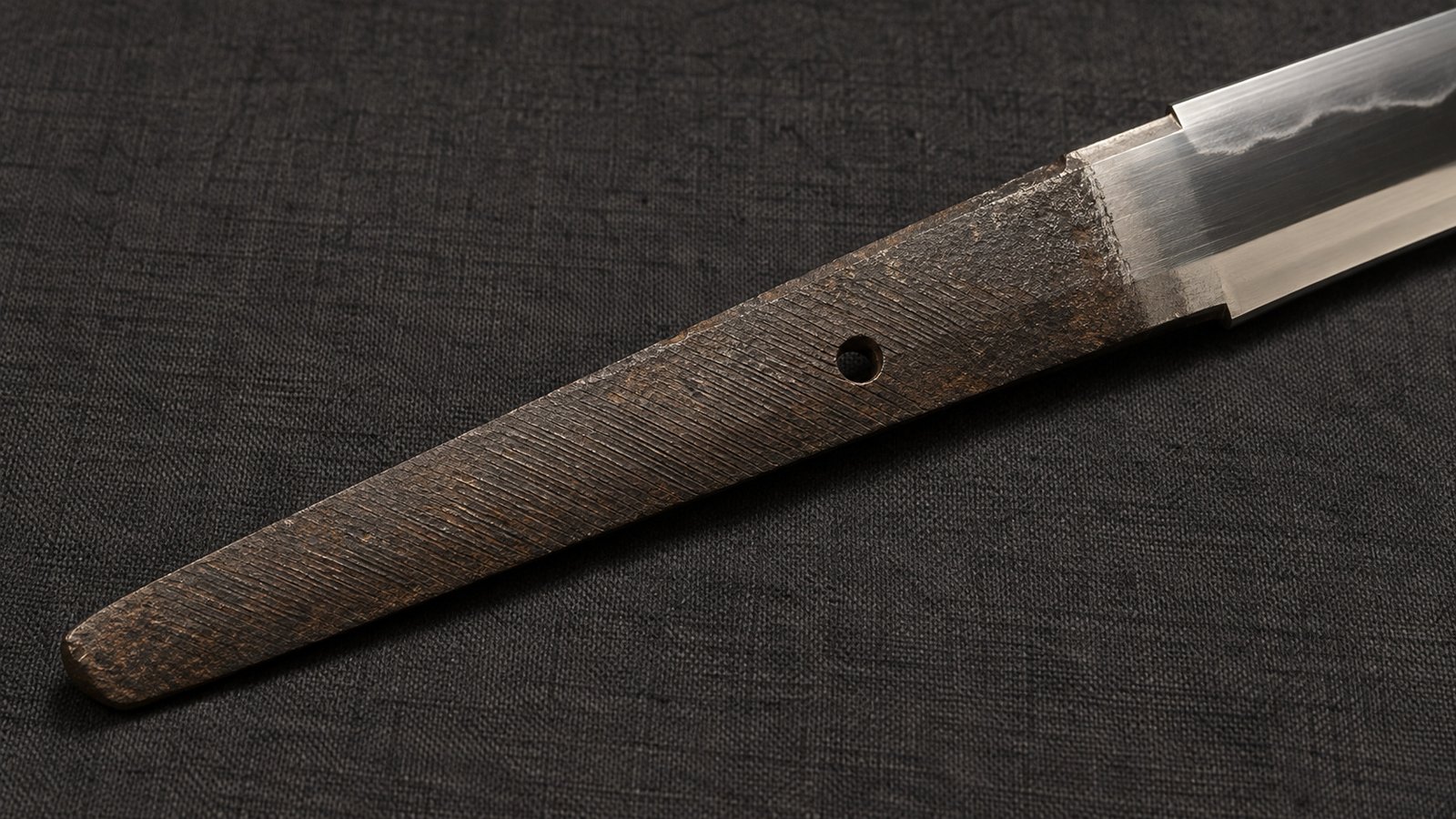
When examining a Japanese sword, the polished blade naturally attracts attention. Yet some of its most interesting details lie beneath the handle, on the surface of the tang.
These include yasurime, the marks left when the swordsmith finishes the nakago with a file. Their direction, arrangement and execution form part of the workmanship that collectors and specialists examine.
Learning to observe yasurime adds another dimension to appreciating nihonto. It encourages a closer look at how a sword was finished, while showing why individual details need to be understood within the complete blade.
Yasurime are deliberate file marks on the nakago, the portion of a Japanese sword blade housed inside the handle.
They belong to the finishing of the tang. The Northern California Japanese Sword Club explains that these marks can be deeply or lightly cut and are applied before the swordsmith chisels the signature, or mei.
For a collector, this makes the tang worth studying beyond its inscription. The worked surface itself contains details to observe.
A useful starting point is to separate three questions: what pattern is visible, how clearly it survives, and how it relates to the rest of the sword.
Several terms describe the arrangement of file marks. The following examples provide an introduction rather than a complete classification.
| Pattern | Basic appearance |
|---|---|
| Kiri | Straight marks running across the tang, from the edge side towards the back. |
| Katte-sagari | Diagonal marks descending towards the tang tip when followed from the edge side to the back. |
| Katte-agari | Diagonal marks running in the opposite direction to katte-sagari. |
| Sujikai | Steeply slanting marks. |
| Takanoha | An arrangement resembling a hawk’s feather. |
| Kesho-yasuri | A decorative finishing style encountered particularly in Shinto-period and later work. |
These descriptions follow the NCJSC’s illustrated glossary. When comparing photographs, first establish which side corresponds to the cutting edge and which to the back; rotating an image can make a diagonal pattern confusing.
Use the names as observation tools. Recognising a pattern is the beginning of a comparison, not a conclusion about who made the sword.
A close-up may show individual lines clearly while leaving out the shape of the tang. A full-length photograph provides context but can conceal fine surface detail.
For study, request both types of image.
Look at the entire tang before concentrating on a small area. Note where the marks remain visible and where the surface is difficult to read.
This gives your close-up observations a location. “Diagonal lines below the peg hole” is more useful than “diagonal lines somewhere on the tang”.
Photographs of both faces allow you to compare the visible finish rather than relying on one selected detail.
Keep their orientation consistent. Place the blade end at the top in both images, then identify the edge and back before describing the marks.
If you are requesting photographs, ask for a clear overview and an additional image with light coming from the side.
Avoid relying on heavily sharpened or high-contrast images. The aim is to document what can actually be seen, including areas where the marks are indistinct.
Yasurime appear in detailed sword descriptions alongside other characteristics of the blade and tang.
For example, the NBTHK’s July 2021 journal records the file-mark style together with the nakago tip, peg holes and inscription in its description of a contemporary tachi. Its appraisal discussions also consider the blade’s shape, steel and hardened edge.
The practical lesson for a collector is to keep these observations together.
Instead of using one pattern as a shortcut to attribution, ask whether the complete description supports the proposed identification. A close resemblance deserves further comparison with documented examples.
A historical sword does not necessarily preserve every feature exactly as it left the maker’s workshop.
The NBTHK’s July 2021 journal describes a shortened tachi whose tang carries both old and later katte-sagari file marks. This provides a documented example of why the finish must be considered alongside alterations to the blade.
For an individual sword, avoid deciding which marks are original from a small photograph alone. Record what is visible and consult the accompanying description or a specialist assessment.
A change in appearance is a question to investigate, rather than an automatic explanation.
Treat the existing nakago surface as evidence to preserve. Do not scrape, sand or polish it to make the lines easier to photograph.
Use better lighting and clearer images instead. If corrosion appears active or the surface requires attention, seek advice from someone experienced in Japanese sword preservation.
Care also calls for restraint. In a discussion specifically about nakago maintenance, the NBTHK warns that excessive oil can adversely affect the existing rust surface.
Improving visibility should never become a reason to alter the object.
When studying a sword, keep a short note beside its photographs:
For example: “Steep diagonal marks are visible on the lower portion of both faces; the upper area is unclear in the supplied images.”
This records an observation without turning uncertainty into an attribution. Over time, notes of this kind make comparisons between documented swords more useful.
Yasurime reward careful looking. They draw attention to a part of the sword that is usually concealed and encourage collectors to examine finishing details alongside the more familiar features of the polished blade.
The most productive approach is patient and comparative: identify what is visible, document it clearly, and consider it within the sword as a whole.
Yasurime refers to file marks on the tang of a Japanese sword. They form part of the nakago’s finish.
They are found on the nakago, beneath the handle. For an initial study, use clear photographs of the exposed tang rather than attempting unfamiliar disassembly.
Yasurime are the file marks on the tang’s surface. Mei refers to its signature inscription. The NCJSC explains that the file marks are applied before the signature is chiselled.
They can contribute to a comparison, but a file-mark pattern alone is insufficient for a reliable attribution. Consider it alongside the complete blade, tang and specialist documentation.
Unclear marks in a photograph do not establish that conclusion. Obtain better images and examine the sword’s condition and documentation before drawing an inference.
Do not use abrasive cleaning to expose them. Preserve the surface, improve the photography, and seek specialist advice if its condition needs attention.
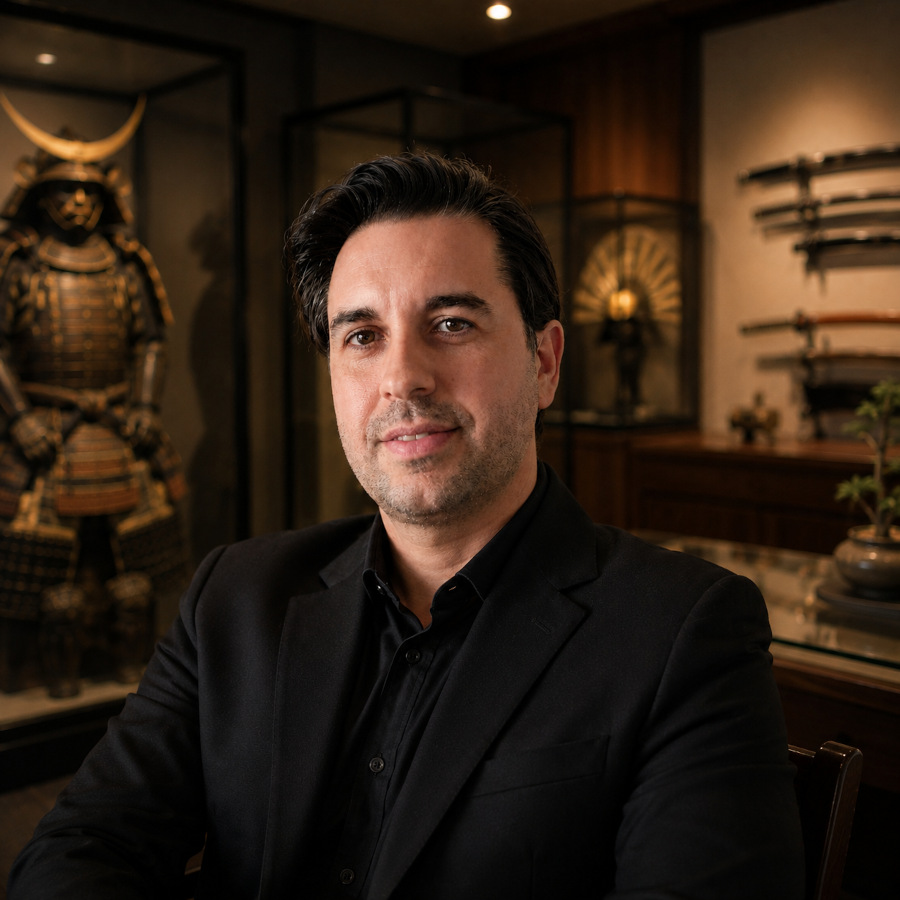
CEO of SupeinNihonto, dealer and collector of ancient Japanese art and weapons from Canillo, Andorra.
Contact